




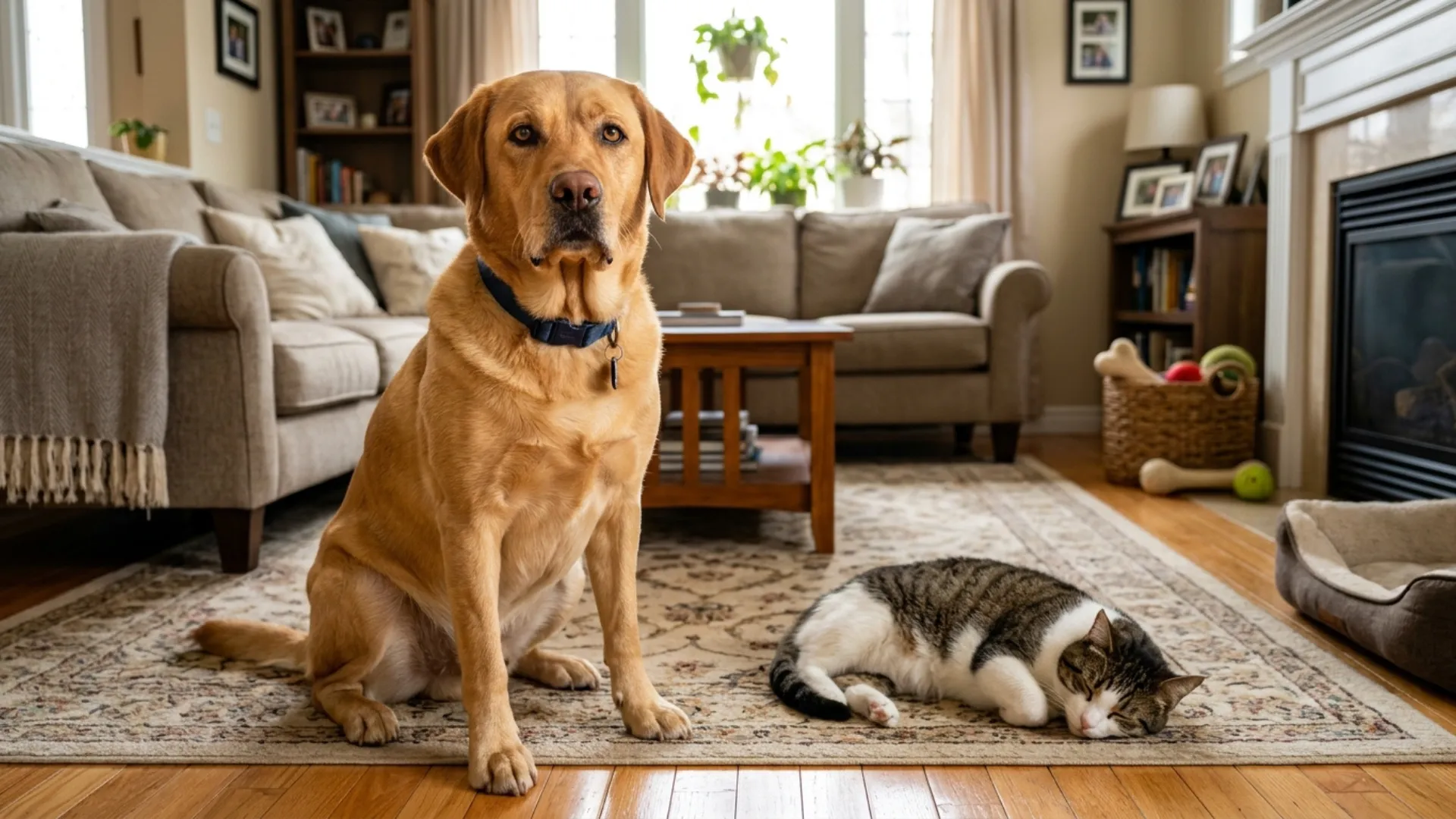
A dog and cat sharing one home sounds like the beginning of either an adorable friendship or a very furry neighborhood dispute. One wants to play, the other wants personal space, and somehow both believe the sunny spot belongs exclusively to them.
Thankfully, peaceful coexistence is absolutely possible. The right dog may be gentle, sociable, adaptable, and willing to accept that the cat is probably in charge. Of course, personality, training, careful introductions, and a feline escape route also matter.
Ready to meet the lovable peacekeepers that can help turn potential chaos into cozy naps and surprisingly sweet friendships? Let’s get into the breeds.
Did you know?
Dogs and cats may gradually learn to understand each other’s body language. With early interactions and positive experiences, they can become better at interpreting unfamiliar signals, almost as though each pet is learning to “speak” the other’s language.
Dog Breeds That Foster Peaceful Coexistence with Cats
1. Golden Retriever

A Golden Retriever brings cheerful diplomacy into a mixed-pet home, usually greeting household life with warmth rather than suspicion. This affectionate, intelligent dog enjoys company and can settle comfortably among other pets when socialized thoughtfully from puppyhood.
Around cats, this breed’s gentle nature and willingness to learn can make introductions feel less like a summit meeting. Calm guidance helps the dog respect feline space, while supervised play allows curiosity to develop without turning into unwanted chasing.

Family life suits this loyal social butterfly beautifully. Golden Retrievers enjoy being involved, play patiently with children, and prefer staying near their people rather than living separately outdoors. Their goofy enthusiasm keeps the household lively while preserving an affectionate character.
What Makes This Breed Cat-Friendly
Its soft mouth was developed for carrying retrieved items gently, which may support less forceful play.
A naturally social outlook makes it accept feline housemates as part of the household.
2. Cavalier King Charles Spaniel
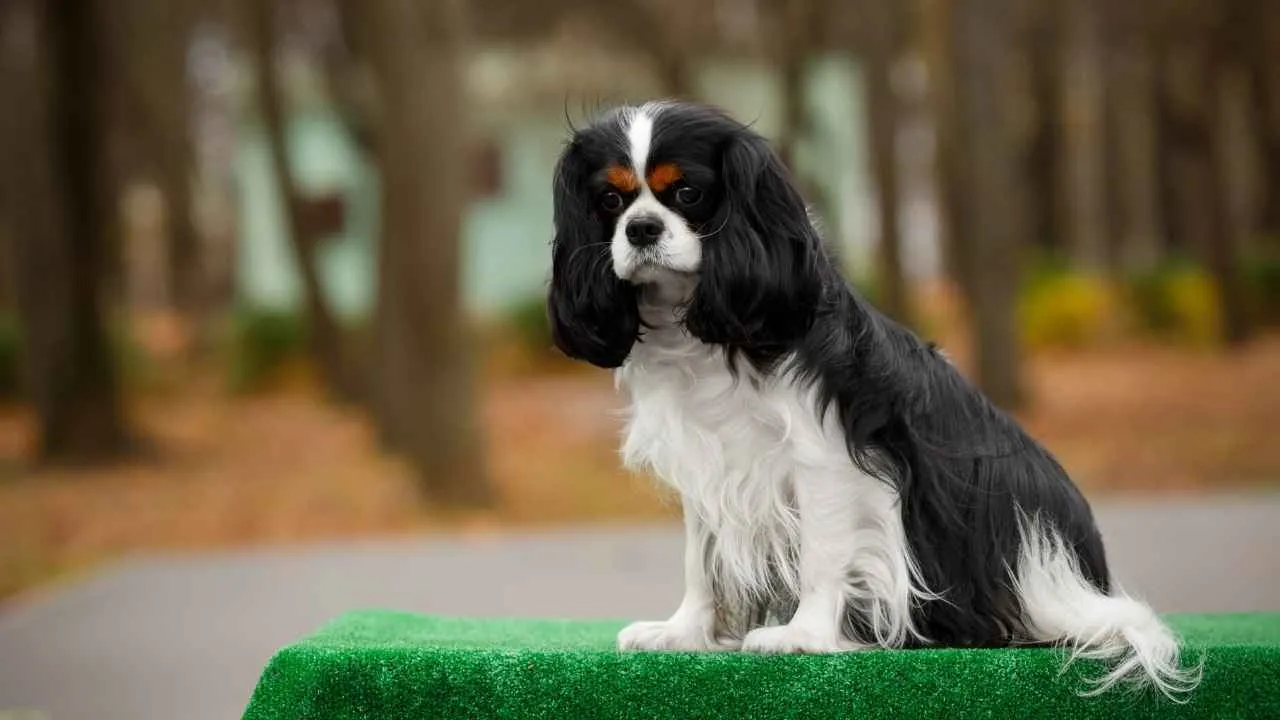
The Cavalier King Charles Spaniel arrives with royal history and absolutely no interest in acting emotionally unavailable. Bred as a devoted companion, this affectionate dog thrives on closeness, making shared spaces feel cozy rather than crowded.
Originally bred to warm laps in chilly castles and carriage rides, the Cavalier still treats companionship like a full-time occupation. Its patient, tolerant nature can extend naturally to cats, especially when both pets are socialized early and introduced gradually.

As noted by PetMD, Cavaliers are eager to please, bright, and generally easy to train. Short, playful sessions using treats or favorite toys help them learn cues quickly, while early socialization builds confidence around unfamiliar people, pets, and situations.
What Makes This Breed Cat-Friendly
Its smaller presence may feel less intimidating to a cautious feline roommate.
Strong affection for companionship can encourage it to welcome other smaller animals nearby.
3. Labrador Retriever

A Labrador Retriever rarely enters a room quietly in spirit. Friendly, outgoing, and eager to join whatever is happening, this devoted dog can bring lively warmth to a household where the cat already considers itself chief executive.
With kittens, a Labrador’s playful enthusiasm needs supervision because excitement can feel enormous to a tiny feline. Gradual introductions, clear boundaries, and rewards for calm behavior help the dog understand that the kitten is a roommate, not a moving toy.

Energy comes generously packaged with this breed. Labradors enjoy retrieving, swimming, outdoor adventures, and active games, so regular outlets matter. When their enthusiasm has somewhere appropriate to go, they are less likely to become hyperactive, destructive, or overly intense indoors.
What Makes This Breed Cat-Friendly
A Labrador puppy raised alongside a kitten may learn to view the feline as family.
Commands such as “leave it,” “stay,” and “sit” can help manage overenthusiastic greetings.
4. Basset Hound

Recognized by the AKC in 1885, the Basset Hound brings old-school charm, patient manners, and a face that appears permanently concerned about everyone’s choices. Its love for lounging around and low-key household presence can feel pleasantly unhurried beside a cat’s independent routine.
Basset Hounds were developed to work in packs, so company often feels natural to them. Their friendly, easygoing disposition helps them accept other pets, while their slower pace gives cats fewer reasons to file an immediate complaint with management.

Quiet-looking does not mean quiet-sounding here. Basset Hounds can be serious barkers, and excitement over an interesting scent may produce their famous bay. Consistent companionship matters because boredom or long periods alone can encourage nuisance barking around the home.
What Makes This Breed Cat-Friendly
A docile personality can support calm, non-confrontational interactions with feline companions.
High perches give the cat an easy retreat while the relationship develops at a comfortable pace.
5. Beagle

A Beagle brings merry curiosity to a shared home, plus a nose that treats every corner like breaking news. Bred for pack work, this cheerful hound usually enjoys company, giving harmonious pet relationships a friendly starting point.
Space is wonderfully flexible for a Beagle, whether the address includes an open yard or an apartment. Regular activity remains essential, while a leash or secure fence prevents that famous nose from turning an ordinary stroll into an unscheduled expedition.

A Beagle is a good fit around other animals, as it is typically sociable and eager to make friends with dogs, cats, and humans. Its playful, pack-minded nature can suit growing families, though introductions and interactions should remain supervised while everyone learns the household rules.
What Makes This Breed Cat-Friendly
Pack-bred sociability and cat-friendly traits can help a Beagle accept household cats as part of its social circle.
Praise for ignoring or calmly tolerating a cat encourages more respectful behavior.
6. Pug

A Pug carries enough personality to fill the room before its paws cross the doorway. This small breed prefers affection over confrontation, bringing an easygoing presence that can soften the usual dog-and-cat negotiations without making the household feel sleepy.
Other furry siblings often receive a warm welcome from a socialized Pug. This affectionate dog enjoys company, behaves agreeably with pets, and would rather join the cuddle committee than begin a dramatic campaign for control of the living room.

As mentioned by Purina, Pugs can be surprisingly trainable and often enjoy learning basic obedience alongside fun tricks. Teaching lead and harness walking, plus a reliable recall, keeps lessons practical, although these devoted little dogs rarely stray far.
What Makes This Breed Cat-Friendly
A calm energy level may feel comfortable for cats that prefer less boisterous canine company.
Its adaptable nature can help it coexist happily around established feline routines.
7. Bichon Frise
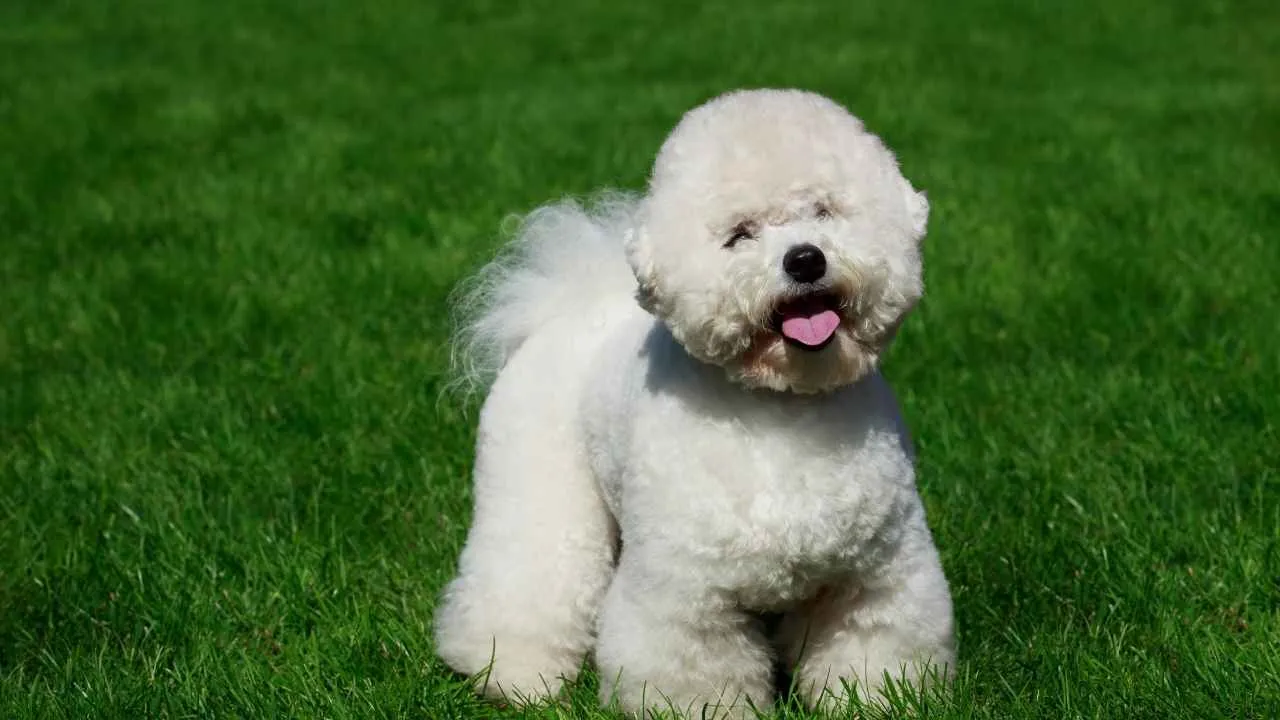
The Bichon Frise looks ready for a fancy portrait, yet its real talent is winning over whoever happens to enter the room. Curious, playful, and cheerful, this excellent companion brings sociable energy that can make multi-pet living feel genuinely entertaining.
Originally developed from the Barbichon family, the Bichon Frise became popular with European nobility before finding work alongside street performers and circus troupes. That unusual journey suits a clever dog known for charm, tricks, and a serious appreciation for attention.
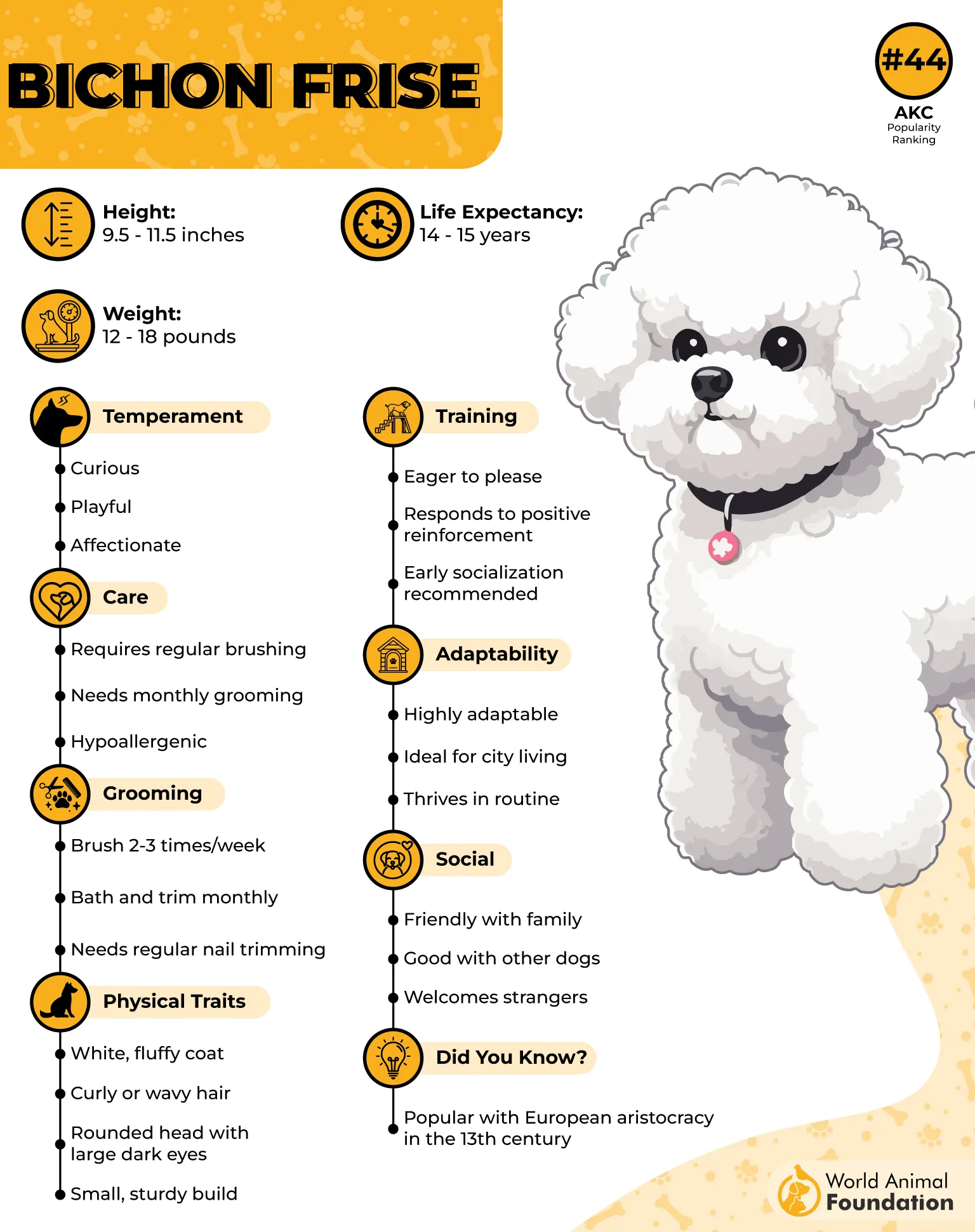
The Bichon Frise is among the best small dogs for cat pet parents because of its gentle playfulness and cheerful, non-aggressive personality. It usually gets along well with other pets, although its outgoing nature may overwhelm a cat that strongly prefers solitude.
What Makes This Breed Cat-Friendly
Resource guarding is considered uncommon, which can make shared household spaces easier to manage.
Its sensitivity to changing situations makes it a great choice for coexistence with cats, as it can adjust when a cat requests distance.
Conclusion
Peaceful multi-pet living starts with matching personalities, setting sensible boundaries, and giving every animal room to adjust. These breeds bring different strengths, from playful companionship and gentle demeanor to patient manners and adaptable routines, making the decision feel less like guesswork.
Take time to consider your cat’s comfort, your home setup, and the dog’s daily needs before welcoming a new companion. A thoughtful introduction can turn cautious first meetings into a household rhythm. Choose with care, move patiently, and let friendship grow at home.
