




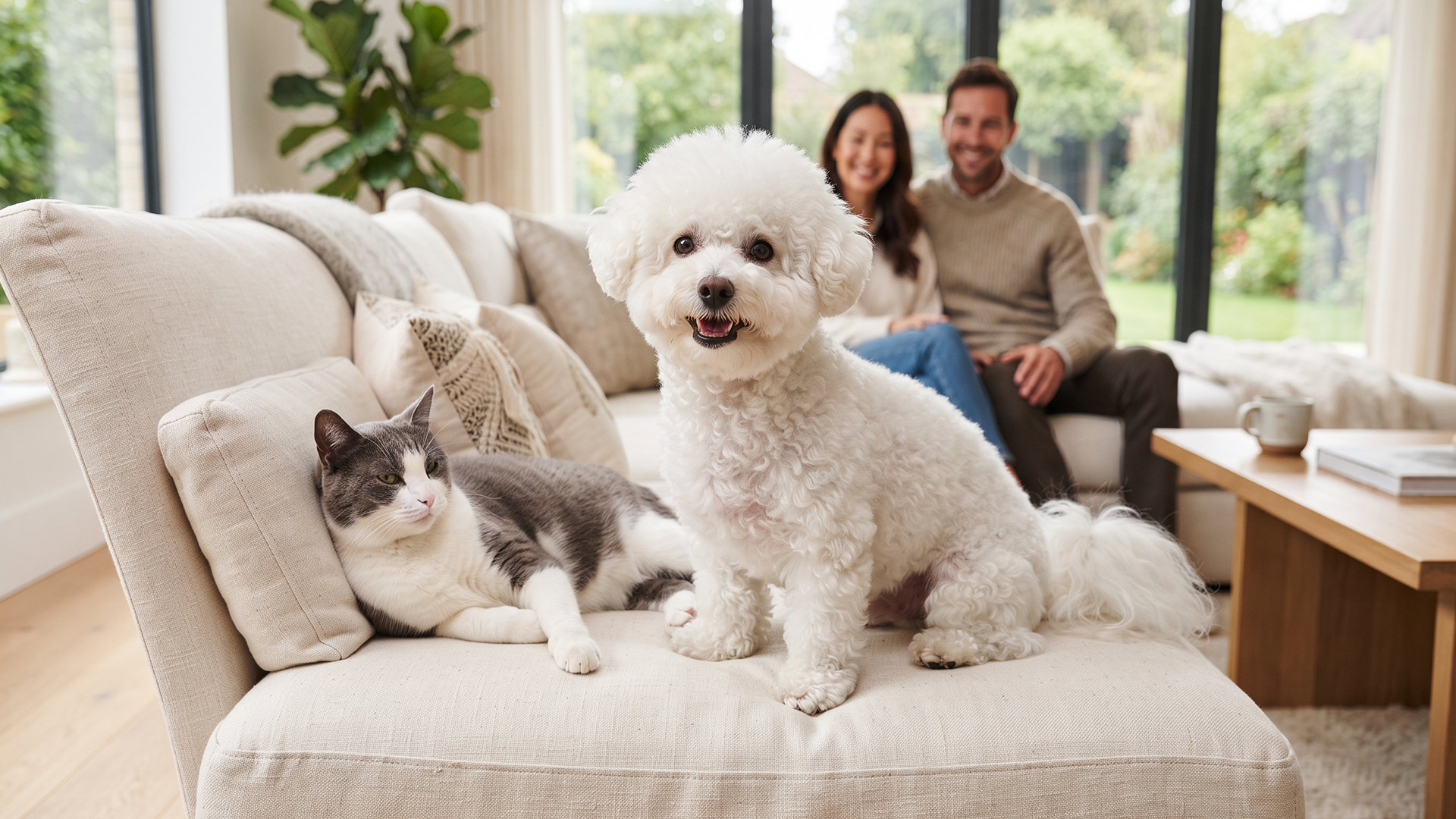
The cat watched from the top of the bookshelf while the new dog stepped through the front door, curious but surprisingly calm. There was no barking, no chasing, and no race across the living room.
After a few careful glances, both animals simply went their separate ways. Over the following weeks, that quiet beginning slowly turned into a familiar routine of shared spaces, peaceful naps, and comfortable distance that gradually became trust.
It wasn’t the result of luck or perfect timing. The dog’s easygoing nature played a major part in making those first meetings feel far less stressful than expected. While every pet has its own personality, some dogs naturally adapt to living with cats better than others.
Starting with the right one can make the introduction far smoother and the adjustment much easier. This article highlights dog breeds that are well known for sharing a home peacefully with feline friends.
Key Takeaways
What happens when a cat meets a new dog and neither one feels the need to chase or bark? That calm first meeting can be the start of a surprisingly close friendship.
The Basset Hound brings its famously unhurried nature, while the Bichon Frise often sees a cat as another friend to play with.
Then there is the Cavalier King Charles Spaniel, a little dog that once followed British royalty into places as grand as Parliament.
From ancient Maltese companions to clever Papillons, the rest of these breeds have their own reasons for fitting so well into a home with cats.
Dog Breeds That Enjoy Living with Cats
1. Basset Hound

Basset Hound was originally bred in France centuries ago, where its low build and remarkable sense of smell suited the pursuit of small game. Early accounts also connect this breed with the hounds of St. Hubert, placing its roots among dogs valued for dependable scent work.
Calm Around Company
The Basset Hound prefers an unhurried pace, which often gives cats the time they need to feel comfortable during early introductions. Its easygoing attitude often keeps household interactions steady instead of turning every encounter into a chase.
A few details add another side to this breed:
Independent field decision-maker
Entertaining, playful personality
They are smart but stubborn

Daily Habits
This cat-friendly dog benefits from activities that engage both its nose and curiosity, even with its relaxed personality around the house. Digging, following interesting scents, and vocalizing can become favorite pastimes when those instincts have no better outlet, as Pawlicy Advisor claims.
2. Beagle

Beagles gained recognition as hunting companions for rabbits and hares, working alongside other dogs rather than on their own. That pack-oriented past helps explain why this breed generally enjoys sharing its home with animal companions when introductions are handled thoughtfully.
Reading the First Meeting
A Beagle that reacts to a cat with quiet curiosity or simple indifference usually offers a more encouraging starting point than one that immediately barks or gives chase. Looking at the dog’s previous behavior around neighborhood cats can reveal far more than assumptions based on breed alone.
The following details are worth noting:
Let the cat smell the dog’s blanket first
Calm reactions are more encouraging than hissing
Introducing one Beagle is simpler than introducing two

Instinct Still Matters
Beagle still has a strong interest in new scents, so early interactions should be closely supervised during the first few weeks together, as stated by PetMD. Homes with multiple Beagles may face a bigger challenge because group excitement can encourage chasing behavior more easily.
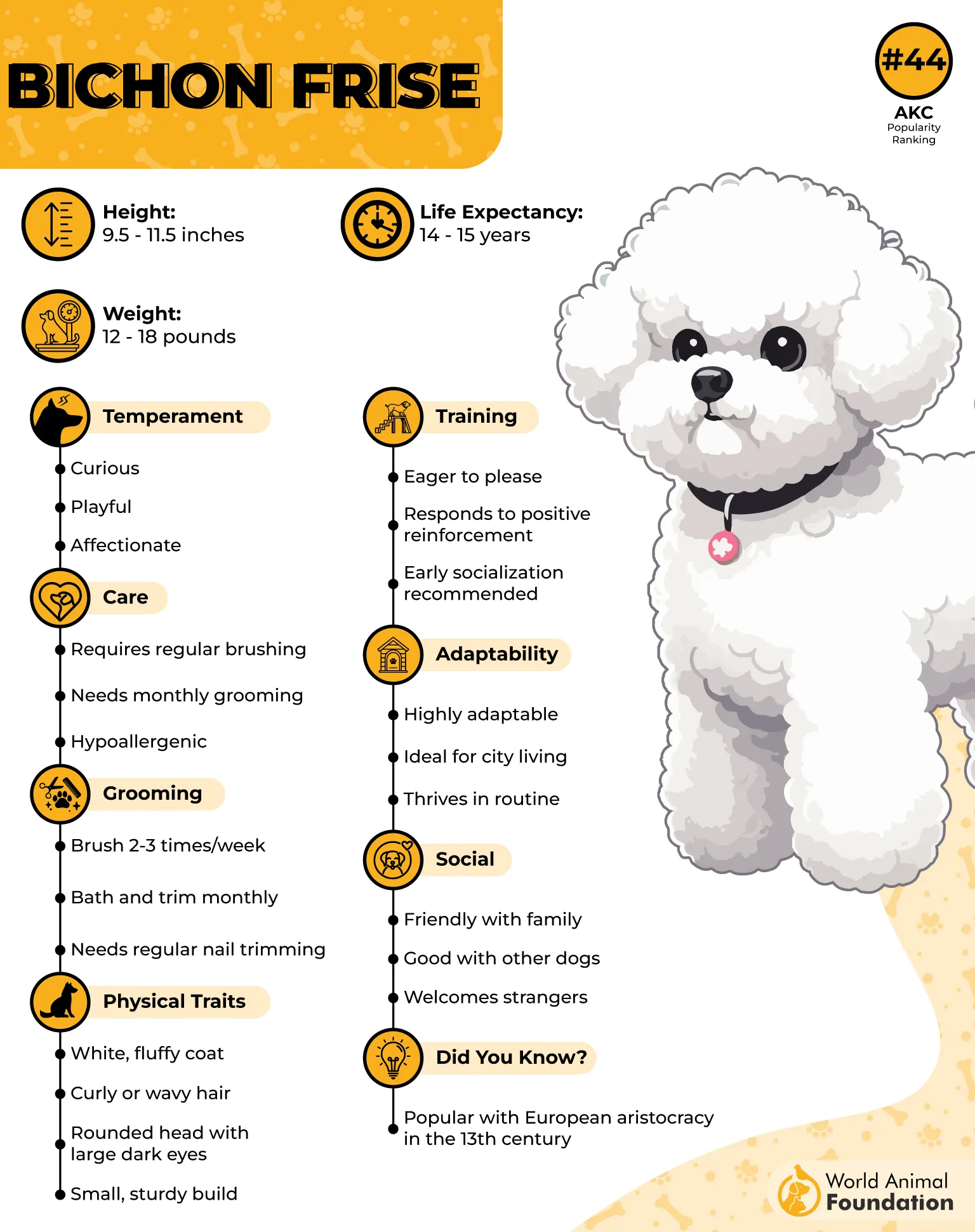
3. Bichon Frise

The Bichon Frise has its roots in the Mediterranean, where small white dogs were crossed with larger water dogs, giving rise to the Barbichon family, as Omlet reported.
That group eventually included the Maltese, Havanese, Bolognese, and Tenerife, before the Bichon Frise became recognized as its own beloved companion.
Easy Housemates
Living with cats often comes easily for the Bichon Frise, as this breed is usually more interested in making friends than chasing other animals. Giving both pets time to get used to each other helps build a comfortable relationship from the start.
The following characteristics make it even more interesting:
Low prey drive around cats
Therapy dog temperament
Former favorite of street performers
Always Part of the Action
This small dog breed enjoys being involved in everyday family life and often looks for attention through playful games or amusing tricks. Spending long hours alone can lead to whining, chewing furniture, or toileting indoors because this breed enjoys regular companionship.
4. Cavalier King Charles Spaniel
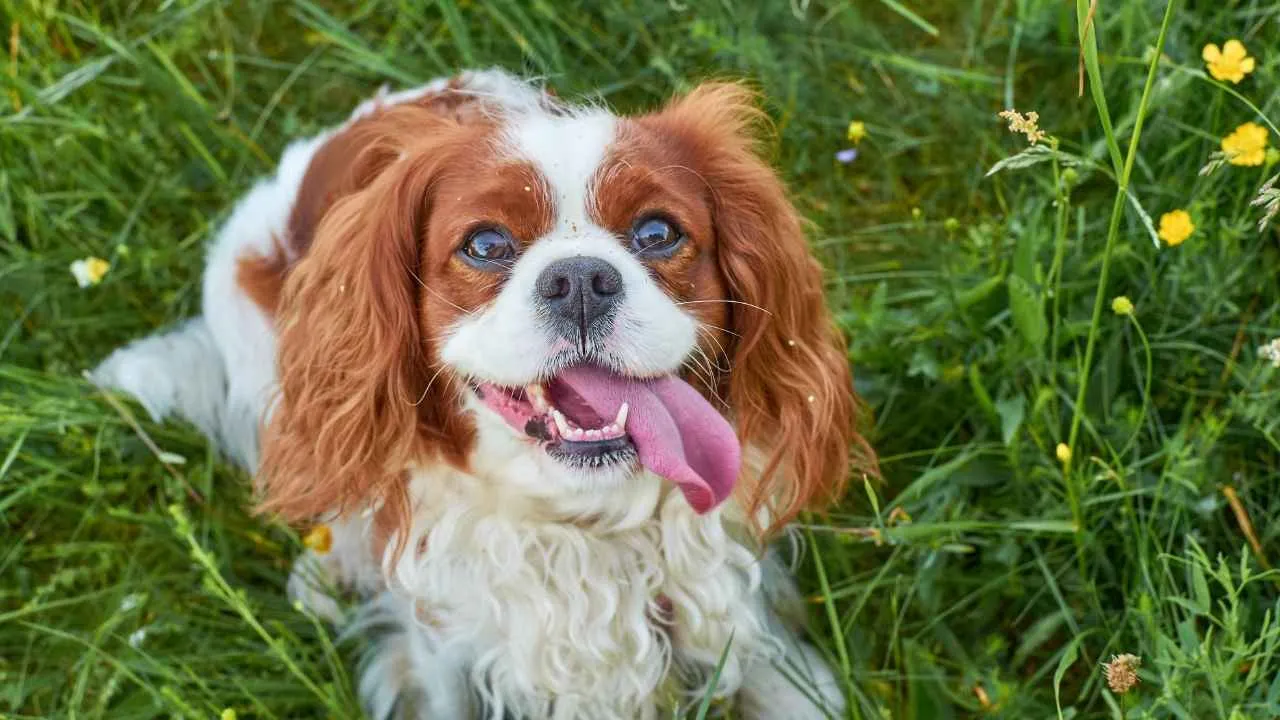
During the 17th century, King Charles I and King Charles II were rarely seen without these little companions, inspiring the name Cavalier King Charles Spaniel.
Historical accounts even describe the dogs accompanying the royal family into places such as Parliament, reflecting just how closely they shared everyday life.
A Comfortable Match
These Spaniels approach new people and household pets with curiosity instead of tension, which often helps introductions with cats feel more relaxed. While every pet has its own personality, this breed has built a reputation for peacefully sharing space with feline companions.
These points provide extra perspective:
Originally chosen to warm laps in chilly castles
Safe cat-only spaces remain important
Need daily walks and playtime

Quiet Moments Together
Cavalier King Charles Spaniel enjoys curling up beside familiar people after daily activities, and cats with similar habits often appreciate that relaxed pace. It is not unusual to find both pets choosing the same comfortable spot for an afternoon nap when introductions have gone well.
5. Maltese

Maltese was developed on the island of Malta in the Mediterranean, with records stretching back more than two thousand years. Ancient Greek artwork included this little companion, and even Aristotle wrote about the breed, giving it an unusually long and well-documented past.
Easy Introductions
Maltese often makes sharing a home with a cat less complicated because chasing instincts are generally quite low. Calm greetings, gentle curiosity, and steady command practice can help early meetings feel more relaxed for both animals instead of becoming overwhelming.
These details make introductions even smoother:
Similar size to many house cats
Harness and leash can help during first meetings
Familiar scents on a blanket can ease introductions

Everyday Living
Maltese enjoys learning simple tricks and responds well to short training sessions that reinforce basic commands around distractions. Daily walks or indoor play usually provide enough activity, while the silky white coat sheds very little because this breed has no undercoat.
6. Golden Retriever
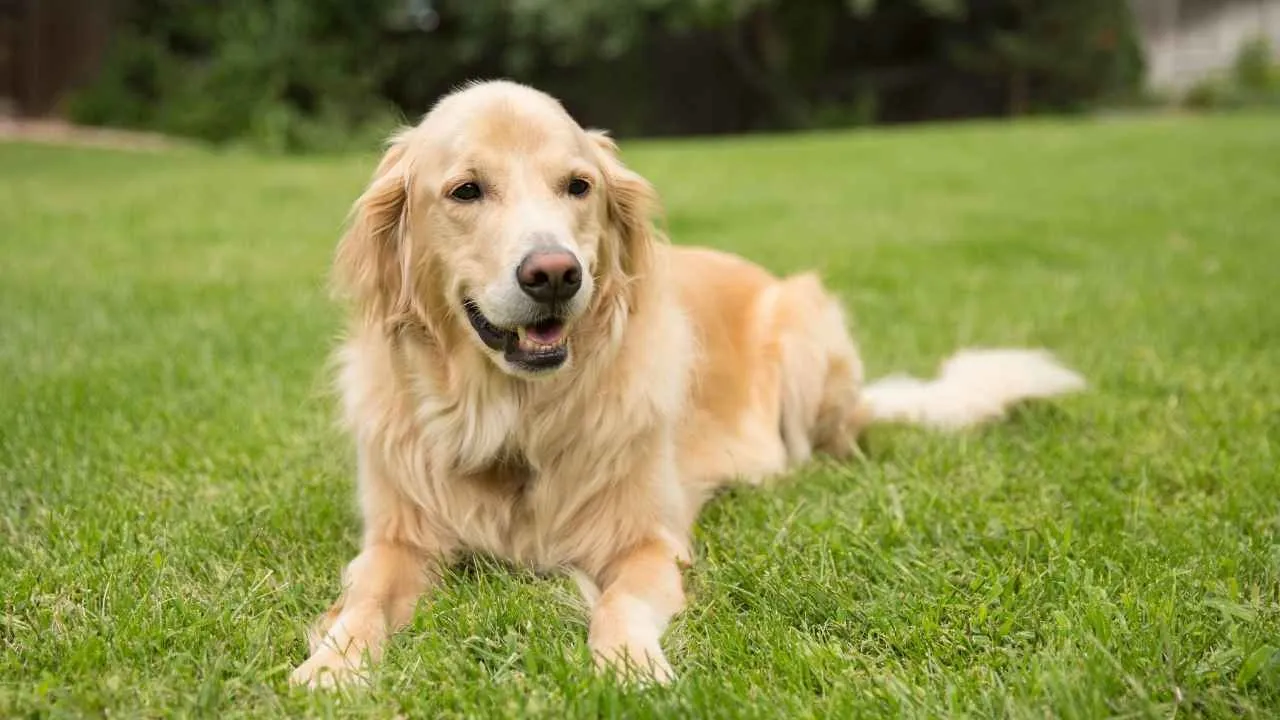
The Golden Retriever’s story began in Scotland, where hunters relied on the breed to bring back game after a shot without chasing or damaging it. That careful job helped develop the gentle mouth and cooperative nature the breed is still known for today.
Easy Company
Living with cats often comes naturally for this breed because it generally lacks the intense prey drive seen in some hunting dogs. Early introductions, patient socialization, and positive experiences help create a calmer relationship between both pets from the beginning.
Another part of the story is worth knowing:
Ranked as the fourth most intelligent dog breed
Frequently chosen for therapy and military work
Enjoys water and outdoor activities

A Friendly Presence
Golden Retriever enjoys attention from the people around it and often gives a gentle nudge when hoping for another scratch or pat. Its welcoming nature, combined with patient socialization from puppyhood, helps create a confident companion in homes with feline friends.
7. Pug

The Pug descended from ancient mastiff-type dogs and first appeared in the Orient centuries ago before becoming closely associated with Tibetan monasteries.
The breed later reached Europe through the East India Trading Company during the 1700s, where its charming personality quickly found a place in family life.
Living Together
This small breed can be good with cats, though early introductions matter far more than breed alone. Puppies that grow up around calm, cat-friendly companions often learn that sharing a multi-pet household is simply part of everyday life.
That early start can make a difference:
Low natural prey drive
Benefits from puppy socialization
Calm cats encourage positive interactions

Easygoing at Home
Pug enjoys a relaxed routine and usually prefers a comfortable chair over energetic games or chasing after a ball. A daily walk and sensible meal portions help prevent unwanted weight gain, especially since this breed can be quite fond of long naps.
8. Papillon

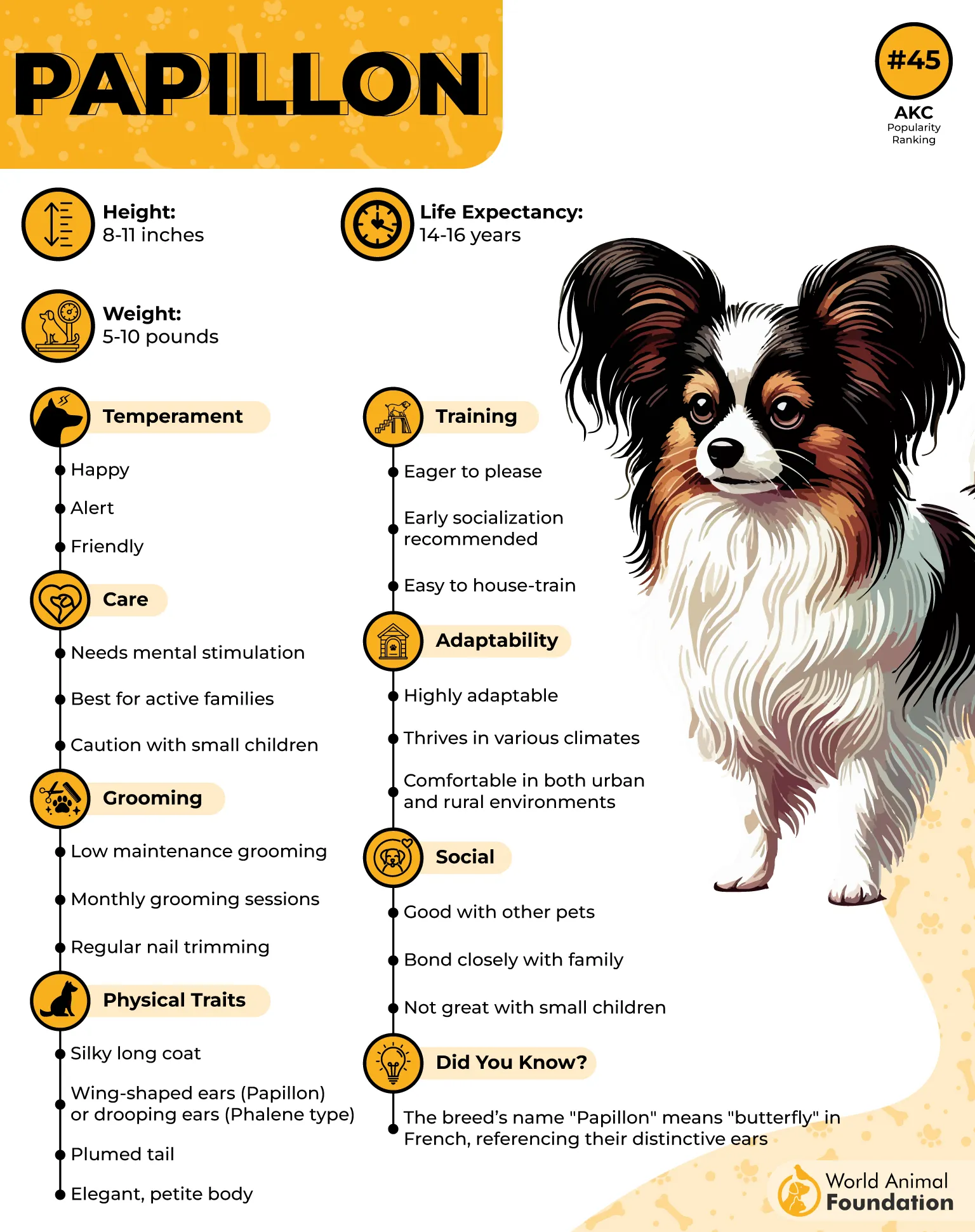
Papillon takes its name from the French word for “butterfly,” inspired by its distinctive upright ears. Before becoming widely recognized by this name, the breed appeared under several names and spent centuries in the company of European aristocracy across France, Spain, Italy, Belgium, and the Netherlands.
A Gentle Housemate
Papillon’s size is close to that of a typical house cat, making early introductions feel less overwhelming for a feline companion. Giving both pets separate spaces at first, while allowing them to hear and smell each other before meeting face to face, encourages a calmer beginning.
There’s more about this little breed:
Adapts well to apartments and different living environments
More active than several other toy breeds
One of the smartest little dog breeds
Always Involved
Papillon enjoys spending much of the day around its family and appreciates having company instead of long periods alone. A friendly cat or another compatible dog can help provide companionship, while puzzle games and interactive activities keep this bright breed mentally engaged.
9. Shih Tzu
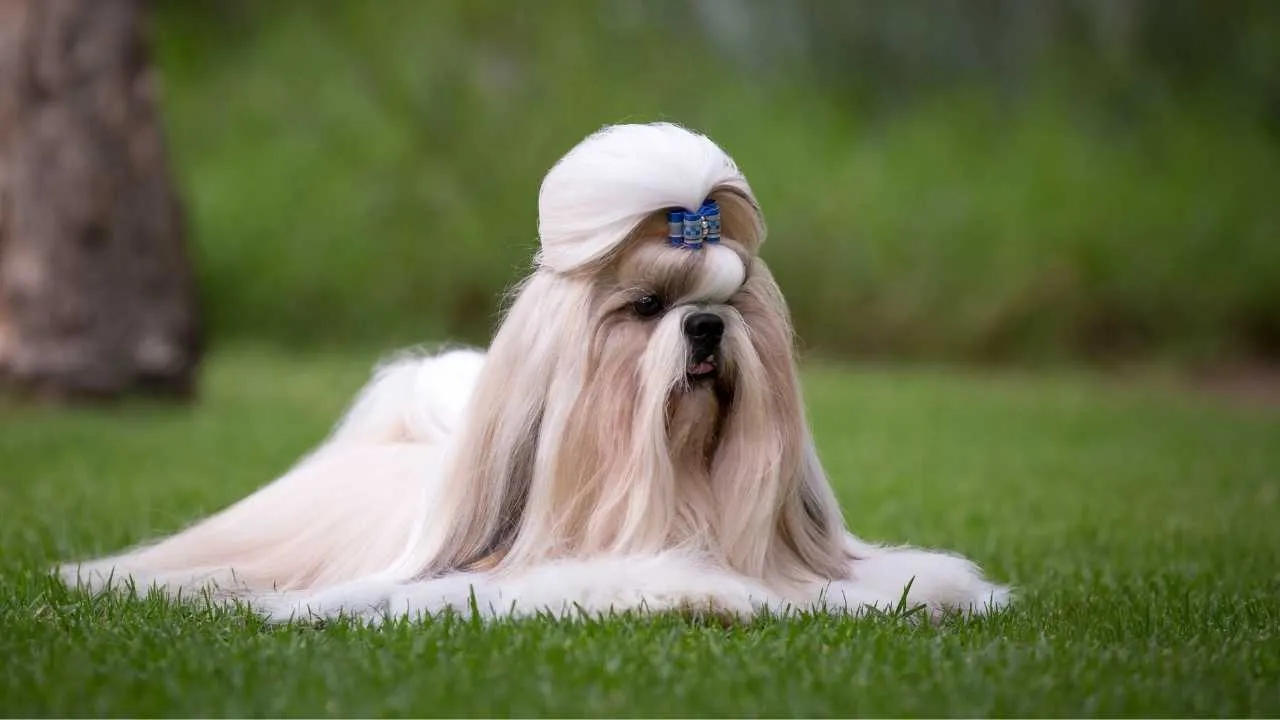
The Shih Tzu became a familiar presence in China alongside Buddhist traditions, where it was known by the memorable name “Lion Dog.” Early records also connect this breed with Tibet, and for a time it appeared in the same classification as the Lhasa Apso before receiving its own identity.
A Gentle Housemate
Shih Tzu’s easygoing personality helps create calmer introductions with a cat, especially when both pets meet during puppyhood. The socialization window between 3 and 12 weeks gives young dogs an excellent opportunity to become familiar with feline companions in a relaxed setting.
These details add another layer:
Adult weight reaches about 16 pounds
Flat face can affect breathing in warm weather
Supervised play helps prevent overexertion

Comfort Comes First
Shih Tzu enjoys quiet moments indoors and happily shares space with people, other pets, and respectful children. Because this brachycephalic breed can become uncomfortable in the heat, energetic chasing games with an active cat deserve close attention during warmer days.
10. Labrador Retriever

Labrador Retriever began in Newfoundland, where the original dogs looked much lighter than the Newfoundland breed recognized today and were almost entirely black.
Their daily work included retrieving game, helping with fishing tasks, and pulling boats across lakes before the modern Labrador took shape.
Sharing the House
Living peacefully with a cat depends just as much on the personalities involved as it does on the dog itself. Confident cats often adjust more smoothly, while early introductions and basic obedience lessons help prevent a young Labrador from pestering its feline housemate.
The breed has a few more surprises:
Generally has a moderate prey drive
Early cat introductions are beneficial
“Sit” and “stay” commands improve household control

Always Looking to Learn
Labrador Retriever enjoys learning new tasks, which explains why it has been chosen for roles including assistance work, therapy support, detection duties, and field work. That willingness to respond to training also makes it easier to redirect unwanted curiosity around cats as routines become familiar.
Conclusion
Building a peaceful multi-pet home rarely happens overnight, but small steps often lead to lasting results. Calm introductions, steady routines, and respectful boundaries help both animals adjust without unnecessary pressure.
Some specific dog breeds naturally accept feline housemates more easily, giving new owners greater confidence during those important first weeks together.
As trust develops, curiosity often replaces caution, especially when introducing a dog and cat at a young age. Separate spaces gradually become shared parts of the home, and choosing thoughtfully from the start creates a stronger foundation for everyone involved, making everyday life feel more relaxed, enjoyable, and rewarding for both pets and the people who care for them.
