




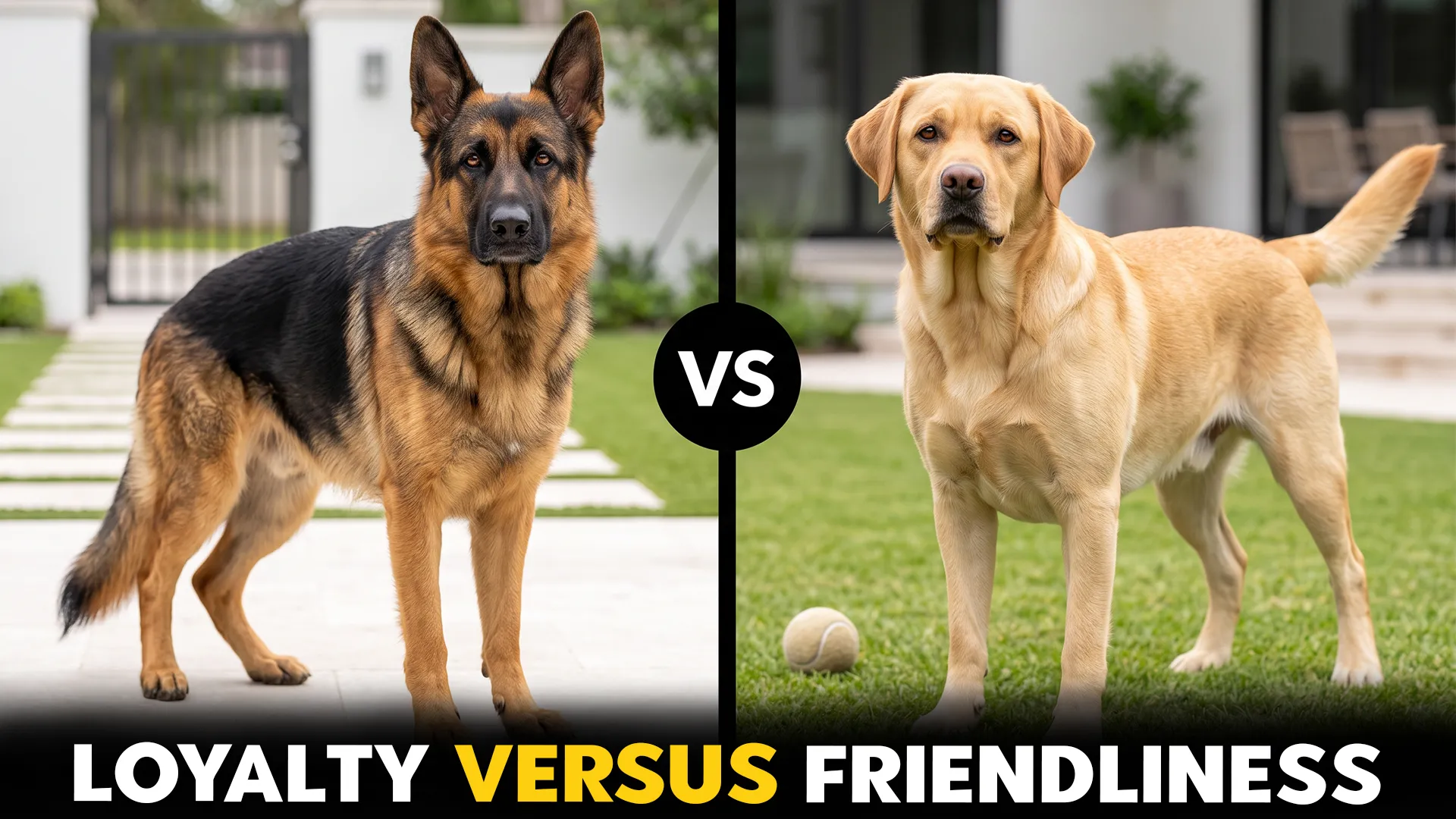
Choosing between a German Shepherd and a Labrador Retriever is a bit like choosing between a skilled bodyguard and your funniest best friend. Both breeds are loyal, intelligent, and deeply devoted to their families, but they shine in very different ways.
That holds true whether you’re drawn to the sharp instincts of a German Shepherd or the cheerful heart of a Labrador. This comparison goes beyond the usual surface-level facts, looking at their history, personality, work ethic, health, and daily needs to help you find the breed that truly fits your home, routine, and lifestyle.
German Shepherds vs. Labrador Retrievers Dog Breeds: Things to Know About
German Shepherds and Labrador Retrievers are two popular dog breeds known for their intelligence, loyalty, and friendly nature. This comparison covers their temperament, training needs, exercise levels, and suitability for different families.
Origins, History & Purpose
The German Shepherd was developed in the late 19th century as a herding and protection dog, while the Labrador Retriever originated in England as a hunting retriever.
German Shepherd: This medium-to-large working dog was originally bred in Germany by Max von Stephanitz in 1899 and gained wider recognition after World War I. Today, it’s widely used in search-and-rescue, disability assistance, police work, and military service, according to Wikipedia.
Labrador Retriever: This British breed was originally developed as a gun dog for retrieving game. Its ancestor is the St. John’s water dog, brought over from Newfoundland, Canada, and its primary role from the start was as a hunting and sporting companion.
Size, Weight & Build Differences
The German Shepherd has a rectangular frame and tends to be longer and taller overall, while the Labrador is shorter, more compact, and has a blockier build.
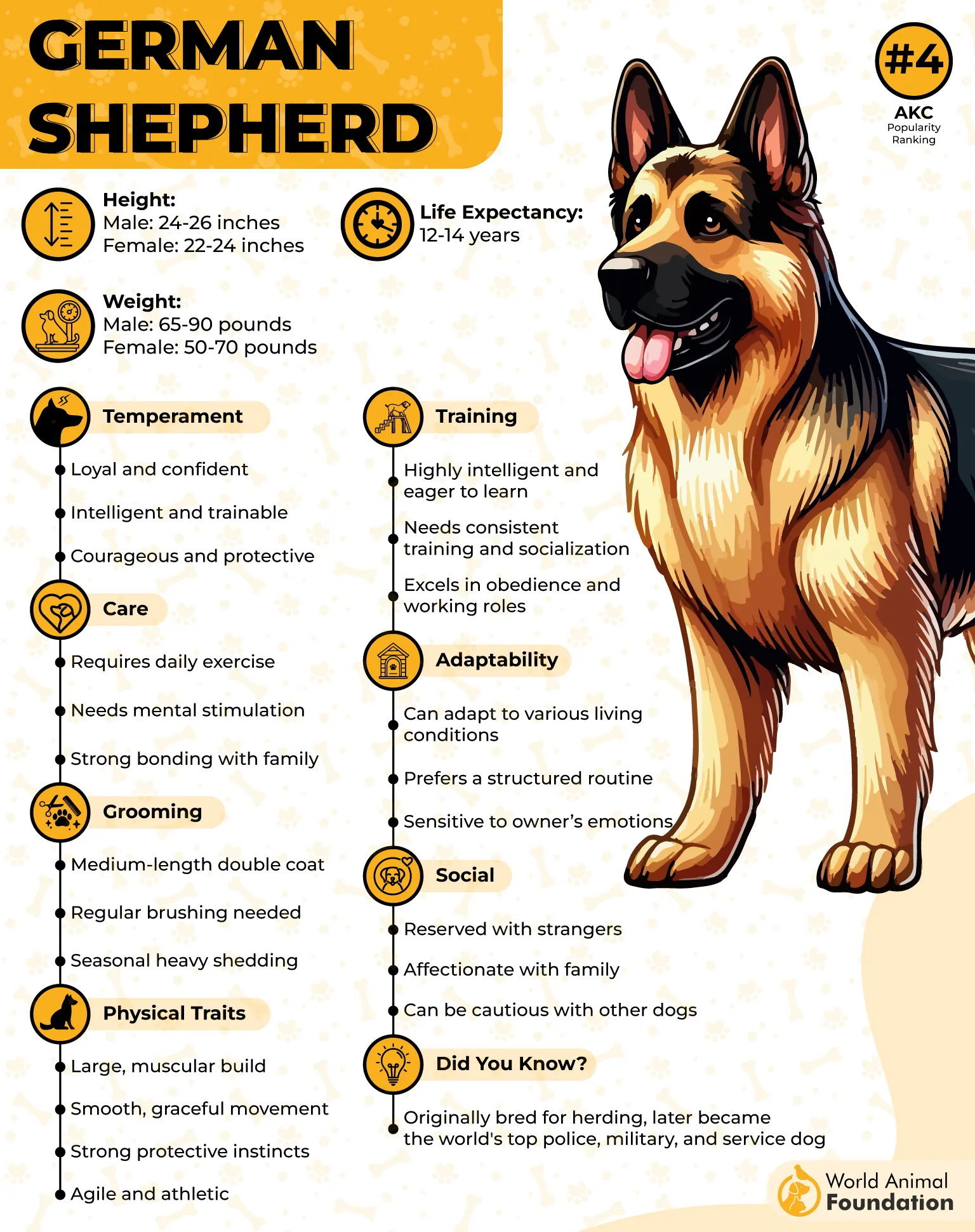
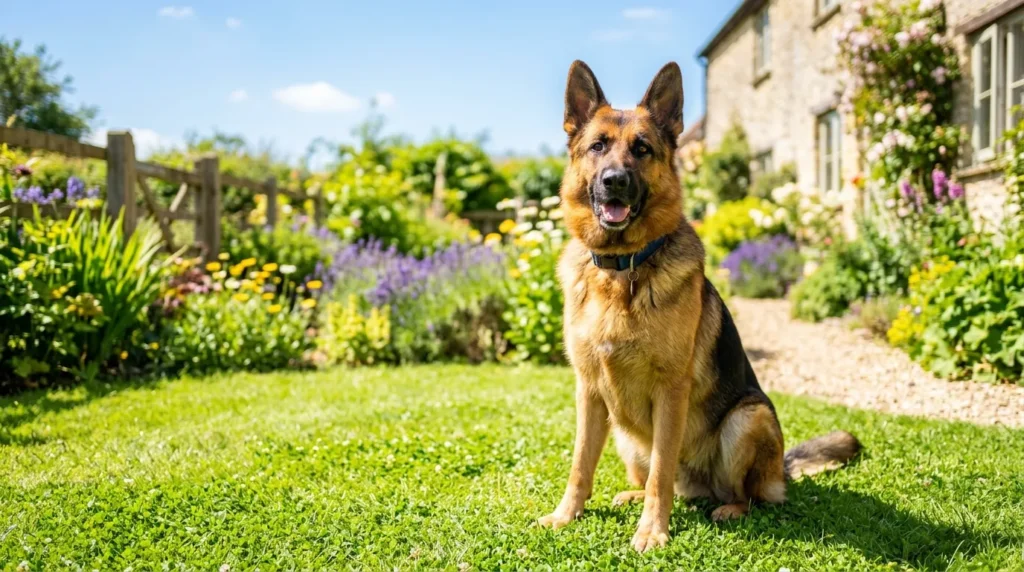
German Shepherd: This breed stands about 22–26 inches tall and weighs around 50–90 pounds. It has dense bones, a broad chest, a wide skull, and a well-angulated stature. This high-energy breed comes in two main lines: working line and show line.
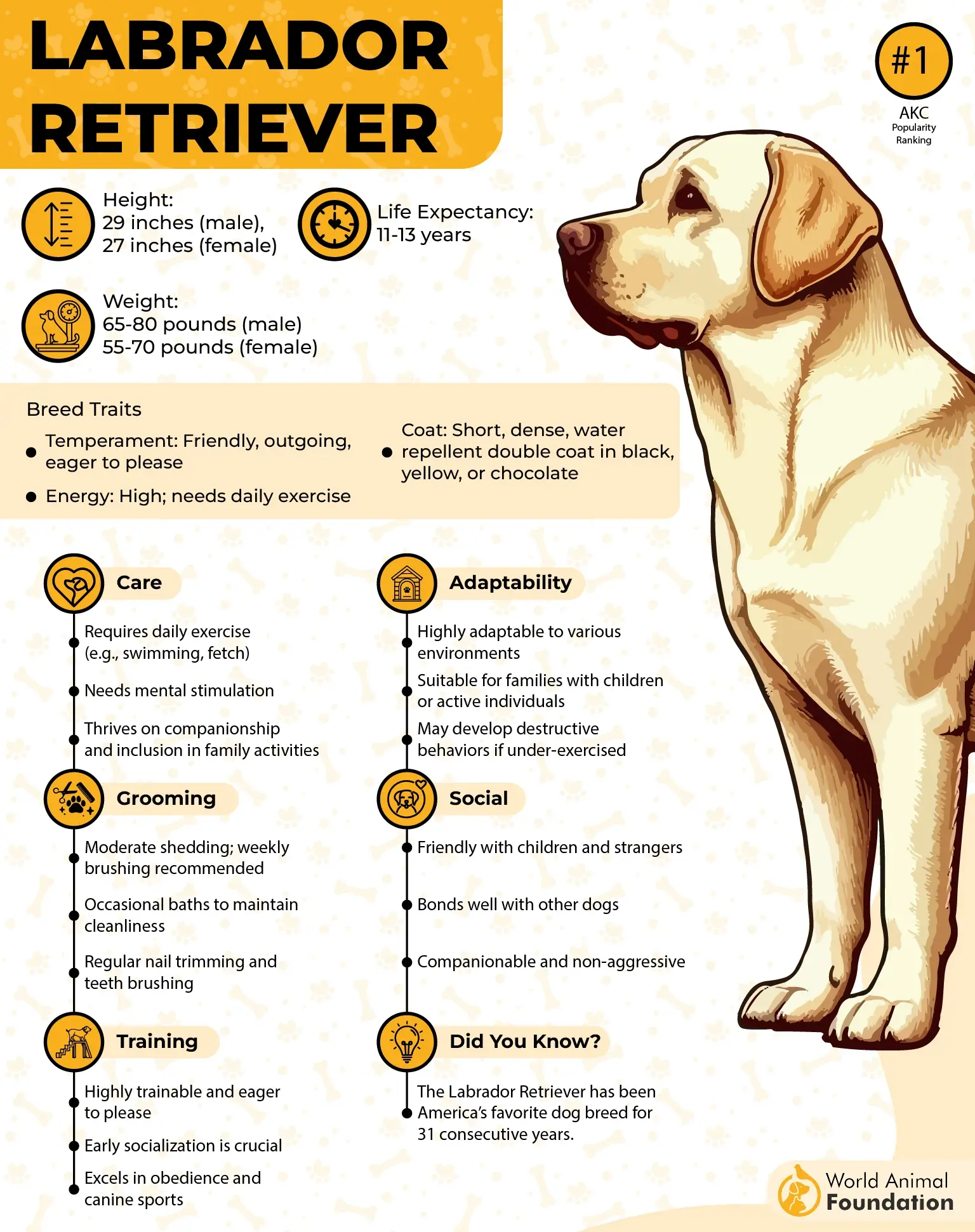
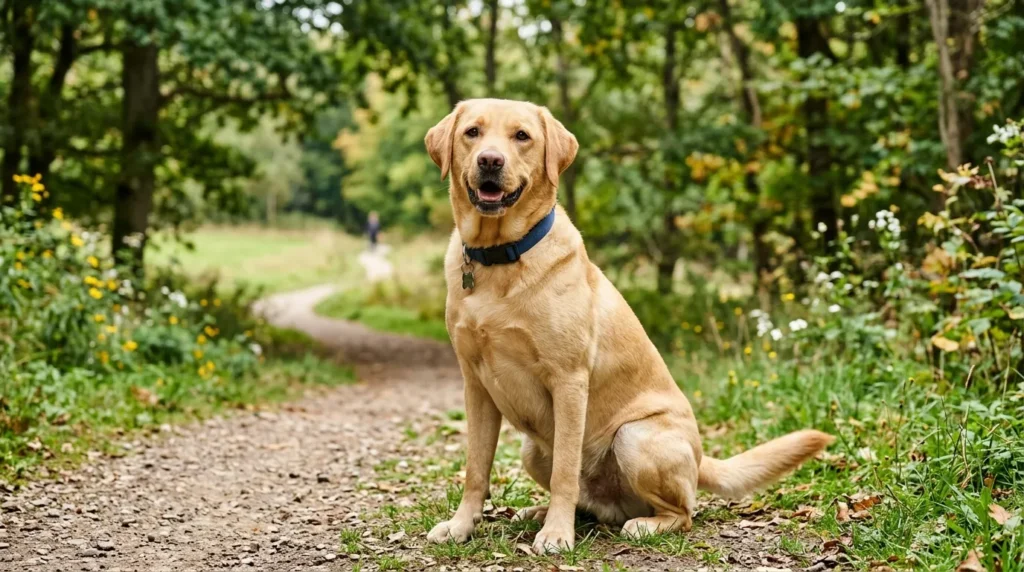
Labrador Retriever: This breed stands about 21.5–24.5 inches tall and weighs around 55–80 pounds. It has a sleeker, more streamlined build with a solid bone structure. Labs also come in two main lines: English (show-type, shorter and more compact) and American (field-type, taller and more athletic).
Coat Types, Grooming & Maintenance
The German Shepherd has a thick double coat that sheds heavily year-round, with even more intense shedding during seasonal blowouts. The Labrador has a short, water-resistant coat that also sheds significantly, especially during shedding season.
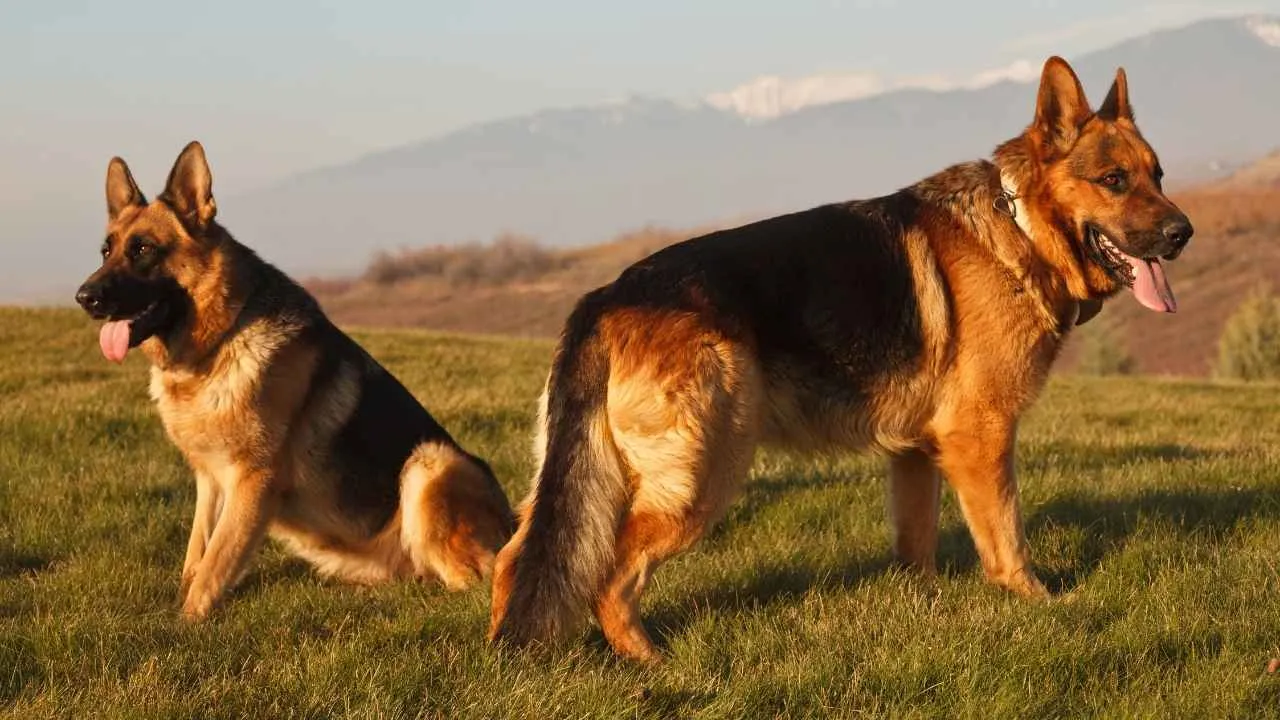
German Shepherd: The double coat has two layers, a coarse outer layer and a soft, insulating undercoat. It sheds a lot and needs consistent grooming, ideally daily brushing with a pin brush, along with a bath every 4–6 weeks.
Labrador Retriever: Labs actually come in two coat types: the more common shorthaired coat sheds moderately and needs weekly brushing, while the less common longhaired variety sheds more heavily and benefits from daily brushing. Long-toothed rakes and de-shedding tools work well for keeping the coat under control, as reported by the Royal Kennel Club.
Temperament, Personality & Behavior
While both breeds are friendly, the German Shepherd tends to be more reserved around strangers and has a strong protective streak, whereas the Labrador is naturally outgoing and welcoming to just about everyone.
German Shepherd: This is a true “velcro dog” that forms deep bonds with its family. Thanks to its keen observational skills, it tends to size up its surroundings and new people carefully before extending its trust. It thrives with a job to do and can develop separation anxiety if left alone too often.
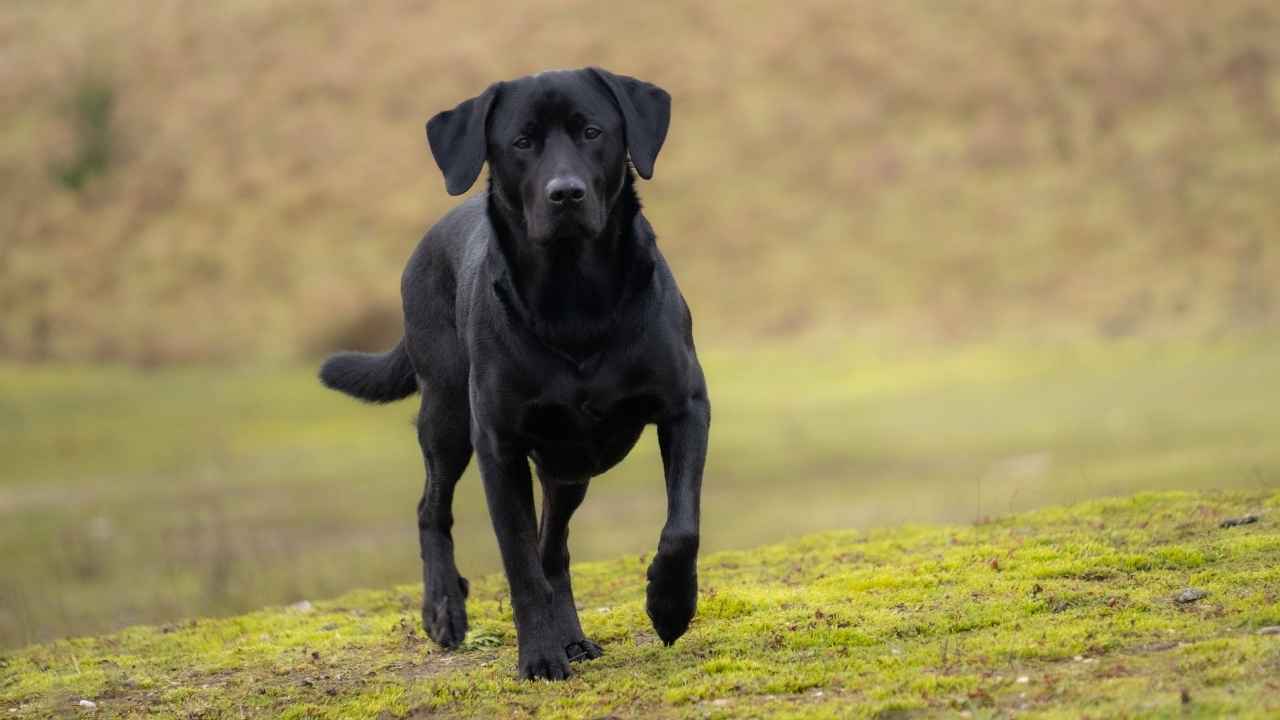
Labrador Retriever: Known for its affectionate, easygoing nature, the Labrador has a steady temperament that makes it a great family dog. It takes roughly 2–3 years for this breed to fully mature, so that puppy energy tends to stick around a while.
Intelligence, Trainability & Responsiveness
Both breeds rank among the most intelligent in the dog world, though they process information and respond to handlers in noticeably different ways.
German Shepherd: Thanks to its herding heritage, this breed was shaped to make independent decisions and is skilled at reading human body language and facial expressions. Many German Shepherds can pick up new tricks in just a handful of repetitions, and they thrive on job-oriented tasks. They’re also deeply loyal to their handler and respond well to consistent guidance.
Labrador Retriever: Labs are widely regarded as one of the most trainable breeds, particularly skilled at picking up on vocal tone and emotion. Since they’re food-motivated, training tends to come easily, though it helps to keep sessions short and varied to avoid boredom, according to Orvis.
Energy Levels, Activity Needs & Work Style
Both the German Shepherd and Labrador Retriever are high-energy working breeds that need task-oriented physical activity along with mental stimulation.
German Shepherd: Because of its high intelligence, this breed can get bored easily and may develop destructive habits like chewing if left understimulated. Daily exercise of 1–2 hours is recommended, including running, long walks, fetching, interactive puzzle toys, and even “patrol” style walks around the yard.
Labrador Retriever: Energy levels run especially high during the puppy and young adult stages, though Labs stay active and alert well into adulthood. Despite all that energy, they’re just as happy flopping on the couch after a good workout. Overall, the breed needs around 60–90 minutes of daily exercise.
Health Concerns, Durability & Average Lifespans
Both breeds make excellent family dogs and share fairly similar average life expectancies, generally living around 10–13 years.
German Shepherd: As a large working breed, the German Shepherd’s lifespan typically falls between 7 and 13 years, with genetics, weight management, and joint care all playing a major role. Common health problems include elbow and hip dysplasia, bloat, degenerative myelopathy, and exocrine pancreatic insufficiency (EPI).
Labrador Retriever: Labs generally live around 10–13 years as well. Interestingly, some studies suggest coat color may be linked to differences in life expectancy within the breed. Common health issues include ear infections, eye problems, weight gain, and joint concerns like hip and elbow dysplasia.
Working Roles, Primal Instincts & Traits
Both breeds differ quite a bit when it comes to their core working instincts. The German Shepherd has strong protective drive paired with a high prey drive, while the Labrador’s instincts center around retrieving.
German Shepherd: This breed has a natural drive to chase, catch, and control moving objects, along with herding instincts that show up as circling or trying to manage group movement. Today, it’s widely used as an assistance and service dog, police and military dog, and herding and guarding dog, excelling across all these roles thanks to its sharp focus, loyalty, and confidence.
Labrador Retriever: This gentle breed has a naturally soft mouth, allowing it to retrieve game without causing damage. Despite its size, it tends to mature slowly, holding onto that puppy-like energy well into adulthood. Labs excel in service and assistance work, water retrieving and gun dog jobs, and detection and search-and-rescue operations.
Family Compatibility & Lifestyle Suitability
Ultimately, choosing between these two breeds comes down to your energy levels, protection needs, and family lifestyle.
|
Feature |
German Shepherd |
Labrador Retriever |
|---|---|---|
|
Family Compatibility |
Naturally protective and a bit wary of strangers; needs early socialization to bond well with other pets in the home |
Warms up quickly to family members, kids, other pets, and even strangers |
|
Energy & Activity |
Highly intelligent and needs daily physical activity paired with mental stimulation |
Needs regular exercise and particularly excels at fetching and swimming |
|
Training |
Best suited to an experienced owner, though it picks up tricks and commands quickly |
Eager to please by nature, making it a great fit for first-time owners |
Conclusion
Both German Shepherds and Labrador Retrievers have earned their popularity for good reason, but they’re really built for different lifestyles. If you’re looking for a highly focused, protective, driven companion, a German Shepherd may be the better match. If your home is busy, social, and full of outdoor adventures, a Labrador Retriever often fits right in.
Neither breed is objectively “better” than the other. It really comes down to your time, activity level, training commitment, and expectations. Take the time to learn about both before deciding. A dog will share your life for many years, so choosing one that matches your personality and daily routine is the smartest step toward a happy, lasting partnership.
