




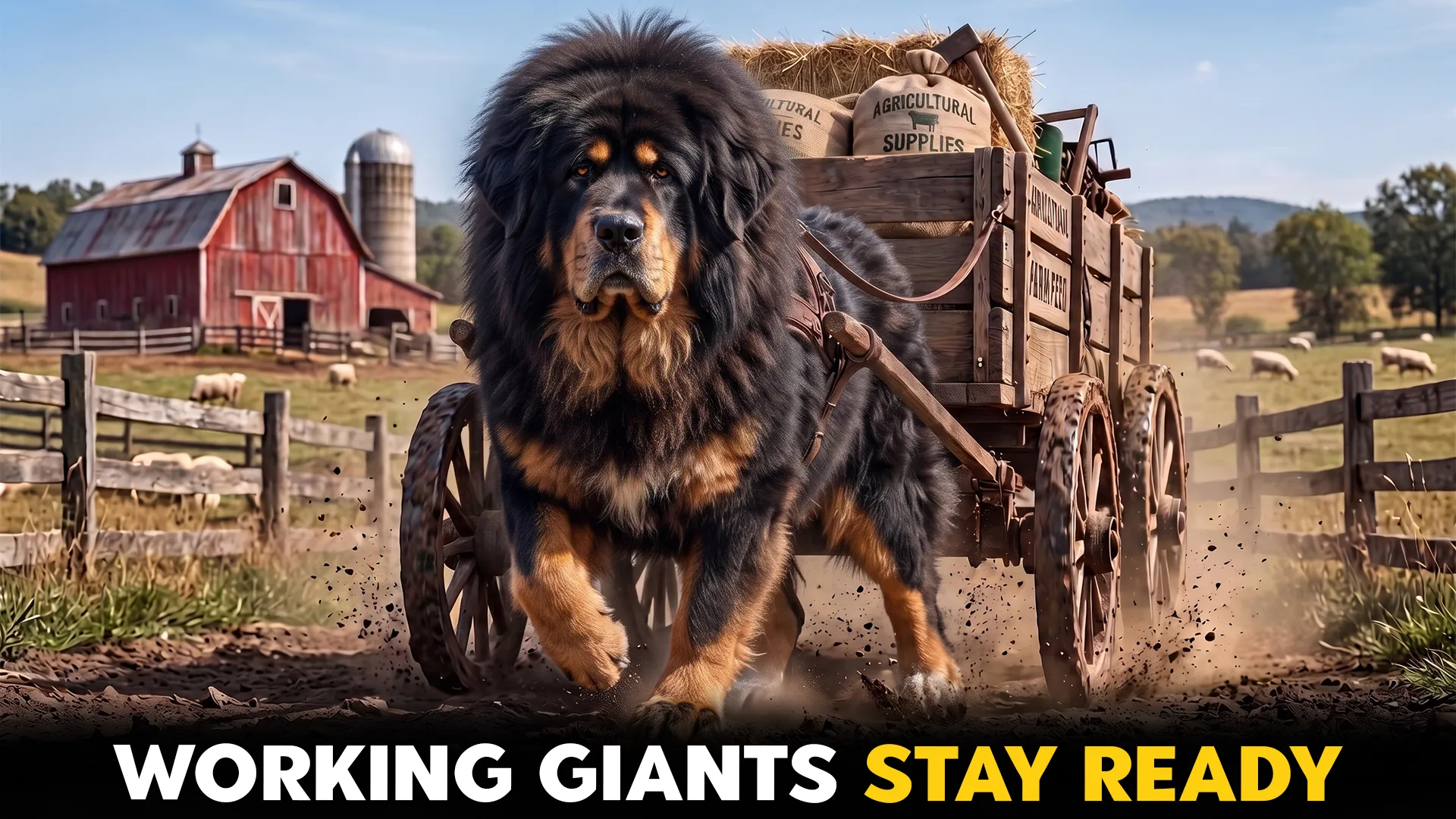
Running a farm or ranch means managing livestock, fencing, machinery, weather, predators, visitors, and approximately seventeen surprise problems before breakfast. A capable working dog can become an extra set of eyes, ears, and instincts when humans cannot monitor every pasture at once.
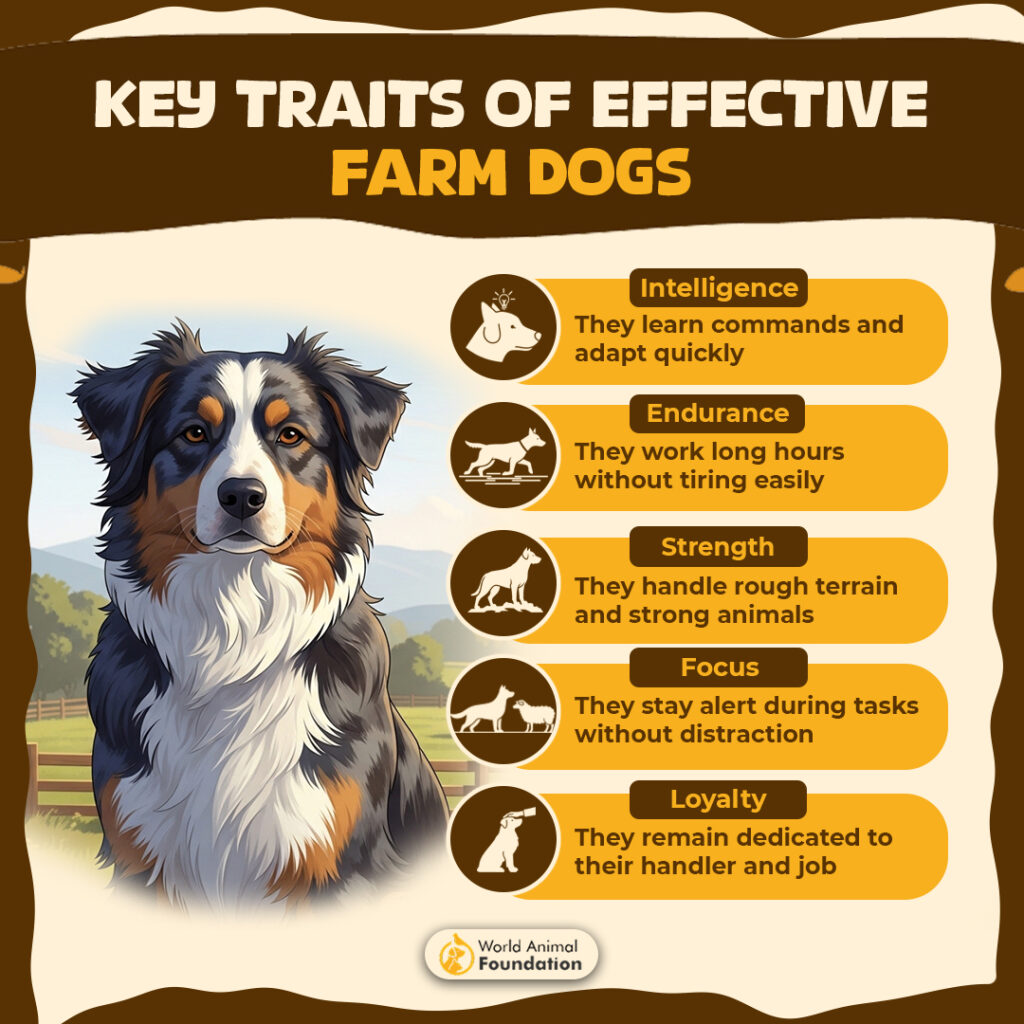
Livestock guardian dogs behave differently from herding breeds such as Border Collies or Australian Shepherds. Herding dogs move animals with controlled pressure, while guardian breeds live alongside livestock, watch the surrounding land, and deter predators from approaching.
The seven breeds below bring different combinations of independence, territorial confidence, weather resistance, family loyalty, and predator awareness to rural life.
Heavy-Powered Dog Breeds Perfect for Farm and Ranch Work
1. Great Pyrenees
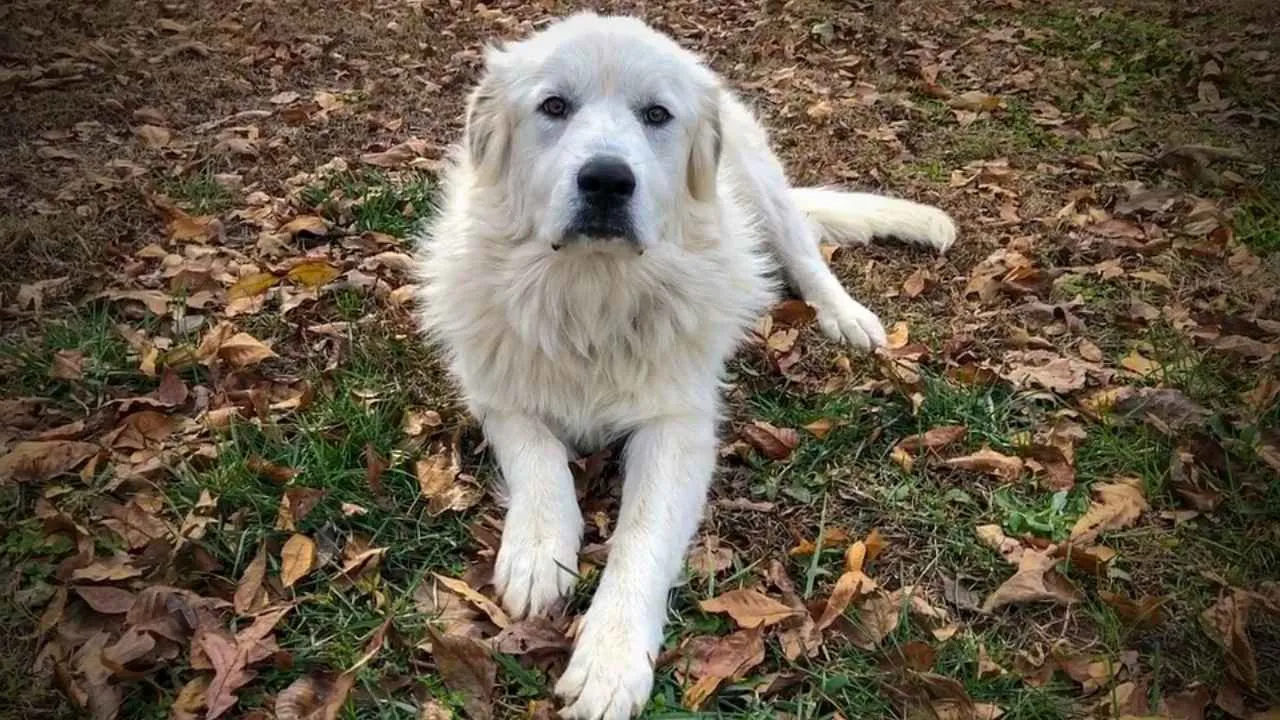
The Great Pyrenees was developed in the mountain region between France and Spain, where Basque shepherds relied on large white dogs to protect flocks from wolves and bears.
Rather than chasing sheep into formation, it positions itself between livestock and possible danger. It patrols boundaries, rests where it can watch for movement, and uses deep barking to announce that the property is already secure.
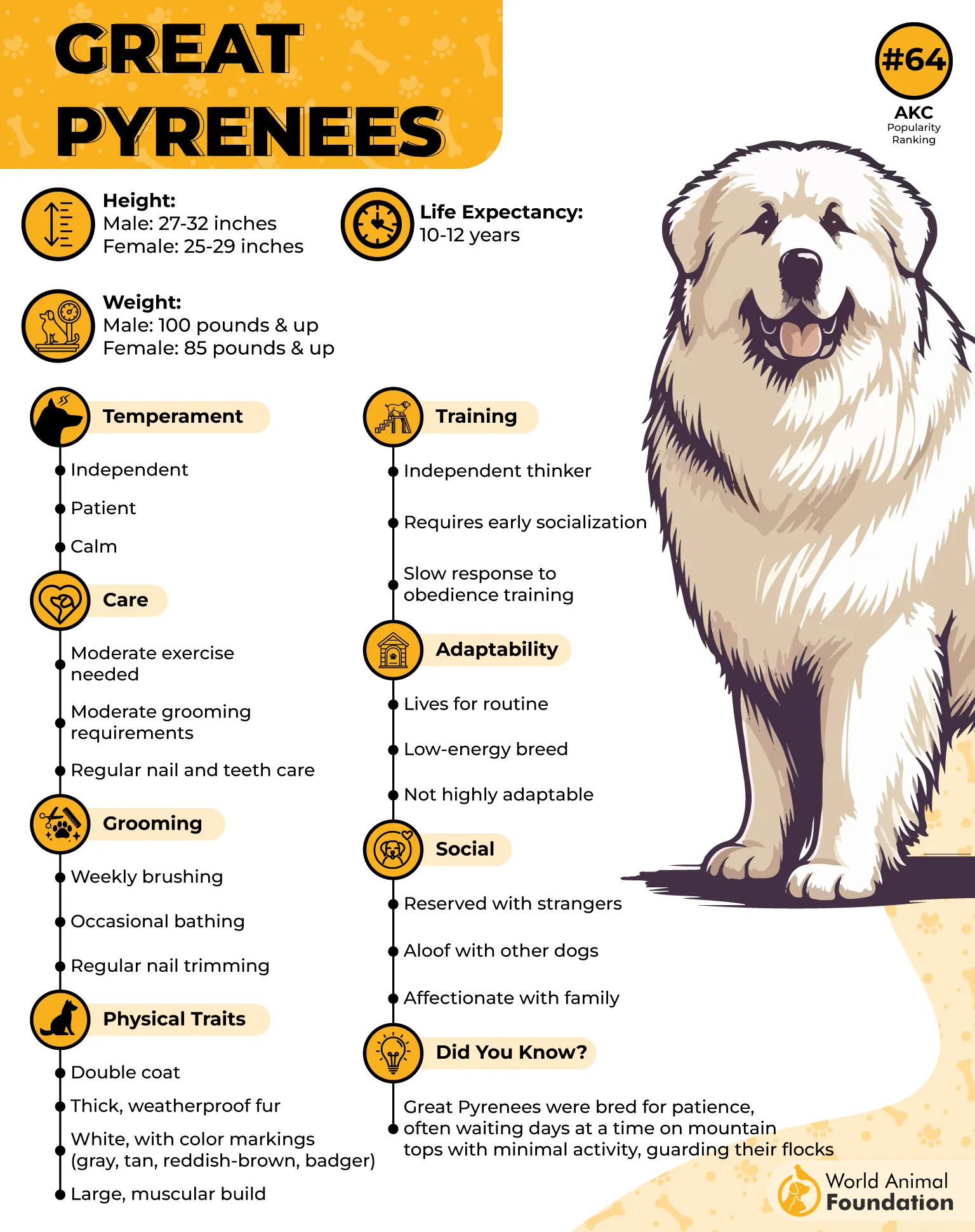
Young Great Pyrenees should grow up around the farm animals they are expected to guard, but introductions still require supervision. Guardian behavior becomes more dependable as the dog matures, as the protective instinct commonly develops fully around 18 months, although some puppies show it earlier.
The breed is loving with its human family but does not need to stand beside a farmer every minute to feel useful. A working Pyrenees may spend hours away from the farmhouse because it has chosen a strategic location near the animals or property edge.
Expect substantial nighttime barking, especially when coyotes, vehicles, unfamiliar people, or distant sounds enter the dog’s awareness. This vocal behavior is part of the breed’s deterrence system rather than meaningless drama, but neighbors and nearby properties still need to be considered.
2. Anatolian Shepherd
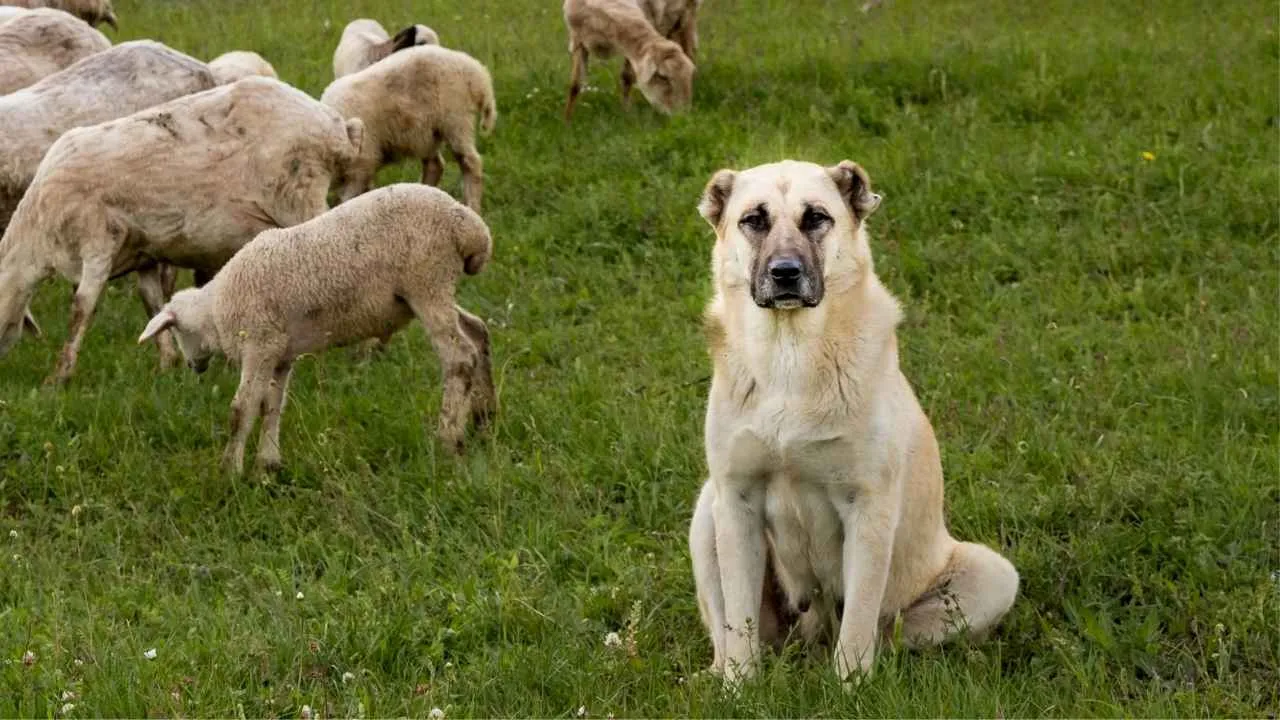
The Anatolian Shepherd originated in Turkey, where shepherds needed a resilient dog capable of guarding sheep and goats in harsh climates. These dogs worked beside livestock for long periods, making their own decisions when wolves, bears, or unfamiliar dogs approached.
These Shepherd dogs usually develop a deep attachment to the animals under their protection. They patrol beyond the herd, monitor access points, and position themselves to intercept a threat before it reaches vulnerable stock.
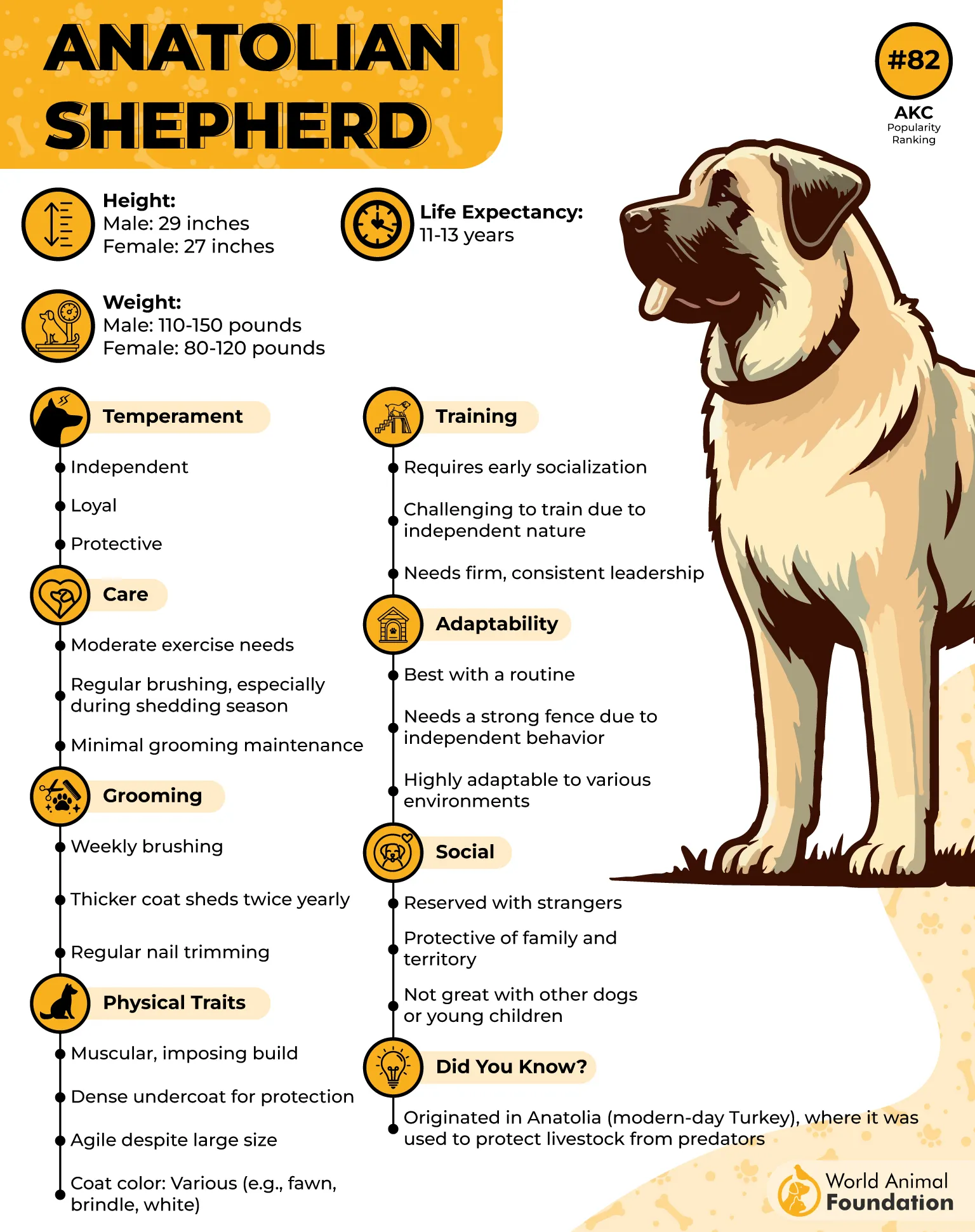
Known for its strong protective instincts, this breed is calm and controlled when nothing is wrong, but it can become intensely serious when its territory is violated. That switch is useful around predators yet demands responsible management when delivery drivers, veterinarians, contractors, or neighboring dogs enter the land.
Training an Anatolian requires fairness, patience, and respect for independent thinking. These dogs were bred to make field decisions without constant human direction, so repetitive obedience may receive the same enthusiasm as a meeting that should have been an email.
Using positive reinforcement and setting clear boundaries is more effective than relying on harsh punishment, as it helps build trust and reduces the risk of defensive or aggressive behavior.
3. Komondor
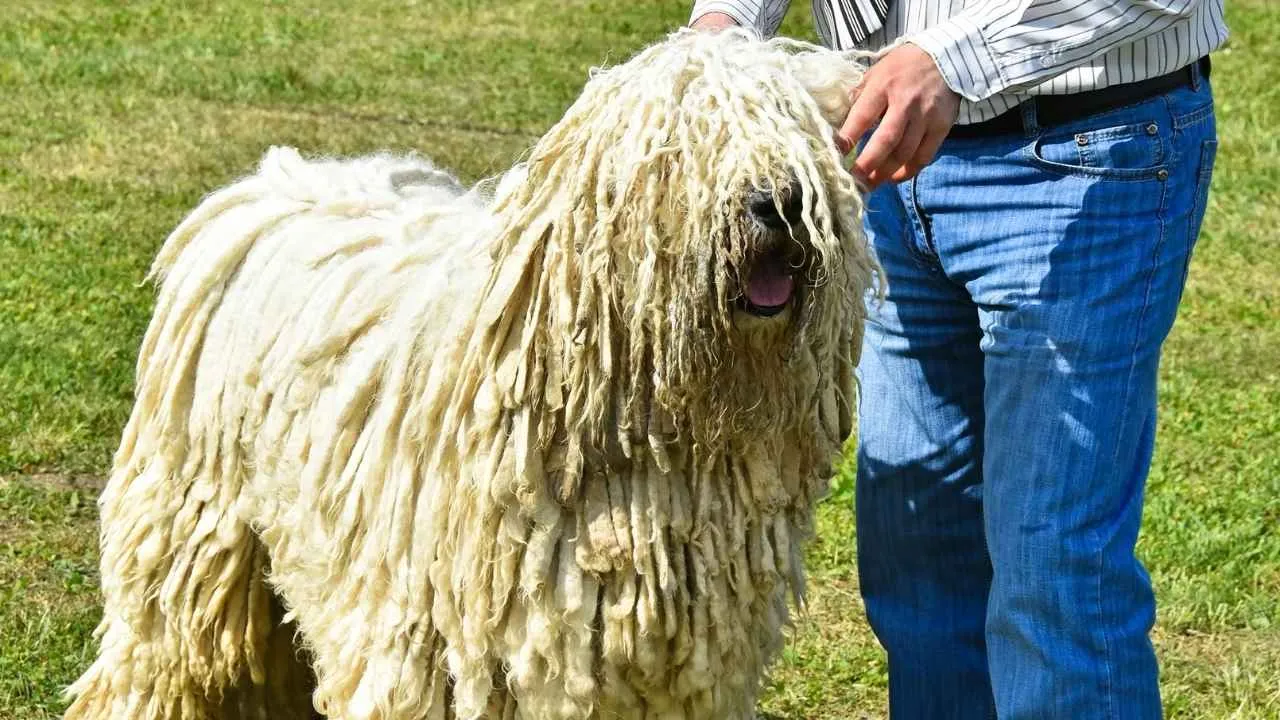
The Komondor is an ancient Hungarian livestock guardian developed on the open plains known as the Puszta. Its extraordinary corded coat helped it blend among sheep while offering protection from weather and predator bites.
On a ranch, it can resemble a mobile mop until the alleged mop stands up and reveals that it has been monitoring the entire pasture.
Adult Komondors tend to claim livestock, land, buildings, and family members as part of one protected territory. They patrol independently and may challenge predators or unfamiliar people without waiting for somebody to deliver a detailed briefing.
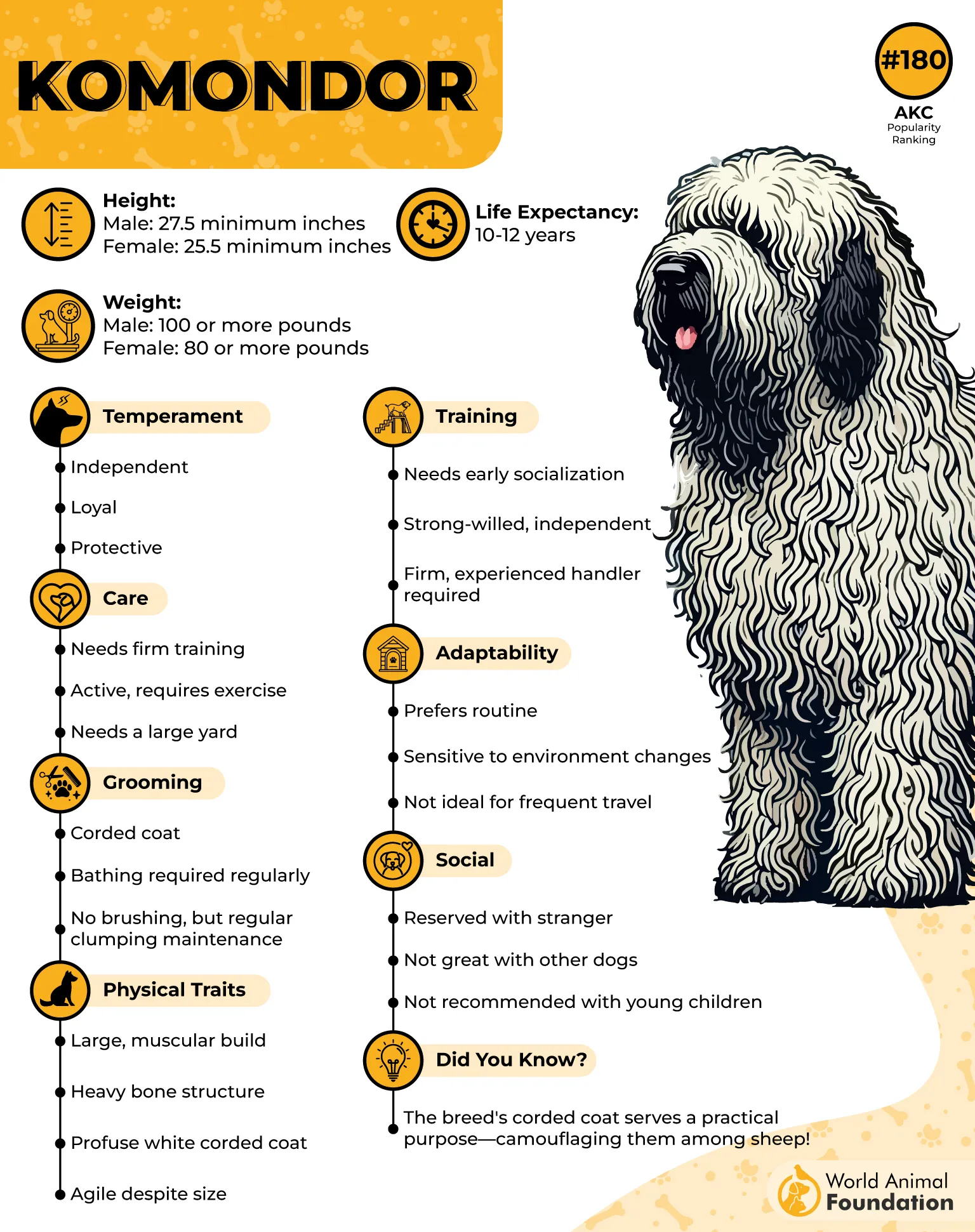
The puppies are playful and cannot automatically be trusted with lambs, kids, poultry, or other vulnerable animals. They may chase livestock, bowl over smaller animals, or treat movement as an invitation to start a chaotic game.
These companion dogs are best suited to experienced rural owners who understand independent guardian behavior. They generally need land to patrol and may struggle in busy suburban environments filled with visitors, delivery workers, and close neighbors.
4. Kuvasz
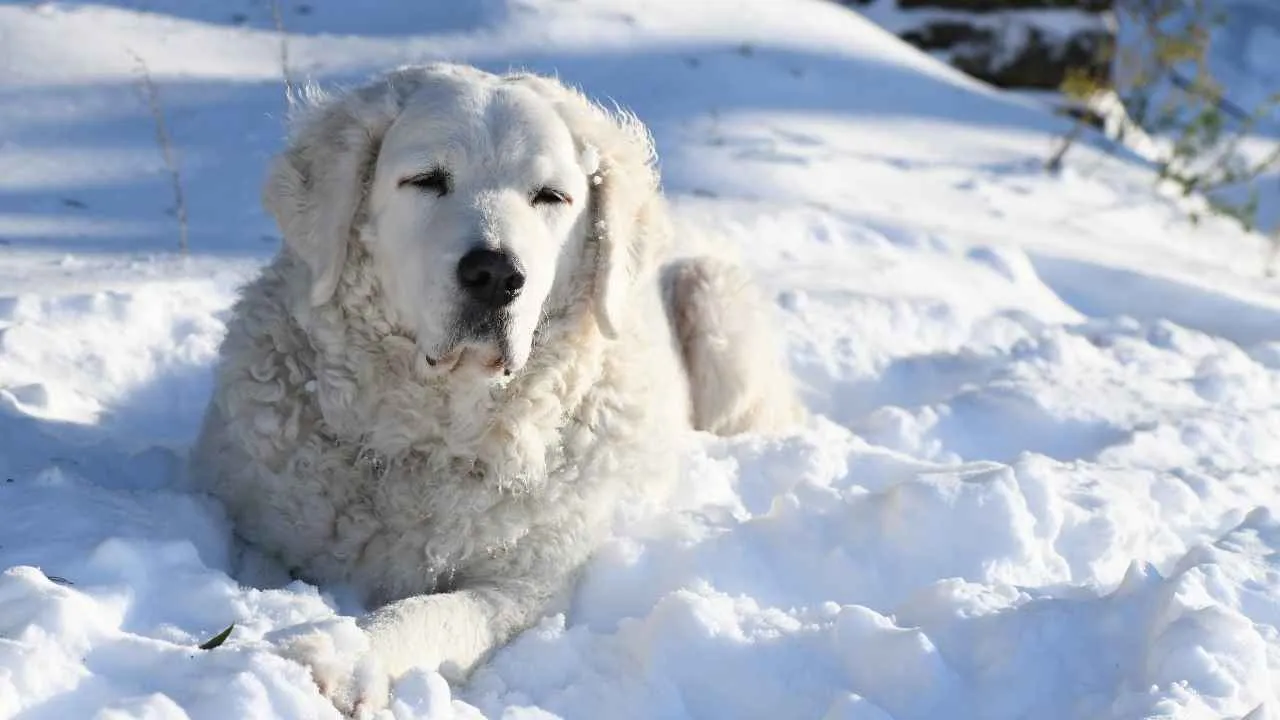
The Kuvasz is a large Hungarian guardian known for combining flock protection with strong loyalty to its human household. On farms, one individual may guard animals outside, interact with family members, and remain alert to both animal and human threats.
Kuvasz dogs are watchful without becoming frantic or nervous, according to the AKC. They assess unfamiliar movement, monitor the home and stock, and maintain a reserved attitude toward strangers until their people indicate that the situation is safe.
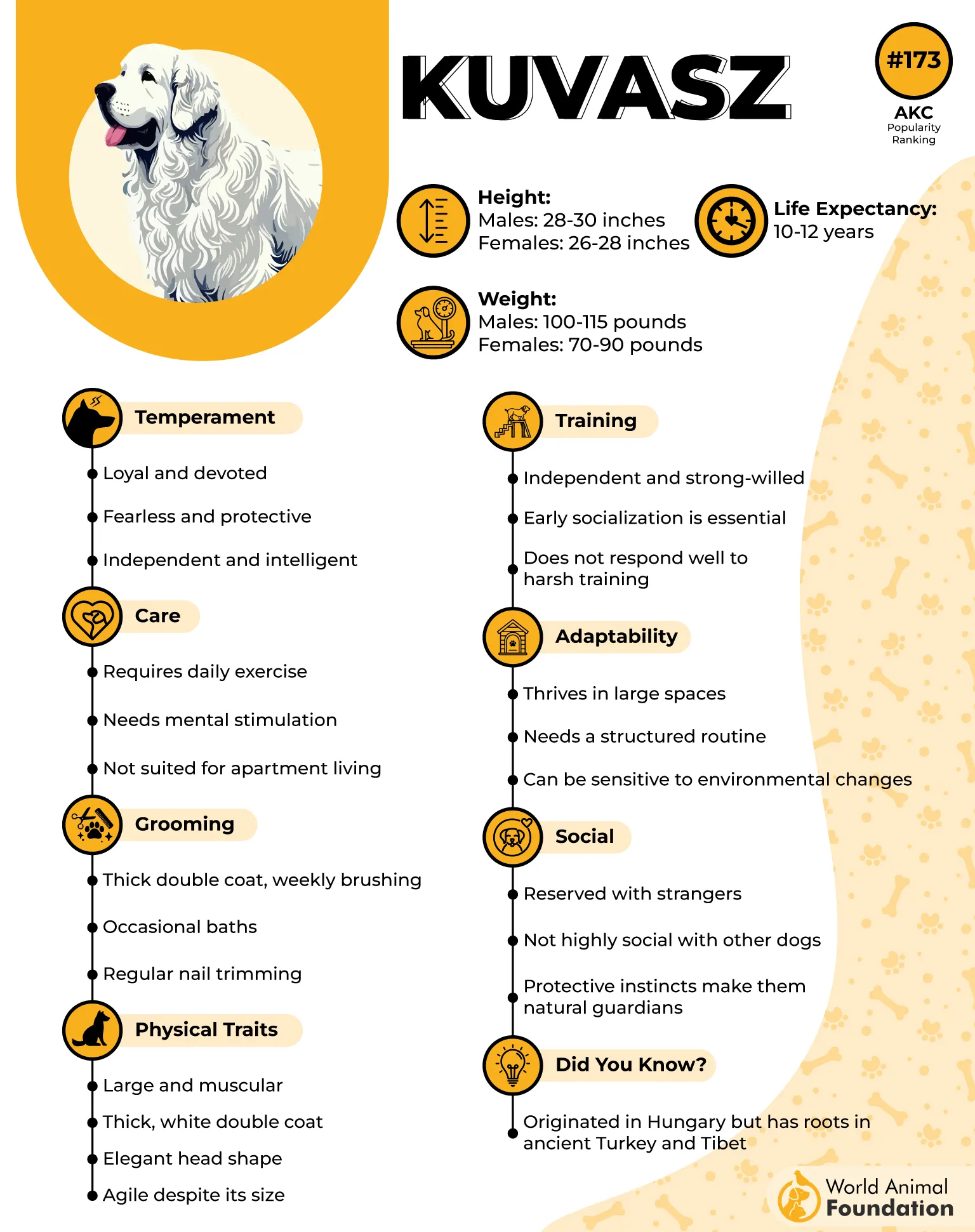
The breed thinks independently and may choose not to obey when it believes the handler has misunderstood a threat. Training therefore requires positive reinforcement, structure, and consistency rather than force or endless repetition.
Early socialization is especially important because a mature Kuvasz is powerful, territorial, and naturally suspicious of unfamiliar people. Puppies should calmly experience farm visitors, vehicles, livestock handling, veterinary procedures, gates, noises, and routine human activity without being encouraged to view everything new as dangerous.
5. Tibetan Mastiff
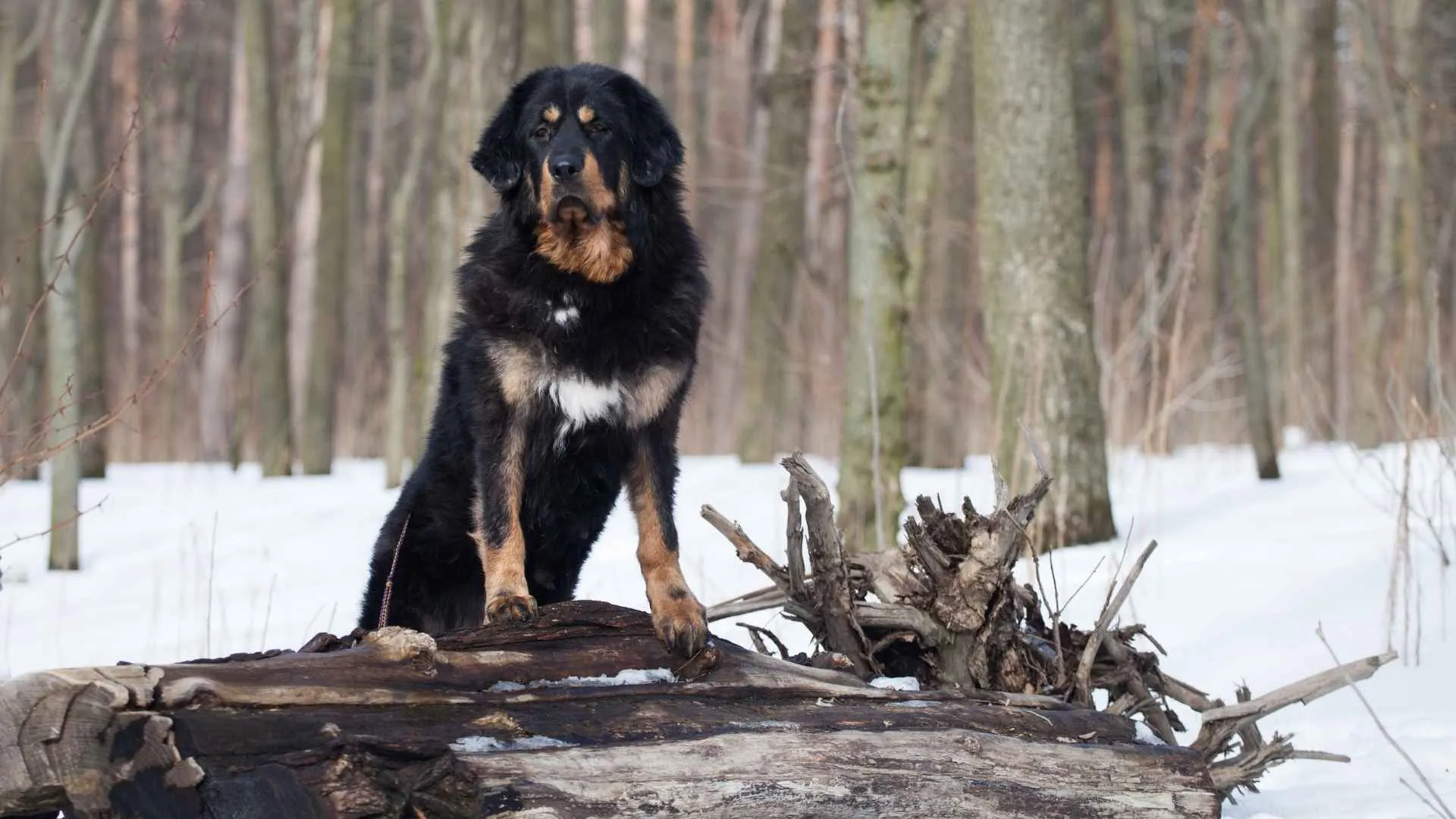
The Tibetan Mastiff developed among nomadic cultures in the Himalayan region rather than on fenced Western-style farms. Its historic guarding role involved protecting camps, families, animals, and movable property under conditions very different from modern cattle or sheep operations.
Some individuals may live successfully with livestock and display useful territorial behaviour. However, PetMD cautions that dedicated flock-guardian traits have not been consistently nurtured throughout the breed’s domestication, making performance unpredictable.
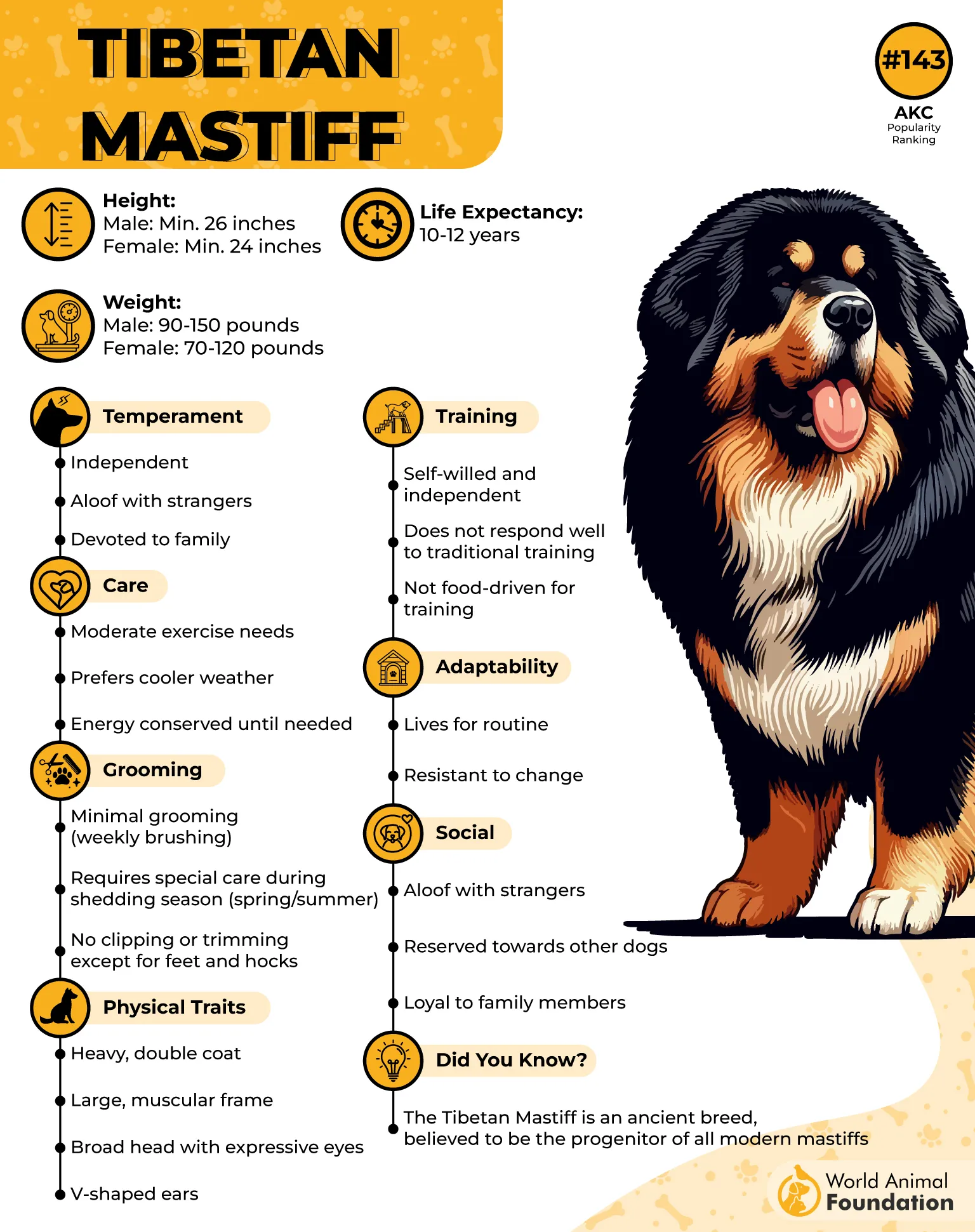
Where the Tibetan Mastiff often excels is property and family guarding. It naturally watches territory, prefers elevated observation points, and may patrol a fenced area at a slow, deliberate pace. The dog does not need to sprint around pretending every fence post is on fire because of its intimidating size, deep bark, and reserved confidence.
Heavy coats and massive bodies make hot-weather farm work challenging. Tibetan Mastiffs are better suited to cool environments, moderate exercise, and spacious fenced property than long-distance running or physically intense herding work.
6. Maremma Sheepdog
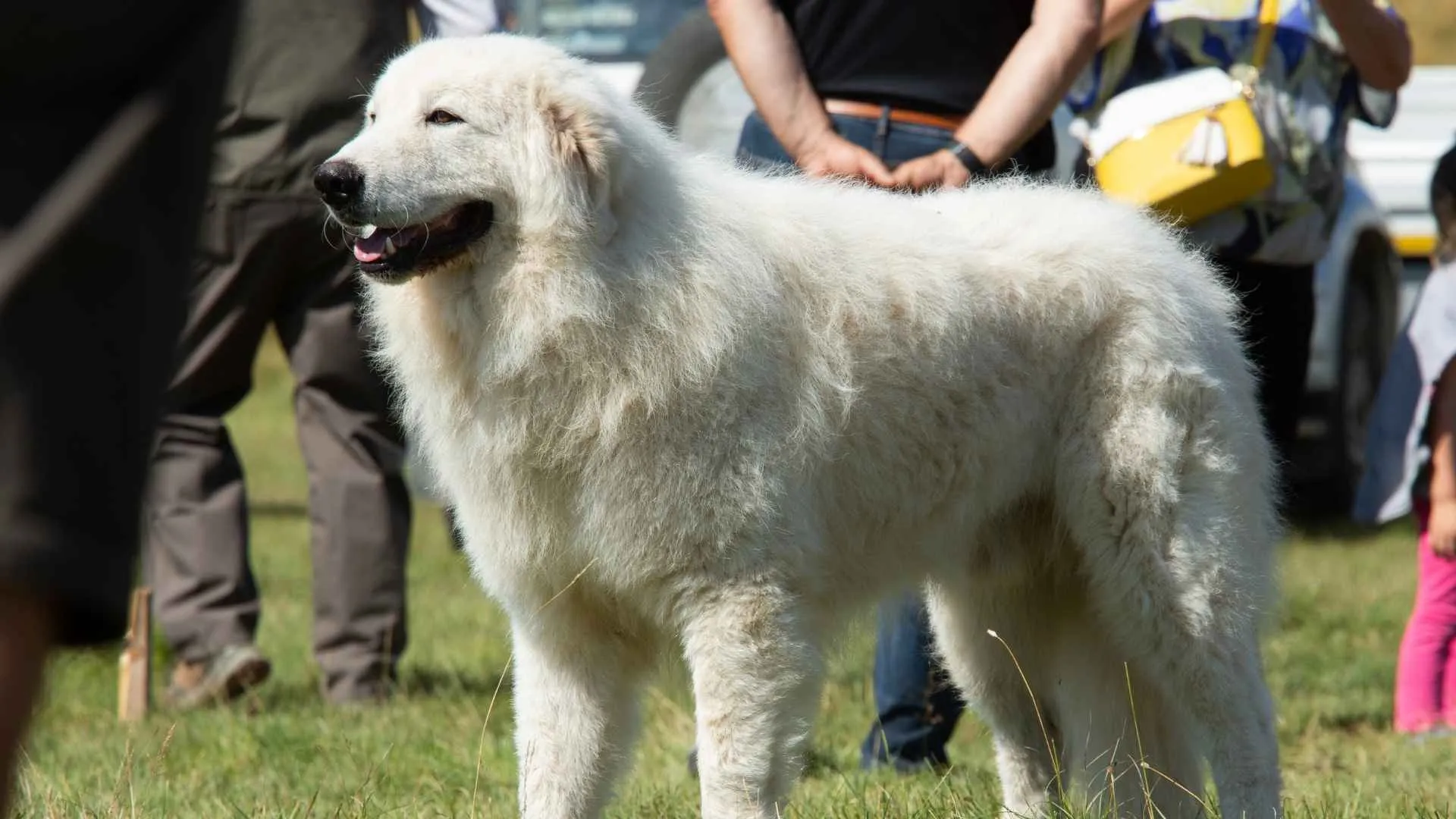
The Maremma Sheepdog is an Italian livestock guardian recognised for its calm, dignified manner and strong sense of responsibility toward animals. It tends to remain close to the flock, observe the surrounding land, and respond when something appears unusual.
Compared with guardians that patrol enormous distances, Hills Pet states that the Maremma often creates security through steady presence and constant awareness.
These guard dogs bond deeply with the species they are raised to protect. Sheep, goats, poultry, or other farm animals can become part of the dog’s social group when introductions begin early and are managed responsibly.
The breed is known for deterring threats without relying on unnecessary aggression. A Maremma may place itself between livestock and danger, bark, move forward confidently, and use physical presence to convince predators that continuing would be an extremely poor life decision.
7. Central Asian Shepherd Dog
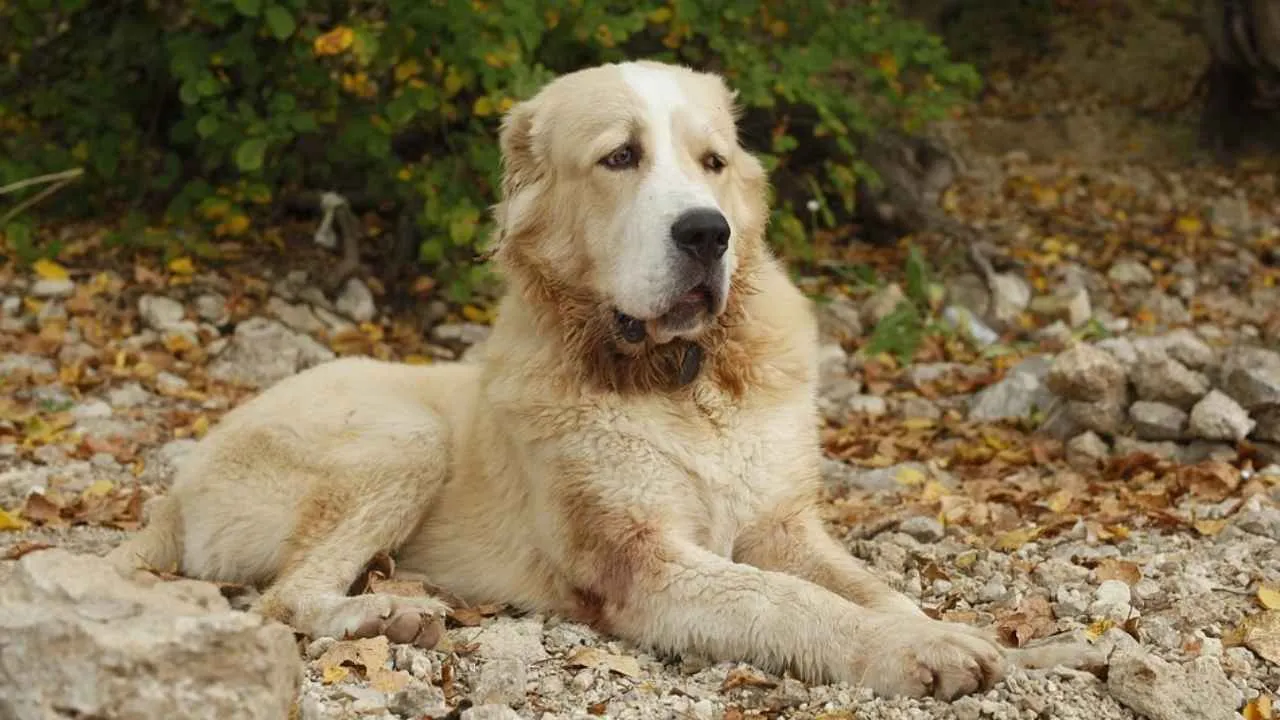
The Central Asian Shepherd Dog is a powerful guardian shaped by centuries of work beside people and animals across vast territories. It is used to slow, steady movement rather than frantic exercise, often selecting a high observation point from which it can study livestock, property, and distant activity.
On a ranch, the United Kennel Club claims that this energetic dog behaves like a security tower, occasionally getting up to conduct a physical inspection.
These perfect farm dogs are not naturally clingy, but they still value being connected to the humans and animals that make up their working group. Their ideal environment includes secure acreage where patrolling has a purpose and boundaries are clearer than when someone casually points toward the horizon.
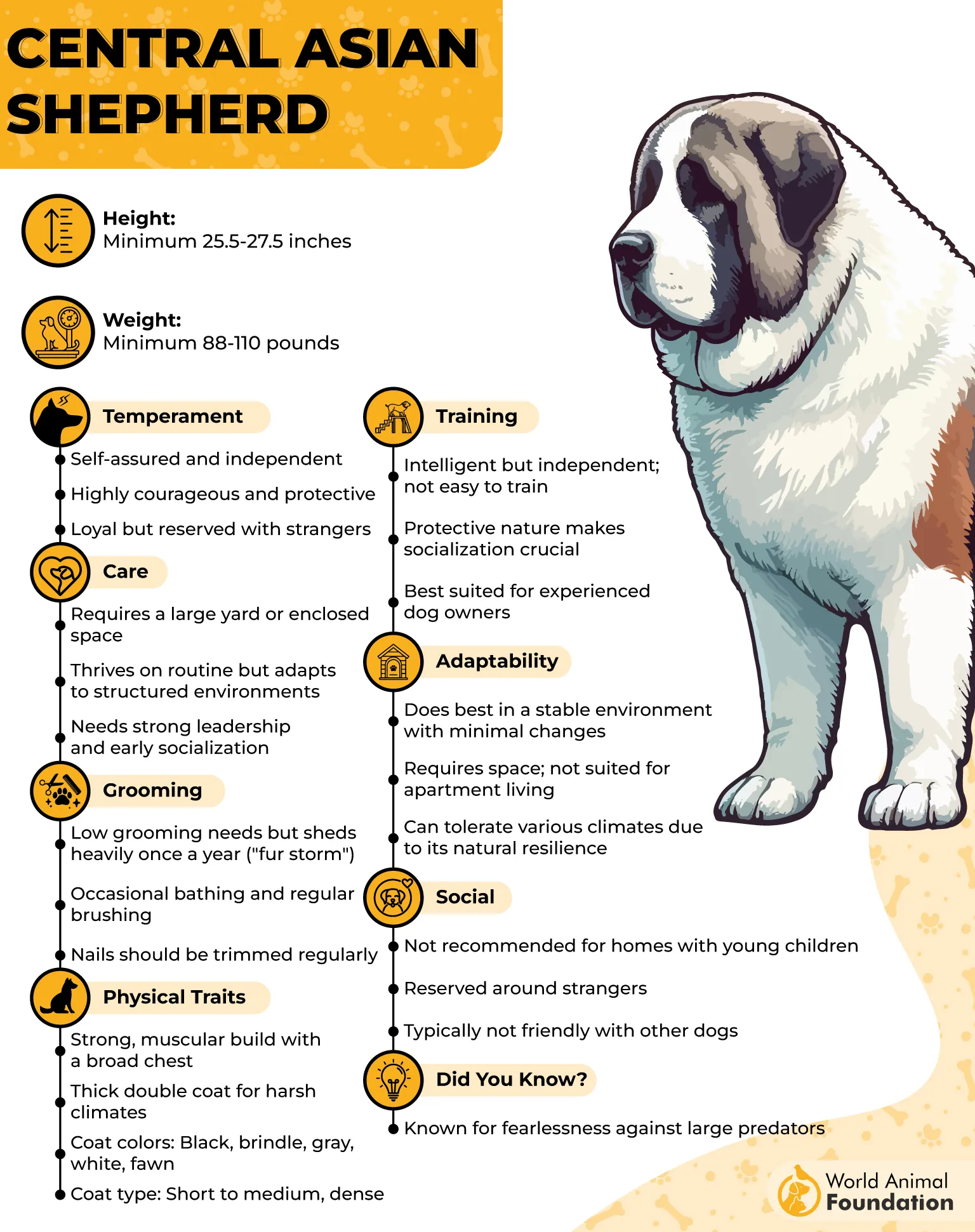
The first 16 weeks of life are especially important for socialisation. Puppies should safely experience livestock, machinery, fencing, strangers, vehicles, noises, handling, and the normal rhythm of farm life before suspicion becomes deeply established.
Consistent reward-based training is more productive than attempts to dominate this self-assured breed. Central Asians were developed to evaluate threats independently, so they may not immediately defer to a handler when their own judgment says otherwise.
Conclusion
These breeds work best when they are part of a system that includes secure fencing, veterinary care, responsible breeding, supervised livestock introductions, and clear visitor routines. Their independence should be guided rather than punished, because a guardian incapable of making decisions would be far less useful when the farmer is asleep or working elsewhere.
Australian Cattle Dog, German Shepherd, Bernese Mountain Dog, Great Pyrenees, and Black Mouth Cur are also amazing farm dog breeds known for their exceptional livestock herding skills.
A dependable farm guardian may never perform a flashy rescue or dramatic predator battle. Its greatest achievement is often the quiet night when every sheep remains calm, every chicken is accounted for, and the coyotes decide not to come closer. That kind of uneventful success is not boring—it is the ultimate rural flex.
