




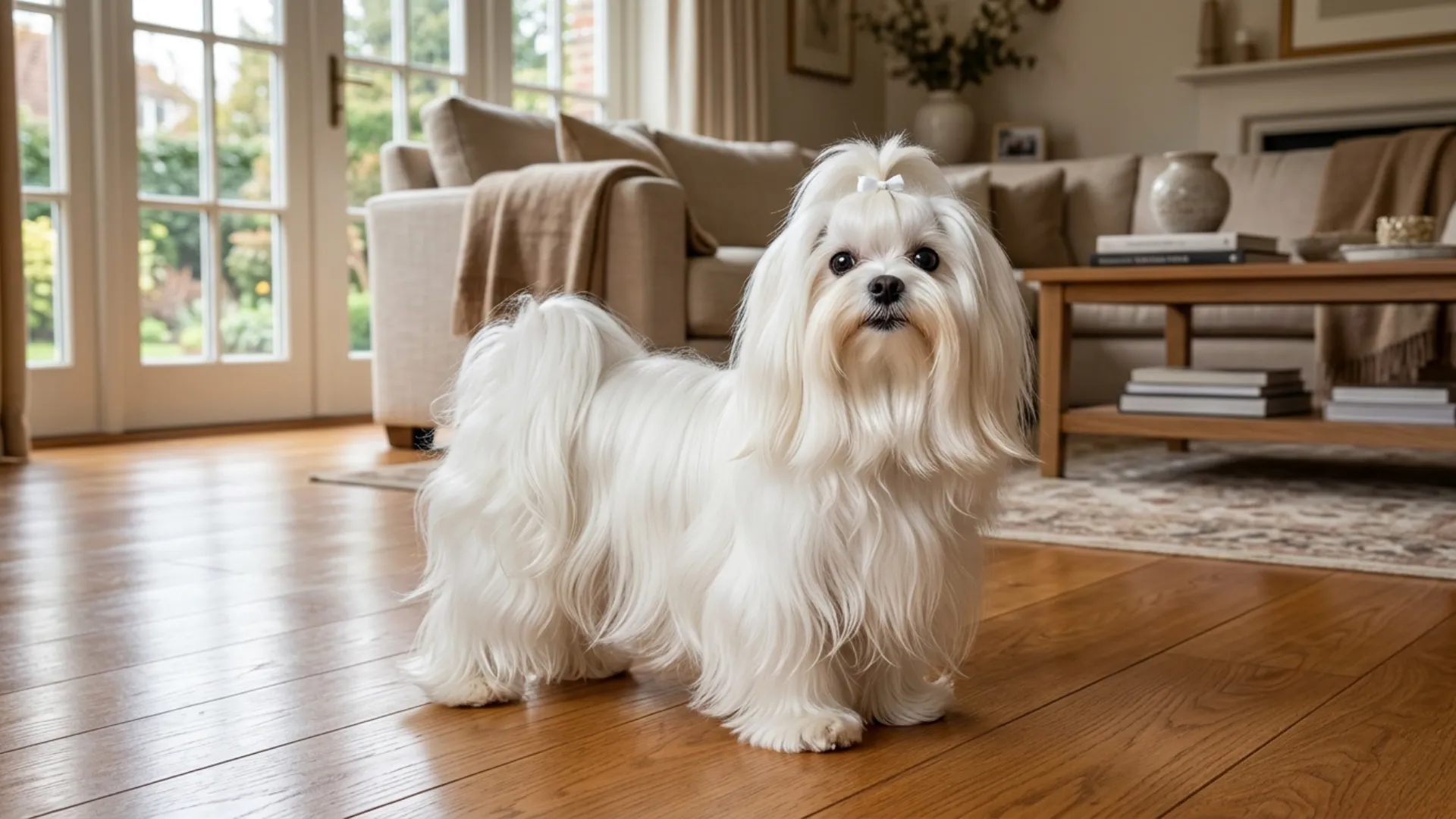
Hair makes the whole personality different. Whether it is human hair or dog hair, it has always been a fashion statement.
If you are committed to a structured grooming routine, you can opt for various coat styles. The breeds mentioned in this article are blessed with silky, shiny, long, and colorful coats that will make strangers turn their heads.
These coats are not only perfect for opening the doors for the dog to the modeling ramps, but they are functional, too. The undercoat acts as a thermoregulator while the upper coat protects the dog from dirt, cold winds, and even predators’ bites.
Each coat speaks loudly of the breed’s ancient genetic makeup, connecting you to the parents of the breed who lived thousands of years ago.
Top Long-Haired Dog Breeds with Flowing, Gorgeous Fur
1. Afghan Hound
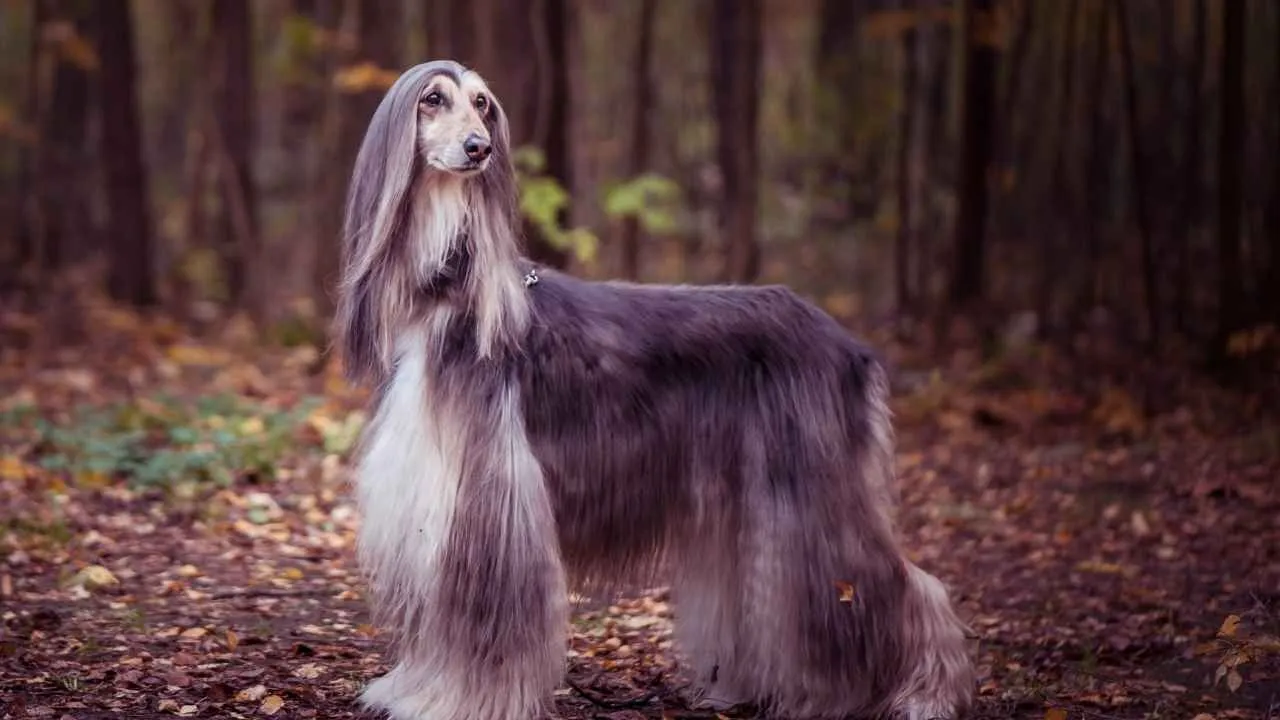
This is one of the 9 ancient basal breeds and was developed in different regions of Afghanistan. The differences mainly depend on the coat and colors (the region each comes from). Its primary purpose was to serve as a hunting dog because of speed, stamina, and independent thinking, as noted by the AKC.
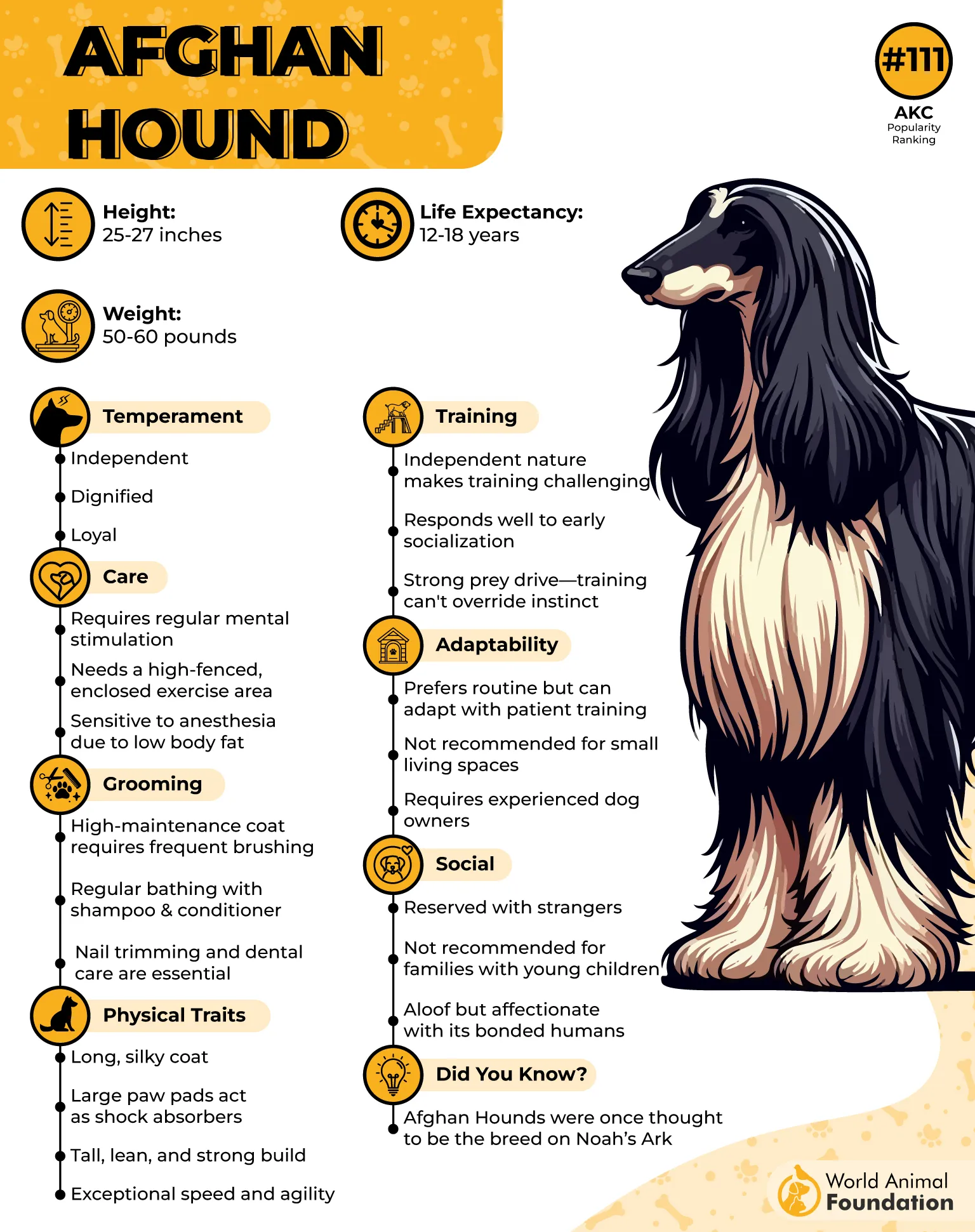
It has a silky coat with long hair. There is a black facial mask in many breeds. Some may have a beard on the lower jaw, known as a “mandarin.” Some Afghans are almost white, but parti-color hounds (white with islands of red or black) are also standardised by the AKC.
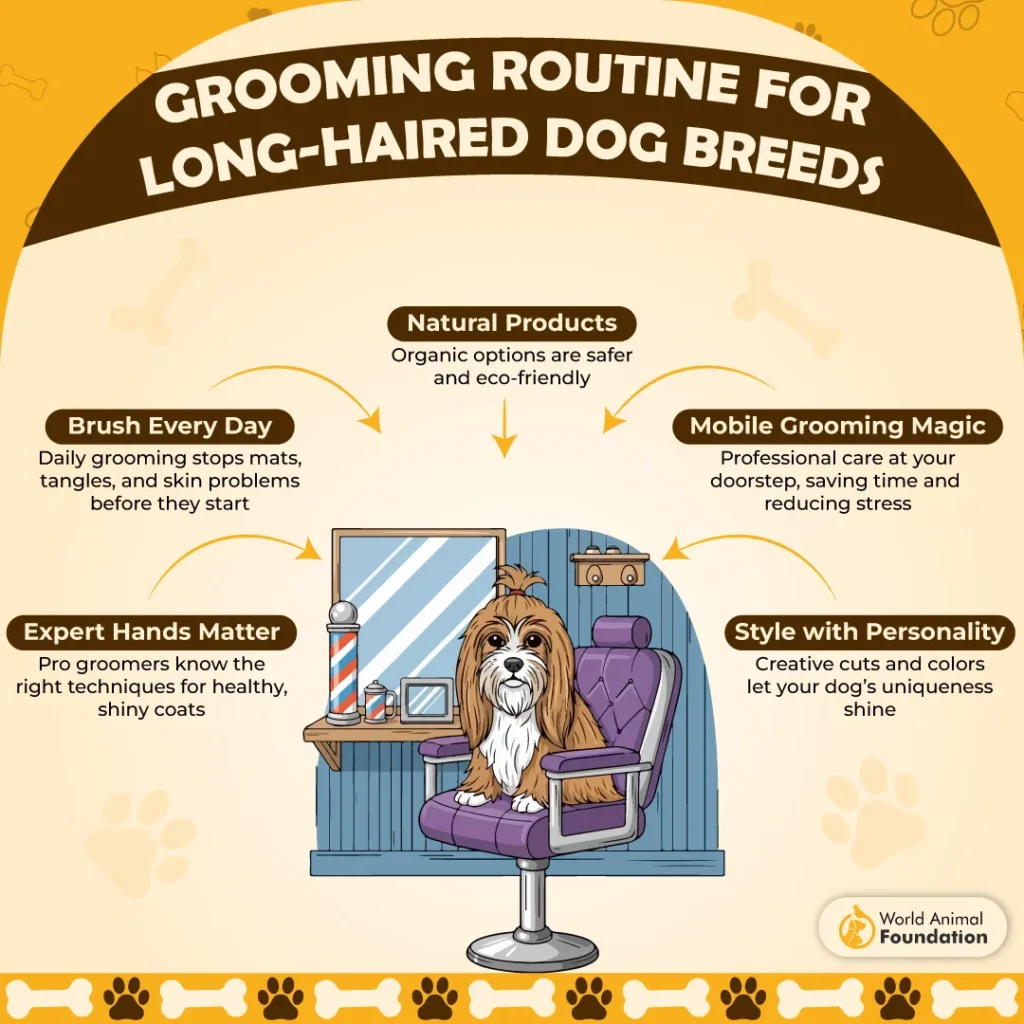
It has a single coat and has the following features: the topknot (a shaggy plume sits on the head), the saddle (shorter, coarser hair on the lower back), and the feathering (fur on the ears and legs). Daily brushing is required to prevent tangles and mats.
2. Maltese
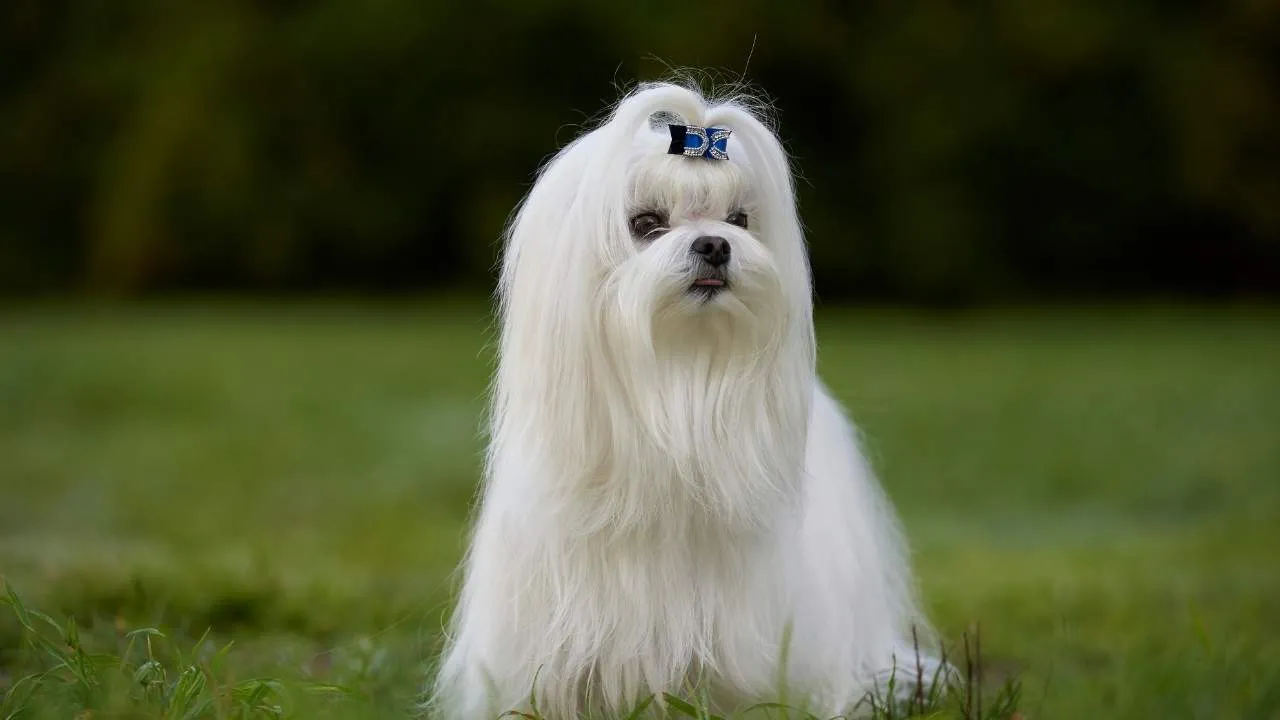
The roots of the ancient breed date back 1500 years. It originated in the region of Malta in the Mediterranean. The parent dogs are considered to be the Spitz or Spaniel-like breeds that came from Italy or Asia. The traces are found in ancient civilizations like the Greeks, Romans, and Egyptians.
It has a snow-white coat that consists of hair. The coat reaches the floor at 12-18 months. There is no woolly, cottony, or curly texture. The breed standards permit slight, faint shadings of pale tan or “lemon” on the ears.
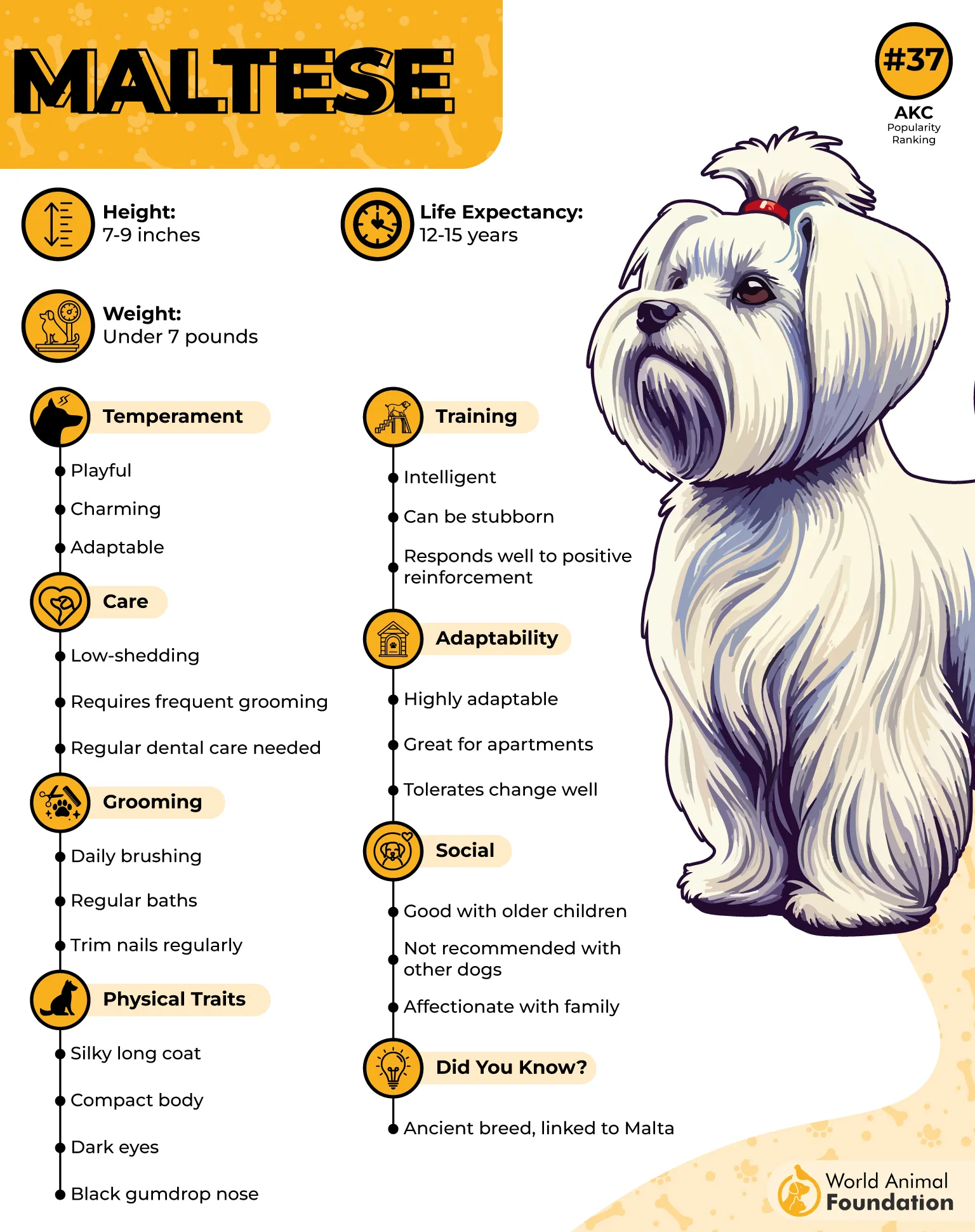
Use a pin brush (without balls on the end), a slicker brush to remove tangles, and a fine-toothed metal comb to check for mats. It is prone to reddish-brown tear stains, saliva, and dirt buildup. Use a tear stain remover and wipes for cleaning.
3. Havanese
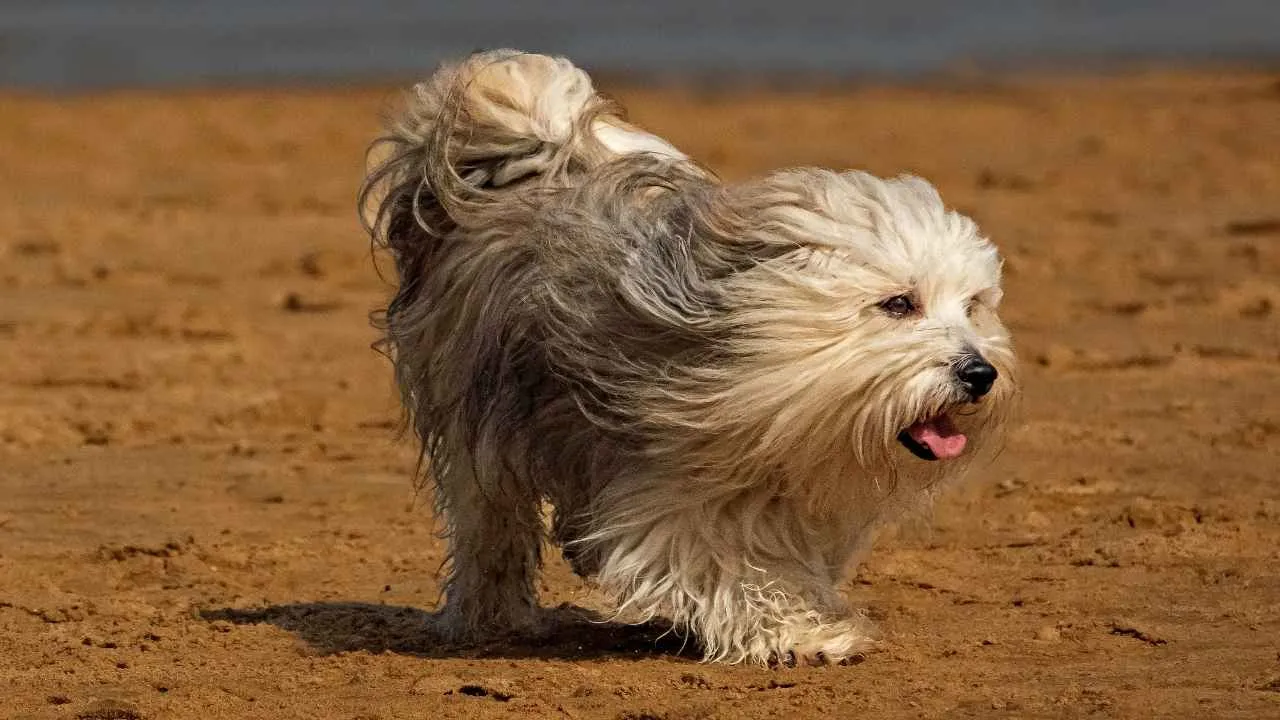
This toy dog breed comes from the Bichon family. The fluffy dog breed was originally bred from the dogs imported from Tenerife in the Canary Islands to Cuba in the 16th century. It has been depicted in artwork for centuries. It was given to the royals as a symbol of wealth and luxury, as per Orvis.
The breed has a long double coat. The coat is slightly wavy, profuse, and undulating. Modern coats come in all colors and patterns. However, they must have a black nose and black pigmentation around the eyes. The coat style comes in 2 types: the show coat and the puppy coat (1-2 inches).
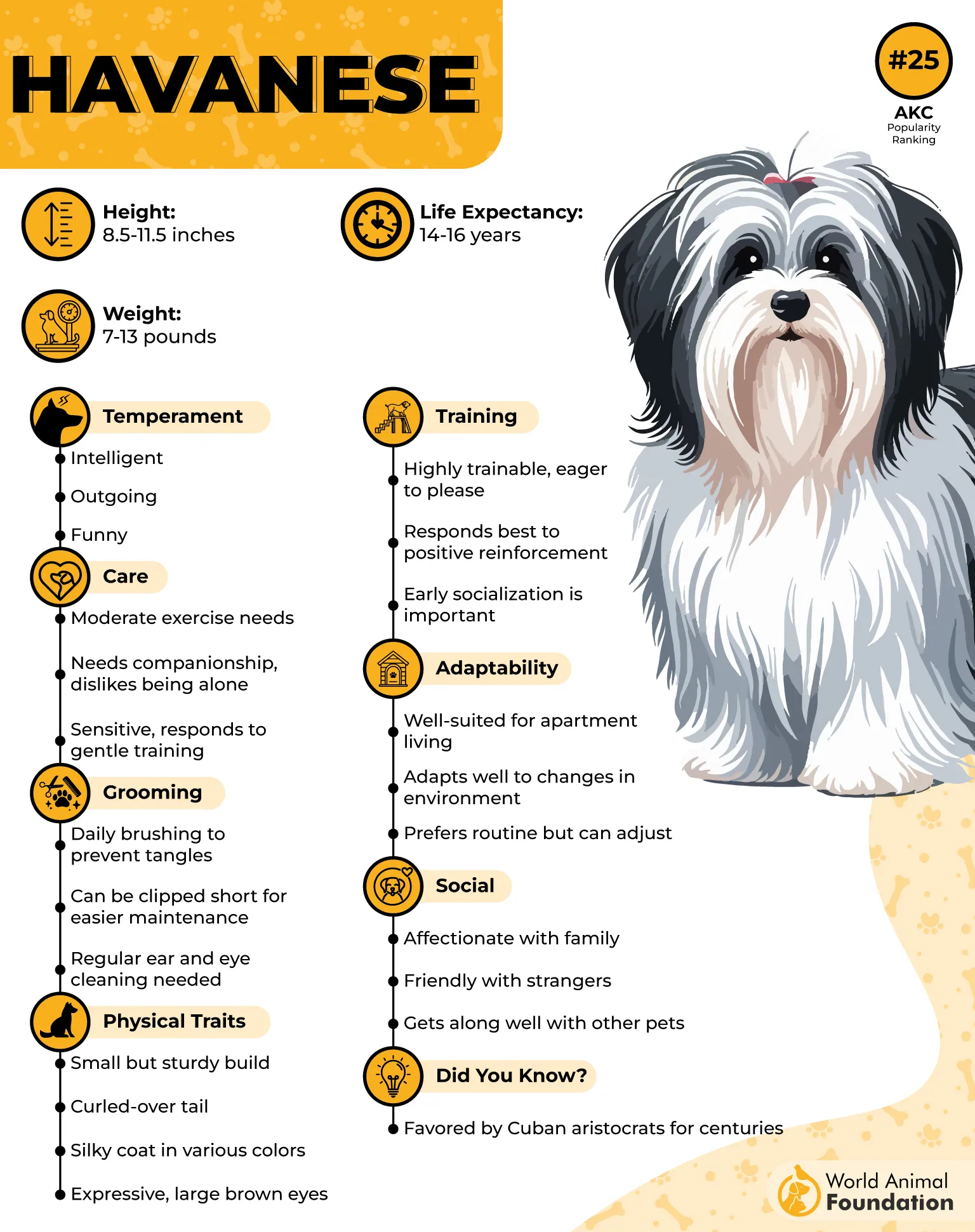
Since it has continuously growing hair rather than fur, it has a low-shedding coat that requires brushing 1- 2 times a week. Use a pin brush to remove tangles and a metal comb to check for mats. Lightly mist the coat with a mixture of water and dog-safe leave-in conditioner before brushing.
4. Yorkshire Terrier
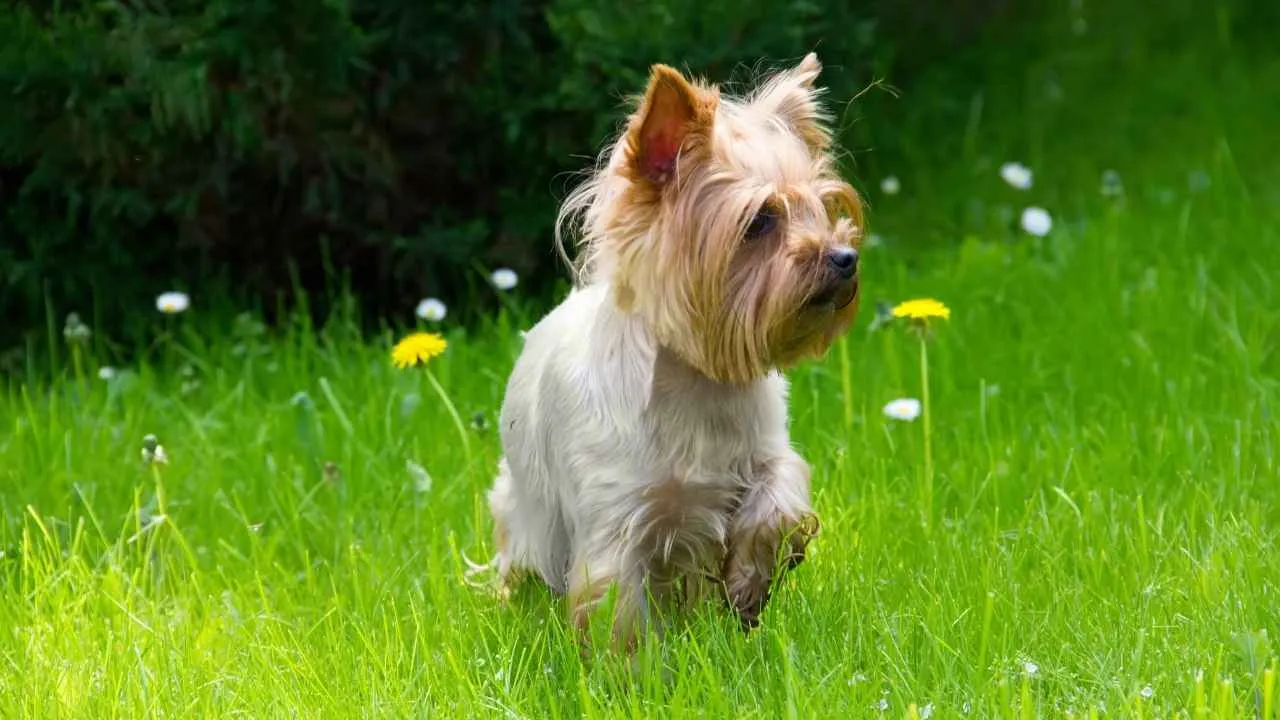
Descended from the waterside terriers, the Yorkshire Terrier is the cross of rough-coated Black-and-Tan English Terriers and Paisley and Clydesdale Terriers. It was developed to hunt rats and rodents in the textile and cotton mills; thus intentionally bred to be a small dog.
The silky, glossy, straight, and long coat is dark gray or black from the back of the neck to the base of the tail. The adults should not have black hair intermingled with tan-colored fur. The coat has less dander production; thus, it has low dog odor and is considered hypoallergenic.
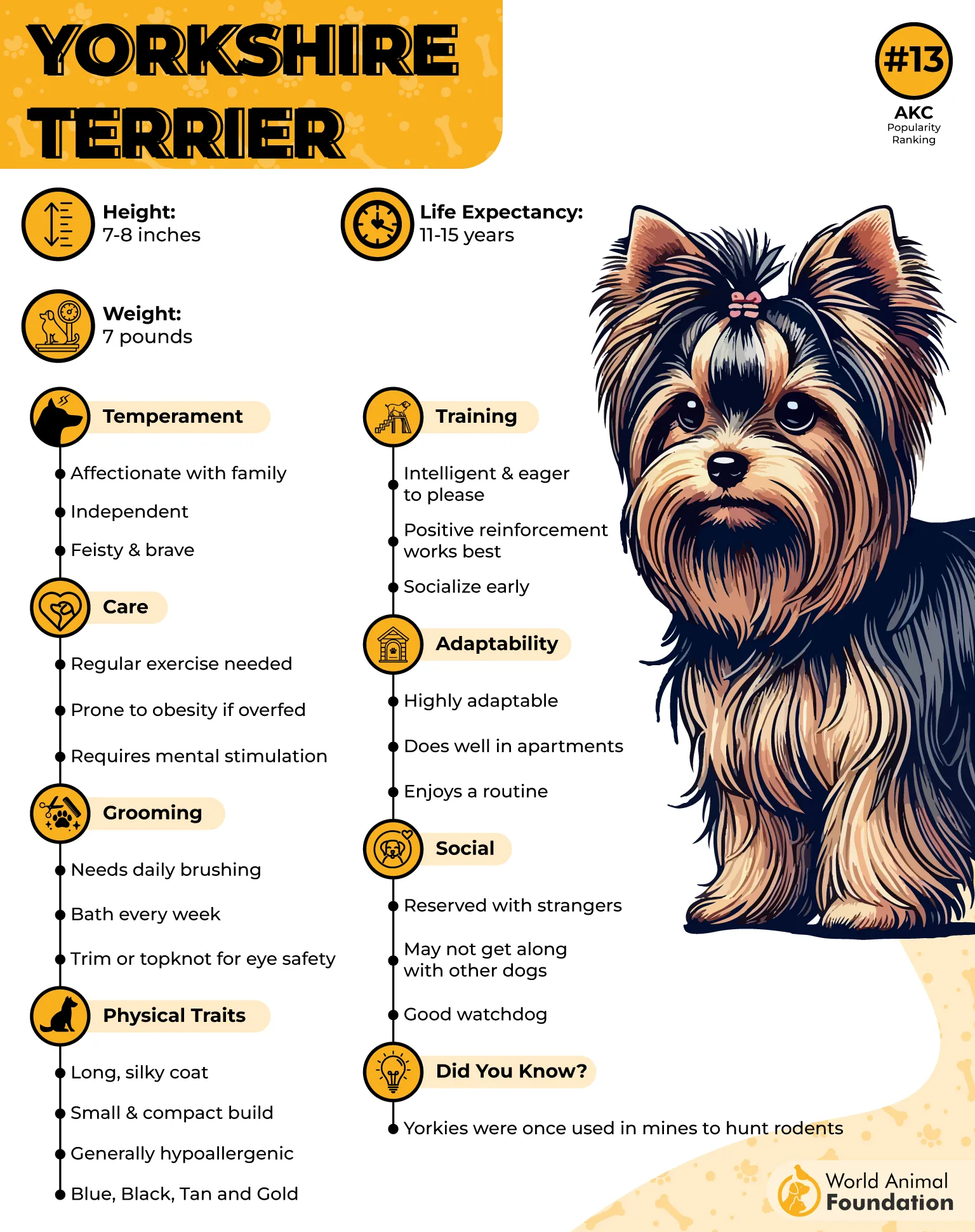
The coat is prone to static and breakage. Mist the coat lightly with a conditioner spray before brushing. Use a pin brush and a metal-toothed grooming comb and go for the ‘line brushing’ technique. Focus on the friction-prone areas like behind the ears, armpits, and insides of the back legs.
5. Lhasa Apso
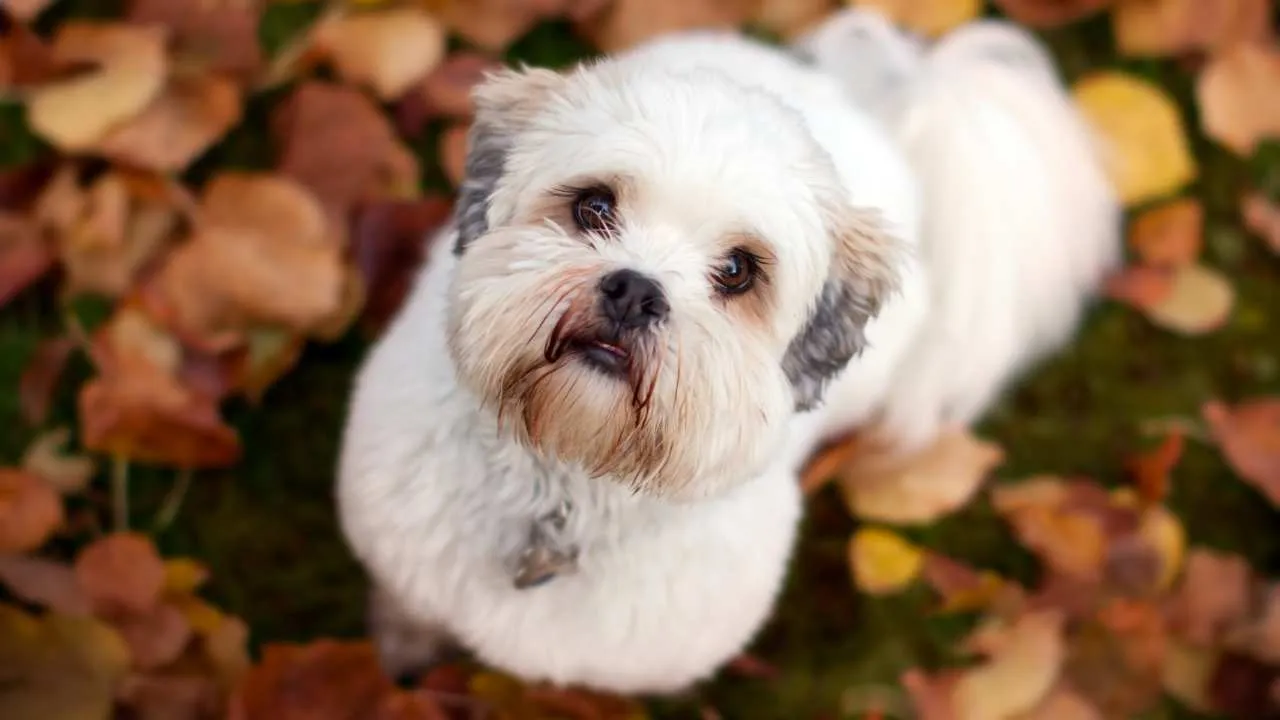
The small dog originated in Tibet and was used as a guard dog for Buddhist monasteries to alert the monks to intruders. The name translates to ‘bearded.’ It was domesticated and bred as long ago as 800 BC. The breed has a keen sense of hearing and a loud bark, according to Omlet.
The coat may be black, honey, red, dark grizzle, golden, parti-colored, sandy, slate-colored, smoke-colored, or white. The double coat consists of a medium-length undercoat and a straight outer coat that protects the dog from external stimuli. The ears are pendant, the eyes are dark, and the nose is black.
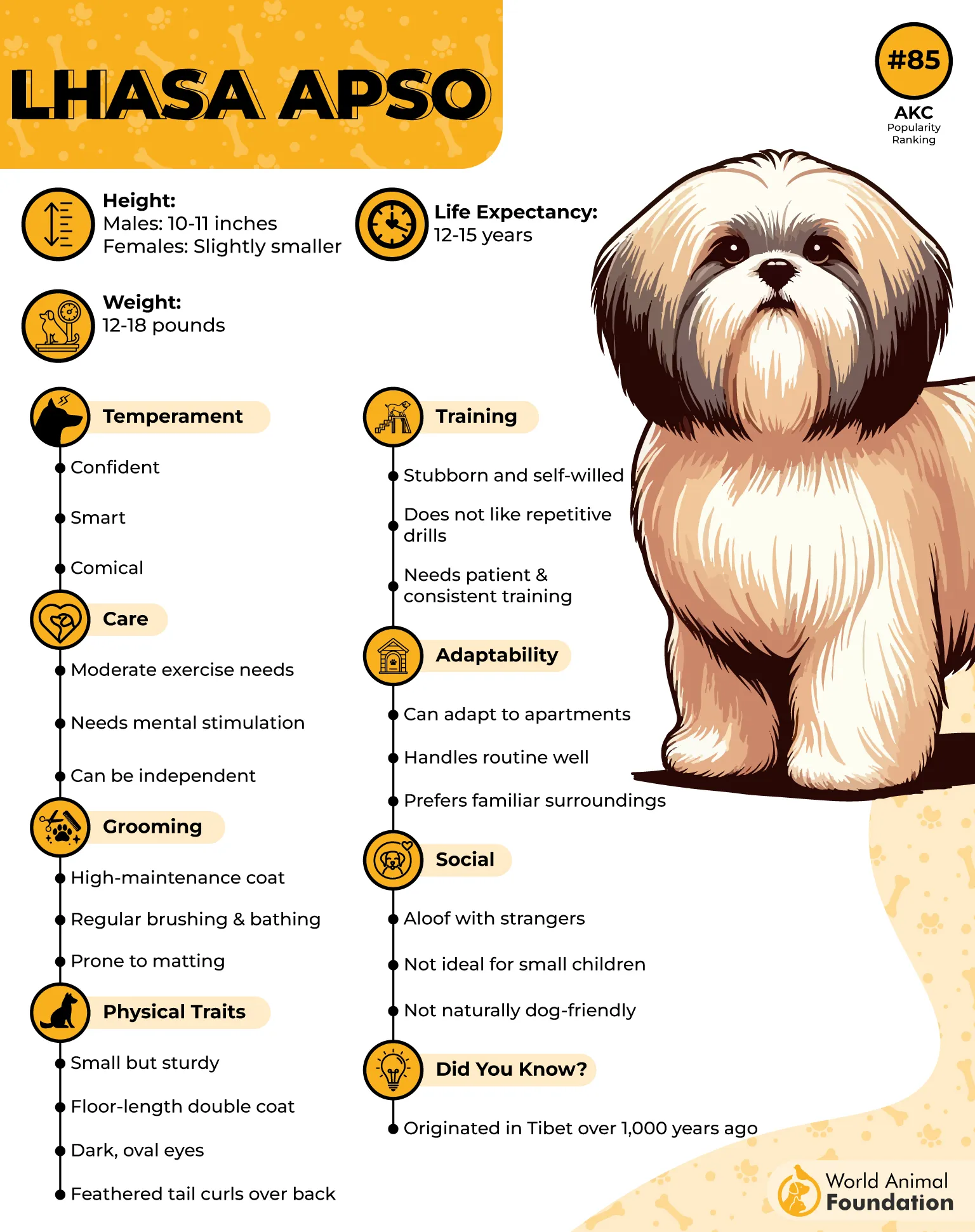
The traditional coat needs daily brushing, while weekly brushing is enough for the teddy-bear cut. Use a slicker brush or pin brush to gently brush small layers for a longer coat in the direction the hair naturally falls.
6. Silky Terrier
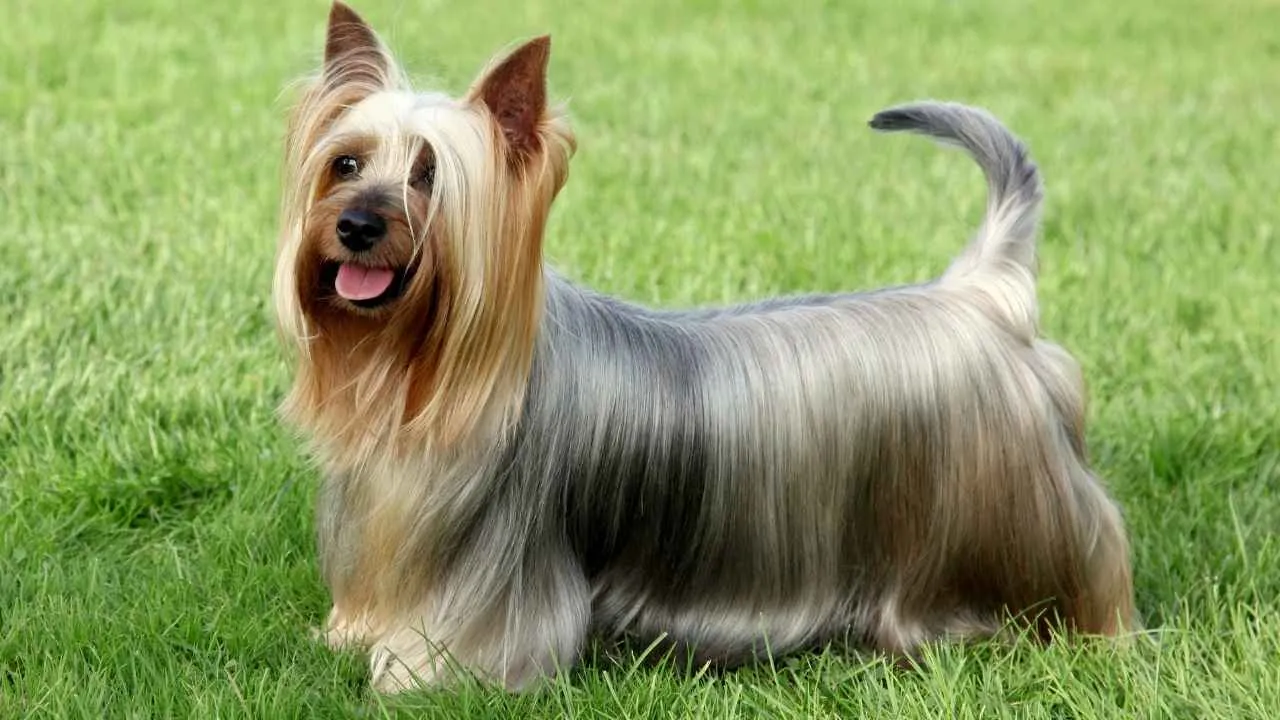
The breed was developed in the 1890s in Australia when the Yorkies were crossed with Australian Terriers. Other Terriers, such as Cairn and Skye, have also contributed to the development of this energetic dog. It was originally given the name ‘ Sydney Silky Terrier.’
The long silky gray and white or blue and tan coat is an identifying feature. The coat hangs straight and parts on the back. The coat is medium-to-long, typically measuring 5 to 6 inches, but it should not reach the floor. The standard blue body has tan markings on the head, legs, and around the tail.
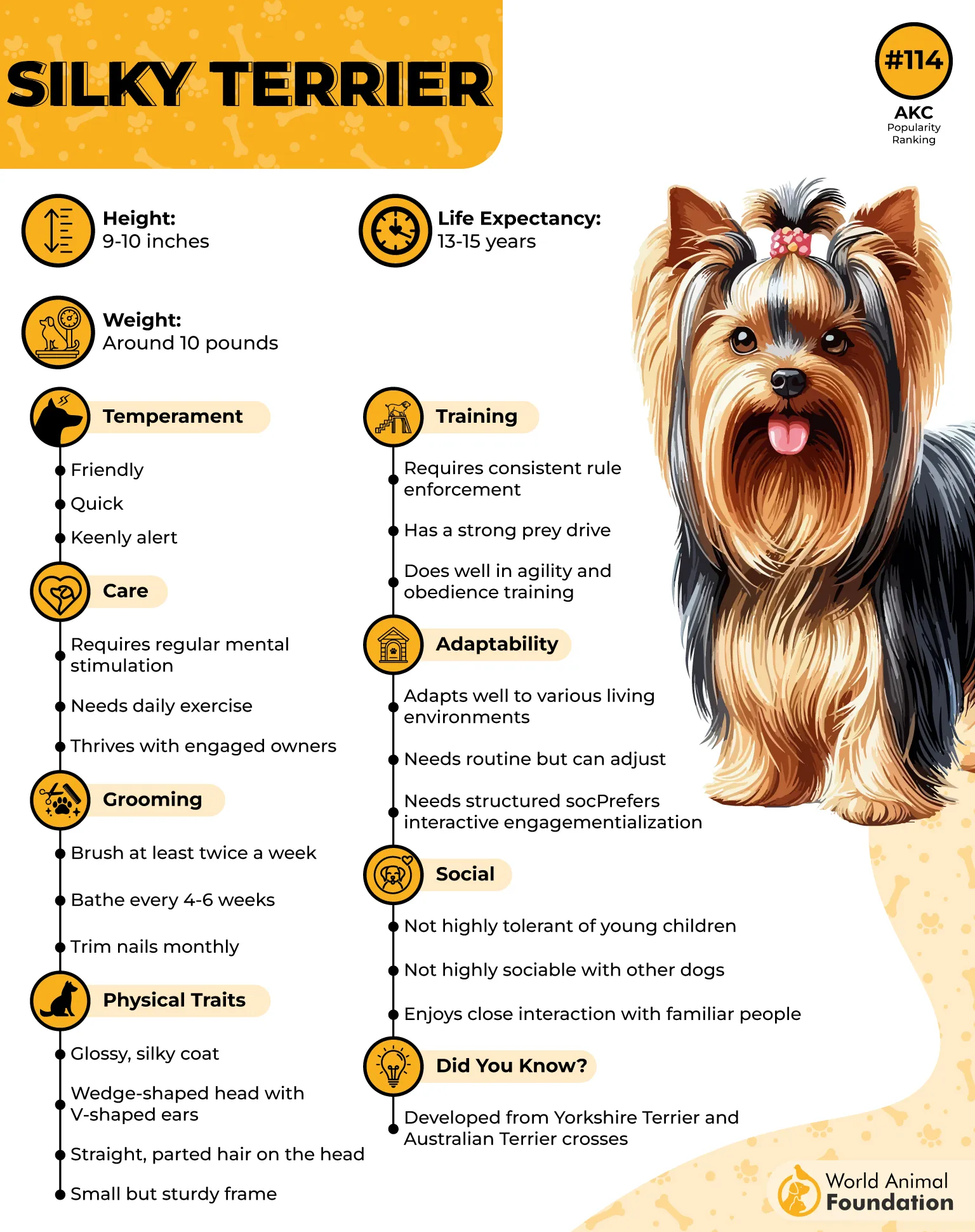
The single-layered coat needs a consistent grooming routine: daily brushing and monthly bathing. Always brush and comb before bathing; never bathe a matted dog, as water tightens knots. Trim the coat after 4-6 weeks.
7. Bolognese
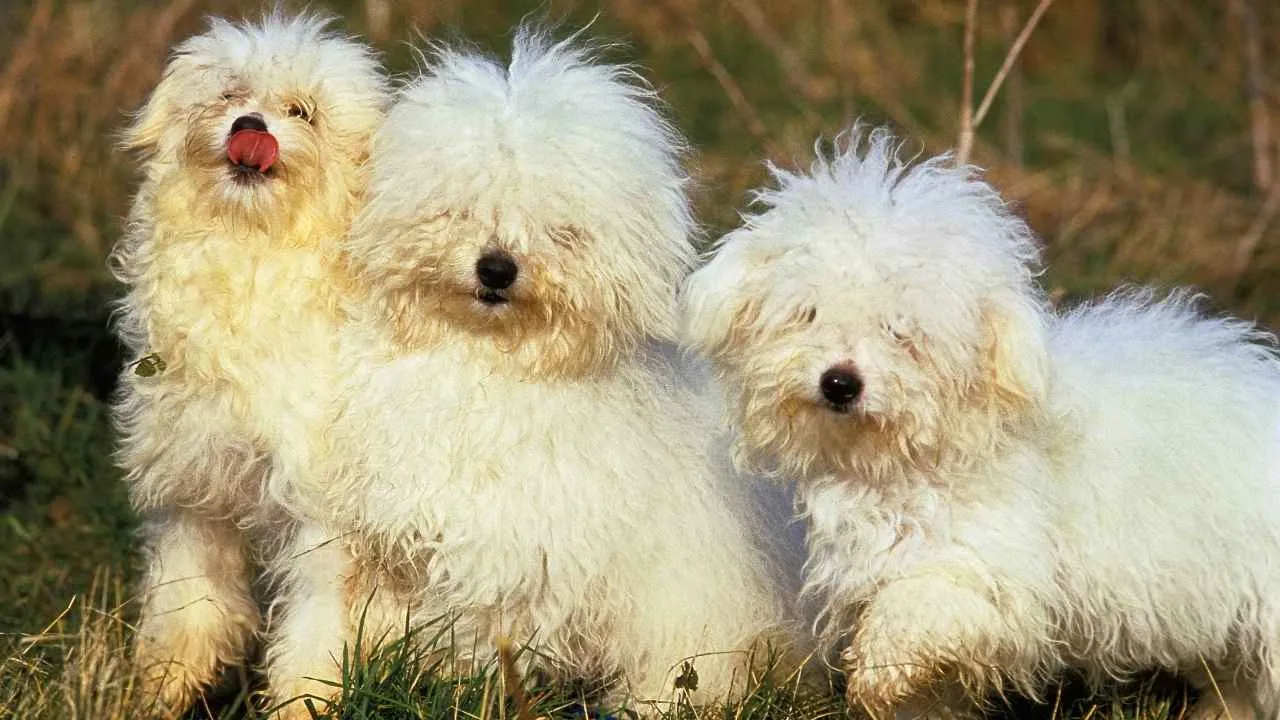
Descendant of the Bichon-type dogs, the Bolognese was developed in the 11th century in Bologna. The breed was loved by nobility and was a frequent gift between noble families during the Renaissance (particularly between Italian and Belgian royalty).
The thick coat is either pure white or pale ivory in various shades. It has a single coat that has loose open ringlets/flocks all over the body, with shorter hair on the face. It has a woolly texture that is never clipped or trimmed. It is prone to tear staining that requires regular cleaning with gentle wipes.
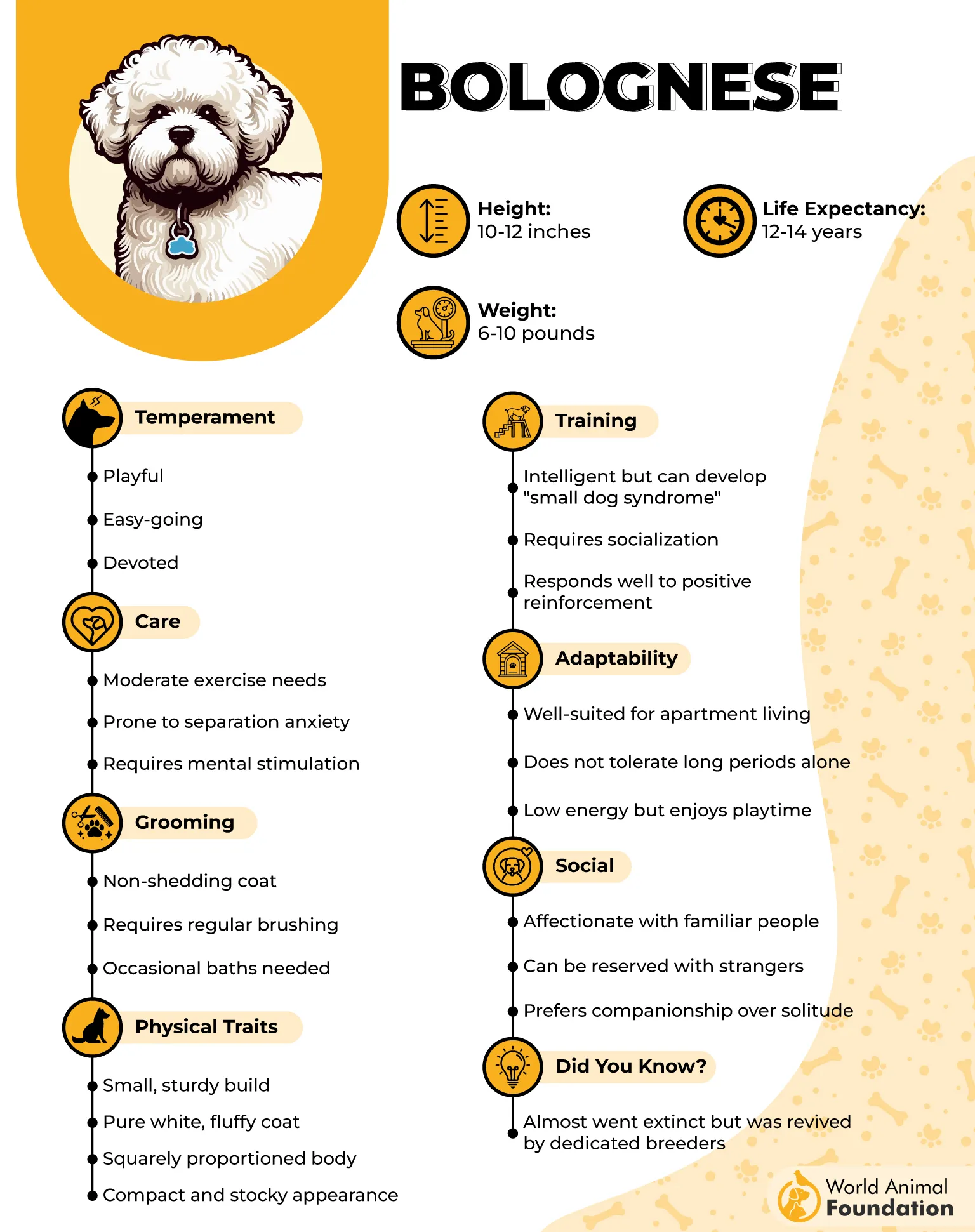
The breed needs to be brushed 2-3 times a week to remove loose hair and evenly distribute natural oils. Use a pin brush, a slicker brush, a wide-toothed metal comb, and a light detangling spray. Monthly bathing is recommended.
Conclusion
Long-haired dogs offer much more than good looks. Each breed on this list has its own personality, energy level, and care needs, making it important to choose one that truly matches your lifestyle.
Some enjoy being active adventure partners, while others are happiest curled up beside you after a long day. Their beautiful coats may require extra grooming, but many owners will tell you those quiet brushing sessions become part of the bond they share with their dog.
Think beyond appearance before making your choice. A well-matched companion brings years of loyalty, laughter, and unforgettable memories. When you find the right long-haired breed, you will gain far more than a gorgeous coat; you will welcome a lifelong friend into your family.
