




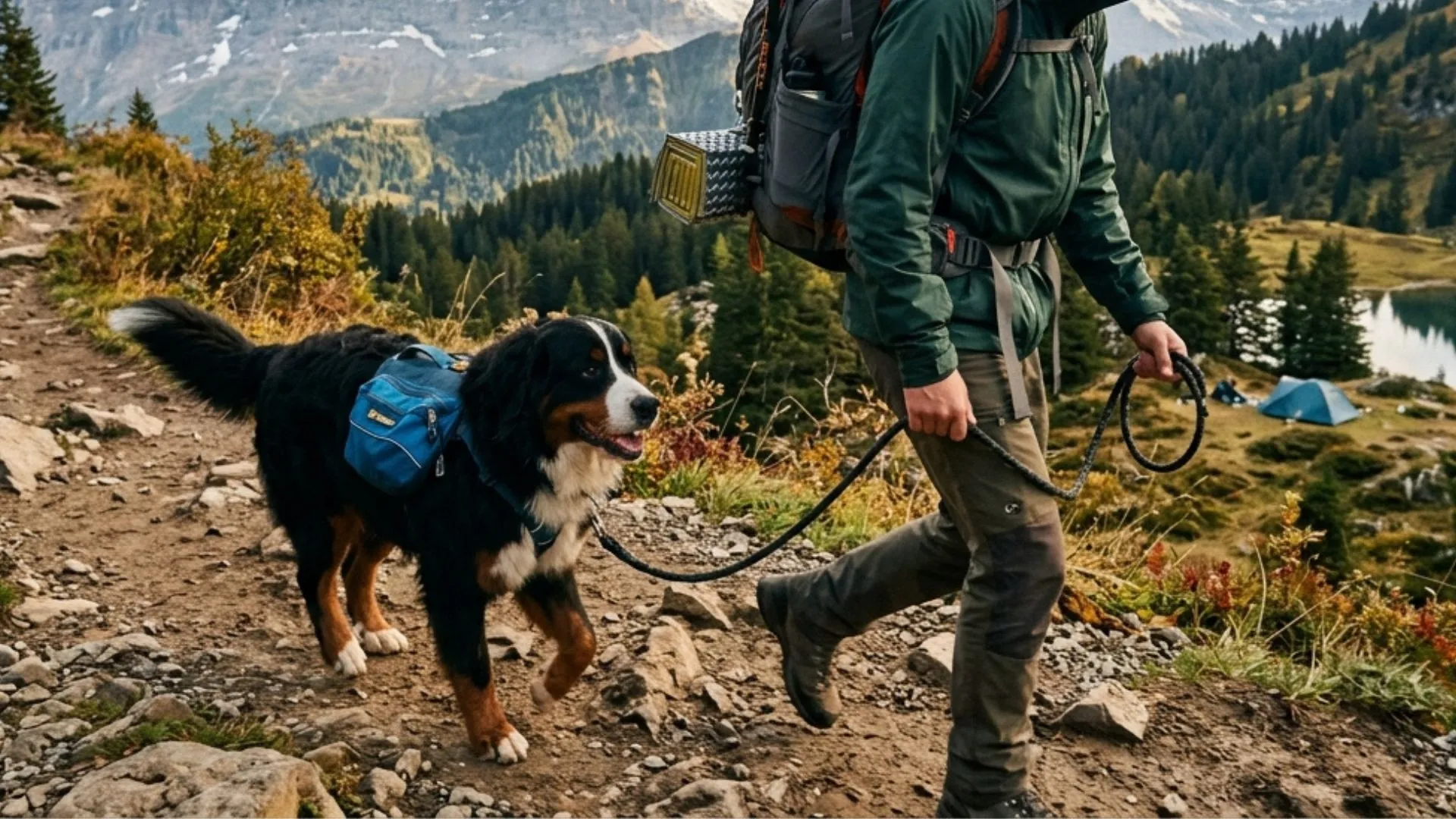
There is something elite about reaching a mountain viewpoint, opening your trail snack, and seeing your dog waiting beside you like they personally planned the route.
The right canine companion can turn an ordinary hike into a full-blown adventure, complete with woodland zoomies, stream splashing, and extremely serious investigations of every suspicious leaf.
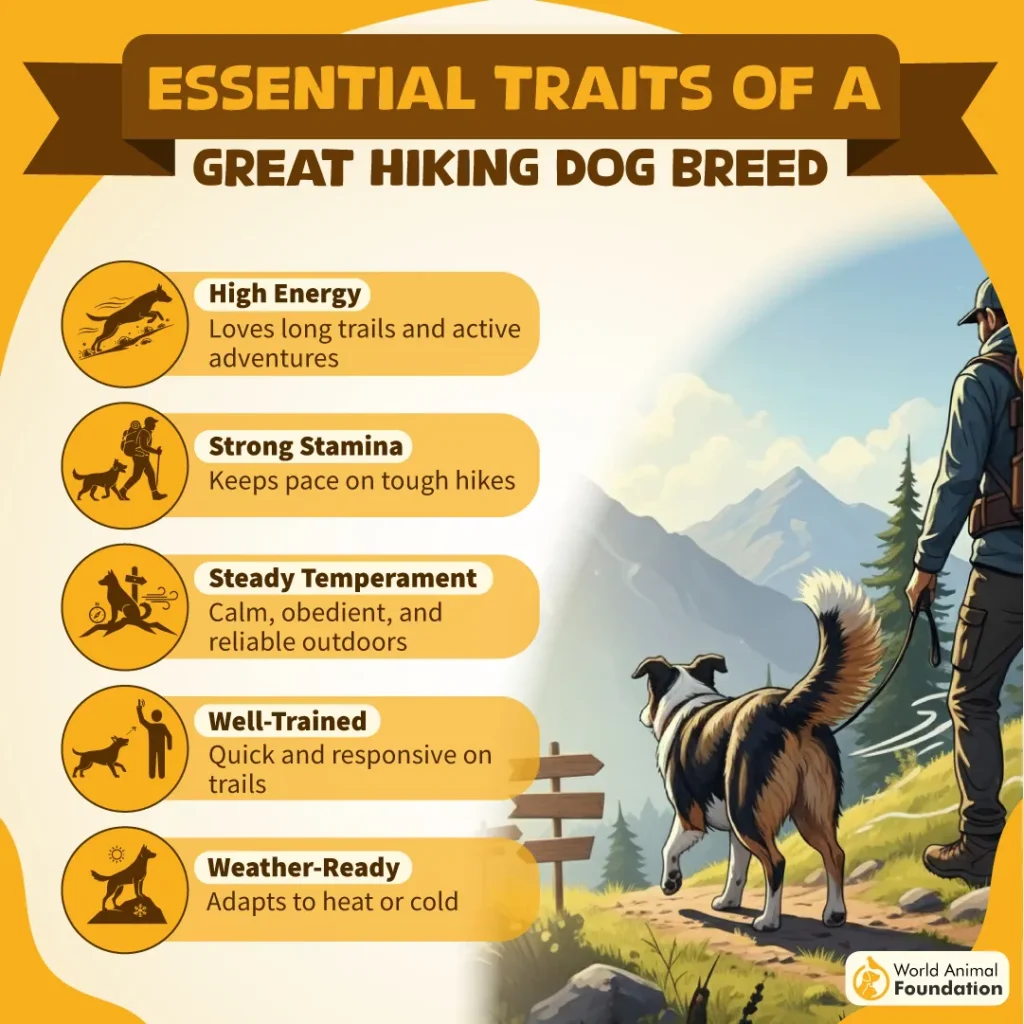
A dependable outdoor dog needs appropriate stamina, sound joints, trainability, confidence on unfamiliar surfaces, and enough self-control to avoid disappearing after wildlife. Breed tendencies can provide clues, but age, health, conditioning, climate, and individual personality matter just as much as ancestry.
If your ideal weekend involves hitting trails and nights around the campfire, you need a dog built for the outdoors. These fan-favorite breeds combine high stamina, weather-resistant coats, and an adventurous spirit to make the ultimate wilderness companions.
Fan-Favorite Dog Breeds That Love Hiking and Camping
1. Australian Shepherd
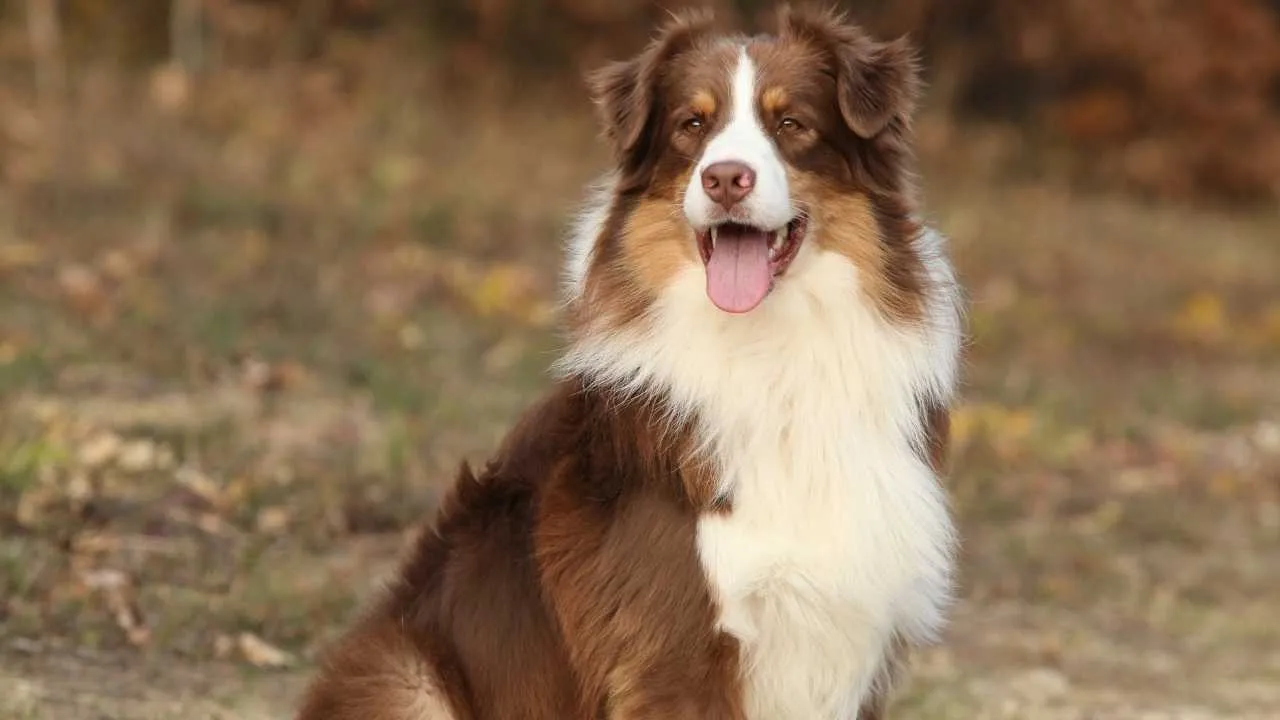
The Australian Shepherd is a medium-sized herding dog. Despite the name, the modern breed was developed largely in the United States and became closely associated with ranch work, livestock management, and active rural life.
Aussies are athletic enough for demanding hikes once fully grown, physically sound, and gradually conditioned for distance. PetMD specifically describes them as excellent hiking partners suited to long hours of strenuous activity, while also noting that they need substantial daily exercise.
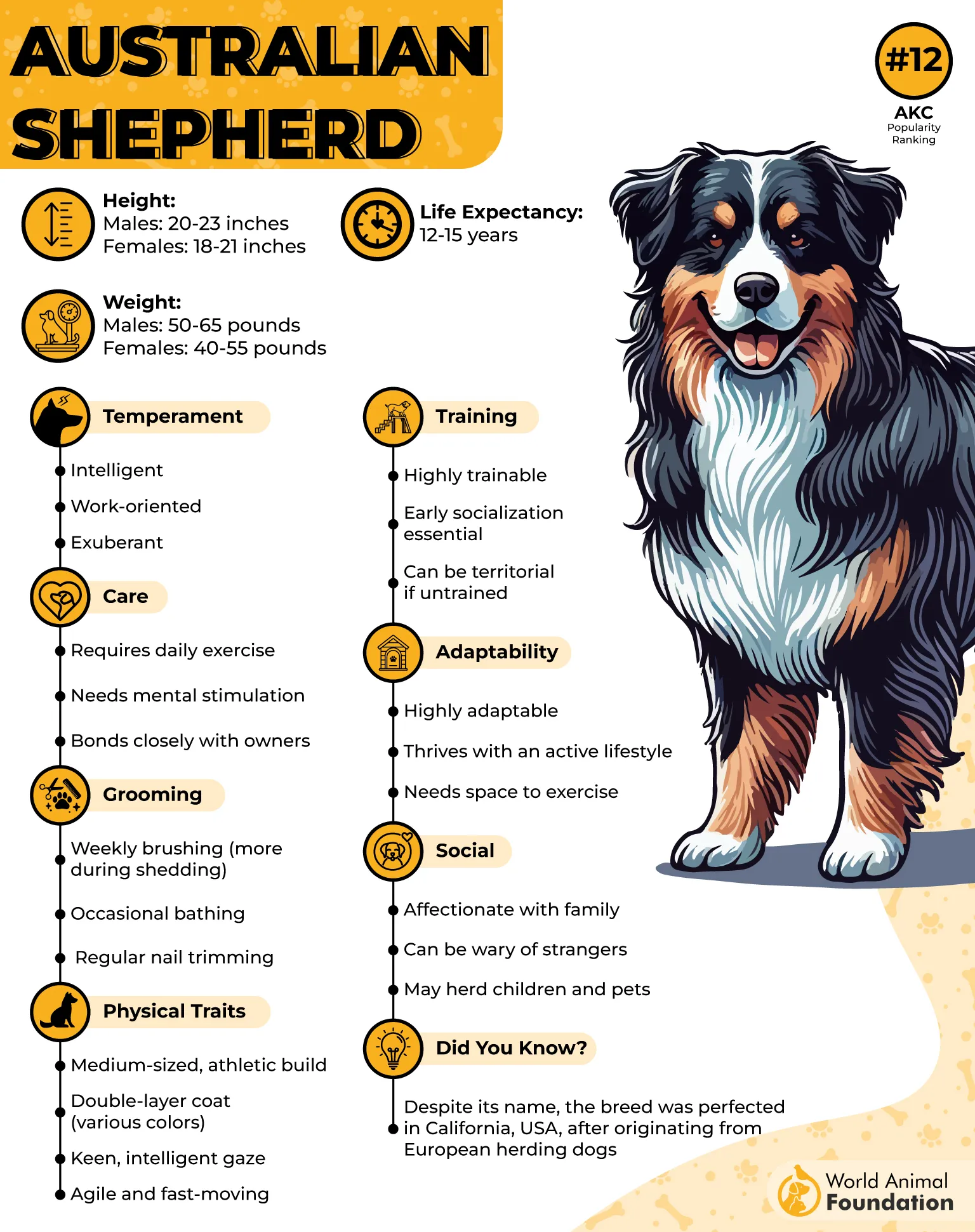
Their intelligence is both the adventure superpower and the potential plot twist. An Australian Shepherd can learn trail manners, directional cues, gear routines, and campsite boundaries quickly. Still, insufficient mental stimulation may lead to barking, chasing, or attempts to herd children, dogs, and unsuspecting hikers.
The breed’s double coat offers useful protection from cool weather, vegetation, and changing outdoor conditions, although it also collects dirt, burrs, and loose hair with impressive efficiency. Regular brushing is particularly important after woodland trips because seeds, tangles, ticks, and trail debris can hide beneath the longer outer coat.
2. German Shorthaired Pointer
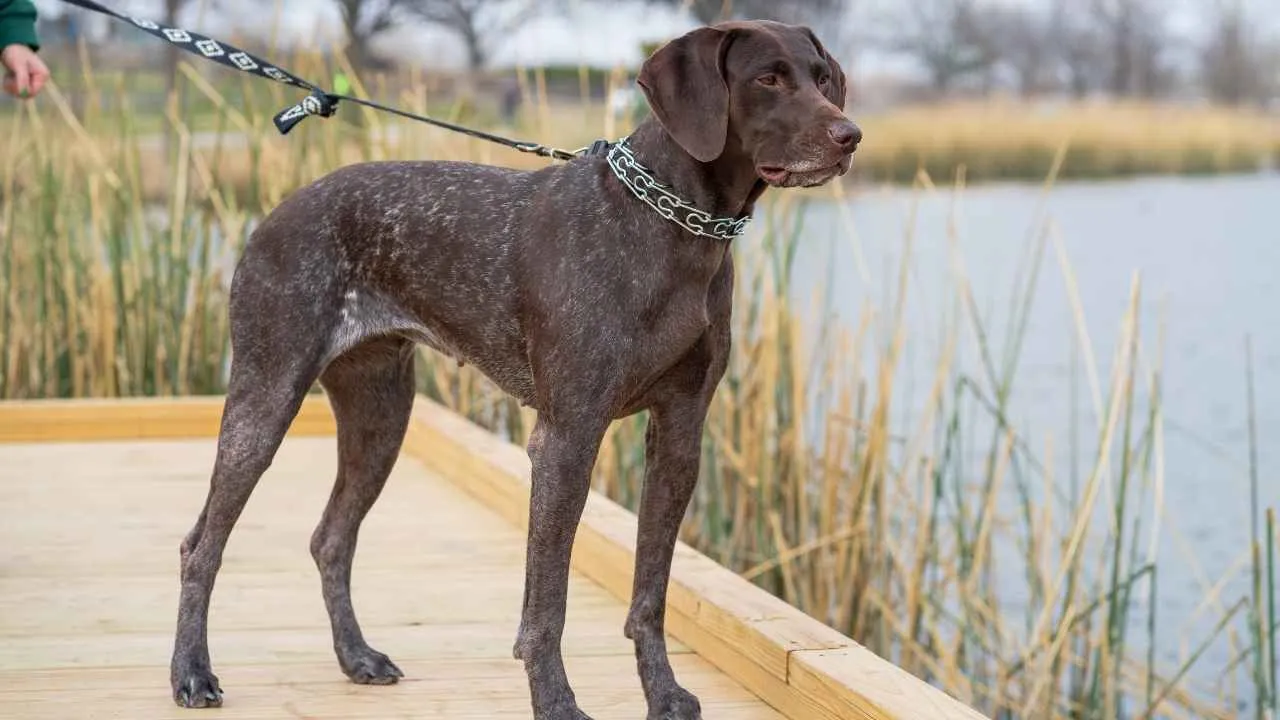
The German Shorthaired Pointer is a versatile sporting dog developed to locate, point, track, and retrieve game across varied terrain.
Few breeds on this list match the GSP’s appetite for sustained outdoor activity. The AKC describes it as a vigorous, energetic athlete that excels at running and swimming and requires extensive physical and mental stimulation.
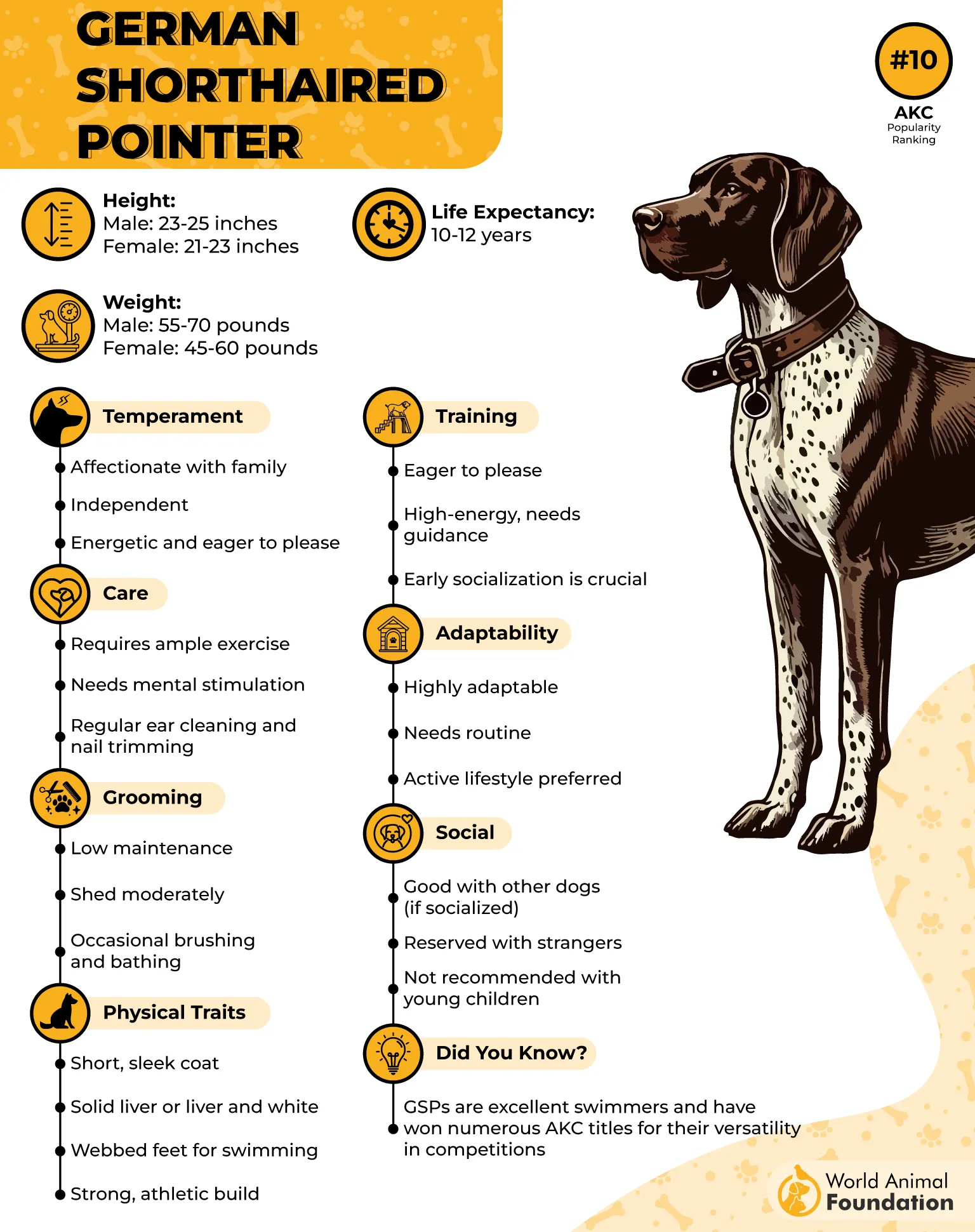
Its short, smooth coat is easy to clean after exposure to mud, dust, or wet vegetation, usually requiring only a quick brushing and occasional bathing. The trade-off is limited insulation, because high-energy short-coated breeds such as GSPs can become cold in snow or low temperatures and may need a fitted jacket and insulated sleeping setup.
German Shorthaired Pointers form deep family bonds and are generally happiest when adventure involves close participation with their humans.
At camp, this well-exercised athletic dog may curl up contentedly after sunset, but an under-stimulated one can begin investigating food bags, wildlife scents, and tent zippers.
3. Siberian Husky
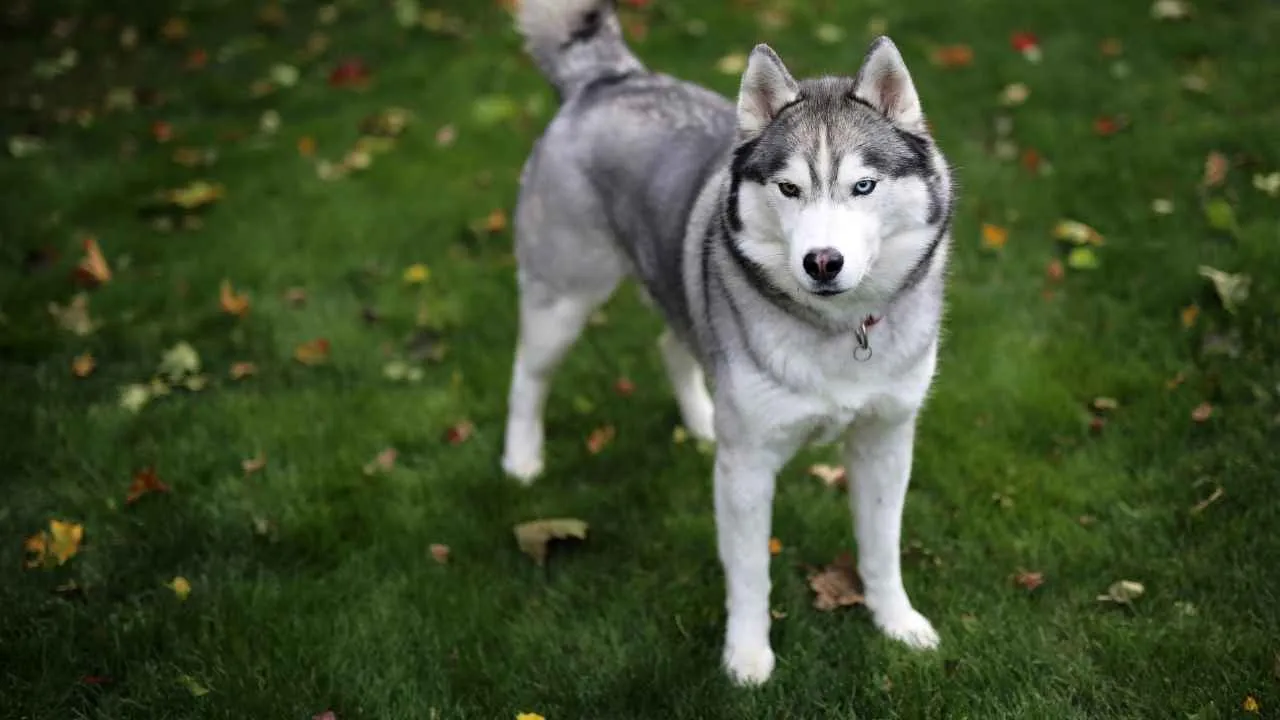
The Siberian Husky is a medium-sized northern working breed developed to pull light loads across enormous distances in severe cold. Their endurance résumé is so strong that a long winter trail may feel less like recreation and more like finally receiving a task worthy of the equipment.
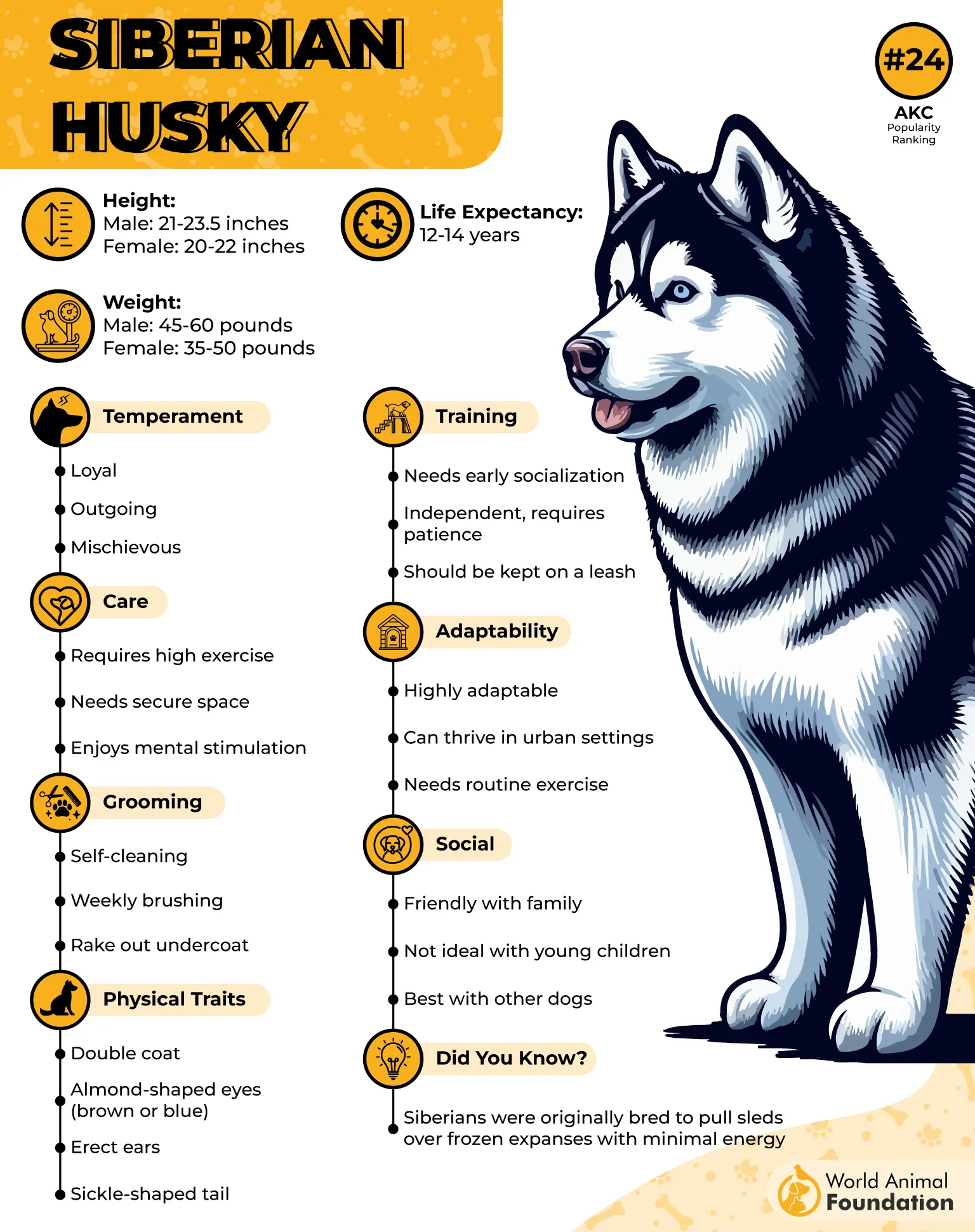
Huskies are outstanding cold-weather hiking companions because generations of sled work selected for efficient movement, stamina, and the ability to maintain a moderate pace over distance. Their thick coat and athletic build are particularly suited to snowy routes, cool forests, and winter camping.
Their social nature can make group camping enjoyable because many Huskies like people and are accustomed to working around other dogs. They are also famously expressive, so the campsite may receive running commentary whenever dinner is late, the hike pauses unnecessarily, or somebody occupies the preferred sleeping position.
A Husky’s desire to run is not a cute little personality quirk that disappears when the scenery becomes dangerous. The Royal Kennel Club advises keeping Siberians leashed, harnessed, or securely fenced because they may take any available opportunity to run, while wildlife can make pursuit even more tempting.
4. Bernese Mountain Dog
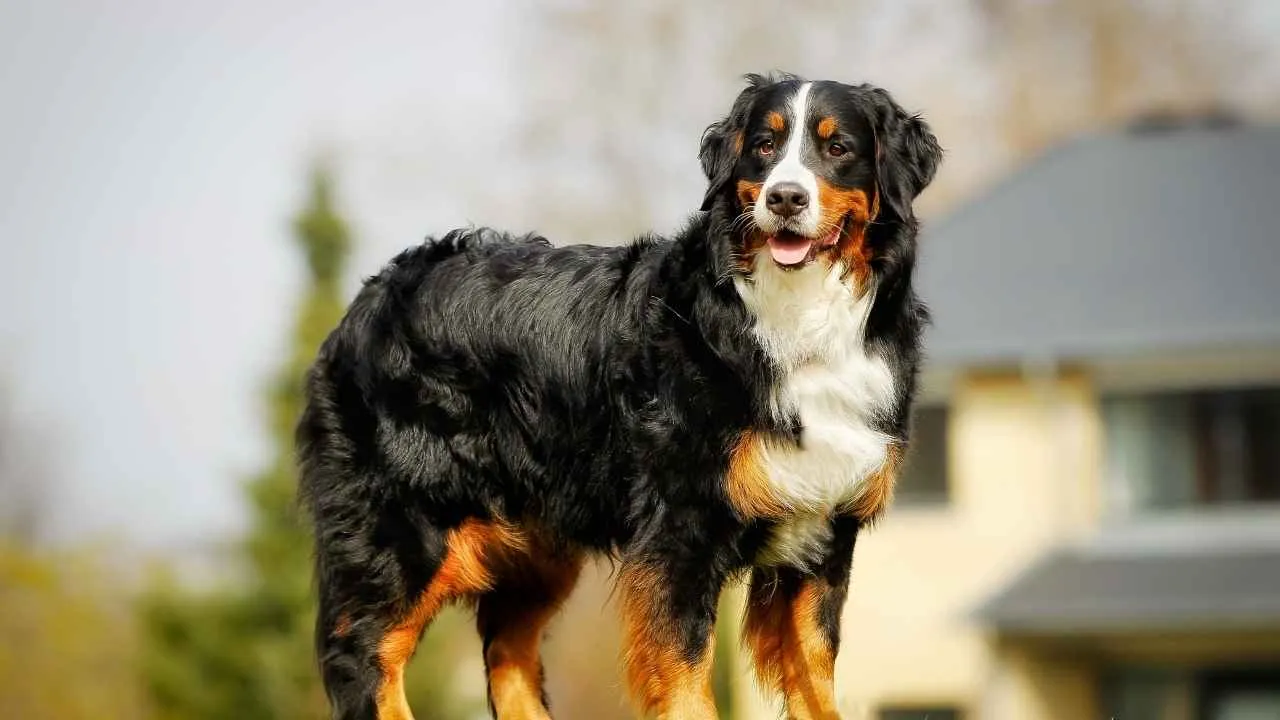
The Bernese Mountain Dog is a large Swiss working breed traditionally associated with farms, livestock, drafting, and pulling loaded carts. Orvis recommends at least half an hour of moderate daily exercise and notes that outdoor-oriented owners often take Bernese Mountain Dogs hiking, camping, and backpacking.
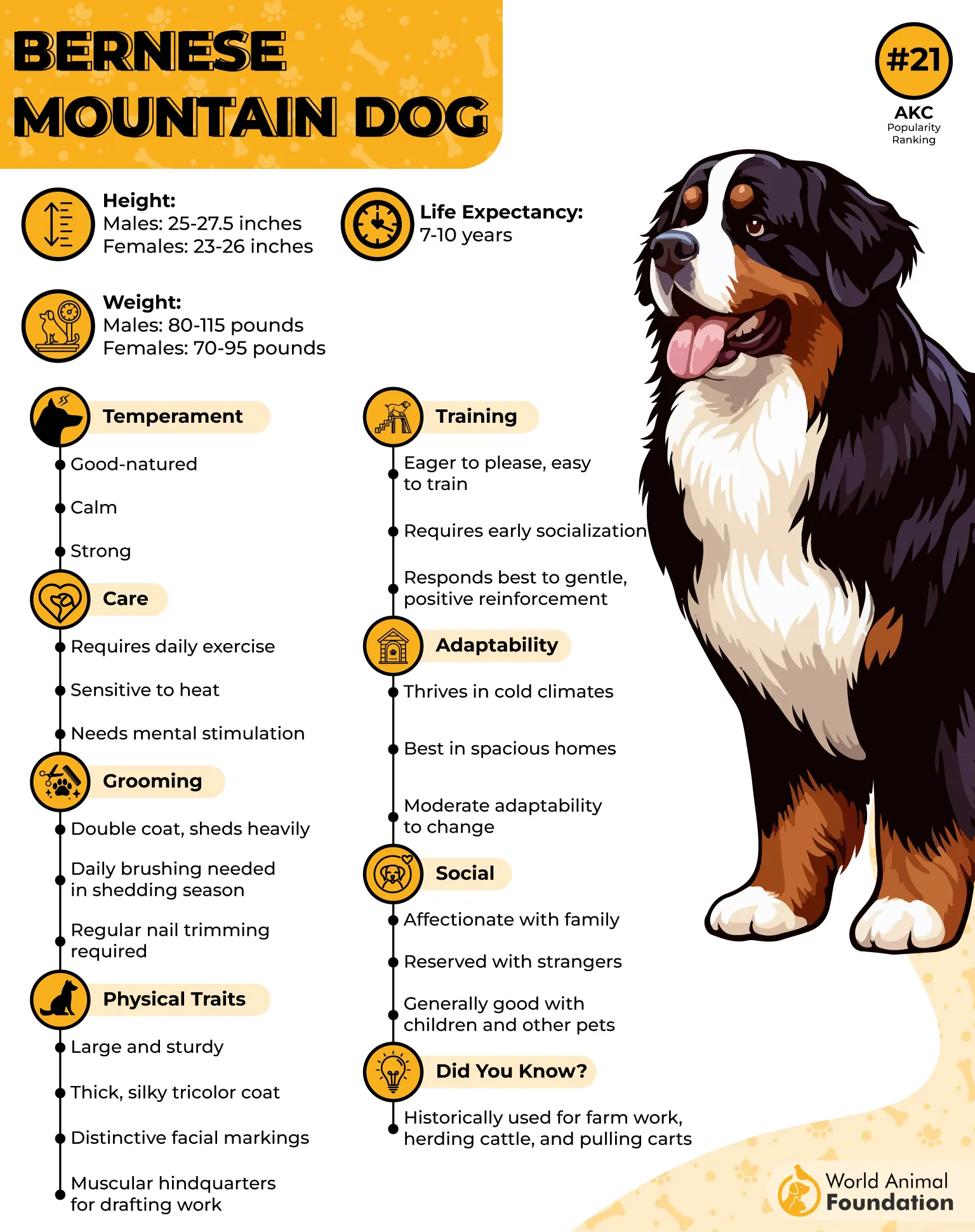
The mountain breed’s calm, affectionate nature can make it a lovely campground companion. Berners generally want to remain with their families and can settle contentedly after activity, provided they have adequate space, comfortable bedding, and protection from excessive warmth.
A thick, weather-resistant double coat helps the Berner handle cold, rain, and snow, making cool-climate trips the breed’s natural comfort zone. Hot-weather hiking is much less suitable, and exercise should be shortened or moved to cooler periods because the heavy coat and large body can retain heat.
Joint health, age, conditioning, and surface difficulty should guide the route, while steep scrambles and long jumps may be inappropriate for such a heavy frame.
Please bring a thick sleeping pad for insulation and comfort; expecting a giant fluffy coworker to sleep directly on freezing ground is not rugged—it is poor management.
5. Labrador Retriever
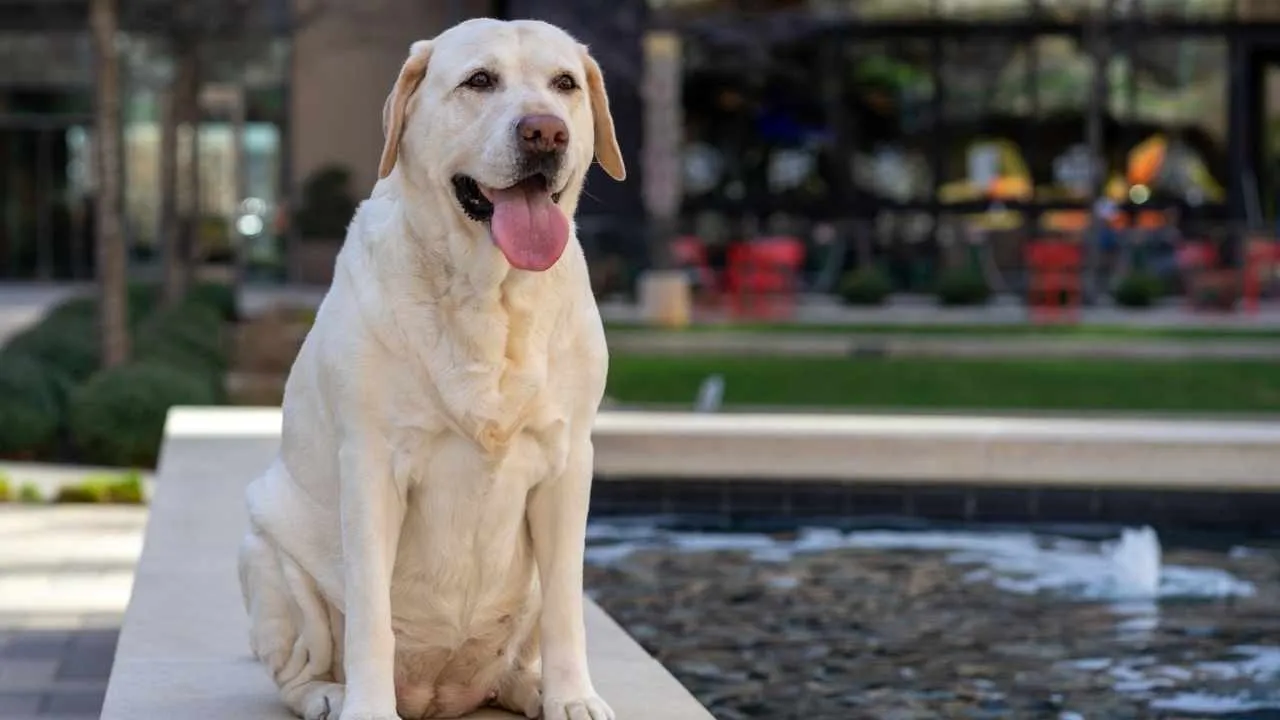
The Labrador Retriever is a sturdy sporting breed developed for demanding retrieval work in and around water and in rough outdoor environments. They bring the wholesome energy of a friend who agrees to every adventure before asking how far it is or whether snacks will be provided.
Labs make versatile trail companions because they combine athletic ability, trainability, sociability, and an enthusiasm for swimming. Their favourite activities commonly include retrieving and water work, so routes featuring safe lakes or gentle streams may earn immediate five-star ratings.
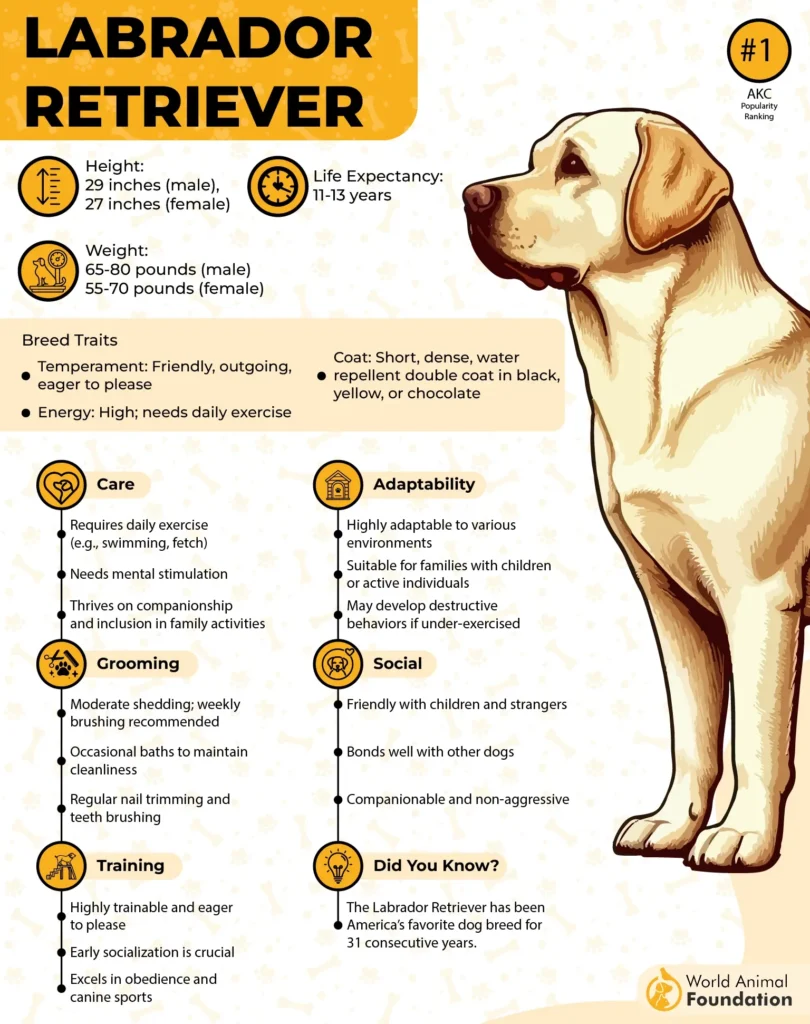
Family camping often suits the breed’s outgoing temperament. They generally enjoy participating in group outings and can adapt to different surroundings when properly socialised. However, young dogs may be too exuberant to navigate crowded tents or shared cooking areas without training.
The dense, short double coat provides Labradors with useful insulation and water resistance but also results in considerable shedding. A towel, brush, and designated drying area are smart additions when the route involves mud or swimming.
6. Vizsla
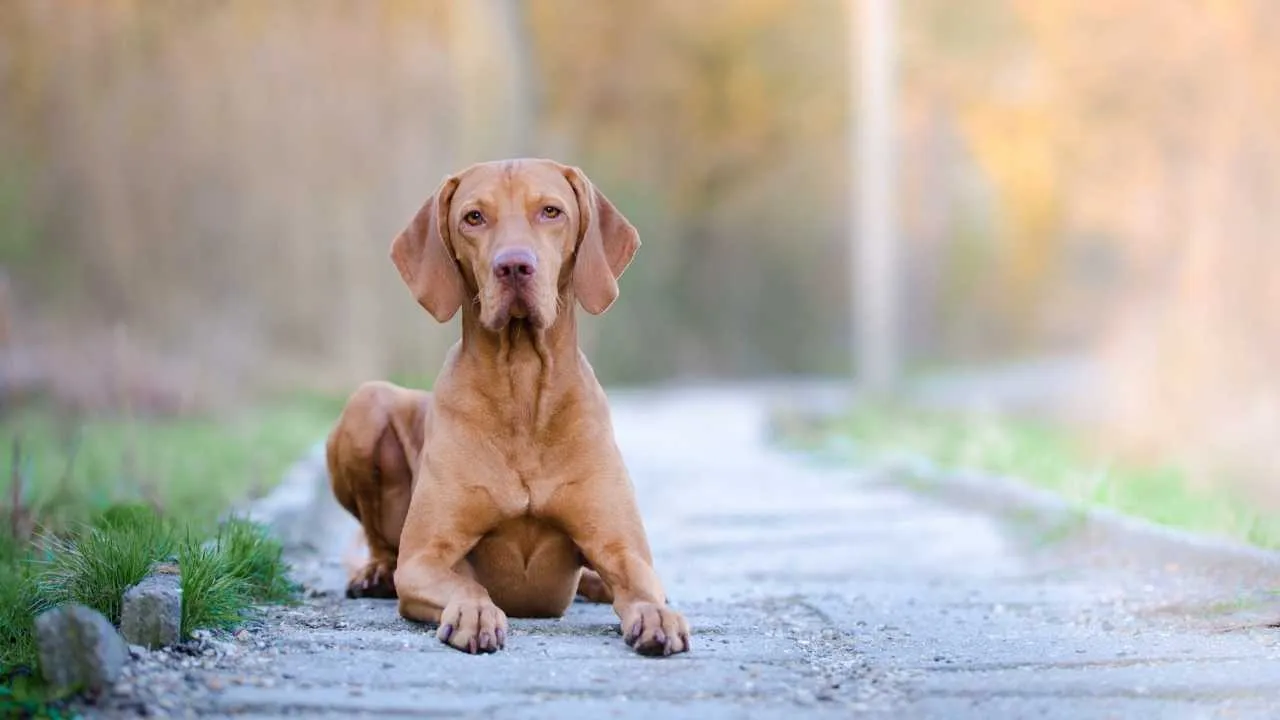
The Vizsla is a lean Hungarian sporting dog developed to search, point, track, and retrieve while working closely with a hunter. Their light frame and rust-coloured coat create an athlete who moves across a trail as if it has somewhere important to be and strongly suspects you are walking too slowly.
These adventure dogs possess the stamina and enthusiasm needed for long hikes when properly conditioned. They thrive on exercise and human interaction, making them particularly appealing to runners, backpackers, and campers.
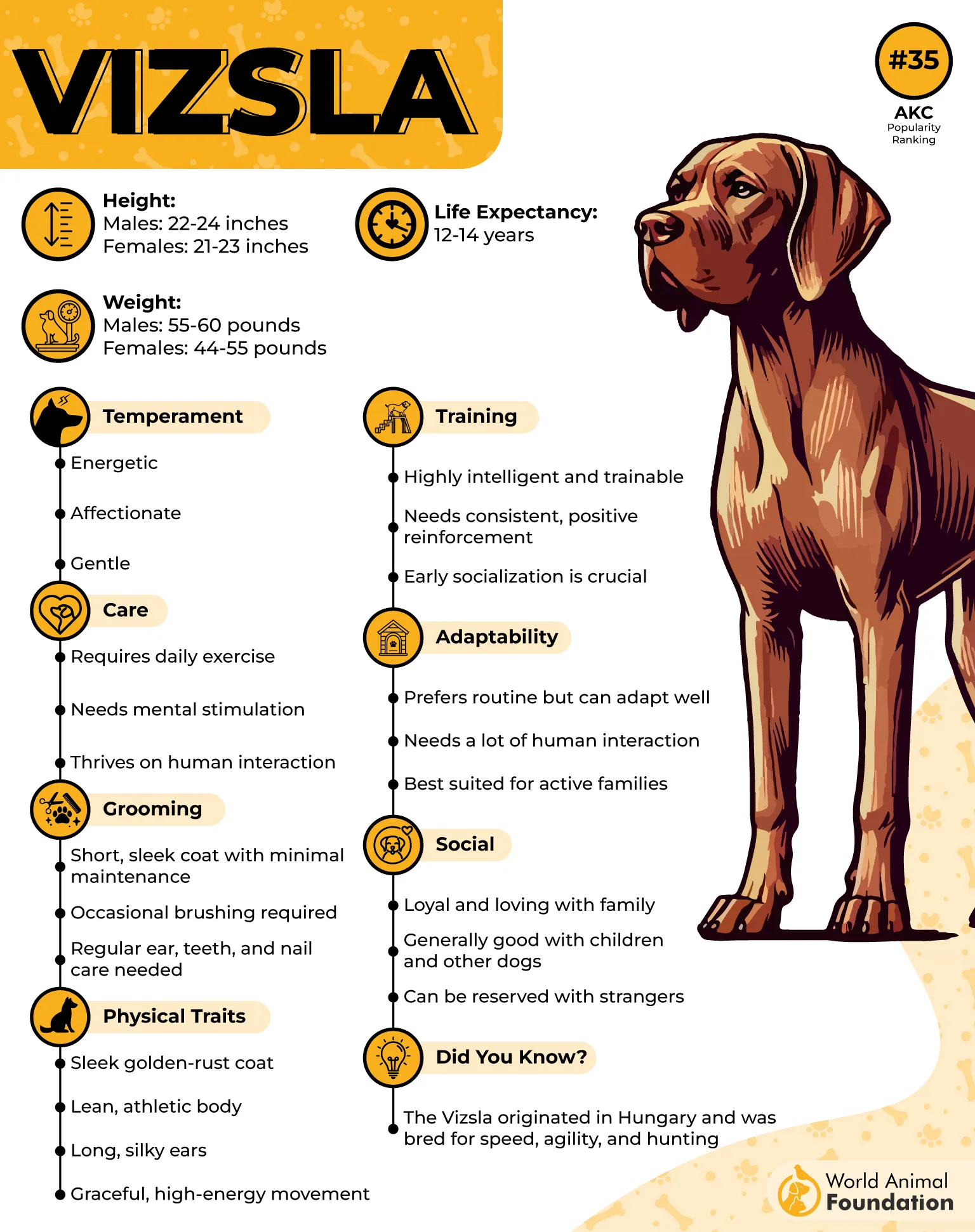
The agile dog’s smooth coat has no undercoat and requires minimal grooming, which is wonderfully convenient after dusty summer trails. However, that same lack of insulation makes Vizslas vulnerable in snow, cold rain, and chilly camps, so jackets, dry bedding, and an insulated sleeping pad may be necessary.
These lovers of outdoor adventures are highly trainable but sensitive, responding best to clear rewards and patient consistency rather than harsh handling. Campsite skills should include settling, ignoring food, remaining calm around strangers, entering the tent politely, and waiting while gear is packed.
7. Rhodesian Ridgeback
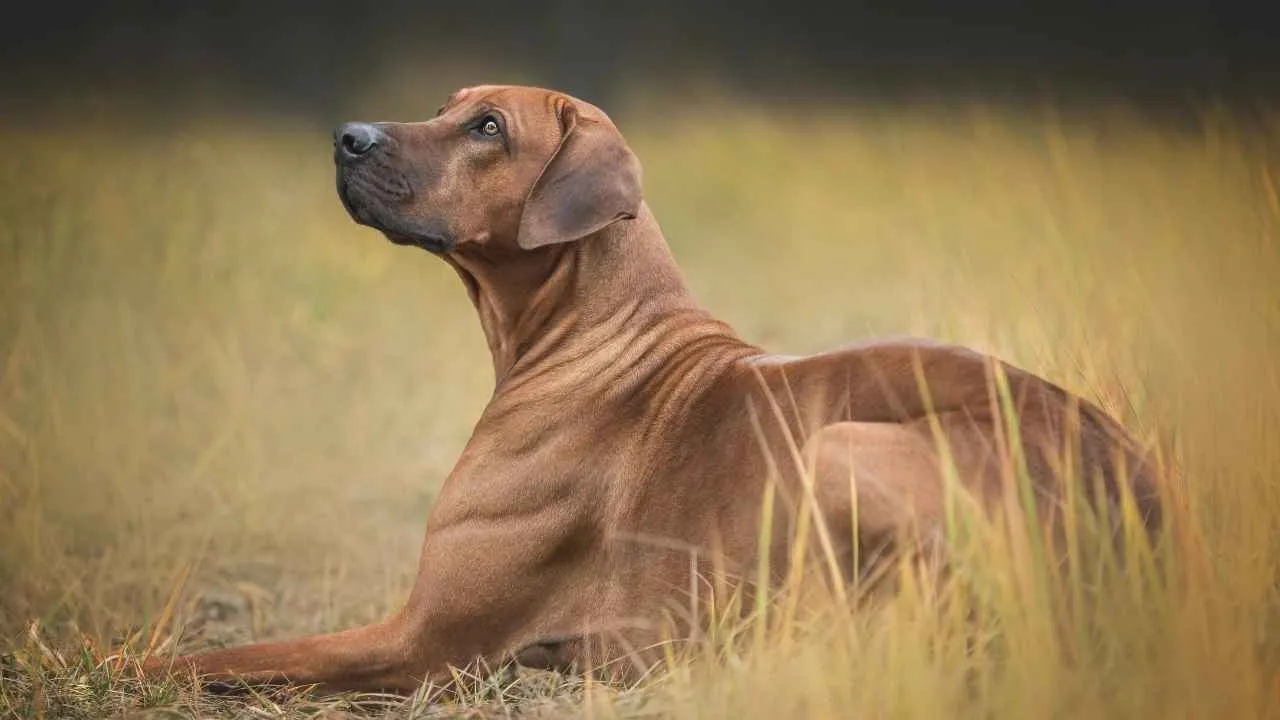
The Rhodesian Ridgeback is a large African hound developed for tracking, hunting, guarding, and working across demanding terrain.
Ridgebacks combine athleticism with a more measured energy style than the constantly buzzing GSP or Vizsla. These intelligent dogs require regular physical activity and can succeed in tracking, agility, and active family routines, making them strong companions for steady hikes through open or rolling terrain.
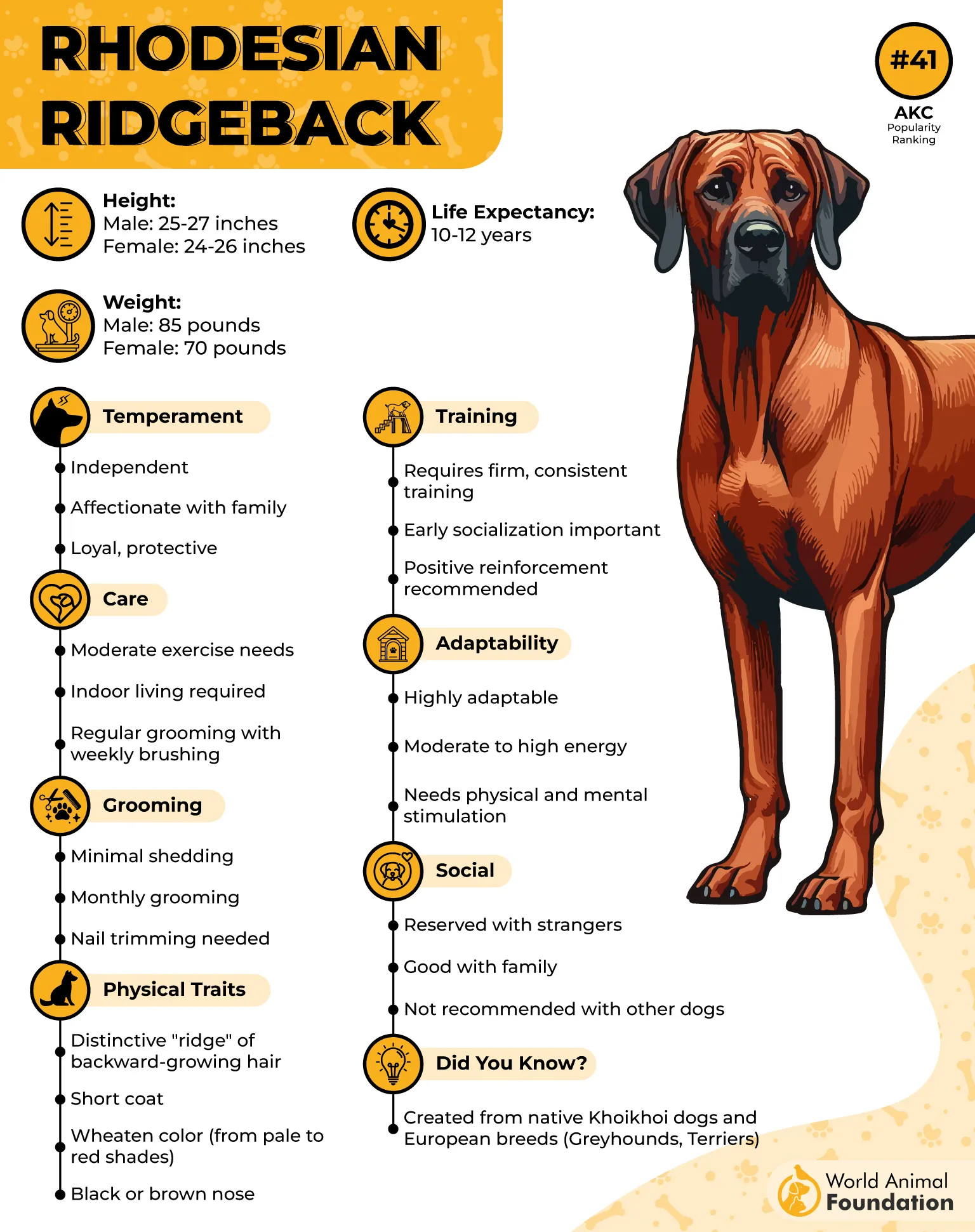
Their history in southern Africa contributed to a dog valued for strength, stamina, courage, and the ability to operate at some distance from a handler. That independence can be useful on rough trails, but it also means a Ridgeback may not display the immediate obedience of a highly people-pleasing Labrador.
The short wheaten coat is refreshingly easy to maintain on camping trips, says Royal Canin. Weekly brushing and occasional bathing are generally enough, while mud and dust can usually be wiped away without a major grooming operation beside the fire.
Conclusion
Every breed brings a different adventure style, so the best choice depends on climate, pace, terrain, training experience, and the amount of dog hair you are emotionally prepared to find inside the tent.
No breed arrives automatically ready for backcountry travel. Reliable leash behaviour, fitness, socialisation, wildlife neutrality, campsite settling, and comfort around tents or unfamiliar surfaces must be developed before attempting ambitious routes.
Plan responsibly, respect wildlife, follow trail regulations, and build each outing around the dog standing in front of you rather than the breed description on a website
