




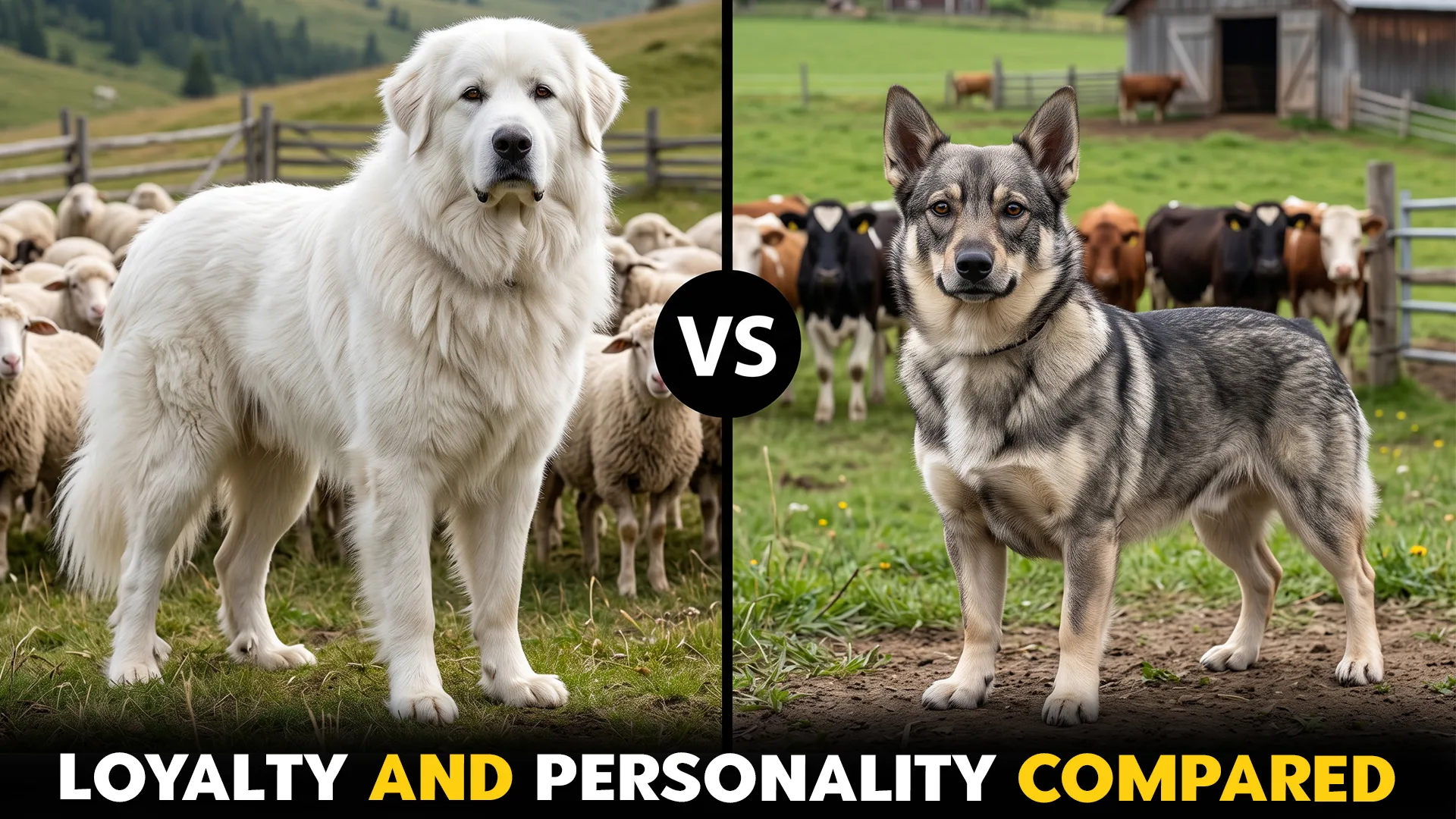
Choosing between the Great Pyrenees and the Swedish Vallhund isn’t as simple as comparing size or appearance. These two breeds were developed for very different jobs, giving them distinct personalities, energy levels, care needs, and instincts.
Understanding these differences is essential before bringing either breed into your home. The right choice depends on your lifestyle, living space, experience with dogs, and the amount of time you can dedicate to training, exercise, and grooming.
In this article, we’ll compare the Great Pyrenees and the Swedish Vallhund across their temperament, size, exercise needs, grooming requirements, trainability, health, and family suitability. By the end, you’ll have a clear understanding of each breed’s strengths and which one is the better match for you.
Great Pyrenees vs. Swedish Vallhund: Key Differences
Comparing a giant livestock guardian to a compact herding dog comes down to much more than just size. From energy levels and barking habits to living space needs, here are the core differences between the Great Pyrenees and the Swedish Vallhund.
Breed Origins & Functional Background
Great Pyrenees
With origins dating back to the Bronze Age (around 1800–1000 B.C.E.), the Great Pyrenees is one of the world’s oldest working dog breeds.
Developed in the rugged Pyrenees Mountains between France and Spain, these powerful dogs spent centuries guarding sheep and other livestock from wolves and bears while working independently alongside shepherds.
Over time, their beauty and dependable nature earned them favor among French nobility. In 1675, King Louis XIV declared the breed the “Royal Dog of France,” and they later became companions to notable figures, including Queen Victoria and the Marquis de Lafayette, who introduced the breed to the United States.
Although they have served as cart pullers, sled dogs, and family companions, their reputation as exceptional livestock guardians remains their defining legacy.
Originally bred for:
Guarding sheep and other livestock
Protecting flocks from predators
Watching castles and large estates
Pulling carts and carrying supplies in some regions
Swedish Vallhund
The Swedish Vallhund traces its roots back 1,000–1,200 years to the Viking Age, when it worked alongside Norse farmers throughout Scandinavia.
Often called the Swedish Cattle Dog, this compact Spitz-type breed was developed to herd cattle by nipping at their heels, earning it the nickname “heeler,” as mentioned by Omlet. It also served as a reliable farm watchdog, alerting owners to unfamiliar people and animals.
The breed nearly disappeared during the early 20th century but was saved through dedicated breeding efforts led by Bjorn von Rosen and K. G. Zettersten.
Officially recognized by the Swedish Kennel Club in 1943, the Swedish Vallhund eventually made its way to the United States in the 1980s and was recognized by the American Kennel Club in 2007.
Originally bred for:
Herding cattle and livestock
Driving animals by nipping at their heels
Guarding farms and alerting owners
Assisting farmers with daily work
Physical Characteristics & Body Structure
Great Pyrenees
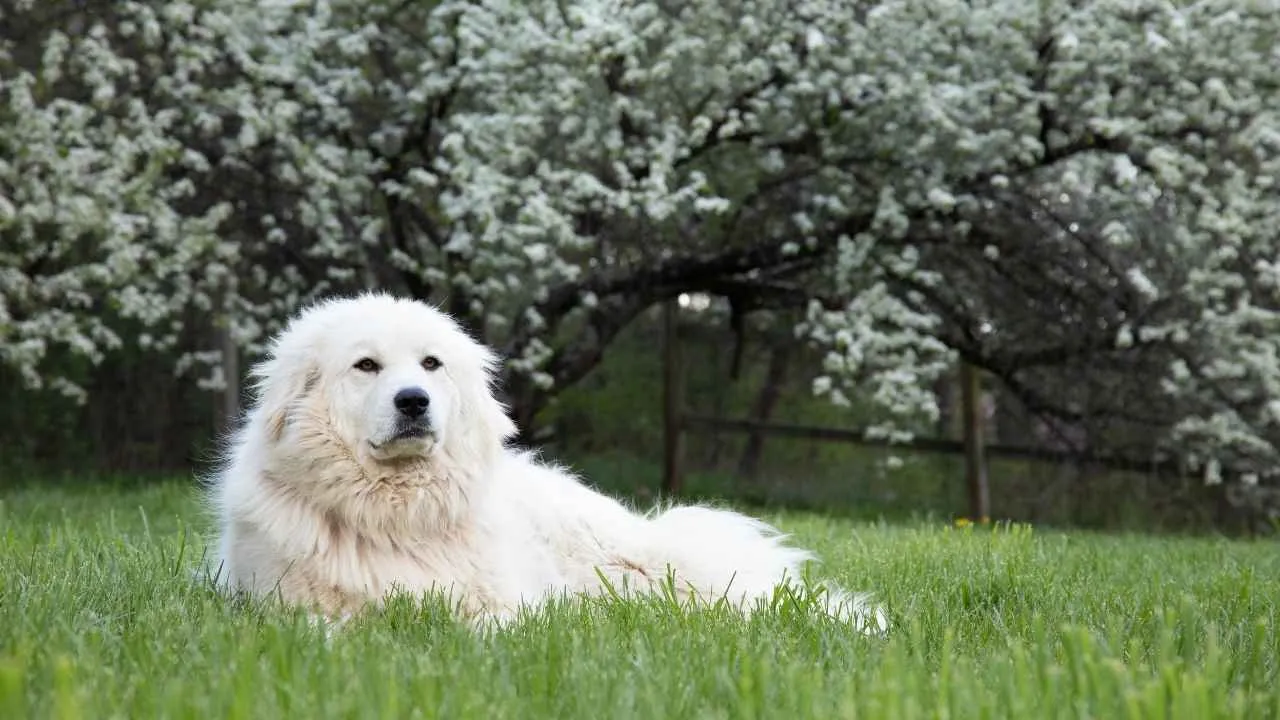
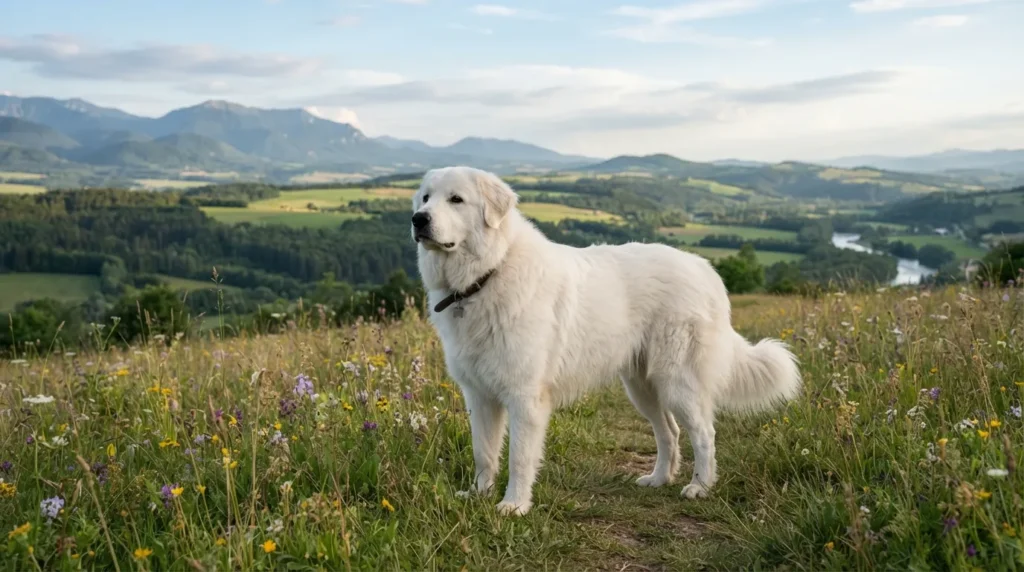
The Great Pyrenees is a large, muscular breed with a calm, dignified presence. Its thick double coat consists of a long, flat outer coat and a dense, woolly undercoat that provides protection against harsh weather. The coat is typically solid white but may also feature gray, tan, reddish-brown, or badger markings.
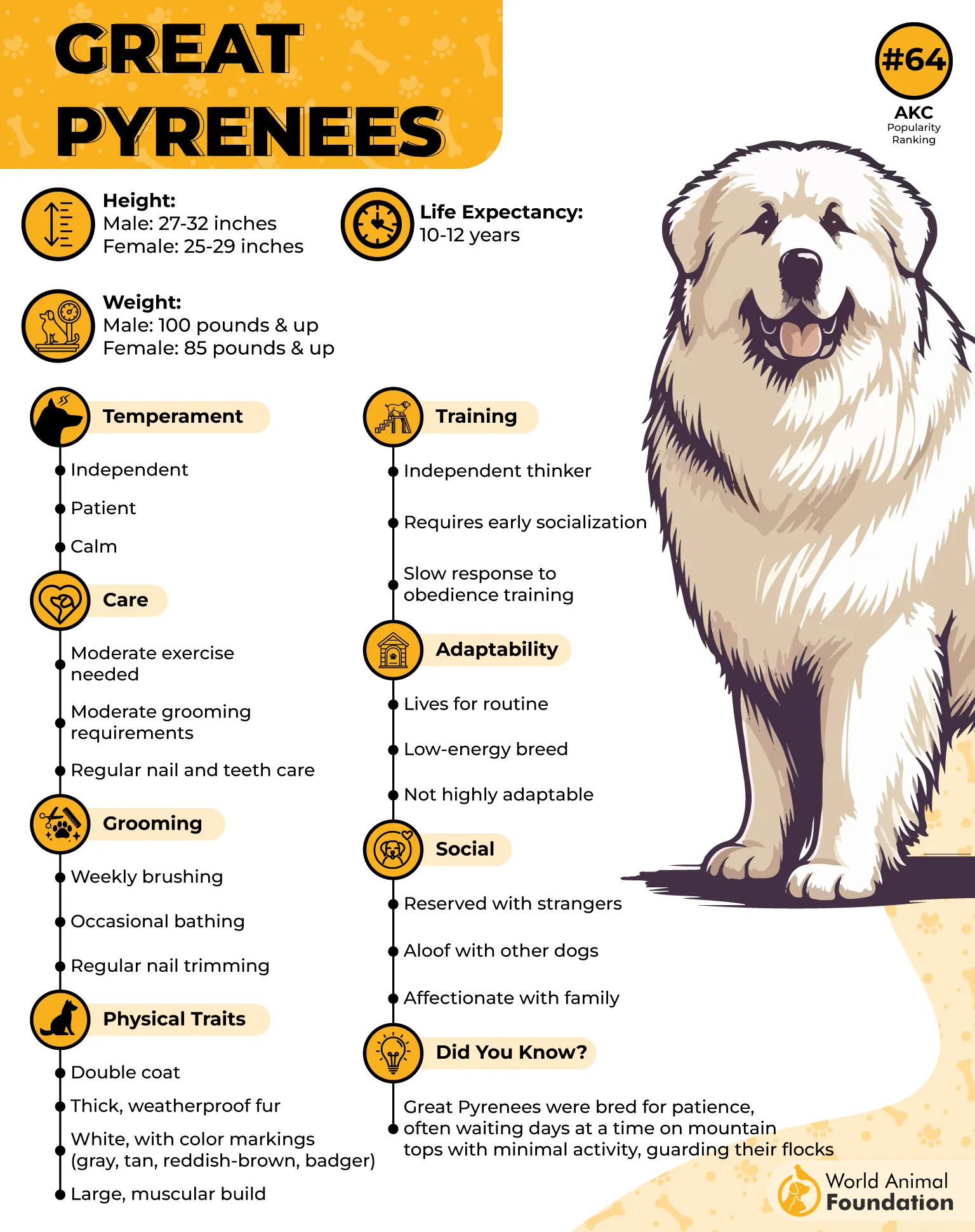
This breed has a broad, rounded head, dark brown almond-shaped eyes that give it a gentle expression, and small V-shaped ears that hang close to the head. A long, feathered tail and the pronounced mane around the neck and shoulders—especially in males—add to its majestic appearance.
Swedish Vallhund
The Swedish Vallhund is a sturdy, low-set dog with a long body and short legs, giving it a silhouette similar to a Corgi. Its medium-length double coat has a rough outer layer and a soft, dense undercoat, making it well suited for outdoor work in varying weather conditions.
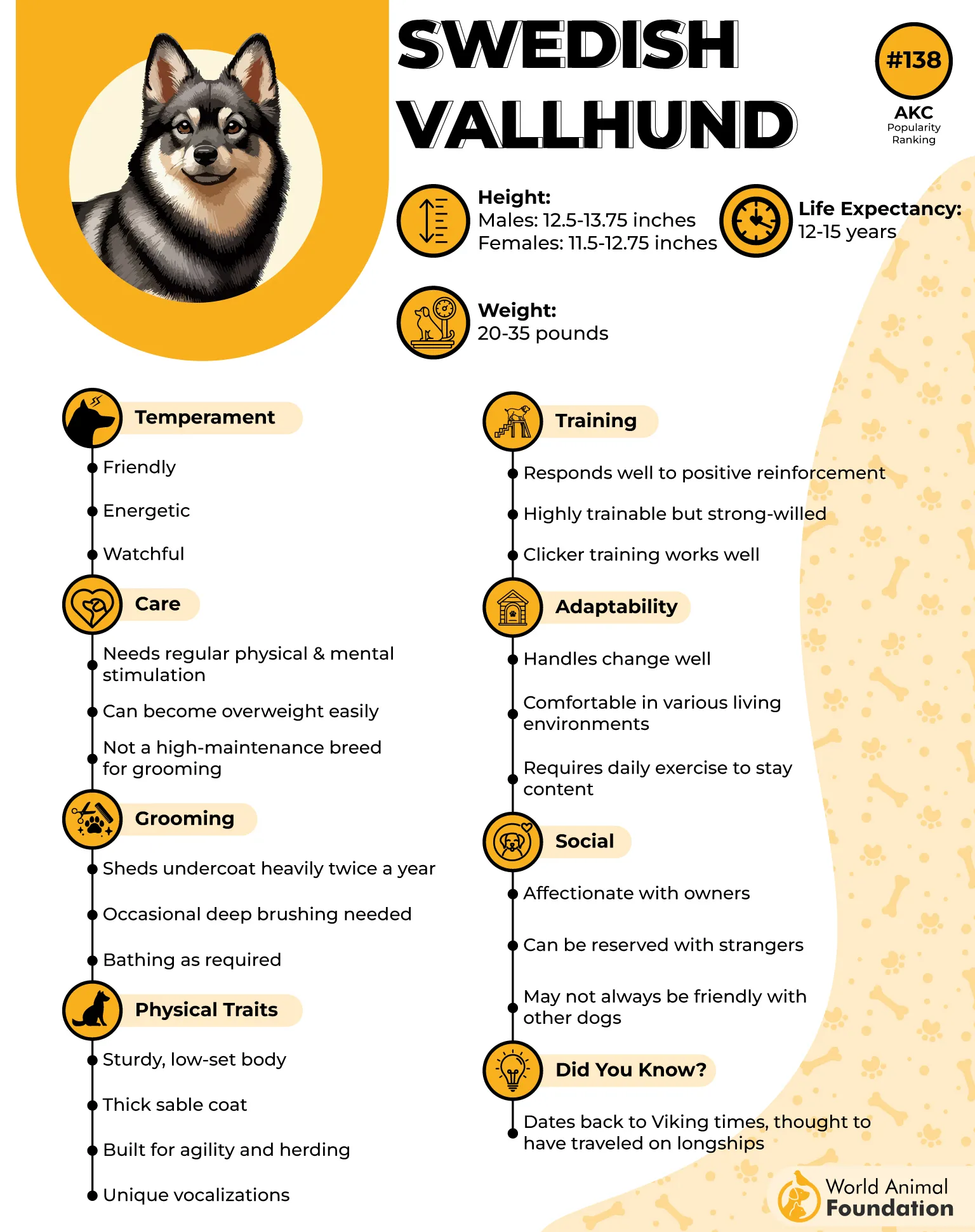
Unlike the Great Pyrenees, the Vallhund has upright, pointed ears and oval dark brown eyes that create an alert, fox-like expression.
Its sable-colored coat ranges from gray to red with darker-tipped hairs, often featuring distinctive harness markings and small white patches on the chest or legs. The tail varies naturally and may be long, short, bobbed, or absent.
Temperament & Behavioral Profile
Great Pyrenees
The Great Pyrenees is known for its gentle nature and unwavering loyalty to its family. Patient and affectionate, it usually gets along well with respectful children and other dogs when properly socialized, according to Chewy.
Despite its calm demeanor, this breed has strong protective instincts and won’t hesitate to defend its family or territory if it senses a threat.
Because it was bred to guard livestock independently, the Great Pyrenees is naturally self-reliant and known for autonomous decision-making.
This independent streak can make training more challenging, and it also contributes to the breed’s tendency to bark frequently as a way of alerting its family to anything unusual.
Swedish Vallhund
The Swedish Vallhund is an intelligent, lively breed that thrives on staying busy. Originally developed as a herding dog, it enjoys having a job to do and excels when given regular physical exercise and mental challenges.
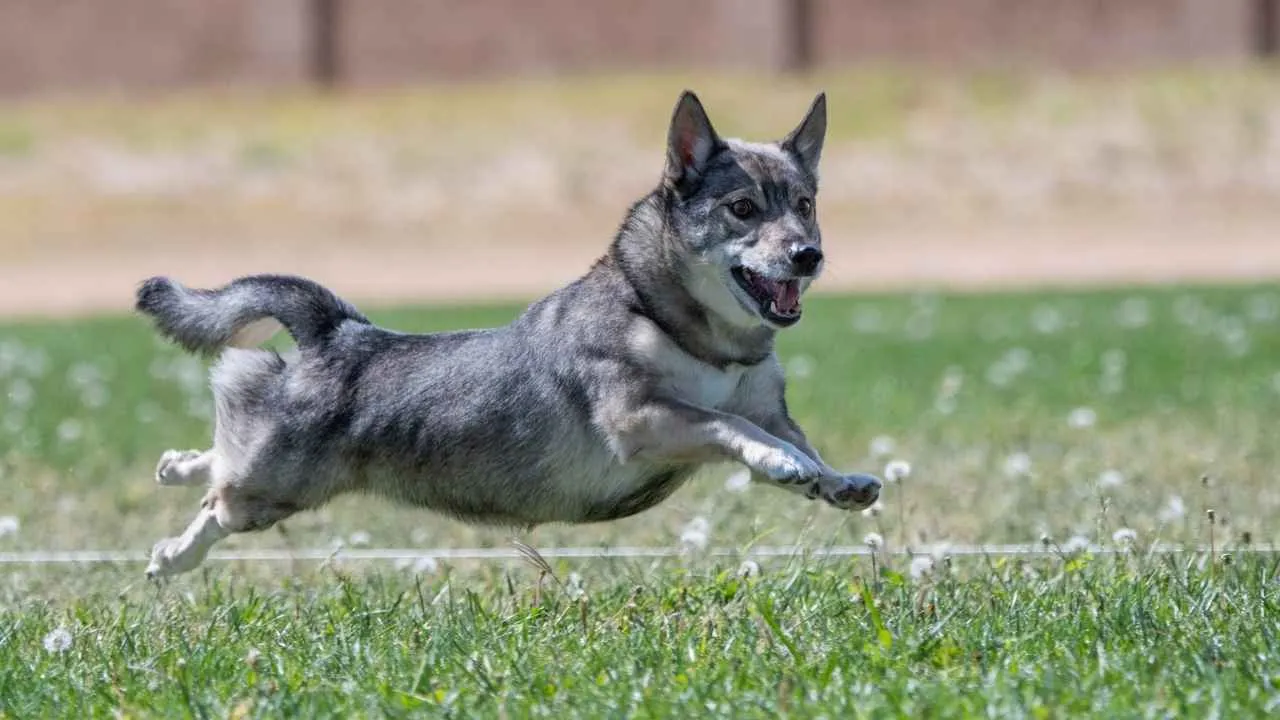
Without enough stimulation, it may become vocal or develop destructive behaviors out of boredom. Although highly alert and an excellent watchdog, the Swedish Vallhund is generally friendly and polite with strangers rather than overly protective.
It is affectionate with its family, playful with children when properly socialized, and enjoys being involved in everyday activities, making it a highly interactive companion.
Activity Requirements & Energy Levels
Great Pyrenees
The Great Pyrenees isn’t built for intense workouts or long-distance running. Bred to patiently guard livestock rather than chase it, this breed naturally conserves energy and enjoys calm, steady activities.
Daily exercise is still important to maintain muscle tone and overall health, but moderate outings are usually enough. Aim for 20–30 minutes of exercise twice a day, along with opportunities to explore a secure yard or spend time outdoors with the family.
Favorite activities include:
Leisurely walks
Hiking
Farm work or livestock guarding
Cart- or sled-pulling
Swedish Vallhund
The Swedish Vallhund is an energetic working breed that thrives on staying active. Expect to provide around an hour of physical stimulation every day, along with regular mental challenges to prevent boredom. Without enough stimulation, this intelligent breed may become vocal or destructive.
In addition to daily walks, Vallhunds excel in activities that challenge both their body and mind.
Popular activities include:
Agility and obedience training
Fetch and flyball
Nose work and scent walks
Food puzzles and interactive toys
Herding and tracking activities
Trainability, Intelligence & Learning Ability
Great Pyrenees
The Great Pyrenees was bred to guard livestock without constant human direction, so independent thinking is one of its defining traits. While highly intelligent, it doesn’t always feel the need to obey commands immediately, which can make training more challenging—especially for first-time owners.
Training should begin early with plenty of socialization, exposing puppies to different people, animals, and environments. Short, engaging sessions using positive reinforcement work best, as repetitive drills can quickly lose this breed’s interest.
Consistency, patience, and realistic expectations are essential, and many first-time owners benefit from structured obedience classes, as stated by PetMD.
Swedish Vallhund
The Swedish Vallhund is quick to learn and naturally enjoys working with its owner. Its intelligence, combined with a strong desire to please, makes it much easier to train than many independent breeds. Positive reinforcement with treats, toys, and praise helps keep this sensitive dog motivated and confident.

Because of its high energy, training should include games and mentally stimulating activities such as agility, nose work, or obedience exercises. Early training is also important to manage natural herding behaviors, including heel-nipping and excessive barking, before they become long-term habits.
Coat Maintenance & Grooming Needs
Great Pyrenees
Despite its thick, luxurious coat, the Great Pyrenees is relatively easy to groom because its outer coat naturally resists dirt and tangles. However, it is a heavy shedder throughout the year, making regular brushing essential to keep loose fur under control.
A good grooming routine includes:
Brushing several times a week, increasing frequency during heavy shedding periods
Monthly baths or as needed when the coat becomes dirty
Nail trimming every two weeks
Daily tooth brushing and routine professional dental cleanings
Swedish Vallhund
The Swedish Vallhund has a shorter, dense double coat that’s easier to care for on a day-to-day basis. Weekly brushing is usually sufficient, although brushing two to three times a week—and more often during the spring and fall shedding seasons—helps manage the large amount of loose hair.
Regular care includes:
Weekly brushing, with extra grooming during seasonal shedding
Monthly baths unless the dog becomes particularly dirty
Nail trimming every two weeks
Daily dental care with regular veterinary cleanings
Average Lifespan & Longevity
Great Pyrenees
The Great Pyrenees typically lives 10–12 years, which is relatively long for a giant breed. Responsible breeders screen for inherited conditions, but owners should still be aware of several health concerns that can affect the breed.
Common health issues include:
Hip and elbow dysplasia
Osteochondrosis (OCD)
Eye conditions such as cataracts, entropion, and canine multifocal retinopathy
Addison’s disease (hypoadrenocorticism)
Gastric dilatation-volvulus (bloat), a life-threatening emergency
Patellar luxation
Swedish Vallhund
The Swedish Vallhund is considered a hardy breed and generally experiences fewer inherited health issues than many dogs. With proper care and routine veterinary checkups, most Vallhunds remain healthy throughout their lives.
The most common health concerns include:
Hip dysplasia
Swedish Vallhund retinopathy, a progressive eye disease that can lead to vision loss
Cataracts
Suitability for Family Life vs Guard Duties
Great Pyrenees
The Great Pyrenees is an excellent choice for families looking for a calm, loyal dog with strong guarding instincts. It forms deep bonds with its household and is typically gentle with respectful children and other pets.
However, its independent nature and territorial awareness mean early socialization and training are important.
This breed is especially well suited for:
Homes with large yards or rural properties
Families seeking a reliable guardian
Multi-pet households with proper introductions
Owners who appreciate a calm, watchful companion
Swedish Vallhund
The Swedish Vallhund thrives in families that enjoy an active lifestyle. Affectionate, playful, and eager to participate in daily activities, it gets along well with children and generally greets strangers politely while remaining alert enough to make a dependable watchdog.
This breed is best suited for:
Active families or individuals
Homes that can provide daily exercise and mental stimulation
Families with older children who enjoy interactive play
Owners looking for a companion rather than a dedicated guard dog
Conclusion
The Great Pyrenees and the Swedish Vallhund may both be hardworking dog breeds, but they offer very different experiences as companions.
The Great Pyrenees stands out with its calm, protective nature and independent spirit, making it an excellent guardian for the right home.
The Swedish Vallhund, meanwhile, brings energy, intelligence, and enthusiasm to everyday life, thriving with owners who enjoy an active, hands-on relationship with their dog.
The best breed isn’t the one with the most impressive traits—it’s the one that fits your lifestyle. Take the time to consider your living space, activity level, grooming commitment, and expectations before making your choice.
When your dog’s natural instincts align with your daily routine, you’ll gain a loyal companion that’s a joy to live with for years to come.
