




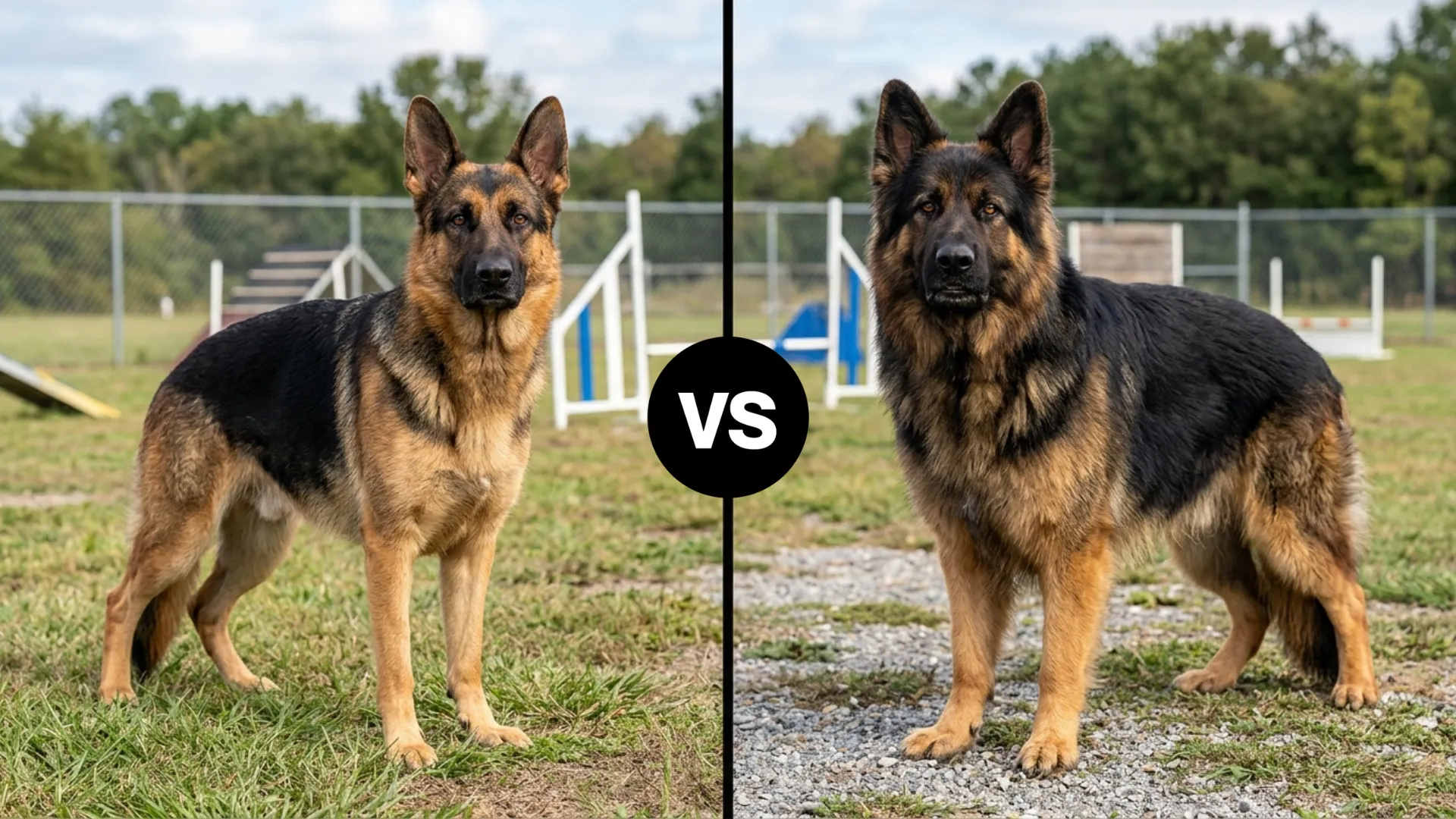
You’re probably familiar with the German Shepherd, but have you ever come across a King Shepherd? At first glance, you might mistake one for the other, since they look remarkably similar.
That said, there are real differences between the two, in coat, build, size, and temperament. German Shepherds are well known for police and farm work, while King Shepherds have earned a reputation as gentle giants better suited to family life.
In other words, these two breeds are built for pretty different things. One thrives on high-drive, intense work, while the other is just as happy lounging around the house. Which one is right for you really comes down to what kind of dog fits your lifestyle.
In this guide, we’ll break down the key differences between German Shepherds and King Shepherds, covering their origin, purpose, temperament, and exercise and training needs, so you can figure out which one is the best fit for you.
German Shepherd vs. King Shepherd Dog
German Shepherds and King Shepherds may look similar, but they differ in size, temperament, health, and activity needs. Understanding these key differences can help you choose the breed that best suits your home and lifestyle.
Origins & Purpose
German Shepherds were developed in late 19th-century Germany with the goal of creating the ideal all-purpose working dog. A former cavalry officer, Captain Max von Stephanitz, traveled the country searching for a dog that matched his vision. The breed went on to become one of the most popular in the U.S., ranking second from 2013 to 2019.
King Shepherds, by comparison, are a much newer designer breed, developed roughly 90 years after German Shepherds were first recognized by the AKC. In the early 1990s, breeders David Turkheimer and Shelley Watts noticed recurring health issues in German Shepherds and set out to create a healthier alternative.
They crossed German Shepherds with other large breeds, including the Shiloh Shepherd, Alaskan Malamute, Great Pyrenees, and Akita, to produce the King Shepherd. The AKC still doesn’t formally recognize the breed, so King Shepherds aren’t eligible for AKC dog shows.
In terms of purpose, German Shepherds were bred for intelligence and sharp focus, ideal for herding sheep and protecting flocks from predators. King Shepherds, on the other hand, were developed to be a larger, more powerful, and healthier take on the GSD, and over time, they’ve become known as steady, devoted family guardians.
Size & Physical Build
German Shepherds fall into the large dog category, with males typically standing 24-26 inches at the shoulder and weighing 60 to 90 pounds. Females run a bit smaller, standing 22-24 inches and weighing between 50 and 70 pounds.

King Shepherds are noticeably bigger, standing around 29 inches tall and weighing anywhere from 90 to 150 pounds. A full-grown male King Shepherd can easily outweigh a German Shepherd by 30 to 50 pounds.
Build-wise, German Shepherds have a longer, more athletic frame, built for speed and agility. King Shepherds, on the other hand, carry a heavier bone structure with a wider chest and thicker overall build.
The two breeds also differ in head shape; German Shepherds have a more wedge-shaped head, while King Shepherds tend to have a broader, blockier one. Coat colors, textures, and patterns are fairly similar between the two, though King Shepherds often sport a slightly longer, shaggier coat compared to the German Shepherd.
Temperament & Personality
German Shepherds are alert, sharp, confident dogs that genuinely thrive when they have a job to do. Hyper-aware of every sound, shadow, and movement around the house, it’s easy to see why they make such excellent guard dogs.
King Shepherds, by contrast, tend to be more mellow and laid back. They’re still protective and watchful, but with a much less reactive temperament than German Shepherds. Rather than growing cautious or wary around strangers, King Shepherds tend to handle new situations with a calmer demeanor.

Both shepherd breeds are deeply loyal and loving with their families, though German Shepherds do carry a stronger prey drive, which can show up as herding behavior or nipping at heels if they aren’t properly socialized. King Shepherds, on the other hand, tend to have a real soft spot for kids.
In short, each breed brings its own distinct personality. German Shepherds feel a bit like hyper-focused working professionals, while King Shepherds carry more of a big, goofy, easygoing charm.
Exercise & Energy Levels
Both breeds need plenty of space and physical activity to stay mentally satisfied, though they differ quite a bit in how much exercise they need and how they respond to it. German Shepherds require a fairly high amount of daily activity to stay engaged, thriving on long walks, running, tracking, agility courses, flyball, and hiking.
King Shepherds, on the other hand, do well with a more moderate routine of regular walks, hikes, and controlled play, since they’re not built for sprinting or fast-paced agility work.
When their energy needs aren’t met, German Shepherds tend to get restless, vocal, or frustrated. King Shepherds are more likely to just become sluggish and disengaged instead. It’s also worth being mindful of King Shepherds’ joints, especially around high-impact jumping.
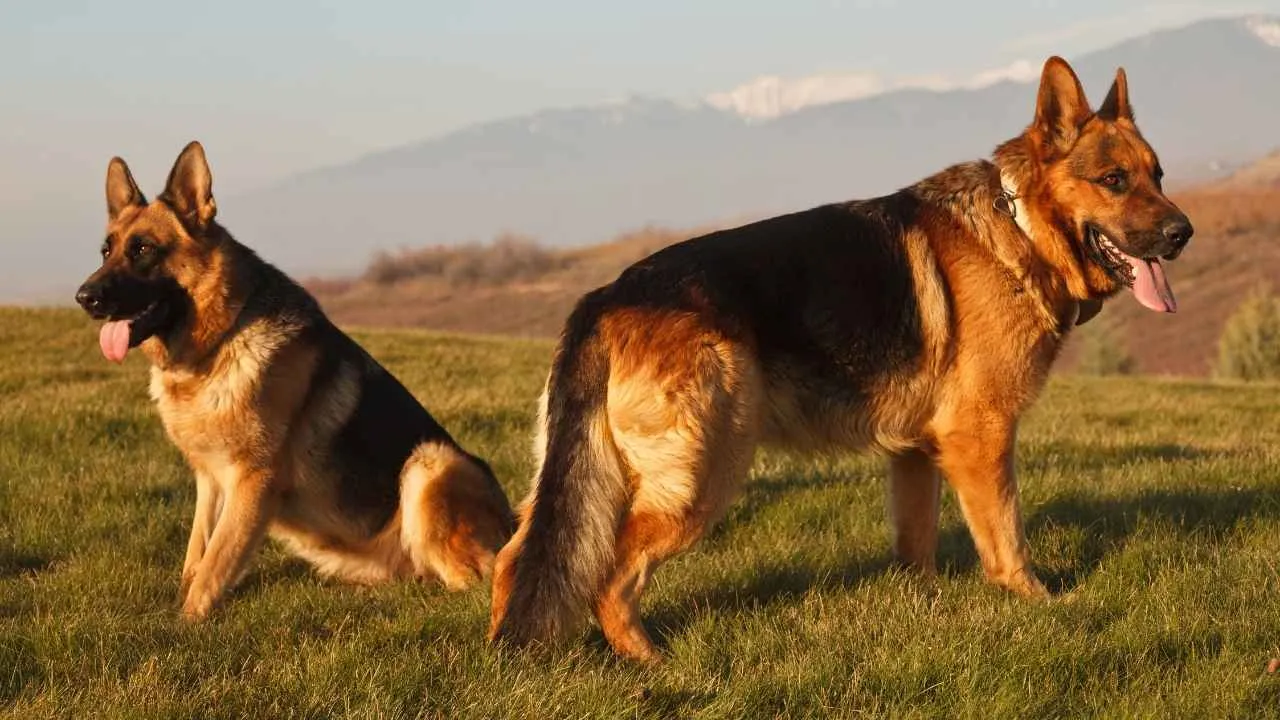
According to CKC USA, King Shepherds need at least an hour of solid activity daily, while German Shepherds typically need one to two hours of more intense exercise, or they’ll find their own “job” to do around the house, which usually spells chaos.
Training & Intelligence
German Shepherds are highly intelligent and can pick up new commands in just a few repetitions, though they’re also constantly evaluating their surroundings as they learn. This means they do best with structured, task-oriented training.
Given their strong prey drive, German Shepherds should stay on a leash or within a fenced yard whenever they’re outside, according to PetMD. The same intensity carries over into training too, where they can get stressed or hyperactive if sessions aren’t well managed.
King Shepherds, by comparison, are just as capable of learning everything a German Shepherd can, but tend to stay calmer and less anxious throughout the training process.
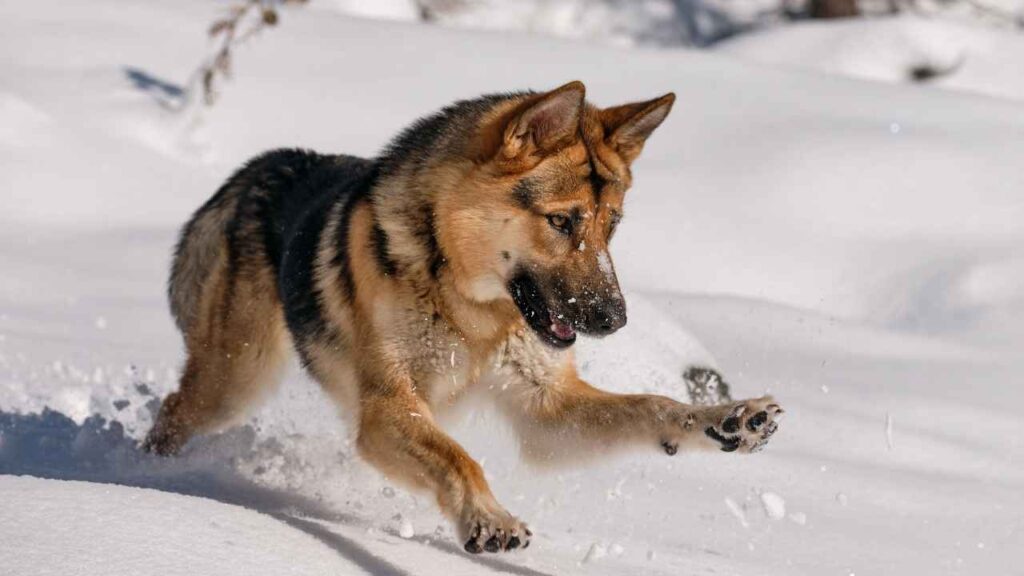
Both breeds respond well to positive reinforcement, treats, and praise, so keeping sessions short, fun, and consistent works best for both, especially since stubbornness can creep in with either one. Generally speaking, both breeds do best with experienced, confident handlers who can match their energy and independent streaks.
Health & Lifespan
King Shepherds were specifically bred with health in mind, and as a result, they tend to be somewhat healthier than German Shepherds overall. German Shepherds typically live around 7 to 10 years, while King Shepherds often live a bit longer, around 10 to 13 years.
It might seem surprising given how much bigger and heavier King Shepherds are compared to the more athletic German Shepherd, but genetics play a big role in lifespan.
German Shepherds are prone to conditions like degenerative myelopathy, allergies, cancer, pannus, and heart disease, and about 20% experience hip dysplasia, according to Science for Animal Welfare.
King Shepherds, meanwhile, are more prone to issues like Von Willebrand disease, hypothyroidism, and elbow or hip dysplasia.
Both breeds do carry a higher risk of gastric dilation volvulus (GDV), or bloat, a serious condition where the stomach fills with gas and twists. Because of this, keeping a close eye on feeding habits is important for both.
German Shepherd vs. King Shepherd Dog Suitability as Family Pets vs. Guard Dogs
Both breeds can serve as family pets or guard dogs, though how well that works out depends on training, and each breed approaches it a bit differently. German Shepherds form incredibly close, unbreakable bonds with their families, but their high prey drive and energy level can make them a tougher fit for households with young kids, especially without proper training.
When it comes to pure guarding ability, though, German Shepherds are hard to beat, bringing alertness, speed, and courage all in one package.
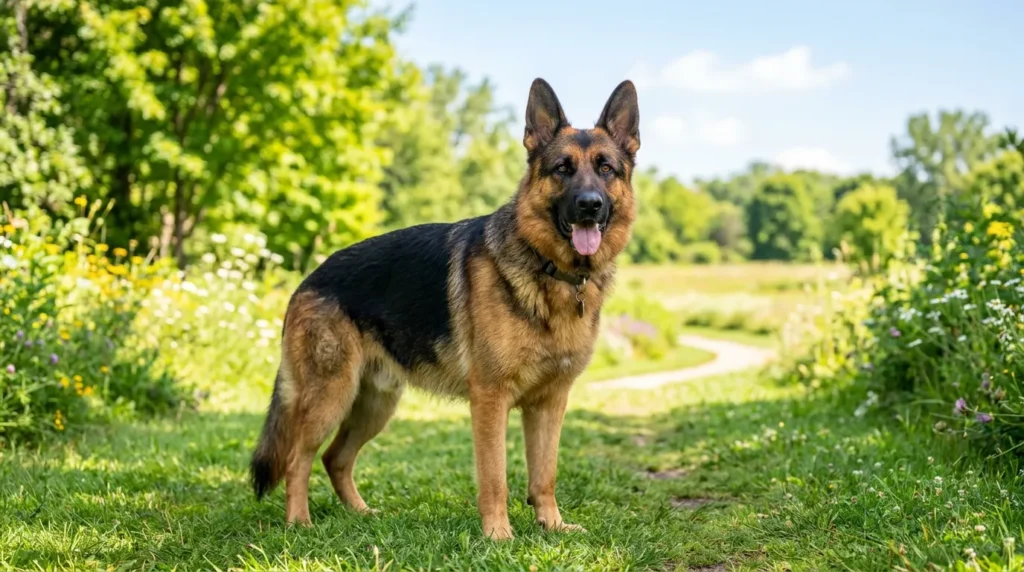
King Shepherds, on the other hand, tend to be a great fit as family pets thanks to their calm temperament. Despite often weighing well over 100 pounds, they’re not the type to get overwhelmed or chaotic when life gets busy.
That said, their sheer size, deep bark, and imposing look still make them a solid deterrent for intruders. They can absolutely serve as protectors, just without quite the same hypervigilance and sharpness German Shepherds bring to the role. In the end, it really comes down to what you’re looking for in a family pet or guardian, since each breed truly shines in its own way.
Conclusion
King Shepherds and German Shepherds share plenty of similarities, but it’s worth understanding how they differ if you’re deciding between the two. The two breeds vary in temperament, purpose, size, and exercise needs.
German Shepherds are a purebred breed, while King Shepherds are a hybrid. Both can make excellent family or guard dogs, since breed only accounts for a small part of a dog’s overall personality; the rest comes down to training. Take a look back through the details above to see which one might be the better fit for the role you have in mind.
