




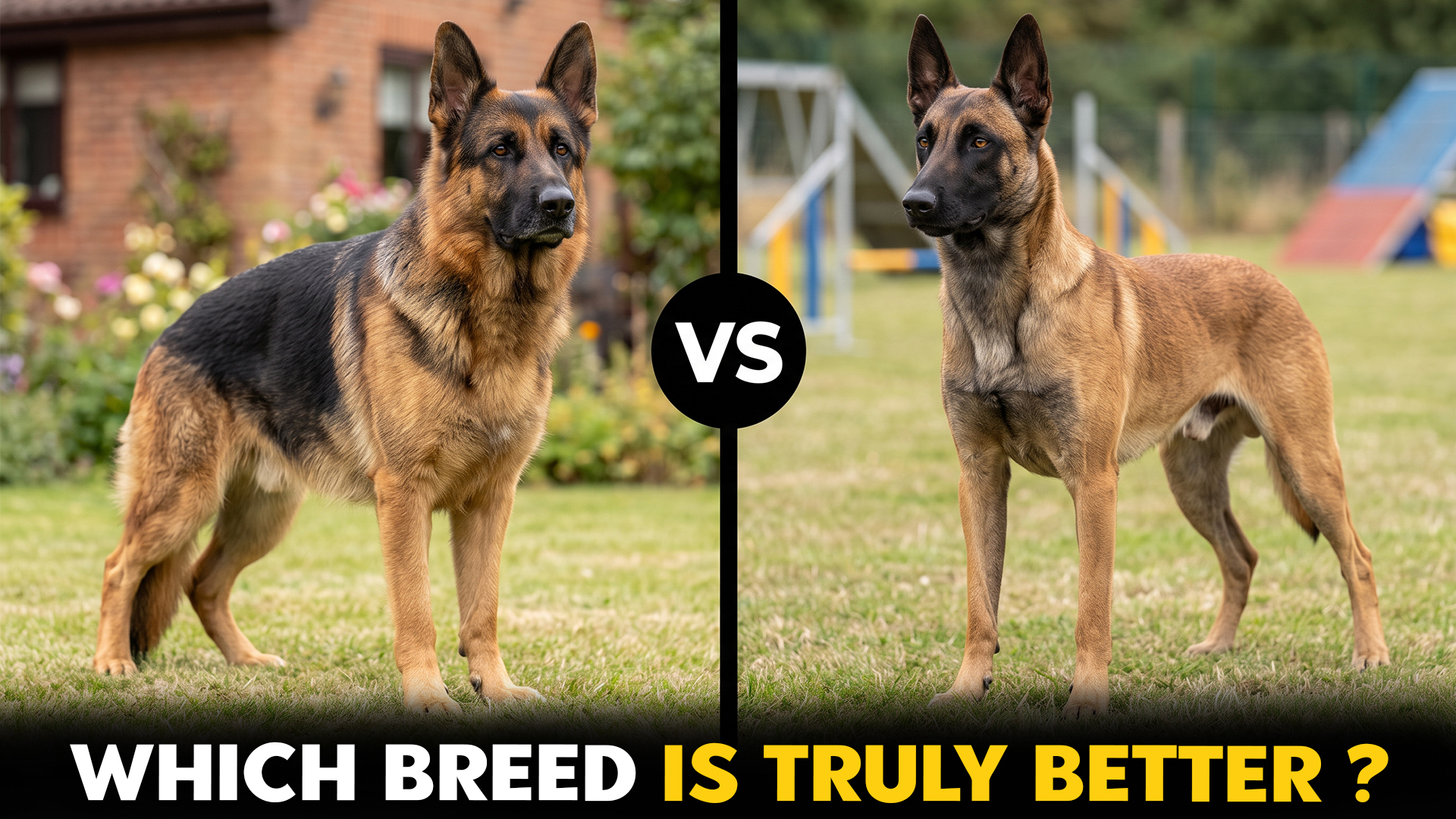
Choosing between a German Shepherd and a Belgian Malinois isn’t as simple as picking the stronger, smarter, or more protective dog.
At first glance, these two breeds look remarkably alike, sharing a similar appearance, exceptional intelligence, and a long history as hardworking herding dogs. But beneath those similarities are important differences that can have a huge impact on which breed is the better fit for your home and lifestyle.
Both breeds were originally developed in Europe to herd livestock before earning worldwide recognition as military, police, search-and-rescue, and protection dogs.
They are loyal, courageous, highly trainable, and incredibly devoted to their handlers. However, their energy levels, temperament, physical build, and day-to-day care needs are far from identical, making each breed better suited to different types of owners.
So, which dog comes out on top—the dependable German Shepherd or the driven Belgian Malinois?
German Shepherd vs. Belgian Malinois: Which Dog Is Better?
In this detailed comparison, we’ll break down everything from appearance, personality, exercise needs, trainability, and protection instincts to help you confidently decide which remarkable breed is the right companion for you.
Origins & Purpose
German Shepherd
The German Shepherd dog was developed in Germany during the late 1800s by Captain Max von Stephanitz, who wanted to create the ideal working dog. By selectively breeding exceptional sheep-herding dogs, he developed a breed known for its intelligence, loyalty, obedience, and endurance.
Although the German Shepherd was originally bred to herd and tend sheep, its versatility soon made it a favorite for military, police, search-and-rescue, and service work. Today, it is one of the most respected and recognizable working dog breeds in the world.
Key facts:
Originally bred for herding and tending livestock.
Later became widely used in military, police, search-and-rescue, and service roles.
Known for intelligence, loyalty, and a strong work ethic.
Belgian Malinois
The Belgian Malinois originated in Belgium during the late 1800s as one of the four varieties of the Belgian Shepherd Dog. Named after the Malines (Mechelen) region, the breed was initially developed for herding livestock.
As farming needs declined, its exceptional agility, intelligence, and willingness to work led to widespread use in police, military, and protection work. Britannica says the Belgian Malinois was first imported to the United States in 1911 and has since earned a reputation as one of the world’s premier working dogs.
Key facts:
Originally bred for herding sheep.
Commonly used today in military, police, detection, and personal protection work.
Valued for its intelligence, agility, and exceptional work drive.
Size & Physical Build
German Shepherd
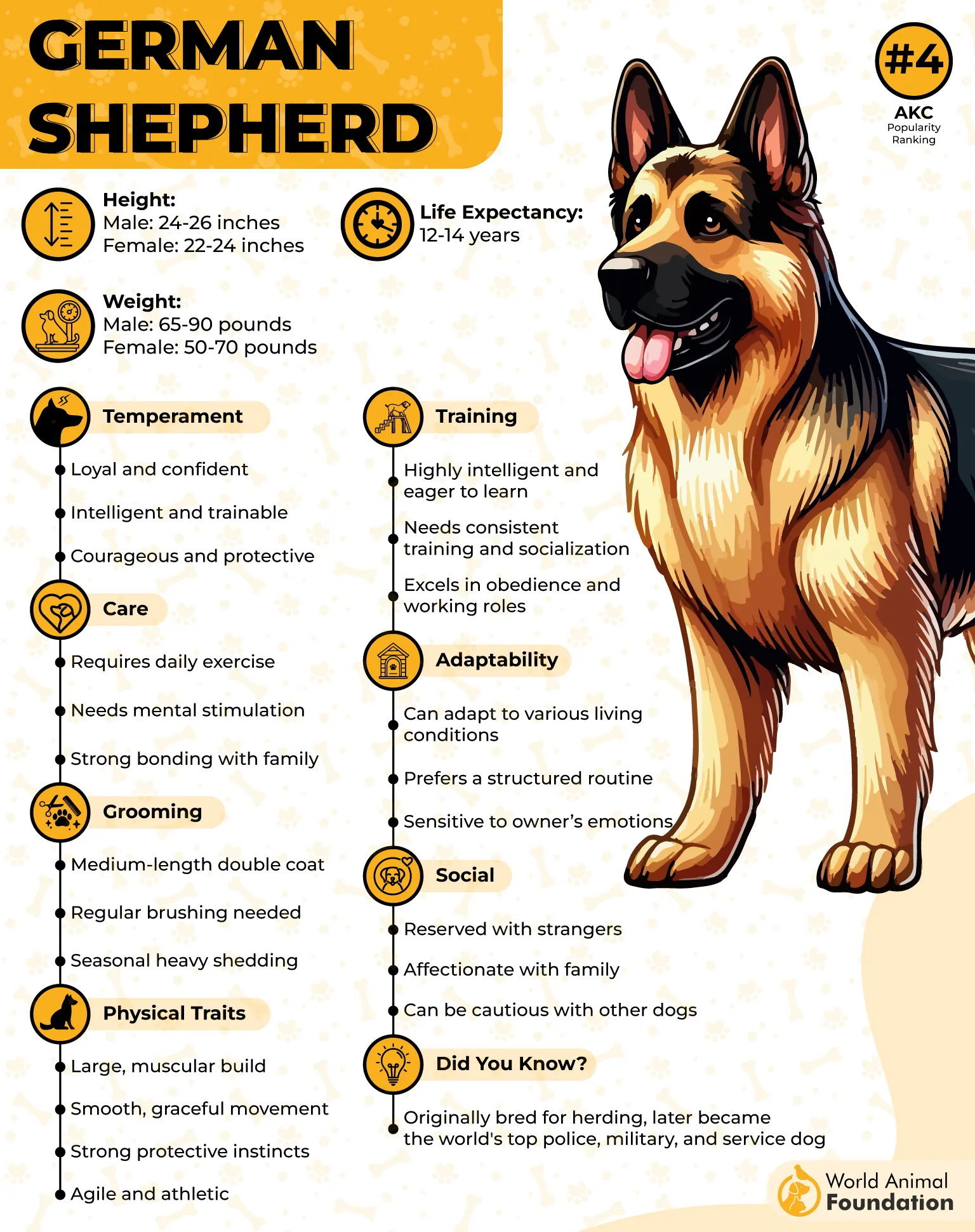
The German Shepherd is a large, powerfully built working dog with a body that is slightly longer than it is tall. Its smooth body lines, broad chest, and sturdy frame give it a strong yet balanced appearance.
While athletic and agile, the German Shepherd has a heavier build than the Belgian Malinois, making it look more substantial overall.
Key characteristics:
Height: Males 24–26 inches; females 22–24 inches.
Weight: Males 65–90 pounds; females 50–70 pounds.
Longer body with a slightly rectangular shape.
Heavier, more muscular build.
Medium-length double coat available in a wide range of colors, including black and tan, sable, solid black, white, gray, and liver.
Belgian Malinois
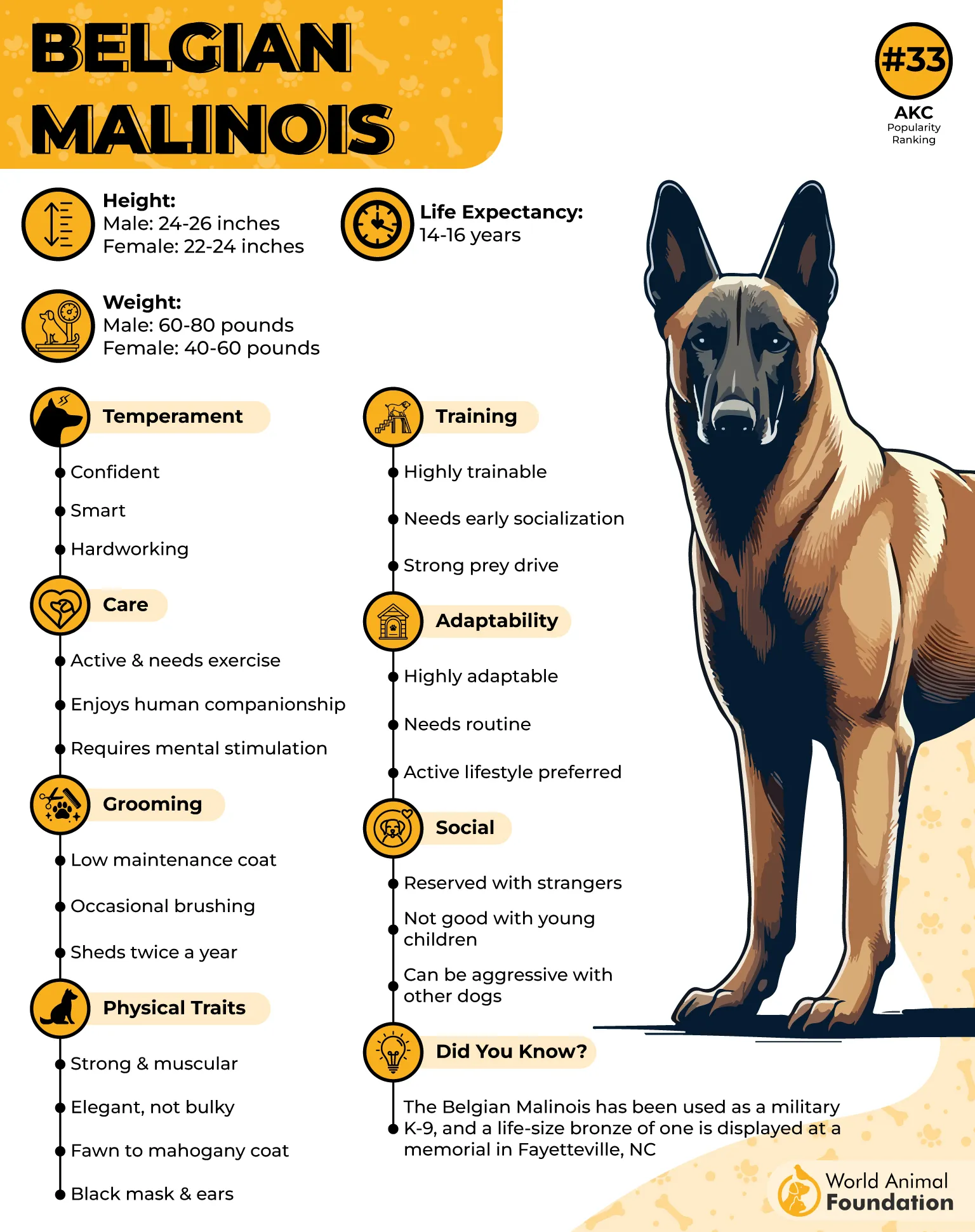
The Belgian Malinois is similar in height to the German Shepherd but has a leaner, lighter, and more square-shaped body. Its body is nearly as long as it is tall, giving it a compact and athletic appearance.
Built for speed, endurance, and agility, the Malinois has a more streamlined frame that allows it to move with exceptional quickness and precision.
Key characteristics:
Height: Males 24–26 inches; females 22–24 inches.
Weight: Males 60–80 pounds; females 40–60 pounds.
Square, well-balanced body proportions.
Lean, athletic build designed for agility and endurance.
Short, weather-resistant coat, typically in fawn or mahogany with a distinctive black mask.
Temperament & Personality
German Shepherd
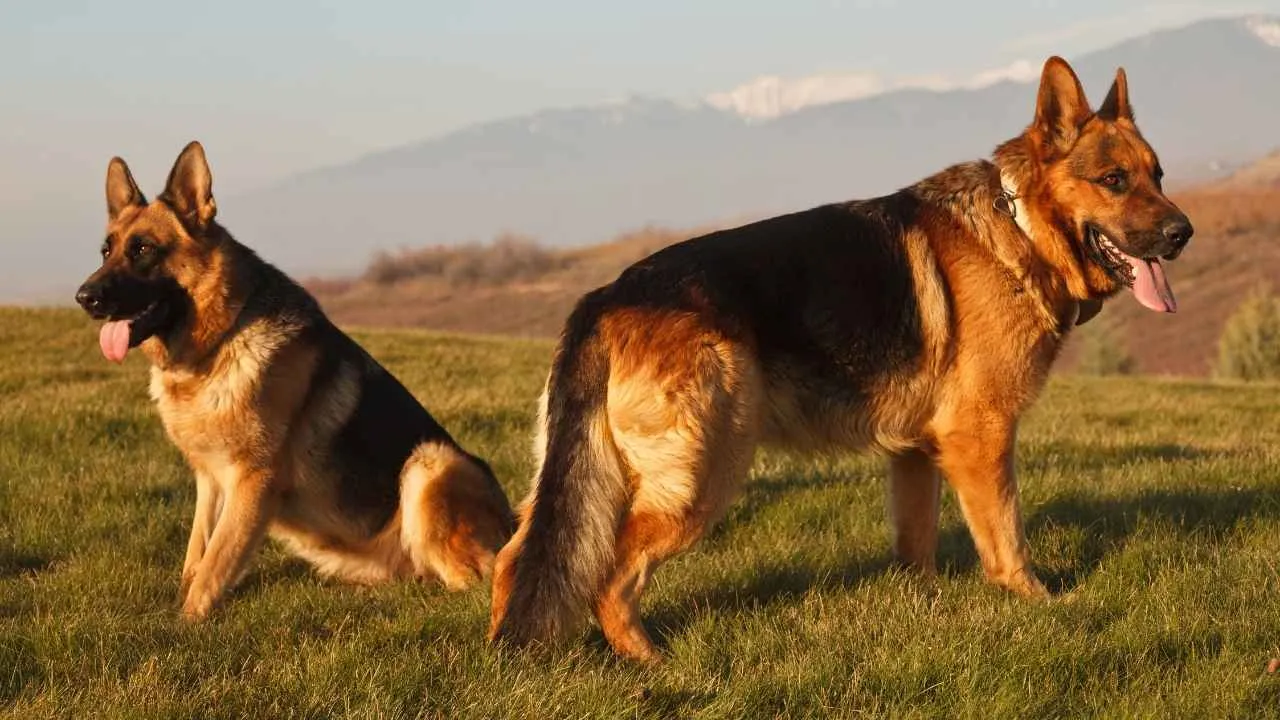
The German Shepherd is known for its calm confidence, loyalty, and balanced temperament. It forms strong bonds with its family and is naturally protective without being unnecessarily aggressive.
While always ready to work, the breed generally has a better “off switch” than the Belgian Malinois, making it easier to relax at home after exercise and training. This balance makes the German Shepherd an excellent choice for active families as well as working roles.
Key personality traits:
Loyal and deeply devoted to its family.
Intelligent and highly trainable.
Calm, confident, and courageous.
Naturally protective and alert.
More relaxed indoors once its exercise needs are met.
Suitable for both family life and demanding working roles.
Belgian Malinois
The Belgian Malinois is an energetic, highly driven, and intensely focused working dog. It thrives on having a job to do and enjoys working closely with its handler.
Known for its eagerness to please, the Malinois can maintain concentration through repetitive tasks and excels in demanding jobs such as military, police, and protection work.
Compared to the German Shepherd, it has a much higher energy level and requires constant mental and physical stimulation to stay happy.
Key personality traits:
Extremely intelligent and quick to learn.
Highly energetic with an exceptional work drive.
Eager to please and responsive to training.
Alert, confident, and naturally protective.
Thrives on mental challenges and purposeful work.
Better suited to experienced, active owners who can meet its high exercise and training needs.
Exercise & Energy Levels
German Shepherd
The German Shepherd is an active, energetic breed that needs plenty of daily exercise to stay healthy and well-behaved.
According to PetMD, at least one to two hours of vigorous physical activity each day is recommended, with activities like running, hiking, swimming, obedience training, or dog sports helping to keep it fit.
While the breed enjoys having a job to do, it is generally better at settling down and relaxing once its exercise and mental stimulation needs have been met. This balanced energy level makes it easier for many active families to manage.
Belgian Malinois
The Belgian Malinois has an exceptionally high energy level and thrives on constant physical and mental activity. It requires at least an hour of intense daily exercise, but simply going for a long walk is rarely enough.
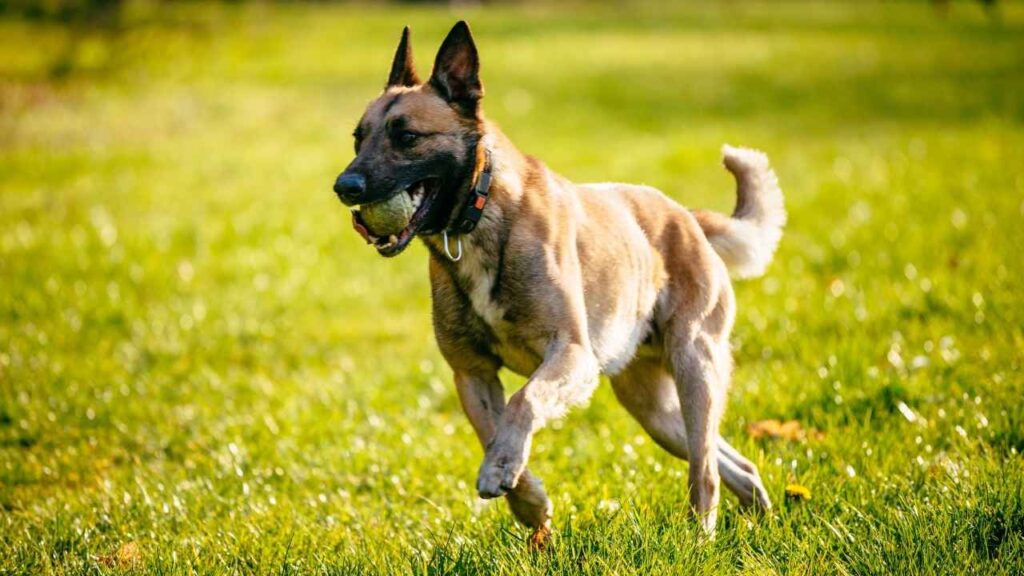
This breed excels in demanding activities such as agility, dock diving, advanced obedience, tracking, and protection training. In addition to vigorous exercise, the Malinois needs regular mental challenges through training sessions, puzzle toys, and problem-solving games.
Without sufficient stimulation, its intense drive and intelligence can quickly lead to boredom and destructive behavior, making it best suited to highly active and experienced owners.
Training & Intelligence
German Shepherd
The German Shepherd is widely regarded as one of the most intelligent and trainable dog breeds in the world. It learns commands quickly, responds well to positive reinforcement, and enjoys working closely with its handler.
Its balanced temperament, eagerness to learn, and willingness to follow directions make it an excellent choice for first-time working dog owners who are committed to consistent training.
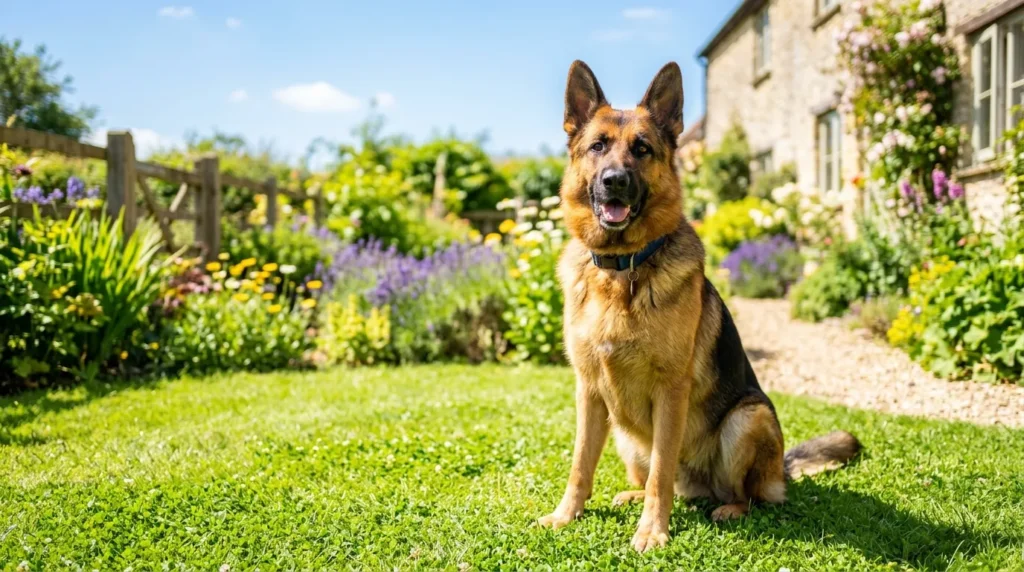
German Shepherds excel in obedience, search and rescue, service work, police duties, and many canine sports because of their versatility and strong problem-solving abilities.
Belgian Malinois
The Belgian Malinois is equally intelligent but is often considered more intense and demanding to train. It has an exceptional drive to work, learns new tasks at remarkable speed, and can perform repetitive exercises without losing focus.
This breed thrives on structured training and constant mental challenges, making it a favorite for military, police, and protection work. However, its intelligence and energy mean it requires an experienced handler who can provide consistent guidance and purposeful activities.
Without regular training and mental stimulation, the Belgian Malinois can become restless and develop unwanted behaviors.
Health & Lifespan
German Shepherd
German Shepherds are generally healthy dogs, but like many large breeds, they are prone to certain inherited health conditions. Responsible breeders screen breeding dogs for common orthopedic disorders and genetic diseases to reduce the risk of passing them on to puppies.
Common health concerns:
Hip dysplasia
Elbow dysplasia
Degenerative myelopathy (DM)
Bloat (gastric dilatation-volvulus)
Average lifespan: 9–13 years
Belgian Malinois
The Belgian Malinois is generally considered a healthy and hardy breed with a long working life. However, it can still be affected by inherited joint problems, making health screening important when choosing a puppy.
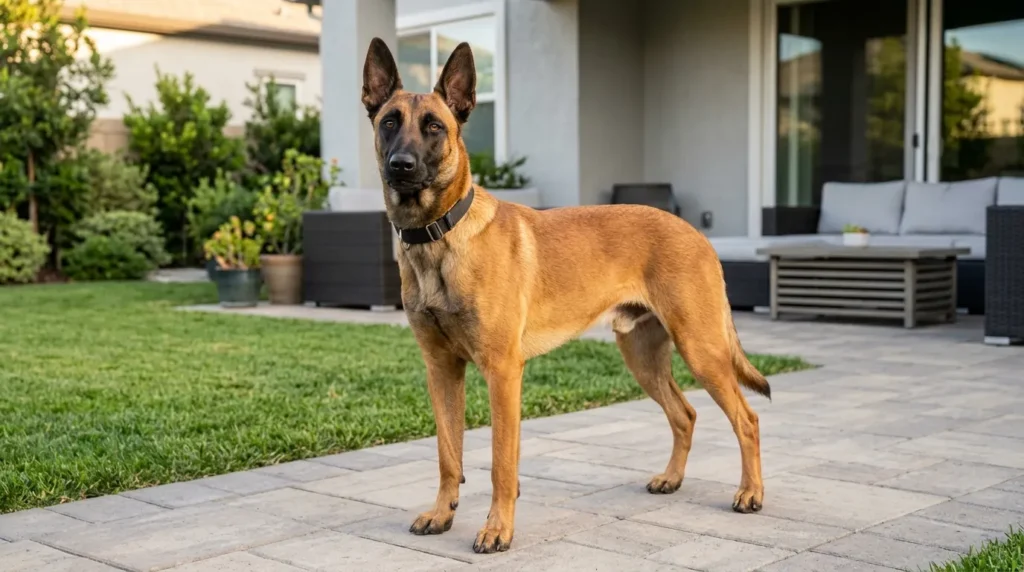
Eye examinations and orthopedic testing are commonly recommended for breeding dogs to help reduce the risk of hereditary conditions.
Common health concerns:
Hip dysplasia
Elbow dysplasia
Certain inherited eye conditions
Average lifespan: 14–16 years
Suitability as Family Pets vs. Guard Dogs
German Shepherd
The German Shepherd strikes an excellent balance between being a devoted family companion and a dependable guard dog. It is affectionate, loyal, and naturally protective of its loved ones while remaining calm and composed around familiar people.
With proper socialization and constant engagement, German Shepherds are generally patient with children and adapt well to family life. They are also highly capable protection dogs, using their intelligence and confidence to assess situations rather than reacting impulsively.
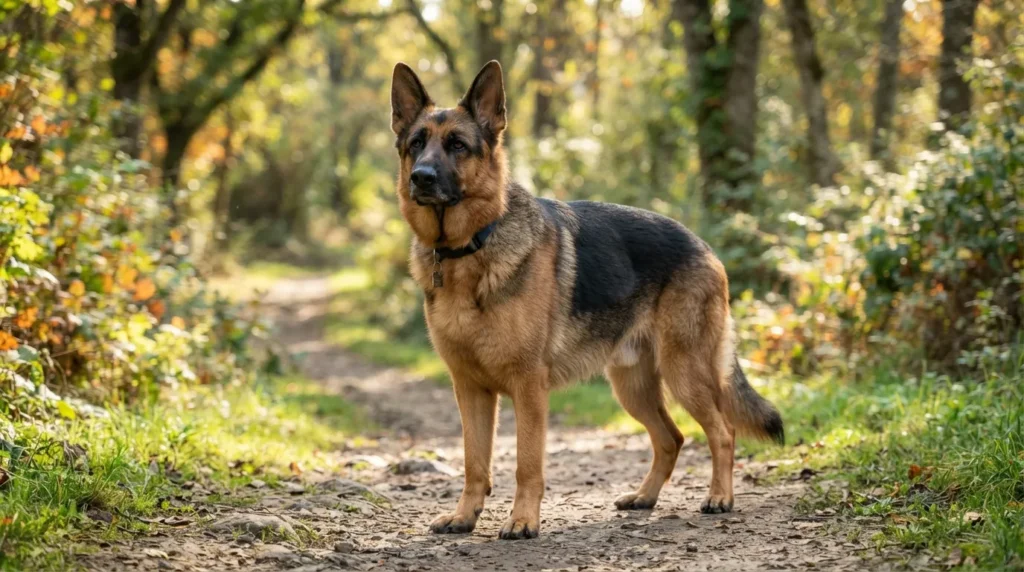
Best suited for:
Active families with children
First-time working dog owners willing to train consistently
Homes looking for both a loving companion and a reliable guard dog
Owners seeking a dog with strong protective instincts and a balanced temperament
Belgian Malinois
The Belgian Malinois is one of the world’s premier protection and working dogs, prized for its speed, focus, courage, and relentless work drive.
While it can be a loyal and affectionate family companion, it thrives in homes where it receives structured training, regular mental stimulation, and plenty of physical activity.
Its high energy and intense personality make it better suited to experienced owners who understand the demands of a working breed, as mentioned by Purina.
Best suited for:
Experienced dog owners
Highly active individuals or families
Military, sport, personal protection, and police work
Homes that can provide daily training and vigorous exercise
Which One Should You Choose?
If your priority is a well-rounded family dog that can also provide excellent protection, the German Shepherd is usually the better choice. Its calmer temperament and ability to switch between work and relaxation make it easier to integrate into everyday family life.
If you’re looking for a high-performance working or protection dog and have the time, experience, and commitment to meet its demanding exercise and training needs, the Belgian Malinois is hard to beat. Its unmatched drive and athleticism make it an exceptional guardian, but only in the right hands.
Conclusion
Both the German Shepherd and the Belgian Malinois are exceptional working dogs with impressive intelligence, loyalty, and protective instincts. While they share a common herding heritage, they differ in energy levels, temperament, physical build, and the type of owner they suit best.
The German Shepherd offers a more balanced mix of companionship and protection, whereas the Belgian Malinois thrives in highly active, experienced homes where it has a challenging job to do.
Before bringing either breed home, take an honest look at your lifestyle, experience, and the time you can dedicate to training and exercise.
Choosing the dog that matches your daily routine will lead to a happier partnership for both you and your future companion. With the right match, either breed can become a loyal friend and an extraordinary lifelong partner.
