




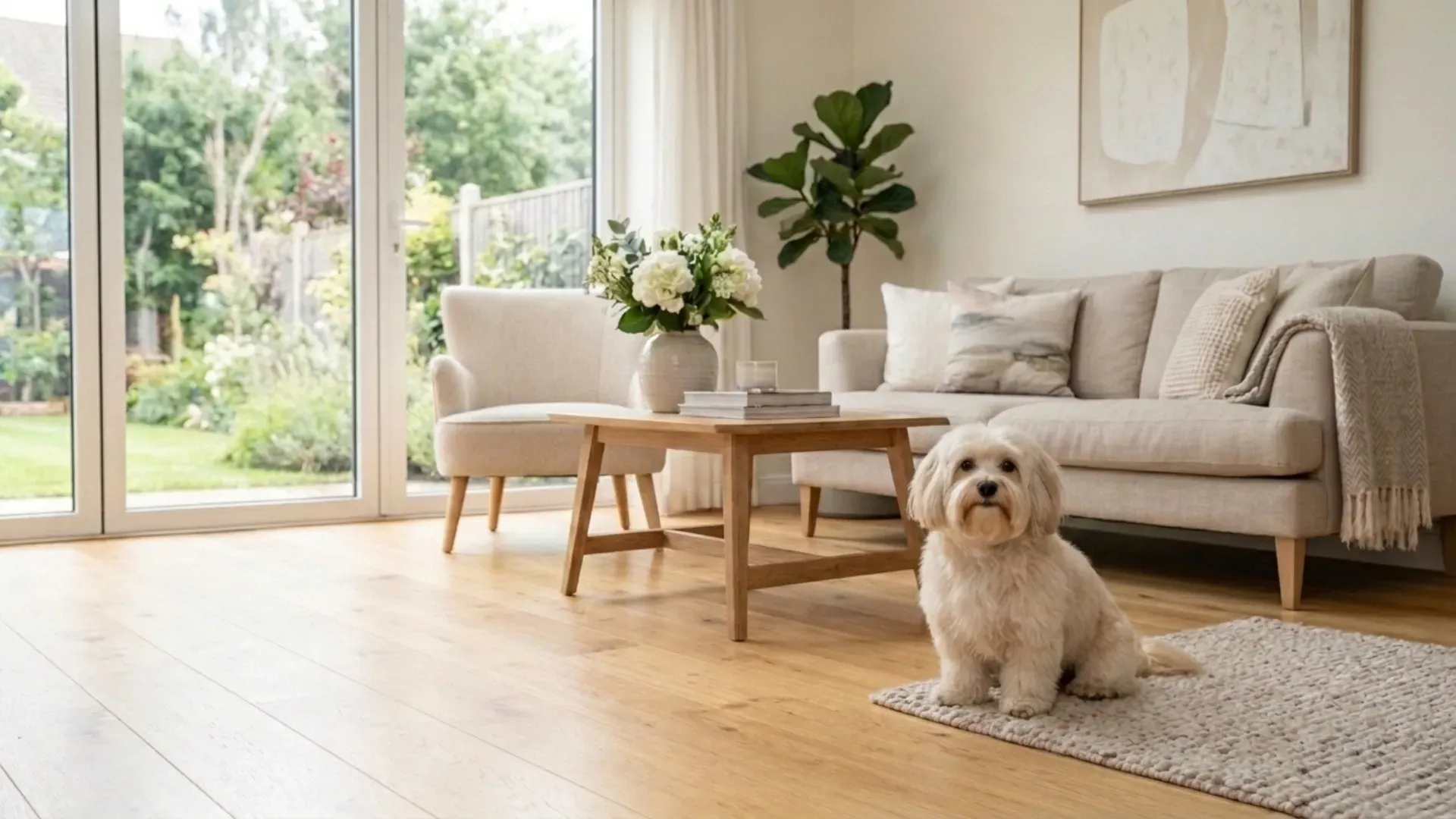
If you’ve ever found dog hair on your favorite black shirt five minutes after getting dressed, you’re not alone. No dog is completely shed-free, but some breeds lose so little hair that keeping your home tidy becomes a whole lot easier.
That’s great news if you’re a busy parent, live in a small apartment, or just don’t feel like vacuuming every single day.
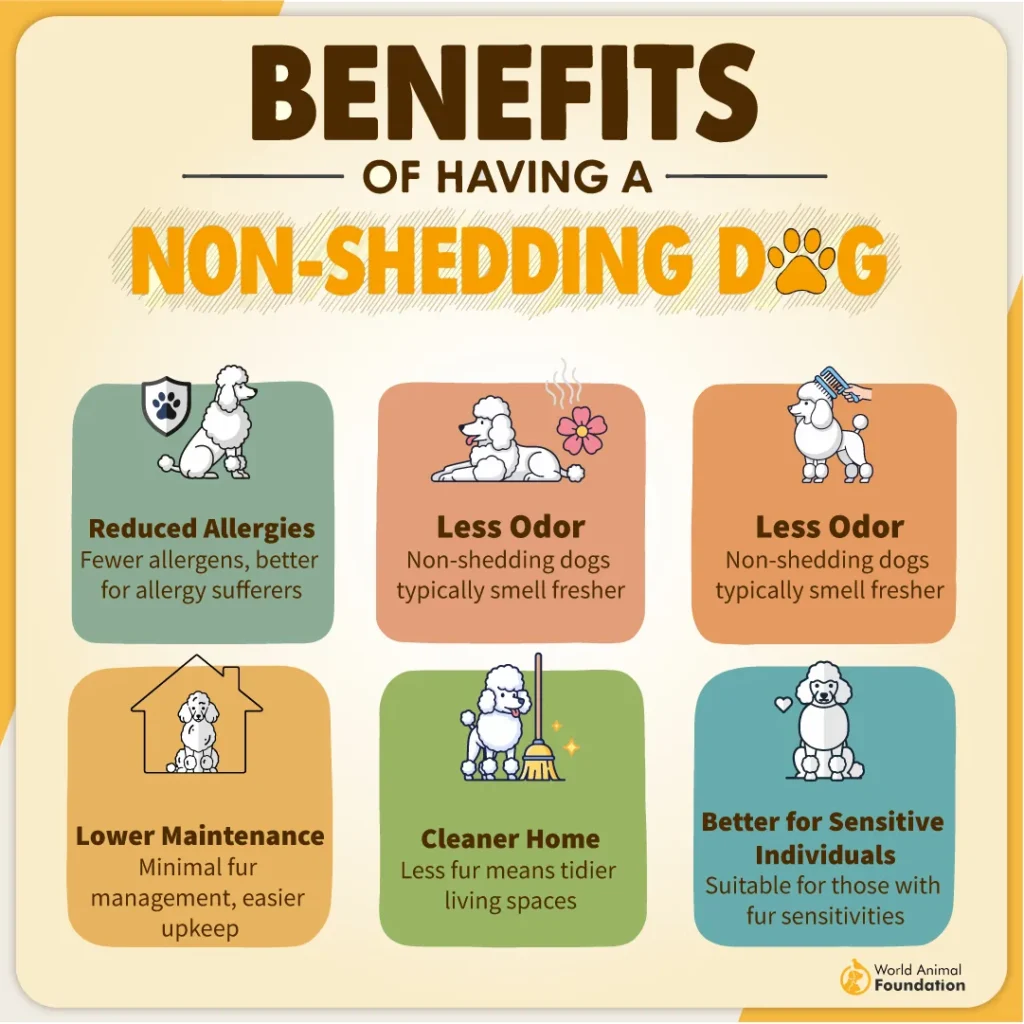
Hypoallergenic dog breeds shed far less because their hair either grows continuously or features a tight, wiry texture that traps loose fur. While this keeps your floors virtually hair-free, it usually means swapping daily vacuuming for regular trips to the groomer. Finding the right low-shedding dog ultimately comes down to matching the breed’s energy and care needs to your lifestyle.
In this guide, you’ll meet seven wonderful breeds known for their low-shedding coats, charming personalities, and unique quirks. They might just save your floors from fur storms, but don’t worry, they’ll still fill your heart with plenty of love.
Best Dog Breeds with Little to No Shedding
1. Miniature Poodle
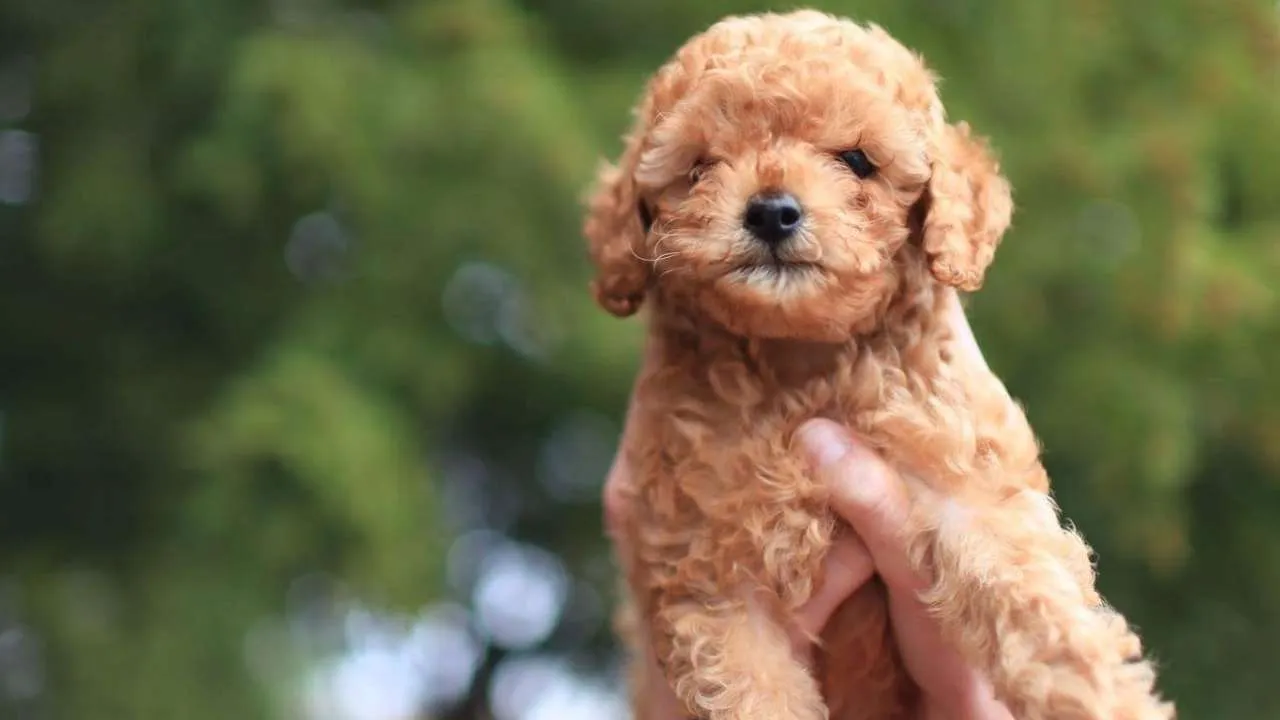
It started as a curly-coated breed in Asia and made its way with herders to Europe, where it was further developed (specifically in France). The modern breed was originally bred in Germany and was used as a military dog, a circus dog, and a guide dog. It was favored by French noble ladies, according to Omlet UK.
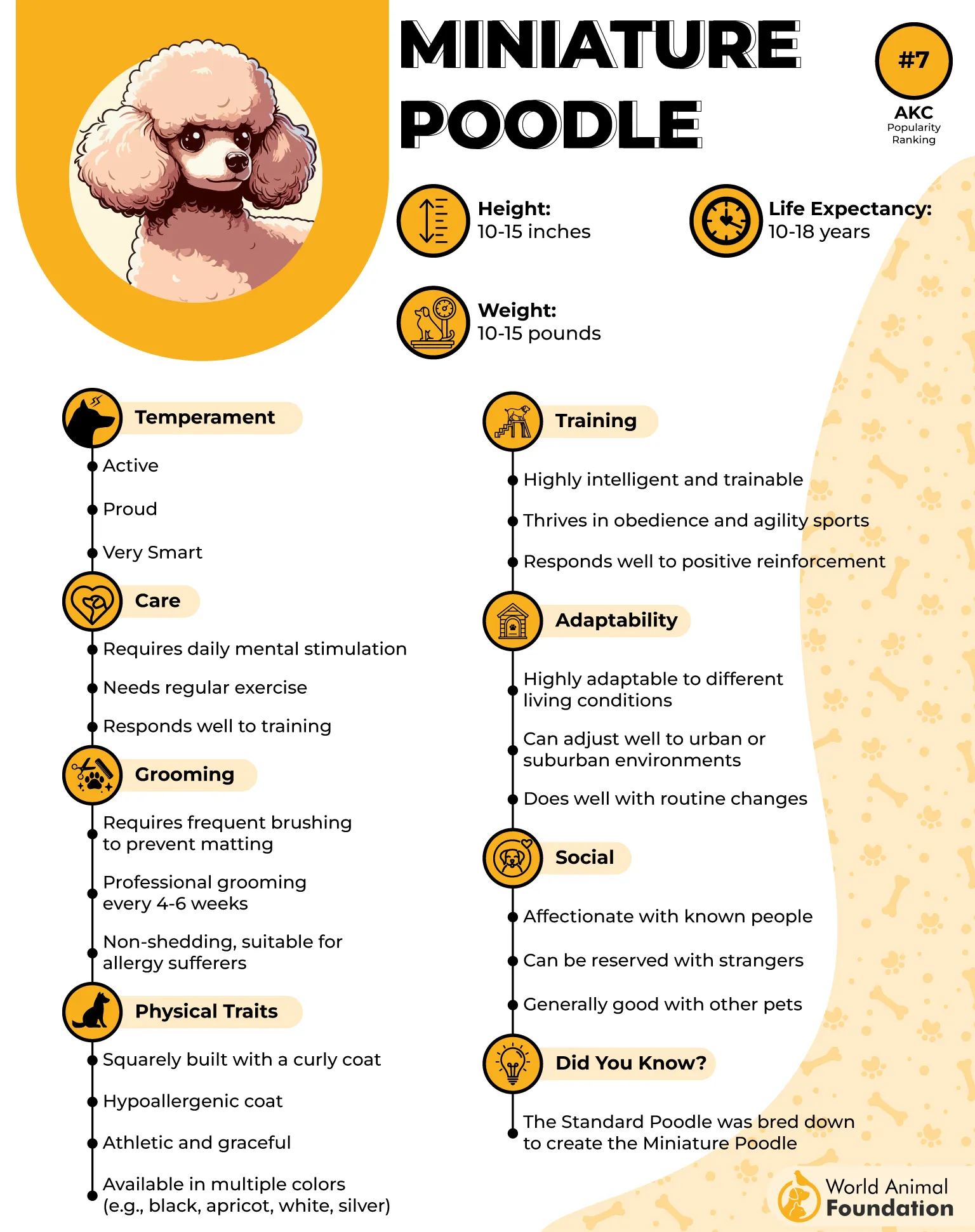
The single-layered breed does not ‘blow’ in shedding seasons. Unlike other breeds, the Miniature Poodle has a longer Anagen phase (where hair continues to grow before shedding, like humans). Since it has a curly coat, the hair does not shed naturally. Rather, it is trapped inside and removed with a hair brush.
Despite being a low-shedding dog breed, it requires regular grooming to stay healthy: professional coat grooming is needed after every 4-6 weeks. Weekly brushing is needed (2-3 times), monthly baths, and regular tear stain cleaning are non-negotiable.
2. Havanese
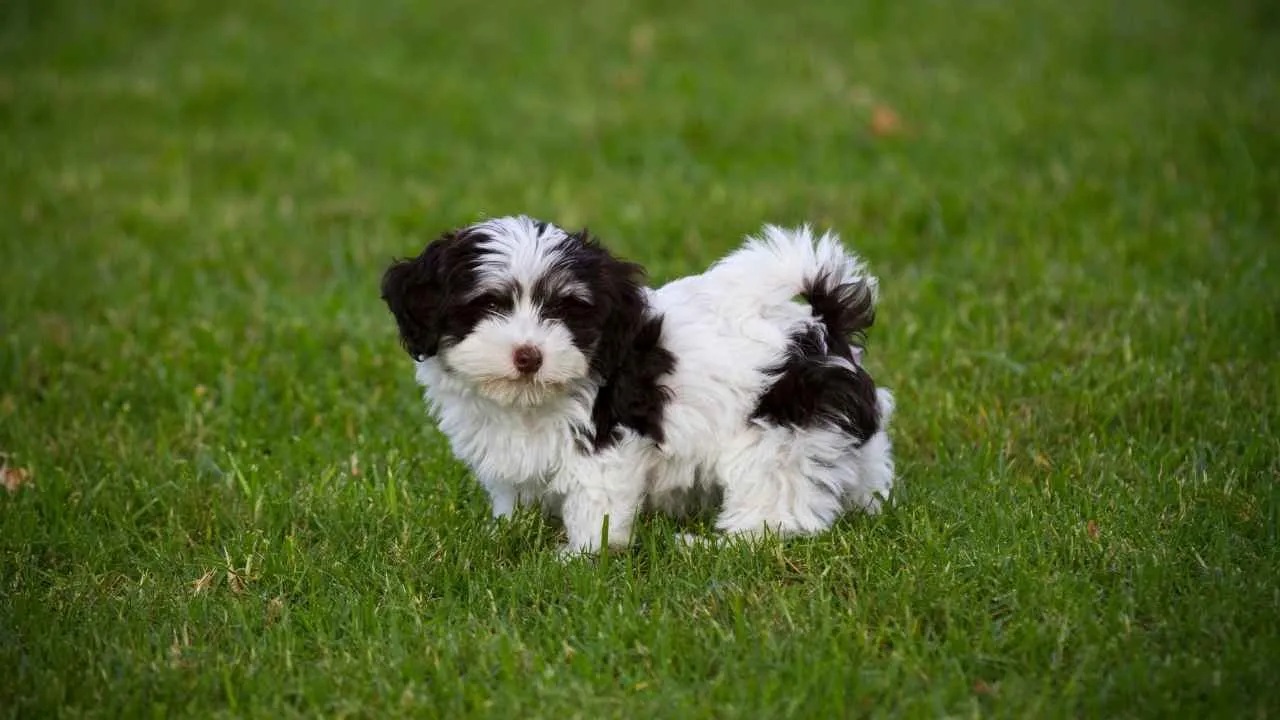
The ancestors of this ancient dog breed came to Cuba from Spain through Tenerife in the Canary Islands. This bichon-type dog gained popularity and was kept by famous people, including Charles Dickens. The breed nearly went extinct and was revived in the U.S and Europe.
The soft and lighter coat comes in 4 varieties: silky (hair clings closer to the body), wavy (has loose waves or ringlets), corded (long tassels or mats of hair), and shorthaired (a genetic mutation where the dog has short hair).
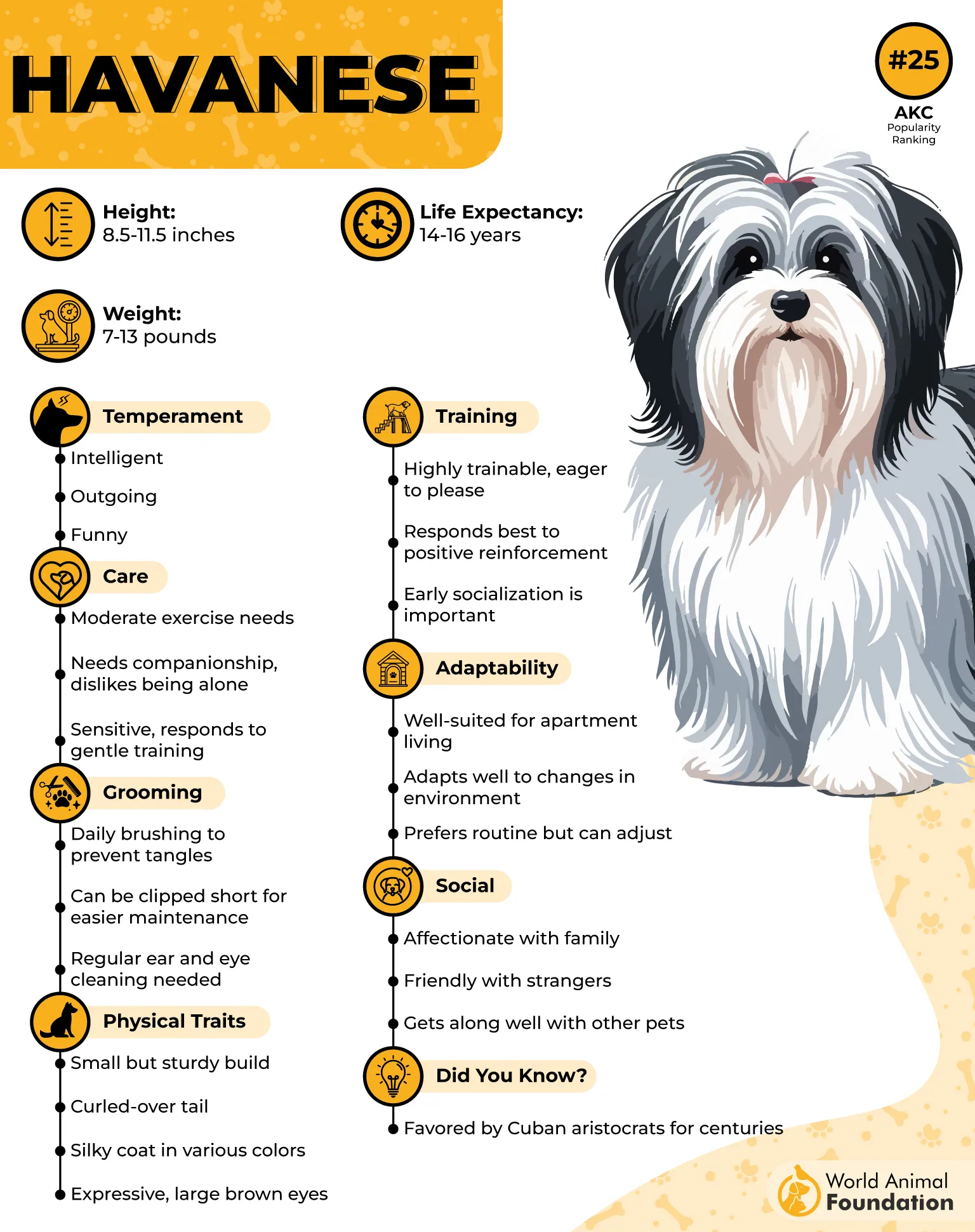
Always use a pin brush before bathing. This will prevent mats and tangles from forming. Use a slicker brush to smooth the fur. Brushing is needed after every 2-3 days. Puppy cut is usually recommended for easy maintenance.
3. Bichon Frise
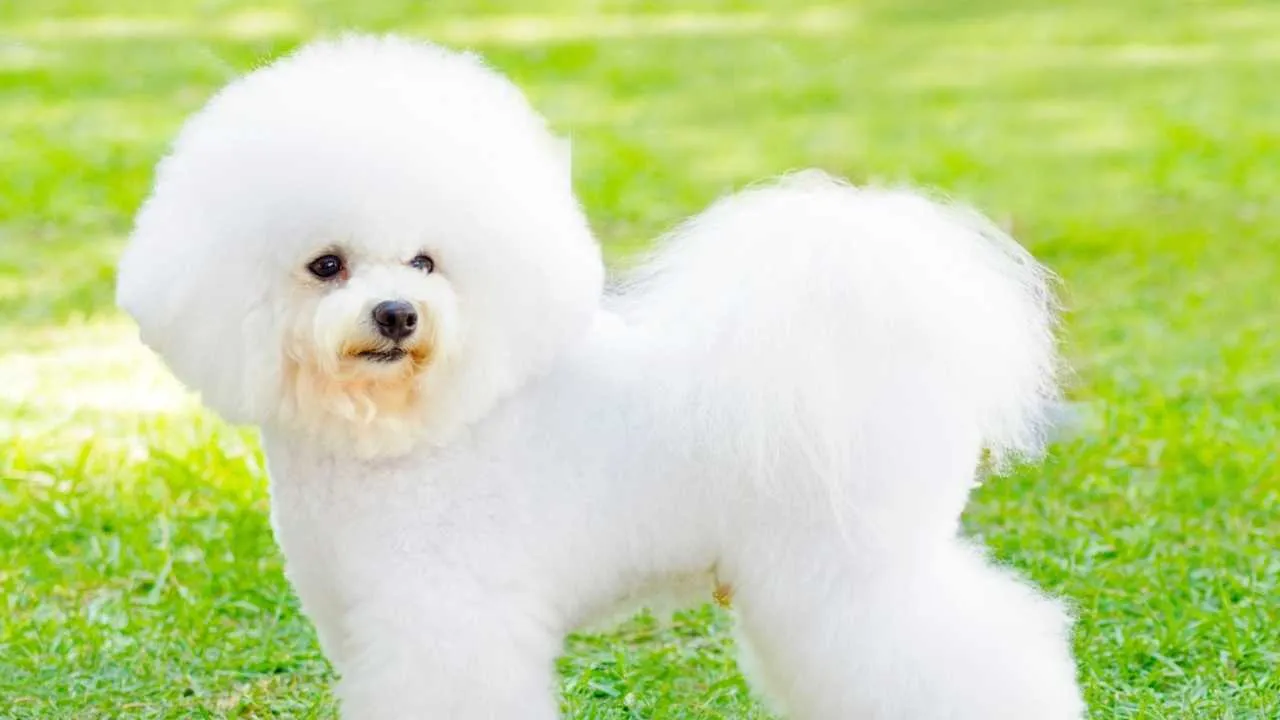
This small and affectionate breed developed as a non-sporting dog. The history dates back to the 13th century in the Canary Islands. Sailors took this breed to their ships as a companion and started using it for trading. Hence, it was introduced to Europe and was used in various artworks, as per the AKC.
The thick double coat consists of a curly outer coat and a velvety layered inner coat that is tighter to the skin. When fluff-dried, the coat stands away from the body, giving it a ‘powder puff’ appearance. The breed has a prolonged growth phase that prevents shedding. The dead hair is trapped inside the coat, perfect for allergy sufferers.
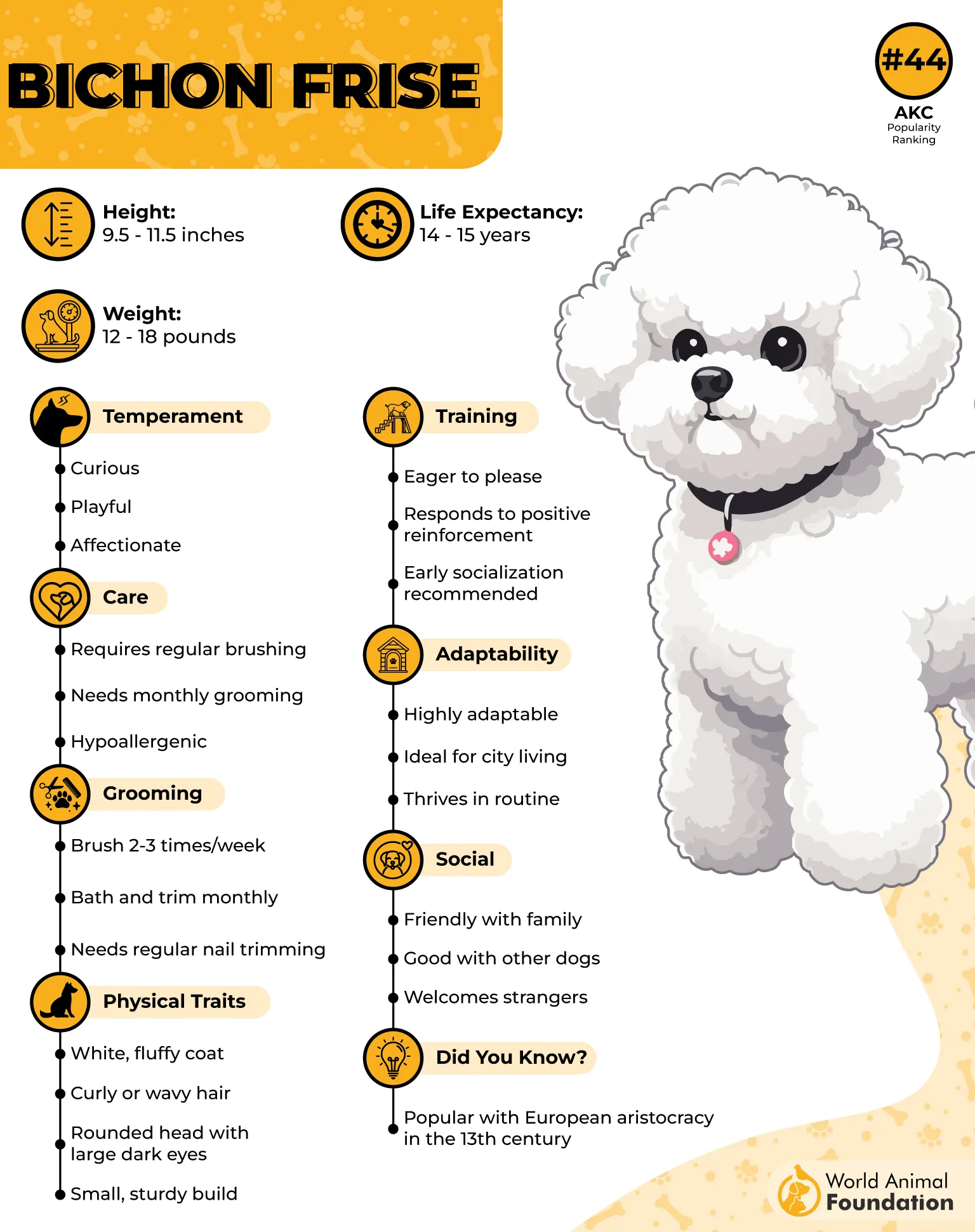
The white breed needs daily brushing using a slicker brush to remove tangles and then a metal comb to check for mats. Pay close attention to high friction spots, such as behind the ears, in the armpits, and under the legs.
4. Maltese
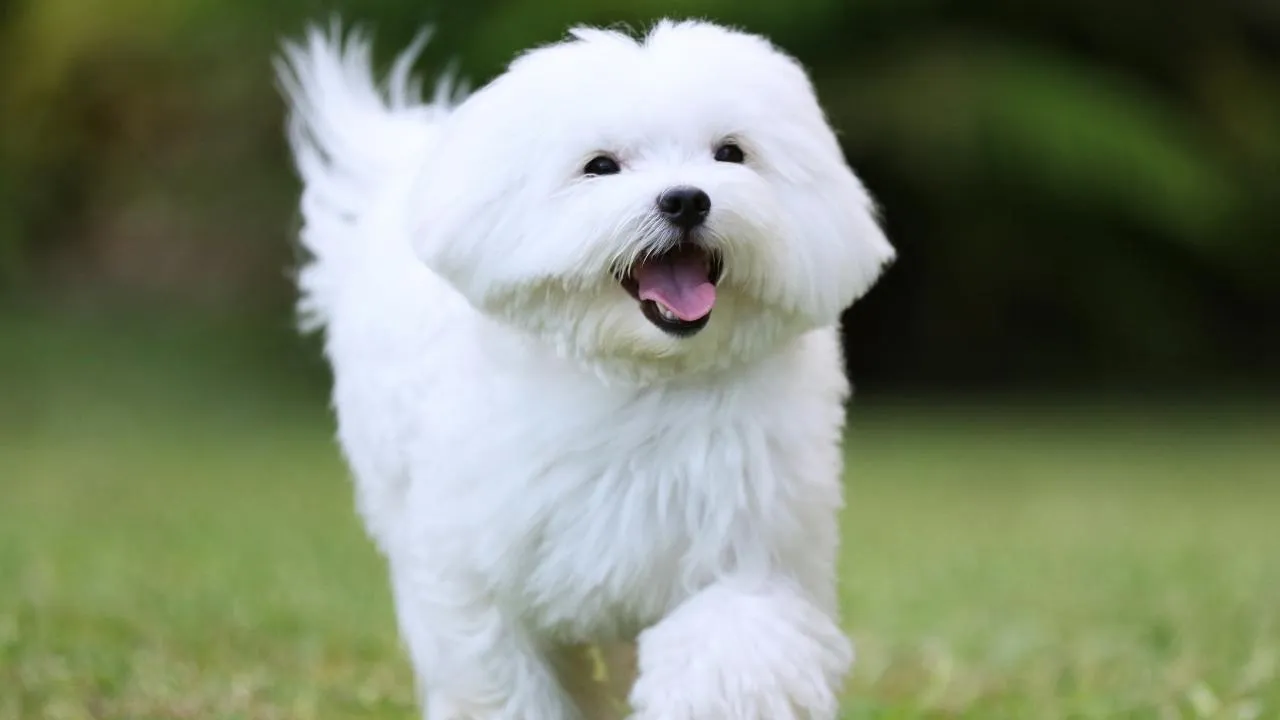
The history of this ancient breed started in 1500 BC in the region of Malta in the Mediterranean. It is the descendant of the Spitz and Spaniel-type breeds. The dog entered Britain in the 14th century and became famous among the aristocracy. It is believed that the dog was favored by Queen Elizabeth I, Mary Queen of Scots, and Queen Victoria.
It lacks a dense undercoat that sheds seasonally. The standard coat for this non-shedding dog breed is long, silky, and tight. Owners go for a puppy-cut or a teddy-bear cut instead of the floor-length coat for easy maintenance.
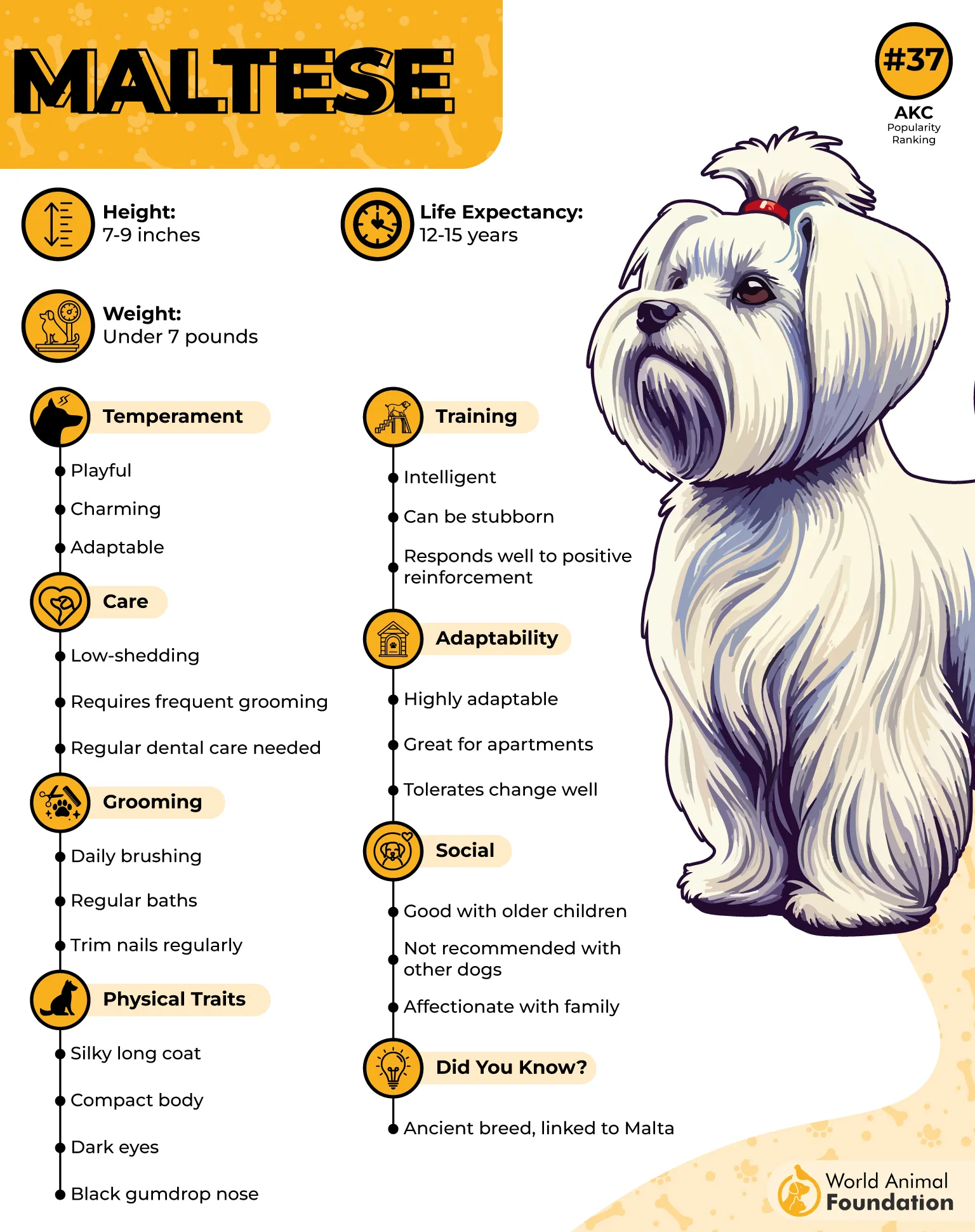
The hypoallergenic dog is highly prone to tangles and mats because of the absence of undercoat. Thus, it requires daily brushing using a fine brush or a slicker brush. Use a high-quality, gentle shampoo to bathe the breed every 2-3 weeks.
5. Portuguese Water Dog
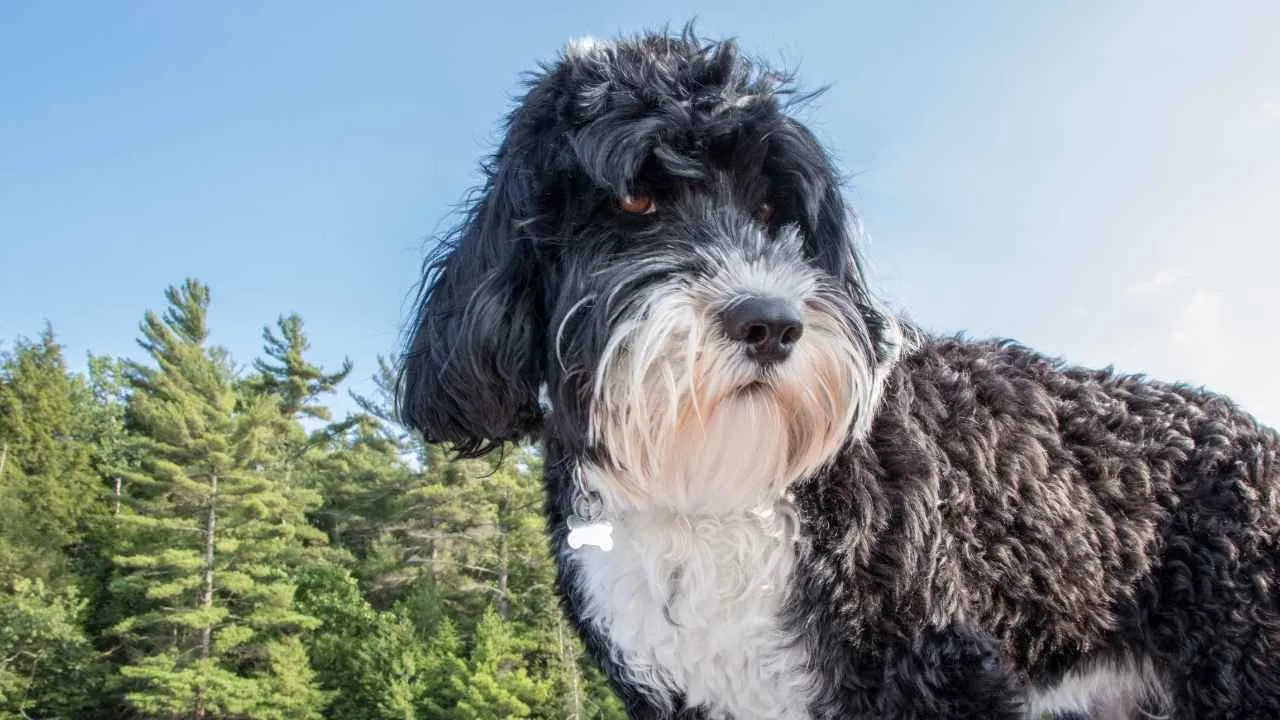
Closely related to the Waterfowl retrieving dogs from Europe, the PWD was widely used alongside Fishermen to herd fish, move nets, and retrieve escaped fish. It was believed that the breed was no longer needed in the 1960s, and only 50 of them remained, says Purina.
The coat comes in 2 types: the curly coat (tight, compact, non-shiny, and cylindrical) and the wavy coat (soft, gentle waves, and a slight sheen). It has a single layer of hair and less dander production, which means it has minimal or zero shedding.
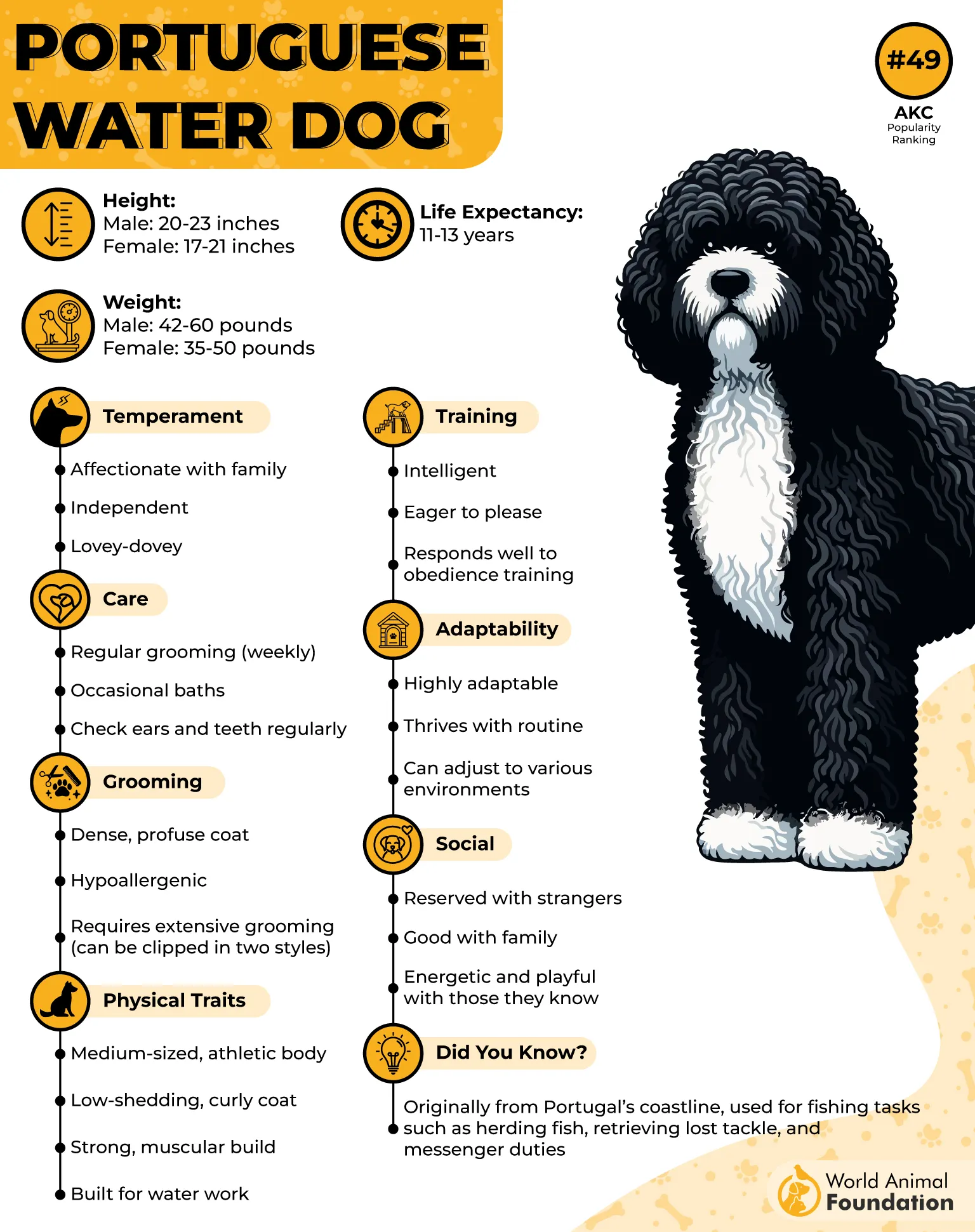
It has high-maintenance needs as it is prone to mats and tangles. It has regular grooming needs: 3-5 times brushing a week (daily for curly coats), professional trimming after 6-8 weeks, monthly bathing, and nail trimming after 3-4 weeks.
6. Yorkshire Terrier
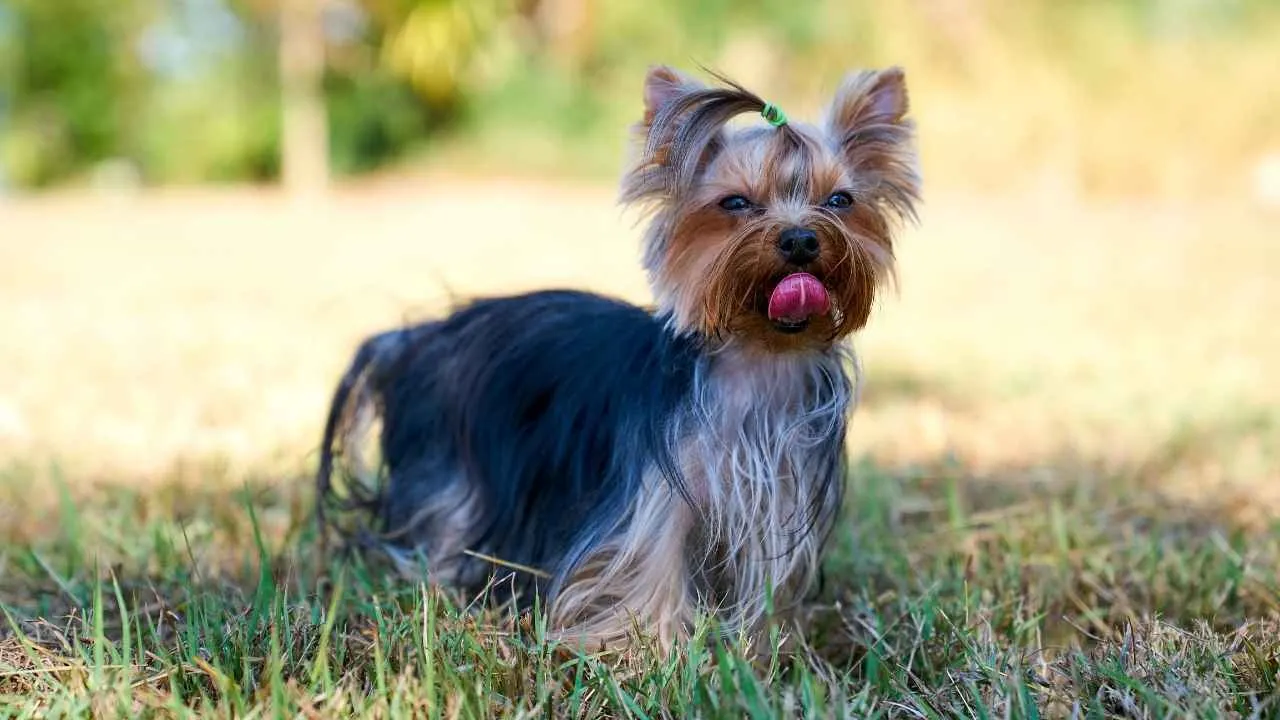
When the Scottish weavers migrated to Yorkshire in the 19th century, they brought native terriers to catch rodents in the mills. However, they were not small enough to squeeze into tighter spaces. Hence, they crossed these terriers with the Skye terrier and the Dandie Dinmont to form the Yorkies.
The coat is similar to human hair and comes in two types: the silky coat (straight, fine, glossy, and reflective) and the wavy/wooly coat (denser and thicker). Unlike other breeds that have 3-5 hairs from a single follicle, the Yorkie has one follicle for one hair.
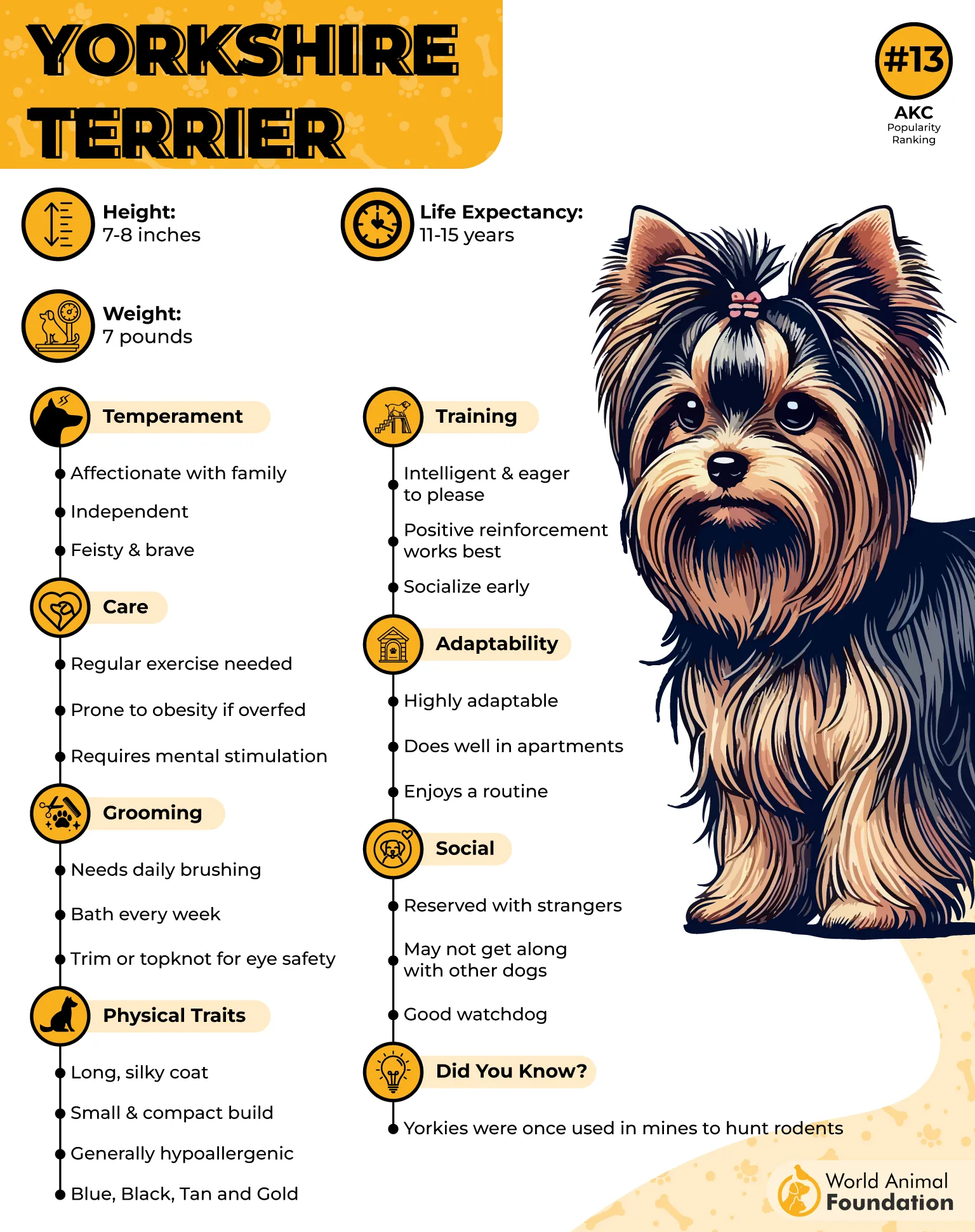
The full-length coat requires daily brushing using a metal comb and a pin brush, while the puppy-cut has fewer allergic reactions and needs regular brushing (2-3 times a week). Bathe the breed after 2-4 weeks and dab the excess water with a towel rather than rubbing.
7. Coton De Tulear
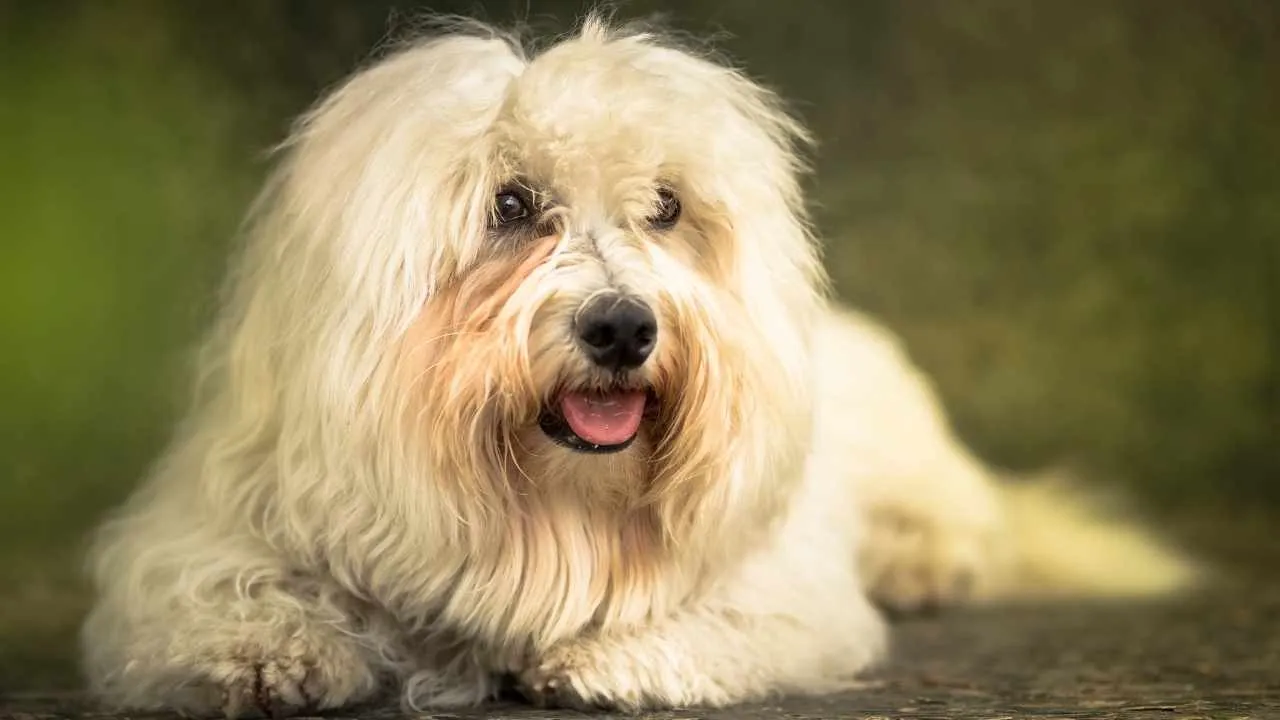
Originating from Madagascar, the history of this hypoallergenic dog breed dates back hundreds of years when it became popular among ladies as a companion dog. The breed was named after the city of Tulear and because of its cotton-like coat.
The white coat is soft, supple, and dense, and it is never woolly, wiry, or rough. A full-grown adult has the coat 4 inches long. The breed lacks an undercoat and comes in solid white, black and white, and tri-colors. The breed has a prolonged anagen phase and no resting/shedding phase; thus, there is no shedding.
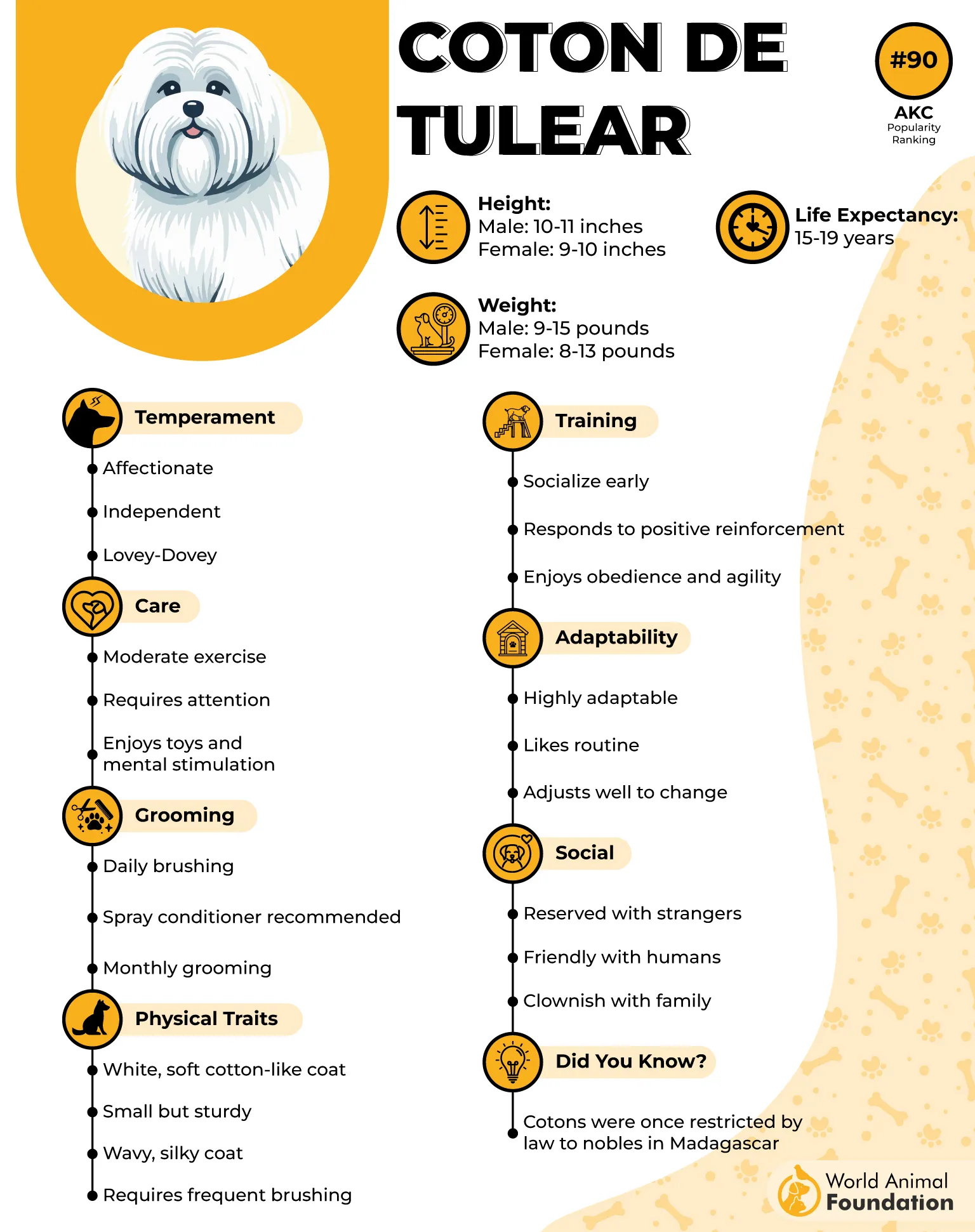
Since it has a long coat, it can easily get tangled. Regular brushing (3-4 times) is suggested rather than vacuuming. Start with a slicker brush to easily get into the fur. Then use a metal comb to ensure there are no mats. And lastly, use a detangling spray.
Conclusion
Living with a dog does not have to mean living under a blanket of fur. These low-shedding breeds offer the perfect mix of companionship, personality, and cleaner living spaces. Still, remember that less shedding does not mean zero maintenance. Most of these dogs need regular brushing and professional grooming to keep their coats healthy and comfortable.
The right choice depends on your lifestyle, activity level, and the time you can dedicate to grooming and training. Take your time, meet different breeds if possible, and choose the one that truly fits your home. A well-matched dog becomes more than a pet; it becomes family, bringing laughter, comfort, and unforgettable memories for years to come.
