




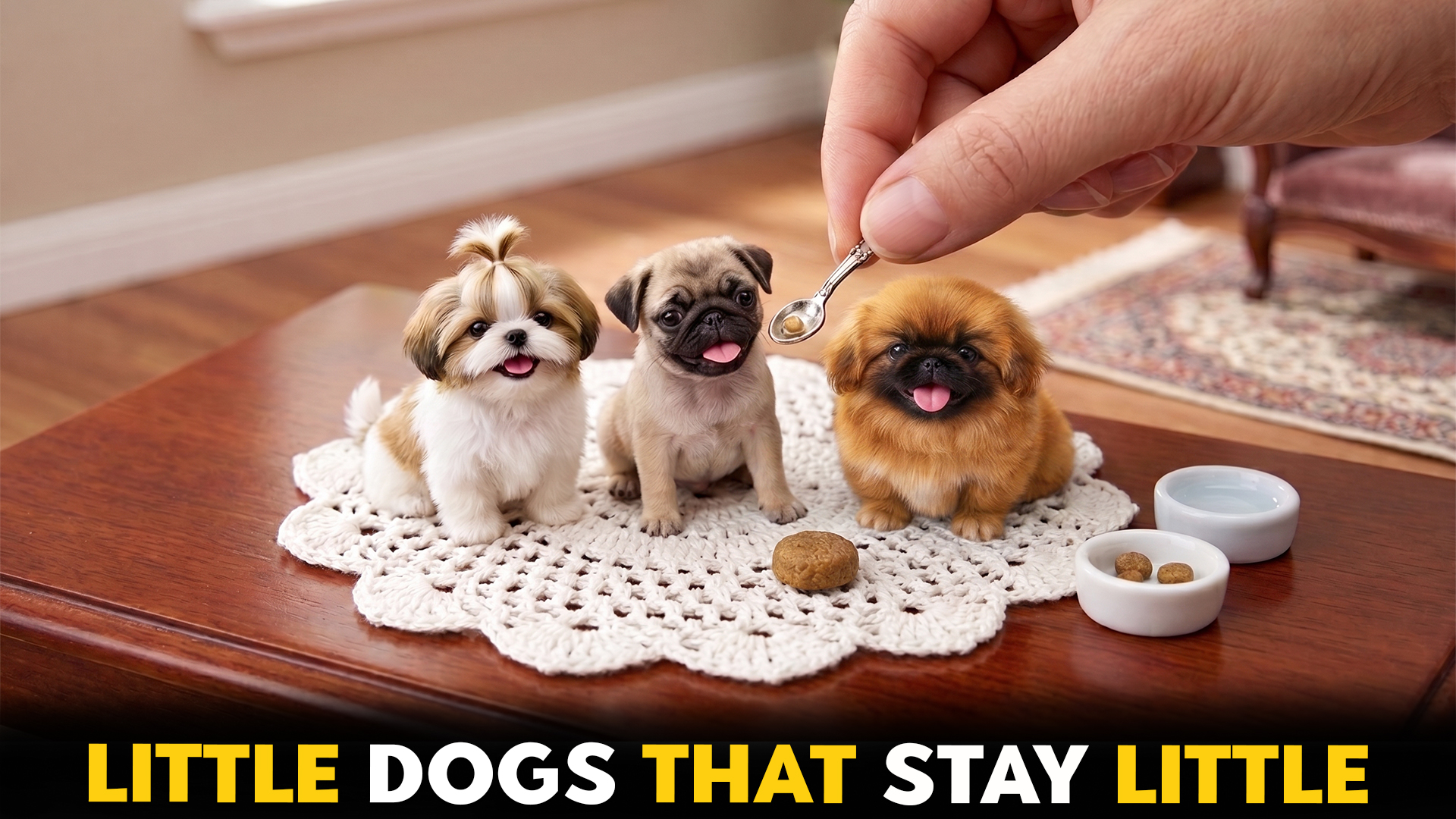
Some dogs may be small in size, but they have enough personality to fill an entire house. If you have ever wished for a companion that fits comfortably in your lap, travels easily, and never outgrows your living space, you are in the right place. “A house is never too small when it is filled with the love of a good dog.” That simple thought perfectly captures the joy of owning a tiny breed.
These dogs stay small throughout their lives, yet they offer endless loyalty, confidence, and affection. Their compact size makes them easy to live with, but their unique personalities are anything but small.
This guide explores dog breeds that stay small while explaining what makes each one special, helping you find a companion that truly matches your lifestyle and your heart.
Dog Breeds That Stay Small – The Ultimate Guide
1. Shih Tzu
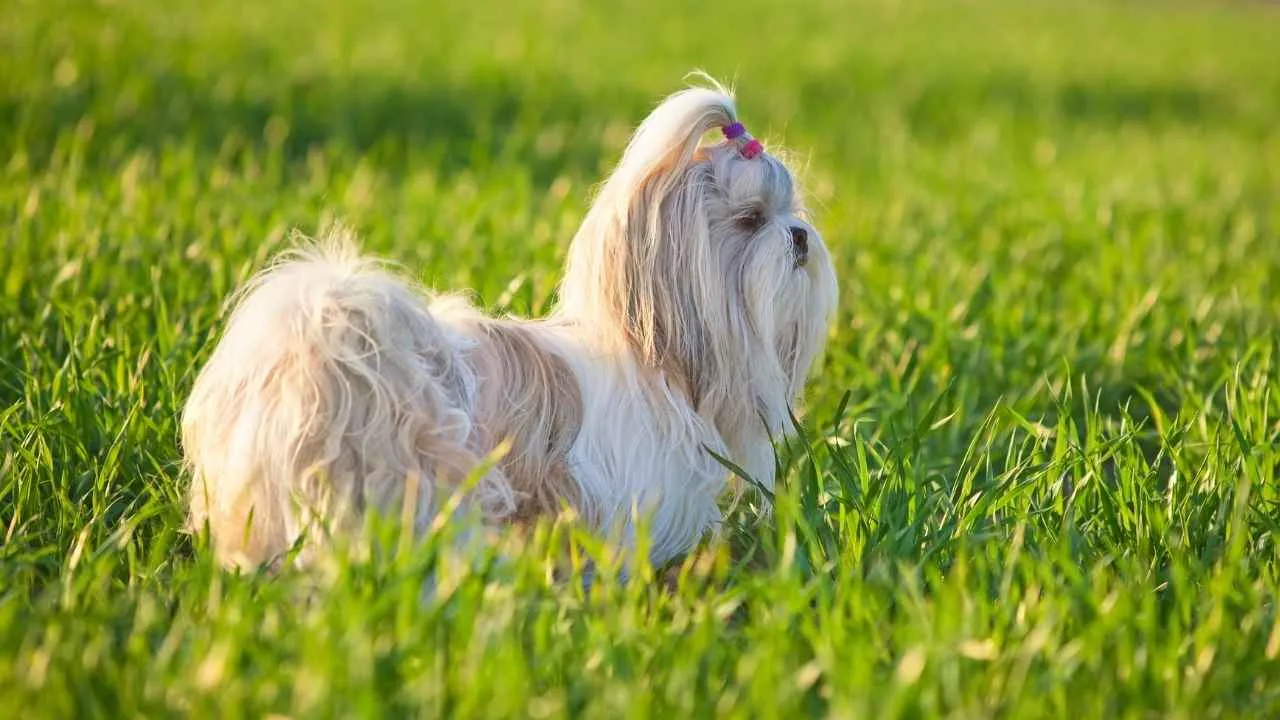
14th most ancient dog breed, the Shih Tzu was either developed in China or by the monks of Tibet or both combined. The small dog breed has a thick ruff around its neck, giving it a lion-like appearance. It was well-loved by the Chinese and was not allowed to be traded outside the country for years, says Orvis.
The dog has neoteny features: a small, round face with a regal expression, dark and expressive eyes, and a short and square muzzle that it carries to adulthood. The curved tail over the back moves, giving an alert expression to the dog. While being an excellent watchdog, it instantly senses the owner’s mood and responds by cuddling or sitting close.
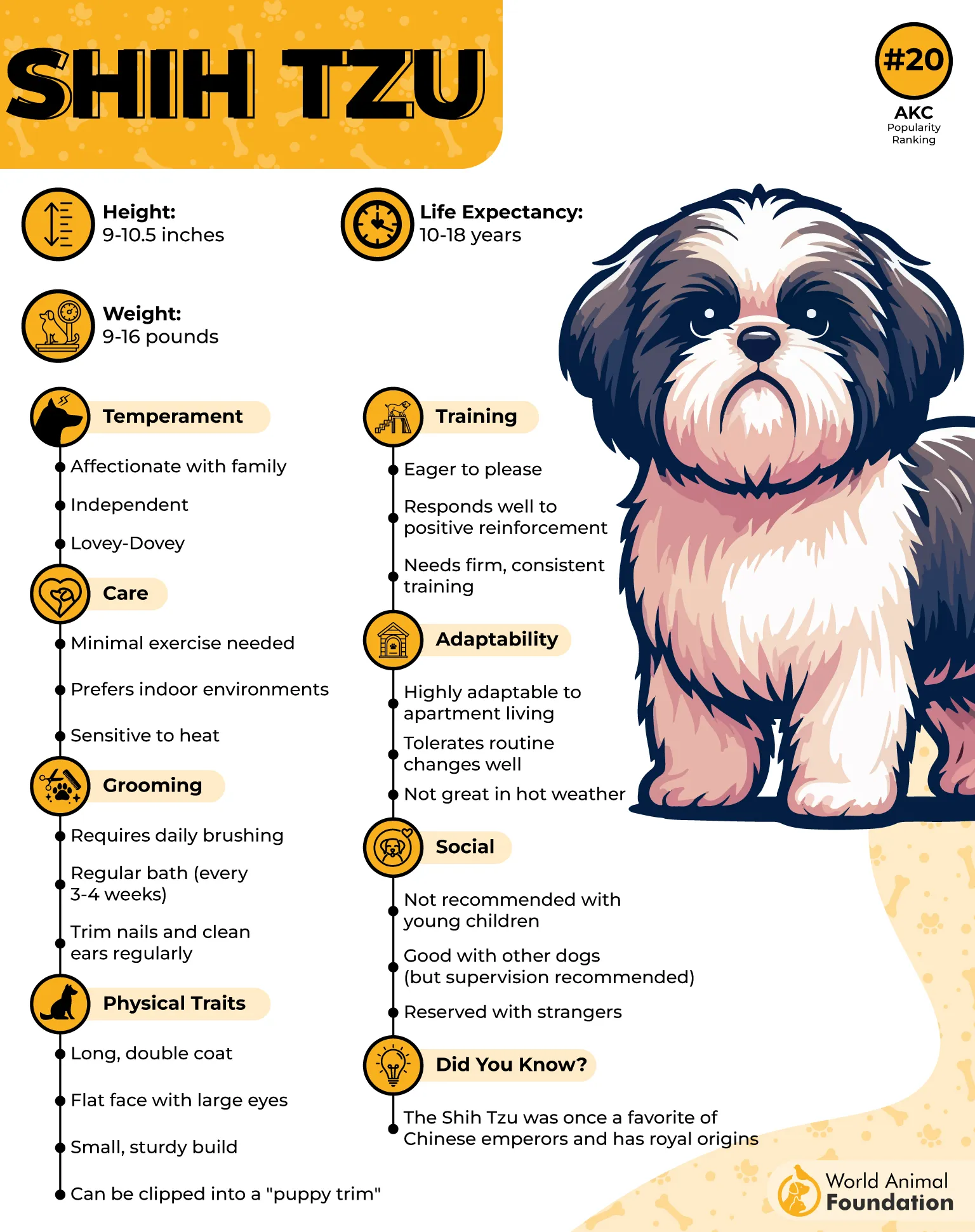
The breed typically reaches its adult height in 10 months. It matures faster than other dogs and has a fast metabolism. Typically weighing 9-16 pounds and standing 8-11 inches tall, the breed is ideal for apartment living.
2. Pug
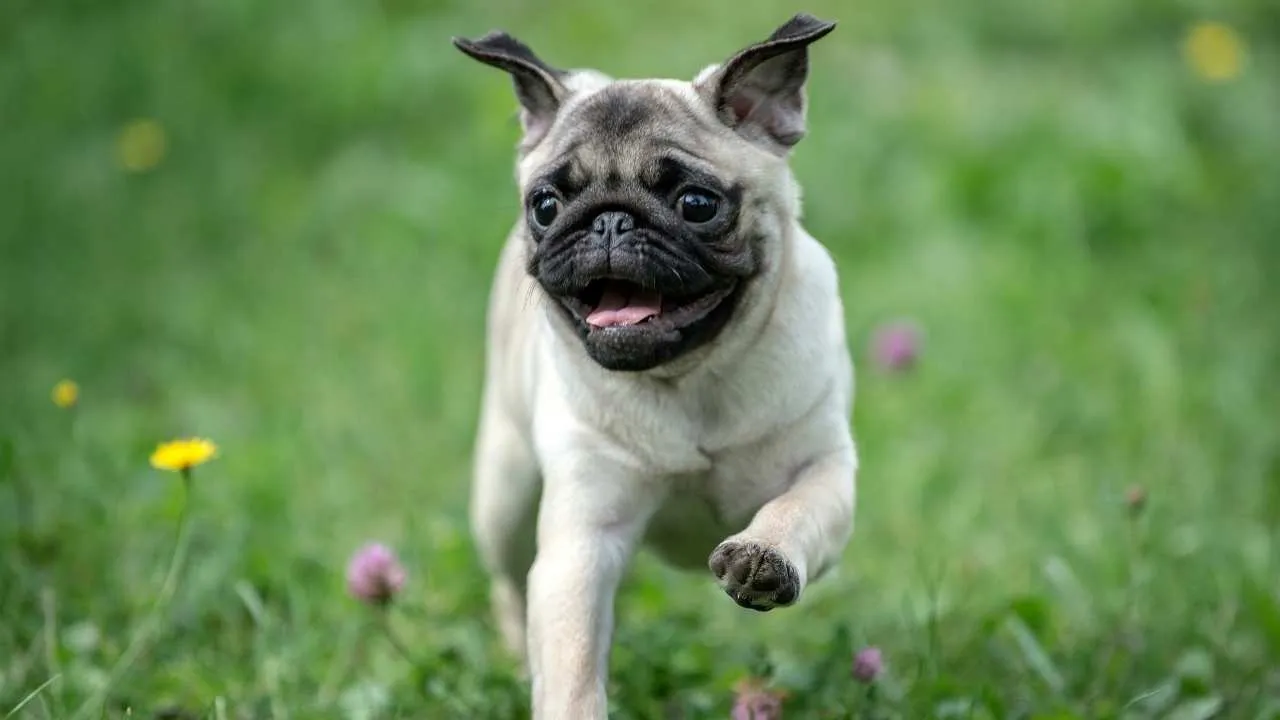
This mastiff-type dog breed was bred hundreds of years ago. It was a popular dog breed among the Chinese monasteries and was moved to Europe from China in the 18th century through East India Trading. The name comes from a word, ‘Pungus,’ which means ‘a fist,’ as it has clenched paws.
Deep wrinkles, a round head, and large eyes give it an almost human-like appearance. It is a brachycephalic breed and may have breathing issues during intense outdoor activities in summer. The breed has low working stamina and high working drive, that accumulatively leads to obesity.
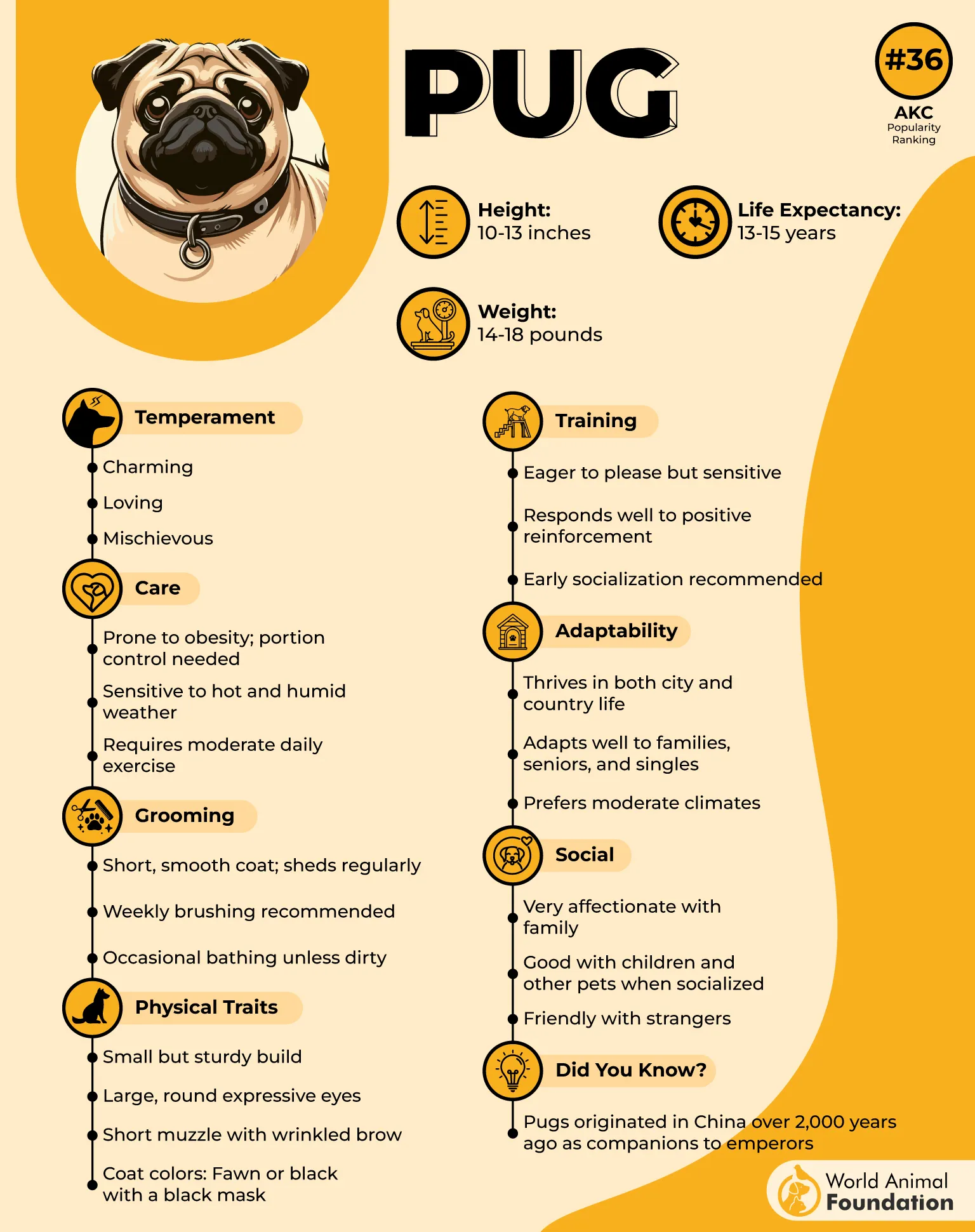
Putting on extra weight puts mechanical strain on its small joints and leads to joint-related issues, such as hip dysplasia. The breed has low exercise needs (20-30 minutes daily): casual walks and light indoor play.
3. Pekingese
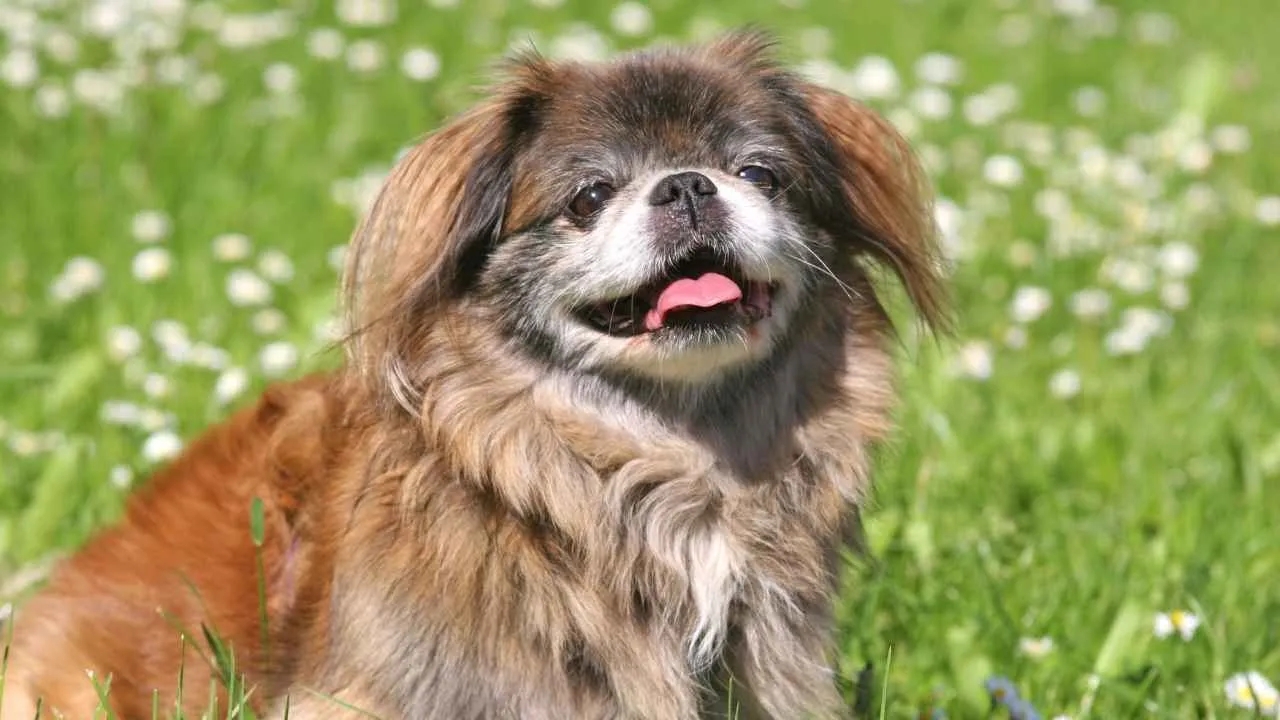
Also known as the lion dog, the ancient breed was developed in China by the Buddhist monks. The primary goal of the breed was to be a good royal lap dog. At least 5 Pekingese were brought to the U.K in 1860 and gained popularity there. The smaller version is known as the ‘sleeve dog,’ as per Omlet.
The body of this tiny breed is compact and low to the ground. It has a ‘rolling gait,’ which is the result of selective breeding to prevent the breed from wandering in the royal courts in ancient times. The miniature Pekingese, aka ‘Sleeve Pekingese,’ was developed to weigh no more than 7 pounds to hide under the sleeves of the robe worn by the Chinese Imperial Household.
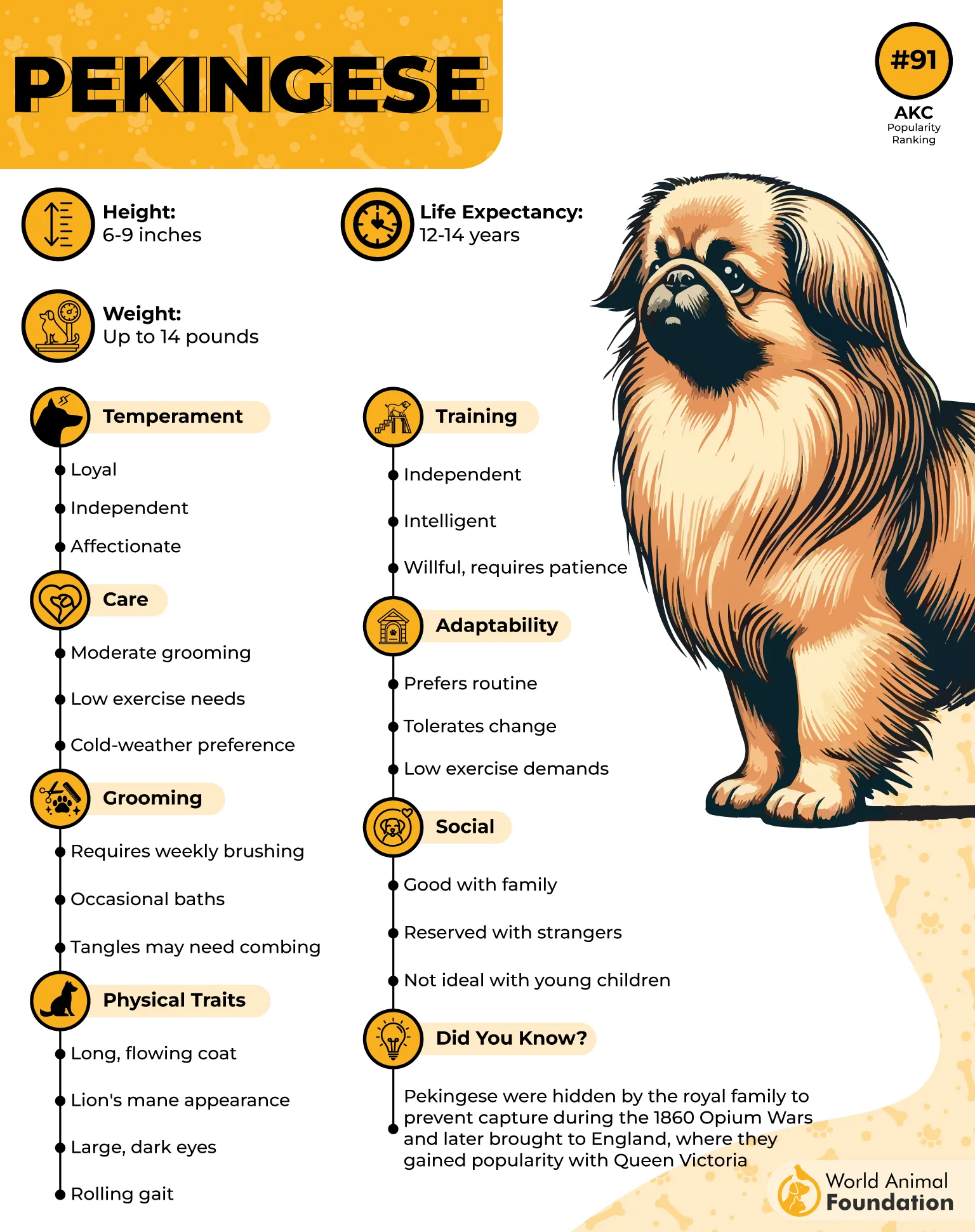
Because it has short limbs and a heavy body, the breed is prone to certain joint-related issues, such as luxating patella and dysplasia. Brush the coat daily using a slicker brush and a pin brush to remove loose hair and evenly distribute natural oils.
4. Brussels Griffon
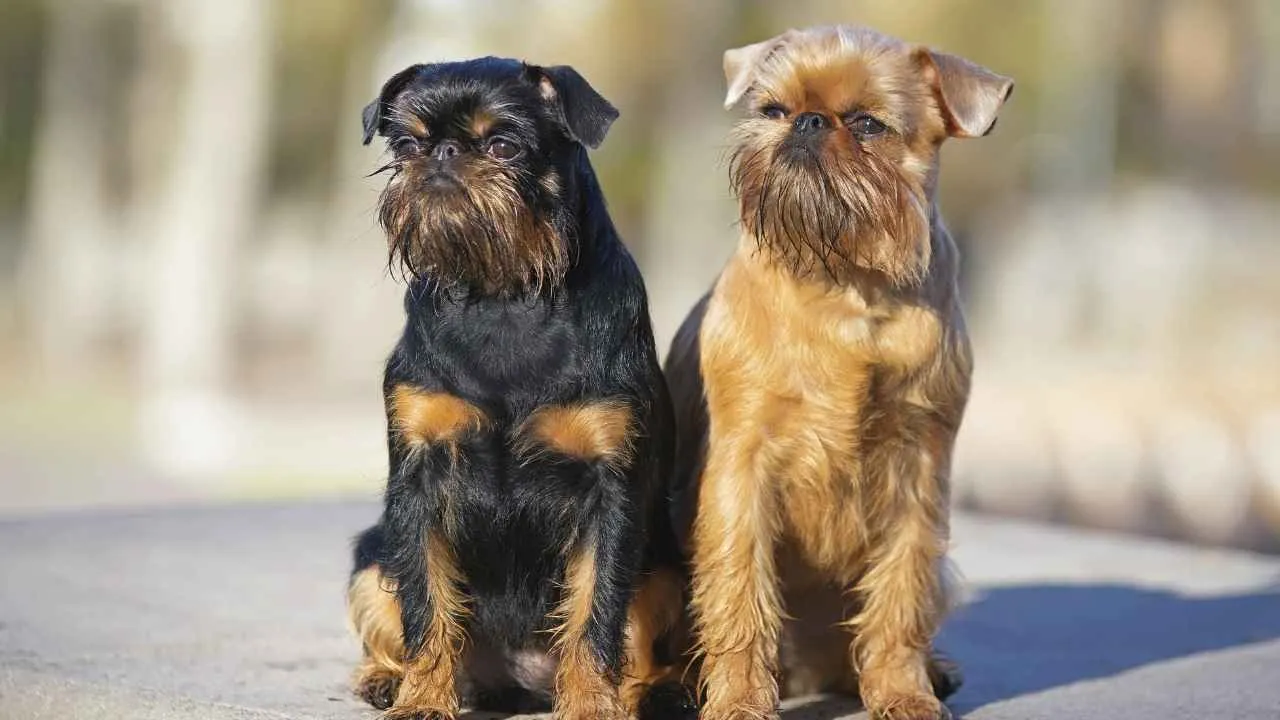
The little dog was originally bred in Belgium from a terrier-type dog ‘Smousje.’ The primary goal was to hunt rodents in the stables. This stable dog was then bred with the Pug and the King Charles Spaniel in the 19th century to form the Brussels Griffon. The breed almost went extinct during both World Wars.
The small size of this breed is the product of genetic mutation and selective breeding that led to hormone regulation and limited bone growth. The breed is known for its expressive and childlike face with expressive eyes. The stocky body and a purposeful trot are a reflection of its heritage from the vermin hunters.
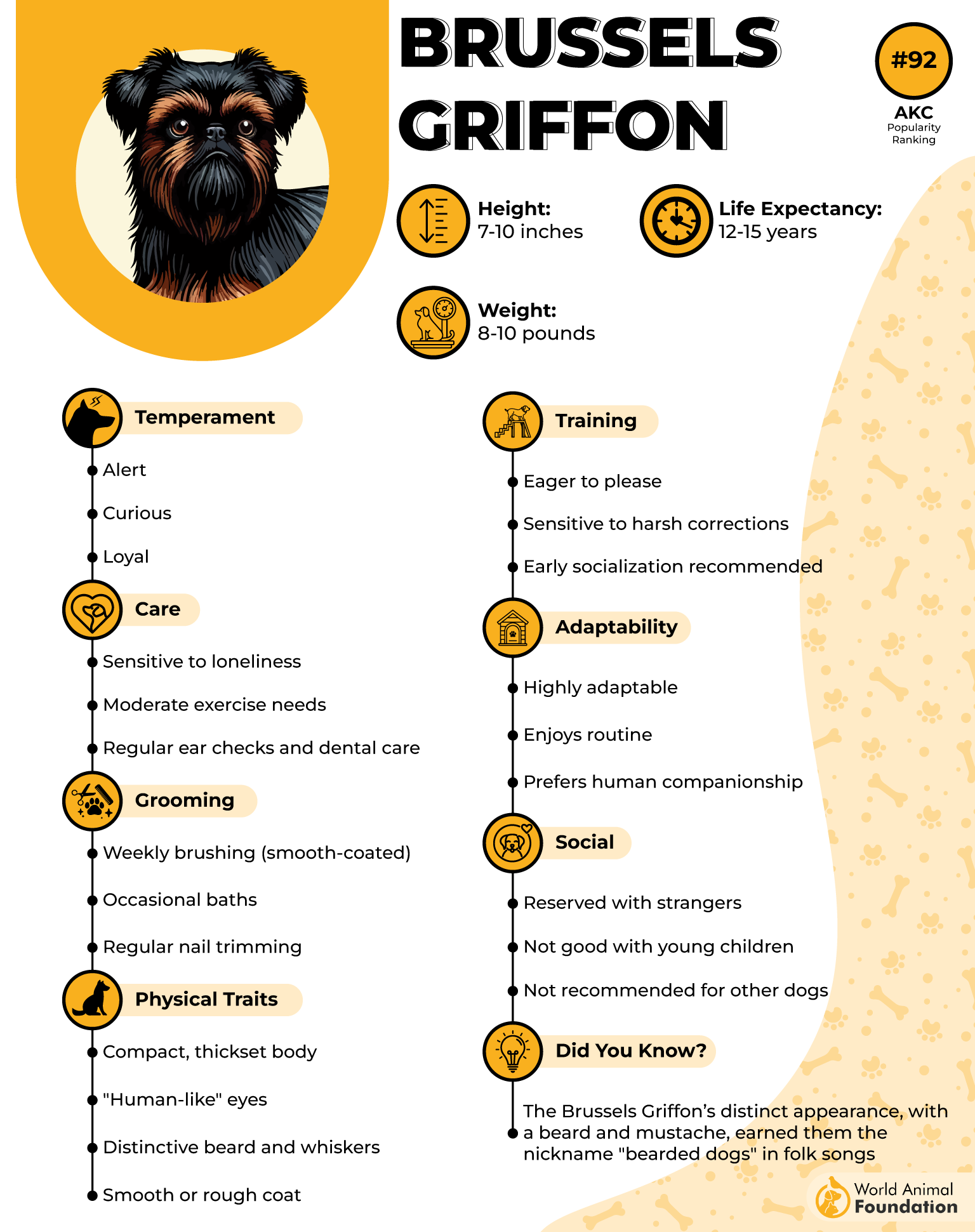
Because of its small size and brachycephalic nature, the Velcro dog is temperature sensitive and can not withstand extremely hot or cold temperatures. Grooming needs depend on the coat type: rough-coated (daily brushing) and smooth-coated (weekly brushing).
5. Chihuahua
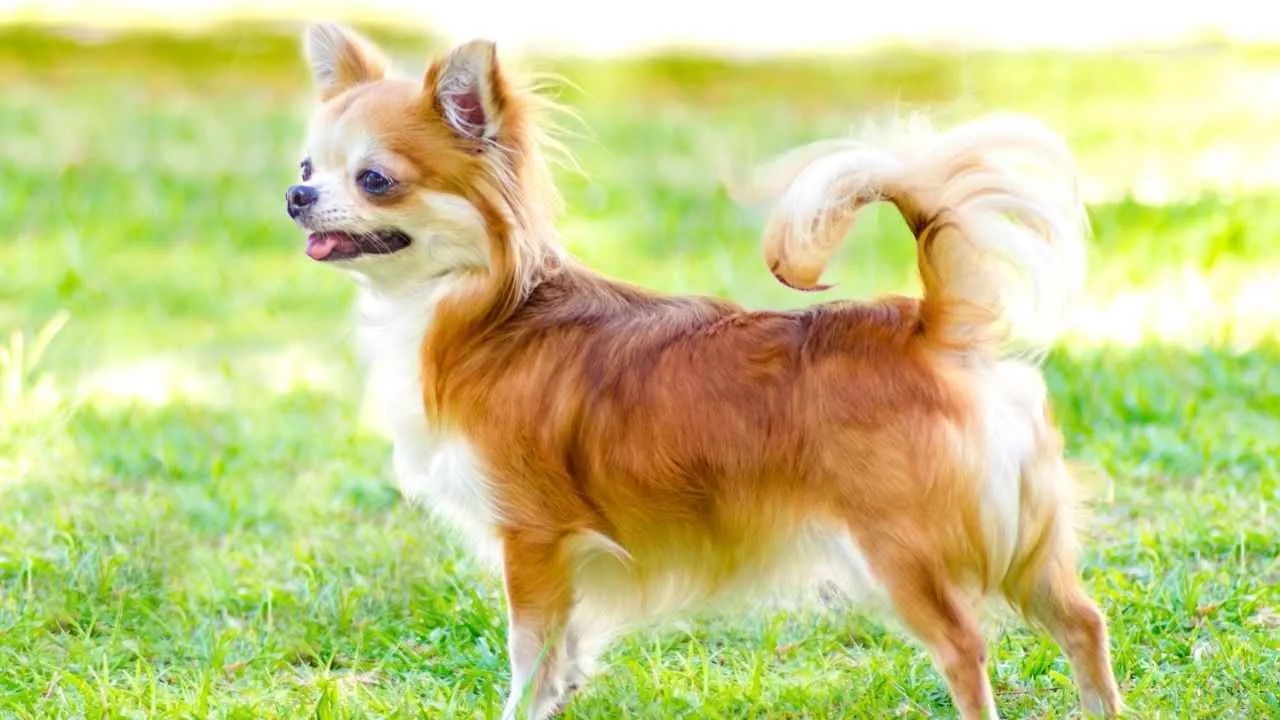
The smallest dog breed in the canine kingdom, the Chihuahua is also named ‘Chis’ by its fans. The ancestors of this breed were found in Mexico in the 16th century. The breed became more popular in the 20th century as a companion dog, according to PetMD.
The popular tiny dog breed has an apple-shaped, well-rounded skull. The erect ears are alert and give an alert expression. The small breed dog has large dog personality traits: courageous, territorial protectiveness, and affection towards the owners.
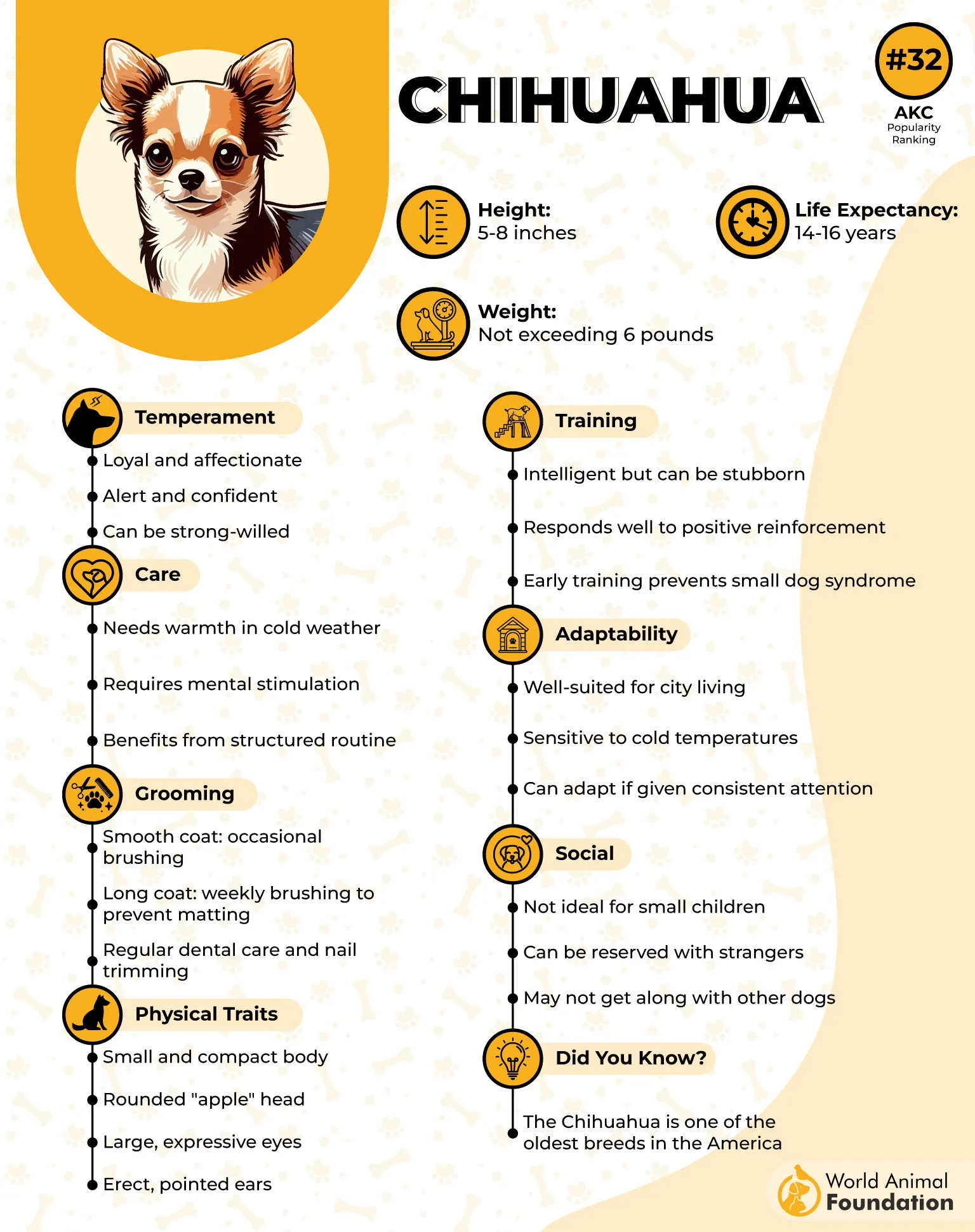
Because of its high surface-area-to-mass ratio, it loses body heat quickly. It is prone to certain health conditions because of its small size: dental crowding, joint issues, and hypoglycemia. The highly energetic dog needs 30-60 minutes of daily exercise and mental stimulation.
6. Havanese
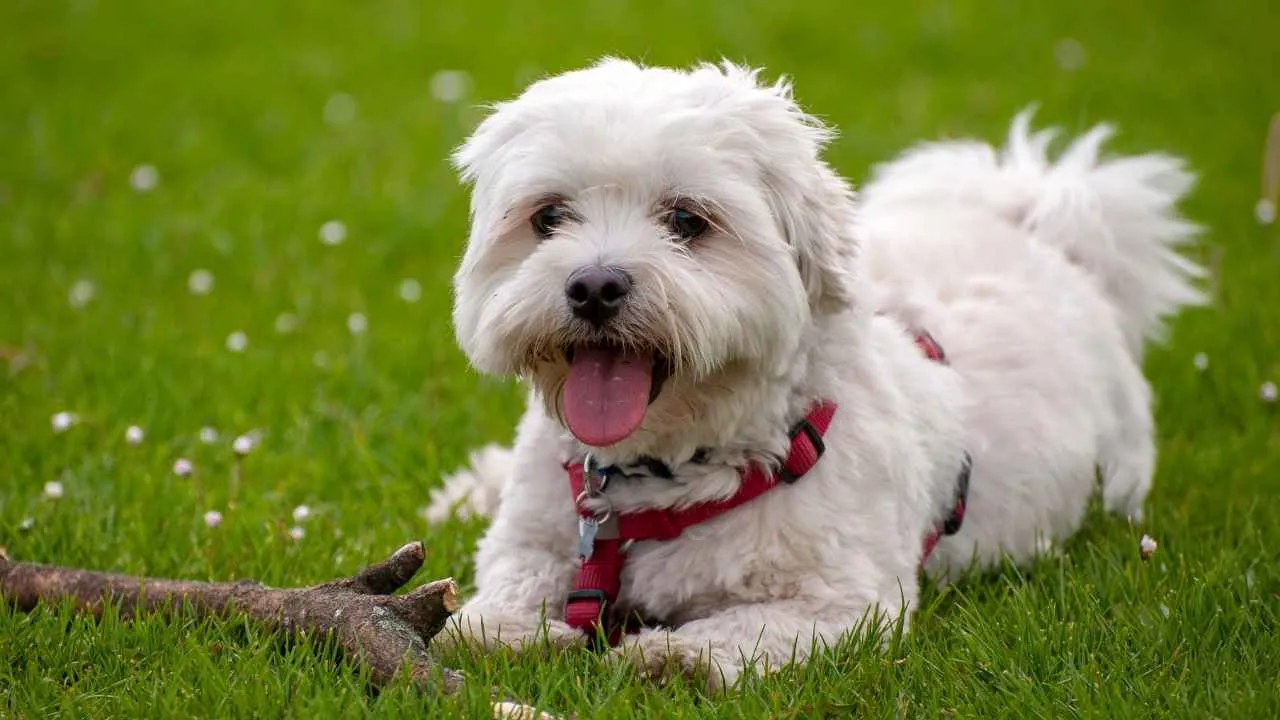
This toy breed from the Bichon family was brought to Cuba from Tenerife in the Canary Islands in the 16th century. The silky coat is specifically designed for the environmental conditions of Cuba. This ‘little dog of Havana’ became popular in the 20th century in Europe and was admired by royalty, including Queen Victoria.
As the Havanese was selectively bred to be a lap dog, the affectionate companion has low food and space needs. It favors readable signs (eye contact and facial expressions) for communication to strengthen human-dog bonding. The quick footwork and light build support trick training and dog sports.
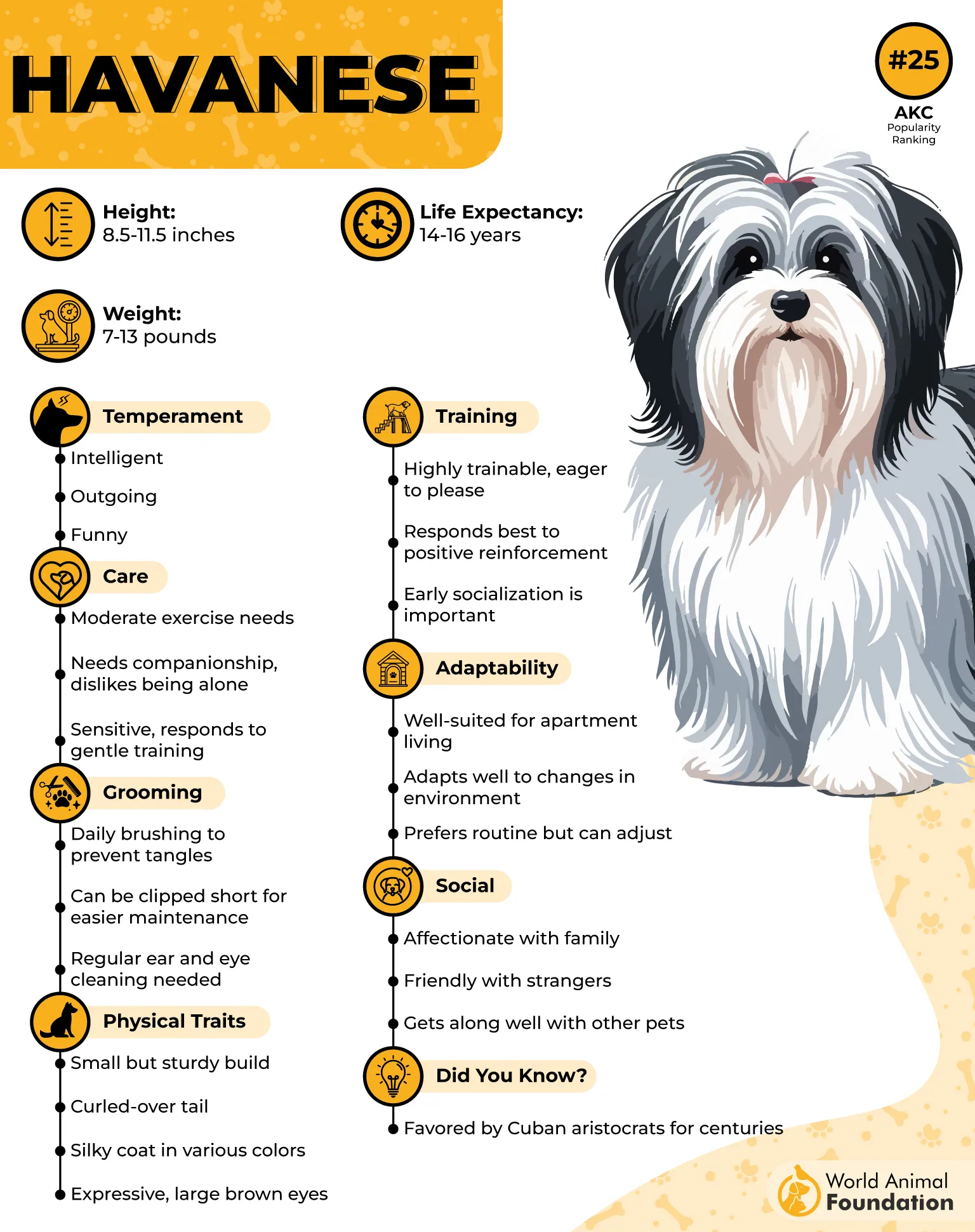
The breed excels in a family environment and makes good friends with adults, children, and other pets. However, adult supervision is needed as it can be accidentally kicked. The breed has moderate exercise needs: 2-3 daily brisk walks, fetching toys, and indoor romping.
7. Pomeranian
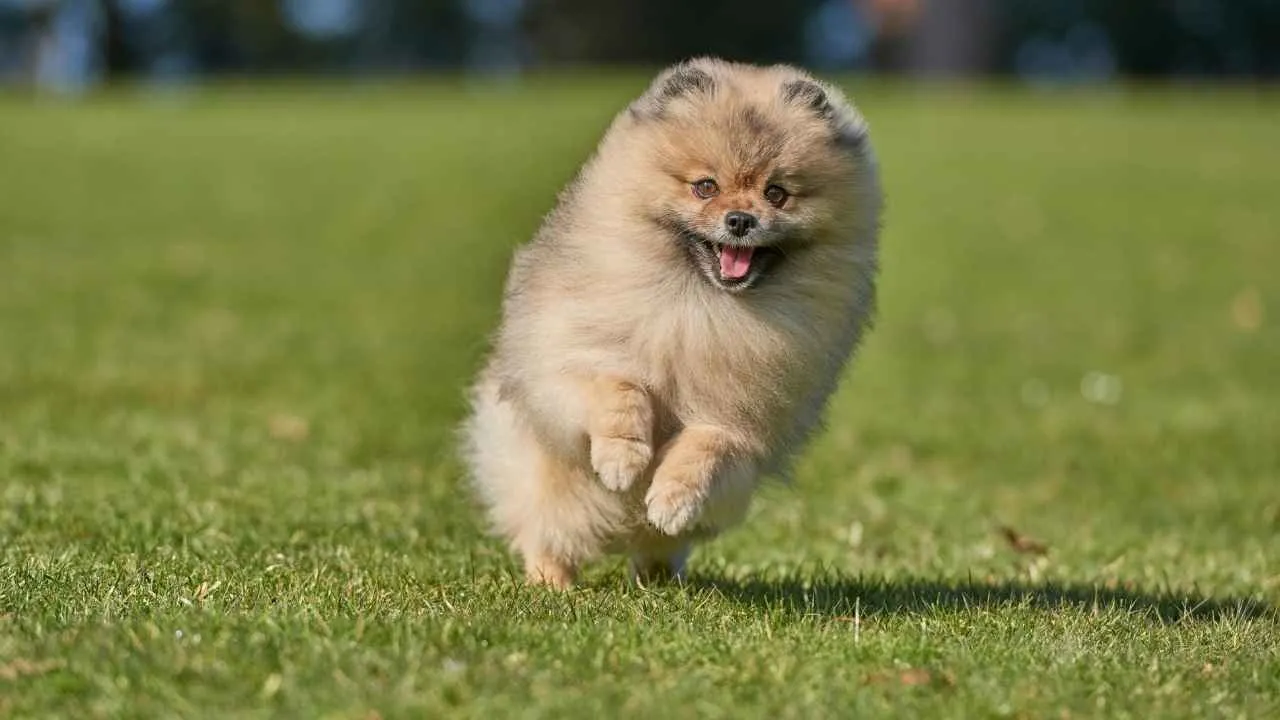
Spitz-type dogs are considered to be the ancestors of this dog, which were found in Iceland centuries ago. These dogs had wolf-like characteristics and were used to pull heavy sleds and herd reindeer. The breed made its way to Europe and was favored by Queen Consort Charlotte and went through size reduction during the time of Queen Victoria.
The family dog loves being around people, and because of its alert nature, it makes an excellent watchdog. While remaining tiny, the playful companion has proportionate features (proportional Chondrodystrophy). The tiny trachea (windpipe) is delicate and can be prone to tracheal collapse, where the airway is partially obstructed.
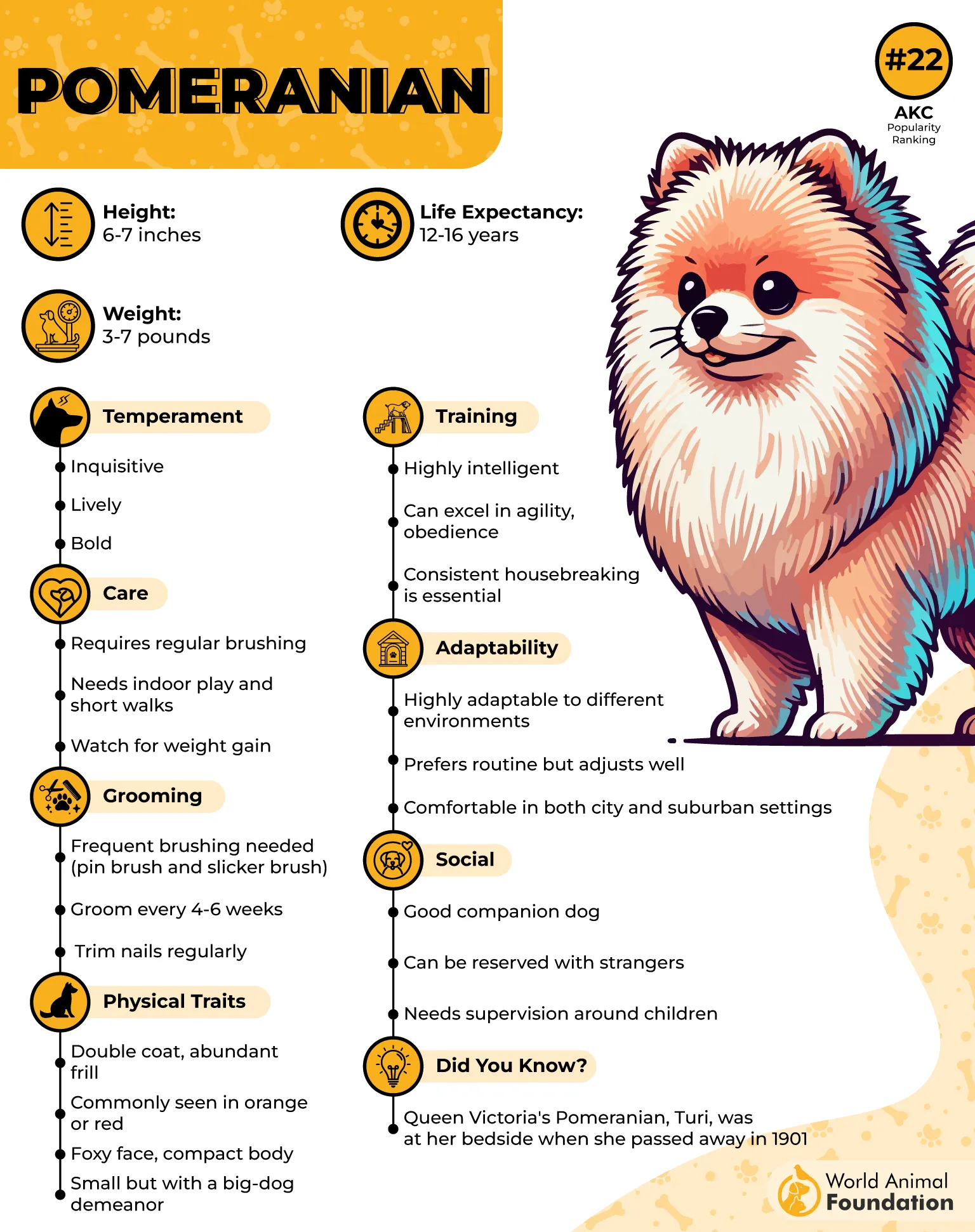
This is the perfect dog for medical and hearing assistance, therapy, watchfulness, and the entertainment department. It needs high maintenance to prevent skin irritation and painful matting. Regular exercise (30-60 minutes) is suggested.
Conclusion
Choosing from dog breeds that stay small is about much more than finding a pet that fits your apartment or favorite travel bag. Every breed has its own personality, energy level, grooming needs, and way of showing affection. Some are playful comedians, while others are calm little companions that simply enjoy being close to their people.
Spend time learning about each breed before making your decision, and always consider your daily routine and lifestyle. The best match is the one whose needs fit naturally with yours. A small dog may not take up much space on your couch, but it can easily claim the biggest spot in your heart, bringing years of laughter, comfort, and unforgettable memories.
