




A small apartment and a woman living alone unfortunately tends to be exactly the kind of situation burglars look for. Advanced security systems can help to an extent, but when it comes to real-time protection, they only go so far.
What you really want is a companion who not only lifts your spirits on a rough day but also keeps a watchful eye on your space and alerts you the moment something feels off. And honestly, is there any better partner for that than a dog?
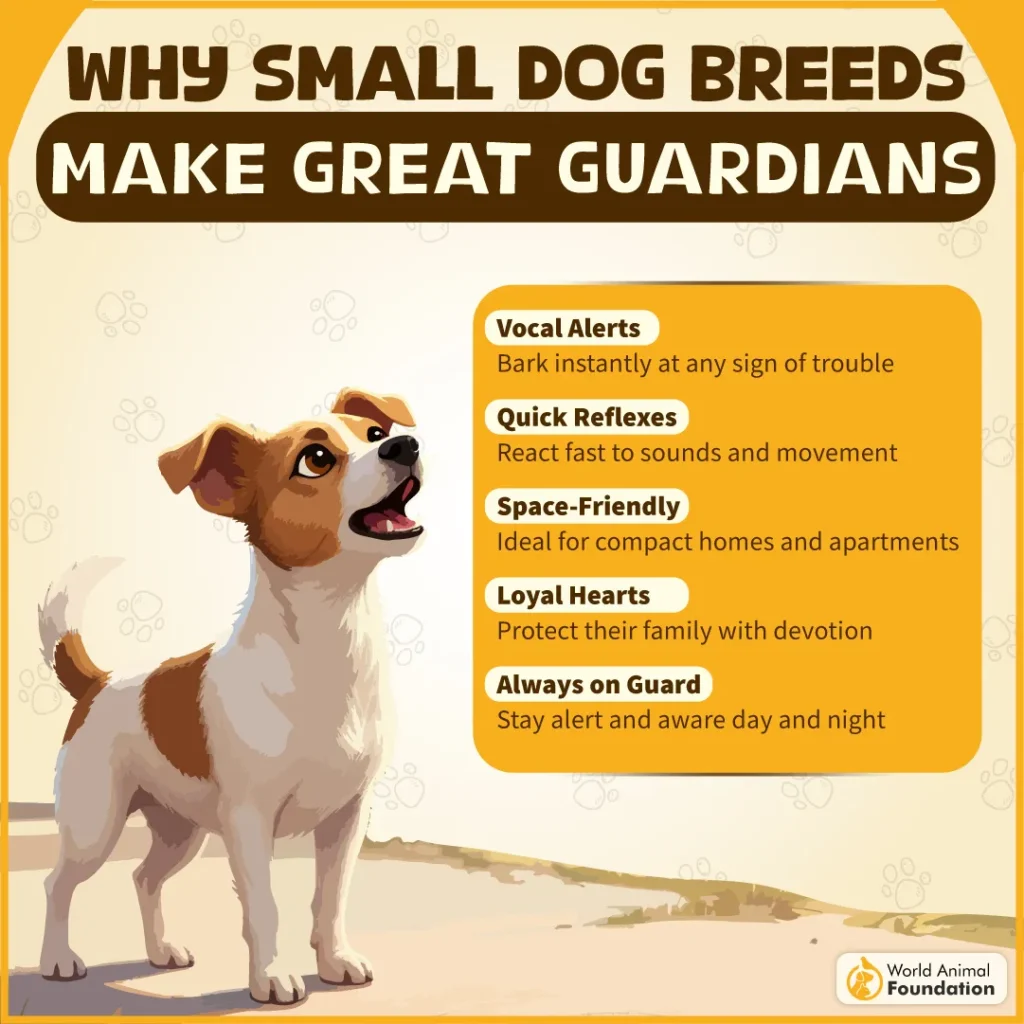
Small guard dog breeds have a funny way of taking their job seriously: they listen for every little sound, then bark as if they’re personally running security for the whole building.
If you’re after a dog that brings loyalty, early warnings, and a solid dose of comic relief along the way, these seven breeds are absolutely worth a look from a guard-dog perspective.
Top Small Dog Breeds: A Guard Dog’s Perspective
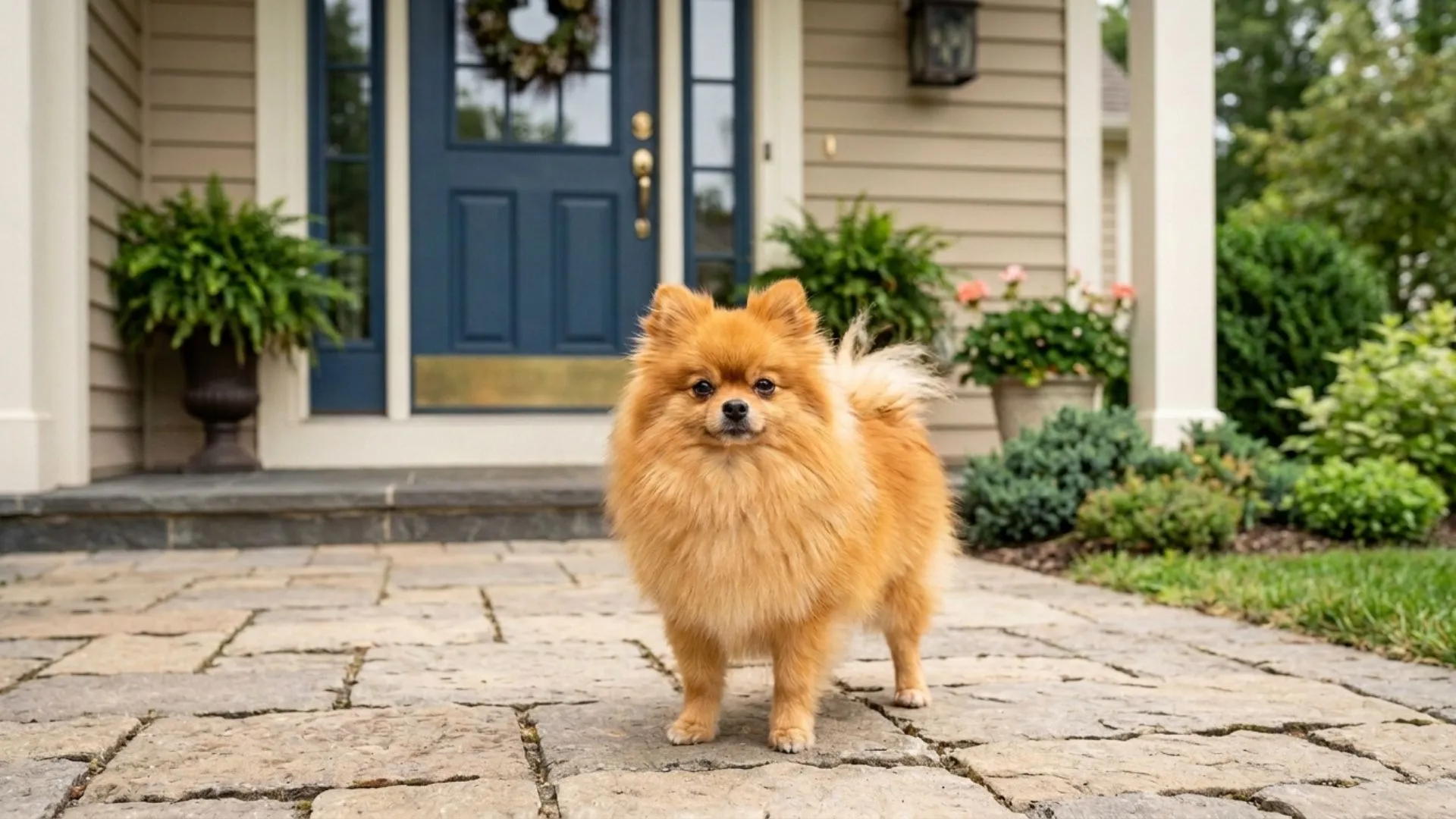
1. Pomeranian
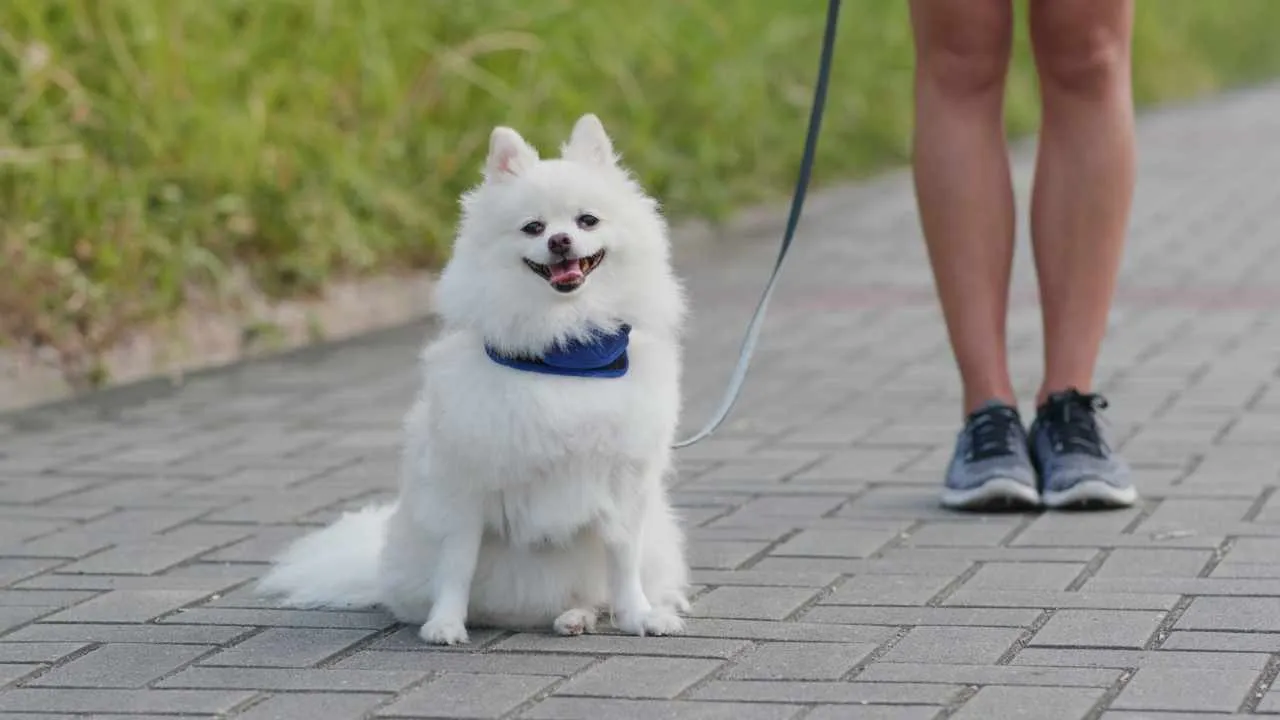
The Spitz-type dog breed traces its roots to northeast Germany and northwest Poland, developed from the larger German Spitz. It was a favorite among royalty, including Queen Victoria, and according to Wikipedia, the original Pomeranian was actually much bigger before undergoing selective breeding for a smaller size during her era.
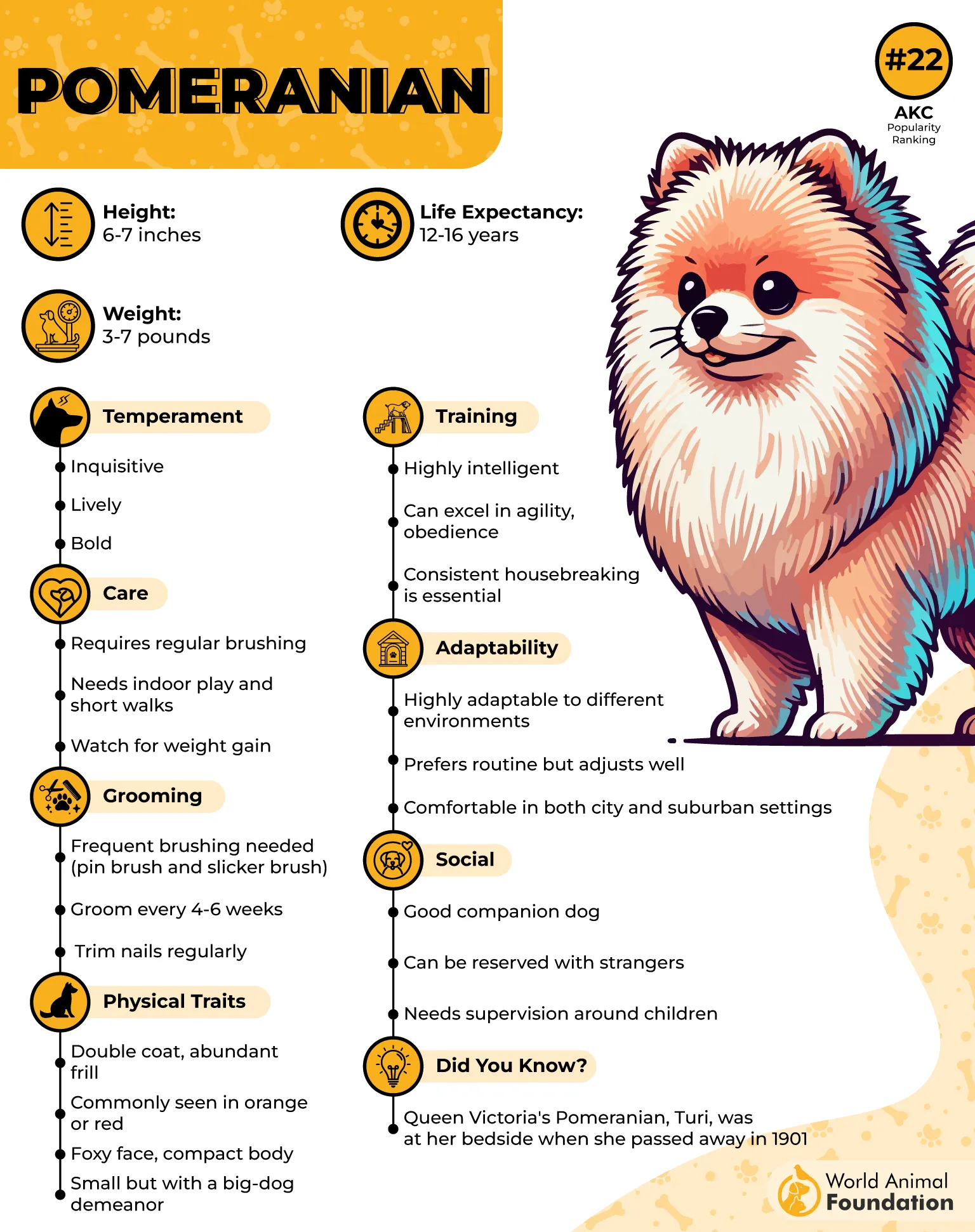
Its tiny stature rules it out as a true guard dog, but it more than makes up for that as a watchdog, thanks to sharp barking instincts that kick in at the first unusual sound or unfamiliar face.
Despite its size, the breed carries itself with a confident, “big-dog” posture, tail curled proudly over the back and body language that radiates self-assurance.
When feeling defensive, a Pomeranian may nip or bite at a perceived threat. Their strong territorial instincts can also show up around food, sometimes leading to a bit of possessiveness at mealtime.
This is a spirited, high-energy breed that needs at least 30 to 60 minutes of daily exercise and mental stimulation to stay balanced.
2. Lhasa Apso
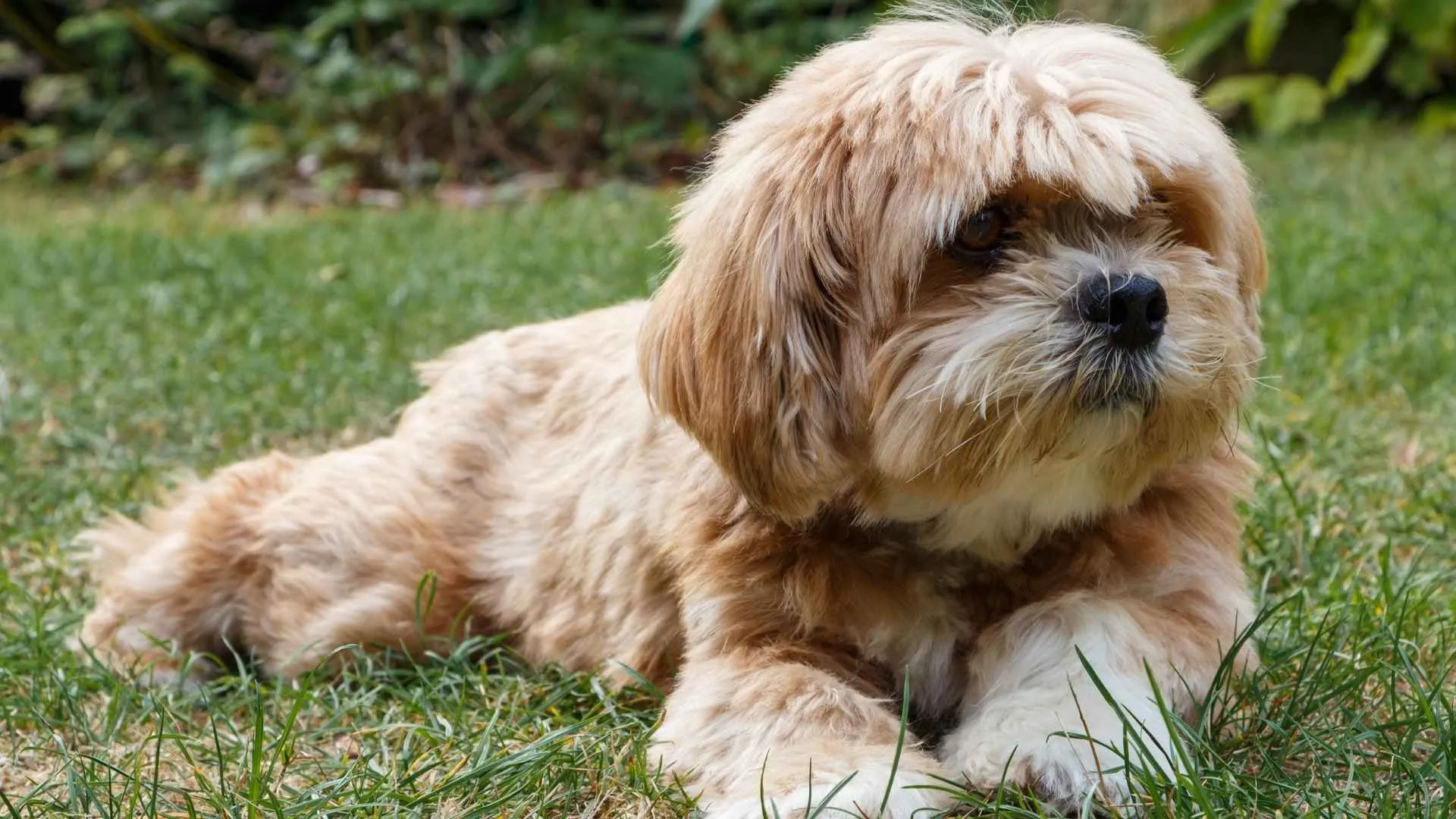
The ancient dog breed was developed 2,000 years ago in the cold mountains of the Himalayas. The Buddhists and the nobility exclusively bred this dog to guard the monasteries.
They take longer to mature and may behave like playful puppies until they are around three years old. Naturally curious, energetic, and fun-loving, they make lively companions, according to Omlet UK.
It acts as an indoor guard dog. It stays reserved around strangers and playful with family and loves to watch over them. It has a keen sense of hearing and will alert you to unexpected events by barking. The small size allows it to navigate through tight spaces and catch predators.
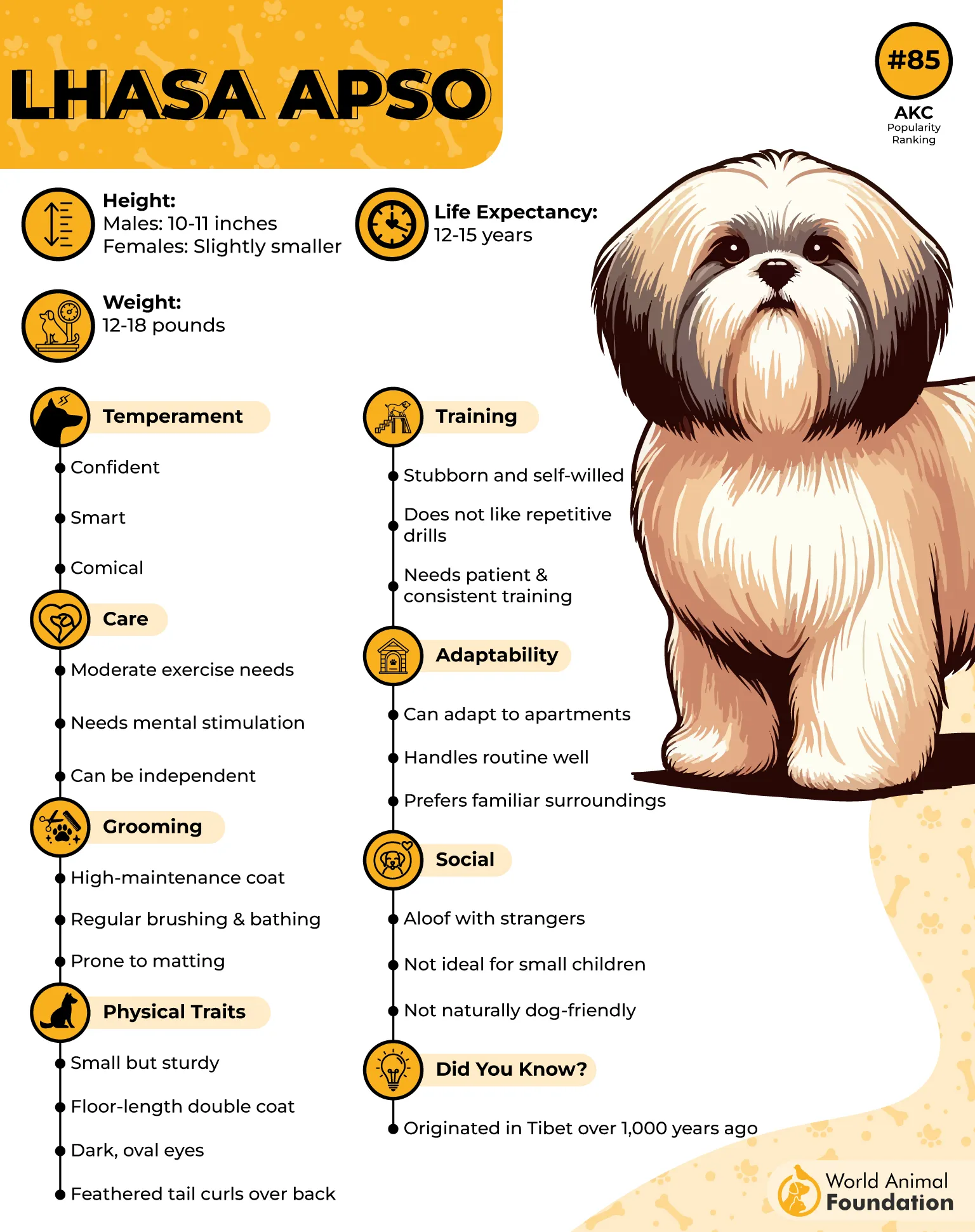
Being highly confident and assertive, it does not get intimidated easily and remains fearless. The breed requires an active and structured routine (30-60 minutes daily): brisk walks, treat-dispensing games, and puzzle toys.
3. Tibetan Spaniel
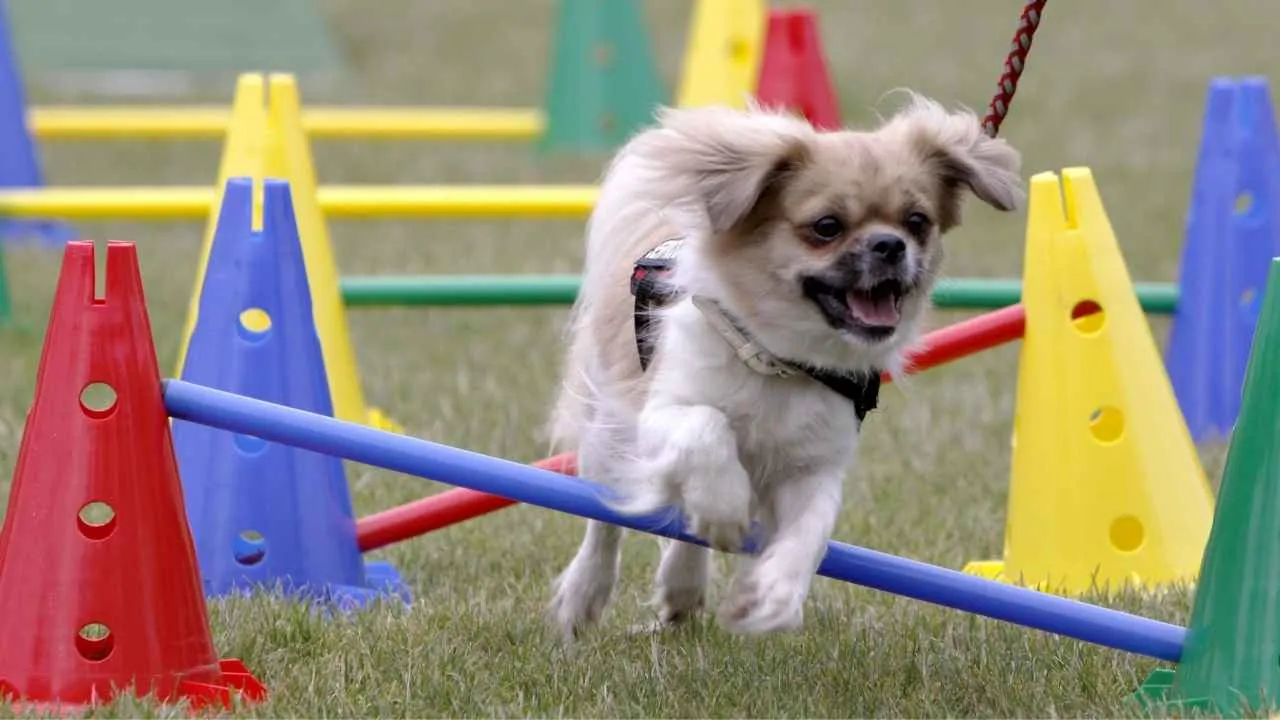
Also known as ‘Tibbie,’ the excellent guard dog was developed in Tibet to sit on the monasteries and protect the Buddhist monks from approaching predators, such as wolves or strangers. The breed weighs not more than 9-15 pounds and stands about 10 inches tall, as per PetMD.
The oval-shaped eyes give the breed an ape-like expression. It has an undershot bite, enough to catch small prey and a warning sign to an intruder. The richly plumed tail is curled over the back while moving, giving an alert expression. The hanging ears can pick up distant and faint sounds.
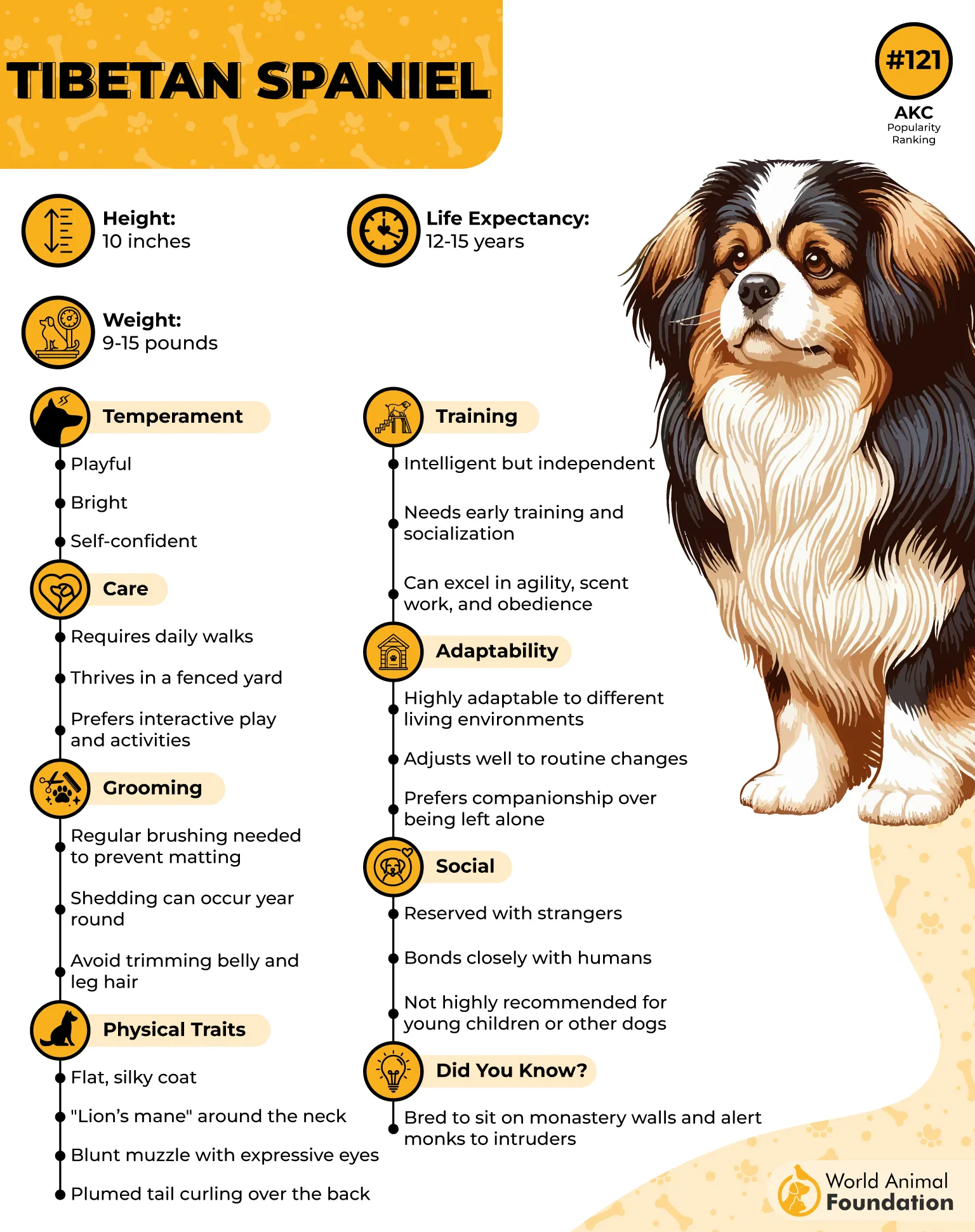
The breed naturally chooses a vantage point to sit on and keenly observe its surroundings, making it an excellent watchdog. Natural aloofness paired with high intelligence enables it to monitor, defend, and alert its family of a potential threat.
4. Australian Terrier
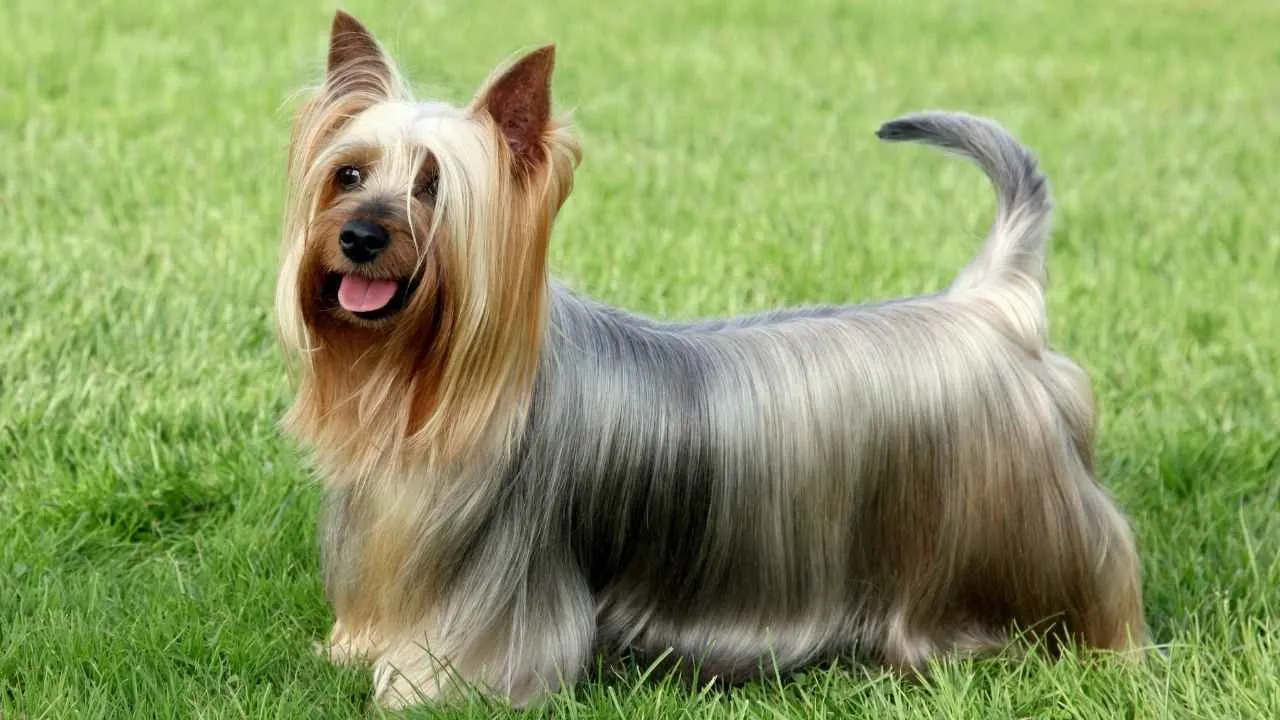
Originally bred in Australia in the 19th century, the Australian Terrier was developed by crossing the English small terriers, including the Cairn, Skye, and the Yorkshire Terrier. The primary goal was to help the Australian ranchers and farmers protect the property from rats and rodents.
Hardwired for vermin hunting, it loves digging. If it hears noises outside, spots a stranger, or catches any suspicious activity, it barks. Because of its well-muscled stature, it can spring and turn on a dime after quarry. The dark eyes and triangular erect ears denote a highly alert expression.
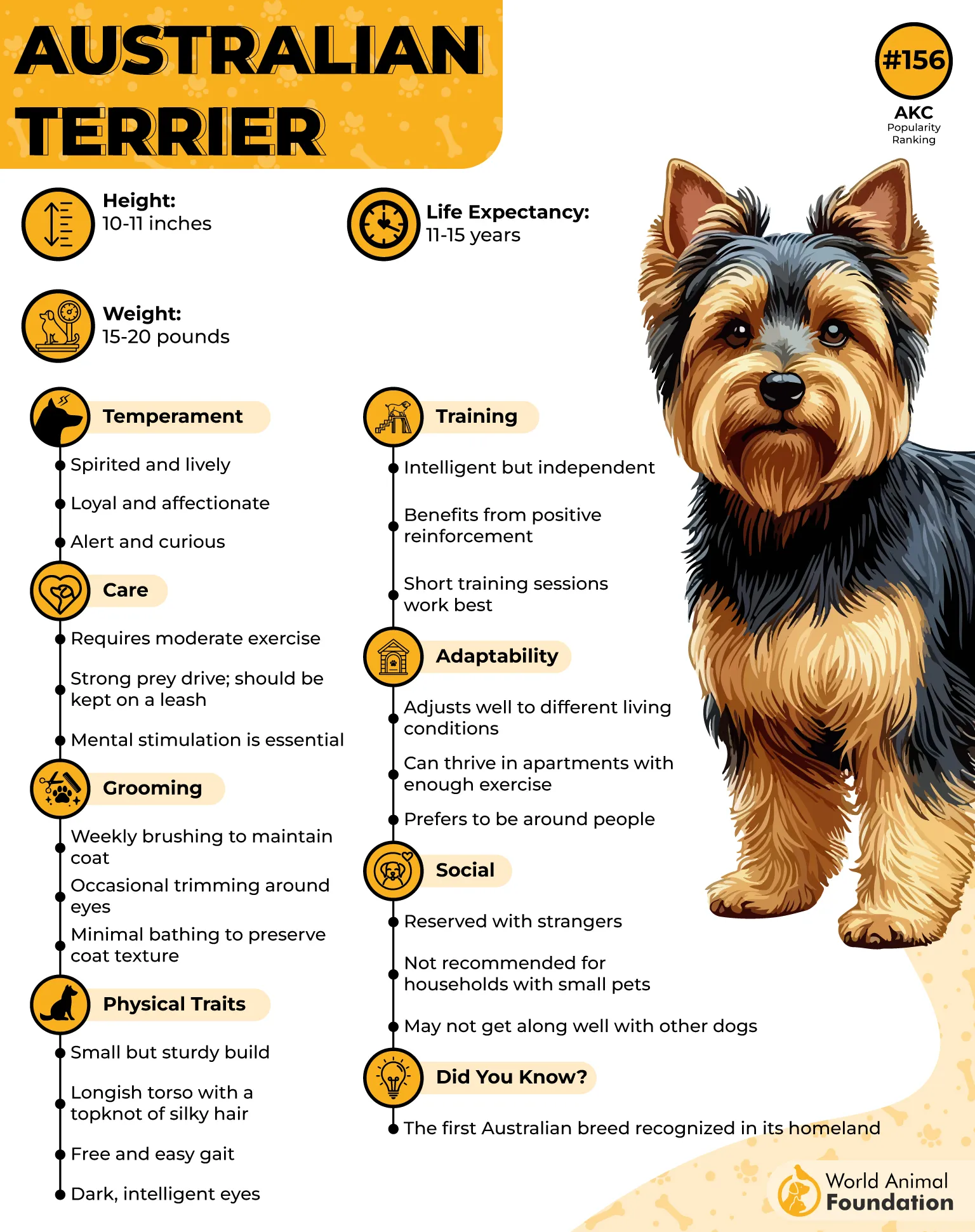
Not a lap dog, this best guard dog also requires constant engagement like scent work or designated digging. It has a weather-resistant double coat that provides protection against harsh weather.
5. Miniature Pinscher
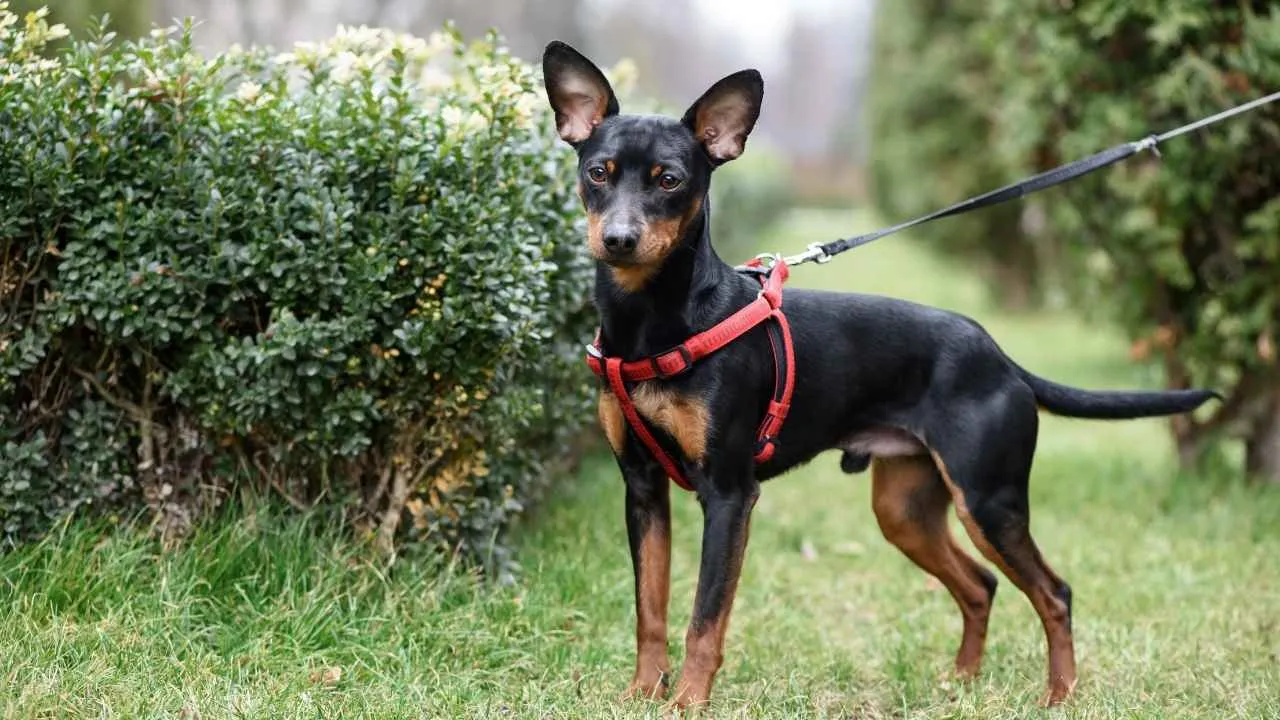
The dog was developed some 200 years ago in Germany as a ratting breed. It is a cross of the Dachshund and the Italian Greyhound. It was originally named ‘Reh Pinscher ‘ because of its keen resemblance to a local deer called ‘reh.’ The breed actually became popular in the 19th century.
It has dark, expressive eyes, a tapered head, and high-set ears. These features give it an alert expression. The well-angulated sloping shoulders enable a hackney gait (where it lifts its front paws high and bends from the wrist, giving it a ground-covering stride).
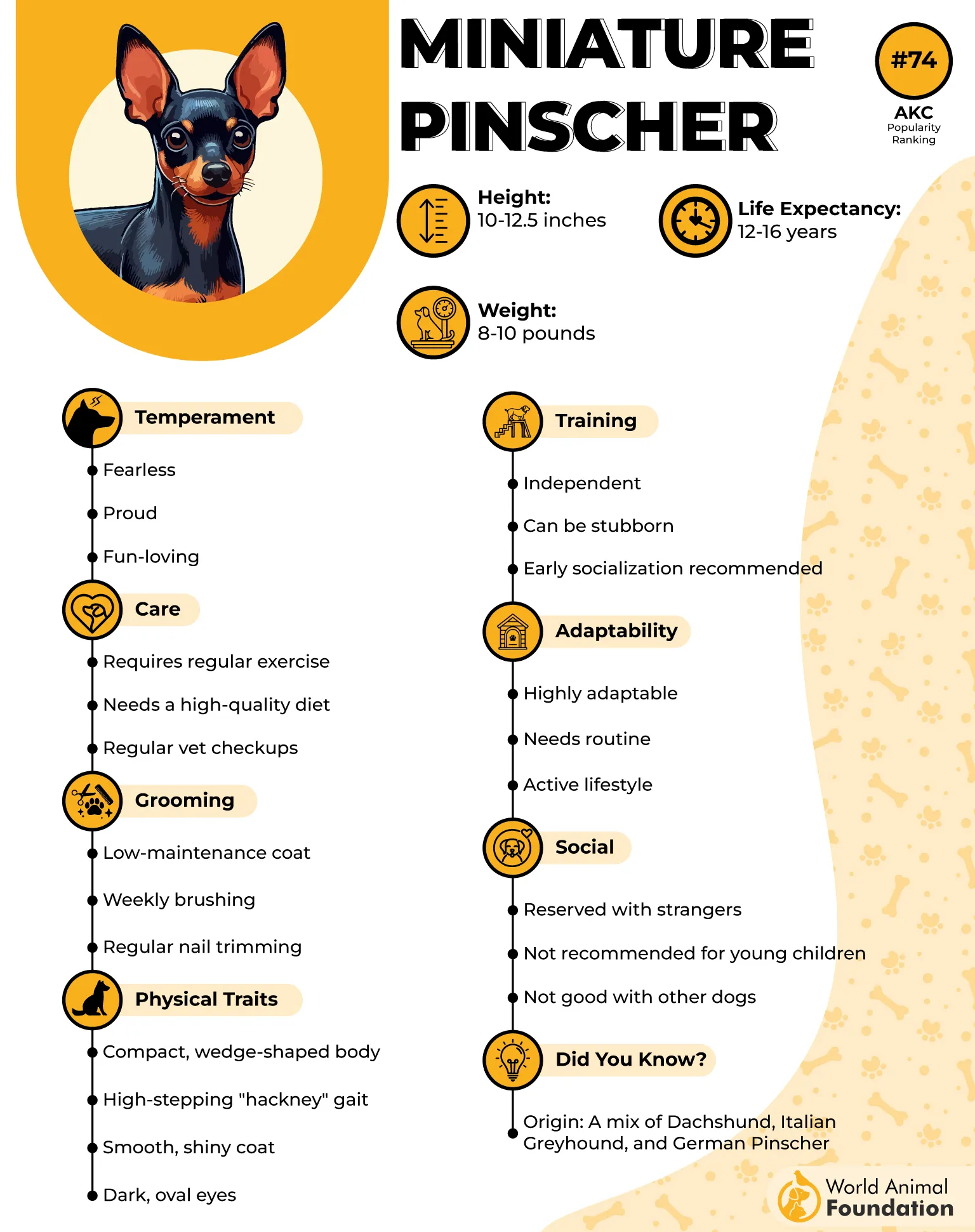
Known for its high energy levels, the MinPin has strong territorial and protective instincts. The athletic dog needs 1-2 hours of exercise daily: fetching, running, active walks, short puzzle games, and hide-and-seek.
6. Cairn Terrier
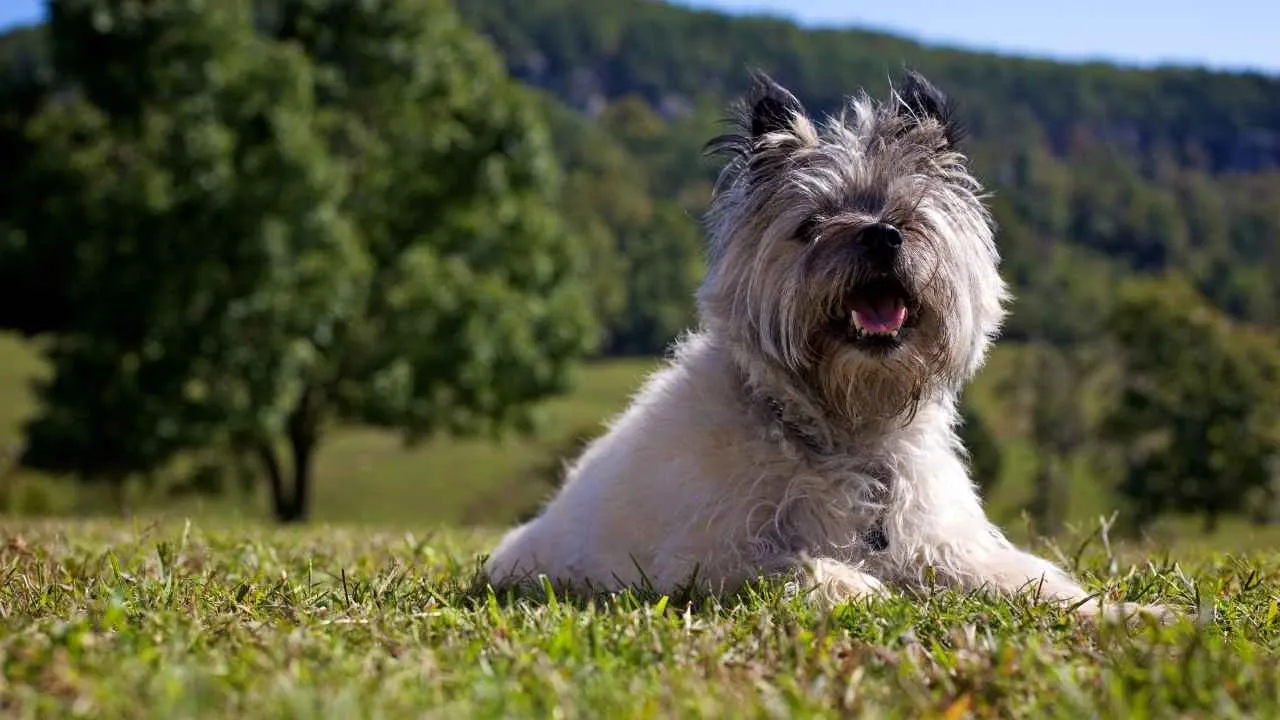
This protection dog was developed in Scotland in the 17th century as a Scotch Terrier. The primary goal was to dig into man-made rock formations and cairns to hunt rodents. Eventually, it was split into 2 categories: Dandie Dinmont Terrier and Skye Terrier.
It has a high tail, pointy ears, and bright eyes, giving it an alert expression. The head is hairy with long whiskers, a beard, and thick eyebrows that not only protect the face from external stimuli, but also help it scare away strangers. It needs a constant job instead of lying on the couch.
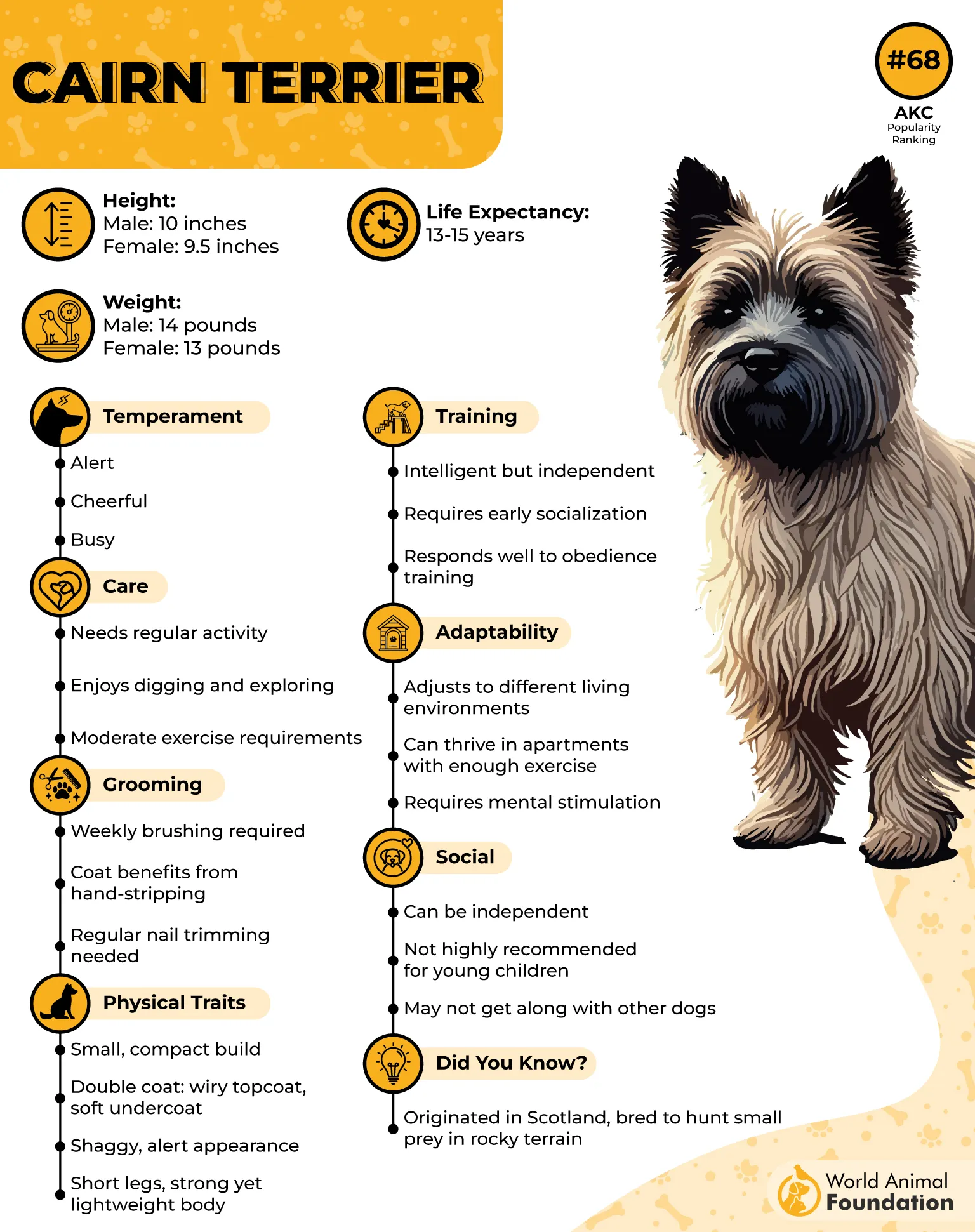
A foxy expression coupled with perpetual intelligence provides boldness and an independent streak, which may lead to stubbornness. Hence, it requires proper socialization and early training. It has a strong prey drive and needs 30-60 minutes of daily exercise.
7. Chihuahua
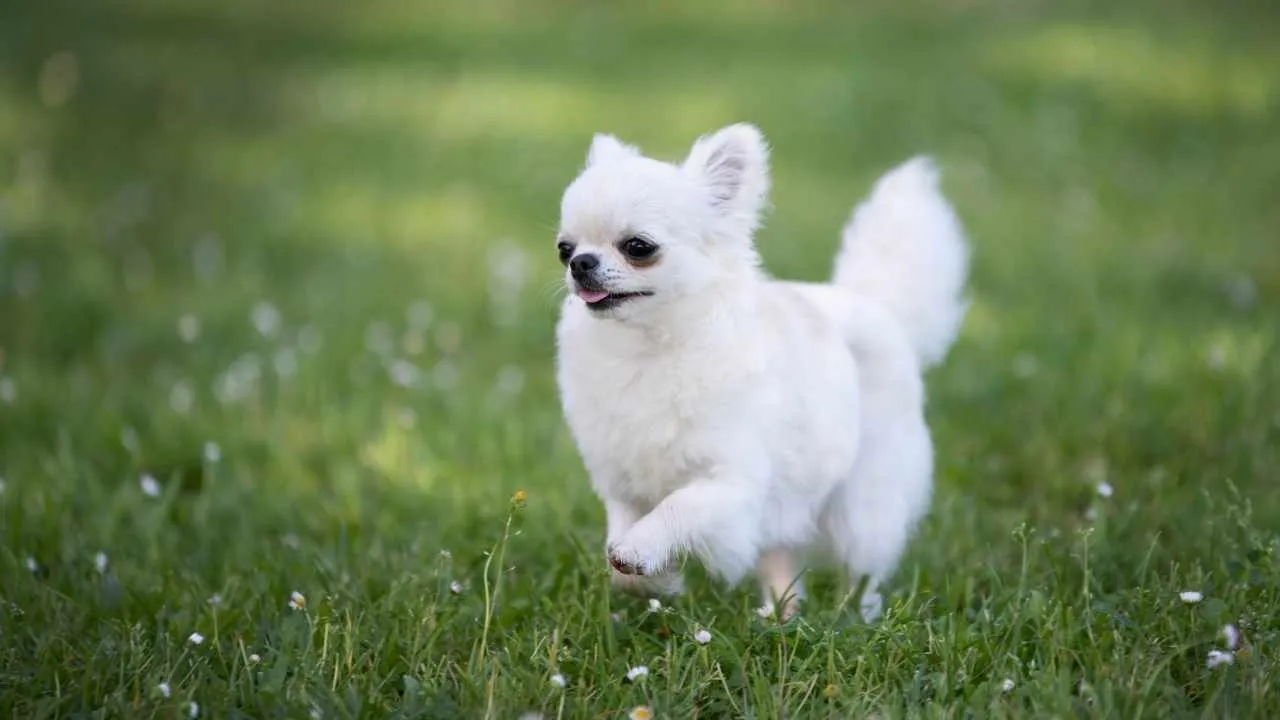
The smallest dog breed was originally developed in 300 BC in Mexico by the people from the Toltec civilization. It was considered a sacred breed by the Aztec people and was believed to have superpowers, such as guiding the dead owner’s soul to the afterlife.
The external ears are highly mobile and catch distant noises clearly before humans can detect them. Because of its fast metabolism, it is highly reactive and responds quickly to stimuli.
It has a pack mentality and a strong attachment to the family; thus, always ready to protect its den (household) and favorite person.
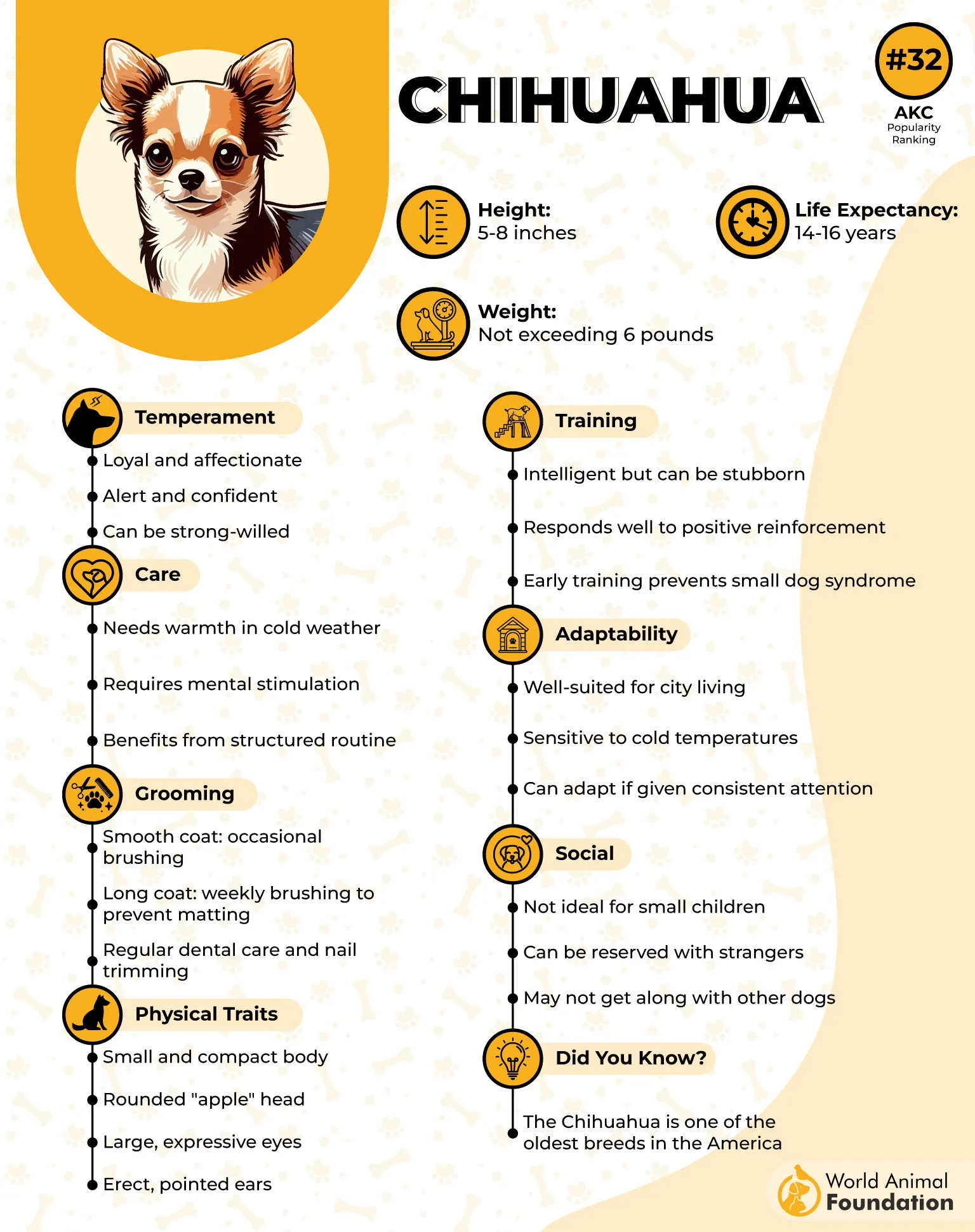
Despite its small size, it is barky and aggressive towards things larger than it and is always ready to fight them. The Chihuahua has minimal exercise requirements (20-30 minutes daily): interactive puzzle toys, fetching, and mental stimulation.
Conclusion
Small dogs may never stop an intruder physically, but that misses the point; a good guard dog’s first job is awareness, and these seven breeds excel at it. From the monastery-bred Lhasa Apso to the fearless Miniature Pinscher and the ever-alert Chihuahua, each brings a unique style of protection. Some are strategic observers, others are enthusiastic alarm systems, and a few are tiny warriors convinced they are guarding a castle.
The best choice depends on your lifestyle, noise tolerance, and how much terror-style chaos you enjoy. The most effective small watchdog is the one that fits naturally into your home and forms a strong bond with your family. When that connection happens, these little dogs become loyal protectors who take their job very seriously.
