




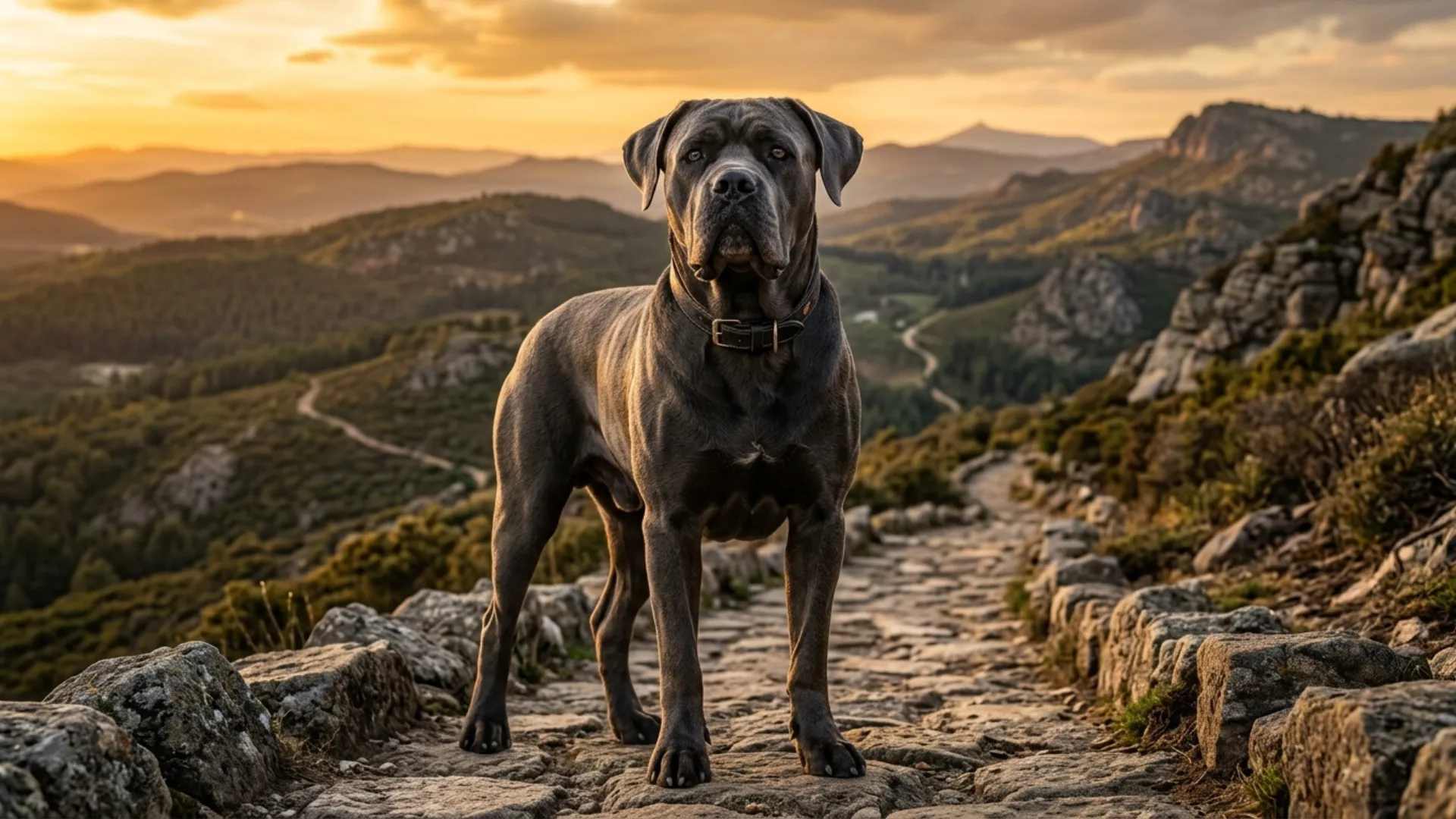
The crowd fell quiet as the enormous dog stepped into view. It wasn’t barking or demanding attention. It simply walked with steady confidence, carrying itself in a way that made everyone stop and watch.
Their strength is easy to notice, but it is the combination of physical ability, steady temperament, and commanding presence that leaves a lasting impression. These dogs have earned admiration through demanding work, unwavering determination, and an appearance that reflects genuine capability rather than simple size.
Each breed has followed its own path to becoming known for remarkable strength, resulting in qualities that make it memorable for different reasons. Looking beyond appearances reveals stories of endurance, purpose, and natural ability that deserve just as much attention as their impressive build.
This article explores the breeds that continue to define canine strength in unforgettable ways.
Key Takeaways
The strongest dogs are not always the loudest. Sometimes all it takes is one steady walk into the room to make everyone stop and look.
One breed on this list has written records dating back to 1100 BCE, while another once helped monks rescue people buried under avalanche snow.
From pulling heavy sleds through Alaska to hauling fishing nets in icy waters, these powerful dogs earned their reputation through real work, not appearance.
Their stories only get more remarkable from here, and a few of them might surprise you.
Majestic Dog Breeds Renowned for Strength
1. Tibetan Mastiff
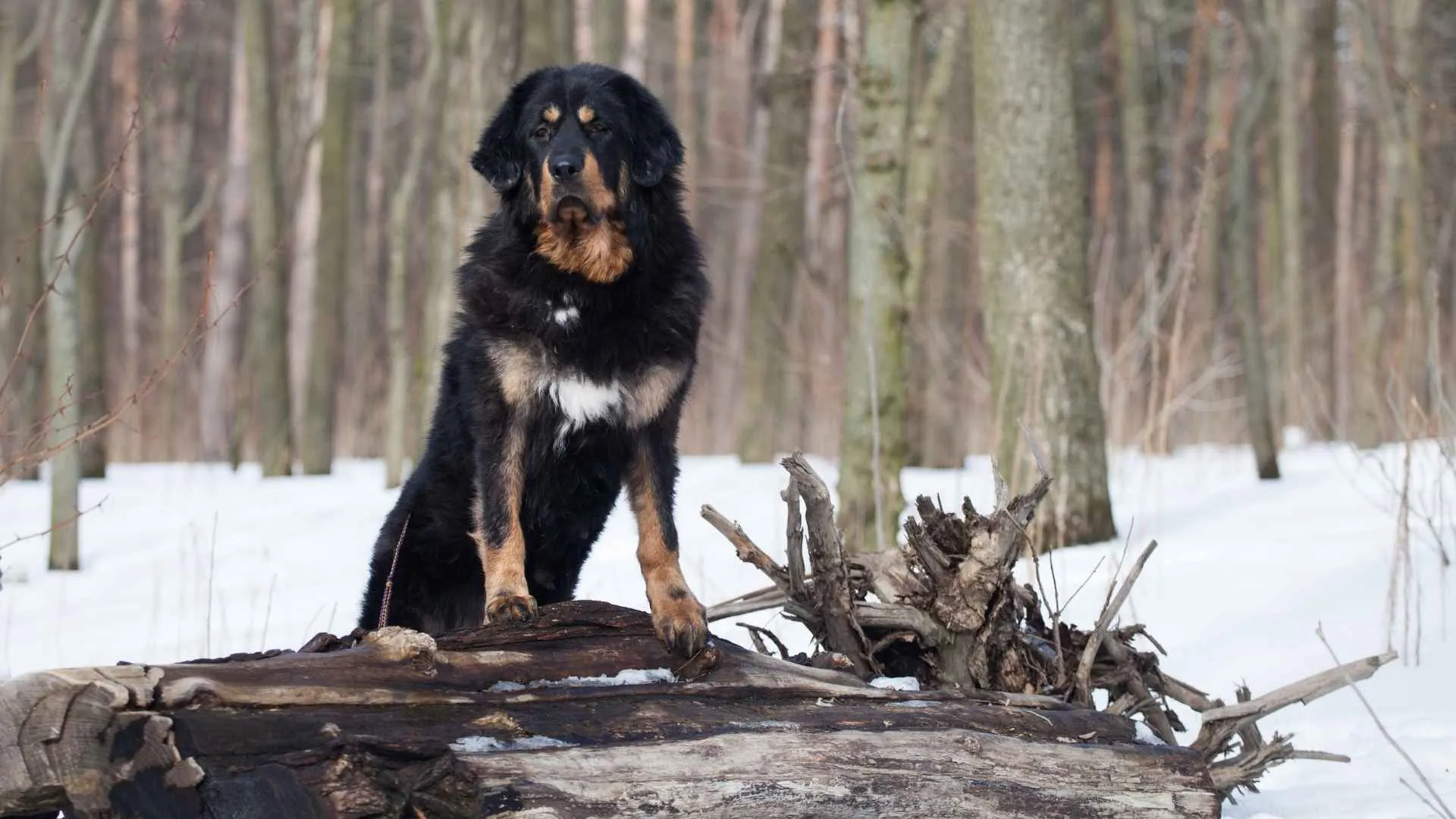
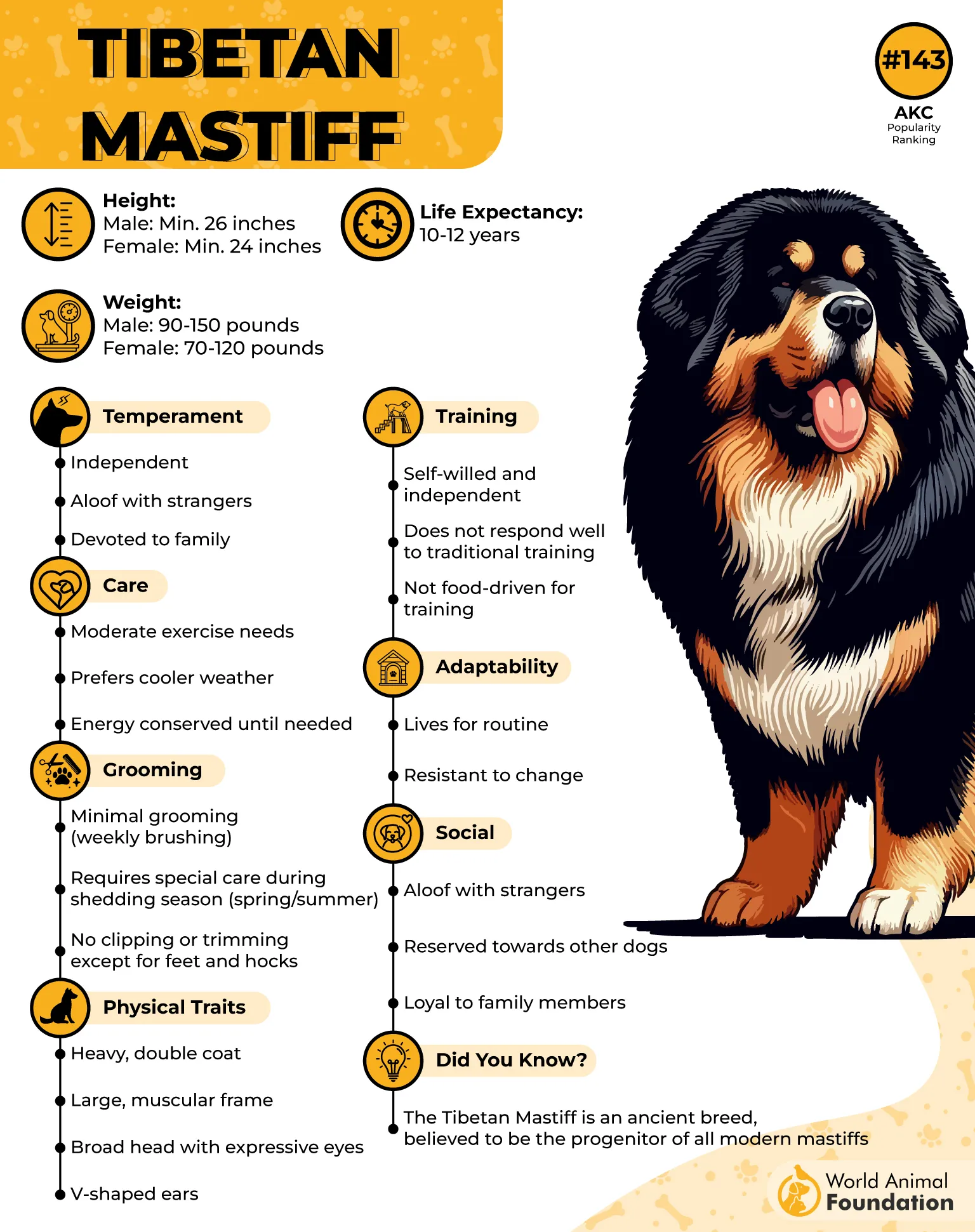
The Tibetan Mastiff draws attention with its lion-like appearance, broad head, feathered tail, and commanding frame, which can weigh between 70 and 150 pounds. Written records mention this ancient breed as far back as 1100 BCE, making it one of the oldest documented guardian dogs.
Built With Purpose
A sturdy and solid build, powerful jaws, and sharp intelligence make this breed incredibly capable of confronting dangerous predators in its homeland. An independent nature matches physical power, so having meaningful work helps keep this dog mentally engaged.
The following traits are worth a closer look:
Square-shaped muzzle and recessed eyes
Feathered tail curled over the back
Better suited to guarding than jogging
Space Matters
Tibetan Mastiff needs room to patrol and explore, making a securely fenced yard far more suitable than apartment living, as PetMD noted. When confined for long periods or left without enough to do, boredom may lead to digging, chewing, and other destructive behaviors.
2. Cane Corso
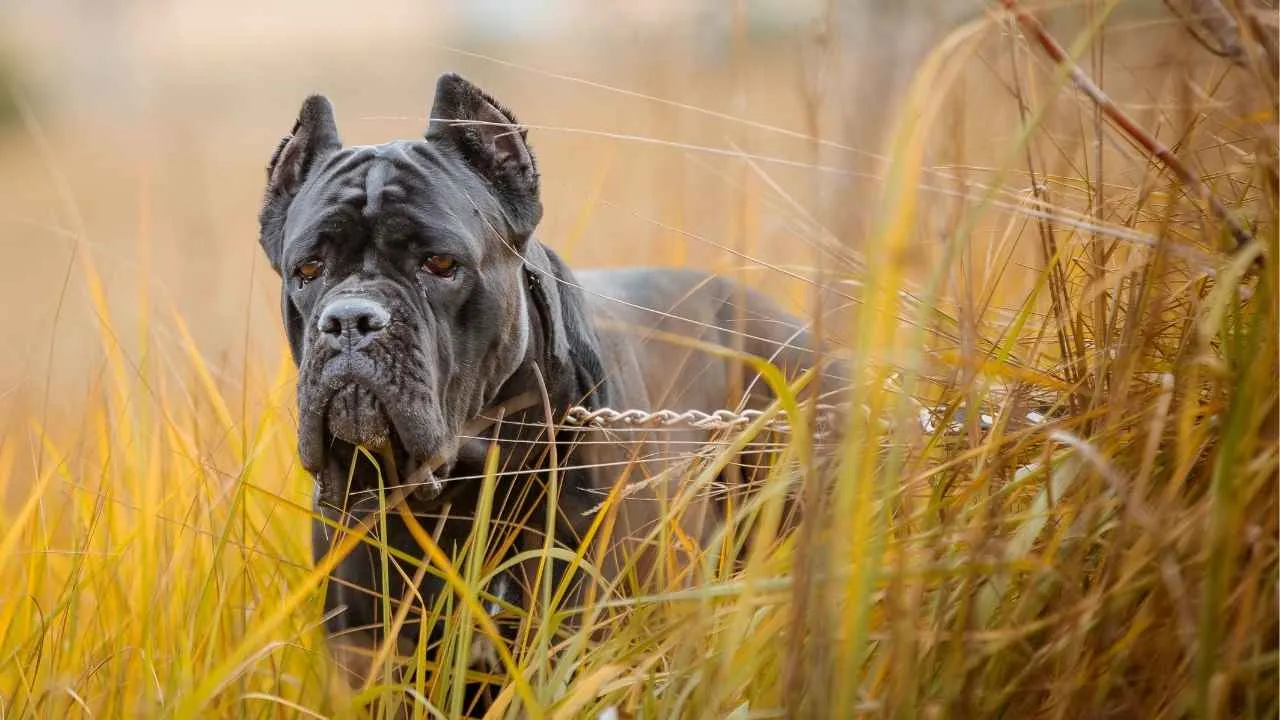
Cane Corso combines an imposing frame with a calm, observant nature that reflects centuries of demanding working roles. Adults can exceed 100 pounds, reach about 28 inches at the shoulder, and feature a muscular body with a broad head and expressive face.
Built for Serious Work
Long before becoming a household companion, this large dog breed worked as a watchdog, farm helper, and even alongside soldiers. They have incredible protective instincts and remain focused, confident, and naturally aware of everything happening nearby.
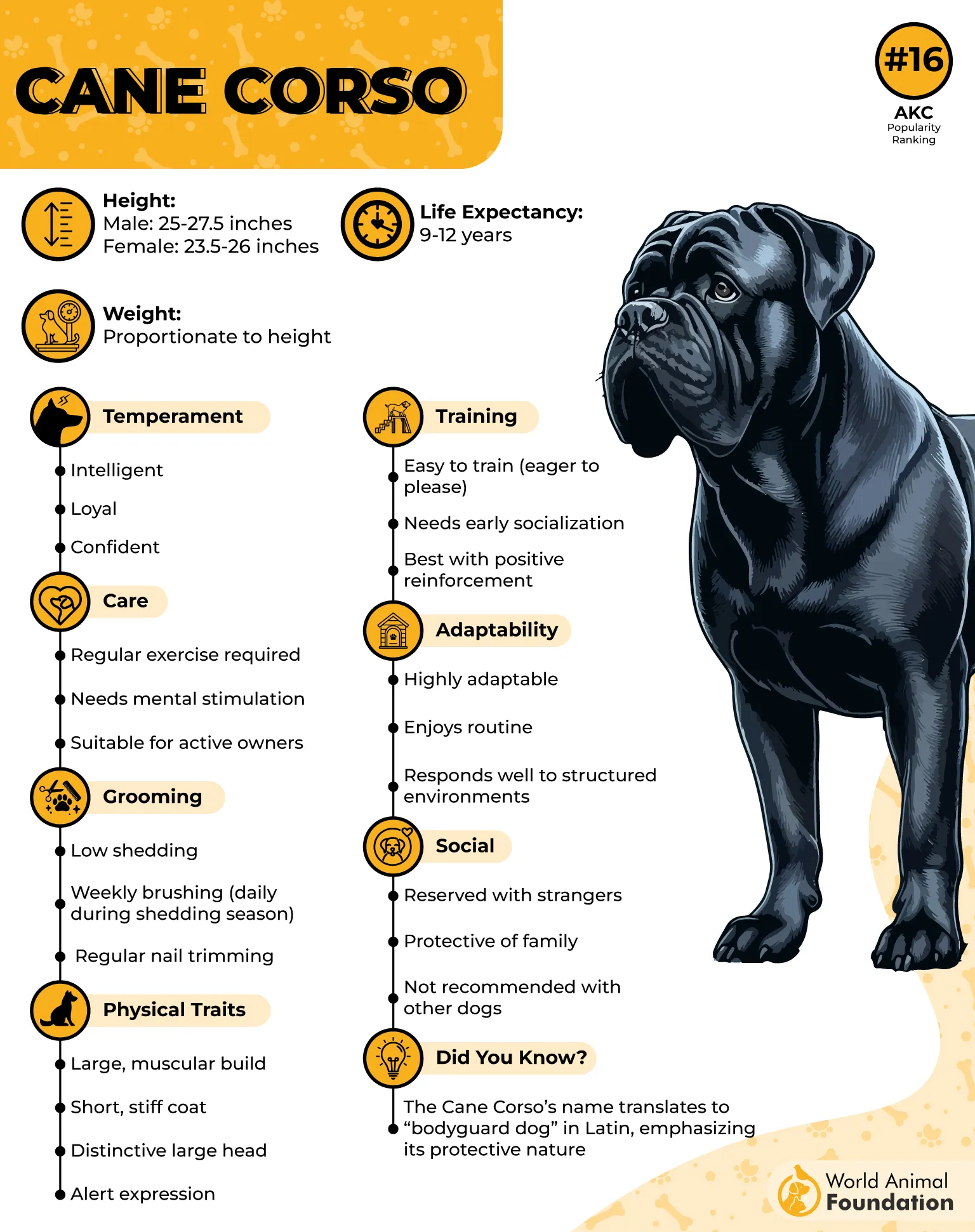
Here’s another reason to admire it:
Bite force estimated at 600 to 700 PSI
Name translates to “guard dog of the courtyard”
Popular in the United States since the 1980s
Family Presence
Cane Corso enjoys having people to watch over and often forms a close connection with the household, especially families with older children, as PDSA notes.
Regular exercise also plays an important role in supporting this breed’s muscular physique and active working nature, helping develop the unexpected strength for which the breed is well known.
3. Alaskan Malamute
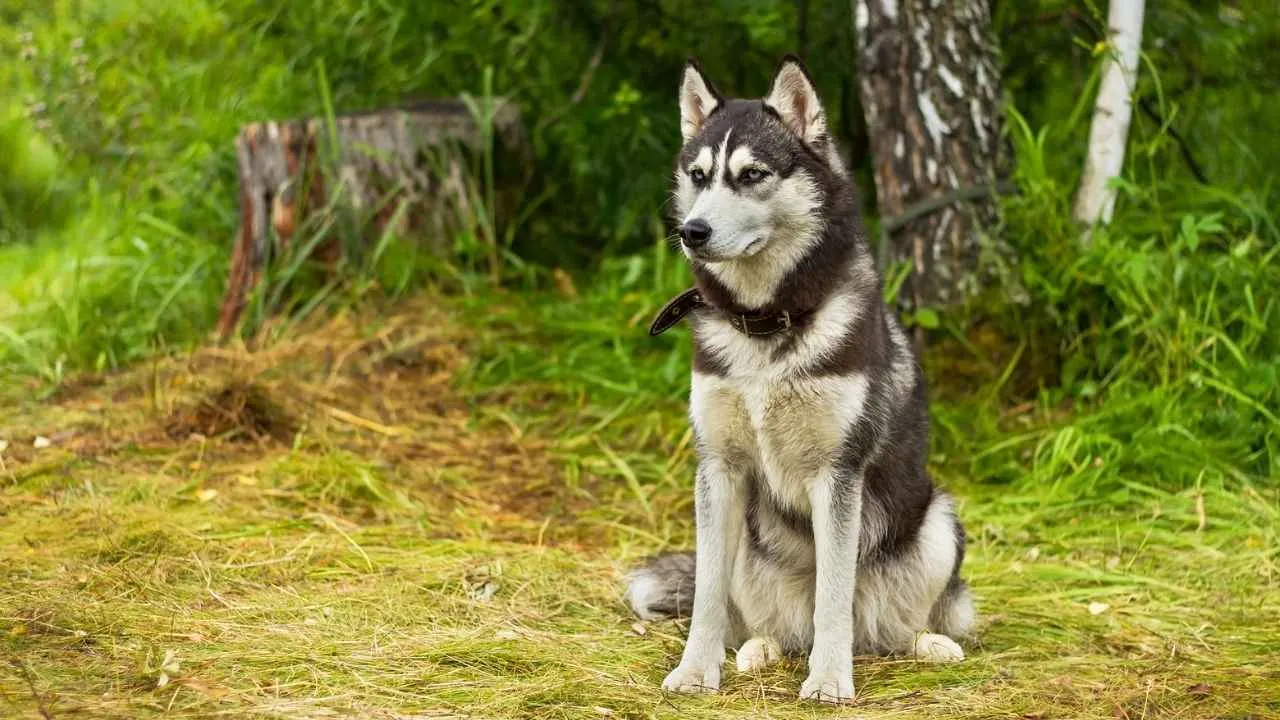
Alaskan Malamute worked alongside the native Mahlemut people of Alaska, where endurance and raw power were essential for demanding daily tasks.
During the Klondike Gold Rush of 1896, this breed gained recognition for pulling heavy sleds through punishing conditions that challenged both people and animals.
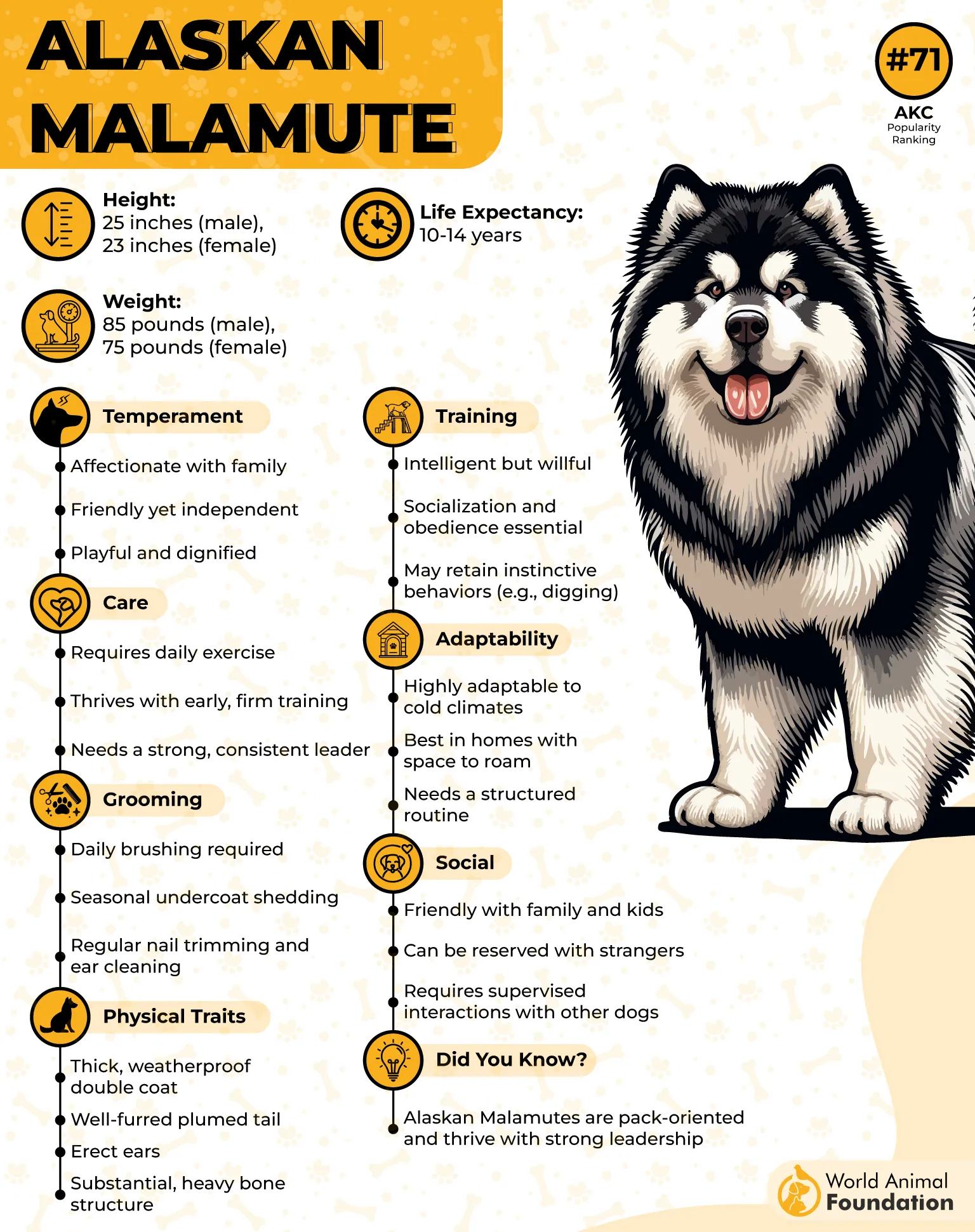
Built With Purpose
An incredibly muscular body, heavy skeletal frame, deep chest, broad head, and powerful shoulders gave these working dogs the physical structure needed for sustained harness work. Also, its bite force is between 400 and 500 PSI, reflecting the strength behind its look.
Their defining features are mentioned here:
Thick bone density for heavy workloads
Energetic and highly attentive breed
Stunning looks that match its commanding presence
More Than Physical Power
Alaskan Malamute pairs its impressive strength with sharp problem-solving skills and a lively personality that keeps people on their toes.
Its familiar “awoo” vocalizations often sound like playful conversations, while curiosity can easily lead to countertop investigations or attempts to slip beyond the yard.
4. Saint Bernard
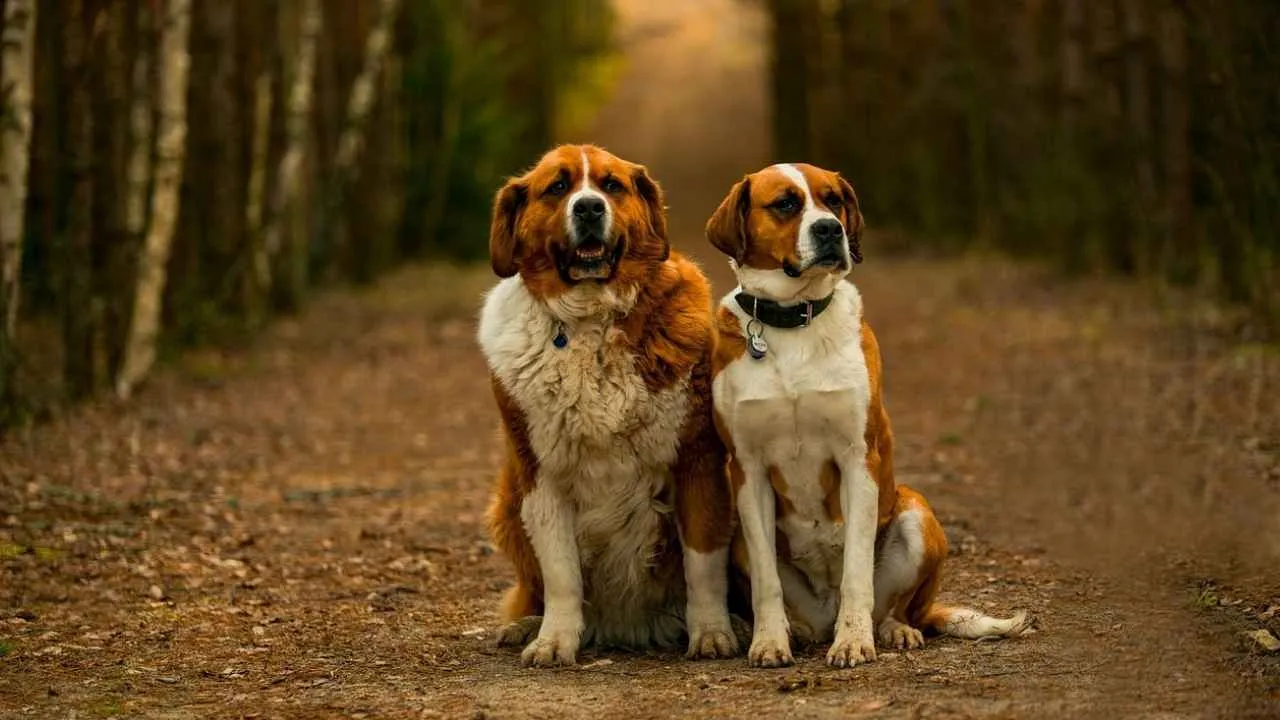
Saint Bernard first worked alongside monks in the Swiss Alps during the 1600s, where its immense size and dependable nature helped locate people buried beneath avalanche snow. That demanding rescue role highlights the physical power and endurance this breed has been valued for over generations.
Strength Beyond Size
A broad head, deep chest, muscular frame, and solid back give the Saint Bernard the immovable strength for impressive pulling ability.
Estimates place this breed’s bite force between 400 and 500 PSI, reflecting the serious physical strength behind its calm expression.
Some standout features of this breed include:
Featured prominently in the 1992 film Beethoven
Low prey drive with early socialization
Digging is linked to rescue work in the snow
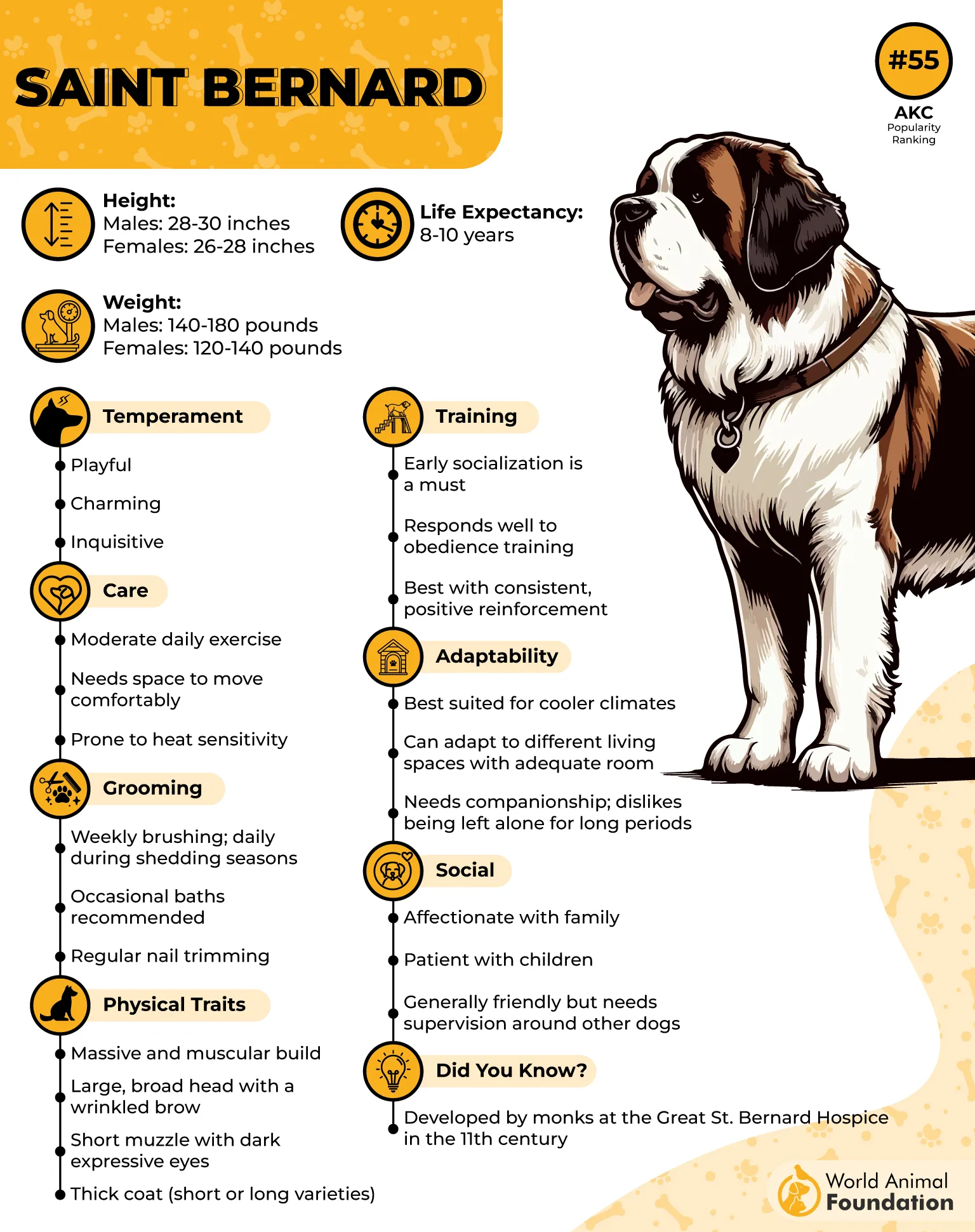
Gentle Giant
Saint Bernard combines impressive strength with a calm temperament that fits well into family life, especially around children who understand respectful interactions, as WebMD claims. As puppies, they bring plenty of playful energy, while maturity brings a quieter and more relaxed personality.
5. Rottweiler
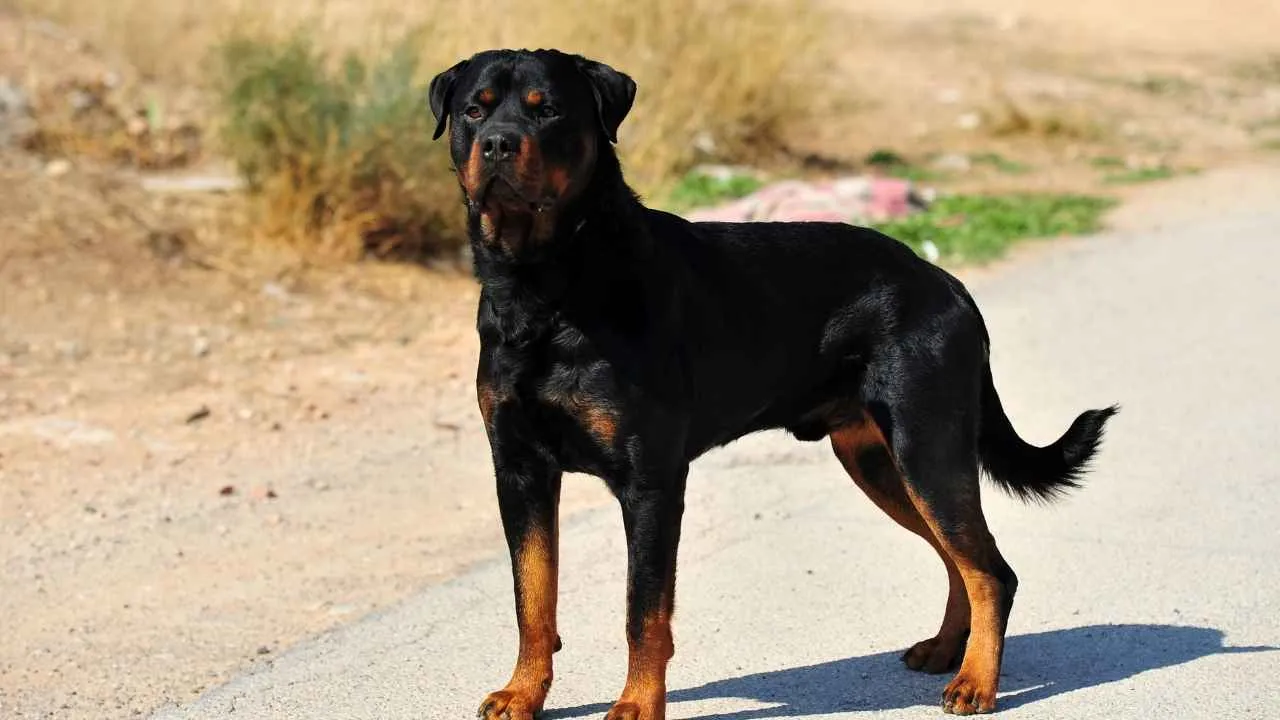
Rottweiler descends from mastiff-type dogs that accompanied ancient Roman armies, a lineage that contributed to its impressive physical power and working ability.
Today, the breed combines a broad head, powerful jaw muscles, and a calm temperament that has kept it among America’s most recognized working dogs.
Built for Demanding Work
Roman herders relied on this herding breed to help manage cattle and pull loaded carts, tasks that demanded endurance, confidence, and physical strength. One remarkable measurement highlights just how formidable this breed can be.
A closer look reveals a few notable facts:
Bite force of about 328–330 PSI
Classified in the Working Group
Short, dense coat with wide-set eyes
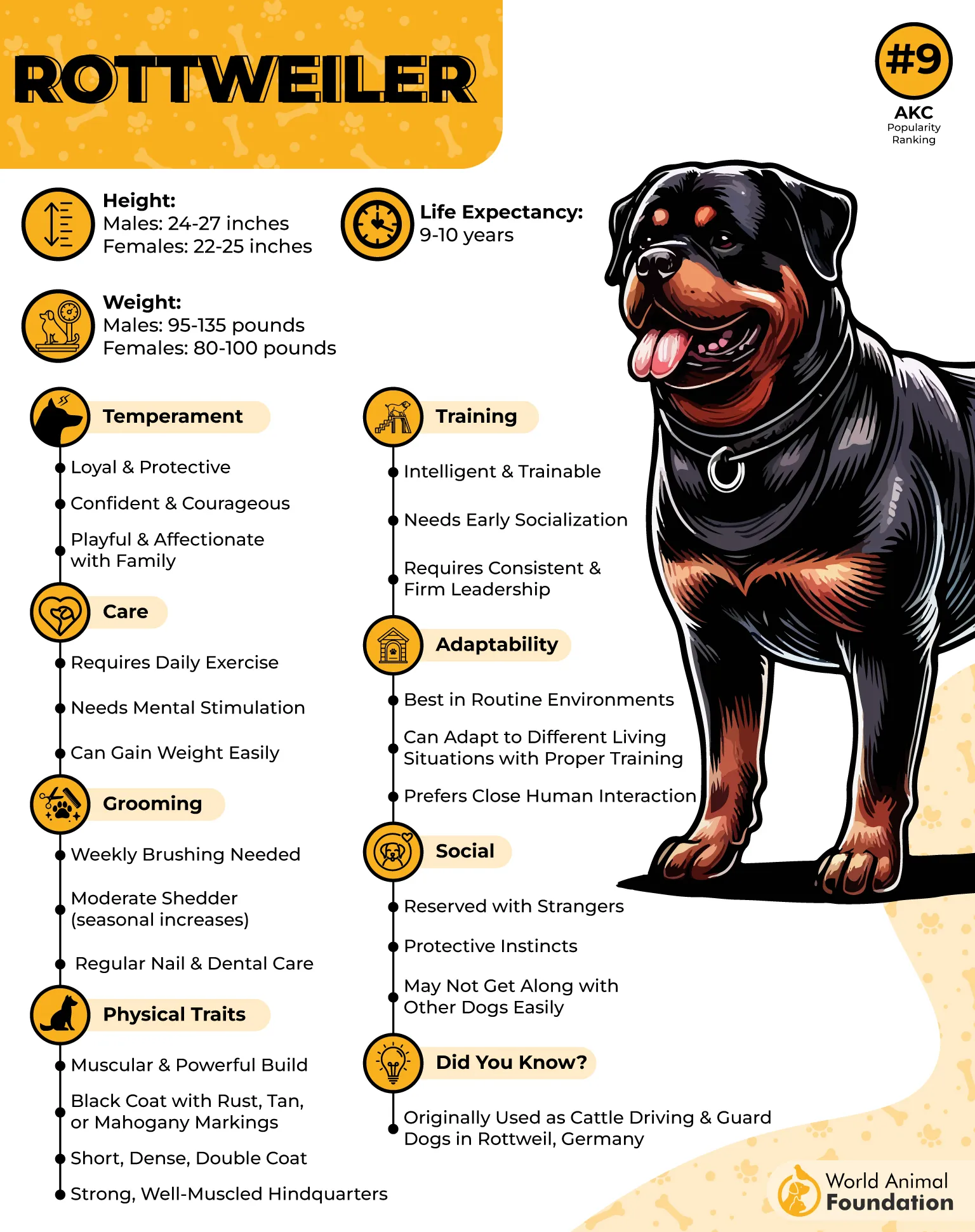
Calm Around Family
Rottweilers often keep a close eye on the people it loves and enjoy being involved in everyday household activities instead of spending long periods alone.
Temperaments can range from playful and outgoing to quietly devoted to one person, while proper socialization from an early age encourages positive interactions with children.
6. Great Dane
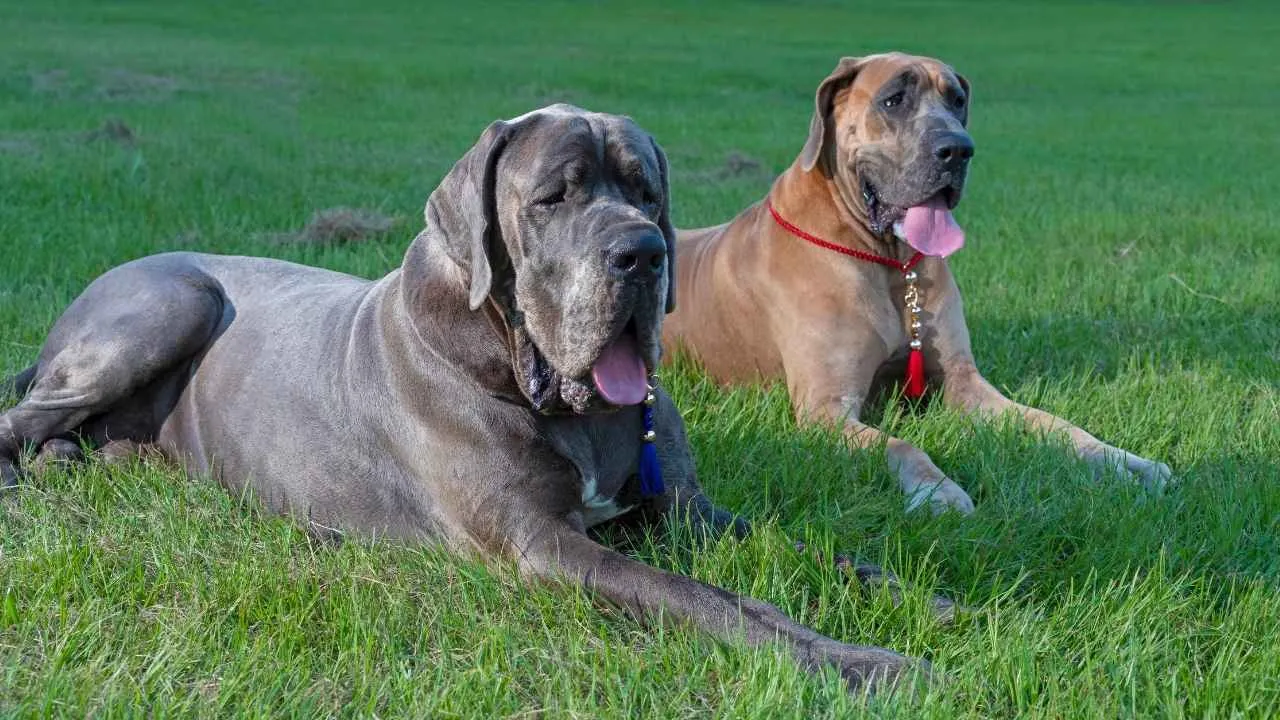
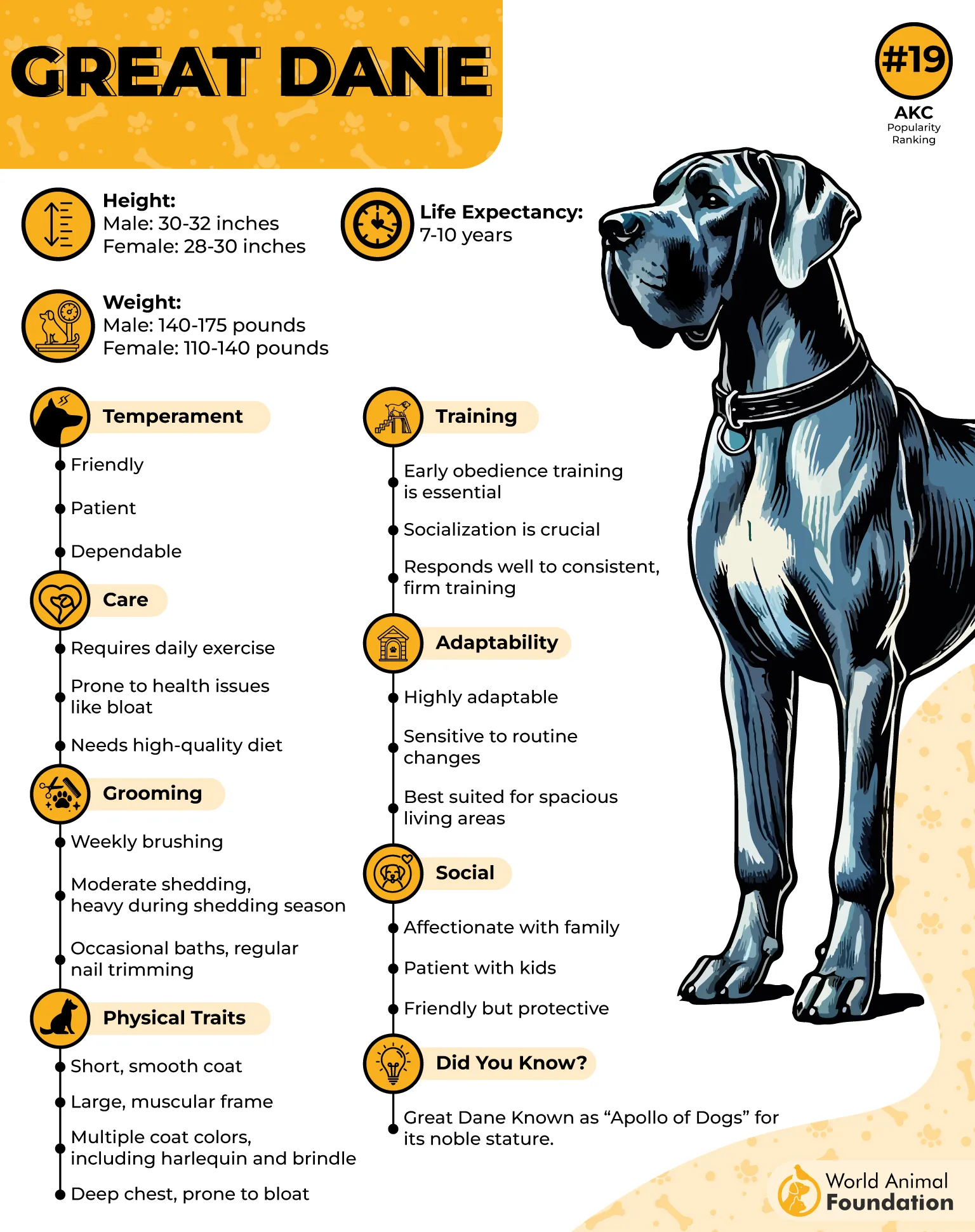
The Great Danes are easily recognizable for their towering frame, which have made them one of the largest dog breeds in the world. First bred in Germany for hunting wild boar and guarding estates, this giant later became known as the “Apollo of Dogs,” even though the breed has no connection to Denmark.
Built With Purpose
Its impressive size came from combining powerful Mastiff-type dogs with swift sighthounds such as the Greyhound, creating a dog capable of confronting dangerous game. That combination produced both strength and athleticism in a single working breed.
These remarkable facts add even more perspective:
Average height reaches 28 to 32 inches
Zeus measured 41 inches at the shoulder
The estimated bite force reaches about 238 PSI
More Than Size
Great Danes combine physical power with a calm, gentle temperament that fits comfortably into family life when early training and socialization receive proper attention. This breed also spent years inside German castles, where nobility valued it as an estate guardian and trusted companion.
7. Newfoundland
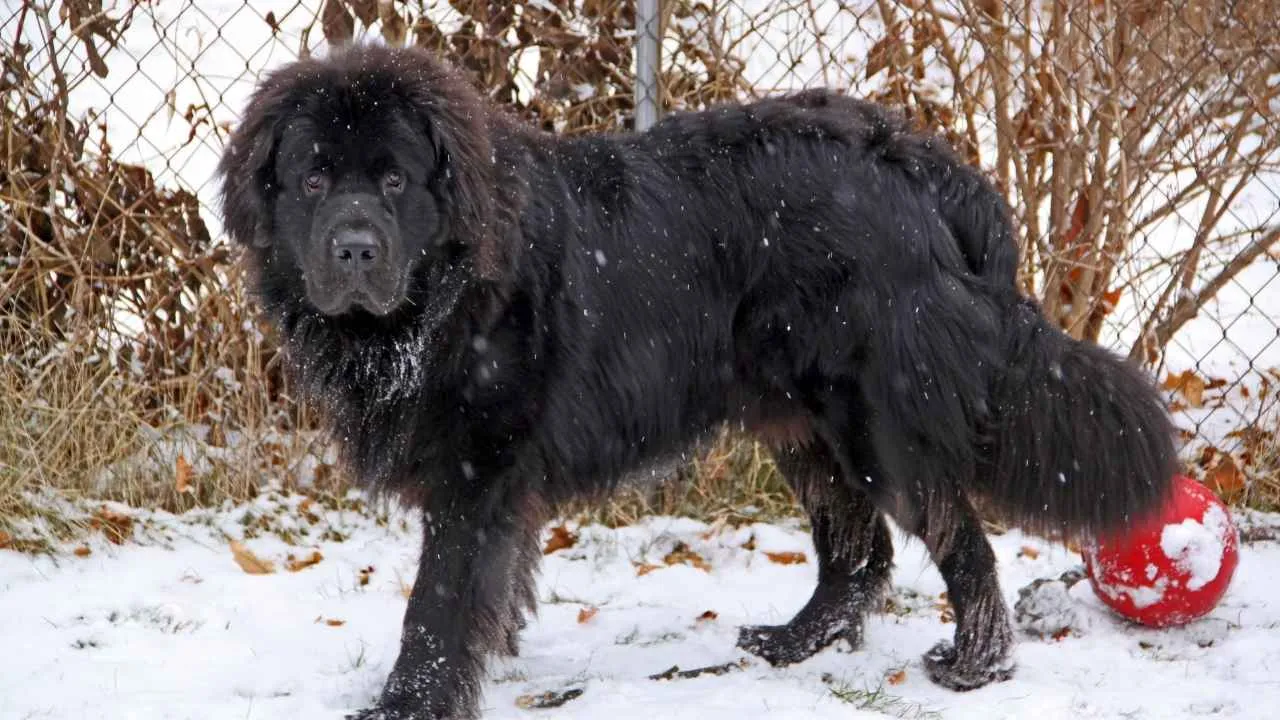
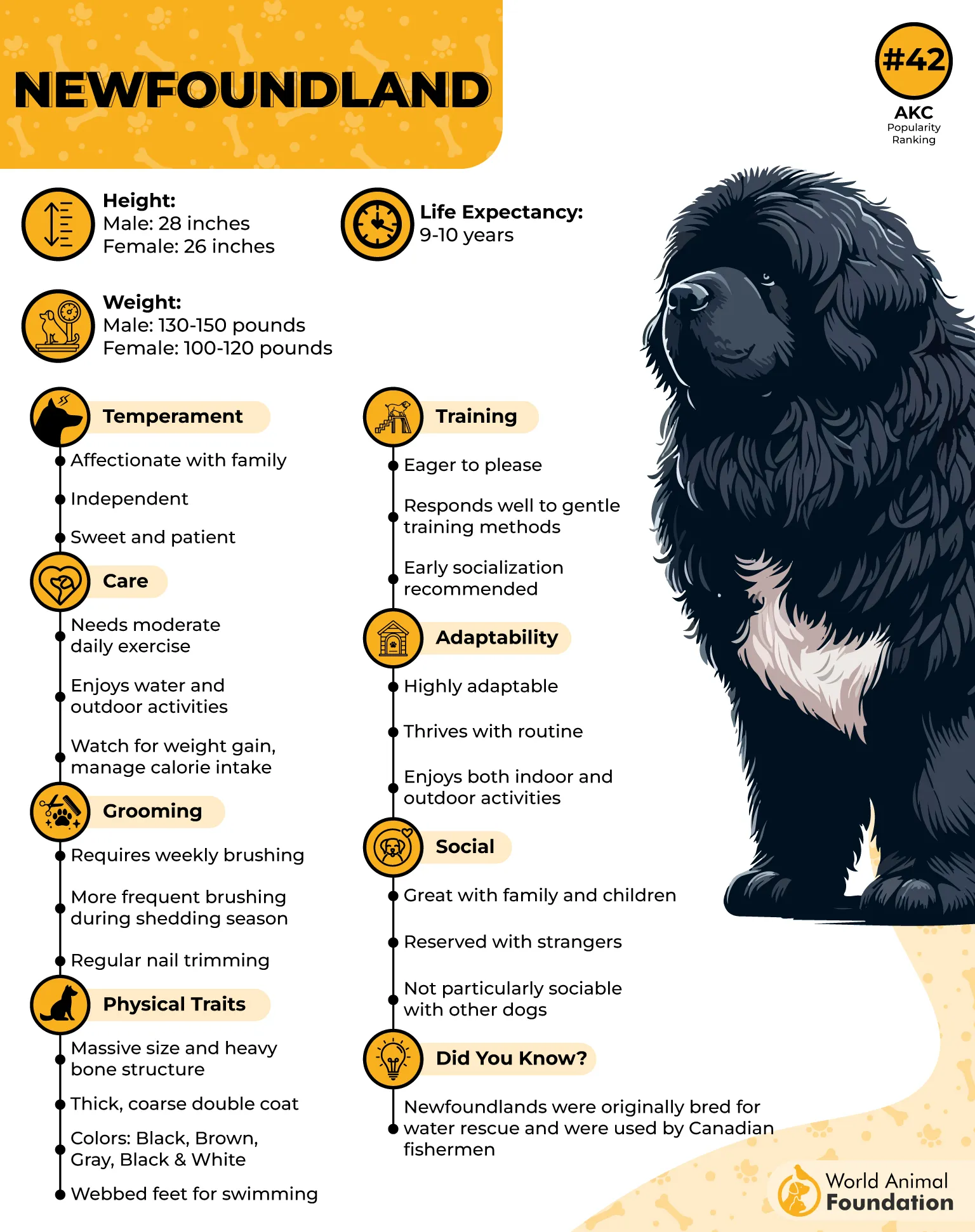
Newfoundland first gained recognition on the Canadian island of Newfoundland, where fishermen relied on this massive dog for water rescues, hauling fishing nets, and pulling heavy carts. Webbed paws and a dense insulating coat gave it the ability to work confidently in icy water for demanding tasks.
Built for Demanding Work
Physical strength is only one part of this breed’s reputation, as its swimming ability made it equally dependable on land and in the water. An estimated bite force of around 225 PSI reflects the powerful build behind its traditional working role.
Here’s another reason to admire it:
Webbed paws for efficient swimming
Thick coat suited for cold water
Benefits from regular walks, occasional hikes
Gentle at Home
Newfoundland pairs its impressive size with a calm, patient temperament that fits comfortably into family life when enough space is available.
Children, other dogs, and cats are generally welcomed with a gentle attitude, although supervision around young kids remains important because of the breed’s large frame.
Conclusion
Behind every powerful working dog is a history shaped by purpose, endurance, and dependable performance in challenging conditions. Great strength may capture attention first, but every large dog breed also relies on steady judgment, loyalty, and a willingness to work to become a truly remarkable companion.
Every breed has different needs, making careful research an essential step before bringing one home. Regular exercise, meaningful activities, and consistent training help these dogs develop enormous strength while remaining confident and well-balanced throughout life.
For owners prepared to provide that commitment, the reward is a capable companion and good family pet whose presence brings both reassurance and lasting respect every single day.
