




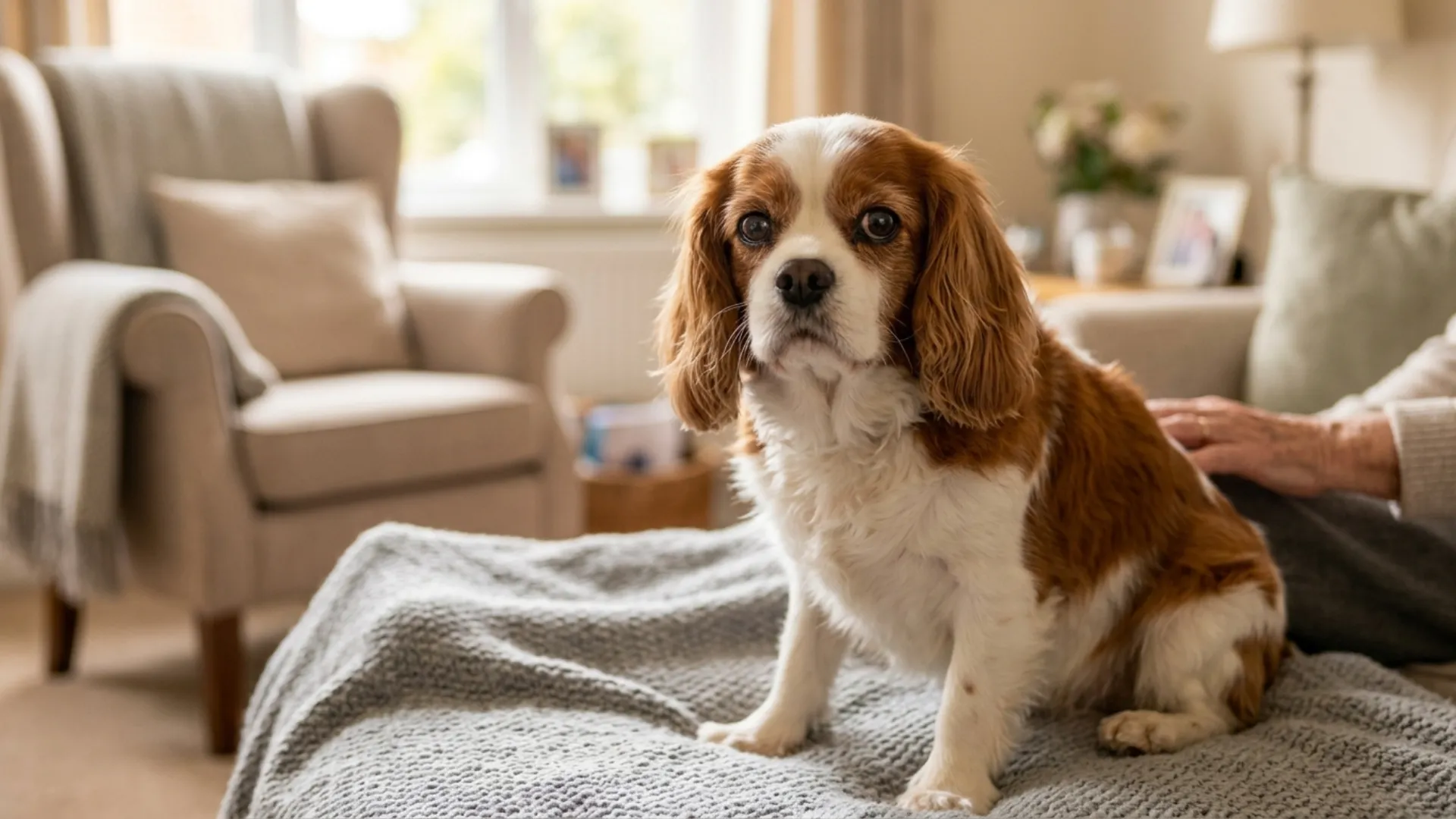
You’ve spent your whole life working for others, often in the middle of chaos. Now that you’re in your 60s, you’ve finally earned some well-deserved “me time.” What you want is a companion who doesn’t just help keep boredom away, but also fits easily into your daily routine and offers loyal, easygoing company.
Dogs really are one of the finest blessings we get to have in life. There’s genuinely a breed out there suited to your age, your needs, your energy level, and your lifestyle. The dogs discussed in this article are fun-loving, need minimal grooming, and can even lend a hand (or paw) to people with mobility issues.
Once you find the right match, get ready for the next decade or two filled with joy, entertainment, comfort, and love. And the best part? They come in all shapes and sizes.
Amazing Dog Breeds for Seniors and Retirement Living
1. Bichon Frise
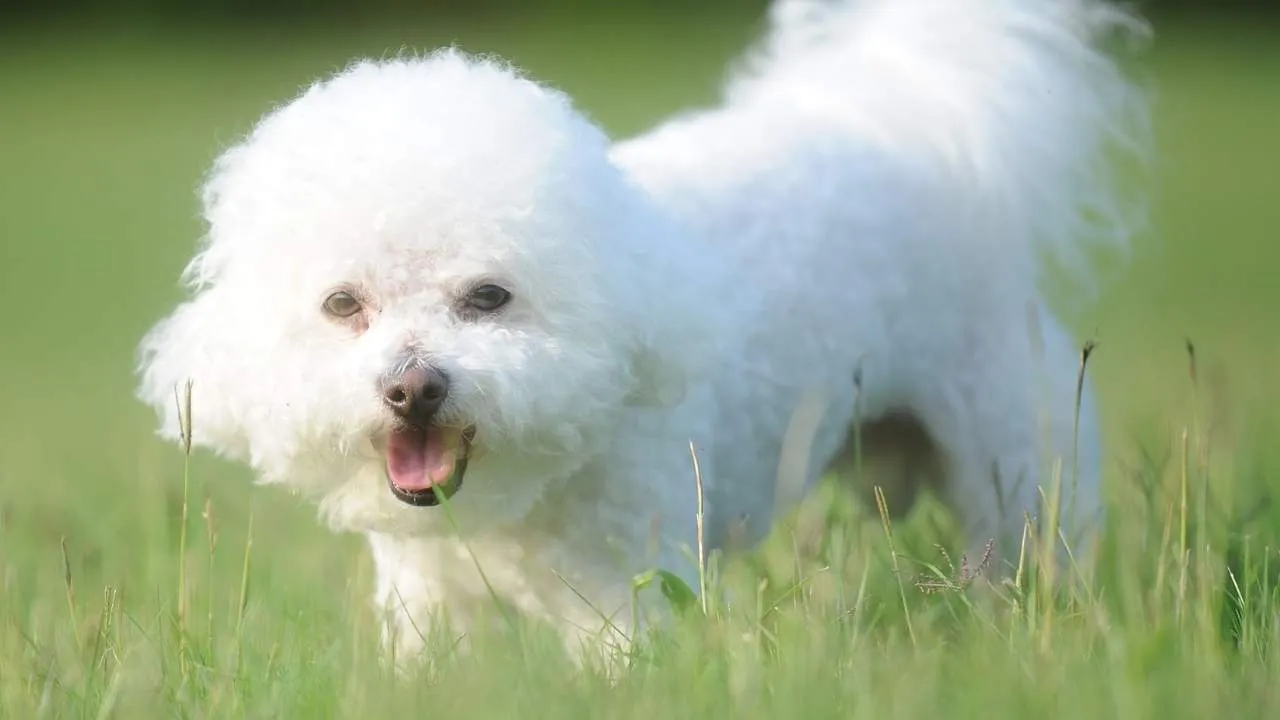
Bred originally in the 14th century from water spaniels found around the Mediterranean, the Bichon Frise started out as a sailor’s companion on ships and was later used as a bartering item, often going by the name “Tenerife.” The breed later became a favorite among French royalty, including Francis I and Napoleon III, according to Orvis.
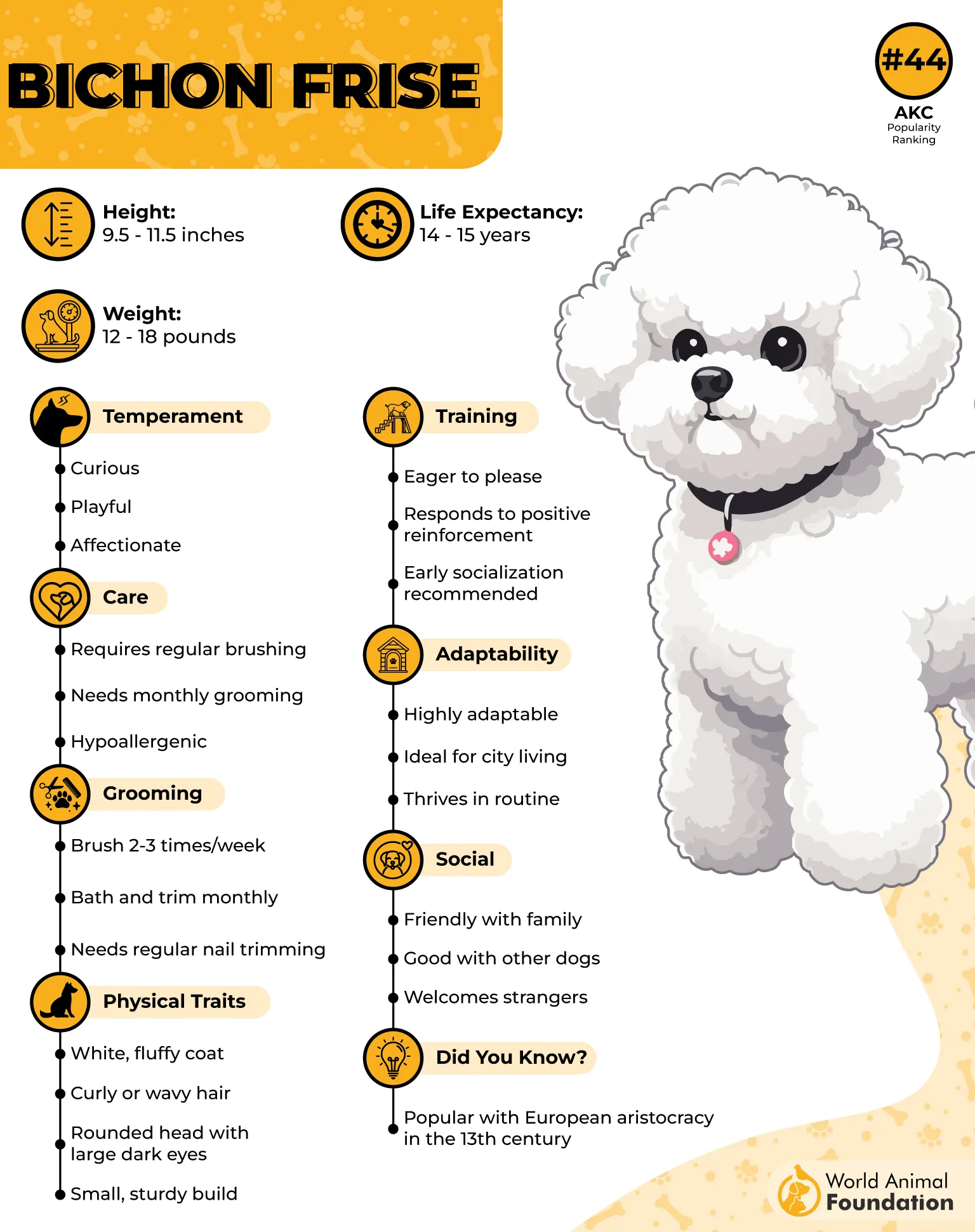
Thanks to its short legs, the Bichon Frise has a low energy level and only needs about 30-60 minutes of light exercise a day. The one exception is the famous “Bichon Blitz,” those random bursts where it zooms around in tight little circles before calmly going back to normal.
Bred historically to be a lap companion, the Bichon Frise is known for triggering the release of oxytocin (the bonding hormone) in humans, while also helping lower blood pressure, slow the heart rate, and ease feelings of loneliness. It’s a real social butterfly that loves nothing more than a good snuggle.
2. Cavalier King Charles Spaniel
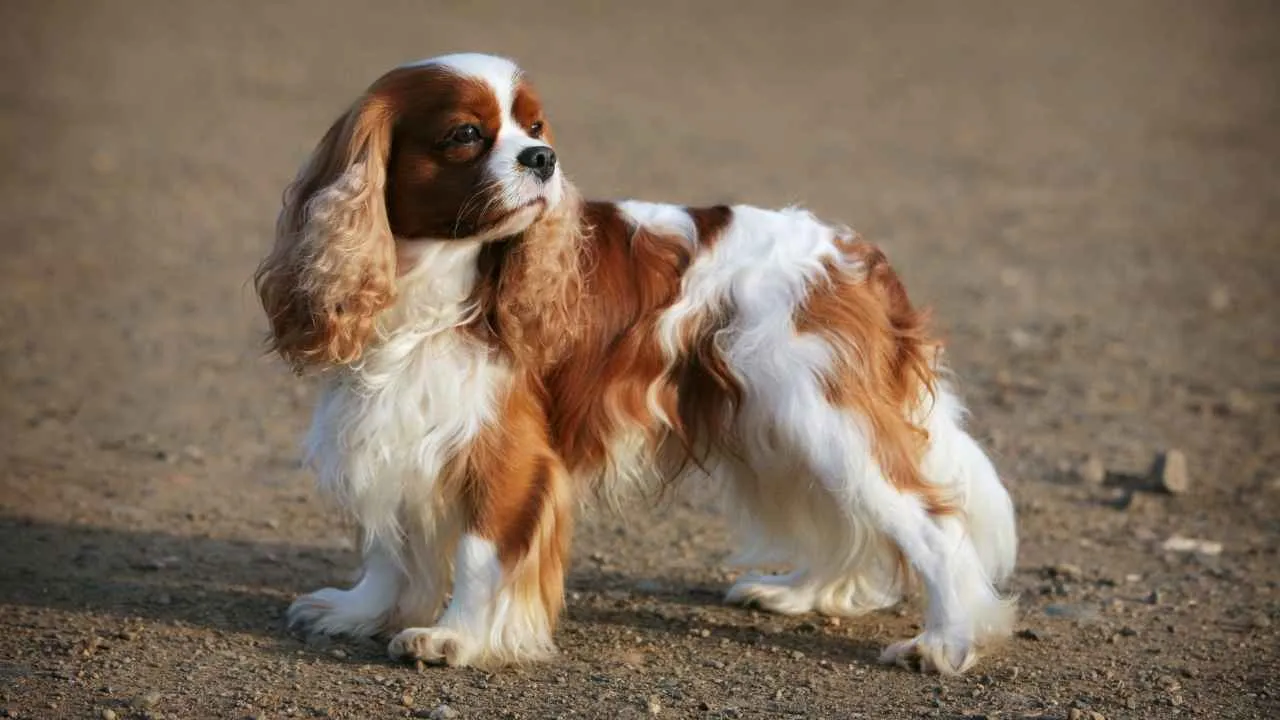
The ancestors of this breed were known as “Comforter Spaniels” and were often shown in portraits sitting right beside their aristocratic owners. Mary, Queen of Scots, famously kept her beloved Spaniel with her even up to her beheading. The breed was later named after King Charles I in the 17th century.
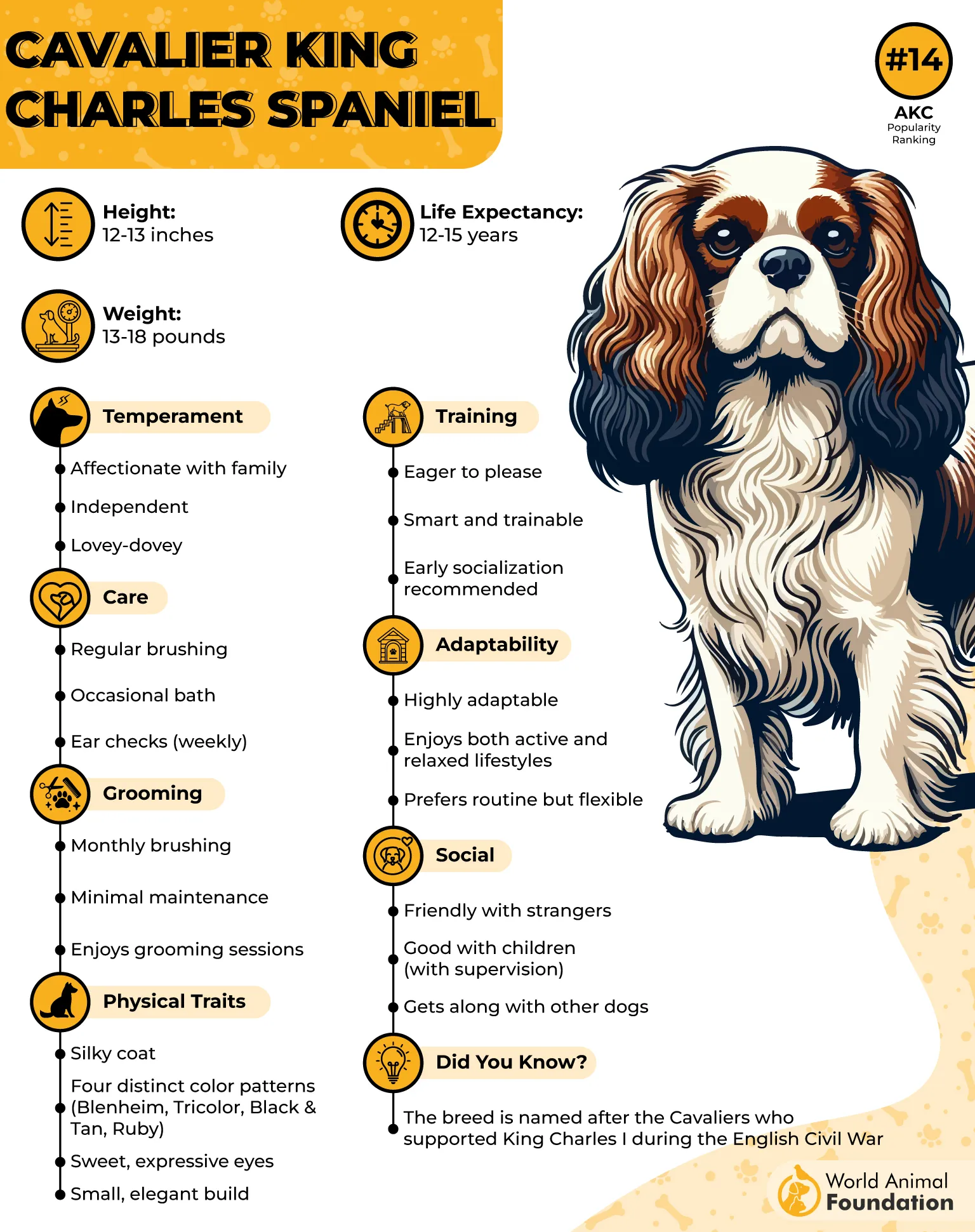
Cavaliers love a good stroll and are eager to please, which makes training pretty easy. They’re also highly adaptable, tending to match their owner’s energy level rather than demanding their own pace. Since they were bred purely to be companions, they thrive on human attention and don’t do well being left alone for long stretches.
The breed needs at least an hour of light daily exercise, whether that’s chasing, fetching, playing with toys, hide-and-seek, or some mental stimulation games. Grooming is fairly low-maintenance too; brushing three to four times a week is usually enough to keep tangles at bay.
3. Havanese
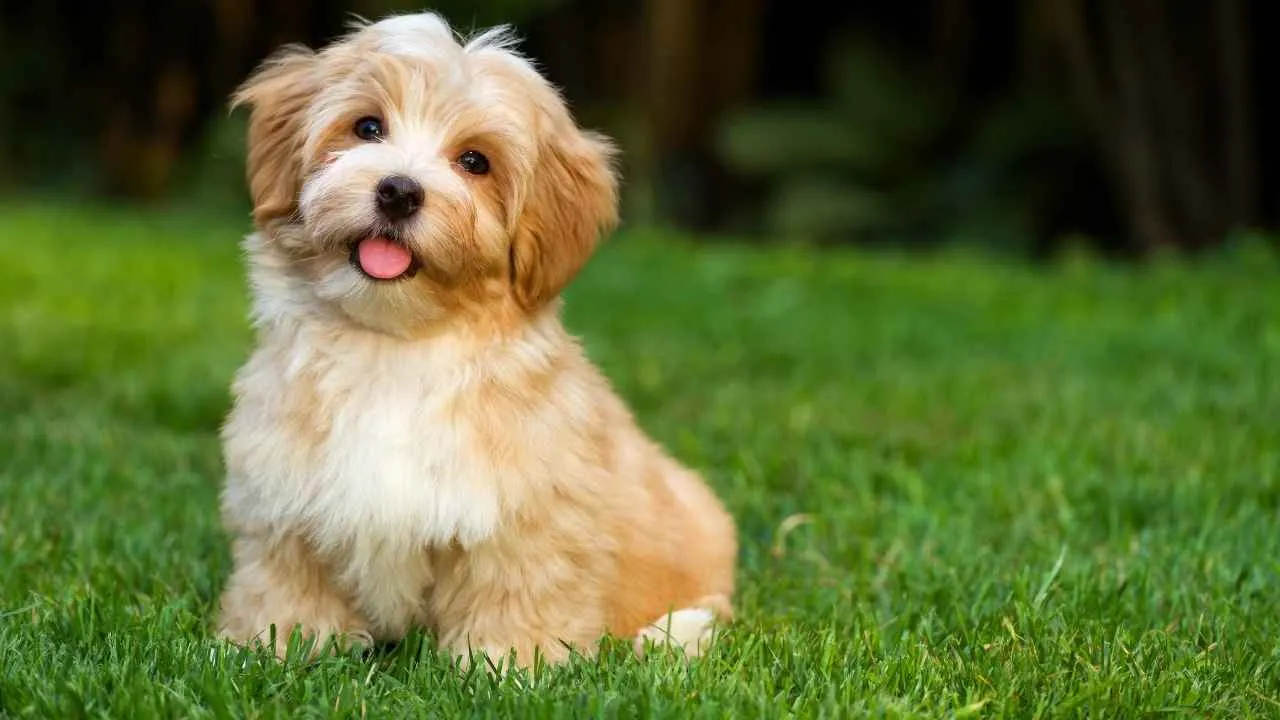
This bichon-type breed was developed in Cuba by crossing the now-extinct Blanquito with other bichon breeds, such as the Poodle. It was once known as the “Havana Silk Dog,” though that name now refers to a separate breed entirely.
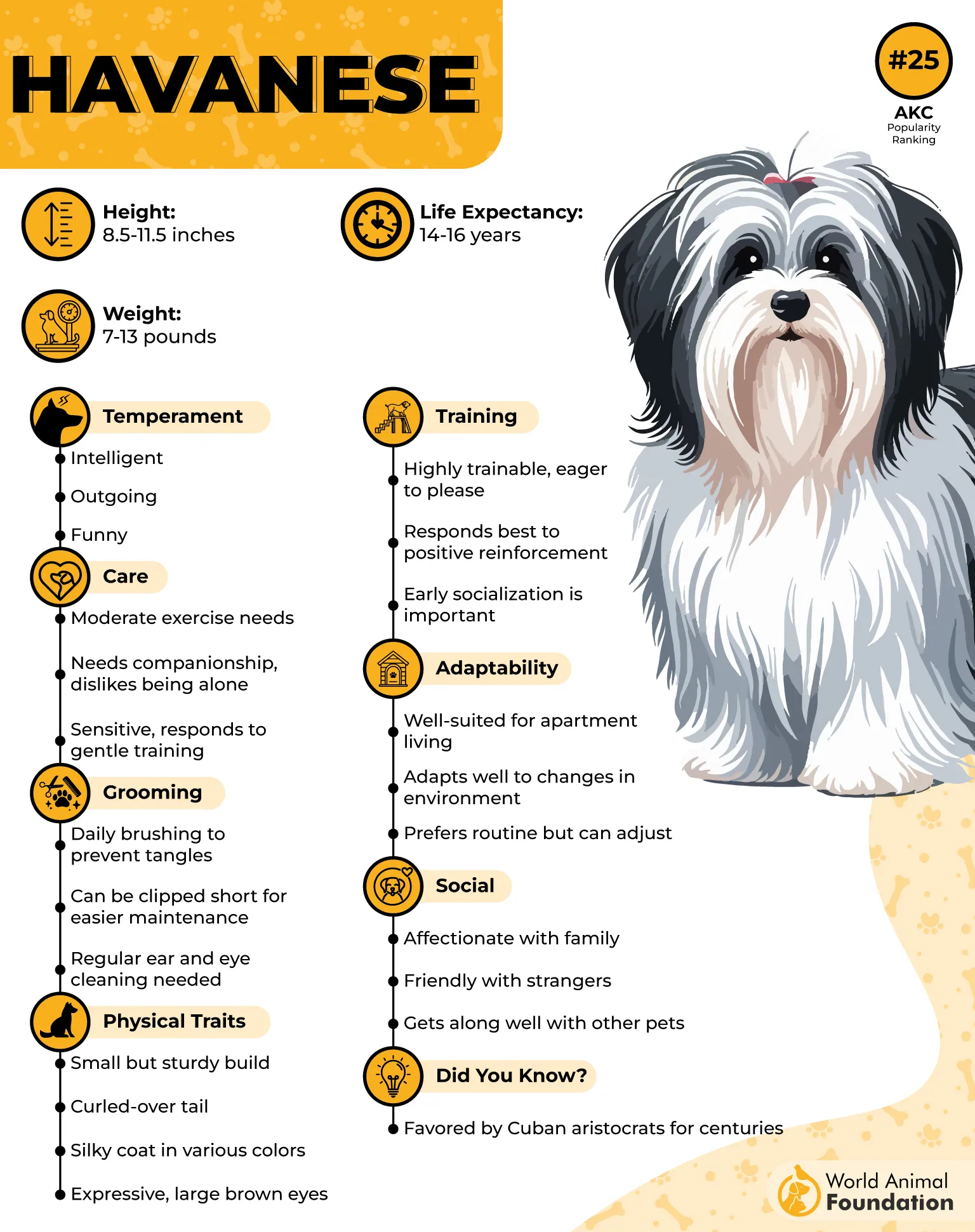
Its small size makes it easy to lift and carry, which is a nice perk for anyone with mobility concerns. The Havanese has hair instead of fur, which is what makes it such a low-shedding dog. It’s also a natural social butterfly, greeting everyone, including strangers, with a wagging tail and a happy grin.
Because of its size, the Havanese works better as an alarm system than an actual guard dog; it’ll let you know someone’s at the door, but that’s about it. It responds best to gentle training and doesn’t do well with harsh discipline or loud, chaotic environments. Daily exercise needs are light, too; just 20-45 minutes is plenty.
4. Maltese
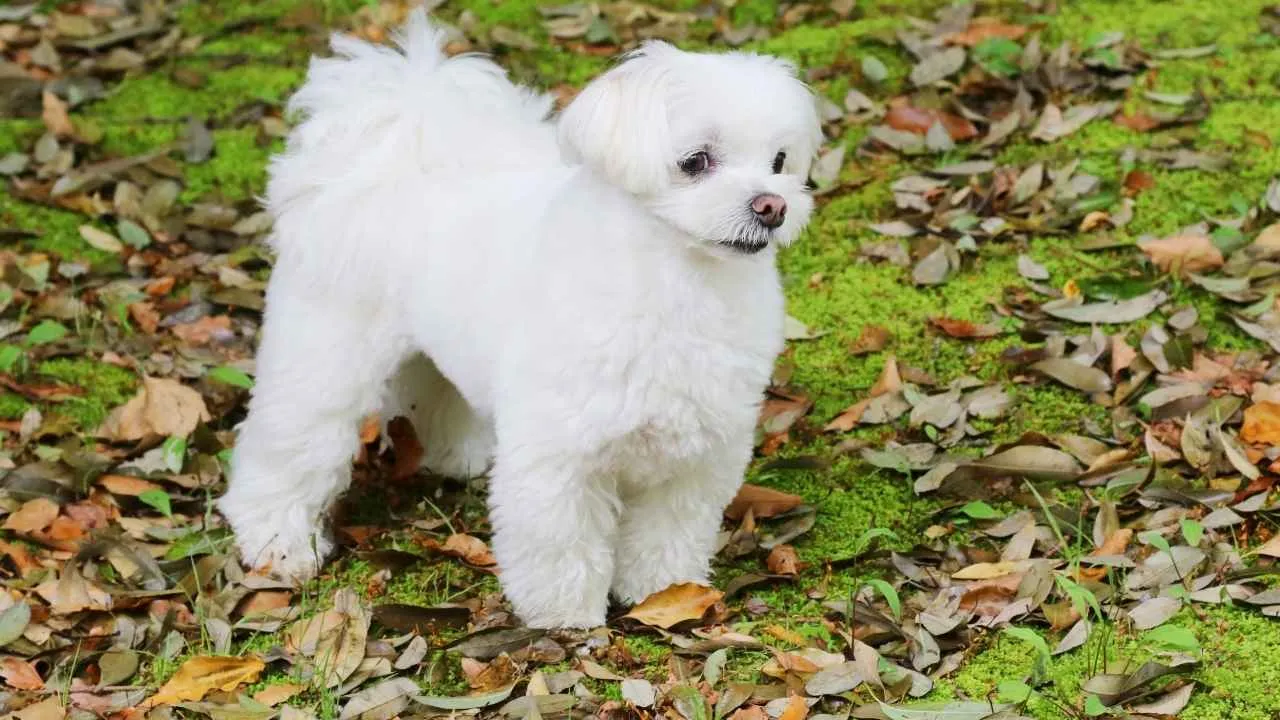
This ancient breed’s history stretches back around 1,500 years. It’s believed to have developed on the sunny island of Malta in the Mediterranean, descending from Spitz or Spaniel-like dogs. Affectionate and elegant, the Maltese was widely seen as a symbol of wealth among the Greeks, Romans, and Egyptians, according to the Kennel Club.
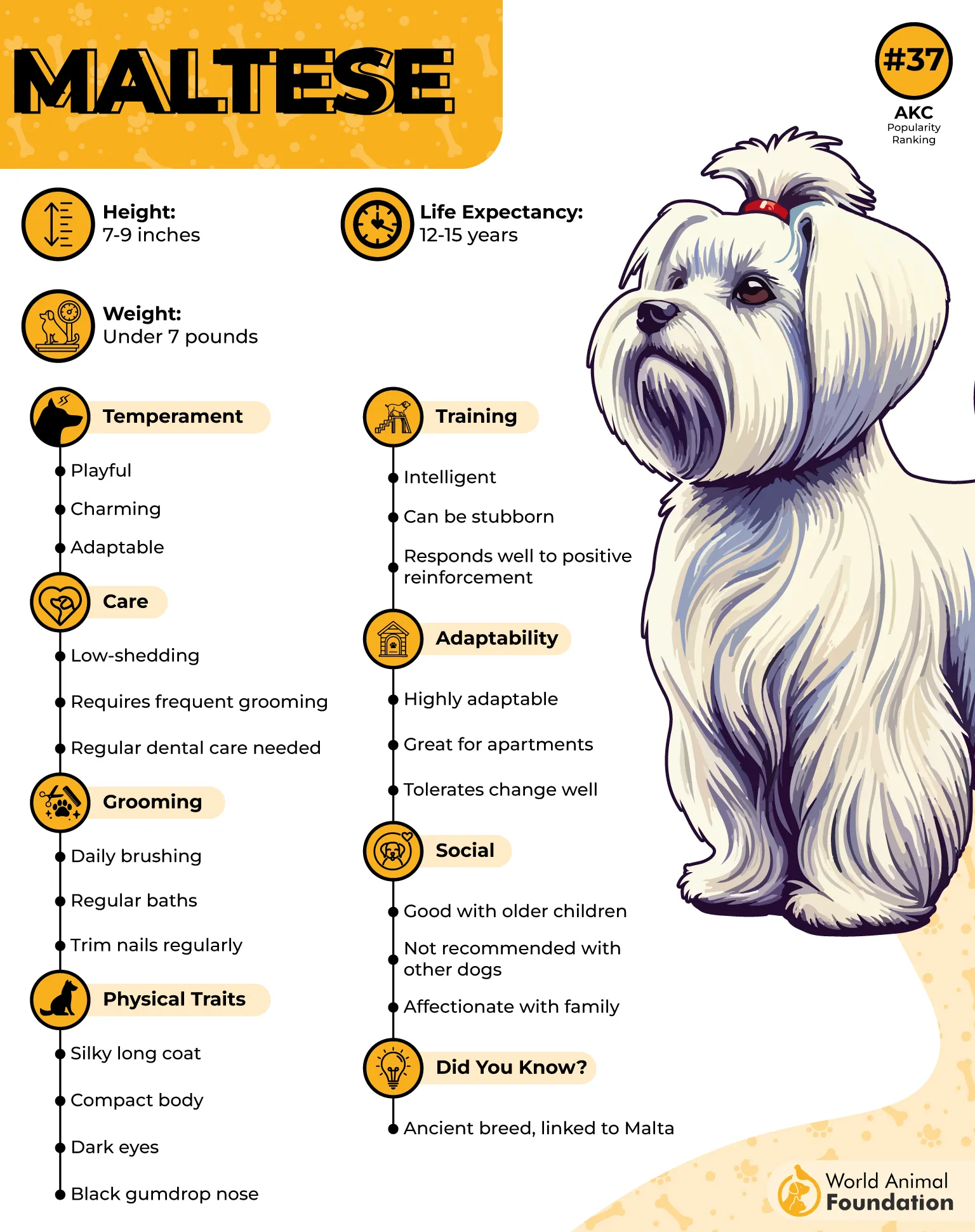
This wonderful little companion forms strong bonds with its owner and typically lives 12-15 years, plenty of time to keep loneliness at bay. And despite its small size, the Maltese isn’t shy about standing its ground; it’ll happily bark to alert you to anything unusual going on.
The breed doesn’t shed like a typical fur-coated dog, but it does need daily brushing and grooming, which is actually a nice way for senior owners to stay mentally engaged and a little more active day to day. Exercise needs are low too, just 20-30 minutes, whether that’s a short walk, a game of indoor fetch, or practicing a few simple tricks.
5. Pug
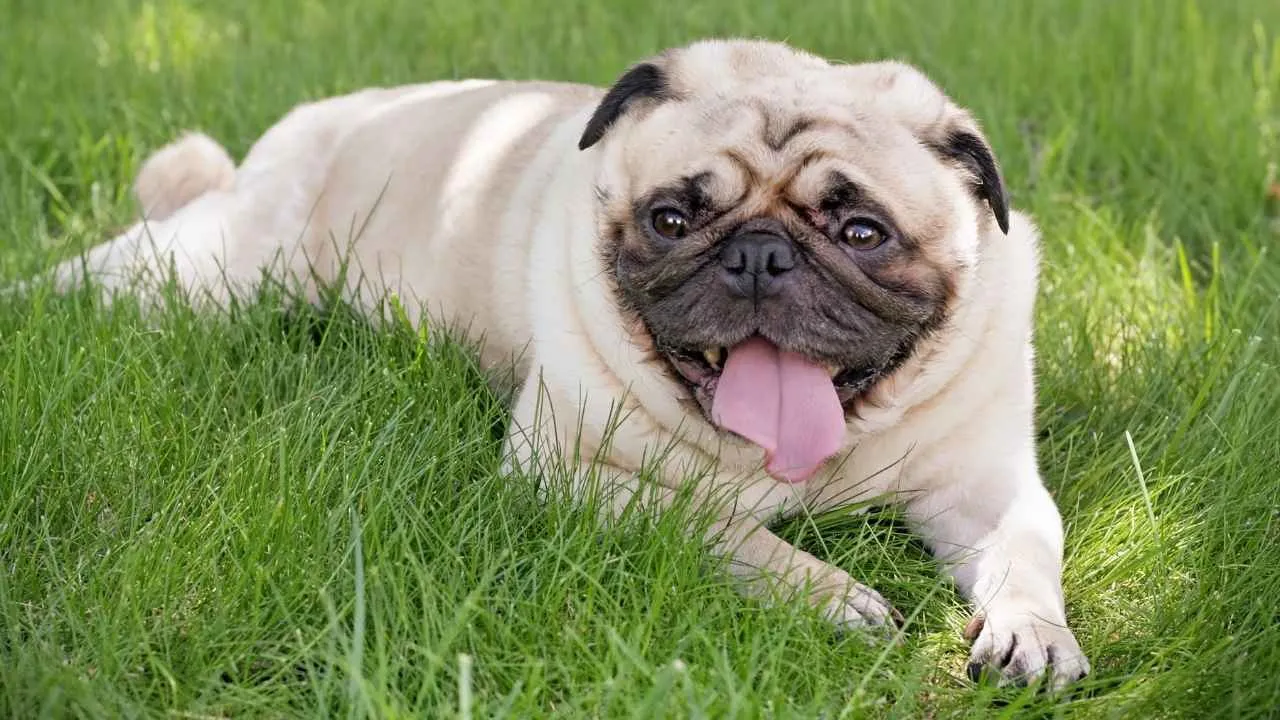
Originally bred in China by Buddhist monks, the Pug later gained popularity in Japan before making its way to Europe, where it became a favorite among royalty, including Marie Antoinette and Josephine, Napoleon Bonaparte’s wife. Queen Victoria was famously a huge “Pug enthusiast” and kept several of them as lap dogs.
With those expressive eyes and a wrinkly little forehead, the Pug is naturally funny-looking, and it knows it. Known for its snorting, snuffling, and constant “talking” to its owners, this breed never fails to bring a smile.
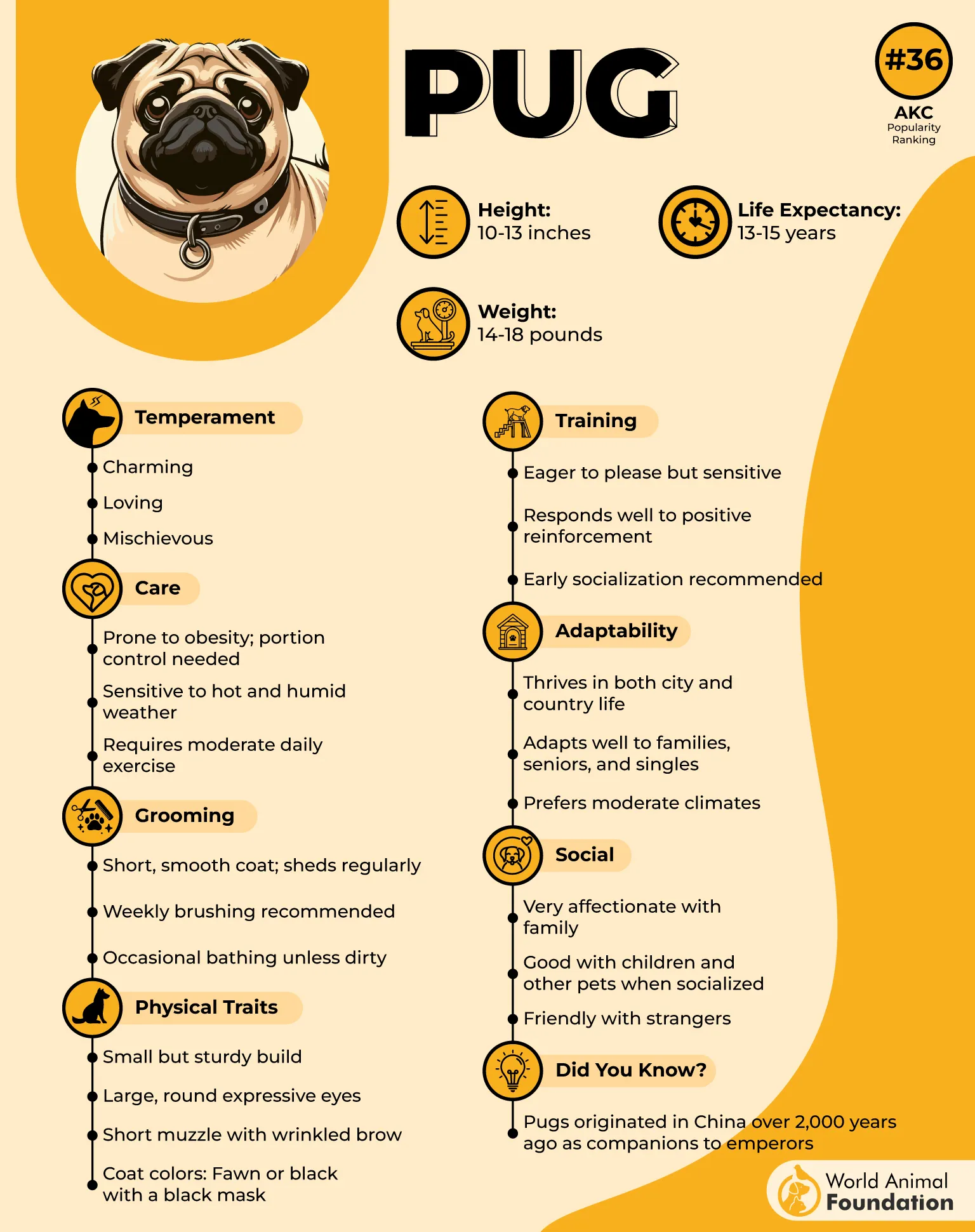
On the flip side, Pugs are prone to overheating and joint strain, so a little extra care goes a long way. They tend to get along great with everyone in the family, including kids and other pets.
Pugs can be a bit stubborn during training, or when asked to do something they’re not into, so patient, treat-motivated methods work best. Short bursts of moderate exercise help keep obesity at bay, and it’s worth regularly cleaning those facial wrinkles to prevent bacterial infections.
6. Golden Retriever
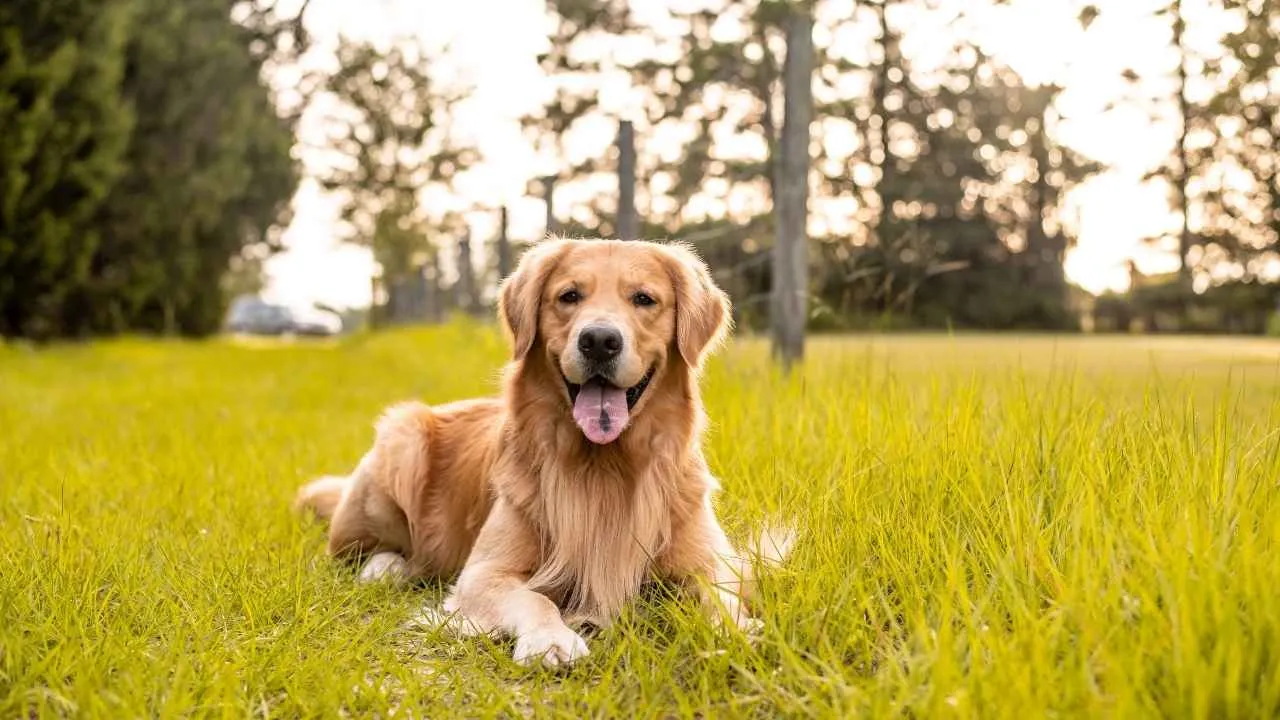
This medium-to-large retriever was bred by Sir Dudley Marjoribanks in Scotland during the 19th century, developed by crossing the Flat-Coated Retriever with the Tweed Water Spaniel. Other breeds in the mix include the Red Setter, Labrador Retriever, and Bloodhound, according to Wikipedia.
Since Golden Retrievers can be easily trained not to jump or pull on the leash, they’re a much safer choice for older adults who may have balance issues or limited mobility.
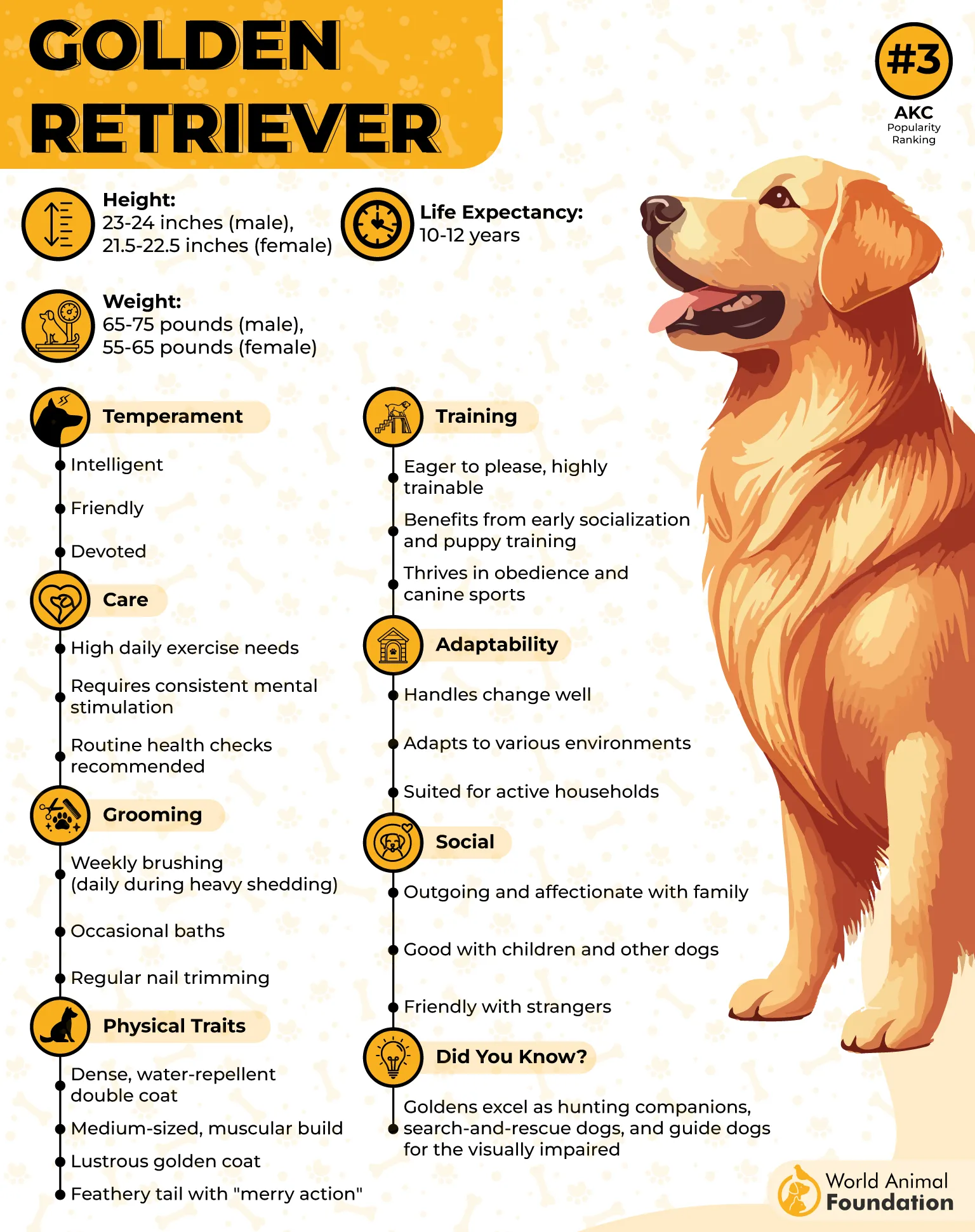
Puppies are bundles of energy, but by adulthood (around 3-5 years) and into their senior years, most Goldens are happy to settle into couch-potato mode.
They also rank among the smartest dog breeds out there, which makes it easy for retirees to teach them basic household habits or even simple assistance tasks. For active seniors, though, Goldens do need a fair amount of exercise, around 1.5-2 hours a day, through fetching, swimming, hiking, or just retrieving games in the yard.
7. Shih Tzu
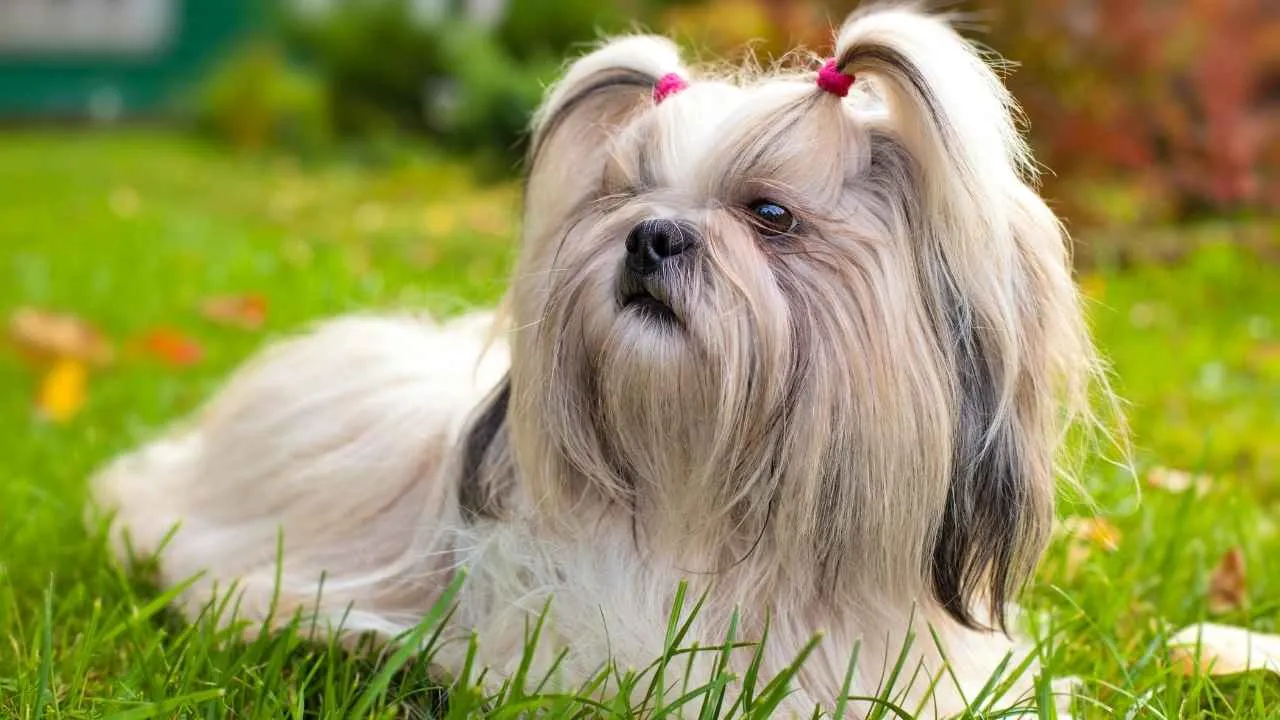
One of the oldest dog breeds around, the Shih Tzu was bred by Tibetan monks and gifted to the Chinese court by the Byzantine Empire in 624 AD. For centuries, it wasn’t allowed to be traded or sold outside the country. The breed actually came close to extinction at one point, but the last 14 dogs were exported to England, and that’s where the modern Shih Tzu we know today comes from.
Being a brachycephalic breed, the Shih Tzu has a flat face, narrowed airways, and a short muzzle, which can make breathing tough during intense outdoor activity.
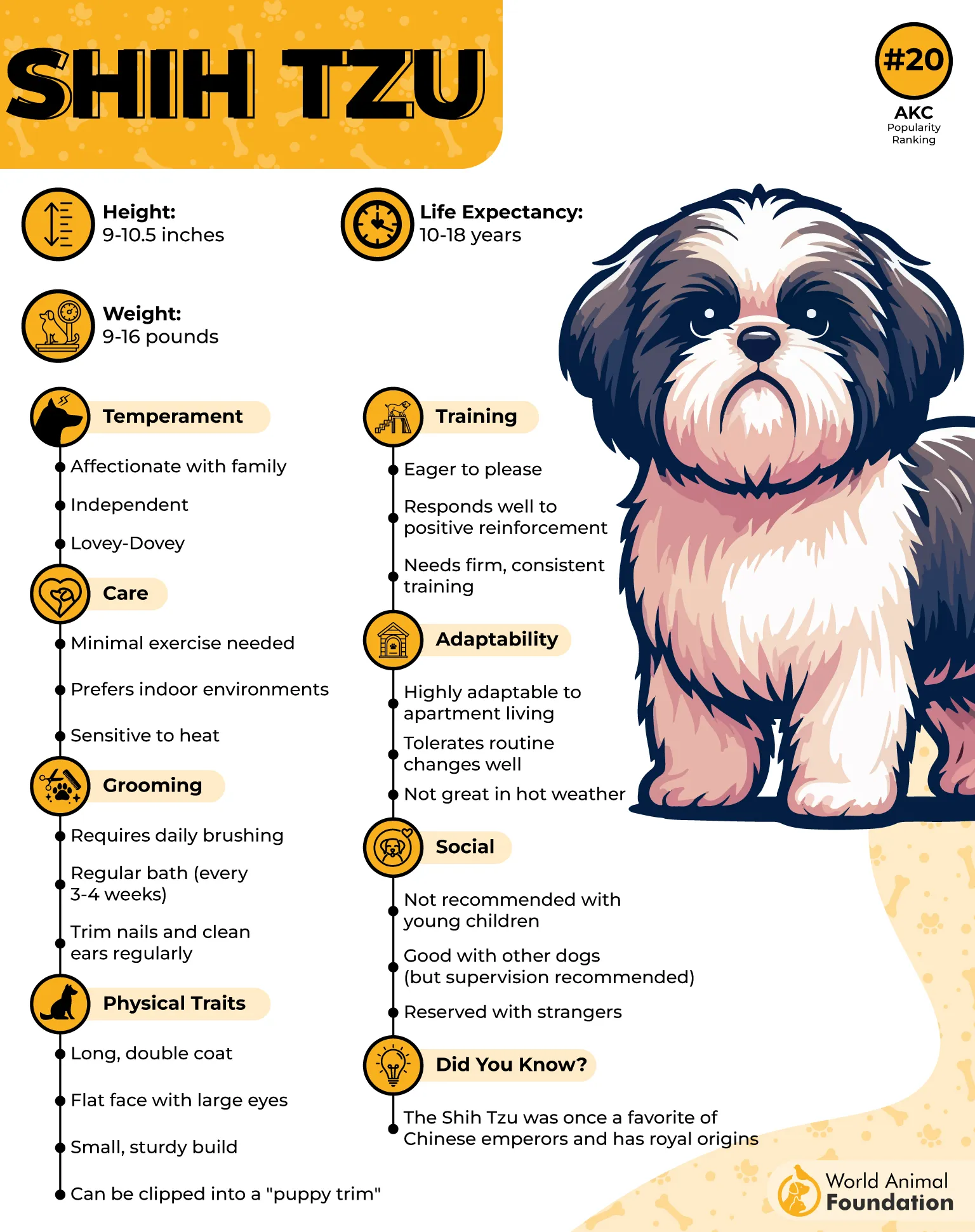
So it’s no surprise this dog would much rather lounge around than go for a run. Also known as the “lion dog,” it has a real Velcro-like nature and loves following its owner from room to room.
Shih Tzus have sharp, alert instincts, making them great little watchdogs. That said, this small breed does have an independent streak that can come across as stubbornness now and then. And since they form such deep attachments to their owners, they can develop separation anxiety if left alone too long.
8. Poodle
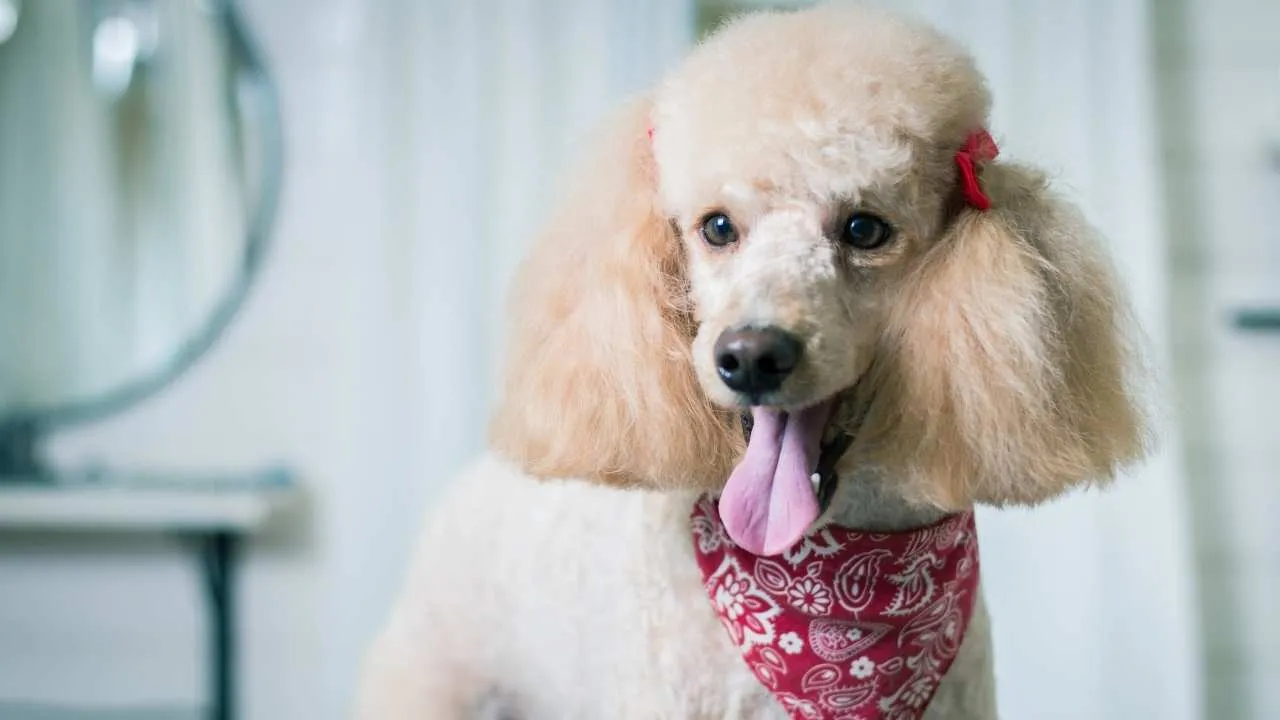
Originally bred as a water retriever in Germany, the Poodle is considered the most intelligent of the toy breeds. Its name actually comes from the German word “pudelin,” meaning “to splash.” Poodles have also been used in the military for centuries and were long favored as hardworking hunting companions.
Their coat is low-shedding and produces less dander, which means the risk of triggering respiratory issues is fairly minimal. And while the standard Poodle was bred for demanding physical work, the Toy Poodle has much lower energy needs; short walks and a bit of indoor playtime are usually enough to keep it happy and stimulated.
Poodles are generally friendly, though they can be a little aloof around strangers, and their strong territorial instincts make them solid watchdogs too. As for grooming, it’s fairly low-maintenance; just brushing two to three times a week is enough to prevent painful matting near the roots.
9. French Bulldog
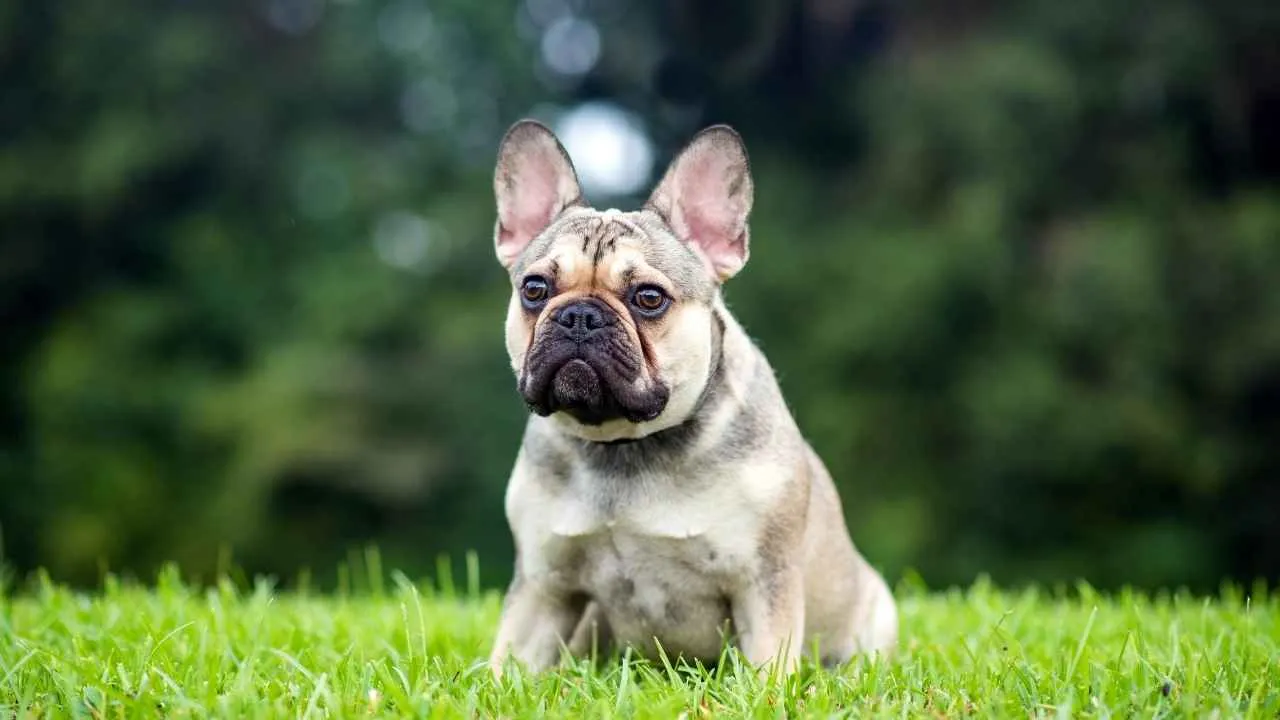
This small breed was developed by English lace makers in the 19th century, who brought their toy-sized Bulldogs along to France during the Industrial Revolution. There, the dogs were crossed with local breeds, eventually giving us the Frenchie we know today, complete with those signature bat ears.
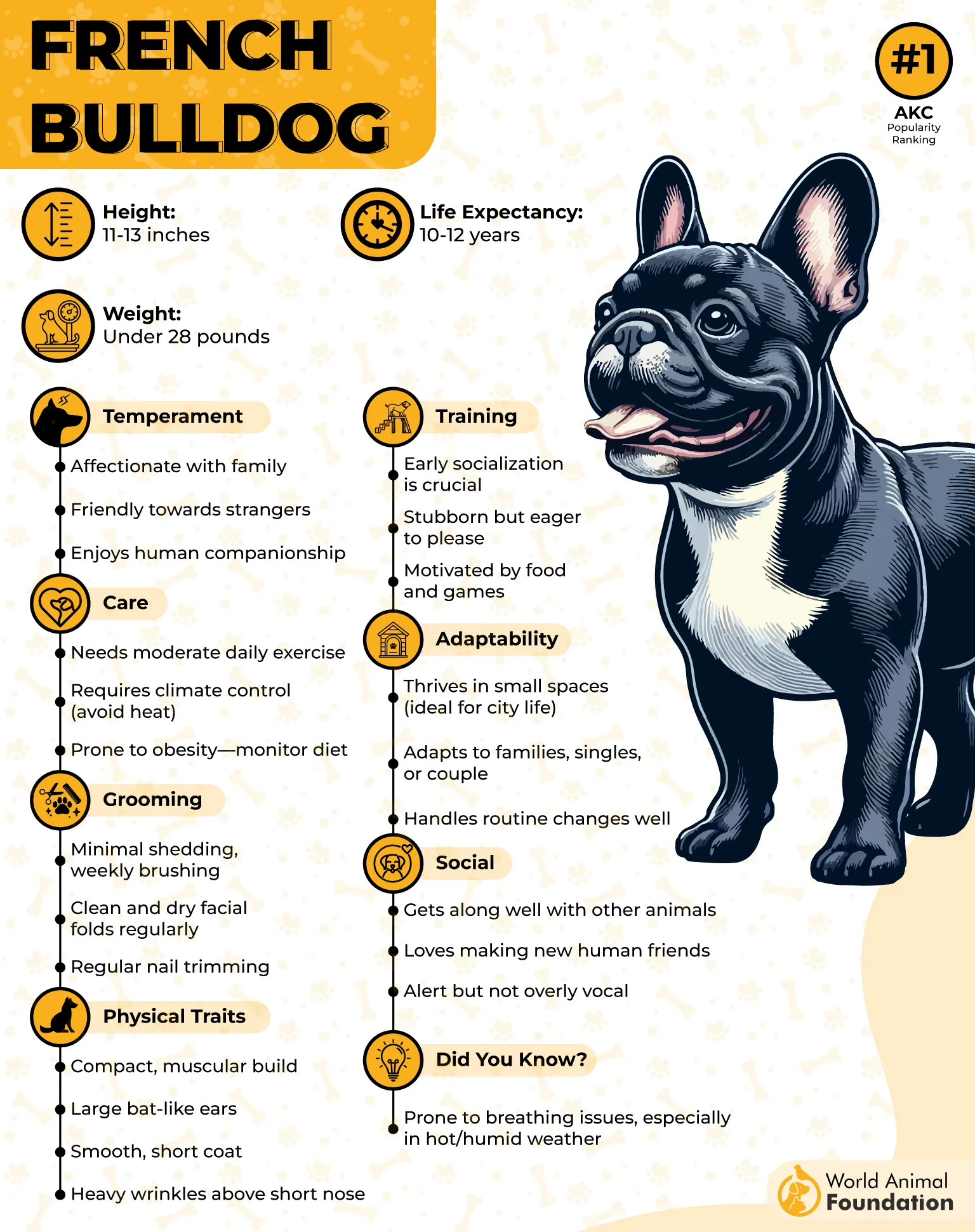
Despite having playful little bursts of energy, the French Bulldog isn’t really an excessive barker. It’s a bit of a clown, though, with an expressive face that keeps things entertaining. Its coat is single-layered with no undercoat, which makes grooming pretty much effortless.
One thing to watch out for: never exercise your Frenchie in hot or humid weather. If temperatures climb above 25 degrees, it’s best to keep activity indoors. Overall, exercise needs are moderate; brisk 10- to 15-minute walks daily, along with some gentle indoor play sessions, are usually enough.
Conclusion
The right dog can make retirement feel fuller, warmer, and more meaningful. Whether you enjoy peaceful evenings, daily neighbourhood walks, or simply having a loyal friend nearby, there is a breed that matches your pace and personality.
The best choice depends on your energy level, living space, grooming preferences, and the time you want to spend together. A dog is more than a pet. It becomes a trusted companion through life’s quiet moments and happy memories alike.
Take your time before making a decision, meet different breeds whenever possible, and choose one whose needs fit naturally into your lifestyle. That thoughtful choice can lead to years of friendship, comfort, laughter, and unconditional love.
