




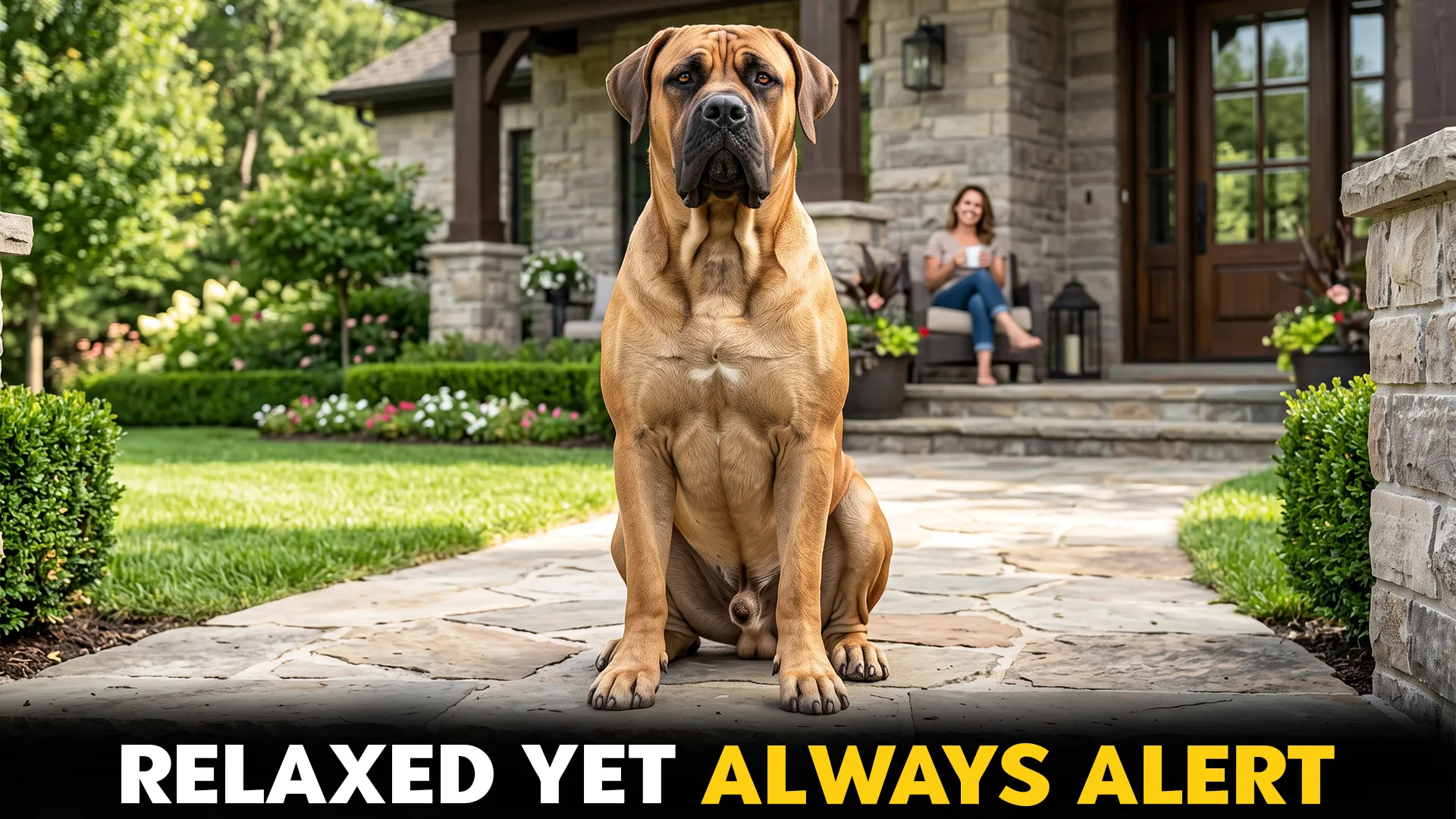
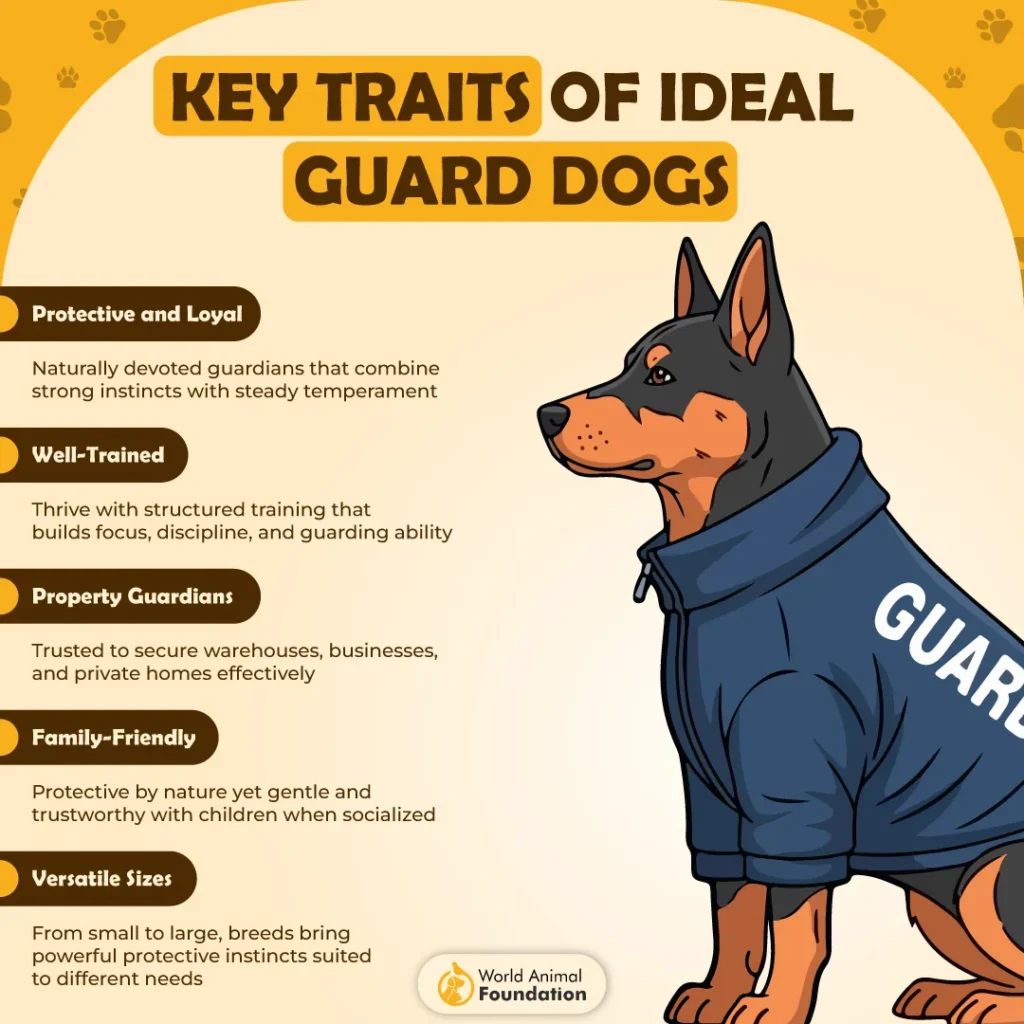
When people hear “guard dog,” the first image that usually comes to mind is some jowly, drooling, intense bulldog type. There’s this common misconception that a good guard dog has to be scary or intimidating.
Honestly, that’s just not true, and dogs like that can actually be a nightmare for families with kids.
You can absolutely have a protection dog that’s chill enough to hang out on the sofa, play with the kids, act as a makeshift pillow, and still snap into alert mode the moment it senses a real threat. It’s less about constant barking or pacing and more about quiet, natural awareness, calmly observing everything going on around them.
These calm guard dogs make perfect family pets, watching your back without any of the chaotic energy. More often than not, you’ll find them lounging in a corner or simply observing before reacting, rather than being hyperactive about it.
We’ve put together a list of 7 loyal, alert breeds that fit this role beautifully, wonderful family pets and reliable guardians in one. We’ll go over how strong they are, their stamina, their calm demeanor, and how they behave at home. You’ll also get a sense of their training and exercise needs, which matters a lot when you’re choosing a guard dog.
Relaxed Guard Dog Breeds: Calm, Loyal, and Alert
1. Bullmastiff
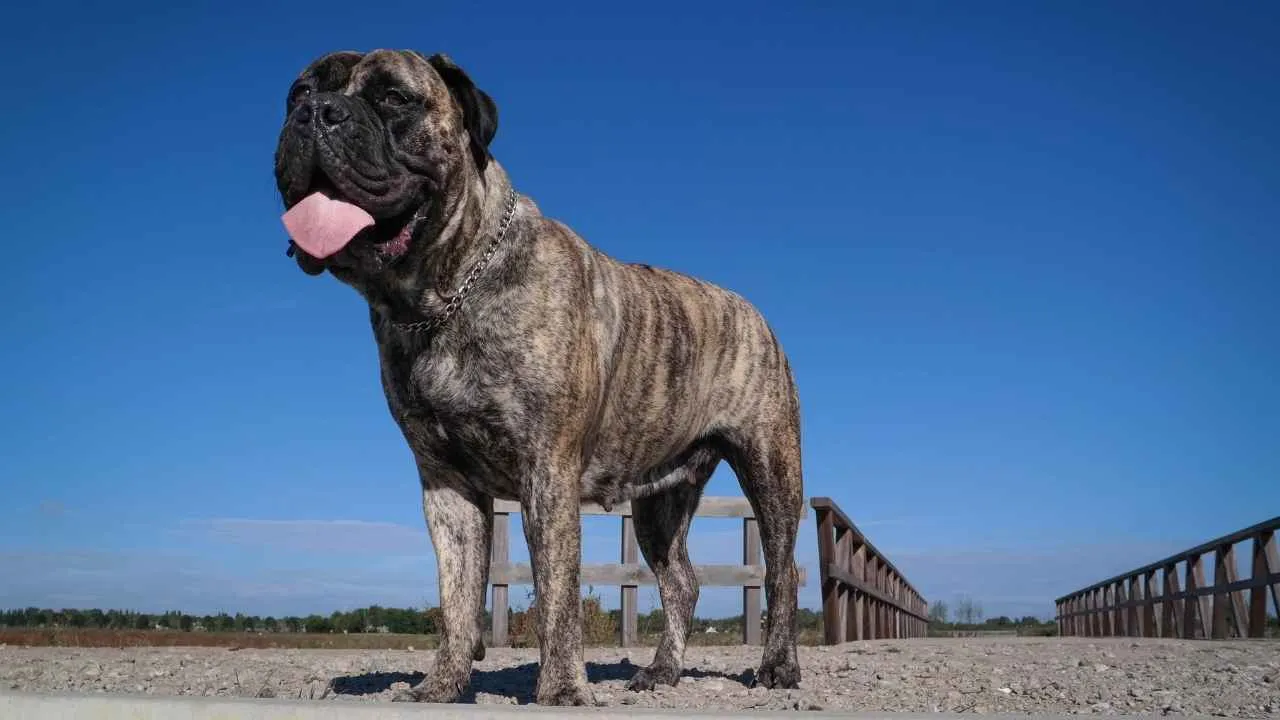
Bullmastiffs are giant, affectionate, laid-back, and incredibly muscular dogs. They’re often called “silent guardians” because of how observant they are, and were historically known as “The Gamekeeper’s Night Dog,” since they could track down poachers without actually mauling them. They’re not typically known for being anxious or fearful, as PetMD points out.
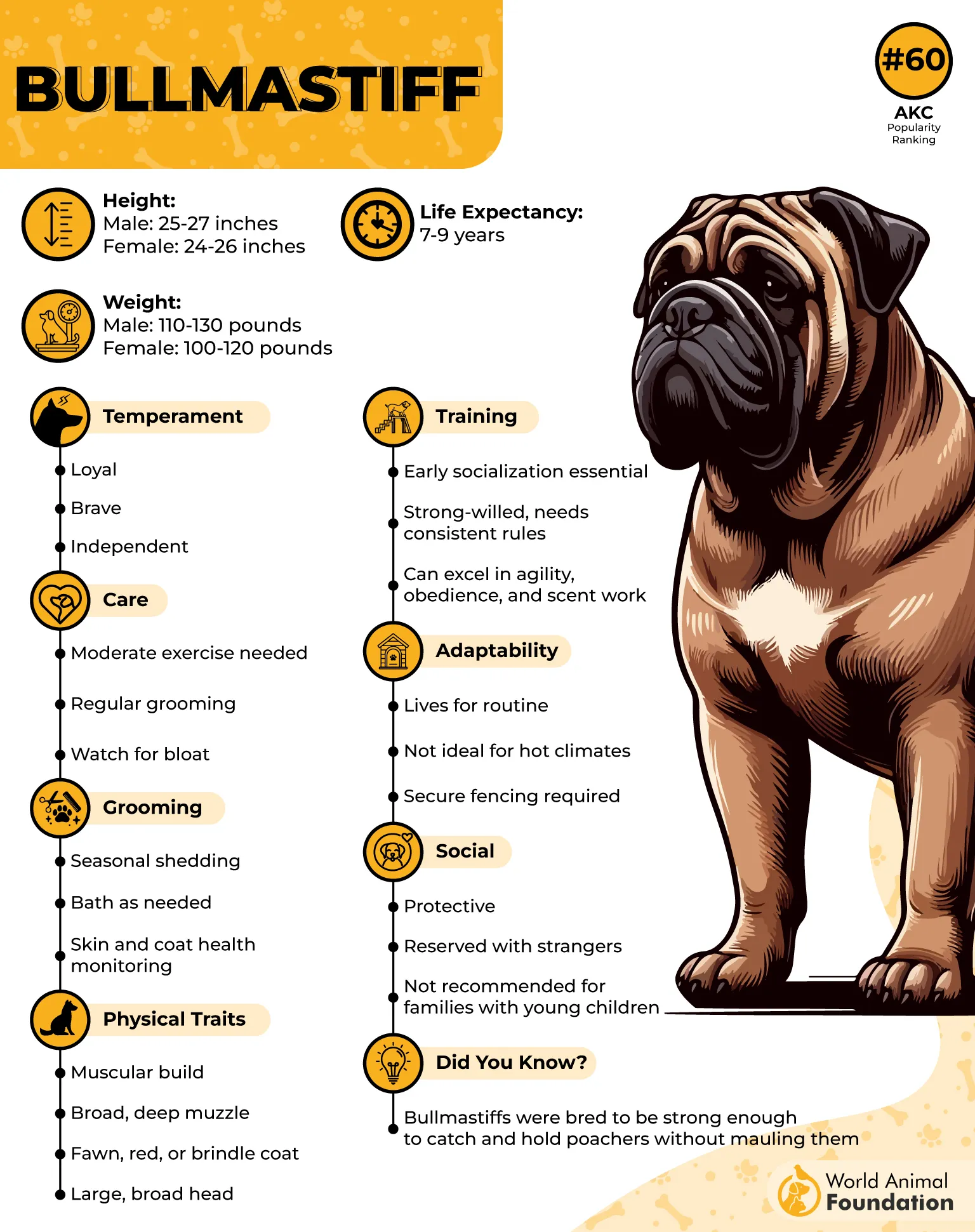
That said, Bullmastiffs tend to be reserved around new people and usually only bark to alert you to something. If they do sense a real threat, they’ll plant themselves like a massive, immovable wall, thanks to their strong protective instincts. Between the drooling jowls and that low, gurgling voice, these big dogs are often intimidating enough to scare off intruders without any real confrontation.
Bullmastiffs are smart, though a bit stubborn at times, so positive reinforcement works best when training them. They’re happy to be couch potatoes as long as their moderate exercise needs are met. Their short coat sheds moderately, too, and just a weekly brushing is enough to keep it in check.
2. Mastiff
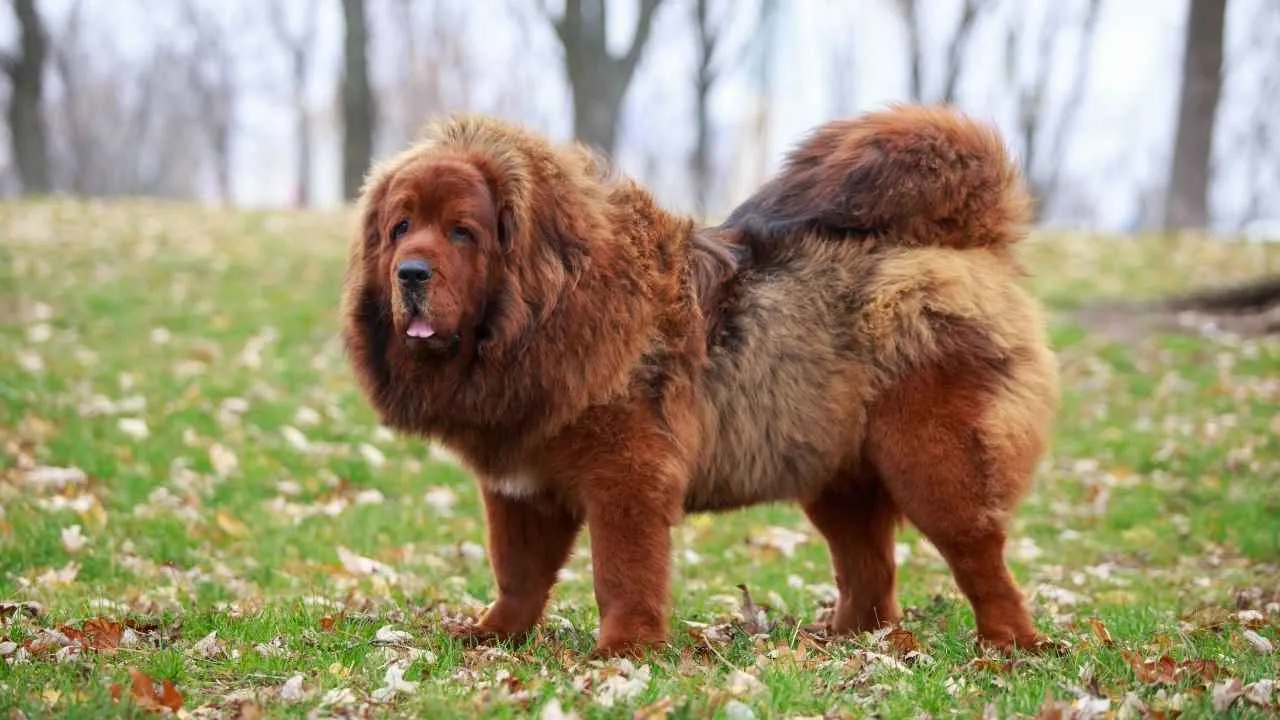
You may know them as Old English Mastiffs, or just Masties for short, and these gentle giants were originally bred to protect livestock. They’re patient, calm, loyal, and genuinely fond of people, which makes them wonderful family pets when properly trained and socialized.
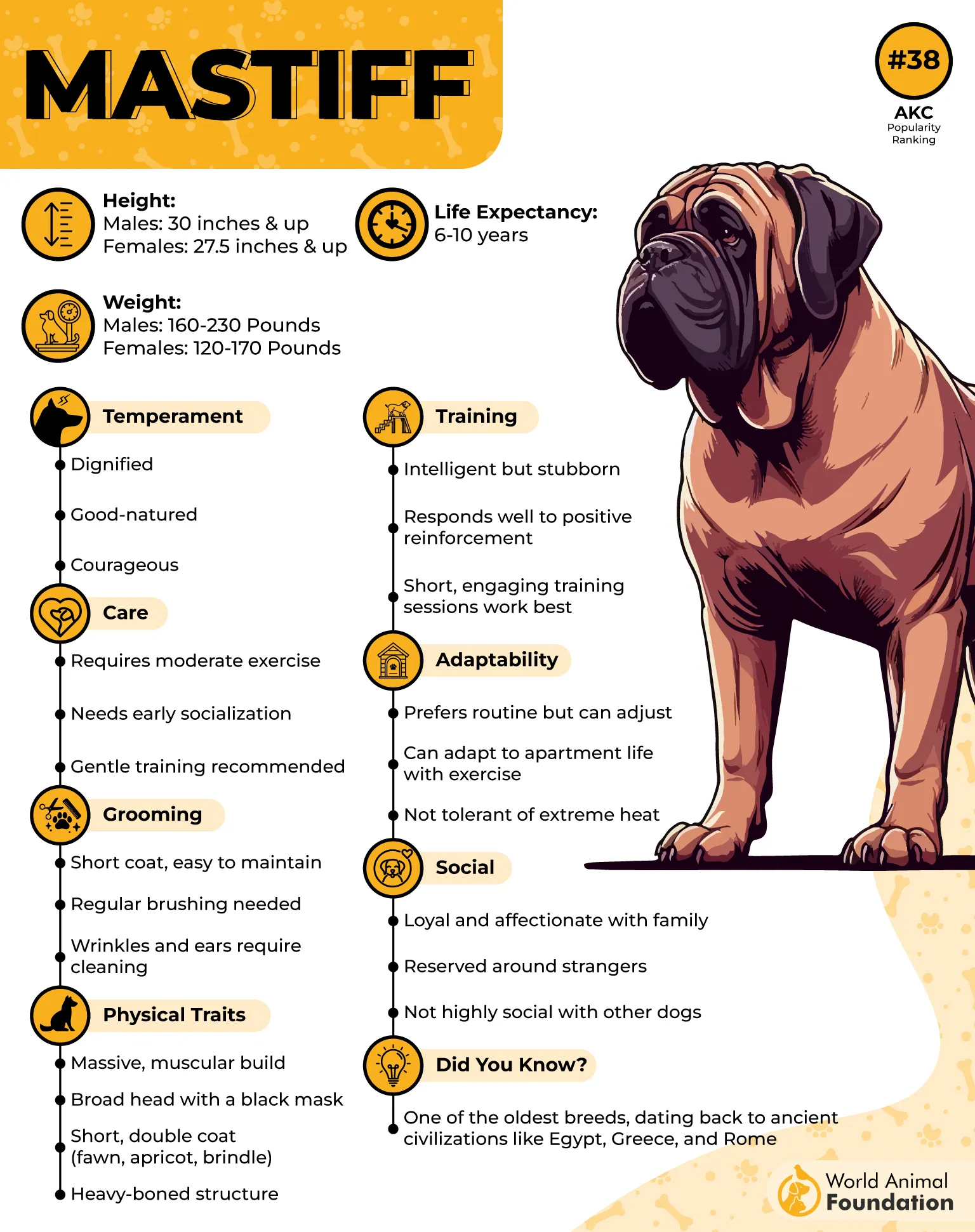
Their calm demeanor lets them stay relaxed yet protective around kids, almost acting like a built-in babysitter who’s quietly keeping an eye on things. They’re eager to please, but their massive size combined with their working-dog history means training needs to be handled thoughtfully.
Starting training early, while staying patient and firm, makes a real difference with this breed. The Mastiffs don’t need intense exercise, but moderate daily walks and strolls go a long way for mental stimulation. Their short coat sheds moderately as well, and a quick weekly brushing is usually all it takes to keep it looking good.
3. Saint Bernard
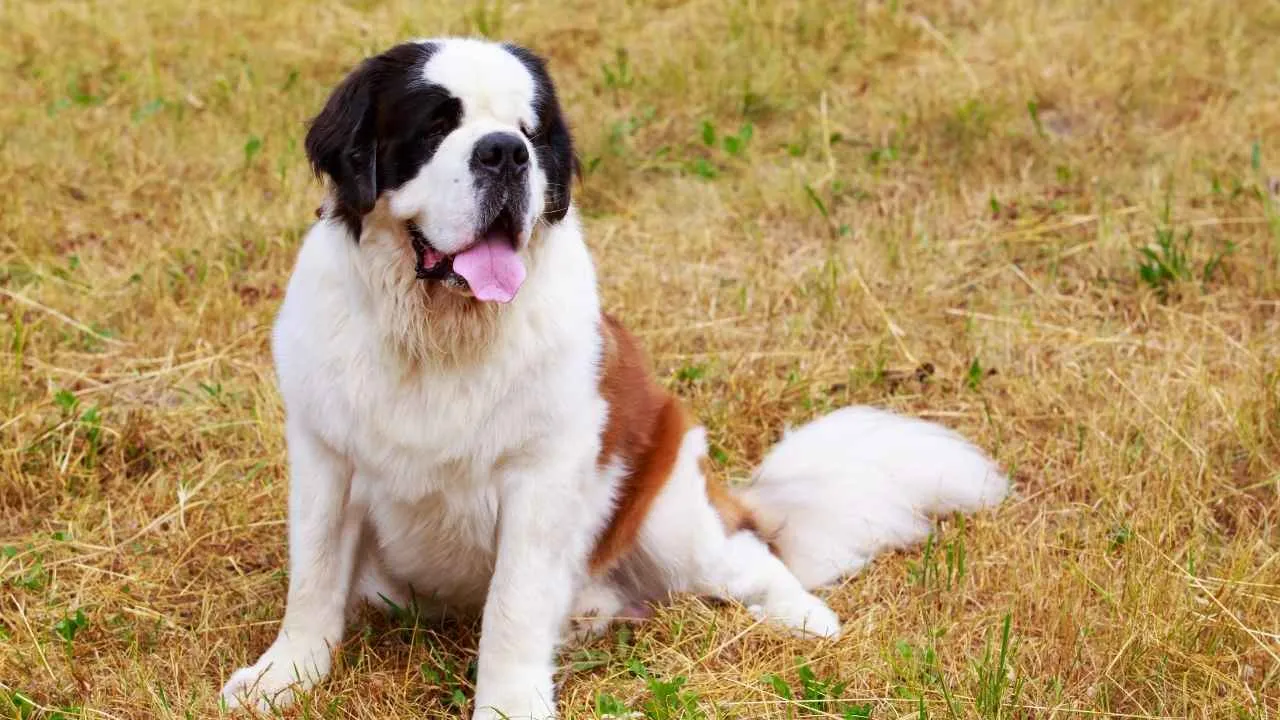
Saint Bernards were originally bred in the Swiss Alps to locate and rescue people buried in avalanches, which is probably why these patient, friendly dogs come with such strong, innate protective instincts. Funny enough, they seem to have no idea just how big they are and often try to squeeze onto your lap like a much smaller dog.
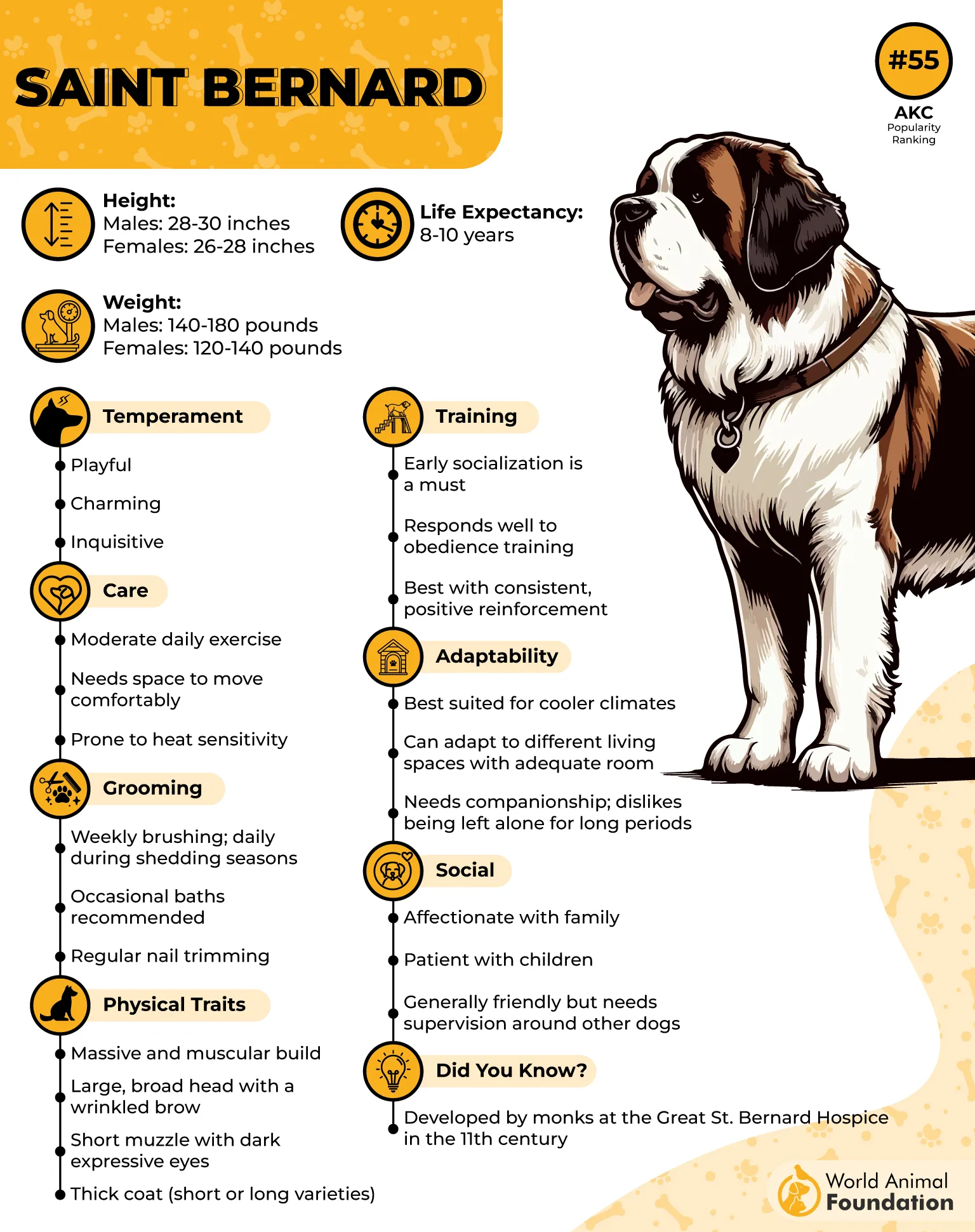
They’re not aggressive guard dogs by any means, more calm, watchful protectors. As the AKC puts it, Saints are known for being attentive, patient companions with a real soft spot for children. These gentle giants pick things up quickly, though their sheer size can make handling them a bit tricky at first.
That’s why it’s worth starting training early, while they’re still puppies, and staying patient throughout the process. Exercise needs are fairly moderate; long, slow walks or simply relaxing in the yard usually does the trick. They come in both short and long coat varieties, so shedding levels can vary a bit depending on which type you have.
4. Great Dane
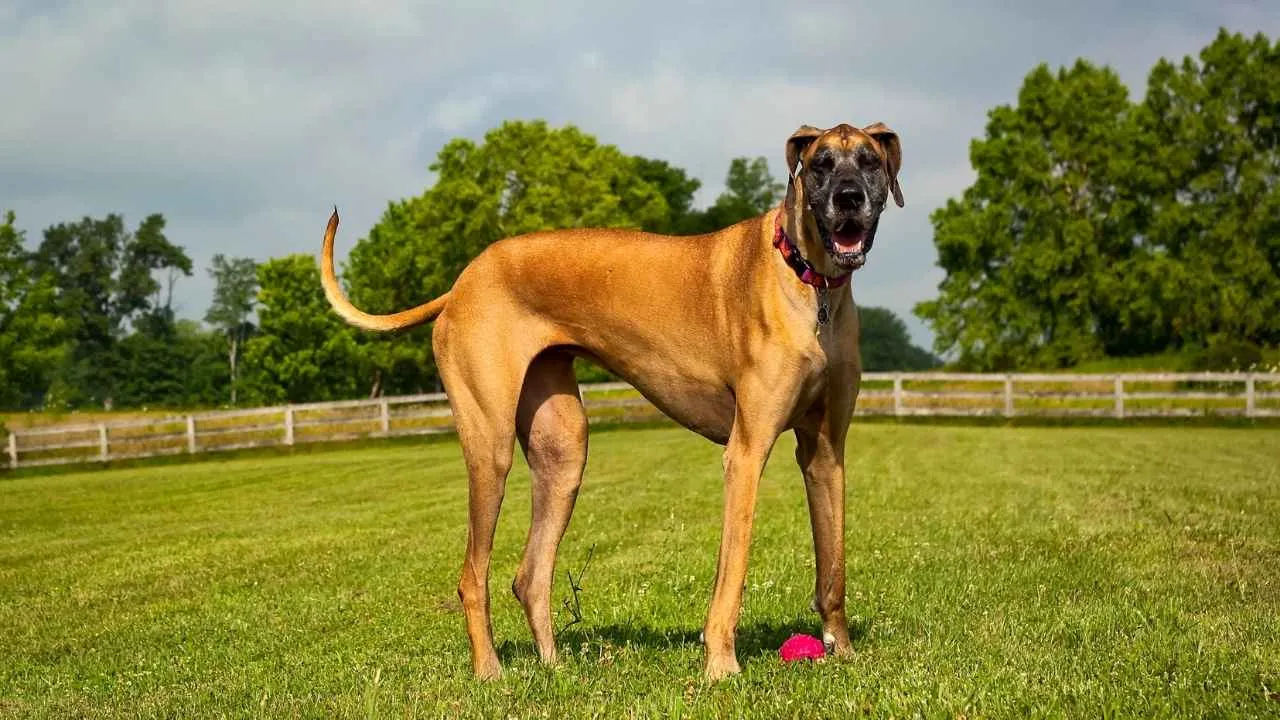
Great Danes are sweet-natured, affectionate dogs originally bred for hunting. It might be hard to believe given how gentle they are, but underneath that kindness, they’re actually quite tough.
Despite being the tallest dog breed around, Great Danes are surprisingly calm indoors and happy to lounge around most of the day, making them great family dogs, especially in homes with kids, as WebMD sums up.
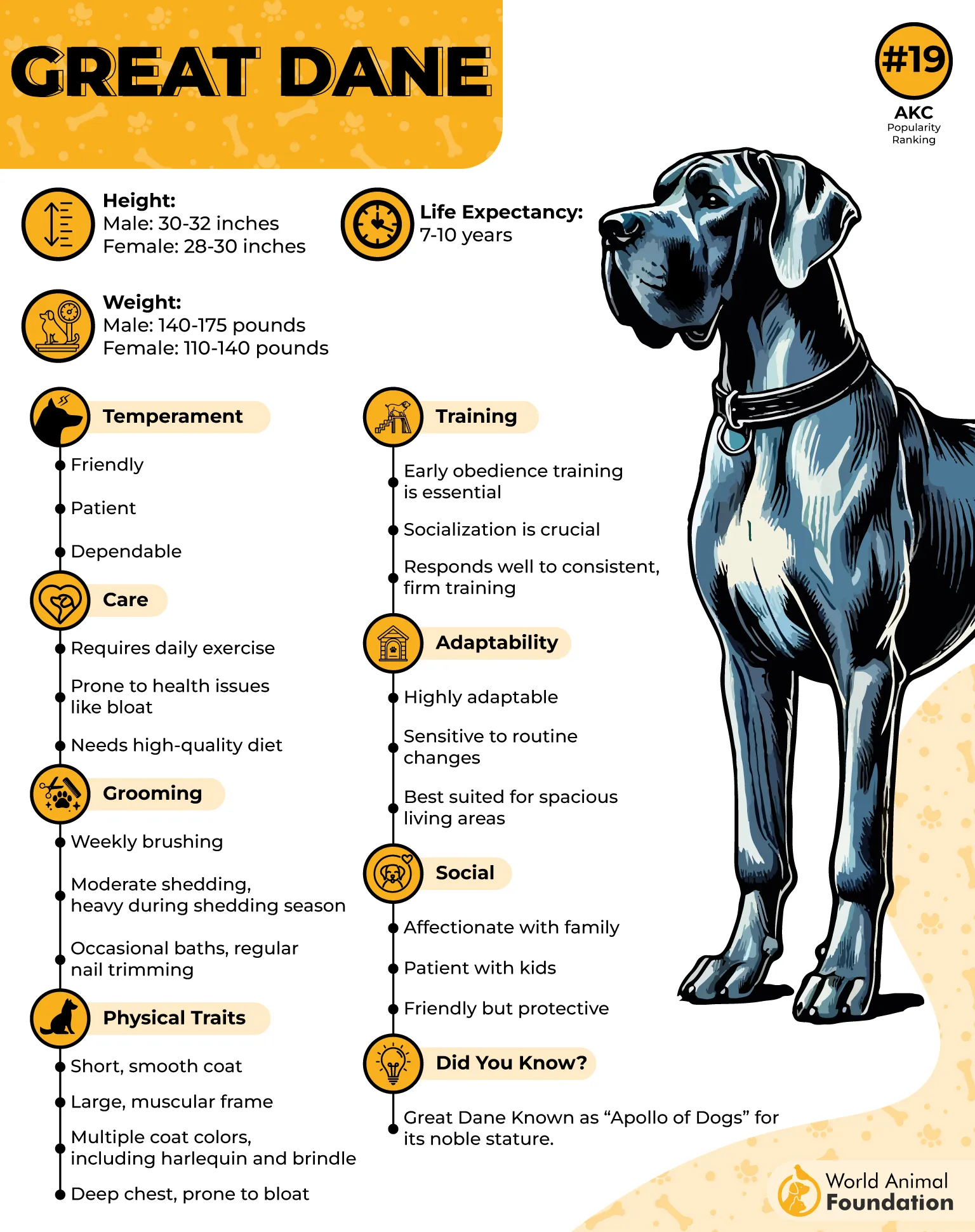
They’re also incredibly observant and tuned in to what’s happening around the house. Great Danes aren’t quick to bark, but they will stand tall and step in if something feels off. Since they’re natural people-pleasers, training tends to come pretty easily, too.
They’re not exactly high-energy athletes, so a nice daily walk along with some yard playtime is usually enough for both physical and mental stimulation. Their short coats shed moderately as well, and a weekly brushing keeps them clean and looking shiny.
5. Great Pyrenees
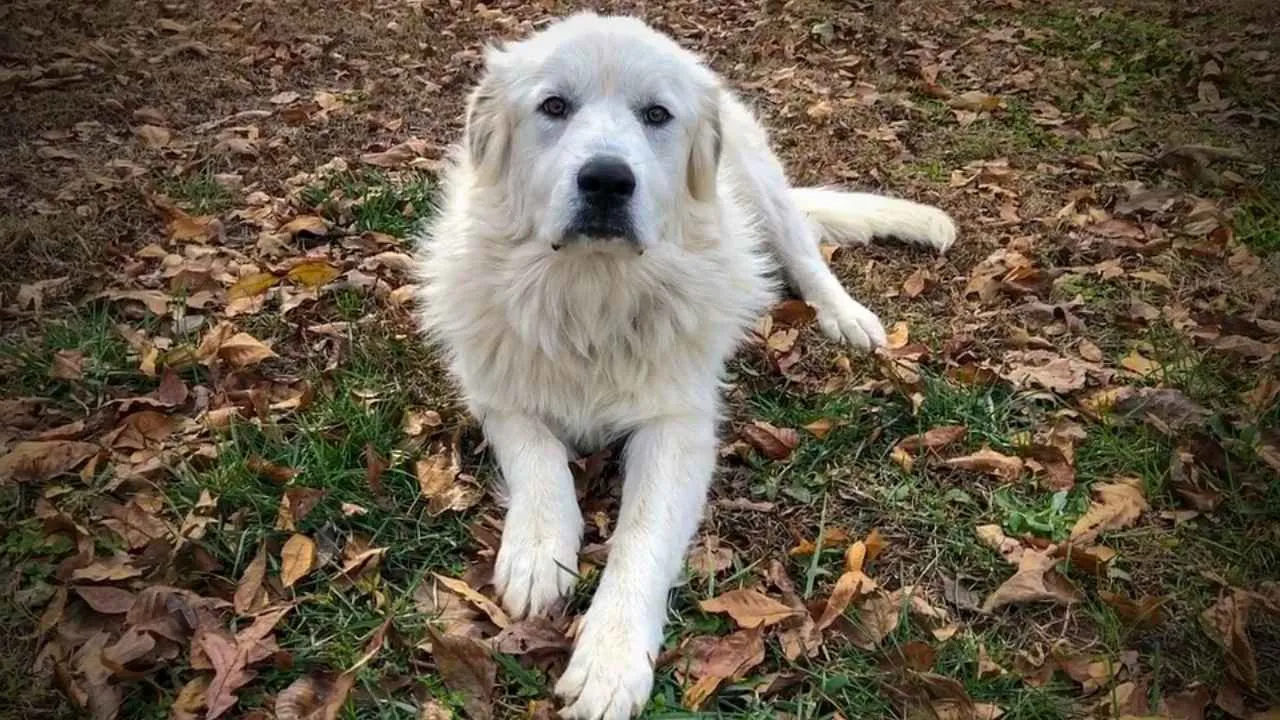
Great Pyrenees have a wonderfully zen personality, calm, patient, and quiet by nature. According to Purina, these dogs were originally bred to be independent guardians and watchdogs, so protecting really is in their blood. Pyrs aren’t the type to beg for attention; they’re just happy being near you.
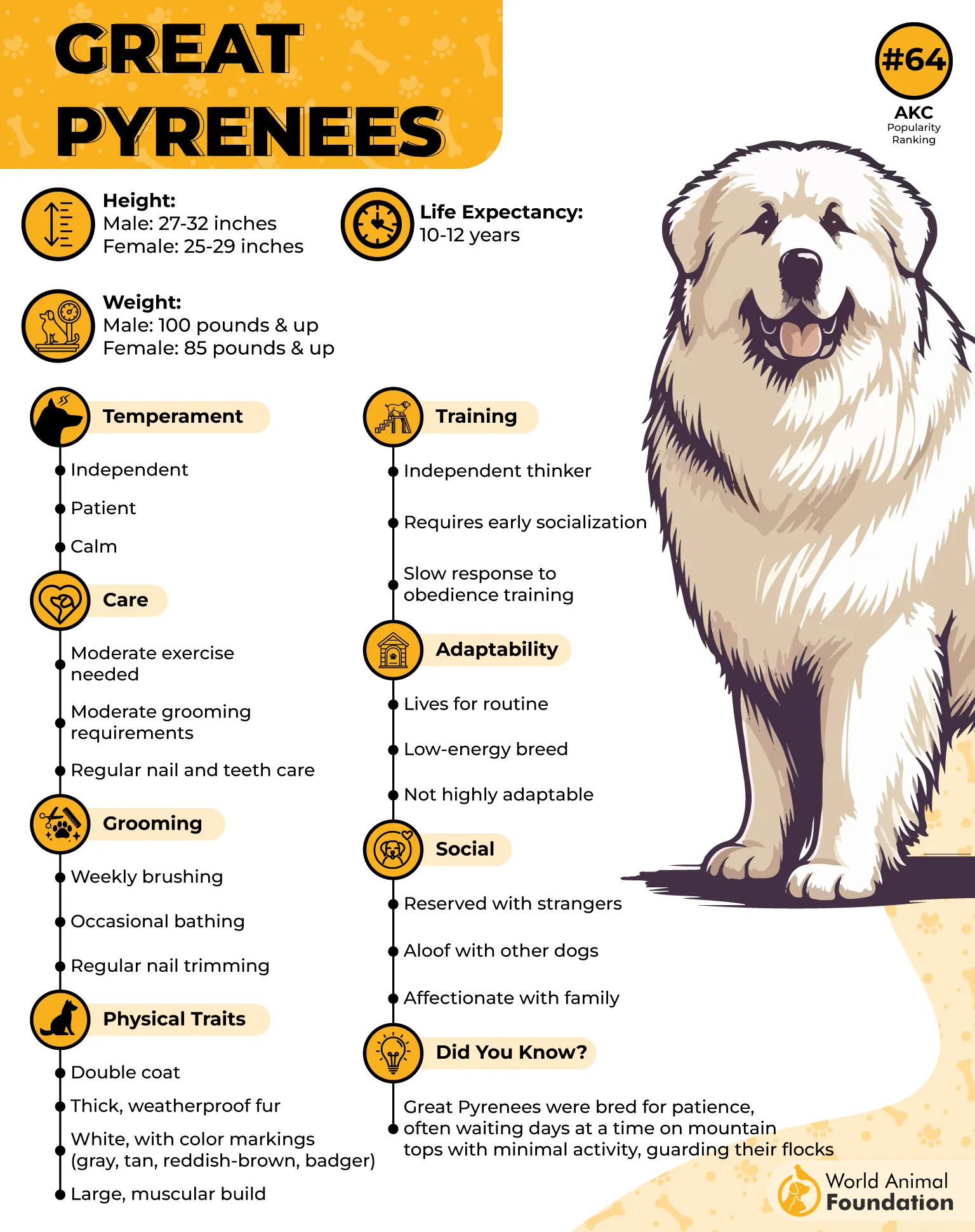
Their calm demeanor and low prey drive make them a great fit for families with kids. That said, training does require patience, since they’re independent thinkers who like making their own decisions. They can be a bit stubborn too, so treats and positive rewards go a long way.
Great Pyrenees are fairly low-energy overall, content with a good long walk or some time patrolling a large fenced yard. They do have a thick double coat that sheds heavily year-round and blows out seasonally, so regular brushing is a must to keep the shedding under control.
6. Broholmer
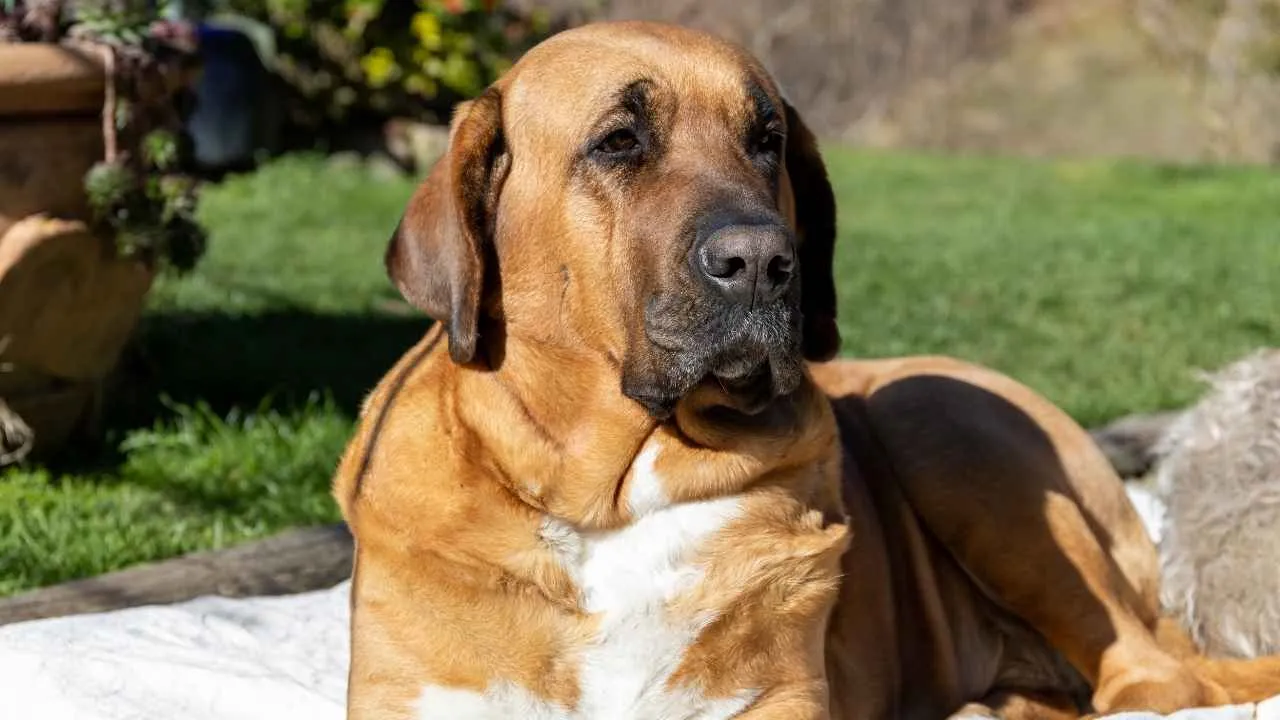
The Broholmer, also known as the Danish Mastiff, comes with a pretty impressive royal history, originally bred in Denmark to guard large estates, manors, and castles. These big dogs have a steady, calm, and friendly nature, so they rarely get worked up or anxious about much.
They’re genuinely good-natured dogs that bond closely with their people, often described as having a real heart of gold. They even earned the nickname “Butcher’s Dog” back in the day, since they were commonly found lying loyally at butchers’ doors.
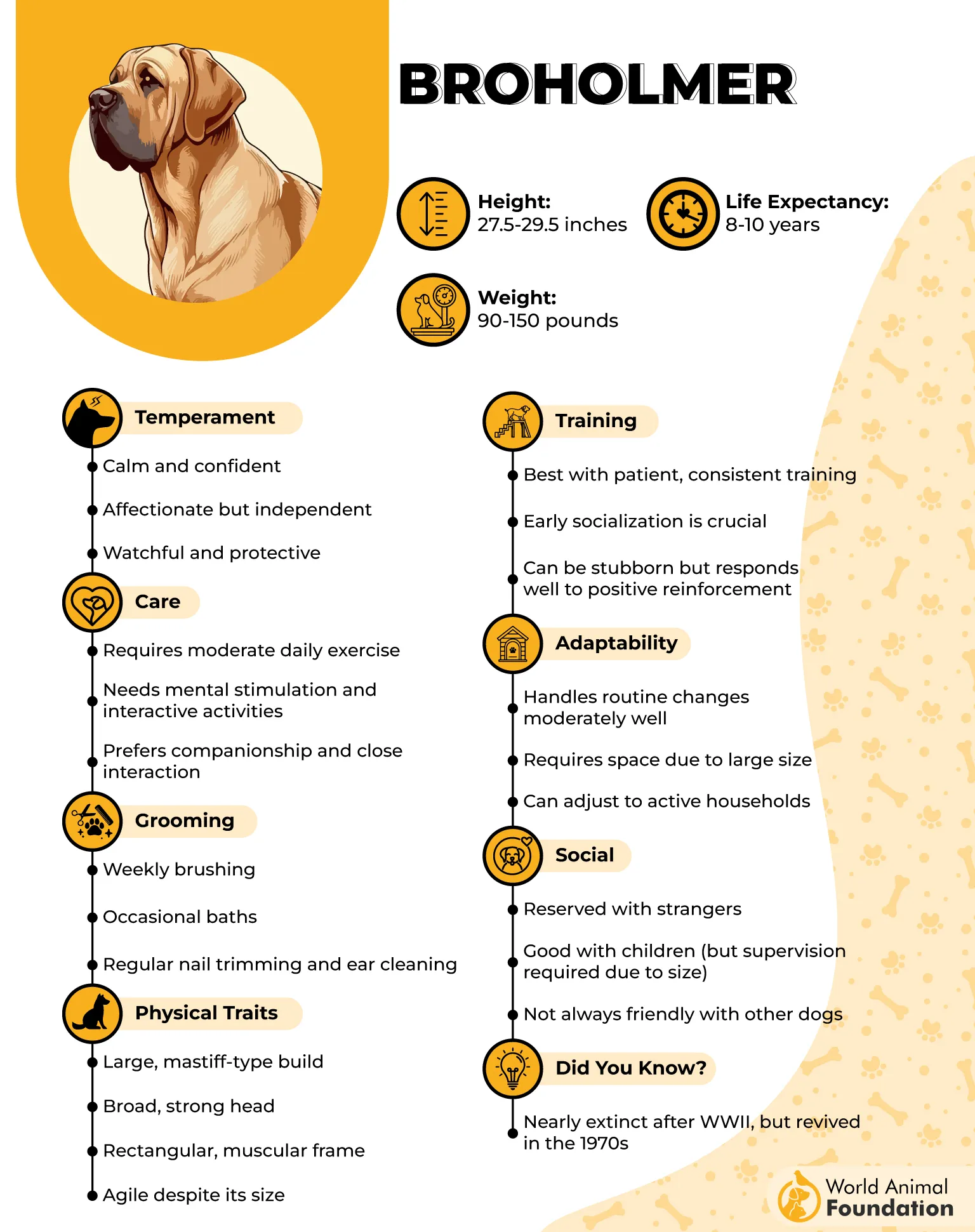
Broholmers aren’t quick to bark at every little thing; they stay composed and only step in when a threat actually seems serious.
They’re intelligent, though fairly independent too, so they do best with confident leadership and reward-based training. Exercise needs are moderate; regular walks and some playtime in a secure yard are usually enough to keep them mentally satisfied.
7. Newfoundland
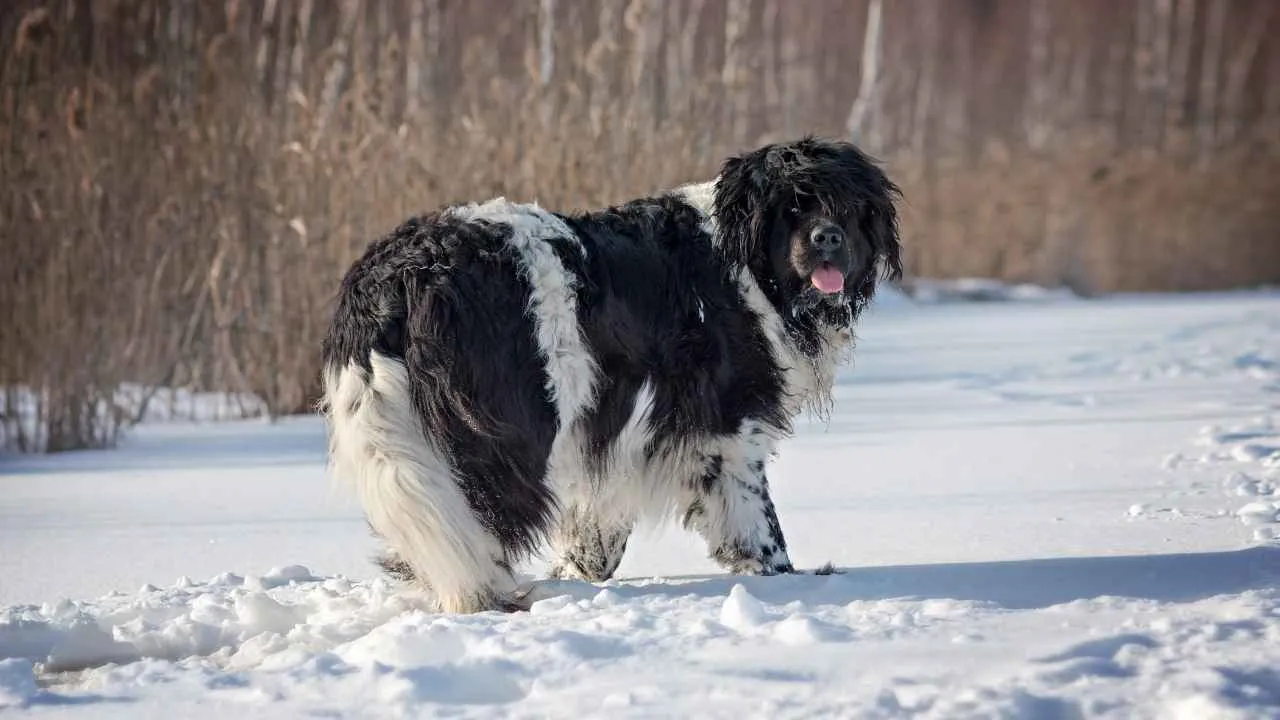
Newfoundlands are big, patient, gentle, and wonderfully fuzzy dogs that genuinely love being around their people. Originally bred to work alongside fishermen, pulling nets, retrieving ducks, and even helping rescue people from water, they’re naturally strong, capable, and alert.
These calm dogs tend to rely on their sheer size to scare off intruders rather than reacting aggressively right away. They’re also incredibly patient and tolerant around kids, staying relaxed and easygoing even when things get a little loud and chaotic. Honestly, what’s not to love?
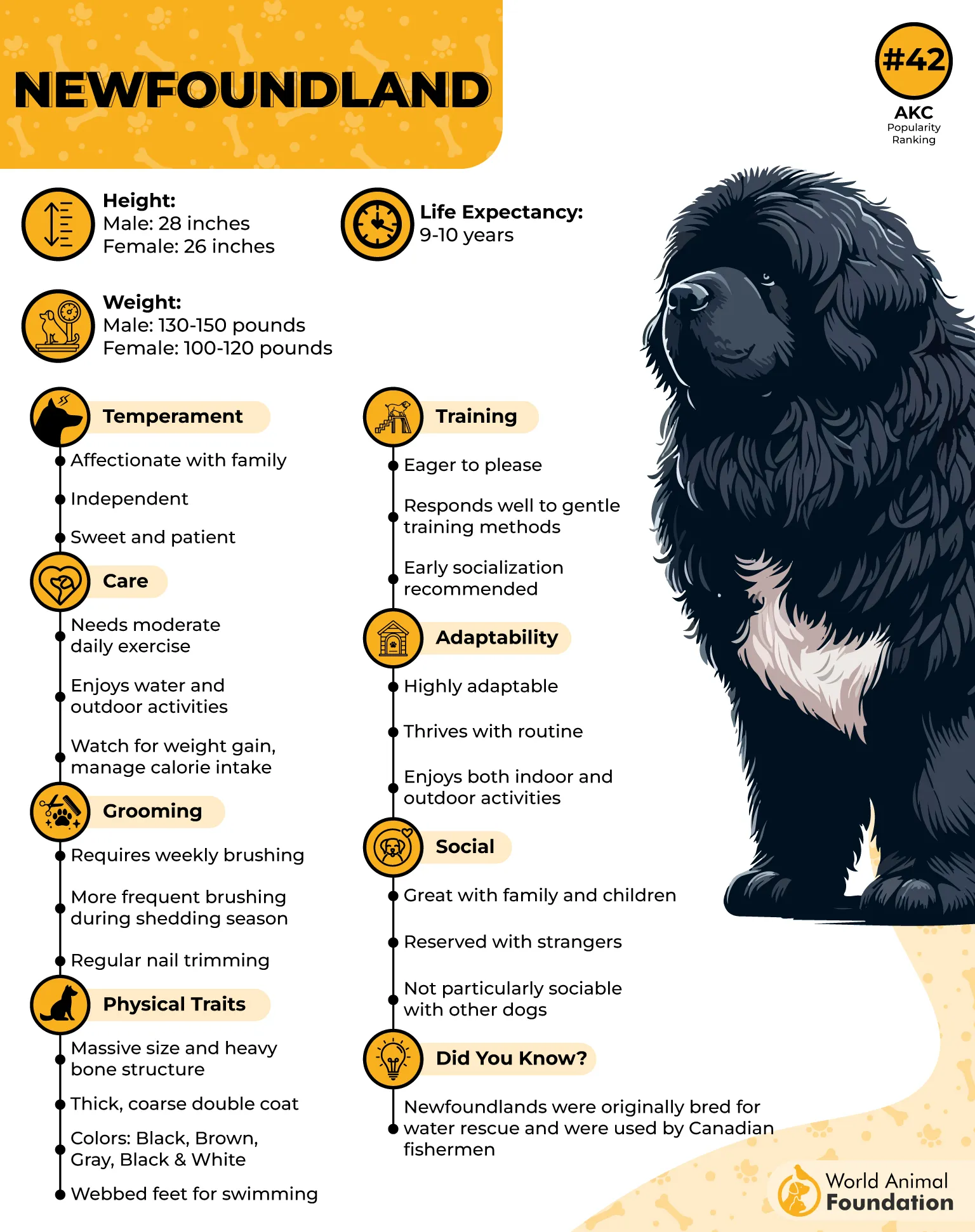
Newfies are smart and eager to please, which makes training them relatively straightforward. They’re not the type to run for hours, but they do enjoy long walks, the occasional hike, and swimming, all great for keeping them mentally engaged.
Do keep in mind, though, that they shed heavily year-round and need frequent brushing, so this breed is best suited for owners ready for that kind of commitment.
Conclusion
Great guard dogs don’t have to be loud, and that’s exactly what these 7 breeds prove. All of them are calm, patient, and gentle indoors, while still staying alert the moment they sense any real threat. They’re not quick to get aggressive or start barking at everything; instead, they rely on their size to deter intruders and only step in if something genuinely seems serious.
One of the best things about these protective dog breeds, though, is how patient and easygoing they are with kids. They’ll happily act as a pillow, follow the little ones around the house, and quietly keep watch over everyone, making them truly wonderful family pets.
