




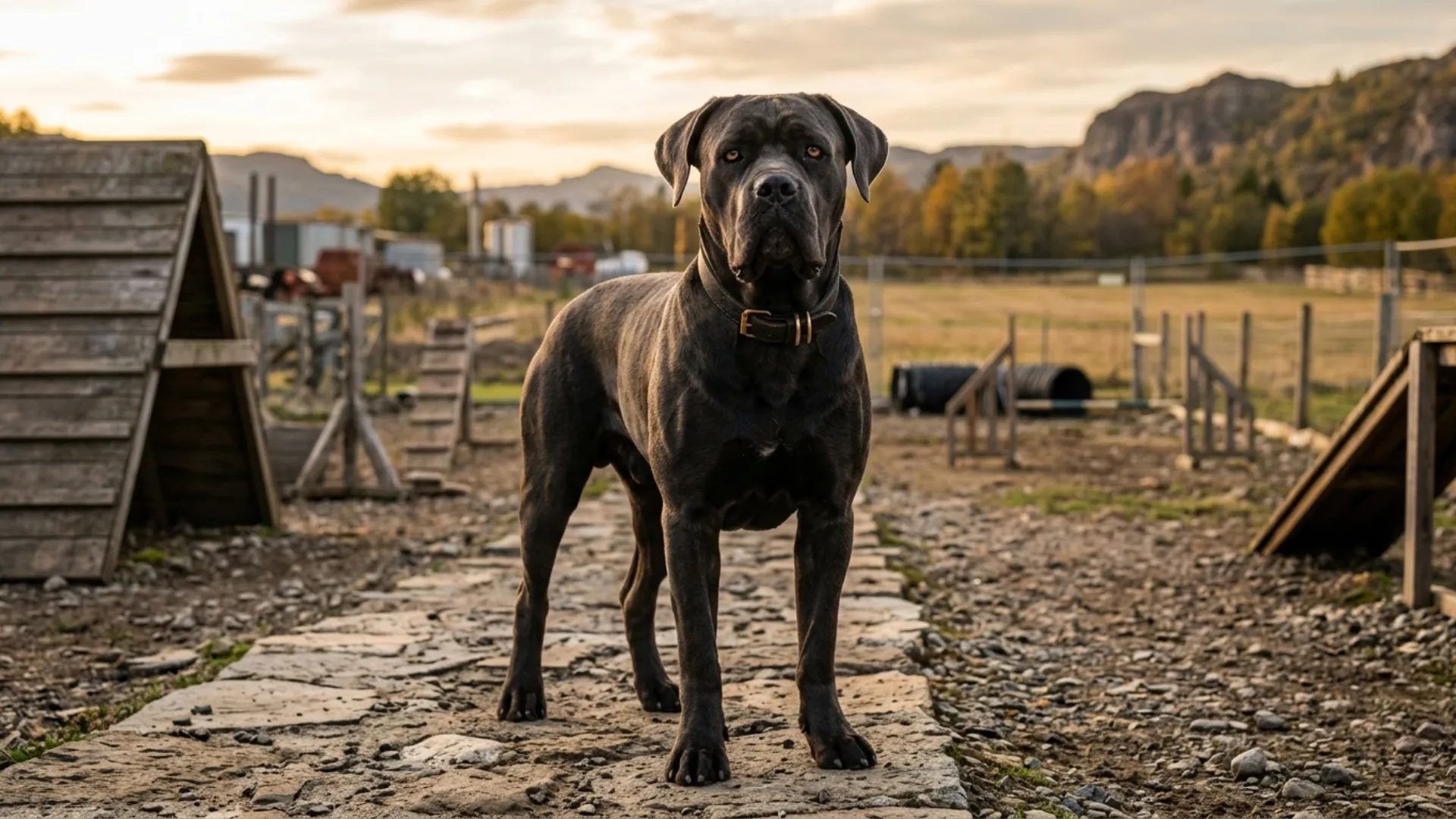
Some dogs look like they spend every day at the gym, but muscles tell only part of the story. The strongest dog breeds also carry loyal hearts, sharp minds, and deep bonds with their families. As actor Chris Pratt once joked about dogs, “They do not care what you look like; they just love you.” That simple truth fits these impressive canines perfectly.
Choosing the right muscular dog breed should never be based on looks alone. Consider your lifestyle, experience, available space, and the time you can dedicate to training and exercise.
Many people admire muscular breeds for their confidence and working ability, not just for their appearance. If trained with patience and respect, these powerful dogs become dependable partners, loving family members, and lifelong friends.
Top Muscular Dog Breeds: Power and Personality
1. Rottweiler
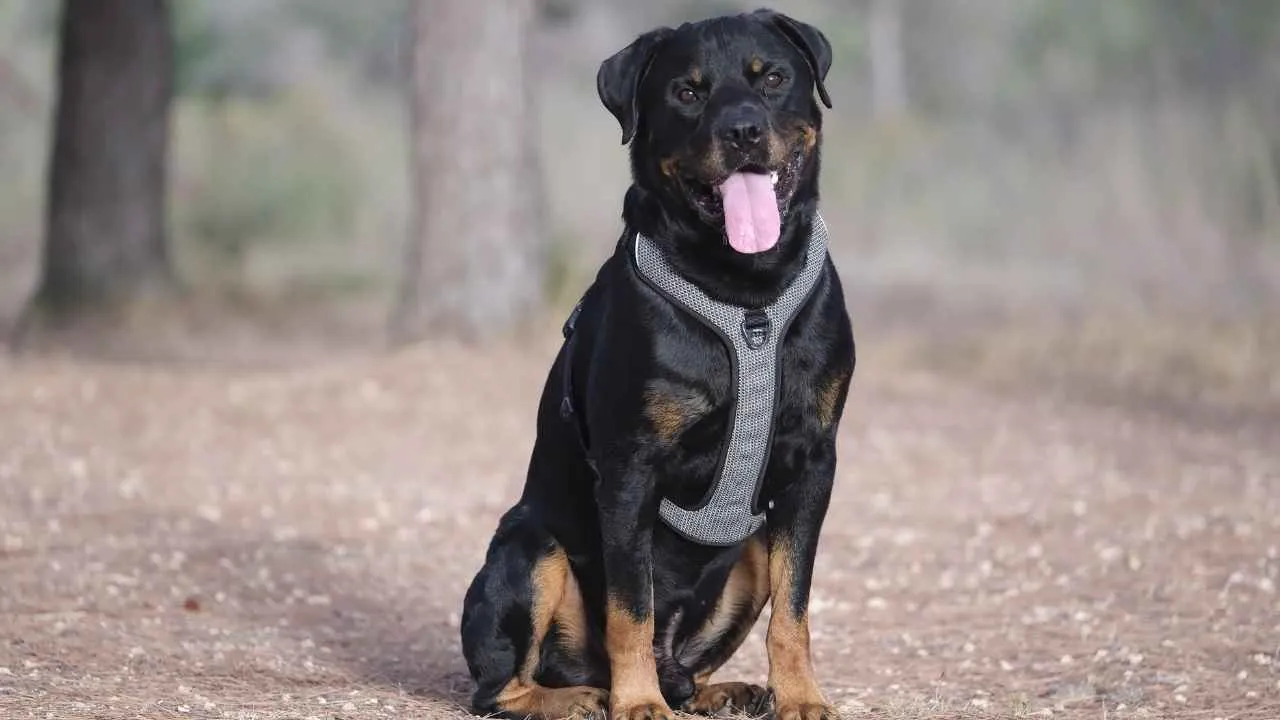
Originally bred in Germany, the Rottweiler is a medium-to-large dog and was called ‘Rottweiler Metzgerhund’ (Rottweiler Butcher’s Dog), since it was used to pull heavy meat carts to the markets long before the invention of the railways, according to Wikipedia.
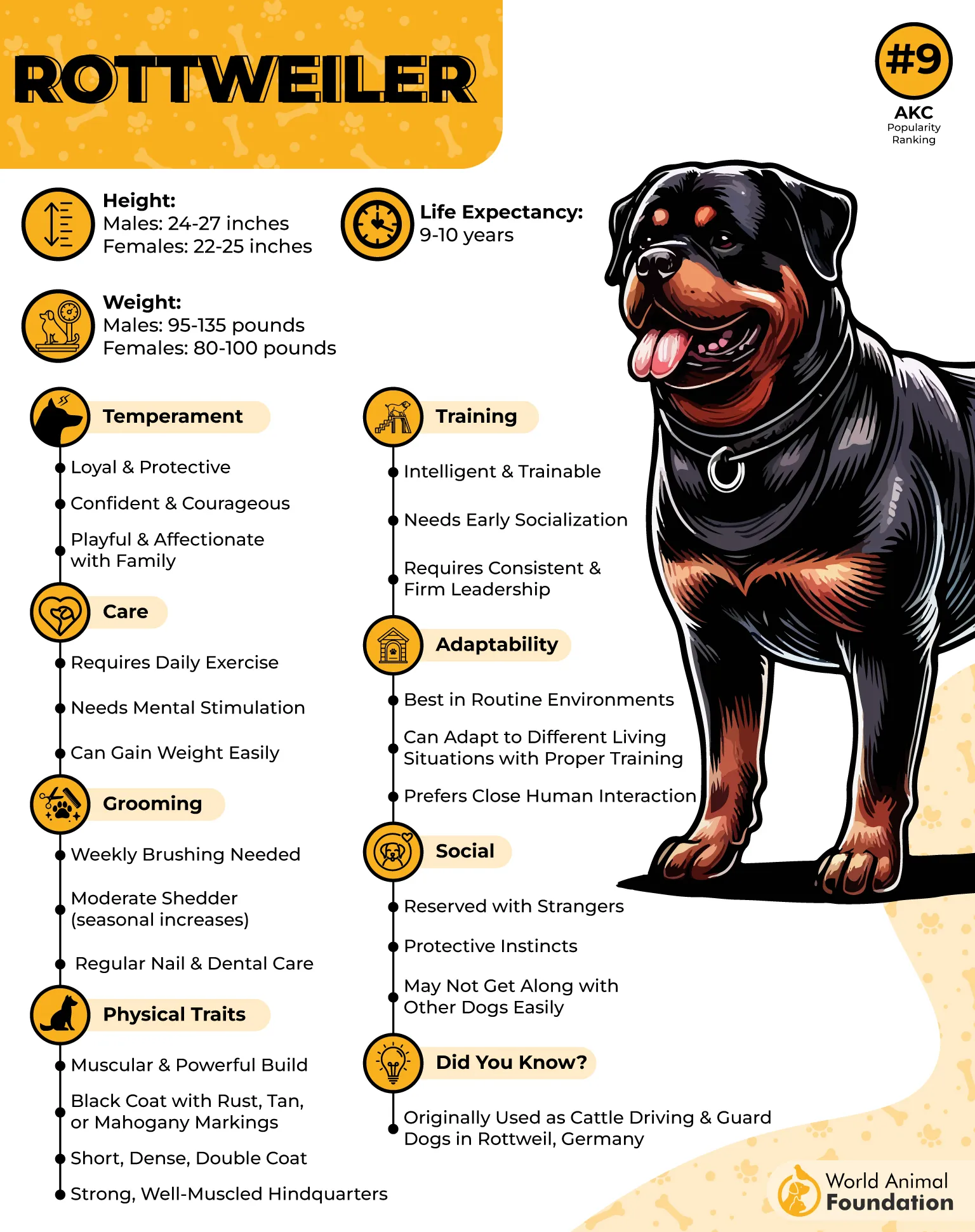
Having the historic role as a droving dog, it has well-sprung ribs and a deep chest. The wide muzzle and a well-developed jaw provide a scissor bite, where the upper incisors perfectly overlap the lower incisors. It is widely used in K9 units, SAR operations, and herding work because of its exceptional tracking ability and protective nature.

This energetic dog needs 1-2 hours of daily exercise: backyard fetching, swimming, jogging, brisk walks, interactive puzzle toys, and mental stimulation to avoid boredom and destructive behavior. Puppies of 12-15 months of age should not be exposed to high-impact exercise because of the developing joints.
2. Dogo Argentino
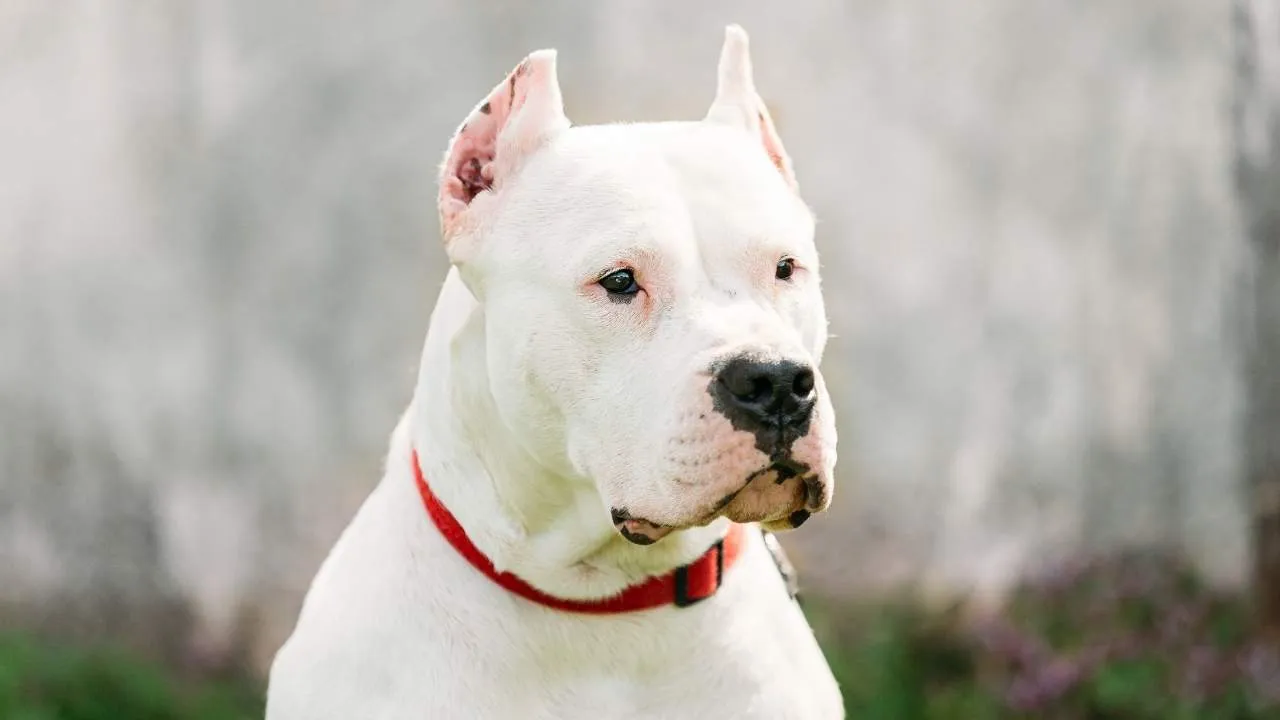
This mastiff-type large dog was developed in Argentina in the early 20th century by crossing an extinct breed, the Córdoba fighting dog, with the Bull Terrier and the Mastín del Pirineo. Its primary goal was to serve as a hunting companion to prey on large game, such as peccaries, wild boar, and pumas, as noted by the AKC.
It is designed for maximum force transfer from its muscular hindquarters to its strong forelegs, enabling it to tackle large animals without fatiguing. With a bite force of 500 PSI, it can tear the muscles apart and crush the bones.
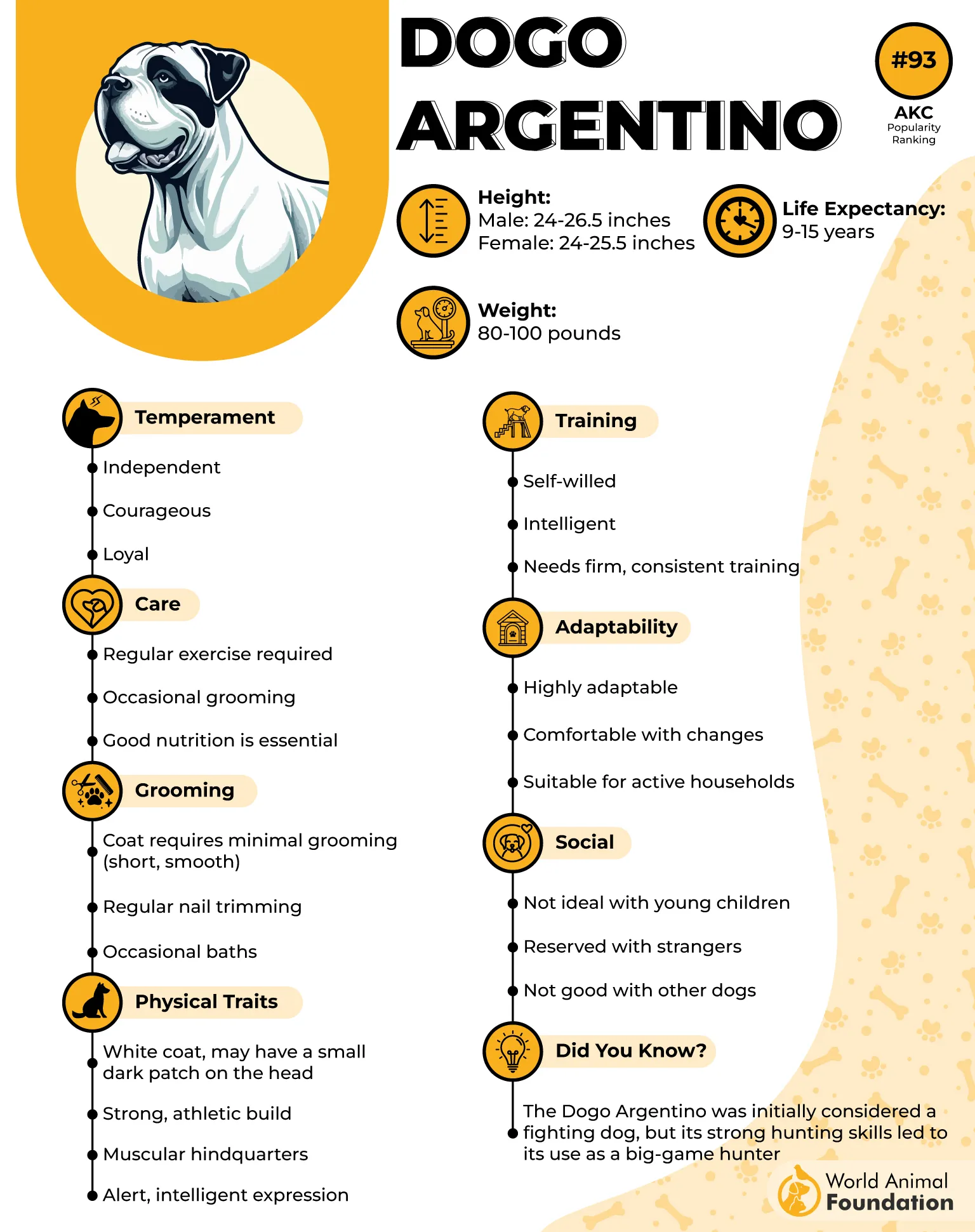
The dense and all-white double coat has a low-friction outer coat that acts as a shield against external elements (thorny brushes and predators’ bites). It needs regular exercise for 1-2 hours daily: brisk walk, fetching, hiking, scent games, target tracking, and obedience training.
3. American Bulldog
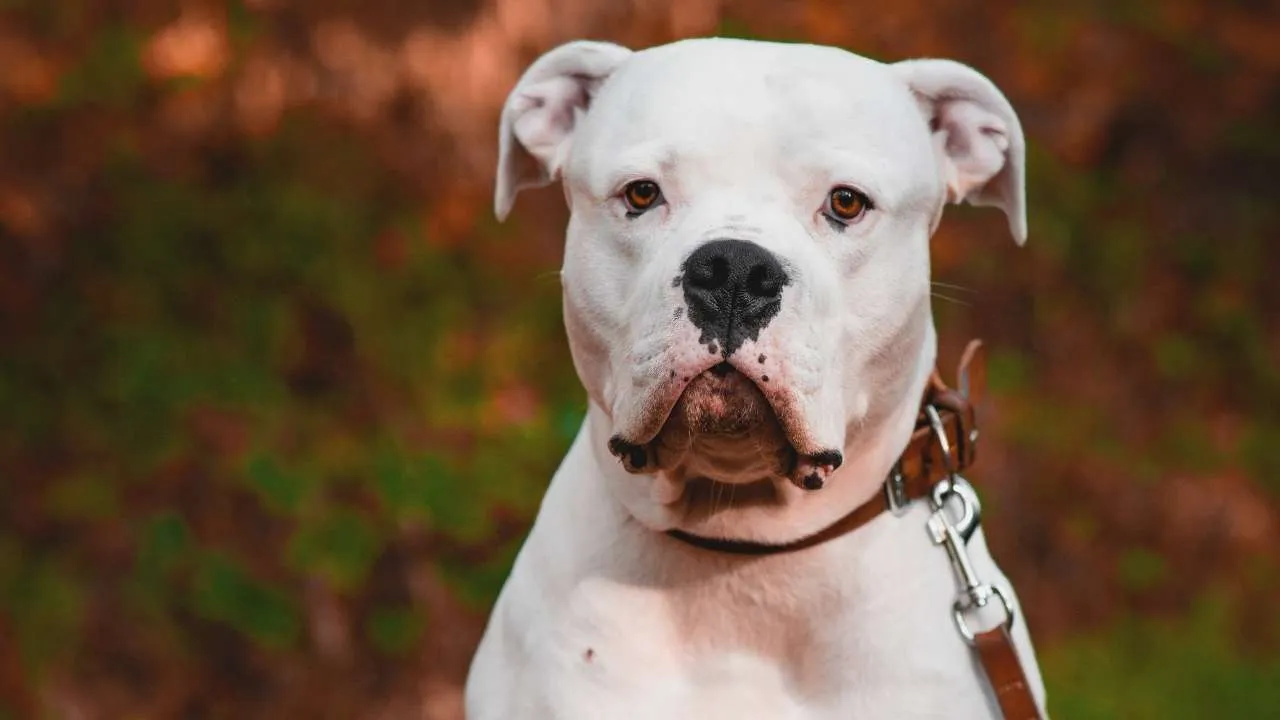
This versatile ancient dog breed has been serving as a guardian, cattle chaser, farm dog, and hunting partner for centuries. It was introduced to the United States in the 17th century and is now known as a loyal, affectionate, and powerful breed.
The dense frame relies on fast-twitch muscles, making it eligible for short sprints rather than endurance. It can make sharp U-turns and jump high with this feature. The wide-chested skeletal structure provides an anchor point for pulling and holding strength.
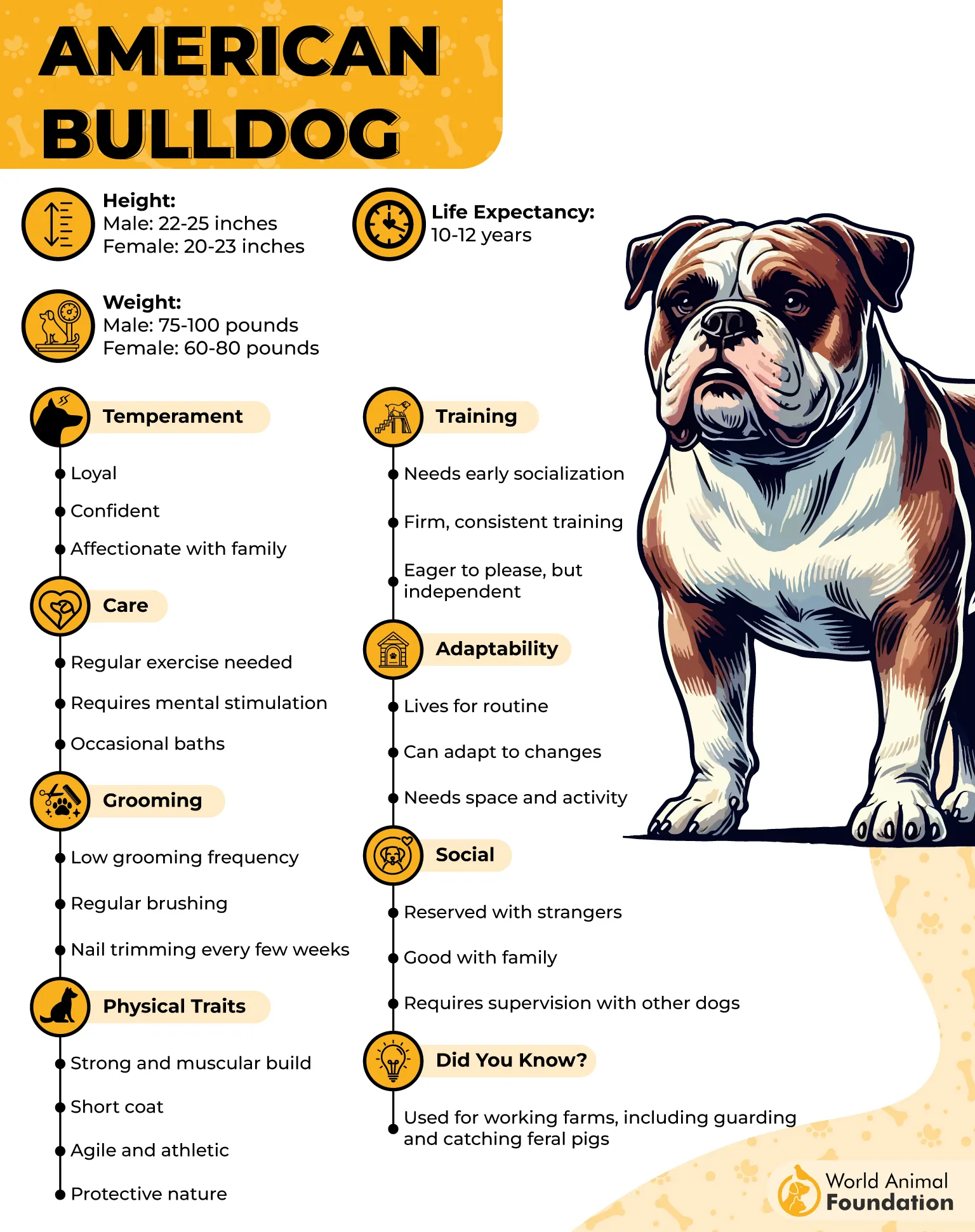
The well-angulated hind legs generate explosive forward and upward propulsion. Despite being a brachycephalic breed (having a flat face and narrowed airways), the breed needs vigorous exercise for 1-2 hours daily. The muscular body has minimal grooming needs; weekly brushing is enough.
4. Doberman Pinscher
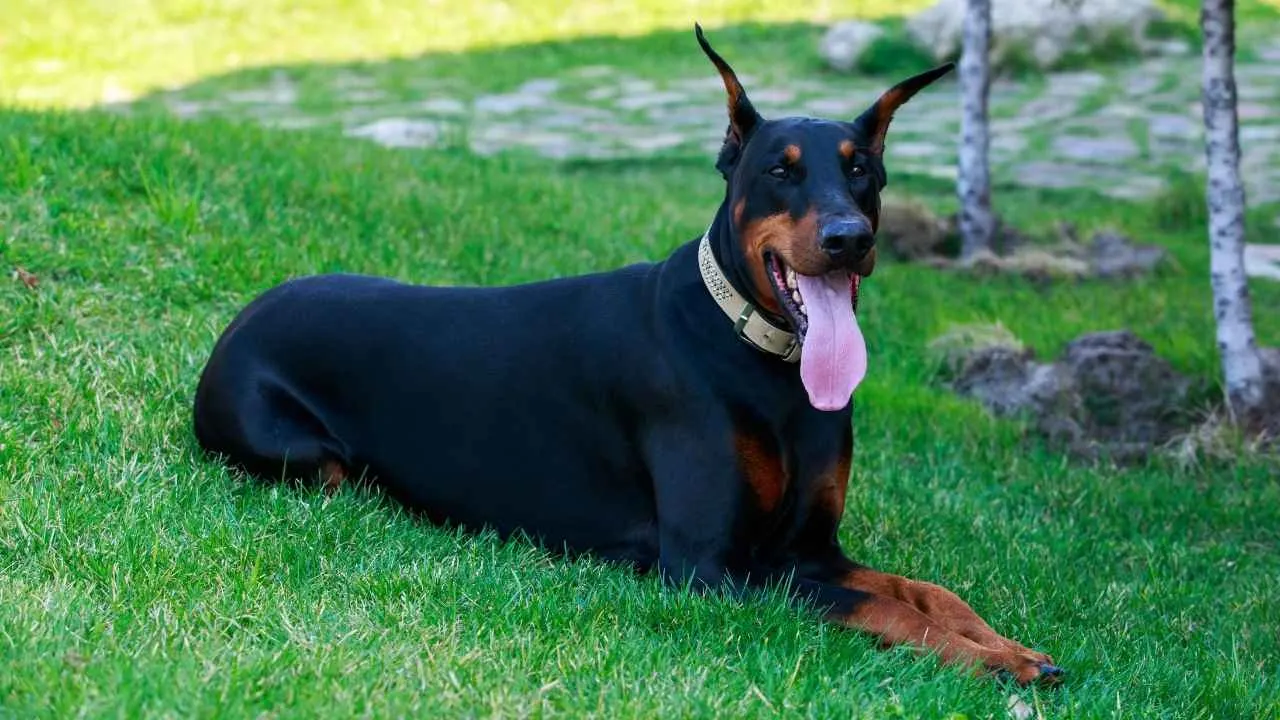
This powerful dog breed was bred by a German tax collector, Louis Dobermann, in the 19th century. He crossed an Old German Shepherd, German Pinschers, Black and Tan Manchester Terriers, and Greyhounds to create the 5th most intelligent dog breed of all time, as per PetMD.
This guard dog has a square-shaped frame, allowing swift directional changes and explosive bursts of energy. The dense bones serve as strong anchor points, allowing it to exert full force without losing joint stability. It forms strong bonds with the owner, making it an excellent therapy dog.
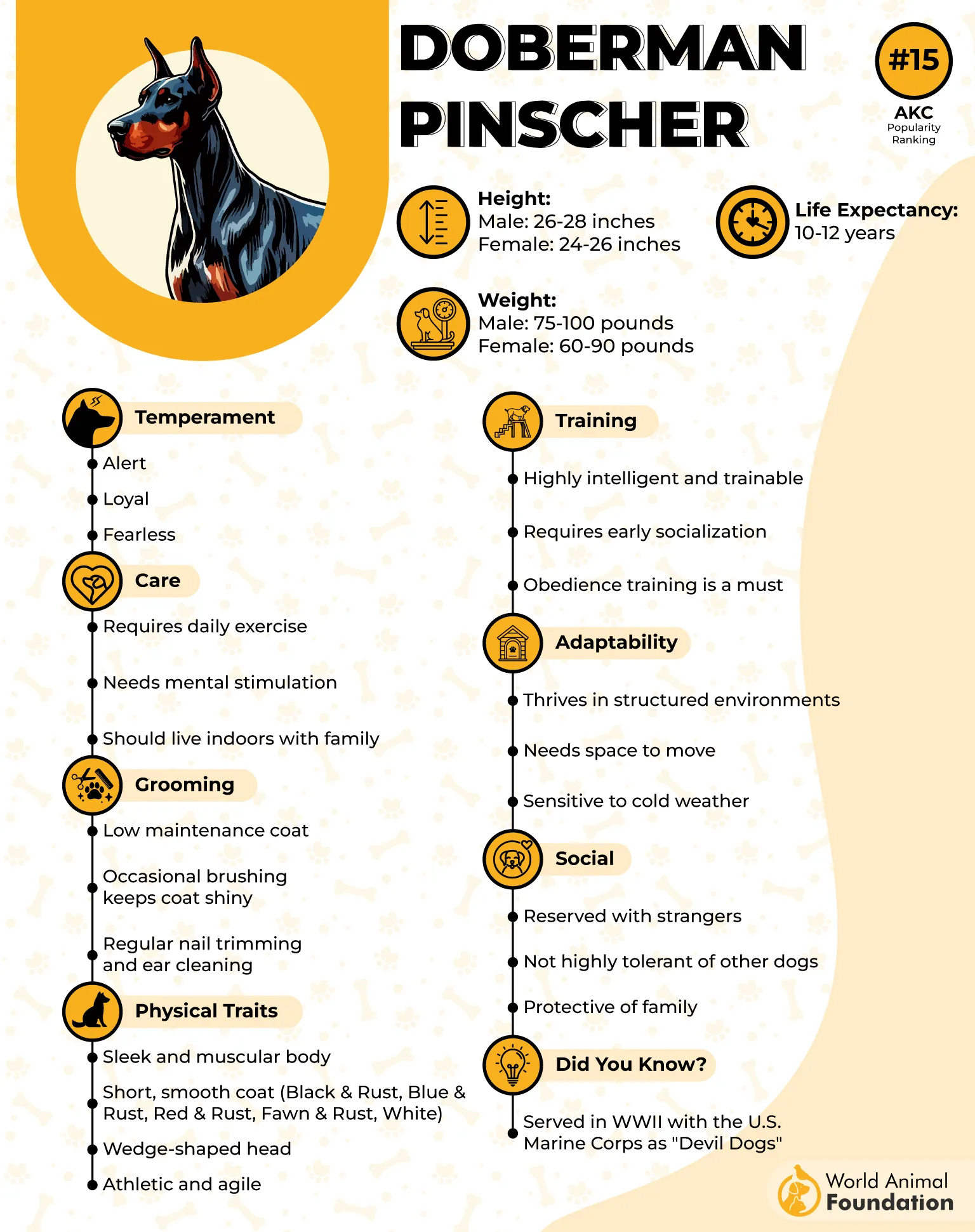
Since it is a high-energy canine, it excels in competitions like agility, dock diving, tracking, and Schutzhund. It has lean muscles and an athletic build; thus, it thrives in high-impact exercise (1.5-2 hours): running (3-5 miles), jogging, brisk walks, fetching, and scent work.
5. Cane Corso
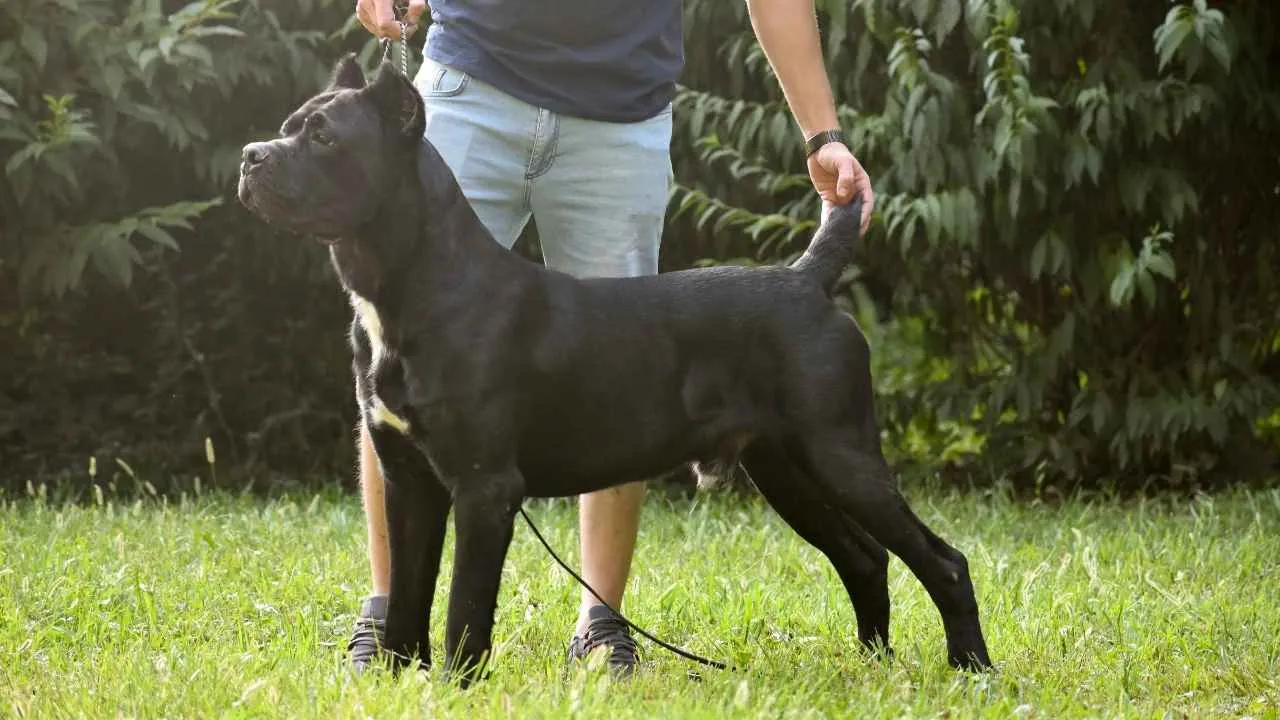
This large dog breed was developed in Italy and is also known as the Italian mastiff. Known for its large head, expressive face, and muscular appearance, it has been serving as a watchdog, farmhand, and war dog for centuries. The name literally translates to ‘a bodyguard dog.’
The dog has a strong bite force of 700 PSI, and a pack of this breed can even knock out a giant lion. This one of the strongest dog breeds has a rectangular build and dense body mass, allowing it to transfer substantial momentum into its target.
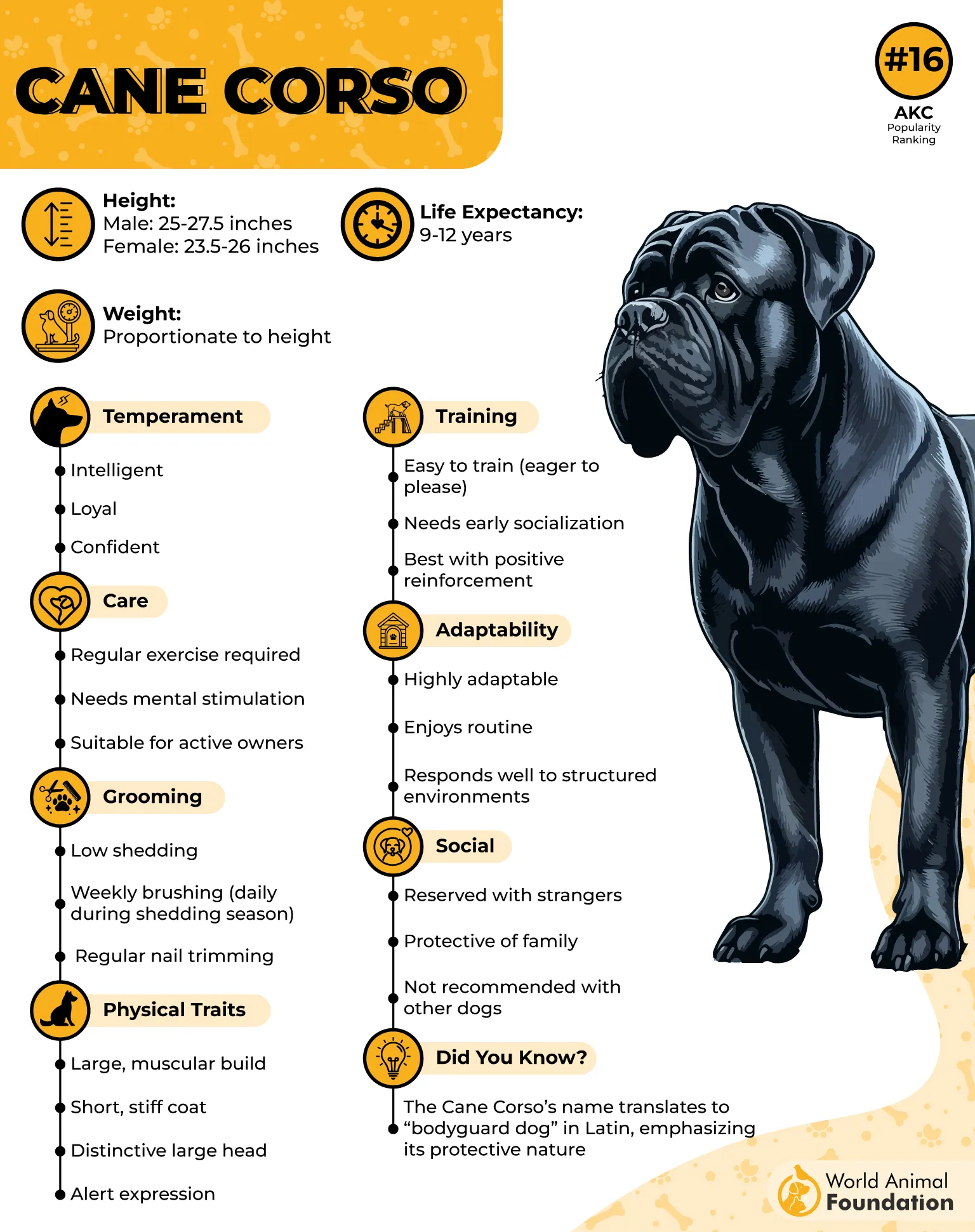
The dog has strong protective and territorial instincts, making it an excellent protection dog. It is highly athletic and needs 1-2 hours of daily exercise. It excels in canine sports and muscle stimulation games. The Cane Corso is a low-maintenance breed, and weekly brushing with a soft bristle brush and a rubber grooming mitt is enough.
6. Kangal
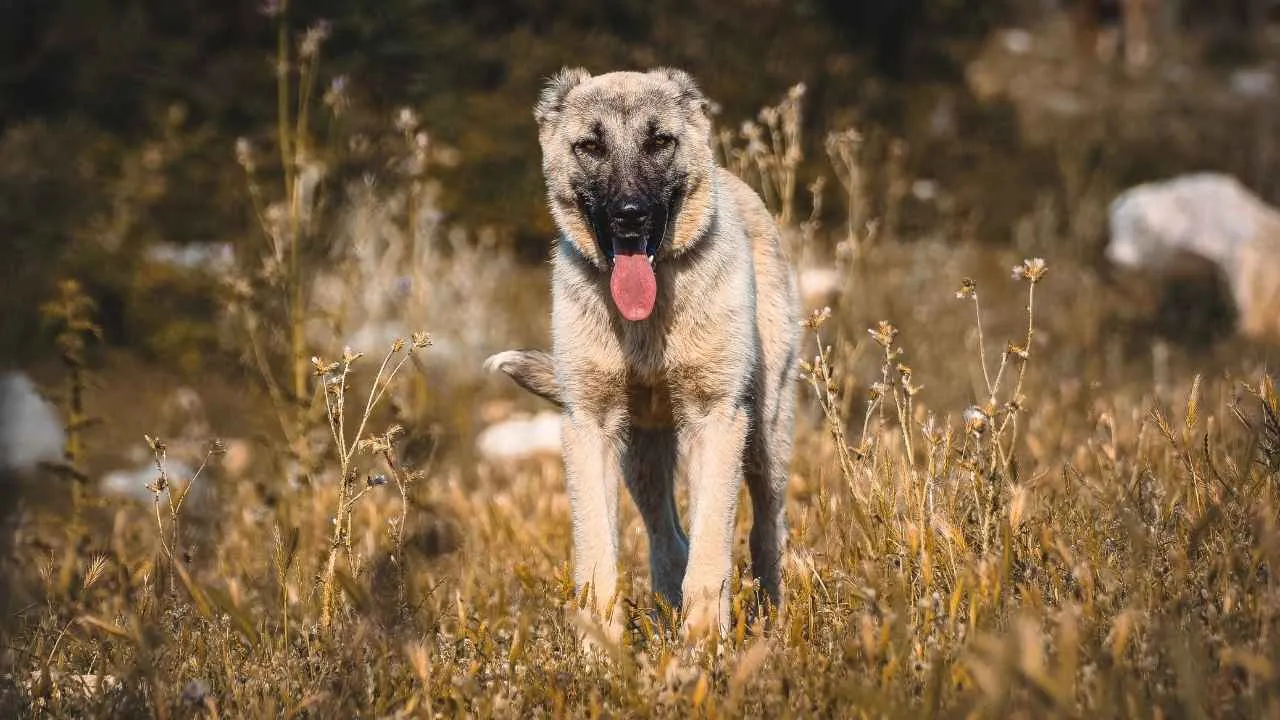
This extremely devoted breed was developed in Turkey as a livestock guardian. Its primary goal was to protect the sheep from the wolves and other dangerous predators. Some of these breeds were exported to regions like Namibia, Kenya, and Tanzania to protect the livestock from cheetahs; thus contributing to the preservation of the endangered cheetahs.
The wonderful companion has one of the strongest bite forces (743 PSI). It can run at a speed of 30 mph, as the front quarters are heavier than the hindquarters, driving power forward to the lungs. The neck and the rest of the body have loose and elastic skin, protecting the breed from the dangerous bites of predators.
It is traditionally an ‘energy conserver,’ and tends to keenly observe the surroundings by silently sitting on a vantage point. The weather-resistant, thick double coat can handle both cold and hot climate conditions. The breed needs intense exercise for 1-2 hours daily for physical stimulation.
7. Presa Canario
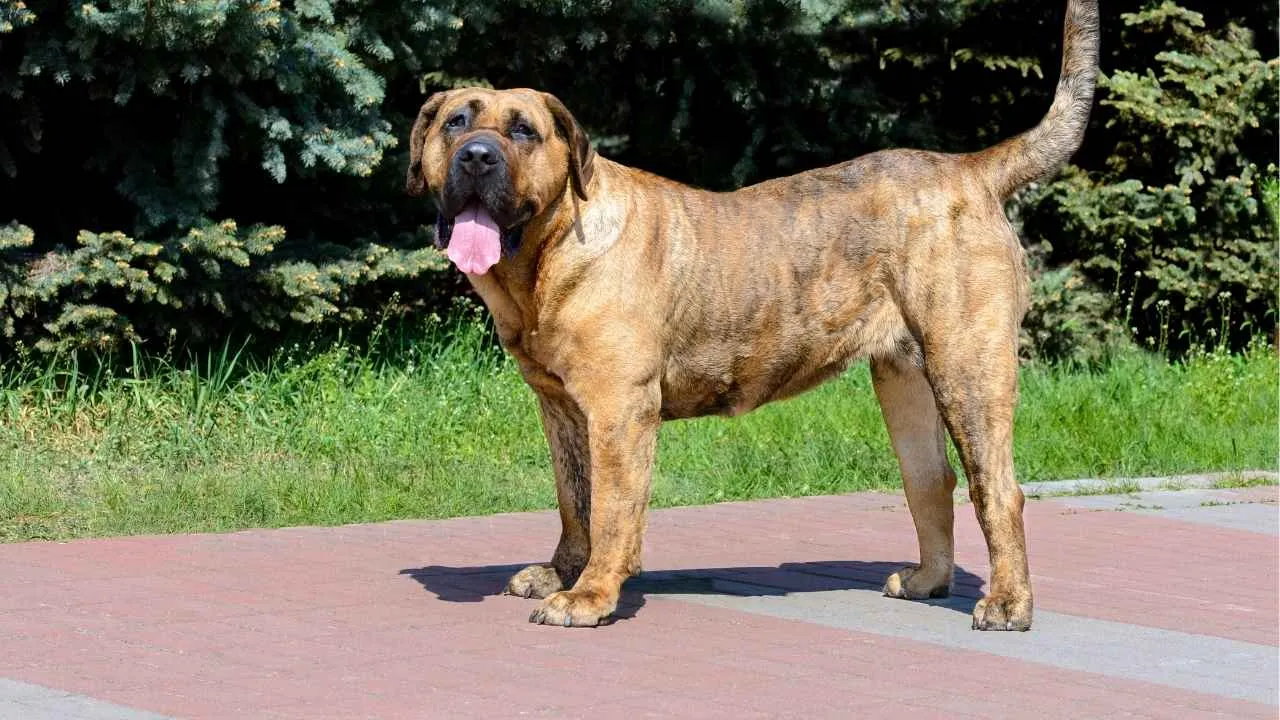
Also known as the Dogo Canarios, the dog was originally bred in the Canary Islands in the 19th century. The primary goal of this large dog was to be used for dogfighting, guarding, and herding. It is believed that a now extinct breed, Bardino Majero, and the English Mastiff contributed to the formation of this dog.
As a molosser dog, it has a cuboid head and an intense jaw strength, providing a bite force of 540 PSI. The heavy skin acts as a natural armor against hazards and provides demanding physical work under stress. It has cat-feet, with neat paws and well-arched toes, acting as an excellent shock absorber.
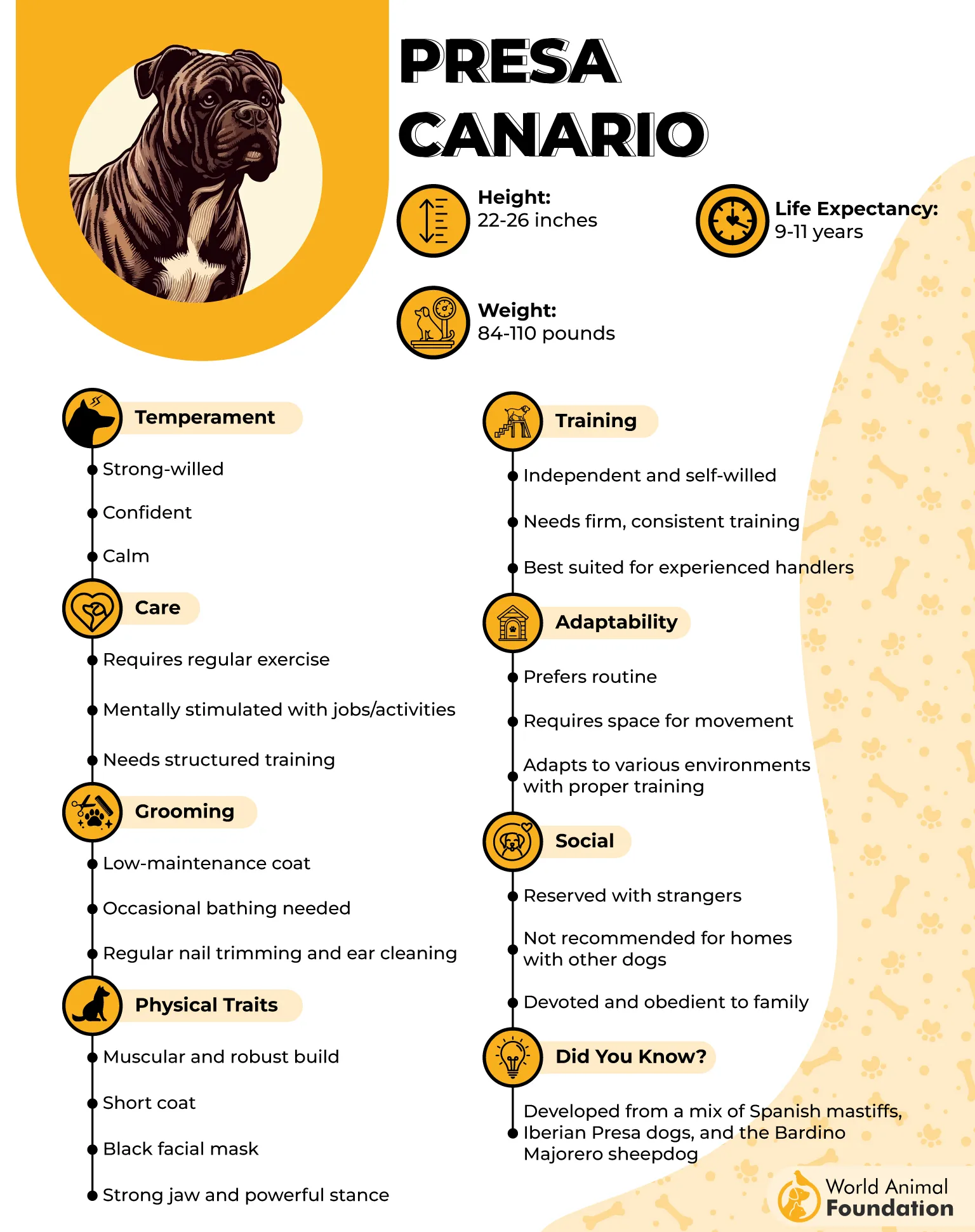
It needs 60-90 minutes of daily exercise and purposeful activity: 2-3 walks, hiking, agility, hide-and-seek, advanced obedience drills, and tug-of-war.
8. Bullmastiff
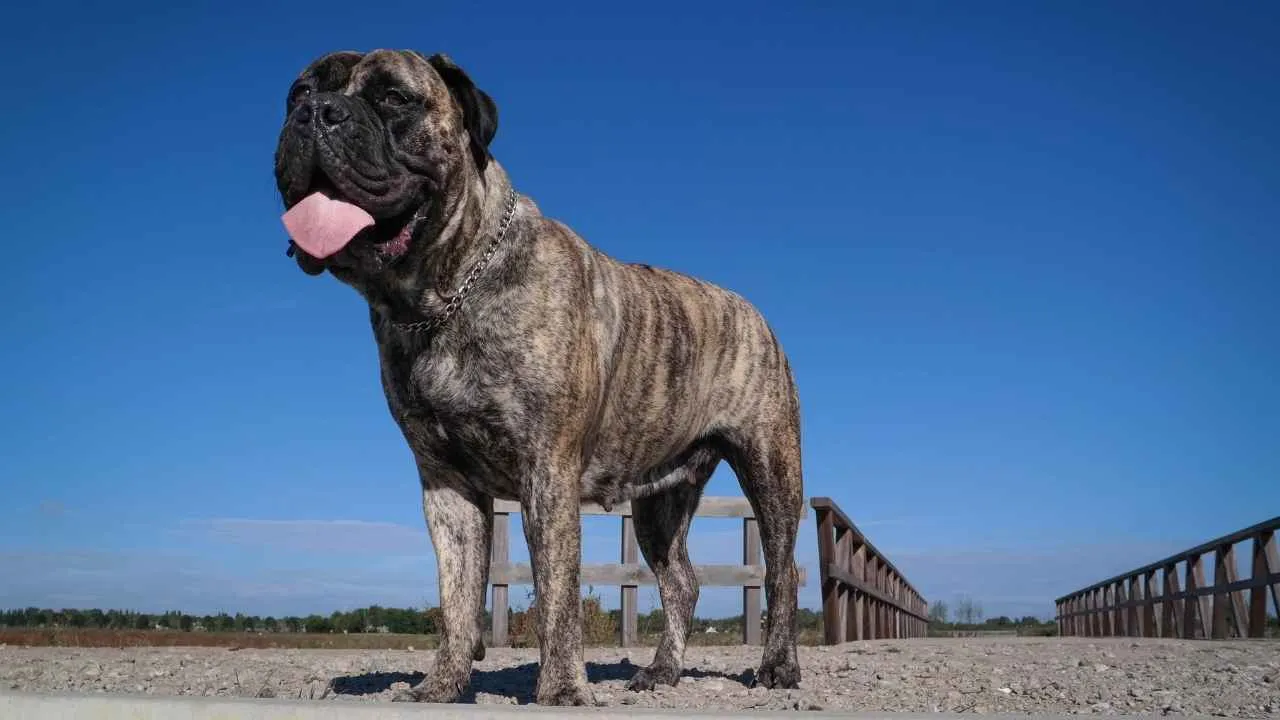
Also known as the ‘Gamekeeper’s Night Dog,’ the breed was bred in the 18th century by crossing the Mastiff (60%) and the Bulldog (40%). Built for agility and speed, it is a nocturnal breed that tends to conserve its energy during the day and works at night. It was bred to catch poachers from behind, knock them down, sit on their chests, and keep on barking till the handler comes.
With its high mass-to-height ratio, it is capable of immense pushing and stopping heavy loads. A heavy square head and a deep chest provide a low center of gravity, helping it anchor to the ground and subdue the intruder.
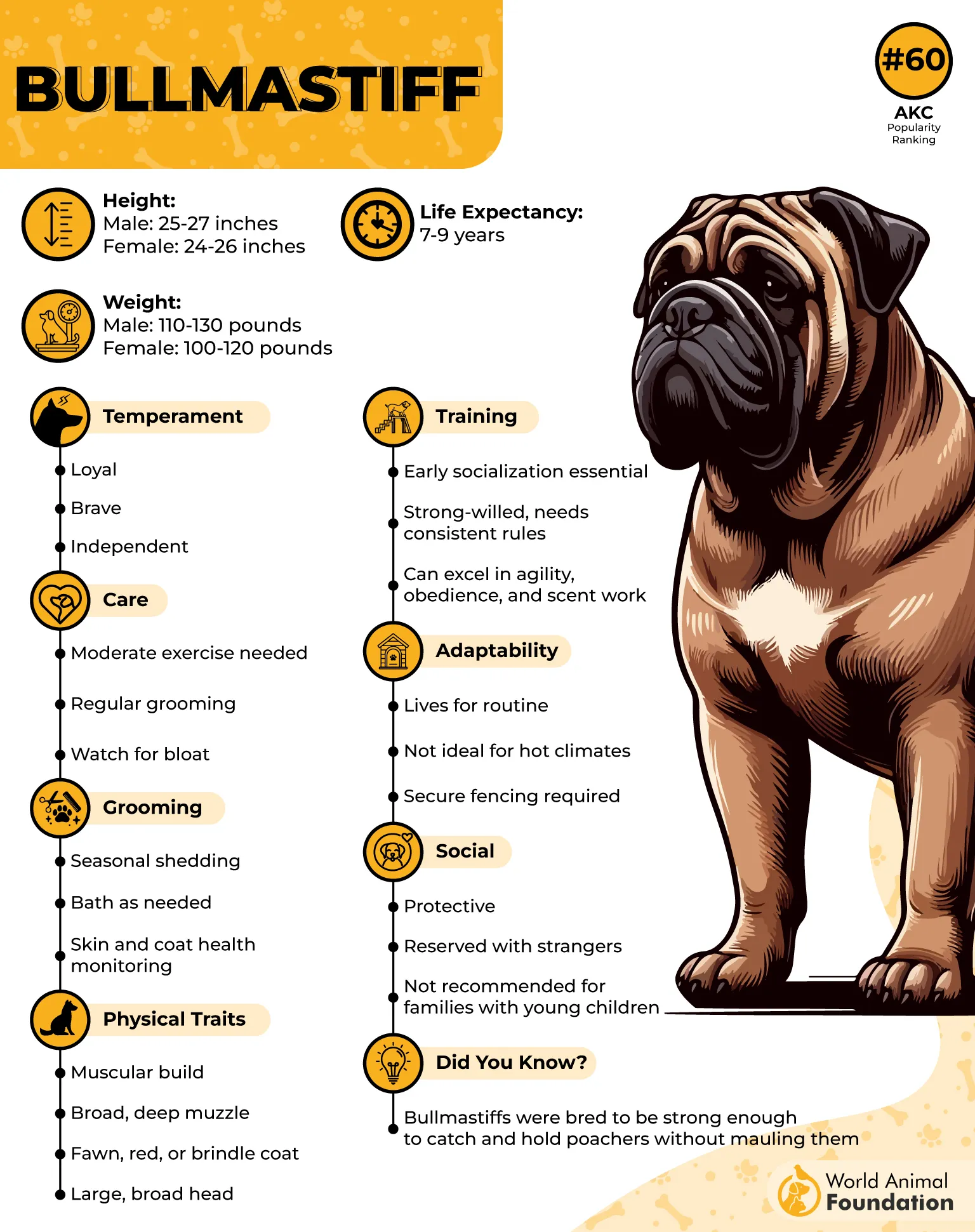
The breed has low-to-moderate exercise needs (30-45 minutes daily): 1-2 brisk walks, soft fetching, and indoor play, as it is a brachycephalic breed. Weekly brushing using a slicker brush is enough to remove loose hair and evenly distribute natural oils.
9. Boerboel
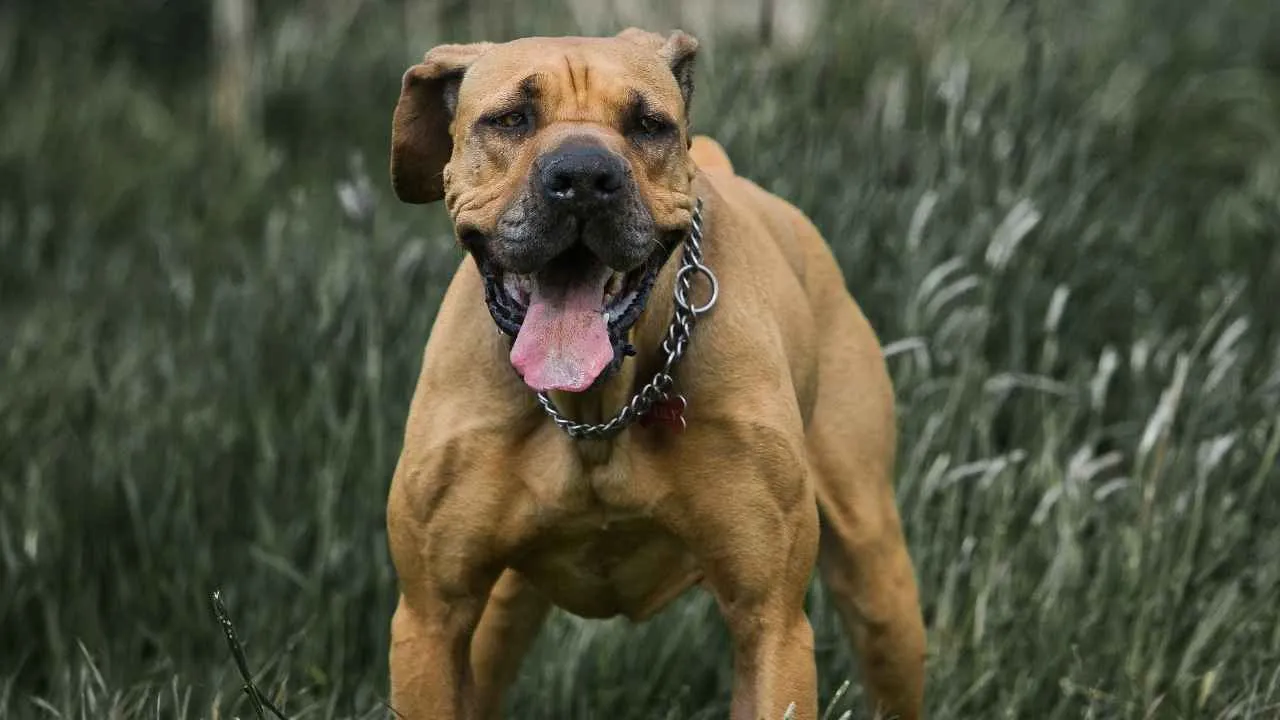
The mastiff-type large dog was bred in South Africa and was primarily used as a family guard dog. It used to protect the farms from furious predators, such as hyenas and lions. This gentle giant has a loving nature and is protective towards family members and children.
With its heavily boned legs and joints, it acts as a shock absorber that supports its massive size without hindering agility. The big dog is confident, alert, and possesses an inherent ability to read threats and protect its family. Being a natural athlete, it requires a constant job to avoid boredom.
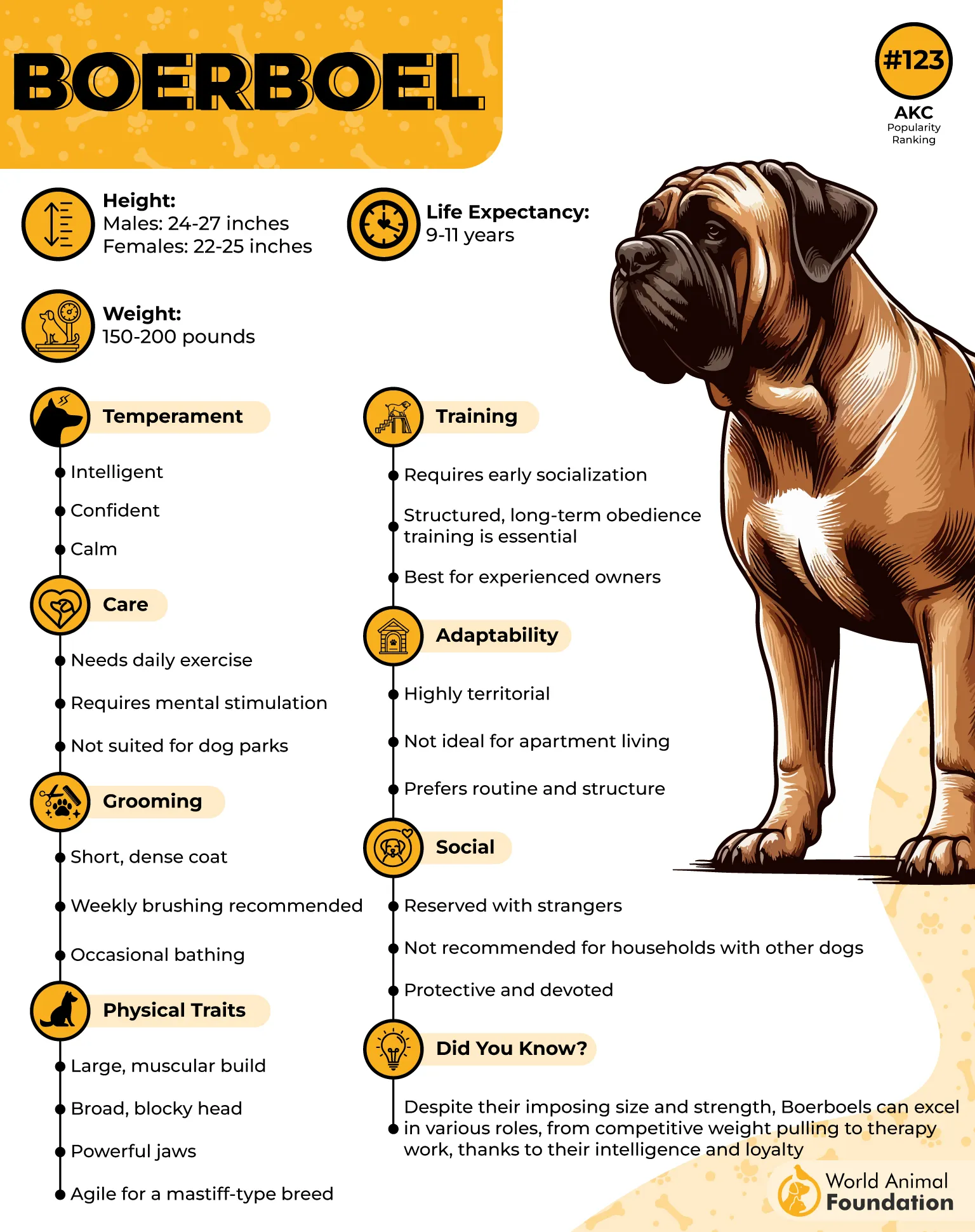
It has a muscular frame and independent nature; thus, proper training and early socialization are non-negotiable. The adult Boerboel requires 1.5-2 hours of daily exercise, while the puppies are suggested to have low-impact exercise because of the developing joints and bones.
10. American Staffordshire Terrier
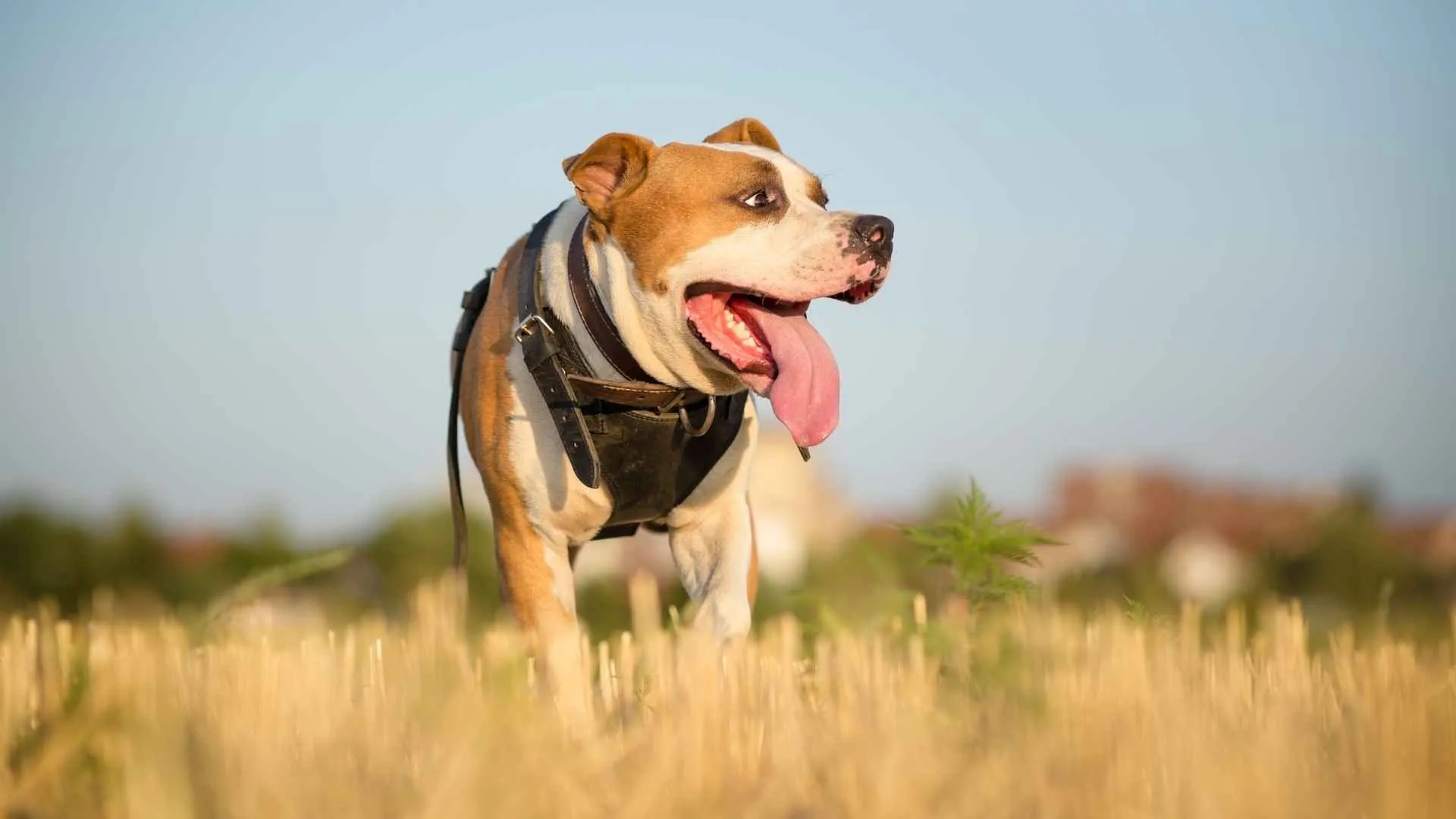
Also known as the AmStaff, the American Staffordshire Terrier is a medium-sized dog and has a history dating back to the 18th century in England, where it was used in blood sports, such as bull-baiting. After the ban on such sports in 1835, the breed went through selective breeding and turned into a cuddly family pet.
The broad chest, a short back, and the skeletal framework provide a low center of gravity, allowing heavy pulling force and excellent footing during athletic maneuvers. It has well-laid-back shoulders that absorb heavy impact and distribute weight.
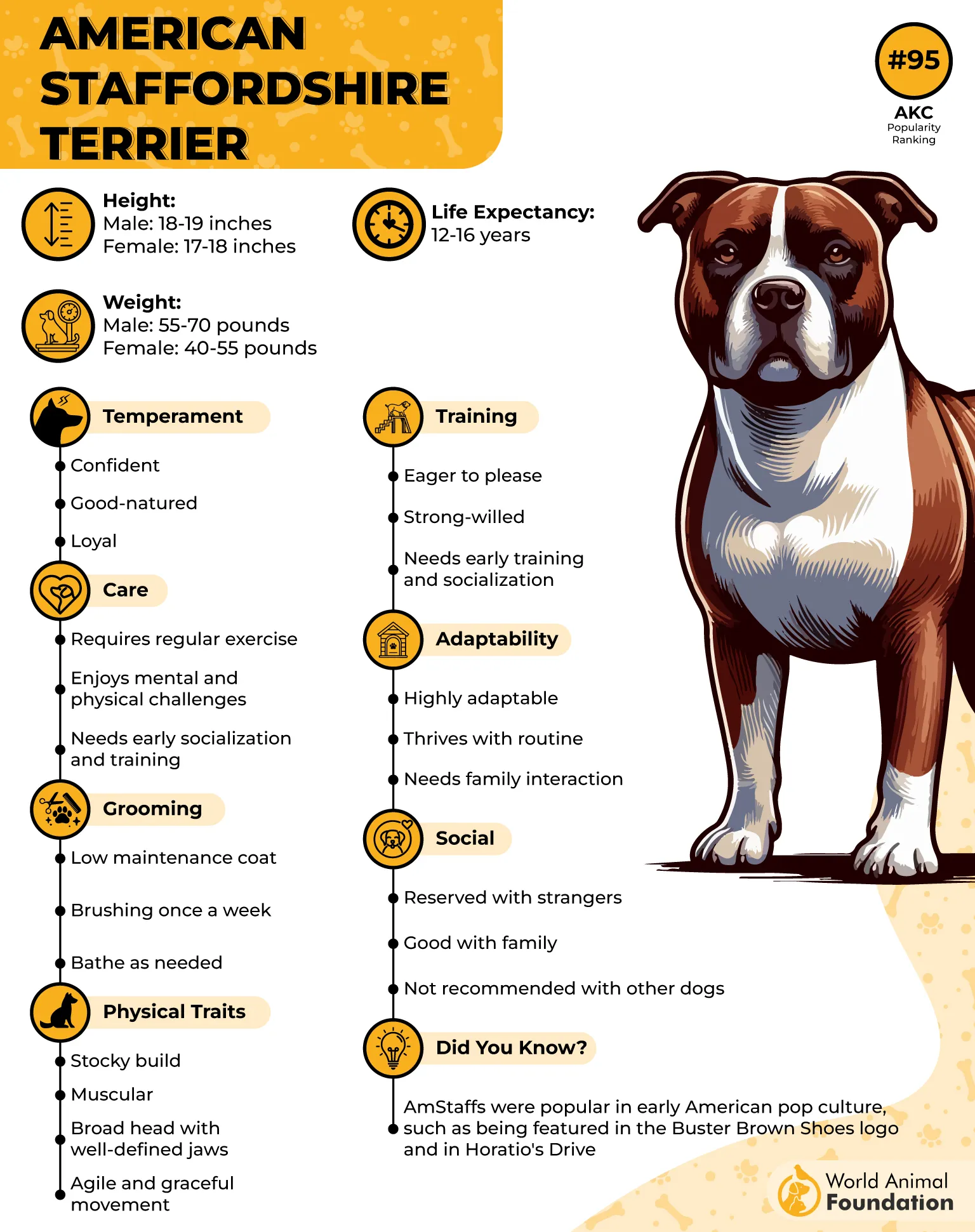
The energetic breed needs moderate exercise for 60 minutes daily: tug-of-war, jogging, brisk walks, fetching, puzzle toys, and scent work. Since it has a single-layer short coat, it is sensitive to extreme cold conditions. Hence, outdoor sessions in winter must be avoided.
Conclusion
Muscular dog breeds are much more than powerful bodies and impressive appearances. Behind every broad chest and strong shoulder is a unique personality shaped by generations of work, loyalty, and partnership with humans.
Some excel at guarding livestock, while others thrive as family companions or working dogs, but each breed brings something different to the table.
At the end of the day, the strongest muscle any dog has is not found in its legs or shoulders; it is in the heart. With patience, respect, and responsible care, these remarkable breeds can become trusted protectors, faithful companions, and unforgettable members of the family for many years to come.
