




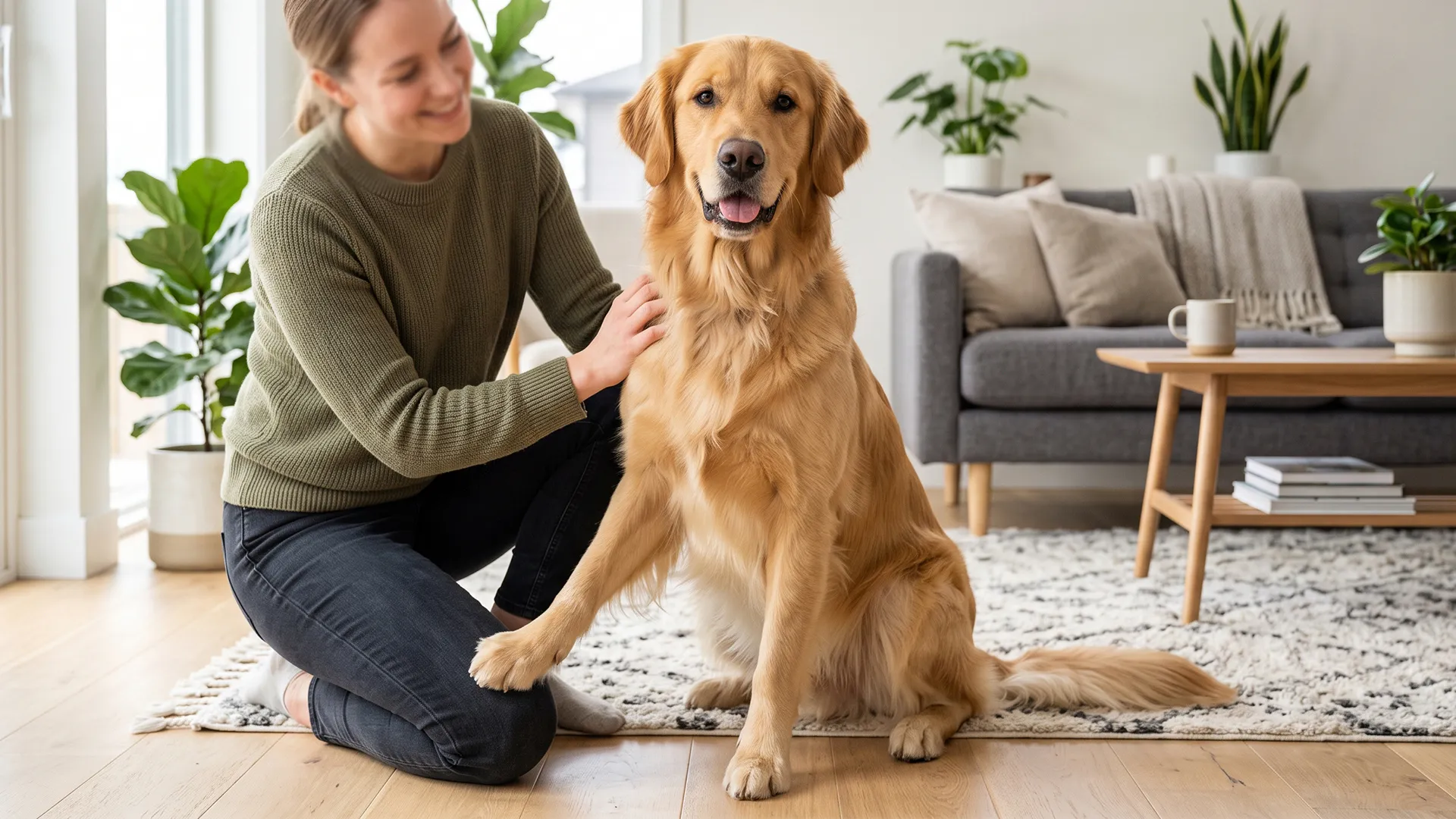
Some first-time dog owners seem to settle into life with their new companion almost effortlessly, while others quickly find themselves struggling with endless responsibilities they never expected.
The difference usually has very little to do with luck. It often comes down to one important decision made before the dog ever came home. Certain breeds naturally require less grooming, simpler training, and a routine that feels manageable even for complete beginners.
Knowing which is which can save months of frustration and make your first experience far more enjoyable. Surprisingly, the qualities that make a breed beginner-friendly are not always the ones people notice first. They are often hidden behind personality, daily habits, and practical care needs.
In this guide, you’ll uncover the breeds that make starting your journey easier and learn exactly why they suit first-time owners so well.
Key Takeaways
First-time dog owners often spend more time worrying about care than enjoying the experience, but the right breed can completely change that.
One of them was once known as a living foot warmer, while another quietly cleans its face with its paws just like a cat.
From Golden Retrievers that love learning to Papillons that are far easier to groom than they look, every breed brings something beginners truly appreciate.
Keep reading because the little details behind these breeds are often the biggest reason new owners fall in love with them.
Easiest Dog Breeds to Care For – Perfect for Beginners
1. Cavalier King Charles Spaniel
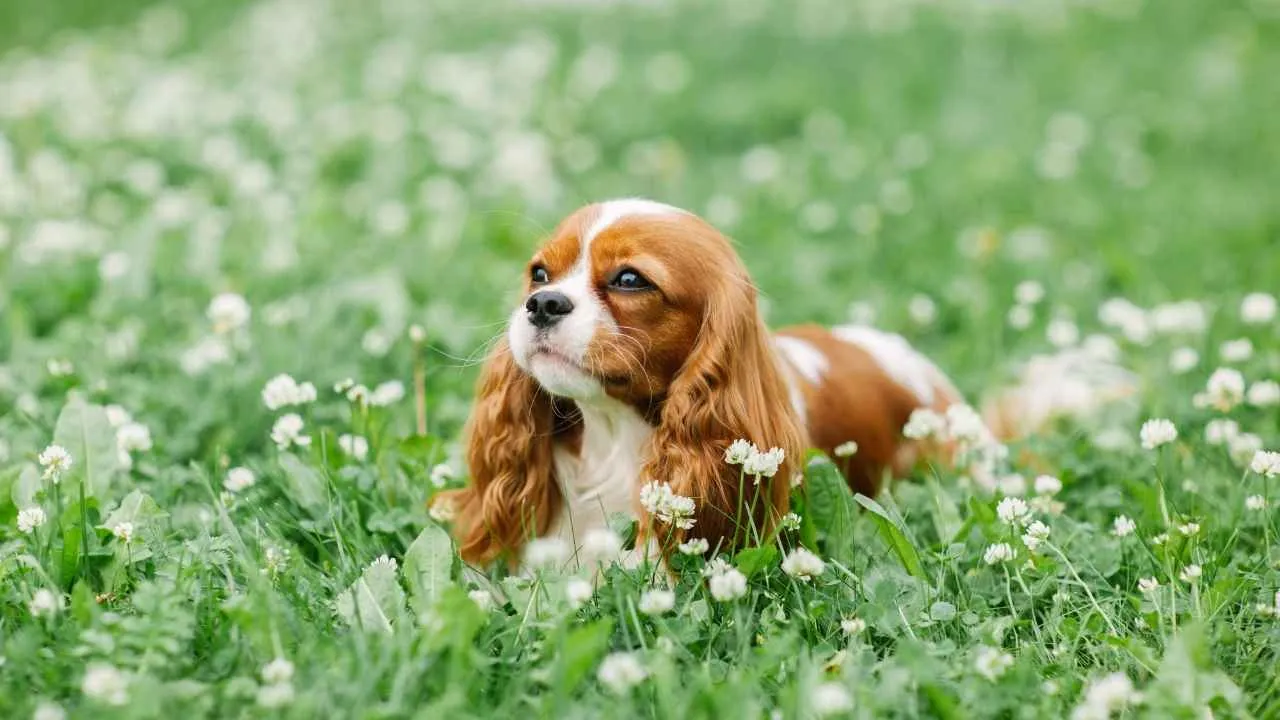
Cavalier King Charles Spaniel spent its early years in Tudor times as a cherished lap companion, often keeping people warm by resting beside them or on their feet. King Charles II became so closely associated with this little spaniel that the breed eventually took on his name.
Easy Grooming Routine
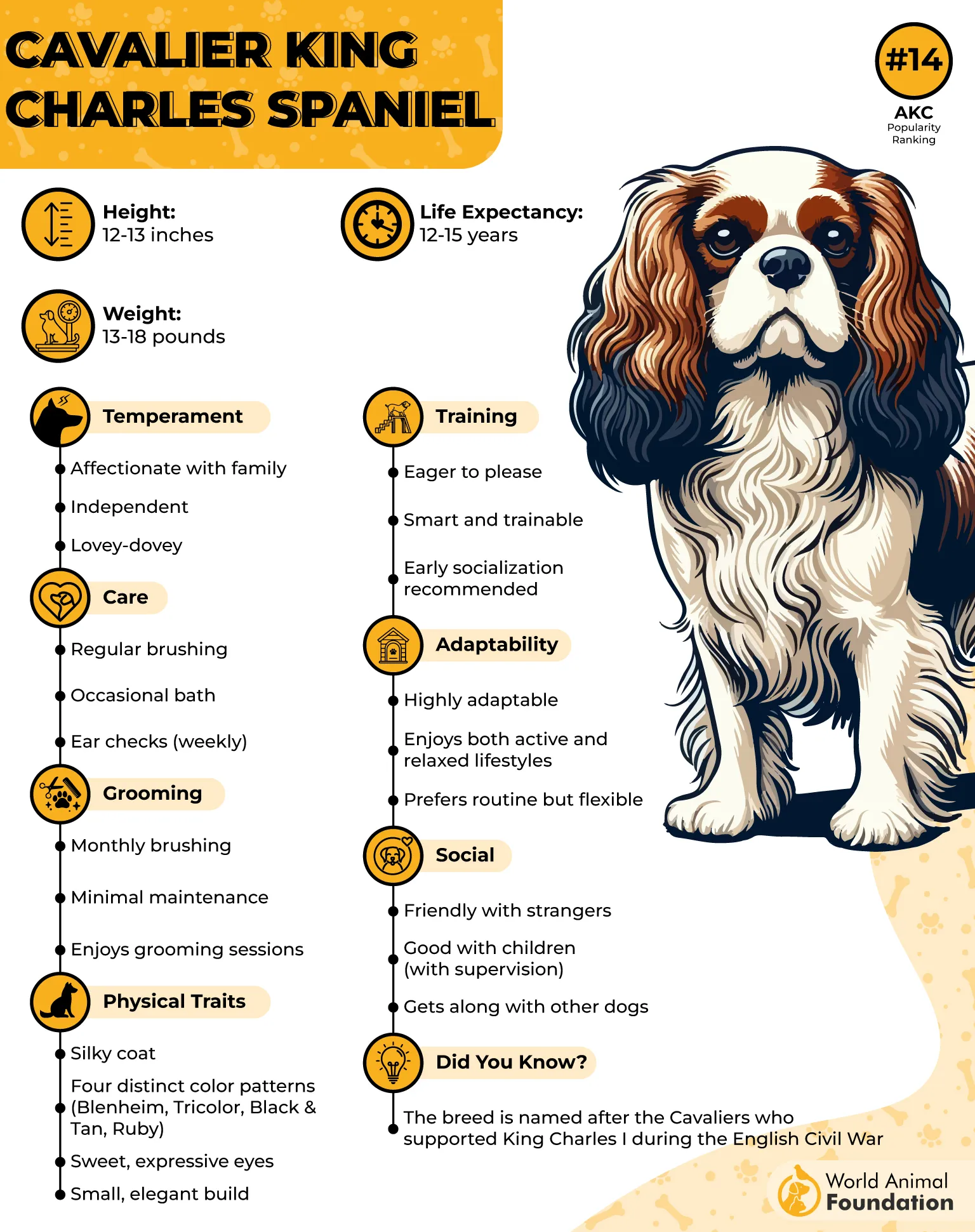
Its silky coat does not demand elaborate trims, making grooming less complicated than people often expect. Regular attention to the ear fringes, armpits, and feet, along with a mild shampoo and rich conditioner, helps prevent tangles and keeps the coat manageable.
These charming details are easy to miss:
Once used as a living foot warmer
Nicknamed a mobile hot water bottle
Soulful eyes are one of its signature features
Happy to Learn
Cavalier King Charles Spaniel responds well to training, although an invitation for a tummy rub can quickly interrupt the lesson. As per PetMD, its calm temperament also explains why this breed is often chosen for therapy work and gets along well with children of different ages.
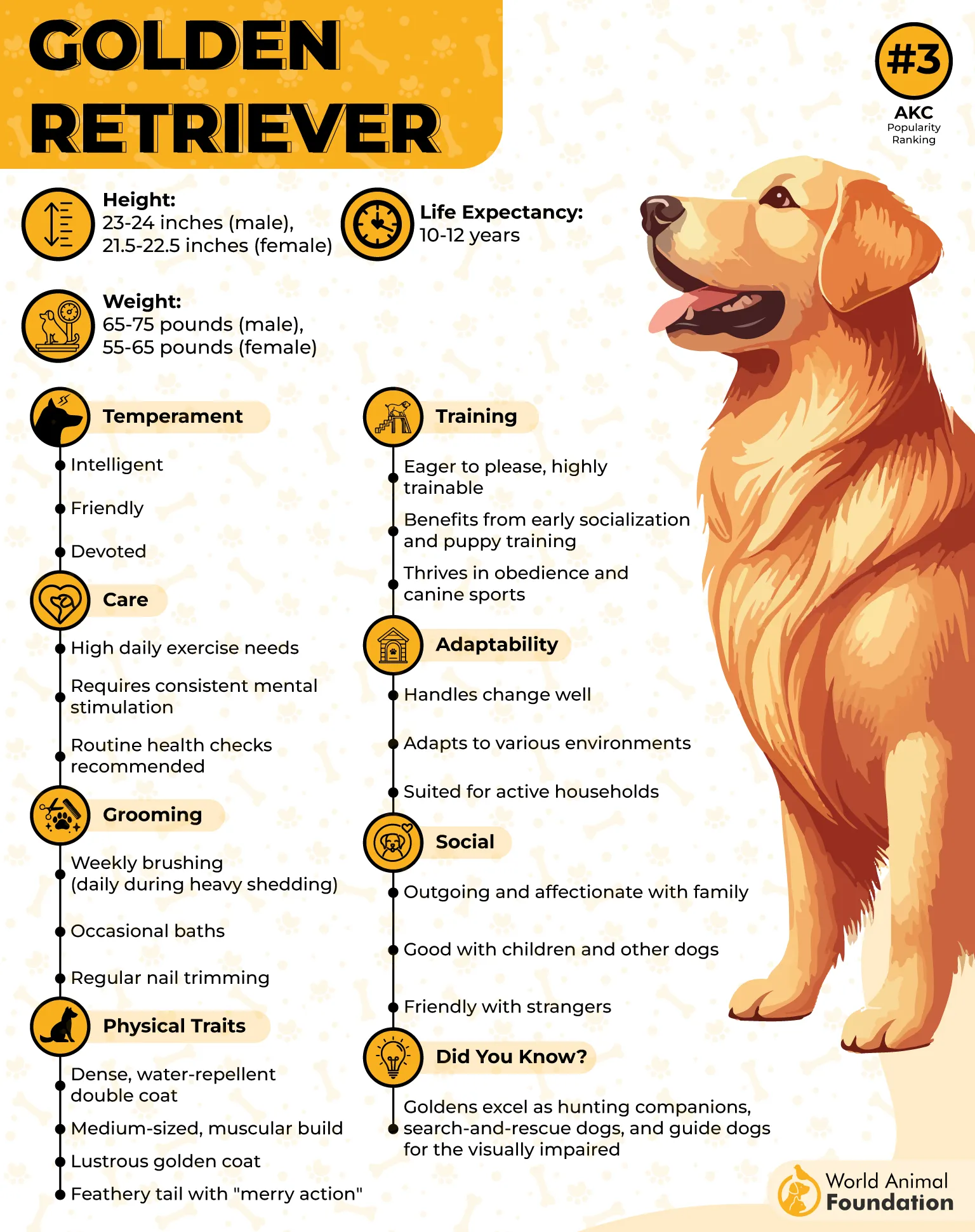
2. Golden Retriever
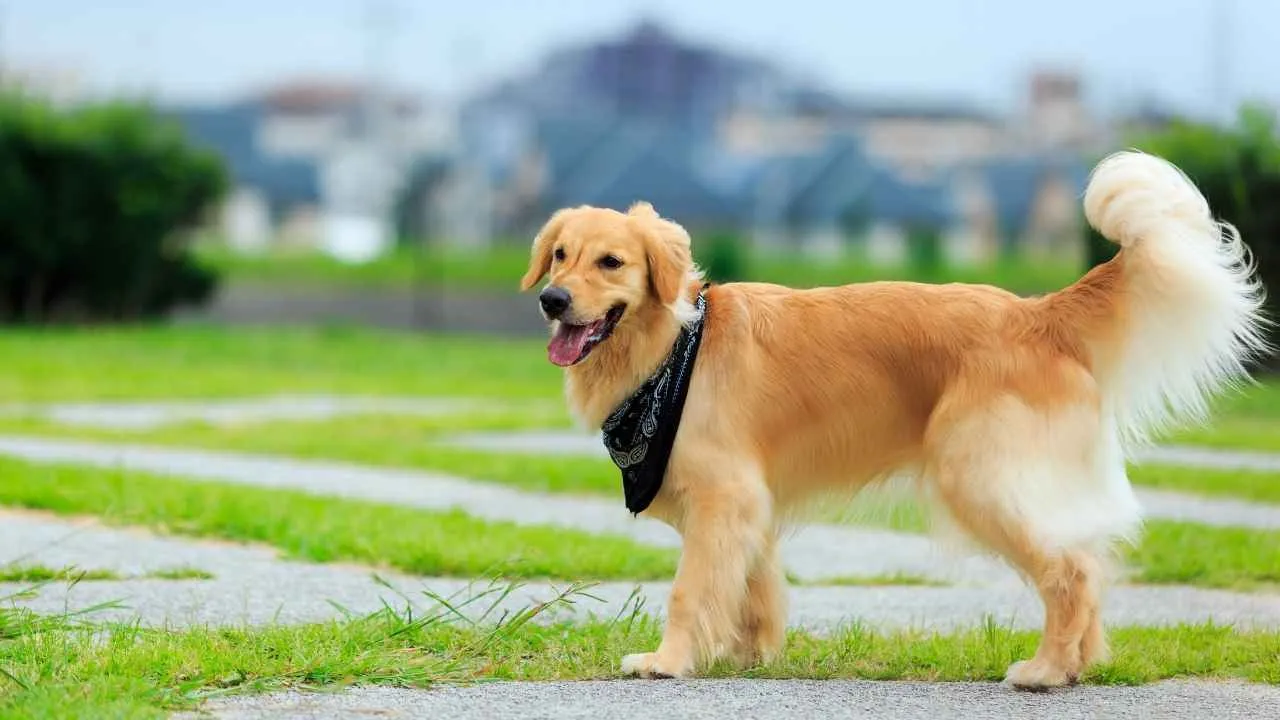
Golden Retriever first took shape in mid-19th century Scotland, where Lord Tweedmouth wanted a dog capable of retrieving game through dense undergrowth with confidence and consistency.
Crosses involving the Newfoundland, Labrador/Water Spaniel mix, and Setters gradually shaped the dependable companion recognized today.
Quick to Learn
A strong desire to please makes this breed especially responsive during training, which explains its success in activities such as agility, Flyball, and field trials. Learning new tasks often becomes an enjoyable part of everyday life rather than a challenge.
The following details deserve a closer look:
Excellent swimmer for water-based work
Water-resistant double coat
Bathing every 4 to 6 weeks is generally recommended
Family Favorite
Golden Retrievers welcome familiar faces with an easygoing attitude and usually get along well with children, other dogs, and household visitors, as noted by the AKC. Guarding is not this breed’s strongest quality because greeting newcomers often comes more naturally than treating them with suspicion.
3. Japanese Chin
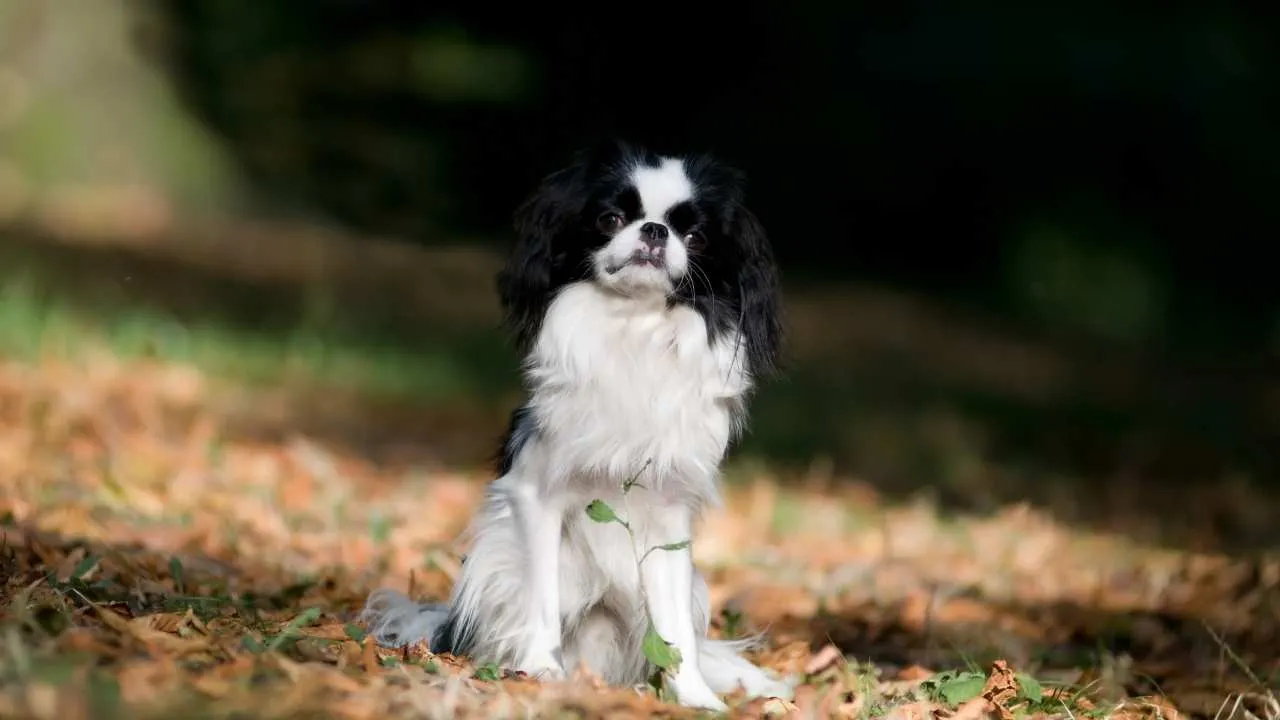
Japanese Chin surprises people with its distinctly cat-like habits, from washing its face with its paws to choosing the highest perch in the room for a better view. Although its name points to Japan, this companion breed most likely first appeared in China before reaching the West during the 1800s.
Simple Care Routine
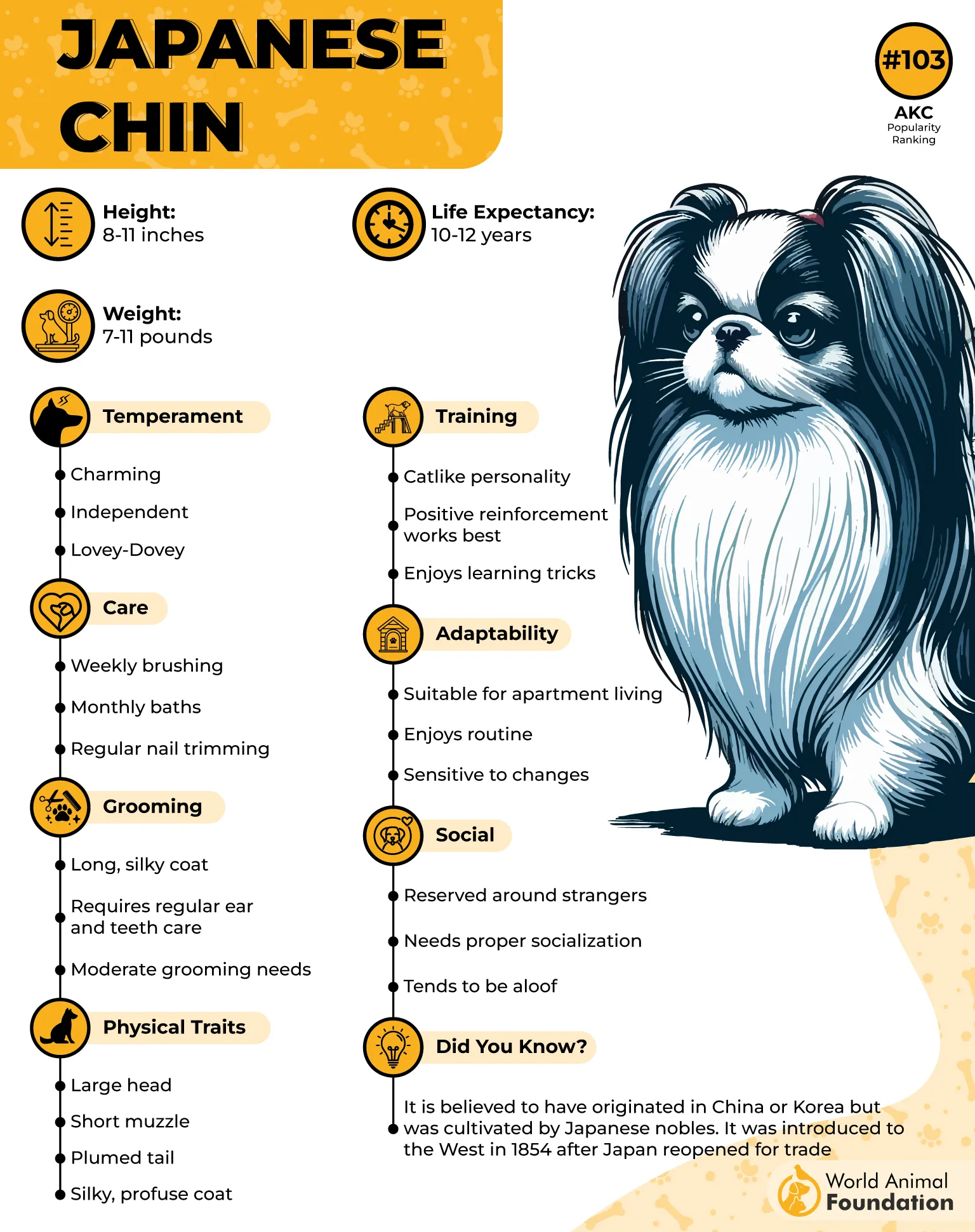
This lap dog pairs an elegant appearance with a surprisingly uncomplicated grooming routine. A quick brushing once or twice a week, monthly baths, regular nail trims, and gentle eye cleaning are usually enough to keep this breed looking neat.
These charming details make this breed even more memorable:
Once reserved exclusively for royalty
Also called the Japanese Spaniel
Excellent balance for climbing high furniture
Happy With Less
Japanese Chin does not ask for demanding daily outings, making a neighborhood stroll or an active play session enough for its routine, as stated in Purina. Reliable recall is another helpful quality, while early socialization with larger dogs can help prevent fearful reactions later on.
4. French Bulldog
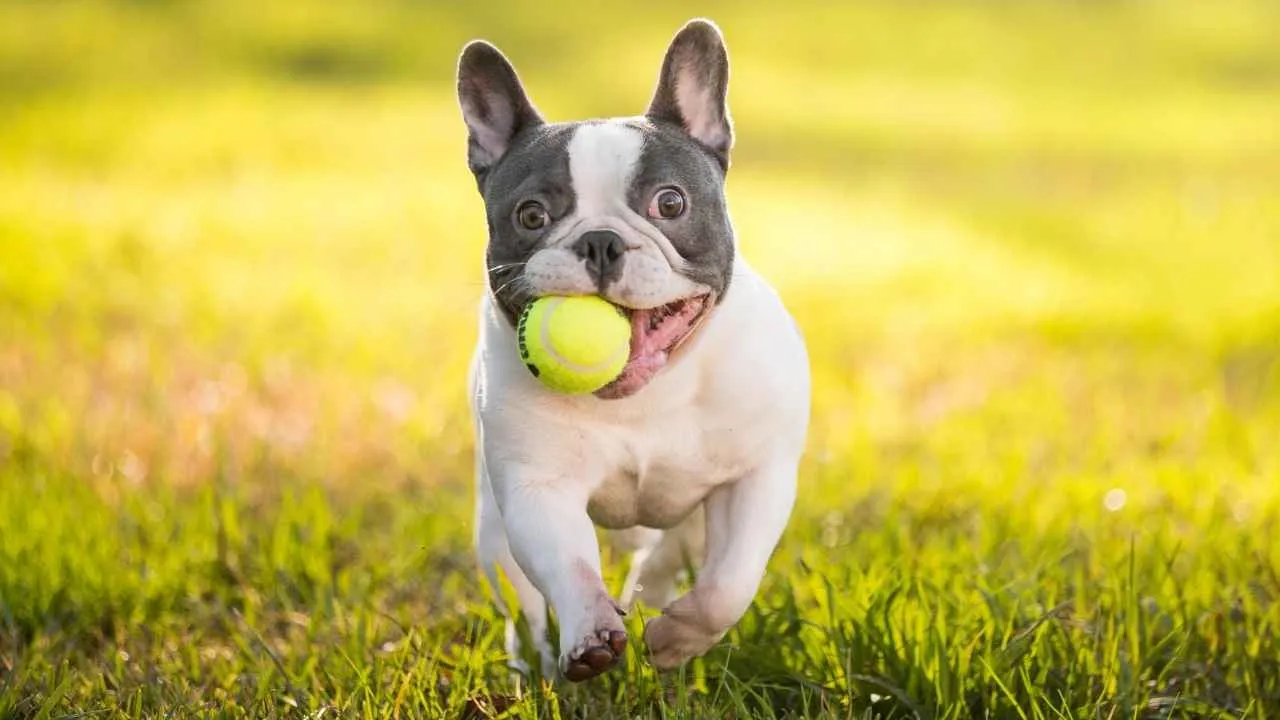
French Bulldog brings an easygoing personality that makes everyday care feel less overwhelming for first-time dog owners. Its compact size, playful attitude, and preference for being close to family create a companion that fits naturally into daily routines.
Simple Routine
Frenchies have moderate energy and enjoy social walks, short games, and interactive training sessions that keep life interesting without demanding hours of activity. Positive reinforcement works especially well because this breed responds best when learning feels enjoyable.
A few care details deserve extra attention:
Wipe facial folds 2–3 times each week
Trim nails every 2–4 weeks
Brush the coat once every week
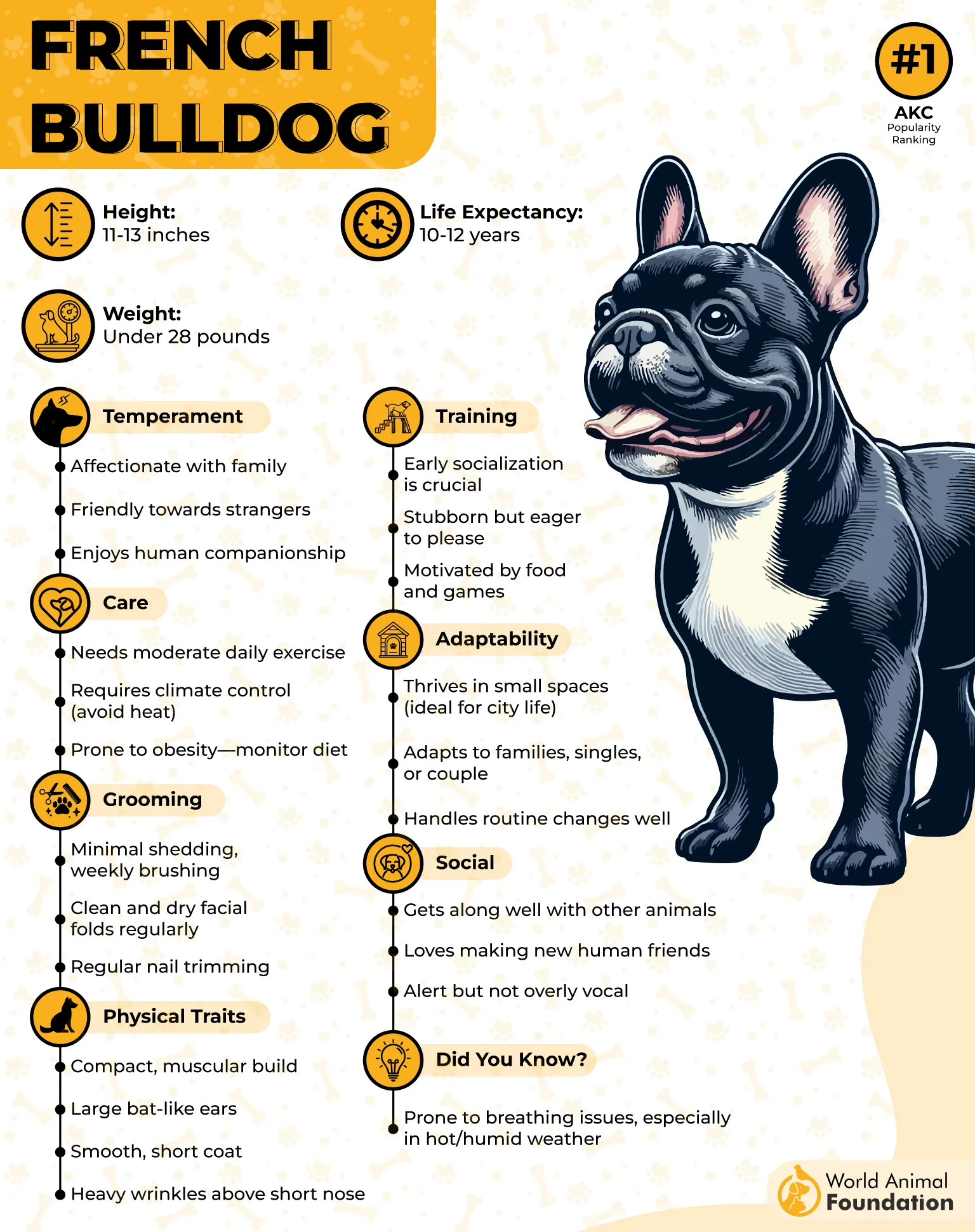
Keep Activities Balanced
French Bulldogs can enjoy obedience lessons and light agility games as long as sessions remain short and comfortable. Warm weather and excessive exertion require extra caution because this breed can overheat more easily than some other dogs.
5. Pug
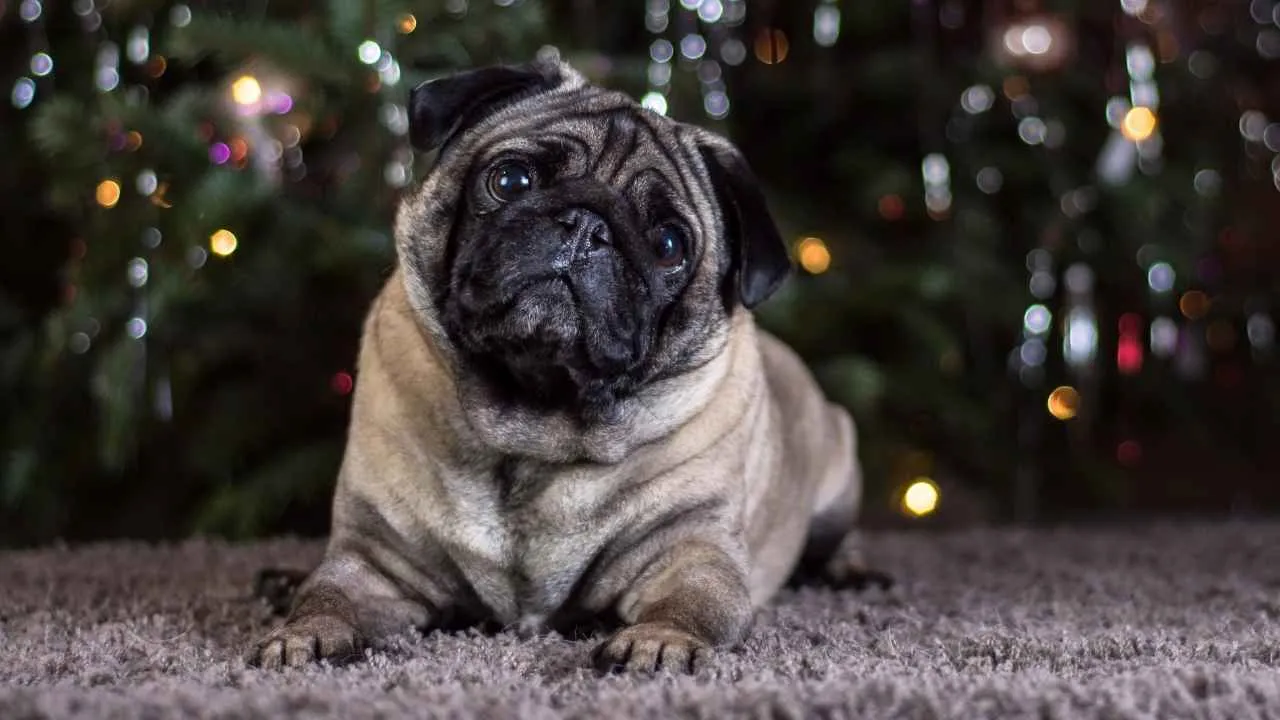
Pugs first appeared in China more than 2,000 years ago before becoming a favorite companion among royal households in different parts of the world. That long connection with people explains why this breed enjoys being included in everyday life instead of spending long hours alone.
Easygoing Routine
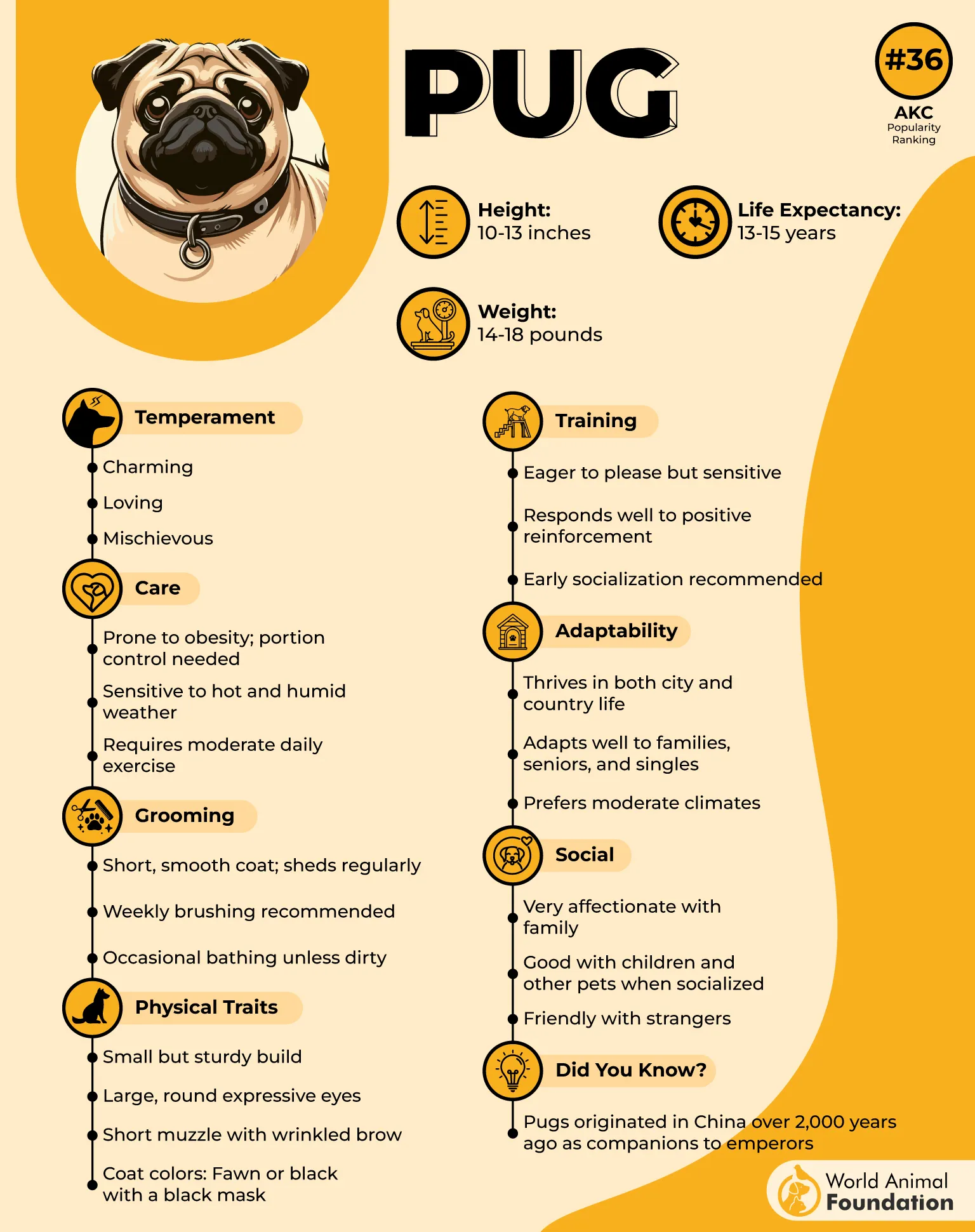
They fit comfortably into a simple daily routine because long workouts are unnecessary for this compact companion. Several relaxed walks lasting about 15 to 20 minutes each, along with a short game of fetch, are usually enough to keep it content.
Worth remembering details of the breed include:
Face folds need cleaning 1 to 3 times weekly
Dry facial wrinkles after every cleaning session
Hot weather calls for extra caution outdoors
Home Life
Pug enjoys attention and often prefers sharing quiet moments with its family instead of chasing demanding activities. High-intensity exercise, including running or agility, is not a suitable choice because its flat face can make breathing more difficult during strenuous effort.
6. Boston Terrier
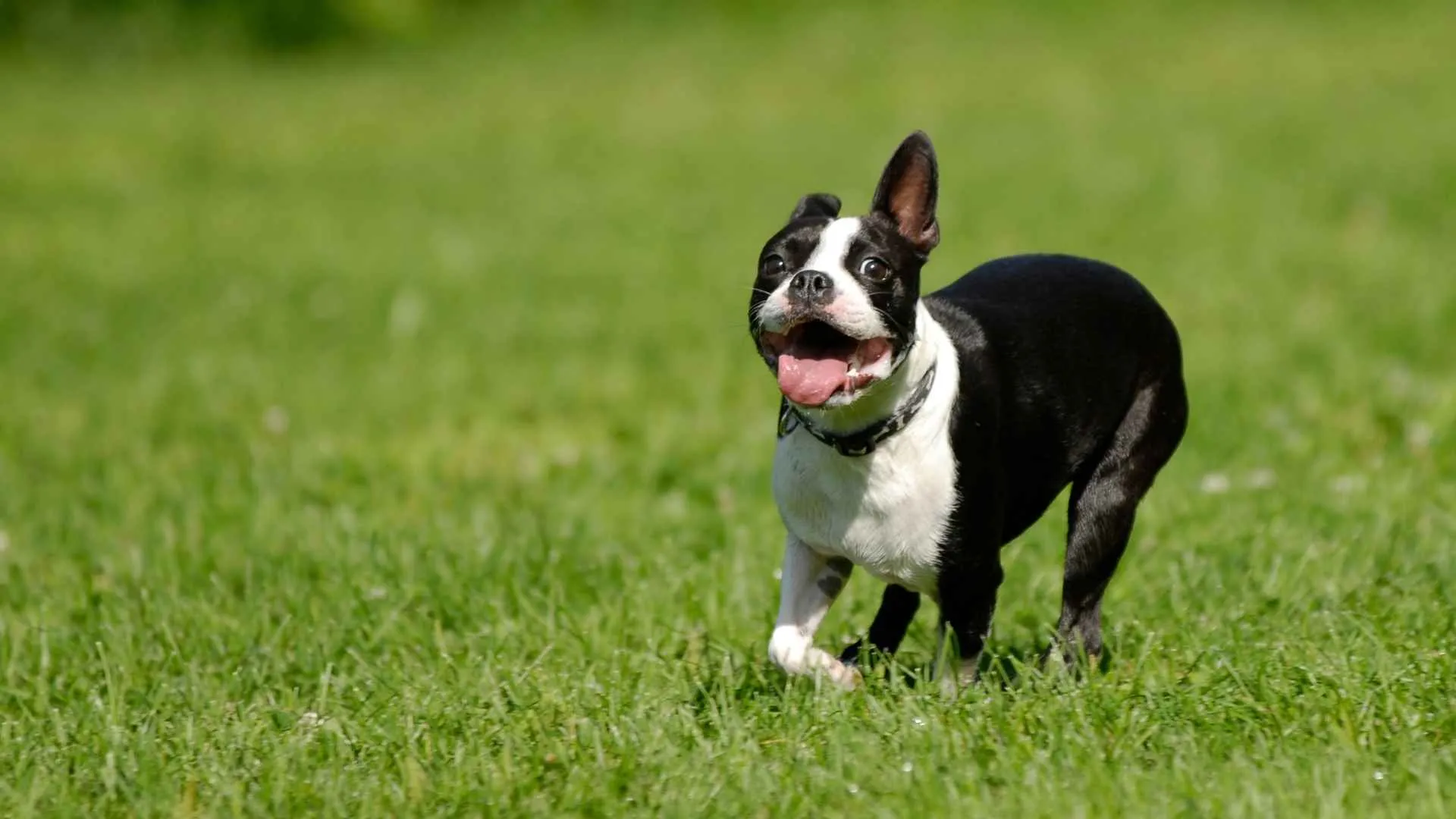
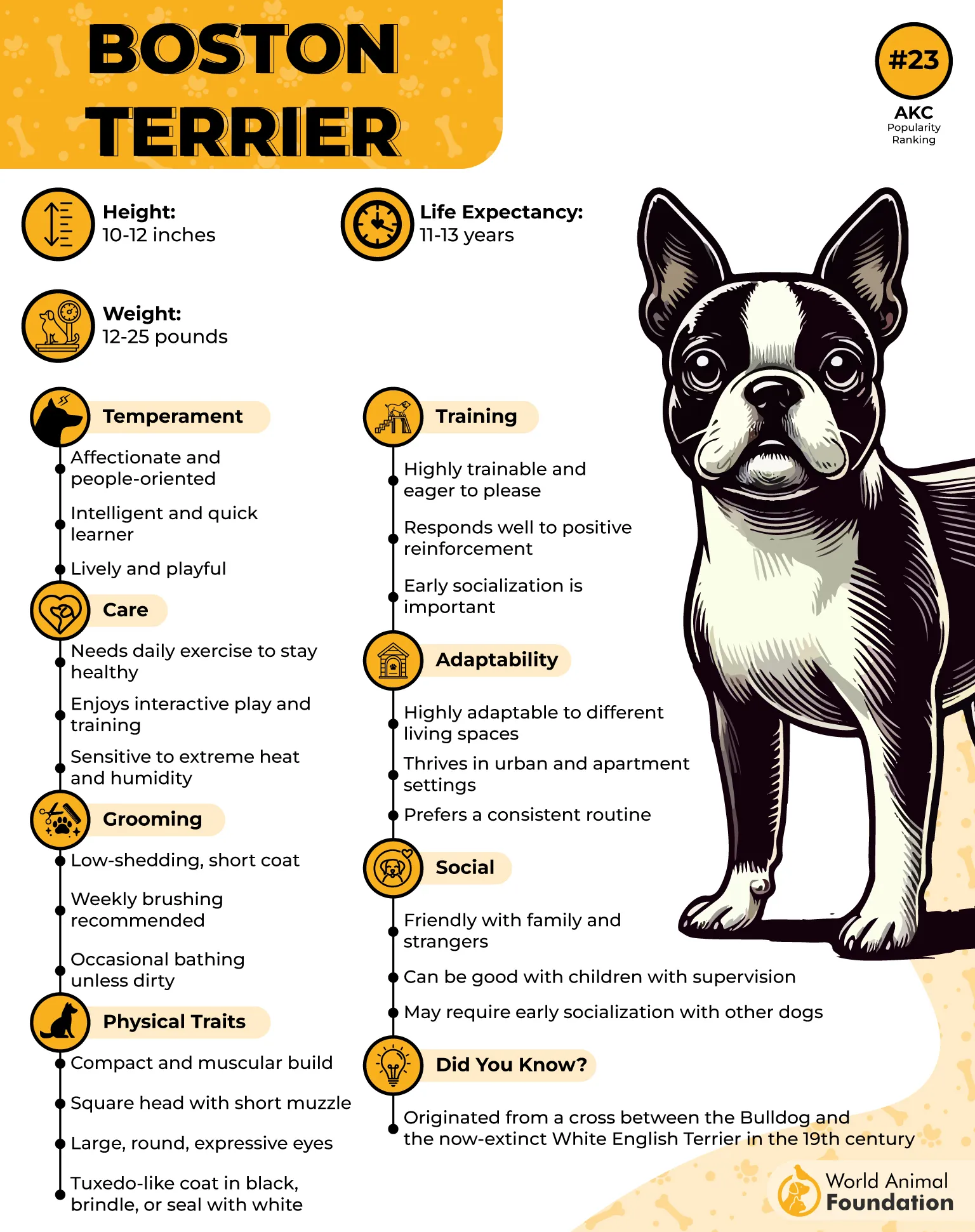
Boston Terrier first gained recognition in Boston, where its black-and-white coat inspired the nickname “American Gentleman.” Brindle coats also appear, but the breed’s polished appearance and cheerful personality are what people often remember first.
Simple to Keep Up With
Its short coat keeps grooming straightforward, making this breed less demanding for someone learning the basics of dog care. A few small routines go a long way in keeping this companion comfortable and looking its best.
Here’s what they need in terms of care:
Wipe facial folds each week
Clean floppy ears regularly
Use a rubber curry brush for shedding
Full of Character
Boston Terrier enjoys joining everyday family activities and quickly turns a game of fetch or Frisbee into an exciting part of the day.
Several shorter play sessions generally suit this energetic breed better than one long outing, while hot and humid weather calls for extra care because of possible breathing difficulties.
7. Papillon
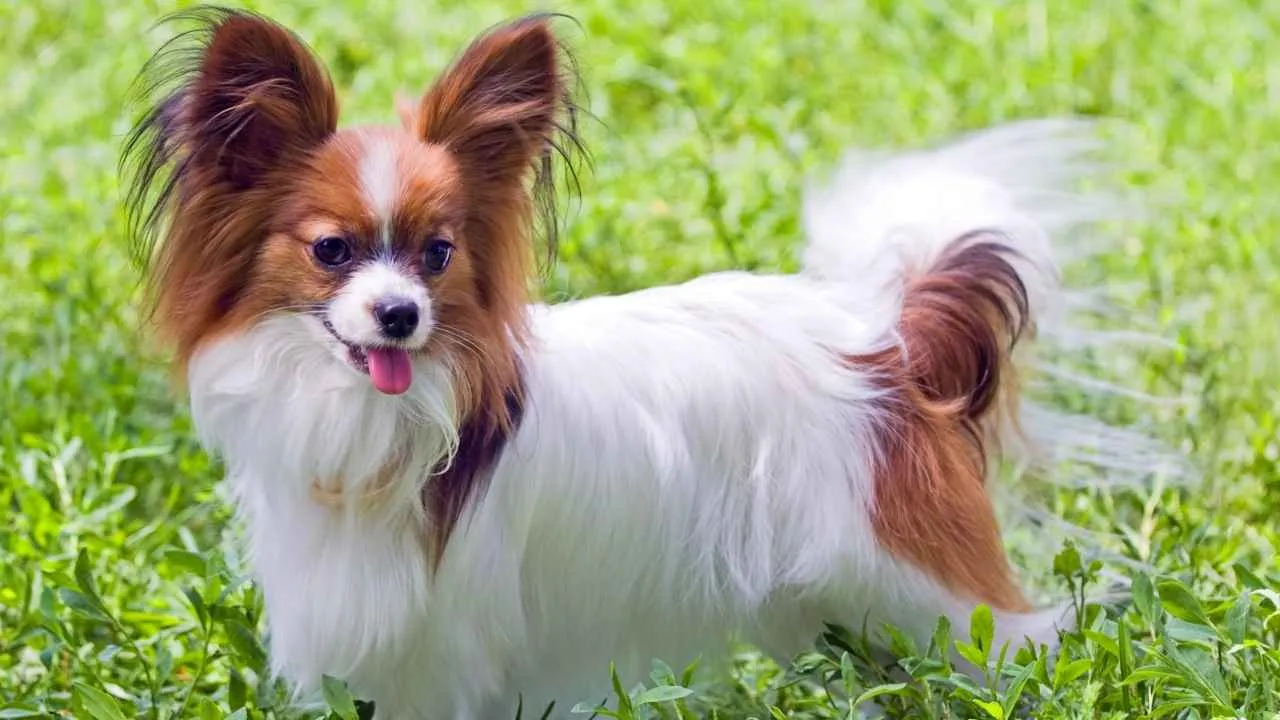
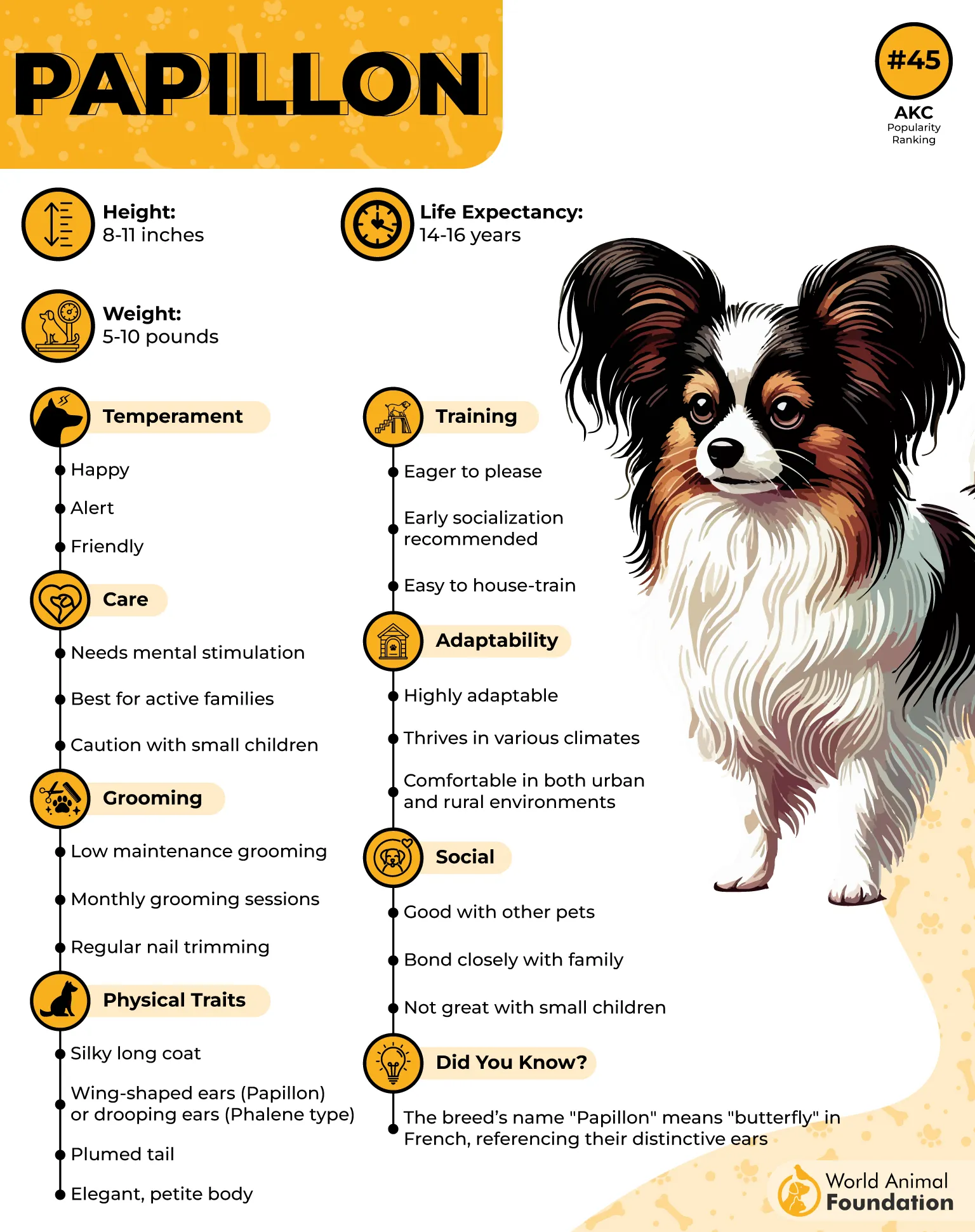
Papillon takes its name from the French word for “butterfly,” inspired by the large ears framed with long, flowing fringes that resemble open wings. Paintings from 16th-century Western Europe feature this little companion, reflecting how long people have appreciated its distinctive appearance.
Small but Capable
Papillon weighs between 5 and 10 pounds, making it easy to fit into different living spaces. It also performs confidently in agility events and can serve in therapy or service work because of its intelligence and eagerness to learn.
A few additional details complete the picture:
Long, silky single coat without an undercoat
Feathering around the signature butterfly ears
Brushing two to three times each week helps prevent tangles
Easy to Live With
Papillon combines a compact size with a coat that is more manageable than it first appears, making regular grooming surprisingly straightforward. Indoor games, neighborhood walks, and access to a fenced area help channel its playful energy without requiring an overwhelming routine.
Conclusion
The best first dog is not necessarily the smallest, quietest, or most famous. It is the one whose care requirements, personality, and daily routine match your own lifestyle from the beginning. That thoughtful choice makes training easier, builds confidence, and helps both owner and companion settle into life together with fewer surprises.
Every successful partnership grows through patience, consistency, and understanding rather than experience alone. By choosing wisely and committing to regular care, you allow yourself and your new companion to enjoy a rewarding relationship built on trust, companionship, and countless happy moments shared every day.
