




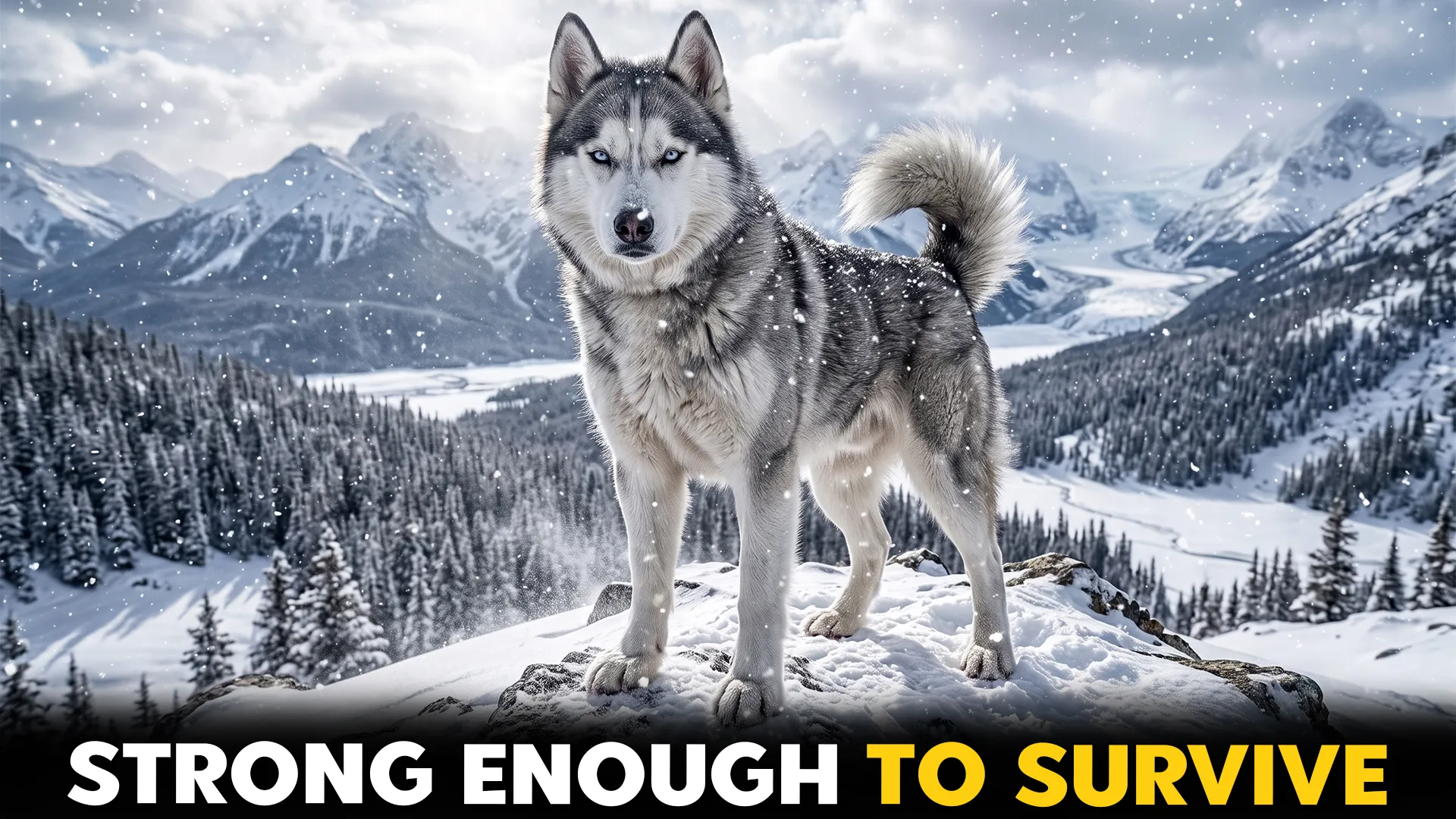
The wilderness is stunning, unpredictable, and absolutely not interested in whether your phone has one bar of signal left. Cold nights, difficult trails, dangerous wildlife, deep snow, intense heat, and limited supplies can turn a peaceful outdoor trip into a genuine survival challenge.
In such conditions, the right dog can become far more than a hiking companion—it can provide endurance, awareness, warmth, protection, and emotional support.
Let’s talk about the seven powerful dogs whose histories and physical qualities closely align them with demanding outdoor environments. Some are cold-weather transportation specialists; others are guardians, trackers, rescuers, or heat-tolerant hunters.
Powerful Dog Breeds That Thrive in Wilderness Survival
1. Siberian Husky
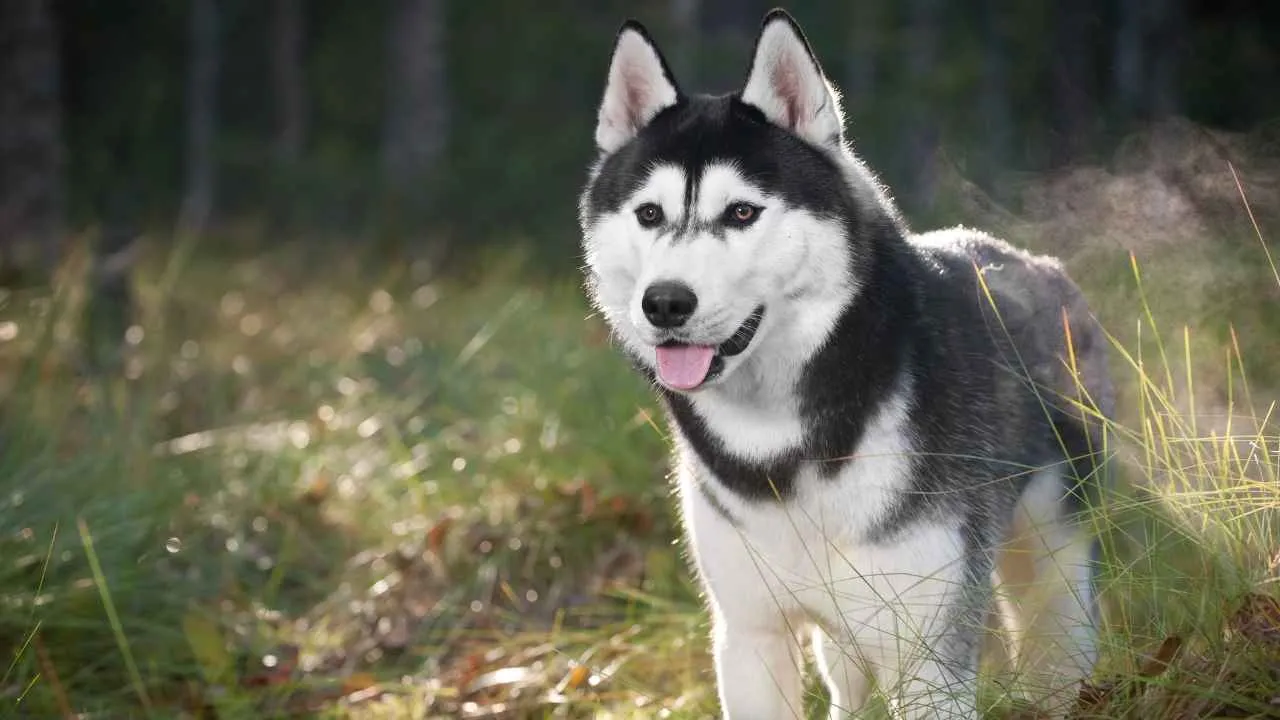
The Siberian Husky looks like it stepped directly out of an Arctic adventure movie, but its wilderness credentials are very real. AKC says the Chukchi people of northeastern Asia developed the breed to pull light loads efficiently across long distances in severe winter conditions.
That history produced a medium-sized dog known for sustained endurance and economical movement.
A Husky’s dense double coat provides insulation against cold winds and snow, while its furry tail can curl around its face during rest. Its compact ears and well-furred paws also help reduce exposure in freezing environments.
Basically, this dog arrived with the premium winter-survival package already installed, although that same coat can become a serious disadvantage in hot weather.
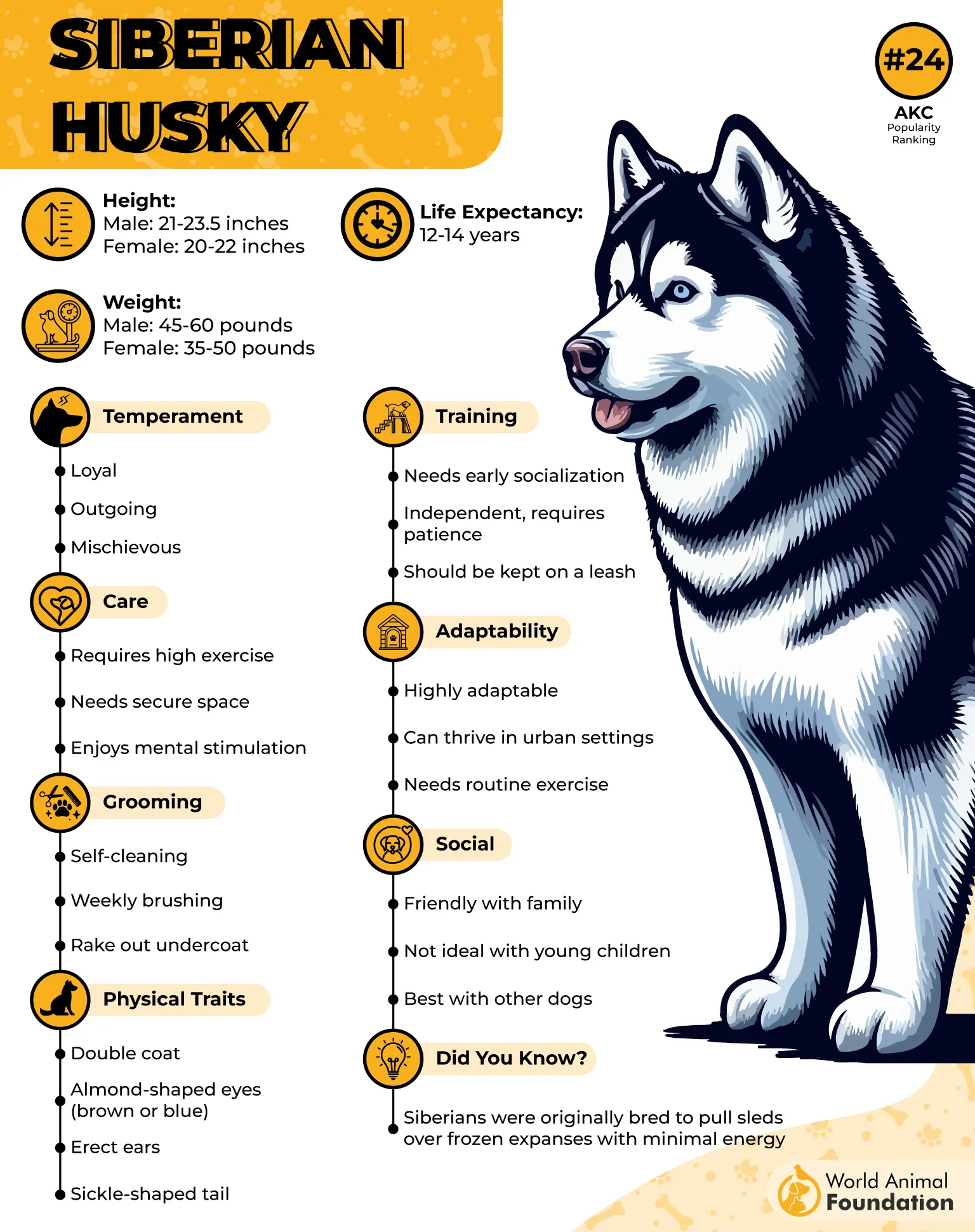
These dogs are famous for their energy, social nature, and independent decision-making. That independence was useful when sled dogs needed to respond intelligently to uncertain terrain, but it may feel chaotic to an owner expecting robotic obedience.
On a winter expedition, a conditioned Husky can maintain a steady working rhythm without becoming mentally bored after the first mile. Its athletic build helps it traverse packed trails and snowy terrain while carrying appropriate equipment in a properly fitted pack.
A Siberian Husky is generally sociable rather than naturally protective, so it should not be treated like a wilderness security guard.
Their Wilderness Survival Strategy
A weather-resistant double coat helps conserve body heat during cold hikes, snowy camps, and windy winter conditions.
Efficient movement allows a fit Husky to cover distance without relying entirely on heavy muscular power
Alert senses and a naturally adventurous mindset can help the dog notice movement, scents, or changes around camp.
2. Alaskan Malamute
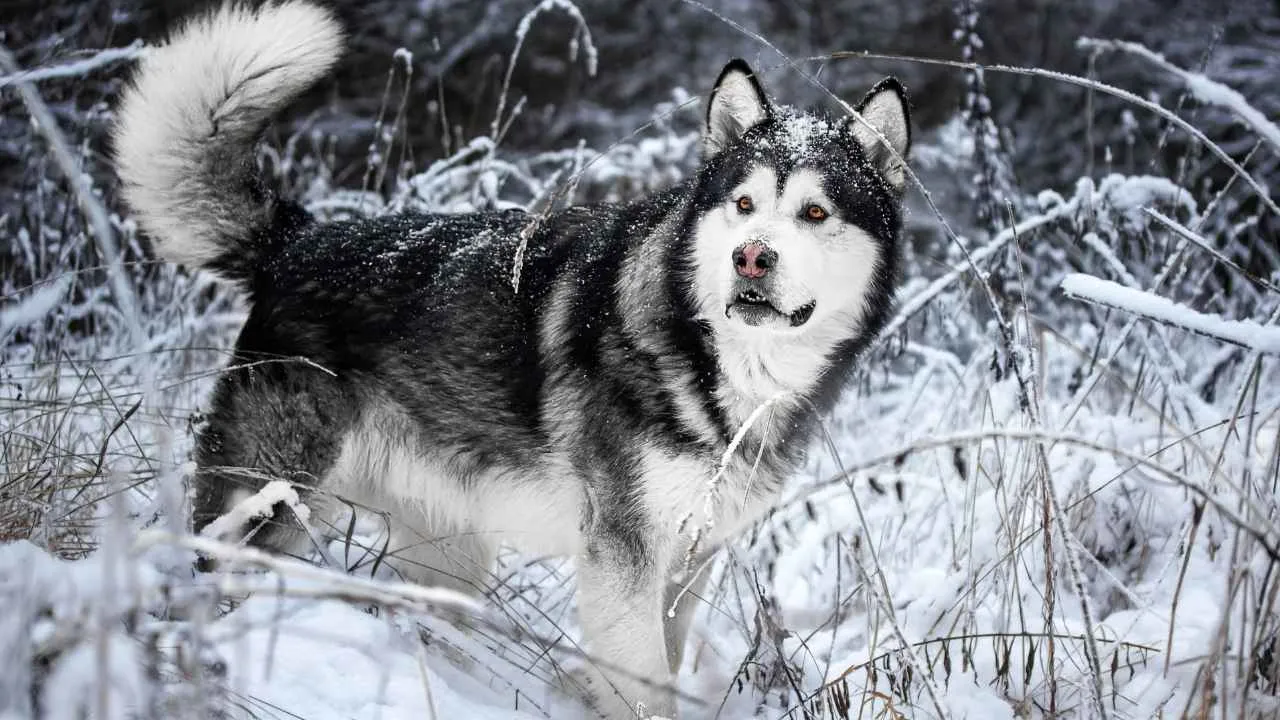
The Alaskan Malamute is the heavyweight freight train of traditional Arctic dog breeds. While Siberian Huskies became known for speed and long-distance efficiency, Malamutes were historically valued for hauling heavier loads through punishing northern environments.
The breed’s development among the Mahlemut people required strength, endurance, cooperation, and the ability to live in proximity to human communities.
A mature Malamute has a deep chest, substantial bones, powerful shoulders, and a thick double coat designed for cold climates. Its broad, snowshoe-like feet provide useful support on winter terrain, while the coarse outer coat helps resist moisture and wind.
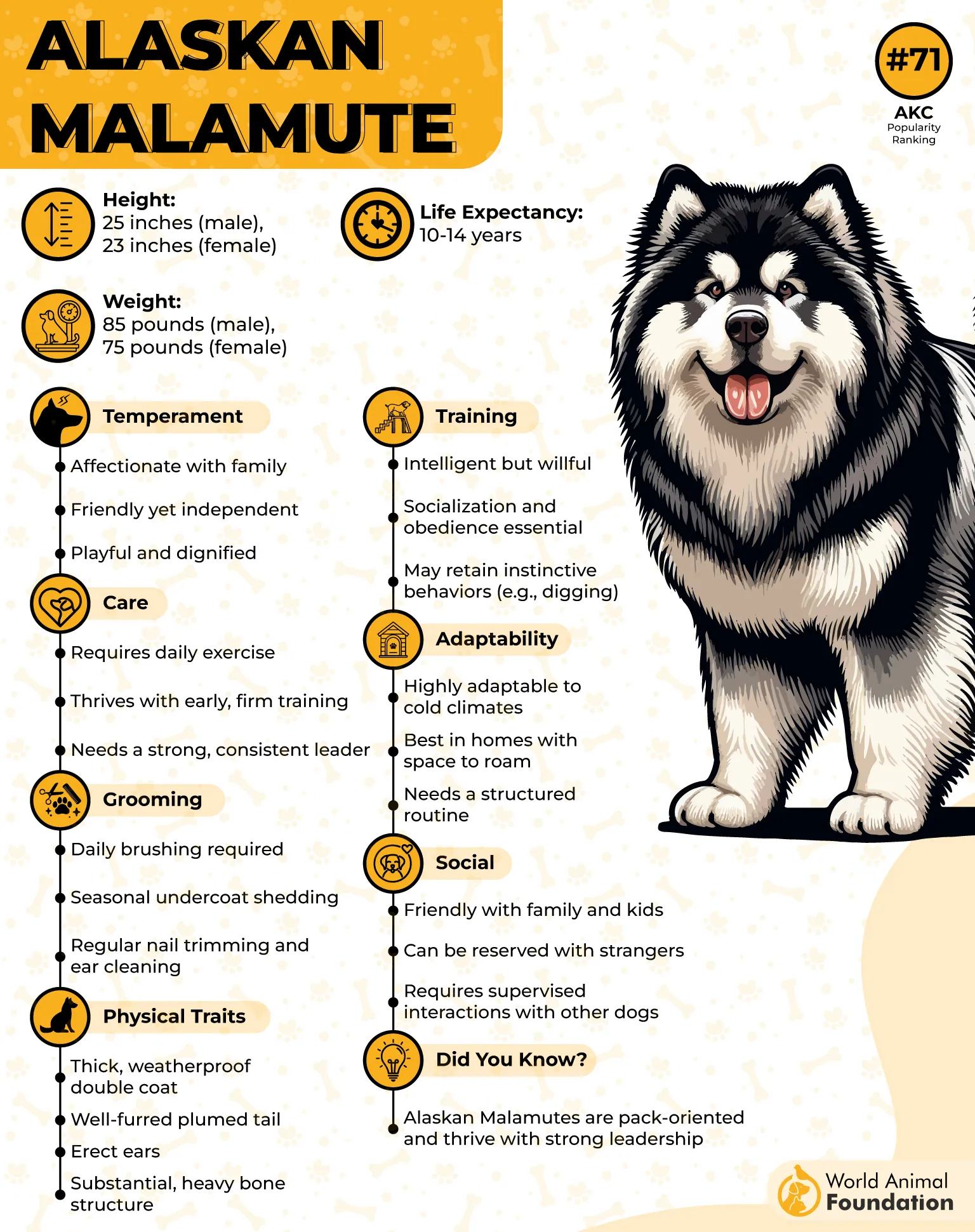
The breed can pull equipment, help transport supplies, and remain comfortable in conditions that would leave many short-coated dogs searching desperately for a heated blanket. However, weight pulling and backpacking must be introduced carefully because excessive loads can damage joints, muscles, and paws.
Malamutes are intelligent, confident, and often less eager to repeat commands simply because a human said them with enthusiasm. Owners need consistent training, secure management, and enough patience to work with an independent northern breed rather than constantly fighting its personality.
Although Malamutes may appear intimidating, they are often affectionate and people-oriented rather than dependable personal-protection dogs. Their wilderness value comes from physical power, cold-weather resilience, confidence, and their ability to perform sustained labor.
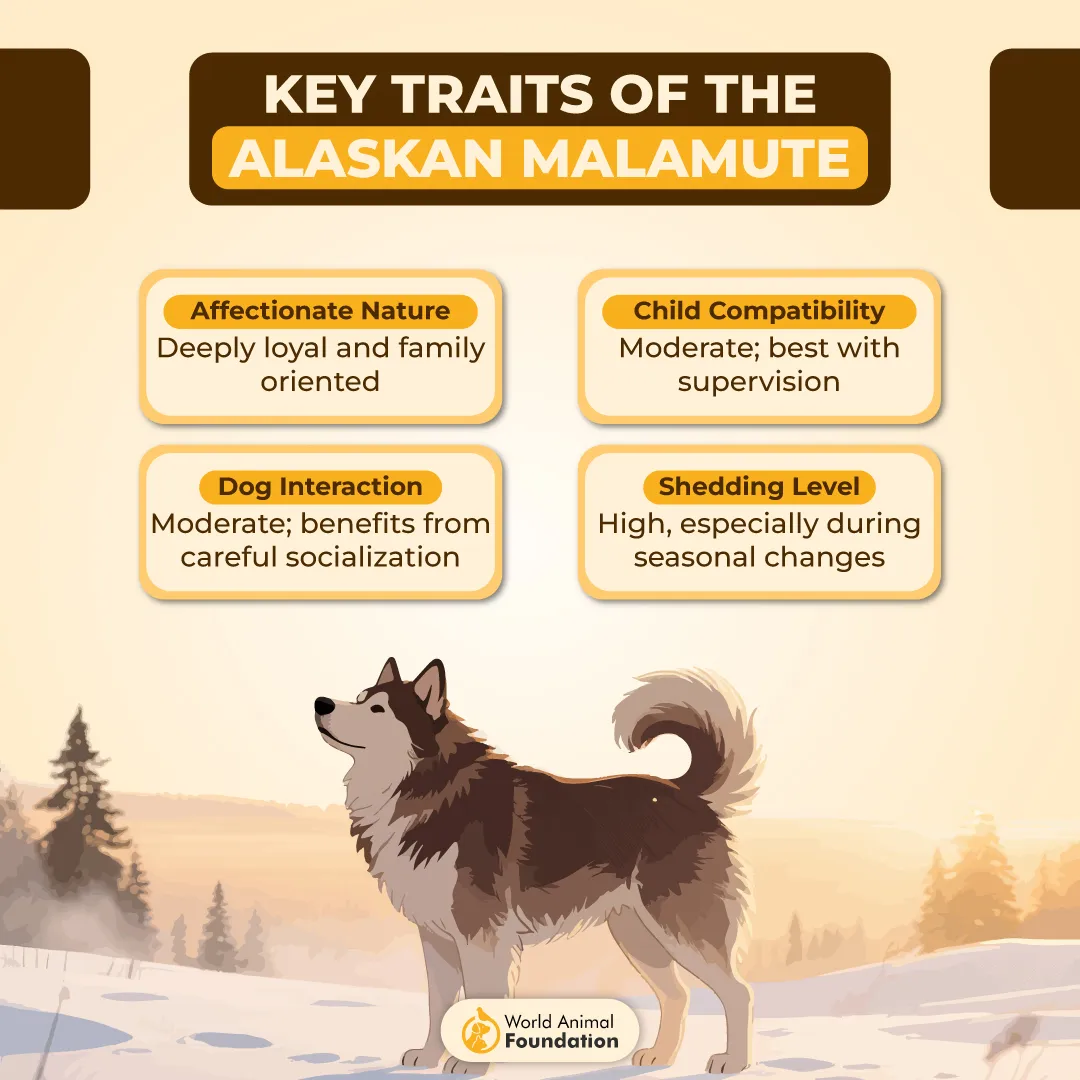
Their Wilderness Survival Strategy
Heavy musculature gives the Malamute an advantage when pulling properly balanced supplies over cold, difficult ground.
A dense undercoat traps warm air close to the body, while the guard hairs protect from snow and wind.
Broad feet distribute the dog’s weight more evenly across soft surfaces, supporting movement over wintry terrain.
3. Tibetan Mastiff
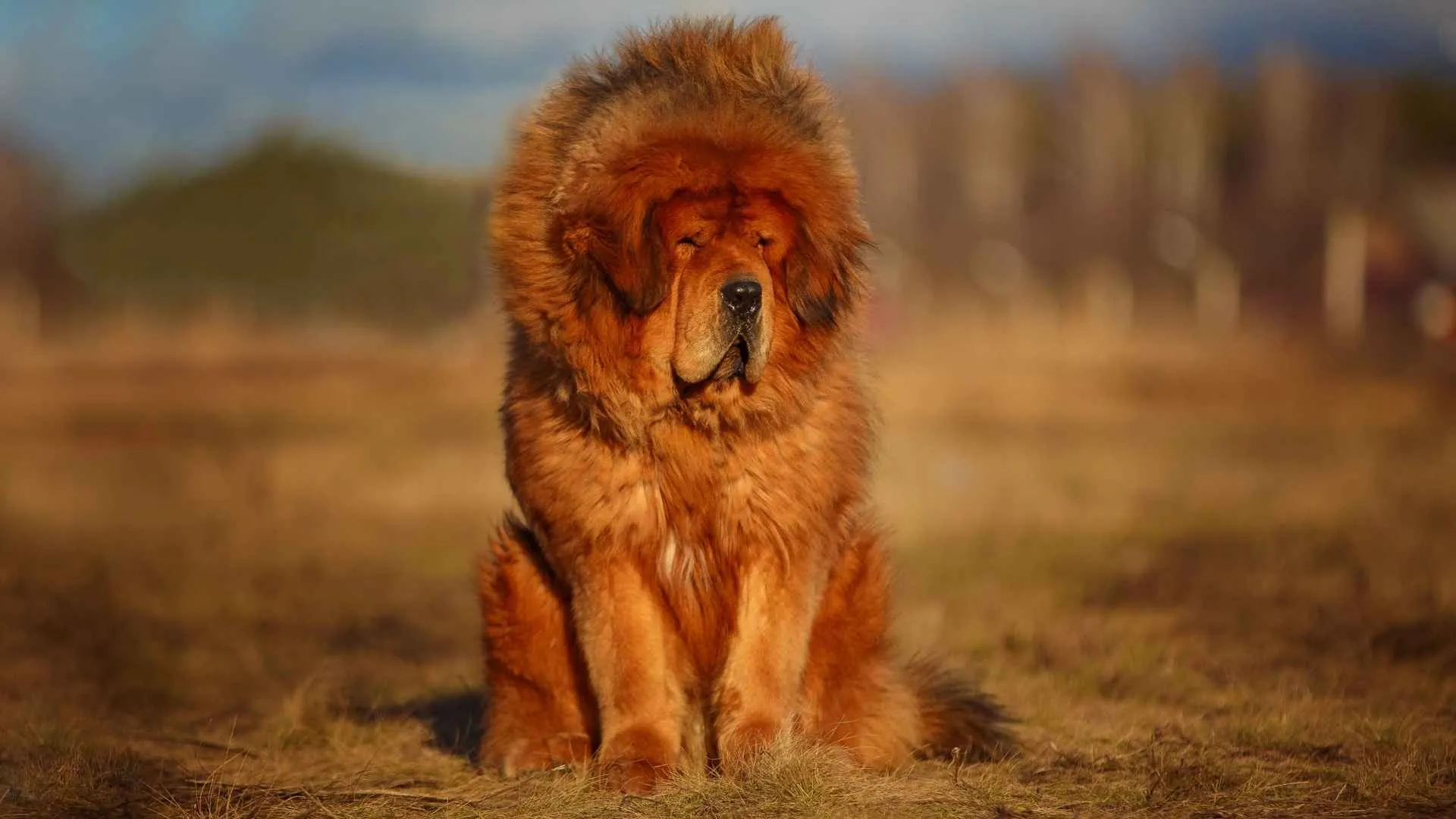
The Tibetan Mastiff brings a completely different set of survival skills to the wilderness squad. Rather than being developed to pull sleds or race across open ground, it was historically used to guard people, livestock, settlements, and monasteries in the Himalayan region.
Its imposing size, territorial awareness, independence, and heavy coat reflect generations of work in remote, high-altitude environments.
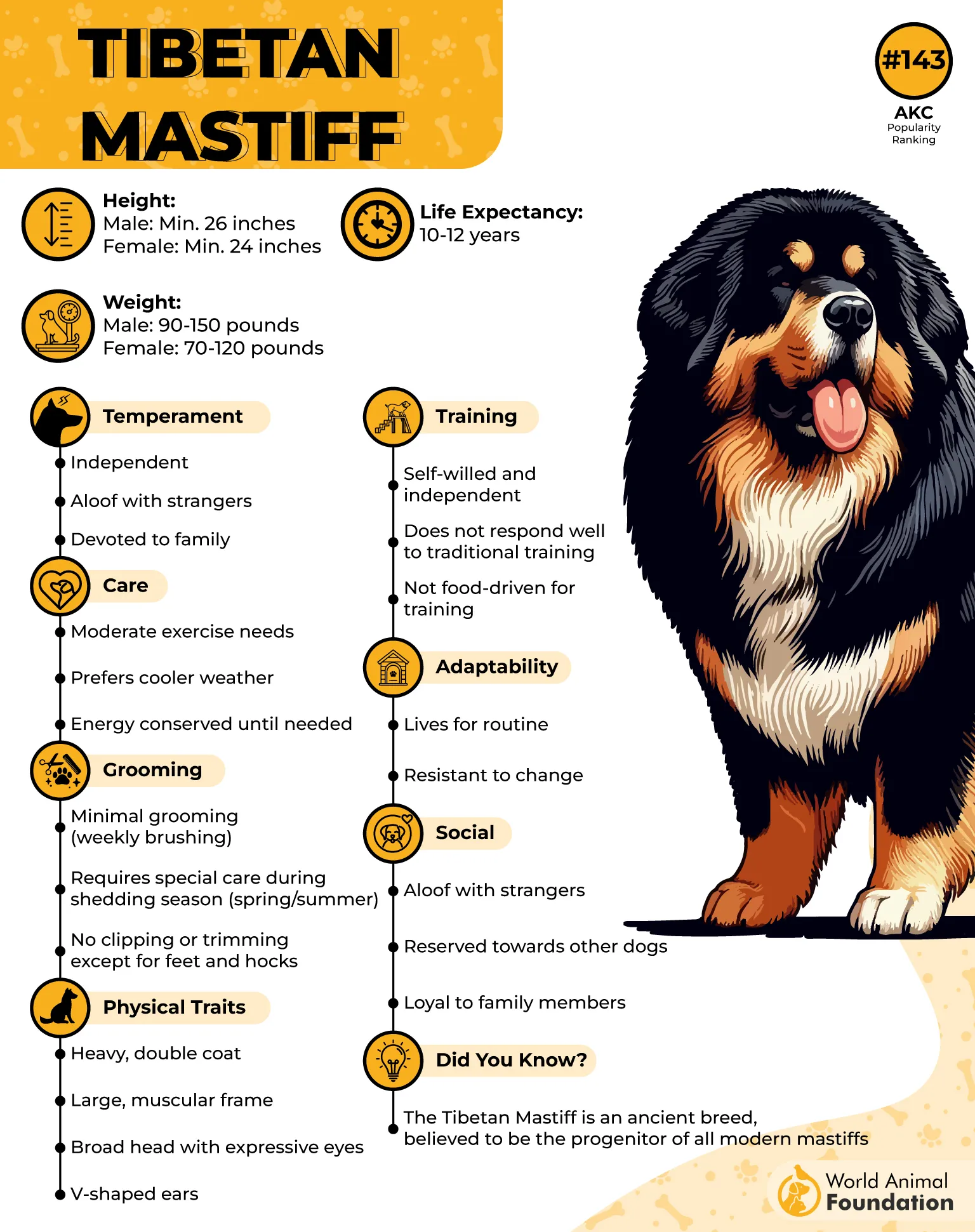
This breed possesses a dense double coat and a substantial mane around the neck and shoulders, creating its famous lion-like appearance. The coat offers valuable protection in cold, dry mountain conditions, particularly when the dog has access to appropriate shelter.
Research has also examined genetic adaptations associated with high-altitude Tibetan dogs, although individual pets still require gradual acclimatization and veterinary supervision before strenuous activity at elevation.
Tibetan Mastiffs often become especially watchful at night, which makes sense for a breed expected to notice predators or intruders after dark. Around a remote camp, that alertness may provide an early warning when unfamiliar people or animals approach.
Training this Mastiff breed requires maturity, fairness, consistency, and extensive early socialization. Tibetan Mastiffs were bred to assess situations independently, so they may not follow instructions as eagerly or as quickly as a highly handler-focused working dog.
In wilderness areas, secure control is vital because uncontrolled territorial behavior can endanger wildlife, hikers, livestock, and the dog itself.
Their Wilderness Survival Strategy
Powerful guarding instincts encourage constant environmental scanning, particularly around unfamiliar campsites and after dark.
Thick insulation supports comfort in cold mountain weather when shade, shelter, food, and water remain available.
An independent temperament enables the breed to assess unusual movement or potential threats without waiting for constant direction.
4. Norwegian Elkhound
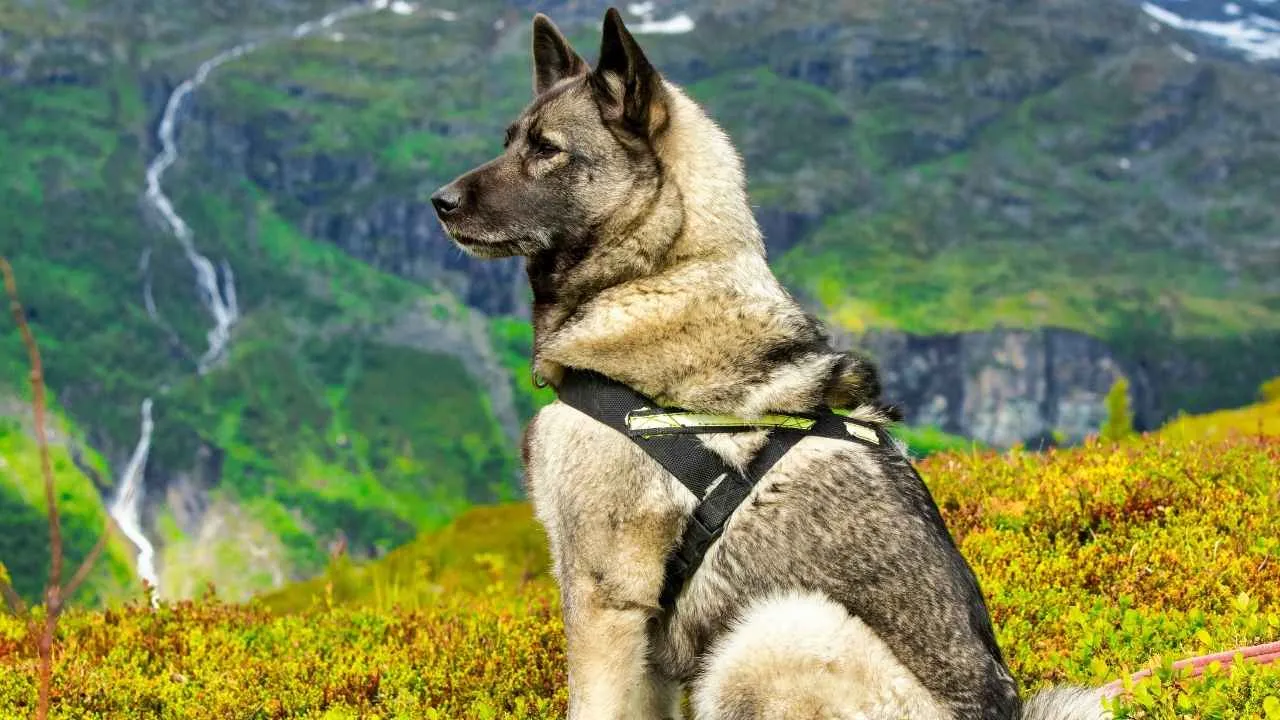
The Norwegian Elkhound may not be the largest dog here, but underestimating it would be a certified rookie move. This compact, sturdy spitz developed as a versatile Scandinavian hunting companion capable of tracking large game through forests and rugged terrain.
Its history includes work associated with moose, while its courage, scenting ability, voice, and stamina made it valuable to hunters.
Purina notes that its thick gray coat provides insulation in cold, wet northern environments. Its muscular frame remains agile enough to navigate woodland rather than relying on sheer bulk to overcome obstacles. This balance of strength and mobility is incredibly useful on trails containing roots.
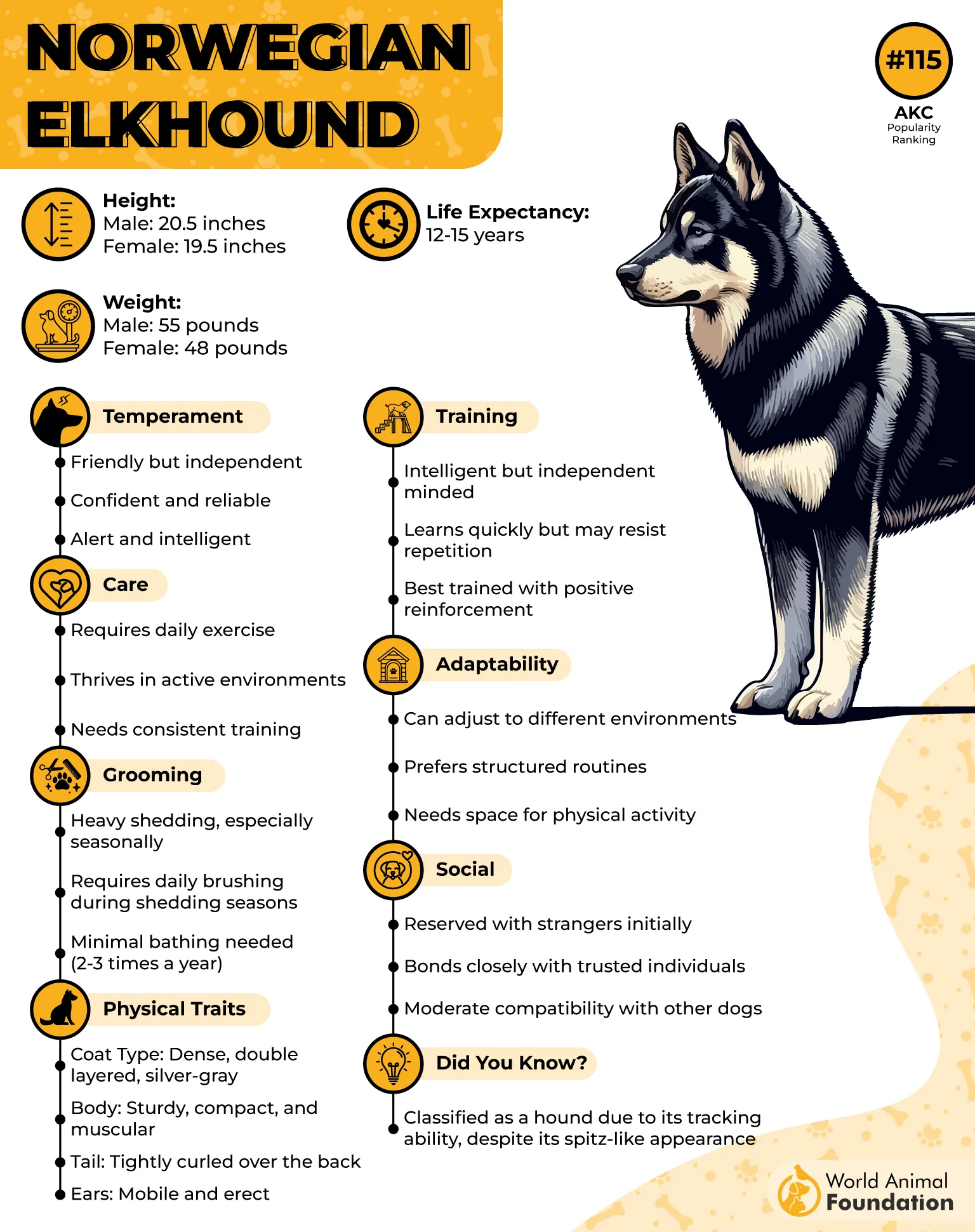
One of the breed’s most recognizable working traits is its willingness to use its voice. Traditionally, barking could help indicate the location of game and keep the hunter informed while the dog worked at a distance.
At camp, that vocal alertness may help owners notice approaching activity, although training is needed unless everyone wants a 3:00 a.m. podcast hosted by a suspicious spitz.
Norwegian Elkhounds tend to be loyal, energetic, bold, and clever, but they also retain an independent hunting instinct. A secure leash or long line is usually the safer option in areas containing wildlife because an exciting scent can quickly become more persuasive than a casual recall cue.
Their compact strength also demands polite leash skills, especially on steep or slippery ground.
Their Wilderness Survival Strategy
A strong nose supports scent-based navigation, tracking, and awareness of animals beyond human perception.
The breed’s sturdy yet agile proportions help it maneuver through forests, rocky paths, and uneven northern landscapes.
A sharp, carrying bark can function as an alert signal when unusual activity occurs around the trail or campsite.
5. Saint Bernard
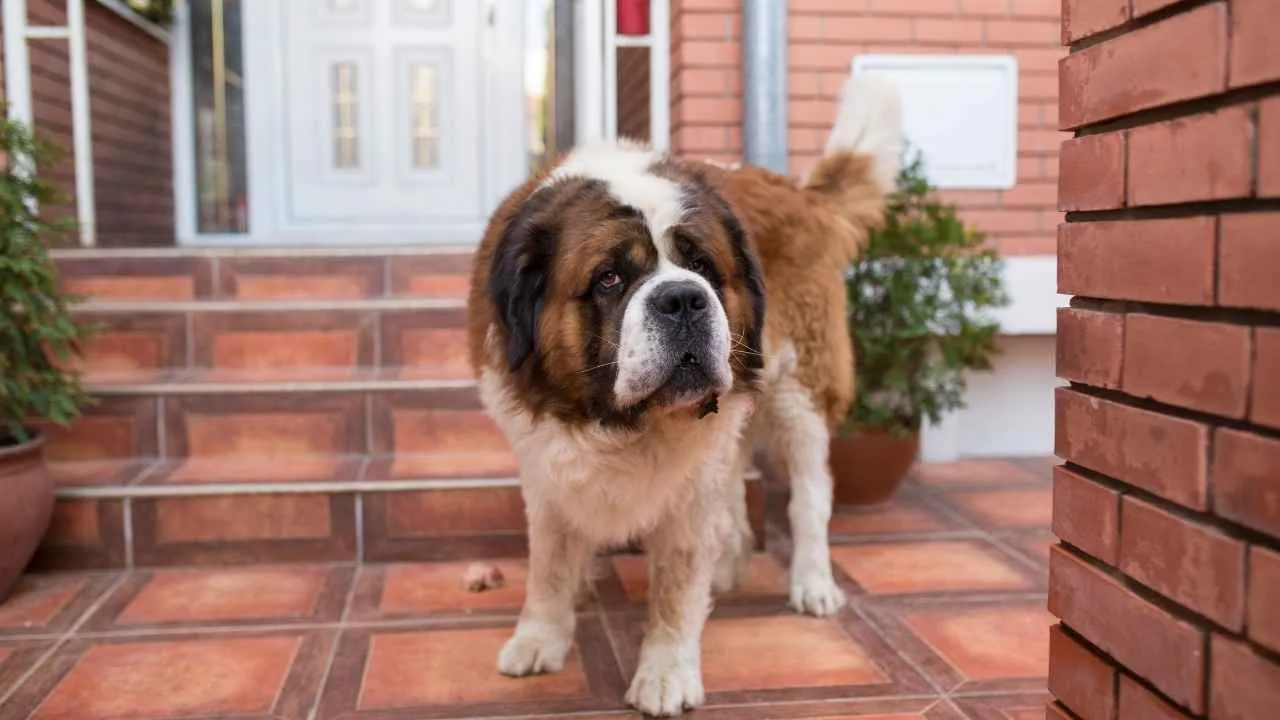
Few dogs are as strongly associated with mountain survival as the Saint Bernard.
The breed became famous through its connection with the Great Saint Bernard Pass, where dogs from the hospice helped locate travelers lost in dangerous Alpine conditions. Barry, the most celebrated historic rescue dog associated with the hospice, was credited with saving around 40 people during the early nineteenth century.
The Royal Kennel Club notes that they combine an enormous physical presence with a generally steady and affectionate nature. Their size could help them move through deep snow, provide physical support, and endure severe mountain weather more effectively than many lighter companion breeds.
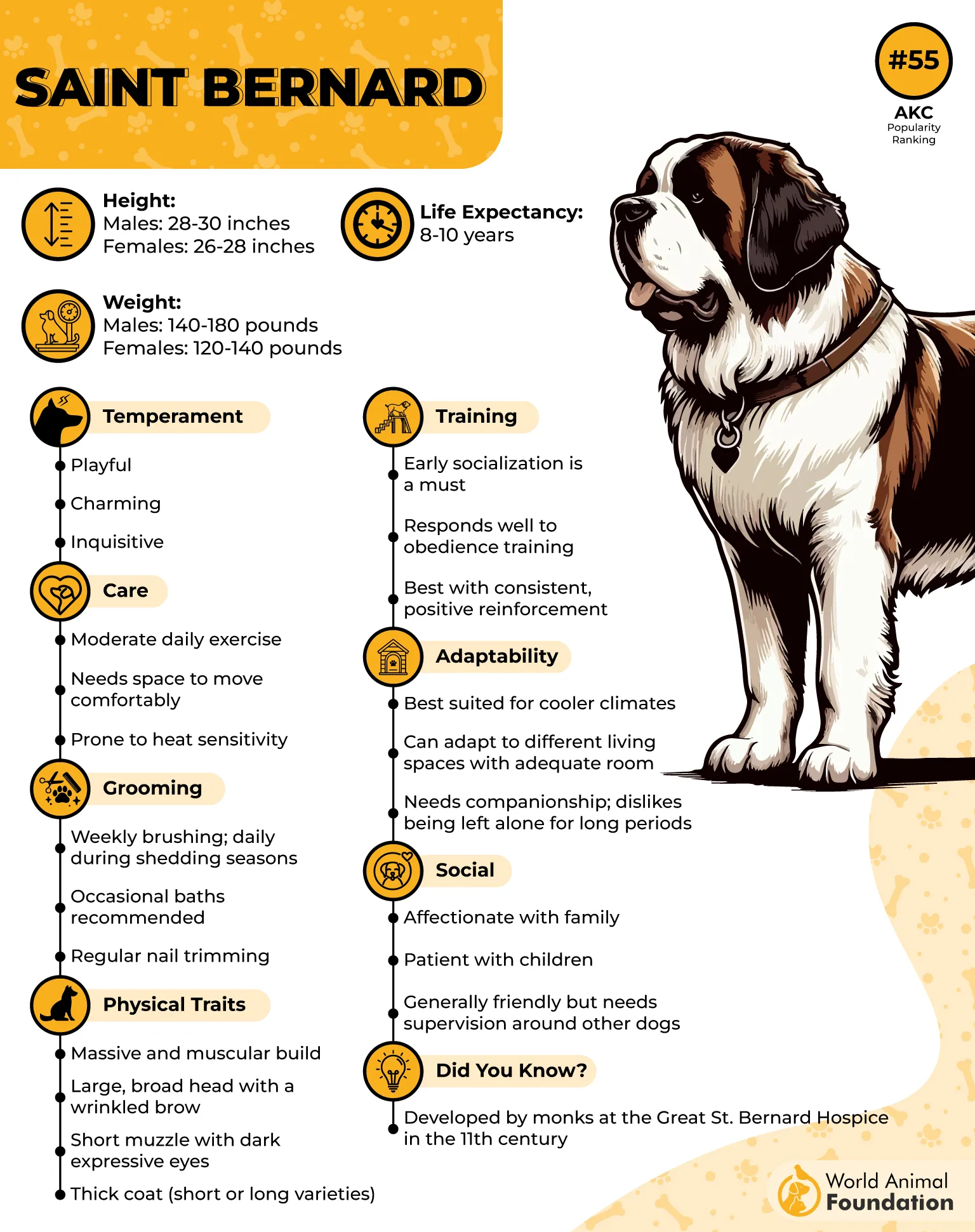
The classic image of a Saint Bernard carrying a miniature barrel of brandy is mostly romantic storytelling rather than standard rescue equipment. The breed’s genuine historical value came from its strength, orientation, scent work, weather resistance, and close cooperation with the hospice community.
Modern ones are not automatically prepared for rescue operations simply because their ancestors worked in the Alps. Their giant size can increase stress on the joints, and they require careful conditioning, controlled growth, appropriate nutrition, and regular veterinary care.
Heat is one of the greatest environmental concerns for this breed. Saint Bernards can struggle during warm-weather exercise because of their heavy build and insulating coat, making cool conditions, frequent rest, shade, and water essential.
Their Wilderness Survival Strategy
Strong scenting ability can support tracking work and the search for people across snowy or unfamiliar landscapes.
A massive frame and cold-resistant coat provide advantages during measured travel through freezing mountain environments.
A calm, people-focused disposition can offer reassurance and close companionship during stressful outdoor situations.
6. German Shepherd
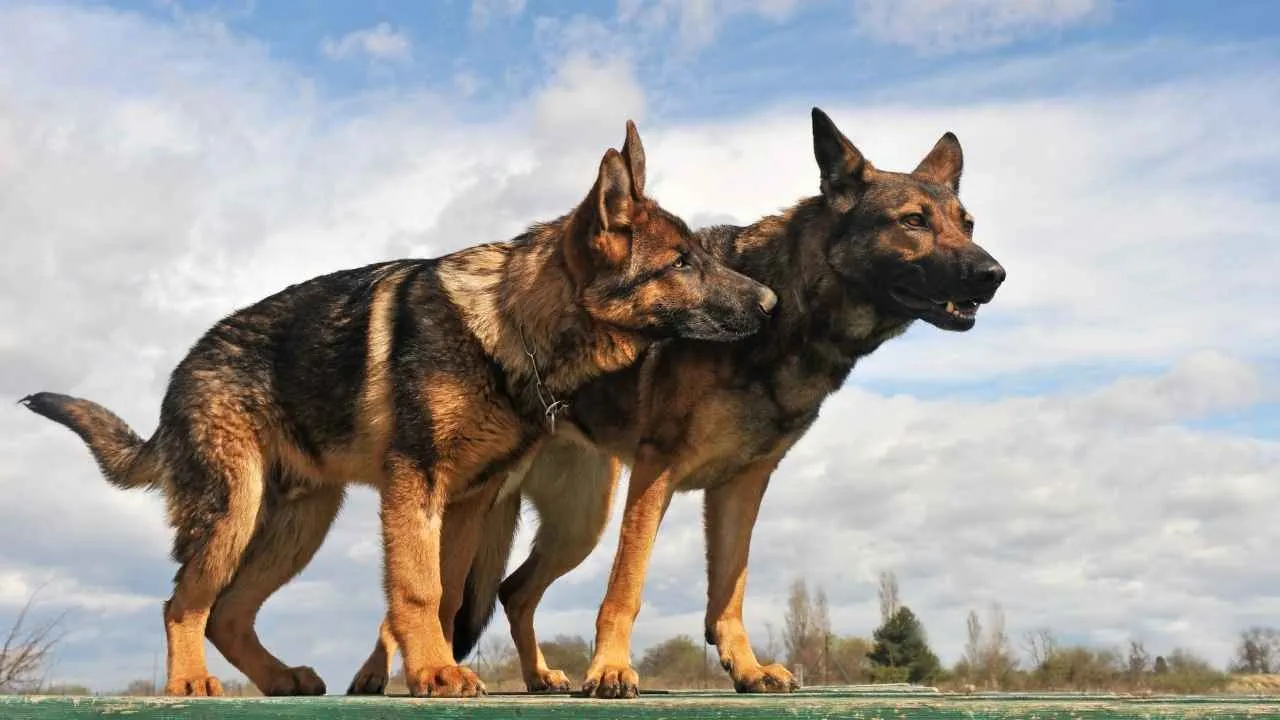
The German Shepherd is the all-purpose survival teammate that seems to have downloaded several professional skill packs at once.
Developed as a versatile working and herding dog, the breed became known for intelligence, athleticism, courage, trainability, and close cooperation with handlers. These qualities have supported its use in police work, military roles, tracking, detection, search operations, protection, and service work.
In the wilderness, a well-trained German Shepherd can learn complex routines involving navigation, scent work, controlled guarding, object retrieval, emergency stops, and directional commands. Its ability to focus on a handler is especially valuable when terrain or wildlife requires an immediate response.
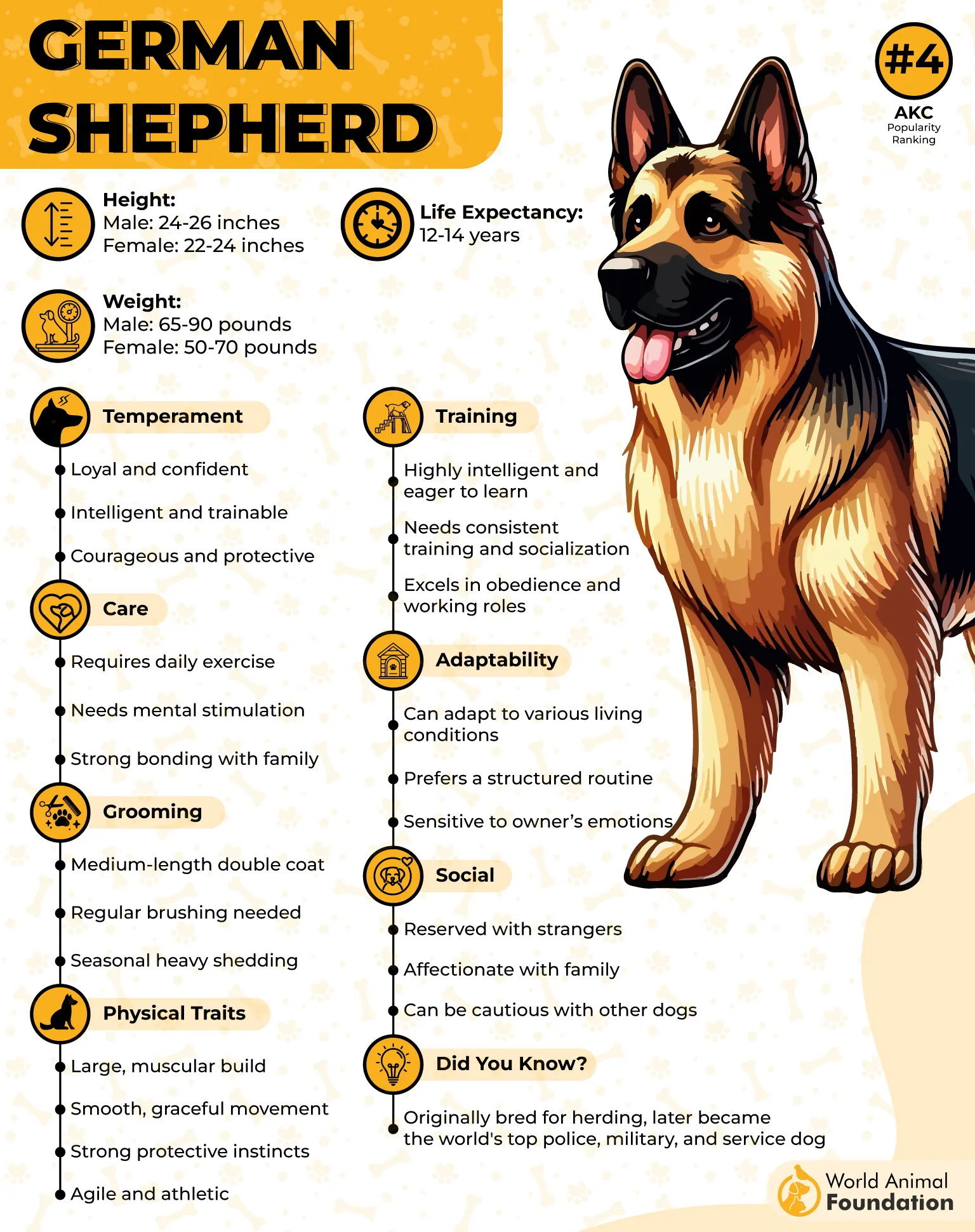
The breed’s athletic construction supports hiking, scrambling, and sustained movement, provided the dog has sound joints and proper conditioning. They can carry light, properly fitted packs once they have reached physical maturity and received veterinary approval.
Their double coat provides moderate protection across a range of cool or variable conditions, but it does not make every Shepherd invincible in extreme temperatures. Dark-coated dogs may heat quickly in direct sun, while prolonged exposure to deep cold still requires shelter and monitoring.
A stable German Shepherd may also provide deterrence and situational awareness around remote camps. However, protection should never mean uncontrolled aggression, and owners must prioritize neutrality, obedience, and safe management around other hikers.
Their Wilderness Survival Strategy
Advanced trainability allows the dog to learn emergency behaviors, scent tasks, route routines, and precise handler cues.
Athletic power supports climbing, hiking, controlled carrying, and movement across varied natural surfaces.
Strong situational awareness can help identify unfamiliar sounds, approaching people or animals, and changes around camp.
7. Rhodesian Ridgeback
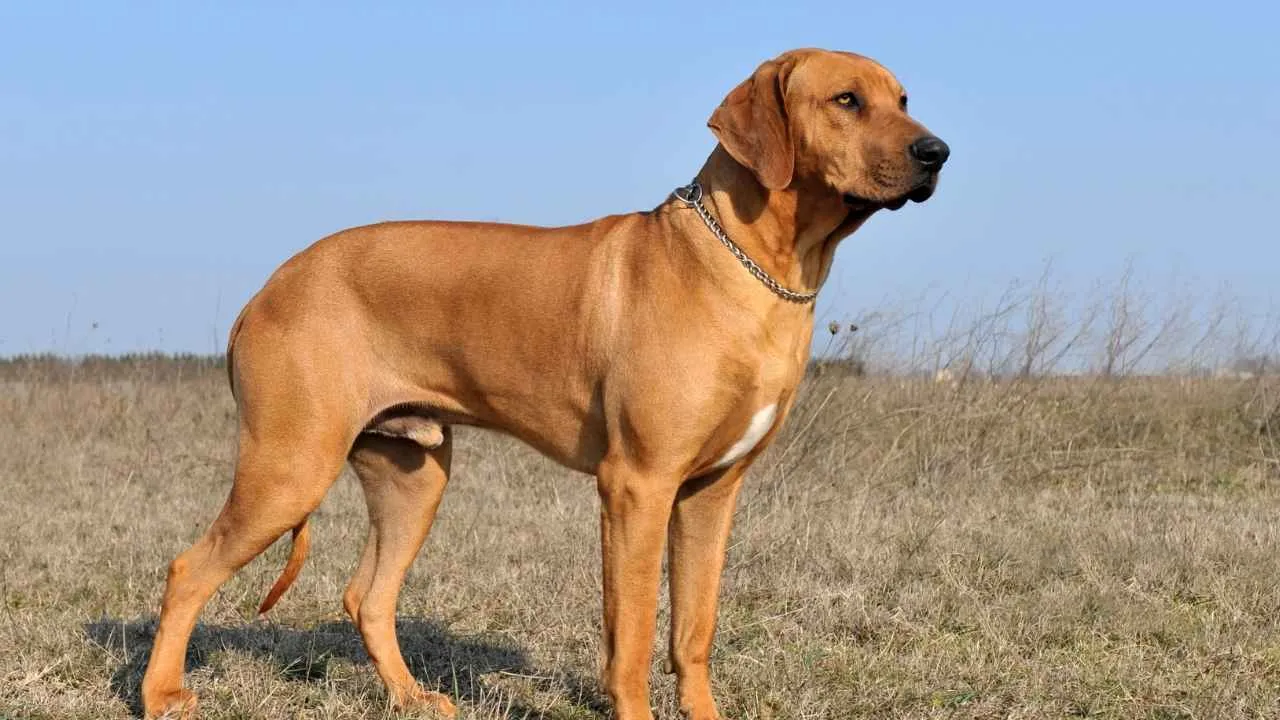
The Rhodesian Ridgeback is the warm-climate specialist on this list, bringing endurance and athletic confidence rather than a giant winter coat. The breed developed in southern Africa from local rigid dogs and imported breeds, eventually becoming associated with hunters who pursued large game.
Its short, dense coat is easier to manage in warm conditions than the heavy insulation carried by Arctic or mountain breeds. The Ridgeback’s lean, muscular body supports efficient movement over substantial distances, making it a capable companion for experienced hikers in suitable weather.
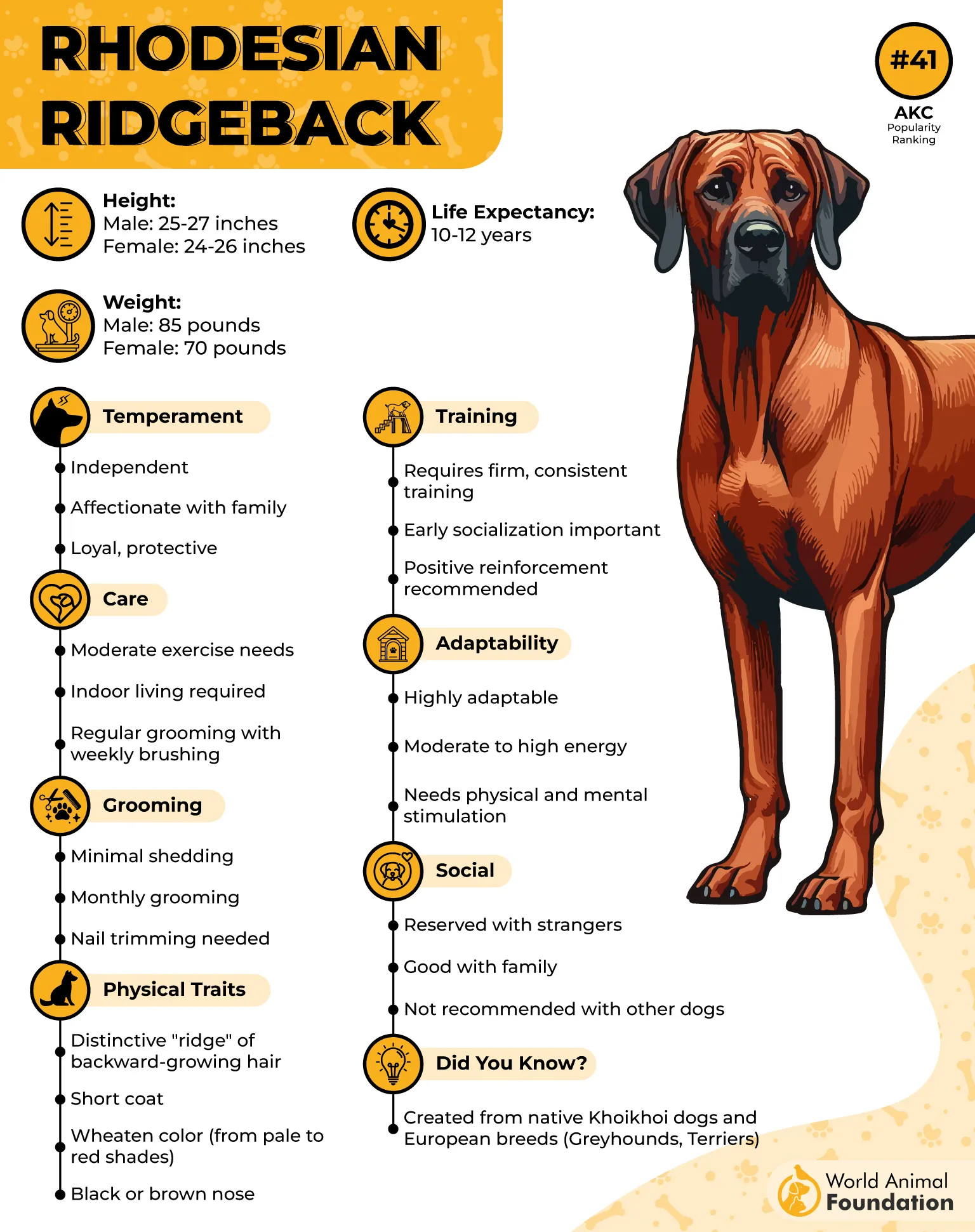
They are often reserved with strangers and deeply attached to their households, says PetMD. Their size, confidence, and awareness may create a strong deterrent presence around a remote campsite. Yet responsible owners must develop calm neutrality, because intimidating appearance is useful only when paired with reliable control.
The breed combines intelligence with independence, and repetitive training can quickly lose its sparkle. Short, meaningful sessions, reward-based methods, and real-world practice generally make more sense than endless drills.
Prey drive may be substantial, so secure handling is essential around deer, rabbits, livestock, and other tempting wilderness residents.
Early starts, shaded routes, frequent water stops, and careful observation can reduce the danger of heat illness. This is a dog built for purposeful movement, not for proving a point during the hottest hour of the day.
Their Wilderness Survival Strategy
A streamlined, muscular body supports efficient travel across open, dry, and moderately rugged terrain.
Courage and environmental awareness allow the breed to remain composed in the presence of unfamiliar sights, scents, and movement.
A short coat reduces the burden of heavy insulation during warm-weather adventures, though heat precautions remain essential.
Conclusion
The most capable wilderness dogs are not defined by size alone.
Australian Cattle Dog, Labrador Retriever, Border Collie, Australian Shepherd, Great Dane, and Cane Corso are also among the best dog breeds to consider for an adventurous trip.
Proper training, gradual conditioning, hydration, paw care, weather awareness, veterinary guidance, and respect for wildlife matter more than dramatic appearances or survival-themed social media clips. A powerful dog may help you face the wilderness, but responsible preparation is what gives you both the best chance of returning home safely.
