




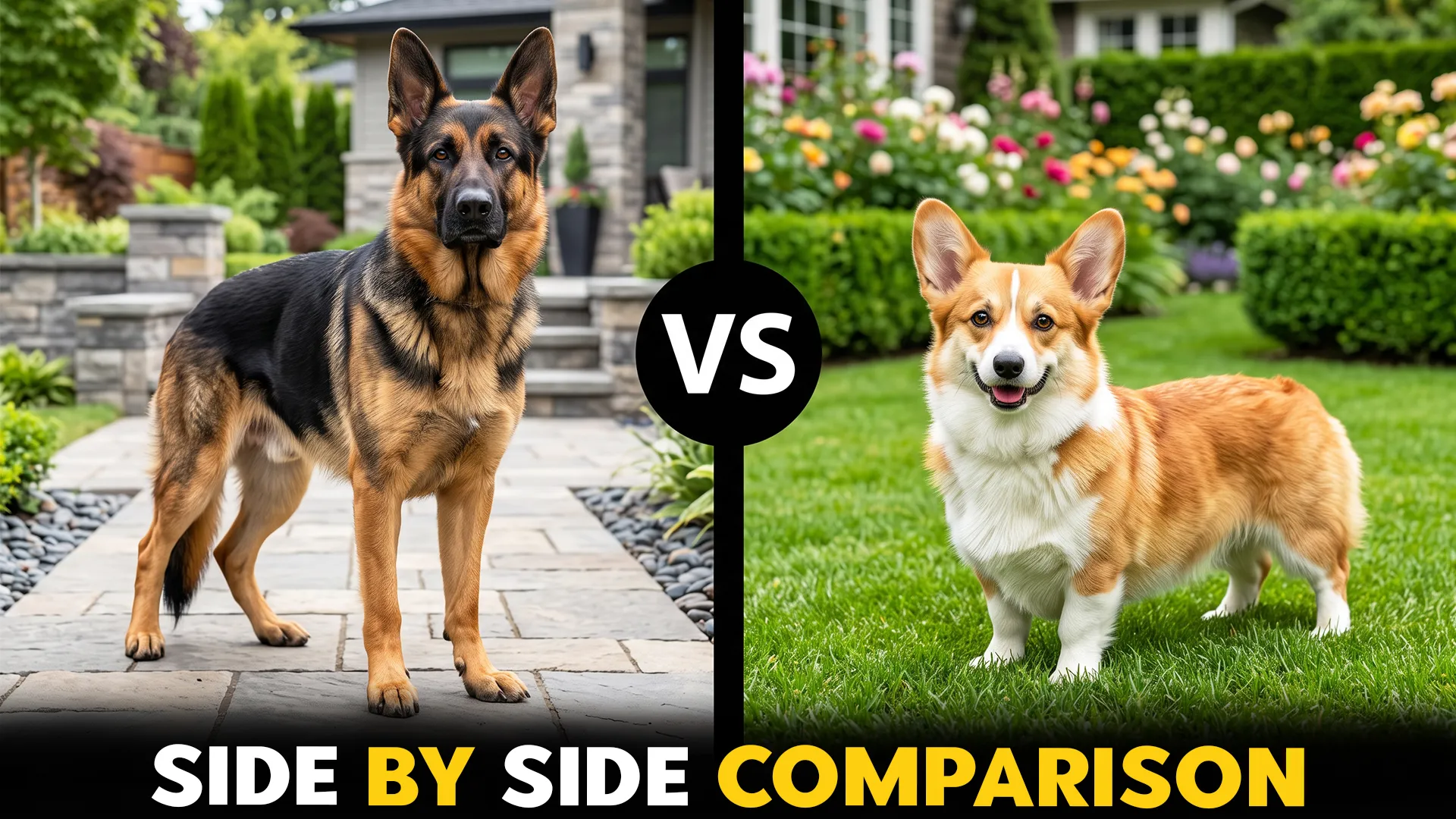
Choosing between a German Shepherd and a Pembroke Welsh Corgi is about more than comparing size. While both began as herding dogs, they have grown into two very different companions, each with unique strengths, personalities, and care requirements.
The German Shepherd is admired for its intelligence, athleticism, and working ability, making it ideal for active owners who enjoy training and outdoor adventures. The Pembroke Welsh Corgi, on the other hand, packs remarkable confidence, adaptability, and charm into a compact frame while still retaining its energetic herding instincts.
This comparison breaks down the key differences in temperament, exercise needs, grooming, trainability, health, and family compatibility to help you decide which breed best matches your lifestyle.
German Shepherd vs. Pembroke Welsh Corgi: Fast Facts About These Dog Breeds
Origins & Purpose
The German Shepherd was developed in the late nineteenth century as a dependable herding dog capable of managing and protecting sheep. According to Britannica, German Shepherd dogs were developed in Germany.
Guided by breeder Max von Stephanitz, the breed was refined for intelligence, endurance, and a strong work ethic, with the influential dog Horand laying the foundation for modern German Shepherd bloodlines.
Created for farm work, the German Shepherd quickly proved its value beyond the pasture. Its keen instincts, obedience, strength, and remarkable trainability made it a natural choice for police work, military service, search and rescue, and other demanding roles that require courage and reliability.
Compared with the Pembroke Welsh Corgi, which was bred to drive cattle across Welsh farms, the German Shepherd was designed for larger-scale herding and guarding responsibilities.
Both breeds share a working heritage, but the German Shepherd’s combination of loyalty, athleticism, and protective nature has made it one of the world’s most respected working dogs while remaining a devoted family companion.
Size & Build
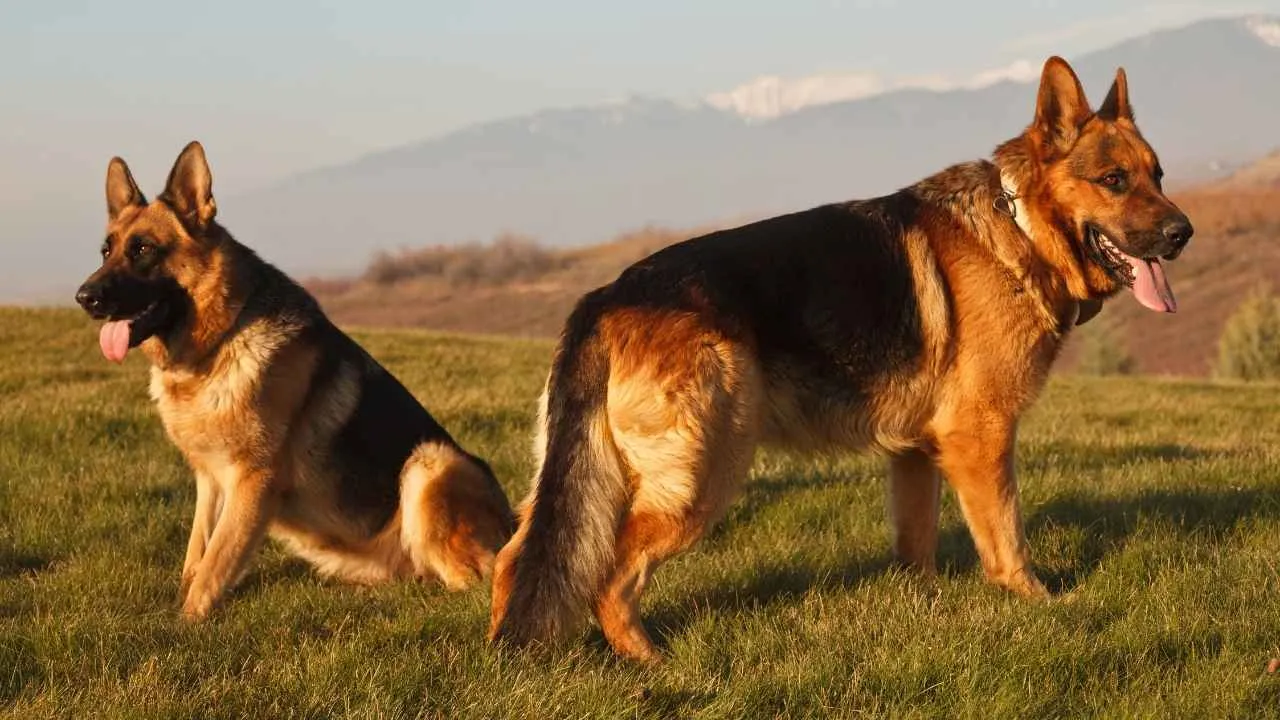
The German Shepherd is the larger and more athletic of the two breeds, standing 22–26 inches tall and typically weighing 75–95 pounds. Its lean frame, erect ears, and long muzzle reflect the strength and endurance needed for demanding herding and working tasks.

By comparison, the Pembroke Welsh Corgi has a compact, low-set build with short legs and a slightly longer body, a structure developed for driving cattle while avoiding kicks. Adults generally stand 10–12 inches tall and weigh 23–28 pounds, reaching full height by about a year, though they may continue filling out afterward.
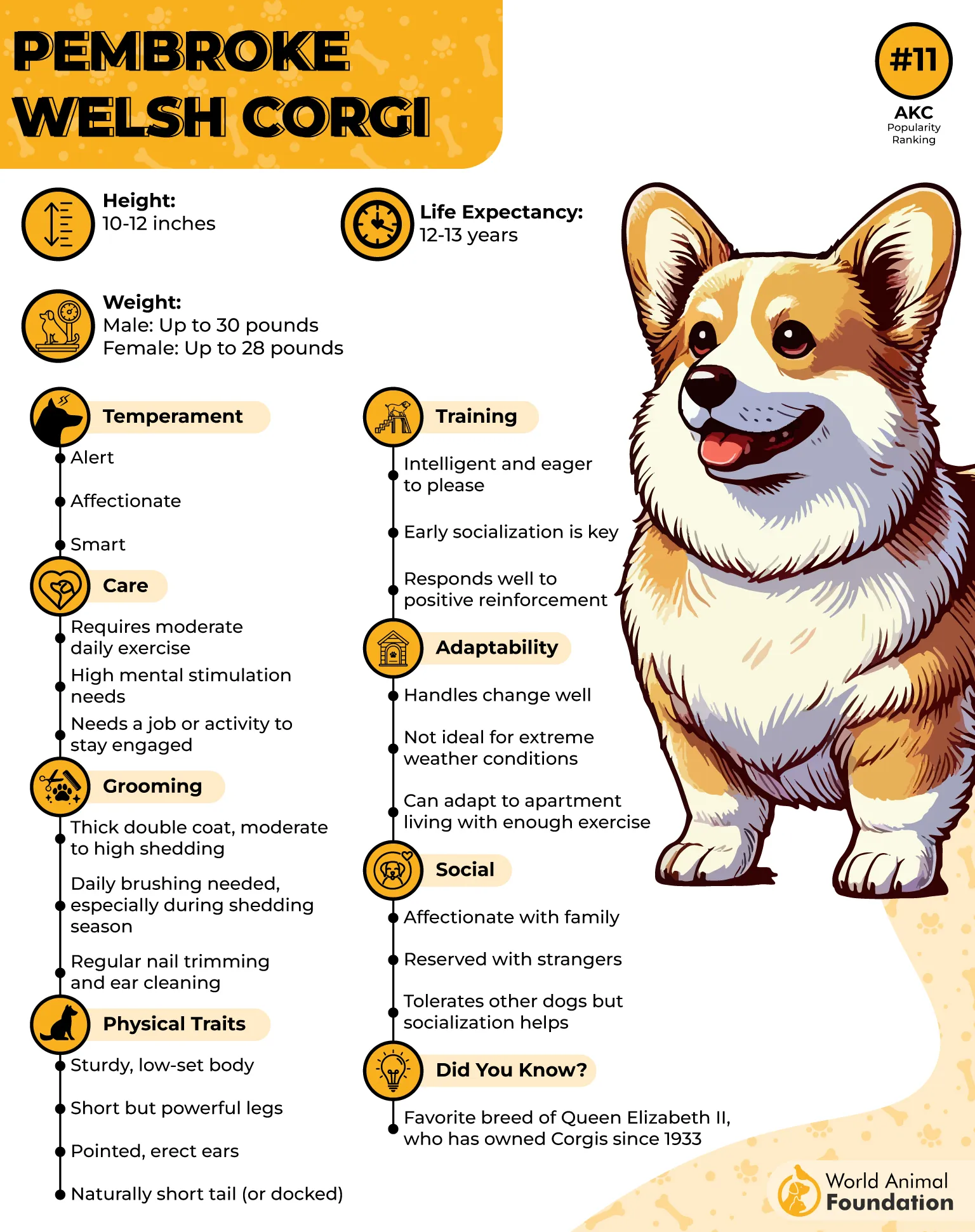
These physical differences shape how each breed performs in daily life. The German Shepherd’s powerful build suits active jobs requiring speed and stamina, while the Pembroke Welsh Corgi’s chondrodysplastic frame favors agility close to the ground.
Despite their contrasting sizes, both breeds feature alert, upright ears and balanced proportions that reflect their shared heritage as hardworking herding dogs.
Pricing & Availability
German Shepherd puppies are widely available, but prices vary greatly depending on pedigree, health testing, and breeding standards. In many parts of the United States, puppies from responsible breeders typically range from $2,000–$4,000, while some Midwest breeders may offer puppies for $800–$2,700.
When comparing a German Shepherd vs. a Pembroke Welsh Corgi, it is important to look beyond the price tag. Well-bred German Shepherds require significant investment in health screening, training, nutrition, and carefully selected bloodlines, which is reflected in their higher cost, especially for working or protection lines.
Although lower-priced puppies can be tempting, reputable breeders caution that unusually cheap dogs often come from breeders who skip essential health testing and responsible breeding practices.
Pembroke Welsh Corgis are also readily available through established breeders, but regardless of the breed you choose, prioritizing health, temperament, and ethical breeding is far more valuable than simply finding the lowest purchase price.
Temperament & Personality
The biggest personality difference in the German Shepherd vs. Pembroke Welsh Corgi comparison lies in their instincts. According to PetMD, German Shepherd dogs are large, agile, muscular, and highly intelligent companions.
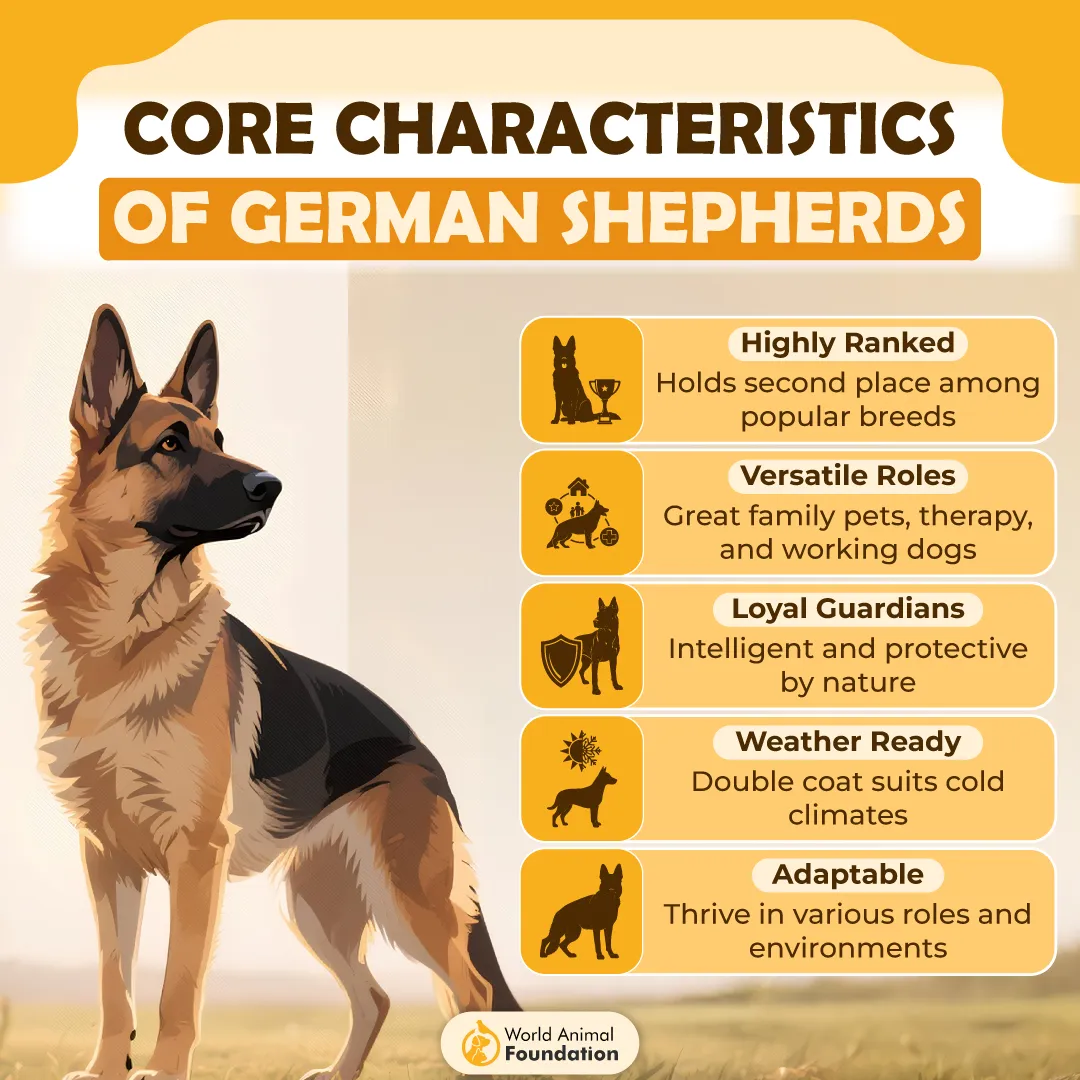
German Shepherds are deeply loyal, confident, and naturally protective, forming close bonds with their families while remaining cautious around unfamiliar people, making them dependable guardians.
Pembroke Welsh Corgis, on the other hand, are cheerful, outgoing, and thrive on constant interaction. According to the AKC, Pembroke Welsh Corgi dogs are sturdy and athletic dogs with an affectionate, companionable nature.
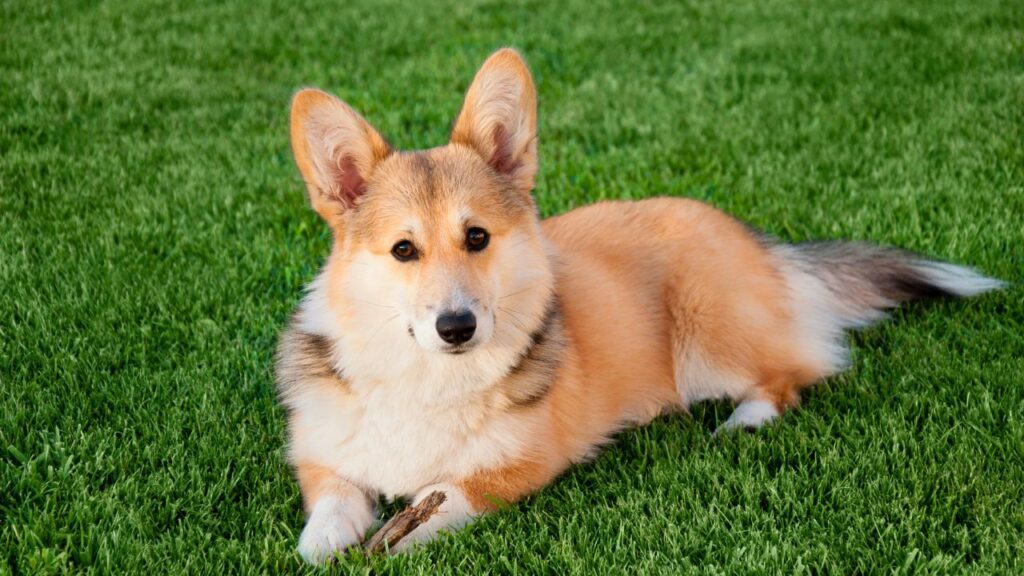
They love being involved in family activities and often seek attention with their playful, lovely nature. Their intelligence also allows them to excel in obedience, dog sports, and even service work.
Both breeds are highly intelligent and require daily mental and physical stimulation to stay happy. A German Shepherd without enough exercise or companionship may develop anxiety or unwanted behaviors, while a bored Corgi can become stubborn and mischievous.
Although the German Shepherd suits owners seeking a protective companion, the Pembroke Welsh Corgi is better known for its lively, social personality, making both excellent choices for active households committed to training and enrichment.
Exercise Needs & Energy Levels
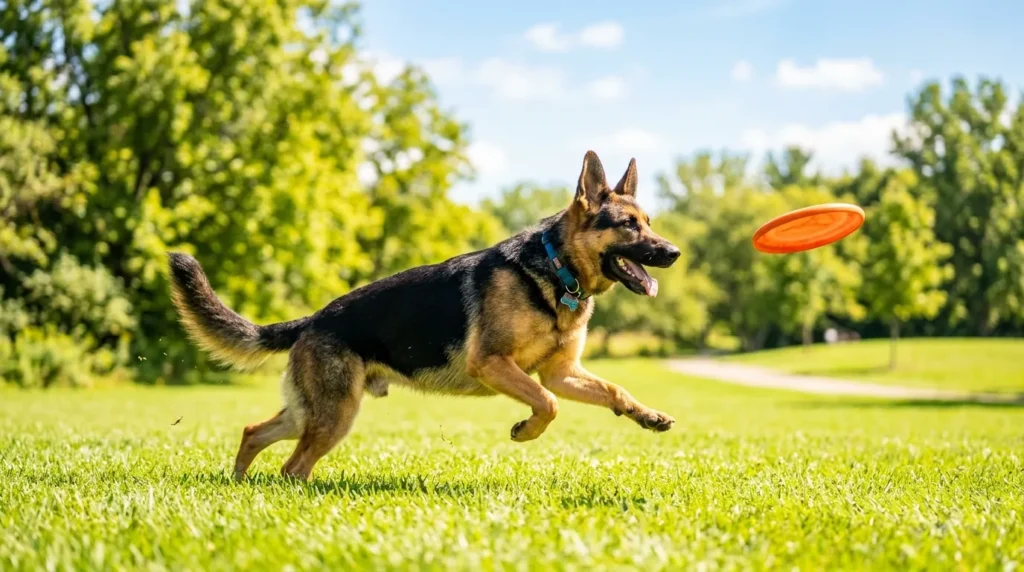
Both breeds enjoy staying active, but the German Shepherd has significantly higher exercise demands. Bred as a hardworking herding dog, it thrives on long walks, runs, advanced training, tracking, and other activities that challenge both body and mind.
The German Shepherd’s exceptional intelligence also means physical exercise alone is not enough. Puzzle games, obedience work, scent tasks, and interactive training help satisfy its need for mental stimulation. Without consistent activity, this energetic breed may become restless or develop unwanted behaviors.
The Pembroke Welsh Corgi has a more moderate energy level, making it easier to manage while still requiring daily exercise. Regular walks, games of fetch, and engaging play sessions help maintain a healthy weight and prevent boredom.
Although smaller than the German Shepherd, the Corgi remains an active working breed that enjoys participating in family adventures, making both dogs excellent companions for owners with active lifestyles.
Trainability & Obedience
In the German Shepherd vs. Pembroke Welsh Corgi comparison, both breeds are highly intelligent and eager to learn, but they approach training differently. German Shepherds excel when lessons combine structure, consistency, and purposeful tasks rather than relying only on repetitive drills or high-energy games that may leave them overstimulated.
Although German Shepherds are often described as easy to train, dependable obedience requires the right techniques and regular practice. Clear communication, balanced routines, and exercises that teach focus and calmness help develop the reliable behavior this working breed is famous for.
The Pembroke Welsh Corgi is equally enthusiastic about learning and performs exceptionally well in obedience and rally activities. Its willingness to work alongside its owner makes training both productive and enjoyable.

Beyond competition, these exercises reinforce polite manners at home, in public, and around other dogs. Whether you choose the German Shepherd or the Pembroke Welsh Corgi, early training and consistent guidance are essential for bringing out each breed’s impressive intelligence and responsiveness.
Grooming Needs & Shedding
The German Shepherd demands more intensive grooming. Its dense outer coat and insulating undercoat provide year-round protection, making shaving unnecessary and potentially harmful to the coat’s natural function.
German Shepherds benefit from brushing three to four times a week, increasing to daily sessions during the heavy spring and fall shedding seasons. A balanced diet also supports skin and coat health, while deshedding tools should be used gently to avoid damaging the guard hairs or irritating the skin.
Pembroke Welsh Corgis also shed throughout the year and experience seasonal coat blows, though their grooming routine is generally less demanding. Thorough drying after baths helps maintain the coat, remove loose fur, and reduce heavy shedding.
Regular brushing, proper drying techniques, and consistent coat care keep both breeds looking healthy, but prospective owners should expect the German Shepherd to require the greater grooming commitment.
Herding & Work Drive
The German Shepherd was carefully developed to be the ideal sheep-herding dog, combining endurance, obedience, and independent decision-making. While shepherds guided the flock, these wonderful companions patrolled the boundaries, keeping hundreds of sheep safe on the road and away from surrounding fields, even over long distances.
In the German Shepherd vs. Pembroke Welsh Corgi comparison, both breeds possess strong herding instincts, but they work in different ways. German Shepherds relied on stamina and control to manage large flocks, while Pembroke Welsh Corgis used speed, determination, and quick heel nips to move cattle much larger than themselves.
Those working instincts remain evident today. German Shepherds excel in demanding jobs such as police work, military service, and search and rescue, reflecting the versatility envisioned by their founder. Pembroke Welsh Corgis continue to thrive when given training, daily exercise, and meaningful activities.
Without enough physical and mental stimulation, Corgis may resort to barking, chewing, digging, or chasing moving objects as an outlet for their natural drive.
Health & Lifespan
German Shepherds typically live 9–13 years and, despite their strength and versatility, may be more prone to certain inherited conditions, including some forms of cancer.
Routine veterinary visits, balanced nutrition, regular exercise, and early health screening play an important role in supporting these popular dogs’ quality of life. Because this active breed often works in physically demanding roles, preventive care helps maintain mobility and overall well-being throughout adulthood.
Pembroke Welsh Corgis are also susceptible to breed-specific health concerns, many of which are linked to their long body and short legs.

Keeping them at a healthy weight reduces strain on their joints and spine, while consistent veterinary care, dental hygiene, vaccinations, and parasite prevention contribute to lifelong health. Regardless of breed, choosing a responsibly bred puppy and maintaining preventive healthcare are among the best ways to promote longevity and an active lifestyle.
German Shepherd vs. Pembroke Welsh Corgi: Which Breed Is Right for You?
Choosing between a German Shepherd and a Pembroke Welsh Corgi depends largely on your lifestyle and expectations. Both breeds are exceptionally intelligent, loyal, and eager to learn, but they differ in energy levels, size, and daily care needs. Each thrives with positive, consistent training and enjoys having a meaningful role within the family.
A German Shepherd is better suited to active owners who can provide plenty of exercise, structured training, and mental challenges. Their protective instincts, athletic build, and willingness to work make them ideal for people seeking a devoted companion with strong guardian qualities.
A Pembroke Welsh Corgi is an excellent match for families or individuals wanting a smaller dog with a big personality. Although they require less exercise than a German Shepherd, they still need regular activity, interactive games, and mental stimulation to prevent boredom.
If you prefer a compact, affectionate, and adaptable companion, the Corgi may be the better fit, while those wanting a larger, highly driven working partner will likely appreciate the German Shepherd.
Conclusion
Whether you choose the German Shepherd or the Pembroke Welsh Corgi, both breeds bring intelligence, loyalty, and a strong desire to be involved in family life. Each has a rich herding background that continues to shape its personality today.
The German Shepherd stands out for its protective instincts, remarkable trainability, and unmatched work ethic. The Pembroke Welsh Corgi offers a smaller frame paired with confidence, affection, and an energetic spirit.
Their care needs differ, from exercise and grooming to health considerations, so matching the breed to your lifestyle is just as important as admiring its appearance or reputation.
By understanding these key differences, you can confidently choose the companion that best fits your home, activity level, and long-term expectations, creating a rewarding partnership for years to come.
