




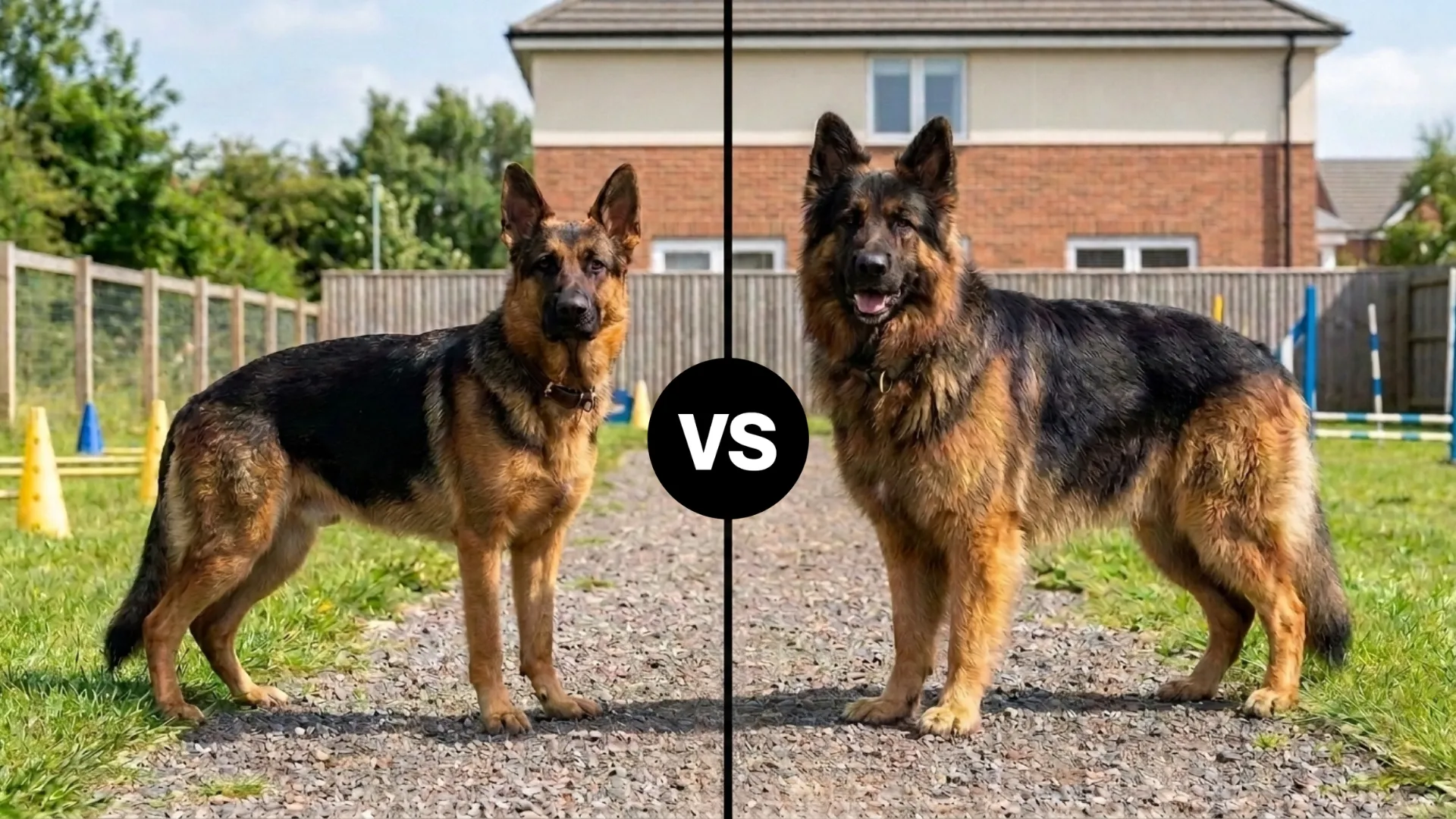
At first glance, the German Shepherd and King Shepherd look remarkably alike, sharing an unmistakable presence that commands attention wherever they go.
Yet beneath their similar appearance lie important differences that can shape the kind of companion each becomes.
While the German Shepherd has earned worldwide recognition for its intelligence, versatility, and dedication in demanding working roles, the King Shepherd was developed to retain many of those admired qualities in a large dog with a calmer, more easygoing temperament.
Both breeds are loyal, protective, and deeply devoted to their families, but they differ in size, energy levels, grooming needs, and daily care requirements. Understanding these distinctions is essential before choosing which breed best matches your home and lifestyle.
In this comparison, we’ll explore how the German Shepherd and King Shepherd differ in their origins, physical build, personality, trainability, health, and care, helping you make a confident and informed decision about these impressive canine companions.
German Shepherd vs. King Shepherd: Size and Temperament Differences
If you love the look of a German Shepherd but want something a bit larger and mellower, the King Shepherd might just be your perfect match. However, choosing between these two noble breeds means weighing more than just a few extra pounds.
Here is how the size, protective instincts, and daily personalities of the German Shepherd and King Shepherd truly compare.
Origins & Purpose
Although the German Shepherd and King Shepherd share a close connection, they were developed with different goals in mind.
The German Shepherd originated in Germany during the late 19th century, where it was carefully bred to herd livestock while displaying intelligence, courage, and a dependable work ethic.
As farming needs changed, the breed quickly proved its versatility in police work, military service, search and rescue, and assistance roles, earning a reputation as one of the world’s most capable working dogs.
The King Shepherd is a much newer breed, developed in the United States during the 1990s, according to KSCOFA.
Breeders aimed to create a larger dog that retained the German Shepherd’s loyalty, confidence, and working ability while emphasizing a calmer temperament and robust build.
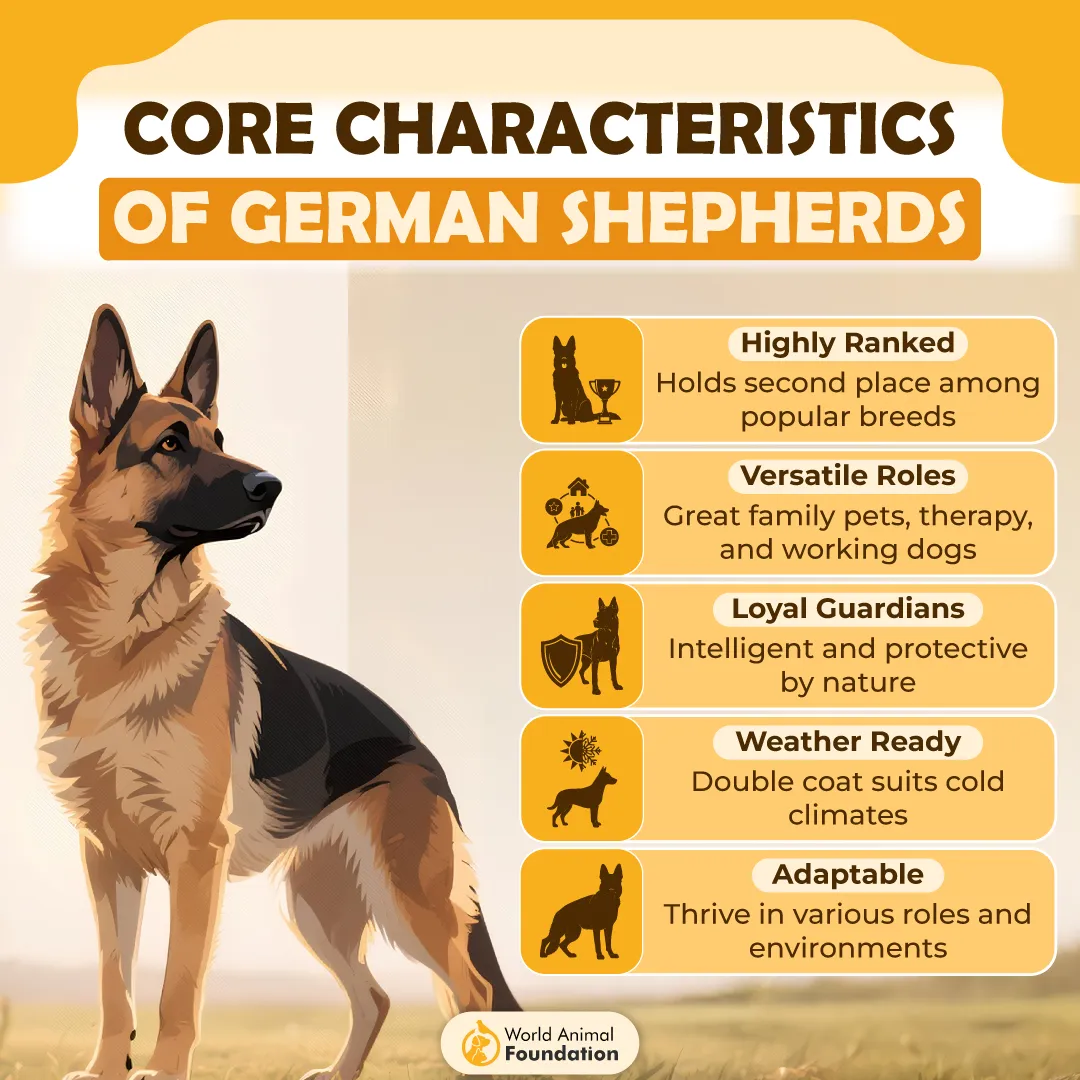
By incorporating breeds such as the Shiloh Shepherd, Alaskan Malamute, and Great Pyrenees, they produced a companion and working dog suited for guarding, livestock protection, therapy work, and active family life.
Size & Physical Build
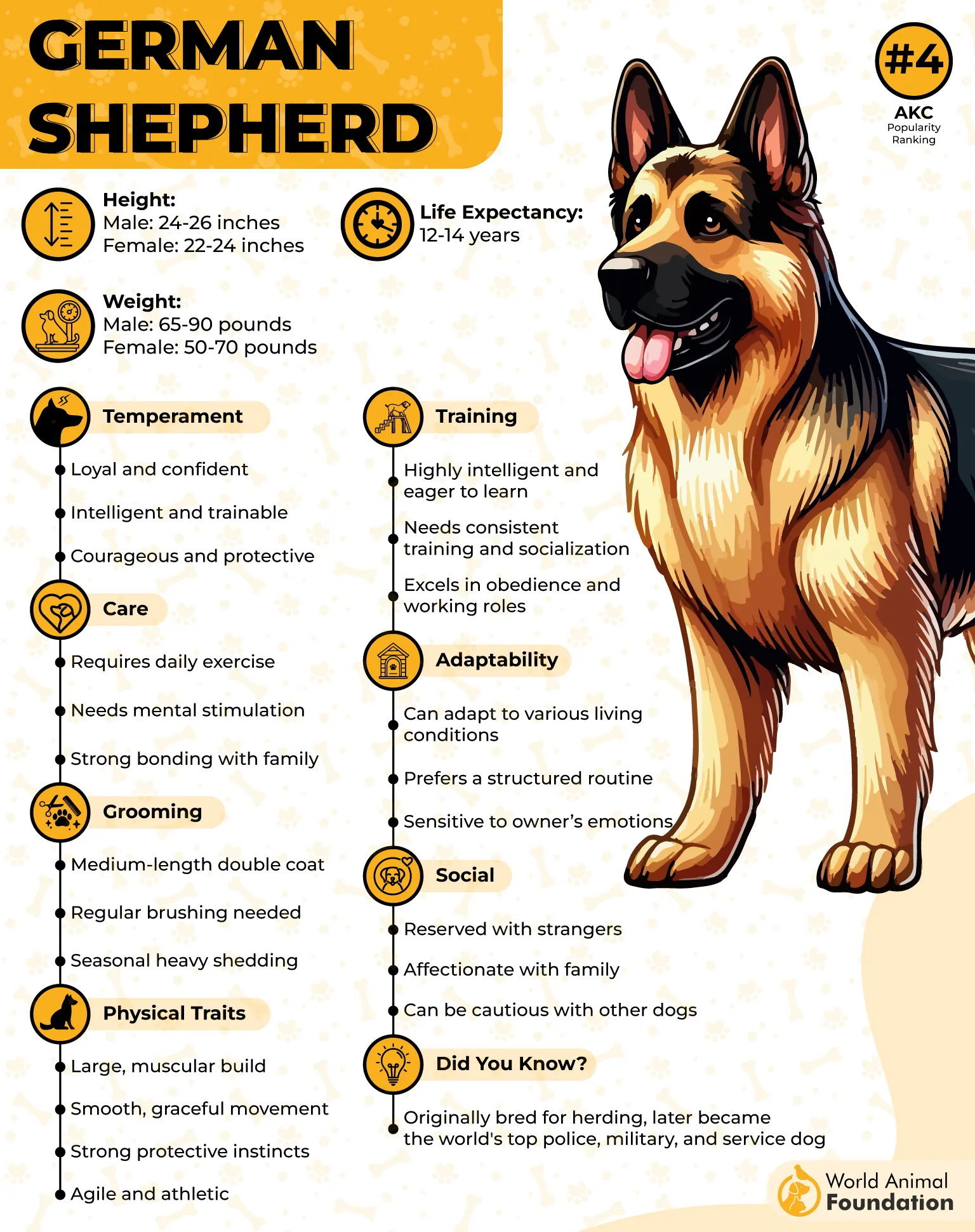
One of the biggest differences between these two breeds is their overall size. German Shepherds are large, athletic dogs with a balanced frame built for speed, endurance, and agility, according to PetMD.
Adults typically weigh between 50 and 90 pounds, with a muscular yet streamlined body that allows them to excel in demanding working roles.
King Shepherds were intentionally bred to be even larger. The AKSC states that they have a broader chest, heavier bone structure, and a more substantial build while maintaining an athletic appearance.
Many adults weigh between 75 and 150 pounds. Their thick, weather-resistant coat often gives them an even more imposing presence than their size alone suggests.
Despite their larger frame, King Shepherds are designed to remain functional rather than bulky. Both breeds are powerful and well-muscled, but the German Shepherd prioritizes agility, whereas the King Shepherd emphasizes size, strength, and an impressive physical presence.
Temperament & Personality
Both breeds are deeply devoted to their families, but their personalities differ in subtle yet important ways. German Shepherds are highly intelligent, alert, and naturally protective.
They form strong bonds with their owners, enjoy having a purpose, and thrive when given consistent training, structure, and mental challenges. Their protective instincts can make them reserved around unfamiliar people, making early socialization especially valuable.
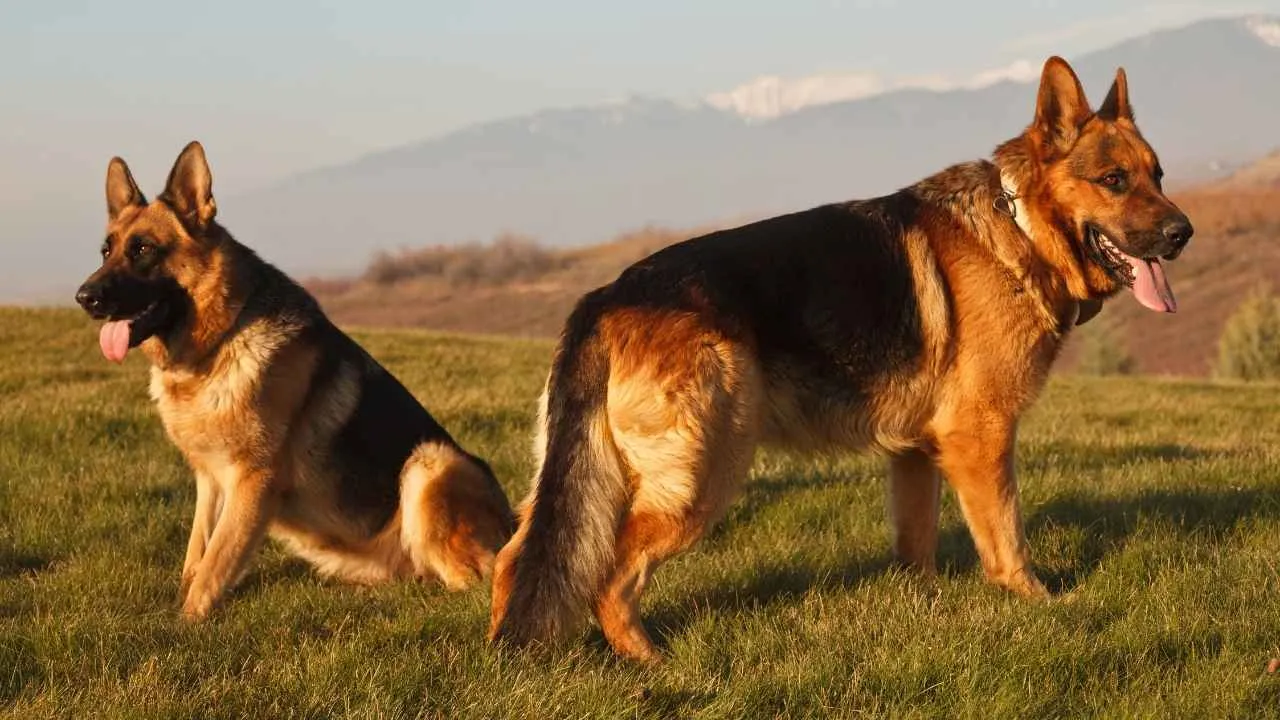
King Shepherds inherit many of these qualities while often displaying a calmer and more easy-going nature. They are typically affectionate with family members and tend to approach daily life with a more relaxed attitude.
While they remain capable guardians, they are generally known for combining confidence with patience, making them suitable for companionship as well as working roles.
Neither breed reaches its full potential without proper training, socialization, and responsible ownership. With guidance and consistency, both can become loyal, dependable companions that are eager to work, learn, and spend time with their families.
Exercise & Energy Levels
These breeds enjoy active lifestyles, but their exercise needs are not identical. German Shepherds are energetic working dogs that require daily physical activity alongside plenty of mental stimulation.
Long walks, obedience training, scent work, agility, and interactive games help keep them engaged. Without enough exercise or purposeful activities, they can become bored and develop unwanted behaviors.
King Shepherds also benefit from regular exercise, but they are generally less intense than German Shepherds. Daily walks, play sessions, and mentally stimulating activities are important for maintaining their physical condition and emotional well-being.
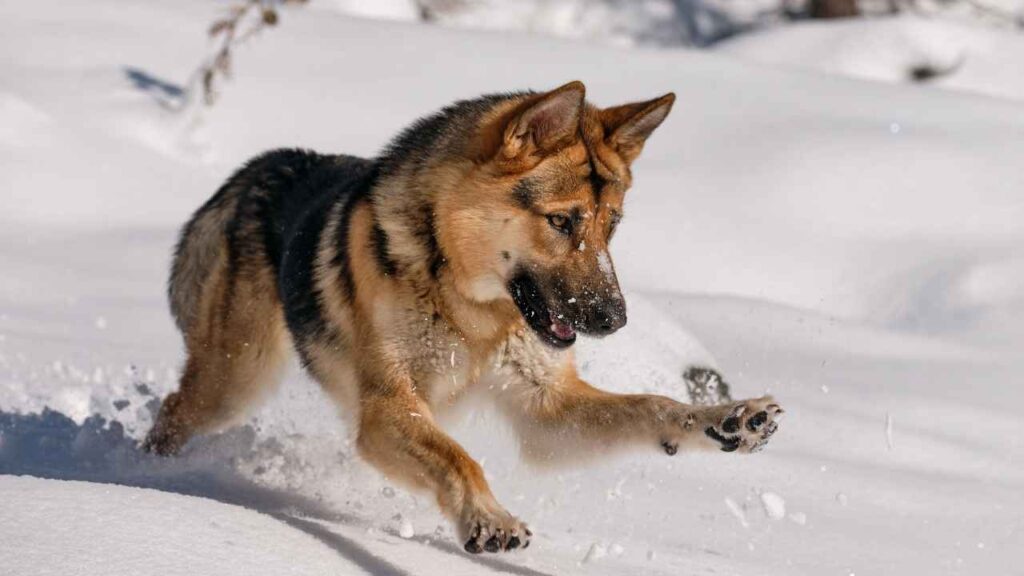
While they possess impressive stamina, they are usually not as constantly driven or high-energy as their German relatives.
For both breeds, exercise is about more than burning energy. Consistent training, structured routines, and opportunities to use their intelligence strengthen the bond with their owners while helping them grow into confident, well-mannered companions that enjoy both work and family life.
Training & Intelligence
Both the German Shepherd and King Shepherd are exceptionally smart dogs, but their learning styles can feel slightly different. German Shepherds are renowned for their sharp minds, quick problem-solving skills, and eagerness to work.
They thrive when given clear guidance, consistent training, and mentally stimulating activities. Because they learn so quickly, they can also pick up unwanted habits if training is inconsistent, making early obedience and socialization especially important.
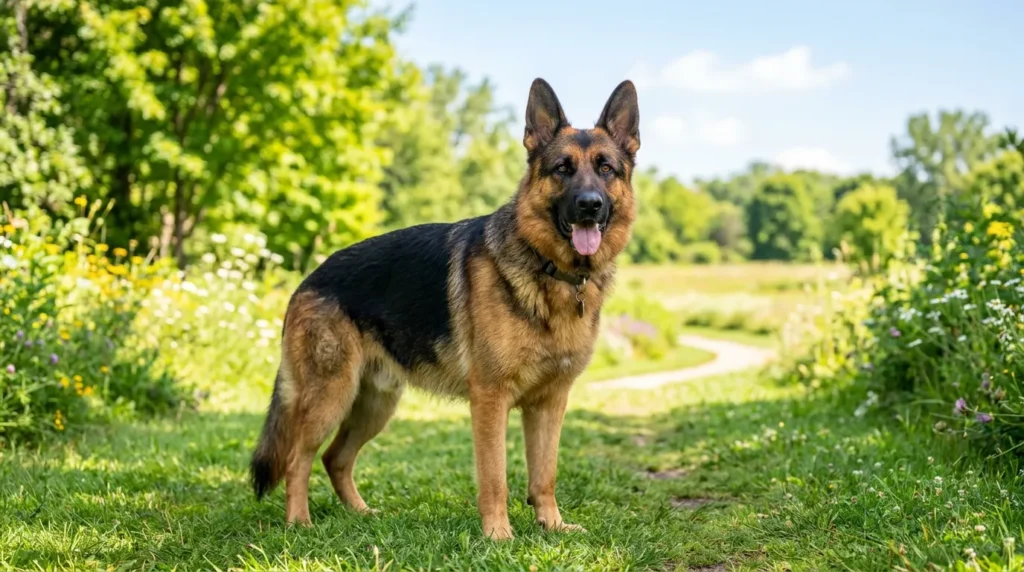
King Shepherds inherit much of this intelligence while often displaying a calmer, more relaxed approach to learning. They enjoy training sessions, respond well to positive reinforcement, and appreciate having a purpose.
Their willingness to please, combined with their steady temperament, makes them highly trainable companions for dedicated owners.
Regardless of breed, regular mental challenges are just as important as physical exercise. Obedience work, scent games, agility, and interactive puzzles help both dogs stay engaged, confident, and well-behaved throughout their lives.
Coat Maintenance
Although these breeds share a similar double coat, grooming demands vary slightly because of coat length and density. German Shepherds have a dense, weather-resistant coat that sheds throughout the year, with noticeably heavier shedding during seasonal coat changes.
Brushing several times a week helps remove loose hair, reduce tangles, and keep the coat healthy, while baths are only needed occasionally, according to the American Kennel Club.
King Shepherds generally have a longer, fuller coat that requires more frequent attention. Their thicker fur benefits from brushing several times each week, and daily grooming may be helpful during heavy shedding periods to prevent mats and keep loose hair under control.
Despite the extra maintenance, routine care also provides an opportunity to check the ears, teeth, skin, and nails for signs that need attention.
Owners considering either breed should be prepared for regular grooming, as both are known for shedding and require consistent coat care to stay comfortable and looking their best.
Health & Lifespan
Both the German Shepherd and King Shepherd can enjoy long, active lives with responsible breeding, proper nutrition, regular exercise, and routine veterinary care.
German Shepherds generally have a lifespan of around 9 to 13 years, although they are known to be predisposed to certain inherited conditions, including hip and elbow dysplasia, degenerative myelopathy, and bloat.
Responsible breeders often perform health screenings to help reduce the risk of passing on these conditions.
The King Shepherd was developed with the goal of improving overall health while maintaining many of the German Shepherd’s desirable qualities. Even so, the breed may still experience health concerns commonly seen in large dogs, such as hip and joint problems, bloat, hypothyroidism, and von Willebrand’s disease.
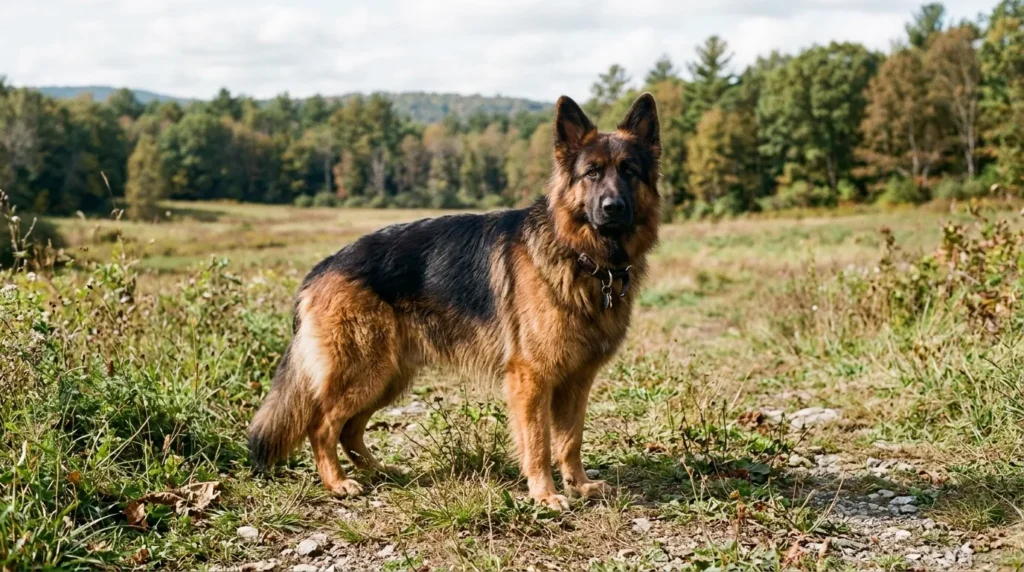
For either breed, choosing a reputable breeder, maintaining a healthy weight, providing appropriate exercise, and scheduling regular veterinary checkups can play an important role in supporting lifelong health and well-being.
Conclusion
Choosing between the German Shepherd and the King Shepherd ultimately comes down to your lifestyle, experience, and what you value most in a canine companion. The German Shepherd is a proven working breed known for its intelligence, athleticism, and unwavering loyalty.
It thrives with owners who can provide consistent training, daily exercise, and plenty of mental stimulation. The King Shepherd offers many of those same qualities but in a larger, calmer package. Its gentle nature and affectionate personality make it an appealing choice for families seeking a devoted companion with a steady temperament.
Both breeds are protective, highly trainable, and happiest when they have a close bond with their people. Neither is a low-maintenance dog, as both require regular grooming, exercise, and responsible care.
By understanding their differences in size, temperament, and daily needs, you can confidently choose the breed that best fits your home and enjoy years of companionship with a loyal, loving friend.
