




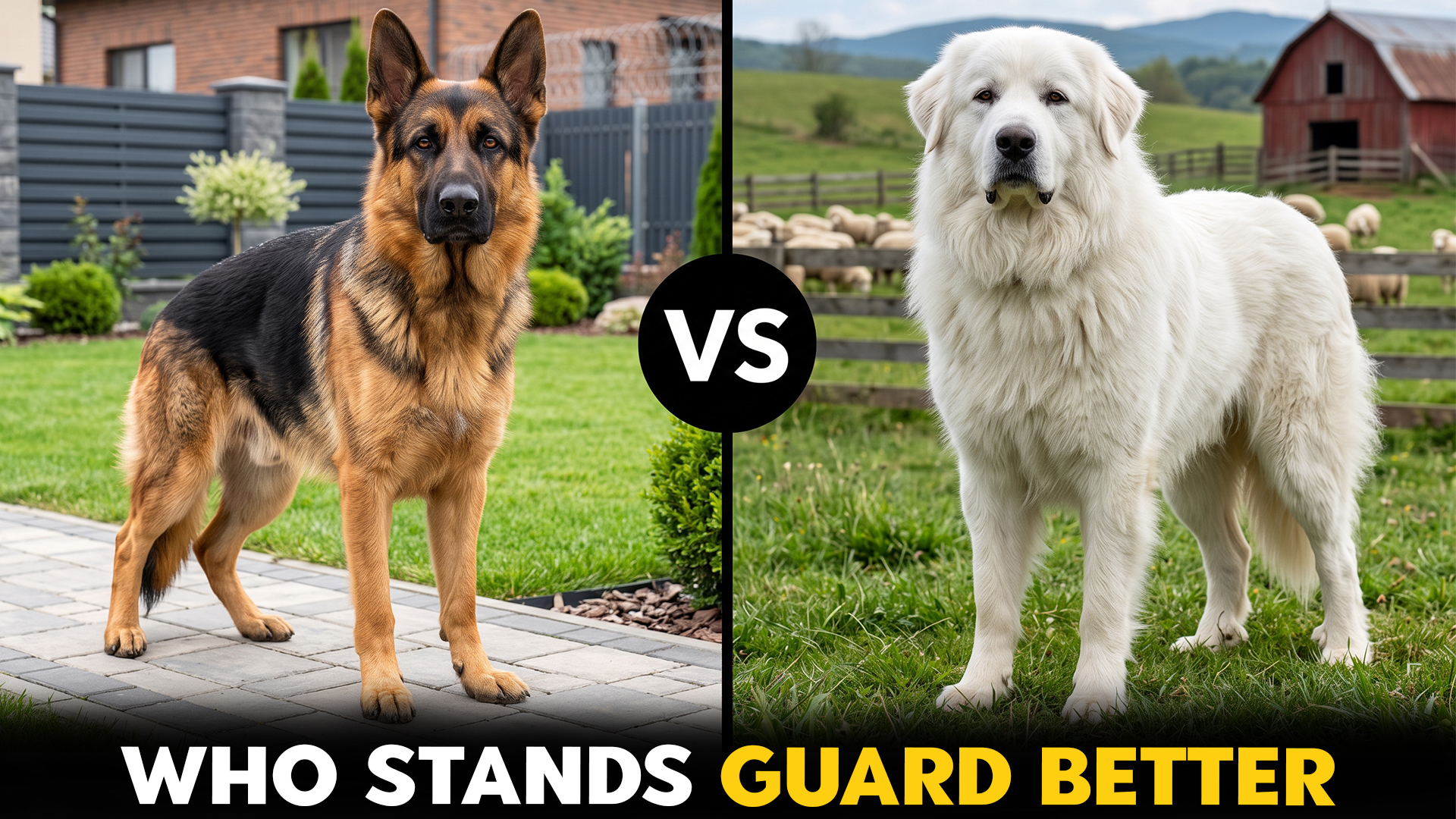
Worried about safety around your home? There’s no better way to protect your property and family than by bringing home a guardian dog breed. The canine world has no shortage of strong, courageous guard dog breeds to choose from.
Two breeds in particular have earned a ton of attention and respect for their loyalty and protective instincts: German Shepherds and Great Pyrenees. Both were originally bred for different purposes, yet each is incredibly versatile and makes a wonderful family companion.
Read on to learn more about these impressive guardian breeds, see what sets them apart, and find the loyal protector that’s right for you.
German Shepherd vs. Great Pyrenees: Guardian Dog Comparison
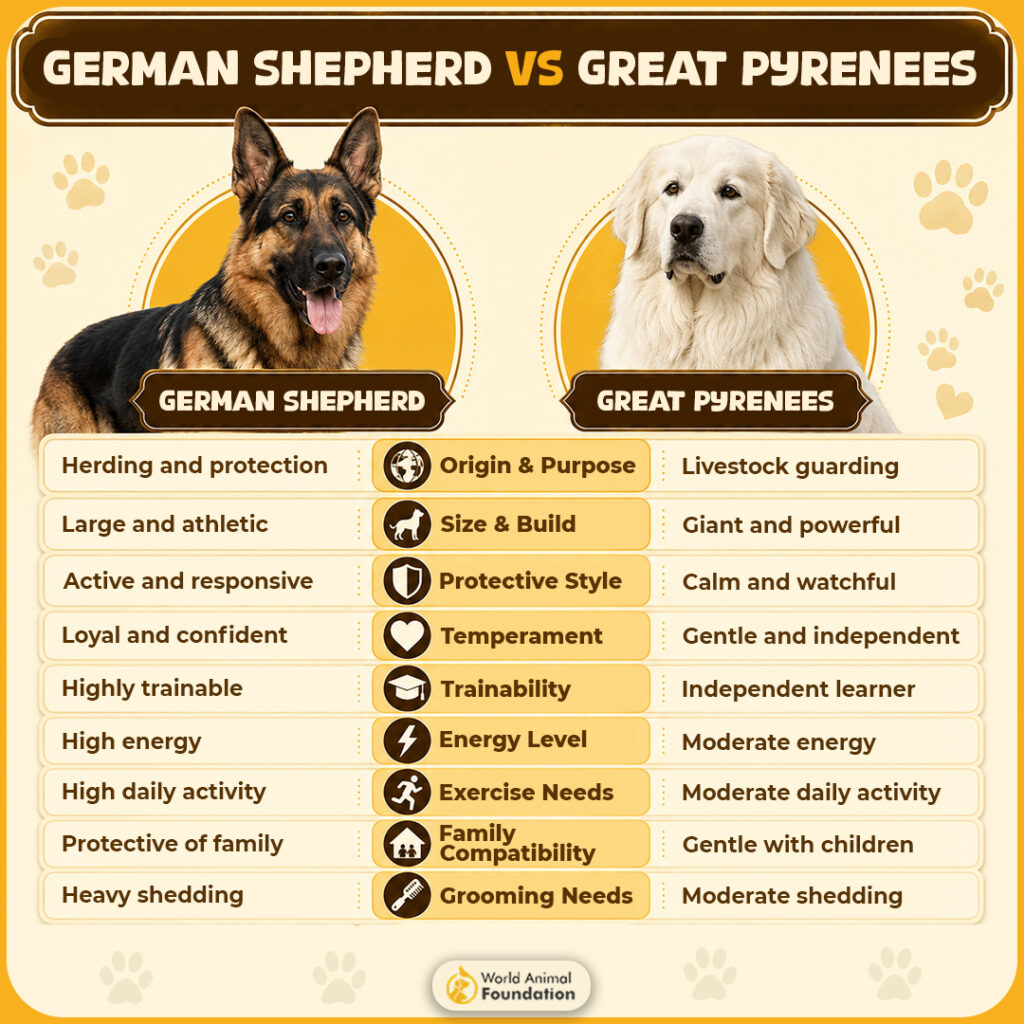
While both the German Shepherd and the Great Pyrenees are legendary guardian breeds, they approach home defense in completely different ways. Before you choose between the high-energy, trainable GSD and the stoic, independent Pyrenees, here is exactly how their instincts, care needs, and protective styles compare.
Origin, History, and Primal Purpose
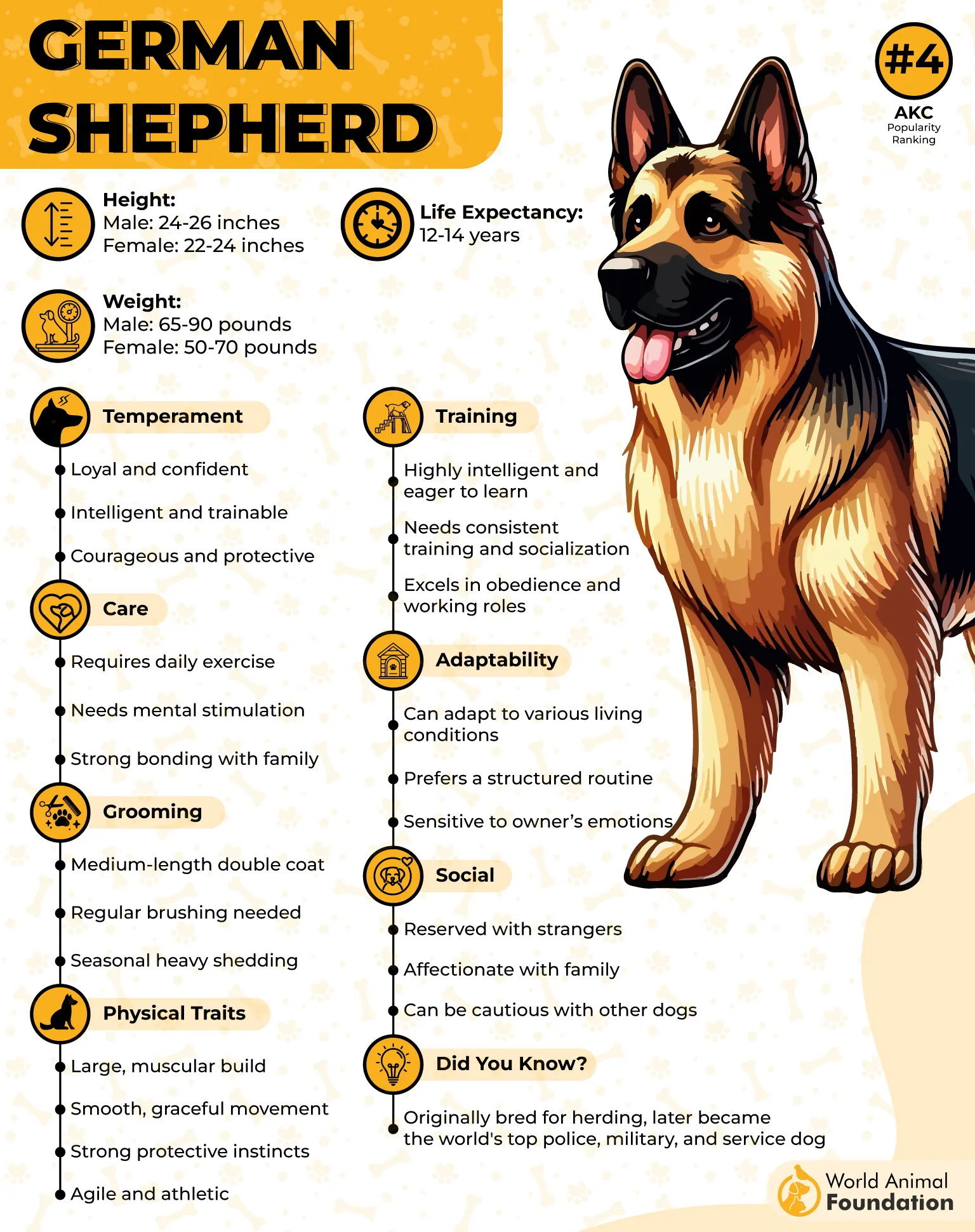
German Shepherds are a large breed that originated in Germany back in 1899, developed as a working dog by Max von Stephanitz, who gave them their original name, Deutscher Schäferhund. They were originally trained for herding and protecting sheep.
The breed saw a serious dip in popularity during World War I and World War II, but numbers picked back up over time, and by 1993, German Shepherds had become the third most popular dog breed in the United States.
The modern Great Pyrenees descends from dogs believed to have originated in Asia Minor, later brought into Spain around 3000 BC. They were bred to work as livestock guardians in the Pyrenees Mountains spanning France and Spain, and earned the nickname the Royal Dog of France thanks to their majestic look and usefulness. According to Orvis, the breed was officially recognized by the AKC in 1933.
Size, Build, and Overall Appearance
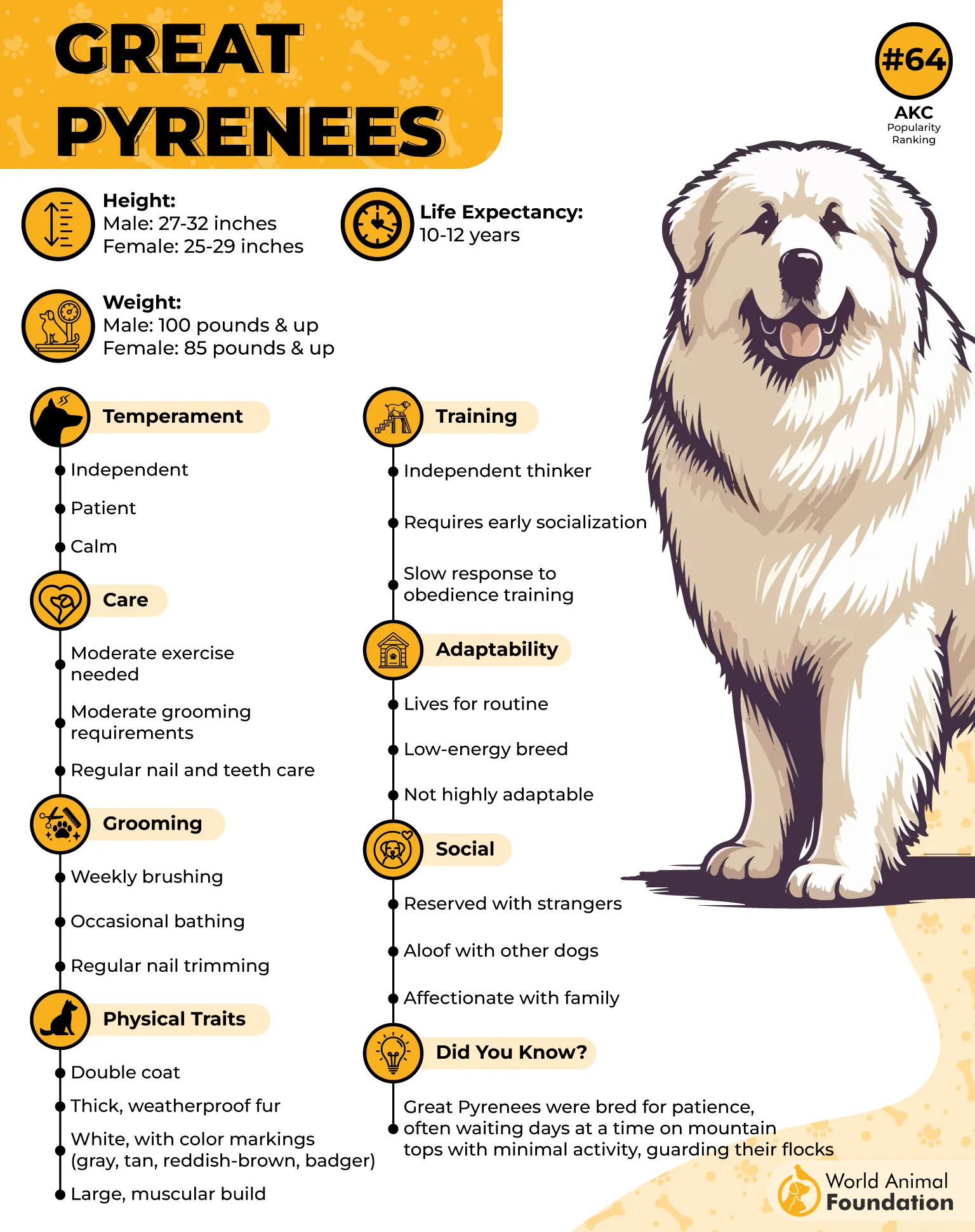
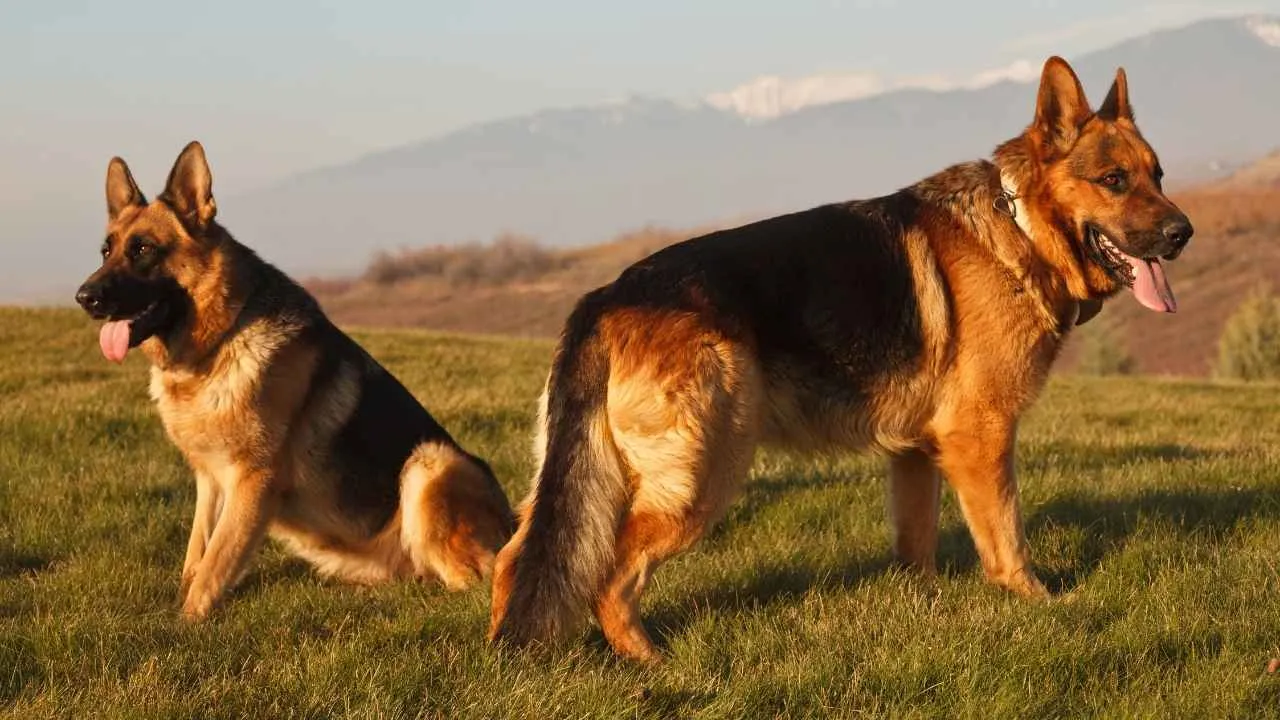
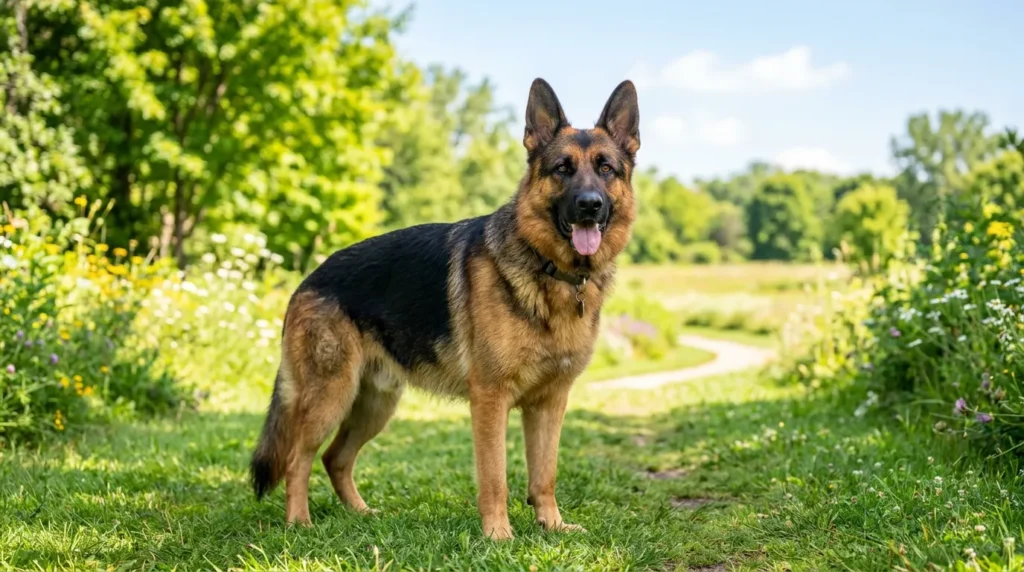
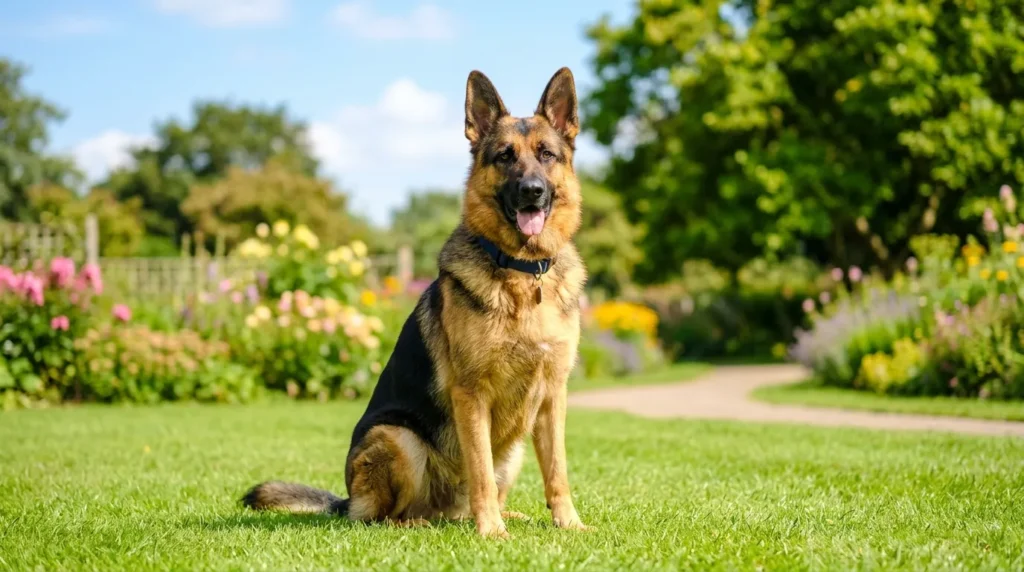
German Shepherds are handsome, large dogs in shades of brown and black, with a streamlined, agile, and strong build. Both males and females typically weigh 50 to 90 pounds and stand 22 to 26 inches tall. Their wedge-shaped heads are well proportioned to their bodies, and their dark, almond-shaped eyes give them that classic alert expression.
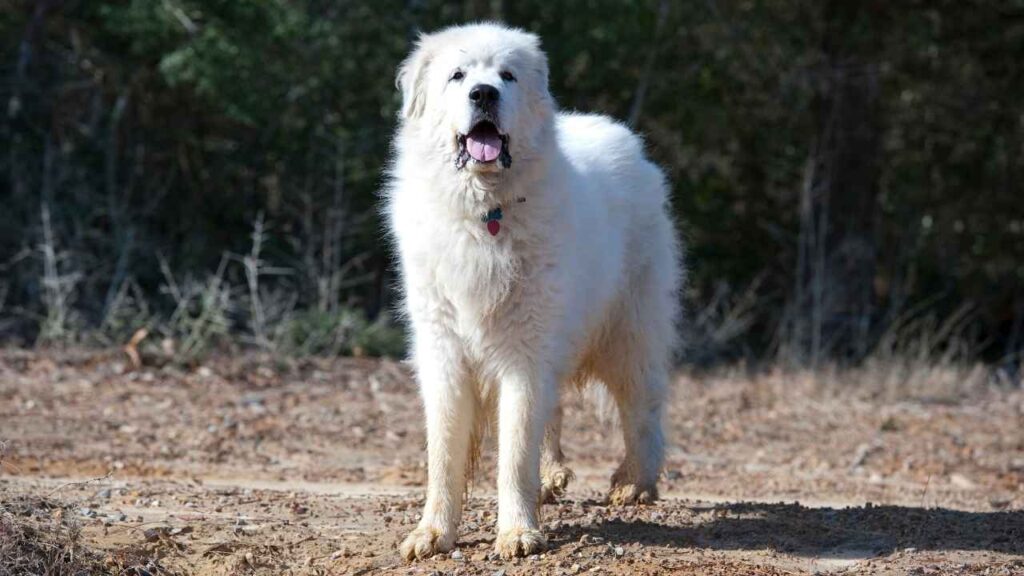
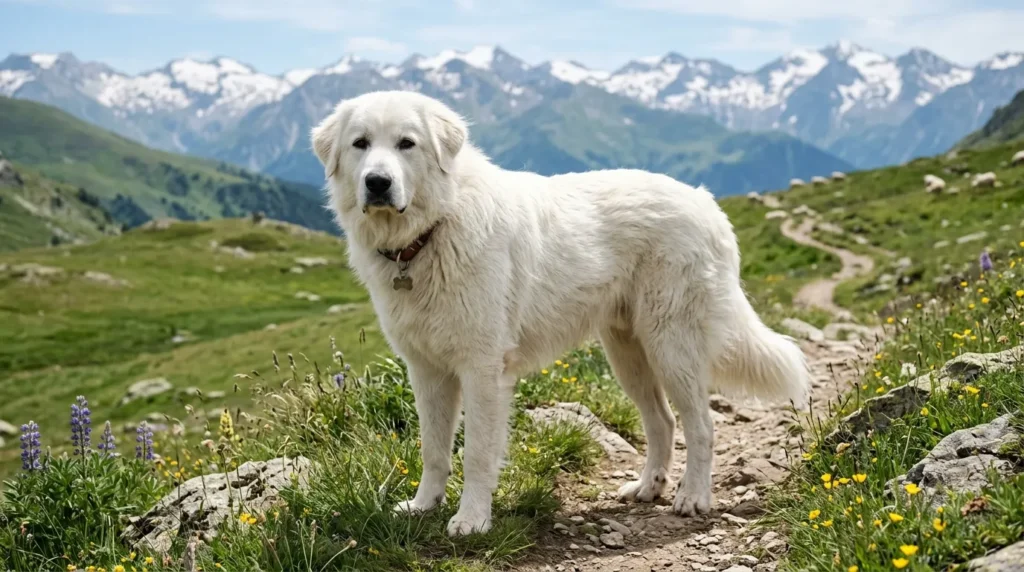
Great Pyrenees, on the other hand, are giant and majestic, with a broad chest, V-shaped ears, and small, dark almond eyes. Weighing in at 85 to 100 pounds and standing 25 to 32 inches tall, they’re among the tallest dog breeds out there, carrying an elegant, watchful, and confident presence.
🎧 Dogcast
Episode 37 — Why Dogs Stay Close without Touching
If you don’t hear sound, tap the button above to enable audio.
Coat Types, Grooming, And Maintenance
German Shepherds have a double coat that sheds heavily, with a soft undercoat and a rough, tight outer coat. They go through two major shedding cycles each year, once in spring and once in fall, which means extra grooming during those stretches is a must.
Bathing a few times a year is usually enough, depending on how dirty your dog tends to get, while daily brushing with a pin brush helps keep shedding under control. Since German Shepherds are prone to eye issues, it’s worth checking and cleaning their eyes regularly. Nail trimming is also important, since long nails are more likely to break.
Great Pyrenees, on the other hand, shed far less and don’t need nearly as much grooming. Their thick white double coat naturally resists dirt and tangles, so weekly brushing is usually enough to maintain that soft undercoat and cut down on stray fur around the house.
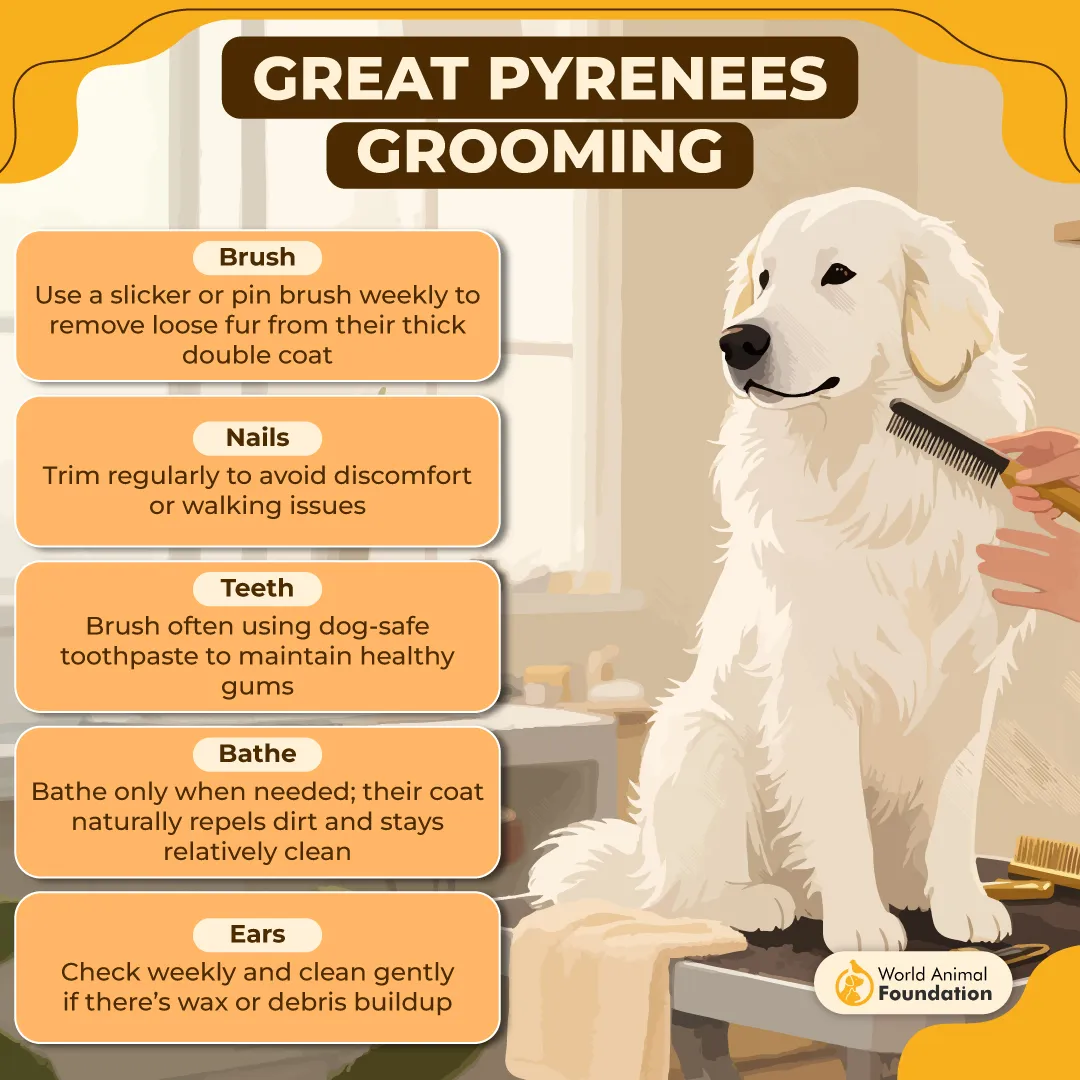
This breed doesn’t typically have sensitive skin, but if you notice excessive scratching, it’s worth a vet visit just to be safe. They’re not particularly prone to teary eyes or ear infections, though it’s still a good idea to clean their eyes and ears, especially after time spent in the water.
Temperament, Personality, And Behavior
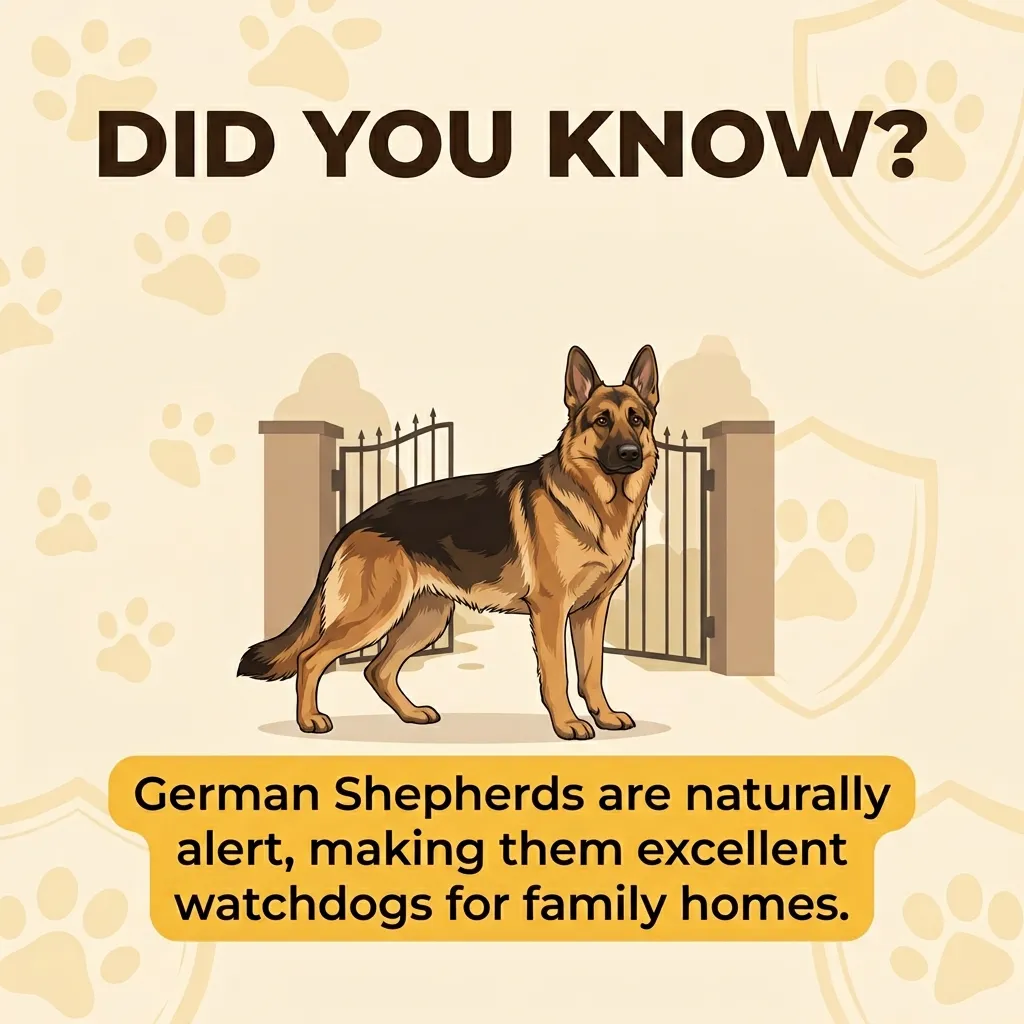
German Shepherds are known for being highly intelligent and confident. They’re deeply loyal, gentle, and affectionate with their families, though they tend to stay alert and cautious around unfamiliar faces, which is exactly what makes them such great guard dogs.
They’re eager to please, get along well with children, and are generally tolerant of other dogs too. They love playing with kids, though playtime should always be supervised if your children are young, just to avoid any accidental injuries. Interestingly, PetMD notes that only about 9% of a German Shepherd’s personality comes down to genetics, meaning how they turn out depends heavily on their upbringing.
Great Pyrenees are calm, loving, and gentle companions. Despite their massive size, they carry a strong work ethic, take their job seriously, and still have a genuinely sweet disposition. These gentle giants are deeply loyal to their families and get along beautifully with children of all ages.

Pyrenees dogs are also well-suited for therapy work and search and rescue operations. Thanks to their history as livestock guardians, they remain naturally alert and will bark to let their owners know if something feels off.
Trainability, Obedience & Independence
German Shepherds are widely regarded as one of the most intelligent and trainable breeds out there. They’re eager to learn and genuinely want to impress their owners, which makes them relatively easy to work with. These dogs are sharp enough to pick up a command quickly and carry it out with real precision.
That said, they’re independent thinkers, so positive reinforcement tends to work far better than harsh methods, which can otherwise lead to unwanted aggressive behavior. Starting training and socialization early, from puppyhood, sets the stage for solid obedience later on.
The Great Pyrenees, on the other hand, can be a much tougher breed to train. Their independent streak means they often prefer doing things their own way, and many owners find training a Pyr genuinely challenging.
They respond best to a confident leader who uses positive reinforcement rather than force. It helps to weave small training commands into their everyday routine, so they get used to responding consistently. Patience, consistency, and a gentle approach go a long way with this breed; without them, they may simply choose not to listen.
Energy Levels, Activity Needs & Work Drive
German Shepherds are high-energy, hardworking dogs who genuinely love having a job to do and take it seriously. That’s exactly why they’re so commonly used by the military and police for patrolling, bomb detection, and search and rescue work.
Being such an athletic breed, they need at least an hour or two of exercise along with daily mental stimulation to stay happy, healthy, and fulfilled. Without enough activity, these smart dogs can start developing unwanted behaviors around the house.
Great Pyrenees, despite their massive size, aren’t really into strenuous activity. Around 20 to 30 minutes of exercise is usually plenty for them. In fact, this breed tends to prefer lounging indoors over spending long stretches outside; they’re often just as happy cuddling on the couch as going for a walk.
They tend to use their energy wisely and aren’t exactly eager to overheat themselves outdoors in hot weather. That said, Pyrenees can be prone to weight gain, so some regular activity and exercise still matter for keeping them healthy.
Health Concerns, Average Lifespan & Durability
The average lifespan of a German Shepherd falls between 7 and 13 years, though this can vary depending on the individual dog and the quality of care they receive. If you’re hoping to extend their longevity, focusing on solid veterinary care makes a real difference.
If you’re bringing a German Shepherd home, it’s worth considering good pet insurance, since the breed is prone to health issues like myelopathy, hip and elbow dysplasia, cancer, heart disease, and various ear, eye, and skin infections. Paying close attention to their nutrition and feeding them a diet suited for large breeds also goes a long way in keeping them healthy.
Great Pyrenees have a life expectancy of 10 to 12 years, which is fairly impressive for such a giant breed. They’re generally healthy dogs, but choosing a reputable breeder is important if you’re planning to bring one home; otherwise, they can be more prone to developing certain disorders.
Over their lifetime, Pyrenees may be susceptible to growth disorders, patellar luxation, eye issues, GDV, and general degeneration. Staying on top of their health and choosing quality dog food suited to their needs can help prevent many of these concerns. As always, doing your research and providing solid healthcare makes all the difference.
Working Roles, Guarding Instincts & Traits
German Shepherds were purpose-built as working dogs, and it shows; they excel at multitasking and getting the job done efficiently. They may be calm indoors and affectionate with kids, but when it comes to protecting their family, these strong dogs don’t hesitate.
Their watchfulness and alertness make them excellent guard dogs, and despite common assumptions, aggression isn’t actually part of their nature. Their intelligence lets them assess dangerous situations quickly, so they tend to think before reacting. Around family, they’re warm and comfortable, while staying a bit more reserved around strangers.
Great Pyrenees were bred to protect livestock from wolves and other predators, and that protective instinct still runs deep. They’re generally laid-back and get along well with children, but when their family is on the line, these calm, smart dogs become fearless protectors.
They do have a tendency toward excessive barking, especially at night, according to WebMD. Pyrenees are quick to sense when something feels off and pick up on sounds easily, making them excellent guard dogs for the family.
Owner Suitability & Lifestyle Compatibility
German Shepherds are highly intelligent, loyal, and sociable dogs that thrive in active households. They do best with experienced owners who understand their needs and can meet them consistently.
These dogs need at least one to two hours of activity daily, along with plenty of attention from their owners to stay well-behaved indoors. Regular play sessions or walks go a long way in helping them burn off energy. If your household is often too busy to keep up with that, it might be worth reconsidering this breed.
Great Pyrenees, on the other hand, are low-energy and calm, generally preferring to stay indoors. That said, they still benefit from an experienced owner, and having a big yard or open outdoor space for them to roam is a real plus.
Pyrenees value their independence and aren’t the most social breed, though they do enjoy family time and are great with children. Because of their strong will, they’re not big fans of being overly pampered. These large dogs do best with owners who can provide calm, confident guidance and leadership.
Interestingly, their low-key nature makes them a solid match for families with busier lifestyles, unlike the German Shepherd, which needs a household ready to keep up with its energy.
Conclusion
Both German Shepherds and Great Pyrenees are exceptional guard dog breeds, each bringing a different approach to protecting their families, but both excelling in their own right. German Shepherds are intelligent, highly trainable, and love staying close to their owners, while Great Pyrenees take a more independent approach and can be a bit more challenging to train.
Which breed is right for you really comes down to your experience level and lifestyle. These two breeds are quite different from one another, with distinct needs and personalities. If you’re after a fun, engaged companion and a fierce protector, the German Shepherd is a great fit.
On the other hand, if you have a busier lifestyle and want a calm, confident protector who’s happy to hold down the fort without needing constant activity, the Great Pyrenees might be the better choice.
Either way, do your research and pick the breed that genuinely fits your life.
