




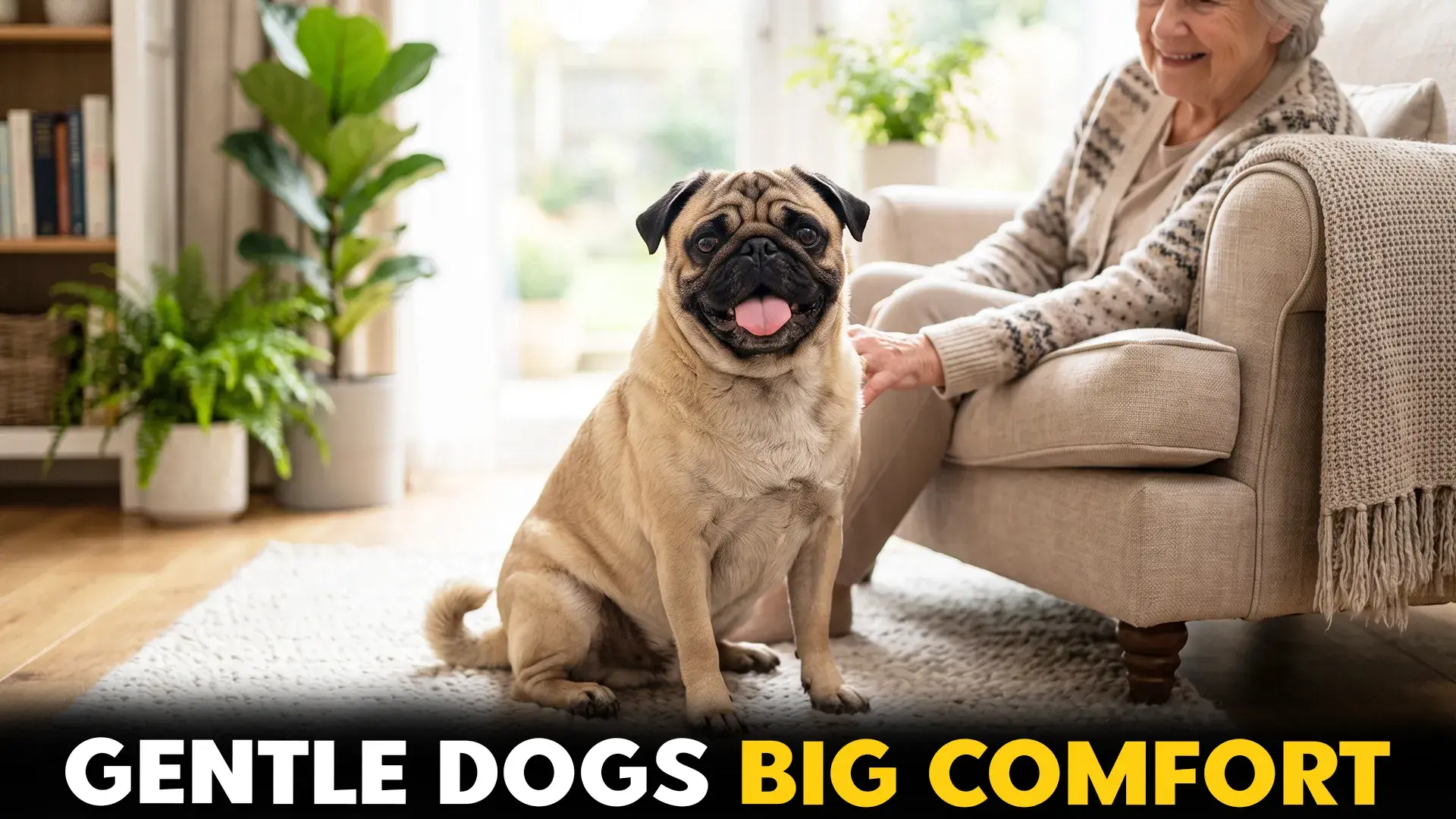
Imagine you are a 60-year-old person who is ready to enter your most awaited ‘relaxed phase’ of life, where your only job is to sit on the couch and look through the window. You may sometimes feel left out and lonely for not having constant companionship because of mobility issues and low stamina.
What if you find a companion, disguised as a cute little dog?
Studies from the American Heart Association have even linked pet ownership with lower stress levels and increased physical activity. These dogs are here to fill the void and make your life fuller again. Take them for brisk walks, cuddle them while watching the news, comfort yourself by patting them, and train them to help you in daily chores.
Let us walk through the details of the top 7 breeds for seniors that excel in long-term partnership with minimal requirements.
Best Dog Breeds for Seniors and Elderly Owners
1. Cavalier King Charles Spaniel
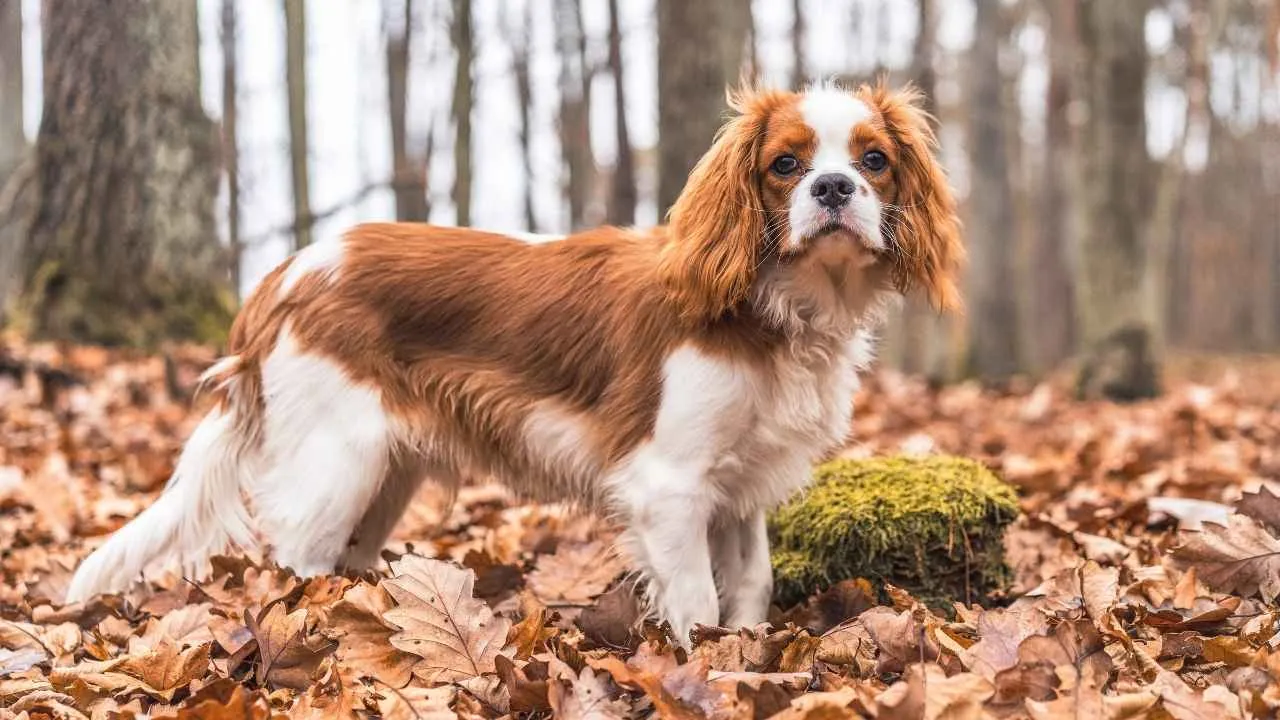
This loving and affectionate dog was named after the British royalty in the 17th century. King Charles I and his son King Charles II had a great affection for the breed that they even used to take the breed to the courts. Originating as a lap dog, the Cavalier has a calm demeanor, according to PetMD.
It reads micro-expressions and body language exceptionally well with its large, dark brown eyes and an expressive muzzle. It is a social butterfly and welcomes the visitors with a wagging tail, literally. It is a food-motivated and eager-to-please breed; hence, teaching it new tricks keeps the owner and its mind sharp.
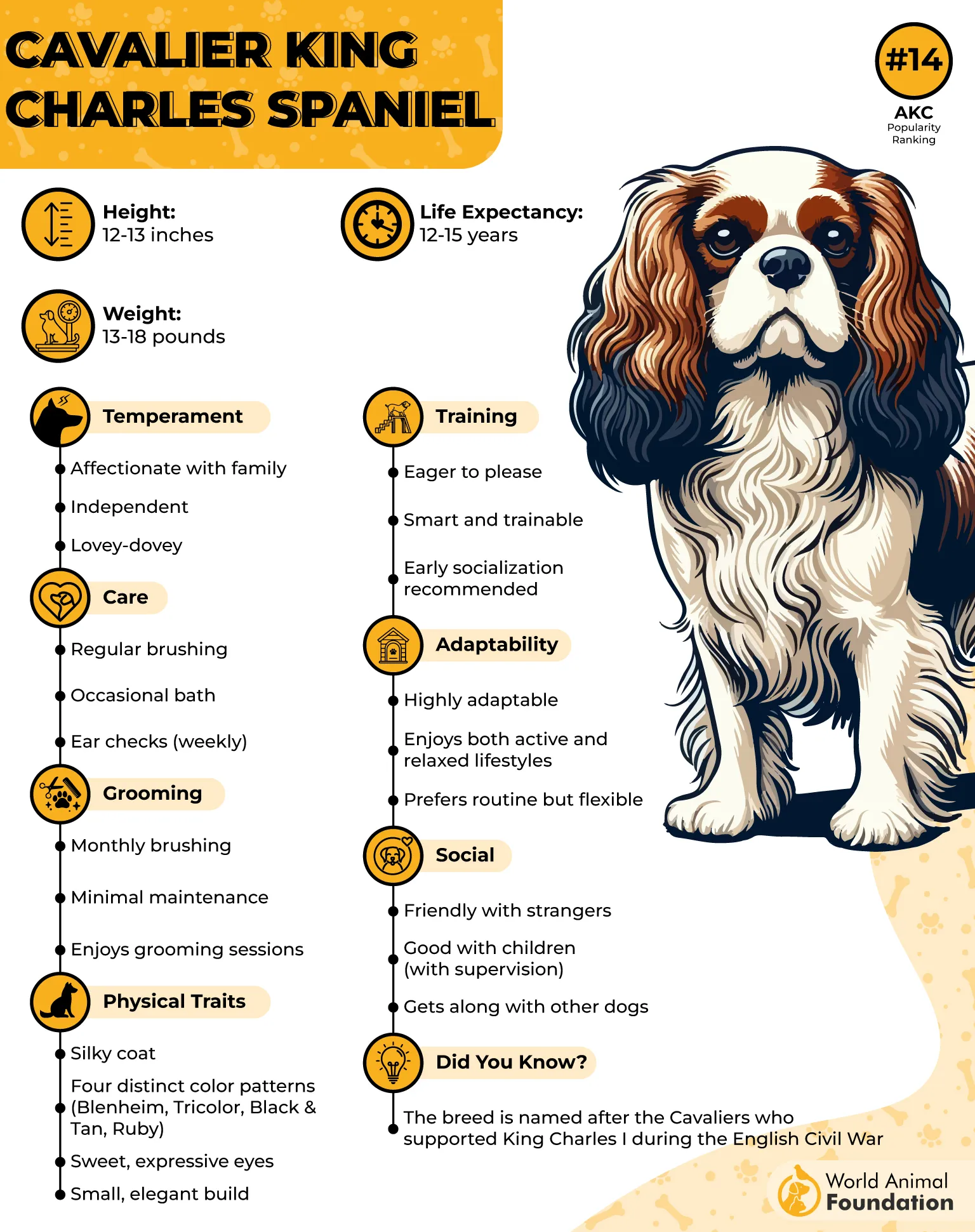
It has daily exercise needs for 30-45 minutes: 1-2 leisure walks, fetching, agility, interactive play toys, and mental stimulation. Since it is street smart, keep it on-leash, as it can be distracted by small animals and smells. The medium-length silky coat requires a 10-minute brush-out 3 to 4 times a week.
2. Pug
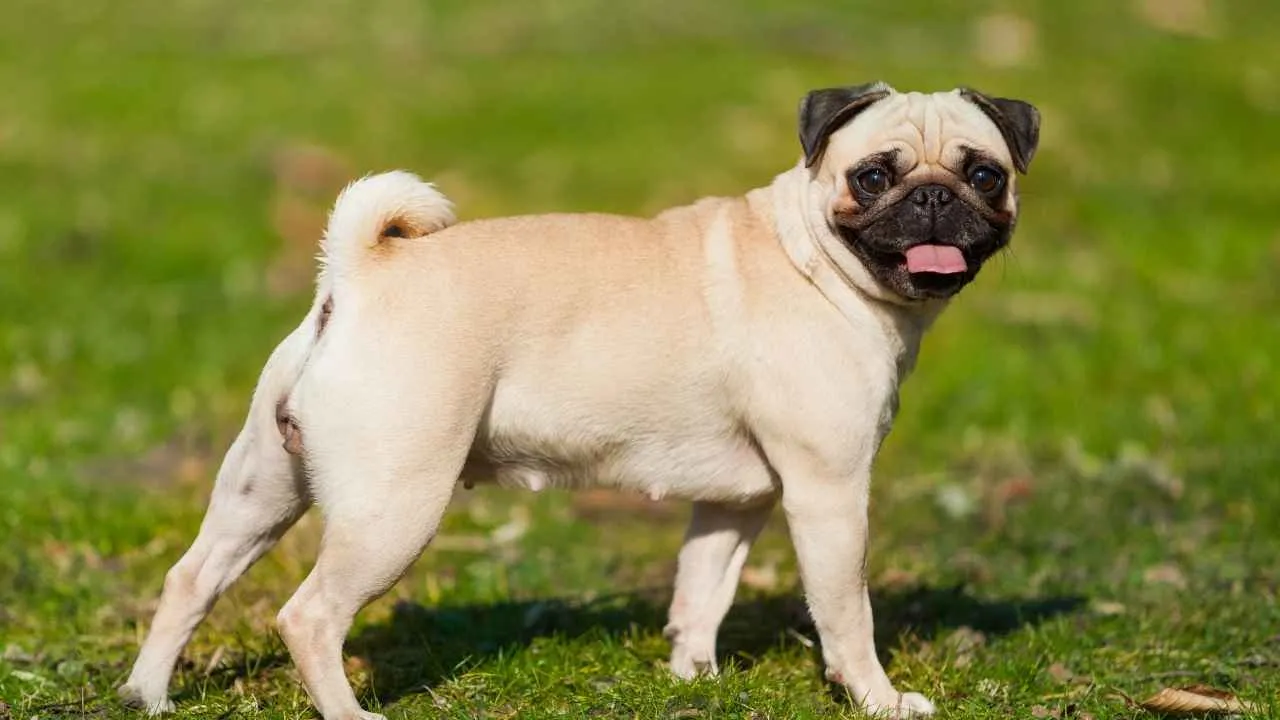
The breed was originally bred in China by the Buddhist monks and the Chinese imperialists as a small watchdog with its square, stout, and muscular frame. It was kept and loved by royalty, including Marie Antoinette and Josephine, Napoleon Bonaparte’s wife.
Since the Pug is a brachycephalic breed (has a flat face and narrowed airways), it may face breathing issues while doing intense activities outdoors in summer. This couch potato is not an excessive barker despite being a good watchdog. This lap dog is widely used as a therapy dog since it forms a strong bond with the owner.
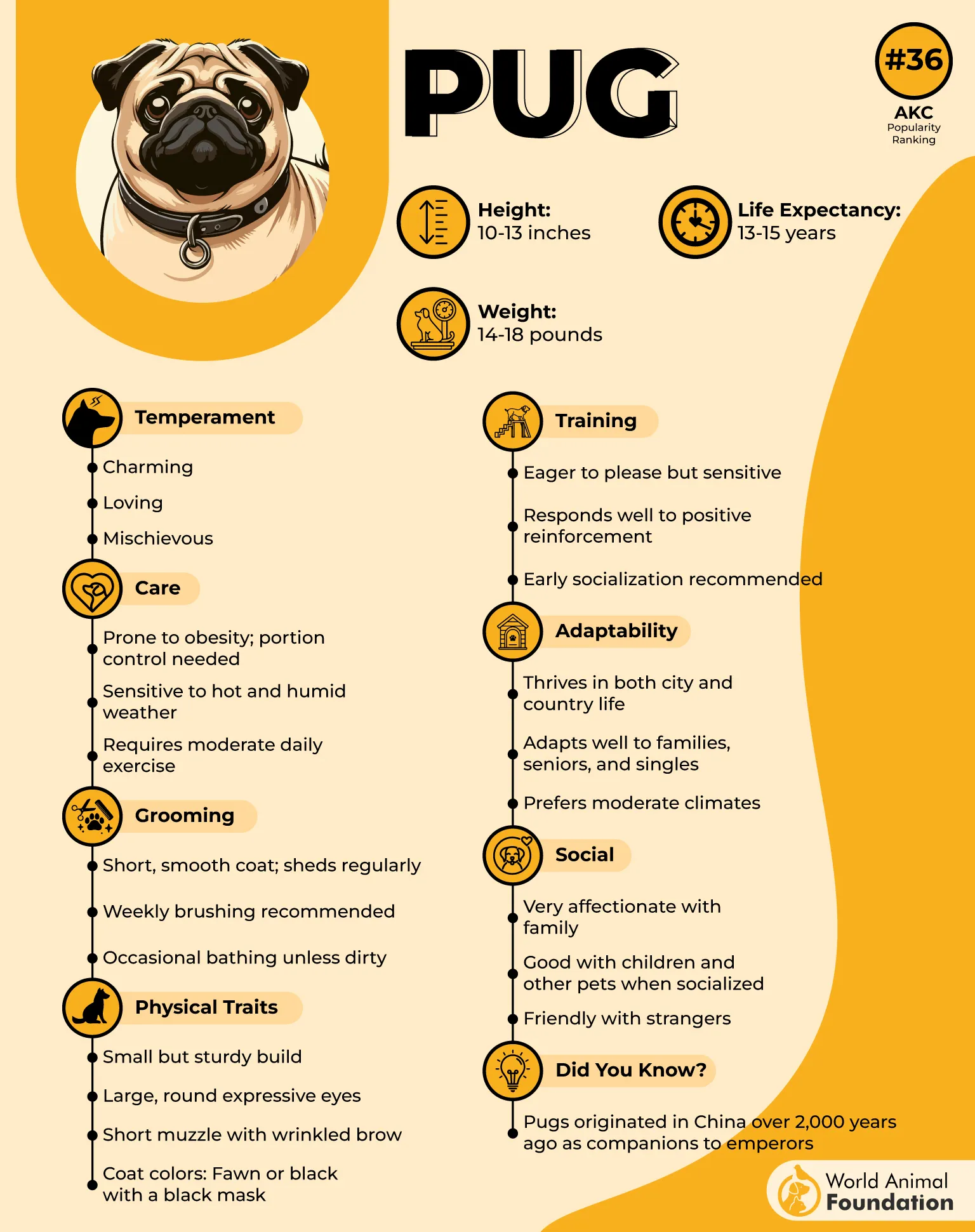
Adopting a senior dog (9+ years) is ideal for elderly owners as it is already house-trained, has a predictable personality, and possesses the same loyal affection as a puppy. Daily exercise for 20-30 minutes is ideal for the breed. Avoid taking it outdoors above 29 degrees.
3. Havanese
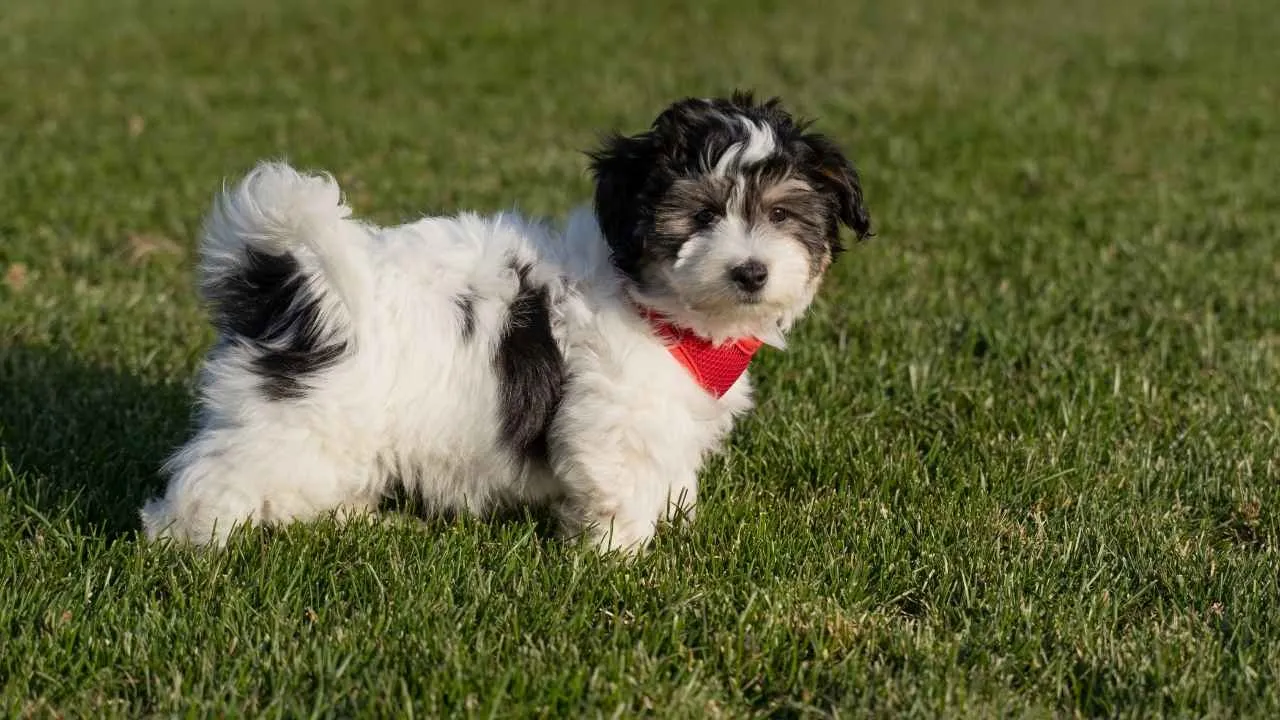
This Bichon-type dog breed was developed in Cuba and is the official dog of the state. It is the descendant of the now extinct breed, Blanquito de la Habana. Once known as “Havana Silk Dog,” the breed excels in dog sports and agility, as per Wikipedia.
The breed has a low energy level and tends to stay indoors. It loves to sleep along with its owner all day (16 hours a day). While not aggressive, they are alert and will moderate barking in a potentially threatening situation. It performs circus tricks to make the owner happy.
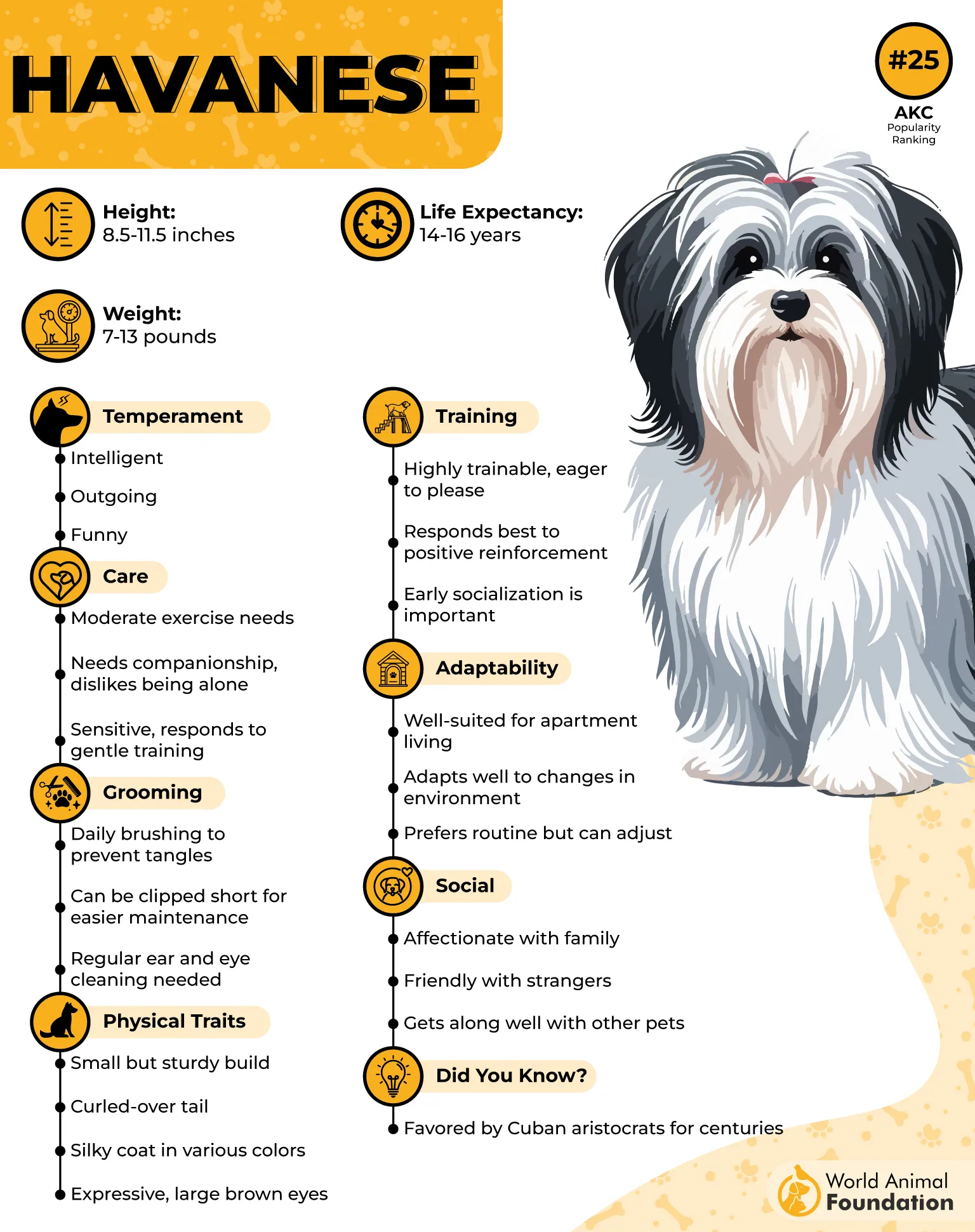
It has moderate exercise needs (30-45 minutes): 2-3 daily walks using a harness, indoor play, tug-of-play, fetching, and interactive play toys. It has a thick but low-maintenance coat that needs brushing 3-4 times a week to avoid painful tangles. Use gentle wipes to clean the area around the eyes to avoid tear stains.
4. Pomeranian
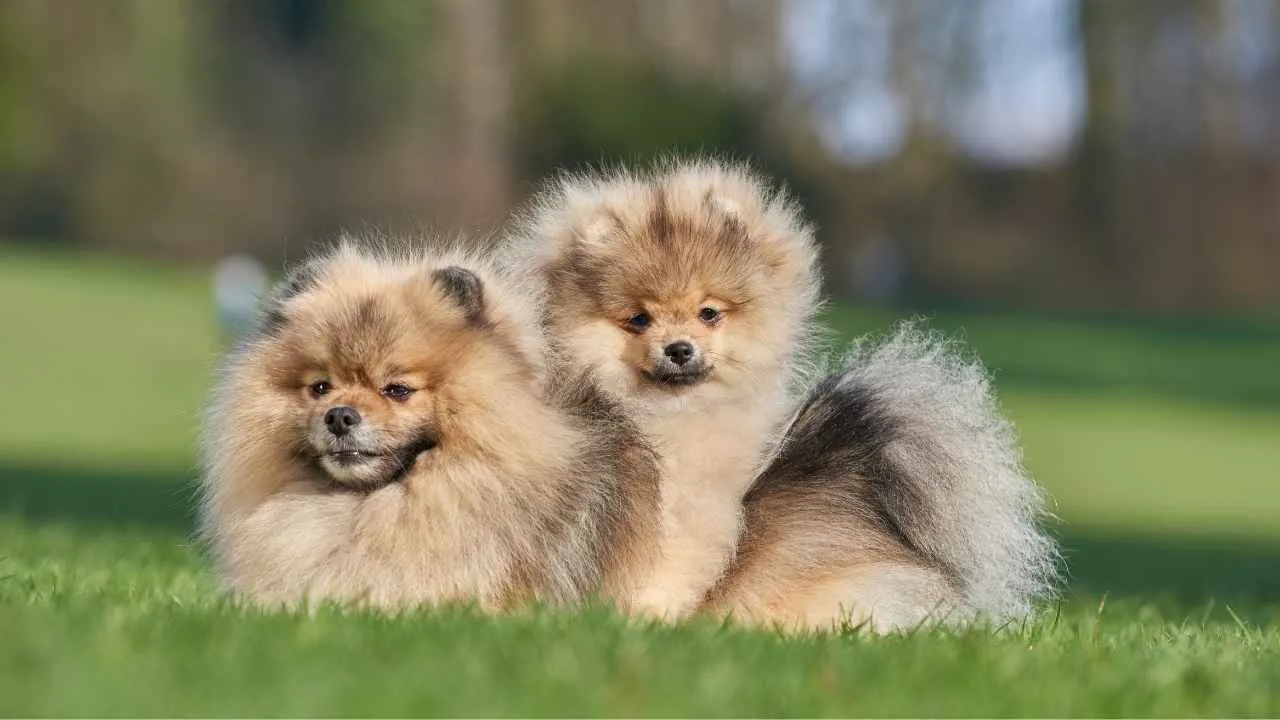
This spitz-type dog got its name from the region it originated from, Pomerania, in north-west Poland and north-east Germany, in Central Europe. The breed was most popular in the 18th century among the royalty, such as Queen Victoria, who even inherited some of them in her lineage.
Because of its tiny bladder, it is easy to potty-train the small dog (potty pads or grass patches), especially for seniors with mobility issues. It typically lives between 12 and 16 years, giving enough time to serve and strengthen dog ownership. It is a highly alert and vocal dog, making it a proactive watchdog.
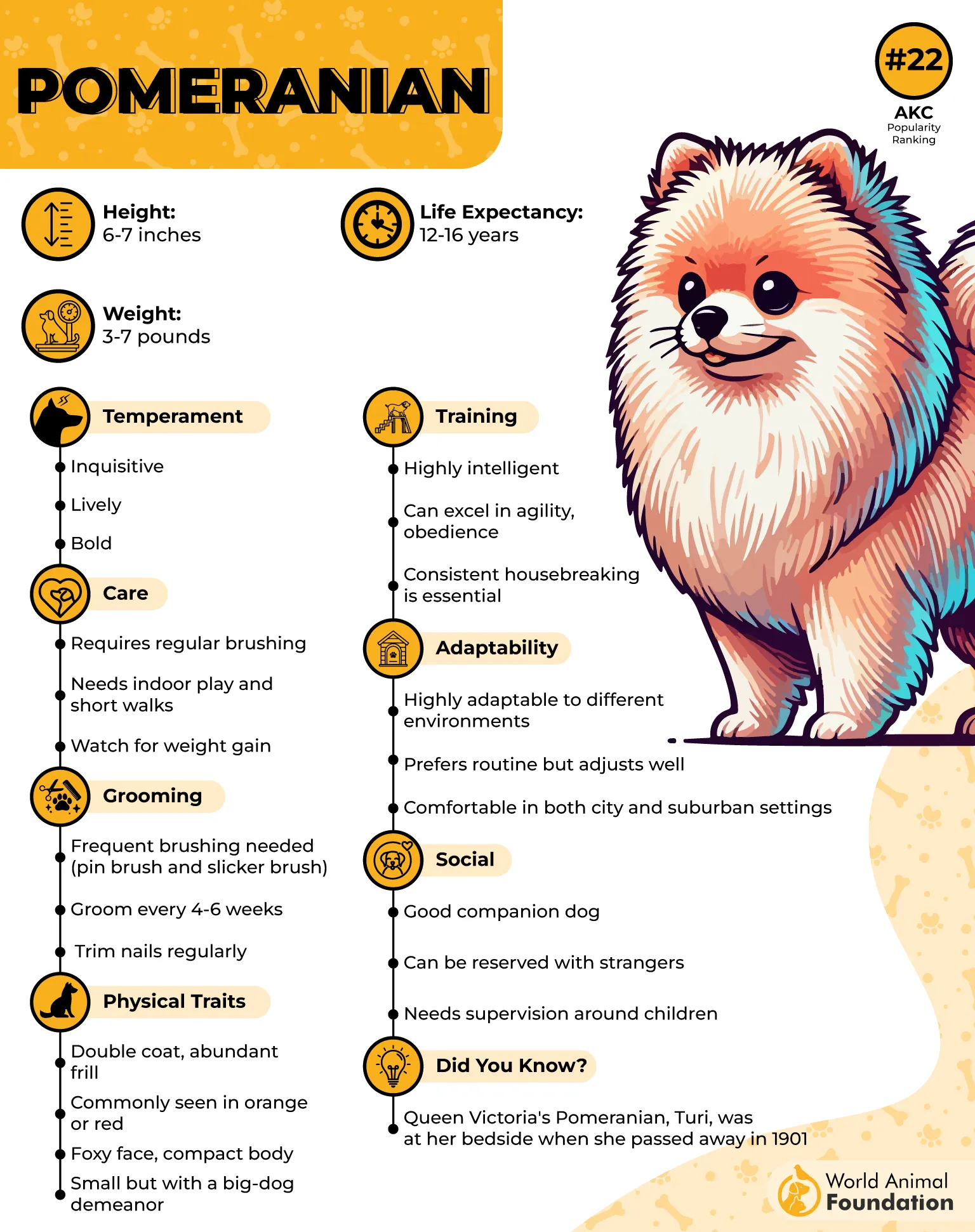
This small dog needs 30-50 minutes of daily exercise: 1-2 short walks, indoor fetch sessions, puzzle toys, and mind-challenging games. Low-impact exercise is suggested for the puppies (till 12 months) to avoid putting stress on growing bones and joints.
5. Pekingese
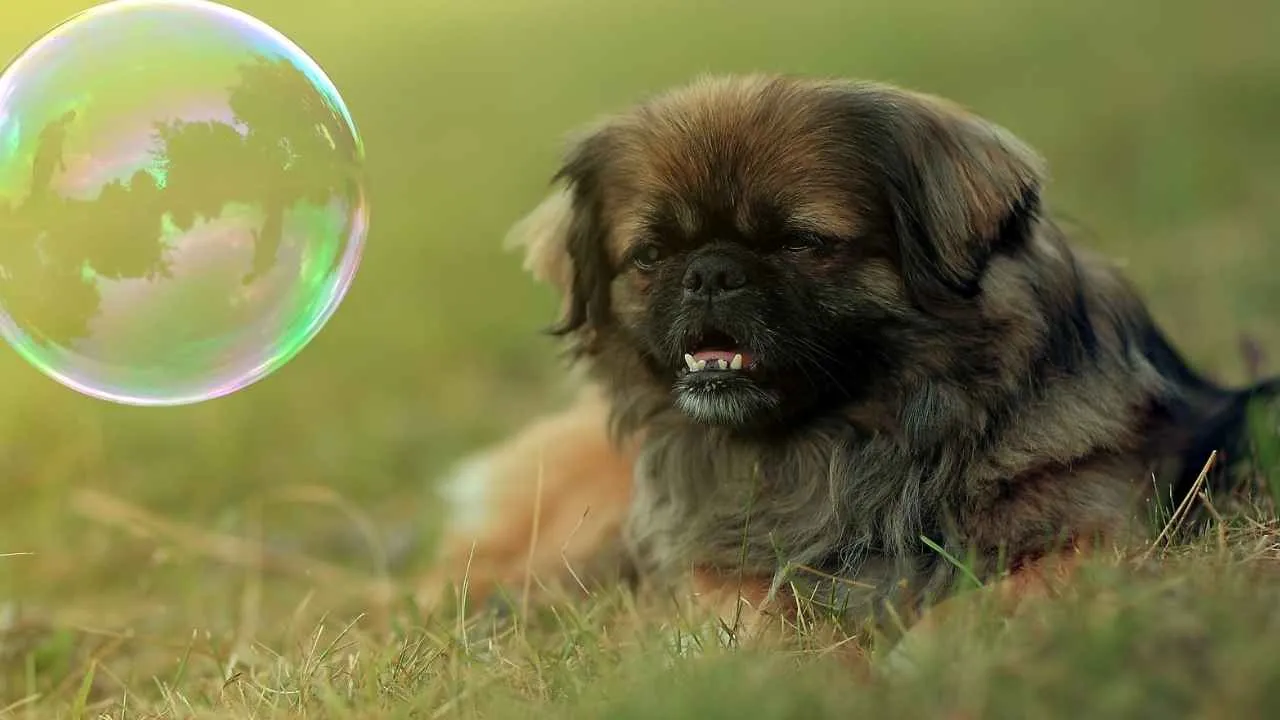
This purebred dog has been around since the Shu Dynasty, for around 2,000 years. At that time, China was a newly Buddhist country. Since the lion was the sacred symbol and was not found in China, the monks created a miniature dog with a thick mane around its neck, the Pekingese, says Purina.
It cannot regulate body temperature efficiently and is prone to overheating because of the short muzzle. Since it has a long and flexible spine and short legs, it is susceptible to spinal injuries, such as IVDD. Because of its low-key indoor behavior, it is ideal for apartment living and the retirement community.
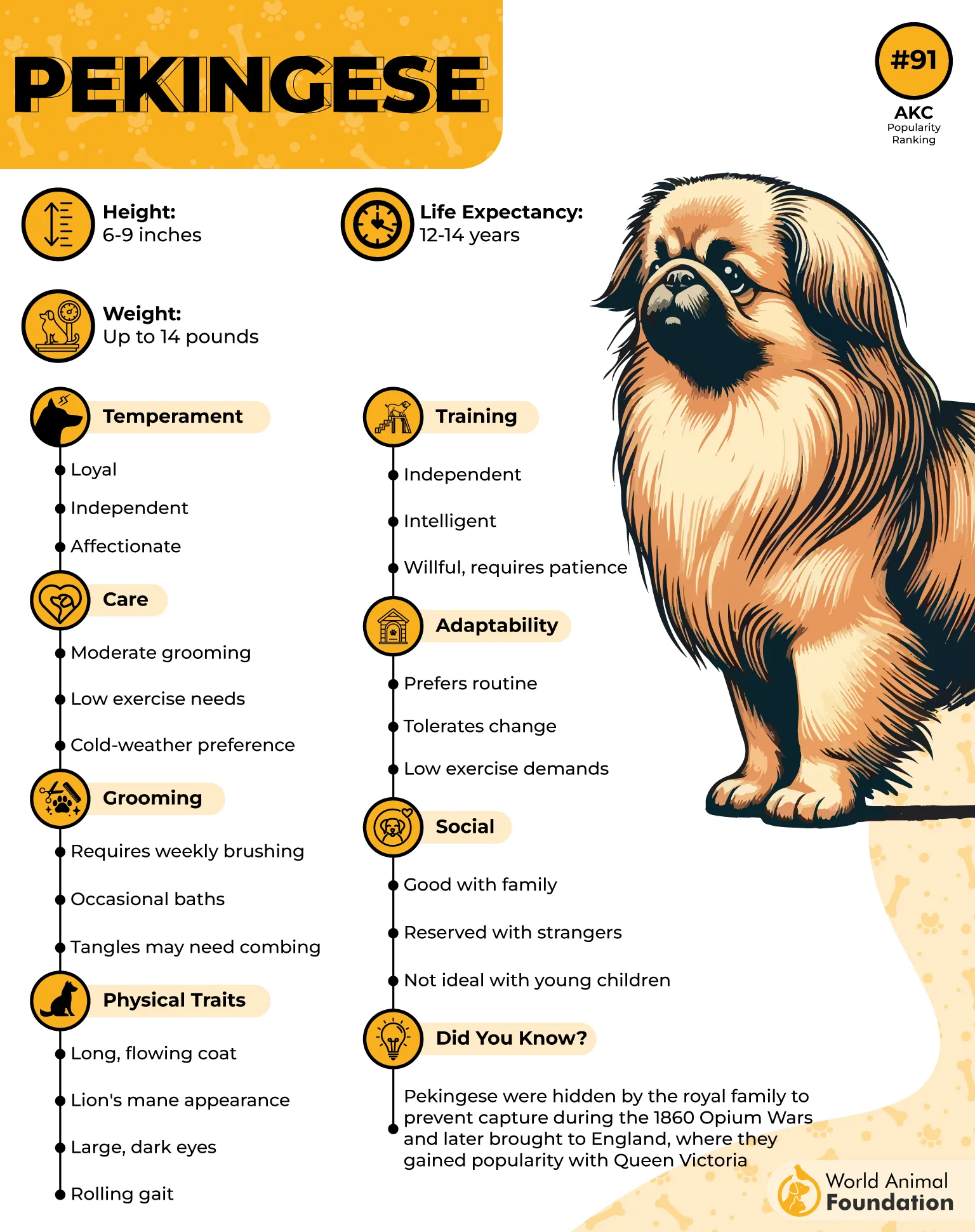
It needs 15 minutes of daily walking alongside casual indoor play. The flowing coat has regular grooming requirements: daily brushing and cleaning to prevent mats, particularly around the chest and armpits. The facial folds need regular cleaning using a damp cloth.
6. Miniature Poodle
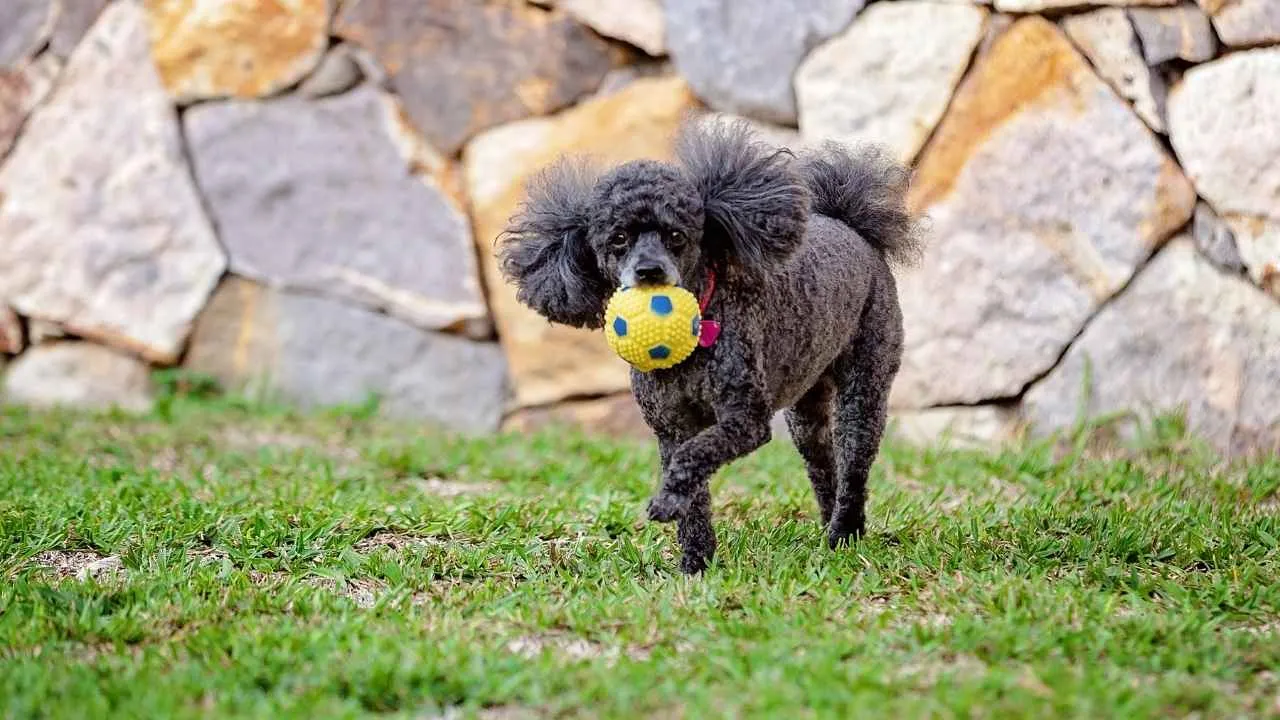
Developed in Germany as a water retriever, the breed got its name from the German word ‘Pudel,’ which means ‘to splash.’ The Poodle comes in three varieties: standard, toy, and miniature. It is the most intelligent toy breed and lives up to 18 years.
The coat produces less dander, making it a hypoallergenic breed. It is an exceptional emotional support dog, reducing loneliness and anxiety. Seniors reported improved mental health and lower blood pressure from interacting with this small breed.
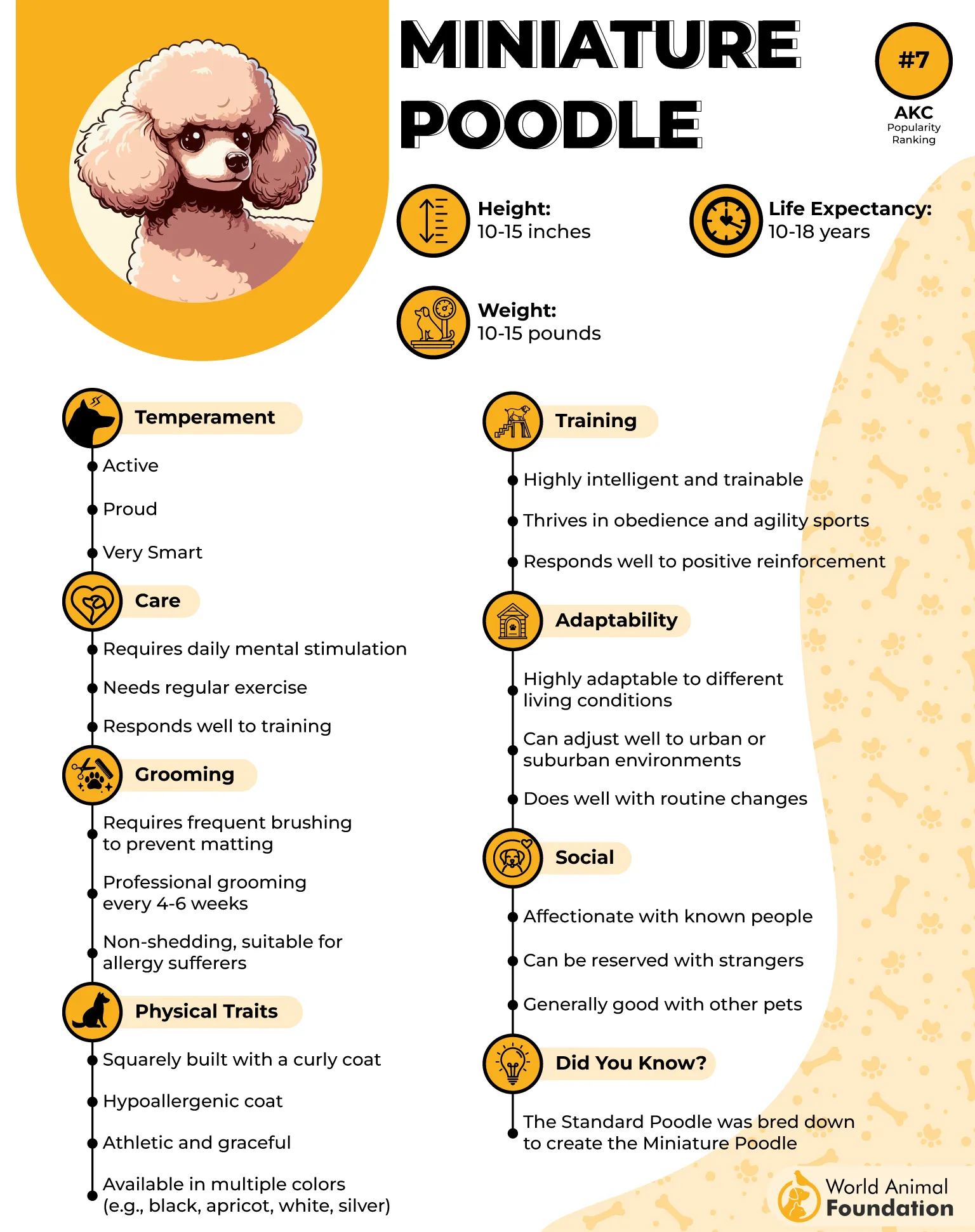
The Poodle has low-to-moderate exercise needs (60-90 minutes): daily walks, yard play, and 1-2 walks. Because of the thick coat and webbed feet, the right breed excels in swimming. Daily brushing is required using a slicker brush and a pin brush. Teddy bear and puppy cut is usually recommended.
7. Greyhound
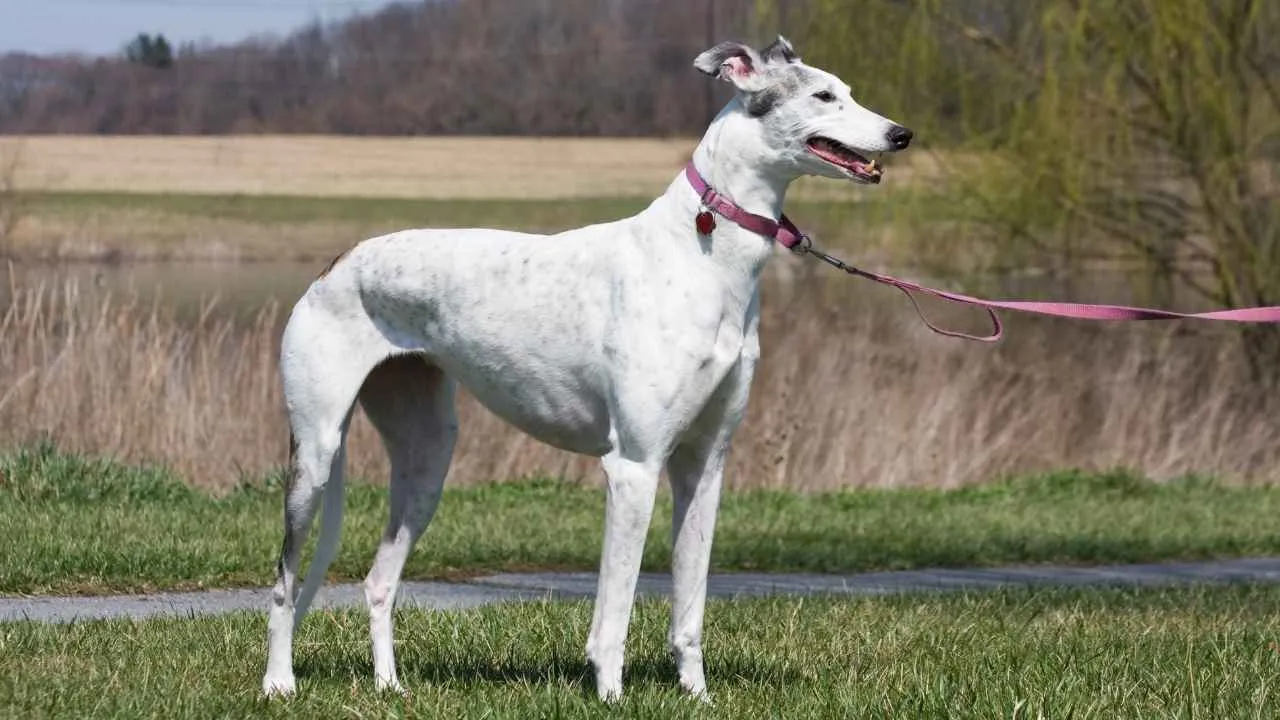
Originated as a sighthound, it relies mostly on its speed and agility to catch prey. It is the fastest dog breed with a high speed of 45 mph. Despite that, it is a couch potato and remains calm indoors. Because of the lean “inverted S” shape and an elongated head, it cuts through the air with reduced resistance.
The short coat has fewer oil-producing glands; thus, the dog has minimal dog odor. It is recommended for stress relief and emotional support because of its affectionate, intuitive, and loving nature. Older dogs are carefully paired with senior retired racers.
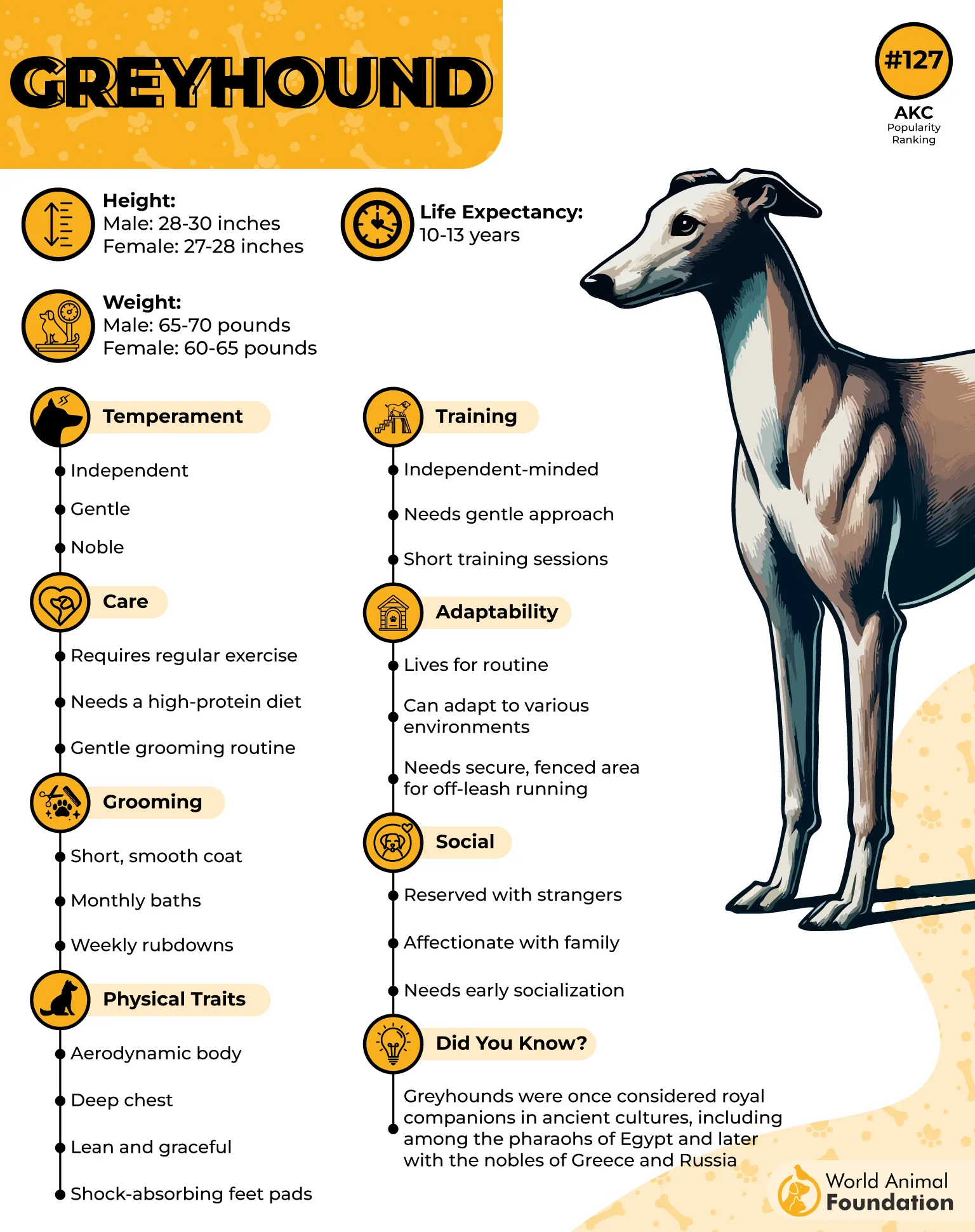
The breed requires occasional professional grooming because of the short and tight coat. Bathing after 3-4 months is enough. A gentle brush is recommended to prevent calluses. It is an excellent zoomie, has short bursts of energy before going back to the laid-back state.
Conclusion
Just as you switch the TV channel to your favorite one, you can find a perfect dog for your retired life based on your terms and conditions. Be it a Cavalier King Charles Spaniel, whose favorite spot is your lap, a Greyhound that loves to turn your home into a playground for a while and then resumes being a perfect companion as a lazy breed, or a Pug that wants nothing but to look at you with its bulging eyes.
Do a little research before adopting an ideal companion if you are a senior citizen. A responsible breeder will find you a perfect match that vibes with your energy level and requirements. All these dogs have an affectionate nature and require minimal grooming, making them ideal for old dog owners.
