




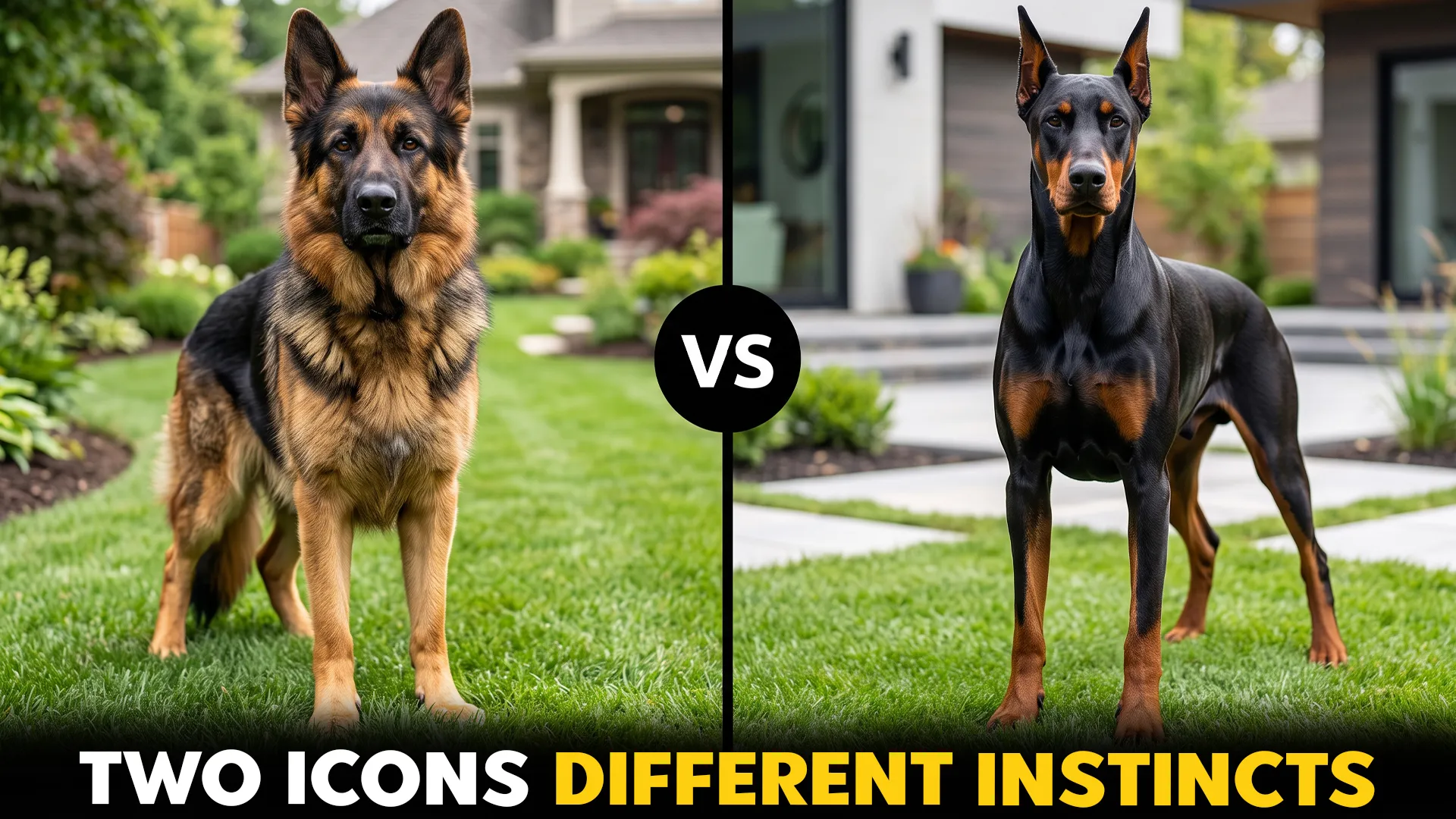
The German Shepherd Dog and Doberman Pinscher are two of the most popular working dog breeds in the world. Both are known for intelligence, loyalty, and strong protective instincts, making them top choices for families and security roles. Despite these similarities, they differ in structure, temperament, and care needs.
The German Shepherd is often associated with versatility and is widely used in police, military, and service work. The Doberman Pinscher, on the other hand, is known for its speed, alertness, and natural guarding ability. These differences make each breed unique in personality and function.
Understanding their strengths and differences helps potential owners choose the right companion for their lifestyle. While both breeds are powerful and loyal, their energy levels, grooming needs, and behavior patterns vary significantly. This comparison highlights everything you need to know before choosing between them.
German Shepherd Dog vs. Doberman Pinscher
Both the German Shepherd and Doberman Pinscher are loyal protectors, but the right choice depends on whether you want balanced versatility or intense guarding power.
History & Purpose
German Shepherd Dog
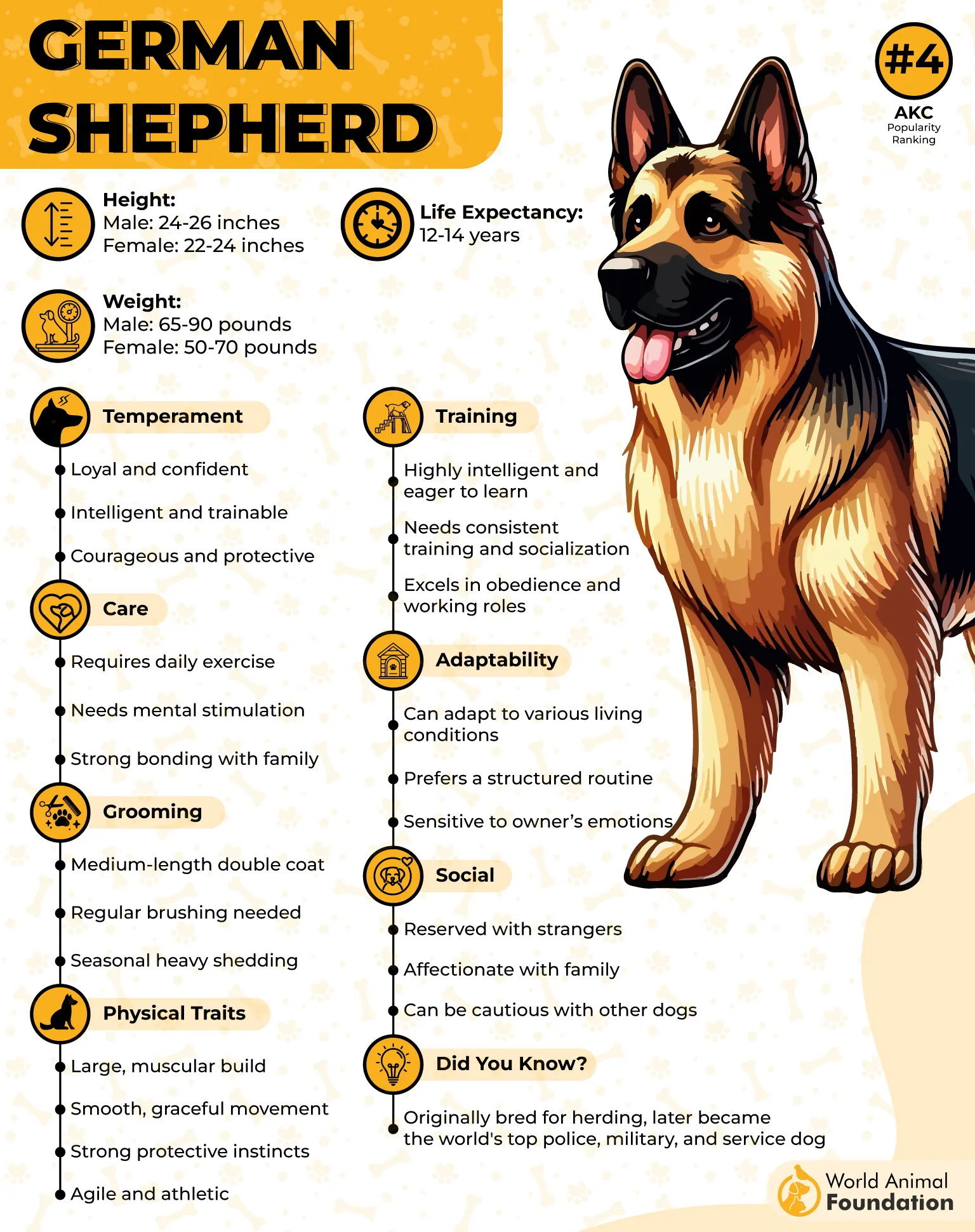
The German Shepherd Dog originated in Germany in the late 19th century and was developed primarily for herding sheep, as per the AKC. Over time, the breed became highly valued for police, military, and search-and-rescue work due to its intelligence and discipline. Today, it remains one of the most versatile working dogs worldwide.
Doberman Pinscher
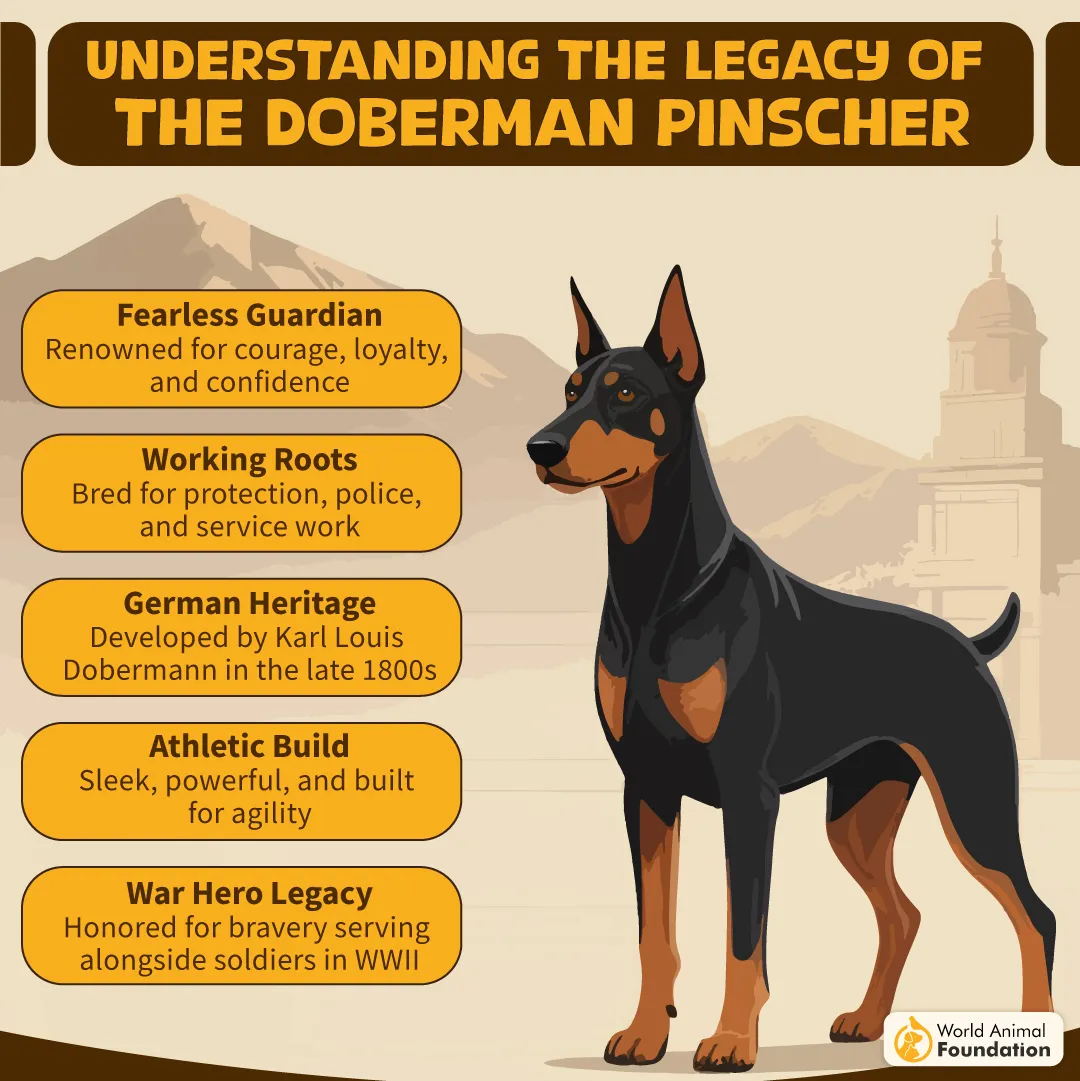
The Doberman Pinscher was developed in Germany by Karl Friedrich Louis Dobermann as a personal protection dog. It was bred to be alert, fast, and fearless, making it ideal for guarding and security roles. Modern Dobermans are still widely used as guard dogs and loyal companions.
Comparison
Both breeds were created for working purposes, but their origins differ in focus and function. German Shepherds were designed for herding and versatility, while Dobermans were specifically bred for personal protection. This difference still influences their behavior and working style today.
Size & Physical Build
German Shepherd Dog
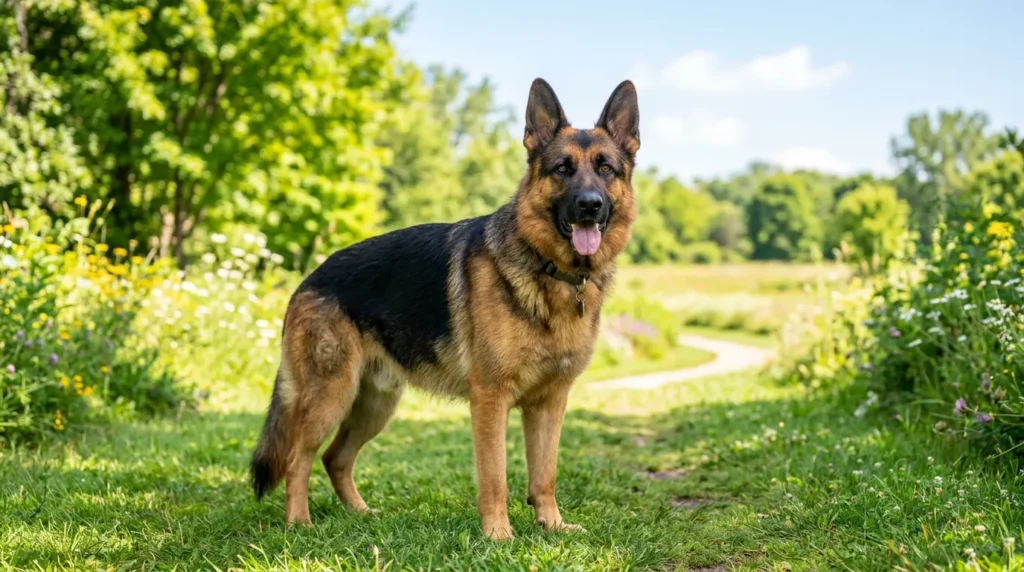
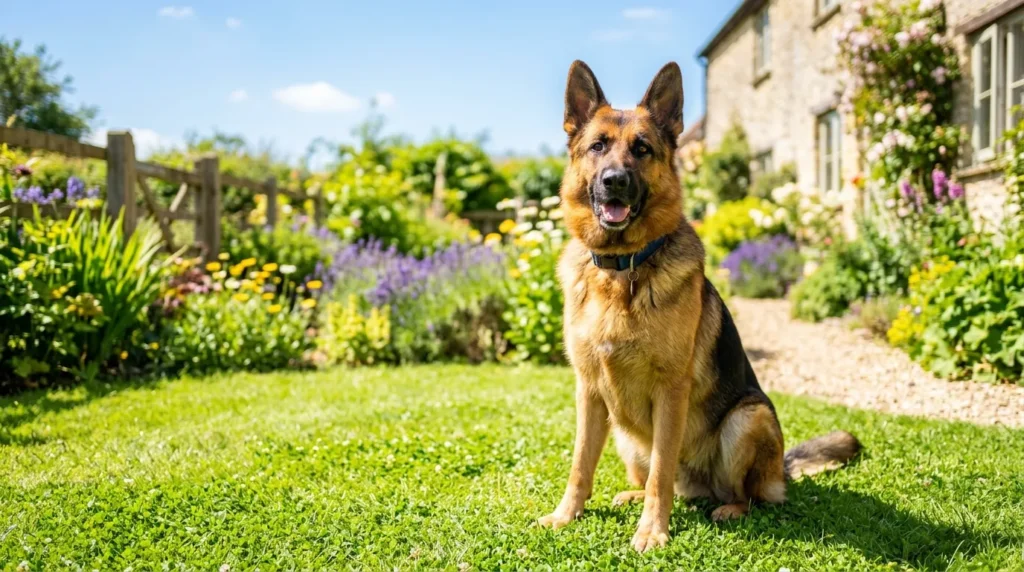
German Shepherds are large, muscular dogs with a strong and balanced frame. They typically have a sloping back, dense coat, and upright ears, giving them a powerful yet agile appearance. Their structure supports endurance and long working hours.
Doberman Pinscher
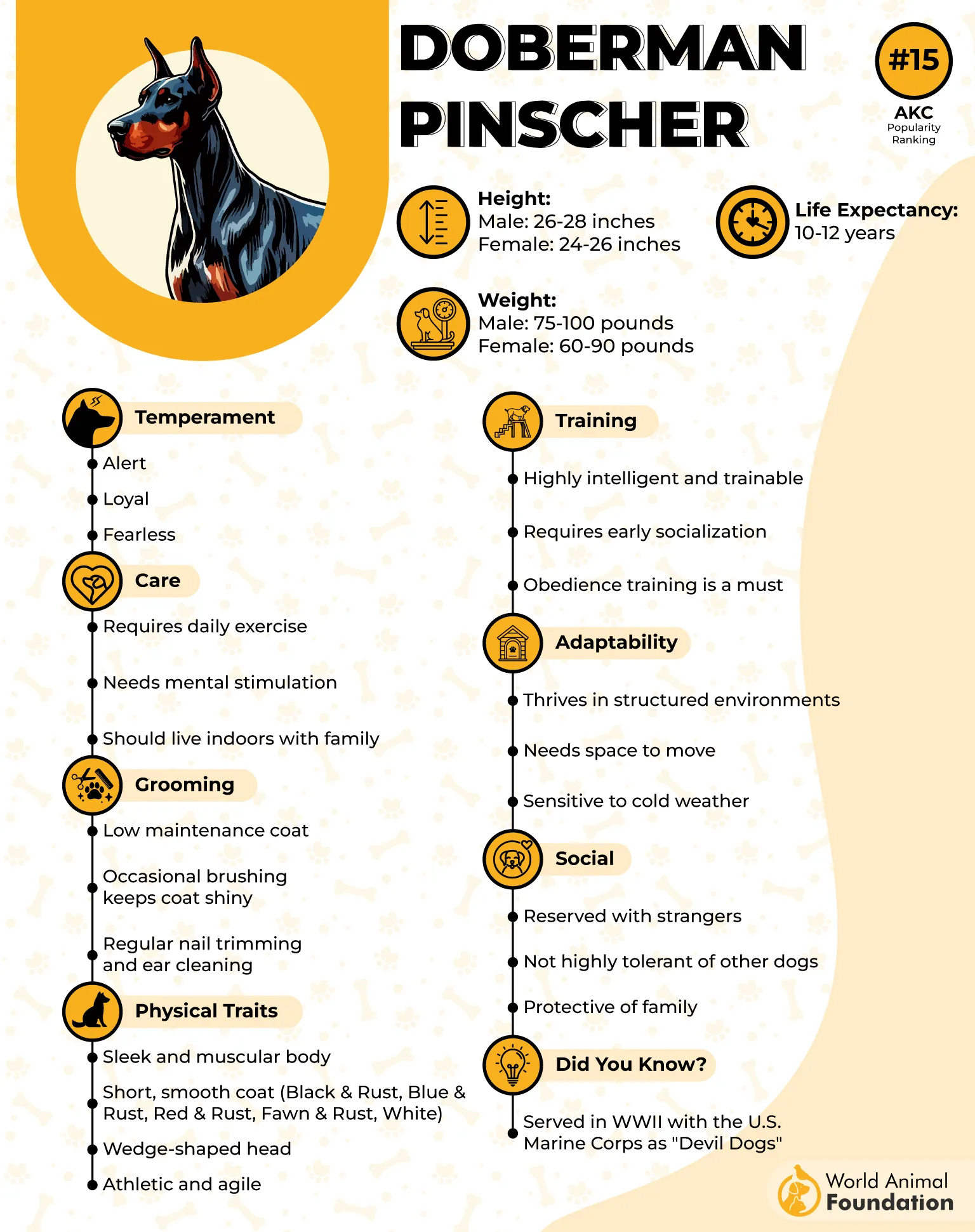
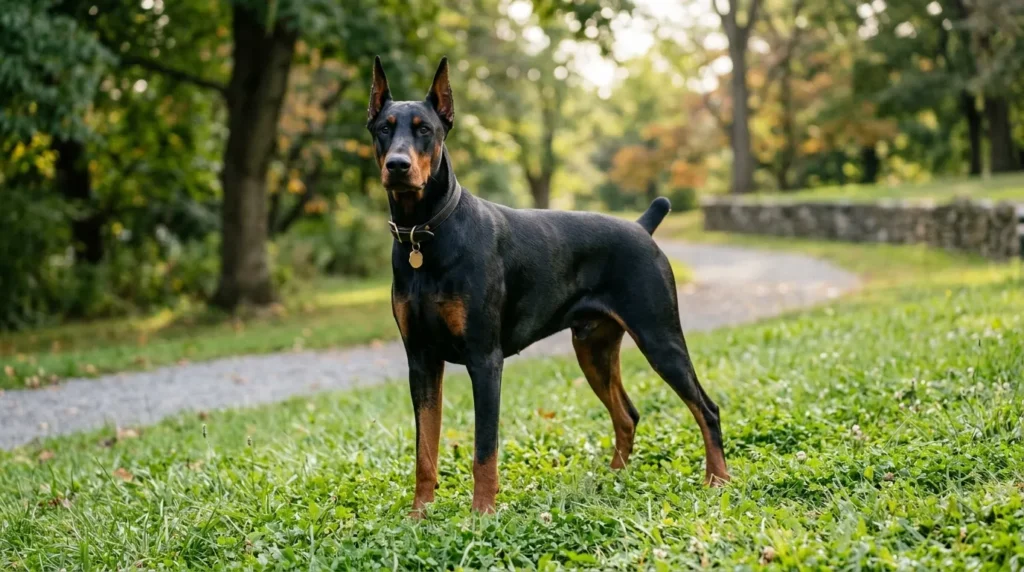
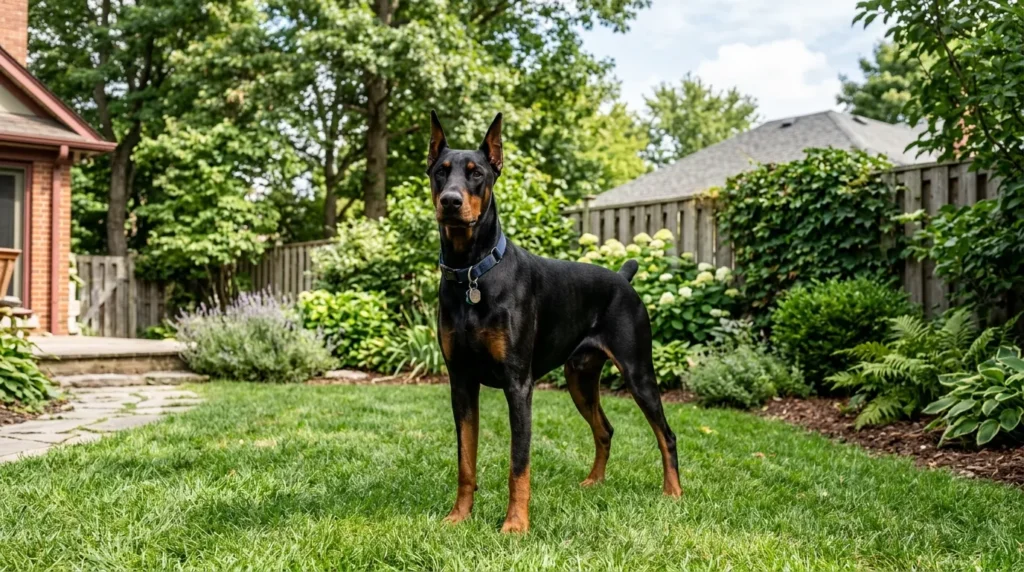
Dobermans are also large but have a more sleek, athletic, and streamlined body. They are known for their elegant posture, short coat, and well-defined muscles. Their build is designed for speed and agility rather than heavy endurance work.
Comparison
German Shepherds appear bulkier and more rugged, while Dobermans look leaner and more refined. Both are strong, but the Shepherd is built for endurance and the Doberman for speed. This makes each breed excel in different physical tasks.
Temperament & Personality
German Shepherd Dog
German Shepherds are loyal, confident, and highly protective of their families. They are generally calm dogs but alert, making them excellent watchdogs. With proper training, they are gentle and affectionate with children and family members.
Doberman Pinscher
Dobermans are intelligent, energetic, and extremely loyal to their owners. They tend to form very strong bonds and can be more emotionally sensitive than they appear. They are naturally protective and often act as vigilant guardians.
Comparison
Both breeds are loyal and protective, but German Shepherds tend to be more stable and calm in family environments. Dobermans are more intense and emotionally attached, often requiring closer companionship. Their personalities suit different lifestyle preferences.
Exercise & Energy Levels
German Shepherd Dog
German Shepherds have high energy levels and require regular physical and mental stimulation. They enjoy activities like running, obedience training, and working tasks. Without exercise, they may become restless or destructive.
Doberman Pinscher
Dobermans are extremely energetic and need intense daily exercise. They thrive on activities that challenge both their body and mind, such as agility training or long runs, as per Hill’s Pet. A lack of exercise can lead to anxiety or behavioral issues.
Comparison
Both breeds require significant exercise, but Dobermans typically demand more intense activity. German Shepherds are slightly more adaptable to moderate routines. Active owners will find both manageable, but Dobermans require more consistency.
Training & Intelligence
German Shepherd Dog
German Shepherds are among the most intelligent dog breeds and are highly trainable. They respond well to structured training and enjoy learning new commands. Their intelligence makes them ideal for police and service work.
Doberman Pinscher
Dobermans are also highly intelligent and quick learners. They are very responsive to training but can be strong-willed if not properly guided. Consistent leadership is essential for shaping their behavior.
Comparison
Both breeds rank among the smartest dogs in the world, but German Shepherds are often easier to train due to their eagerness to follow commands. Dobermans are equally intelligent but may require more experienced handling. Training success depends on consistency for both.
Grooming Frequency
German Shepherd Dog
German Shepherds have a thick double coat that sheds heavily, especially during seasonal changes. Regular brushing is necessary to control shedding and maintain coat health. They require moderate grooming effort overall.
Doberman Pinscher
Dobermans have a short, smooth coat that is very low-maintenance. They shed less and require minimal grooming compared to many other breeds, as per Britannica. Occasional brushing and bathing are usually sufficient.
Comparison
German Shepherds require significantly more grooming due to their dense coat. Dobermans are easier to maintain in terms of cleanliness and shedding. Grooming preference can be a deciding factor for many owners.
Lifespan Expectancy
German Shepherd Dog
German Shepherds typically live around 9 to 13 years, depending on genetics and care, as per PDSA. They are prone to certain health issues like hip dysplasia. Proper diet and exercise can improve their quality of life.
Doberman Pinscher
Dobermans generally have a lifespan of about 10 to 13 years. They may be prone to heart conditions such as dilated cardiomyopathy. Regular veterinary care is important for long-term health.
Comparison
Both breeds have similar lifespans, though health issues differ between them. German Shepherds face more joint-related problems, while Dobermans are more prone to heart conditions. Preventive care is essential for both breeds.
Suitability as Family Pets vs. Guard Dogs
German Shepherd Dog
German Shepherds are excellent family pets when properly trained and socialized. They are gentle with children and highly protective of their home. Their balanced temperament makes them versatile companions.
Doberman Pinscher
Dobermans can also be loving family pets, but often bond very strongly with one or two people. They are naturally protective, making them exceptional guard dogs. Early socialization is crucial to prevent over-guarding behavior.
Comparison
German Shepherds are generally more family-friendly and adaptable in diverse households. Dobermans are more specialized as personal protection dogs with intense loyalty. Both excel as guard dogs, but Shepherds are more versatile family companions.
Conclusion
German Shepherd Dogs are highly versatile, intelligent, and well-balanced companions. They adapt easily to family life as well as professional working roles. Their steady temperament makes them one of the most reliable breeds.
Doberman Pinschers are powerful, loyal, and extremely protective dogs. They are best suited for experienced owners who can handle their intensity and energy. Their strong guarding instincts make them excellent protectors.
Both breeds are exceptional in their own way and offer great companionship and security. The choice depends on whether you prefer versatility and calm control or speed, intensity, and focused protection.
