




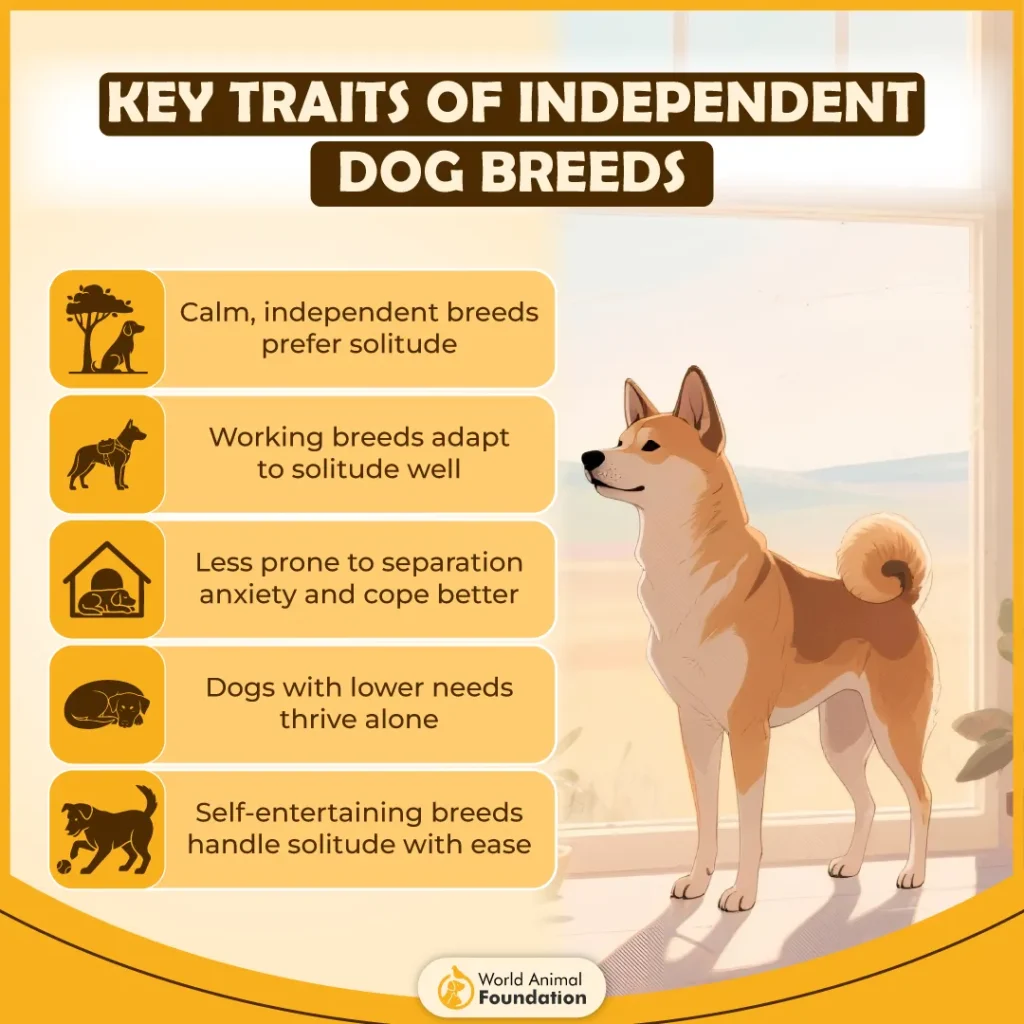
Not every dog wants to follow you from room to room all day. Some breeds do crave constant attention, but others are perfectly content with their own routine and can handle a few hours alone without any fuss. For busy owners, finding a more self-sufficient breed can make daily life noticeably easier and more enjoyable.
Large dogs sometimes get labelled as needy, but that’s not always the case. Many were originally bred as guard dogs and working dogs that had to think and make decisions independently. These are dogs that can still build a close bond with family while also being comfortable in their own company.
If you’re looking for large dog breeds that do well with a bit of autonomy, these impressive canines are worth getting to know.
Fun Fact: Many of the more independent dog breeds were developed to protect livestock in remote areas. Since a human wasn’t always nearby, these dogs learned to make decisions without waiting for direction, and that instinctive confidence is still very much present today.
Top Independent Large Dog Breeds That Thrive Alone
1. Anatolian Shepherd
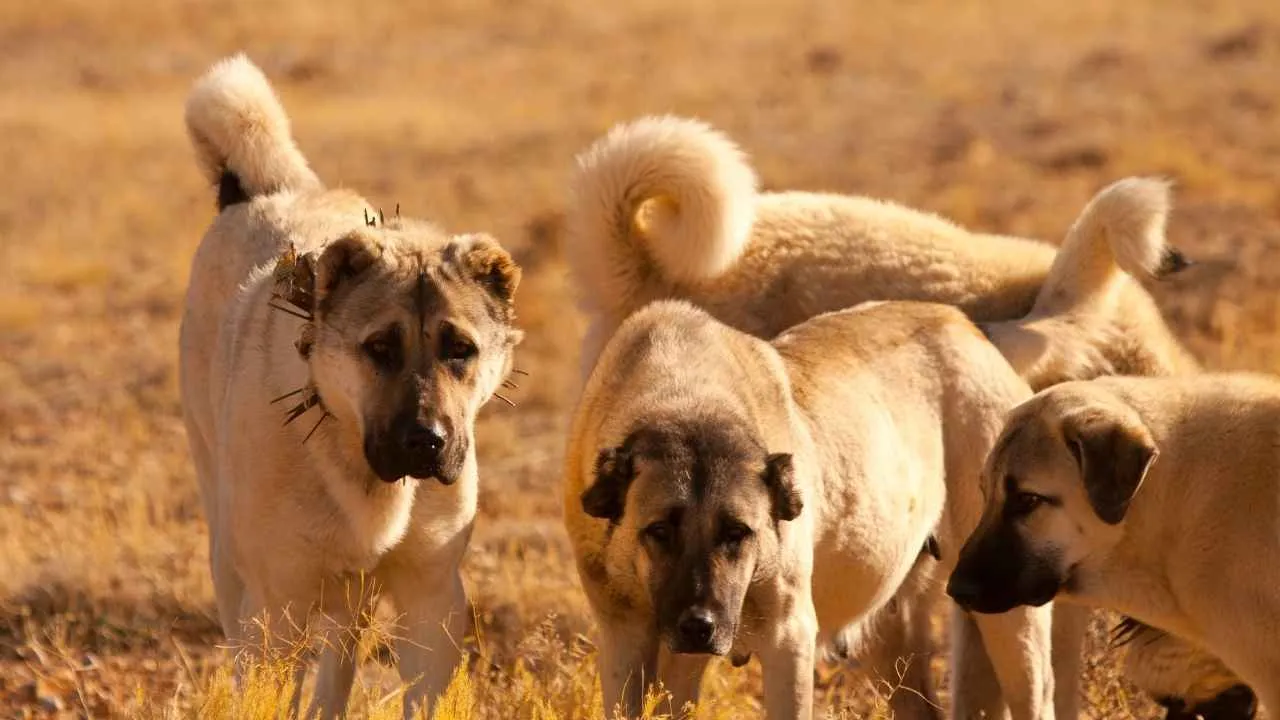
The Anatolian Shepherd is one of the standout breeds for anyone who appreciates a confident, self-reliant companion. Bred in Turkey to guard livestock across vast stretches of land, this tough guardian learned to work without constant supervision, and that independent streak remains one of its most defining traits today.
With a strong, muscular build and a weather-resistant coat, the Anatolian Shepherd handles tough conditions without complaint. Around family, it tends to be calm, devoted, and steady; a reliable presence rather than a demanding one.
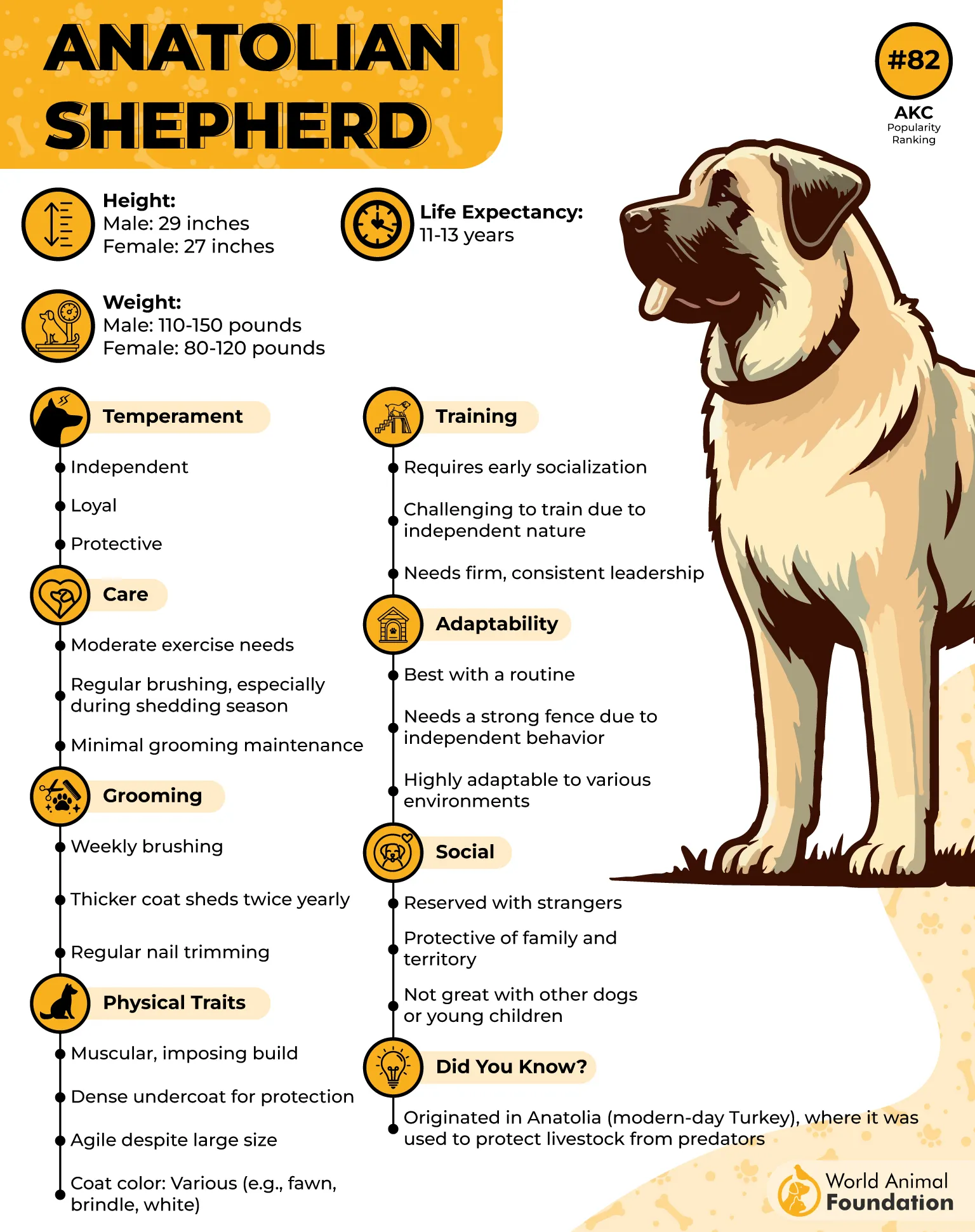
Living with an Anatolian Shepherd does require clear boundaries and consistent training from early on. This isn’t a dog that craves constant cuddles or close supervision. It’s an intelligent breed that does best when it has a sense of purpose and enough space to move around freely.
As Purina UK notes, the Anatolian Shepherd was shaped to make independent decisions while on the job, so some prior handling experience is generally advised.
2. Tibetan Mastiff
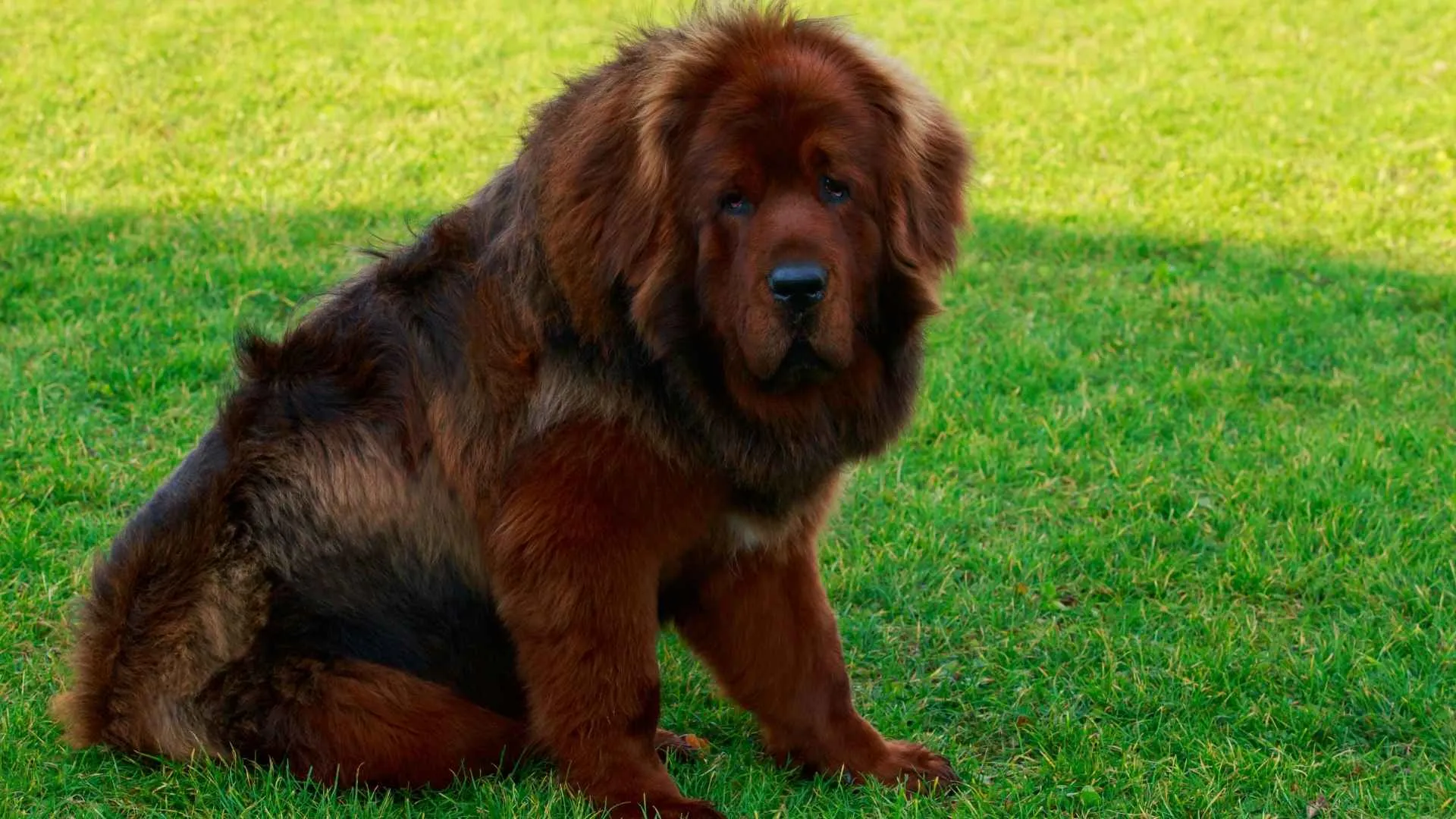
The Tibetan Mastiff has a presence that’s hard to ignore. This majestic guardian originated in the Himalayan region, where it spent centuries protecting villages and livestock. Unlike breeds that become restless or demanding when left alone, the Tibetan Mastiff is perfectly comfortable in its own company, while still staying alert to everything happening nearby.
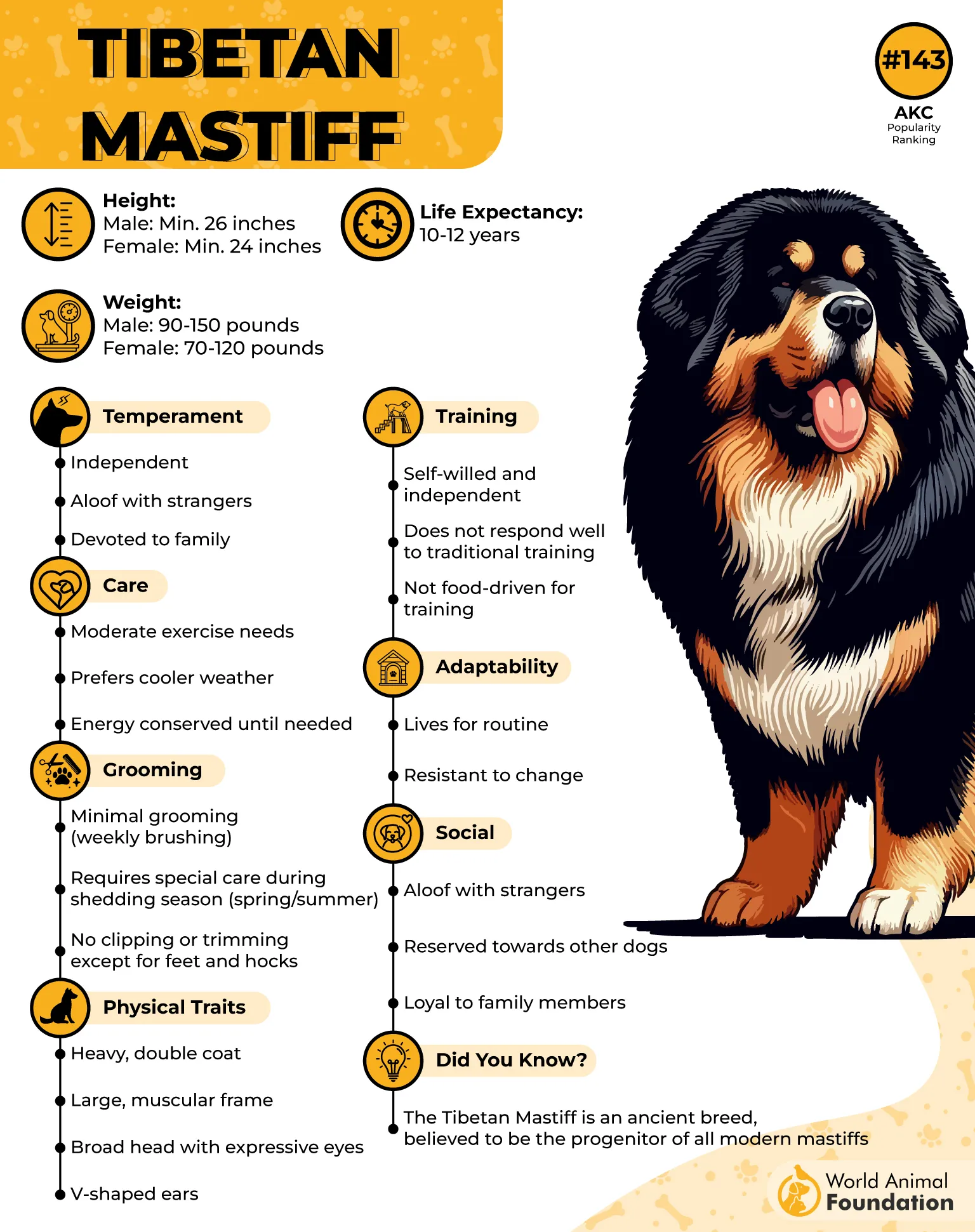
That reserved attitude toward strangers is completely normal for the breed, though family members tend to see a much gentler side. Deep loyalty, strong instinct, and a quiet confidence are what draw people to this breed when they’re looking for a large dog that doesn’t need constant reassurance.
The Tibetan Mastiff does well with moderate exercise and tends to appreciate having a secure outdoor space to roam. Keeping the mind engaged matters; boredom can lead to unwanted habits fairly quickly. PetMD notes that this breed often becomes more active in the evenings and will reliably alert owners when something unusual is happening around the property.
3. Caucasian Shepherd
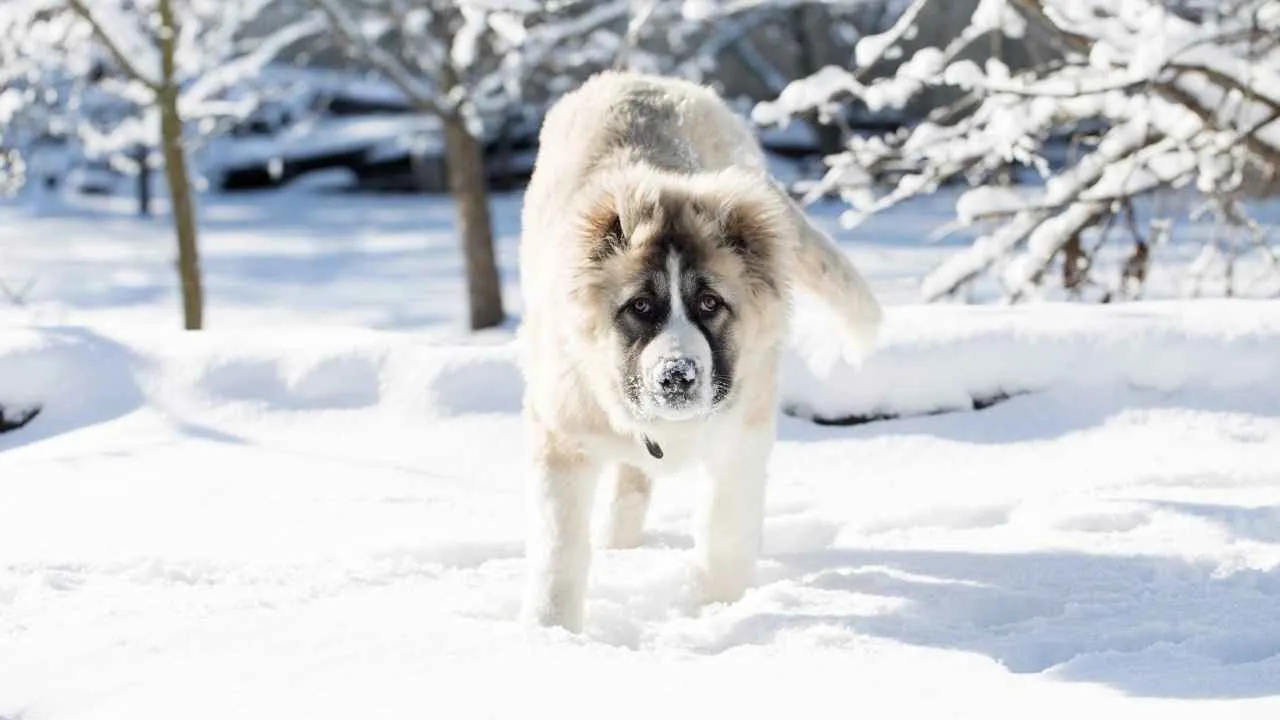
The Caucasian Shepherd is among the most powerful guard dogs in the world. Developed in the rugged Caucasus Mountains, this imposing protector built a reputation for bravery, composure, and unwavering loyalty. Working independently across remote and demanding terrain shaped a deeply self-reliant way of thinking, and that quality is still very much present in the breed today.
Despite that intimidating exterior, the Caucasian Shepherd can form strong, genuine bonds with the family it trusts. A calm home environment and predictable daily routines tend to bring out its gentler side.
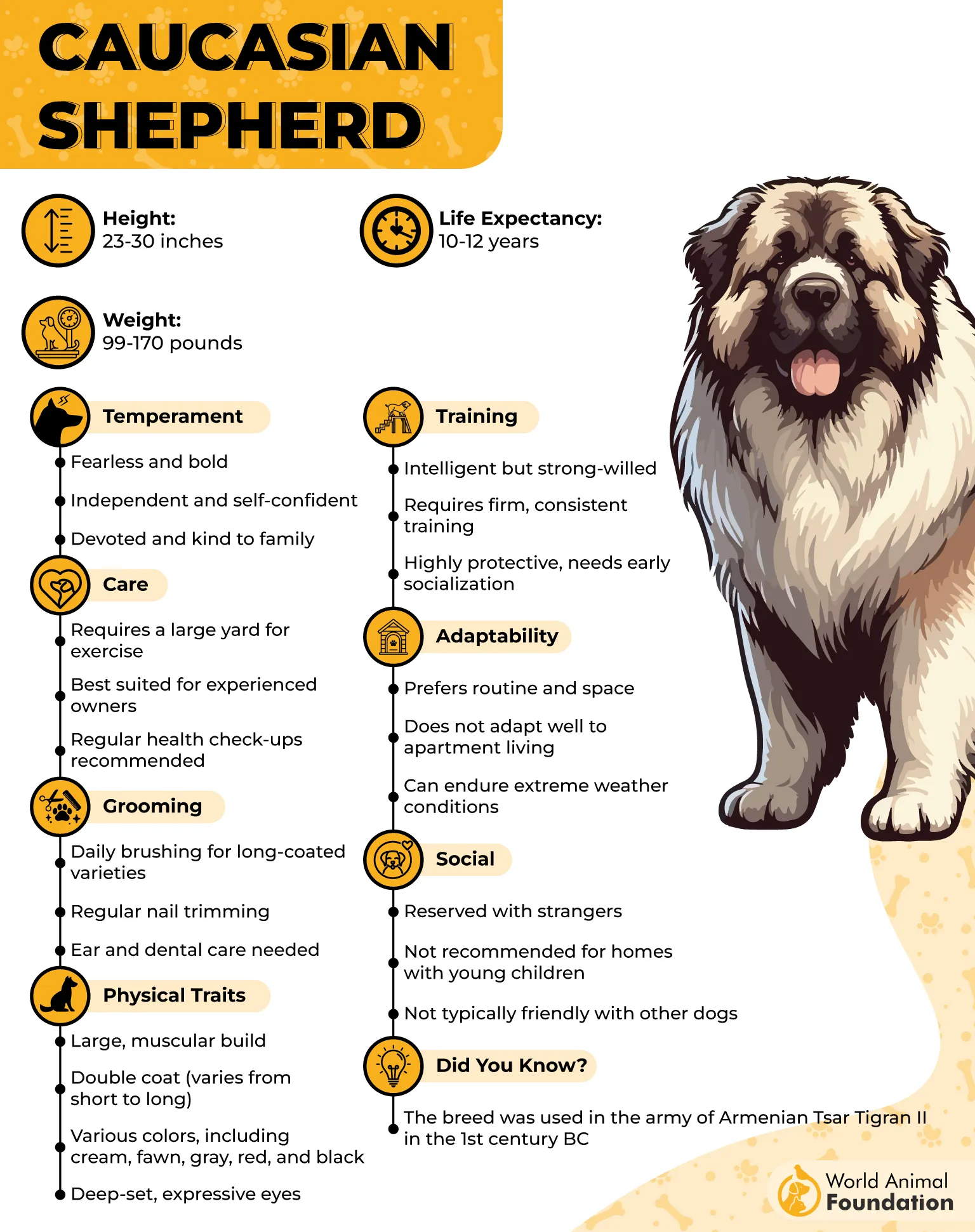
This is a breed better suited to experienced owners rather than first-timers. Consistent guidance helps maintain an even temperament, and regular physical activity supports both fitness and mental steadiness.
Early socialisation and clear structure are particularly important for this determined livestock guardian; they lay the foundation for a dog that is confident and manageable rather than unpredictable.
4. Black Russian Terrier
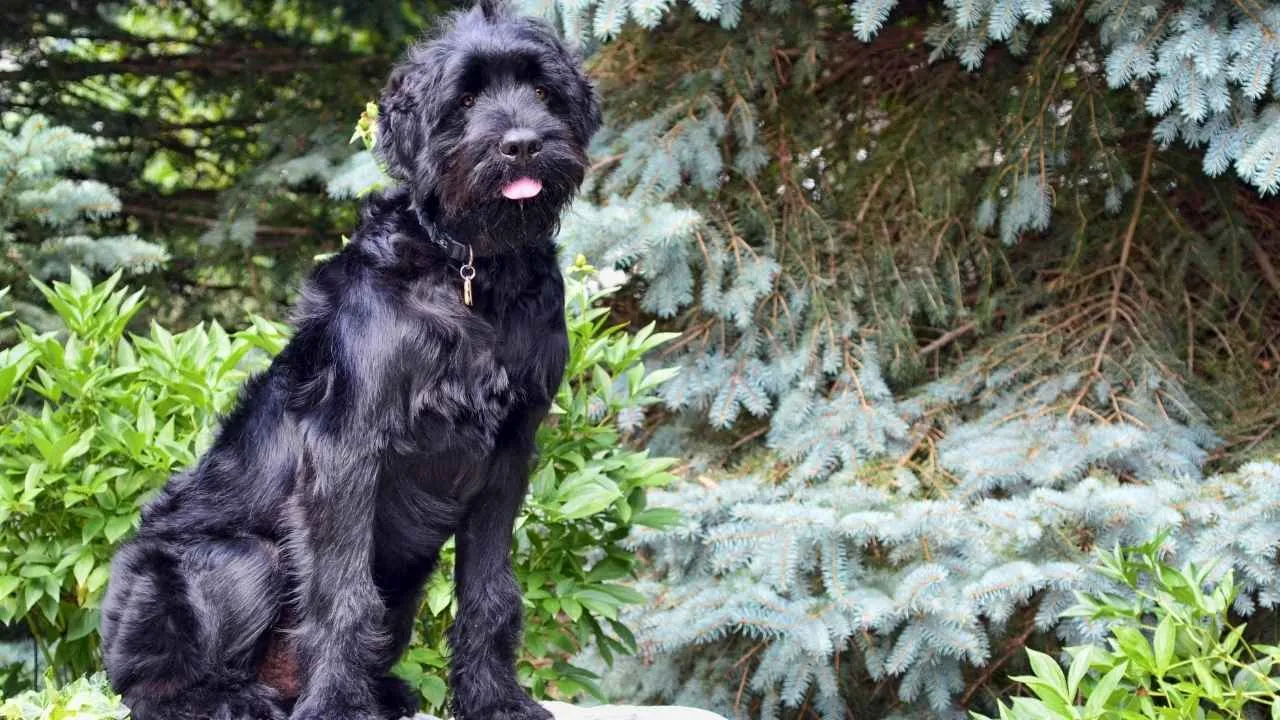
The Black Russian Terrier brings together strength, intelligence, and confidence in one commanding package. Built from the ground up as a working dog, this large breed was developed to handle demanding jobs across varied environments, and that purposeful background shows in everything about it.
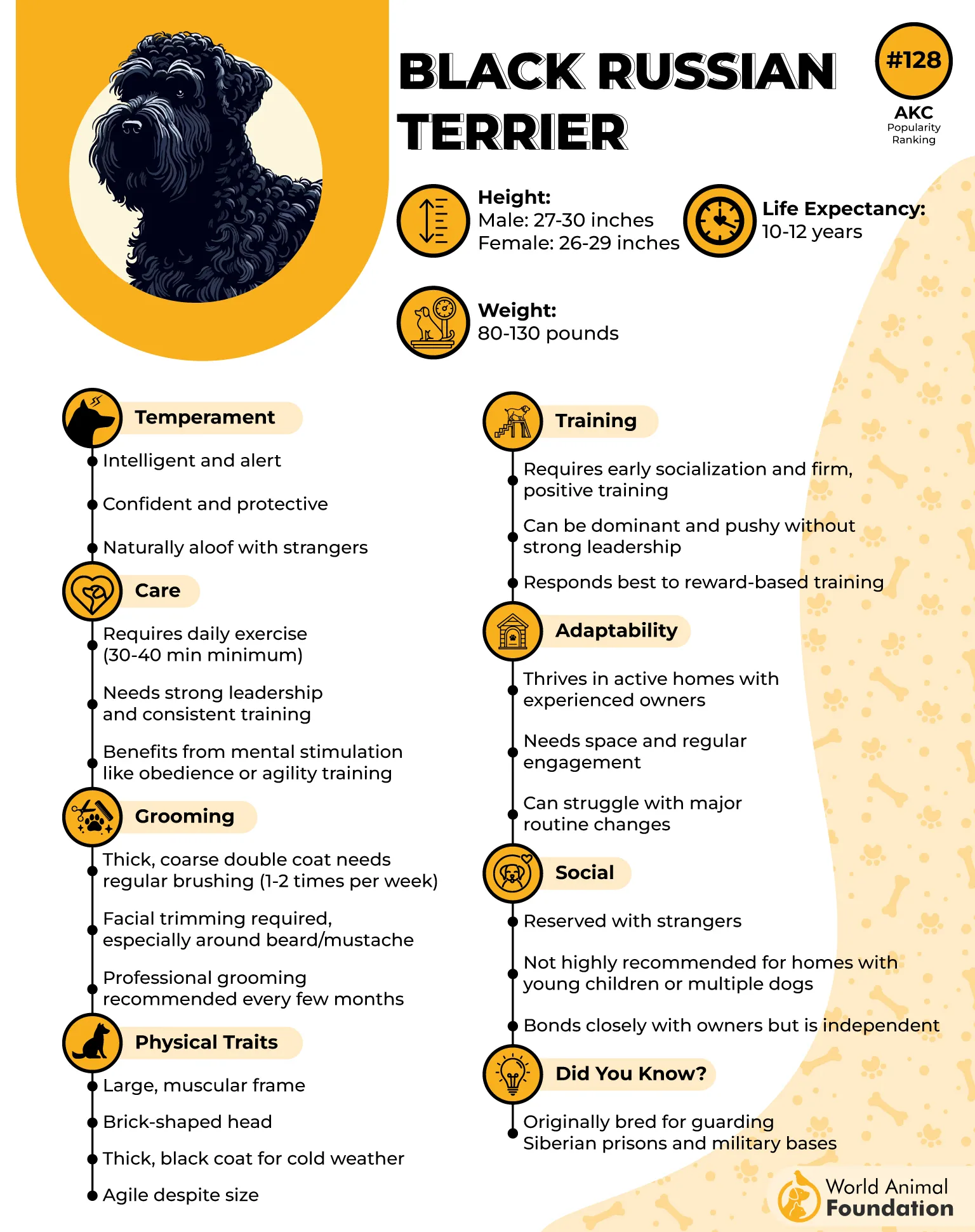
A thick, weather-resistant coat and a sturdy, powerful build make this dog hard to overlook. Loyalty to family comes naturally, but strangers typically have to earn trust over time. That cautious, measured attitude toward unfamiliar people is actually one of the breed’s strengths as a guardian; it stays protective without becoming the kind of dog that shadows its owners everywhere they go.
Daily physical activity and mental challenges are both important for keeping a Black Russian Terrier content. Brain puzzles, structured routines, and obedience training all help prevent boredom from taking hold. Early socialisation is also key; it shapes a confident, well-mannered adult dog while supporting those natural guarding instincts in a healthy direction.
5. Komondor
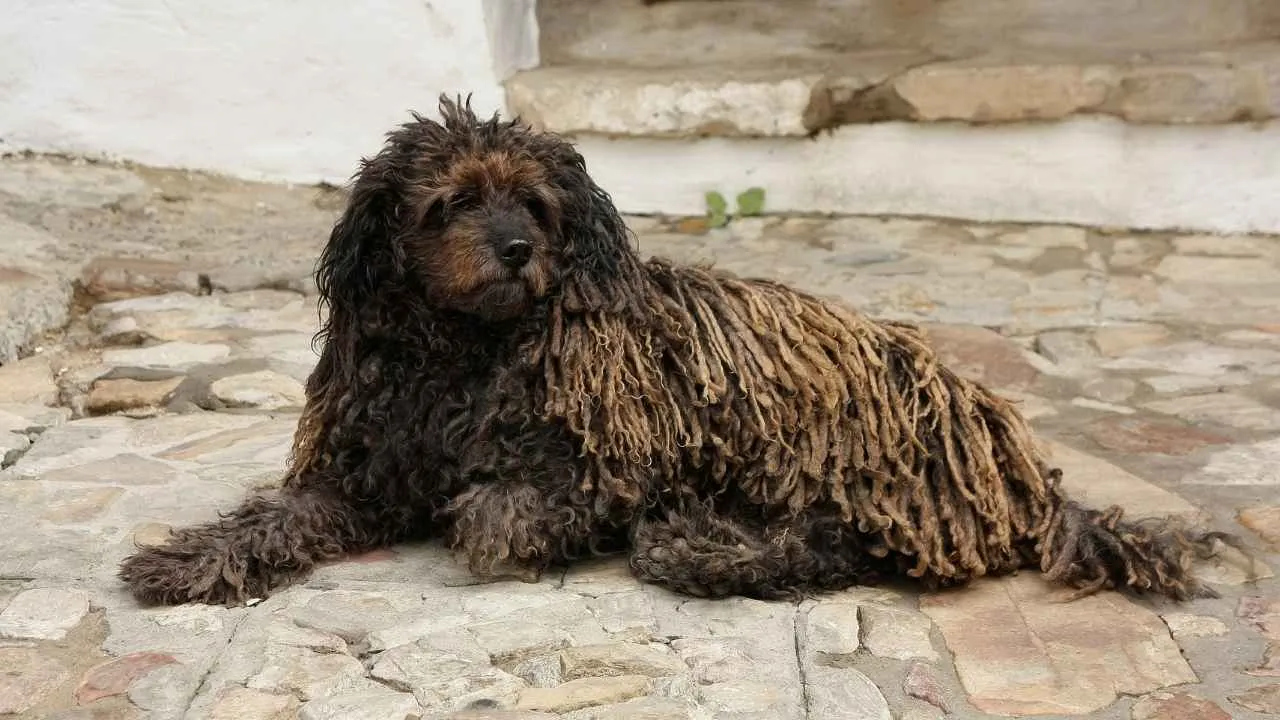
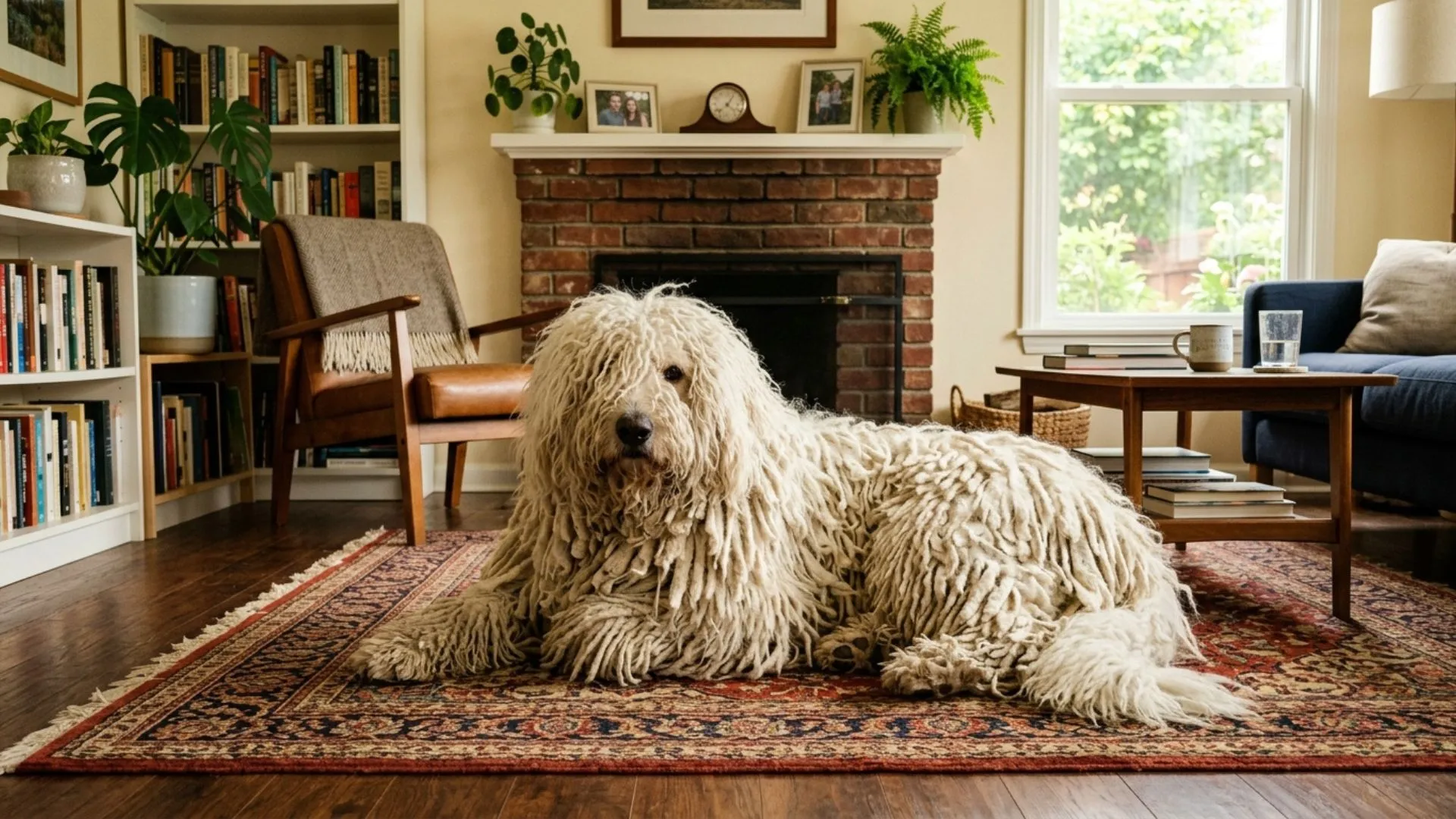
Few dogs make a first impression quite like the Komondor. That extraordinary corded coat, long, rope-like strands covering the entire body, is unlike anything else in the canine world. For generations, this breed served as a livestock guardian, protecting flocks across open terrain with minimal human oversight. That history produced one of the more self-directed breeds you’ll come across today.
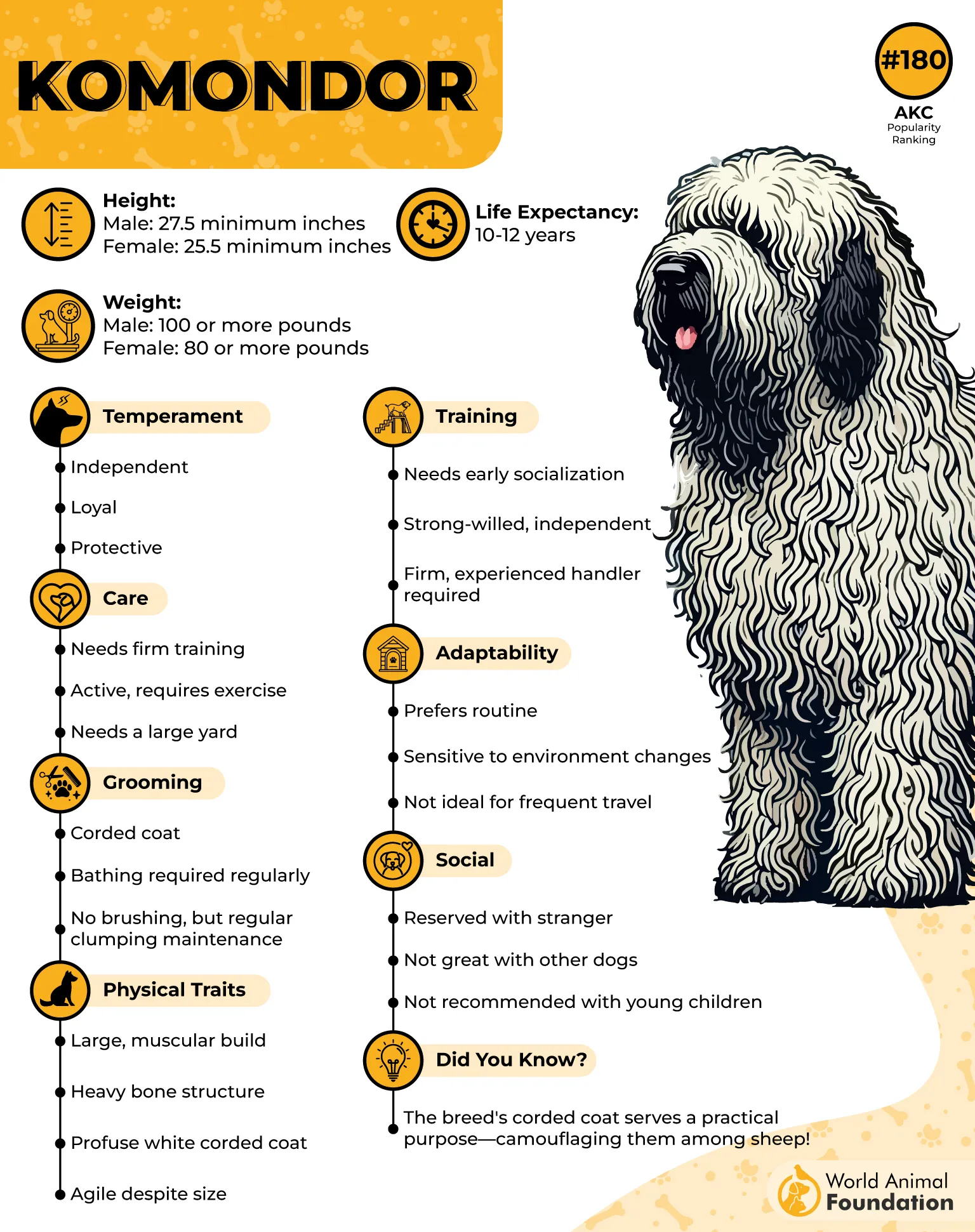
At home, the Komondor can seem calm, almost understated. But beneath that composed exterior is a watchful guardian that’s constantly reading its surroundings. Unlike dogs that greet every visitor with enthusiastic excitement, this breed tends to size up unfamiliar situations carefully before deciding how to respond.
That distinctive coat does demand dedication: regular grooming is essential to keep the cords healthy and clean. Early training and socialisation help build confidence and good manners, even if progress takes a little patience. PDSA notes that this breed was developed to guard livestock and still carries strong protective instincts that need responsible, informed management.
6. Central Asian Shepherd Dog

The Central Asian Shepherd Dog is among the oldest guardian breeds still around today. For thousands of years, this powerful protector worked across vast regions where independent thinking wasn’t just useful; it was necessary for survival. That deep history means this breed is genuinely comfortable making decisions without waiting for constant direction.
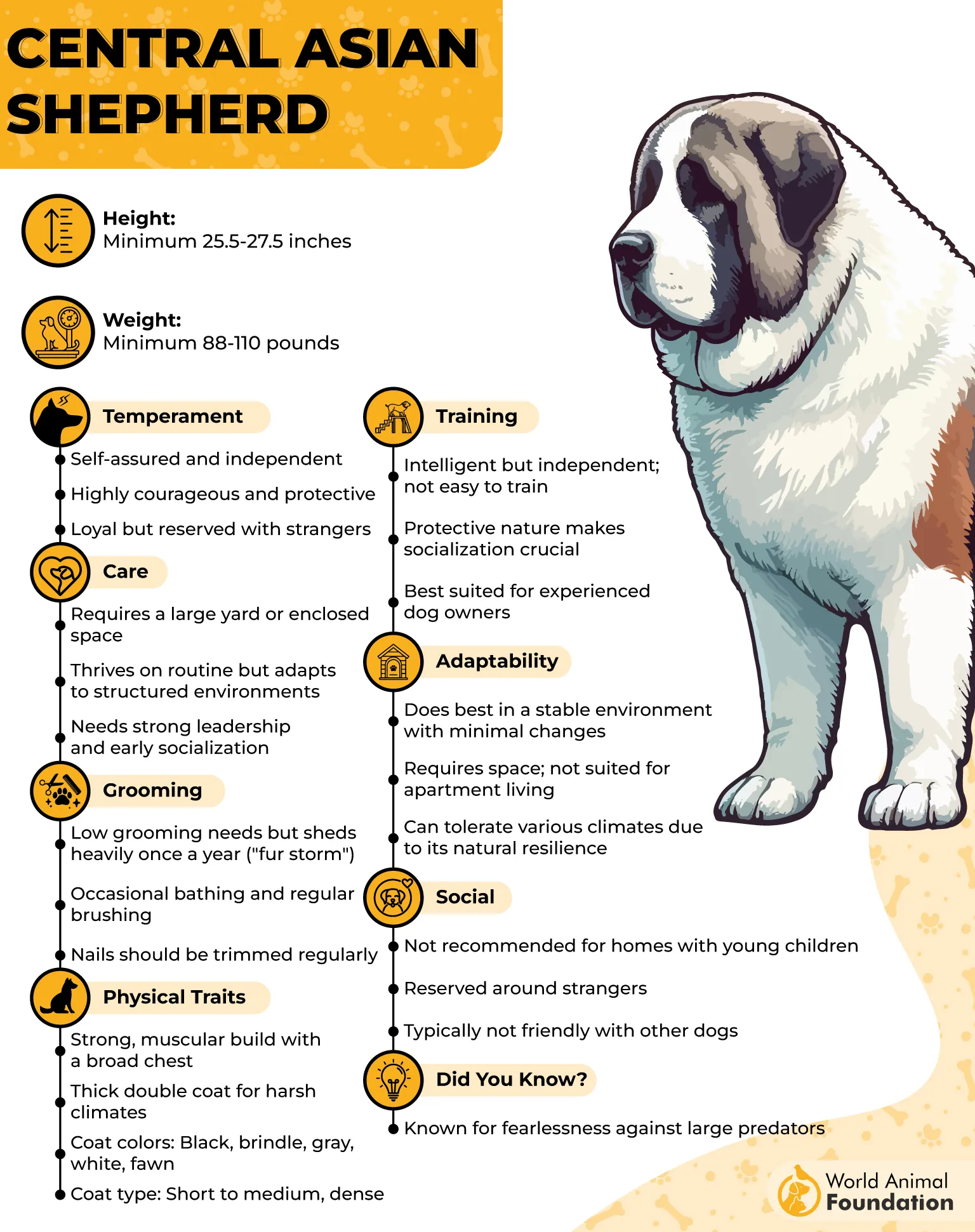
A calm presence and a fearless temperament set this canine apart from many other large breeds. Affection toward family members comes naturally, but this is also a dog that appreciates having its own space and won’t demand your attention around the clock.
This isn’t a high-energy breed that needs endless activity to stay happy. A secure outdoor area and regular exercise generally cover its physical needs well. That said, strong fencing is important; natural guarding instincts mean this breed tends to patrol and monitor its surroundings, and a secure perimeter keeps that behaviour well contained.
7. Great Pyrenees
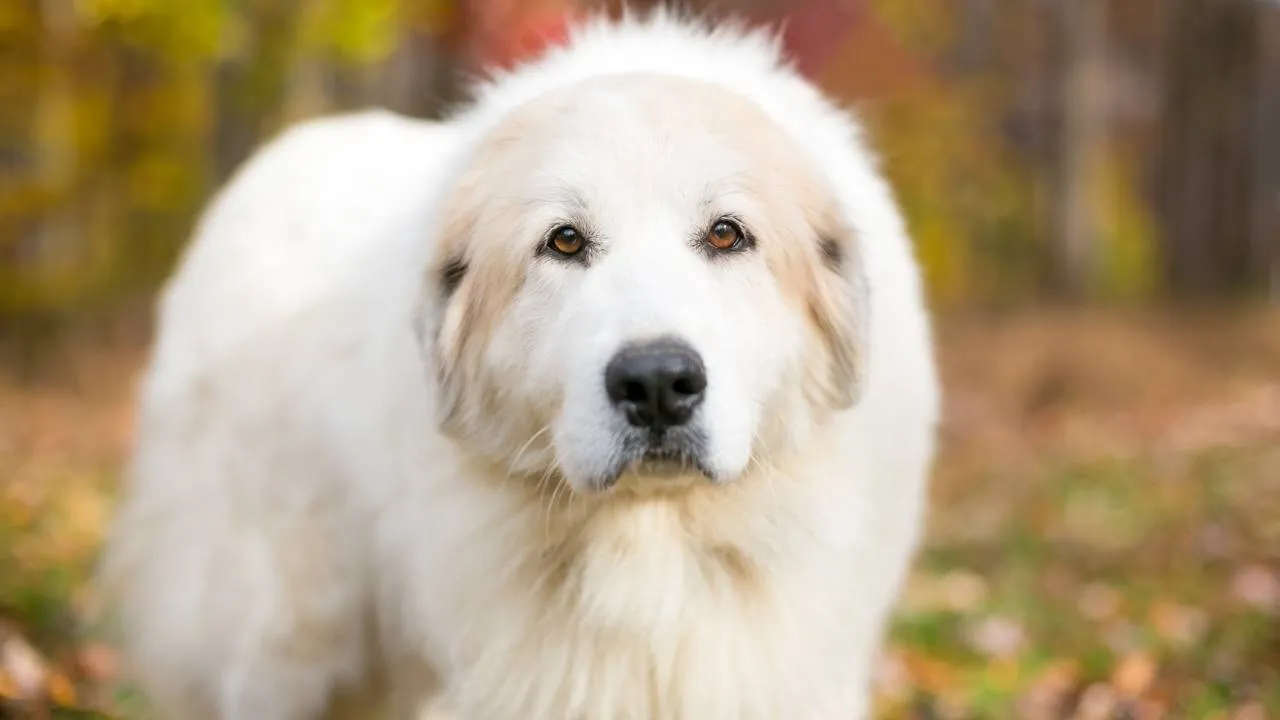
The Great Pyrenees is proof that a gentle nature and independence can exist in the same dog. Originally bred to watch over sheep in mountain regions, this beautiful white guardian often worked alone for extended periods, keeping predators at bay without any human backup. That role demanded confidence, patience, and sound judgement: qualities the breed still carries today.
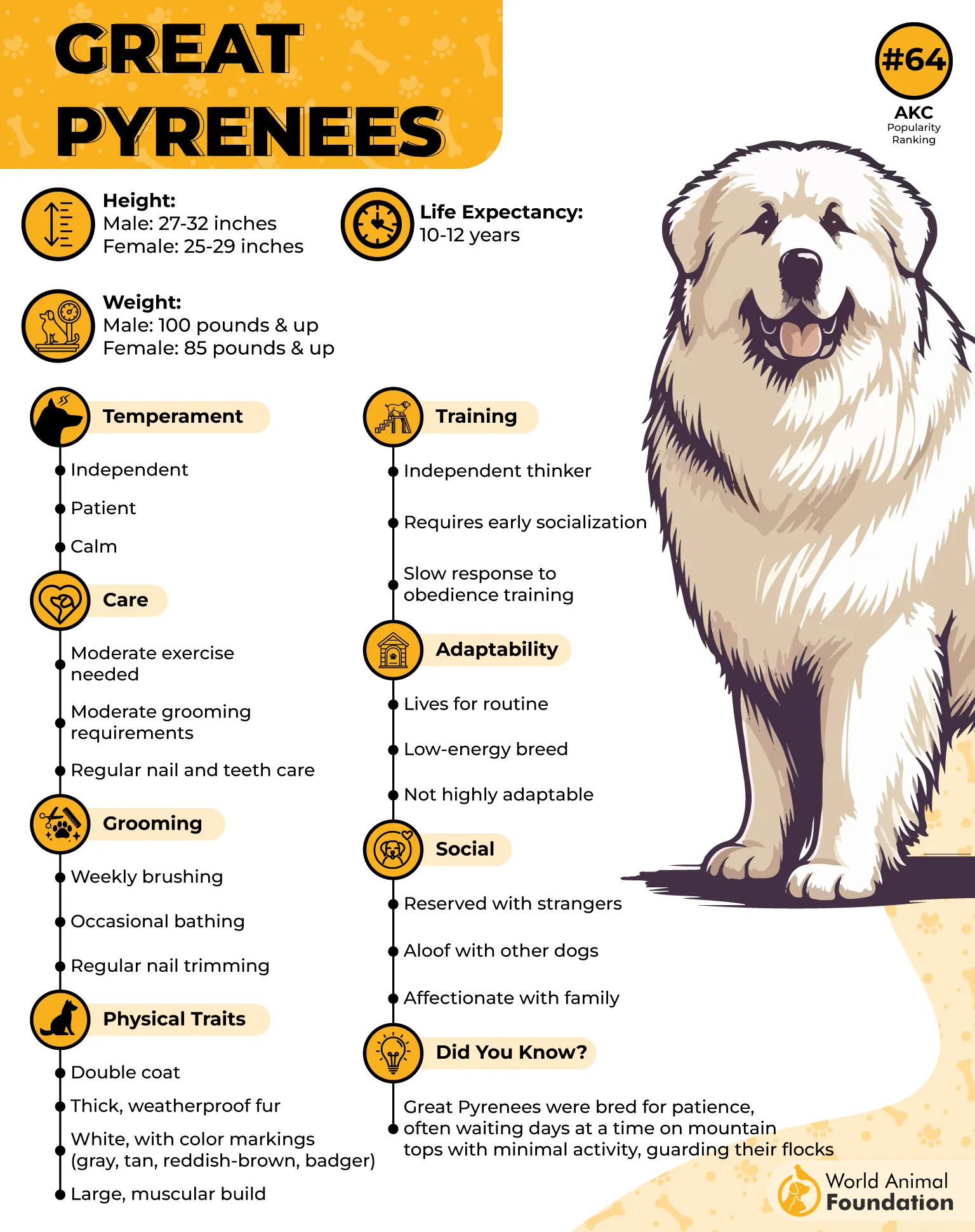
Inside the home, the Great Pyrenees tends to come across as calm, gentle, and affectionate. Strong bonds with family develop naturally over time, but this is a dog that’s also comfortable without constant interaction or reassurance.
Regular involvement in household routines, moderate exercise, and consistent grooming all help keep this breed healthy and content. Hill’s Pet describes the Great Pyrenees as a patient breed by temperament; one that’s devoted to protecting its loved ones while remaining genuinely gentle in everyday family life.
Conclusion
Finding the right dog comes down to more than looks or size. Lifestyle, available space, and daily schedules matter just as much. The large independent breeds covered here tend to share one defining trait: confidence. The best dog breeds were developed to make decisions on their own, protect livestock, and carry out important work without needing constant supervision.
That independence doesn’t come at the cost of affection, though. Every breed on this list is capable of building real, lasting connections with a household, while also being genuinely relaxed about spending time alone. For owners who value loyalty but don’t want a dog that constantly demands attention, these capable guardians offer a balance that’s genuinely hard to find elsewhere.
