




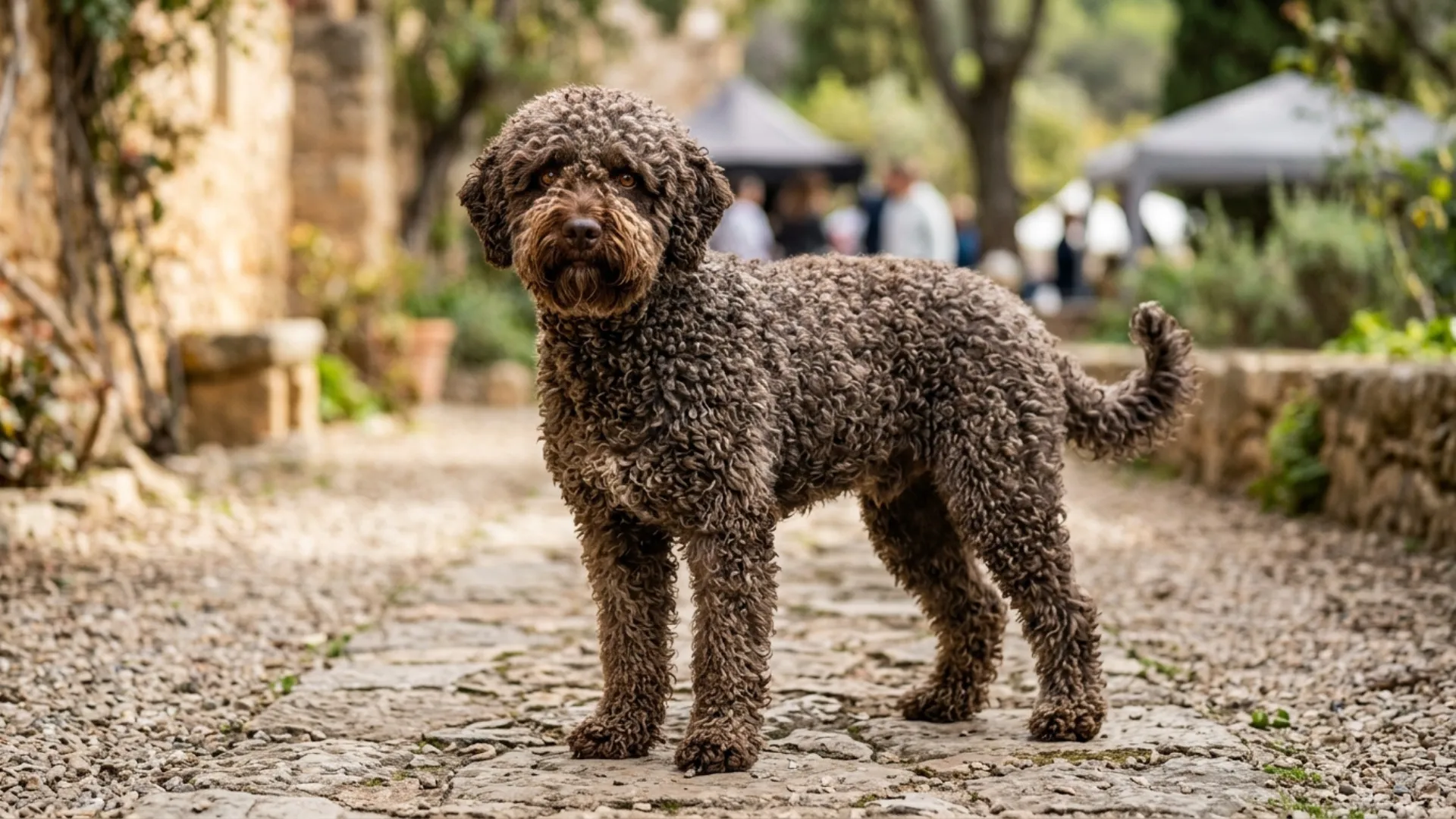
Let’s be honest—most people notice a dog’s coat before anything else. Whether it’s flowing curls, dramatic dreadlocks, or barely any hair at all, some breeds look like they walked straight out of a fantasy movie rather than a dog park.
But here’s the cool part: these coats aren’t just about aesthetics. Many of them evolved for specific jobs, climates, and lifestyles. Some of the breeds on this list guarded livestock in freezing temperatures.
Others spent centuries swimming alongside fishermen, while a few became beloved companions thanks to their unusual appearance and affectionate personalities.
If you’re fascinated by dogs that stand out from the crowd, grab a coffee, and let’s dive into some of the most unique canine coats on the planet.
Exceptional Dog Breeds and Their Distinctive Coats
1. Chinese Crested
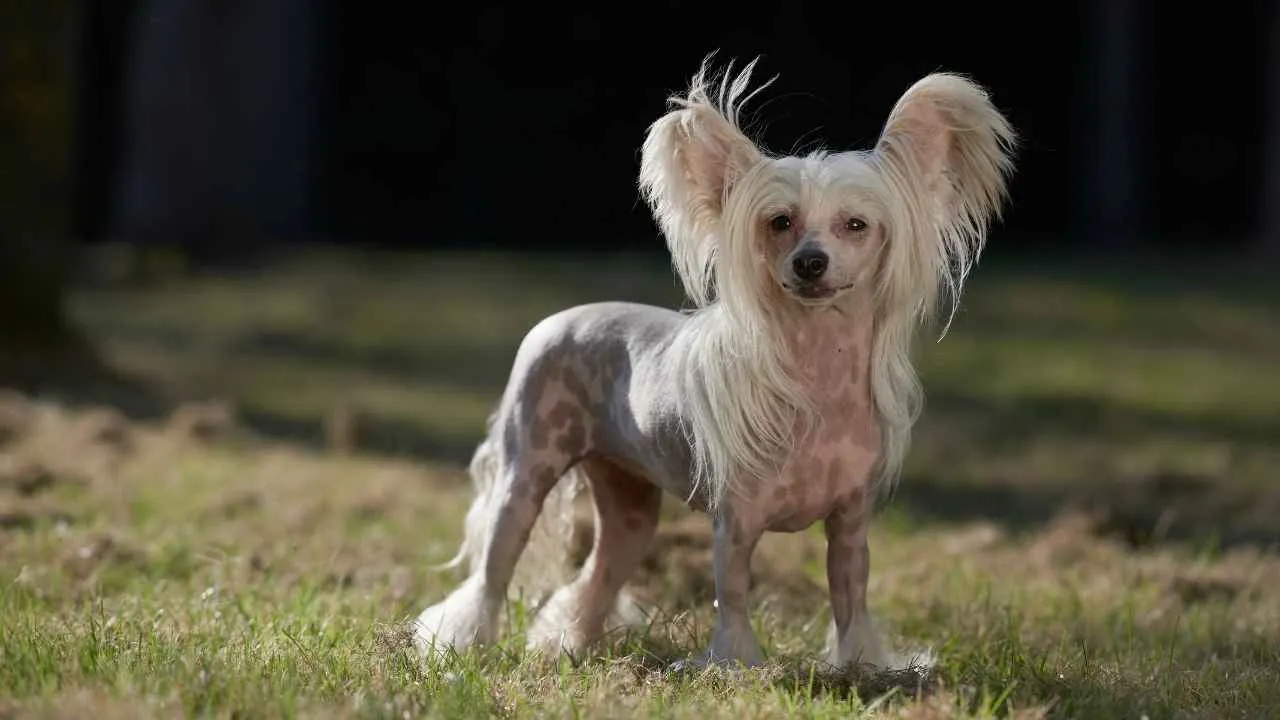
The Chinese Crested is proof that dogs don’t need a full coat to make a fashion statement. This breed comes in two varieties: the famous Hairless and the fluffy Powderpuff. Either way, they turn heads faster than almost any other companion breed.
The Hairless variety sports a dramatic crest of silky hair on the head, fluffy socks on the feet, and a plume on the tail. The rest of the body remains largely hair-free, creating one of the most recognizable silhouettes in the dog world.
Meanwhile, the Powderpuff version looks like it belongs in a luxury shampoo commercial.
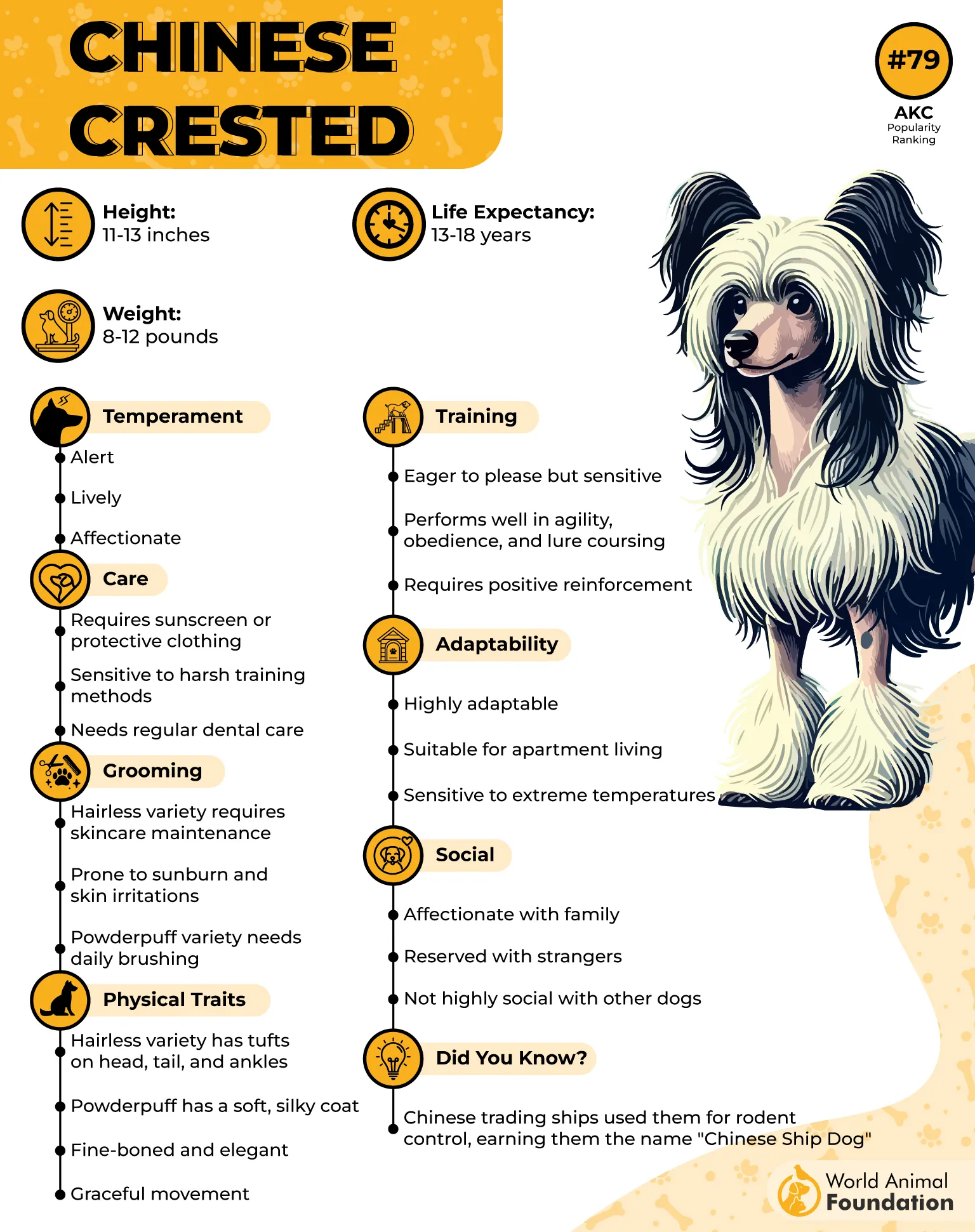
Despite their delicate appearance, these dogs are surprisingly alert. Owners often compare them to cats because they love climbing furniture, balancing on armrests, and finding elevated spots to monitor household activity. Nothing escapes their attention.
These little dogs are highly intelligent and emotionally tuned into their families. They quickly learn routines, recognize visitors, and often seem to predict what their owners are about to do next. Their awareness makes them excellent little watchdogs despite their toy-sized bodies.
The breed’s unusual genetics contribute to its distinctive appearance. The same gene responsible for hairlessness is also linked to dental abnormalities, which is why many Hairless Cresteds require extra dental care throughout life.
How To Manage The Coat At Home
Apply dog-safe sunscreen and protective clothing when spending time outdoors with Hairless Cresteds.
Schedule frequent dental care because the hairless gene can affect tooth development.
Use gentle, veterinarian-recommended moisturizers to maintain healthy skin and prevent dryness.
2. Portuguese Water Dog
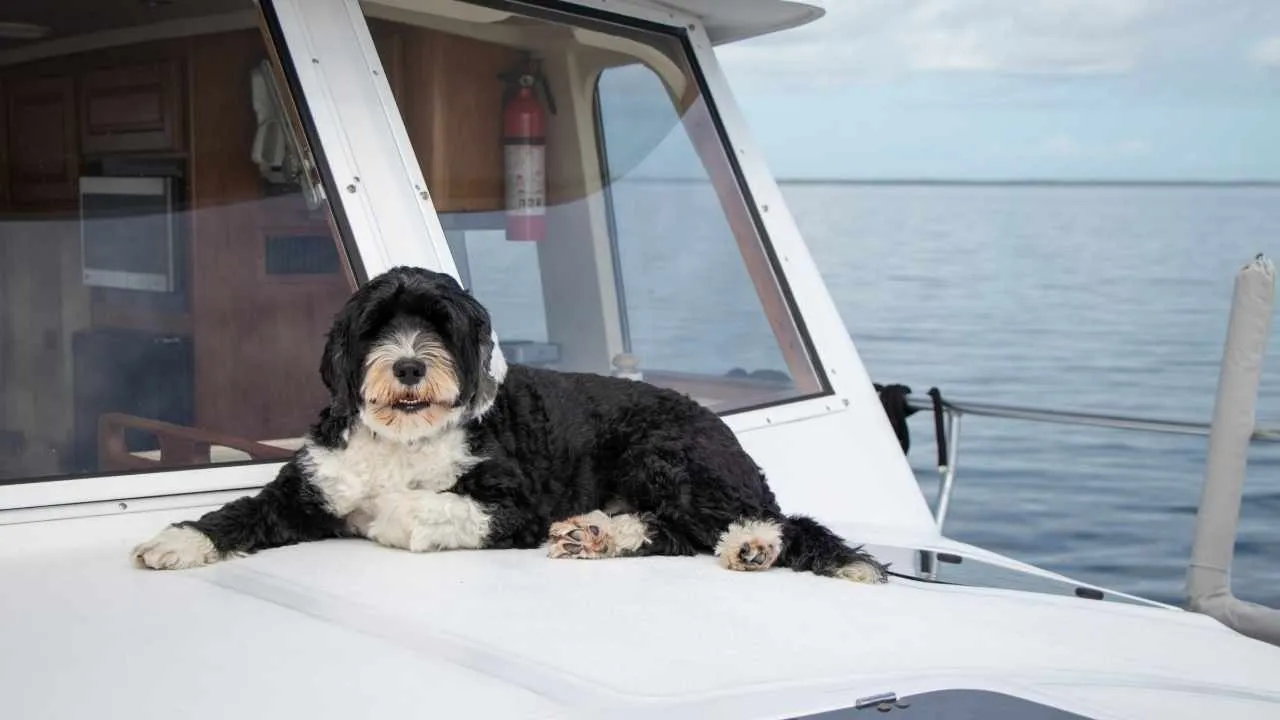
If the Chinese Crested is the fashion influencer of the dog world, the Portuguese Water Dog is the professional athlete. Every curl on this breed was designed for a purpose, helping generations of dogs work alongside fishermen in the rough waters of Portugal.
Their coat comes in two forms: tight curls or loose waves. Both varieties are dense, water-resistant, and remarkably functional. Unlike many breeds, Portuguese Water Dogs have no undercoat, which contributes to their reputation as a low-shedding companion.
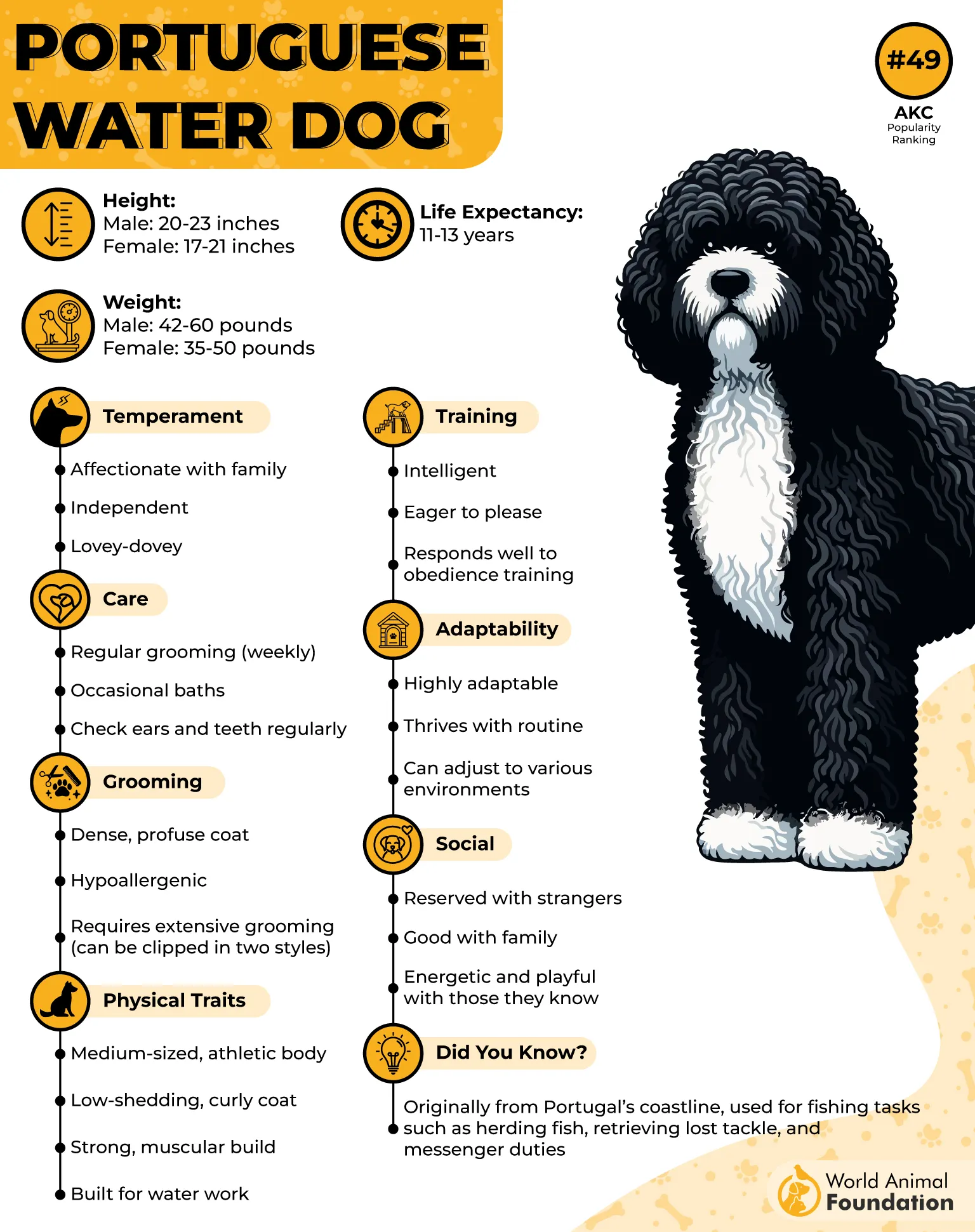
These dogs are famous for combining intelligence with endless enthusiasm. Historically, Purina claims that they retrieved fishing nets, carried messages between boats, and even helped herd fish into nets. That working heritage remains obvious today whenever a Portie tackles a new challenge.
Mental stimulation is non-negotiable for this breed. Portuguese Water Dogs excel in obedience, agility, dock diving, scent work, and advanced trick training. Many owners report that these dogs learn commands after surprisingly few repetitions.
The coat may shed minimally, but don’t let that fool you. Regular brushing and professional trimming are essential to prevent mats and tangles. Whether maintained in the traditional Lion Clip or Retriever Clip, this breed’s coat requires commitment to stay healthy and attractive.
How To Manage The Coat At Home
Brush thoroughly several times per week to prevent knots from developing deep within the curls.
Rinse and dry the coat carefully after swimming to reduce skin and ear issues.
Schedule professional grooming every four to eight weeks to maintain coat condition.
3. Spanish Water Dog
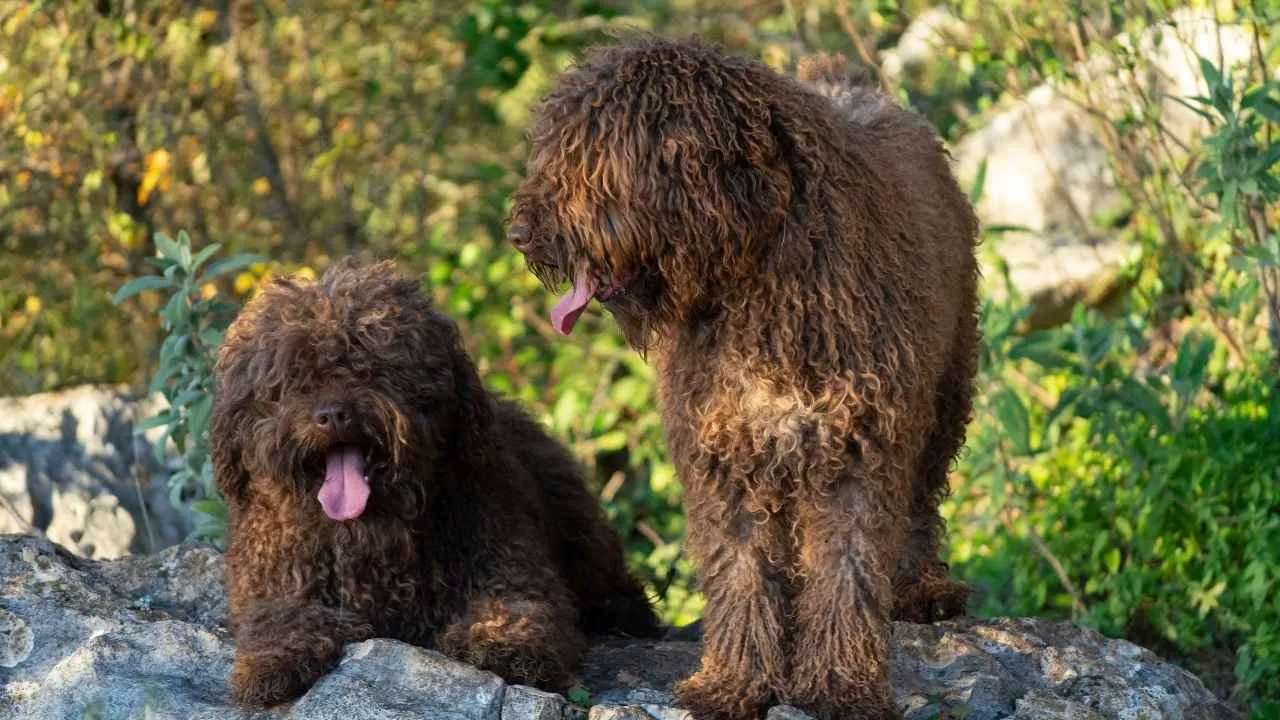
At first glance, the Spanish Water Dog looks like it woke up with naturally perfect curls and decided to keep them forever. Unlike many modern companion breeds, however, every aspect of its coat was shaped by centuries of practical work.
Traditionally used as a herding dog, livestock guardian, and water retriever, the Spanish Water Dog needed a coat suited to challenging environments. The result is a woolly, curly, water-resistant coat that performs exceptionally well in both wet and dry conditions.
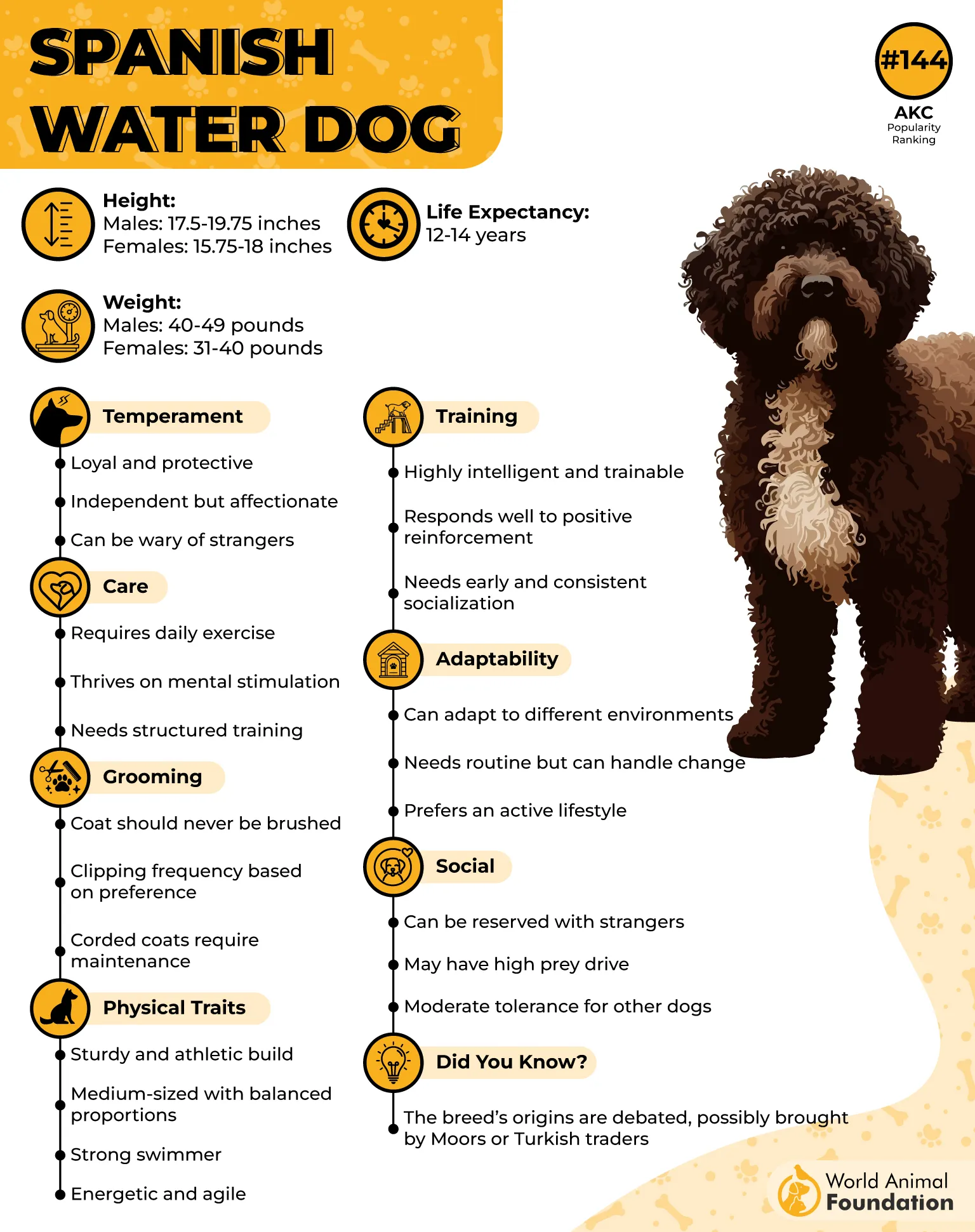
One of the most fascinating things about this breed is that owners are not supposed to brush the coat in the traditional sense. Instead, the curls are allowed to develop naturally, and many dogs eventually form rustic cords. This natural appearance is actually preferred in breed standards.
Behind those curls lies an exceptionally bright dog, claims the Royal Kennel Club. Spanish Water Dogs consistently rank among the most trainable working breeds and excel in obedience, scent detection, agility, search and rescue, and farm work. Their problem-solving skills are impressive even among herding breeds.
Because they are both intelligent and energetic, they need a purpose in life. Owners frequently describe them as happiest when given jobs to do, whether that’s advanced training, canine sports, or helping manage livestock. A bored Spanish Water Dog will absolutely invent its own entertainment.
How To Manage The Coat At Home
Allow curls to develop naturally instead of brushing them out.
Check regularly for tangles forming close to the skin, especially after outdoor adventures.
Clip the coat evenly once or twice per year to maintain its traditional working appearance.
4. Miniature Poodle
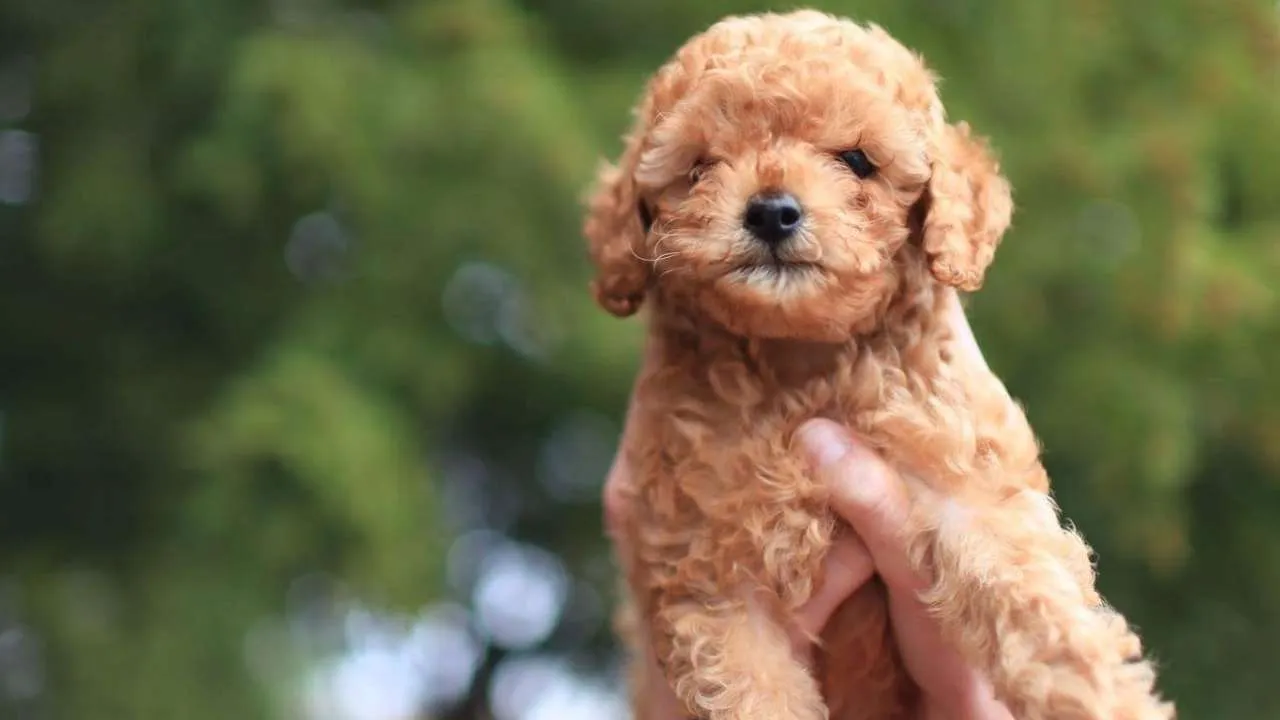
If dog coats had a luxury category, the Miniature Poodle would be sitting comfortably at the top. Their dense, curly coat is one of the most recognizable in the canine world, combining elegance with surprising practicality. Beneath all those curls is a highly athletic and incredibly intelligent dog.
Many people assume Poodles were bred purely for appearance, but that’s far from the truth. Originally developed as water retrievers, they have a famous curly coat that helps protect them from cold water while reducing drag. Those iconic grooming clips actually started as functional trims for working dogs.
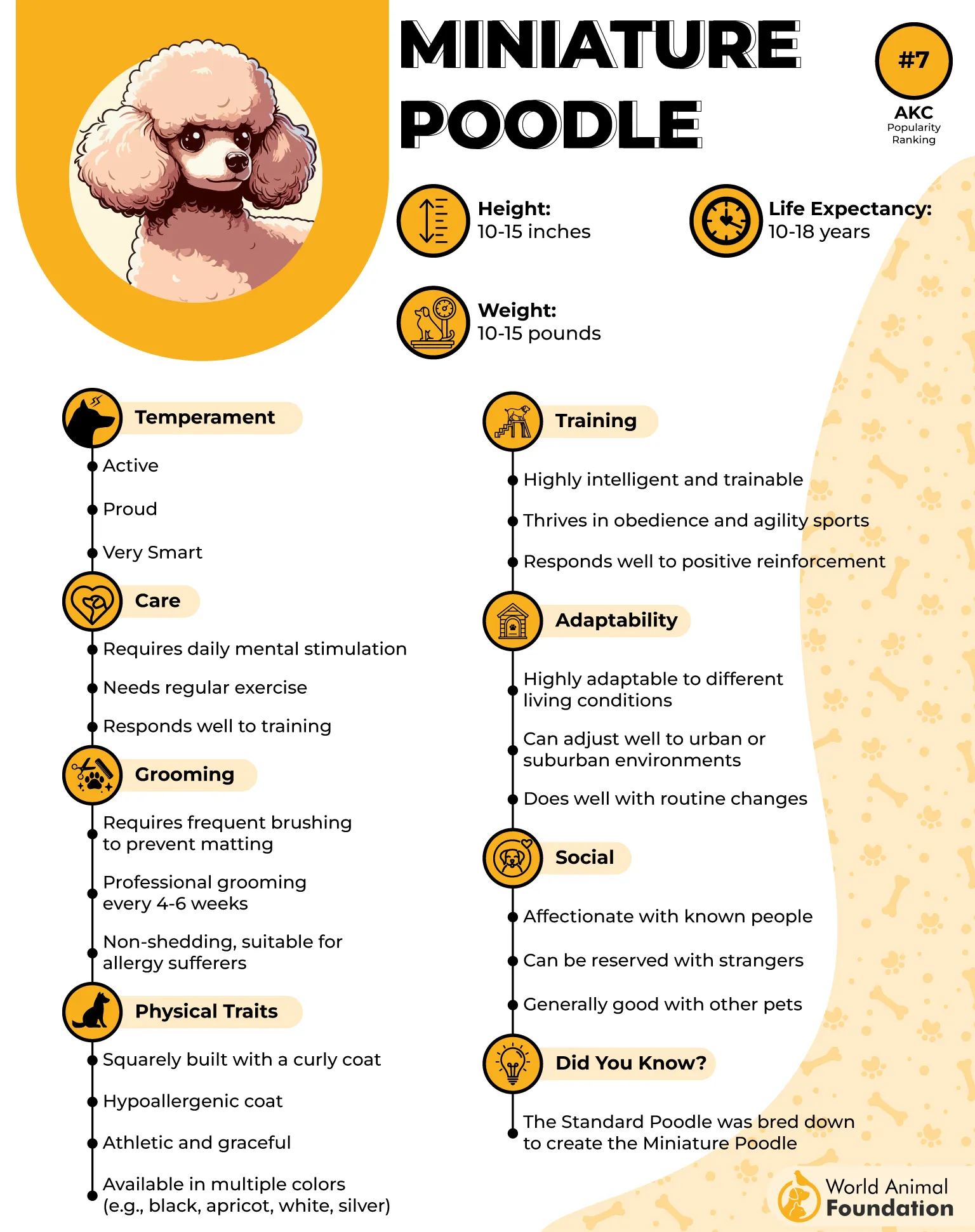
When it comes to brains, Miniature Poodles are absolute overachievers. Stanley Coren’s famous research on canine intelligence consistently ranks Poodles among the smartest dog breeds on the planet. They learn commands quickly, excel in obedience, and often seem one step ahead of their owners.
Their coat barely sheds, making them a popular choice among allergy sufferers. However, “low shedding” definitely does not mean “low maintenance.” Loose hair becomes trapped within the curls, which can quickly lead to mats if regular grooming is skipped.
Miniature Poodles also offer incredible color variety. From jet black and silver to apricot, cream, chocolate, and red, their coat colors are almost as impressive as their intelligence. Whether sporting a puppy cut or a more traditional trim, they always manage to look stylish.
How To Manage The Coat At Home
Weekly brushing prevents mats from forming beneath the surface curls.
Schedule professional grooming every 4–8 weeks to maintain coat shape and health.
Inspect the ears regularly, as dense hair can contribute to moisture retention and infections.
5. Komondor
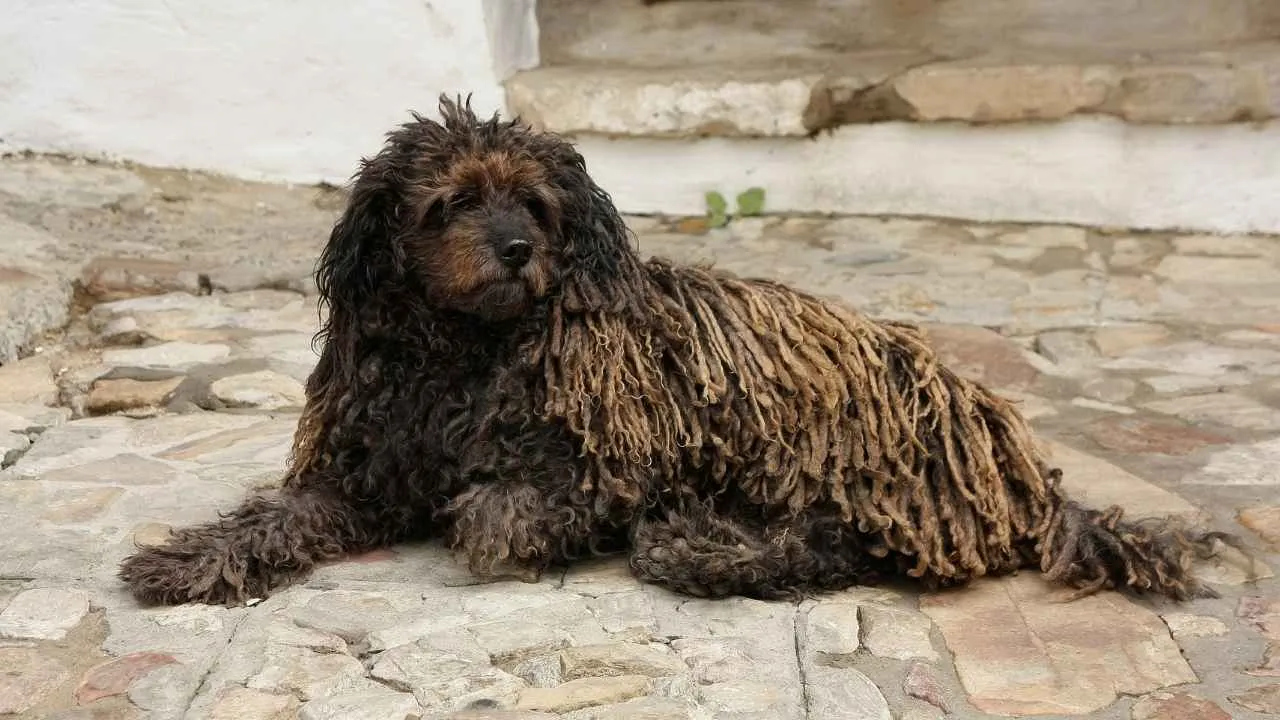
The Komondor looks less like a dog and more like a walking mop that somehow gained sentience. But don’t let the hilarious appearance fool you—this breed was developed to confront wolves, protect livestock, and guard entire flocks without hesitation.
Groomers don’t create their famous white cords. Instead, the outer coat naturally intertwines with the undercoat over time, forming thick rope-like cords that can eventually reach impressive lengths. These cords protected against harsh weather and predator attacks throughout the breed’s history in Hungary.
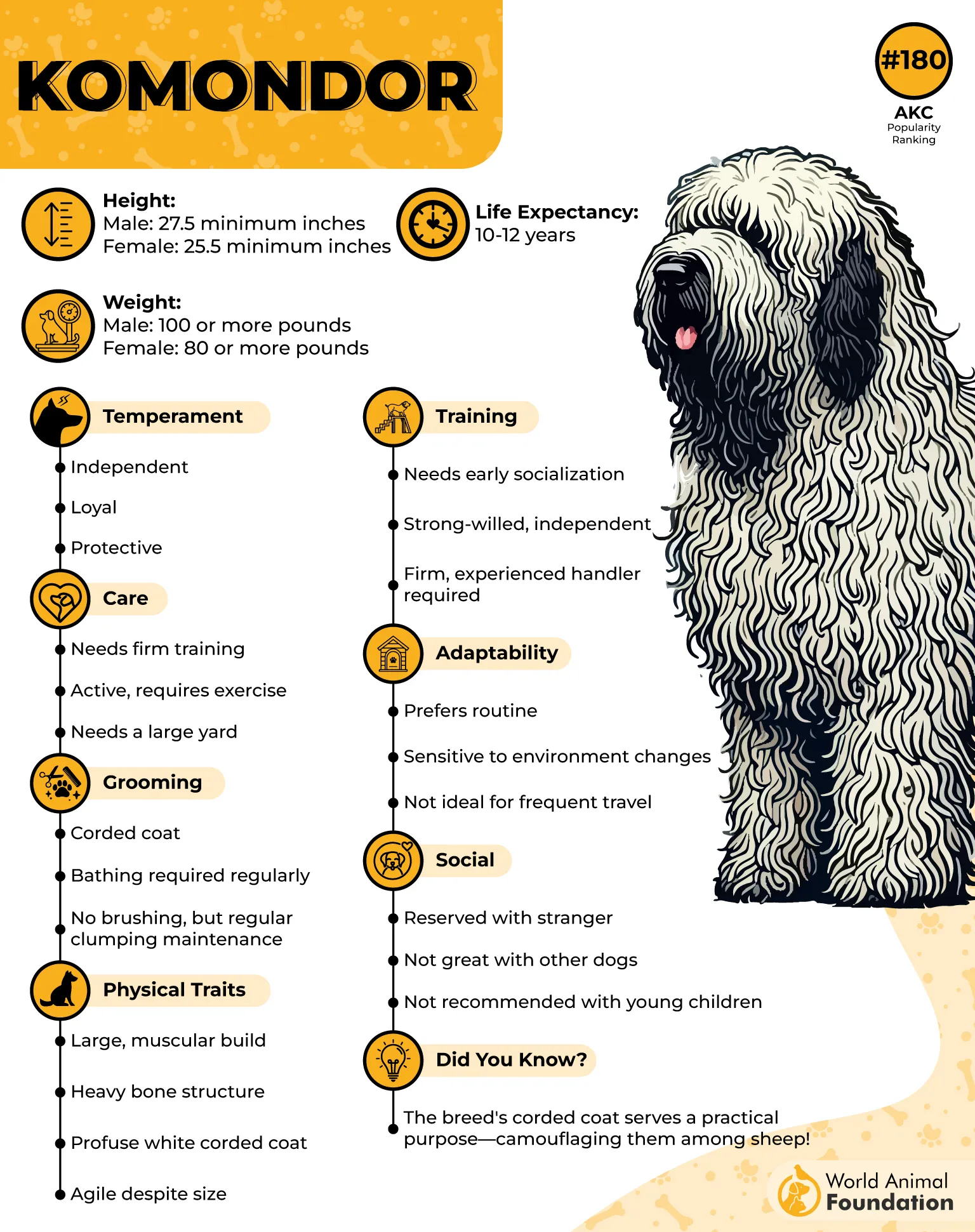
One of the Komondor’s coat’s smartest features is camouflage. Their white cords helped them blend seamlessly among sheep, allowing them to surprise predators before launching into action. It’s basically nature’s version of stealth mode.
PetMD states that they are highly intelligent but also fiercely independent. Unlike breeds that constantly seek direction from their owners, Komondors were originally bred to make decisions on their own while protecting livestock. This makes training possible, but it requires patience and consistency.
Living with them means committing to coat care. The cords must be separated by hand, checked for debris, and thoroughly dried after bathing. Experienced owners often say grooming feels less like maintenance and more like managing an ongoing coat engineering project.
How To Manage The Coat At Home
Separate cords regularly by hand to prevent large mats from forming.
Check daily for twigs, dirt, leaves, and debris trapped in the coat.
Ensure complete drying after baths to prevent mildew and unpleasant odors.
6. Puli
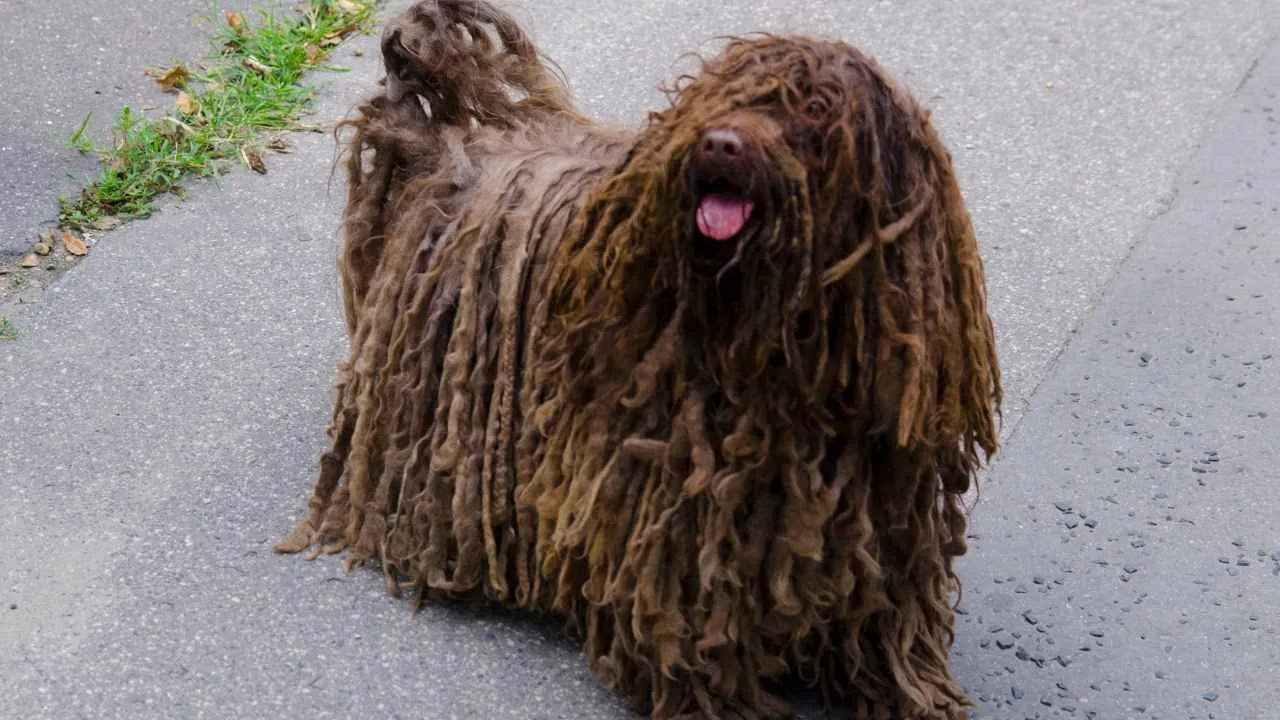
If the Komondor is the giant bodyguard, the Puli is the energetic little cousin with the same iconic hairstyle. This Hungarian herding breed sports naturally forming cords that create one of the most unforgettable appearances in the dog kingdom.
Unlike the larger Komondor, the Puli was developed to herd livestock actively. Their lighter frame, quick reflexes, and remarkable agility allowed them to move sheep efficiently across challenging terrain. Underneath all that corded hair is a surprisingly athletic dog.
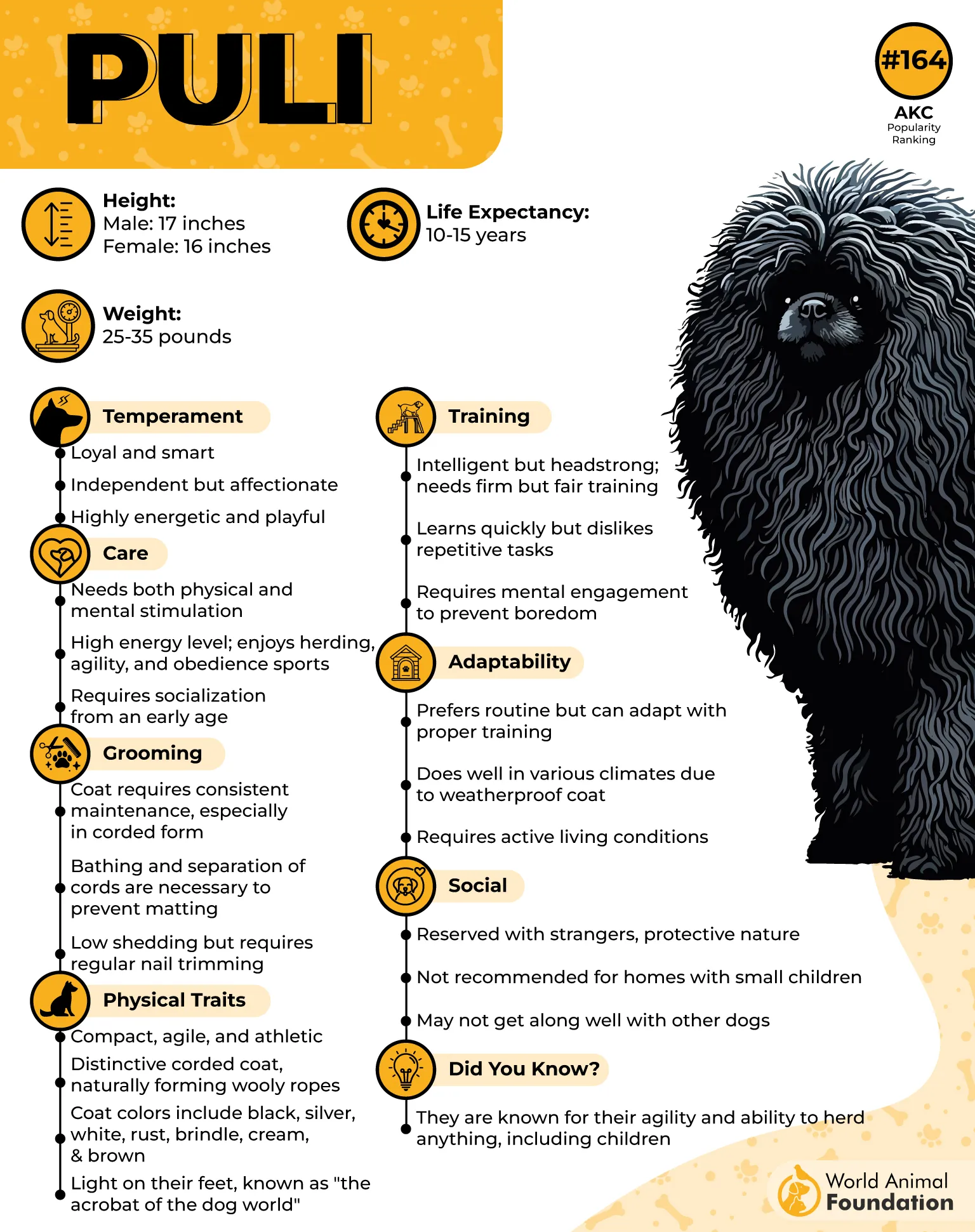
Pulik are exceptionally intelligent and thrive on mental challenges. Many owners describe them as problem-solving machines that constantly look for ways to stay engaged. Give them puzzles, training exercises, or agility courses, and they’ll happily show off their skills.
Their coat acts as a natural all-weather protection system. It keeps them warm in cold weather, repels water in wet conditions, and even provides insulation against summer heat. Despite its heavy look, the coat serves a highly functional purpose.
Cord maintenance requires dedication. It can take several years for a full corded coat to mature properly, and owners must regularly separate cords to prevent matting. The result, however, is one of the most distinctive and historically functional coats in the canine world.
How To Manage The Coat At Home
Begin coat management early so cords develop correctly as the dog matures.
Separate developing cords routinely to maintain structure and airflow.
Keep the coat clean and dry, especially after outdoor activities or swimming.
7. Bedlington Terrier
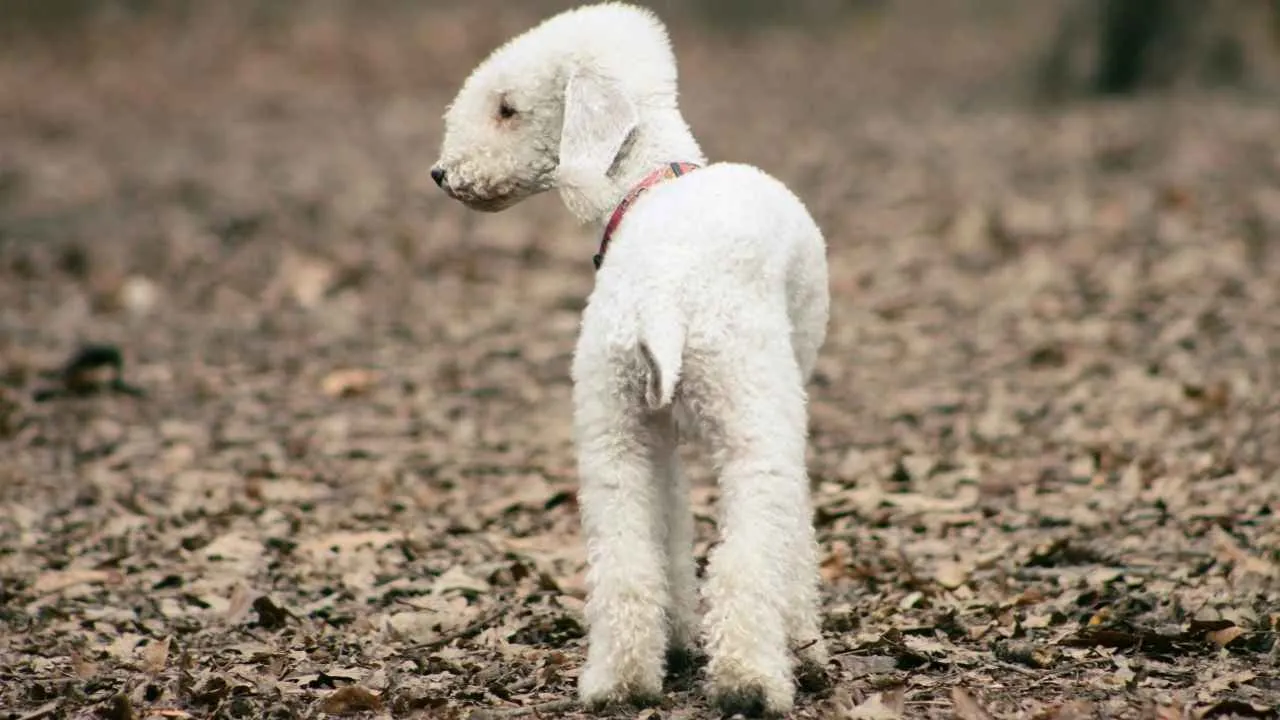
At first glance, the Bedlington Terrier looks suspiciously like a sheep pretending to be a dog. With its lamb-like silhouette, arched back, and soft curly coat, it’s easily one of the most unique-looking terriers ever developed.
The coat combines soft and coarse hairs to create a crisp, curly texture unlike that of most other breeds. Colors often include blue, liver, sandy, or combinations that gradually lighten as the dog matures. This gives many Bedlingtons an almost airbrushed appearance.
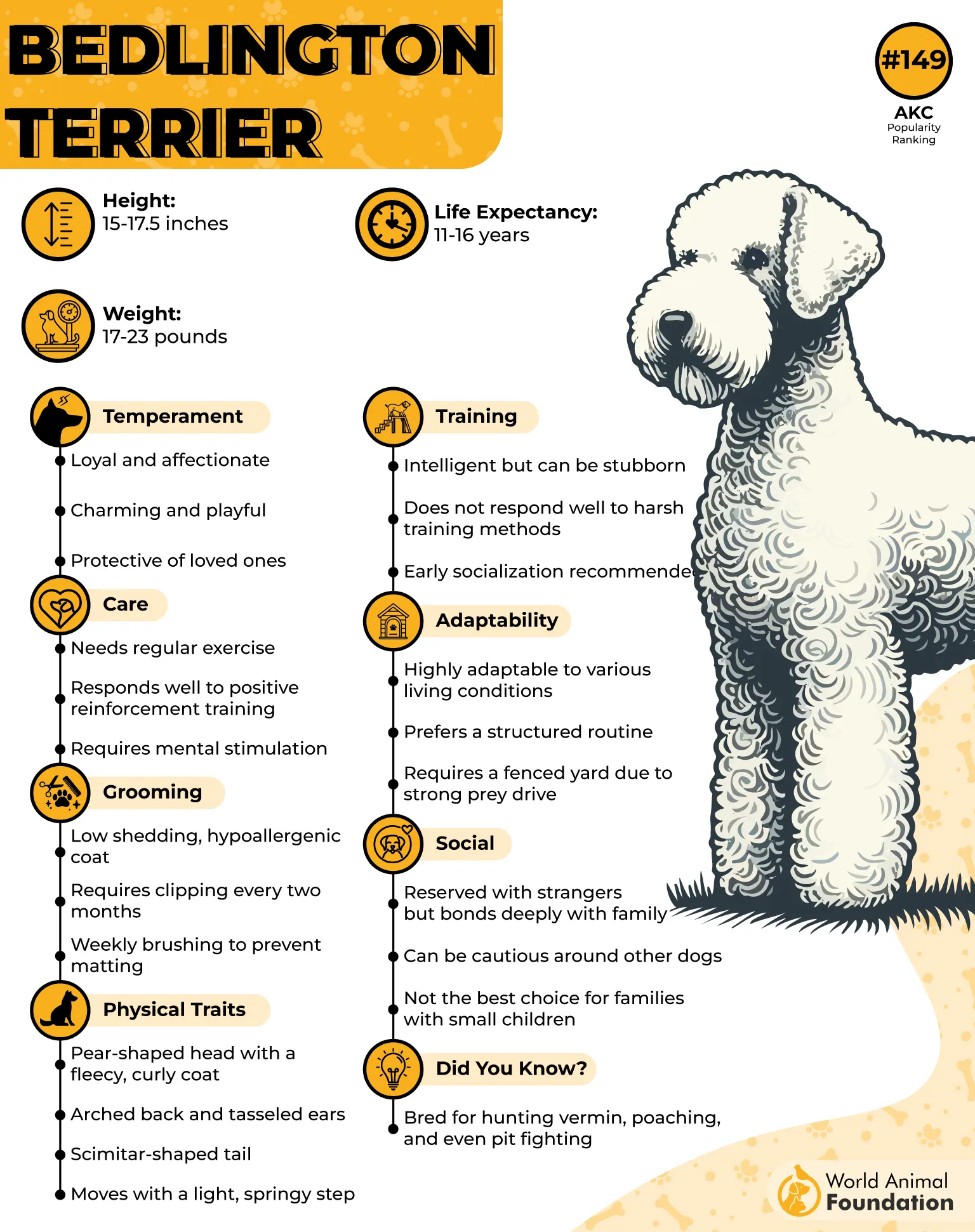
Don’t be fooled by the gentle expression of this affectionate breed. Beneath that fluffy exterior beats the heart of a true terrier. Bedlingtons were historically used for hunting vermin and possess impressive speed, determination, and alertness when needed.
Their intelligence makes them highly trainable, but they also retain a streak of independence. Owners frequently describe them as clever enough to understand commands instantly and mischievous enough to decide whether following them is worthwhile.
The breed’s low-shedding coat appeals to many allergy-sensitive households. However, maintaining that famous lamb-like appearance requires regular brushing and clipping. Without routine care, the coat can mat and lose its distinctive texture.
How To Manage The Coat At Home
Brush multiple times per week to keep curls free from tangles.
Schedule clipping every couple of months to maintain the classic outline.
Monitor skin and coat condition regularly, especially around dense areas of fur.
Conclusion
Dog coats aren’t just fashion statements—they’re living pieces of canine history. From the nearly hairless Chinese Crested to the dramatic cords of the Komondor and Puli, every coat on this list evolved for a purpose, whether that was guarding livestock, retrieving fish, or adapting to challenging environments.
What makes these breeds even more fascinating is that their distinctive coats are often matched by equally impressive intelligence. Portuguese Water Dogs, Miniature Poodles, Spanish Water Dogs, and Pulik are widely recognized for their problem-solving abilities and trainability. Even the more independent Komondor uses remarkable judgment when assessing situations.
At the end of the day, these breeds prove that dogs can be functional, intelligent, affectionate, and absolutely unforgettable all at once. If you’re looking for a canine companion that stands out from the crowd, these exceptional dogs definitely understand the assignment.
