




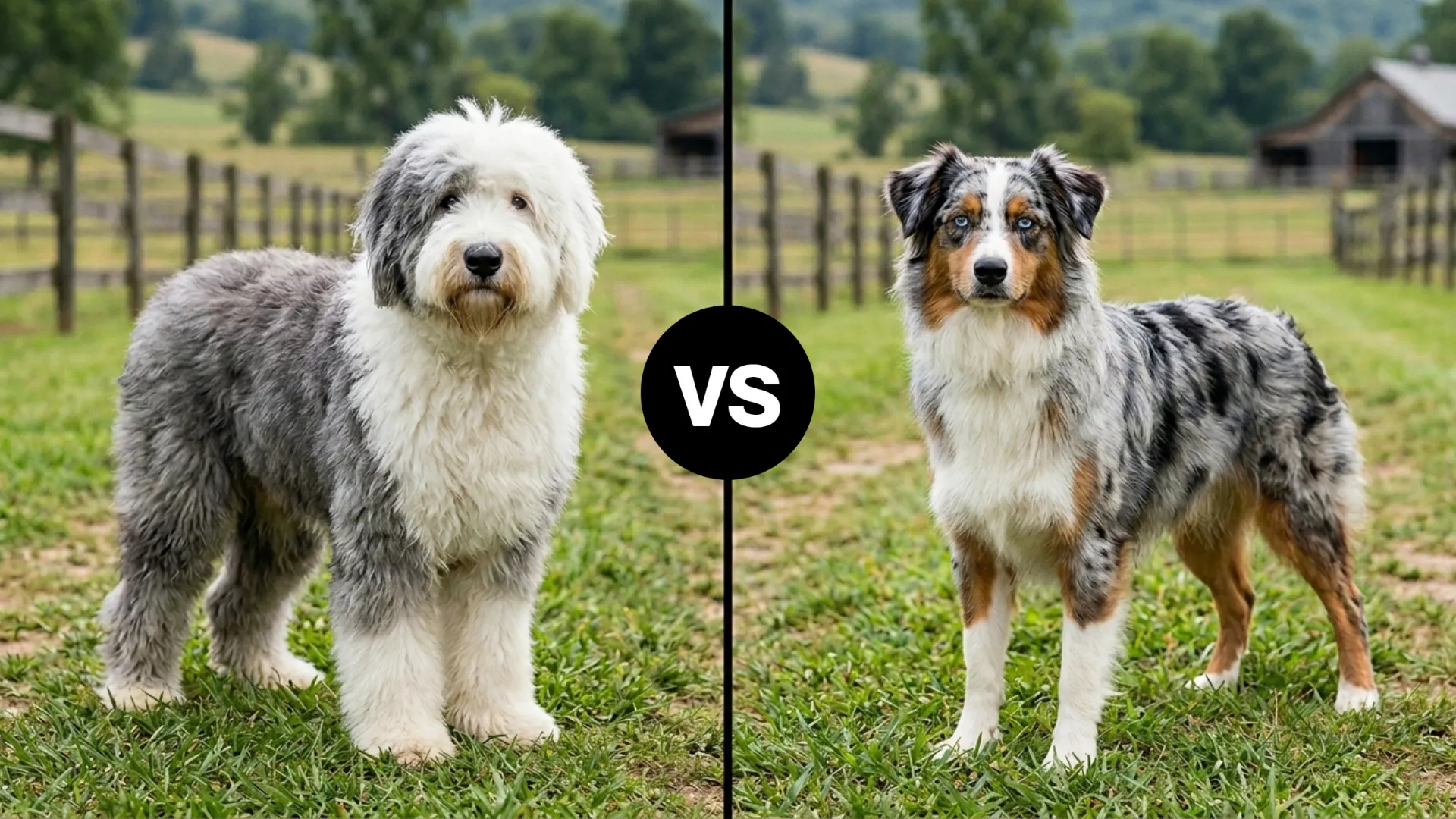
The world of herding dogs includes many remarkable breeds. Still, the comparison between the Australian Shepherd and the Old English Sheepdog stands out due to their striking differences in appearance, behavior, and working style.
Both are purebred working breeds whose goals were to manage and assist livestock across different terrains, so they evolved to work in varied environments and roles. Australian Shepherd is recognized for its intelligence, strong ability to follow commands, and energy – suitable for active environments where responsiveness matters.
In contrast, the Old English Sheepdog is celebrated for its steady temperament, friendliness, and calm working disposition, while its history reveals its work as a cattle driver, along with offering help to watch over flocks in rural settings.
By examining both breeds side by side, including their physical characteristics and behavioral traits, potential owners can better understand their differences and determine which breed is the best fit for their lifestyle and expectations.
Old English Sheepdog vs. Australian Shepherd: Top Differences
Origins, Background & Purpose
The roots of the Old English Sheepdog date back to England, where this working dog breed was bred at the start of the 1800s as a livestock guardian, herder, and drover. However, it was basically valued as a cattle drover rather than a sheep herder.
By contrast, the Australian Shepherd was actually developed in the United States of America – the name has no relation to its origin. This breed’s primary function was to herd livestock across the ranches in Western side of America. The goal of breeding this breed was to have a dog with quick decision-making and adaptability.
The historical purpose of both breeds reveals notable distinctions, despite having some common tasks to do. The Old English Sheepdog was designed for endurance and moving larger flocks over long distances, while the other one is built for speed and strategic control.
Build & Coat types
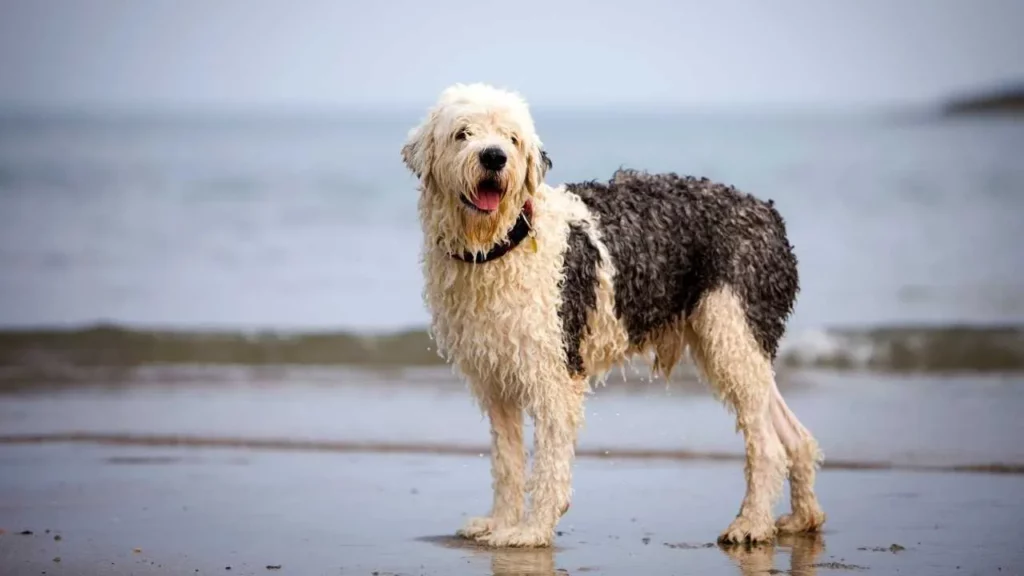
When it comes to physical appearance, the Old English Sheepdog is a large and muscular dog with a broad chest, strong bone structure, and a square frame. The males have substantial body mass as compared to females. The breed’s average weight ranges between 60 and 100 pounds, with a height of 23 inches.
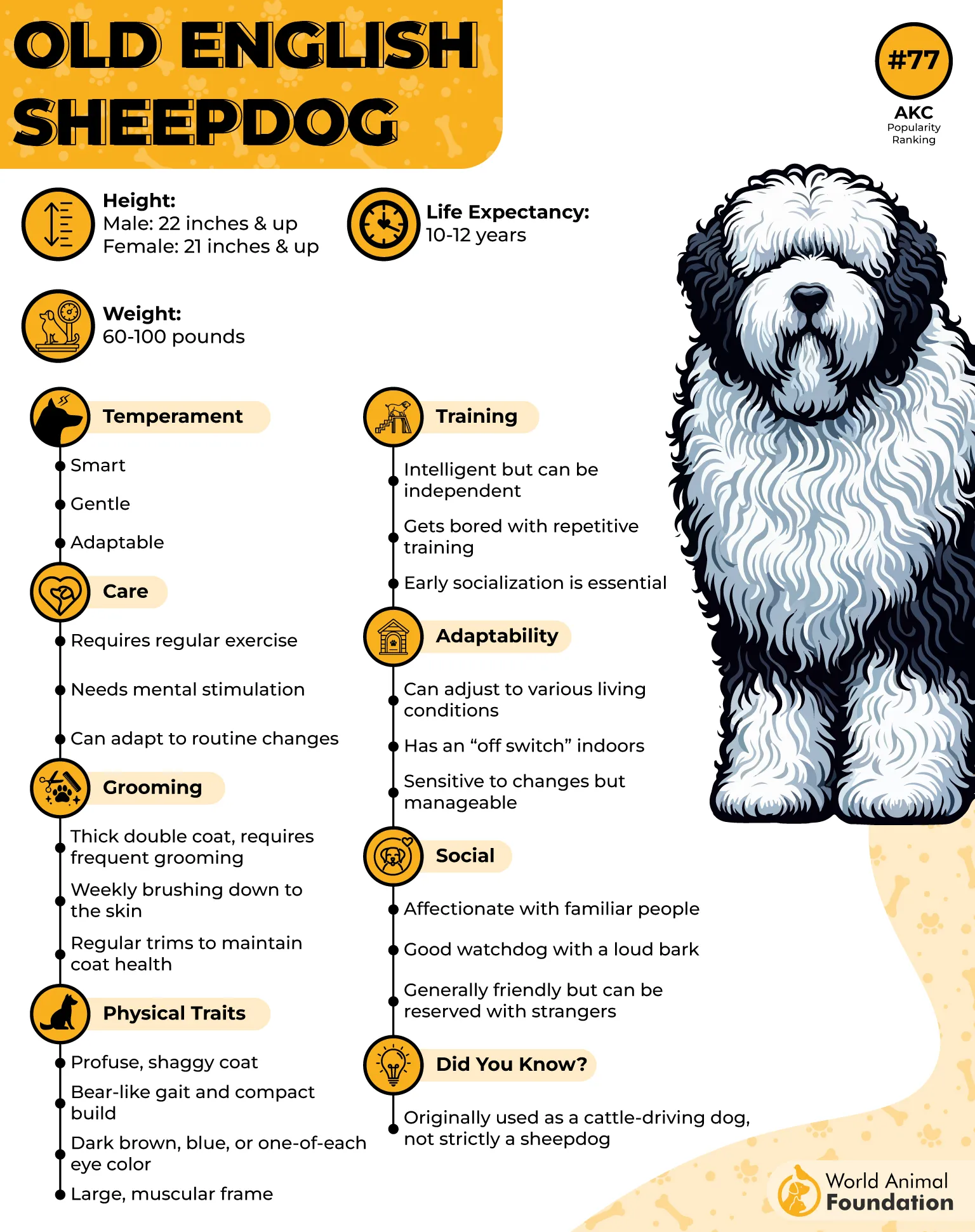
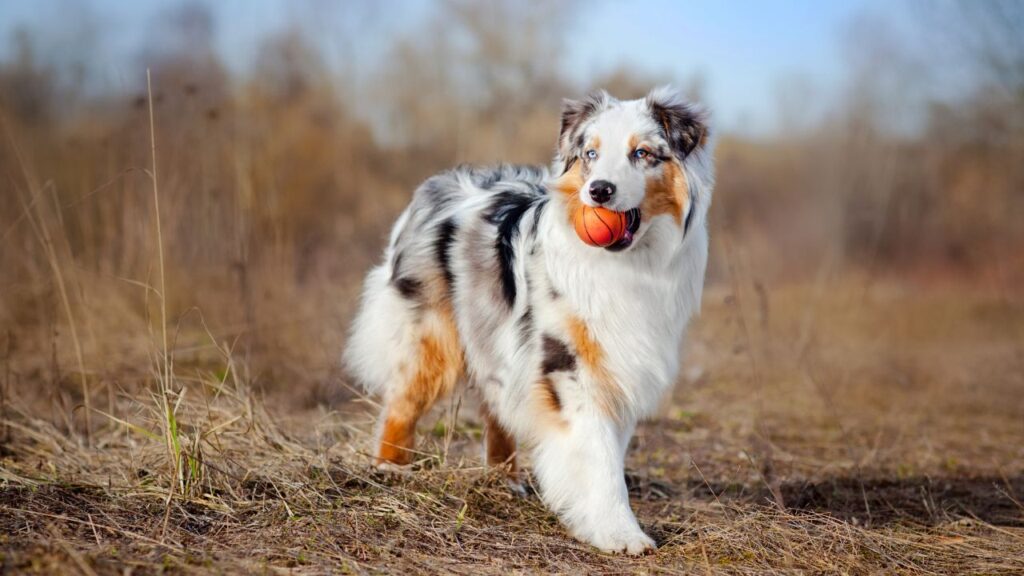
In comparison, the Australian Shepherds have a more moderate and athletic stature. Their bodies reflect more agility and flexibility than sheer size. The males usually have a weight of 50 to 60 pounds and are 20-23 inches tall, while females weigh around 40-55 pounds, with a height of 18-21 inches.
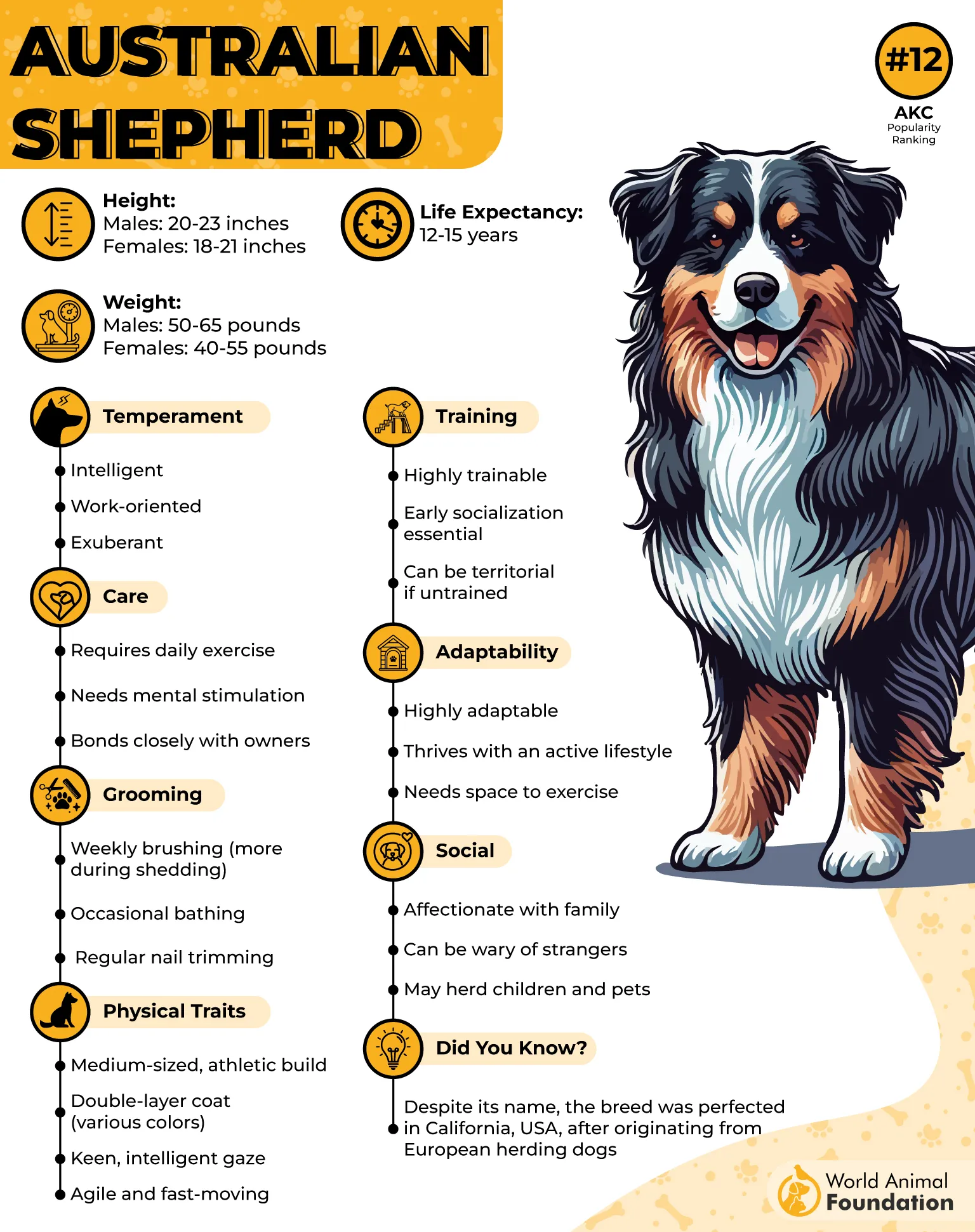
Both breeds have medium to long-length double coats that come in various colors and markings, including the merle pattern. The texture of the Old English Sheepdog’s coat is wavy, while others have straight fur. Both dogs shed heavily in changing seasons and require grooming in the form of brushing to avoid shedding more.
Temperament, Personality & Family Compatibility
Both of these dogs, when compared for personality traits, reveal two very different emotional styles. Old English Sheepdog tends to be very relaxed and family-centered, offering a laid-back companionship, while Aussie is more vigilant and always ready to act.
An energetic and highly alert Australian Shepherd has a more intense and work-driven temperament. It shows a friendly and loyal nature towards its humans and remains reserved around strangers. With innate herding instincts, this breed tries to herd small animals and even kids, according to PetMD.
The Old English Sheepdog is known for being a calm dog breed. Its gentle, affectionate, and playful disposition makes it suitable for people of all ages. Owing to its large size, interactions with younger kids and other pets should be supervised to avoid any kind of accidental injury.
Intelligence, Trainability & Learning Ability
Australian Shepherds are intelligent and eager to please dogs, especially the person with whom they deal every day, and do different activities – showing their trust and devotion. These quick learners can improve old skills very easily and unlearn the previous ones with the right guidance.
Old English Sheepdogs approach training sessions with a different mindset. They do not react instantly, yet thoughtfully process the commands first, so one has to be very patient and consistent. Owing to their independent streak and high energy levels, they should be enrolled in obedience classes as puppies.
Hence, the difference in intelligence comparison is quite noticeable in both breeds. One is quick at learning tricks, while the other learns at a slow pace deliberately. Positive reinforcement methods work best for both to have good results, making training sessions easier.
Energy Levels, Activity Needs & Work Drive
We have to see a significant difference when the energy levels of both breeds are compared. One is best suited to an active household, while the other thrives in settings where steady activity and a calmer pace are preferred over constant motion.
Australian Shepherds are made to run all day in a field, so they need extensive physical and mental stimulation. With boundless energy and remarkable endurance, they make a great fit for outdoorsy families and individuals. According to the AKC, when fully adults, they make excellent running partners.
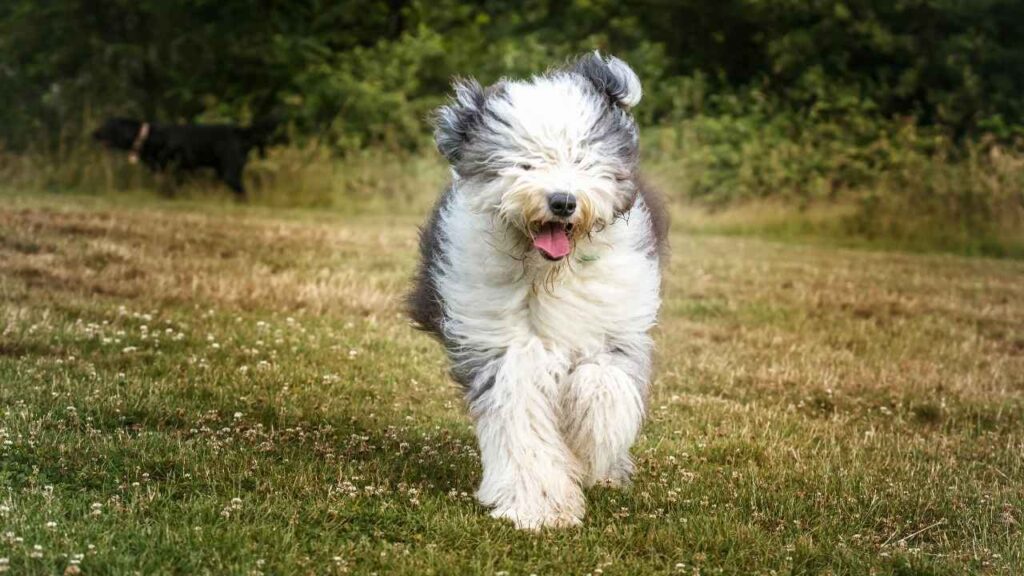
Old English Sheepdogs are not couch potatoes, but these white dogs also do not mind lounging in the living room and giving cuddles to their favorites. They need at least an hour of regular exercise to burn off their energy. Daily walks and outdoor play sessions are enough to keep them active and healthy.
Herding Instincts & Behavioral Traits
With a great herding instinct, Australian Shepherds remain protective of their families. They naturally display controlled behavior while remaining reserved and alert to their surroundings to inform their owners. Hill’s Pets says their guarding skills are not considered aggressive.
Backed by history, Old English Sheepdogs have also remained the herder and drover, and these instincts are still intact in the modern generation of this breed. They make excellent watchdogs with distinct loud barks that only trigger when they are provoked, sense danger, or stressed.
The herding instincts of both breeds drive them to herd small animals and young children and nip at them. To get along well with pets, especially cats, early socialization is the key. If left unattended, they start chasing after moving objects like cars and neighbors’ squirrels.
Working Style, Adaptability & Ideal Lifestyle Fit, Health
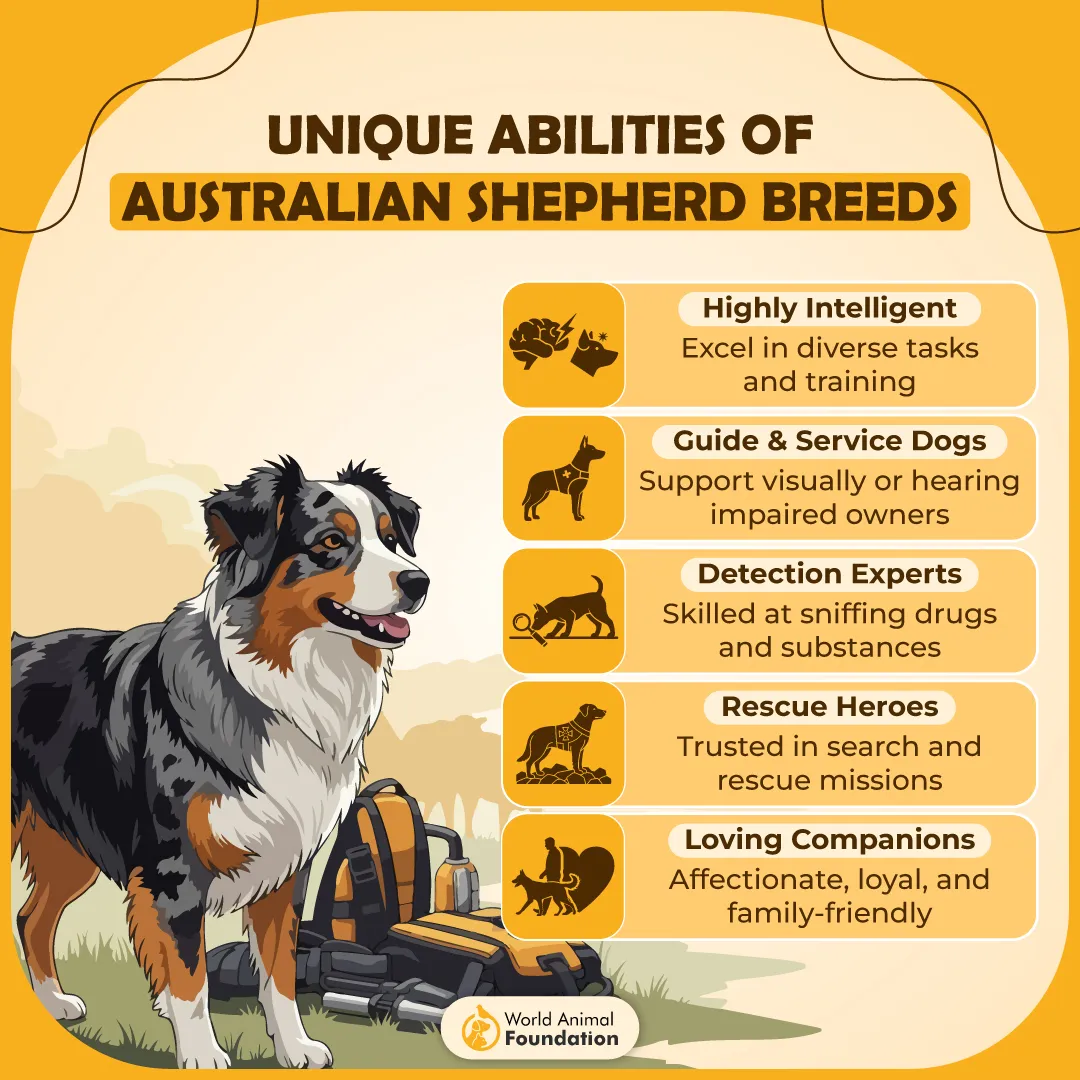
Australian Shepherds are recognized as highly adaptable work-oriented dogs that thrive in a structured routine, where jobs are assigned on a daily basis. They can be used in many roles, such as utility dogs for the handicapped, hearing aid dogs, police, and narcotics dogs.
Old English Sheepdogs demand peace and quality time with their humans, along with some time for exercise as well. With that said, they are not suitable for first-time dog owners as well as apartment dwellers, which reflects their need for space and experience to handle them.
When comparing to a health perspective, Aussies live around 12- 15 years, while English dogs have 10-12 years of life expectancy. Yet both of them are also prone to health issues, and the common conditions they may suffer from are hip dysplasia and eye-related conditions.
Conclusion
Although both breeds share herding ancestry, their modern roles differ in many ways. The Australian Shepherd thrives in active, training-heavy settings, while the English Sheepdog performs best in calmer, more relaxed environments. Each breed is excellent but suited to different types of owners and routines.
