




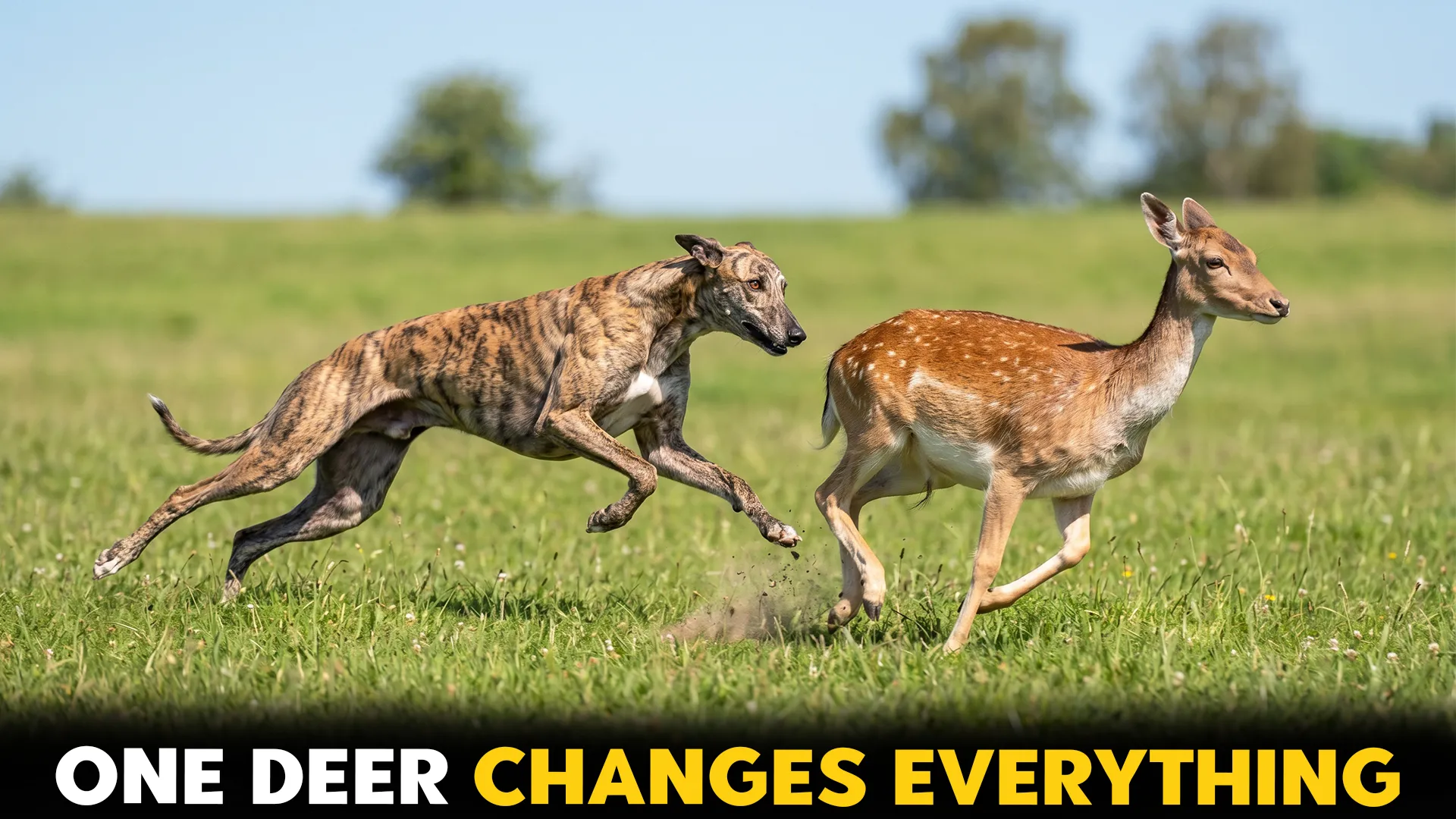
Some dogs are simply born to run. You throw a ball, they bring it back. You put a deer in the picture, and certain breeds do not just chase; they own that terrain. Speed is locked into their DNA, generation after generation.
They are not just fast. They are intelligently fast. Whether it is the silk-eared Saluki or the brindle-coated Plott Hound, each breed brings something raw and electric to the pursuit.
And just as the Greyhound’s jaw-dropping 45 mph reminds us, raw power only matters when it is paired with purpose. Each of these dogs has a purpose coded into its bones.
If you have ever watched a sighthound lock eyes on movement half a mile away and bolt, you already know what I mean. It is poetry in motion. This article breaks down the 7 dog breeds that chase deer with lightning speed naturally. Buckle up.
Dog Breeds that Chase Deer with Lightning Speed Naturally
1. Saluki
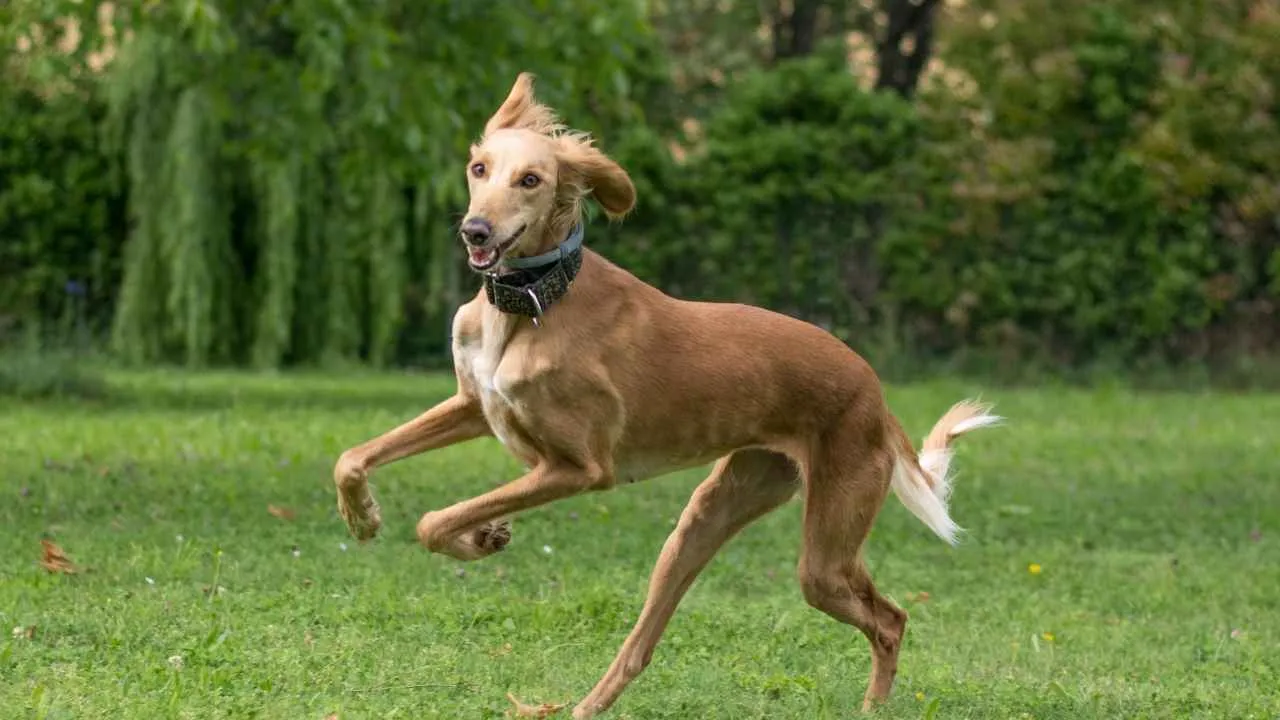
The Saluki is an ancient Arabian hound, originally bred from sighthounds used by nomadic peoples to hunt game across vast, open terrain. Developed in the Fertile Crescent, the breed has an independent nature and tends to be reserved around strangers, but as Wikipedia notes, it is a remarkable athlete in every sense of the word.
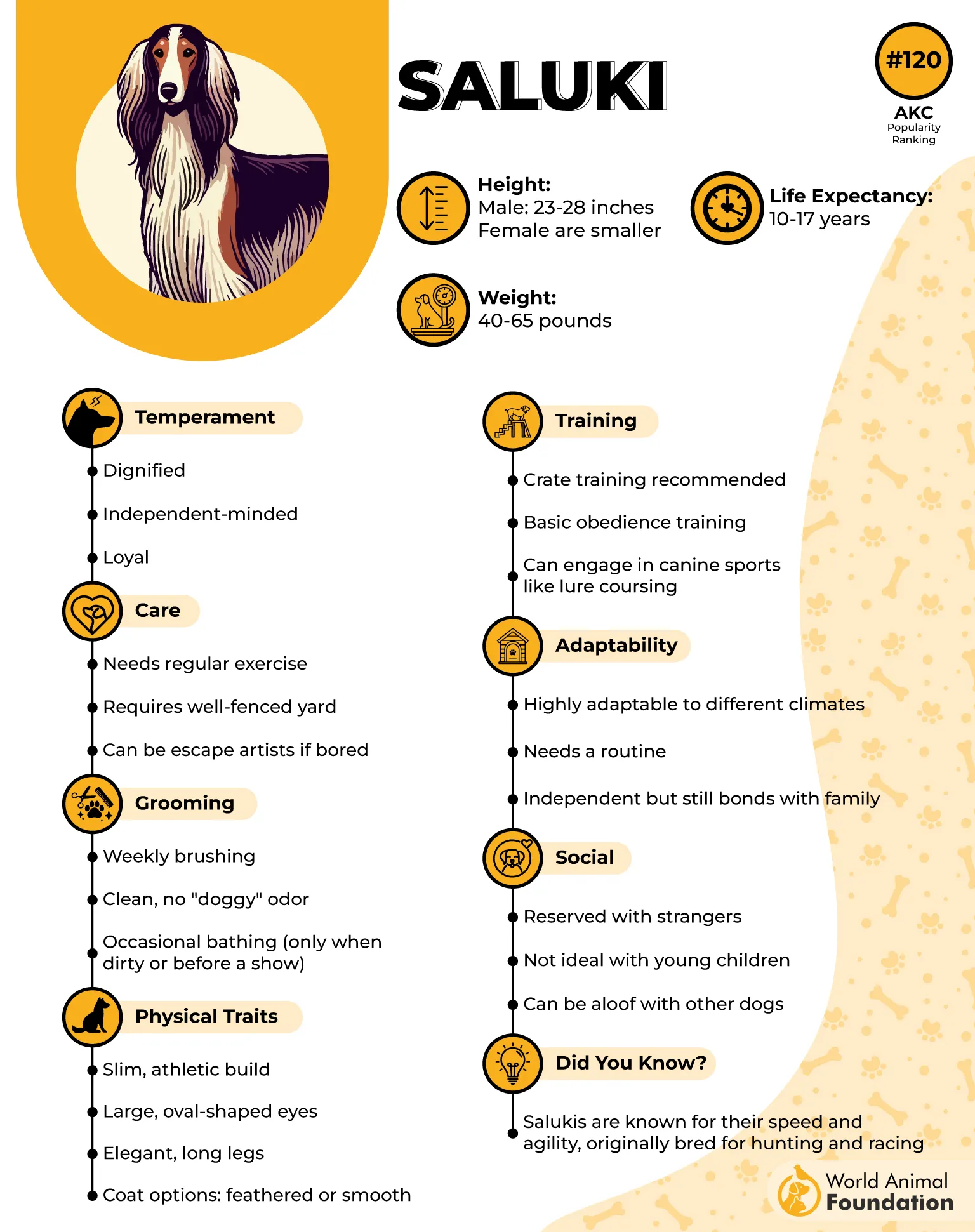
Much of that athleticism comes down to the Saluki’s anatomy. Its long, narrow head provides a wide, sweeping field of vision, while its flexible spine acts like a coiled spring to maximize stride length. At full sprint, all four legs leave the ground simultaneously; a running style that helps the Saluki reach speeds of around 42 mph.
Its hare-shaped feet serve as natural shock absorbers, cushioning each stride over rough and varied terrain. Traditionally, Salukis also worked alongside birds of prey; the birds would spot and track the target while the dog moved in to chase or retrieve it. Given that this breed can clear jumps of over six feet, leash training is strongly recommended.
2. Greyhound
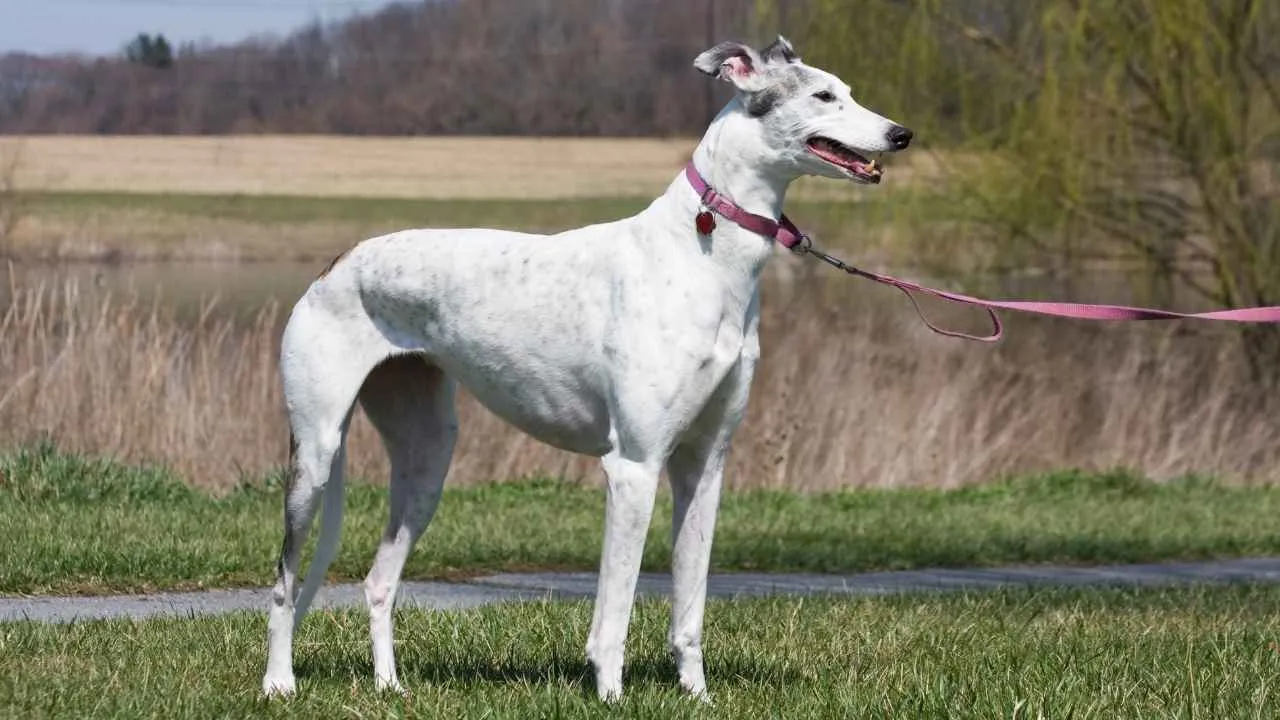
The true origin of the Greyhound is unknown, but traces of the breed go back around 6,000 years to Türkiye, where a greyhound-like dog appears in ancient art. Bred originally for hunting game, the Greyhound today is kept as a show dog, a racing competitor, and a surprisingly gentle companion.
Much of what makes this breed extraordinary is its build. The slim frame, flexible spine, long legs, deep chest, and long tail all work together to enable extraordinary sprinting speed, up to 43 mph.
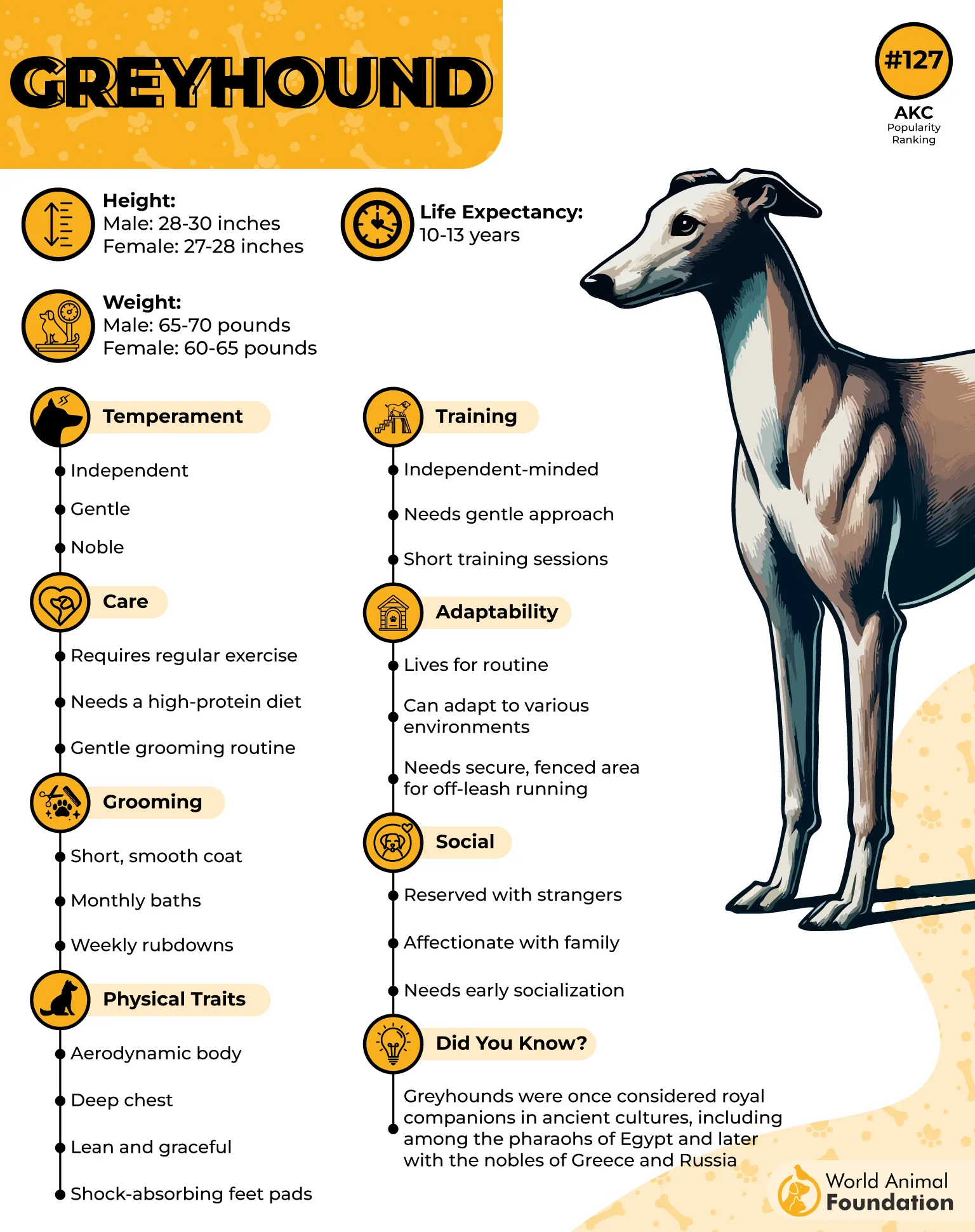
The Greyhound’s signature “double suspension gallop” means its body is fully airborne twice with every stride, maximizing ground coverage. Add in fast-twitch muscles that bring the dog to top speed in just a few strides, and you have one of nature’s most efficient running machines.
Its wide 270-degree field of vision allows it to track fast-moving targets across open terrain with ease, while its deep, narrow chest reduces air resistance at full sprint. Beyond hunting and racing, Greyhounds are also used in police and military work.
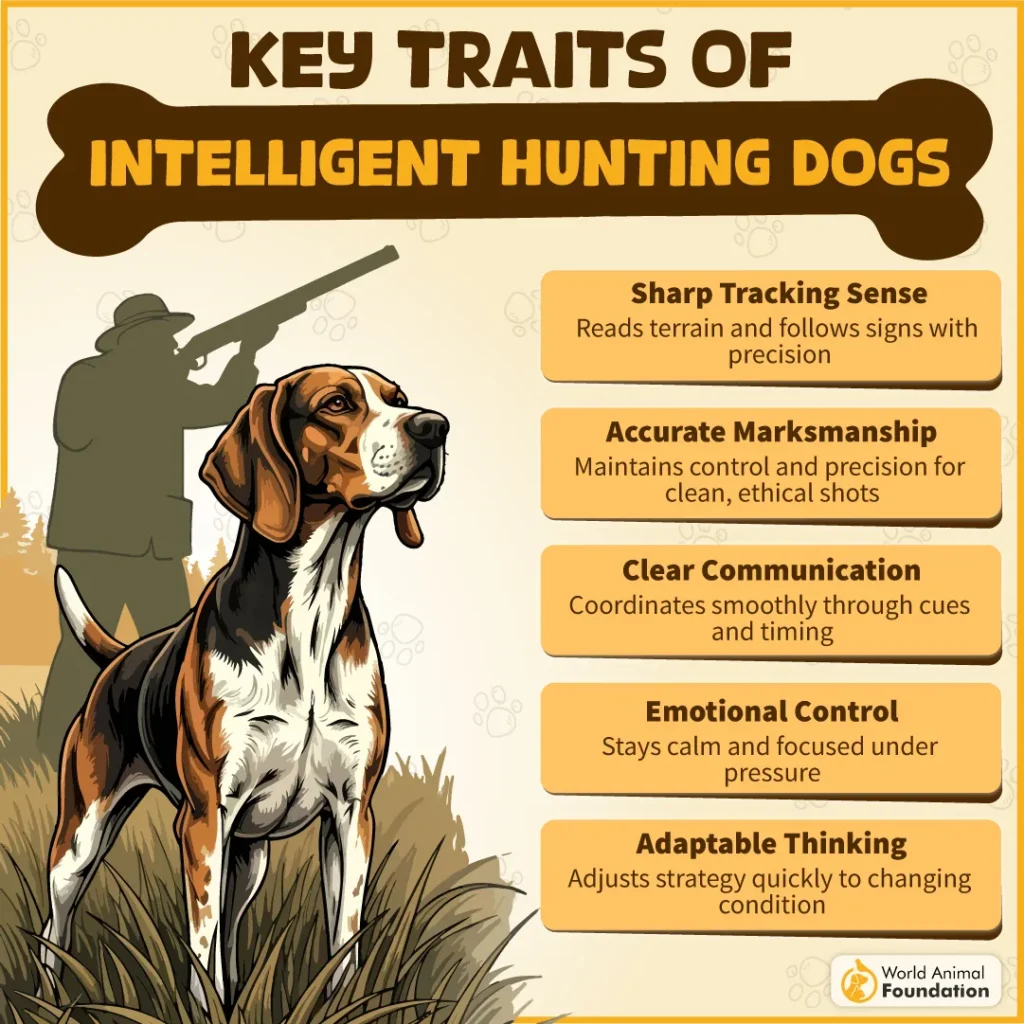
Despite all that speed, Greyhounds don’t need hours of exercise; just 30 to 45 minutes of daily activity is enough. A mix of controlled sprints, walks, and indoor play keeps them happy and healthy.
3. Rhodesian Ridgeback
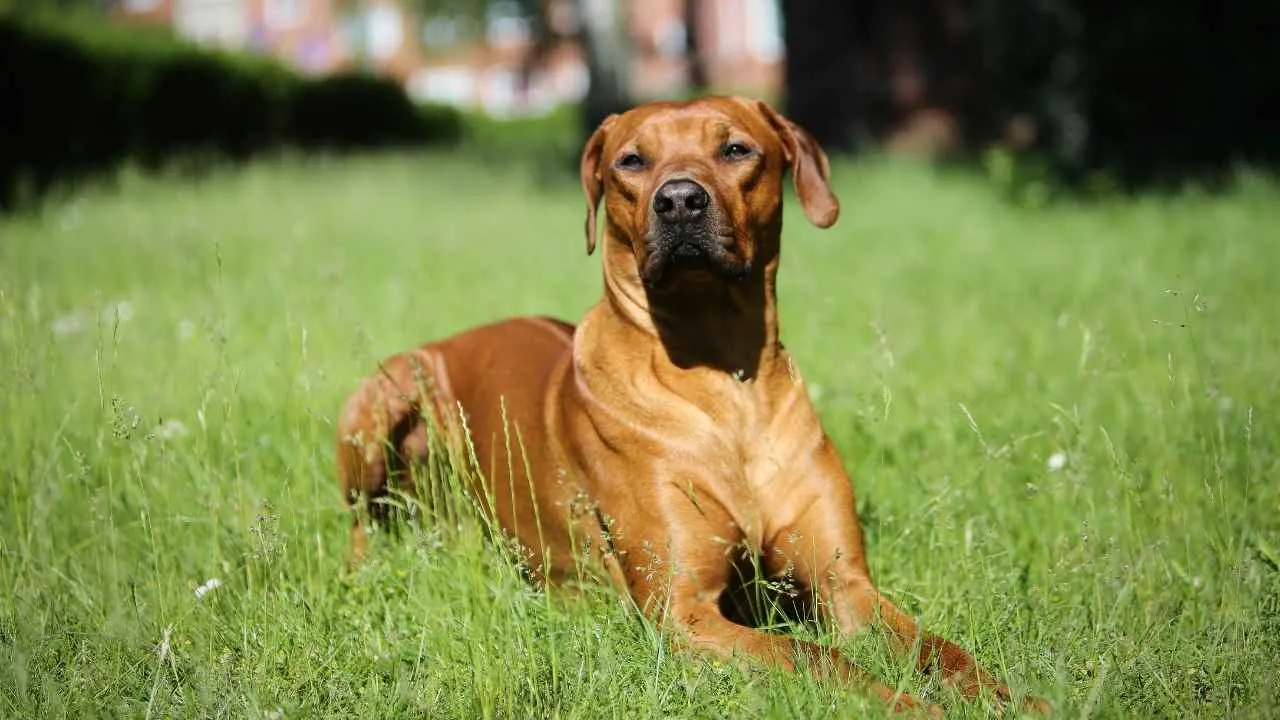
Also known as the “African Lion Dog,” the Rhodesian Ridgeback is a powerful sporting breed developed in southern Africa during the 17th century. Bred from a mix of European dogs, including Great Danes, Mastiffs, and scenthounds, crossed with the native Khoikhoi dog, it was originally used to protect farms and homesteads.
As Purina UK notes, the breed was later brought to Rhodesia, where it was further refined into the dog we know today.
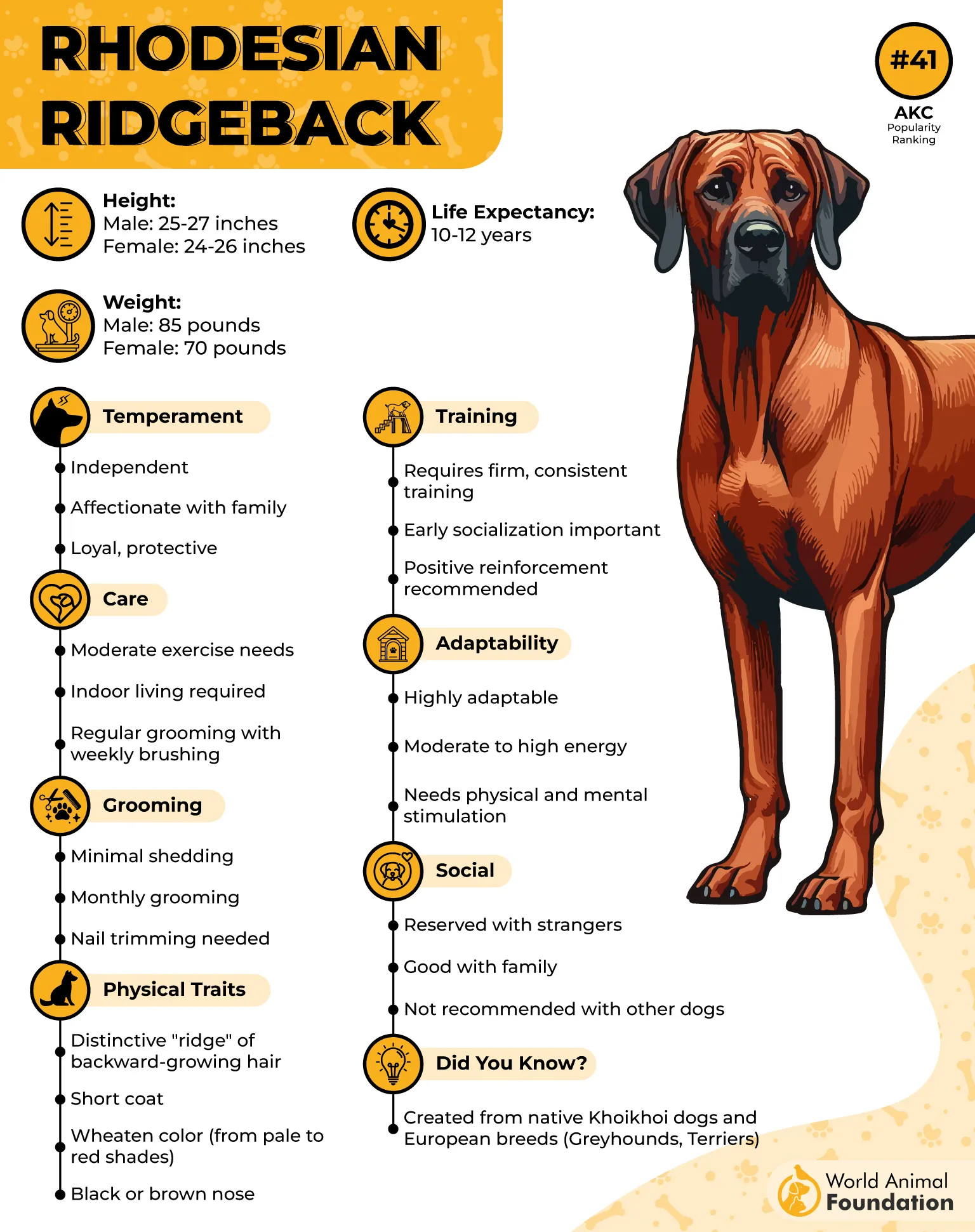
Built for both speed and endurance, the Ridgeback has long, muscular hind legs that generate powerful propulsion, and a sleek, short coat that prevents overheating in hot terrain. It has a strong prey drive and was historically used to track and corner large game- not lions directly, but predators threatening livestock, holding them at bay until hunters arrived. It can reach speeds of 30 to 40 mph.
This breed is an excellent companion, but one that needs serious exercise. One to two hours of vigorous daily activity is the baseline: think brisk walks, off-leash running, jogging, lure coursing, and hiking.
4. American Foxhound
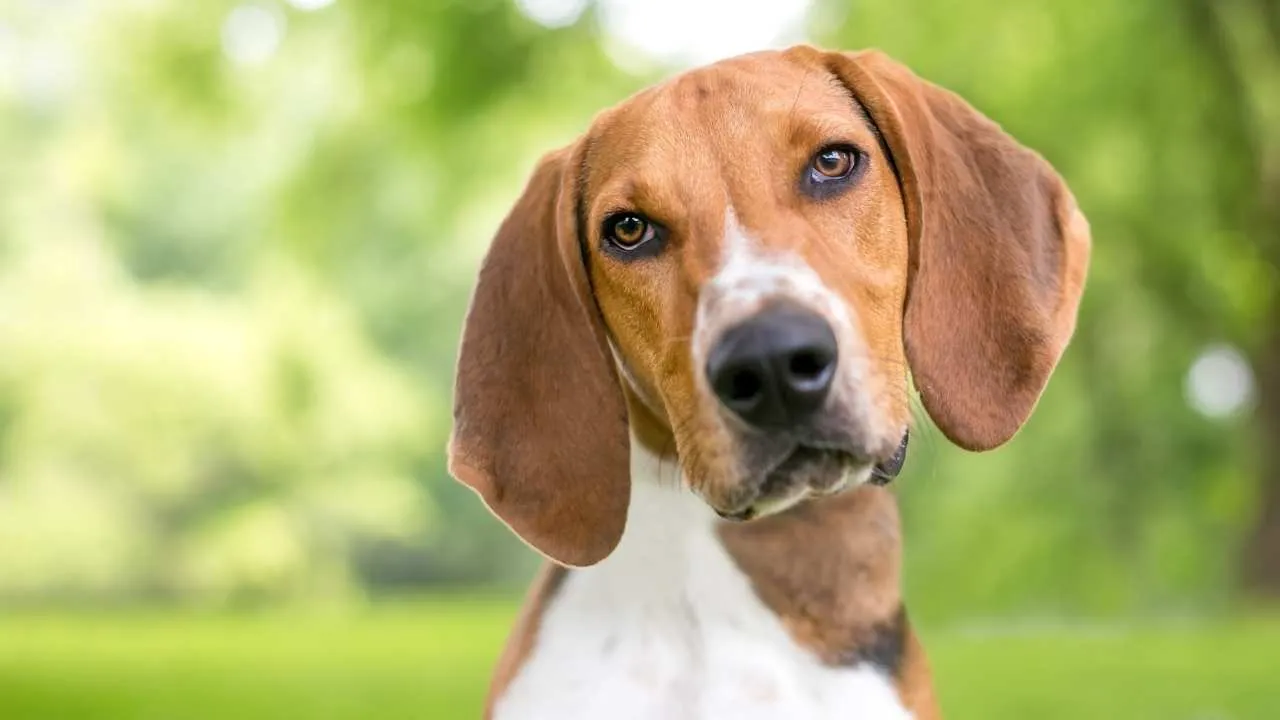
The American Foxhound has its roots in the late 18th century, when George Washington crossbred British hounds with French breeding stock gifted by the Marquis de Lafayette. Currently the state dog of Virginia, this scenthound evolved through the post-Colonial period into a breed distinctly different from its British ancestors.
Built for the chase, the American Foxhound can reach speeds of up to 35 mph. Its heavily muscled hindquarters and well-angled forelegs work as natural shock absorbers over rough terrain, while its sloping shoulders provide a full range of motion in the front legs.
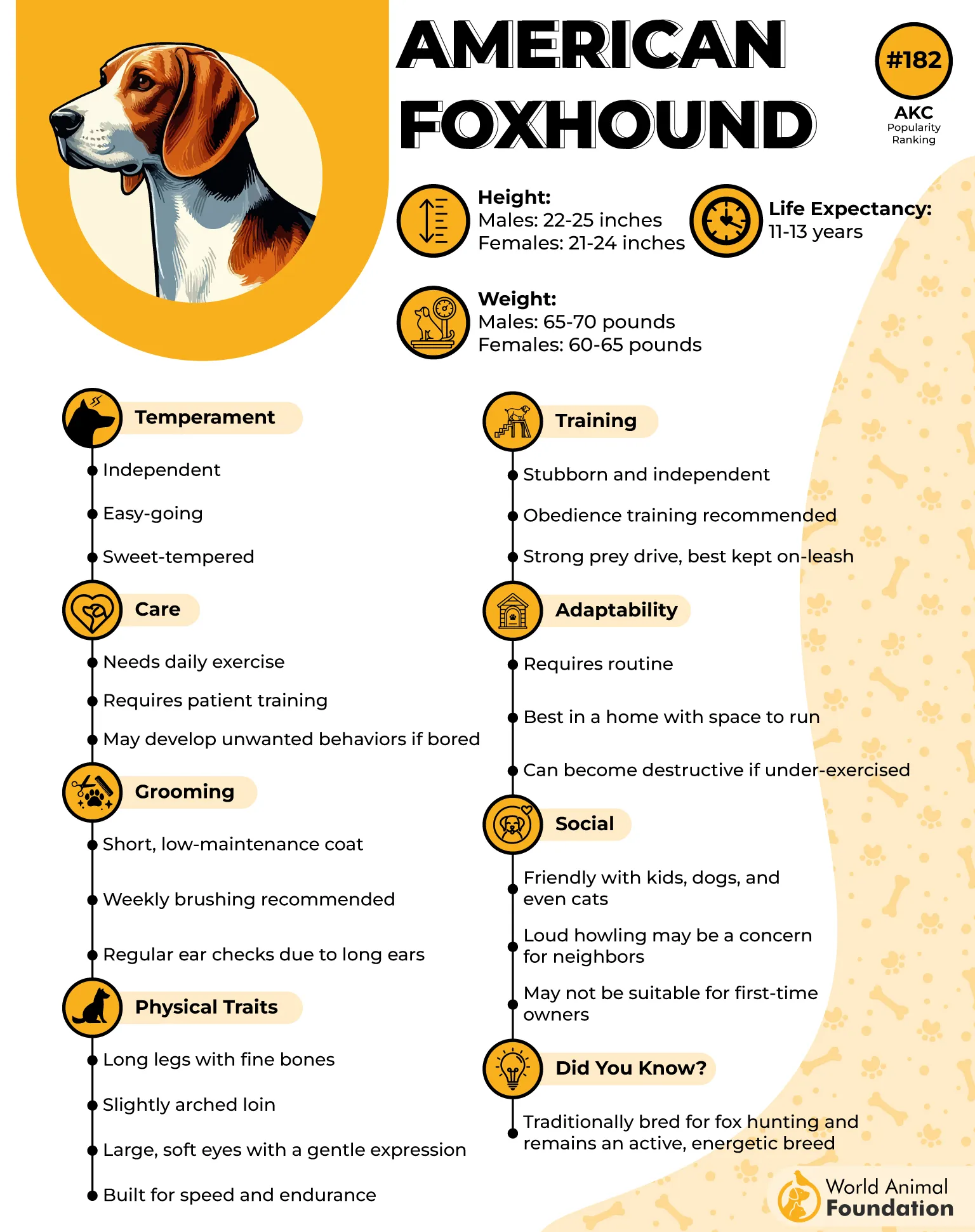
Its distinctive pendulous ears help stir up scent molecules and funnel them toward the nose, making it a remarkably efficient tracker. Hard, fox-like padded paws allow it to sprint and pivot confidently across uneven ground.
In the field, the American Foxhound excels at deer hunting and typically works in a pack, trailing prey and signaling the hunter. At home, it needs one to two hours of daily exercise to stay happy: biking, hiking, scent work, and running are all great outlets for this breed’s considerable energy.
5. Plott Hound
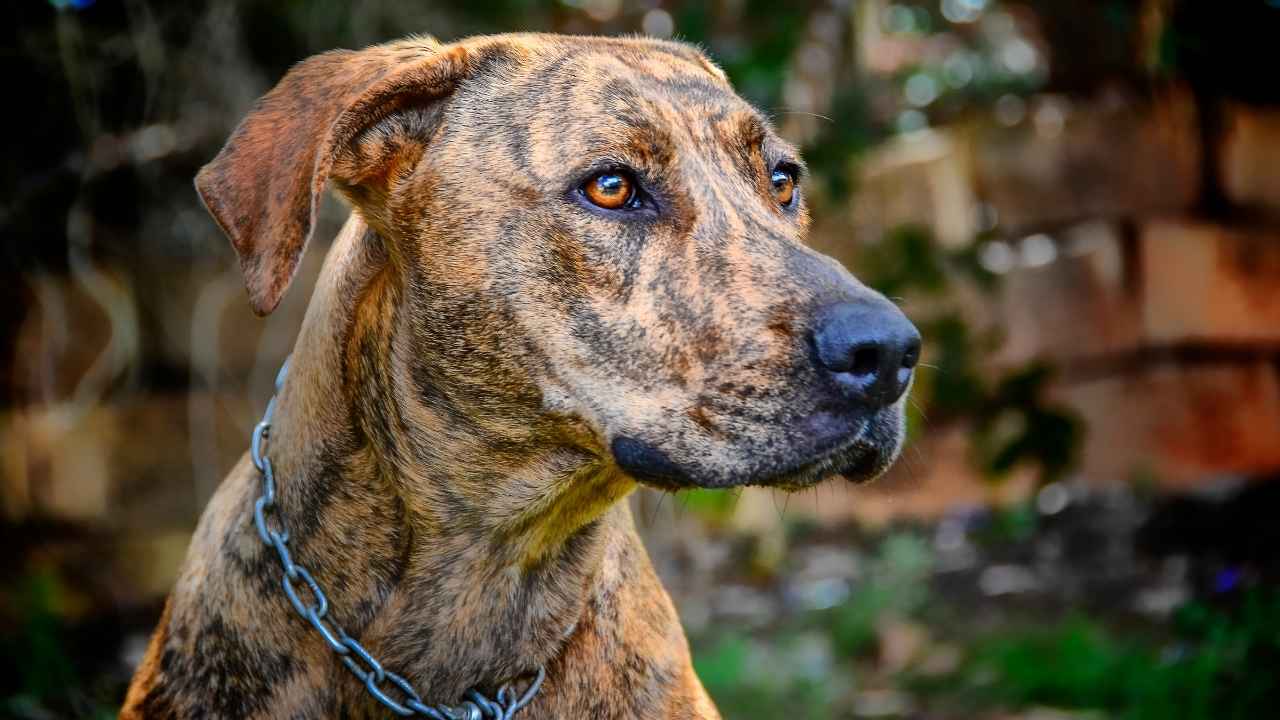
Descended from German “Hanover Hounds,” the Plott Hound traces its origins to 1750, when Johannes Plott, a German immigrant who settled in North Carolina, brought his family’s hunting dogs to America. His son Henry later interbred these large dogs with local stock to refine the breed further, according to the AKC.
Physically, the Plott Hound is built for performance. Its muscular build, loose skin, and low centre of gravity all contribute to agility and speed, capable of reaching up to 35 mph.
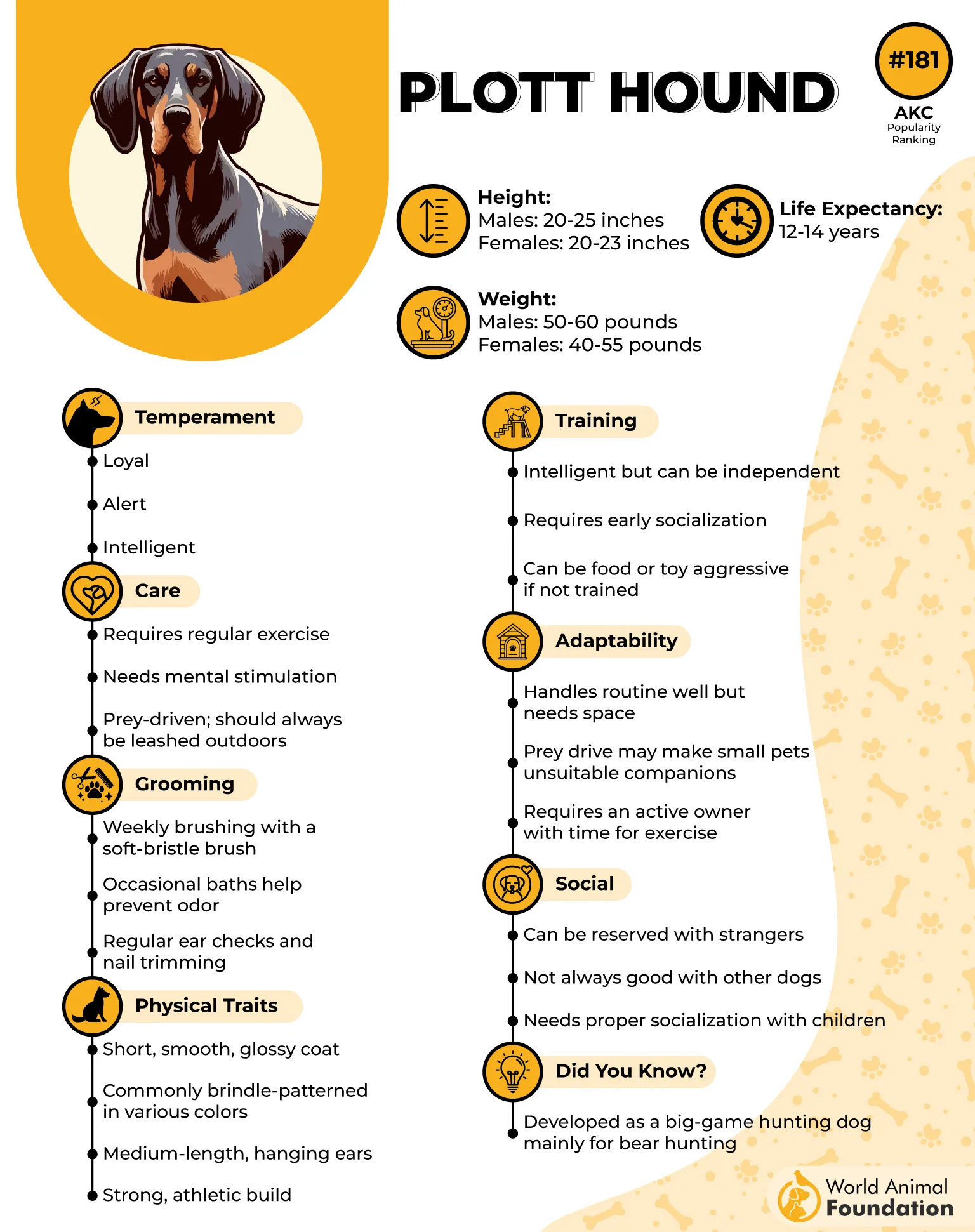
The square body structure keeps it stable, while its curved tail acts as a rudder, helping the dog balance through sharp turns. Well-angled knees produce a smooth, rhythmic gait, and its oval, well-arched feet provide maximum grip across varied terrain.
In the field, the Plott Hound is all business. It has an intense hunting instinct, stays locked on a trail, and is remarkably resistant to distractions, exactly what you want in a working scent hound.
6. Weimaraner
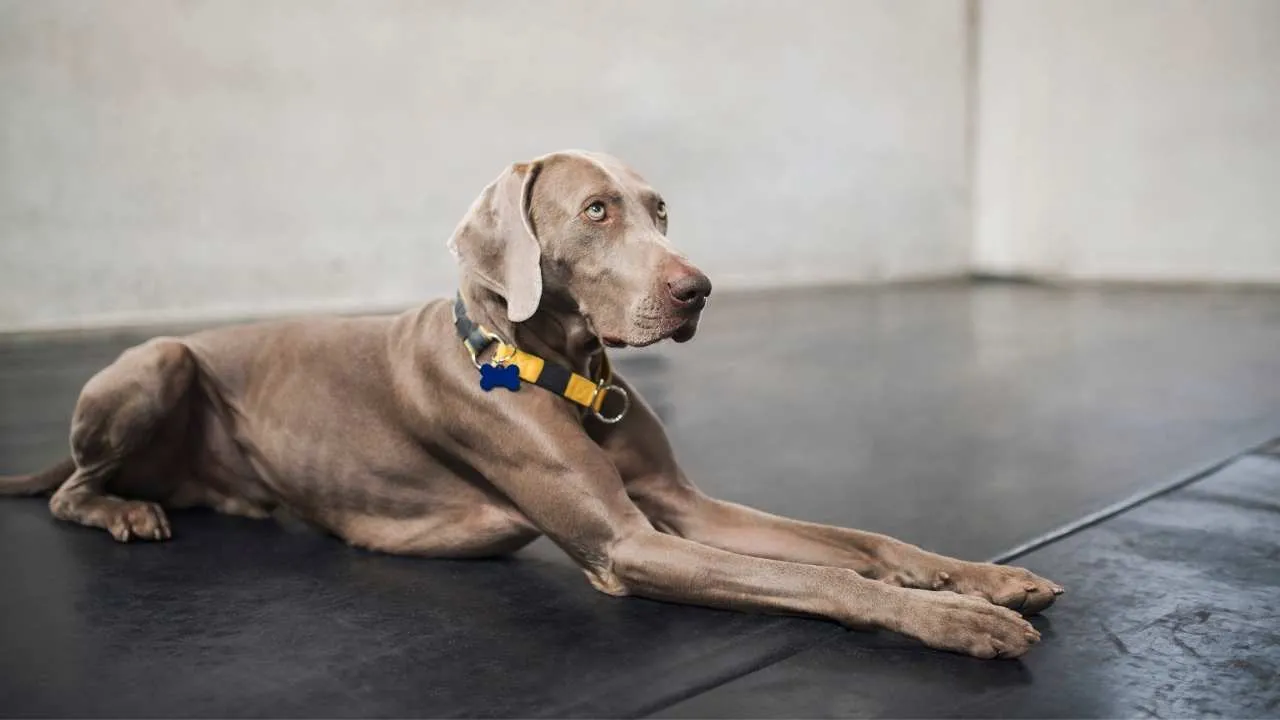
The Weimaraner is a medium to large dog developed in Germany during the 19th century as a versatile gun dog. It excels at tracking, pointing, flushing, and retrieving upland game, and with a top speed of 35 mph, it can more than keep up with the chase.
Its sleek, aerodynamic build is purpose-made for speed. A grey-tipped snout, tucked abdomen, and large keel-shaped chest all work together to reduce wind resistance. Its wide-set, blue-grey eyes provide a broad field of vision, allowing it to spot and track moving targets with impressive accuracy.
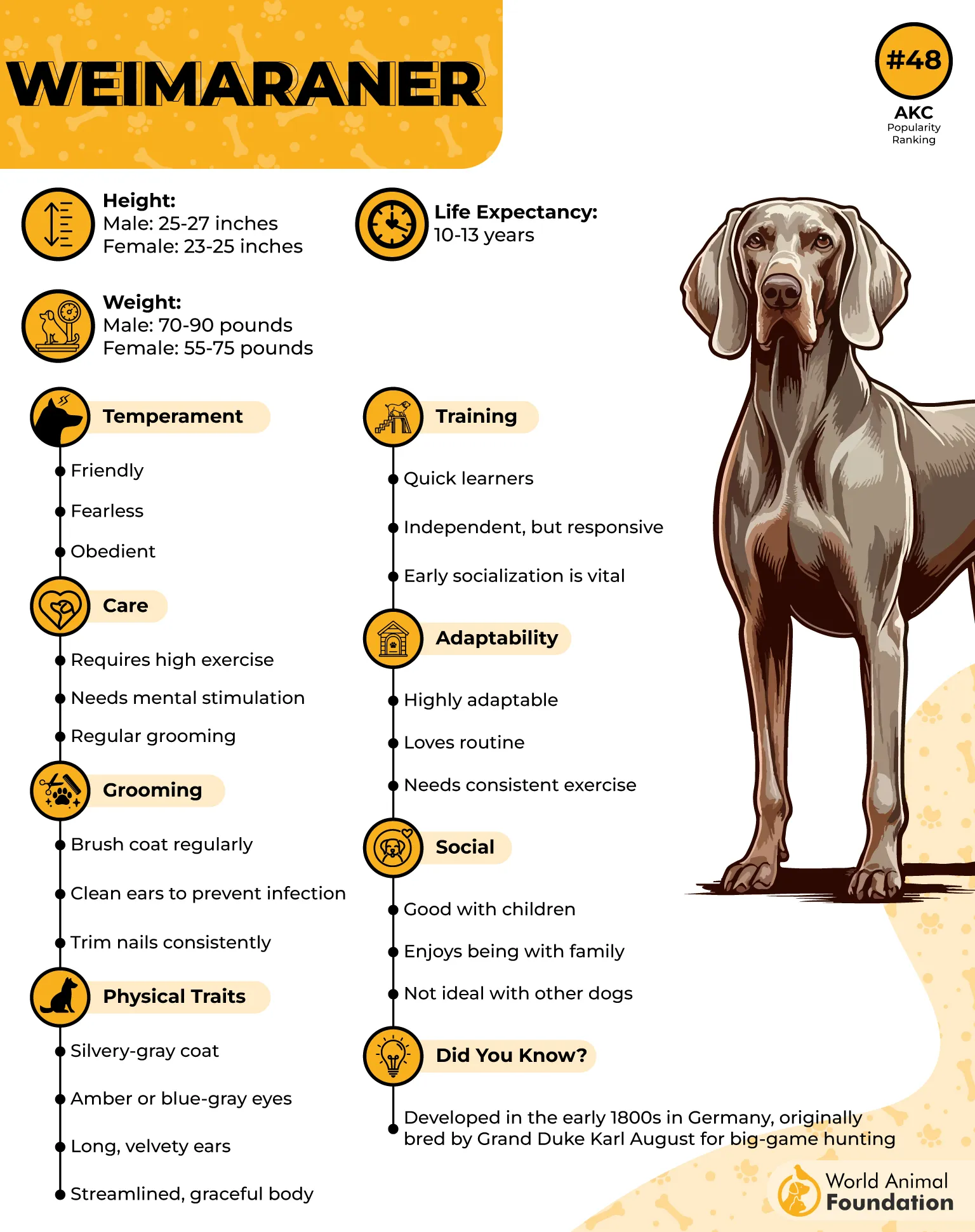
With an intense prey drive and laser-like focus, the Weimaraner needs early socialization and consistent training. It’s famously a “Velcro dog,” forming deep bonds with its owner, which also means it can develop separation anxiety if left alone for too long. This breed does best with active families who can give it the time and attention it craves.
Beyond hunting, the Weimaraner’s webbed feet and driven nature make it a natural fit for dog sports, search and rescue operations, and scent trail work.
7. Catahoula Leopard Dog
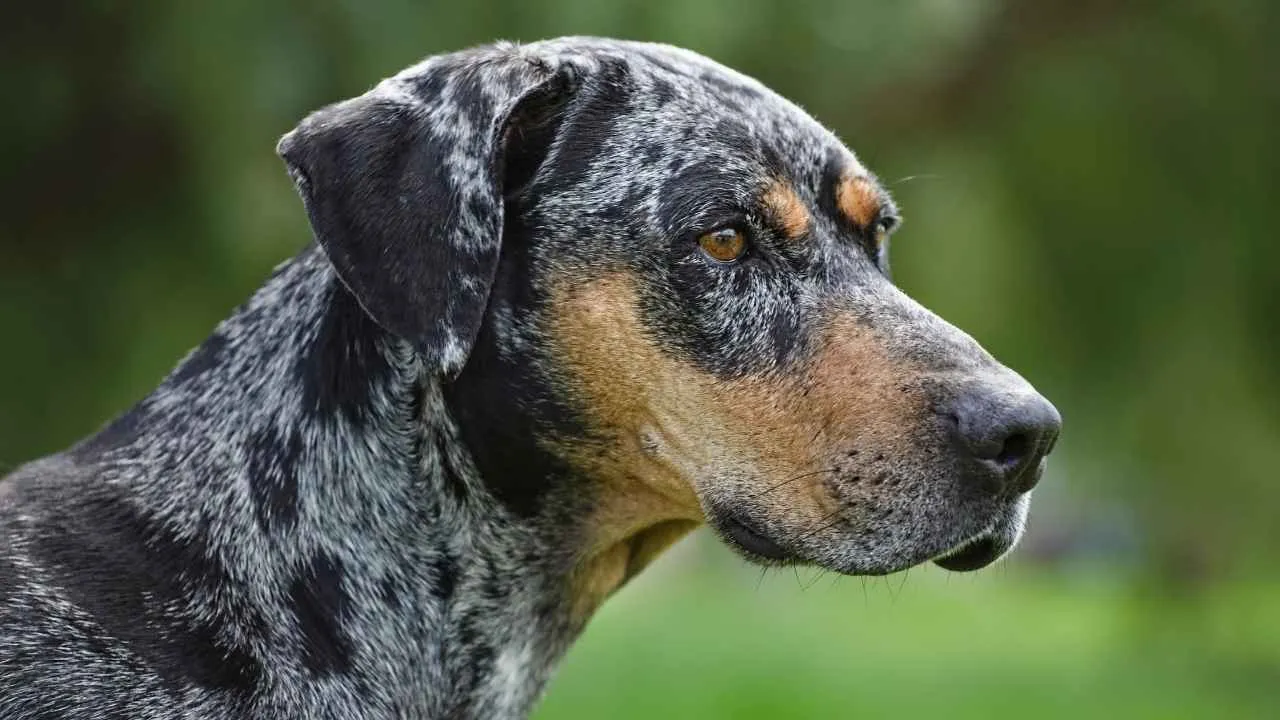
The Catahoula Leopard Dog is a uniquely American breed with deep roots in Louisiana. Its lineage traces back to the mid-1700s, when French settlers crossbred local dogs with Beaucerons through selective breeding. Originally developed for hunting and herding livestock, the breed later proved equally capable at hunting small game and scent trailing.
Officially recognized as a distinct breed in 1979, the Catahoula is a great outdoors companion and a natural fit for active households. Its rectangular, agile build and powerful hindquarters allow it to reach speeds of up to 45 mph.
One of its more fascinating traits is its dual-scent technique, simultaneously using both ground scent and air scent to track prey with remarkable efficiency.
With a strong prey drive and an independent streak, the Catahoula can be a handful around smaller pets and is best suited to experienced owners who can provide firm, consistent training. It also needs one to two hours of daily exercise to stay mentally and physically satisfied: pole training, swimming, running, and hiking are all excellent outlets.
Conclusion
Speed alone does not make a great deer-chasing dog. It is the combination of instinct, physical engineering, endurance, and hunting intelligence that separates these seven breeds from everything else. From the 8000-year old Saluki, one of history’s oldest working breeds to the tactically brilliant Catahoula Leopard Dog, every breed here earned its place through centuries of real-world performance, not just good looks.
Whether you are a hunter, a dog lover, or someone who just fell down a rabbit hole wondering which dog could actually keep pace with a white-tailed deer, now you know. These breeds were not trained to chase deer. They were born to.
