




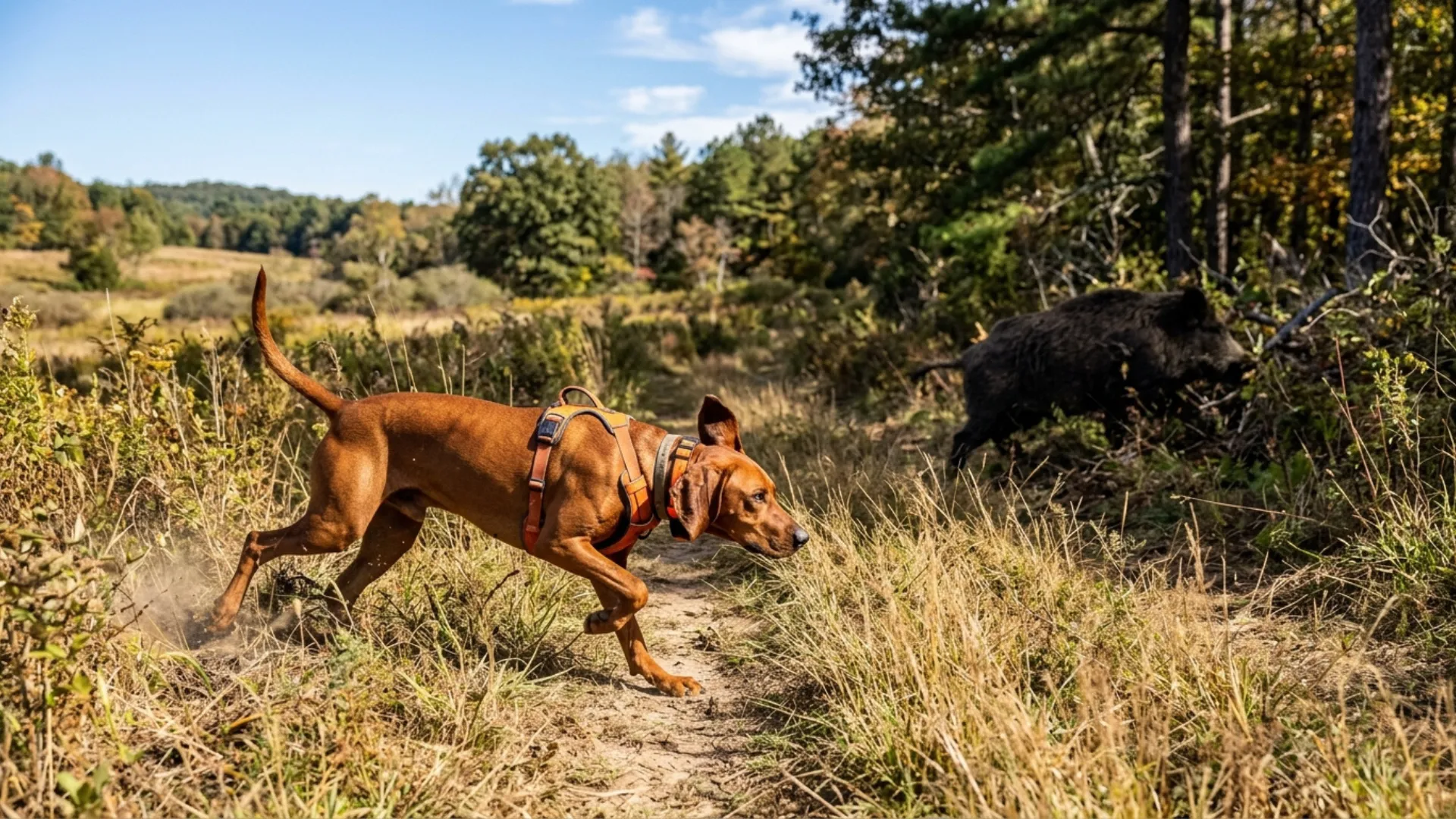
Tracking dogs are in a completely different league compared to typical companion pets. These breeds are built with one primary advantage that feels almost unfair in the animal world: an extraordinary sense of smell combined with intense focus and endurance.
While humans rely on sight and technology, these dogs operate through scent layers that can reveal paths, movement, and presence across long distances and challenging environments.
Many of these breeds were developed over generations specifically for field work, meaning their instincts are not accidental—they are refined traits passed down through selective breeding. This gives them a natural ability to stay locked onto a scent trail for extended periods, even when the trail is faint, old, or disrupted by weather and terrain changes.
Think of them like ultra-advanced “tracking systems” that don’t need updates or signals. Once they lock onto a target scent, their focus becomes extremely narrow and persistent, almost like they switch into a different mental mode where nothing else matters except the trail in front of them.
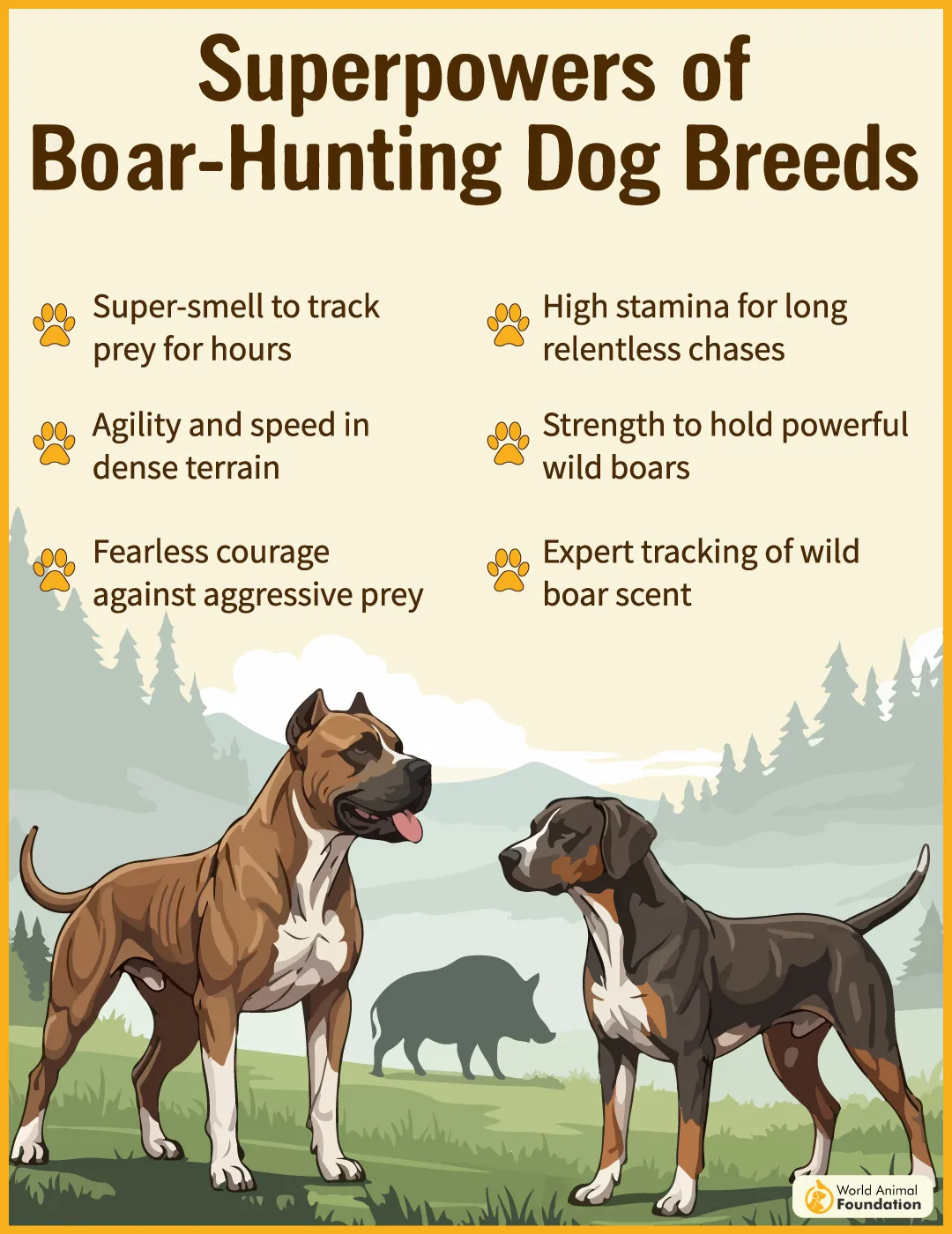
In this guide, we’ll explore seven dog breeds for tracking wild boars in the field. Each one brings a slightly different style of working—some are slow and methodical, others are fast and independent—but all share the same core trait: an instinctive drive to follow scent and complete the task.
Dog Breeds for Tracking Wild Boar in the Field
1. Plott Hound
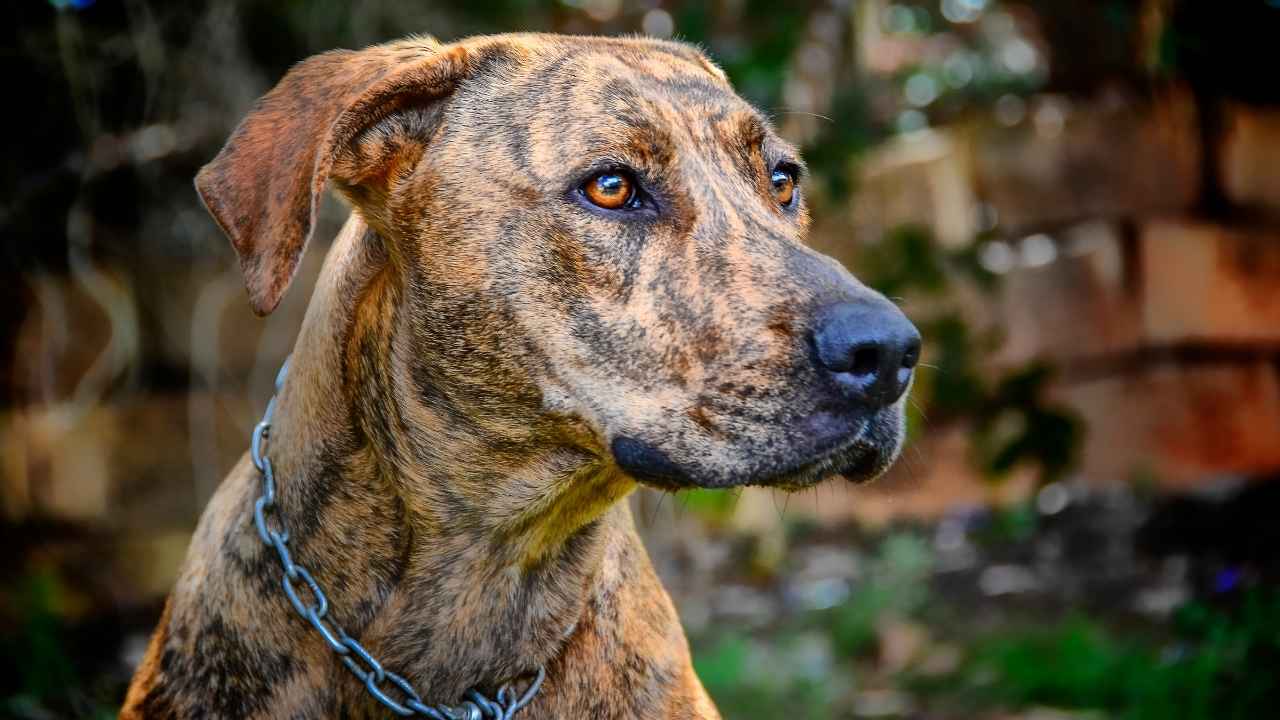
The Plott Hound is a highly determined tracking breed known for its persistence and mental toughness in the field. Originally developed for hunting large game, this breed has a strong instinct to stay on a scent trail no matter how long it takes or how difficult the terrain becomes.
Once this hunting dog locks onto a scent, it tends to stay mentally committed until the job is finished, often ignoring distractions that would break the focus of other dogs.
WebMD describes their working style as steady and methodical rather than fast and chaotic. They don’t rush along a trail; instead, they work it carefully and consistently, adjusting as needed to scent changes in the environment.
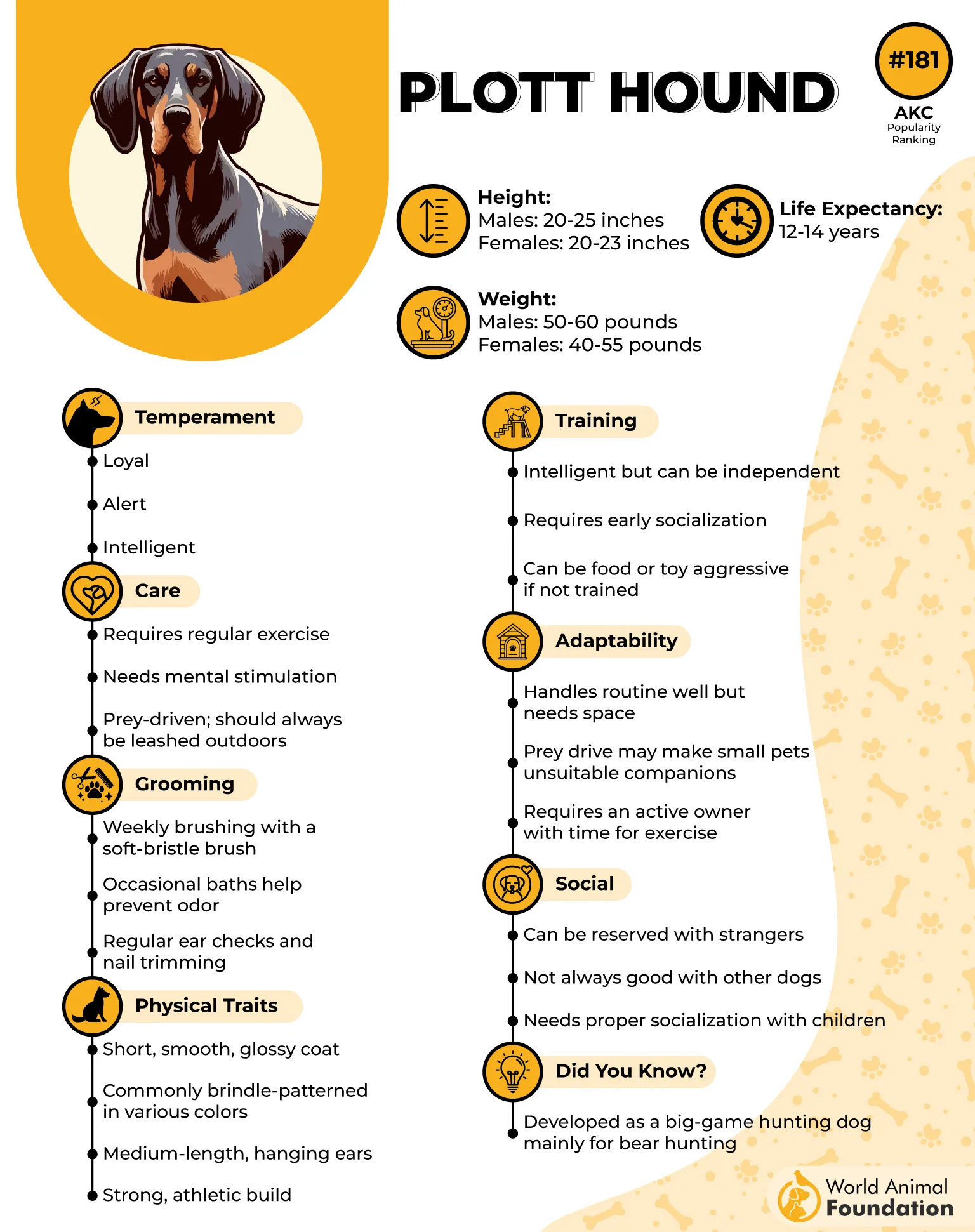
This makes them especially valuable in rugged outdoor settings where precision and endurance matter more than speed.
At home, they can be more relaxed, but their drive to work always remains beneath the surface. Without enough physical and mental stimulation, they may become restless because their instincts are built for action and problem-solving.
Many handlers describe these hound dogs as extremely “locked in” once they start tracking, almost as if they switch into full focus mode, where nothing else exists until the task is completed.
2. Catahoula Leopard Dog
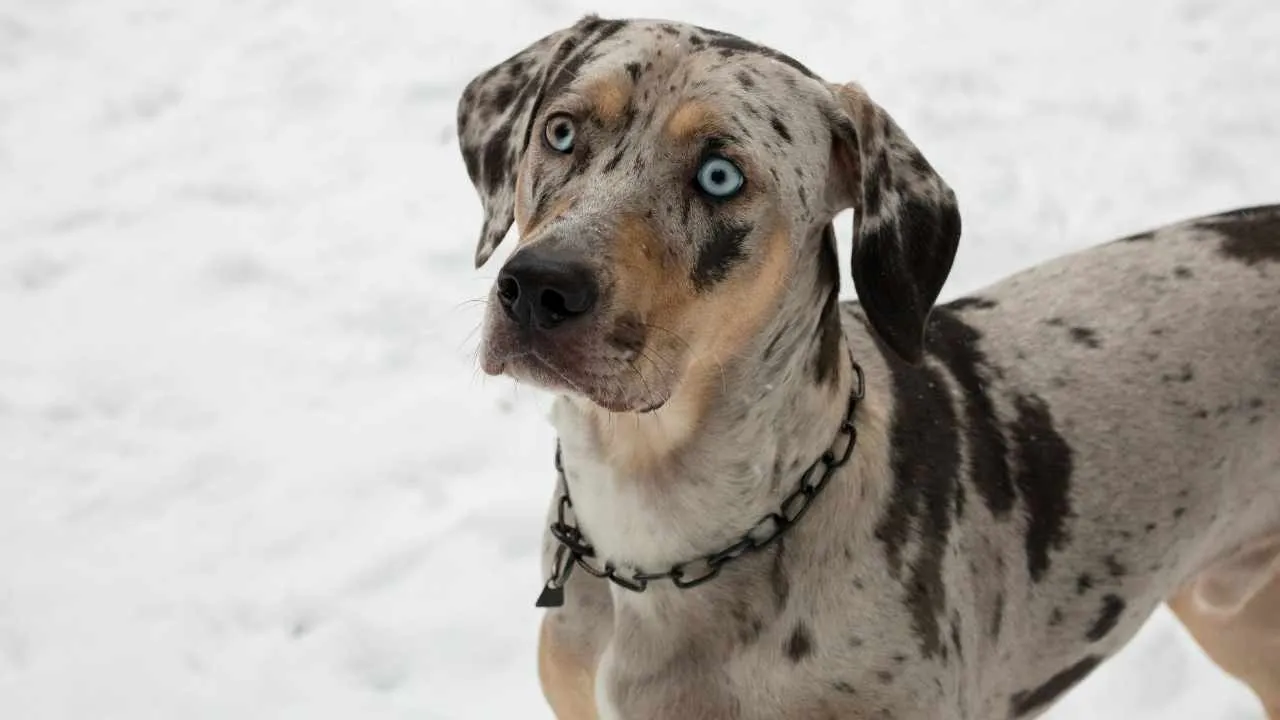
The Catahoula Leopard Dog is a highly intelligent and independent working breed known for its adaptability and strong decision-making ability in the field.
Unlike some hog hunting dogs that rely heavily on handler direction, Catahoulas often think and act quickly on their own, which makes them especially effective in unpredictable outdoor environments.
They are energetic, alert, and extremely responsive to changes in movement and scenery. Their tracking style is often dynamic, meaning they adjust their path frequently as they interpret new information from the environment. This combination of intelligence and instinct allows them to work effectively in dense forests, rough terrain, and large open areas.
Because of their high drive and independence, they require structured training and consistent engagement. Without it, they can become mentally under-stimulated or overly reactive, as their working instincts are always active and looking for an outlet.
Handlers often describe them as having a “thinking athlete” personality—always moving, analyzing, and reacting in real time while staying physically ready for demanding tasks.
3. Bloodhound
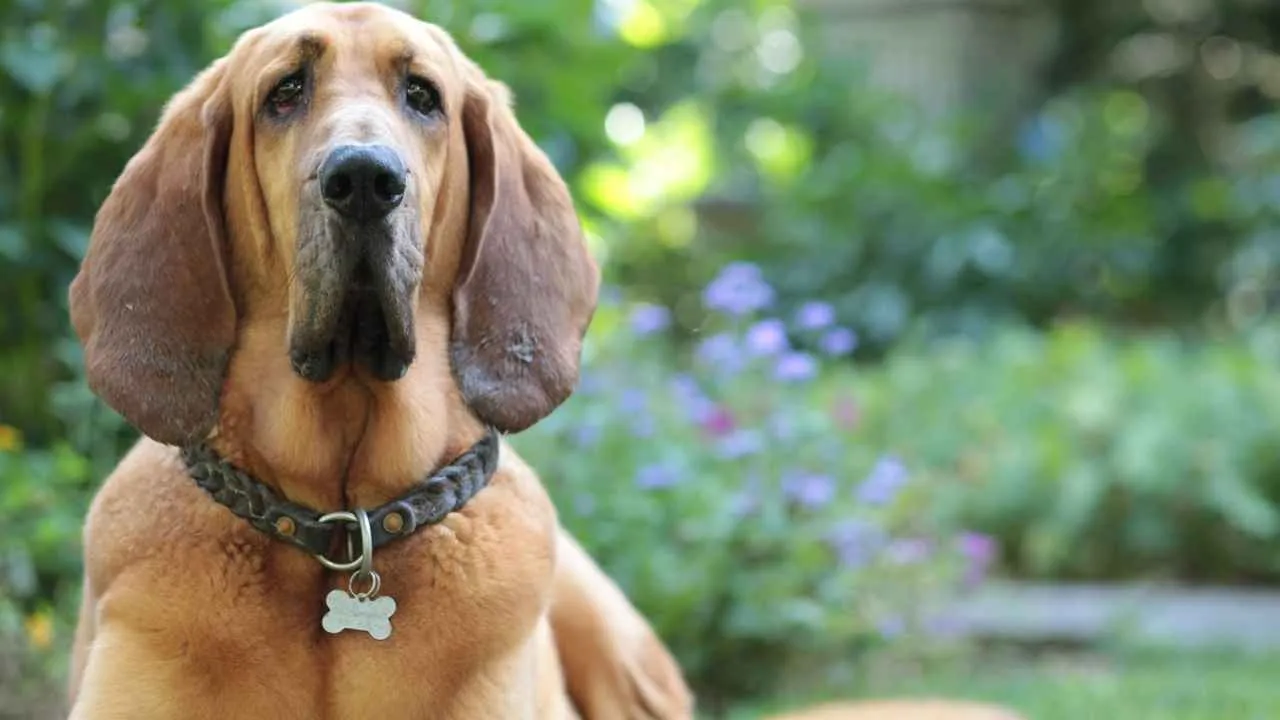
The Bloodhound is widely regarded as one of the most advanced scent-tracking breeds in the world.
Its ability to follow scent trails is so precise that it can distinguish individual human scent patterns even in highly contaminated or aged environments. This makes it one of the most reliable tracking breeds for search-focused work.
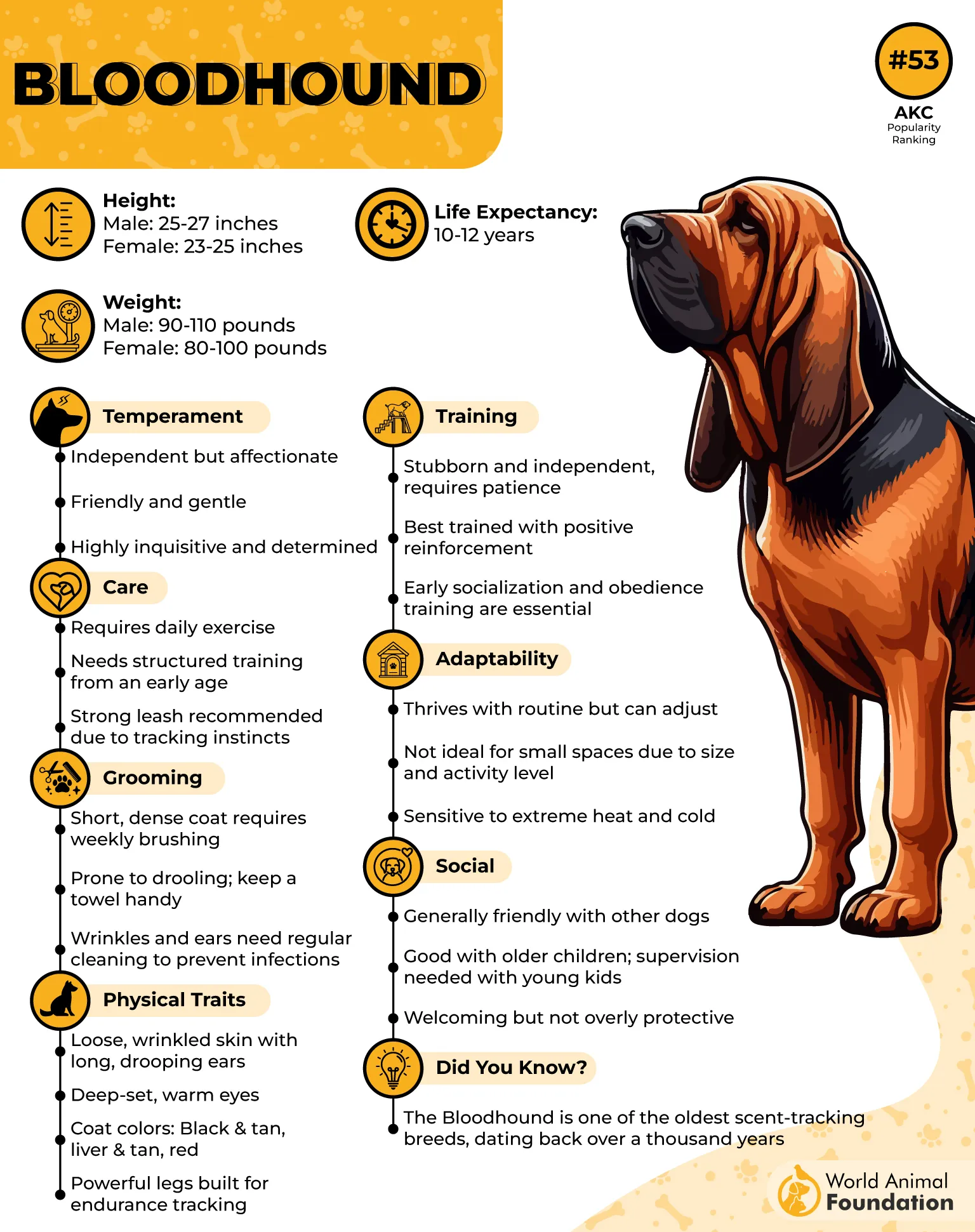
Unlike faster, more reactive breeds, they work in a slow and extremely methodical way. They rely heavily on scent discrimination, carefully following trails step by step rather than rushing. This deliberate style allows them to maintain accuracy over long distances and extended time periods.
They are known for their persistence, as per PDSA, often continuing a task for hours without losing focus. Even when conditions become difficult—such as wind, rain, or interference from other scents—they remain committed to the original track.
Many handlers describe them as “relentless problem solvers with noses in overdrive,” emphasizing their ability to stay focused long after other dogs would have stopped.
4. Redbone Coonhound
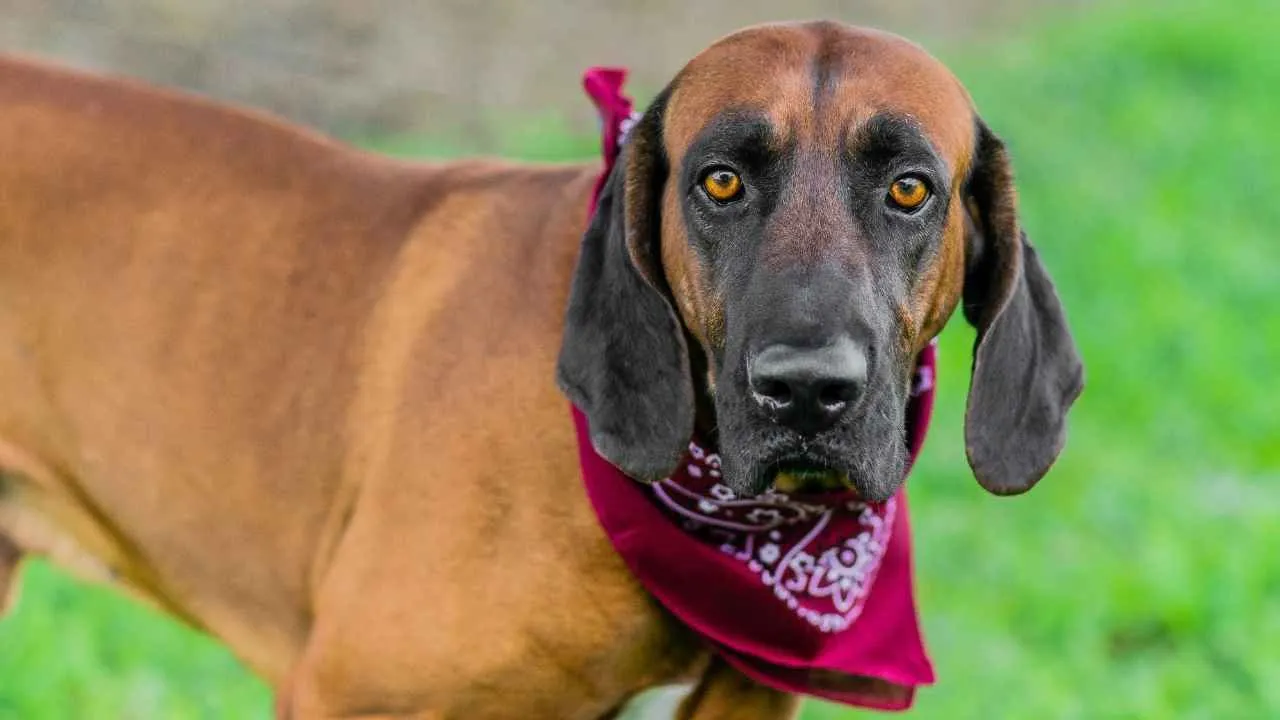
The Redbone Coonhound is a balanced and versatile tracking breed known for its smooth working style and strong endurance. These medium-sized dogs were developed for tracking in forests and uneven terrain, making them highly adaptable to diverse environmental conditions.
Their tracking approach is steady and consistent, often combining patience with a strong natural scenting ability.
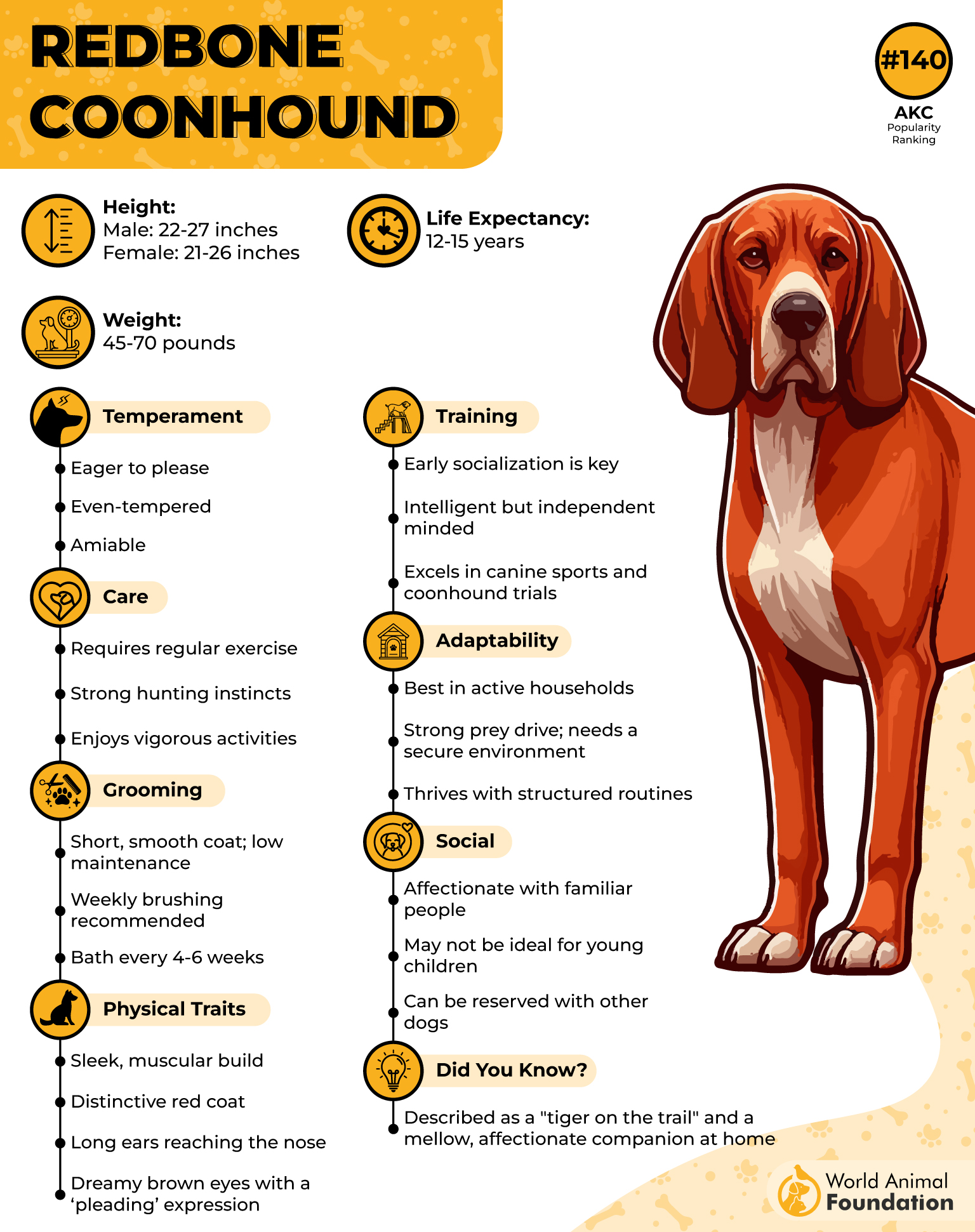
They are not overly aggressive in their movement but instead maintain a controlled pace that allows them to conserve energy while staying effective over long periods.
One of their strengths is temperament balance. While they are highly driven during work, they can be calm and social in home environments when their exercise needs are met. This dual nature makes them one of the more adaptable working hounds.
Owners often describe them as “efficient trackers” who stay focused without unnecessary intensity, making them reliable during extended fieldwork sessions.
5. Black and Tan Coonhound
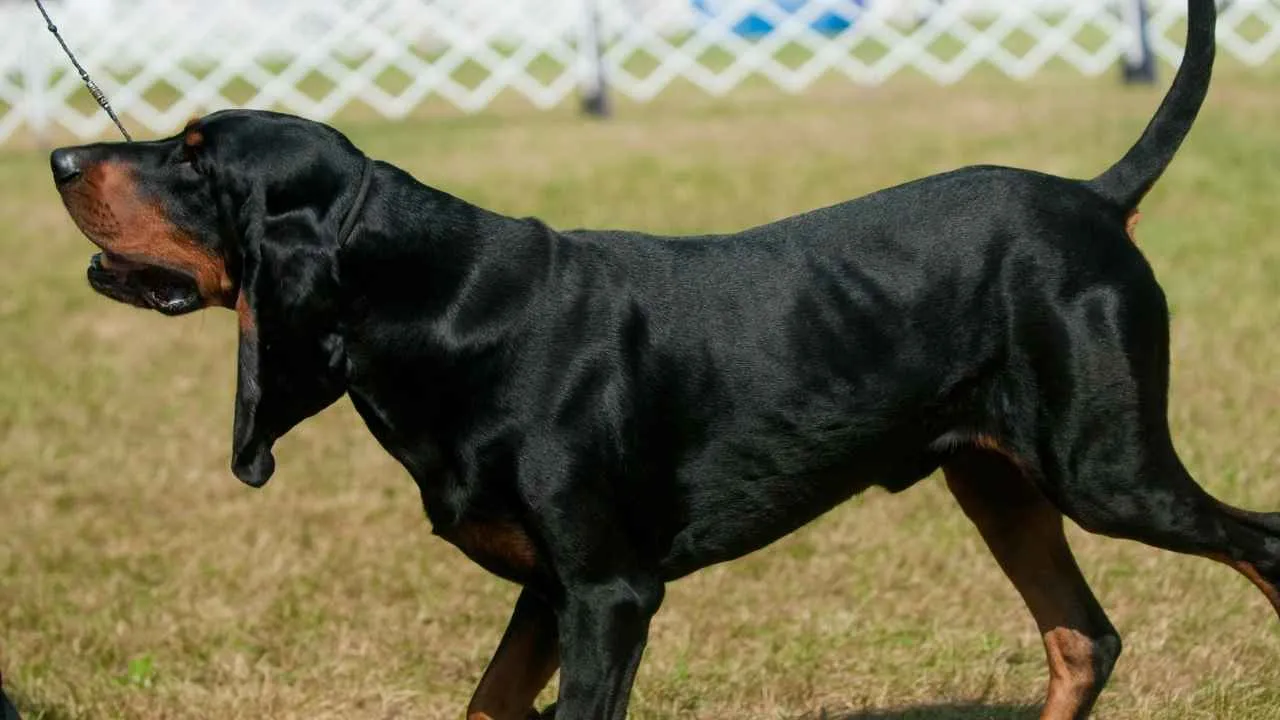
The Black and Tan Coonhound is a classic scent-tracking breed with a strong reputation for working across long distances and challenging terrain.
They are especially skilled at following older scent trails, which requires patience, concentration, and advanced scent discrimination ability.
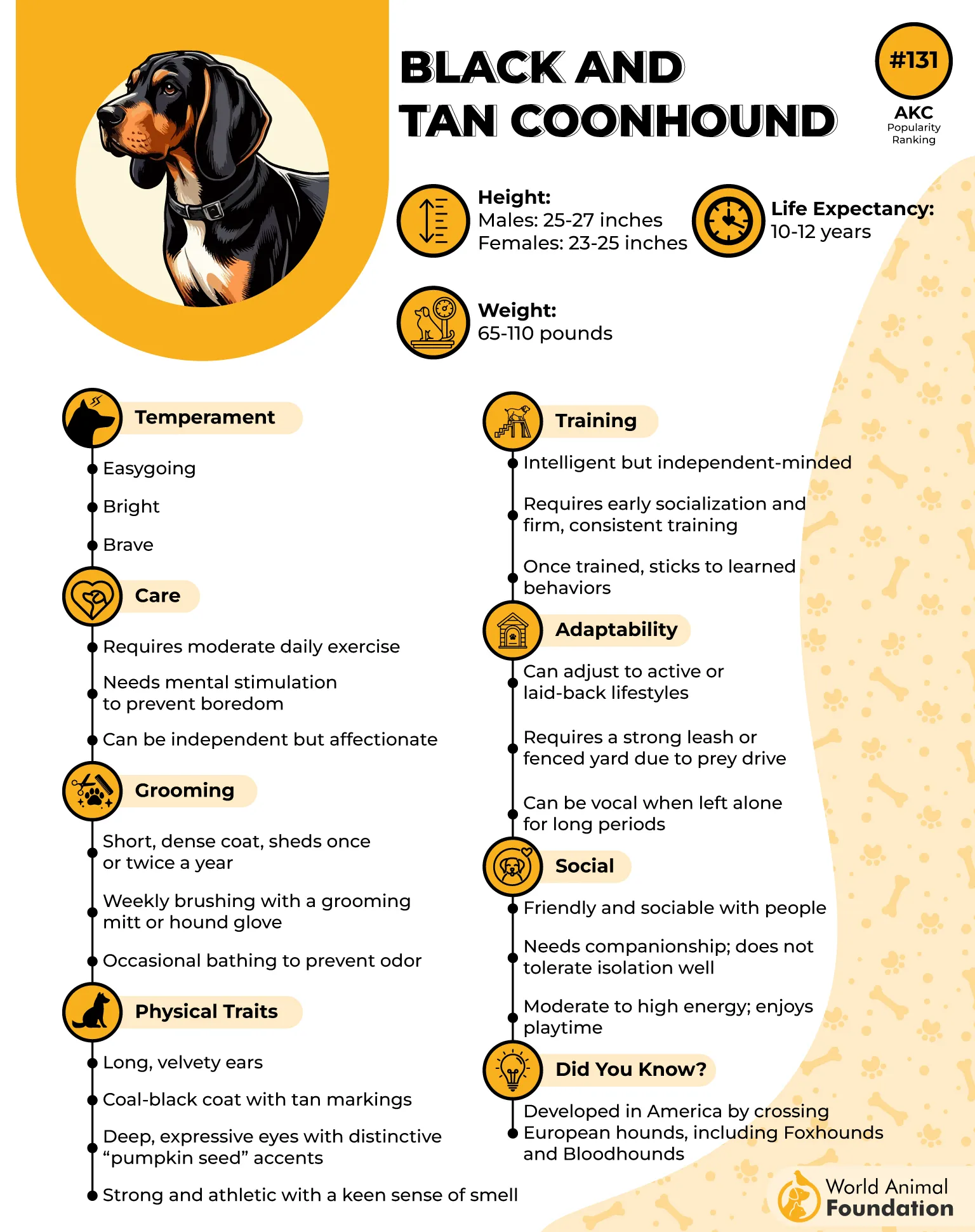
Their working style is independent, meaning they often rely on their own interpretation of scent rather than constant guidance from handlers. This independence is a major advantage in field environments where human direction may not always be immediate or practical.
The AKC says they are physically strong and able to sustain long tracking sessions without losing focus. Their endurance allows them to cover large areas while staying mentally engaged with the trail.
Many handlers describe them as “self-directed trackers,” emphasizing their ability to operate with minimal input once they understand the task.
6. Dogo Argentino
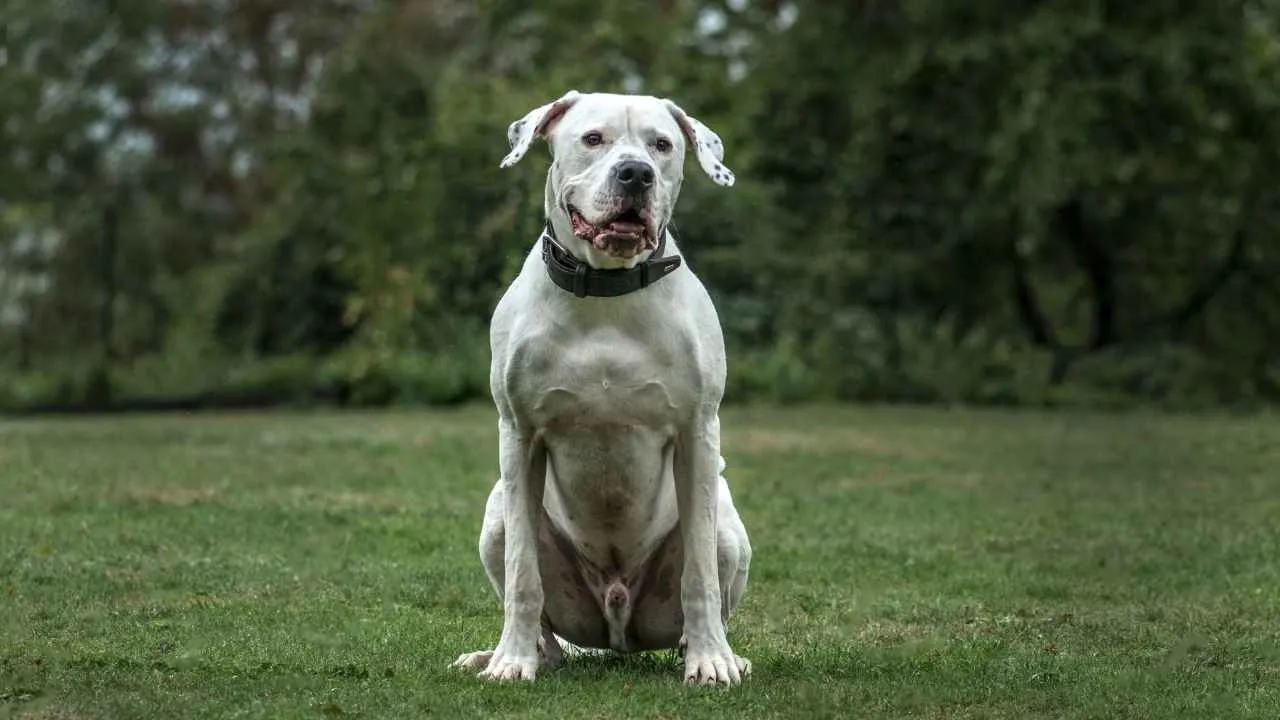
The Dogo Argentino is a powerful and athletic working breed known for strength, stamina, and high drive. While often recognized for its physical capabilities, it also possesses strong tracking instincts that make it effective in demanding outdoor environments.
They are extremely loyal and form deep bonds with their handlers, which plays a major role in their focus during structured work. Bred specifically for big game control, these catch dogs have a strong bite-and-hold style.
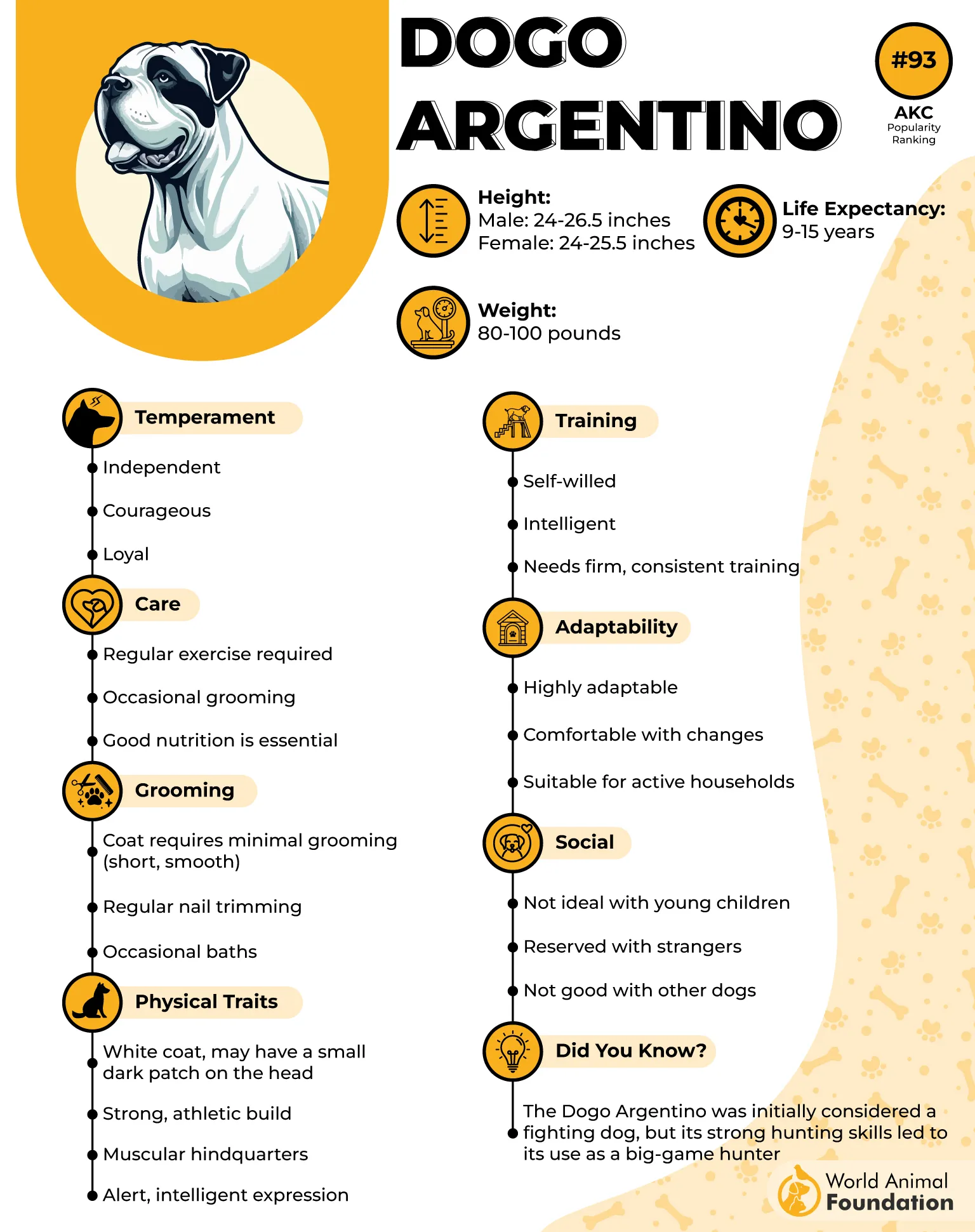
Once trained, they become highly responsive and committed, often showing intense concentration when given a task.
Because of their size, strength, and drive, they require experienced handling and clear structure. In the right environment, however, they can perform exceptionally well in tracking and field-related roles that demand both intelligence and power.
Owners often describe them as “elite working athletes and hunting companions,” combining physical intensity with a strong focus on tasks.
7. Airedale Terrier
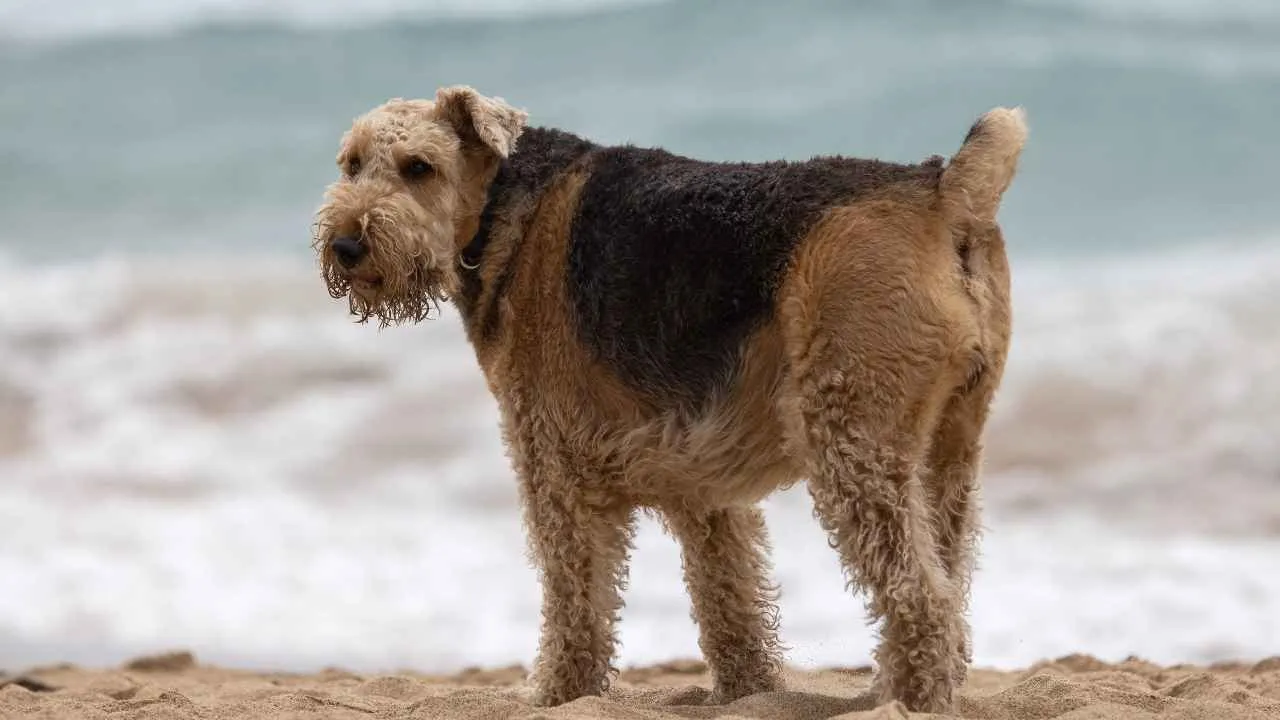
The Airedale Terrier is the largest of the terrier group and is often referred to as the “King of Terriers” due to its versatility and working ability. They are intelligent, alert, and capable of adapting to a wide range of field tasks, including tracking and search-related work.
These athletic dogs are quick learners but also possess an independent mindset, which means training requires consistency and engagement rather than repetition alone.
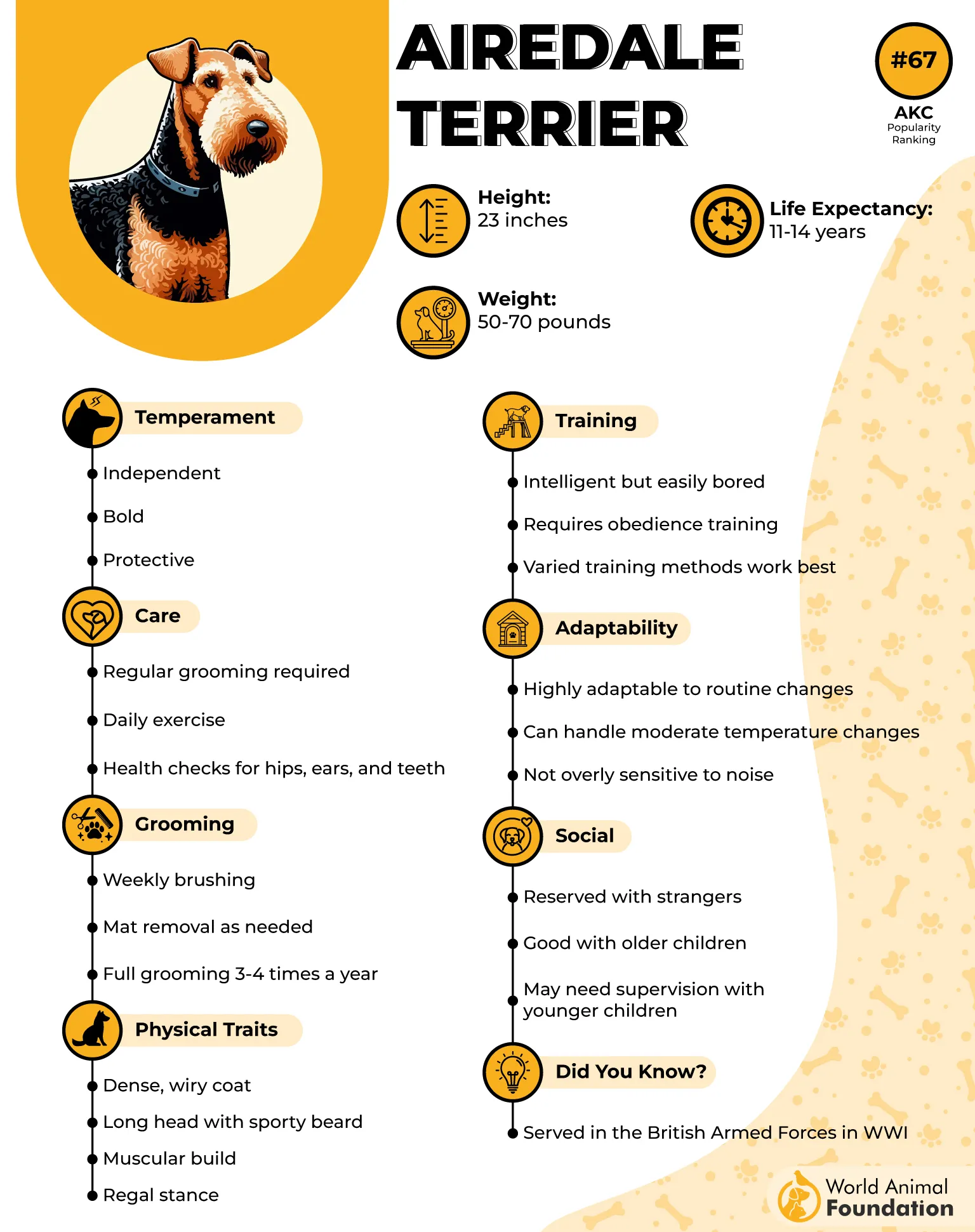
Once properly trained, they become highly dependable working dogs with strong problem-solving ability.
Their combination of endurance, intelligence, and adaptability makes them well-suited to complex outdoor environments where conditions can change rapidly. They are also known for their resilience and ability to stay focused under pressure.
Many owners describe them as “multi-role working dogs” capable of switching between tracking, guarding, and general field assistance with ease.
Conclusion
These seven breeds represent some of the most capable tracking and field-working dogs in the canine world. Each one brings a unique balance of intelligence, stamina, independence, and scenting ability, making them valuable in environments where precision and endurance are essential.
From the methodical persistence of the Bloodhound to the independent intelligence of the Catahoula Leopard Dog, these dogs are built for more than companionship—they are purpose-driven workers with deeply ingrained instincts.
Labrador Retrievers, Golden Retrievers, Cocker Spaniels, Pit Bulls, and Clumber Spaniels are other energetic dogs with instincts to hunt.
In the right hands and with proper structure, they don’t just perform tasks—they excel at them, turning complex tracking work into a natural expression of their instincts and abilities.
