




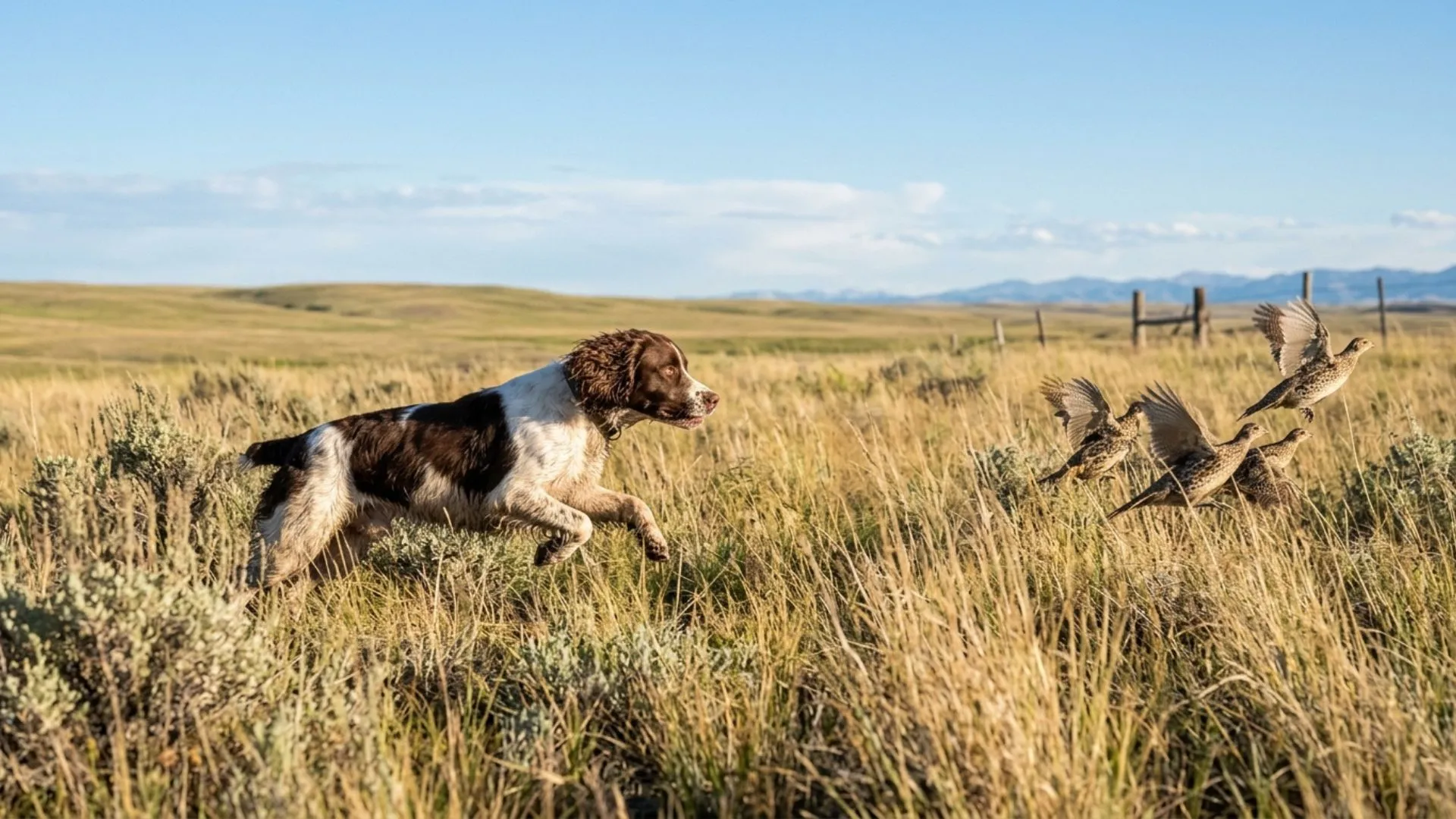
Some dogs live for the couch. These ones live for the chase. The moment their paws hit an open field, something primal kicks in: tail up, nose down, the whole world filtered through scent. Bird hunting dogs are not your average weekend pet.
Sporting breeds consistently make up a substantial portion of field trial registrations across the United States, proof that hunting with dogs is far from a dying tradition. Dog breeds that pursue wild birds across open plains are typically wide-ranging “pointing” or “setting” breeds, prized for their speed, stamina, and exceptional sense of smell, built to sprint across vast landscapes and freeze the instant they locate game.
Sharp, fast, fearless, and honestly a little addicted to the job. Whether you’re a lifelong hunter or simply fascinated by dogs that were literally born for this, these nine breeds will blow your mind. Each one is built differently, and each one brings something entirely unique to the field. Let’s get to know them.
Skilled Dog Breeds That Pursue Wild Birds Across Open Plains
1. Pointer
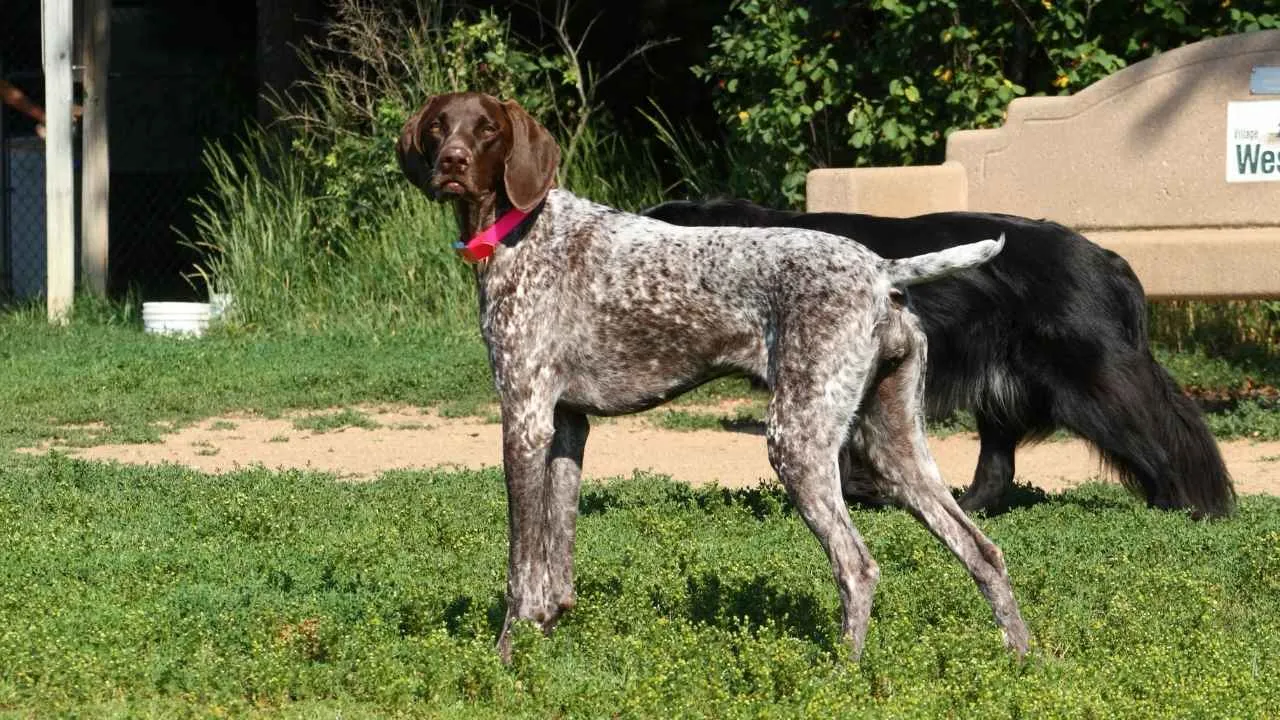
Originally bred in England to help hunters locate game birds, the Pointer’s job was never to retrieve, only to find and indicate. According to Wikipedia, the breed was developed by crossing the Old Spanish Pointer with local English breeds to sharpen hunting ability.
The Pointer hunts by catching airborne scent molecules rather than tracking with its nose to the ground. It moves in a sweeping zig-zag pattern across the field, head held high, until it locks onto a scent, then freezes completely and indicates the bird’s location with its nose or a raised front paw. That signature “point” is what the breed is named for.
Built for the job, the Pointer has a lean, muscular, aerodynamic frame with sloping shoulders and long hind legs capable of reaching speeds of 35–40 mph. Its smooth, short, single-layer coat keeps it cool in summer, and its distinctively marked coat, coming in liver, black, lemon, and orange, makes it easy for hunters to spot at a distance.
Active and athletic, the Pointer needs at least two hours of vigorous daily exercise to stay physically and mentally satisfied. Running, hiking, swimming, and cycling make ideal outlets for this tireless working breed. If you’re curious about the different varieties, Pointers come in more forms than most people realize.
2. German Shorthaired Pointer
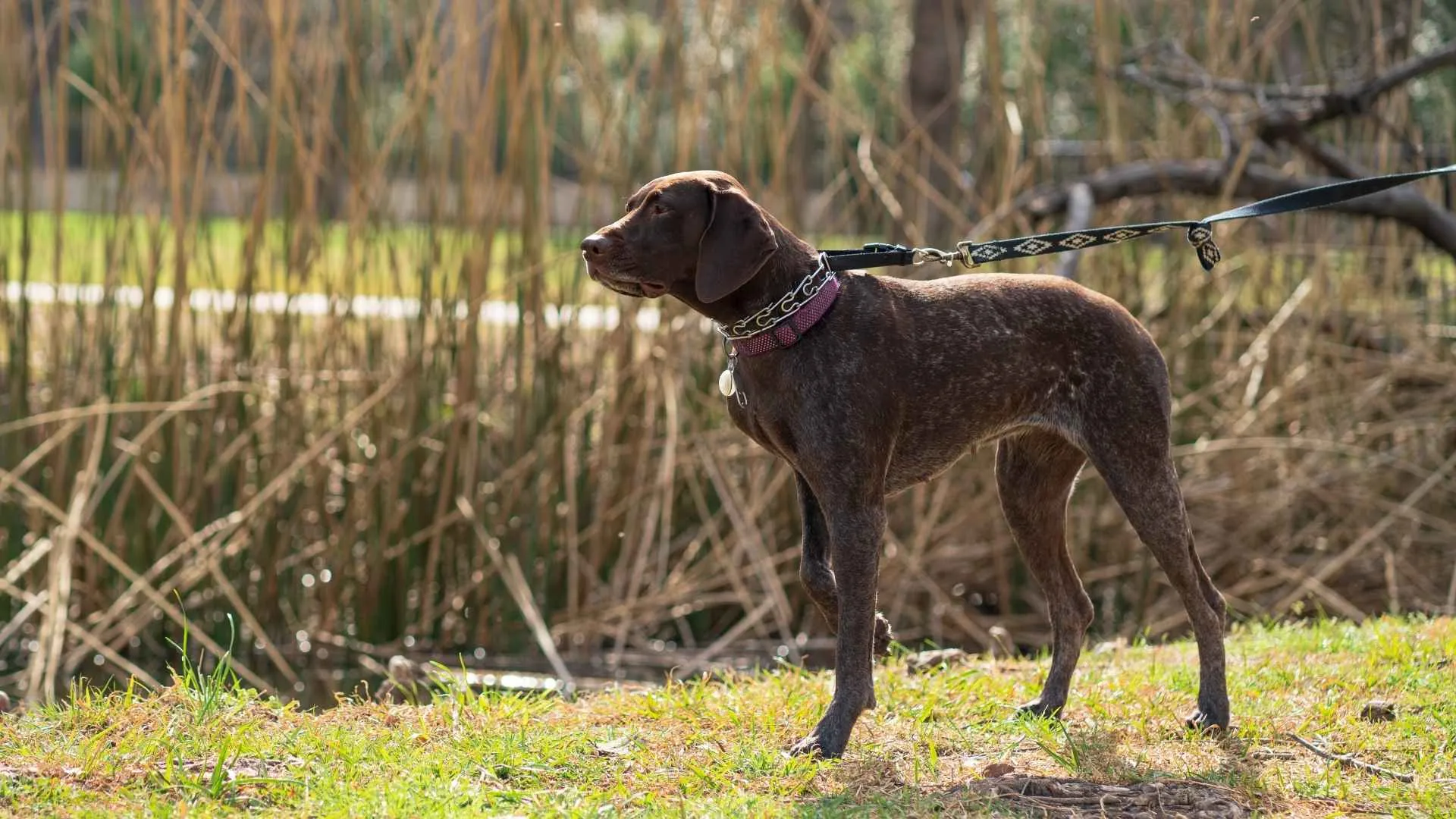
The German Shorthaired Pointer was developed in Germany during the 19th century from Braque-type pointing dogs. Versatile by design, it excels at hunting and retrieving on both land and water, backed by a weather-resistant coat and webbed feet built for swimming.
What sets the GSP apart is its nose. With over 220 million olfactory receptors, it splits inhaled air into separate respiratory and olfactory streams, making its scent work remarkably efficient. Weighing 55–70 pounds and standing 21–25 inches tall, the GSP has an athletic, powerful frame capable of galloping across vast terrain at up to 35 mph.
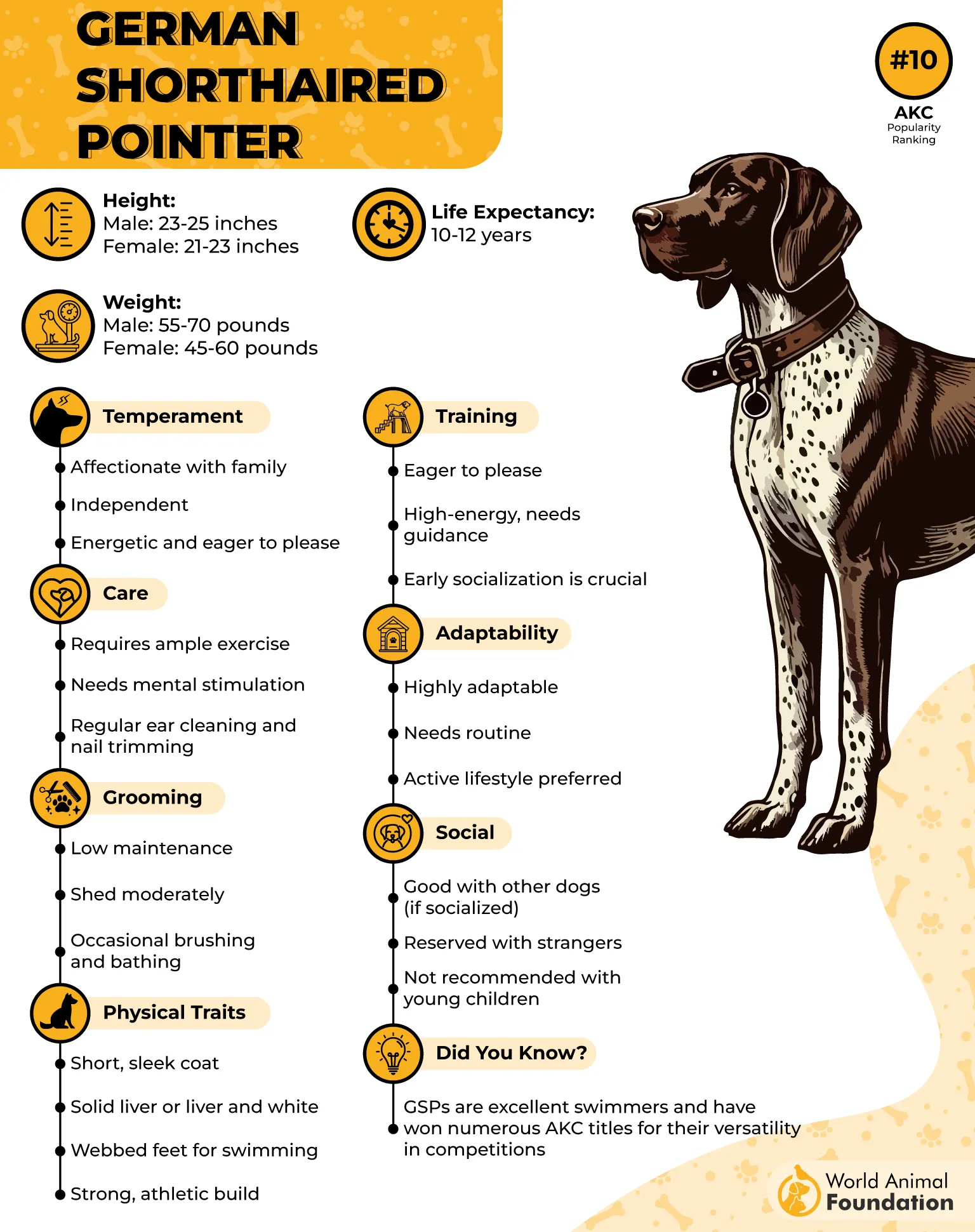
Beyond raw ability, the GSP has an intuitive understanding of bird behavior; adjusting its distance from skittish birds, tracking running pheasants, and adapting to whatever the field demands. It points, flushes, retrieves waterfowl, and also serves in detection and search-and-rescue operations.
As popular a companion as it is a working dog, the GSP is deeply people-oriented and forms strong bonds with its family. That same intelligence, however, means it needs a job to do; without adequate mental and physical exercise, boredom can quickly turn destructive. This is not a dog that does well left alone for long stretches.
3. Brittany
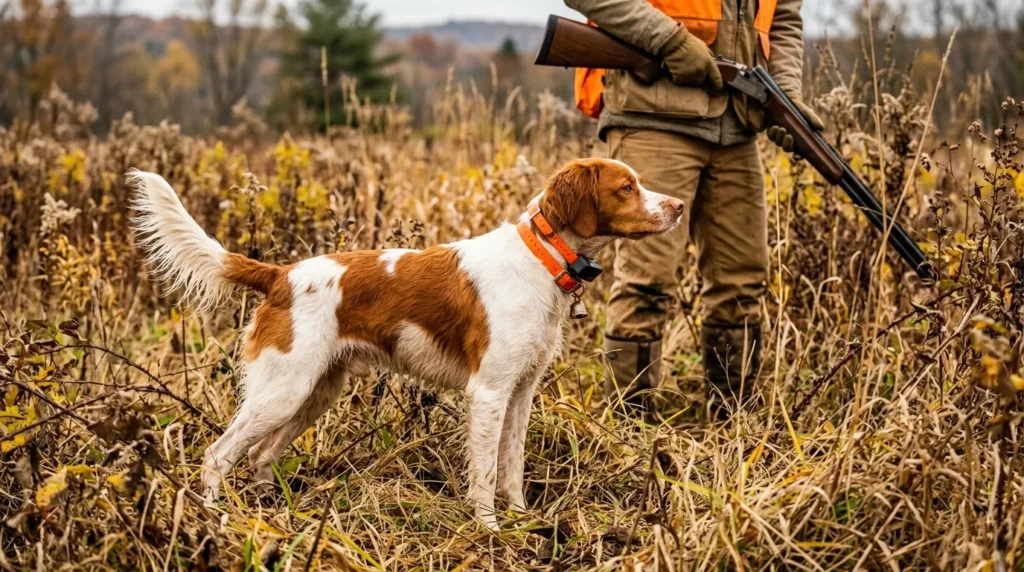
The Brittany was developed in France between the 17th and 19th centuries from Spaniel-type gundogs. A true HPR breed: hunting, pointing, and retrieving, it’s equally at home in the field, on an agility course, or curled up with its family.
Compact and square-built, the Brittany has sloping shoulders and a distinctive rolling gait that keeps its head high to collect airborne scent while its legs move in a straight, efficient stride. Its flat or slightly wavy coat, with light feathering on the legs, protects it from thick brush and harsh weather without catching burrs.
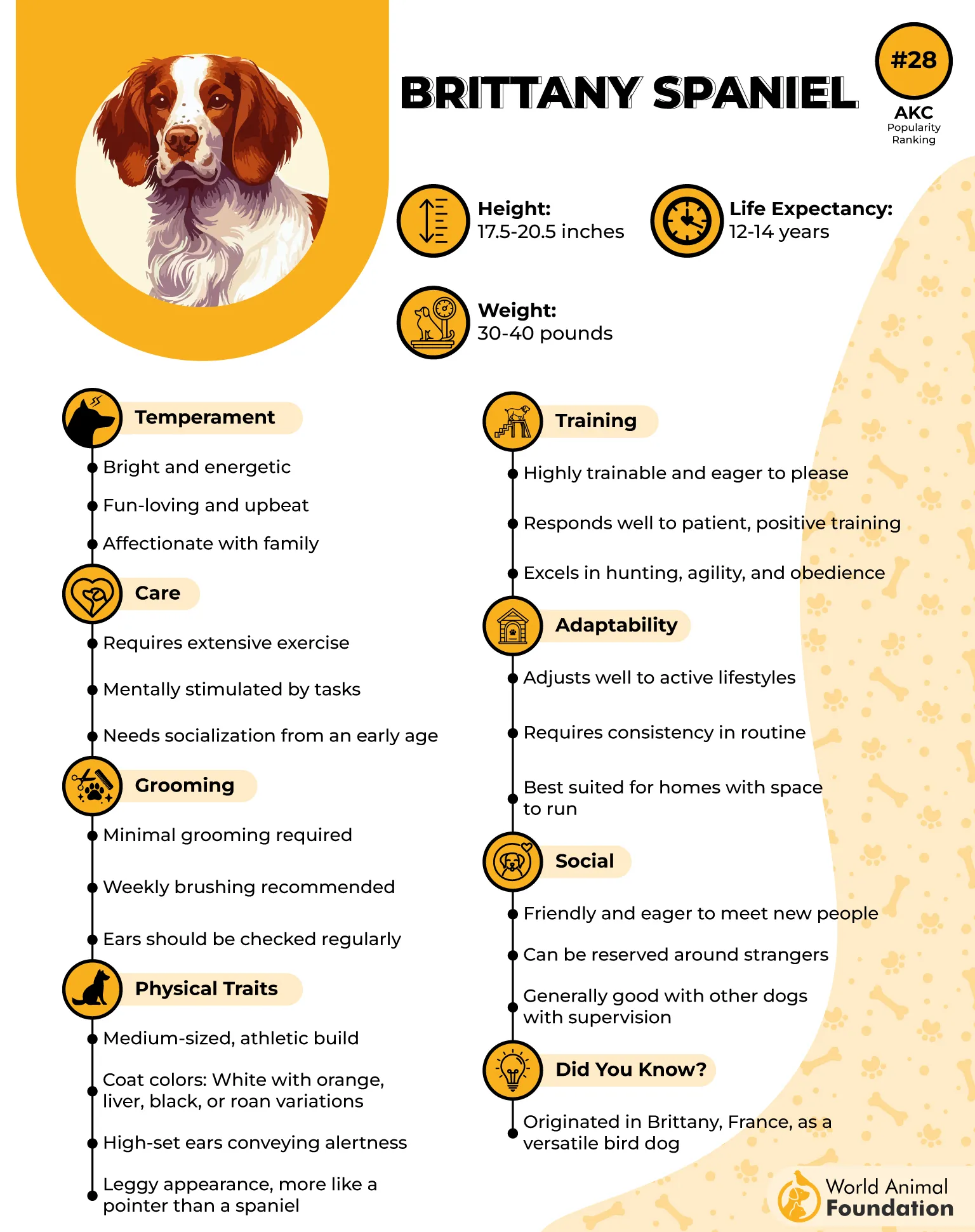
In the field, the Brittany has a natural instinct to loop back toward the hunter, maintaining constant communication while covering open ground. High intelligence makes it responsive to whistles and hand signals without breaking focus, a quality that also makes training a genuine pleasure. It needs 1.5–2 hours of daily exercise, best met through long walks, jogging, fetch, and scent-based games.
Despite its tireless drive in the field, the Brittany is a soft-natured dog at heart. It responds poorly to harsh training and thrives on encouragement, patience, and human companionship.
4. English Setter
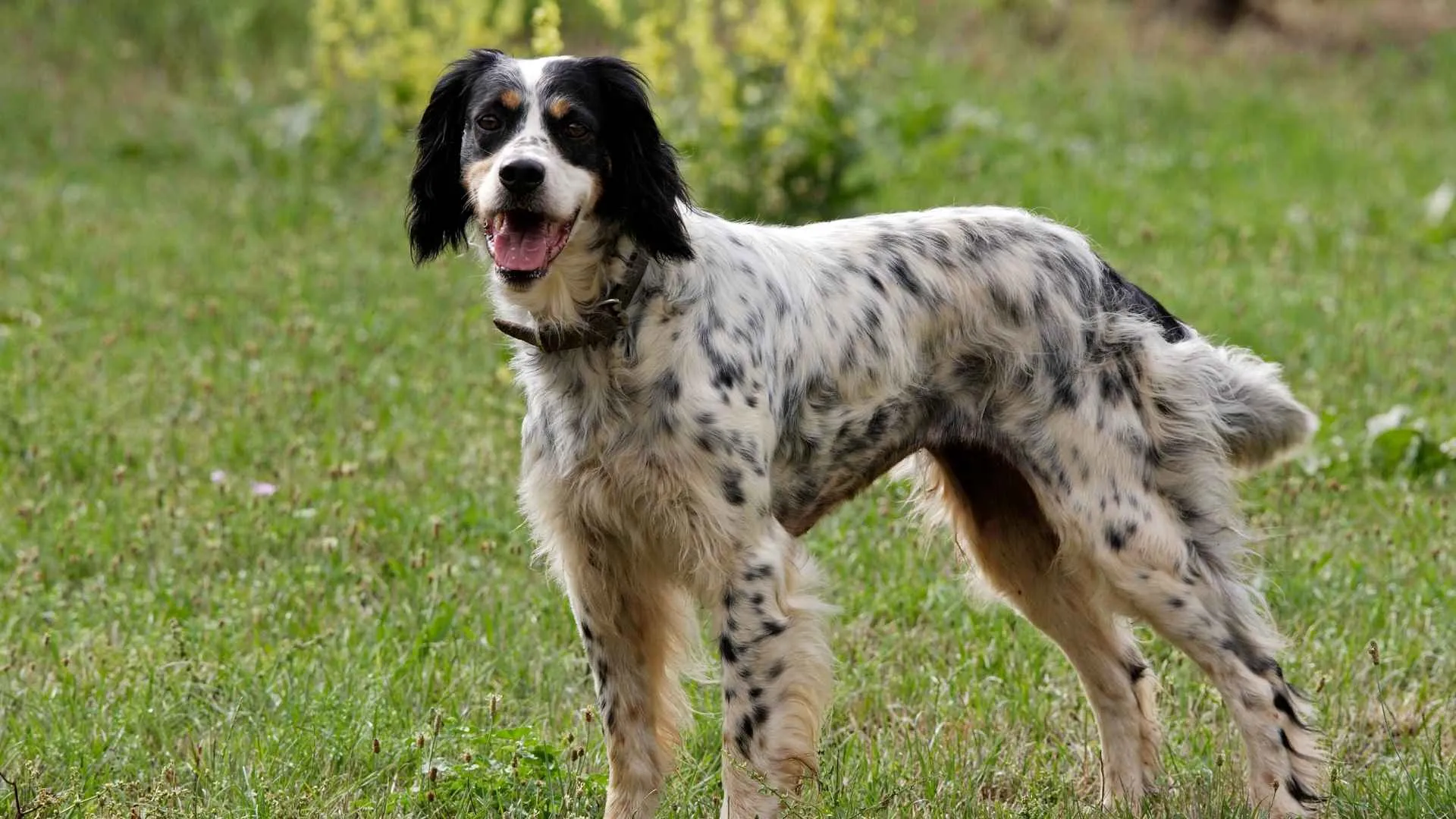
Developed in England during the 19th century, the English Setter was bred to excel at locating and retrieving game birds. Rather than freezing upright like a Pointer, it crouches low to signal the bird’s position; a signature move that sets it apart in the field. According to PetMD, the breed weighs 45–80 pounds and stands 23–27 inches tall.
The English Setter has a long, lean head with a large olfactory cavity capable of detecting scent from nearly 100 metres away. Angulated shoulders and well-padded feet allow it to cover rough terrain efficiently, absorbing impact as it goes. Even its feathered tail serves a purpose, acting as a visible signal to hunters tracking the dog across open ground.
Independent by nature, the English Setter is comfortable making its own decisions in the field, working for long stretches with focus and high energy. It needs 1–2 hours of daily exercise, best met through brisk walks, jogging, fetch, and off-leash runs.
Indoors, the English Setter is a different dog entirely, calm, placid, and famously gentle with children. Emotionally sensitive, it responds poorly to harsh corrections and thrives with positive reinforcement and patient, consistent training.
5. Vizsla
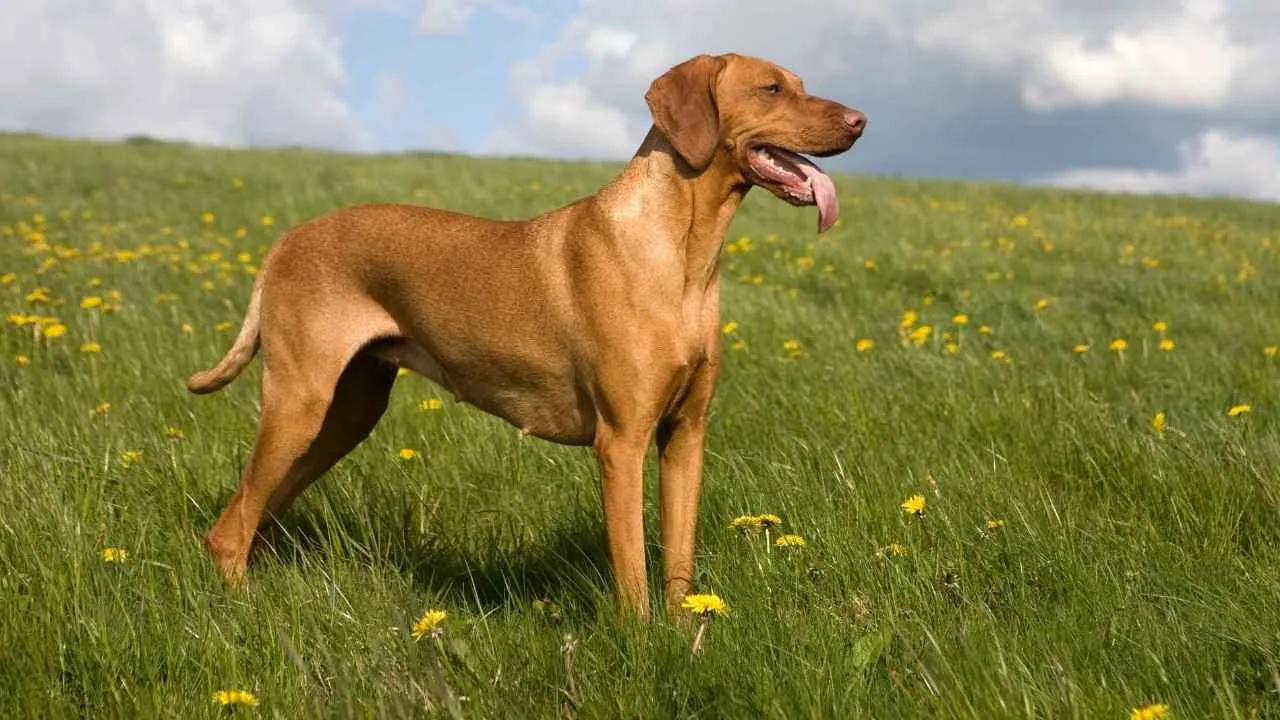
The Vizsla is a medium-sized sporting breed developed in Hungary for fowl and upland hunting. Today it’s widely used for tracking, pointing, and retrieving, including in water. Its short, rust-gold coat is naturally dust-resistant and sheds debris from thick grass, while its reddish-brown eyes and nose act as camouflage in the brush.
Athletic and agile, the Vizsla has cat-like paws that handle rugged terrain without breaking stride, and can reach speeds of up to 40 mph. True to its hunting roots, it has a soft mouth, retrieving birds cleanly without causing damage. In the field, it’s also naturally communicative, regularly glancing back at the hunter to stay in sync.
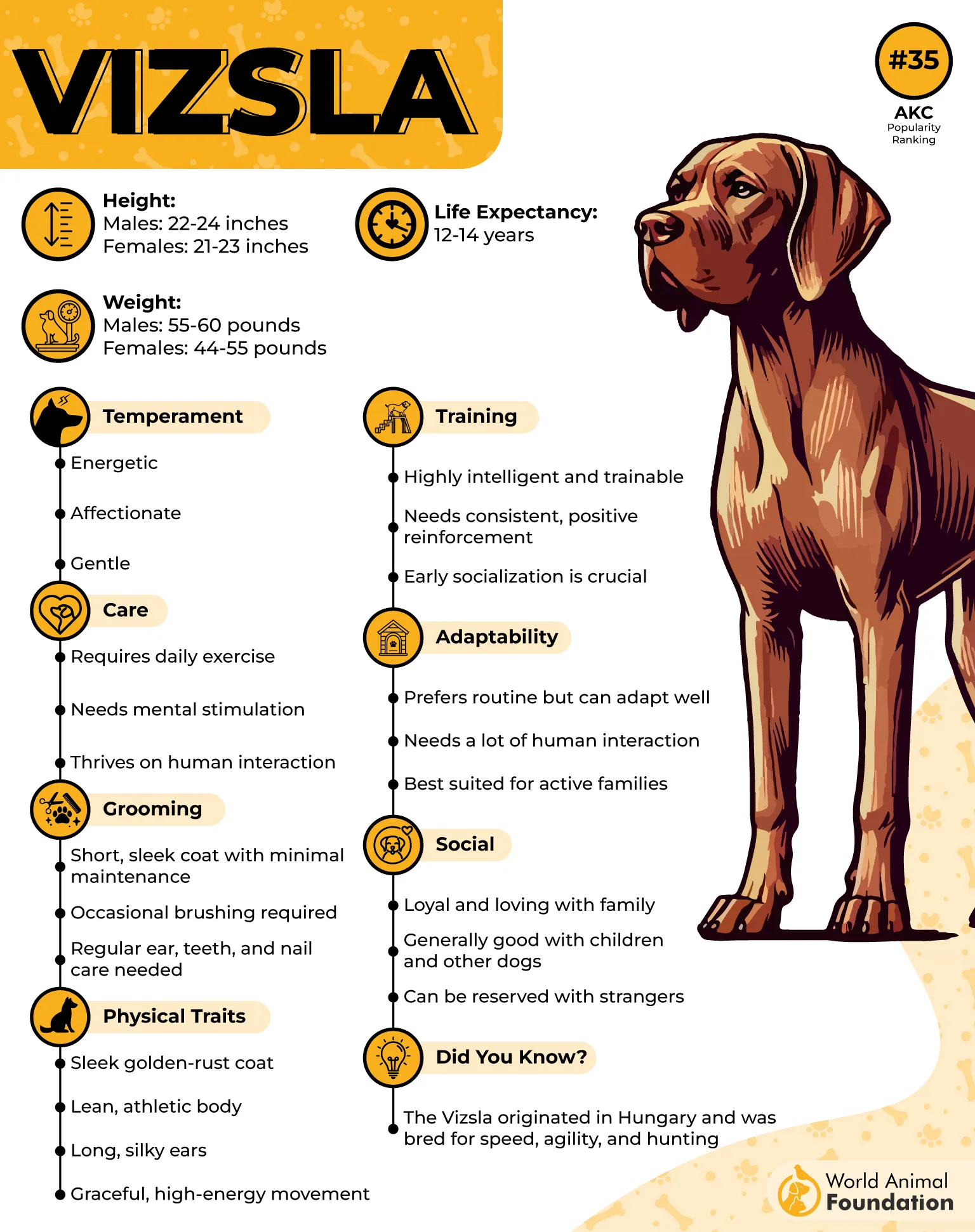
The Vizsla is famously devoted to its people; often called a “velcro dog” for its tendency to follow its owner from room to room and stay as close as possible at all times. That same emotional intelligence has made the breed a natural fit for therapy and guide dog work.
Their self-grooming habit keeps them remarkably clean compared to most sporting breeds, but their strong prey drive means consistent on-leash training and early socialization are non-negotiable.
6. Labrador Retriever
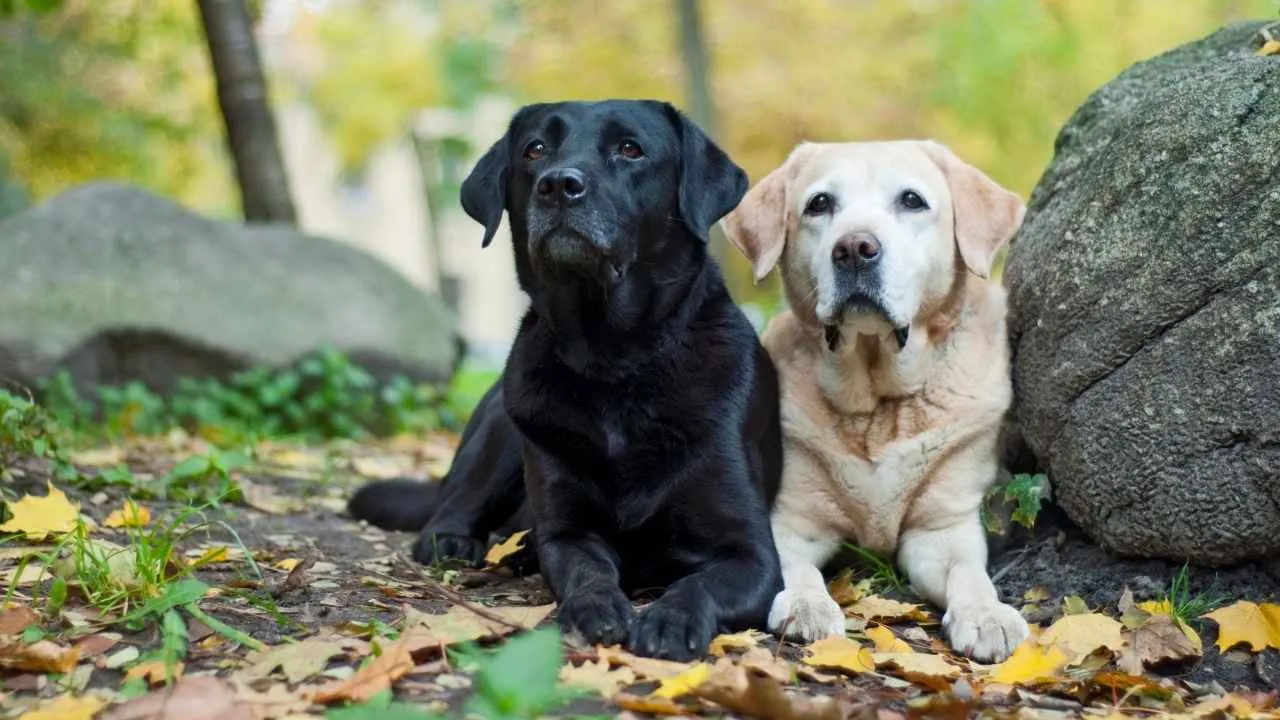
The Labrador Retriever was developed in England from St. John’s Water Dogs imported from Newfoundland, Canada. Highly intelligent and famously good-natured, Labs are widely used in therapy, assistance, search and rescue, and guide work, and their gentle temperament makes them one of the most popular family companions in the world.
In the field, the Labrador Retriever is a formidable hunting partner. It can reach speeds of 30 mph, giving it the ability to catch upland birds before they take flight. Its dense double coat provides insulation in cold water and weather, while its distinctive “otter tail” acts as a rudder for balance and steering while swimming. Labs also have a remarkable marking instinct, capable of tracking multiple birds falling at once and calculating exactly where each will land.
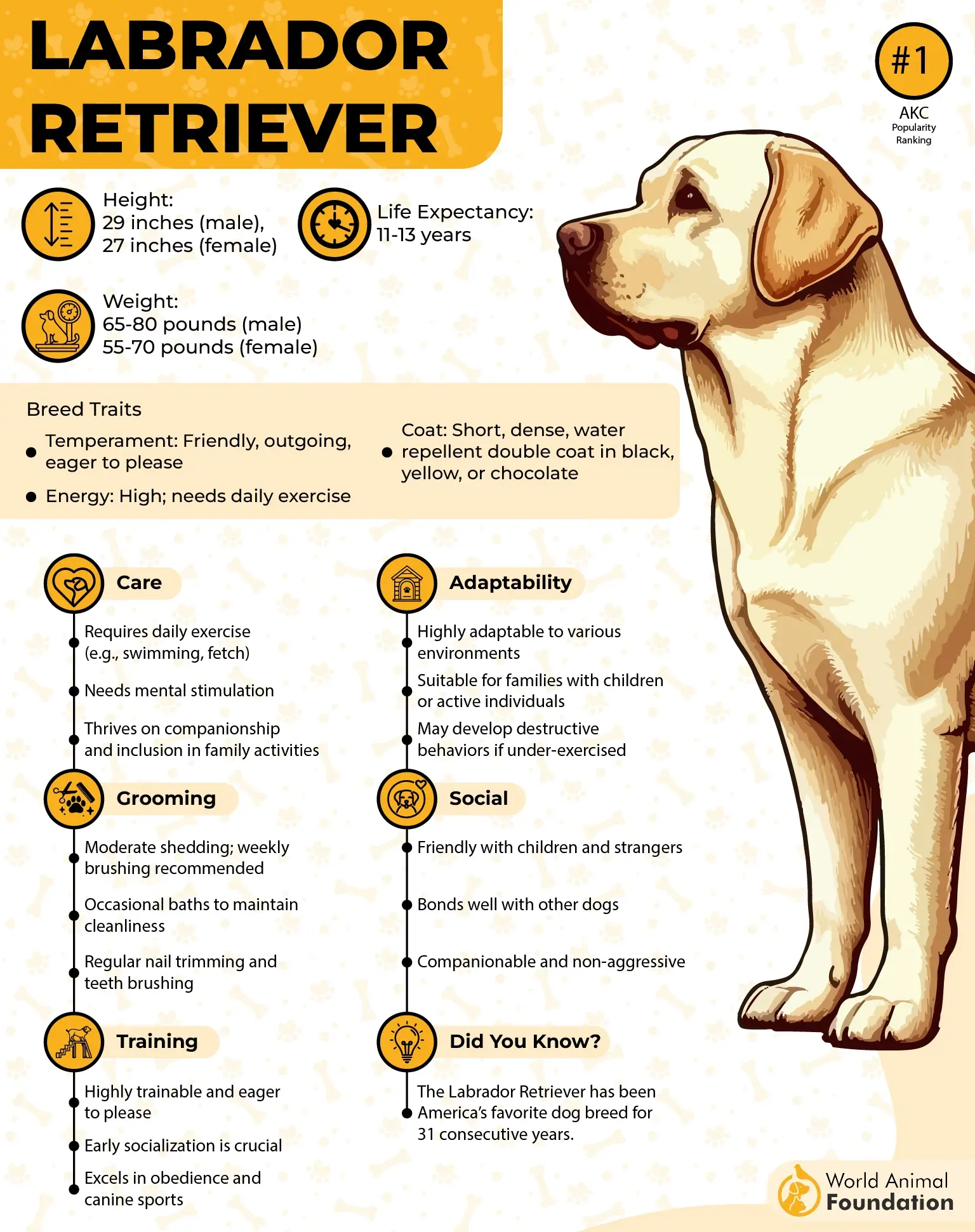
Highly collaborative by nature, the Lab thrives on teamwork and loves taking direction from its handler. It needs 1–2 hours of vigorous daily exercise, though puppies should be kept to gentler activity until around 18 months to protect developing joints.
Labs famously retain their playful, clownish energy well into old age. They love meeting new people and animals, which makes them terrible guard dogs and absolutely wonderful family dogs.
7. English Springer Spaniel
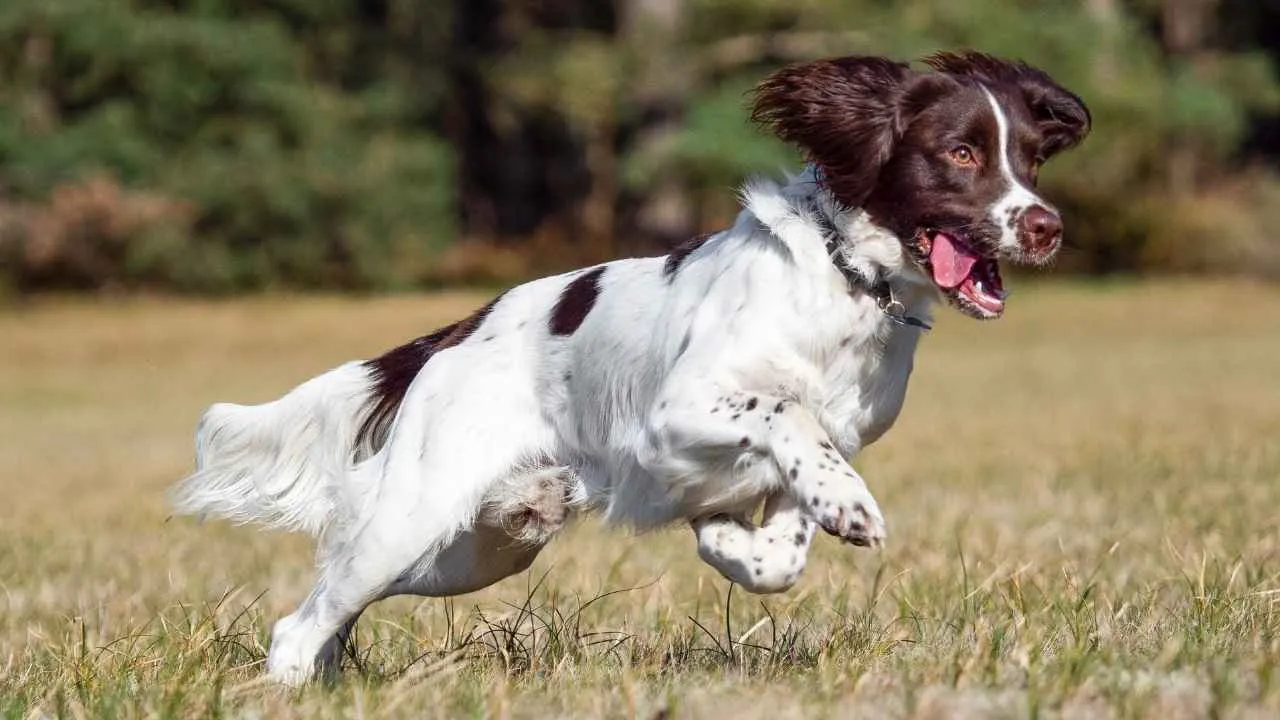
The English Springer Spaniel was developed in England in the 19th century, originally bred for flushing and retrieving game. According to Orvis, the breed’s ancestors are believed to be Cocker Spaniels, depicted in Spanish artwork as far back as the 16th century.
Weighing 40–50 pounds, the English Springer Spaniel has a deep chest built for endurance, allowing it to cover long distances without tiring. In the field, it moves in a sweeping zig-zag pattern, working 20–30 yards ahead of the hunter to track and flush prey, aggressively “springing” birds into the air with a bold, confident temperament.
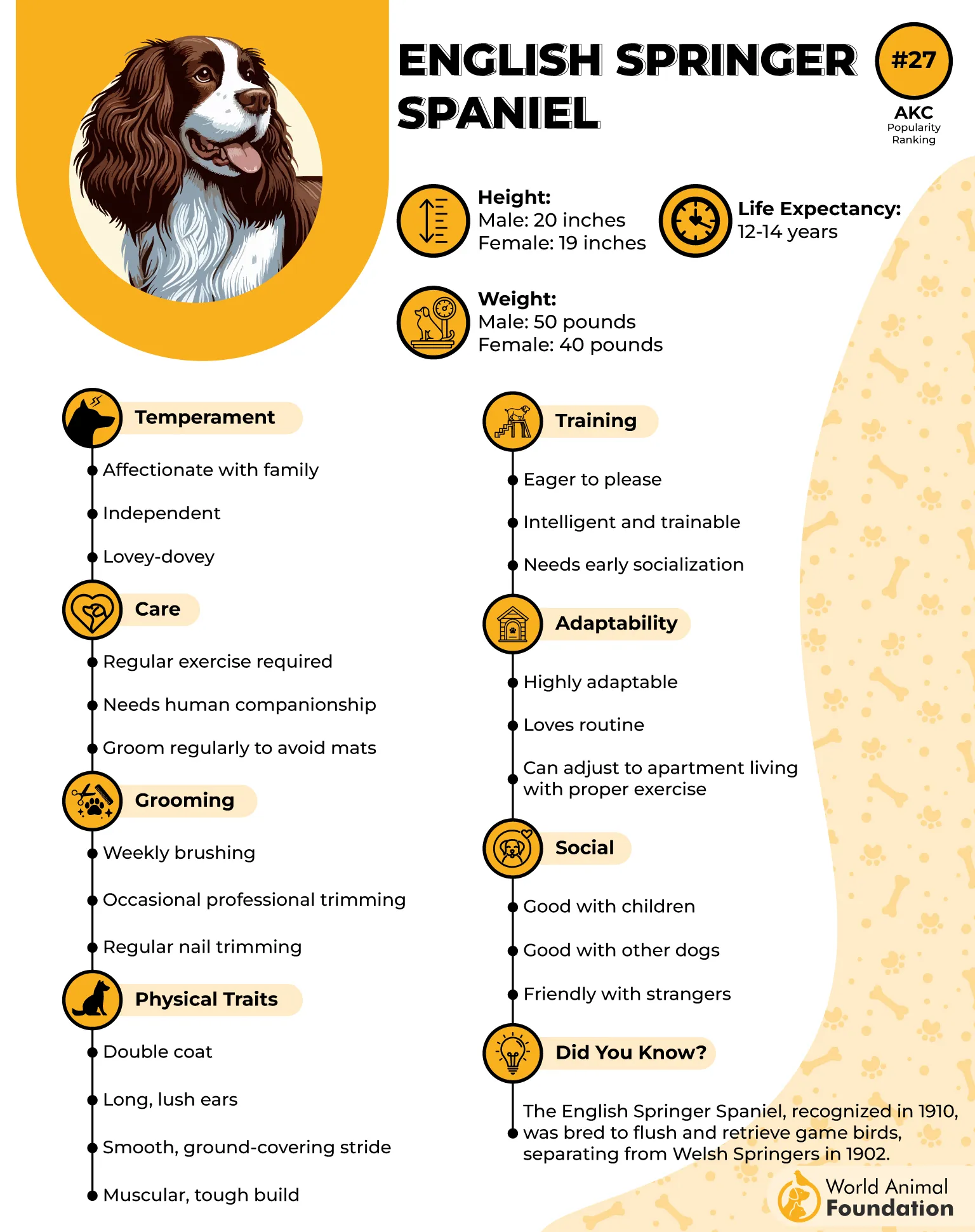
The breed thrives on 1–2 hours of vigorous daily exercise, including scent work, swimming, and mentally stimulating activities. Its double coat needs brushing every 2–3 days with a slicker brush and metal comb, with extra attention to friction-prone areas like the legs, chest, and ears.
Those long, feathered ears are a standout feature, but require regular cleaning to prevent the infections that commonly affect floppy-eared breeds.
8. Golden Retriever
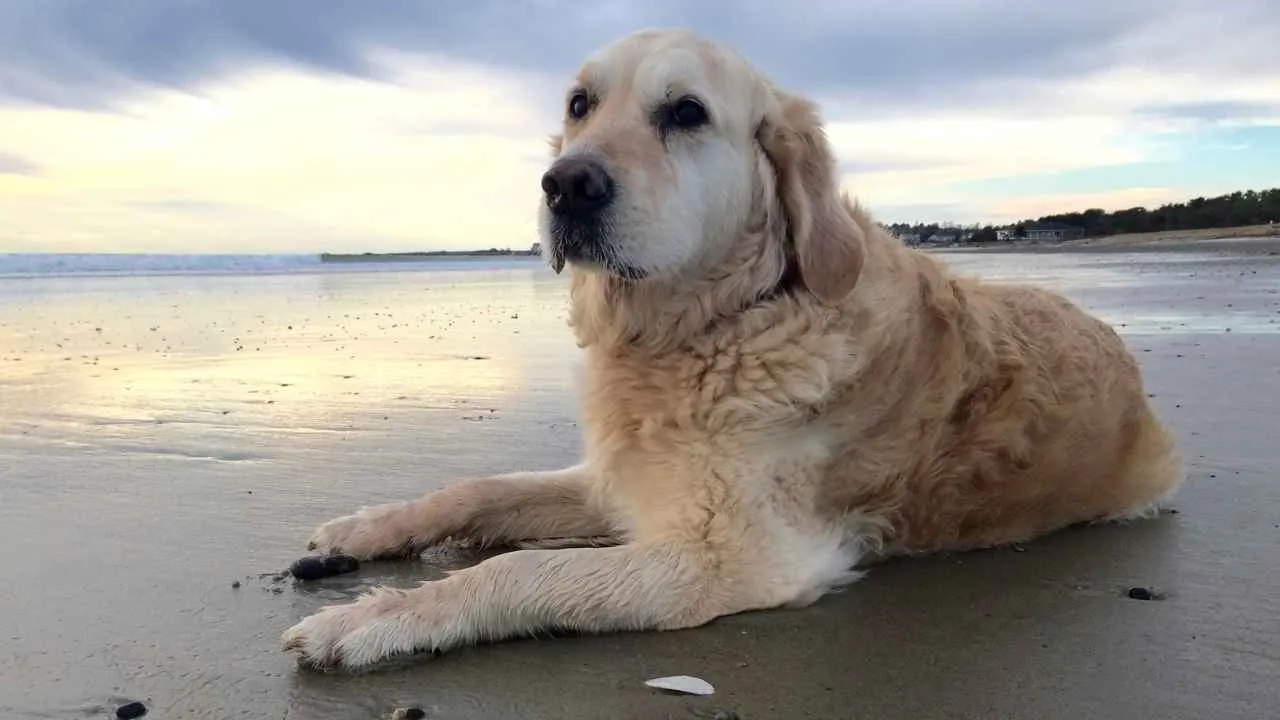
The Golden Retriever was developed in Scotland during the 19th century by Sir Dudley Marjoribanks, who crossed the Tweed Water Spaniel with the Flat-Coated Retriever. Today, the breed is celebrated as a show dog, guide dog, and one of the most beloved family companions in the world.
The Golden Retriever uses three distinct gaits in the field. The trot is a two-beat diagonal gait ideal for covering large areas without tiring. The canter, a three-beat asymmetrical gait combining a run and a trot, is used during tracking. And the gallop is reserved for the final flush, when speed is everything.
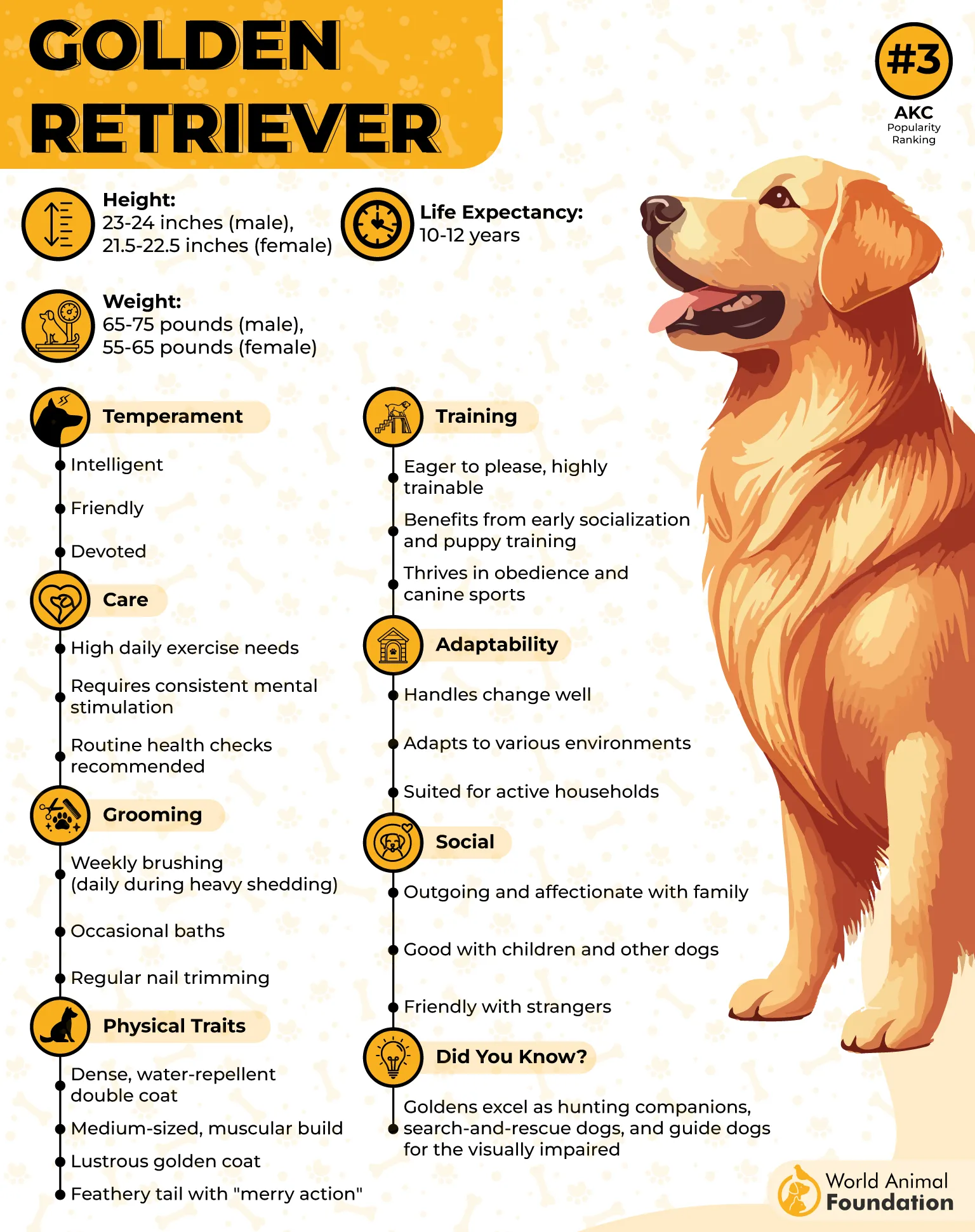
Goldens need 1–2 hours of daily exercise, best met through long walks, swimming, fetching, and retrieval work. Their plush golden coat requires brushing 3–5 times a week, and daily brushing during shedding season in spring and summer.
One endearing quirk: Goldens are famously slow to mature. They reach full physical size by around one year old, but often hold onto their goofy, playful puppy energy until they’re closer to three.
9. Irish Setter
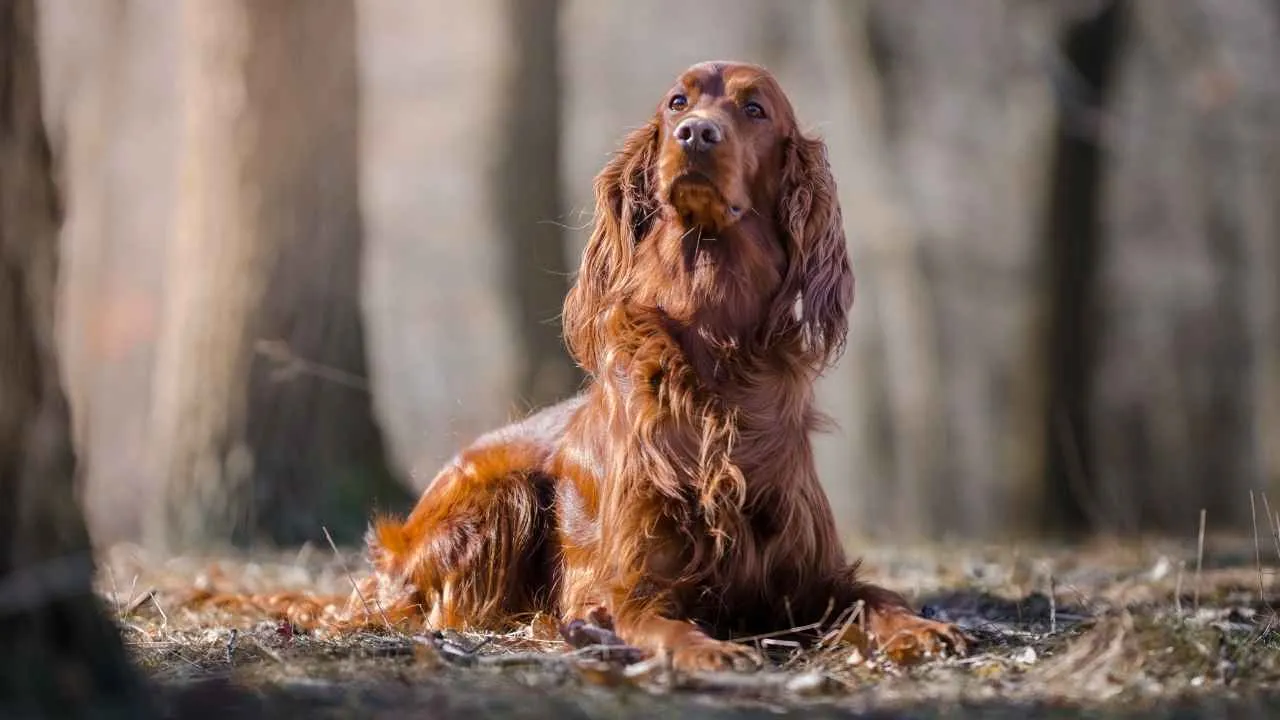
The Irish Setter originated in Ireland as both a gundog and family companion, developed from old Spaniel breeds and once known as the “Red Spaniel.” It is considered one of the oldest of the setter breeds, and is widely regarded as the swiftest sporting dog, built for speed with long, sinewy legs and a powerful rear drive.
In the field, the Irish Setter relies on air-scenting rather than ground-scenting, giving it greater precision when locating upland game. Its striking mahogany coat isn’t just beautiful; it also provides excellent visibility for hunters tracking the dog across wide, open terrain. Independent by nature, it’s comfortable working large areas away from the hunter without waiting for direction.
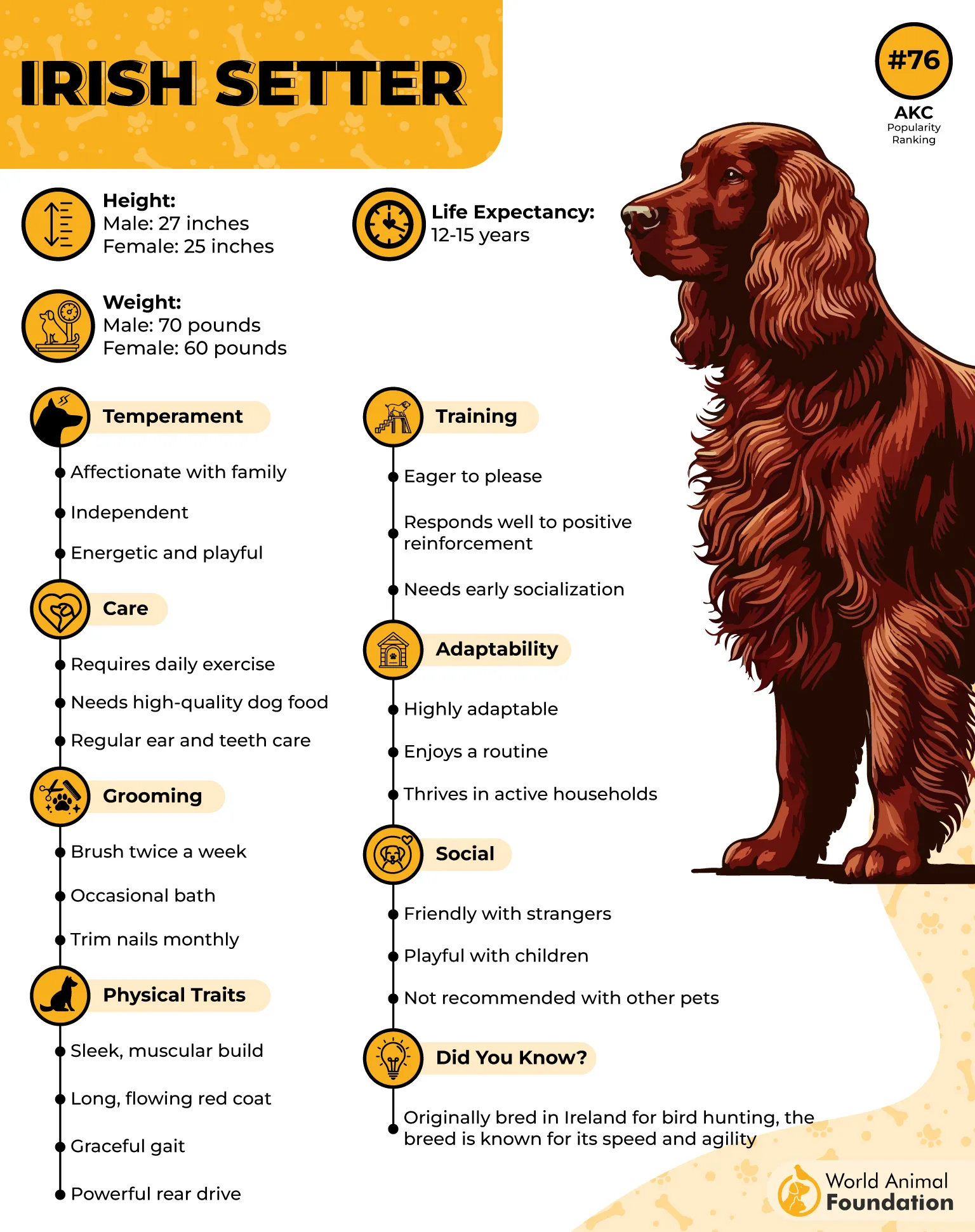
Often called the “clowns” of the dog world, Irish Setters are joyful, goofy, and endlessly entertaining. They adore children, though their exuberant, puppy-like energy can be a bit much for very young toddlers. Friendly with family and other dogs alike, they respond best to positive reinforcement training.
This versatile dog thrives on vigorous daily exercise: jogging, running, retrieving, and scent-based games all make ideal outlets. Their distinctive ear shape makes them prone to ear infections, so regular ear checks are an important part of routine care.
Conclision
Every breed on this list was shaped by centuries of working alongside humans in some of the toughest terrain imaginable. That history matters. It is why the best bird dog breeds do not just perform in the field; they belong there.
From the Pointer’s legendary freeze to the Irish Setter’s flamboyant gallop, each of these nine breeds brings something completely its own to the open plains. The real question is not which breed is the “best.” It is which one fits your hunting style, and which one you will be telling stories about for years to come.
That is the thing about a great hunting dog. They do not just help you find birds. They become the story itself.
