




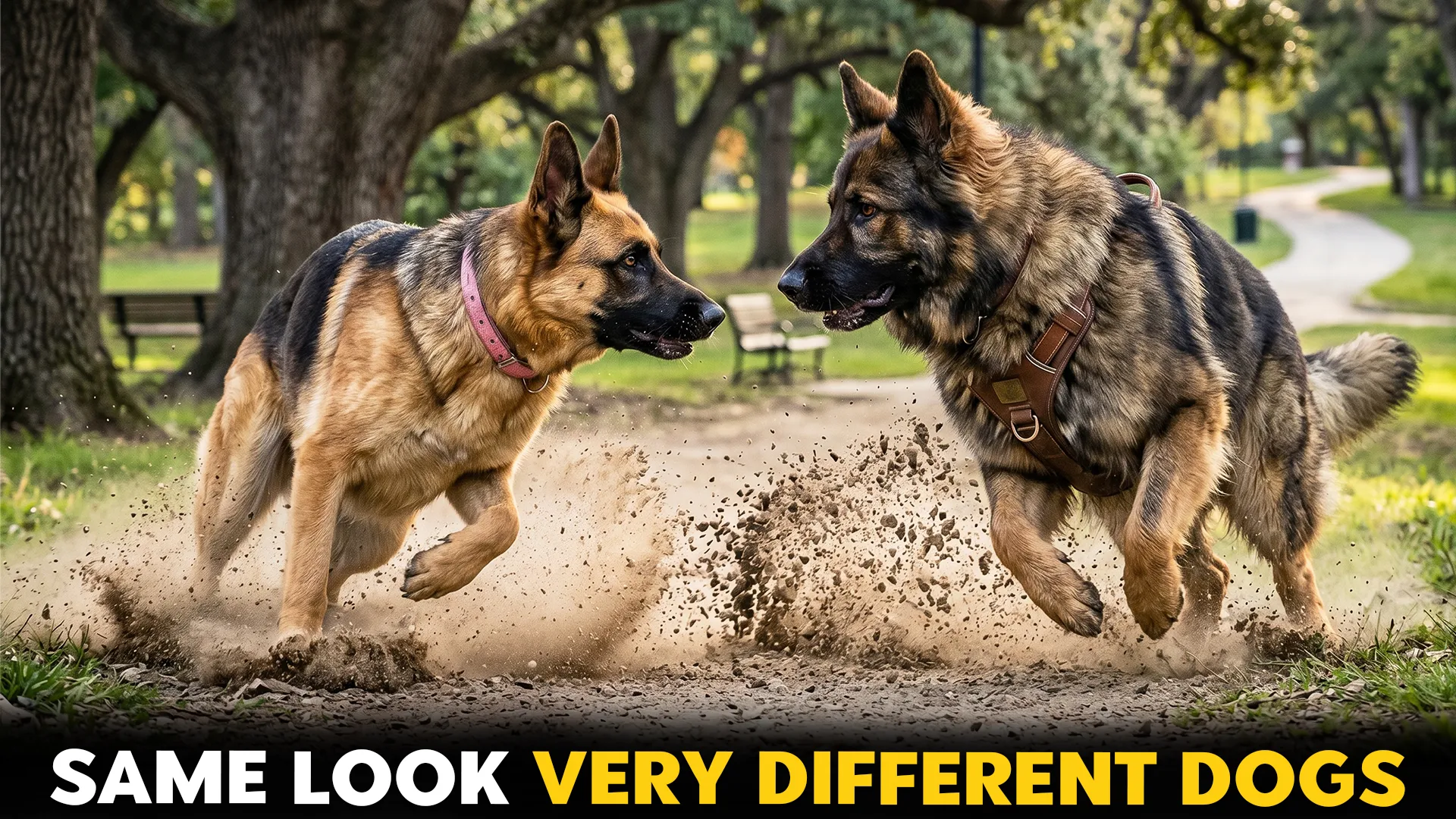
Most comparisons between these two shepherd-type dogs focus heavily on appearance. Height, weight, coat, and overall build tend to dominate the discussion, leading many people to believe the choice comes down to visual preference. That approach misses the details that matter most.
A dog’s suitability is rarely determined by how it looks standing in a photograph. The qualities that shape everyday life are found in temperament, working instincts, trainability, activity levels, and adaptability to different environments.
Two dogs can appear remarkably similar while offering very different ownership experiences. This is exactly why so many prospective owners struggle when comparing these breeds. The similarities attract attention, but the differences ultimately influence satisfaction.
In the following sections, you’ll explore the factors that truly separate these breeds and discover which qualities deserve the closest attention.
Key Takeaways
Two powerful shepherd-type dogs often get compared side by side, yet most people miss the real differences that matter beyond size and appearance.
German Shepherds carry a long working history dating back to 1899 in Germany, while King Shepherds only appeared in the 1990s in the United States as a larger experimental line
One is built for agility and sharp movement, while the other leans toward heavier structure and calm strength, which changes everything about daily handling
Keep reading to uncover how these differences shape training, temperament, and which one actually fits your lifestyle better
German Shepherd Dog Breeds vs. King Shepherd Dog Breeds Explained
Origins & Purpose
German Shepherd Working Foundations
German Shepherds first gained recognition in Germany during 1899, when Captain Max von Stephanitz organized old farm and shepherd dogs into the structured breed known today. Long before formal recognition, these dogs already worked closely beside humans as dependable herders, helpers, and working companions.
The breed’s reputation expanded rapidly during the early 1900s as German Shepherds entered military, police, and service roles across different countries, as noted by the AKC. During both World Wars, some regions even avoided the word “German” and referred to the breed as the Alsatian instead.
King Shepherd Modern Creation
King Shepherds arrived much later in the United States during the 1990s, when breeders wanted a larger shepherd-type dog with fewer inherited health concerns than some traditional German Shepherd lines. Early breeding combined German Shepherds with Shiloh Shepherds, which already included Alaskan Malamute influence.
Breeders also added long-haired European German Shepherd lines to strengthen coat appearance and improve genetic diversity within the newer bloodline. Even today, the King Shepherd remains relatively uncommon and still lacks official recognition from the American Kennel Club despite acceptance by several rare breed organizations.
Size & Physical Build
German Shepherd Athletic Structure
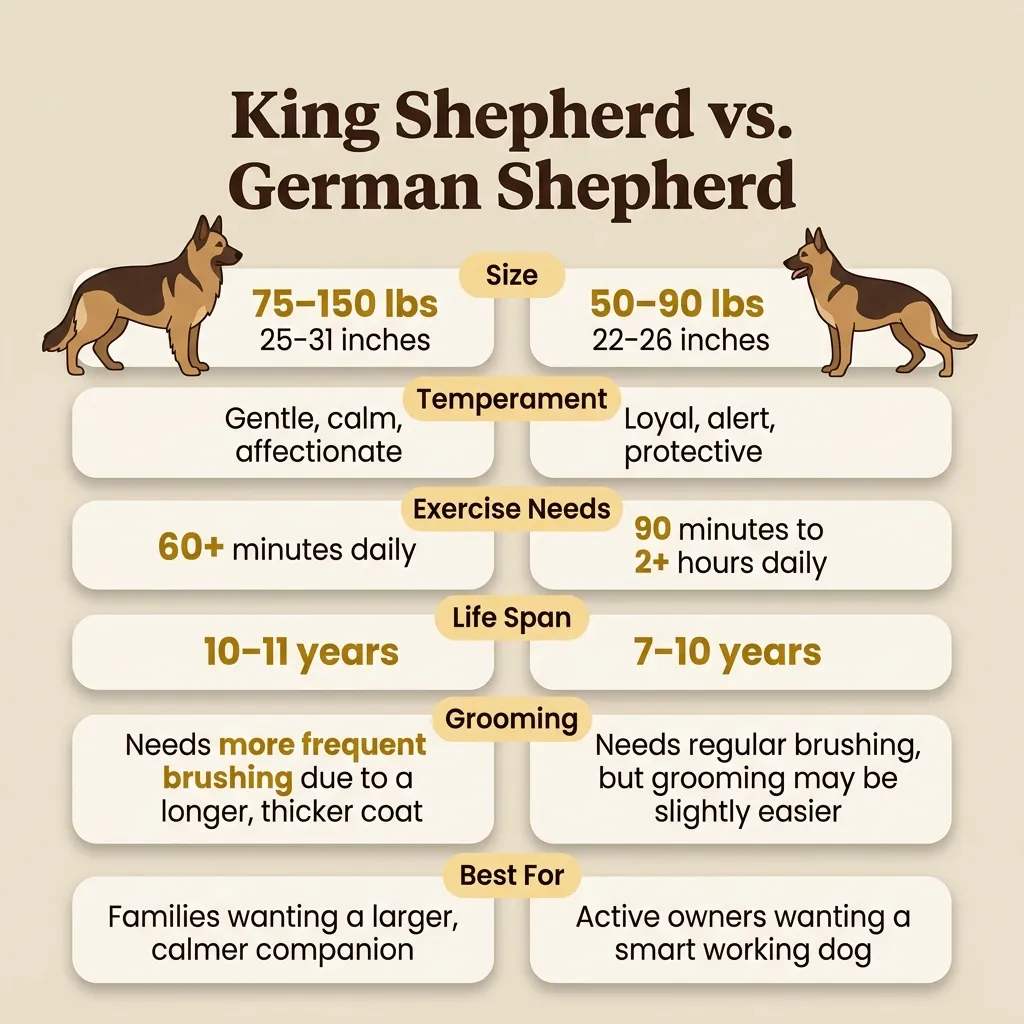
German Shepherds balance strength with agility, usually standing between 22 and 26 inches tall and weighing around 50 to 90 pounds, depending on sex. Their body structure looks smooth and controlled rather than bulky, which helps explain the breed’s reputation as an all-purpose working dog.

Movement is one of the breed’s most recognizable traits. The long, flowing trot and flexible frame allow German Shepherds to shift quickly between speed, endurance, and precise movement without looking heavy or overly rigid during work.
King Shepherd Heavy Build
King Shepherds stand noticeably larger, with males reaching up to 32 inches tall and weighing as much as 150 pounds. Their deeper chest, thicker bone structure, and elongated body create a far more rugged and imposing physical appearance overall.
The head structure also looks broader and more powerful compared to a standard German Shepherd. Wide boxy features, erect triangular ears, and a heavier frame give the King Shepherd a stronger “giant guardian” presence the moment it enters a space.
🎧 Dogcast
Episode 37 — Why Dogs Stay Close without Touching
If you don't hear sound, tap the button above to enable audio.
Temperament & Personality
German Shepherd Personality Style
German Shepherds usually stay deeply loyal to their family while remaining naturally watchful around unfamiliar people, as Britannica notes. That alert personality often makes them feel more serious and observant in daily life, especially in homes where they form strong bonds with a small group of people.
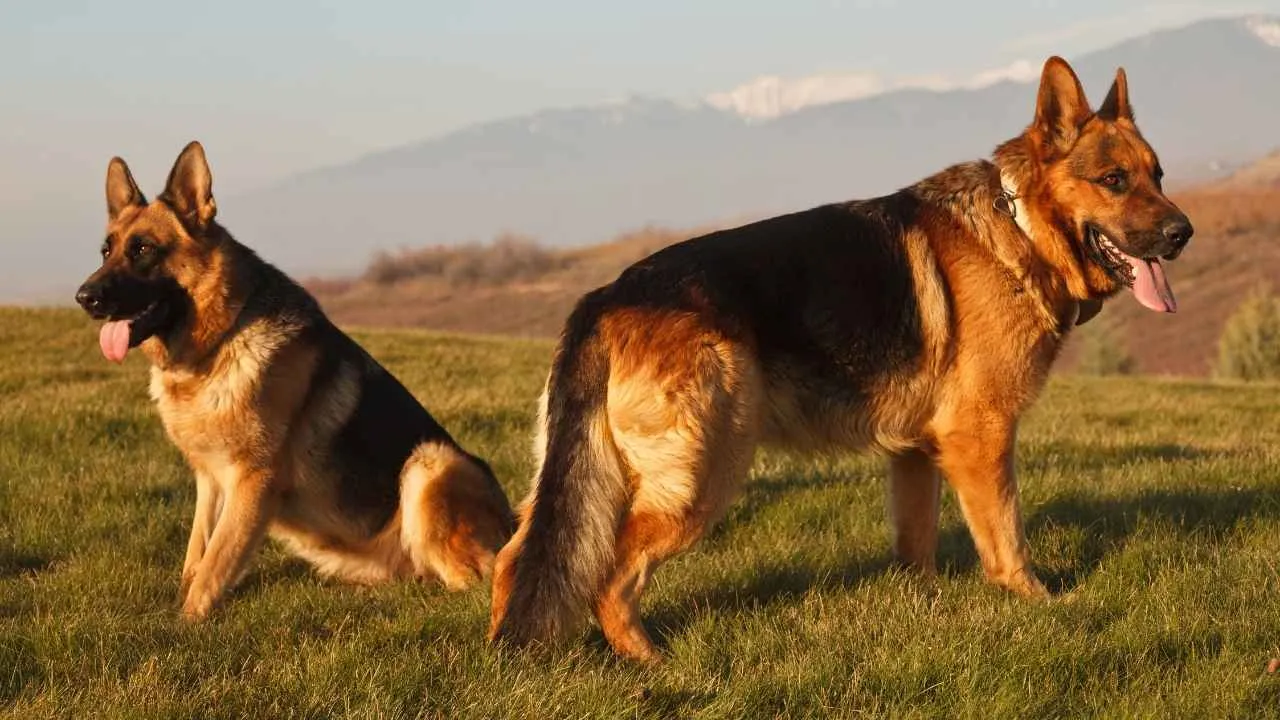
Their behavior around children depends heavily on early socialization and proper interaction from both sides. When structure and supervision are present, German Shepherds often show a calm, gentle side with family members despite their naturally protective instincts.
King Shepherd Home Temperament
King Shepherds generally present a softer and more adaptable personality inside the home, especially around children and other pets. Even with their large size, they often behave with a surprisingly calm and approachable attitude that fits well into active family environments, as noted by the Continental Kennel Club.
This breed also forms very close attachments to its people and usually dislikes being left alone for long stretches. Their intelligence and willingness to cooperate make training easier, but boredom and isolation can quickly turn into destructive indoor behavior if their social needs are ignored.
Exercise & Energy Levels
German Shepherd Energy & Daily Drive
German Shepherds carry a strong, athletic energy that needs steady physical activity to stay balanced. They generally do best with one to two hours of daily movement, because without enough outlet, their alert nature can turn into restlessness at home. Puppies are usually introduced through shorter walks and controlled play sessions in secure spaces.

Their energy also shows up in how quickly they become mentally engaged with movement-based activities like agility-style work, tracking games, or herding-style tasks, as PetMD writes. Even simple play in a fenced area can feel structured and purposeful for this breed when done consistently.
King Shepherd Power & Activity Needs
King Shepherds bring a heavier, more sustained energy level that leans toward long, uninterrupted activity rather than short bursts. They typically need at least an hour or more of strong daily exercise, especially in homes where space allows them to move freely and explore without restriction.
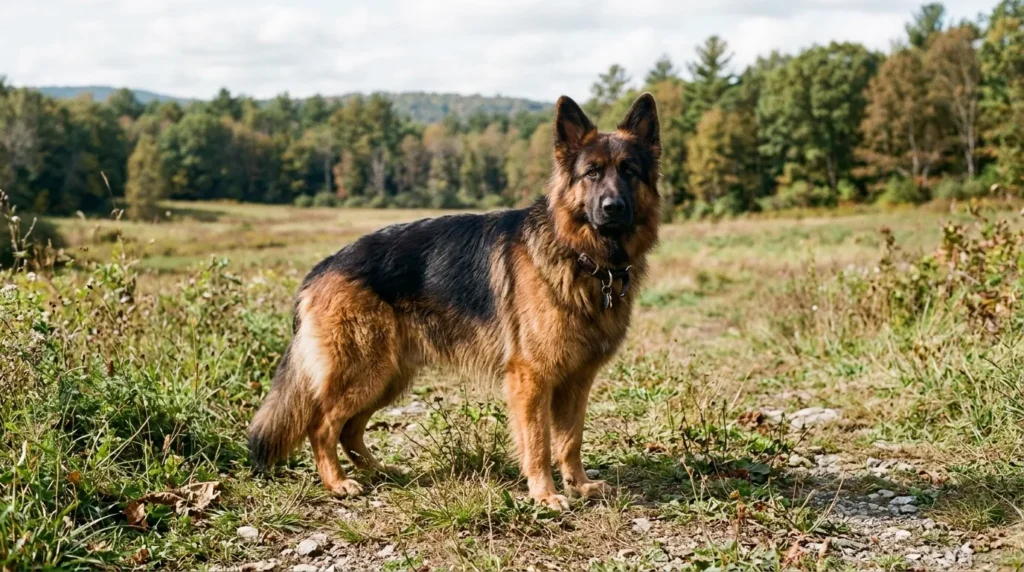
Their engagement often comes through canine sports like fetch, tug, or search-style play, which help prevent boredom from settling in too quickly. Without enough activity, their energy can build up in a way that feels more restless than playful, so regular movement becomes an important part of their daily rhythm.
Training & Intelligence
German Shepherd Learning Style & Obedience
German Shepherds respond best when training starts early and stays consistent, especially during puppyhood when exposure to new people, places, and routines shapes their long-term behavior. Their intelligence shows strongly in how quickly they pick up structured lessons, especially when guidance is clear and reward-based.
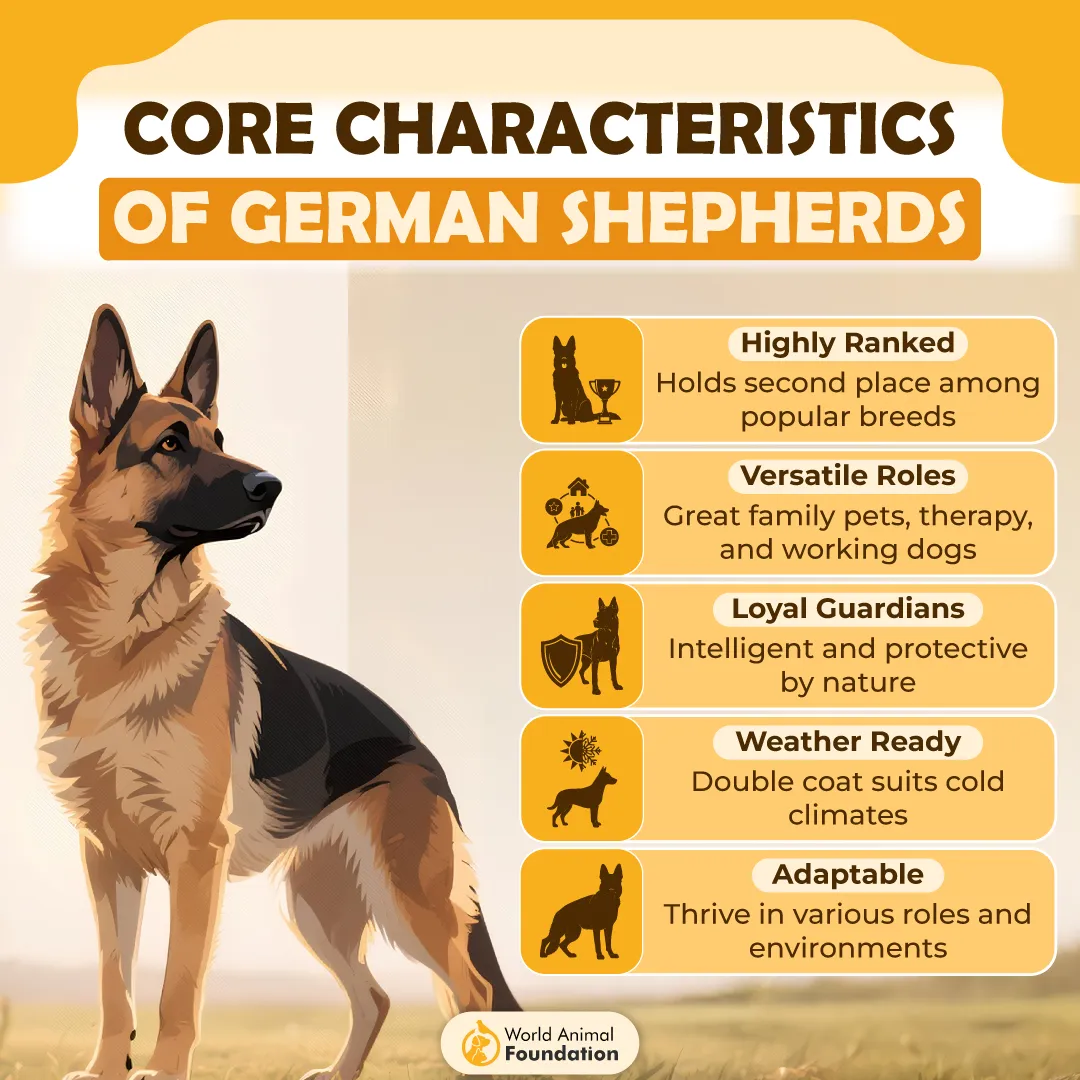
This breed forms a close attachment with its people, which directly influences how it learns and behaves. A German Shepherd tends to perform best when it is raised inside the home and included in daily family activity rather than being kept separate or under-stimulated.
King Shepherd Training Approach & Behavior
King Shepherds are also highly intelligent, but their learning style feels more straightforward when the handler stays consistent and keeps sessions engaging. Basic obedience often starts early in puppyhood, and continued training helps refine behavior as the dog grows into its adult size and strength.
Early social exposure plays a key role in shaping how this breed behaves around strangers and other animals. When introduced properly from a young age, King Shepherds usually develop into responsive, people-focused dogs that are easier to manage in everyday situations.
Coat Maintenance
German Shepherd Coat Care Rhythm
German Shepherds carry a medium-length double coat with a dense outer layer and a softer undercoat underneath. In daily life, it stays fairly manageable with a few brushing sessions each week, mainly to clear loose hair and keep the coat sitting neatly against the body.
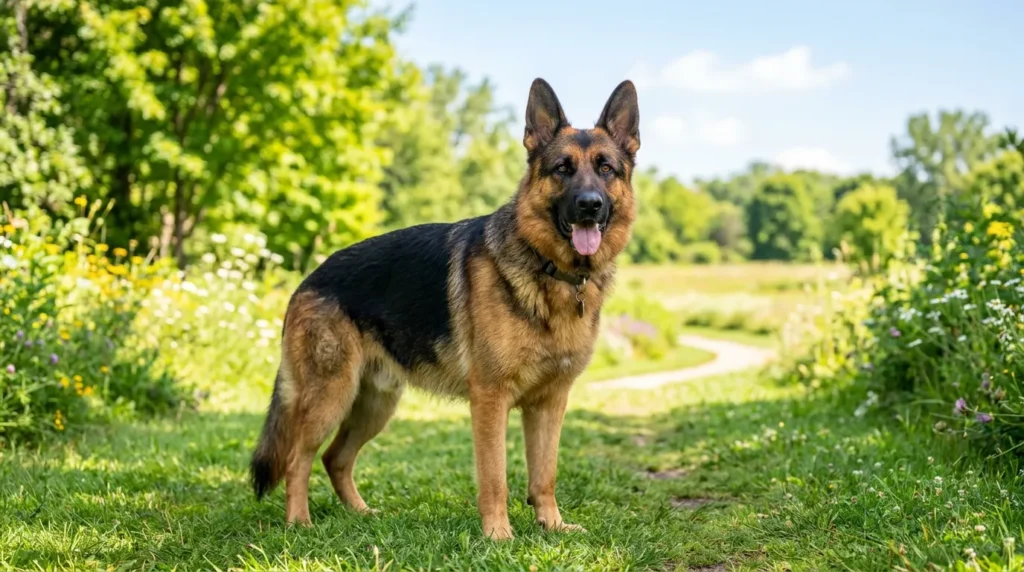
Shedding becomes more noticeable during seasonal coat blows, when the undercoat loosens heavily over a short period. During those phases, extra brushing helps control loose fur around the home, while baths are only needed occasionally to keep the coat clean without stripping natural oils.
King Shepherd Grooming Demand
King Shepherds have a much thicker double coat that tends to shed heavily throughout the year. Regular brushing several times a week, sometimes even daily, becomes part of routine care to prevent tangles and manage the constant loose hair.
Bathing is not frequent, usually spaced out around every three to four months, but coat upkeep stays ongoing because of the density and volume of fur. Regular ear checks and dental care also help maintain overall hygiene alongside the heavier grooming routine.
Health & Lifespan
German Shepherd Health Snapshot
German Shepherds typically live around 12 to 14 years, and most stay healthy when bred responsibly and given proper care. The main concerns linked to the breed often show up in large working dogs, especially joint-related conditions like hip and elbow dysplasia, along with degenerative myelopathy that can affect mobility later in life.
Another serious risk in this breed is bloat, a sudden and dangerous stomach condition that can escalate quickly if not recognized early. Because of this, awareness of early signs becomes just as important as routine care, especially in deep-chested dogs like the German Shepherd.
King Shepherd Health Overview
King Shepherds usually share a similar lifespan range of about 10 to 14 years, and while they are generally considered healthy, their larger build still brings certain risks. Joint issues such as hip and elbow dysplasia remain common concerns, especially in fast-growing or heavily built individuals.
Other conditions seen in the breed include von Willebrand disease affecting blood clotting, hypothyroidism linked to metabolism changes, and eye disorders like pannus or glaucoma. Like many large dogs, they can also experience bloat, along with skin allergies that may require ongoing management rather than one-time treatment.
Conclusion
When comparing the German Shepherd and the King Shepherd, both breeds share intelligence, loyalty, and a strong desire to work alongside their families. However, they differ in size, appearance, and overall purpose.
The German Shepherd is a versatile working dog known for its athleticism, trainability, and success in roles ranging from police work to family companionship.
The King Shepherd, on the other hand, was developed to be larger and more family-oriented while retaining many of the German Shepherd’s admirable qualities.
The better choice ultimately depends on your lifestyle and expectations. Those seeking a highly driven working dog may prefer the German Shepherd, while families looking for a larger, gentler companion with a commanding presence may find the King Shepherd a better fit.
