





Bringing a new dog into a home with a cat, or vice versa, can feel daunting. While every pet has its own personality, certain dog breeds are naturally better suited to feline company.
These breeds tend to share a few key traits: a low prey drive, a gentle temperament, and an adaptable, social nature. Together, these qualities make them far less likely to view a cat as something to chase and far more likely to simply coexist, or even bond.
Of course, successful dog-cat relationships still depend on proper introductions, consistent training, and supervised early interactions. But choosing the right breed from the start gives you a significant head start.
The seven dog breeds below have earned a strong reputation for thriving alongside cats and making multi-pet households genuinely work.
Dog Breeds That Quickly Adjust to Life With Cats
1. Cavalier King Charles Spaniel

Few breeds match the Cavalier King Charles Spaniel when it comes to warmth and adaptability. Bred as a companion dog, the Cavalier genuinely loves company, human or animal, and that inclusive nature extends naturally to cats.
Rather than viewing a cat as something to chase, Cavaliers tend to approach them with calm curiosity. Their rarely aggressive temperament helps ease the tension during initial introductions, giving cats the space and time they need to feel comfortable.
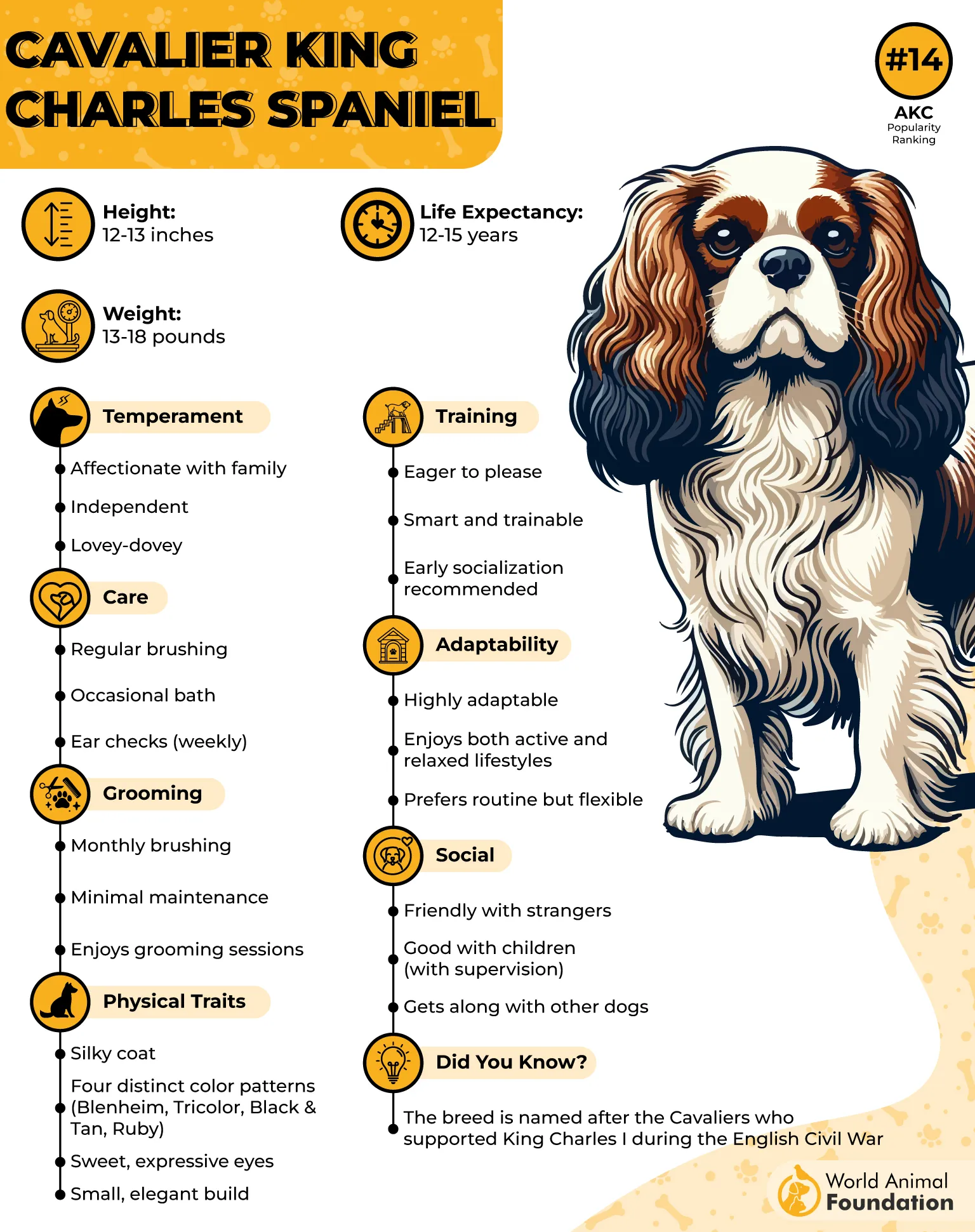
Energy levels are another advantage. Cavaliers enjoy walks and playtime but rarely tip into hyperactivity; their balanced disposition makes day-to-day cohabitation with a cat smooth and low-stress.
Perhaps most tellingly, many owners report that their Cavalier and cat don’t just tolerate each other — they become genuine companions, often sleeping side by side and settling into a shared daily routine.
2. Golden Retriever

Golden Retrievers are among the most reliably good-natured breeds, and that temperament extends well beyond their relationship with humans. Their outgoing, tolerant personality makes them one of the more dependable choices for a home shared with cats.
When socialized early, Goldens are typically patient and gentle. Their playful energy can initially catch a cat off guard, but aggression is rare, and they generally learn to read and respect boundaries over time.
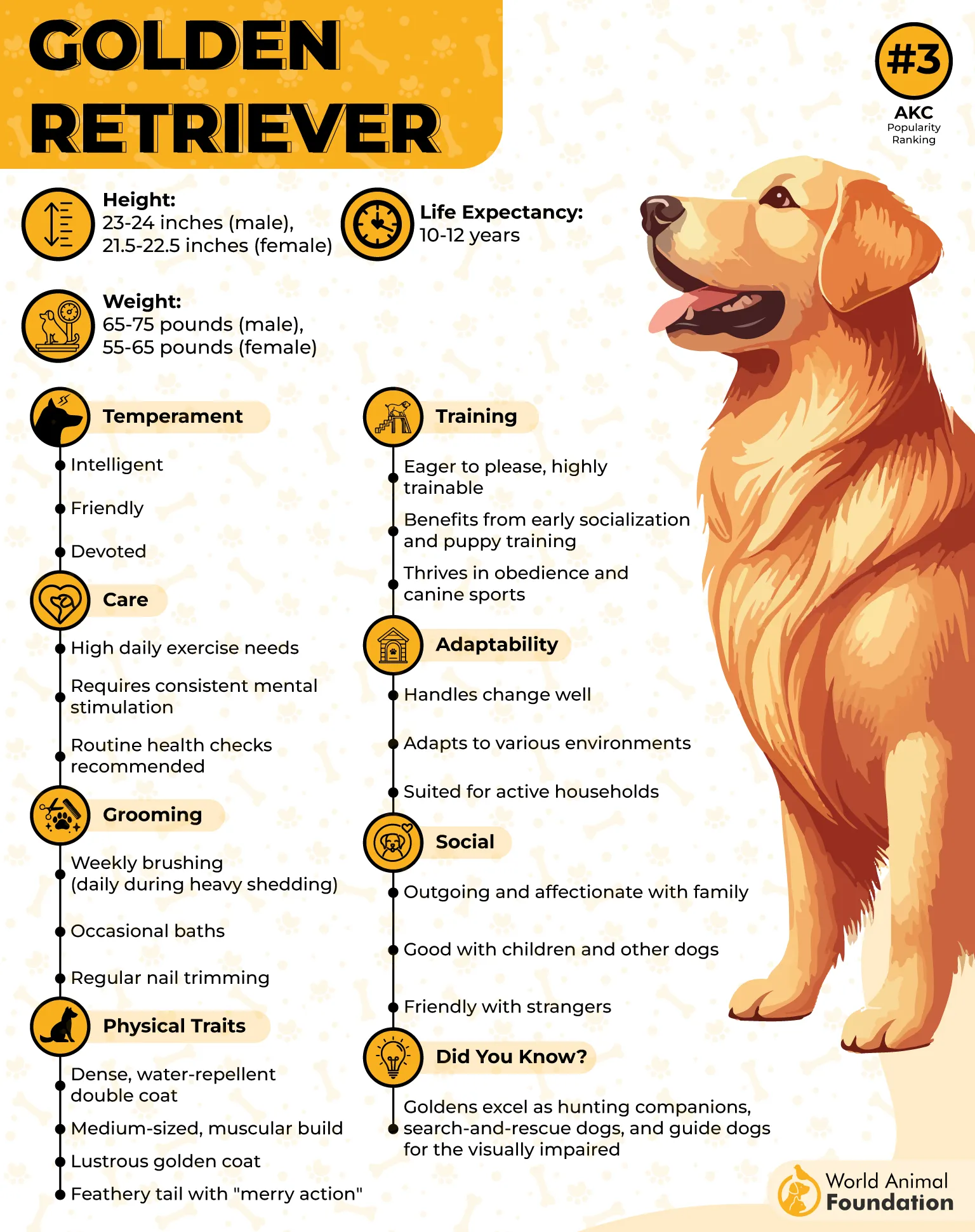
Highly trainable and eager to please, Goldens respond well to guidance, meaning owners can actively reinforce calm, respectful behavior around smaller pets. The AKC notes that their social nature also means they tend to accept cats as fellow family members rather than intruders.

Despite needing regular exercise and mental stimulation, Goldens naturally shift into a relaxed, affectionate mode indoors; a quality that goes a long way in keeping the household peaceful for everyone, cats included.
3. Labrador Retriever

Consistently ranked among the world’s most popular dog breeds, the Labrador Retriever earns its reputation through sheer versatility. Easygoing, friendly, and highly trainable, Labs bring a naturally sociable energy that tends to work well in multi-pet homes.

When introduced properly, Labs typically coexist peacefully with cats; their social instincts lead them to engage with other animals rather than compete with them. Many owners find their Lab becomes genuinely protective and affectionate toward the family cat over time.
That said, their playful nature means a Lab may occasionally give chase, not out of aggression, but enthusiasm. It’s worth ensuring cats have accessible escape routes and elevated spaces to retreat to during the early adjustment period.
Active outdoors but people-oriented at heart, Labs adapt well to structured family life. With consistent training, they make calm and companionable housemates, for both humans and cats alike.
4. Pug

Pugs are a natural fit for homes with cats, and it largely comes down to what drives them. Unlike breeds with a strong prey instinct, Pugs are motivated by companionship rather than the urge to chase. Their curiosity tends to replace aggression, making early interactions far less fraught.
Their mild, amusing temperament typically puts cats at ease. Crucially, Pugs don’t persistently push for interaction; they show interest without overwhelming, which gives cats the breathing room they need to warm up at their own pace.

Energy levels are another point in their favor. Pugs enjoy play and short walks but are equally happy lounging at home; a rhythm that aligns naturally with most cats’ routines.
Sociable by nature, Pugs genuinely thrive with a companion around. With the right introduction, a Pug and cat can settle into a quiet, affectionate coexistence that suits them both.
5. Bichon Frise

Playful, intelligent, and naturally sociable, the Bichon Frisé tends to get along well with most animals, cats included. What makes them particularly well-suited is their lack of intensity. Bichons aren’t interested in rough play or dominance; they simply want to engage and belong.
Their smaller size is an added bonus during introductions; cats are less likely to feel threatened, which helps the process move more smoothly. Rather than chasing or asserting themselves, Bichons approach new companions with a friendly, low-pressure curiosity.
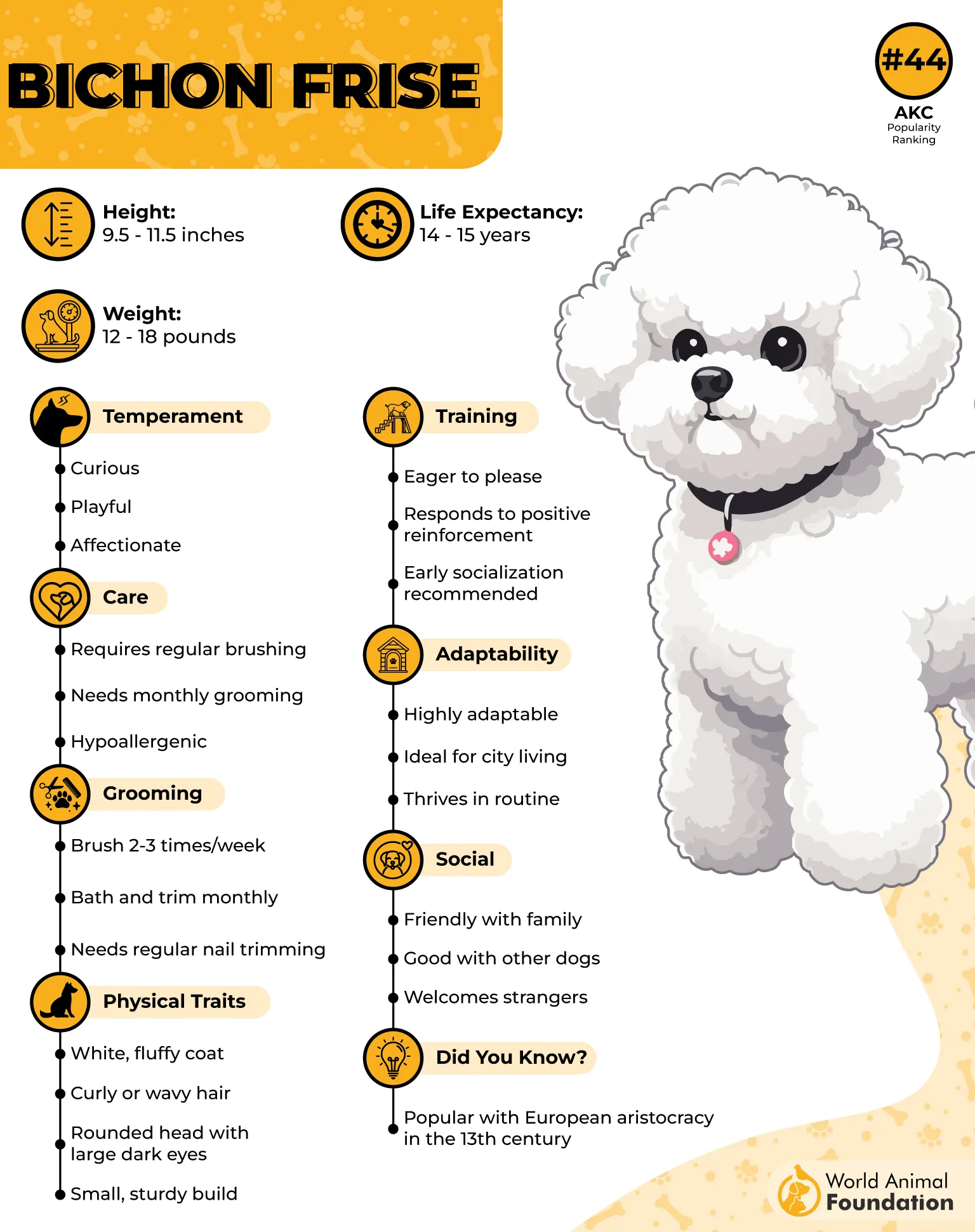
PDSA adds that their eagerness to please also makes training straightforward. Once a Bichon learns how to behave around a cat, that behavior tends to stick, a real asset when building a calm, well-balanced household.
Deeply companion-oriented, Bichons genuinely enjoy having other pets around. Many form surprisingly close bonds with cats, settling into a warm and easy coexistence that enriches both animals’ lives.
6. Poodle

Whether Toy, Miniature, or Standard, the Poodle brings the same core qualities to a multi-pet home: exceptional intelligence, adaptability, and a cooperative social nature. These traits make them one of the more trainable breeds when it comes to building a respectful relationship with cats.
Poodles pick up on household routines quickly and respond well to training, meaning owners can establish boundaries and reinforce positive behavior around cats from an early stage. That responsiveness pays dividends over time.
Socially, Poodles lean toward cooperation rather than competition. They enjoy company and generally engage with other animals in a friendly, measured way. Their playful side is worth keeping in mind during introductions, as it can sometimes overwhelm a cautious cat, so a gradual, supervised approach works best.
Highly adaptable and deeply people-oriented, Poodles slot naturally into family life, and with the right groundwork, into a harmonious relationship with the family cat too.
7. Basset Hound

The Basset Hound’s easygoing nature makes it a surprisingly strong match for homes with cats. Bred originally as a scent hound, the modern Basset is far more defined by its unhurried, laid-back outlook than any serious hunting instinct.
Rather than chasing, Bassets follow their nose, slowly and patiently. That low-energy presence means cats rarely feel crowded or threatened, a dynamic that makes cohabitation noticeably smoother than with more boisterous breeds.

Their affectionate temperament reinforces this compatibility. PetMD notes that Bassets form strong bonds with their family members and tend to extend that warmth to cats over time. They’re not looking to dominate or disrupt; they’re simply happy to be part of the household.
A streak of stubbornness is worth acknowledging, but it rarely translates into conflict. On balance, the Basset Hound’s gentle, low-key character makes it one of the more dependable choices for a peaceful multi-pet home.
Conclusion
Every dog and cat is an individual, but certain breeds have consistently demonstrated an ability to share a home with feline companions, and the seven covered above are among the best examples.
Breed selection is only part of the equation. Thoughtful introductions, patience, and consistent training remain essential regardless of which dog you choose. But starting with a breed that is naturally social, gentle, and adaptable gives every cat in the household a much better chance of settling in comfortably.
For families hoping to build a true multi-pet home, these seven breeds offer a proven and rewarding starting point.
