




What if your very first dog… changed everything?
Not just your routine.
Not just your weekends.
But the way your whole home feels.
Safe. Lively. A little chaotic in the best way.
Here’s the bold truth most people don’t hear soon enough…
Choosing a first dog isn’t about “cute.”
Or popularity.
Or what looks good in photos.
It’s about fit.
Because here’s the myth…
“Any friendly dog is good for beginners.”
But the reality? It’s very different.
Certain breeds of dogs make life easier. Effortless, even.
Others? They turn simple days into full-time management.
Energy vs patience.
Training vs frustration.
Calm vs chaos…
And the difference between them can decide whether your first dog feels like a dream… or a daily struggle.
FIRST impressions matter here more than ever.
So before you bring home a wagging tail and hopeful eyes…
Let’s explore the best dogs for first-time dog owners and find the ones that truly make life smoother, happier, and a lot more rewarding.
Amazing Dog Breeds for First-Time Dog Owners to Consider
1. Bolognese
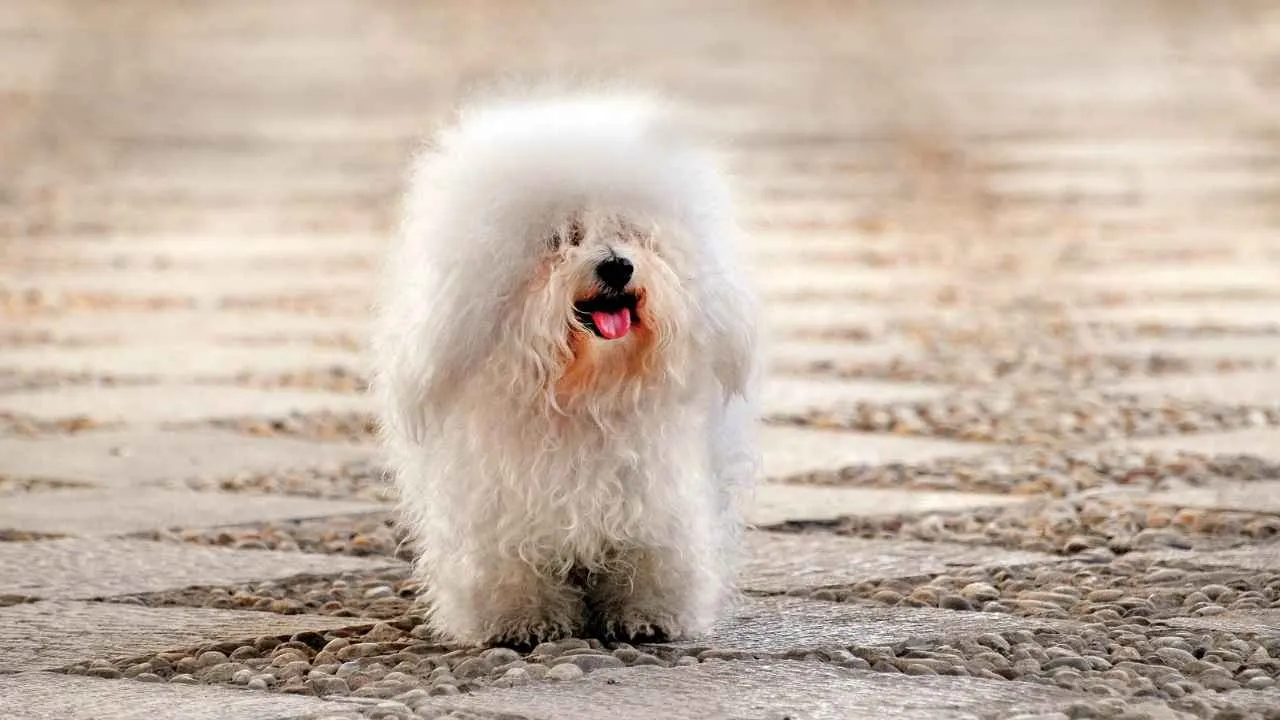
The Bolognese feels like a quiet contrast to many small companion dogs. Soft, white, and compact, it carries a calm presence that settles easily into a home, especially one new to dog ownership, as noted by Purina.
Compared to high-energy small breeds that constantly demand attention, this Italian companion leans toward stillness and gentle interaction. It enjoys play, but rarely overwhelms with constant activity, making daily life feel more manageable for beginners.
Unlike many social breeds that thrive on constant external stimulation, it forms a strong emotional attachment to its family and prefers close, familiar company over busy environments. This deep attachment can be comforting, though it also means long hours alone may lead to distress.
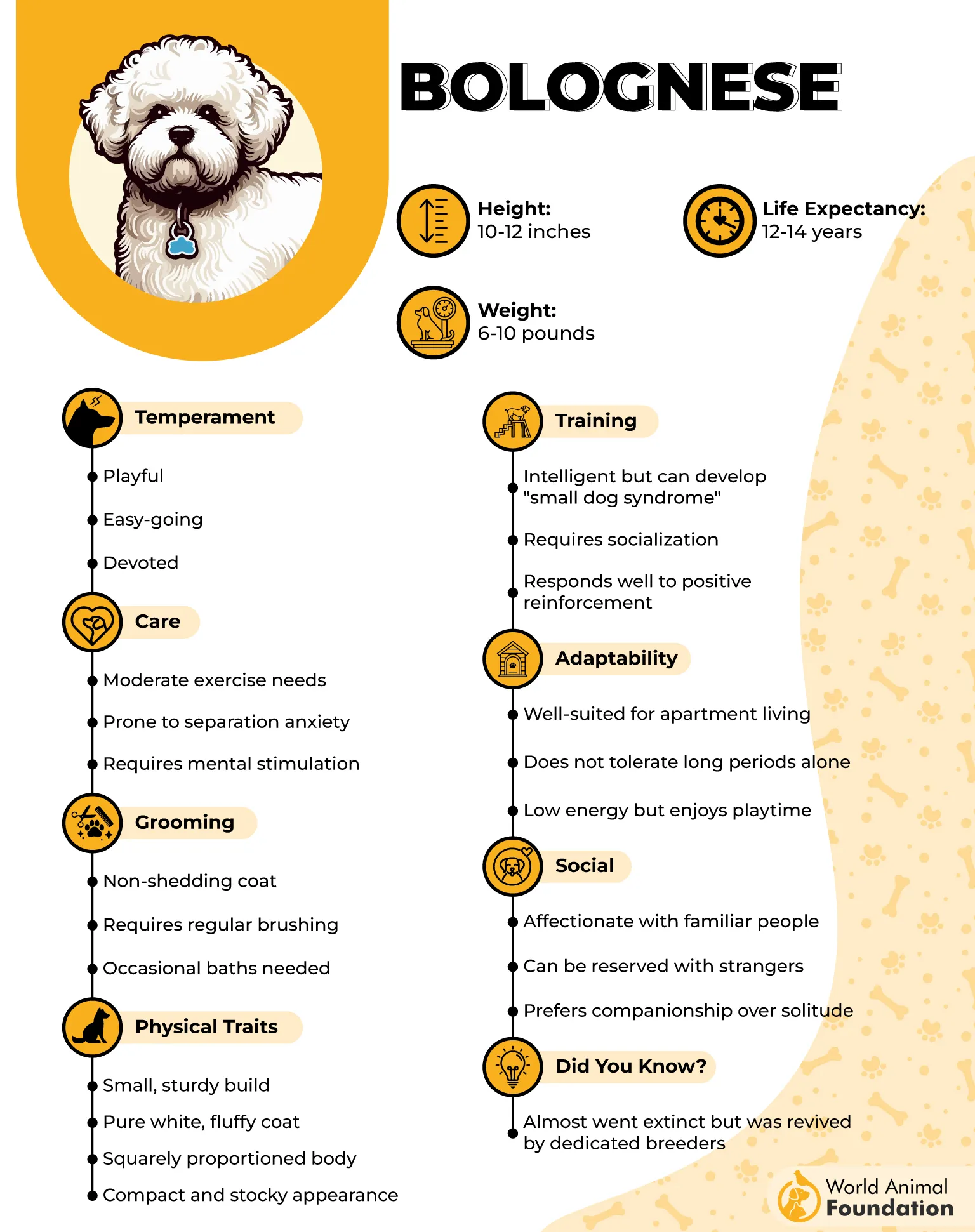
For someone working a regular schedule, this is where expectations need balancing. The Bolognese is better suited to households where someone is often present, or routines are flexible, rather than long, empty days.
Another contrast appears in its behavior with strangers. It may initially appear reserved, even cautious, while many beginner-friendly dogs are instantly outgoing. But with gentle exposure and consistency, it warms up steadily without losing its calm temperament.
In comparison to more demanding beginner breeds, it offers companionship without chaos, affection without pressure, and playfulness without overload—making this dog breed ideal for first-time owners who value a peaceful, closely bonded relationship.
2. Shih Tzu
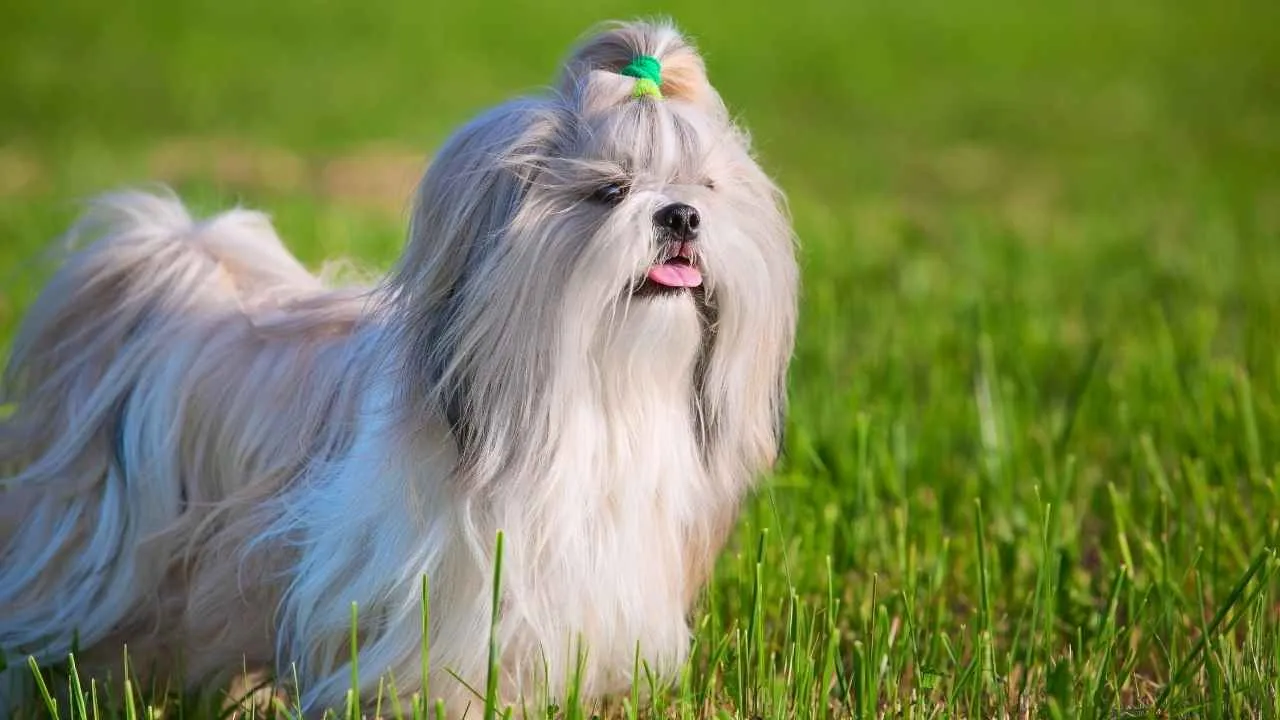
The Shih Tzu brings a very different energy compared to many beginner-friendly companions. With its flowing coat and confident walk, it may look proud and self-contained, yet it is actually deeply people-oriented and thrives on attention from its household.
Unlike independent little dog breeds that keep their distance, this one prefers staying close, often following family members from room to room. This incredibly affectionate dog fits well into homes where companionship matters more than outdoor intensity or constant exercise demands.
In comparison to highly obedient breeds that respond instantly to commands, the Shih Tzu can appear a bit selective during training.
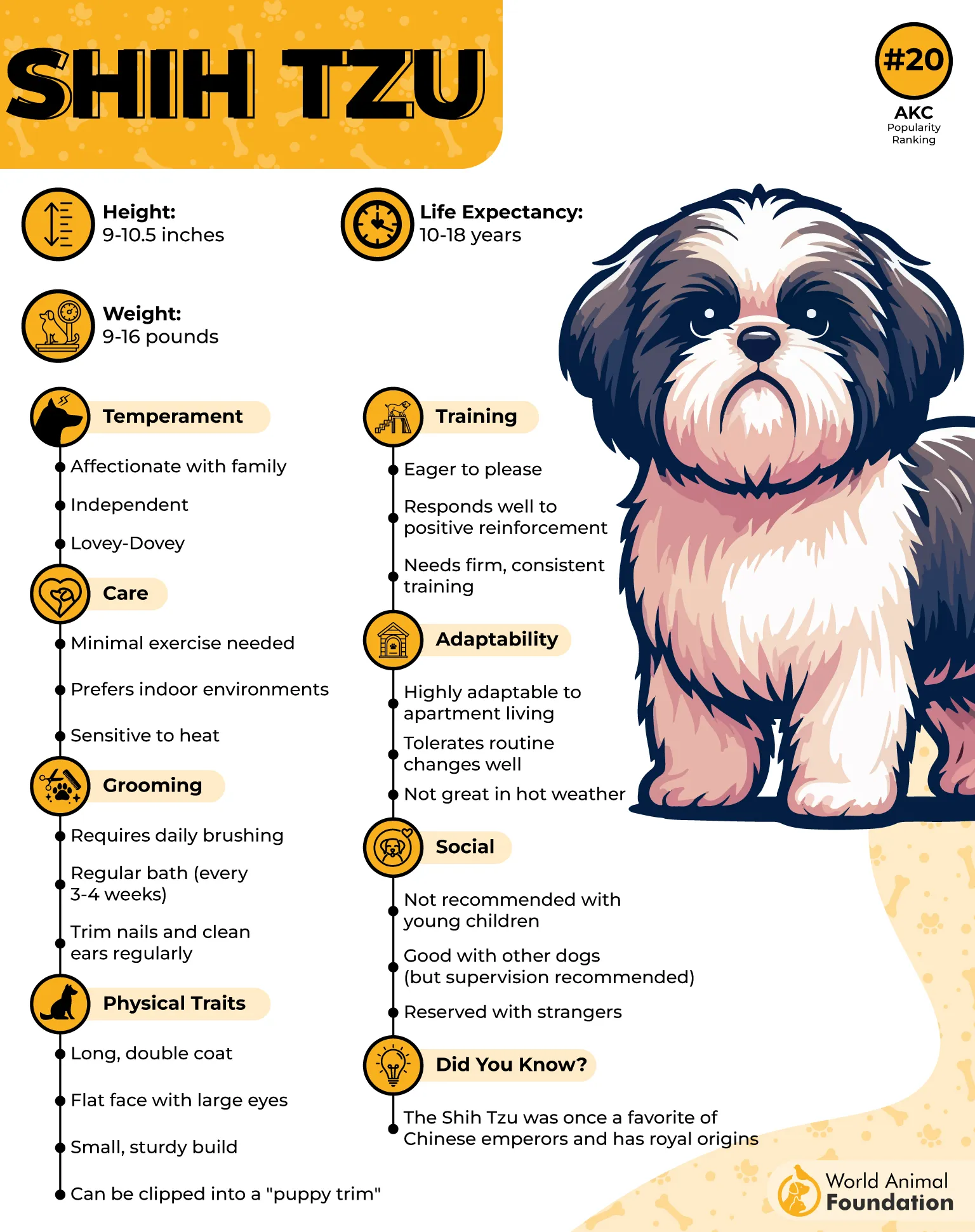
It understands quickly, but may pause or “decide” when to respond, especially if it feels uninterested. With steady repetition and calm handling, it becomes cooperative without losing its playful charm.
Around strangers, it may show a brief hesitation rather than immediate friendliness, which contrasts with more openly social dogs often recommended for beginners. However, it settles once it senses comfort and routine in its surroundings.
What sets it apart is how it blends affection with a relaxed attitude toward structure. It enjoys learning but doesn’t respond to pressure, making it better suited to first-time owners who prefer gentle training moments over strict routines and want a loyal, calm companion indoors.
3. Havanese
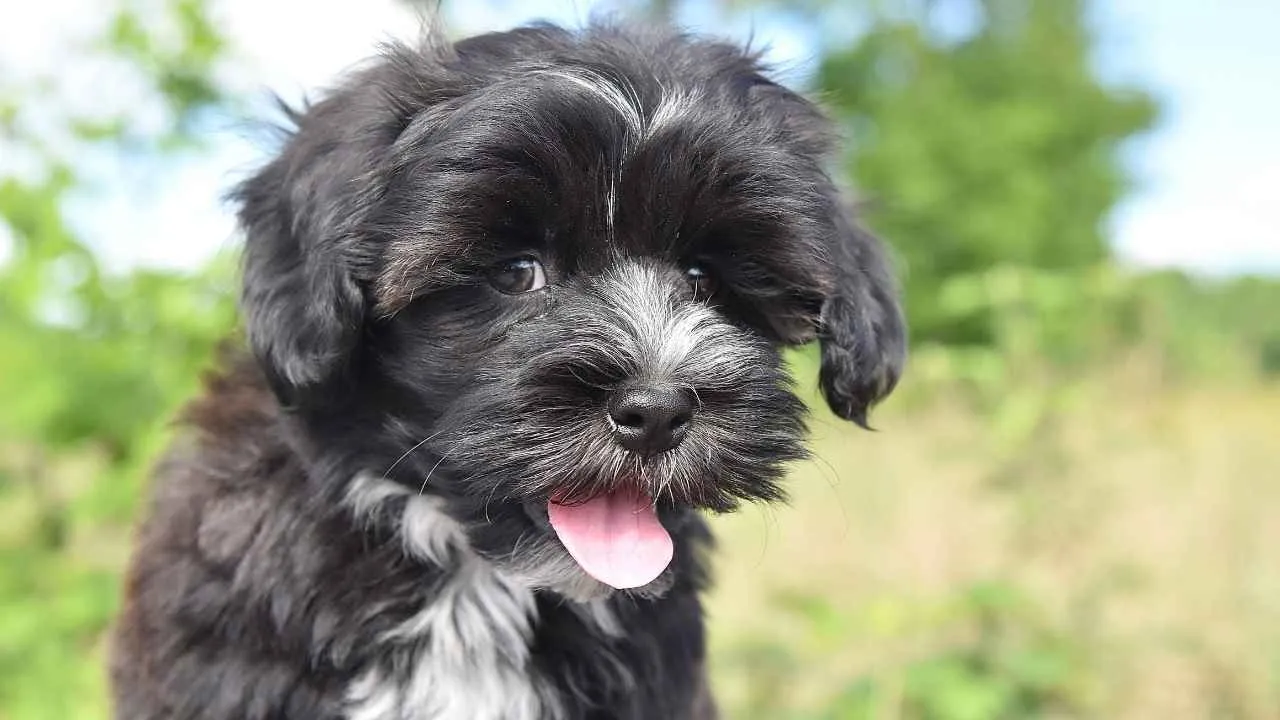
The Havanese is one of the best dog breeds that brings a lively contrast to many calm, low-maintenance beginner dogs. Small in size but full of spirit, it carries a cheerful, social nature that makes everyday moments feel more interactive rather than quiet or distant.
Unlike more reserved toy breeds that keep to themselves, this one actively seeks engagement and tends to stay close to its people throughout the day. It fits well in homes where companionship is a constant part of daily routine, not just occasional interaction.
Compared to dogs that require strict control or firm handling, the Havanese responds best to light, positive guidance. It learns quickly, but its enthusiasm can sometimes lead to playful distractions, especially when training feels repetitive. Patience works far better than pressure.
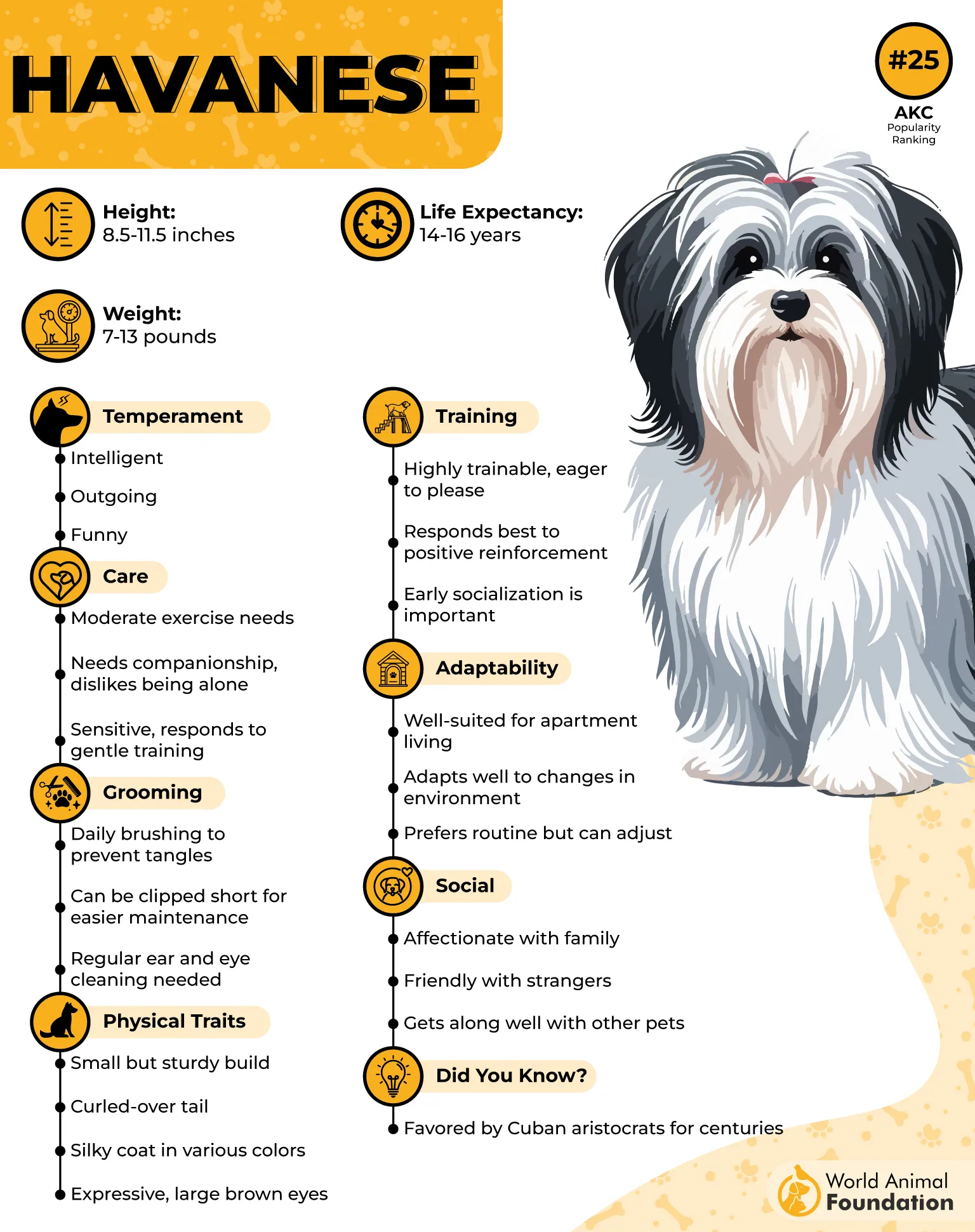
In contrast to short-coated beginner breeds that need minimal upkeep, this dog’s soft, flowing coat requires regular care. Grooming becomes part of bonding time rather than a quick task, especially for owners new to coat maintenance routines.
One of its more interesting behaviors is how it often uses soft vocal sounds to communicate excitement or alertness, rather than staying silently observant like many other small companions. This makes it expressive, sometimes chatty, and very responsive to household activity.
For first-time owners, it offers a mix of energy, affection, and engagement, ideal for those who want an interactive companion rather than a quiet, independent pet.
4. Cavalier King Charles Spaniel
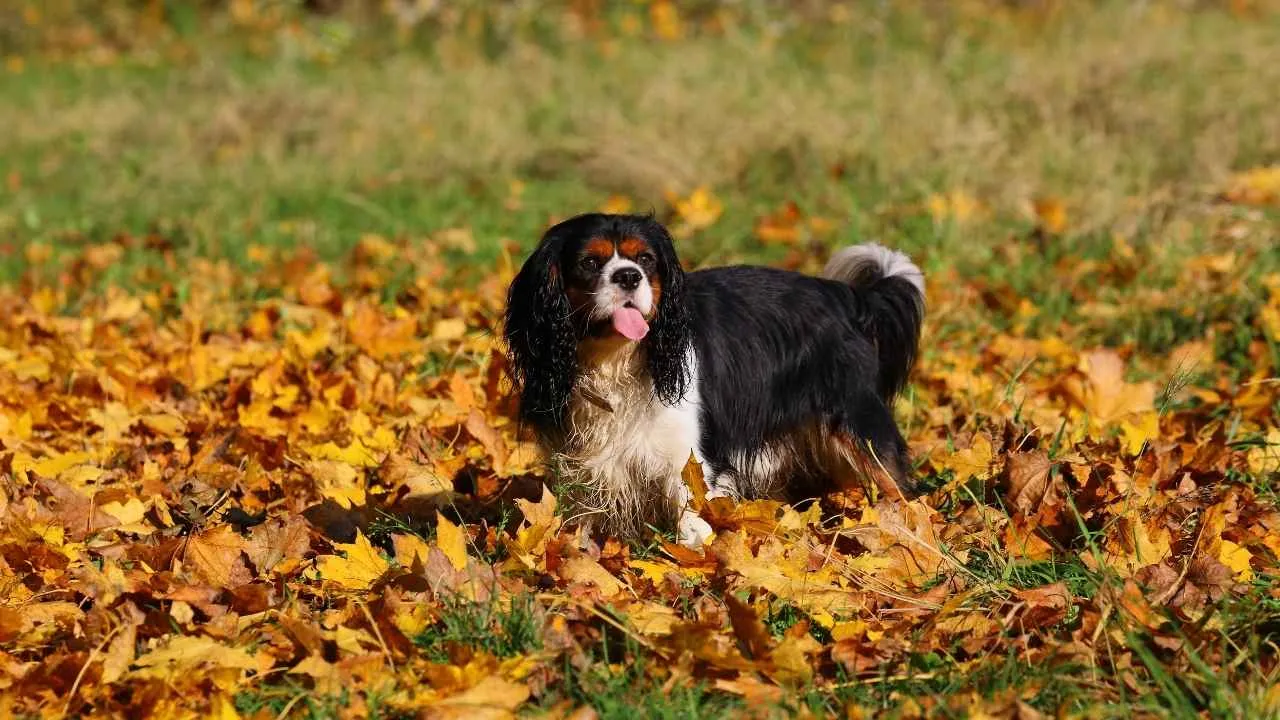
According to PetMD, the Cavalier King Charles Spaniel feels like a gentle step toward dog ownership rather than a sudden leap. Soft-eyed and calm in expression, it blends easily into a home where companionship is valued more than constant activity or high demands.
Compared to more independent beginner breeds that are content spending time alone, this one prefers closeness and steady human contact. It often chooses to stay near its owner, making everyday routines feel shared rather than separate.
Unlike small energetic dogs that require constant stimulation, it settles into a relaxed rhythm once its daily walks are done. Short, consistent outings are usually enough to keep it balanced, which suits new owners still learning how to manage exercise needs.
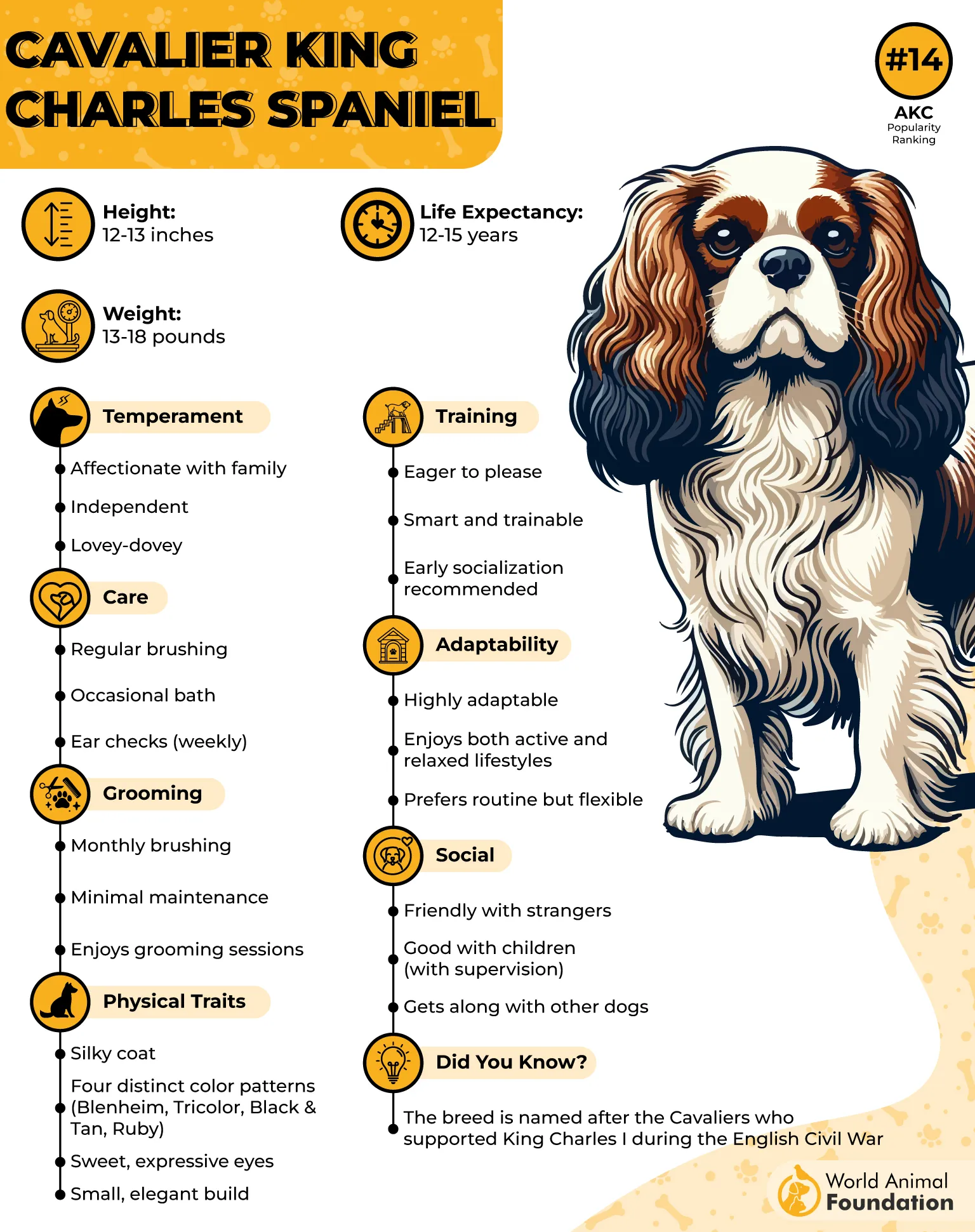
In contrast to wary or selective dogs, this breed tends to greet both familiar people and strangers with an open, gentle attitude. This easy social behavior makes introductions smoother in mixed households, including those with children or other pets.
One notable behavior is its strong sensitivity to long periods alone. While some breeds adjust to independence, this one thrives on presence and interaction, and can become unsettled if left isolated too often during the day.
Cavalier King Charles Spaniels are adaptable to apartment living, requiring only moderate exercise and being generally calm indoors. It has basic grooming needs and is adaptable to various living situations, making it a low-maintenance option for first-time dog owners.
It offers a steady mix of affection, adaptability, and calm energy—ideal for homes that want a close, emotionally responsive companion without overwhelming training or intensity.
5. Pug
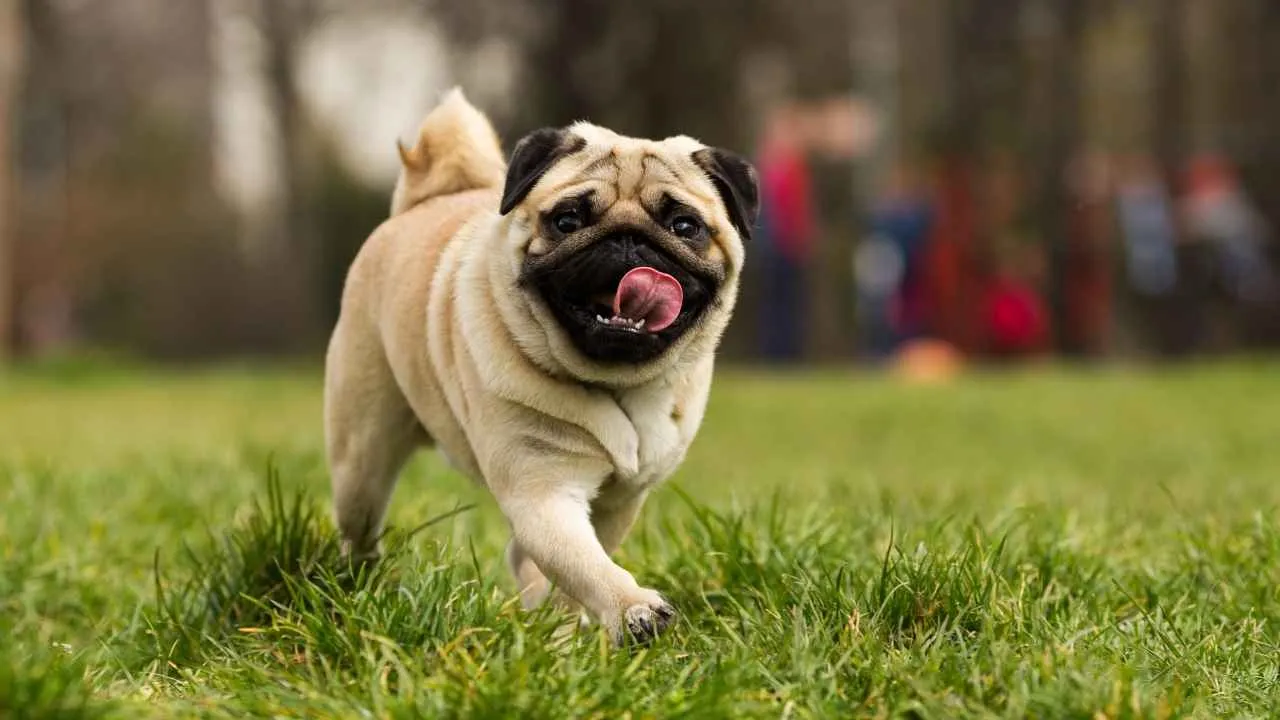
The Pug stands out among beginner-friendly dogs for its easygoing rhythm and naturally relaxed lifestyle. With its compact build and expressive face, it often feels more like a quiet house companion than a demanding outdoor partner.
Compared to active small breeds that need frequent stimulation, this one is far more comfortable with short walks and slow-paced routines. It fits well into homes where long exercise schedules are unrealistic, yet companionship is still a priority.
Unlike athletic beginner dogs that can join runs or agility-style activities, it is not built for endurance or heat-heavy outings. Its comfort zone is steady indoor living with brief, gentle movement outside, which helps first-time owners manage expectations early.
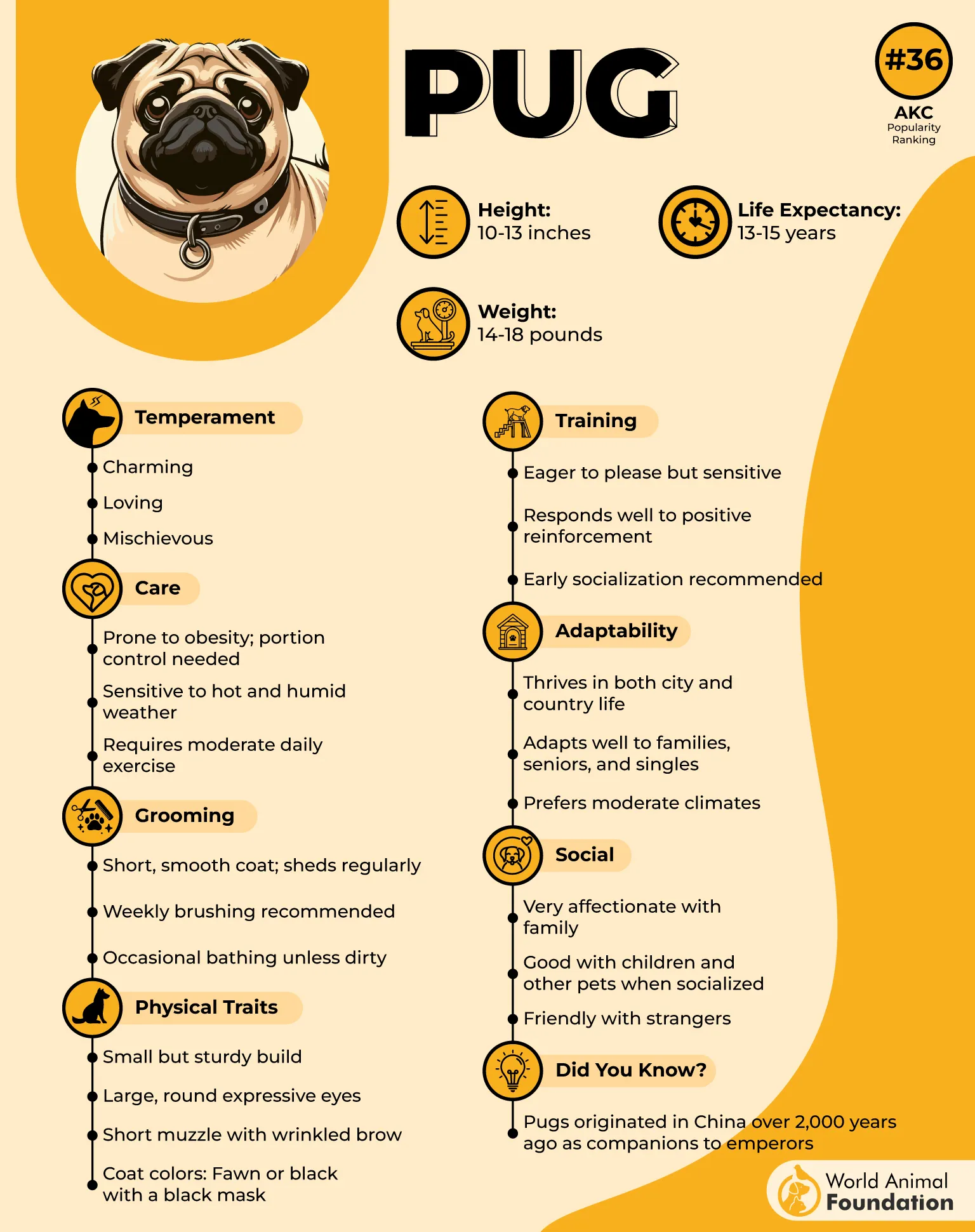
In contrast to lighter-coated breeds that handle weather shifts easily, it is more sensitive to heat and overexertion. This means outdoor time often needs moderation, especially during warmer hours, shaping a calmer daily structure.
Pugs are considered low-maintenance dogs, requiring minimal grooming and moderate exercise, making them a great choice for families and individuals with busy schedules.
One notable physical behavior is its characteristic breathing sound, which comes from its facial structure and becomes more noticeable during excitement or activity. It’s a reminder that this breed communicates comfort and strain in a very visible way compared to more discreet dogs.
For first-time owners, it offers companionship that is simple, affectionate, and low-pressure, as long as care routines are mindful and consistent.
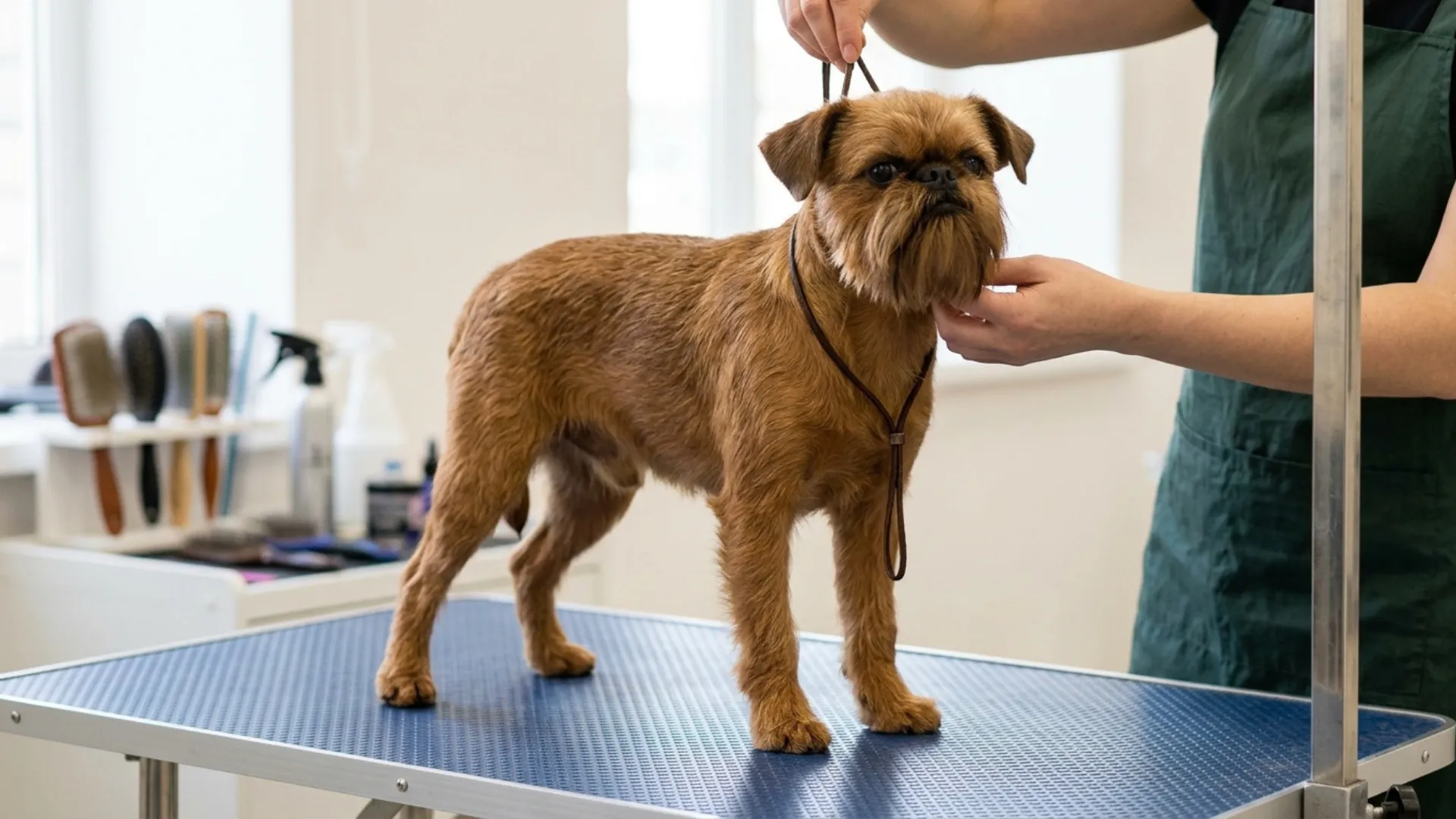
6. Brussels Griffon
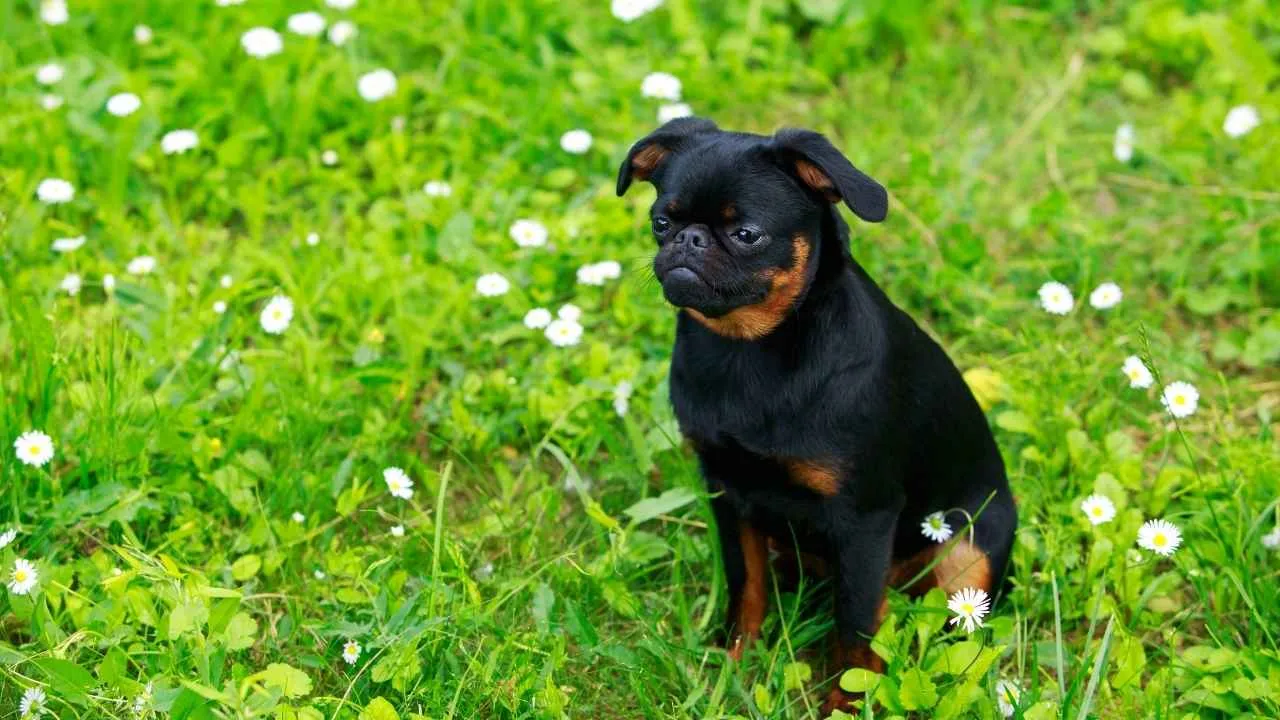
The Brussels Griffon feels unlike most beginner-friendly dogs because of how intensely it connects with its person. Small in size but heavy in presence, it behaves less like a typical toy breed and more like a constant emotional companion that observes everything closely.
Compared to easygoing lap dogs that adapt to any household, this one is far more selective with its attachment. It usually bonds deeply with one person, preferring quiet loyalty over wide social interaction, which changes the dynamic of daily care for a first-time owner.
Unlike more relaxed beginner breeds that tolerate noise and activity, this easy-to-train dog is highly sensitive to tone, mood, and environment. It responds strongly to emotional cues, making calm handling and predictable routines far more effective than loud correction or inconsistent training.
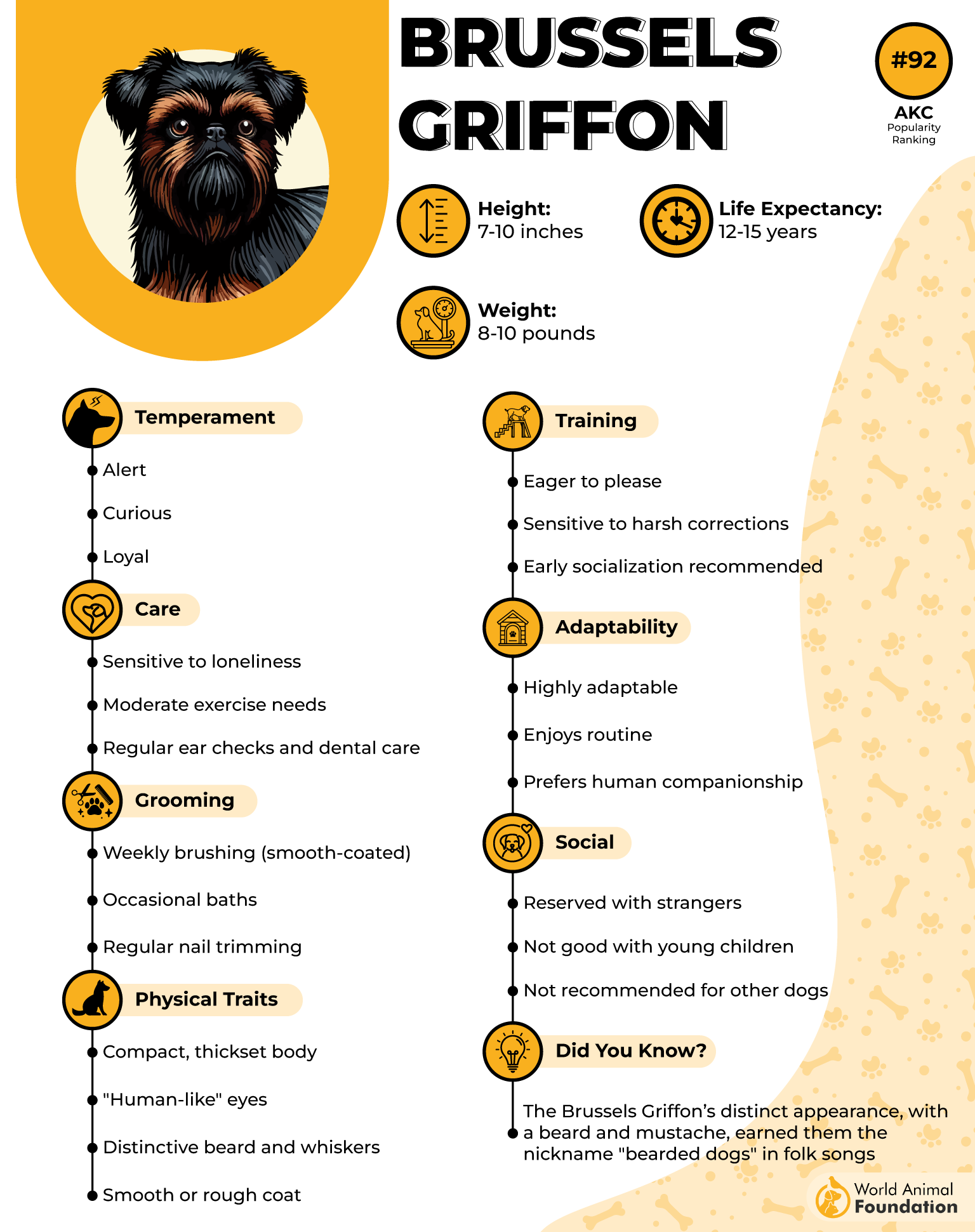
In contrast to independent small dogs that are comfortable spending time alone, this intelligent dog breed struggles with long separations. It tends to stay physically close, following movement around the home and seeking reassurance through presence rather than distance.
One striking behavior is its almost human-like expressiveness, where subtle facial changes and focused eye contact make communication feel unusually direct compared to other toy breeds that rely more on general body language.
For first-time owners, it offers deep companionship and emotional closeness, but it suits those who want constant interaction and are prepared for a dog that becomes closely woven into daily life rather than staying on the sidelines.
7. Border Terrier
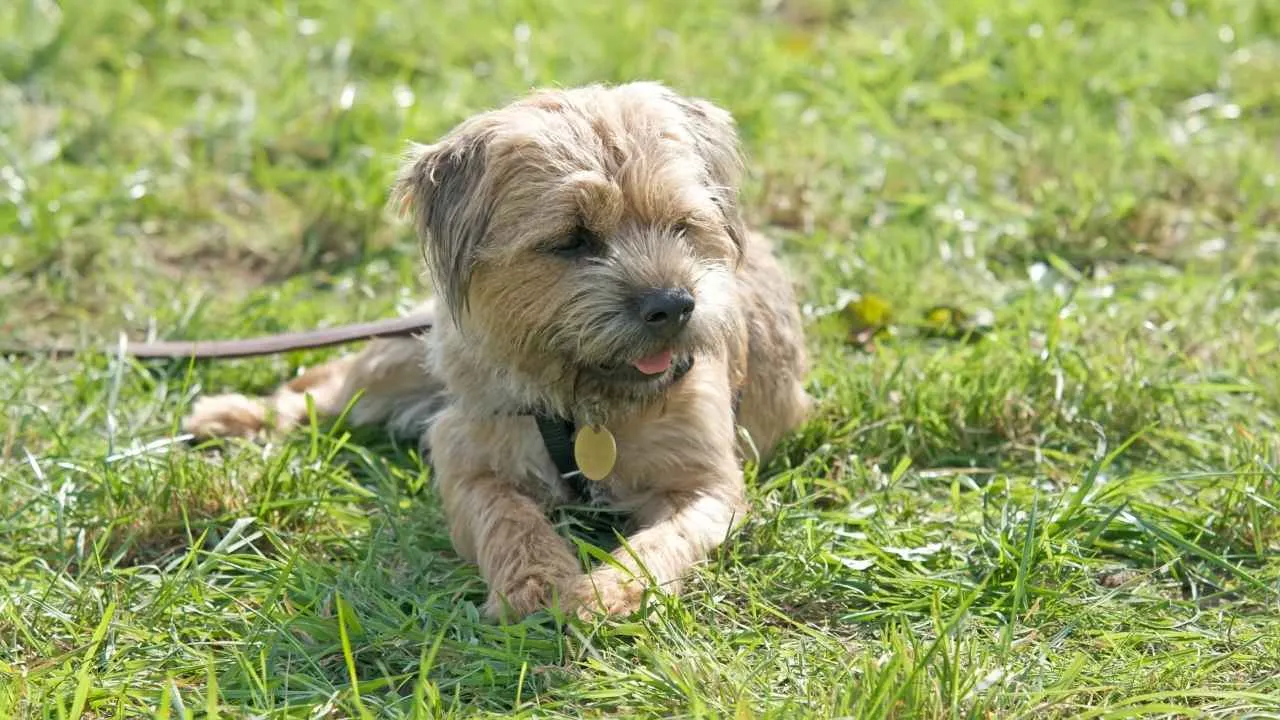
The Border Terrier is a versatile dog breed that brings a noticeably different tone compared to many calm, easy beginner dogs. Small and sturdy, it carries a bright, forward-moving energy that makes daily interaction feel active rather than passive, as noted by WebMD.
Unlike relaxed companion breeds that prefer slow routines, this one is driven by curiosity and movement. It fits better with owners who enjoy outdoor walks and light activity, as it becomes more settled after it has had space to explore and move around.
In comparison to highly delicate toy breeds that lean on gentle handling alone, this dog shows a tougher, working background. It handles varied environments with confidence, which makes it more flexible for families adjusting to dog ownership for the first time.
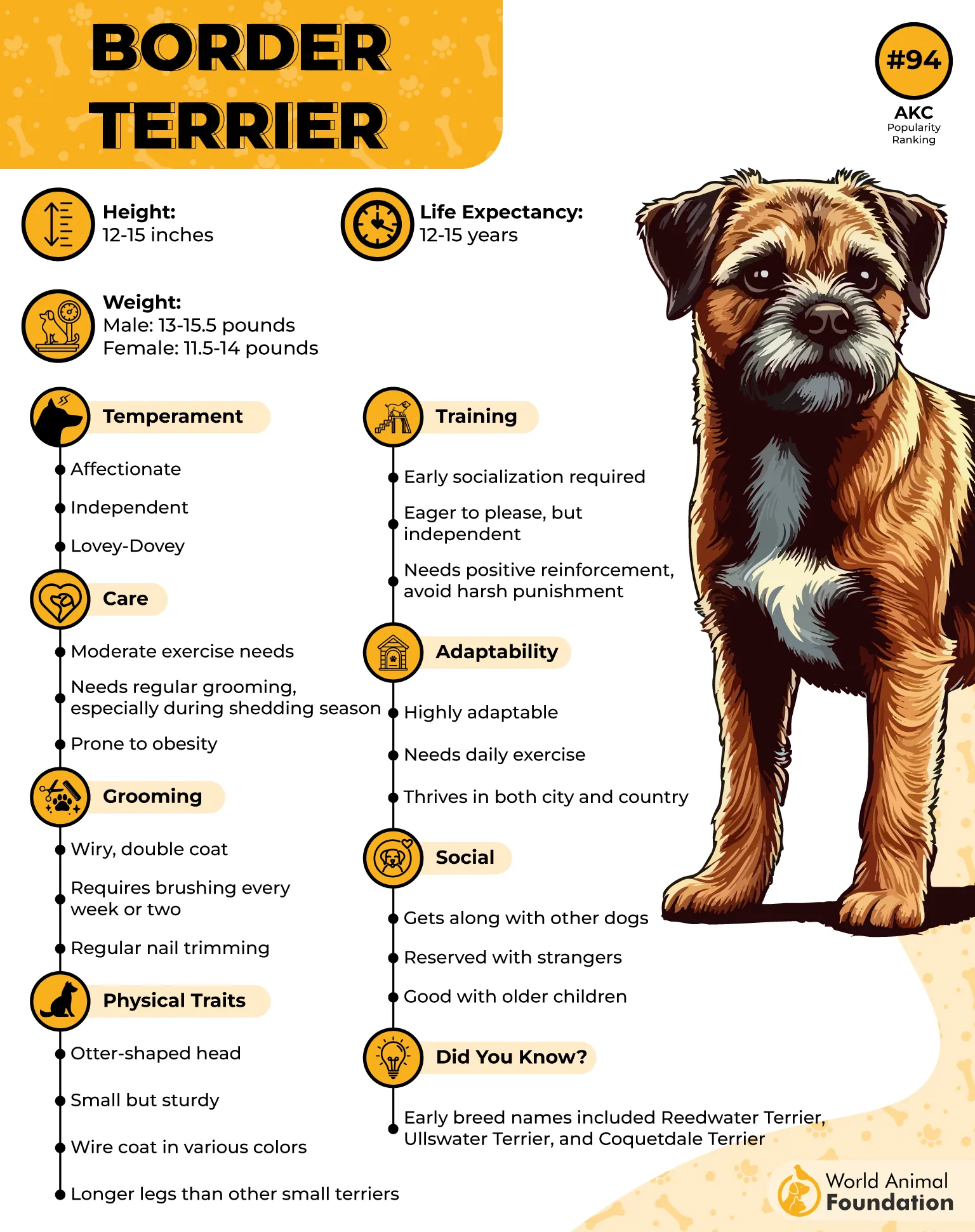
Unlike overly independent terriers that ignore direction, it is surprisingly responsive when engaged properly. It enjoys learning tasks and tends to stay focused when training feels varied rather than repetitive, which helps beginners build consistency.
One noticeable behavior is its natural alertness to movement and sound, a habit shaped by its working history. It often watches its surroundings closely, reacting quickly compared to calmer breeds that remain more passive.
For first-time pet parents, it offers a mix of energy and cooperation—better suited to those who want a lively companion that encourages outdoor activity while remaining trainable and people-focused.
Conclusion
Choosing the right first companion isn’t about picking the most popular or visually appealing option—it’s about understanding daily life compatibility.
Some dogs bring calm presence and easy routines, while others add energy, structure, and engagement that require more attention and consistency. The best experience comes when temperament, activity level, and emotional needs match the owner’s lifestyle.
With the right balance, early challenges turn into smooth routines and genuine companionship. A thoughtful choice at the beginning can shape years of comfort, trust, and enjoyment, making the journey into pet ownership far more rewarding and stress-free than expected.
