




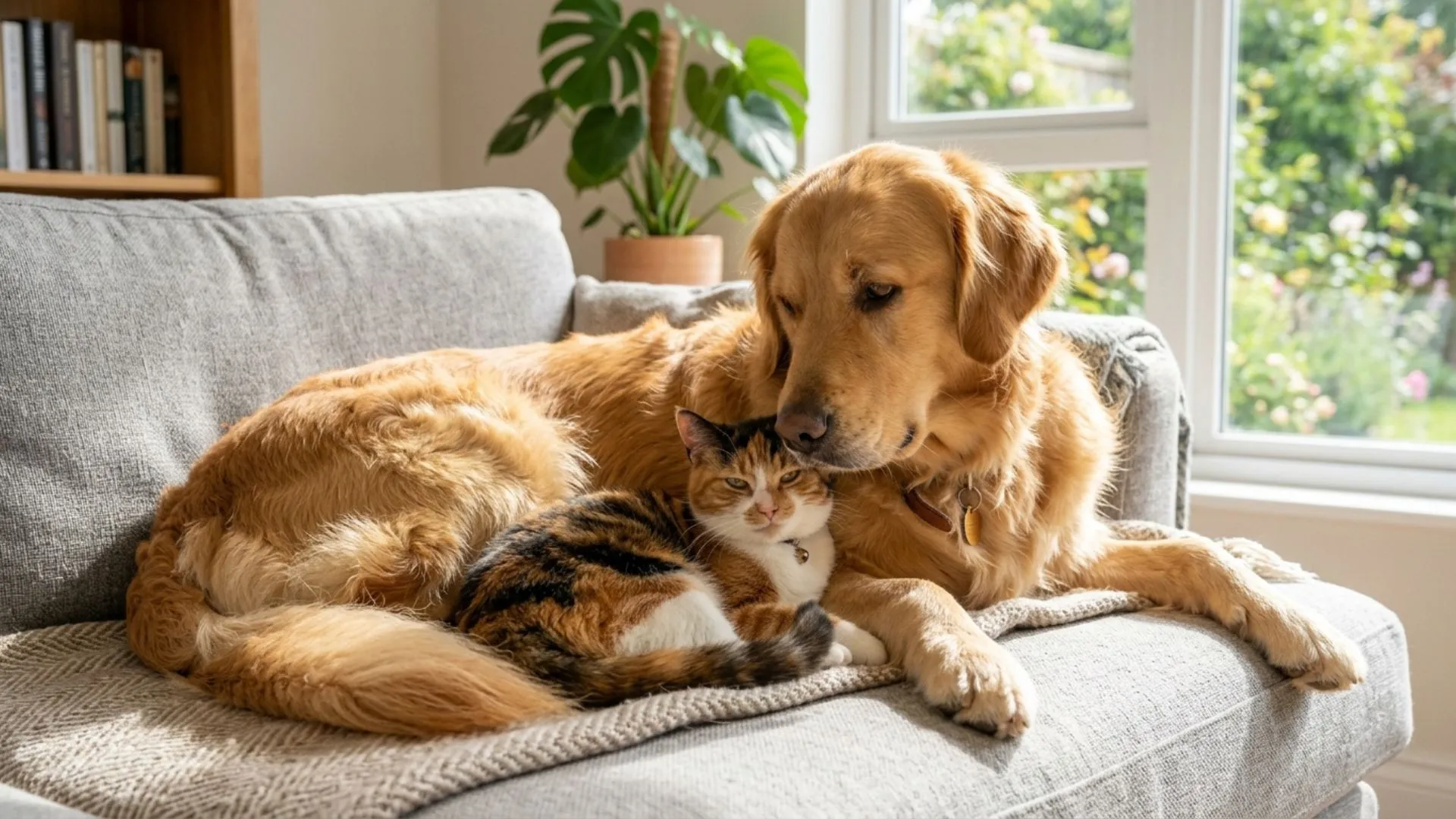
Bringing a dog and a cat into the same home can feel a little like mixing two completely different fandoms and hoping they become besties instead of starting online drama. One species likes zoomies at 7 a.m., the other acts like a tiny landlord judging everyone from the top of the fridge. But surprisingly, some dog breeds naturally vibe better with cats than others.
A lot of this comes down to prey drive, energy level, patience, and social personality. Some dogs see cats as roommates. Others see them as moving squeaky toys. That’s why choosing the right breed matters if you want peaceful “dog naps next to cat” moments instead of WWE-style hallway chases.
The good news is that many family-friendly dogs can absolutely learn to coexist with cats. Some even become inseparable cuddle buddies who share beds, steal each other’s toys, and act like siblings in a sitcom. If you’re building your dream multi-pet household, these breeds deserve serious consideration.
Dog Breeds That Naturally Get Along With Felines
1. Beagle

Beagles are social, lovable little detectives with noses that work harder than most Wi-Fi routers. Because they were originally bred as pack hunting dogs, they usually enjoy companionship and dislike feeling isolated. That social nature can help them adapt surprisingly well to cats when introduced properly.
That said, Beagles do have a strong prey drive. If a feline member of the family suddenly sprints across the room like it just heard the treat bag open, some Beagles may instinctively chase. This doesn’t always mean aggression, though. Many Beagles view running animals as an invitation to play tag.

Once trust develops, they become extremely affectionate toward feline companions.
Training matters a lot with this breed, says the AKC. Commands like “leave it,” “stay,” and recall training can make introductions far smoother. Beagles respond well to positive reinforcement, especially when snacks are involved, because, honestly, food is their main love language.
They also tend to adapt better to confident cats. A relaxed feline that doesn’t immediately panic and run will usually help reduce the Beagle’s chase instincts. Slow introductions and supervised interactions are key during the early stages.
Despite their hunting background, many Beagles become peaceful, playful companions for cats in stable homes with structure and consistency.
How To Introduce Your Dog to a Cat?
Start with scent swapping using blankets or toys.
Use baby gates for safe visual introductions.
Reward calm behavior immediately.
Never allow chasing games indoors.
Give the cat elevated escape spaces.
2. Cavalier King Charles Spaniel

Calm, affectionate, gentle, and emotionally attached to everyone around them, Cavaliers are among the easiest dogs to pair with cats.
These dogs genuinely crave companionship. They often treat cats like fellow members of their emotional support squad rather than rivals. Their soft temperament makes them less intimidating to cautious felines, especially compared to larger high-energy breeds.

As per PetMD, Cavaliers were bred specifically as companion dogs for nobility, not hunters or as guardians. That background still shows today. They would honestly rather cuddle on the couch than start household drama with the cat.
They do have mild prey instincts due to their spaniel ancestry, but these are usually manageable with early socialization. Most Cavaliers respond very well to gentle correction and positive interactions.
Their emotional intelligence is another huge advantage. Cavaliers often adjust their behavior around nervous cats and surprisingly quickly learn boundaries.
How To Introduce Your Dog to a Cat?
Keep early meetings short and calm.
Allow the cat to approach first.
Use treats for relaxed interactions.
Create separate feeding areas.
Reward the dog for ignoring the cat calmly.
3. Basset Hound

Basset Hounds move through life like someone running on a low battery, but still trying their best. Their low-energy personality actually makes them fantastic companions for many cats.
These dogs are patient, tolerant, and usually too relaxed to constantly bother a feline roommate. Because they were bred as scent hounds, they’re more interested in sniffing everything than chasing every moving object in sight.

Cats often appreciate the Basset’s predictable behavior. Unlike hyperactive breeds that explode into zoomies, Bassets tend to keep things chill. That calmer environment helps nervous cats feel safer.
Despite being hound dogs, they can live amicably with cats in the same household.
Bassets are also highly social pack dogs. They dislike loneliness and often enjoy having another animal nearby, even if that companion occasionally slaps them for getting too close.
Their stubborn streak can appear during training, though. Consistency and patience are important when teaching boundaries around cats.
How To Introduce Your Dog to a Cat?
Introduce slowly in quiet rooms.
Use leash supervision initially.
Allow the cat easy escape routes.
Avoid overwhelming the cat with attention.
Reinforce relaxed behavior from both pets.
4. Labrador Retriever

Labradors are basically the golden retrievers of extroverts. They love people, other dogs, random strangers, delivery drivers, and, honestly, most living creatures. Their naturally social personality often extends to cats, too.
Labs are famously patient and adaptable. Many cats tolerate them well because Labs rarely show serious aggression. Instead, they usually approach cats with the enthusiasm of someone trying to make friends at a gaming convention.

Their playful energy can sometimes overwhelm shy cats, though. A Labrador puppy, especially, may bounce around like it drank three energy drinks before introductions. Supervision is essential early on.
Labs are incredibly trainable, which helps tremendously in multi-pet homes. They learn boundaries quickly when owners stay consistent. Commands like “place” and “leave it” become lifesavers.
Because Labradors are highly food-motivated, positive reinforcement works extremely well. Rewarding calm interactions often significantly speeds up the adjustment process.
Many owners say their Labs become protective of household cats over time. Some even follow cats around the house like oversized bodyguards.
How To Introduce Your Dog to a Cat?
Keep your Lab leashed initially.
Use structured obedience sessions nearby.
Give cats vertical safe zones,
Reward gentle sniffing and calm behavior.
Separate pets during unsupervised periods early on.
5. Bichon Frise

The Bichon Frise feels like the dog version of a cheerful group chat. These tiny, fluffy extroverts are playful, affectionate, and surprisingly adaptable around cats.
Because Bichons were bred as companion dogs, they naturally seek social interaction. Many see cats as potential playmates instead of prey. Their small size also makes them less physically intimidating to felines.

Bichons thrive on attention and often enjoy being included in household activities. If your cat tolerates mild chaos and random bursts of excitement, a Bichon can become a fun companion.
One owner shared that their Bichon followed the cat around “like a fan following a celebrity influencer.” The cat acted annoyed but secretly seemed to enjoy the attention.
PDSA claims that these dogs generally have moderate energy levels and adapt well to apartment living. Their playful nature works best with cats that aren’t extremely territorial.
Proper introductions still matter because some cats dislike overly social dogs. Luckily, Bichons usually learn boundaries fairly quickly.
How To Introduce Your Dog to a Cat?
Let the cat control the interaction distance.
Avoid overstimulating play sessions early.
Use calm praise during introductions.
Create separate resting zones.
Keep introductions positive and brief.
6. Maltese

Maltese dogs may look delicate and glamorous, but underneath all that silky fur is a surprisingly confident little personality. These tiny companions often coexist beautifully with cats because they usually lack strong prey instincts.
Their small size can actually help during introductions. Cats often feel less threatened by Maltese compared to larger, more energetic breeds. Many Maltese are similar in size to house cats, which creates a more balanced dynamic.

Maltese dogs form intense bonds with their humans and generally prefer peaceful home environments. Drama and chaos are not really their thing. They’d rather cuddle beside you while you binge-watch a comfort series.
Owners frequently describe them as emotionally intuitive. Many Maltese naturally adjust their energy to that of calmer animals and eventually develop close bonds with cats.
However, because they’re small and fragile, rough play should always be monitored carefully. Some confident cats may accidentally become too aggressive during play sessions.
Their lower exercise needs also make them ideal for quieter homes where both pets can coexist comfortably.
How To Introduce Your Dog to a Cat?
Use calm indoor spaces for meetings.
Monitor play carefully due to size differences.
Avoid forcing interactions.
Reward relaxed coexistence.
Allow both pets personal retreat areas.
7. Pug

Pugs are basically tiny comedians trapped in dog bodies. Their goofy personalities, emotional attachment to humans, and low prey drive often make them wonderful companions for cats.
Most Pugs genuinely enjoy social environments. They’re rarely aggressive and usually approach cats with curiosity rather than hostility. Some cats even end up bossing them around completely.

Because Pugs are adaptable and easygoing, they often settle into multi-pet homes smoothly. They’re not overly territorial and generally prefer friendship over competition.
One Pug owner said their cat regularly stole the dog’s bed while the Pug stared in confusion before curling up beside the cat anyway. Honestly, that sums up Pug energy perfectly.
Their lower exercise needs and a gentle temperament also reduce conflict in smaller homes. Unlike highly energetic breeds, Pugs are usually content with moderate activity and lots of couch time.
Heat sensitivity can be an issue, though, especially during warmer months. Shared indoor relaxation often suits both cats and Pugs nicely.
How To Introduce Your Dog to a Cat?
Keep introductions low-energy.
Allow sniffing through barriers first.
Prevent rough play sessions.
Give the cat high resting spaces.
Use treats to create positive associations.
8. Golden Retriever

Golden Retrievers are basically friendship in dog form. Their patience, emotional intelligence, and playful personality make them one of the most cat-compatible large breeds in the world.
Goldens tend to approach cats gently, especially when socialized early. They’re naturally cooperative and eager to please, which helps tremendously during introductions.

These dogs with an easygoing nature thrive in family environments and usually extend that friendliness to other pets. Many Goldens become surprisingly protective of cats and enjoy sleeping beside them.
Because Goldens are intelligent and highly trainable, they respond well to structure and routines. Calm reinforcement usually produces excellent results.
Their playful nature means supervision still matters, especially around older or shy cats. But overall, Goldens are among the safest bets for mixed-species households.
How To Introduce Your Dog to a Cat?
Begin with scent introductions.
Use leash control during meetings.
Reward calm curiosity.
Never force close contact.
Increase supervised interaction gradually.
9. Boston Terrier

Boston Terriers are playful, expressive little dogs with huge personalities packed into compact bodies. Nicknamed the “American Gentleman,” they’re often surprisingly good with the feline housemates when socialized at a young age.
Bostons are affectionate and social by nature. They usually want interaction rather than conflict. However, their terrier roots can sometimes trigger playful chasing instincts.

Cats that enjoy playful environments often adapt well to Boston Terriers. These dogs are energetic without being overwhelming like some larger sporting breeds.
Boston Terriers are also highly people-oriented. They generally respond well to proper training because they crave praise and attention from owners.
Introducing dogs to the cats under supervision helps immensely during the adjustment period.
How To Introduce Your Dog to a Cat?
Use gates during early introductions.
Redirect chasing behavior immediately.
Encourage calm sniffing sessions.
Give the cat escape routes.
Keep first meetings short and positive.
Conclusion
These nine dog breeds help build a peaceful dog-and-cat household. It’s all about choosing the right personalities, managing introductions carefully, and giving both animals time to adjust at their own pace.
While breeds matter, individual temperament matters even more. Even naturally cat-friendly breeds still need structure, patience, supervision, and socialization. A calm introduction process can completely change the long-term relationship between your pets.
The best multi-pet homes usually move slowly at first. Think of it less like forcing instant friendship and more like introducing two people who may eventually become roommates, gaming buddies, or reluctant coworkers who secretly care about each other.
Whether you love the goofy energy of a Labrador, the chill vibes of a Basset Hound, or the cuddly companionship of a Cavalier King Charles Spaniel, there’s absolutely a breed out there that can fit beautifully into a cat-loving home.
And honestly, once you see your dog and cat curled up together like they’re starring in a wholesome streaming series finale, all the careful introductions and patience suddenly feel worth it.
