




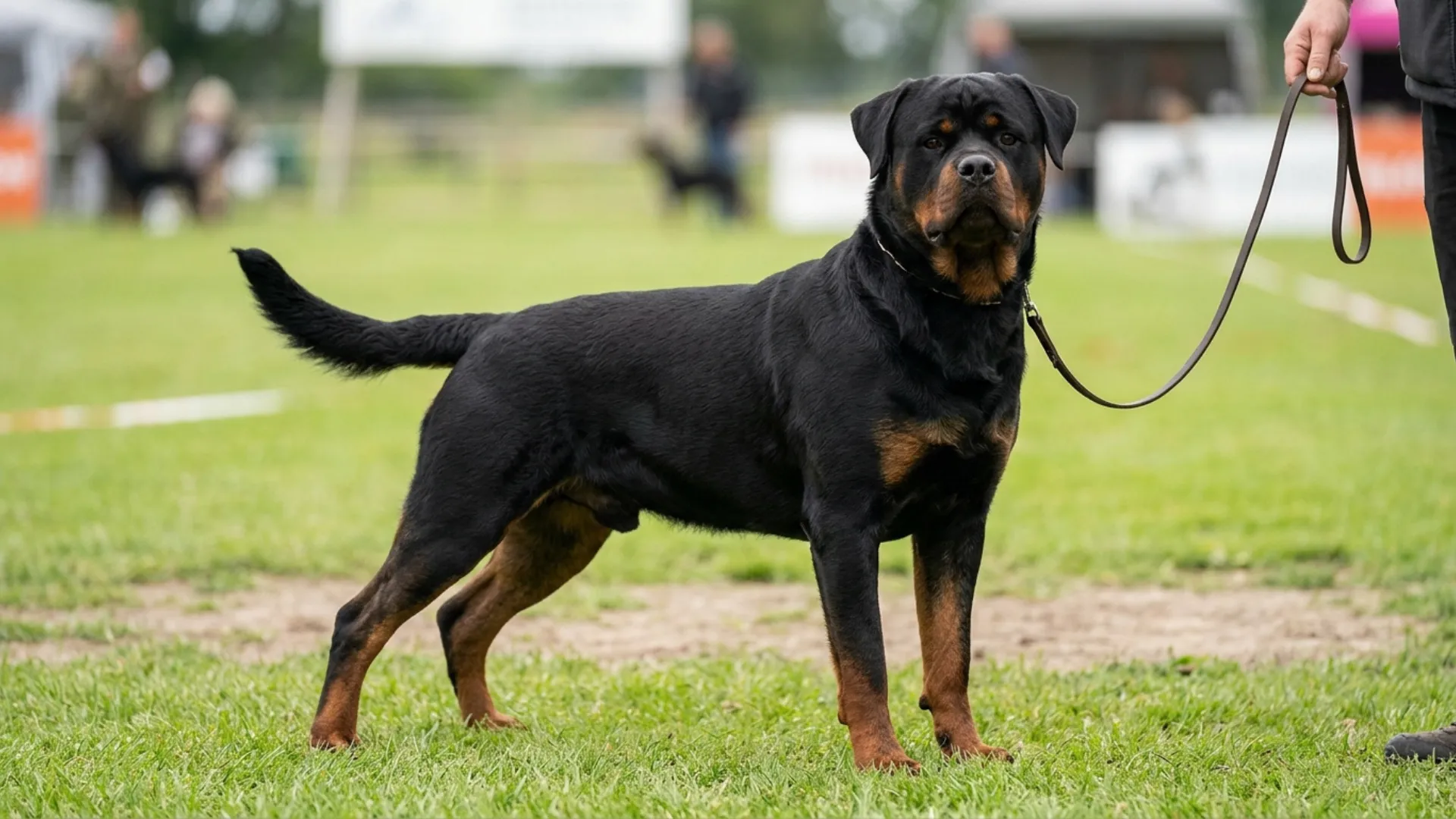
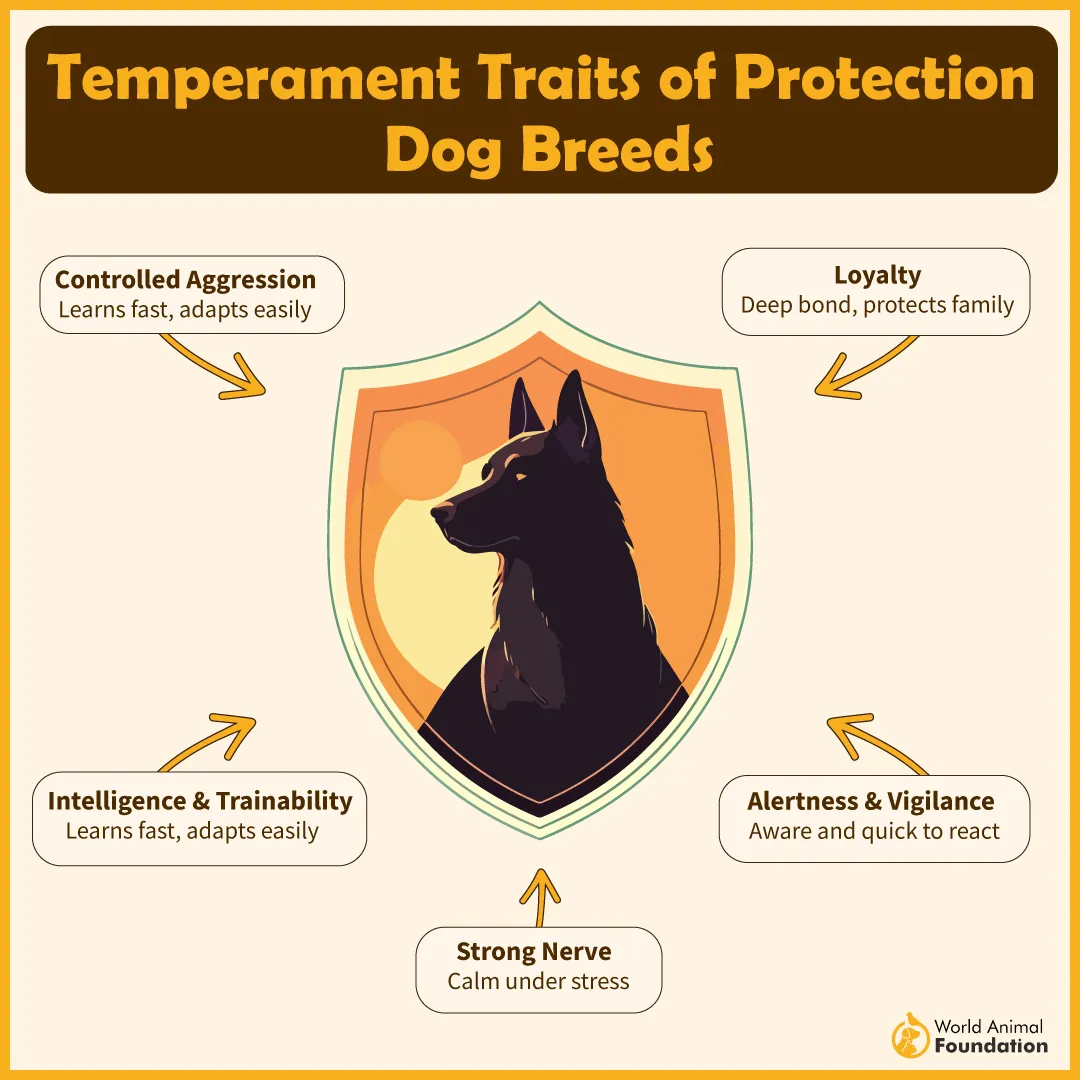
Some dogs live for belly rubs. Others steal your sandwich with absolutely zero guilt. But then there is a rare type, dogs built by selective breeding for centuries to genuinely watch over the people they love. What makes these breeds even more impressive is that they are not just muscle and raw instinct.
They are sharp, adaptive thinkers who can access a room, sense a real threat, and act without hesitation. And when the danger passes? They are right back to being your shadow on the couch. If you are looking for a dog that is both a bodyguard and a best friend, this list was written for you.
Here are nine intelligent breeds that take protection seriously.
Top Intelligent Dog Breeds Known for Their Protective Instincts
1. German Shepherd
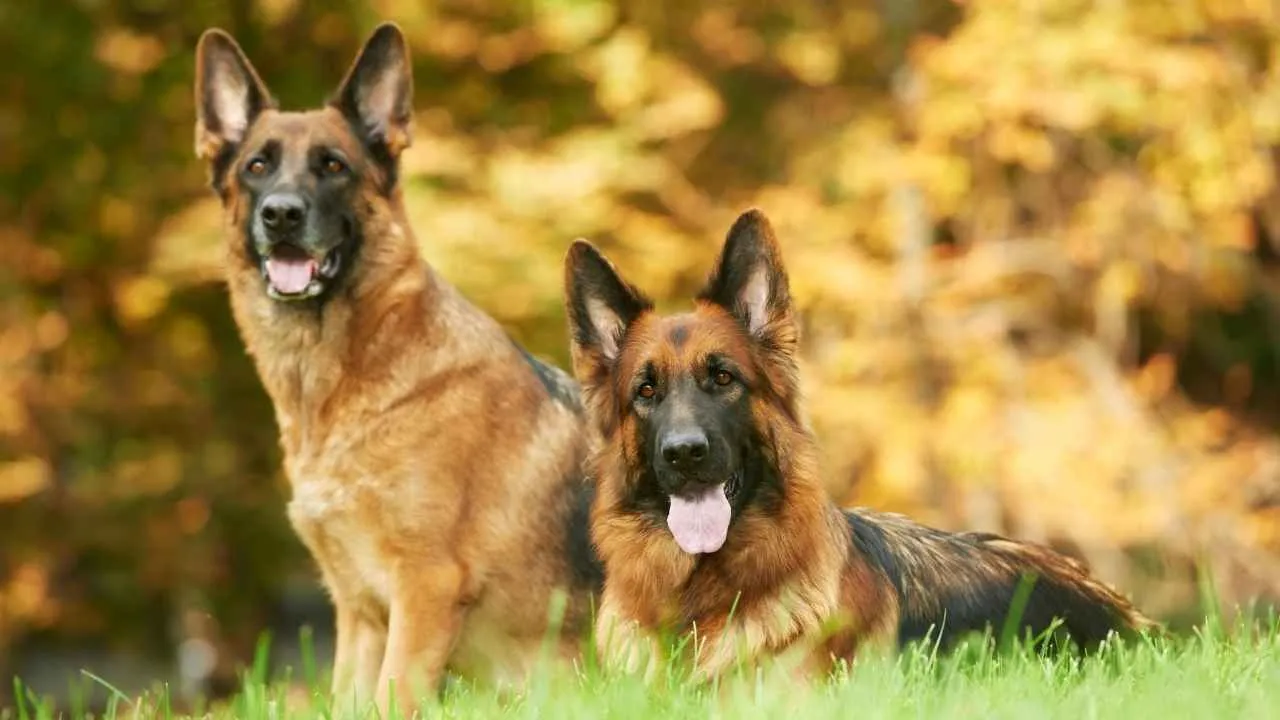
The third most intelligent breed in the dog world, the German Shepherd was originally bred in Germany in 1899 as a herding dog by Max von Stephanitz. This excellent guard dog has been serving as an assistance, search and rescue, police, and military dog for centuries, according to Wikipedia.
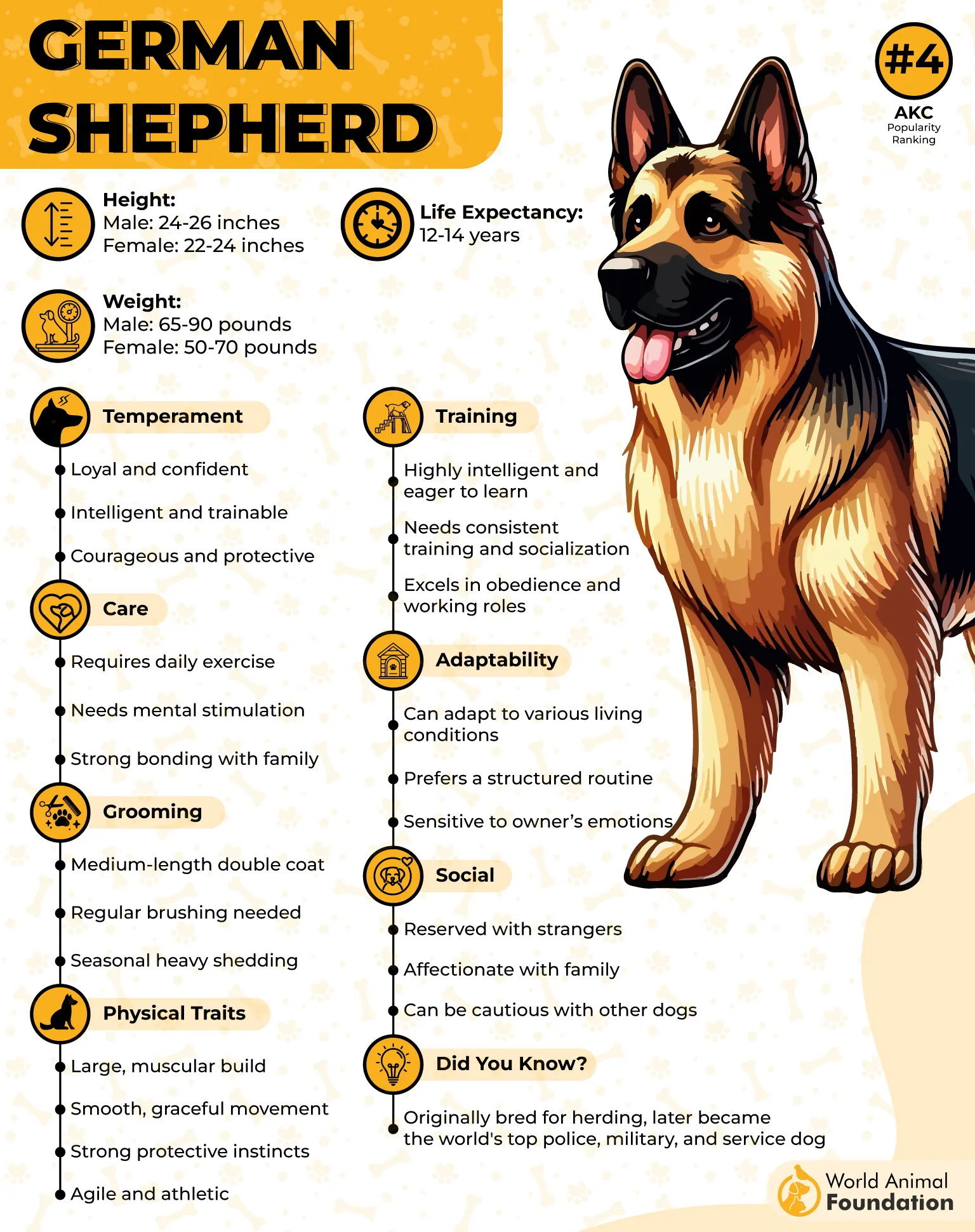
The breed can cope with traumatic events like wars easily. With a bite force of 238-300 PSI, it can easily break your bones and tear your muscles apart. It has almost 225 million olfactory receptors, making it sensitive to stress hormones of the owner and track targets from vast distances.
This breed has a sloped back and a robust hip, assisting in transferring power from the hindquarters to the rest of the body. This helps the GSD in sprinting and jumping. It has high exercise and mental stimulation needs (1-2 hours): play sessions, regular walks, hiking, jogging, and off-leash training in secured areas.
2. Doberman Pinscher
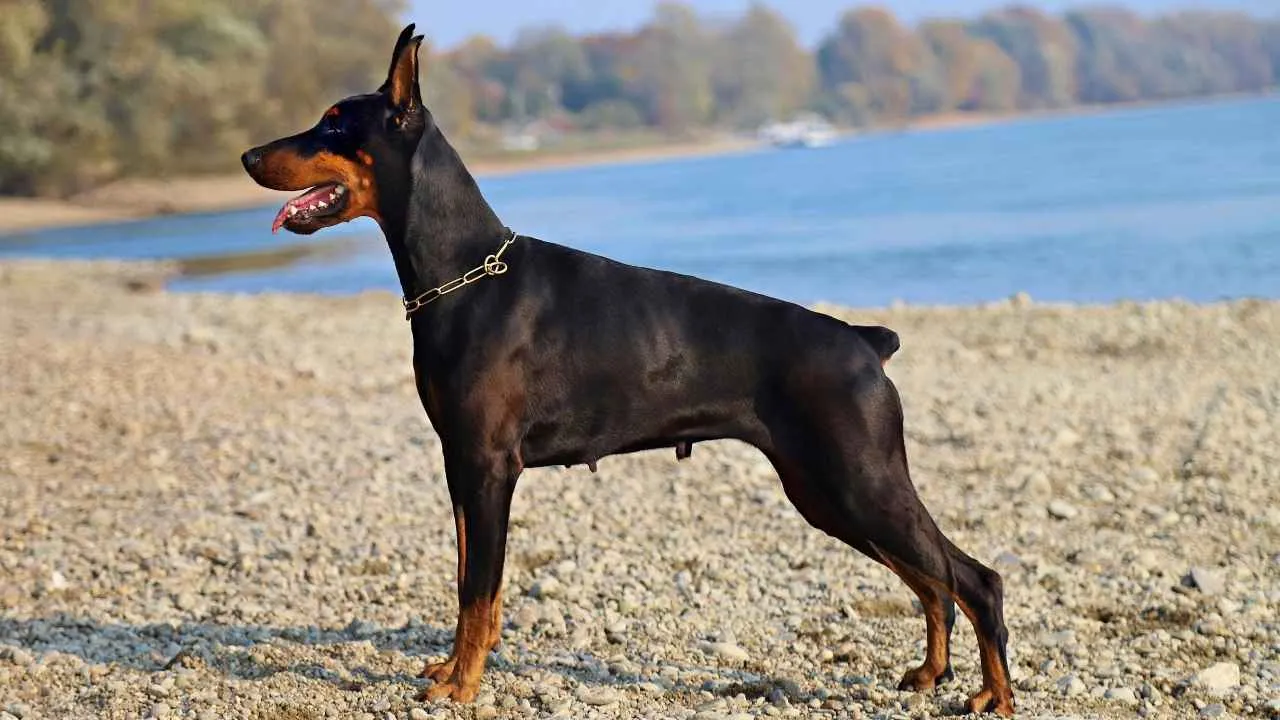
This medium-to-large dog is a working breed that originated in Thuringia in the 1890s by a tax collector, Louis Dobermann. This is the fifth most intelligent dog of all the breeds, and excels in obedience command training. It naturally keeps its head high, eyes watchful, and a confident posture to deter intruders.
It has strong senses of hearing and peripheral vision, making it detect minute environmental changes long before humans do. Being a velcro dog, it reads humans’ body language and facial expressions to sense an upcoming threat. The square body and a deep chest provide optimal center of gravity, which helps in explosive forward drive (40 mph).
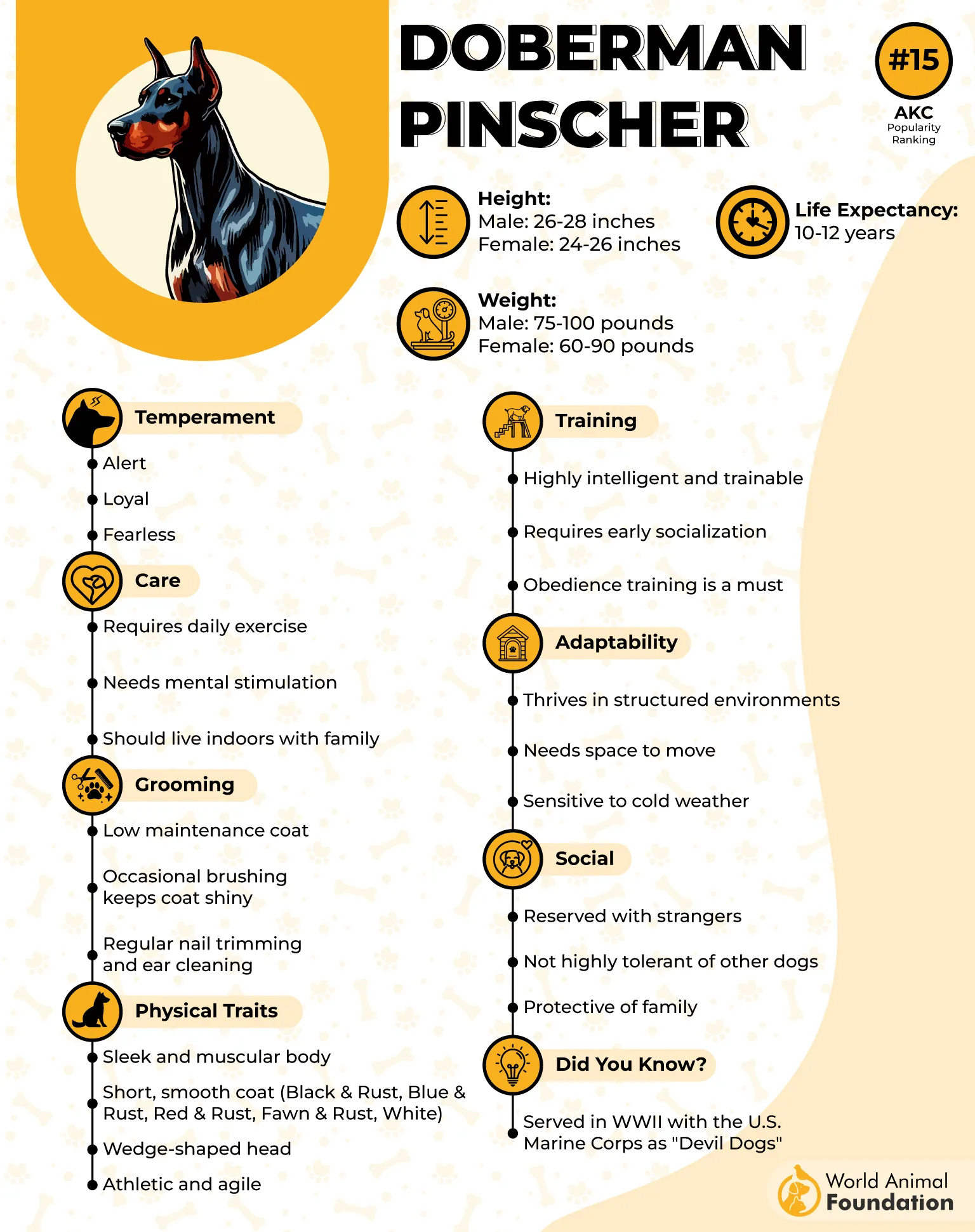
With a bite force of 305 PSI, it has a dangerous ‘scissor bite,’ where the upper back teeth are sitting entirely on the lower teeth. This makes crushing and slicing easier. The fast-twitch muscle fibers allow it to pivot sharply and activate its defensive mode instantaneously.
3. Rottweiler
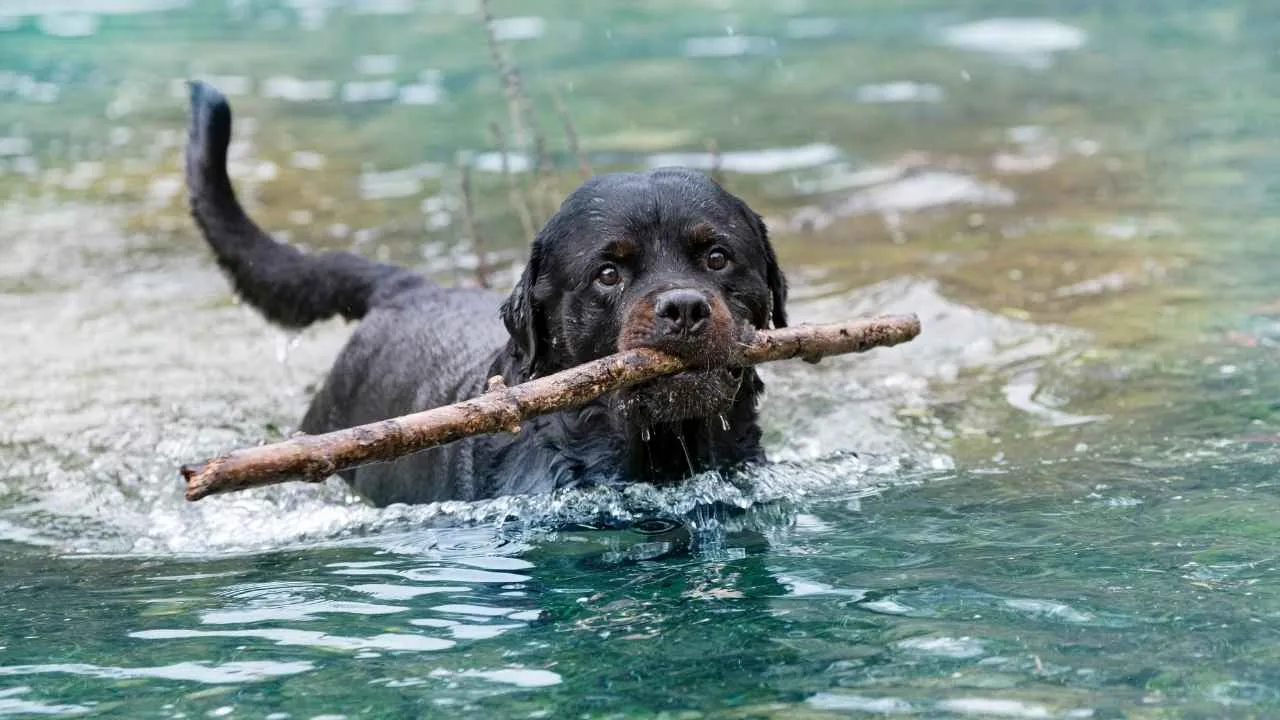
This medium-to-large dog has German origin, and is called Rottweiler Metzgerhund (Rottweiler butchers’ dog). Its main purpose was to herd livestock and pull heavy carts of meat to the market, long before the invention of railways. It is now used for police work, SAR operations, and protection.
It has an instinct to control the herd. Using the ‘loose eye’ strategy, it covers a vast land to keep an eye on hundreds of cattle. While being rarely aggressive, it may bark to guide cattle and deter predators. It may physically guide the stray cattle to keep them in the herd. It develops a deep bond with the ‘pack,’ forming natural protective instincts.
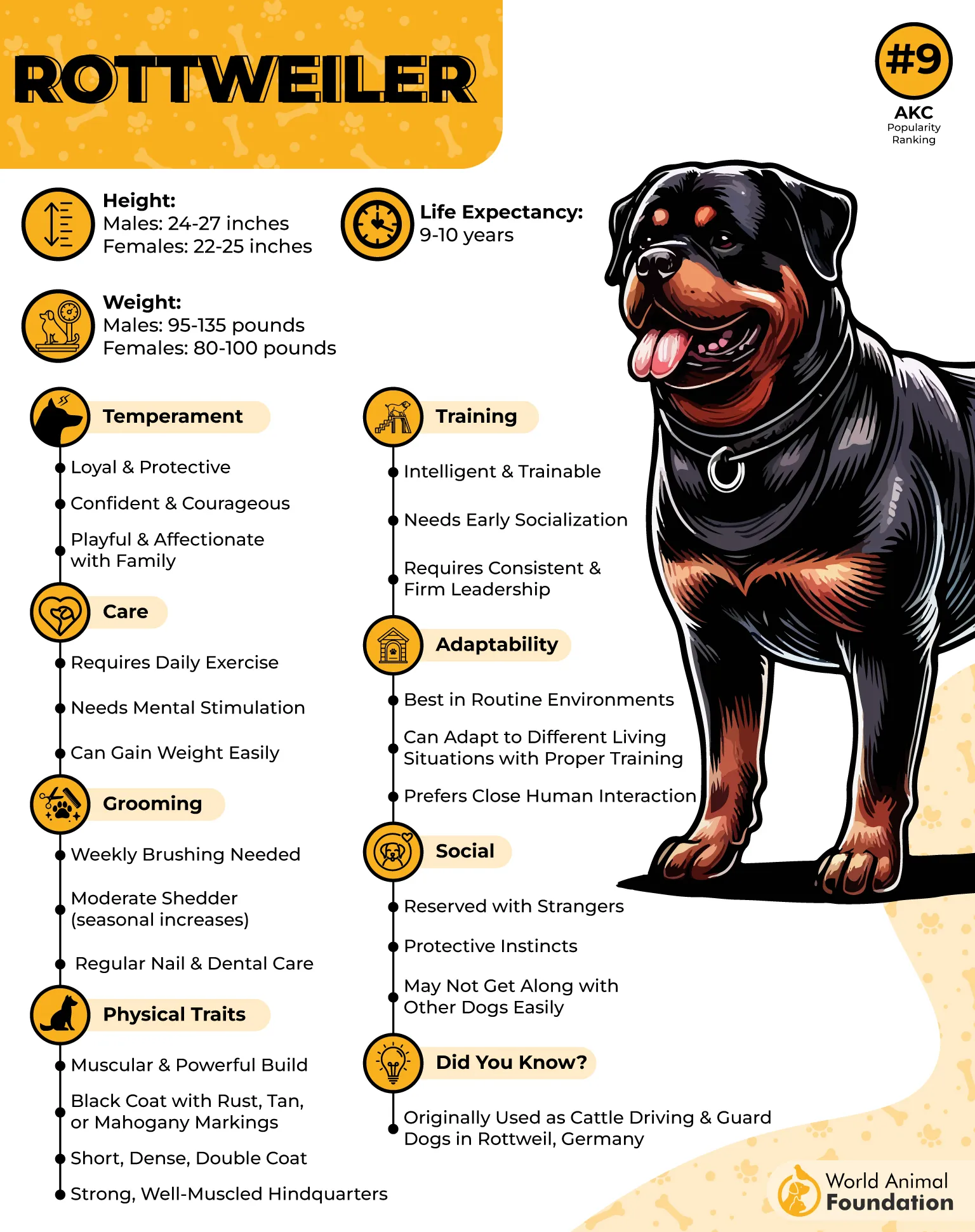
It has a bite force of 328 PSI, capable of neutralizing a potential threat. This breed is highly intelligent and quickly differentiates between a normal situation and a threat. It has a deep chest, wide shoulders, and a short muzzle. The strong neck is designed to control stubborn cattle.
4. Belgian Malinois
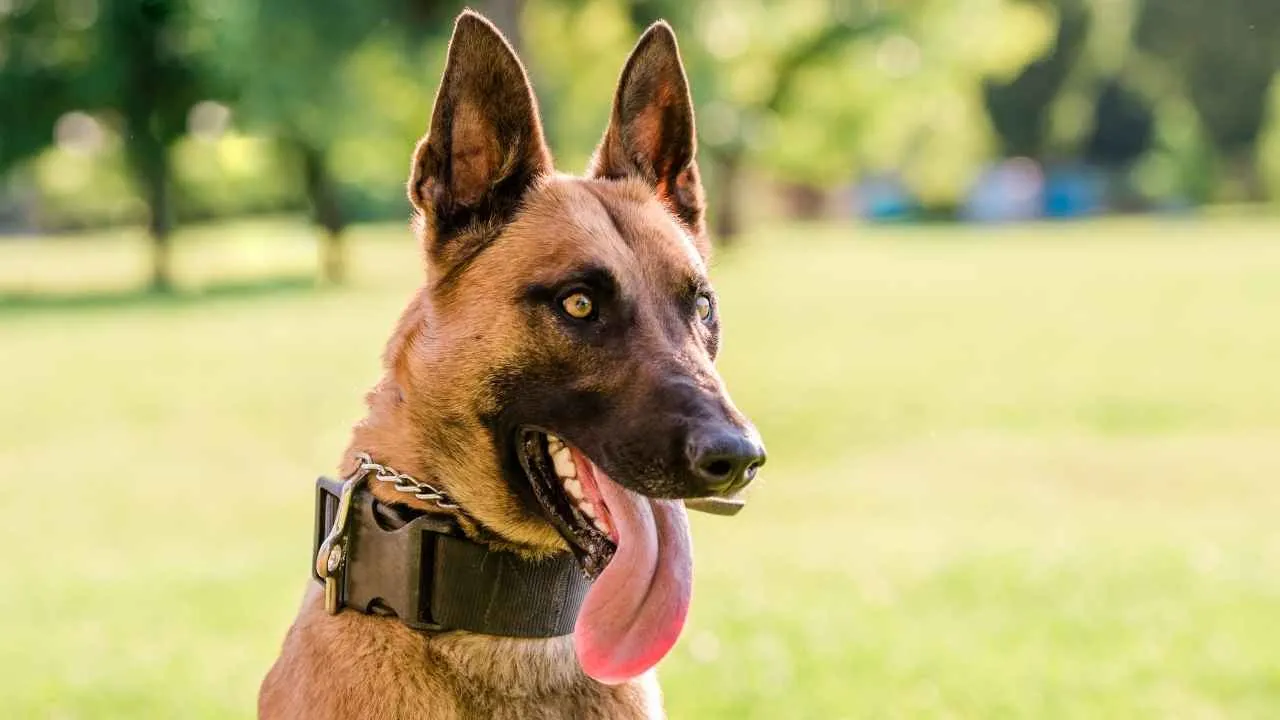
Originating in Belgium, Germany, the Belgian Malinois is one of the four Belgian Sheepdogs (other dogs being Laekenois, Tervueren, and Groenendael). The difference between these 4 breeds is purely based on the basis of coat type. It was first developed to be a border patrol dog and police dog, as per Purina.
It weighs around 55-75 pounds and stands 22-26 inches tall. The low fat-to-muscle ratio provides explosive speed (30-40 mph). Since this great family guard dog has a high prey drive, it tends to react instantly to territorial threats. Consistent training and proper socialization are important to control this behavior if you have small children and other pets at home.
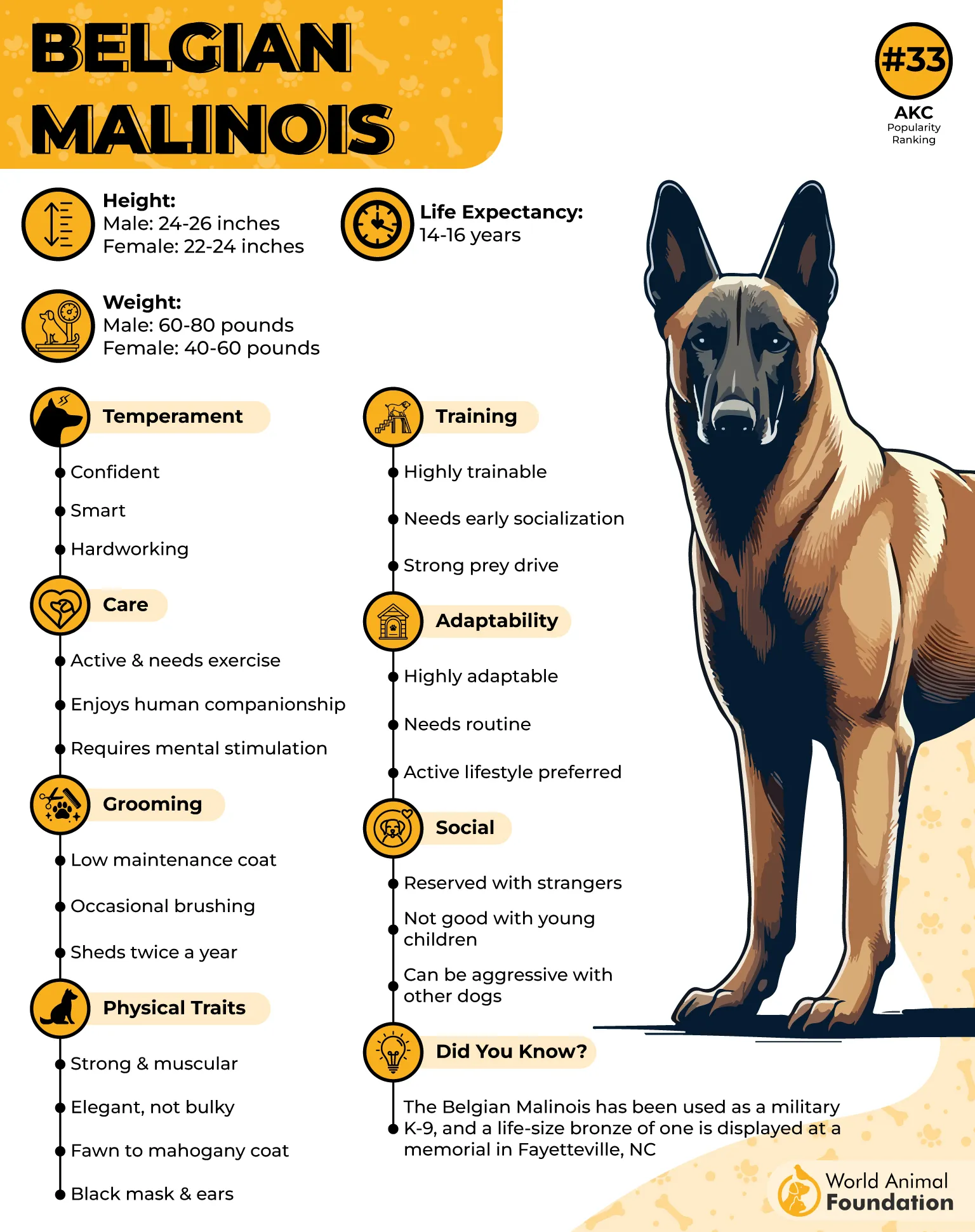
A properly trained Belgian Malinois has a calm demeanor and assesses the situation keenly before reacting in a split second. While it has a relatively weak bite force (195 PSI), its true strength is hidden in cranial architecture and muscular build. It has moderate-to-high exercise (90-120 minutes).
5. Giant Schnauzer
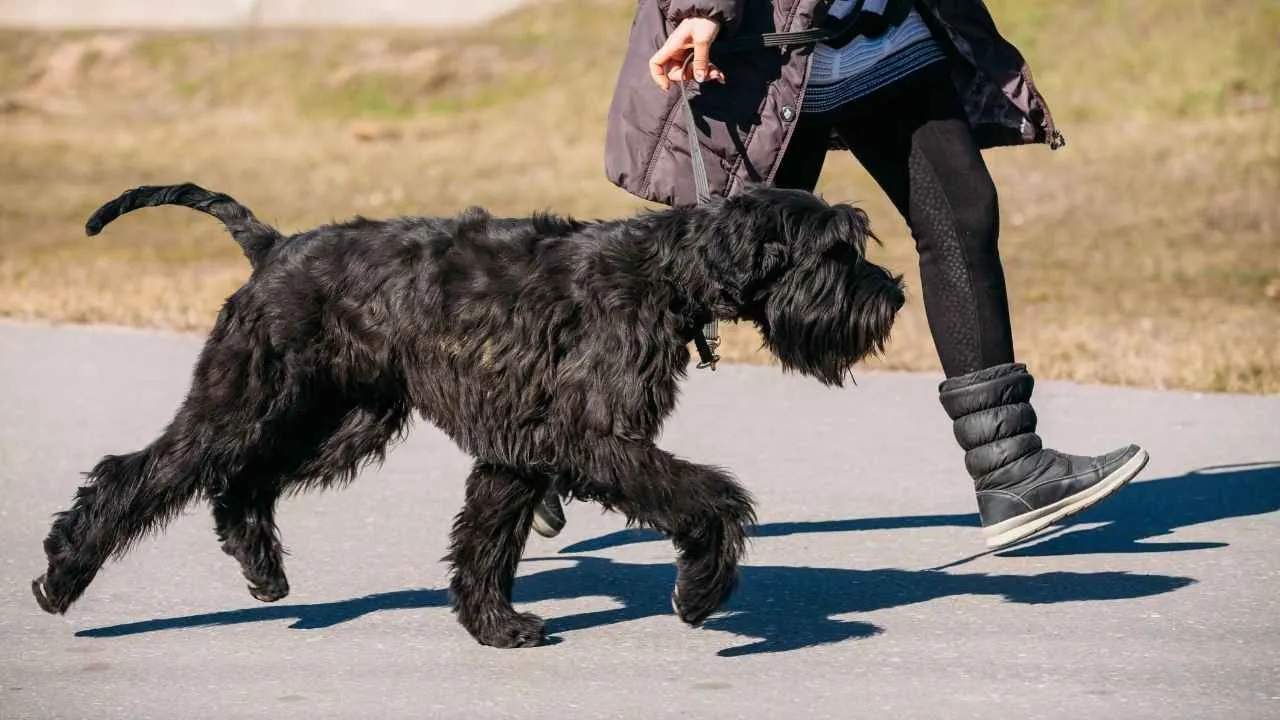
The largest of all Schnauzer breeds, the Giant Schnauzer was bred in Germany to drive livestock in farms, protect farmers’ property, and guard breweries. The breed became popular during World Wars I and II as a military dog.
This loving family pet has a double-layered thick coat and a distinct beard and eyebrows to protect the eyes and face from debris and attack. This is an excellent watchdog and provides effective protection by positioning itself between the owner and the threat. It typically weighs between 65 and 104 pounds.
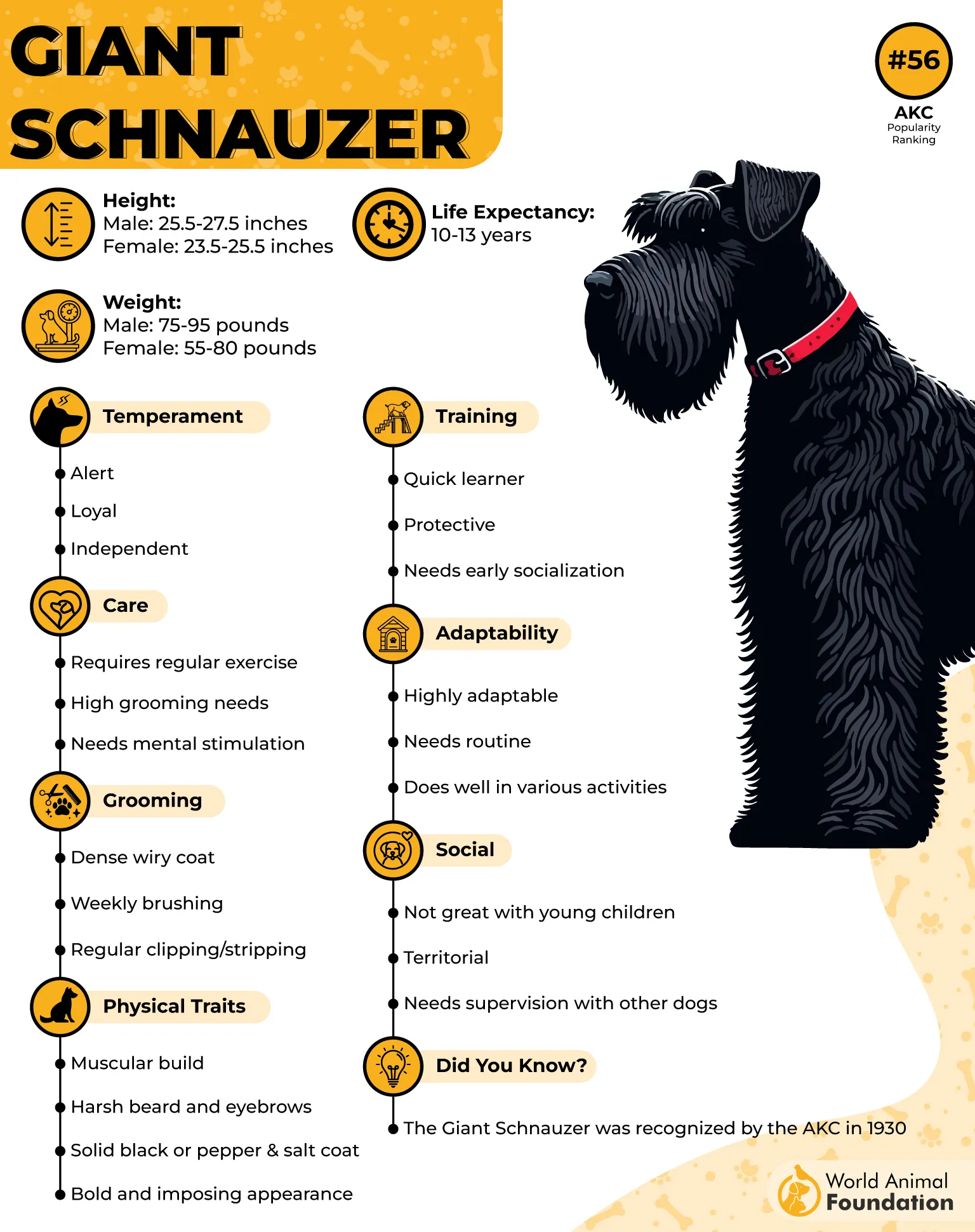
It is highly suspicious of unwelcome guests and may act aggressively in stressful situations, as a calm approach does not work. The angulated hind legs act like a muscular spring. The bite force ranges between 320 and 400 PSI, which it only uses in life-threatening situations.
6. American Staffordshire Terrier
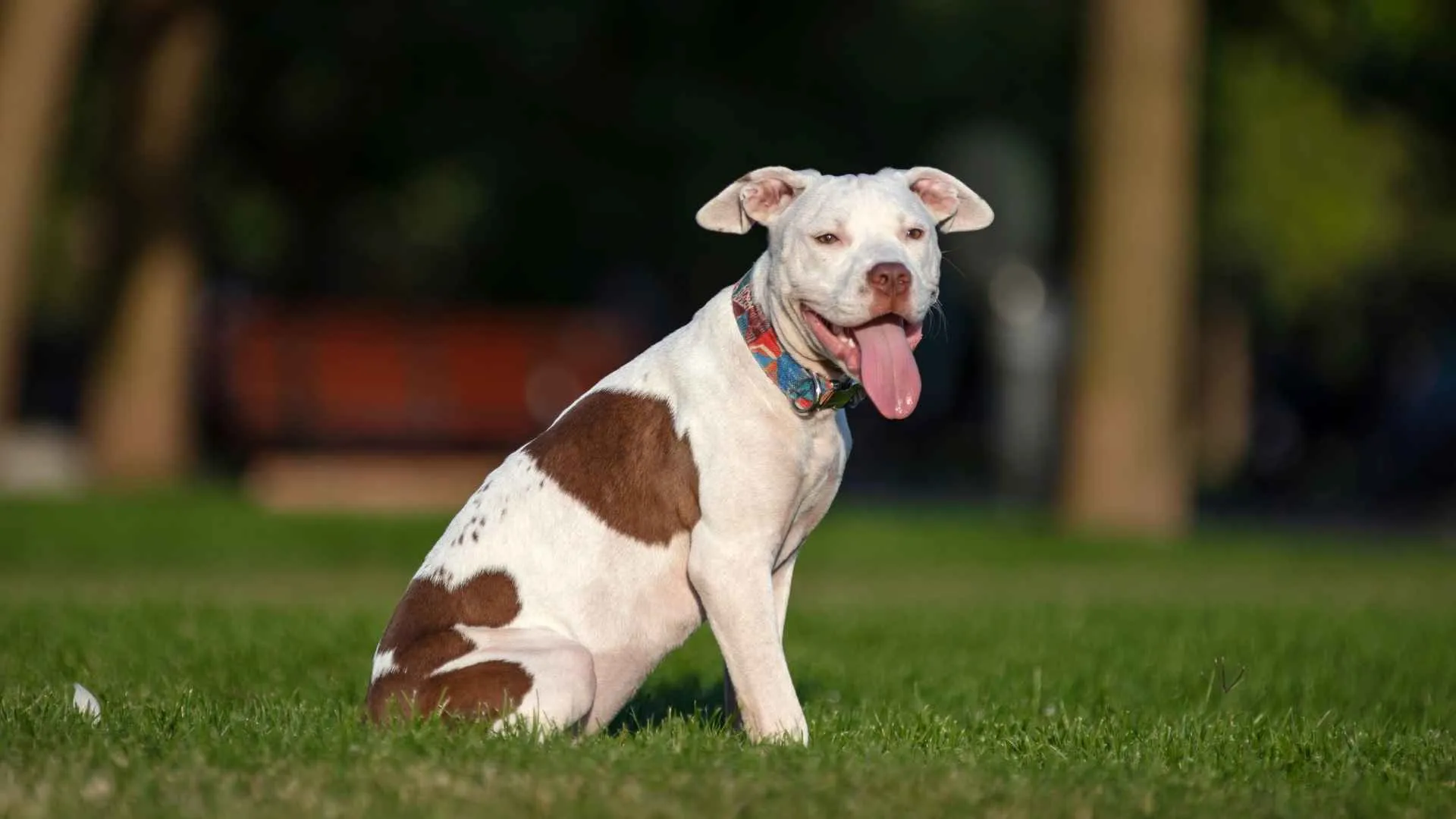
The American Staffordshire Terrier combines intelligence, confidence, and loyalty in a powerful, athletic package. Originally developed as a working dog, this breed is known for its ability to learn quickly and respond well to consistent training.
It has a broad head, well-defined jaws, pronounced cheekbones, and round eyes, says the American Kennel Club. It weighs around 50-70 pounds and stands 17-19 inches tall. The breed has a low center of gravity and strong hind legs, providing fast speed (32-40 mph).
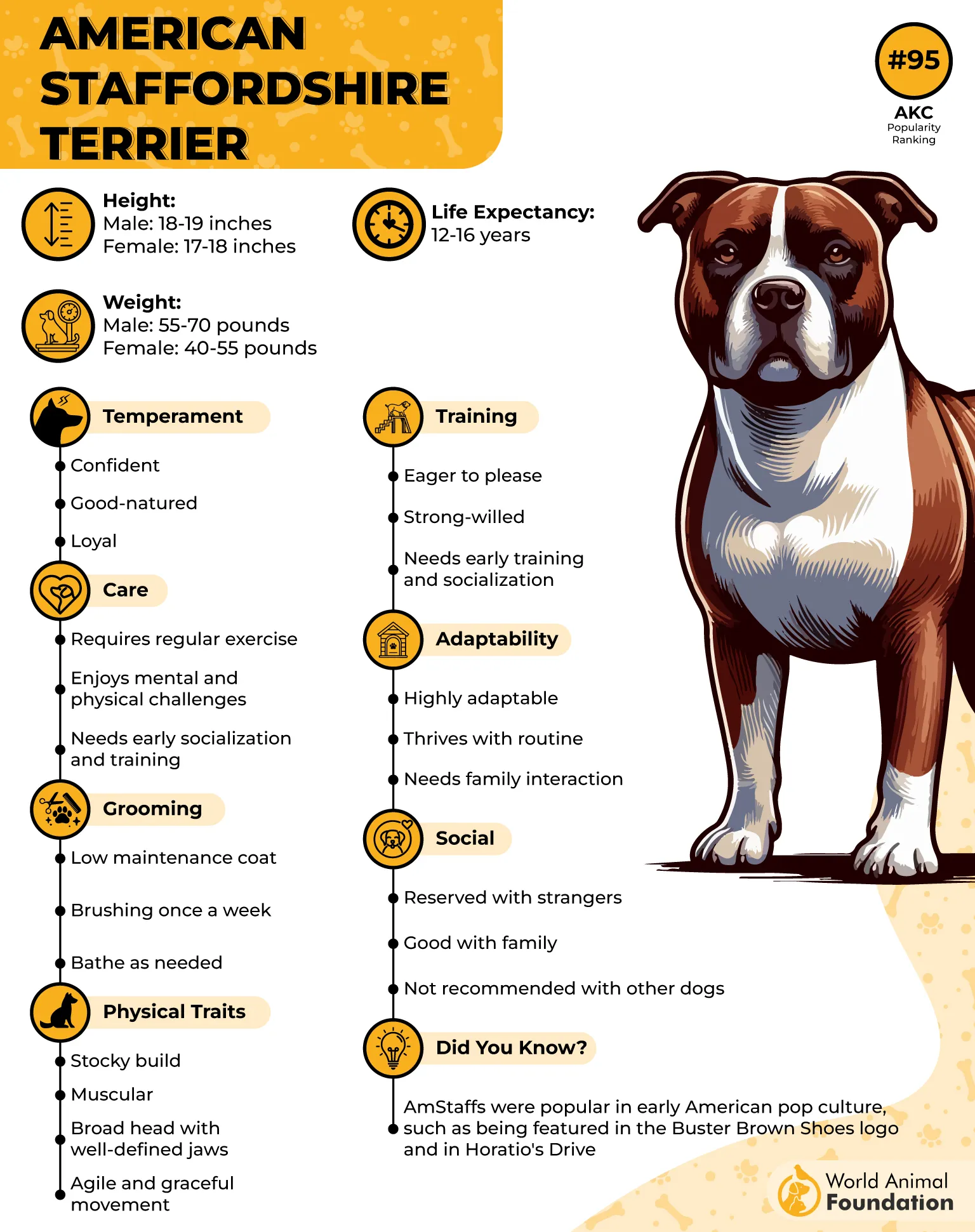
At least 60 minutes of regular exercise is recommended: daily walks, fetch, tug-of-war, and dog sports may be some of the activities that keep these dogs busy.
One of the breed’s most notable traits is its protective nature. American Staffordshire Terriers are naturally devoted to their families and are often alert to unfamiliar situations. While they are not typically aggressive without cause, they possess the courage and confidence to step in if they perceive a threat to their loved ones.
Proper training and early socialization are non-negotiable. While being affectionate towards family members, it has a strong prey drive and may chase small animals. Teach it basic obedience commands: sit, stand, come, etc.
7. Rhodesian Ridgeback
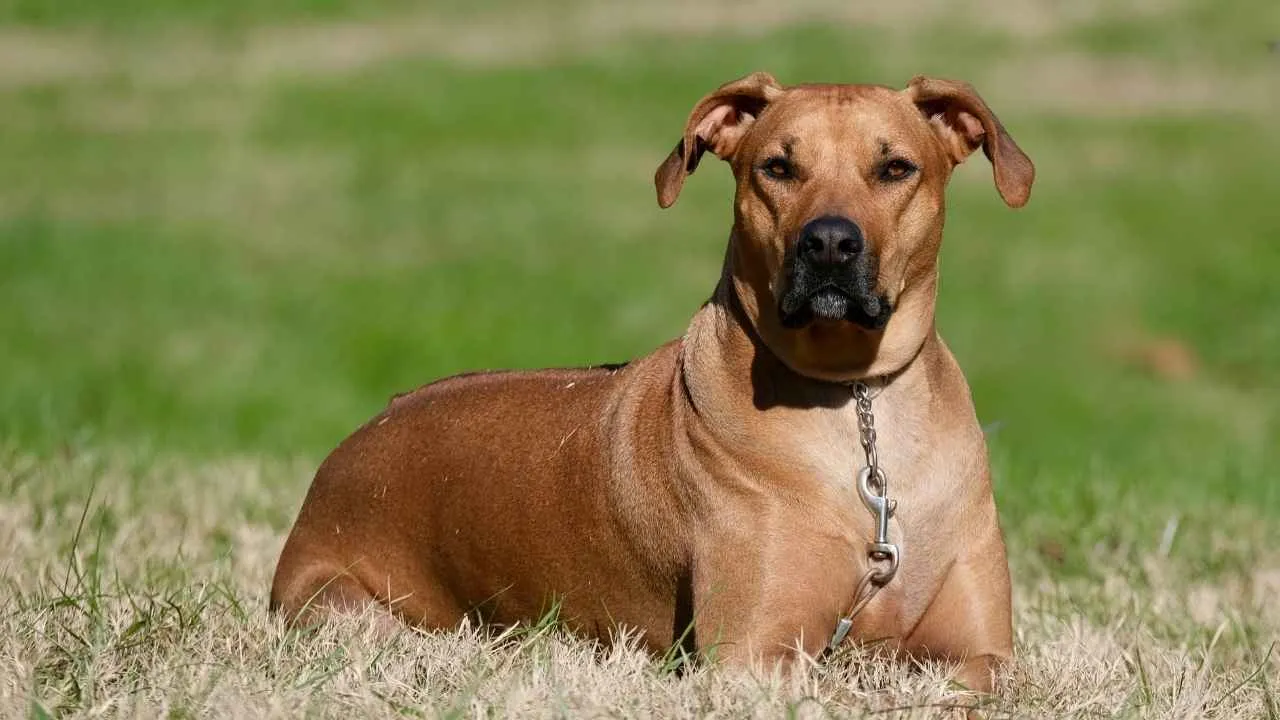
Also known as the African Lion Dog, it was originally bred as a powerful hound dog in South Africa in the 17th century by crossing scenthounds, Great Dane, and Mastiffs. The purpose was to protect the farms. However, it was later realized that the breed is resistant to climate change; thus, hunters began to use it to hunt lions.
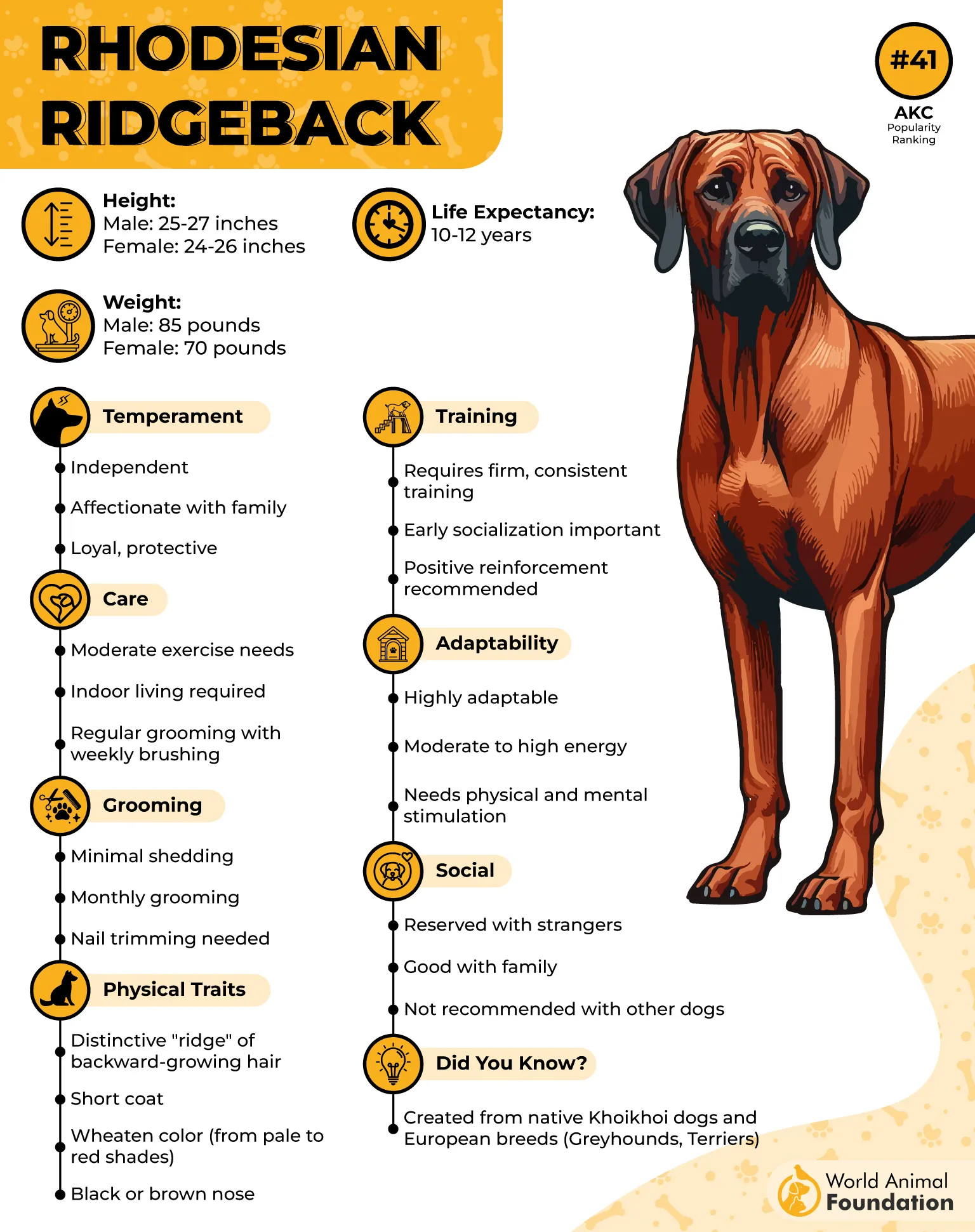
It has exceptional senses of sight and smell and detects unusual environmental changes, making it a great watchdog. It is naturally wary of strangers and produces a loud bark to alert the owner of a threat, despite being calm and quiet. It is attuned to the owner’s emotions and takes emotional clues from humans.
The breed lacks a bony collarbone, and the forelimbs are attached to the robust network of muscles. The four-headed triceps give it enough power to firmly hold the large game at bay. The double coat provides insulation by trapping air inside in winter and reflecting light.
8. Akita
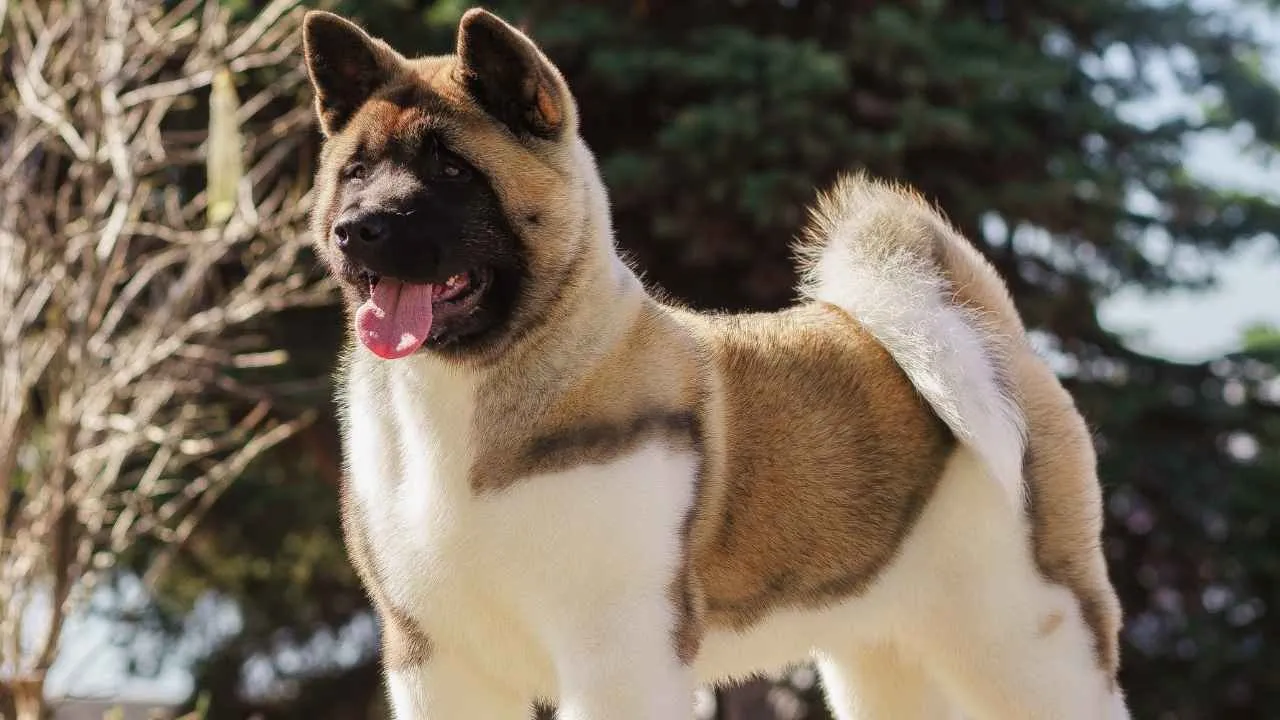
Bred in the cold northern mountains of Japan, the Akita was used as a fighting dog alongside Samurai for centuries. It is also considered a sacred breed and is a symbol of wealth and good luck across Japanese culture. It has a plush double coat and webbed feet that assist it in swimming, walking on the icy surface, and protect the breed from cold winds.
An Akita, Hachiko, is famous as a loyal companion. It waited 10 years for its owner to come to Tokyo Railway Station, not knowing he was already dead. It weighs around 70-130+ pounds, acting as a natural deterrent for intruders. The breed observes the surroundings, assesses the threat level, and independently makes decisions.
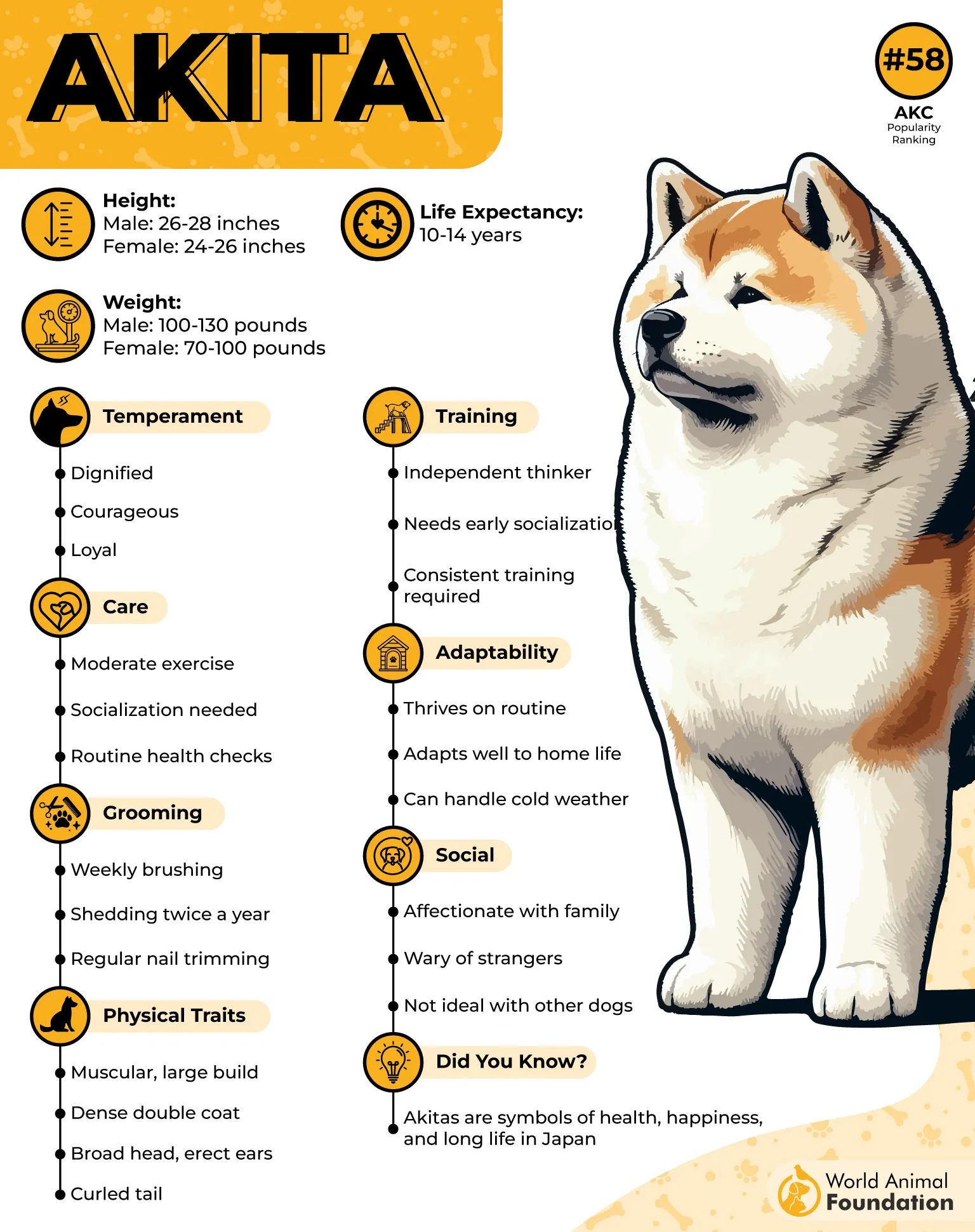
The puppies take almost 2-3 years to mature. The powerful jaws were developed to take down large game, such as wild boars and bears, and the strong neck controls their movement. It has moderate exercise needs (1.5-2 hours): brisk walk, secure play, and jogging.
9. Belgian Sheepdog
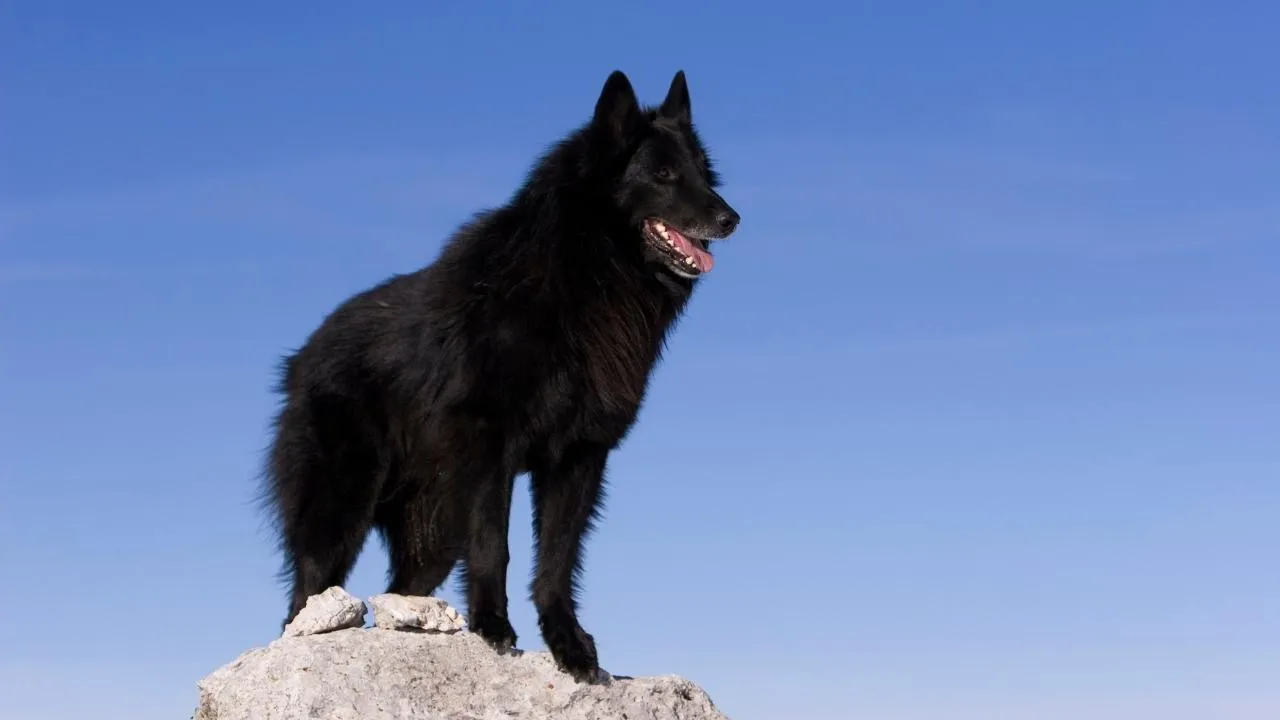
This medium-sized herding dog was developed in the 19th century in Germany and is a great companion dog. This is widely used in police and military work, guarding, detection, and assistance jobs. It also participated in both World Wars.
Its high intelligence makes it an exceptional learner, and it learns commands within a few repetitions. It thoroughly scans the environment and checks on the territorial boundaries and family members. Being velcro in nature, it makes a strong bond with the family.
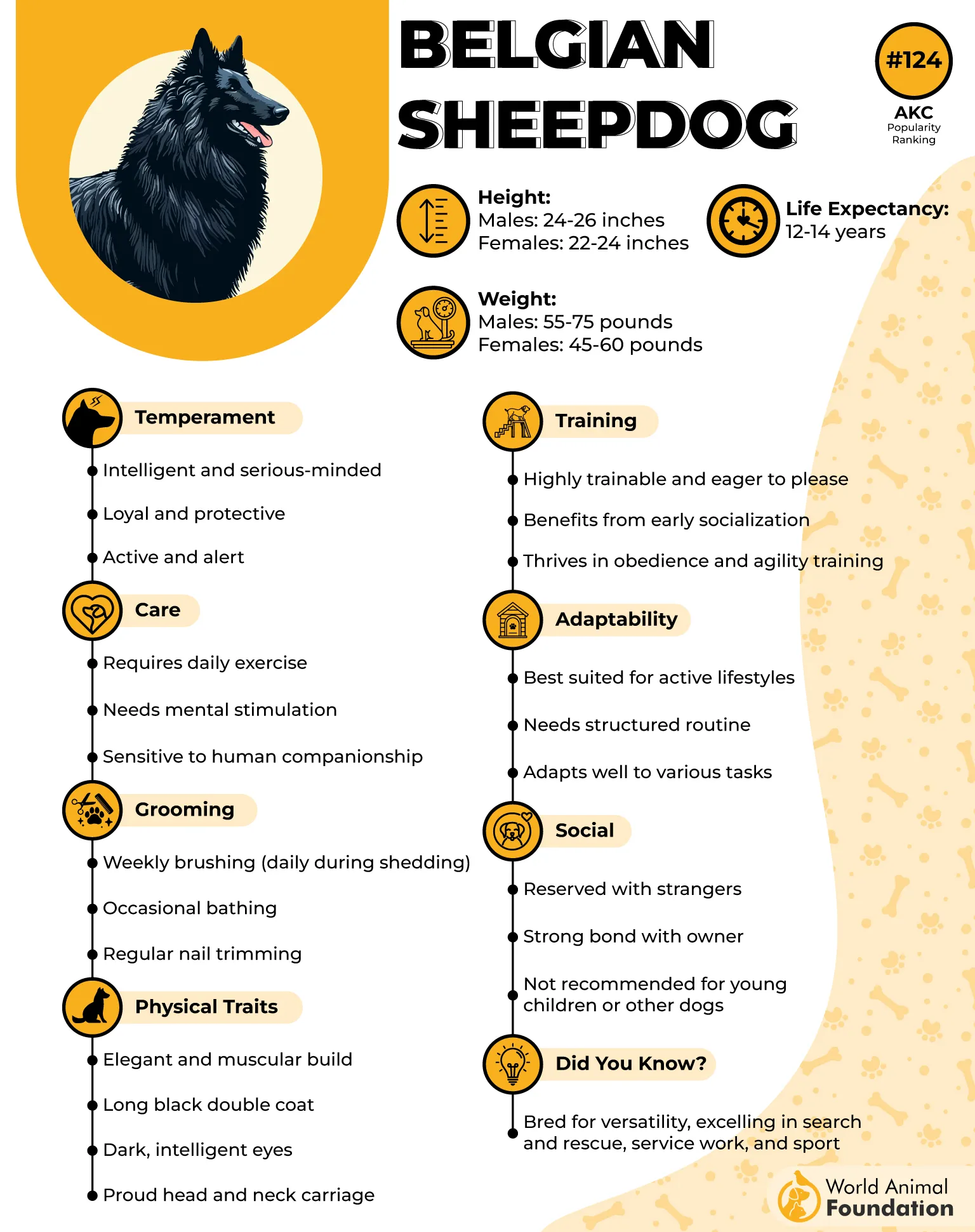
The breed has high energy and requires 2-3 hours of extensive exercise: fetching, canicross, jogging, and swimming. With a wide capillary network, the breed has delayed muscle exhaustion during intense protection work.
Conclusion
Every breed on this list brings something distinct and implacable. The Belgian Malinois offers speed and precision under pressure. The Akita brings quiet, centuries-old loyalty. The AmStaff carries fierce devotion in a compact, powerful frame. The right guard dog for you depends on your lifestyle, your experience, and the kind of relationship you are genuinely ready to invest in.
These are not casual pets. They are partners. Give them structure, posture, and love, and they will give you back something no alarm system can ever replicate. A living, breathing guardian that genuinely cares about your safety. That is worth everything.
