




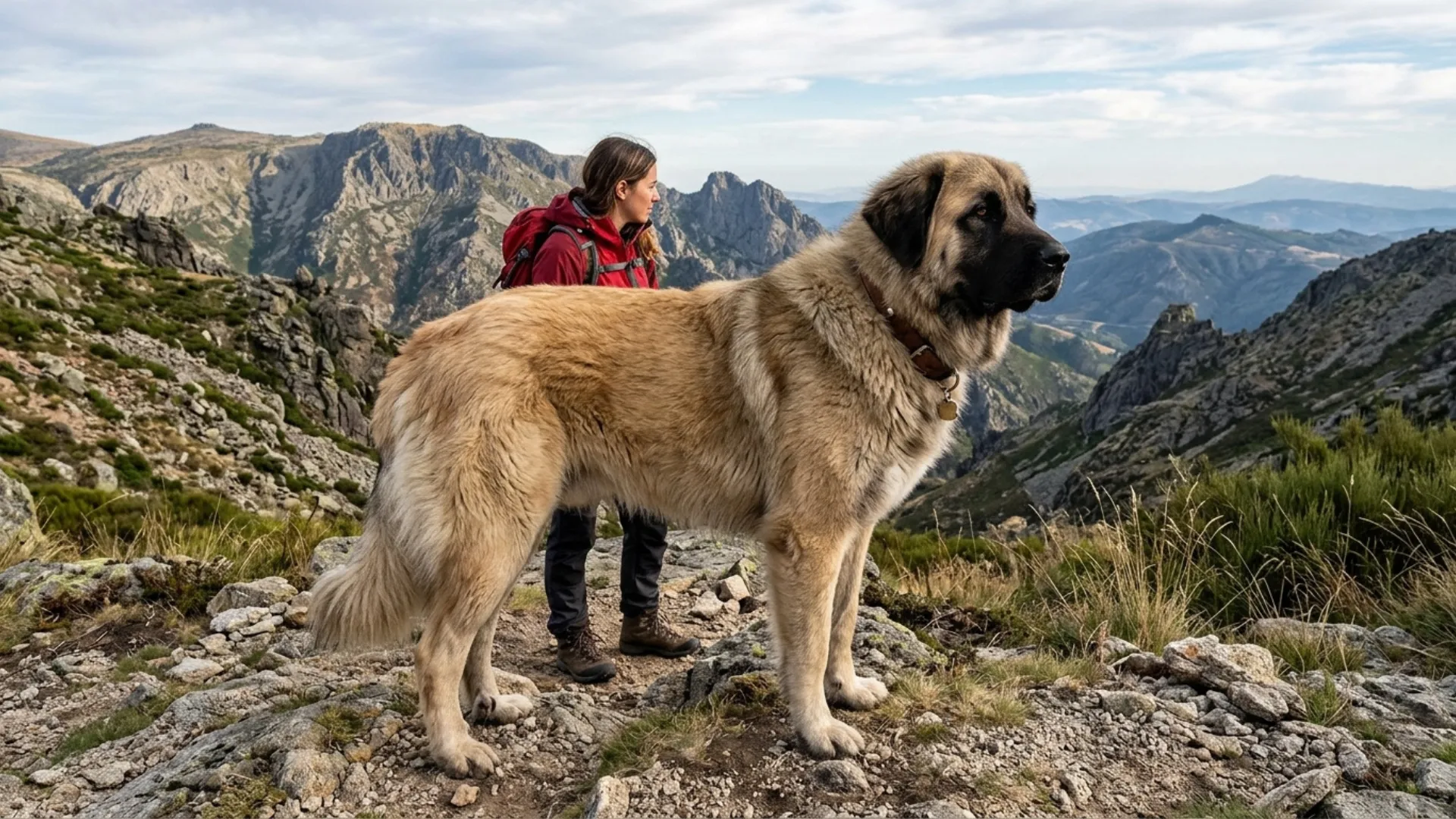
The conversation started with a simple question about dogs, but quickly shifted when someone mentioned a giant breed that few people at the table had ever heard of. Curiosity replaced familiarity almost instantly.
Everyone knew the popular choices, yet this dog seemed to belong to an entirely different world. The more details emerged, the more fascinating the discussion became. Its size was impressive, but its background, purpose, and personality were even more interesting. That moment highlights something many dog enthusiasts eventually discover.
Beyond the well-known breeds lies a group of remarkable giants that rarely receive the recognition they deserve. They are uncommon, distinctive, and often surrounded by stories that stretch across generations. Encountering one can leave a lasting impression because they challenge expectations of what a dog can be.
In the sections ahead, explore rare giants whose presence is unforgettable and whose histories are equally compelling.
Key Takeaways
It usually starts as a casual discussion about dogs until the mention of a giant breed completely changes the direction of the conversation
Spanish Mastiff and Estrela Mountain Dog bring calm loyalty at home while still carrying strong guarding instincts shaped through real work over centuries.
The Pyrenean Mastiff and the Caucasian Shepherd Dog show different kinds of strength, one steady and gentle, the other far more independent and intensely protective.
As the list continues into the Leonberger, Scottish Deerhound, and Black Russian Terrier, each one adds its own mix of power, history, and character that reshapes what a companion dog can be.
Rare Giant Dog Breeds: A Unique Companion
1. Spanish Mastiff
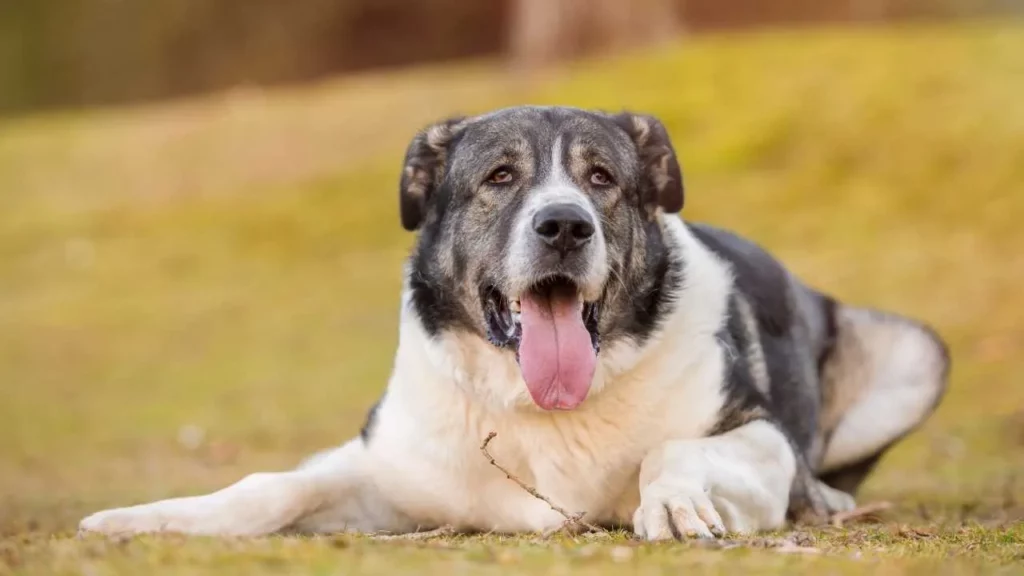
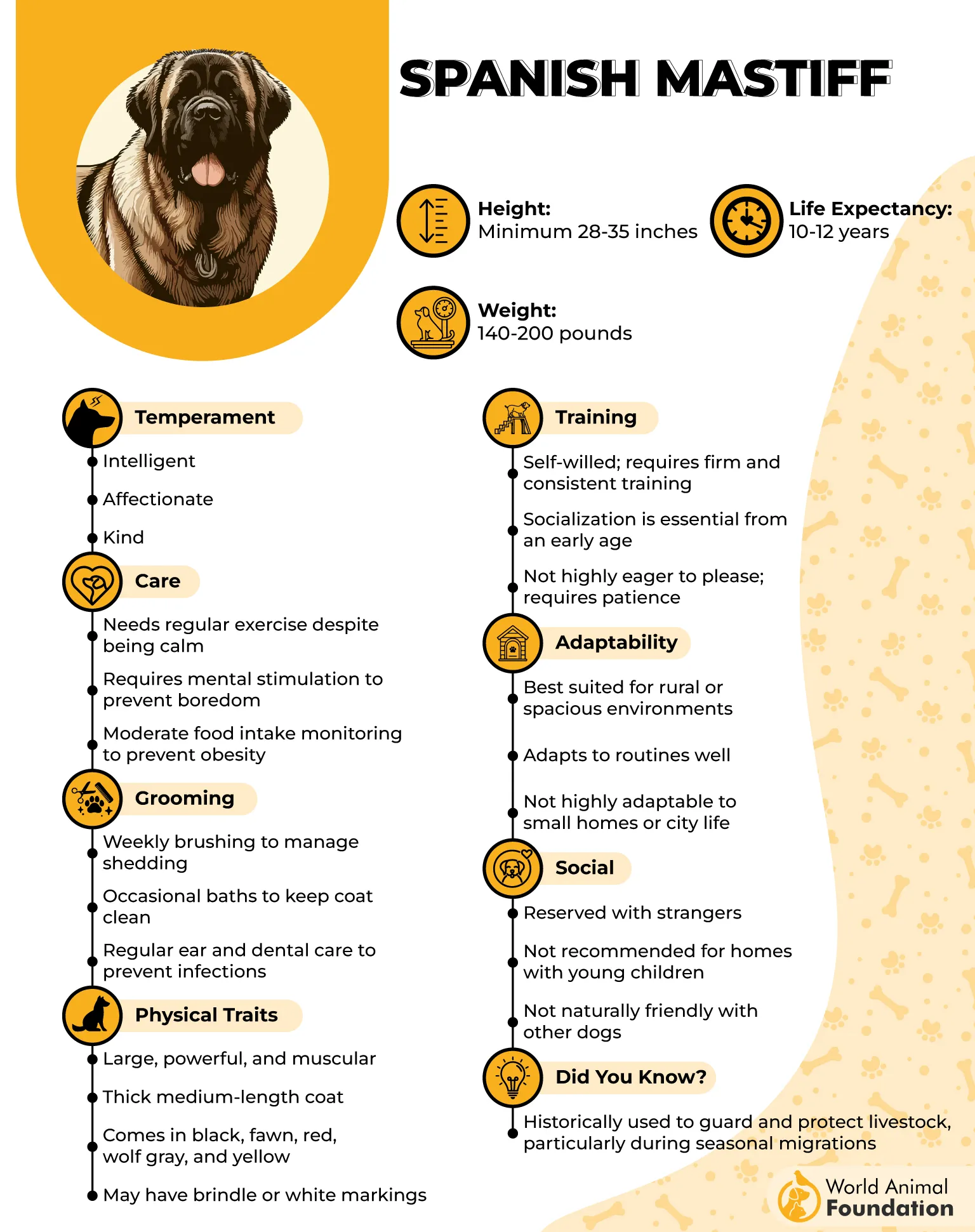
Spanish Mastiff spent centuries watching over vast flocks, with a single dog trusted to oversee as many as 100 sheep. Its immense size and powerful build were valued where wolves and other predators posed a constant threat. That working purpose remains closely tied to the breed today.
Family Character
Despite its imposing presence, this rare dog breed forms affectionate bonds within the household and can coexist well with children and other dogs, as PetMD noted. Around unfamiliar people, its protective instincts become more noticeable.
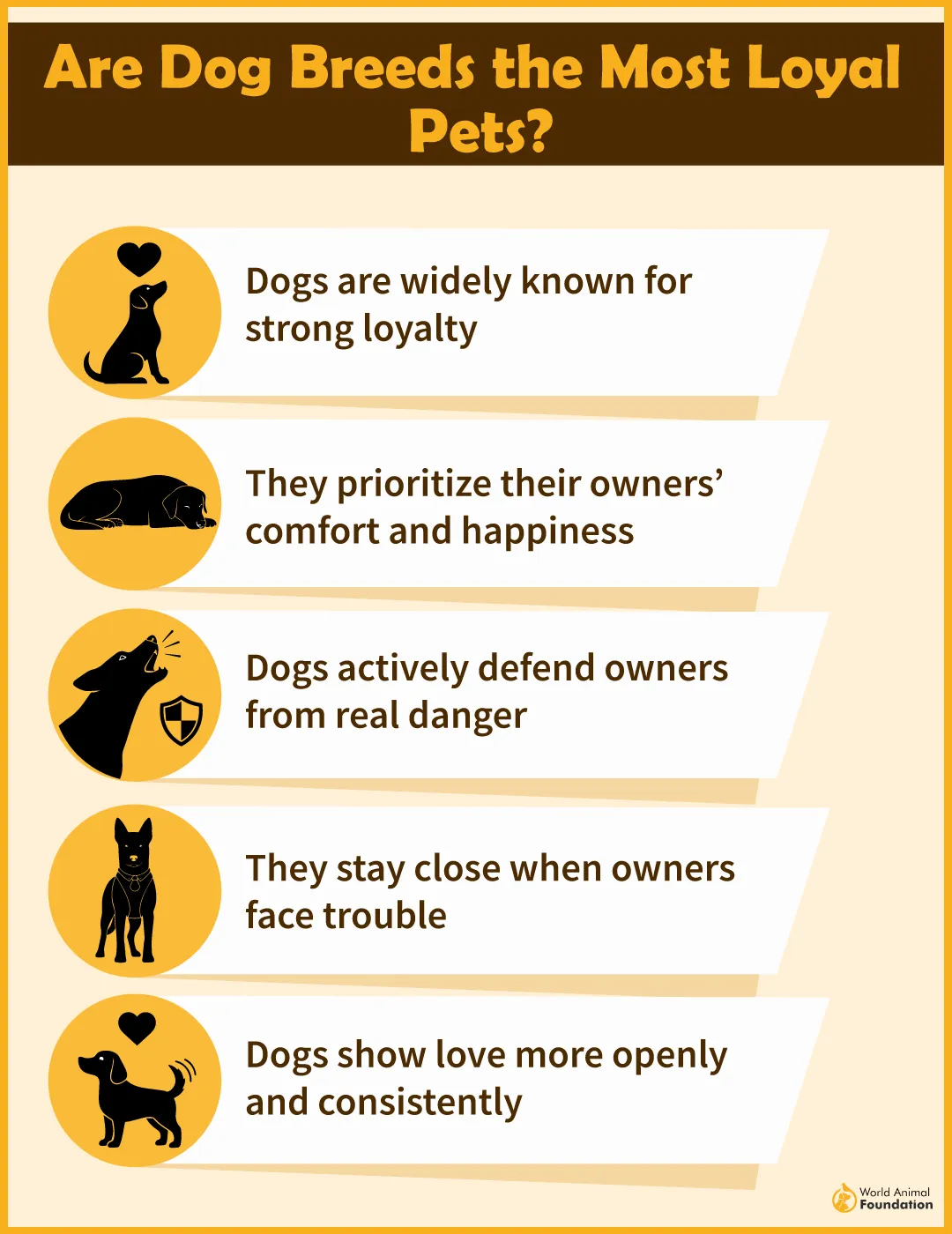
Several qualities shape that balance:
Deeply family-oriented
Naturally watchful
Comfortable with children
Early Guidance
Proper training begins best during puppyhood, when important habits are easier to establish. Learning basic cues, walking politely on a leash, and remaining composed around people and animals help shape a dependable adult dog. Consistency matters more than complexity with this breed.
Spanish Mastiff: Is This Breed Right for You?
✅ A Great Fit If You
- Want a calm and loyal family guardian.
- Have plenty of space for a giant breed.
- Can provide early training and socialization.
⚠️ Not Ideal If You
- Live in a small apartment.
- Prefer a highly social dog with strangers.
- Are a first-time giant breed owner.
🎧 Dogcast
Episode 37 — Why Dogs Stay Close without Touching
If you don’t hear sound, tap the button above to enable audio.
2. Estrela Mountain Dog
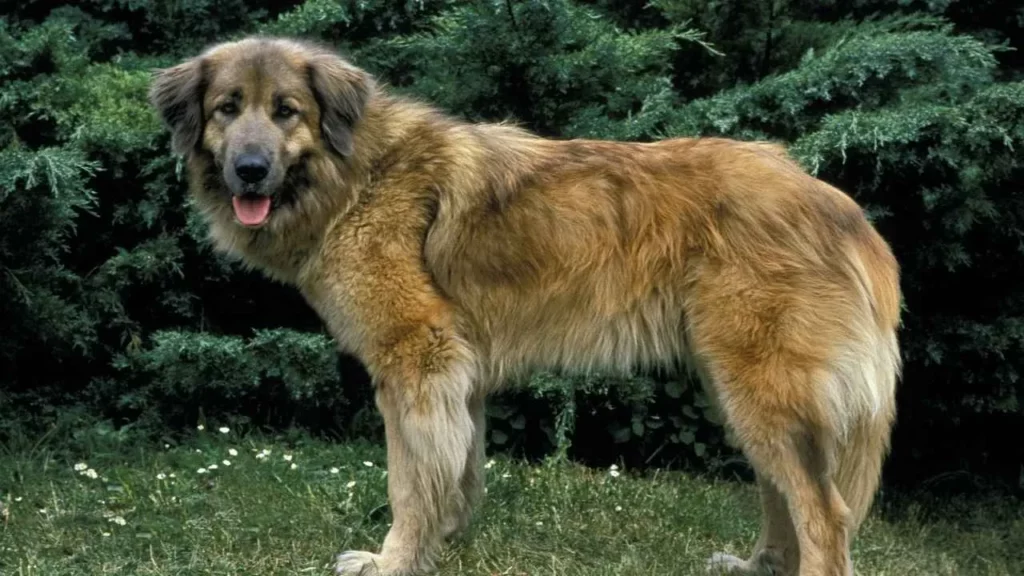
Estrela Mountain Dog is often described as the inseparable companion of the shepherd, a role that shaped both its devotion and confidence.
Among Portugal’s oldest mastiff-type breeds, it spent generations watching over flocks and families. That close partnership remains central to its character today.
Family Connection
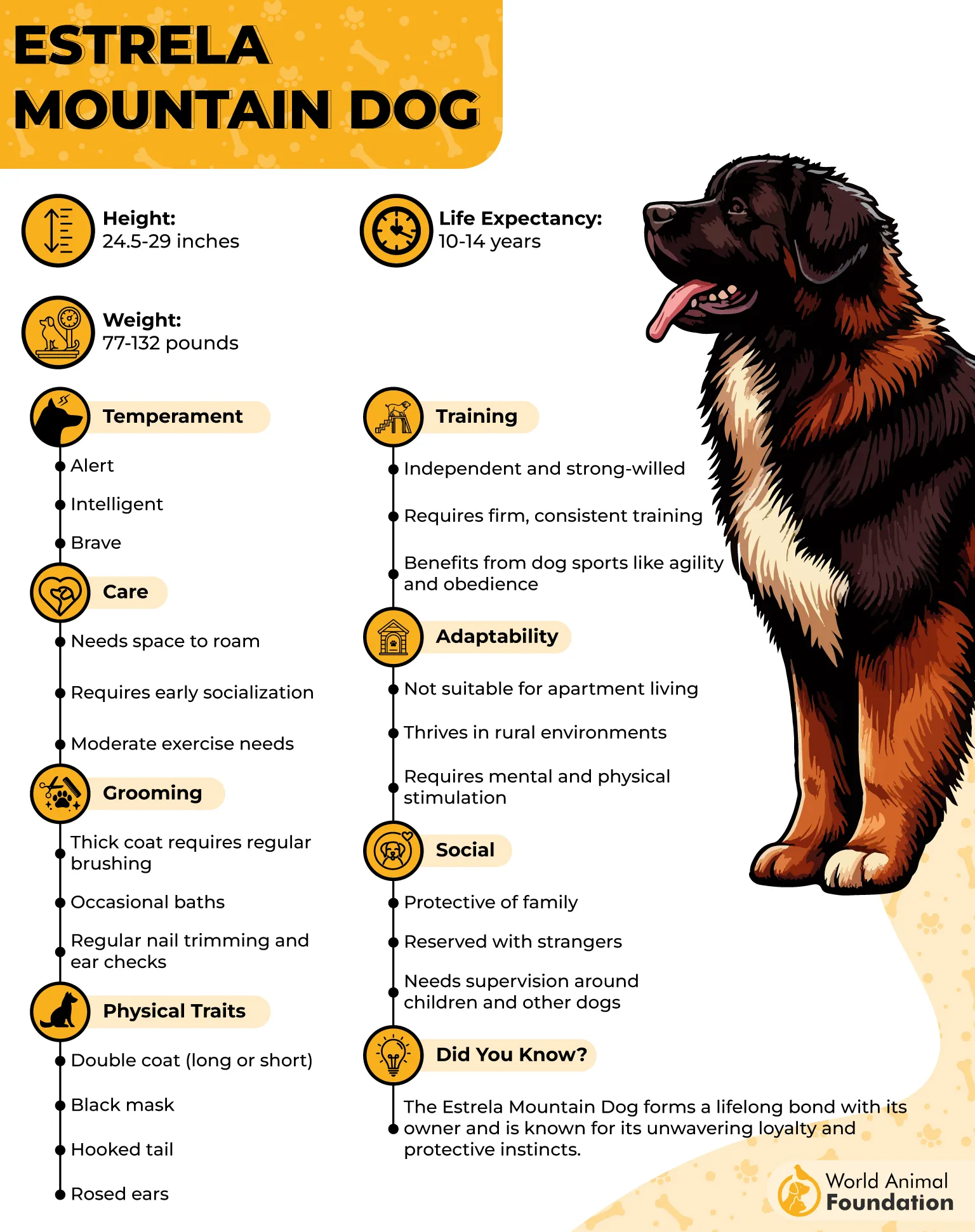
Life with an Estrela revolves around a strong attachment to its people and an instinct to watch over them, as the AKC describes. While affectionate at home, it approaches unfamiliar faces with caution until trust is established.
These qualities explain its behavior further:
Deeply devoted to family
Naturally watchful
Gentle with children
Space and Daily Life
This large dog breed enjoys having room for outdoor exploration and benefits from a secure area to roam. It can live alongside other pets when properly socialized from an early age. Even today, this rare Portuguese breed continues working in its homeland while forming close household bonds.
Estrela Mountain Dog: Is This Breed Right for You?
✅ A Great Fit If You
- Want a devoted family companion.
- Need a naturally watchful watchdog.
- Have a secure yard for daily activity.
⚠️ Not Ideal If You
- Want a dog that loves every stranger.
- Have limited outdoor space.
- Cannot commit to early socialization.
3. Pyrenean Mastiff
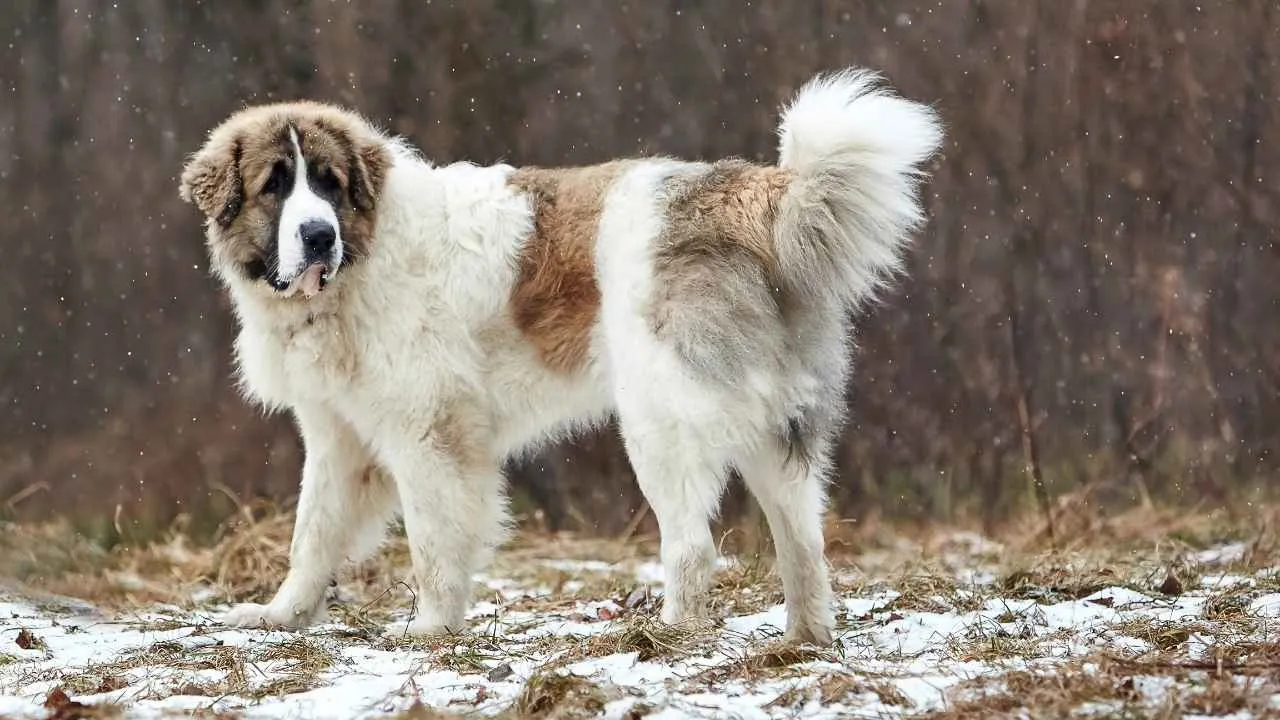
Pyrenean Mastiff spent generations watching over livestock in the Spanish Pyrenees, where calm judgment mattered as much as physical size.
That working purpose shaped a dog known for loyalty, patience, and a steady approach to daily life. Time with people remains one of its favorite parts of the day.
Companion Qualities
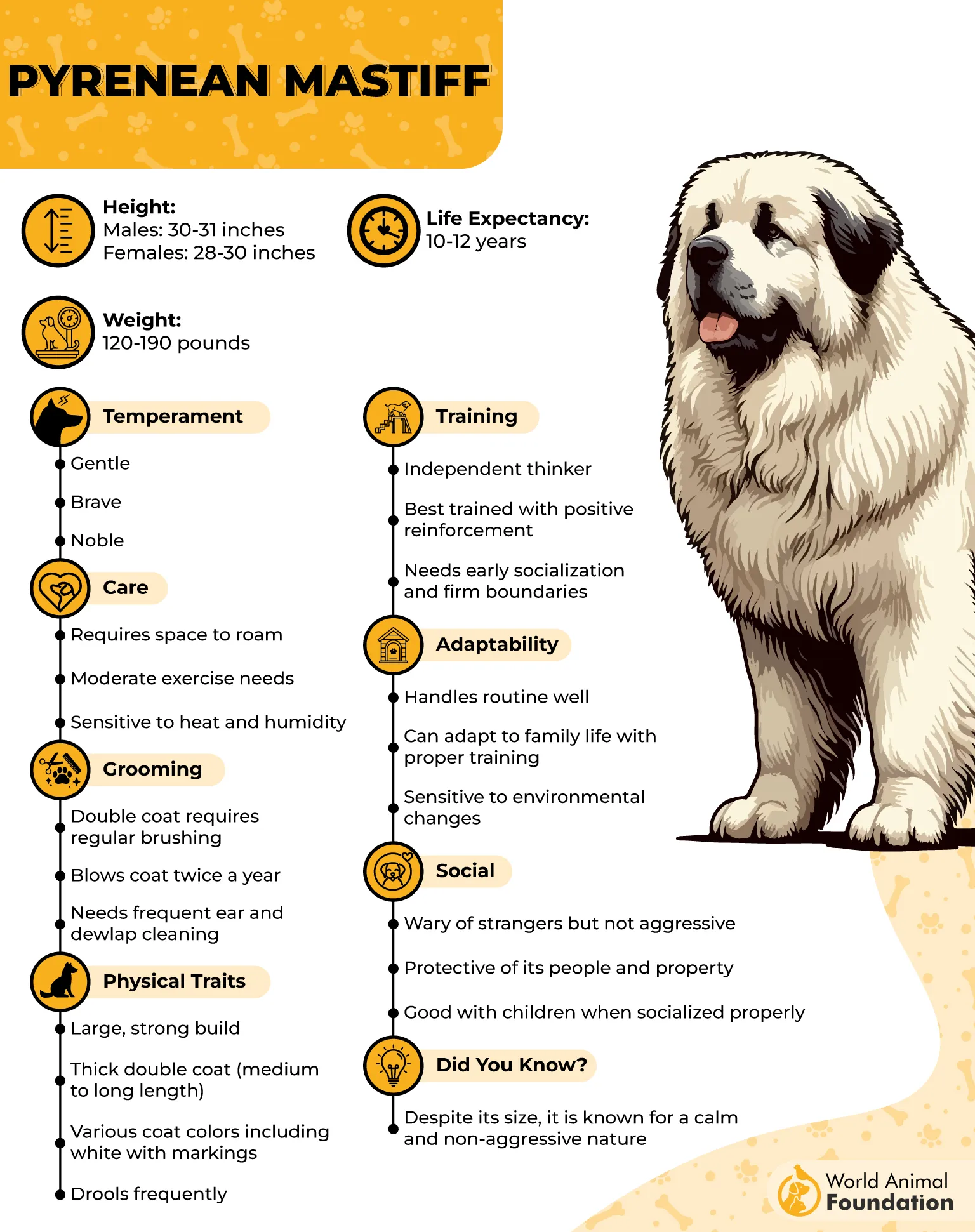
Its gentle nature makes this rare breed especially appealing to families seeking a giant dog with an easygoing temperament. While capable of working roles, it places equal value on companionship and shared routines.
Several traits contribute to that appeal.
Affectionate with family
Calm around children
Naturally alert
Daily Lifestyle
This large breed enjoys having space to wander, yet often prefers relaxing near its favorite people. Leisurely hikes, neighborhood walks, and obedience activities fit comfortably into its routine. Even its thick double coat requires only straightforward biweekly grooming.
Pyrenean Mastiff: Is This Breed Right for You?
✅ A Great Fit If You
- Want a gentle giant for family life.
- Prefer a calm and patient temperament.
- Enjoy relaxed outdoor activities.
⚠️ Not Ideal If You
- Want a highly energetic dog.
- Have very limited living space.
- Prefer low-maintenance giant breeds.
4. Caucasian Shepherd Dog
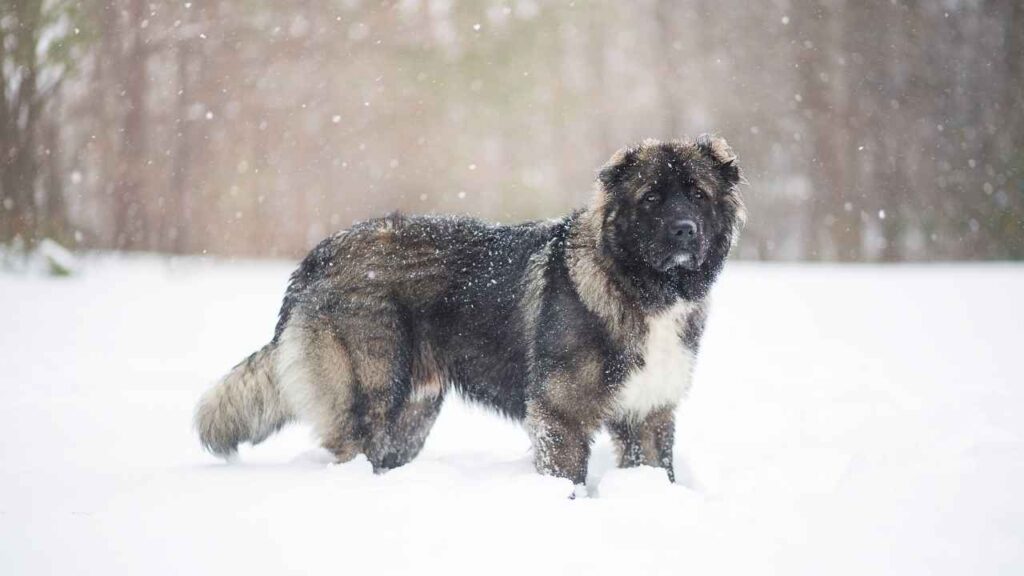
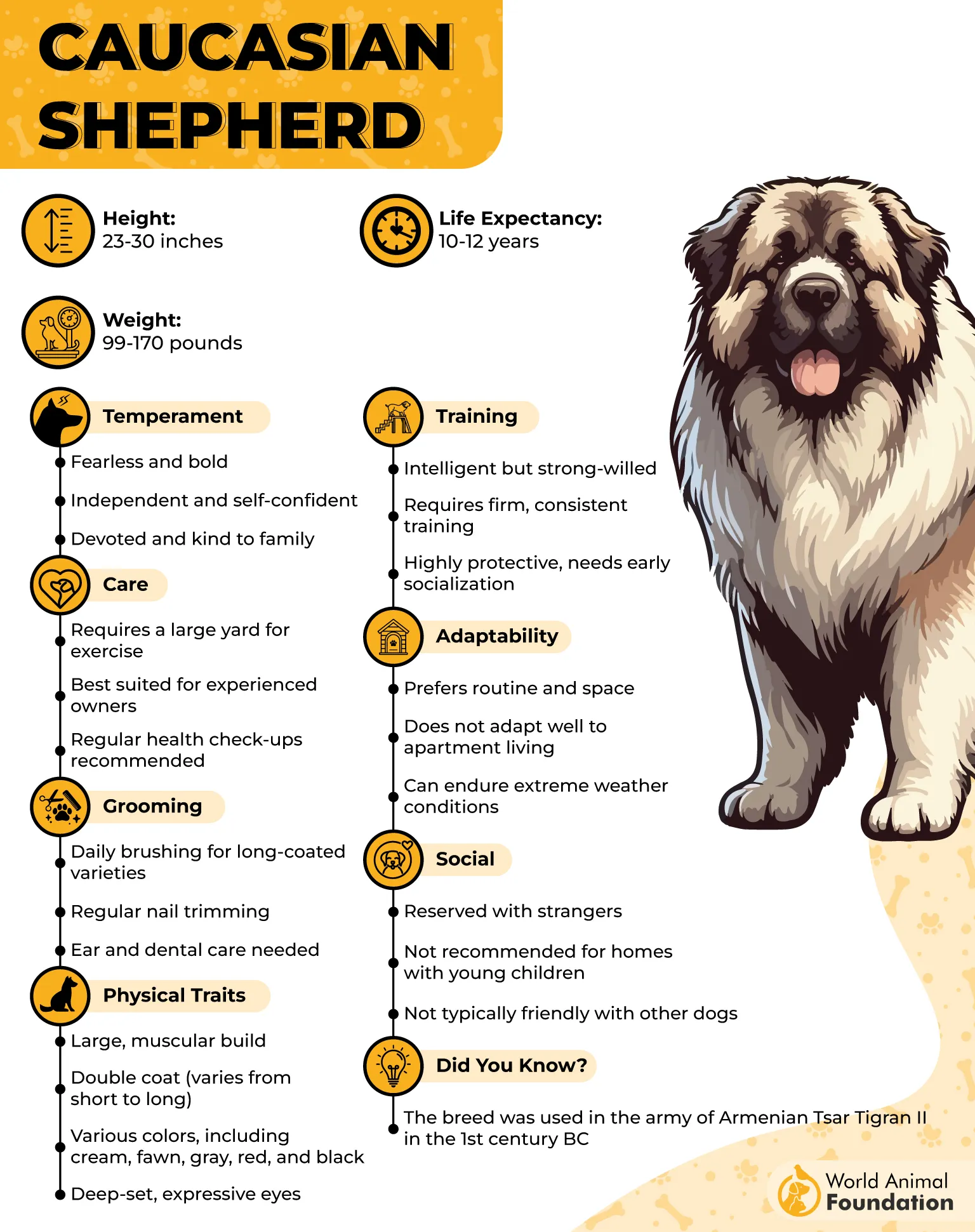
Caucasian Shepherd Dog is recognized for its strong guarding nature, shaped in the Caucasus Mountains of Georgia, where it was trusted to protect livestock and property from predators.
Its heavy build and dense coat support survival in harsh conditions. Independence and alertness define its working nature more than anything else.
Working Nature and Handling Needs
Caution is often advised for first-time handlers due to its strong independence and serious approach to guarding. The United Kennel Club states that early guidance and structured training help channel its instincts into controlled behavior.
These important points describe its working temperament:
Strong territorial awareness
Responds best to structured training
Requires early social exposure
Family Interaction Pattern
In household settings, the breed tends to prefer clear space and predictable interactions rather than constant handling. Young children or overly playful environments may not suit its steady, watchful mindset. Its behavior is shaped more by caution than casual friendliness.
Caucasian Shepherd Dog: Is This Breed Right for You?
✅ A Great Fit If You
- Have experience with large working breeds.
- Need a powerful property guardian.
- Can provide firm, consistent training.
⚠️ Not Ideal If You
- Are a first-time dog owner.
- Want a highly social companion.
- Prefer an easygoing, low-responsibility breed.
5. Leonberger
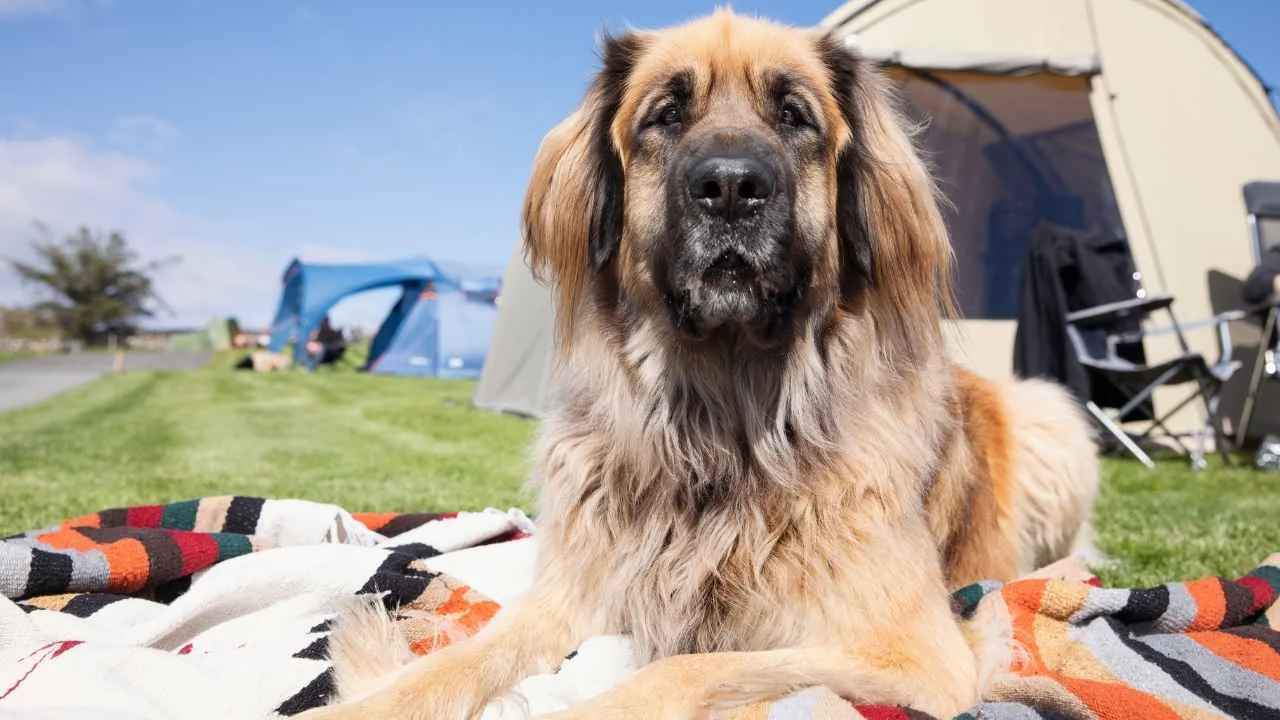
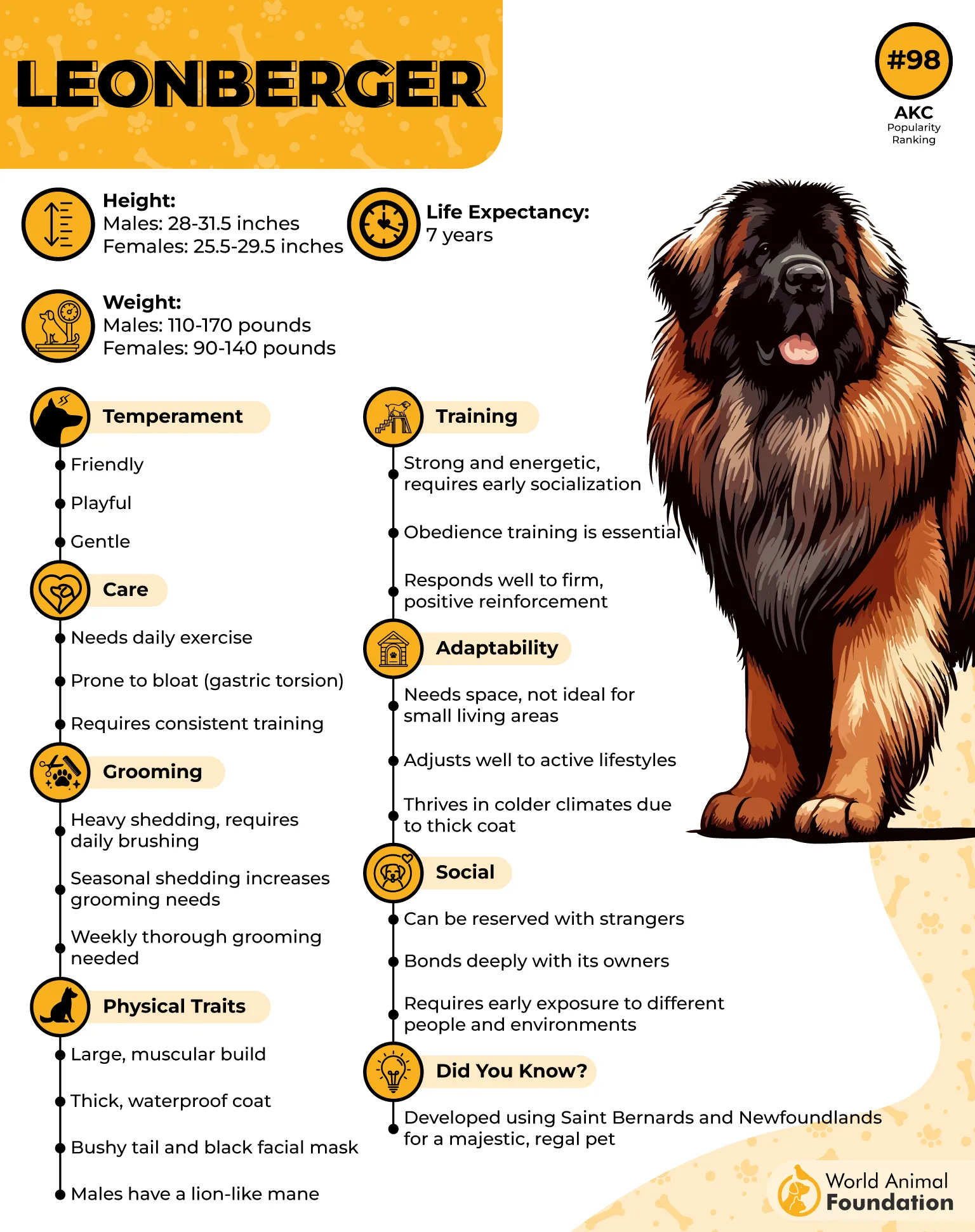
Leonberger draws attention with a massive frame softened by a calm, approachable temperament that fits both working roles and home life. Its roots connect to the town of Leonberg in Germany, where it gained favor among European royalty for its friendly nature and flowing coat.
Strength with Purpose
This big dog fits into demanding roles while keeping a composed household nature, especially when well-trained and socialized. Its balanced temperament makes it useful as a search-and-rescue dog.
This is how they behave in real life:
Calm under pressure
Strong working drive
Quick to learn tasks
Family-Oriented Nature
Leonbergers interact gently with children and other dogs, often responding best when included in shared activities. Their calm behavior does not remove their need for engagement, as they prefer having meaningful roles or tasks. Social comfort grows when they feel part of daily routines.
Leonberger: Is This Breed Right for You?
✅ A Great Fit If You
- Want a giant dog that loves family activities.
- Have children and other pets.
- Can provide regular exercise and attention.
⚠️ Not Ideal If You
- Want a low-grooming breed.
- Spend long hours away from home.
- Prefer an independent dog.
6. Scottish Deerhound
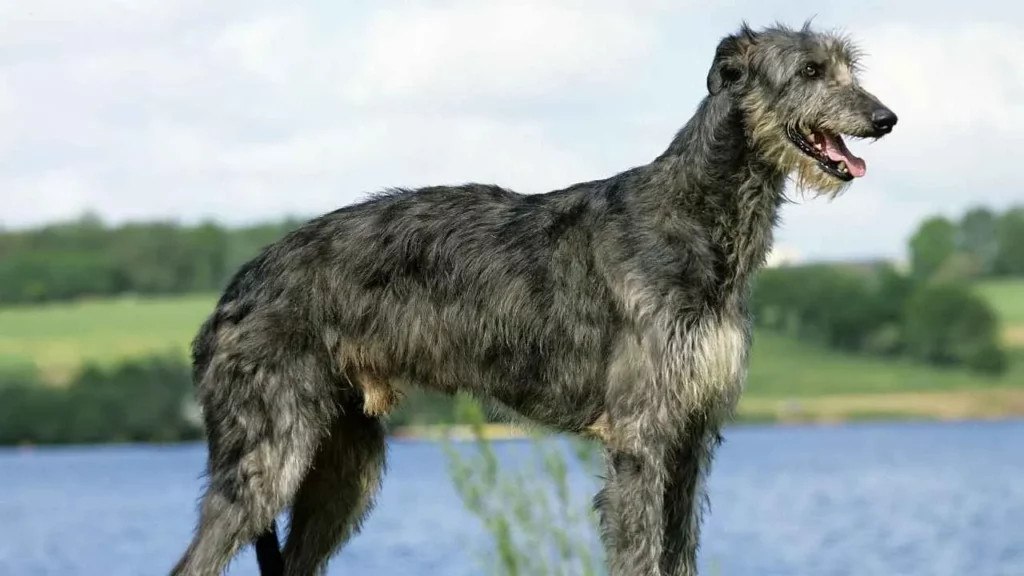
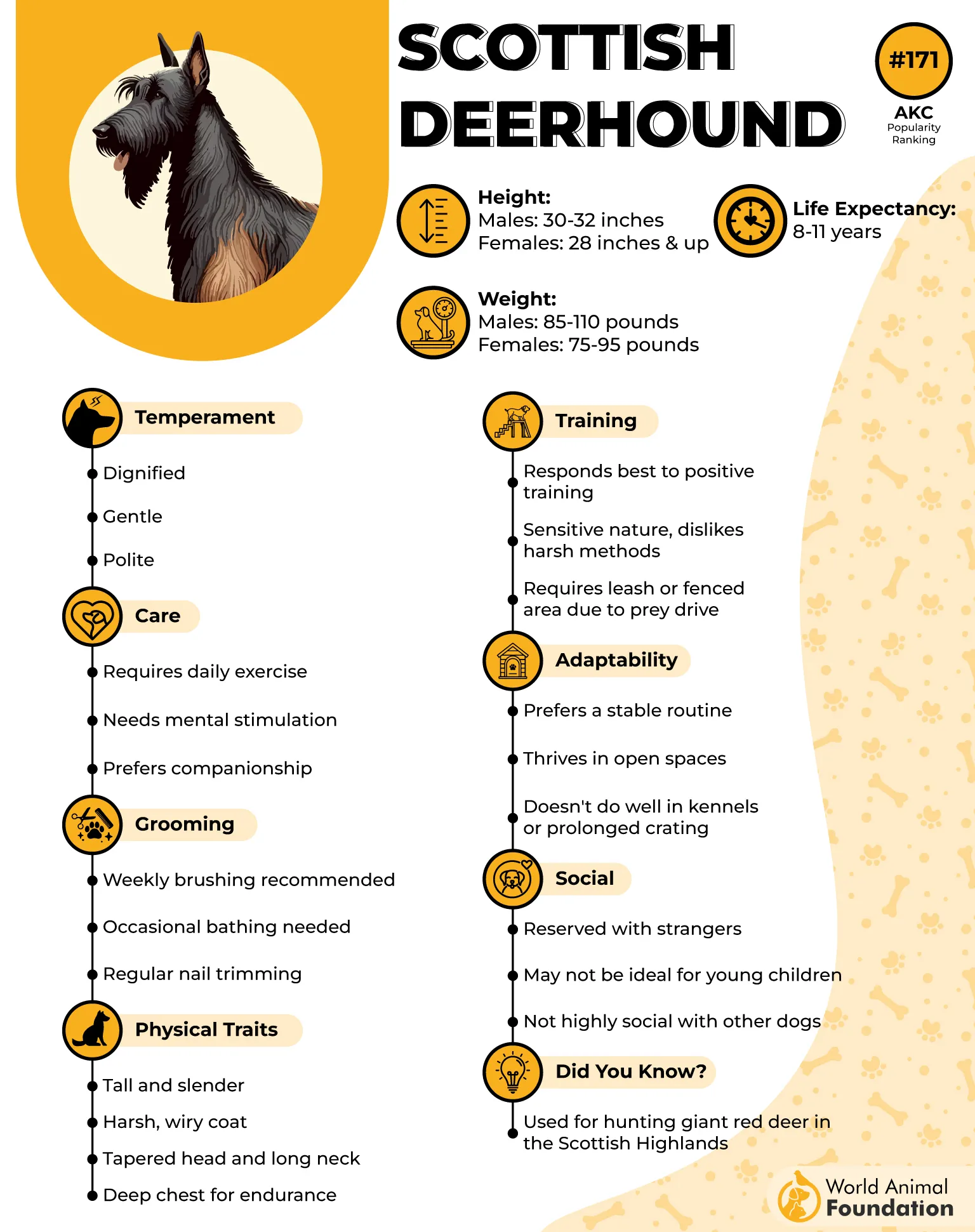
Scottish Deerhound draws attention with its tall, lean frame and effortless stride, built for covering wide Highland terrain while chasing deer. The breed was once used across the Scottish Highlands in pursuit of game during the 1500s. Today, it is better known for a calm, relaxed presence indoors.
Athletic Sighthound Traits
This giant breed blends a wiry coat with a greyhound-like outline, giving it speed and endurance suited for open landscapes. As a sighthound, it relies on movement and focus, which explains its strong chase instinct and need for structured activity.
A closer look highlights what shapes its working nature:
Strong prey focus in open spaces
Needs consistent daily movement
Responds best to steady handling
Training and Living Needs
Scottish Deerhound benefits from daily exercise that matches its athletic build, especially long walks or running sessions. Early social exposure helps balance its natural independence and sensitivity toward other animals. It is often suited for experienced dog owners who understand large sighthound behavior.
Scottish Deerhound: Is This Breed Right for You?
✅ A Great Fit If You
- Enjoy an active outdoor lifestyle.
- Have space for daily exercise.
- Appreciate calm indoor behavior.
⚠️ Not Ideal If You
- Have small pets that may trigger prey drive.
- Want a strong guard dog.
- Cannot provide regular exercise.
7. Black Russian Terrier
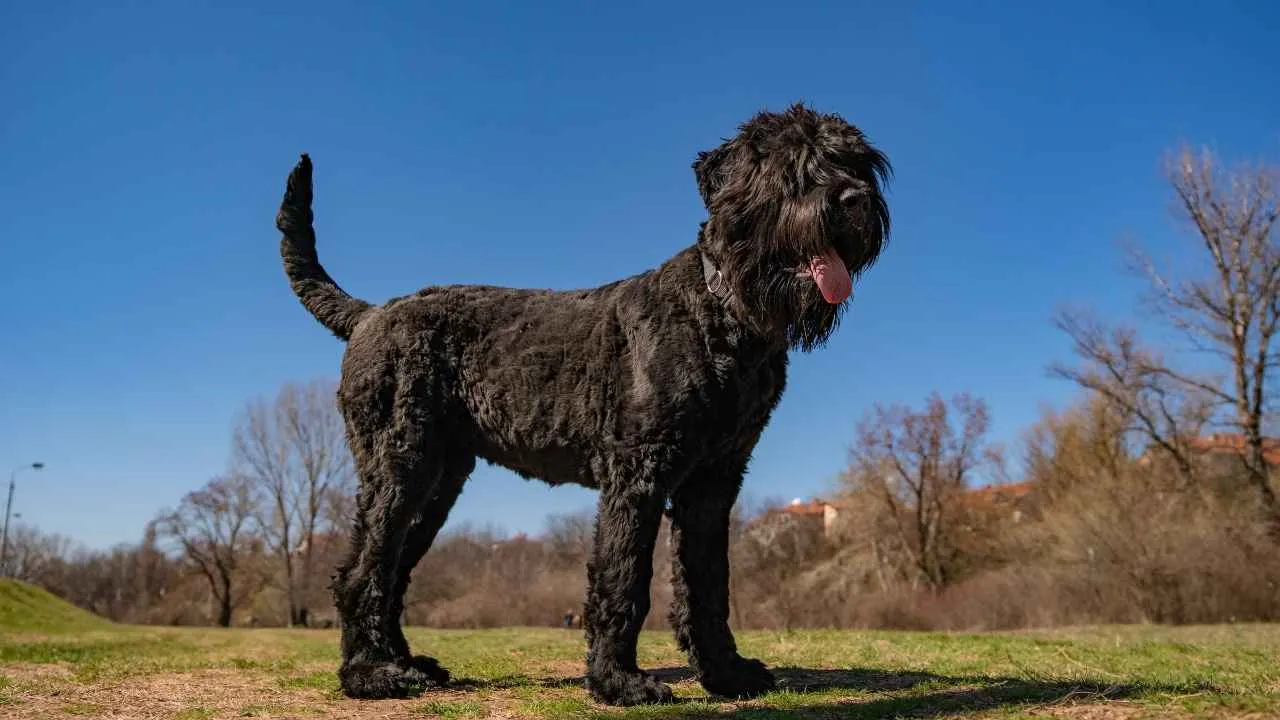
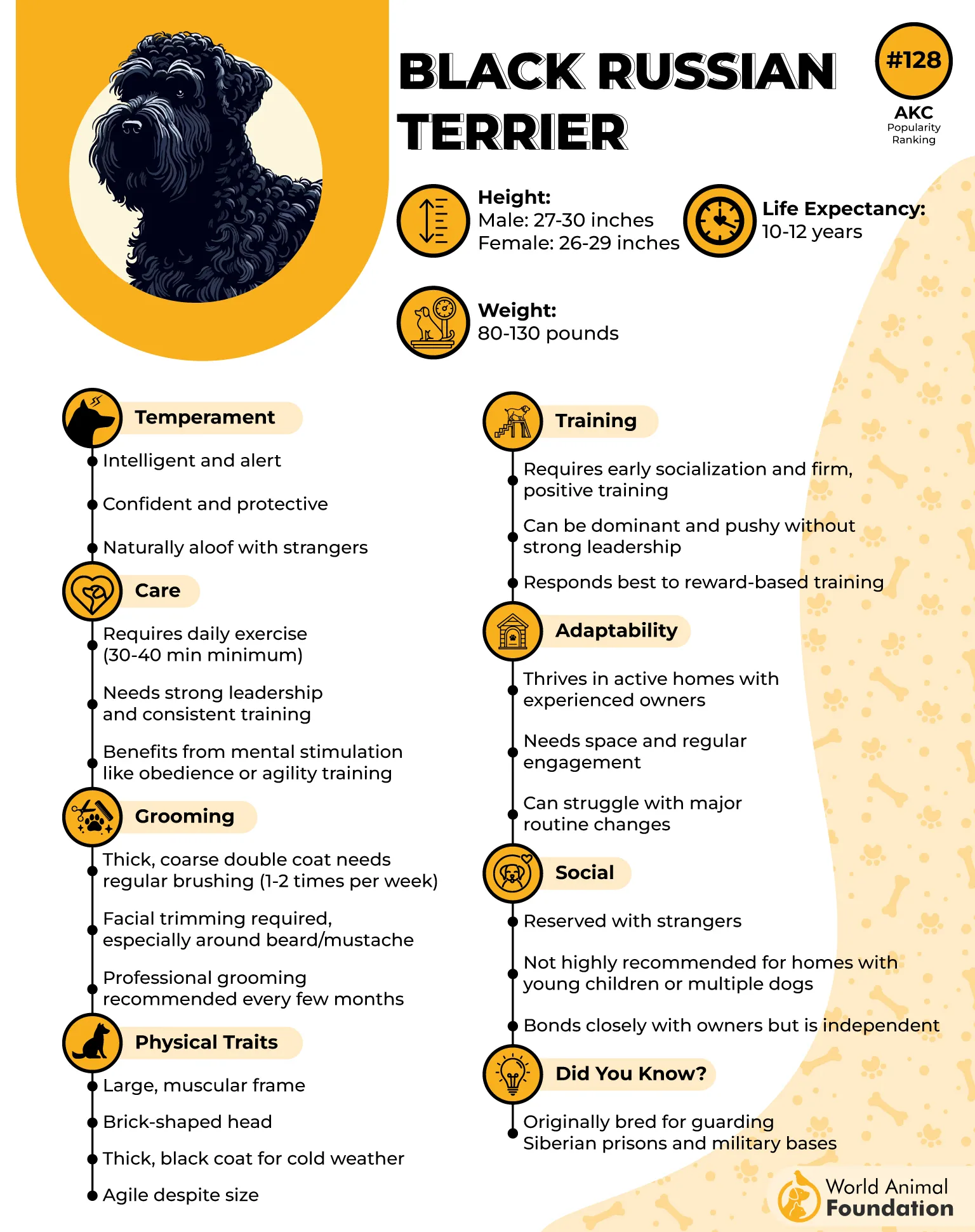
Black Russian Terrier carries a dense, muscular frame created for demanding working roles in cold environments. Its thick coat and solid structure reflect a dog shaped for endurance and control in challenging conditions. Calm confidence defines its overall presence.
Structured Work Ability
BRT responds best when given a clear purpose, with steady focus during tasks and training activities. Early and consistent social exposure helps it adjust to unfamiliar people and situations.
A short snapshot of its activity preferences:
Long walks for steady conditioning
Obedience-based training tasks
Interactive play for focus and engagement
Reserved Social Nature
Black Russian Terrier tends to remain cautious around unfamiliar faces while staying closely attached to its household. Strong attachment to family members builds over time through regular interaction and shared routines. Its balanced temperament supports stable household integration.
Black Russian Terrier: Is This Breed Right for You?
✅ A Great Fit If You
- Enjoy training and mental challenges.
- Want a loyal family protector.
- Can provide daily engagement.
⚠️ Not Ideal If You
- Want a dog that welcomes everyone.
- Prefer a low-maintenance coat.
- Cannot commit to consistent training.
Conclusion
Sometimes the most memorable dogs are not the ones everyone recognizes. They are giants that exist beyond popularity lists, carrying generations of history and purpose. Their size may attract attention first, but their loyalty and unique backgrounds leave a lasting impression. Many rank among the biggest dog breeds, yet some are true gentle giants and surprisingly good family dogs.
Learning about these uncommon companions reveals how diverse the canine world truly is. Each one represents a different chapter of working heritage and human partnership. For those willing to look beyond familiar choices, these remarkable dogs offer something special. Unlike many small dogs, they combine presence, personality, and history while remaining wonderful companions.
