




Not everyone has 4 hours a day to chase a dog around the yard. Some of us work long shifts, live in apartments, or just want a dog that does not treat the house like a NASCAR track. And that is completely fine.
According to the American Pet Products Association, as reported on The Zebra, over 65 million U.S. households own a dog, yet many struggle to find a breed that actually fits their lifestyle.
Choosing a perfect dog for the house is like finding a life partner. One wrong choice, and you will regret your whole life. The good news? There are dogs out there who are basically built for the ‘cozy couch life.’ Chill, adaptable, and still overflowing with personality. Let’s meet them.
Top Dog Breeds Ideal for Low-Maintenance Households
1. Cavalier King Charles Spaniel
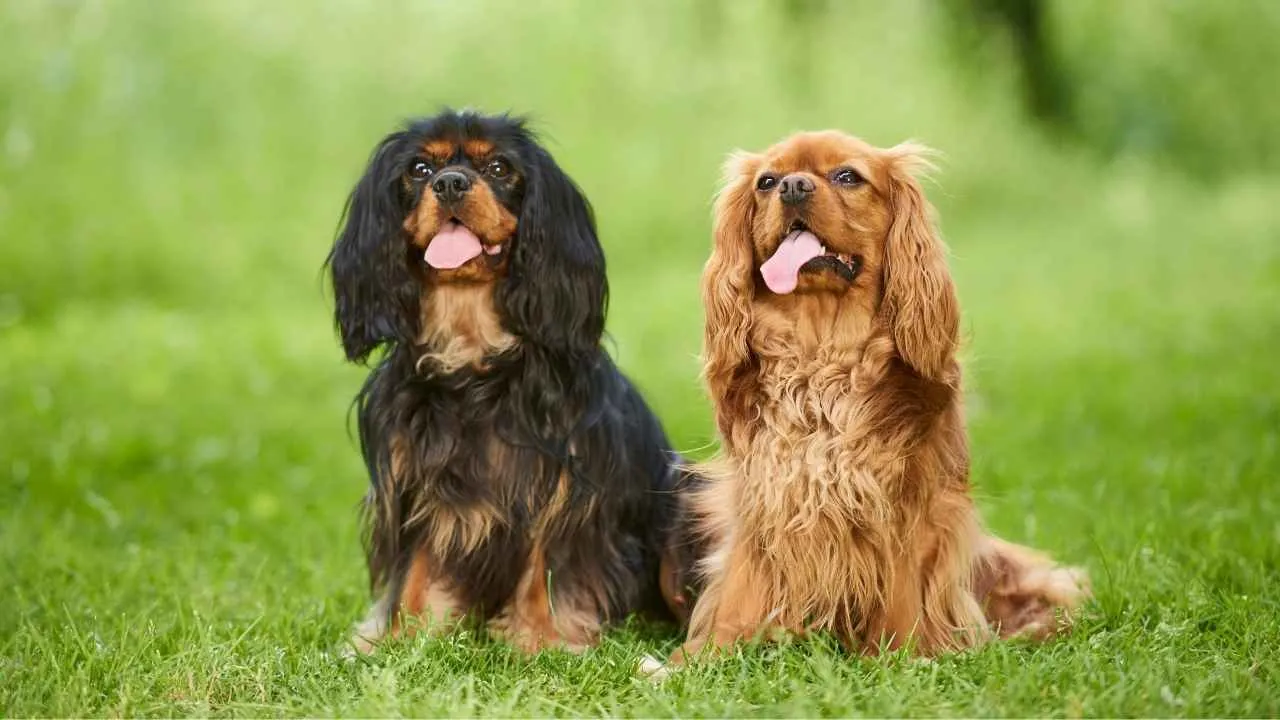
The 14th most popular dog breed across America, the Cavalier King Charles Spaniel was originally bred as a companion and a lap dog for royalty. It was given the name in the 17th century after King Charles I and his son King Charles II, in affection towards the breed. They even used to carry the breed to the parliaments and on long journeys, according to PetMD.
Since it was not bred for working, this small dog has a resting metabolic rate and requires only 20-30 minutes of regular exercise. It has a single-layered silky coat (no undercoat); thus, less prone to dirt and dog odor. It loves to stay indoors, calm, and does not bark until it needs to alert the owner of an intruder.
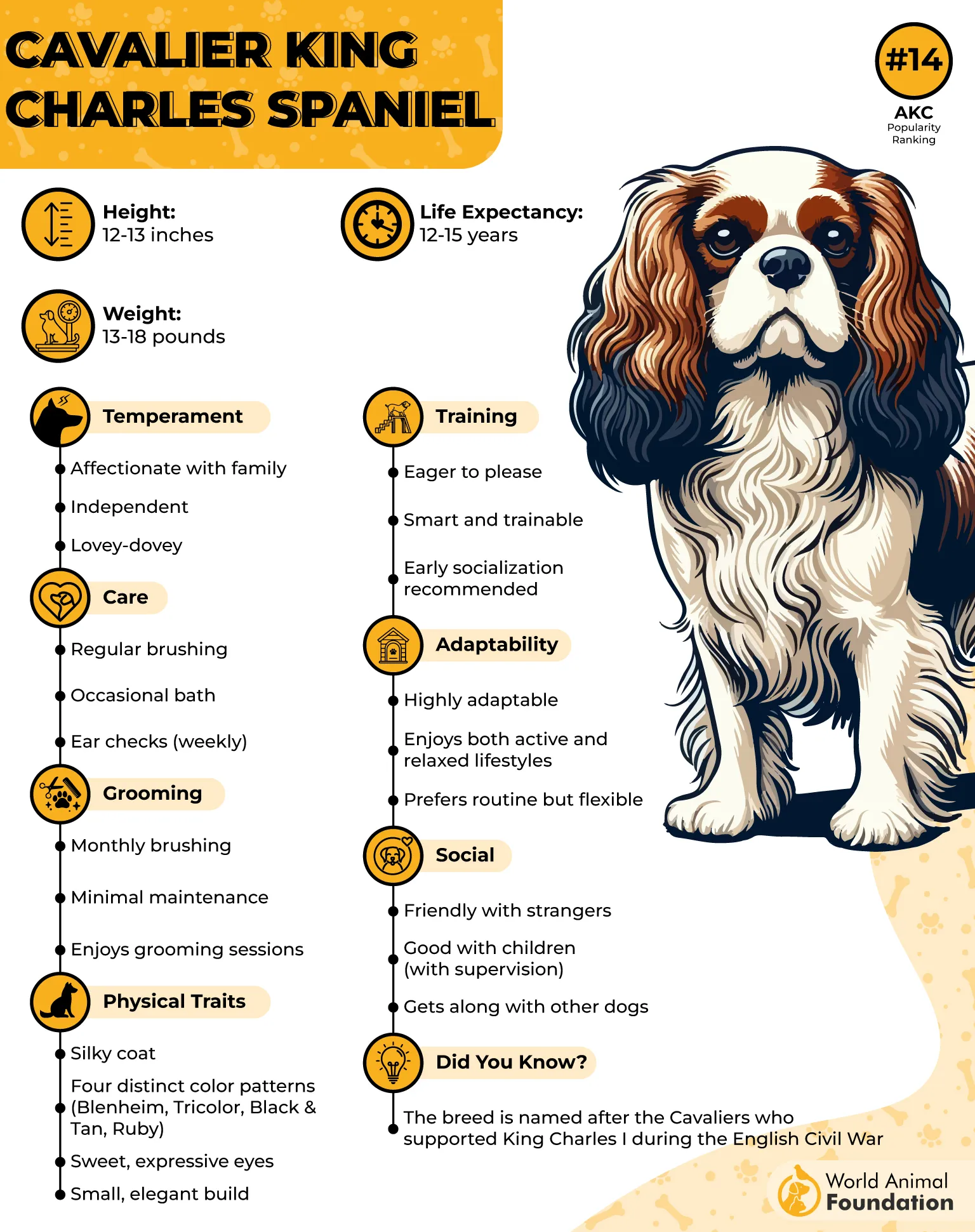
It forms strong bonds with the owner, and its eager-to-please nature makes it a quick learner. The furry friend is highly food-motivated, making obedience training easier. Brush it 3-4 times a week using a slicker brush to prevent painful mats. Add short fun sessions (5-10 minutes), so it does not lose focus.
2. Dachshund
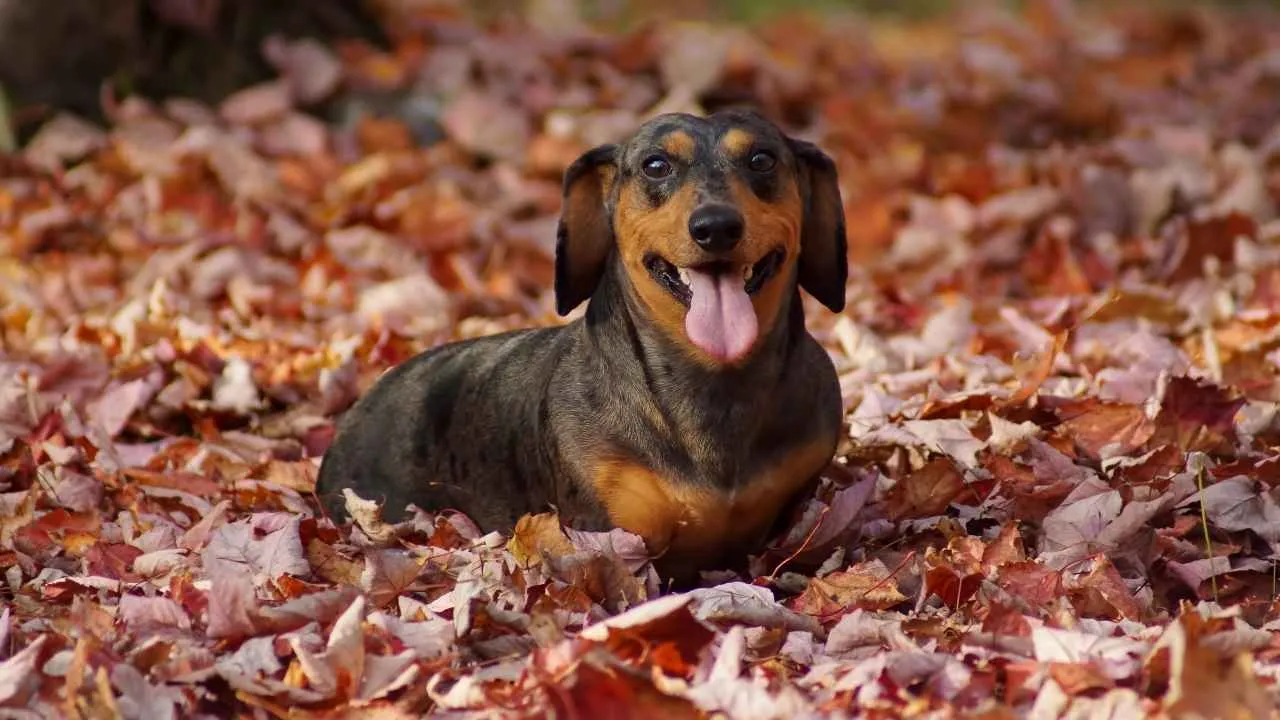
This breed developed in Germany and was one of the favorite hunting dogs in the 17th century. The name comes from two German words, ‘dach’ (badger), and ‘hund’ (dog), since it originated to hunt badgers. It has short legs, an elongated body, and sharp claws. This unique physique helps it navigate narrow tunnels easily.
This dog has a single-layered short coat that requires very little grooming: smooth-haired breeds require weekly brushing (1-2 times), long-haired breeds require brushing 3-4 times a week, and the wiry-haired breeds require weekly brushing. The chondrodysplasia (short legs) makes the movement limited; thus, it burns calories quickly.
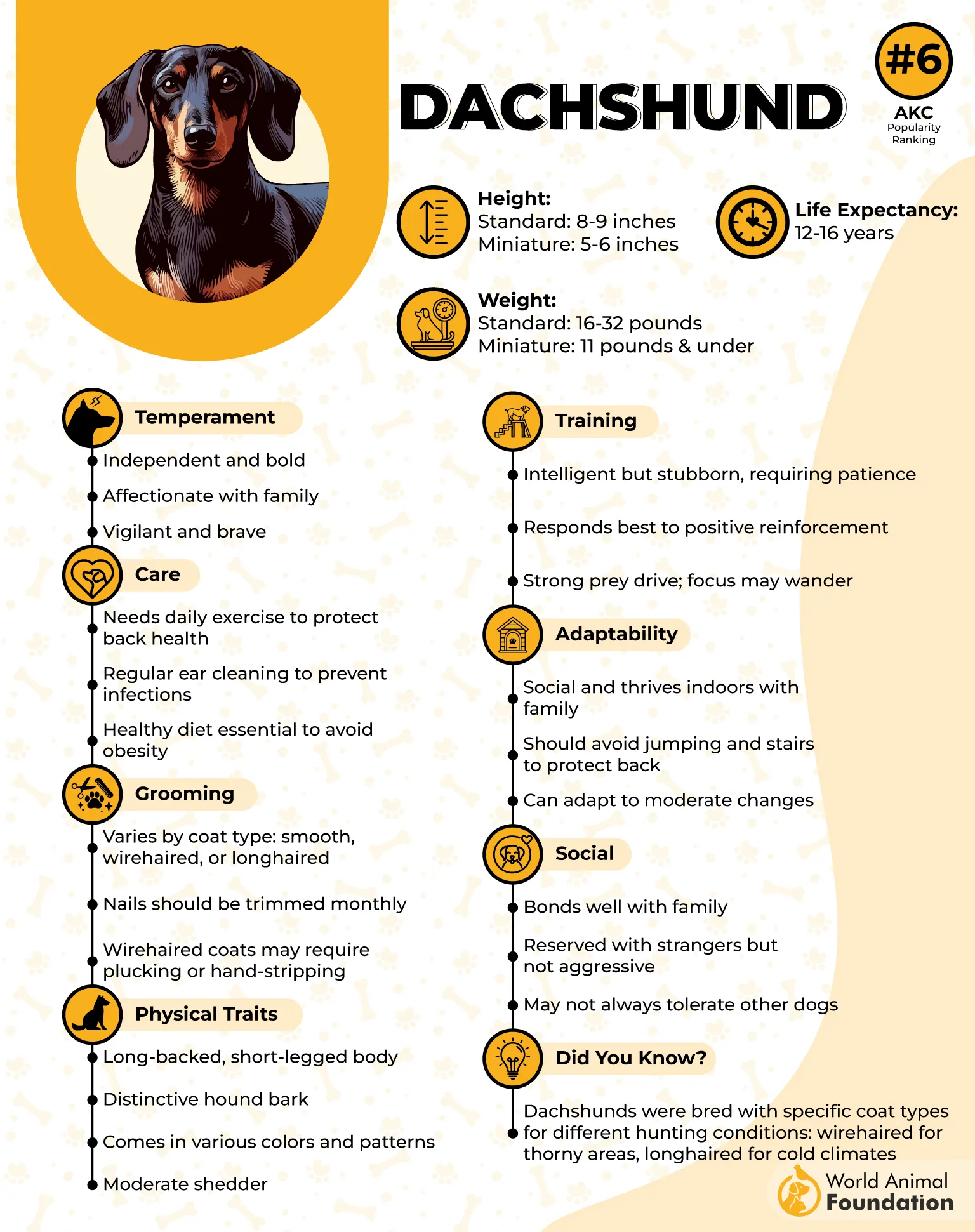
Since the breed weighs 16-32 pounds, it is ideal for an apartment living space. The small bladder has low food requirements, cutting the meal cost. The breed can jump over 1-1.5 ft in the air; thus, the ‘no jumping’ rule must be taught with positive reinforcement to prevent chaos in the house.
3. Chihuahua
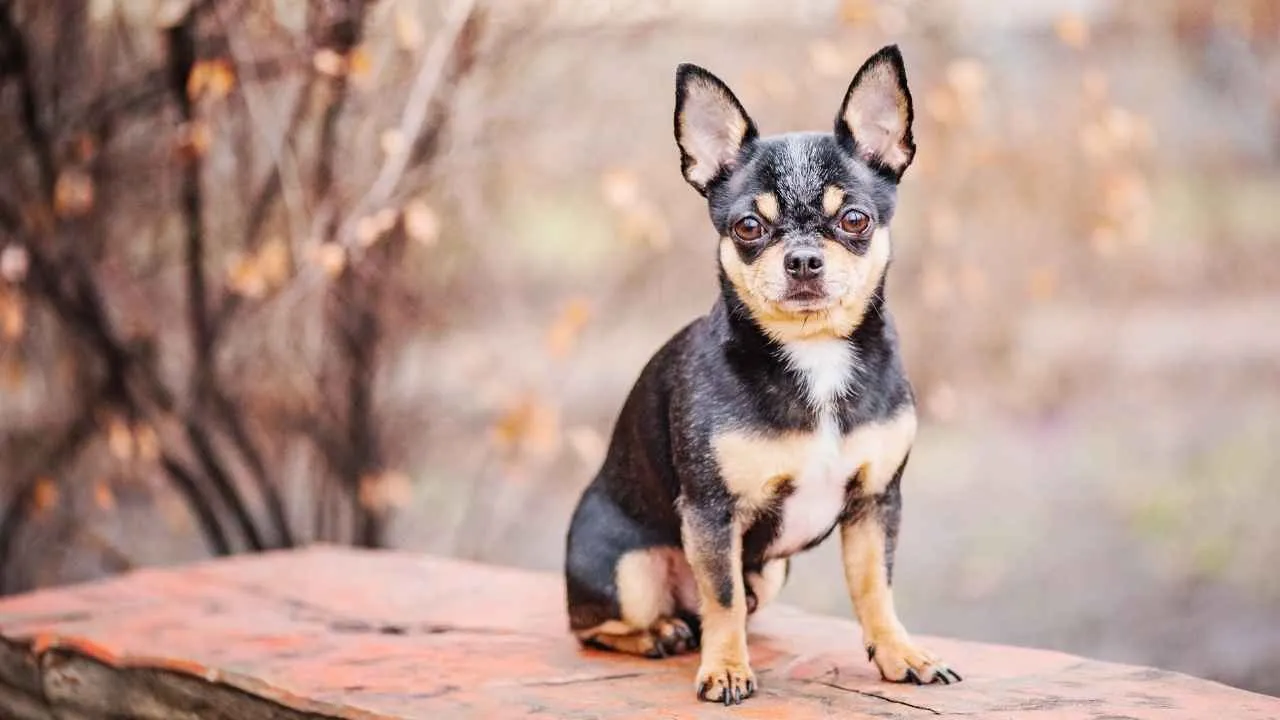
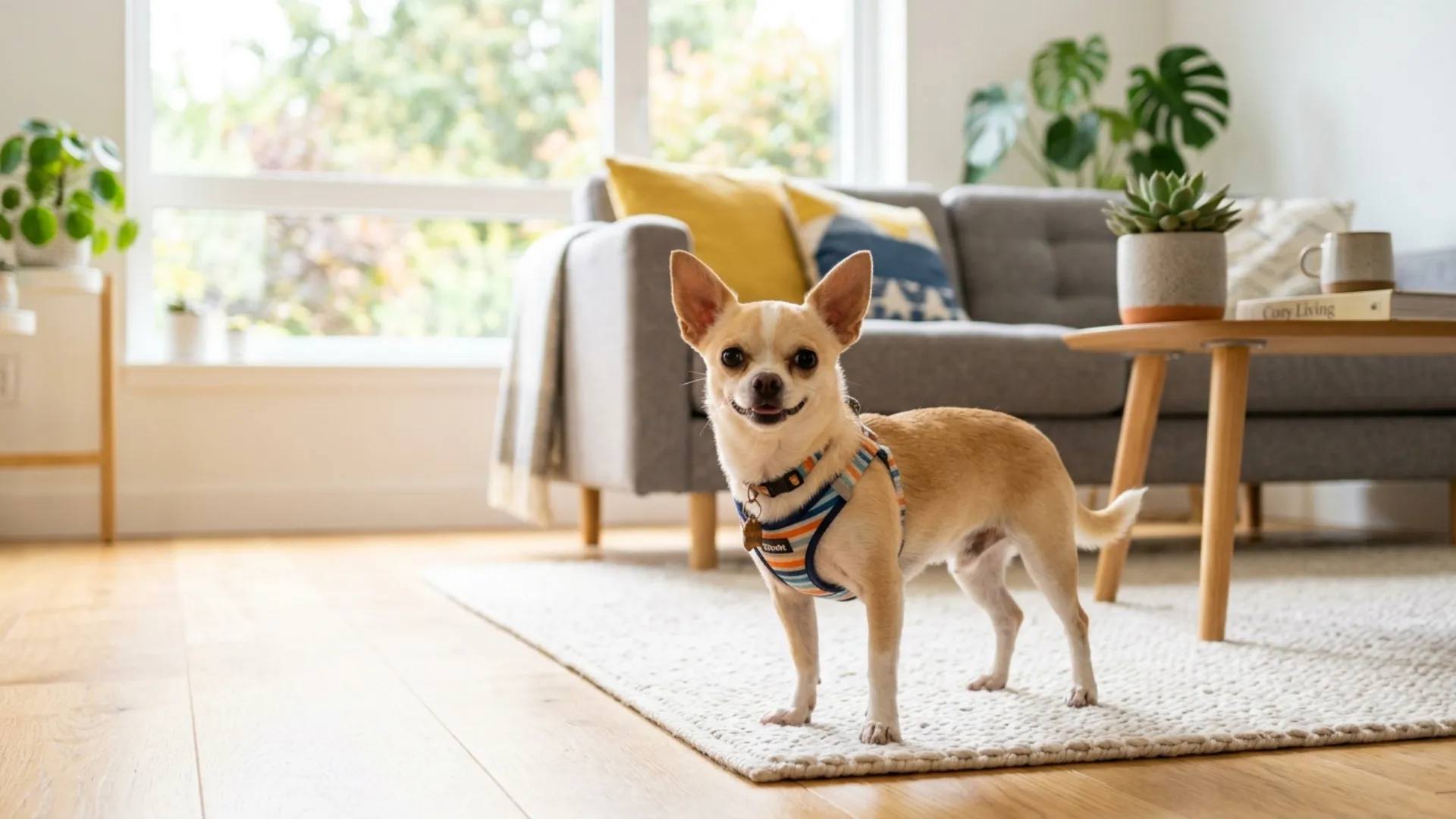
This is the smallest dog breed in the world (weighing around 3-6 pounds), and originated in Mexico as a companion breed. Although it also carries a small portion of pre-Columbian indigenous American dog ancestry. It has a round skull, large erect eyes, and a compact size, making it one of the best dog breeds to be kept in apartments.
The cardiac and respiratory capacities max out quickly, and it needs to rest after a short burst of rapid energy. This is a brachycephalic breed (has a flat face and narrowed airways) that makes breathing difficult, especially on a hot summer day. This is a fiercely loyal breed and is naturally wary of strangers, making it an excellent watchdog.
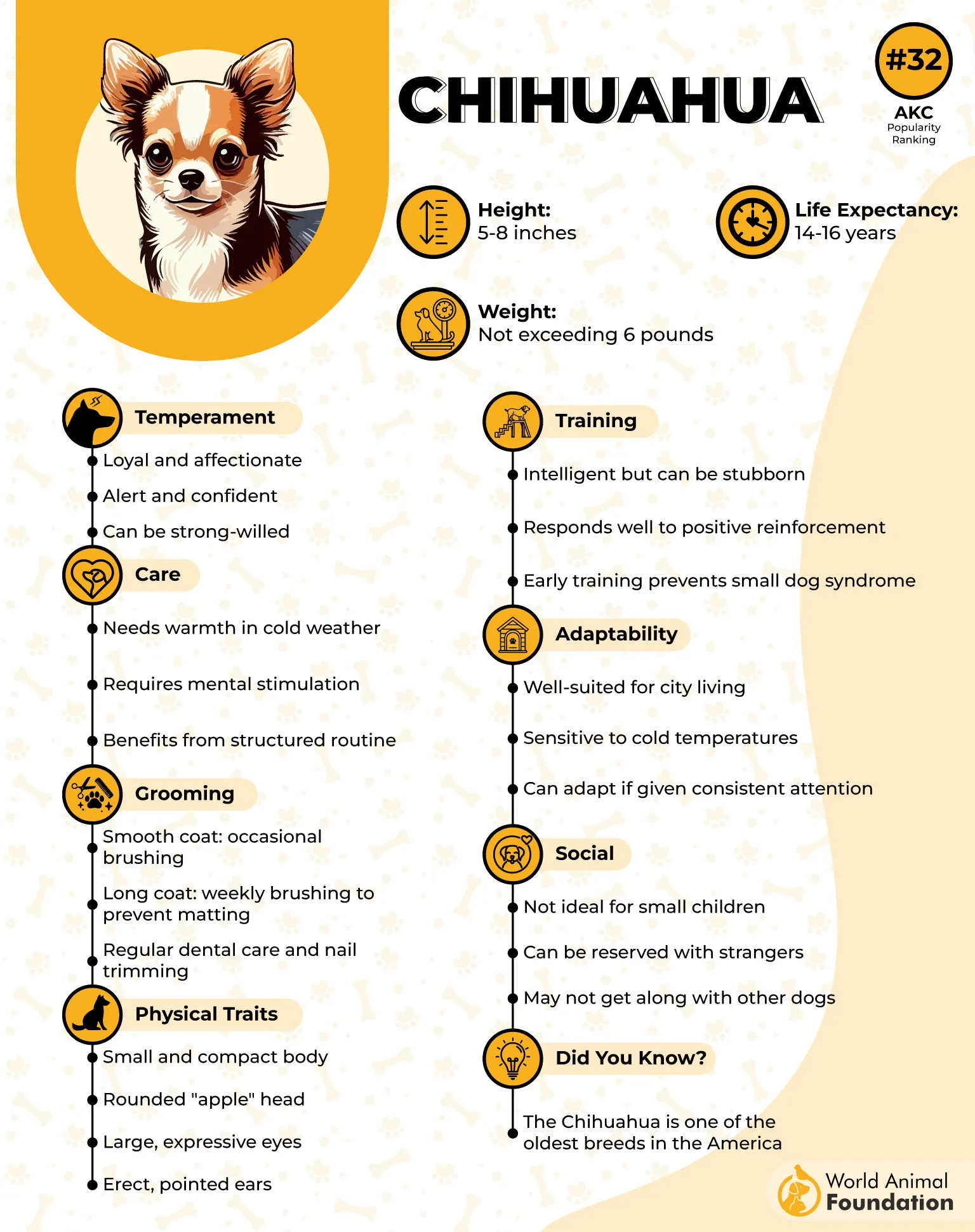
The coat comes in two varieties: the smooth and short coat requires weekly brushing, while the long coat needs brushing 2-3 times a week. Special focus is required under the legs, around the ears, and in the neck area. It is extremely barky. Early training and proper socialization are required to have controlled barking.
4. Pug

The gentle companion dog was brought from China to Europe in the 16th century. Queen Victoria had a special love for the breed because of its bulging eyes, wrinkly face, short muzzle, colorful coat, and curled tail, as per Wikipedia. This great companion bonds closely with the owner and befriends children, other dogs, and even strangers.
The Brachycephalic Airway Syndrome (BAOS) prevents it from taking part in intense physical activities. The short muzzle reduces the surface area to cool air as it inhales; thus, insufficient panting may result in heatstroke. Despite being social, it is a couch potato indoors and needs a lap after having a low-to-moderate exercise for 20-30 minutes.
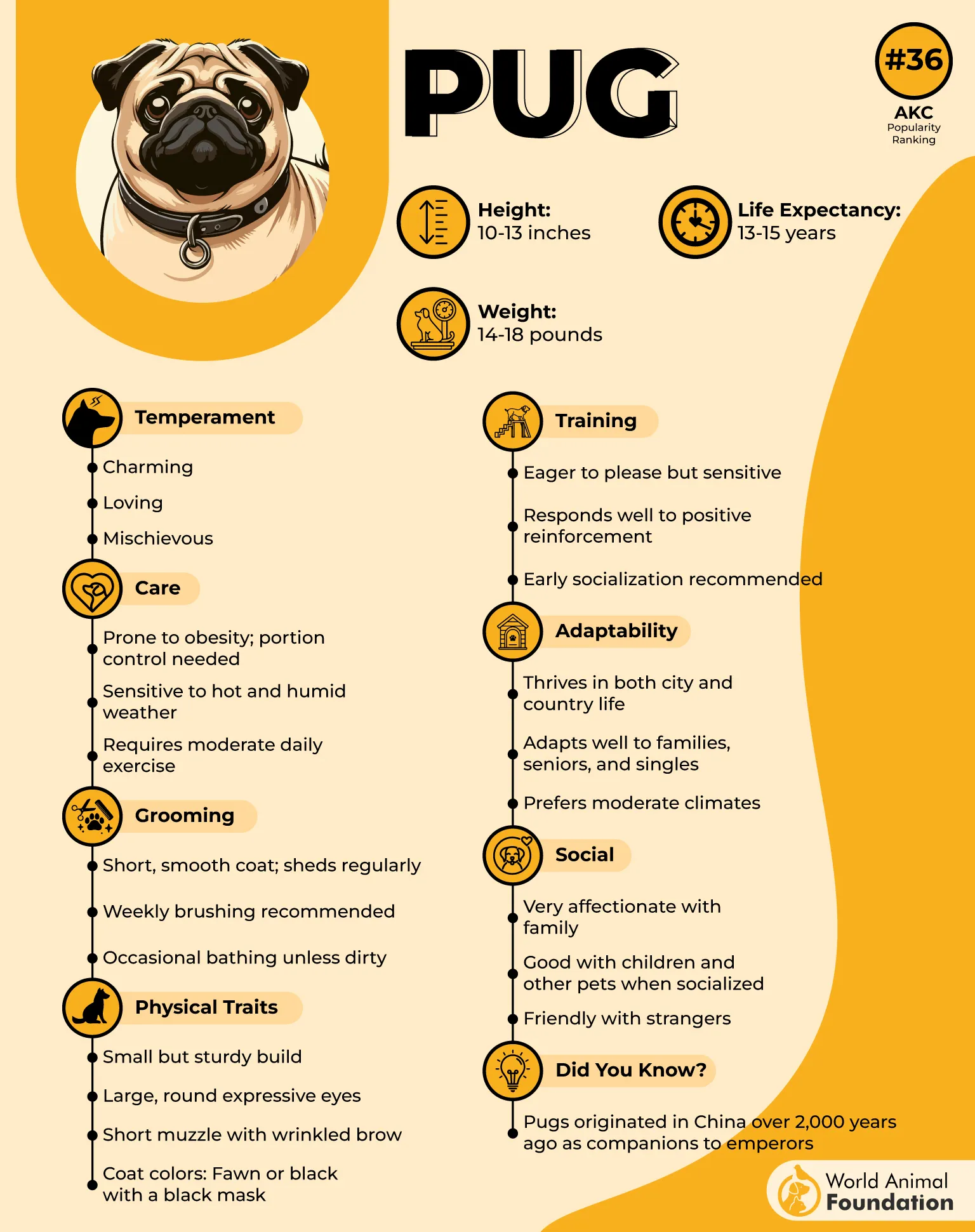
One big benefit of having a Pug is that it is not a big barker, making it perfect for first-time pet ownership. Always use a de-shedding tool or a hound glove for brushing (2-3 times a week). Regularly clean the wrinkly face as it may be housing bacteria and can cause skin issues.
5. French Bulldog
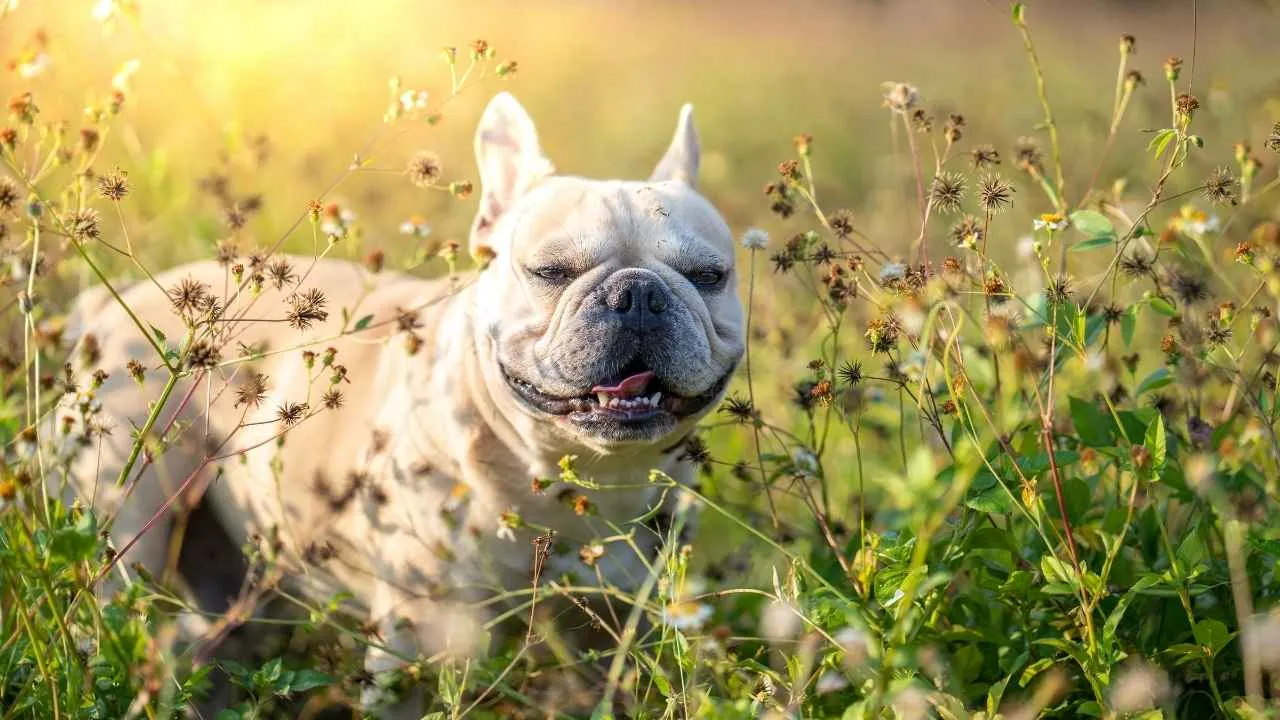
The English lace makers developed the breed in the 1800s. With the industrial revolution, these lace makers moved to France and took the breed with them, where it was crossed with other breeds, developing bat ears. The people of Paris then noticed its sweet personality and energy levels and began to use it as a companion dog.
This smaller breed stands 11-13 inches tall and weighs around 16-28 pounds. The face has wrinkles, which can create a warm and moist environment that can harbor bacteria. Use vet-proved wipes to clean the wrinkles. The breed has a quiet demeanor, which is great when you have a compact space to live in.
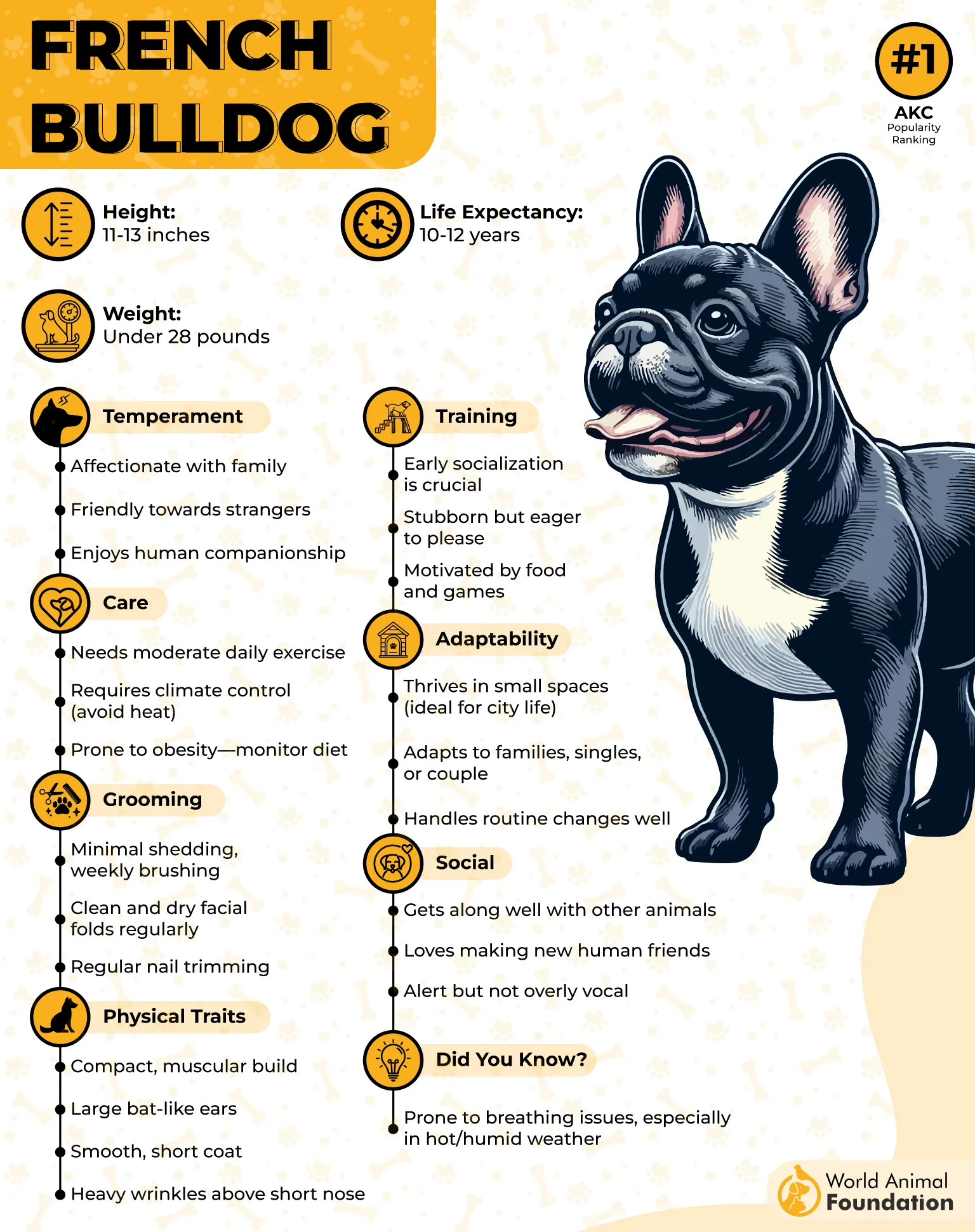
Use a grooming mitt or a soft-bristle brush to remove the loose hair and to distribute natural oils throughout the body. The French Bulldog requires minimal grooming: bathing after 4-6 weeks, nail trimming, and ear cleaning after 1-2 weeks.
6. Basset Hound
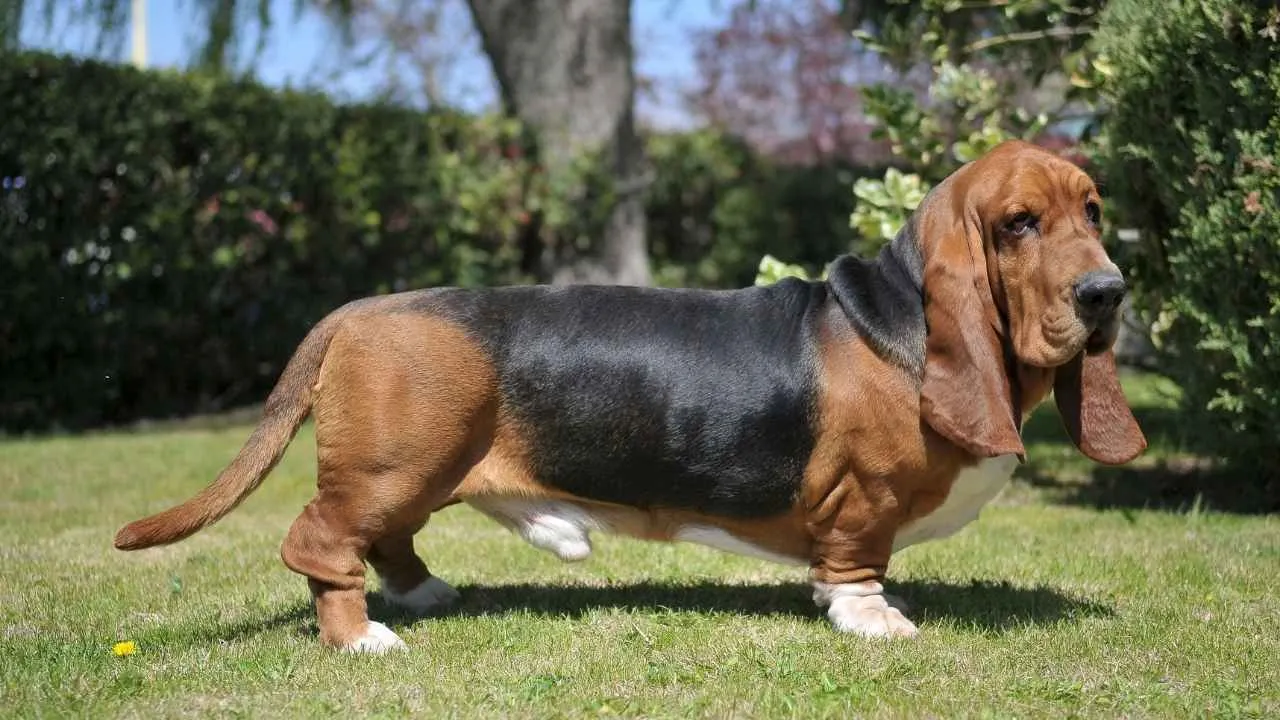
The short-legged breed was developed in Great Britain as a scent hound to primarily hunt rabbits and hares. With almost 220 million olfactory receptors, this is the second most scenting dog breed when it comes to scent (next to the Bloodhound).
It was not bred to chase at high speed. Hence, it has a calm metabolism because of the low energy drive. The drooping ears create a warm environment around the ear canal. Cleaning the area regularly is crucial to prevent bacterial infections and avoid yeast in the ears. It has a laid-back, forgiving, and gentle nature, making it a perfect ‘nanny dog’ for children.
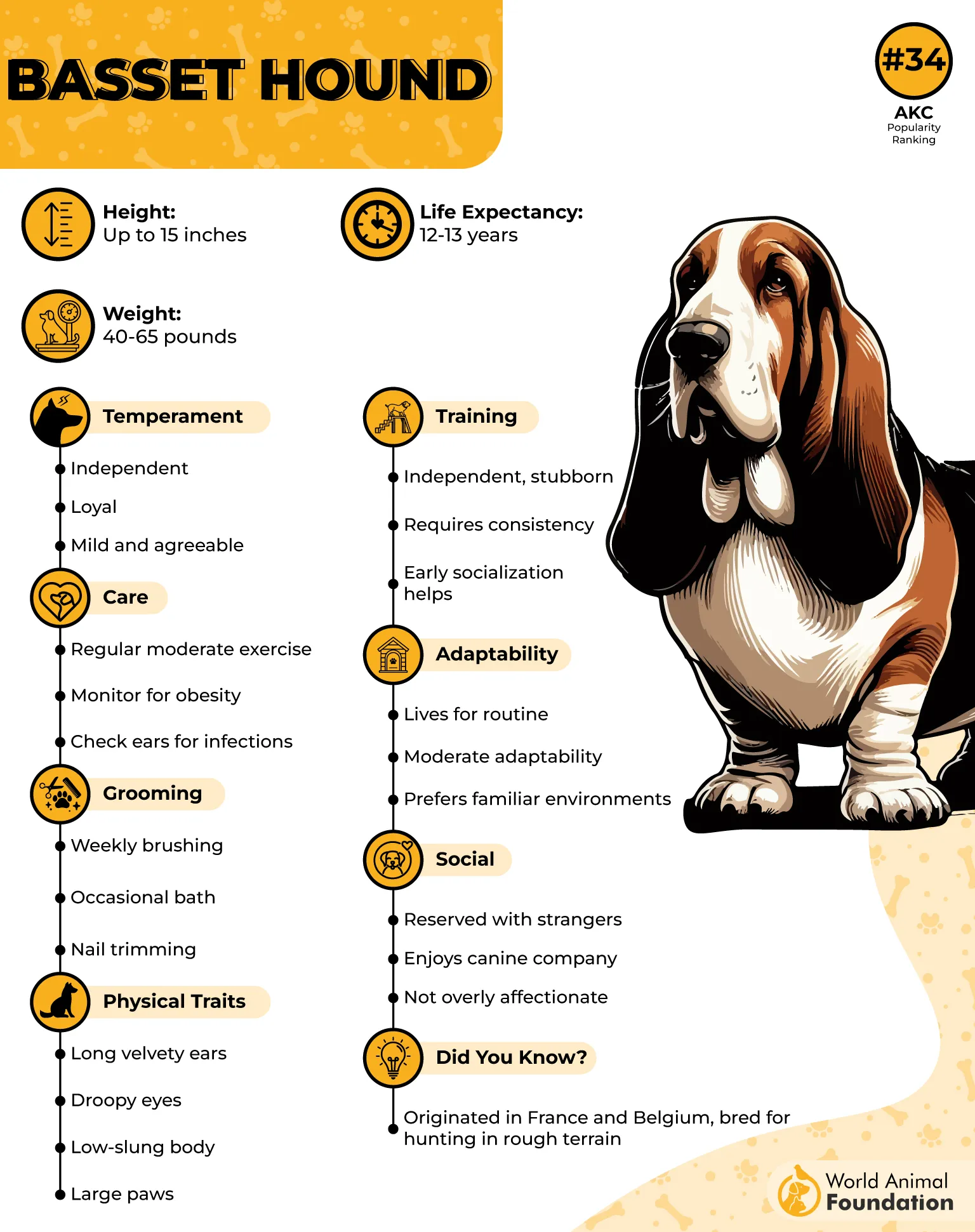
Use a rubber curry brush or a soft bristle brush to remove the loose hair (2-3 times a week). Nail trimming after 2-3 weeks is a must. This breed is ideal for busy families because it is a low-maintenance dog. The word ‘Basset’ comes from a German word, which means ‘low,’ since the breed tends to lower its head while looking for a scent trace, and it was given this name.
7. Boston Terrier
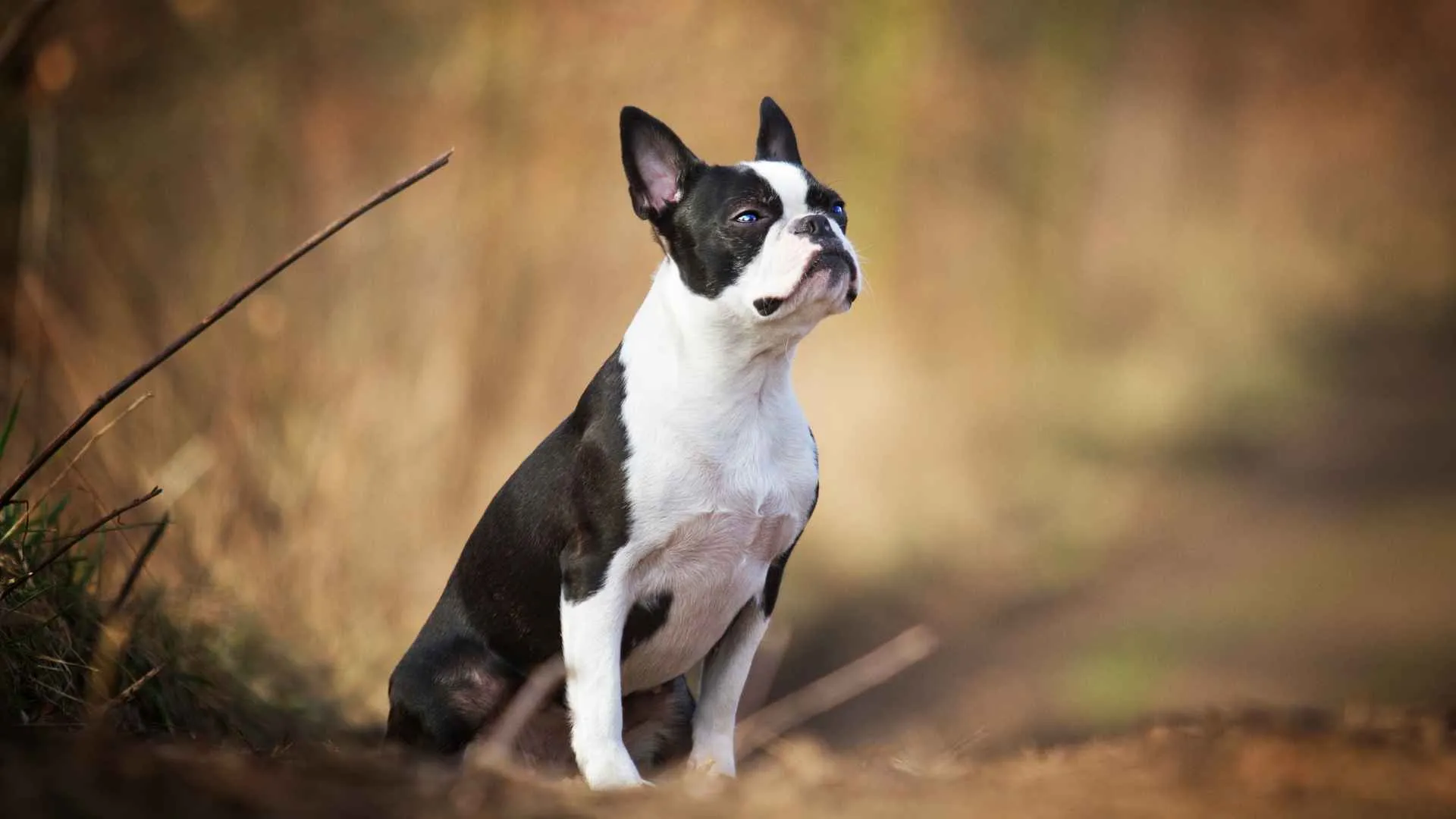
The English White Terrier and the English Bulldog were crossed in the 1800s, and the resultant breed was further crossed with the English Bull Terrier, Boxer, and Pitbull Terrier in 1893. The first breed was almost 45 pounds, then it went through size reduction till it became what we know today.
The oxygen intake is really very low in the breed because of the brachycephalic nature; thus, the dog requires low-to-moderate exercise needs (30-60 minutes a day): fetching, short walks, and mental stimulation. Its small size (weight around 10-25 pounds and height around 15-17 inches) makes it ideal for small spaces.
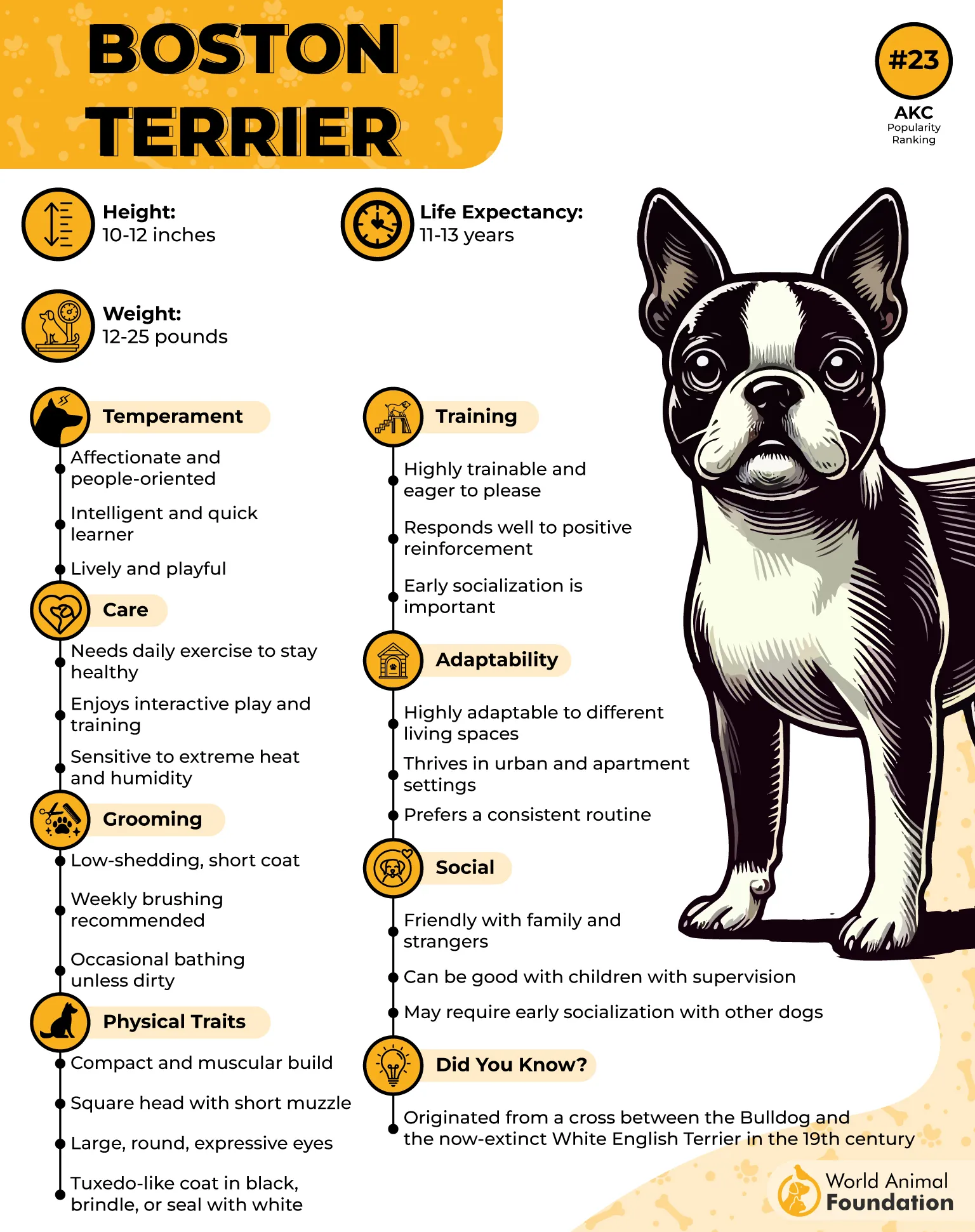
The breed has a cat-like personality: it loves to position itself on a high point to have a wide field view, cleans itself by licking its paws and coat to remove debris, and loves to play with bat toys, perfect for people with busy schedules.
8. Italian Greyhound
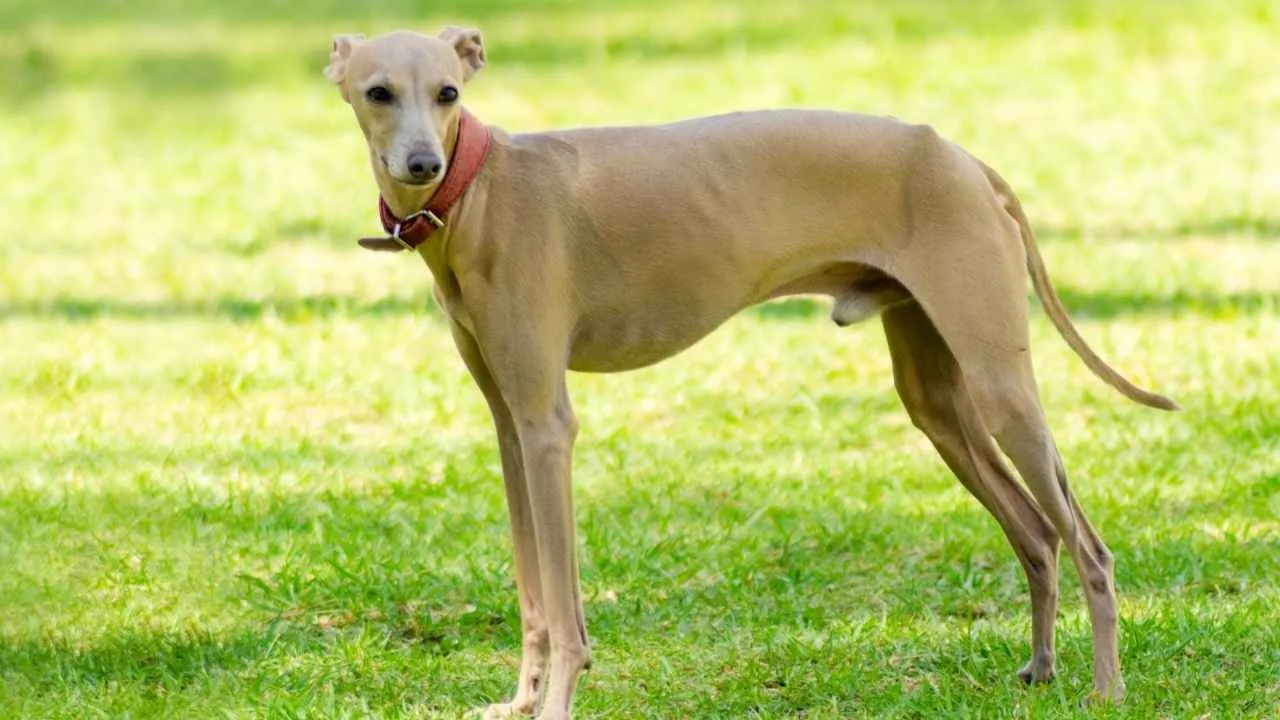
This royal breed has been warming the laps of the royalty, including Queen Victoria, Queen Anne, and King Charles I, for centuries. Even the famous painters such as Van Eyck had depicted the breed in their paintings. However, the quest to have a smaller breed led to the ‘almost’ extinction of the breed, says Purina UK.
This gentle giant has thin skin and produces very little sebum or oil compared to many dogs. Hence, it has minimal body odor, and an occasional bath is enough for them. It is a sighthound, but has a lazy nature, and it can even sleep up to 16 hours a day, making it the right dog for busy households.
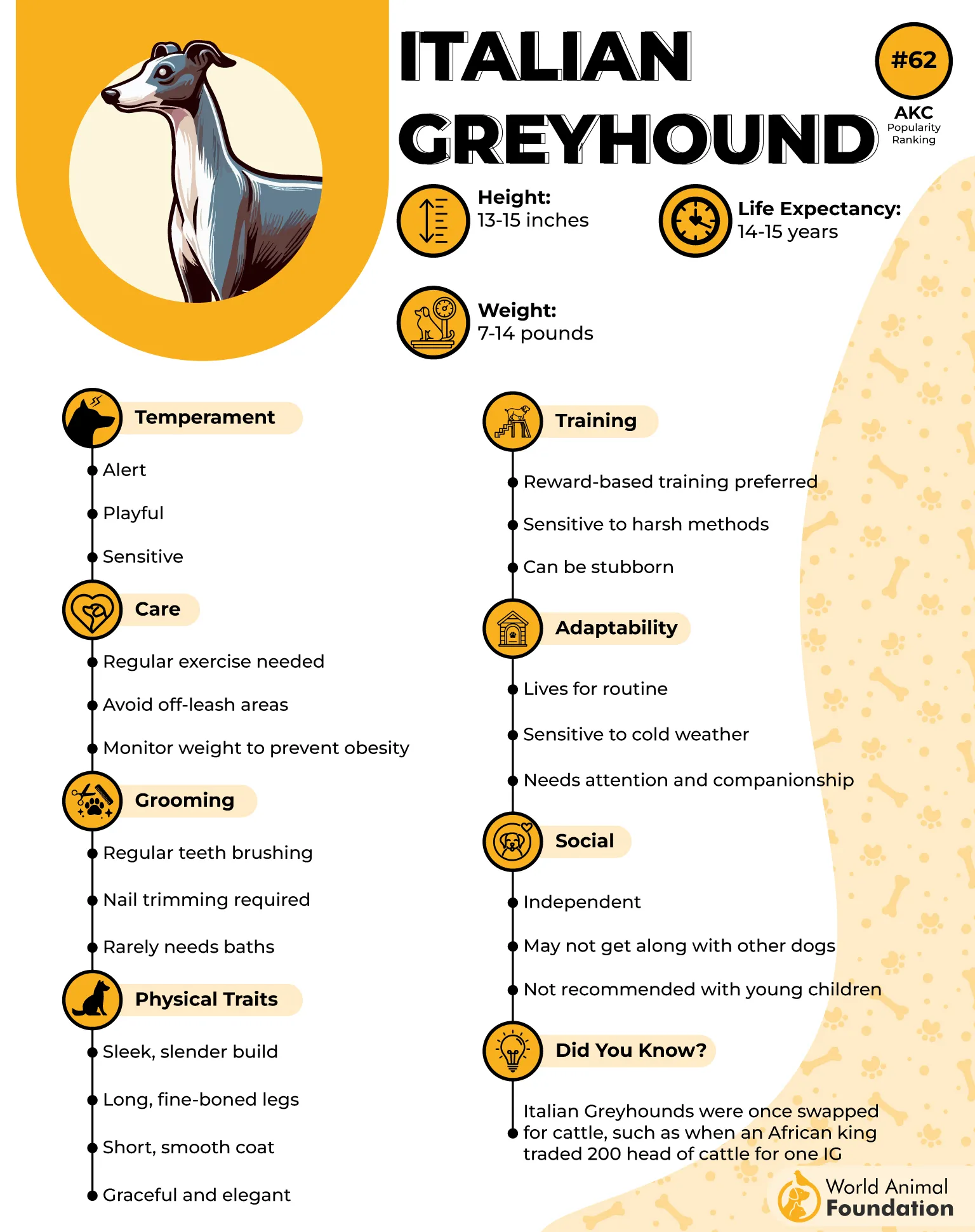
It has a friendly personality and forms a deep bond with the owner’s family. Left it alone for too long, and it will develop separation anxiety. The breed is prone to periodontal diseases because of its small mouth. So, daily teeth-brushing is non-negotiable.
9. Whippet
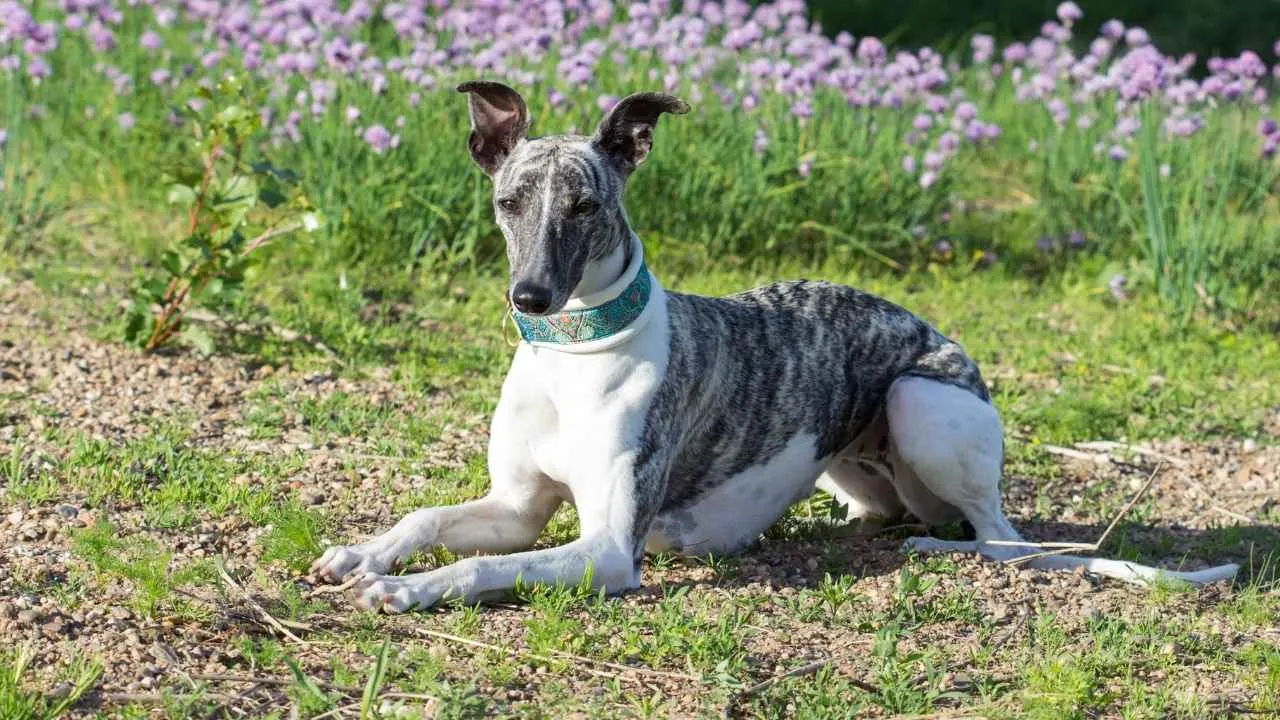
This sighthound was developed in Great Britain, and was kept as a companion dog, shown in competitive shows, or for amateur racing. Since it is a sighthound, it runs at a high speed of 35-40 mph to catch the prey; excelling in dog sports such as flyball, lure coursing, and agility.
The dog is built for a short-term burst of speed rather than covering long distances. Hence, it has moderate energy levels and is not ideal for high-impact exercise such as hiking, running, and jogging. Use a soft hound mitt or a rubber curry comb to remove the dead hair (weekly).
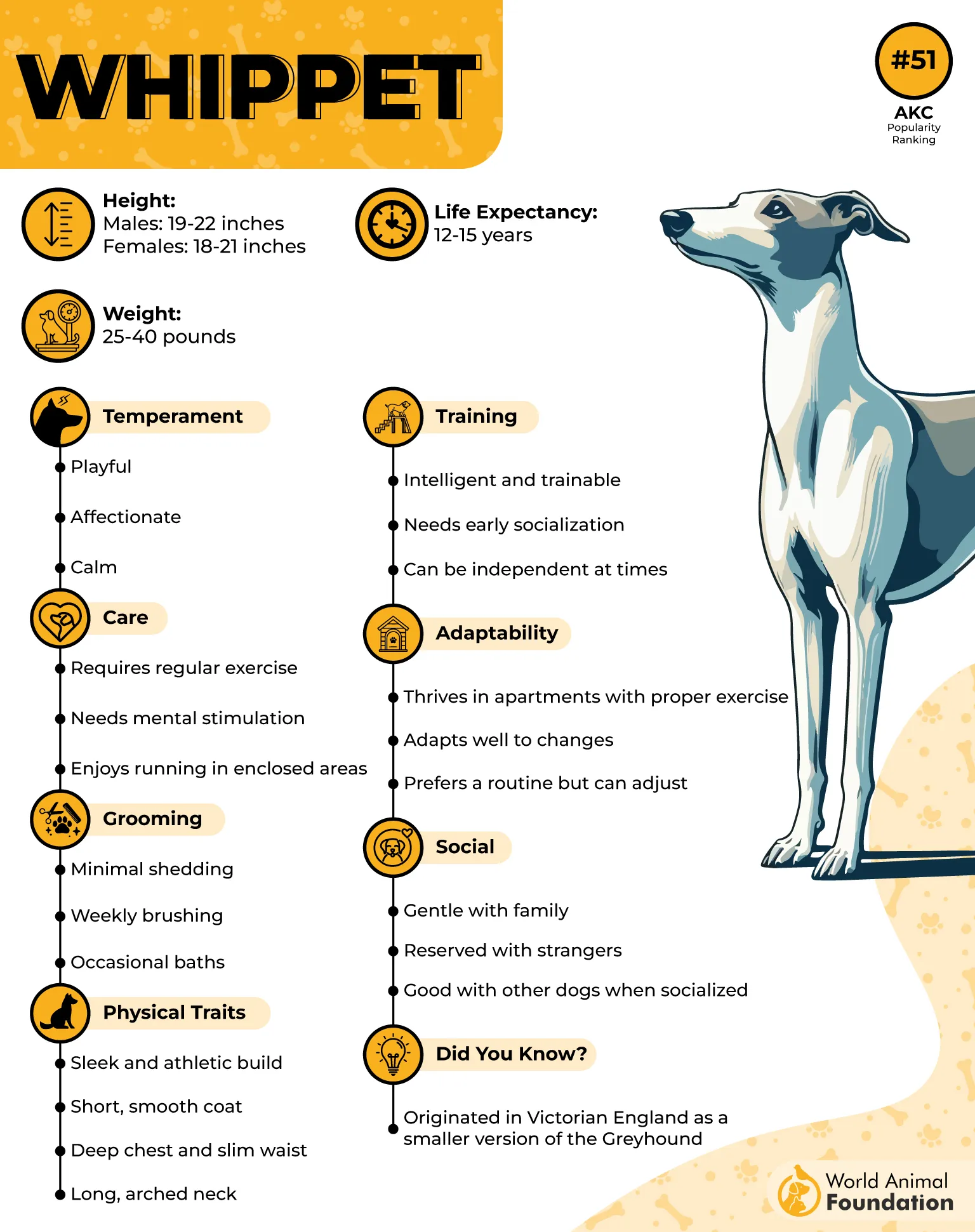
Since the breed has very thin skin, it is prone to lesions and cuts. Preventive care, such as using a padded bed, should be used to prevent pressure sores. It has a thin coat and low body fat, so it can quickly adapt to hot or cold weather. Use a sweater on cold days and avoid outdoor activities on hot days.
Conclusion
Finding the right dog is not about picking the prettiest picture in the breed guide. It is about matching energy, lifestyle, and expectations.
Every breed on this list offers genuine companionship without demanding your entire schedule in return. Whether you are drawn to the regal calm of a Cavalier, the dramatic flair of a Chihuahua, or the slow-motion elegance of a Basset Hound, there is a low-maintenance match out there for you.
Remember, a happy dog starts with an honest owner. Know your limits, choose wisely, and you will have the best friend that fits your life like it was always meant to be there.
