




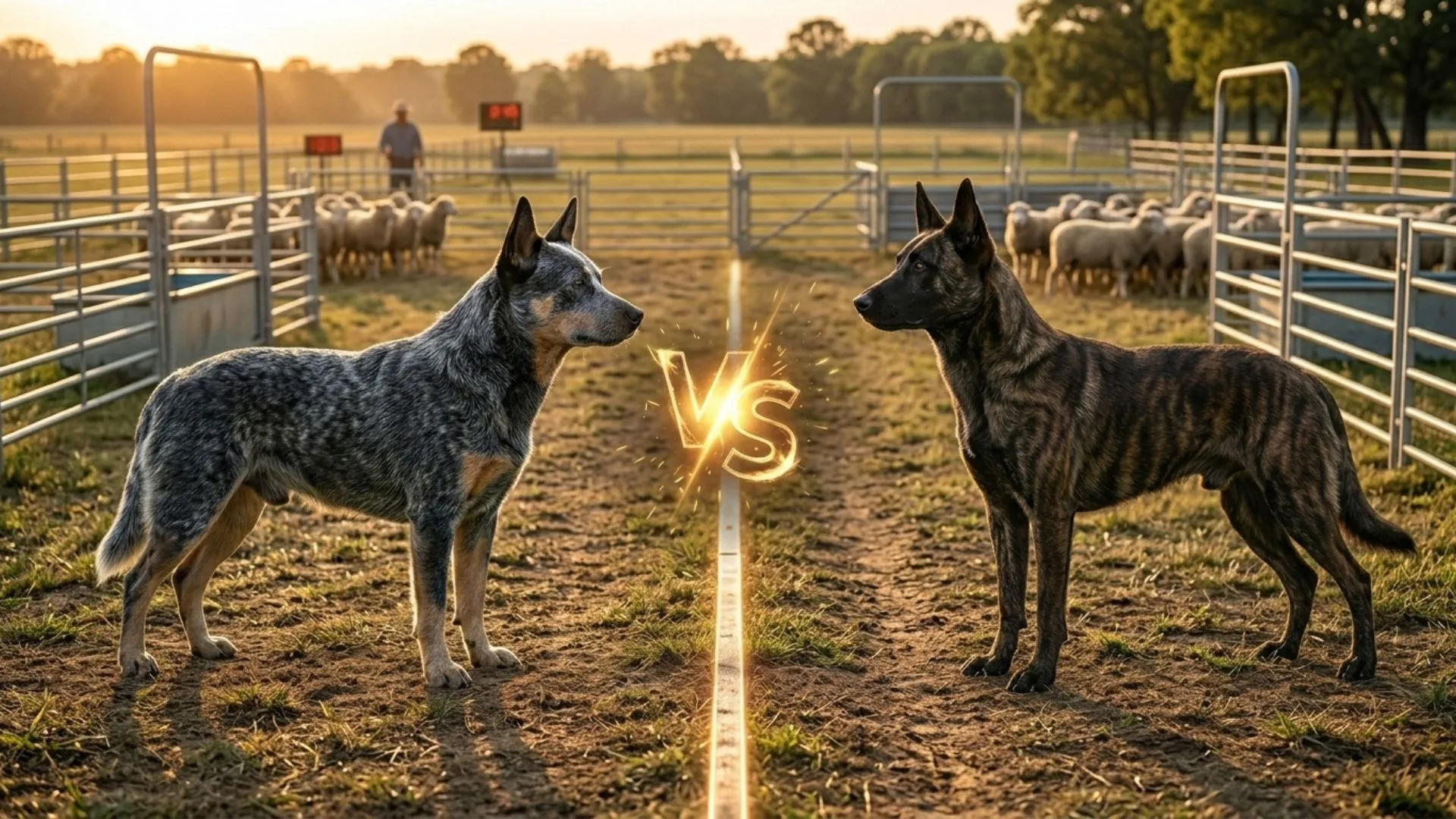
Ever wondered who wins when an Australian Cattle Dog vs. a Dutch Shepherd is thrown into the ultimate working-dog showdown?
One comes from cattle-driving chaos in Australia, the other from European farm fields built for serious duty. Both are high-energy, intelligent dogs that treat lazy days like a personal insult every single time.
Training them feels like coaching elite athletes with nonstop stamina and a strong work ethic. Their temperament is loyal yet protective, especially when strangers enter their space without warning at times.
Both breeds love structure, long distances, and tasks that keep their minds fully switched on daily.
But the differences in size, grooming, and lifestyle needs make things interesting in real life for most owners. One may feel more compact and sharper, while the other brings a slightly more balanced, calm intensity. In the end, Australian Cattle Dog vs. Dutch Shepherd is less about the winner and more about a lifestyle match.
Australian Cattle Dog vs Dutch Shepherd: Working Dog Differences
Size & Build Differences
Ever notice how two working dogs can look similar from far away but completely different up close?
One is compact and muscular, built like a small power machine ready to sprint all day. The other is slightly taller, more stretched in frame, like an athlete made for endurance and control.
The Australian type is the shorter powerhouse standing around medium height, but packed with serious muscle and energy that never seems to quit on any job. It has a tight, strong build, speckled coat patterns, and a body designed for quick turns, sharp movements, and nonstop herding action.
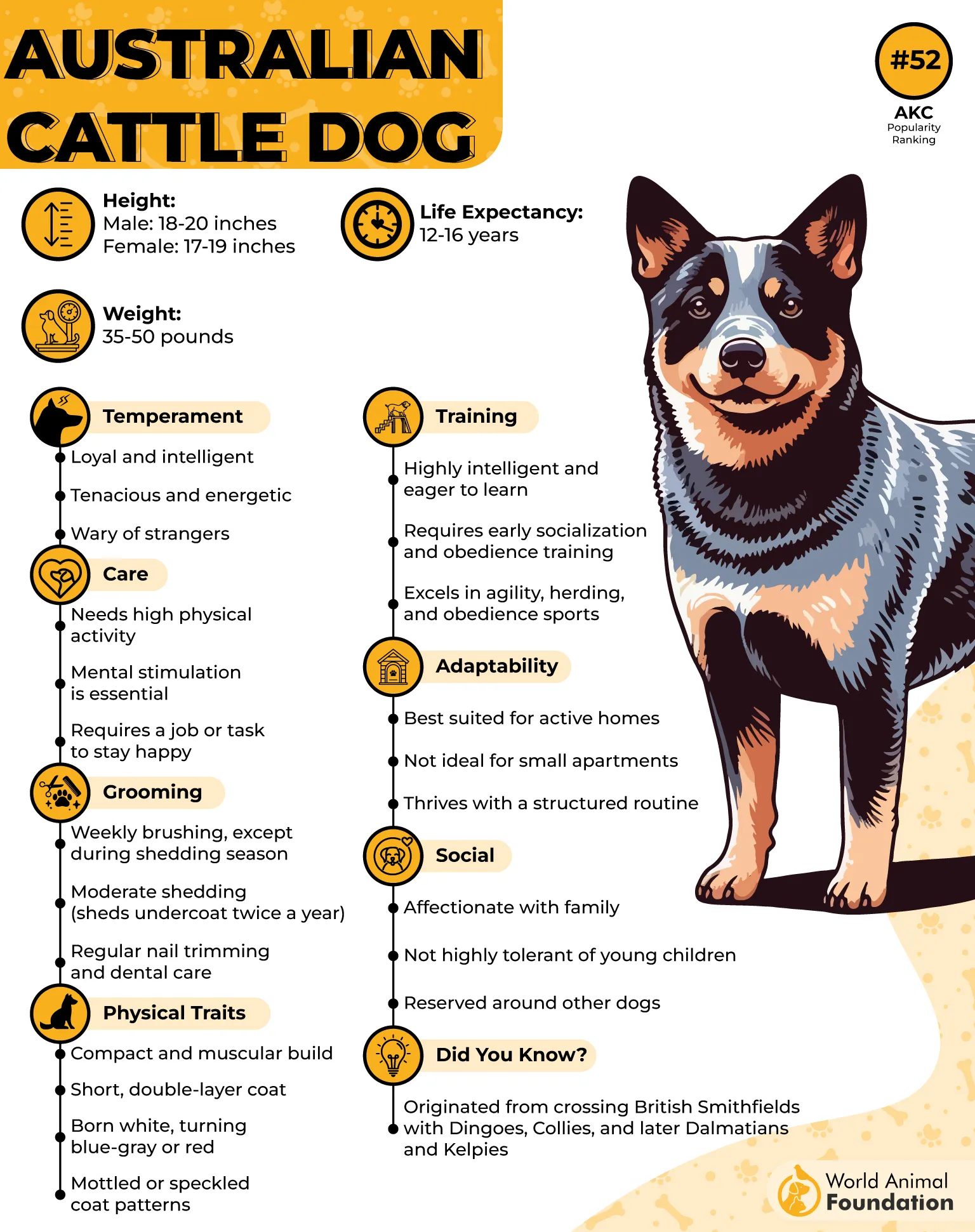
Think of it as a compact working engine that looks small but behaves like it could run a whole farm without asking for a break.
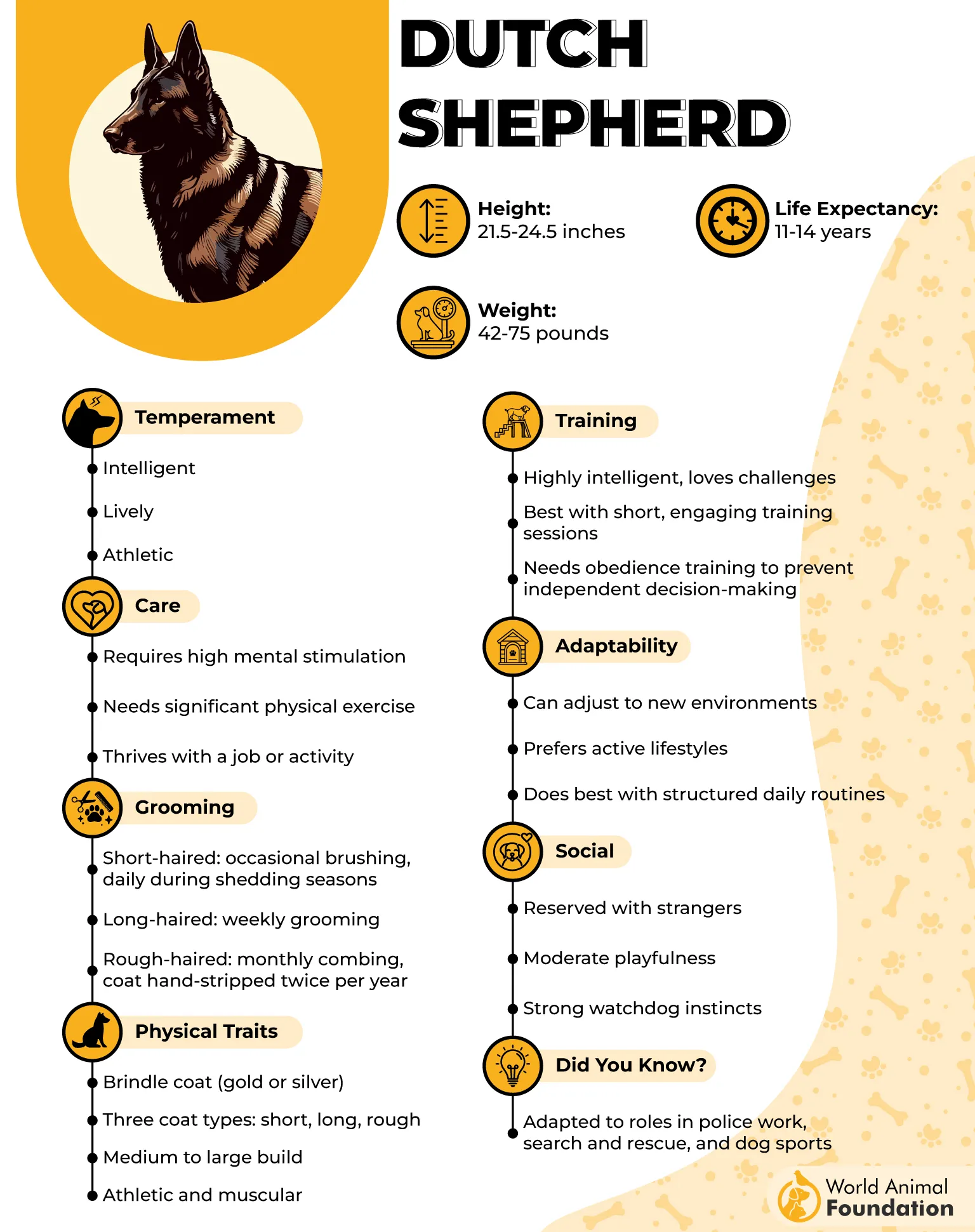
The Dutch type is taller and elongated, built for endurance and steady athletic work. Its frame is lean, strong, wolf-like, and designed for long-distance focus and stamina, as per the AKC. One behaves like a marathon worker while the other feels like a compact sprinter in the action field.
Temperament & Personality
Ever tried comparing two working dogs that act as if they run on endless energy and attitude?
One is all sharp reactions and bold confidence, while the other stays steady and controlled. Both are smart, independent, and always thinking like they own the situation every single moment.
Australian Cattle Dog’s temperament feels like a clever problem solver who sometimes thinks rules are optional. It stays loyal, affectionate, and playful with its family but becomes alert and suspicious with strangers very fast, as per Britannica.
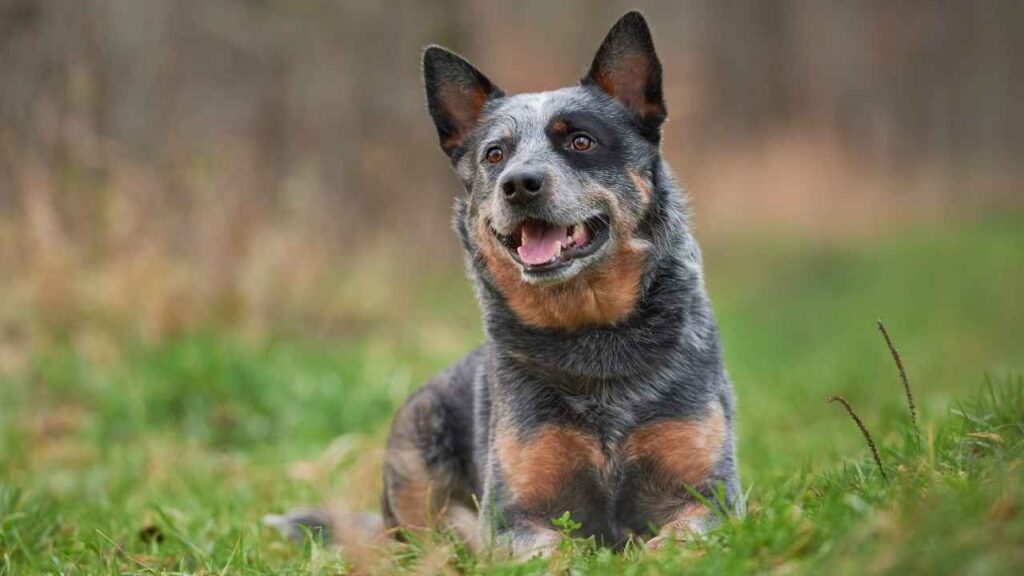
With very high energy, strong independence, and bold confidence, it needs firm, consistent training, or it will happily take charge of the household situation.
Dutch Shepherd’s personality is calm, focused, and highly intelligent, with a natural willingness to work alongside humans. It is loyal, reliable, and generally balanced, showing control rather than chaos even in challenging situations.
Still independent and strong-willed, it responds best to structured training and thrives when given meaningful tasks and responsibilities daily.
Training & Intelligence
Ever tried training a dog that looks at you like it already knows the instructions better, honestly speaking, here?
Both breeds are extremely intelligent working dogs with strong problem-solving ability and quick learning. But their smartness sometimes feels like dealing with two clever students who also question the teacher in real-life training sessions.
Australian Cattle Dog is a quick learner, highly trainable, but also stubborn enough to negotiate every command. It responds best to firm yet positive training and needs mental challenges, or it creates its own “projects” most of the time. Agility, frisbee, and herding tasks keep this breed focused, turning energy into structured performance daily without losing focus.
As per PetMD, the Dutch Shepherd matches intelligence with calm focus, showing a strong work ethic and excellent obedience potential in real tasks. It learns fast, thrives on consistency, and enjoys tasks that challenge both mind and body together most of the time. With early socialization and structured training, it becomes a reliable partner ready for almost any job with steady results.

Energy Level & Strength Level
Ever felt like some dogs wake up already planning a workout, a job, and a marathon all before breakfast?
Both of these breeds belong exactly in that category of nonstop motion and serious stamina in real life.
They don’t really believe in “lazy days” unless you force them into one with enough structure and activity.
One is famous for intense daily exercise, needs long runs and endless games that feel like full-time sports training. It thrives on herding, agility, fetch, and anything that turns energy into a competitive performance every single day. Without enough activity, it quickly turns boredom into creative destruction that keeps owners unexpectedly busy at home.
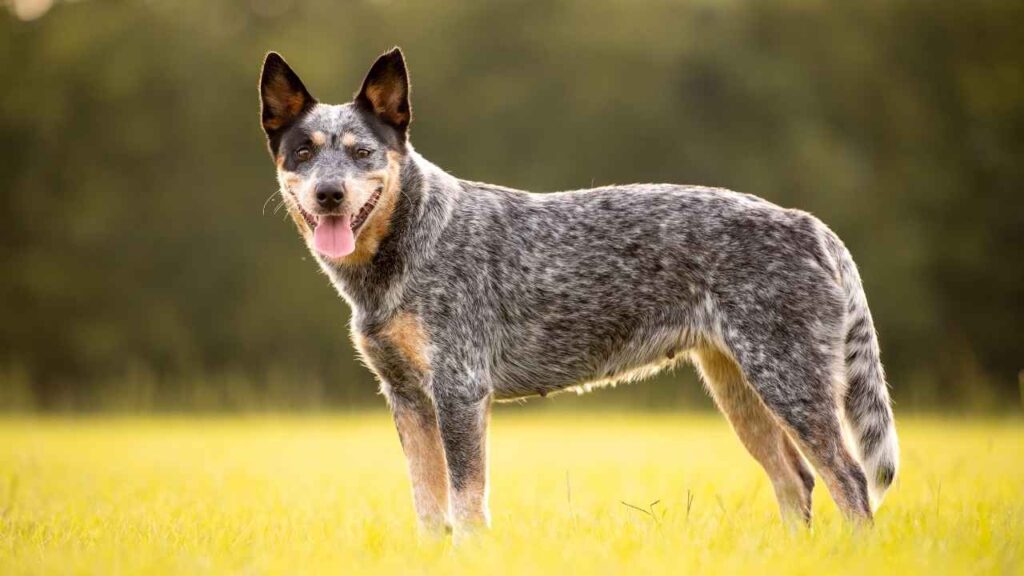
The other is equally powerful but more controlled, adjusting its energy based on task focus and responsibility level. It can switch from calm companion mode to full working drive when given meaningful physical or mental work. Strong fit, muscular, and built for demanding roles, it performs best when life feels like an actual mission daily.
Coat & Grooming
Ever noticed how some working dogs look low-maintenance but still manage to turn your home into a fur collection zone without warning?
The Australian Cattle Dog comes with a dense double coat that feels simple but sheds more than it looks like during daily life routines. It goes through seasonal blowouts where the undercoat comes out heavily, turning brushing time into a mini workout for owners at home.
This breed usually needs regular brushing to manage loose hair and keep the coat healthy and controlled in active households. Bathing stays occasional unless it decides to explore mud like it is part of a full-time adventure job outside in real-life situations. Basic nail, ear, and dental care is enough, but shedding definitely keeps grooming attention consistent for owners’ overall routine.
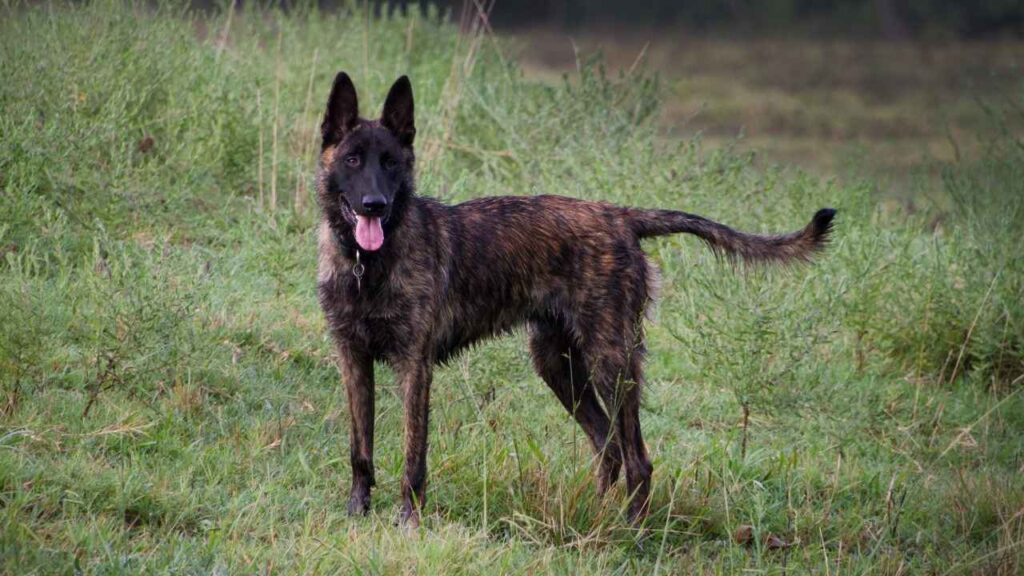
The Dutch Shepherd, on the other hand, carries a weather-resistant coat that feels more balanced and easier to manage overall daily. It sheds moderately year-round, with slightly heavier shedding during seasonal changes in spring and autumn periods. Weekly brushing is usually enough to keep it neat, clean, and comfortable without turning grooming into a full-time task at home.
Conclusion
In the end, both dogs bring serious working power, intelligence, and endless energy, just expressed in slightly different styles of life.
One feels more intense, compact, and constantly “on duty,” while the other leans into balanced control with steady focus and purpose. What really matters is not which one looks better on paper, but which one fits your daily routine, space, and activity level.
If you enjoy structure, training challenges, and an always-alert companion, either breed can become an incredible partner with the right commitment. But without time, patience, and daily engagement, both can easily become overwhelmed and restless in a quiet lifestyle.
So, choose wisely, match their energy, and you will not just own a dog—you will share life with a true working partner that never clocks out.
