





Choosing between a Cavapoo and a Cockapoo can be surprisingly difficult because both breeds are affectionate, intelligent, and incredibly family-friendly.
These popular Poodle mixes are loved for their teddy bear appearance, low-shedding coats, and social personalities that fit comfortably into many different households. Their gentle nature and adaptability have made them two of the most sought-after companion dogs for families, singles, and apartment owners alike.
Although they share Poodle genetics, their origins create noticeable personality differences.
Cavapoos are a mix of the Cavalier King Charles Spaniel and Poodle, often giving them a calmer, cuddly temperament focused on companionship.
Cockapoos, created from the Cocker Spaniel and Poodle, are usually slightly more energetic, playful, and outgoing.
Both breeds are highly trainable, loving, and eager to bond closely with their families, but their activity levels and social behavior can vary depending on their inherited traits.
Finding the right fit depends on your lifestyle, home environment, and expectations as a dog owner. Families wanting a relaxed lap companion may prefer the Cavapoo, while those looking for a more active and spirited dog might lean toward the Cockapoo.
Cavapoo vs. Cockapoo: Key Dog Breed Traits to Compare
1. Origins & Purpose
The Cavapoo and Cockapoo are two beloved designer breeds developed by crossing Poodles with popular companion dogs. While both were created to produce friendly, intelligent, and lower-shedding family pets, their backgrounds and parent breeds shaped them in noticeably different ways over time.
Cavapoos combine the Cavalier King Charles Spaniel with the Poodle. Cavapoo first gained popularity in the United States before spreading to Australia and the United Kingdom. According to Purina, the Cavapoo is a smart and affectionate breed.
Breeders hoped to create an affectionate small companion with a soft coat and playful personality, though coat texture and shedding levels can still vary from puppy to puppy.
Cockapoos, one of the oldest designer crossbreeds, were first developed in the United States during the middle of the twentieth century. This mix combines the energetic English Cocker Spaniel with the highly intelligent Poodle, resulting in a lively and sociable dog known for adaptability and companionship.
Both breeds were designed primarily as loving household companions rather than working dogs. However, because they inherit traits from two different parent breeds, their appearance, temperament, and health tendencies may differ depending on genetics and responsible breeding practices.
Fact: The Cockapoo is considered one of the earliest and most established designer dog breeds, with origins tracing back to the United States decades before the Cavapoo became widely popular.
2. Size & Build
Size and build differences between the Cavapoo and Cockapoo often influence which breed families prefer for their lifestyle and living space. Both are charming hybrid companions with floppy ears, expressive dark eyes, and soft coats, though their body structure and overall appearance can vary noticeably.
Cavapoos are usually slightly smaller and more delicate in build. Many inherit the Cavalier’s round face and gentle expression, while their coats may appear silky, fluffy, wavy, or tightly curled, depending on their Poodle lineage.
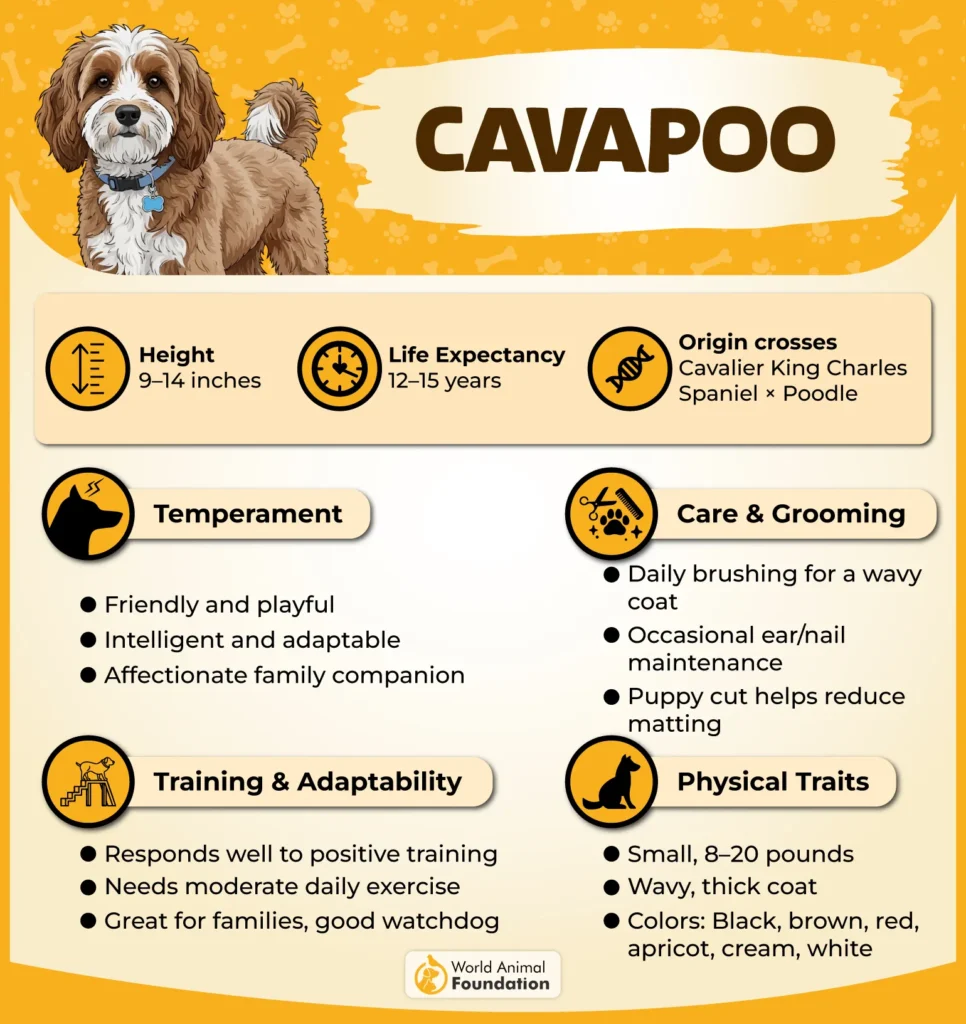
Cockapoos generally have a broader size range and may appear taller or more athletic. Some have compact teddy bear-like bodies, while others inherit a leaner frame and slightly longer muzzle that gives them a more energetic overall appearance.
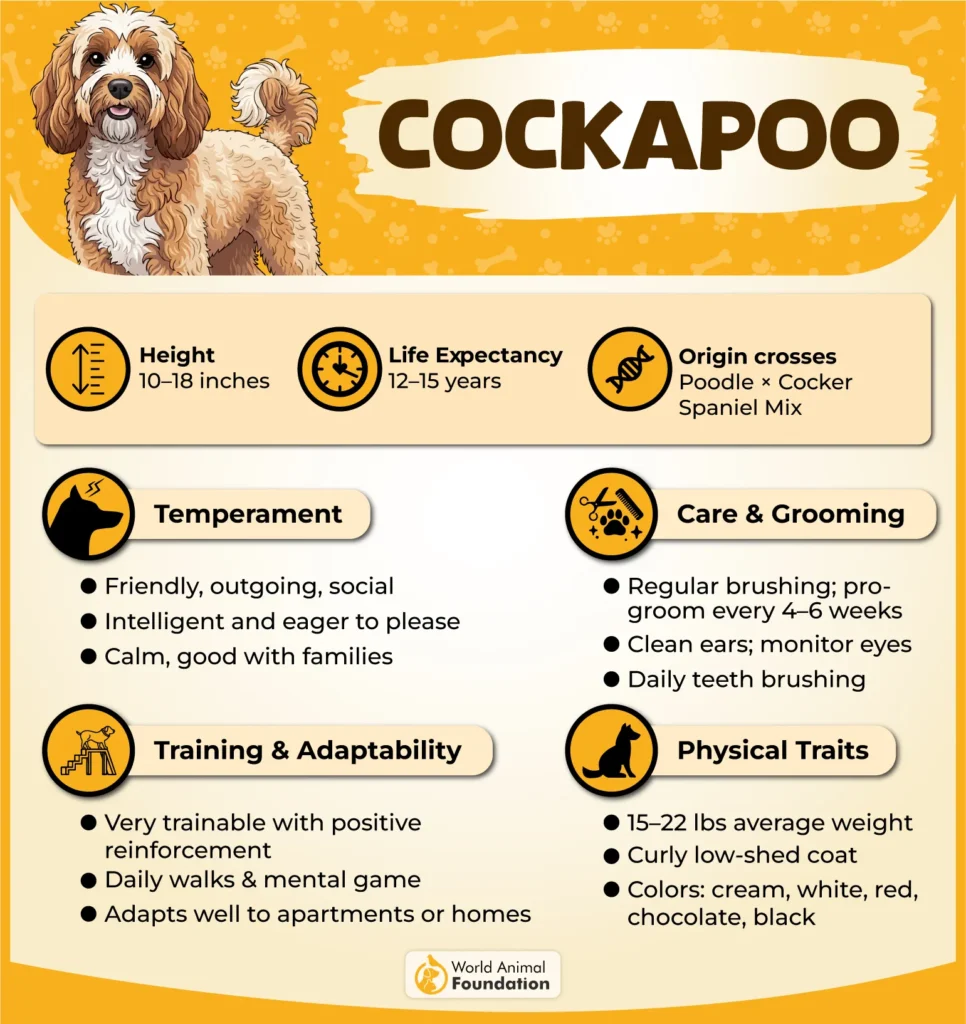
Both breeds can display a wide variety of coat colors and textures, including curls, loose waves, or shaggy fur that requires regular grooming to prevent tangles and matting. Their final size and structure often depend on whether toy or miniature Poodles were used in breeding.
Fact: Cockapoos usually have a wider size range than Cavapoos, while Cavapoos are often known for their softer facial expression and daintier build.
3. Pricing & Availability
Both designer mixes are highly popular because of their affectionate personalities, intelligence, and low-shedding coats, but their overall costs can vary depending on breeding quality, lineage, and location.
Cavapoo pricing is often influenced by factors such as gender, pedigree, and generation type. Puppies described as F1 or F1b may differ in price because later generations are often associated with more predictable coat traits and potentially fewer inherited health concerns. Health-tested bloodlines and reputable breeders also increase the overall cost.

Cockapoos are also considered premium companion dogs, especially puppies from trusted breeders with strong health programs and desirable coat characteristics. According to Petplan, Cockapoo dogs with curly, low-shedding coats are often considered a good option for allergy sufferers.
Purchase prices commonly range from around $2,000 to over $5,000, while professionally trained Cockapoos may cost significantly more because of advanced socialization and obedience preparation.
Beyond the initial purchase, both breeds require long-term financial commitment for grooming, veterinary care, food, training, insurance, and preventative treatments. Adoption through rescues or breed-focused organizations can sometimes provide a more affordable path for families searching for the right companion.
Fact: F1b Cavapoos are often priced higher because they are considered more predictable in coat quality and may inherit fewer health concerns from parent breeds.
4. Temperament & Personality
Both hybrid breeds inherit smart and affectionate traits from their Poodle ancestry, but their energy levels, social habits, and emotional needs can create very different experiences for families and owners.
Cavapoos are usually gentle and highly people-oriented companions. According to PetMD, Cavapoo dogs are cute, cuddly, and intelligent. They often prefer relaxed environments where they can stay close to family members, making them especially appealing for calmer households, seniors, and owners seeking a loyal lapdog.
Cockapoos are generally more energetic, playful, and adventurous in daily life. They enjoy interactive games, active routines, and social activities, though their lively personalities can sometimes come with increased sensitivity or separation anxiety when left alone too often.

Both breeds are intelligent, affectionate, and highly trainable when raised with patience and positive reinforcement. Cavapoos may learn basic routines slightly faster and adapt more easily to quieter lifestyles, while Cockapoos often thrive best in active homes filled with play, companionship, and regular engagement.
Fact: Cockapoos are often considered more energetic and independent, while Cavapoos are widely known for their calm, snuggly, and people-focused personalities.
5. Exercise Needs & Energy Level
Both hybrid breeds are affectionate and intelligent companions, but the Cavapoo is generally calmer and more relaxed, while the Cockapoo tends to be more playful, energetic, and constantly ready for activity.
Cavapoos usually thrive with moderate daily exercise through walks, interactive play, gentle games, and family time. They also enjoy mental stimulation such as training sessions, puzzle toys, and nose work activities, though many are happy to relax once their activity needs are satisfied.

Cockapoos often require more physical and mental engagement throughout the day because of their lively and alert personalities. Longer walks, active play sessions, training exercises, and enrichment games help prevent boredom and excessive vocal behavior while keeping them emotionally balanced and entertained.
Both breeds benefit from structured exercise routines, especially during puppyhood when their growing joints still need protection from overexertion. Families wanting a calmer cuddle companion may prefer the Cavapoo, while more active households often appreciate the Cockapoo’s energetic and playful spirit.
Fact: Cockapoos are generally more energetic than Cavapoos and often prefer playtime and activity over long periods of resting indoors.
6. Trainability & Intelligence
Both dogs are known for their affectionate personalities and clever minds. Both breeds inherit intelligence from their Poodle lineage, but their learning styles and energy levels can feel quite different in daily life.
Cavapoos are usually eager to please and respond very well to positive reinforcement. Their gentle and cuddly nature often makes them easier for first-time owners to train, especially when lessons begin early and remain consistent and encouraging.
Cockapoos are also highly intelligent but may show a slightly stronger drive and more energetic personality. They often enjoy interactive games, advanced tricks, and mentally stimulating activities, though their lively nature can sometimes require extra patience and focus during training sessions.

Early socialization benefits both breeds by helping them grow into confident and well-mannered companions around people, pets, and unfamiliar environments. Short, rewarding training sessions using praise, treats, and patience usually produce the best results while strengthening the bond between dog and owner.
Fact: Cavapoos are often considered slightly easier for beginner owners to train, while Cockapoos may require more mental stimulation because of their energetic and playful personalities.
7. Grooming Needs & Shedding
Both are loved for their soft, low-shedding coats, affectionate personalities, and family-friendly nature, though their coat care routines vary slightly.
Cavapoos usually have silky, plush coats that range from gently wavy to curly, often requiring slightly less maintenance than Cockapoos. Regular brushing, bathing, ear cleaning, nail care, and dental hygiene help keep their coat healthy while preventing tangles and mats from forming around sensitive areas.

Cockapoos generally have thicker coats that may need more frequent brushing, especially if they inherit stronger Cocker Spaniel coat traits. Their long floppy ears also need consistent cleaning because trapped moisture and inner ear hair can increase the chance of irritation or buildup over time.
Neither breed is completely hypoallergenic, and both still require regular grooming despite their lower shedding levels. Professional grooming every few weeks and consistent brushing throughout the week help maintain coat texture, comfort, and cleanliness while reducing loose hair and matting.
Fact: Cavapoos are generally considered slightly lower-maintenance than Cockapoos because their coats are often silkier and less prone to heavier shedding.
8. Health & Lifespan
While both breeds are generally healthy and adaptable companions, each can inherit different health concerns from their Spaniel and Poodle parent lines.
Cavapoos, recognized for their gentle and low-key temperament, commonly live between 12 and 15 years. They may develop issues such as hip dysplasia, patellar luxation, ear infections, eye conditions, and heart-related concerns linked to the Cavalier King Charles Spaniel side, including mitral valve disease.
Cockapoos are also lively and sociable companions, but they can be prone to eye disorders such as cataracts, glaucoma, and progressive retinal atrophy. Other possible concerns include allergies, ear infections, obesity, pancreatitis, epilepsy, and joint problems inherited from their Cocker Spaniel and Poodle ancestry.

For both breeds, responsible breeding and proper health screening are extremely important for lowering inherited risks. Regular veterinary care, grooming, exercise, and early monitoring of eye and joint health can help these companion dogs enjoy long and comfortable lives with their families.
Fact: Both Cavapoos and Cockapoos may inherit progressive retinal atrophy, an eye condition that can gradually affect vision over time.
Conclusion
Both companion breeds offer affectionate personalities, intelligence, and strong bonds with their families, making them popular choices for households of many sizes and lifestyles. Their adaptable nature, friendly temperament, and playful energy help them fit comfortably into apartments, family homes, and active social environments alike.
While one breed may suit owners seeking a calmer and gentler companion, the other often appeals to families wanting a more energetic and playful dog. Their exercise needs, emotional sensitivity, and personality traits create meaningful differences that can influence the ideal match for different homes and routines.
Whether families choose a lively playmate or a relaxed cuddle companion, both breeds are known for loyalty, affection, and companionship. With love, patience, and proper care, these charming dogs can become treasured lifelong members of the family while bringing warmth and happiness into everyday life.
