




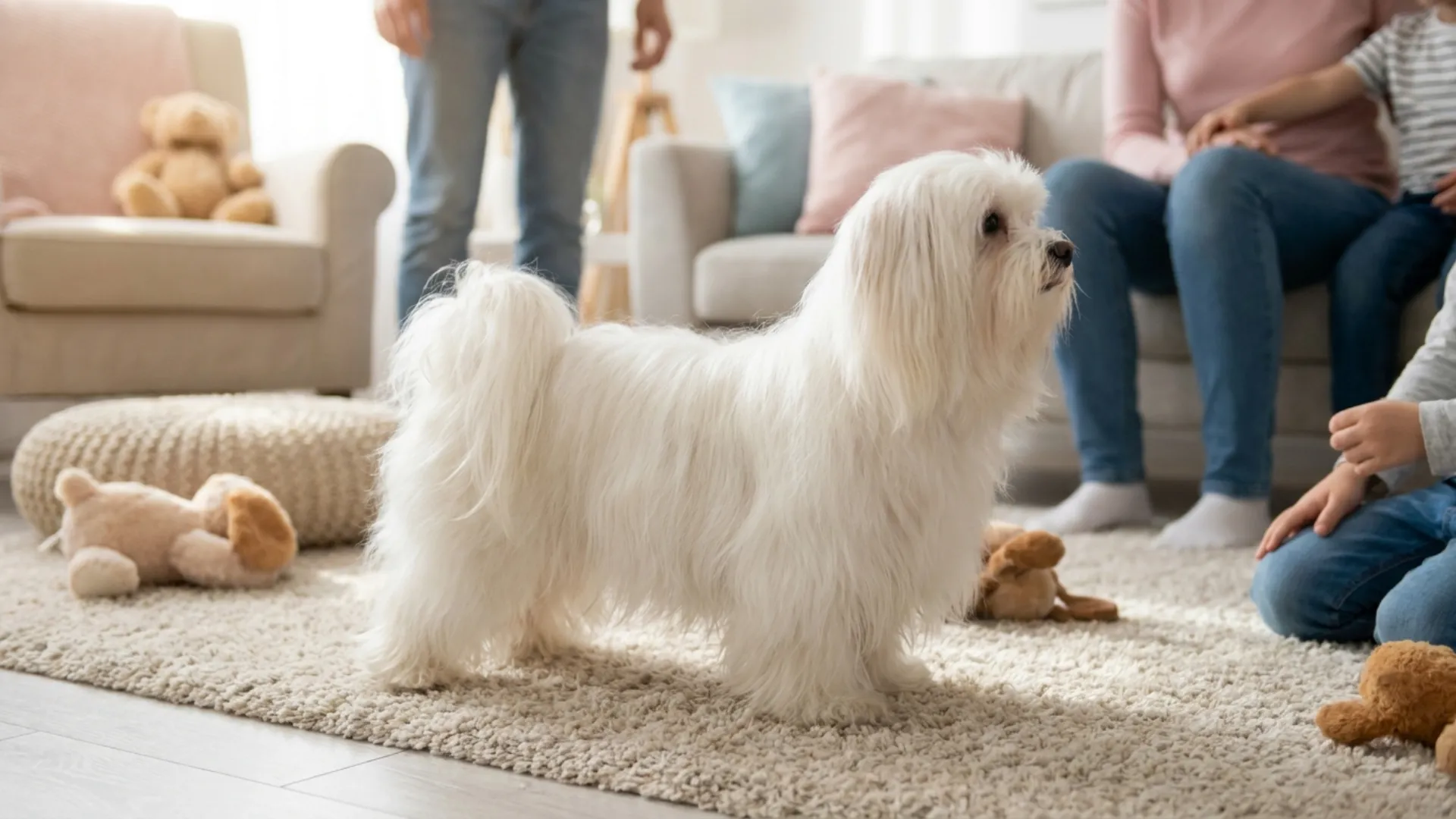
Choosing a dog for your family is more than just picking a cute face—it’s about finding a companion that truly fits into your everyday life. In busy households, especially those with kids, the ideal pet brings warmth, playfulness, and calm companionship without demanding overwhelming care.
That’s where smaller dogs often shine. Their manageable size makes them well-suited for apartments and compact homes, while their affectionate nature helps them blend easily into family routines.
In this article, we’ll explore what makes these little companions such a great match for households with kids, busy schedules, and varying lifestyles.
From temperament and trainability to energy levels and adaptability, you’ll discover what truly matters when choosing a family-friendly pet. The goal is simple: helping you find a loving companion that fits seamlessly into your family life while bringing joy every single day.
Key Takeaways
Meet small family dogs like Pomeranian, Yorkshire Terrier, Toy Poodle, Maltese, Chihuahua, Toy Fox Terrier, and Pug, each with a unique charm for home life.
Discover which breeds are playful, calm, or intelligent so you can match the right companion to your family’s lifestyle.
Learn how grooming, exercise, and training needs differ so you know what fits your time and routine best.
See how the right small dog can quickly become a loyal, loving part of your everyday family life.
Perfect Small Dog Breeds for Family Life
1. Pomeranian
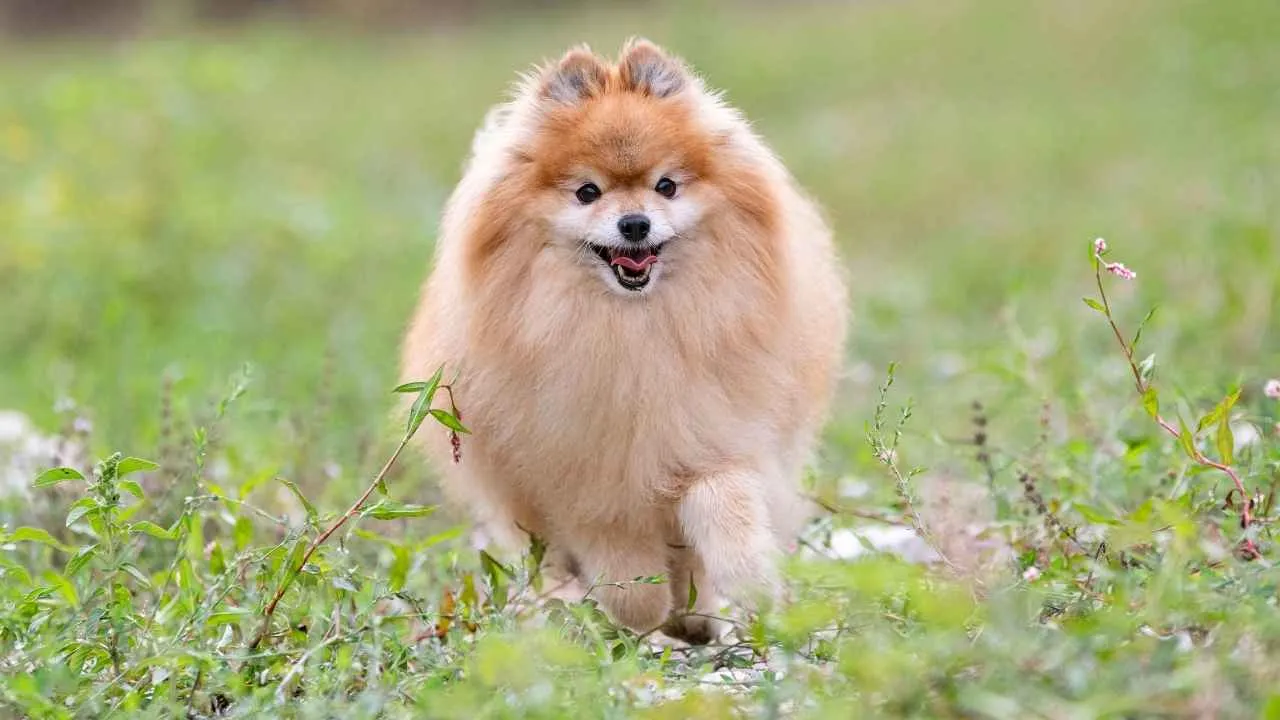
The Pomeranian is a tiny, energetic companion that comes from the Spitz family of sled dogs, including breeds like the Alaskan Malamute, Chow Chow, Akita, and Samoyed, as mentioned by PetMD.
It was originally much larger and even used for herding, but over time, it was bred down into one of the smallest companion dogs.
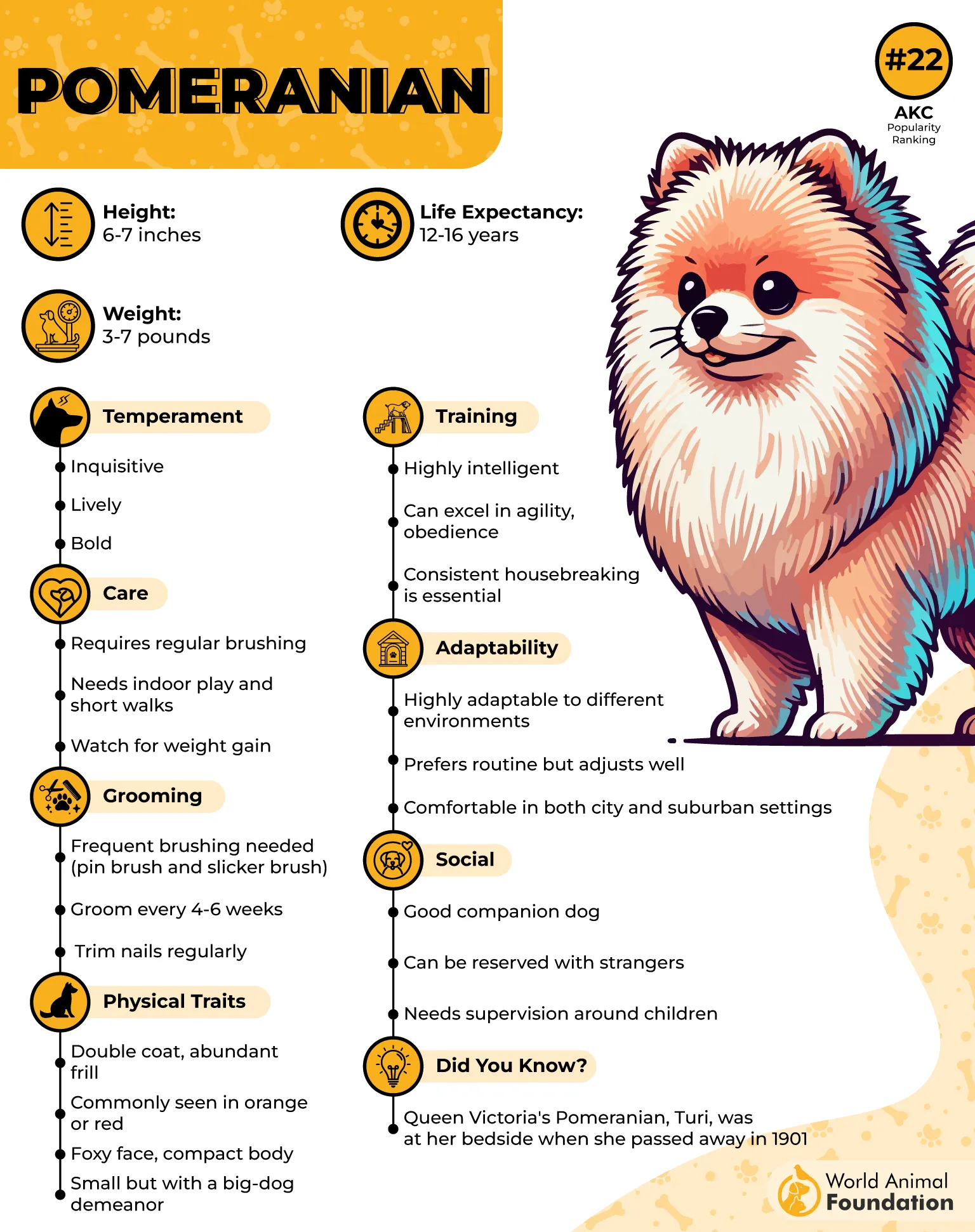
Today, it is known for its cloud-like double coat, fox-shaped face, and thick ruff around the neck that gives it a lion-like appearance. It also has a square body, alert ears, and a curled, plumed tail that rests over its back.
This breed is instantly recognizable and comes in a wide variety of colors, such as orange, red, cream, black, white, sable, blue, chocolate, merle, tricolor, and many mixed patterns.
Personality & Temperament
The Pomeranian may look like a delicate fluff ball, but it has a bold and confident personality. It is smart, curious, and full of energy, often acting like a much larger dog in a small body. This breed is social and enjoys attention, often becoming the center of the household.
It is affectionate with family members and usually enjoys the company of children, although gentle handling is important due to its fragile frame. It can also get along with other pets when properly socialized.
The Pomeranian is known for being lively, playful, and a little dramatic, often showing strong expressions and a love for being noticed.
Care, Training & Family Suitability
This breed requires minimal grooming because of its thick double coat, which needs frequent brushing to stay clean and healthy. Shedding is common, especially during seasonal changes. The Pomeranian is intelligent and responds well to positive reinforcement training.
It enjoys learning tricks and mental games, but it can also be independent, so early socialization is important to prevent issues like excessive barking, hyperactivity, or separation anxiety. Daily walks and indoor play are usually enough to meet its exercise needs.
It adapts well to apartment living and suits families, singles, and older adults. With the right training, care, and supervision around small children, it becomes a lively, affectionate, and entertaining companion that brings constant energy and joy into the home.
2. Yorkshire Terrier
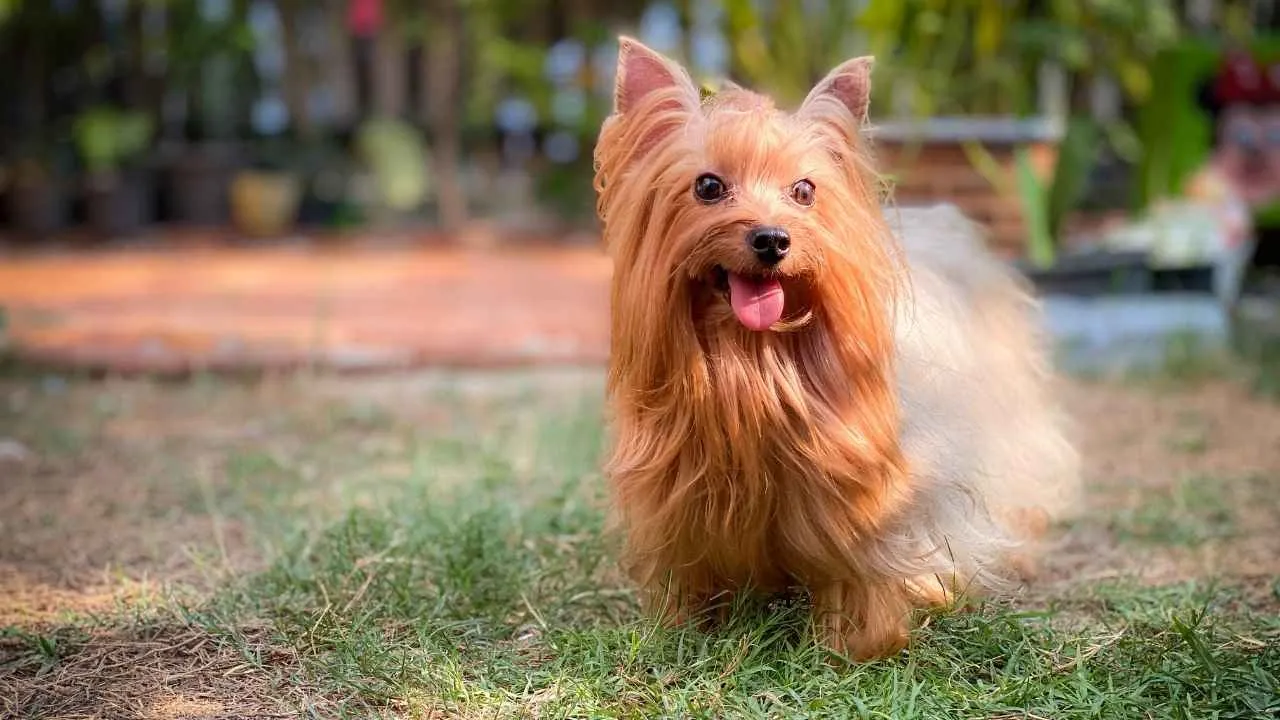
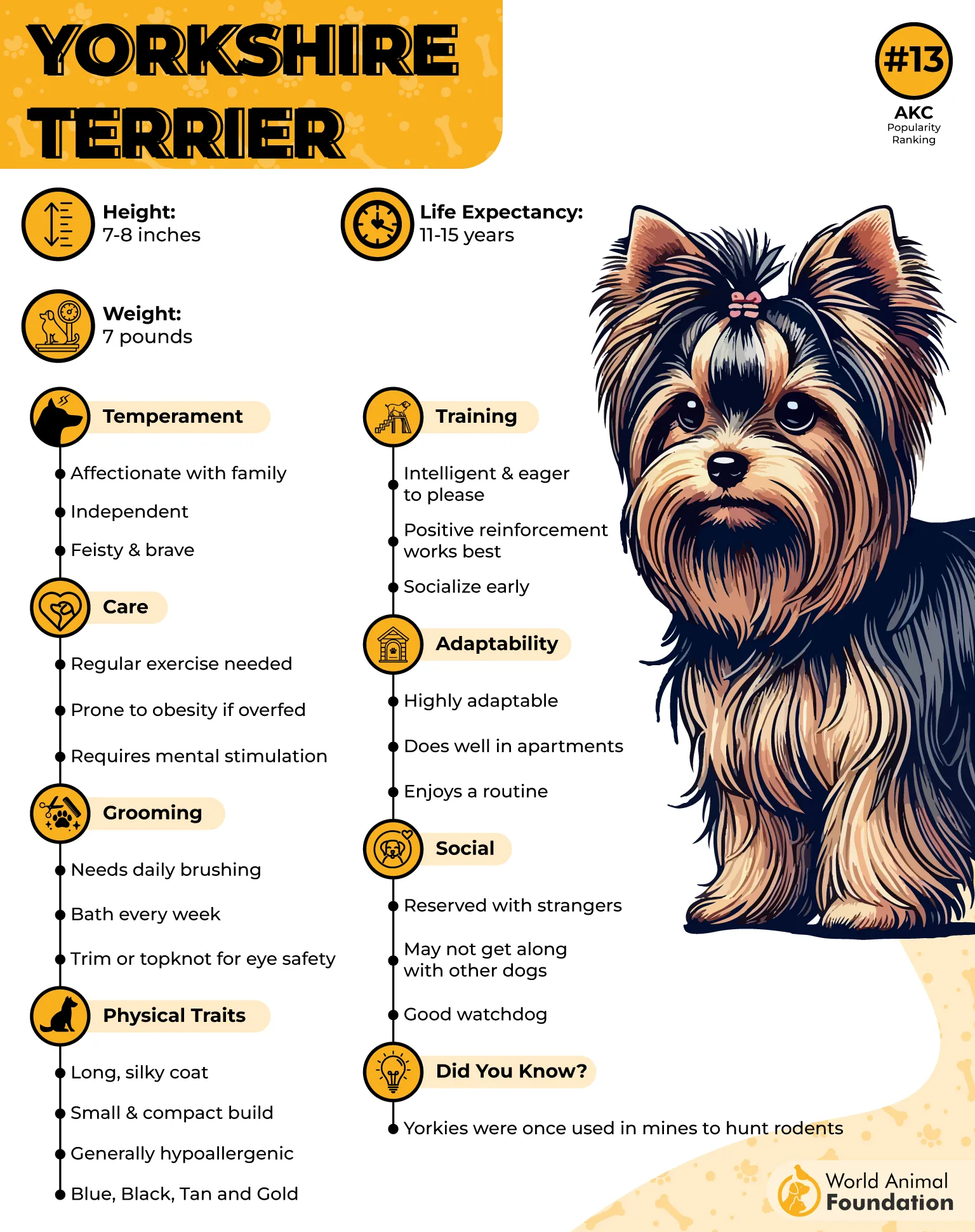
The Yorkshire Terrier may look delicate, but it comes from a tough working background. It was originally bred in England from small terriers used by Scottish workers in textile mills to catch rats. Today, it is one of the smallest, most wonderful companion dogs, but it still carries the spirit of a true terrier.
It is instantly recognizable by its long, silky, straight coat that is steel blue on the body and rich tan on the face and legs. The coat often flows to the floor if kept long, or it can be trimmed short for easier care.
This small breed dog has a compact body, a level back, a small head, and upright V-shaped ears that give it an alert expression.
Personality & Behavior
The Yorkshire Terrier has a bold and confident personality. It is energetic, curious, and often believes it is much bigger than it actually is. It is affectionate with its family and loves attention, but it can also be bossy and feisty.
It is very intelligent and learns quickly, especially when trained with praise and rewards. However, it can be stubborn at times and may not always respond to strict training methods. Early socialization is important so that it grows into a well-behaved companion.
It can be friendly with children and other pets, but because of its small size, interactions should always be gentle and supervised. It also makes an excellent little watchdog and is naturally alert to its surroundings.
Care, Training & Family Suitability
The Yorkshire Terrier does not need a lot of space and is well-suited for apartment living. It has moderate exercise needs and stays happy with short daily walks and indoor play. Mental stimulation is also important, as it enjoys puzzle games, agility, obedience training, and interactive activities like fetch.
Grooming is a major part of its care because its coat is similar to human hair. It requires frequent brushing and regular bathing to stay clean and tangle-free. It can also be sensitive to cold weather and may need extra protection in cooler conditions.
3. Toy Poodle
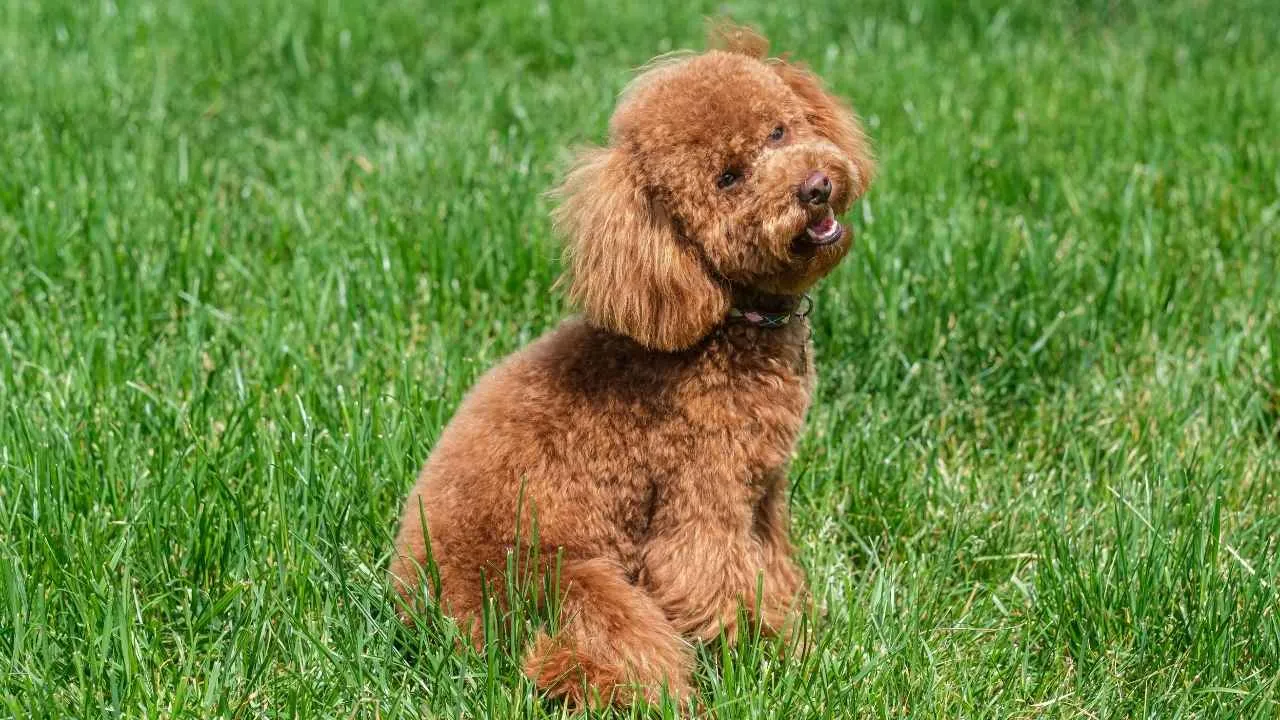
The Toy Poodle is a true aristocrat in the world of small dogs. Despite its tiny size, it carries the same athletic build and intelligence seen in all Poodles, a breed originally developed in Germany for duck hunting and later refined into smaller companion versions.
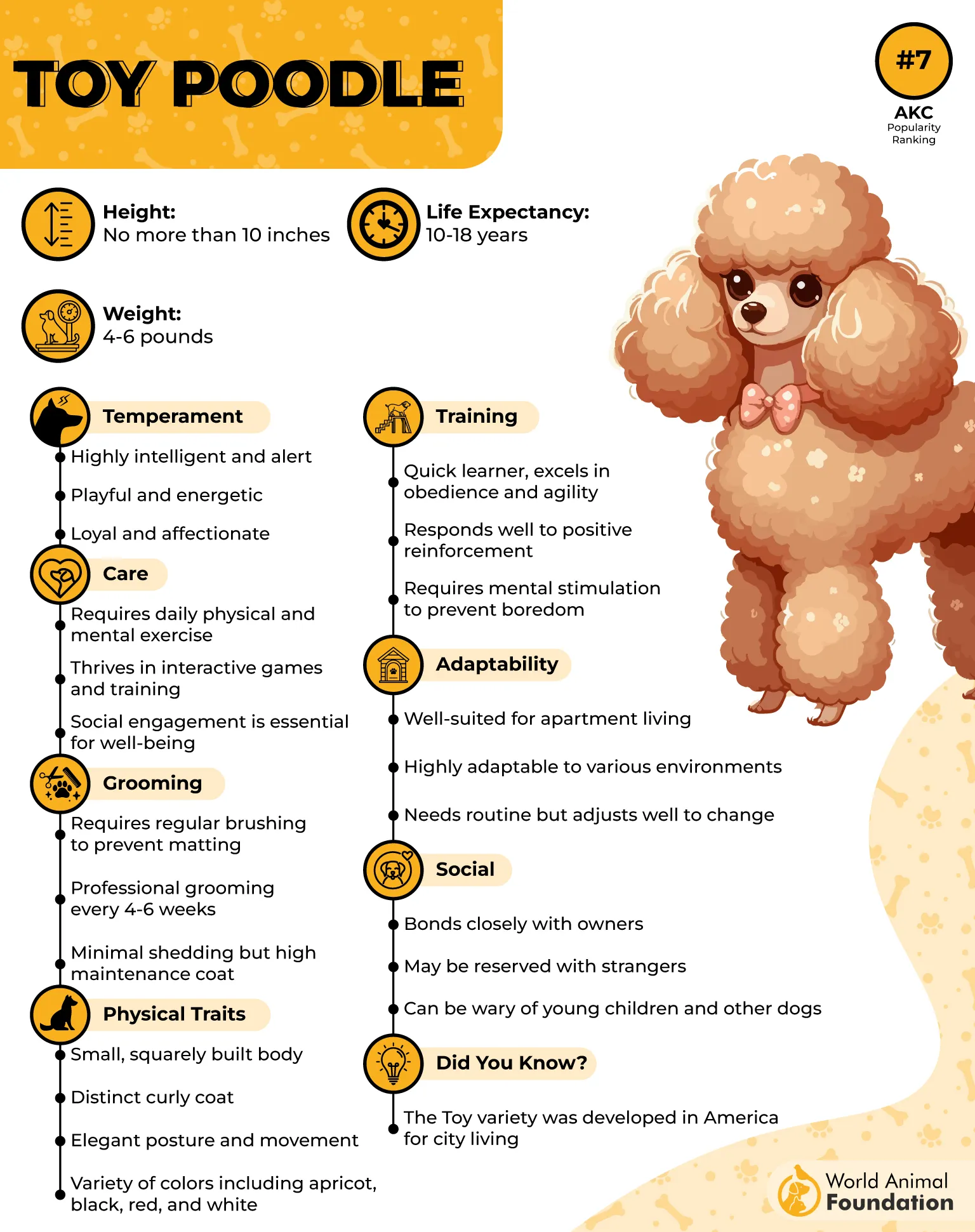
It is instantly recognizable by its curly, continuously growing coat, which can be styled in different trims. This coat is low-shedding and often considered suitable for some allergy-sensitive households, though no dog is completely hypoallergenic.
The Toy Poodle has a refined look with a slender muzzle, long neck, and balanced body, giving it a graceful yet lively appearance.
Personality & Intelligence
The Toy Poodle is one of the smartest and most trainable small dog breeds. It is playful, alert, and eager to please, making it highly responsive to positive reinforcement training. It bonds closely with its family and enjoys being part of daily activities.
This breed is affectionate and social, often forming strong emotional connections with its owners. It is gentle with children and other pets when properly socialized, but because of its small size, all interactions should be supervised.
The Toy Poodle is also sensitive and can become stressed if left alone for long periods, which may lead to barking or anxious behavior. Mental stimulation is very important for this breed, as boredom can quickly lead to unwanted habits.
Care, Training & Family Suitability
The Toy Poodle has moderate exercise needs and stays happy with daily walks and indoor play sessions. It also enjoys activities like fetch, agility, nose work, puzzles, and interactive games that challenge its mind.
Grooming is an important part of its care because its curly coat grows continuously and requires frequent brushing or regular professional trimming every few weeks. Without proper grooming, the coat can easily mat.
This breed adapts well to apartment living and suits families, singles, and older adults due to its manageable size and friendly nature. With proper care, structure, and mental engagement, the Toy Poodle becomes a loving, intelligent, and entertaining companion that fits beautifully into family life.
4. Maltese
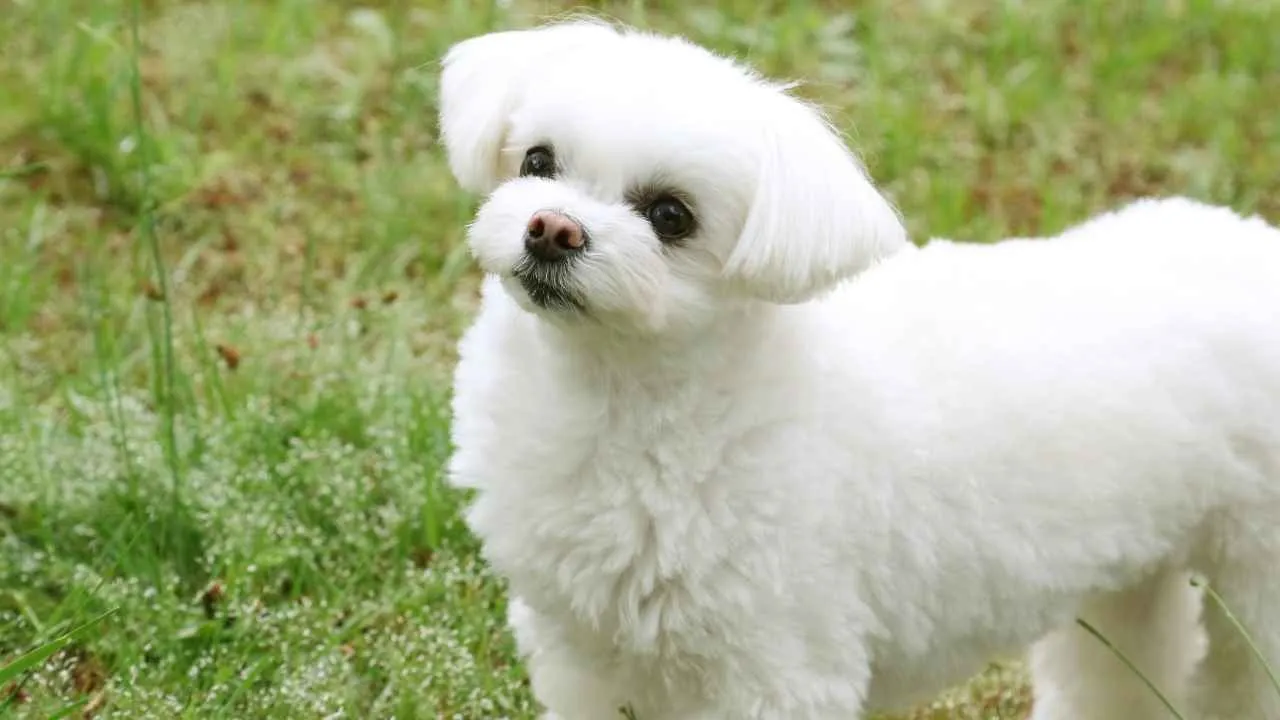
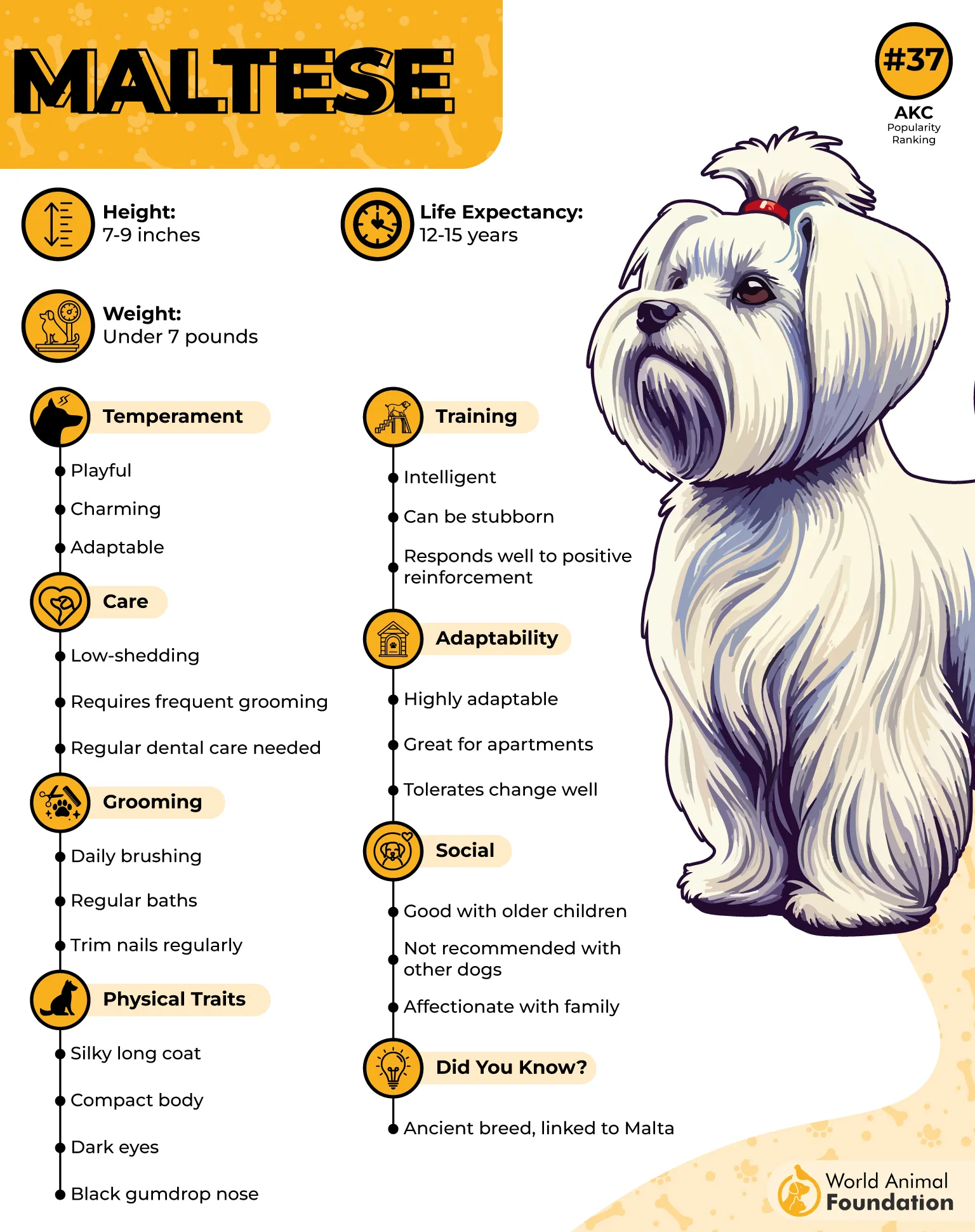
The Maltese is one of the oldest toy breeds in the world, with a history that goes back thousands of years to the Mediterranean island of Malta. Often called “Ye Ancient Dogge of Malta,” this tiny companion has long been associated with nobility and luxury, even appearing in ancient Greek and Roman writings.
It is instantly recognized by its stunning floor-length, silky white coat that flows smoothly over a compact body. Beneath this elegant appearance is a light, graceful frame with a level back, well-sprung ribs, and a high-set tail carried over the back.
Personality & Temperament
The Maltese is gentle, affectionate, and highly people-oriented. It forms strong bonds with its family and prefers to stay close to its owners throughout the day. This breed is playful and lively, with a cheerful personality that makes it a joy to have around.
It is intelligent and learns quickly, especially when trained with positive reinforcement and patience. However, it can sometimes be a little stubborn or willful.
It is friendly with family members and can get along well with other pets, but interactions with young children should always be supervised because of its delicate size. It is naturally alert and makes a good little watchdog, often barking at unfamiliar sounds or visitors.
Care, Training & Family Suitability
The Maltese adapts very well to apartment living and does not need intense exercise. Short daily walks and indoor play are usually enough to keep it happy and healthy. However, it needs regular mental stimulation through simple training, tricks, and interactive play to avoid boredom.
Grooming is a major part of its care routine. Its long, silky coat requires daily brushing to prevent tangles and mats, along with regular bathing and coat care. Attention should also be given to dental hygiene, nail trimming, and cleaning around the eyes.
With regular grooming, gentle training, and companionship, the Maltese becomes a loving, adaptable, and graceful family companion that thrives in close human connection and brings elegance and affection into everyday life.
5. Chihuahua
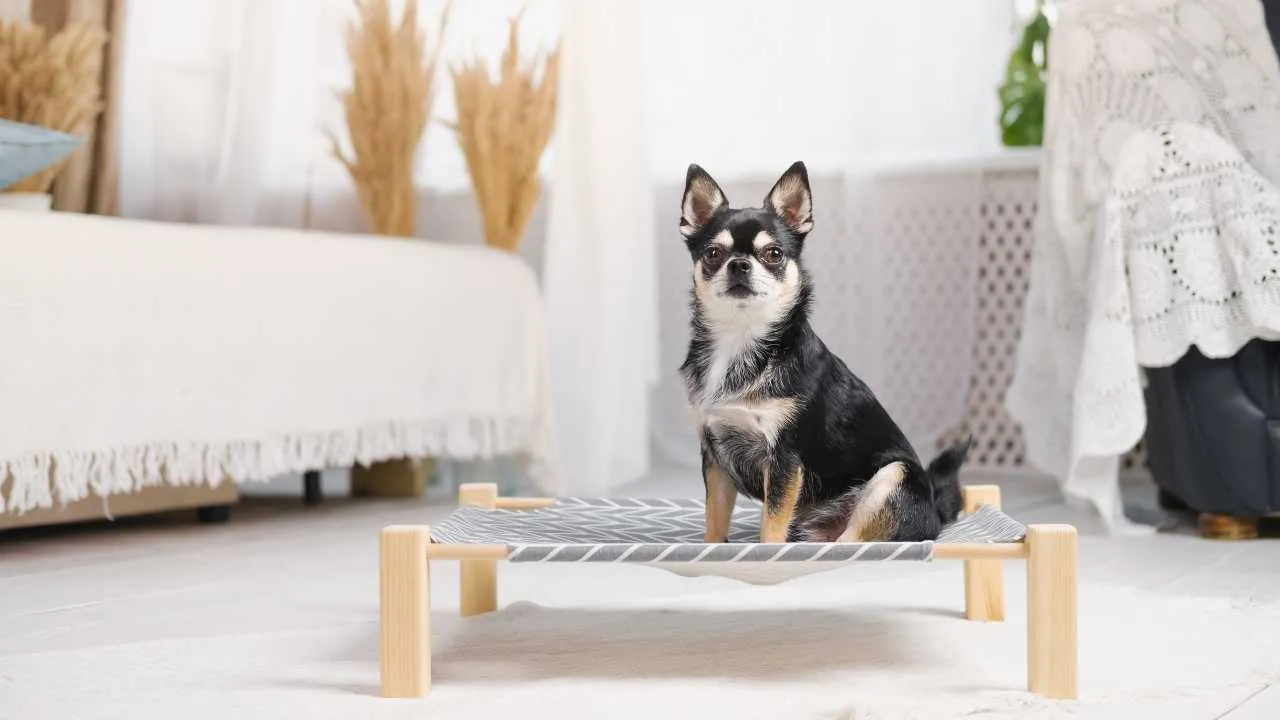
The Chihuahua is one of the smallest dog breeds in the world, but it carries a bold and confident personality that makes it unforgettable. It is believed to be one of the oldest breeds of the Americas, with roots tracing back to ancient pre-Columbian civilizations in Mexico, according to AKC.
Today, it is a national symbol of Mexico and a popular companion worldwide. This tiny dog has a compact, slightly longer-than-tall body, a domed “apple-shaped” head, large expressive eyes, and upright ears that give it a sharp, alert look.
Its coat can be short or long and comes in a wide variety of colors and patterns, making each Chihuahua visually unique.
Personality & Temperament
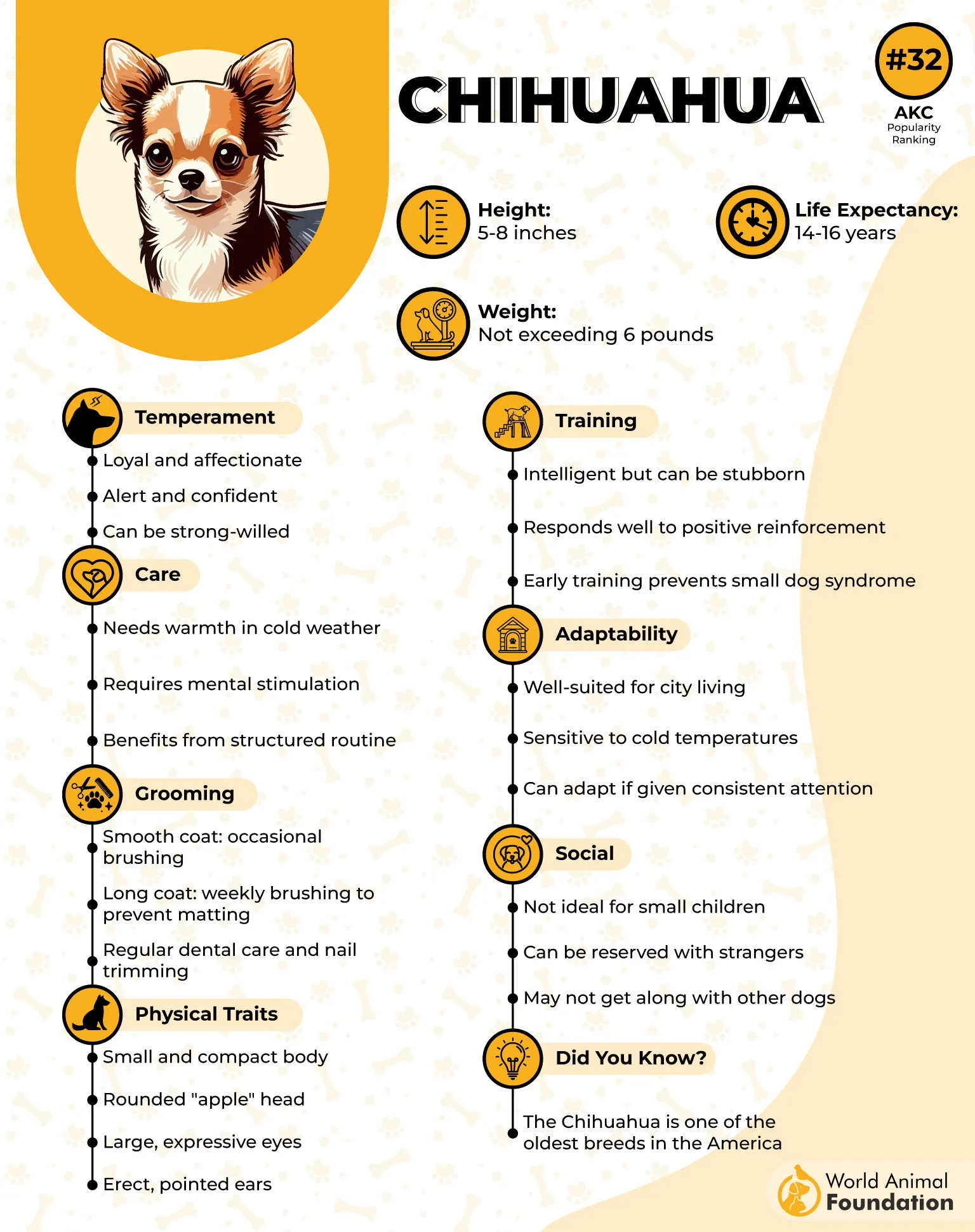
The Chihuahua has a big personality packed into a very small frame. It is loyal, affectionate, and forms strong bonds with its family members. It loves attention and enjoys staying close to its owner, often acting like a dedicated lap companion.
Despite its size, it is brave, alert, and sometimes a little bossy, often behaving like it is much larger than it really is. It can be playful and energetic, but may also show stubbornness, so early training is important.
It is generally good with families and other pets when properly socialized, but because of its delicate body, interactions with small children should always be supervised. It is also known to be vocal and may bark at strangers or unfamiliar situations.
Care, Training & Family Suitability
The Chihuahua adapts very well to small living spaces and is ideal for apartment life. It has moderate to high energy and enjoys short walks, indoor play, and simple activities like following its owner around. It should not be overexerted, and gentle exercise is enough to keep it healthy.
Grooming depends on the coat type—short-coated Chihuahuas need occasional brushing, while long-coated ones require more frequent care. Dental hygiene is especially important, as this breed is prone to dental issues.
It is also sensitive to cold weather and may need warm clothing or blankets in cooler conditions. With consistent training, socialization, and plenty of human companionship, the Chihuahua becomes a loyal, lively, and entertaining family companion that thrives on love and attention.
6. Toy Fox Terrier
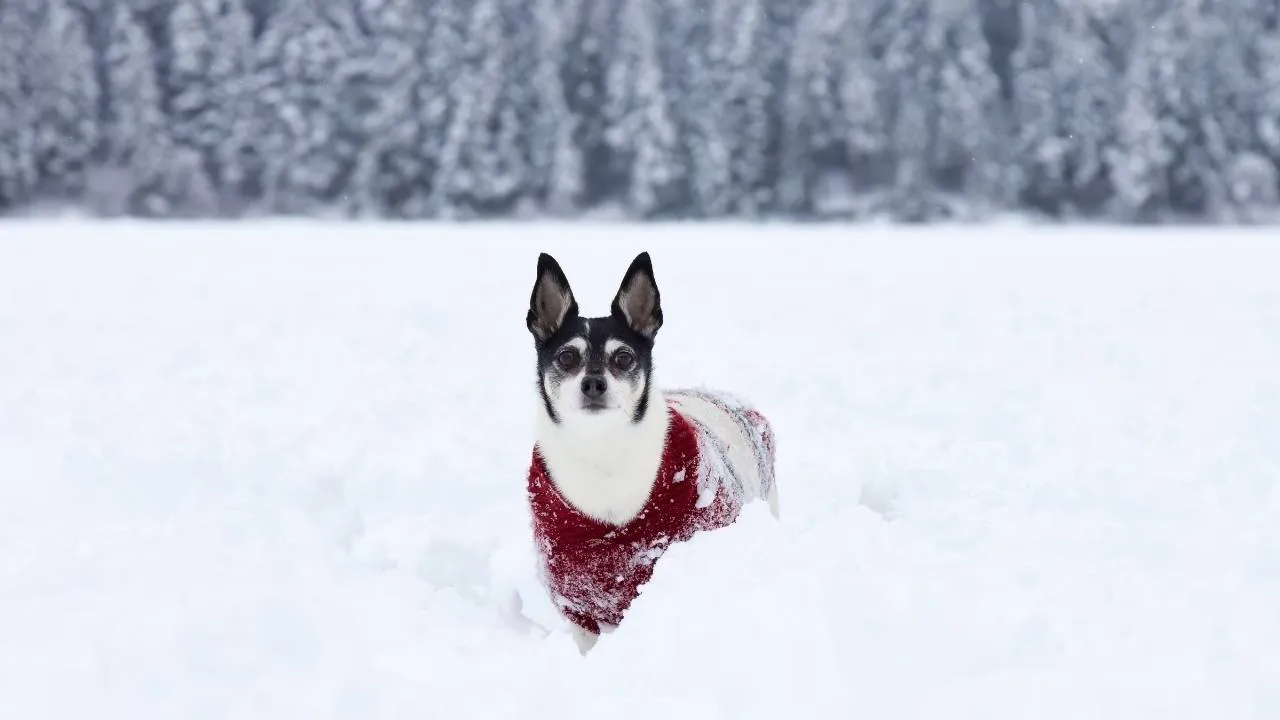
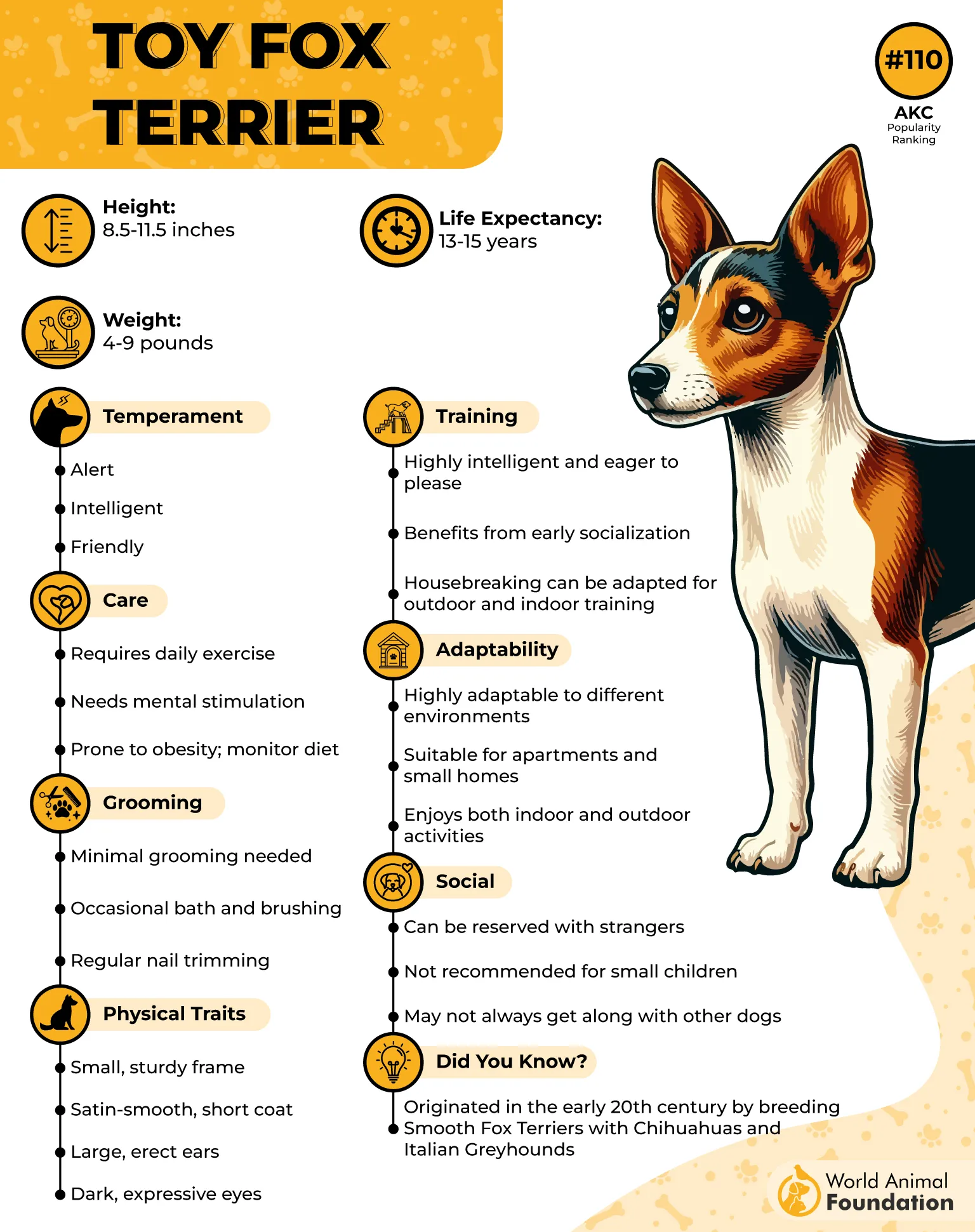
The Toy Fox Terrier is a small but energetic breed that perfectly blends the charm of a lap dog with the boldness of a true terrier. It originated in the United States in the early 20th century and was developed from the Smooth Fox Terrier, bred down in size but not in personality.
This little dog has a sleek, satin-like coat that is smooth and shiny, usually white with striking patches of black, tan, or chocolate.
It has a compact, muscular body, a well-set neck, and alert, upright V-shaped ears that give it a sharp, intelligent expression. Despite its elegant look, it remains strong, agile, and highly active.
Personality & Temperament
The Toy Fox Terrier is confident, lively, and full of personality. It is naturally curious and alert, always aware of its surroundings, which makes it an excellent little watchdog. It is affectionate and forms strong bonds with its family, often becoming deeply attached to its owners.
This breed is intelligent and learns quickly, especially when training is kept fun and rewarding. However, it can also be independent and easily bored, so short and engaging training sessions work best.
It generally gets along well with other pets and can be friendly with older, respectful children, but supervision is important due to its small size and high energy.
Care, Training & Family Suitability
The Toy Fox Terrier has high energy and enjoys daily physical and mental activity. It loves running, walking, hiking, playing fetch, agility training, and interactive puzzle games. Even on quiet days, it stays active indoors and enjoys running around the home.
It requires very little grooming due to its short, smooth coat, with only occasional brushing and bathing needed. Regular nail care is also important from an early age. This breed adapts well to apartment living but still needs regular exercise and stimulation to stay happy.
With early socialization, positive training, and proper activity, the Toy Fox Terrier becomes a loyal, intelligent, and entertaining companion for an active family.
7. Pug
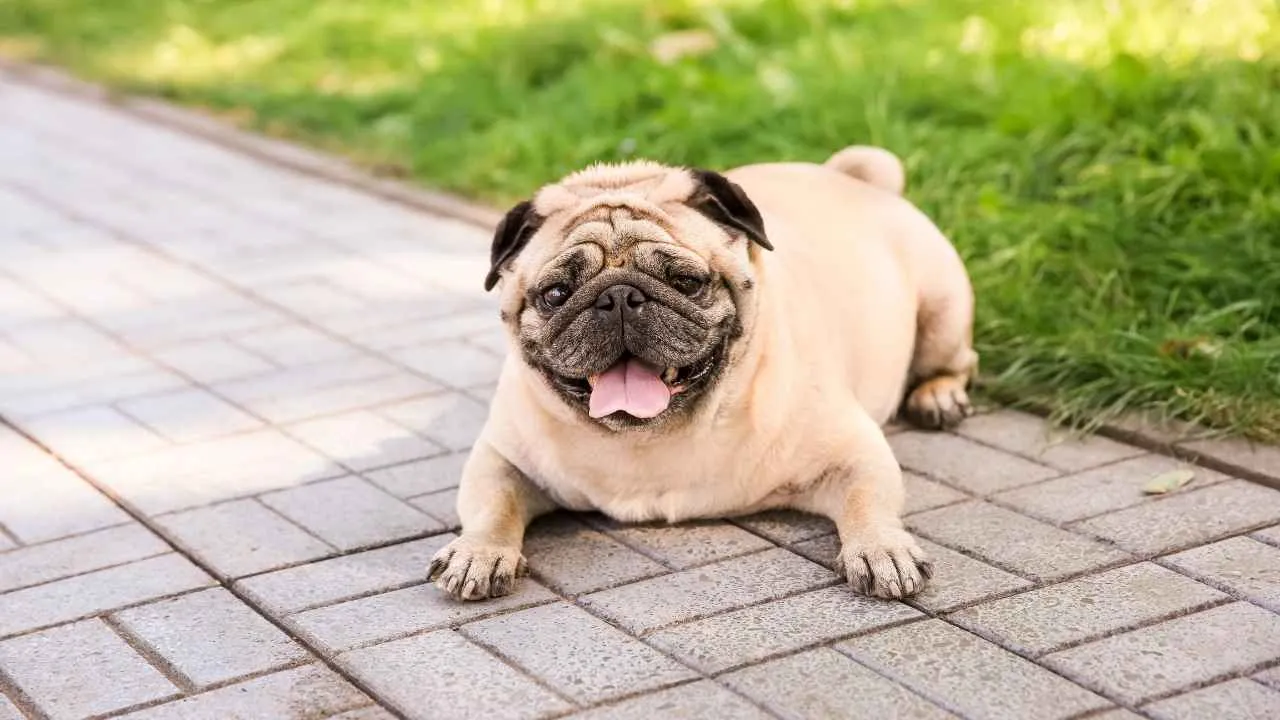
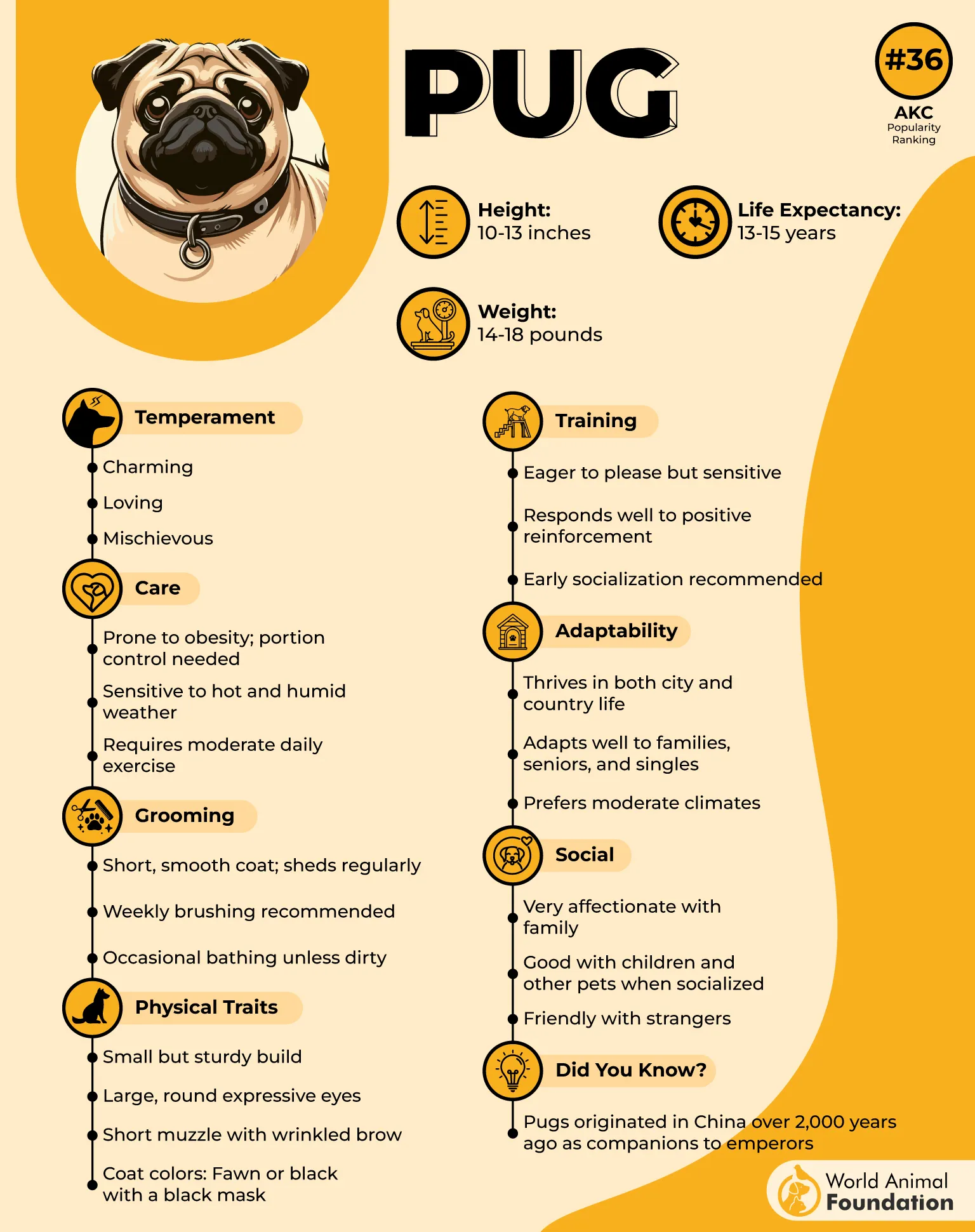
The Pug is an ancient toy breed that originated in China over 2,000 years ago and was once cherished by emperors before becoming a favorite of European royalty. It is a small but sturdy dog with a compact body, a curled tail, and a distinctive wrinkled face.
Its short, smooth coat comes in fawn or black, often with a black facial mask. The large, round eyes and expressive face give it a uniquely “human-like” appearance, showing emotions like curiosity, happiness, and surprise.
Despite its small size, the Pug has a strong, muscular build and is known for its charming, slightly comical look and affectionate presence.
Personality & Temperament
The Pug is a loving, social, and easygoing companion that thrives on human attention. It enjoys being included in family life and forms strong emotional bonds with its owners.
This breed is playful and friendly, with a cheerful yet calm temperament that makes it well-suited for families, older adults, and first-time dog owners. It generally gets along well with children and other pets when properly socialized.
However, it can become stubborn or mischievous if not mentally engaged. The Pug is also known for its sensitivity and should always be trained with patience and positive reinforcement rather than harsh methods.
Care, Training & Family Suitability
The Pug has moderate exercise needs and stays healthy with short daily walks and light play sessions. Britannica says that it is not built for intense physical activity or hot weather due to its short nose, which can make breathing more difficult in extreme conditions.
It prefers indoor living and enjoys lounging close to its family. Grooming is relatively simple, but regular brushing helps manage shedding, and special care should be given to cleaning its facial folds to prevent skin issues.
The breed also benefits from routine dental care and a balanced diet, as it is prone to weight gain. With proper care, attention, and a loving environment, the Pug becomes an excellent family dog that brings warmth and personality into any home.
Conclusion
Choosing the right small dog for family companionship is really about finding a balance between personality, care needs, and lifestyle fit.
What they all share is a strong ability to bond with humans, adapt to different living spaces, and become an important part of daily life when given proper training, socialization, and care.
If you are planning to welcome a small dog into your family, take time to think beyond looks and focus on temperament, energy level, and long-term commitment.
A well-matched companion will not only fit into your routine but also enhance it in ways you may not expect—bringing comfort, joy, and a sense of connection that grows stronger every day.
Looking for more options? You can also check out the Shih Tzu, Cavalier King Charles Spaniel, Italian Greyhound, Jack Russell Terrier, Cocker Spaniel, Boston Terrier, French Bulldog, Miniature Poodle, and Bichon Frise.
