




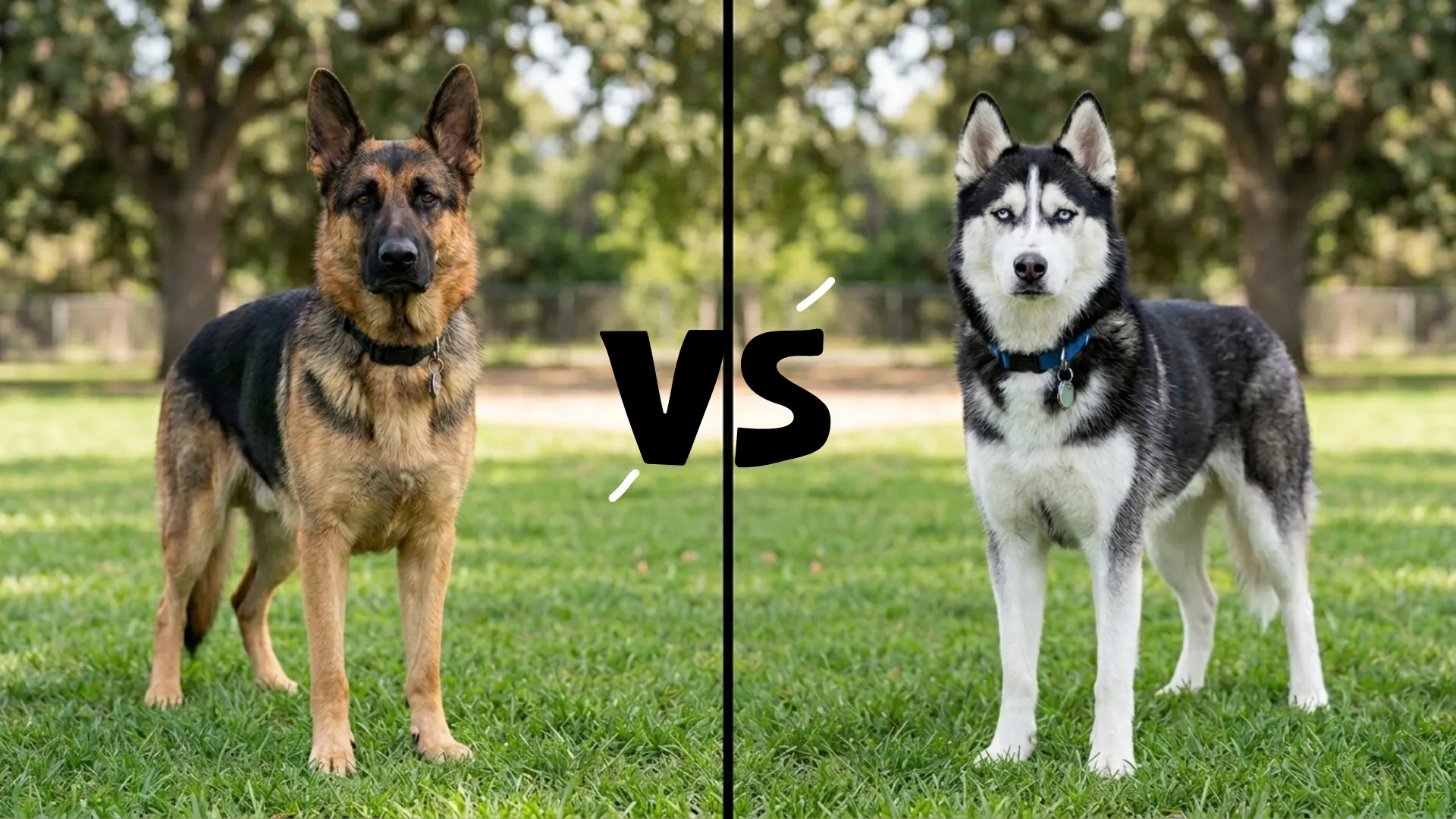
The decision looked simple in the beginning. Both breeds carried confidence, intelligence, striking features, and the kind of presence that immediately captured attention.
Everything online made them seem equally suitable for active families, first-time owners, and modern households looking for loyal companionship. That confidence slowly disappeared once daily responsibilities entered the picture. One dog constantly searched for structure, direction, and tasks to stay mentally satisfied throughout the day.
The other preferred movement, freedom, exploration, and stimulation, did not always fit neatly inside predictable routines. Small differences started becoming larger ones over time. Exercise needs felt different, training approaches changed completely, and even affection showed itself in opposite ways.
This comparison explores where those differences begin, how they affect daily life, and which lifestyle each breed naturally aligns with long after the excitement settles.
Key Takeaways
Two powerful breeds, two completely different mindsets, and the choice between them often shapes the entire daily experience of ownership.
The German Shepherd stands out for its sharp awareness and working-dog discipline, while the Siberian Husky is known for endurance, independence, and constant movement.
German Shepherds stay closely tuned to their owners, whereas Huskies often follow their own curiosity even when commands are clear.
The full comparison slowly reveals which one aligns with routine stability and which one demands space, patience, and a different kind of understanding.
German Shepherd vs. Siberian Husky: A Complete Comparison for Future Owners
Deciding between the intensely focused loyalty of a German Shepherd and the free-spirited, high-energy charm of a Siberian Husky is a major turning point for any future owner.
This complete comparison breaks down their contrasting training needs, grooming demands, and vocal personalities to help you confidently choose your next companion.
Origins & Purpose
German Shepherd Working Roots
German Shepherd dogs began as practical farm and herding dogs in Germany, valued for their ability to guide livestock while staying closely in tune with human commands. In 1899, Captain Max von Stephanitz formalized the breed, shaping it into a structured working dog with a clear purpose and identity.
Their reputation quickly expanded beyond farms into military, police, and protection roles across the world. By the early 1900s, the breed was already widely recognized, and later even referred to as the Alsatian in parts of Europe during the World Wars.
Siberian Husky Sled Heritage
Siberian Huskies were originally shaped by the Chukchi people of Northeast Asia, who relied on them for sled pulling across frozen landscapes where endurance mattered more than speed bursts, as per Chewy. Their genetic link to the Spitz family is reflected in their resilience and cold-weather adaptation.
Their global recognition grew after they proved essential in sled dog transport, most famously during the diphtheria serum run to Nome, Alaska. That legacy still defines their identity today, even as they are now more commonly seen as active companion dogs rather than working sled teams.
Size & Build
German Shepherd Strength & Frame
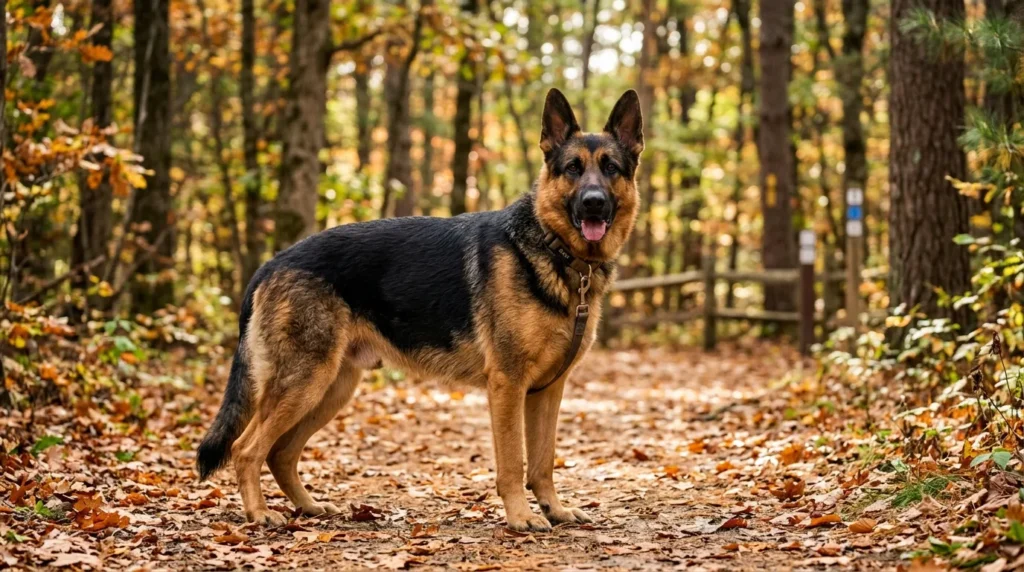
German Shepherds stand tall and commanding, with males reaching around 24 to 26 inches and weighing between 65 and 90 pounds, while females usually measure 22 to 24 inches and weigh between 50 and 70 pounds. Their structure reflects a strong, well-built design for control, balance, and sustained physical performance.
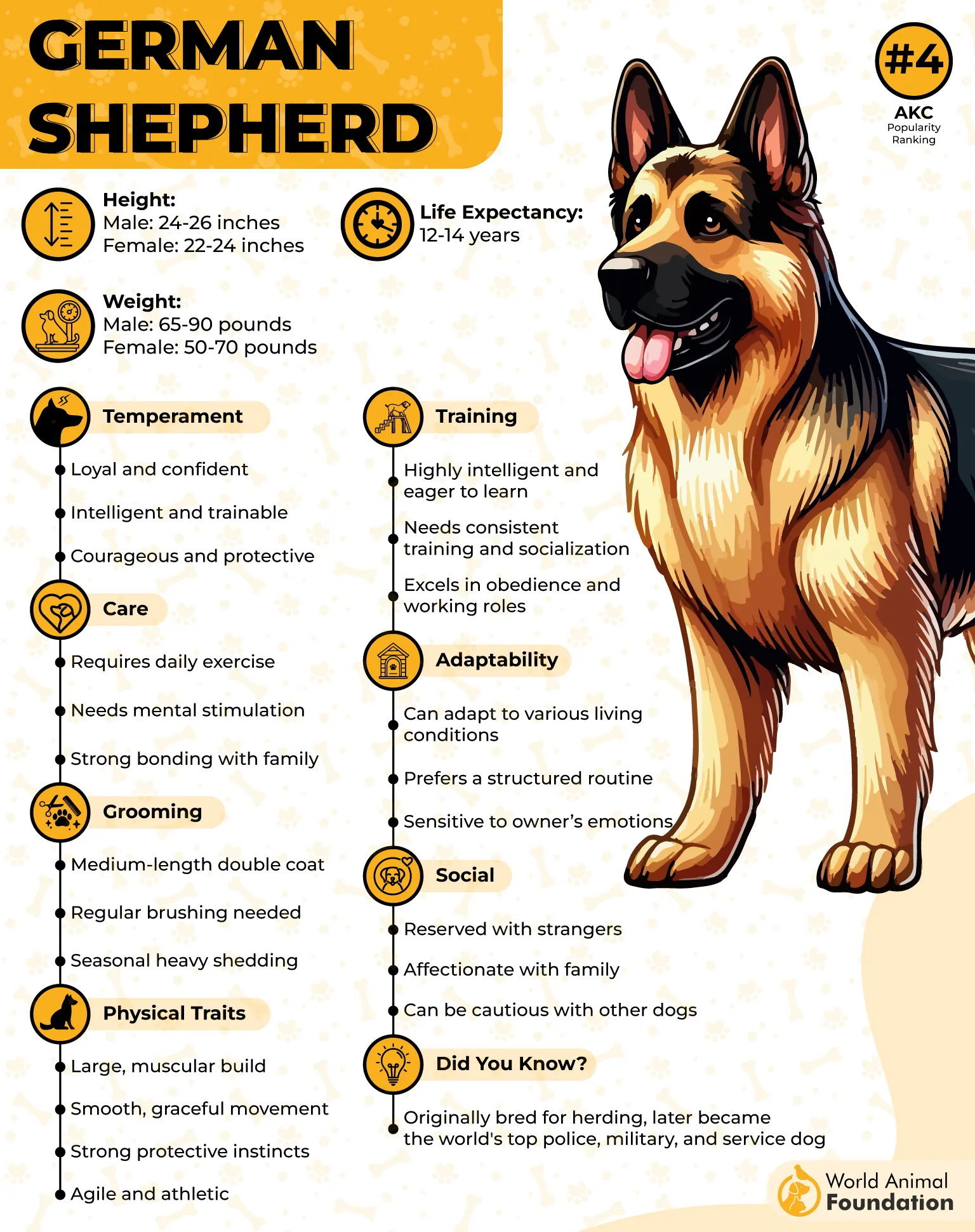
The body is muscular yet smooth in outline, giving the breed a flowing silhouette instead of a heavy or blocky look. Their movement stands out for a steady, ground-covering trot that can quickly shift into faster, powerful bursts when needed, as mentioned in the AKC.
Siberian Husky Agility & Proportion
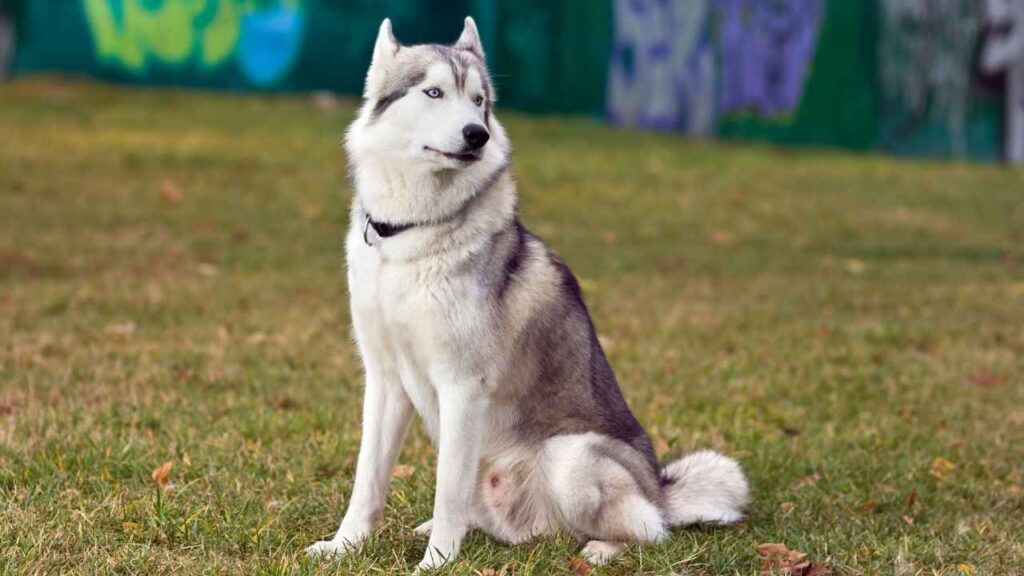
Siberian Huskies sit in the medium size range, with males around 21 to 23.5 inches and females about 20 to 22 inches, carrying a weight range of roughly 45 to 60 pounds for males and 35 to 50 pounds for females. Their frame is compact, built for stamina rather than bulk.
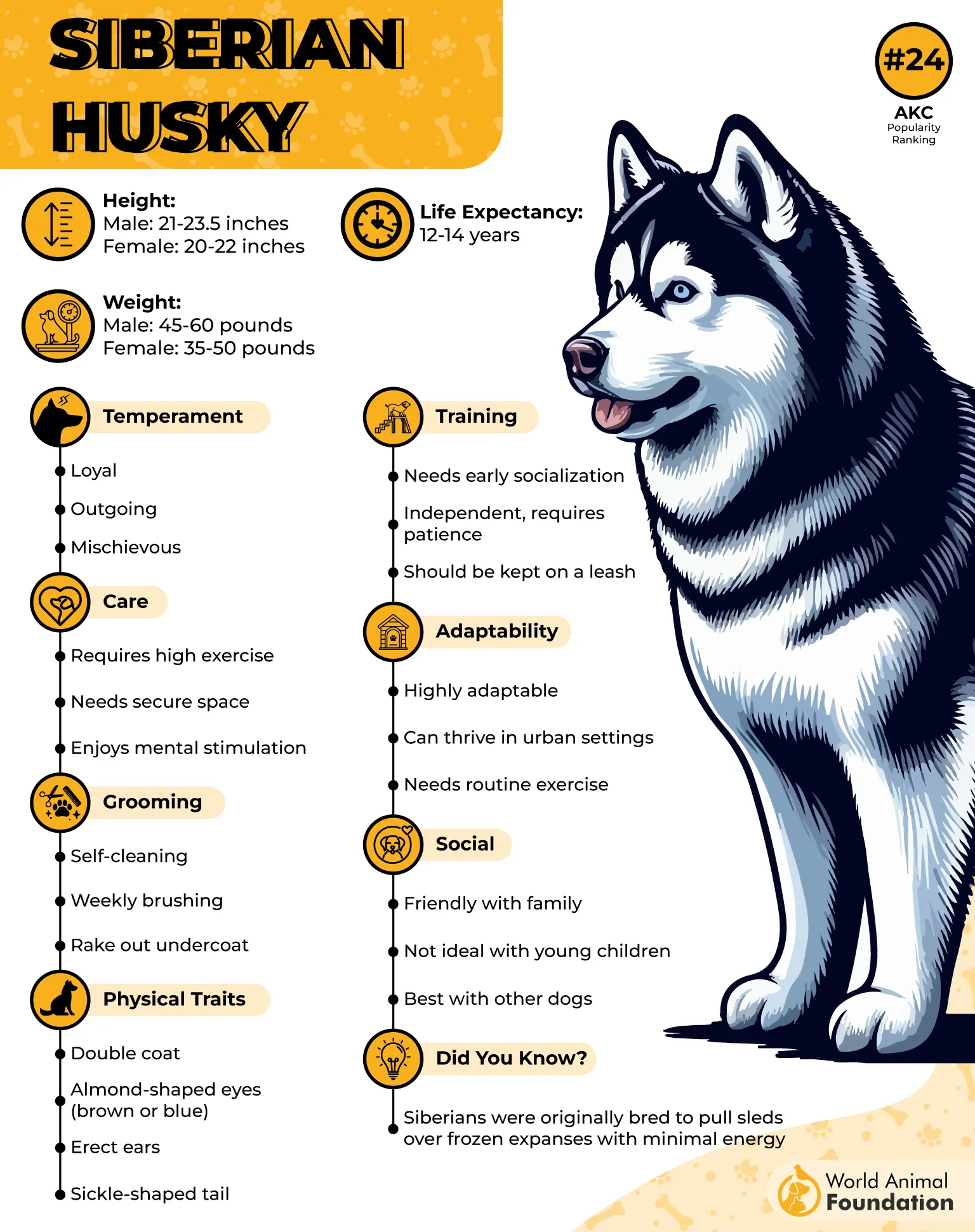
Their movement feels light and efficient, often described as smooth and effortless, even over long distances. The almond-shaped eyes, which may be blue, brown, or mixed, add to their alert expression, while their gait reflects the endurance-driven design of a classic sled dog.
Pricing & Availability
German Shepherd Pricing Reality Check
German Shepherd puppies from health-tested, responsible breeding lines usually fall in the range of $1,500 to $3,000, reflecting the focus on temperament screening and genetic health rather than just appearance. Lower-cost puppies can appear for a few hundred dollars, but they often come without proper health or behavior background checks.
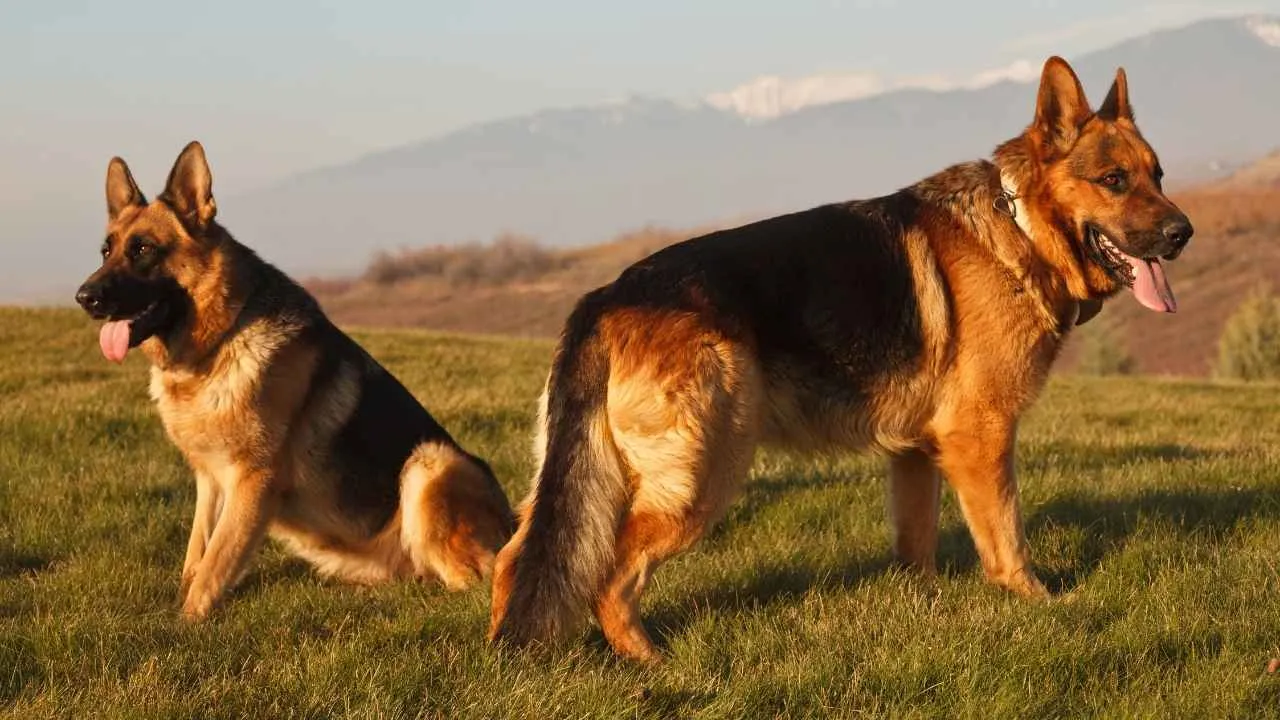
Some breeders also place retired dogs from show or breeding programs into new homes, often between 2 and 8 years of age. These dogs are typically well-trained and socialized already, as breeders rotate their dogs to maintain smaller, closely managed breeding groups.
Siberian Husky Cost and Availability
Siberian Husky puppies generally range between $1,200 and $2,000, depending on lineage, coat type, and breeder standards. Bloodline quality and health screening play a major role in pricing differences across listings.
Outside of breeders, Huskies are also commonly found in shelters and rescue centers, which adds another path for adoption depending on availability and location.
Temperament & Personality Style
Siberian Husky Personality Flow
Siberian Huskies bring a social, active presence into the home and prefer staying involved in family activity rather than being left alone for long stretches. Their intelligence shows in independent decision-making, which can sometimes turn into stubborn habits like chewing or vocal behavior when they are not guided early.
Their strong-willed nature often benefits from structured guidance and consistent handling from an early stage. While they usually get along well with children and other pets, their high energy and need for interaction mean they feel best in environments where they are regularly engaged rather than left idle for long periods, as Greencross Vets noted.
German Shepherd Temperament Pattern
German Shepherds show a more controlled and watchful personality, shaped by their long history in herding and protection work. Within the family, they tend to stay calm and loyal, often forming close bonds while remaining naturally observant of their surroundings.
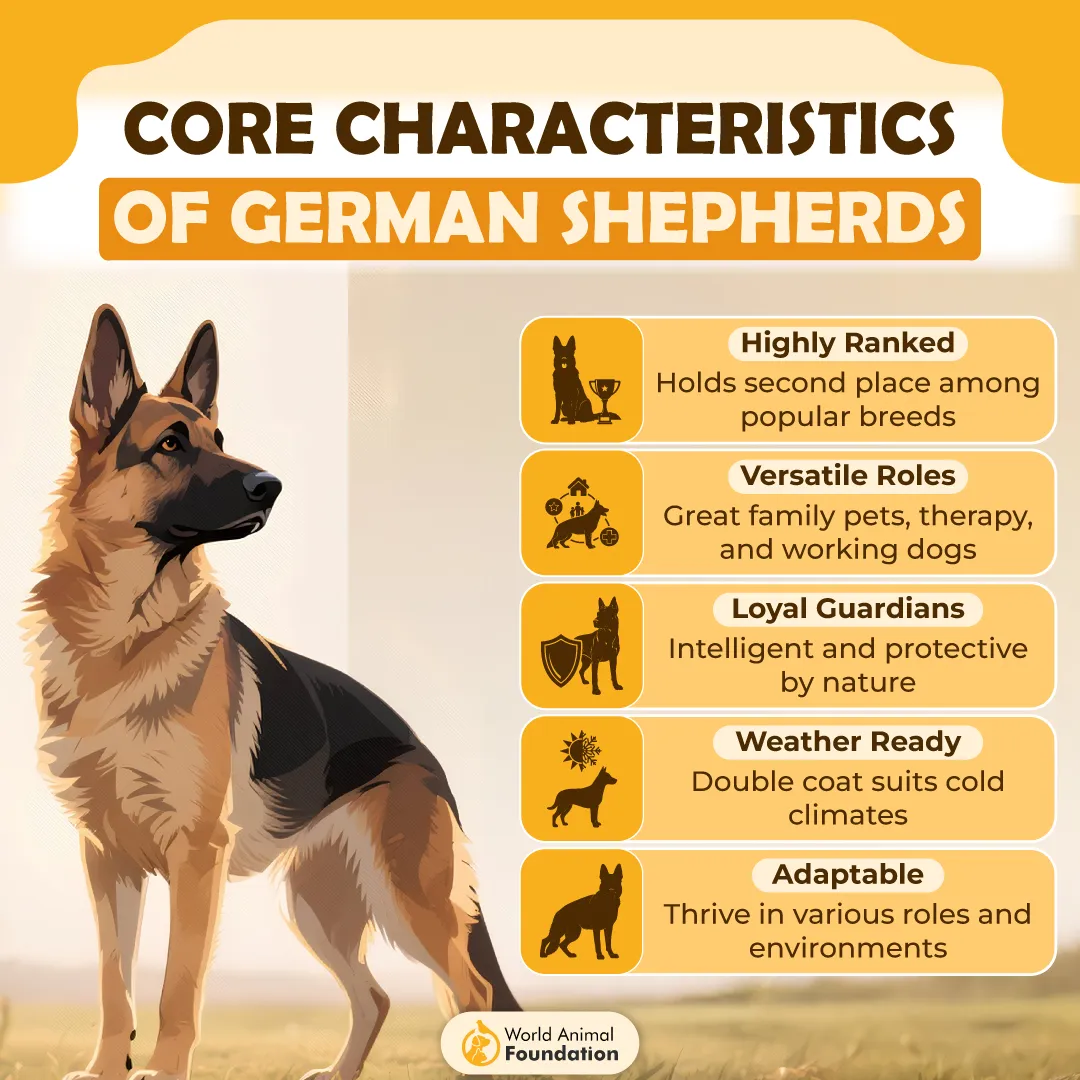
Their behavior around children is generally gentle when properly trained and socialized, though their protective instinct can make them more reserved around unfamiliar people. Clear structure in training and supervised interaction with kids helps maintain a stable and predictable temperament in daily life.
Exercise Needs & Energy Level
German Shepherd Energy & Daily Activity
German Shepherds run on a steady, high-energy rhythm that needs around one to two hours of daily physical and mental activity to stay balanced. When that outlet is missing, their sharp awareness and drive can turn into frustration, which often shows through restless or unwanted behavior.
Their energy works best when structured through walks, controlled play in secure spaces, and activities that challenge both body and focus. Puppies especially benefit from shorter, frequent sessions rather than long bursts, since their endurance builds gradually over time.
Siberian Husky Energy Drive
Siberian Huskies operate on a stronger endurance-based energy system, often needing at least two hours of vigorous activity every day to stay content. They were shaped as long-distance working dogs, so movement is not optional for them but part of their natural rhythm.
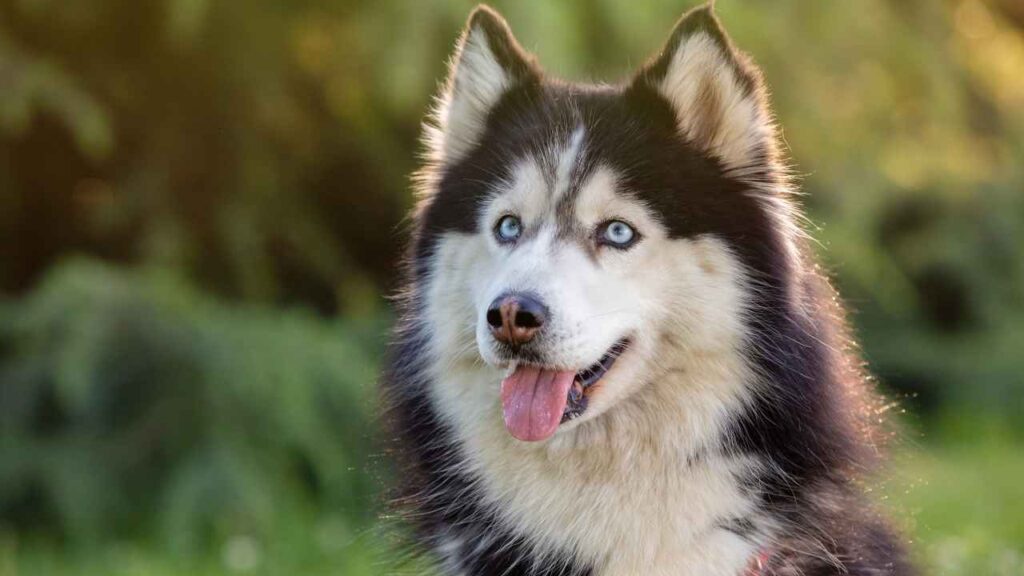
Their energy feels more constant than explosive, which is why they are known for seizing any chance to run if given space. Regular long walks, structured outdoor time, or activities like agility or rally work help keep that drive directed in a healthier direction.
Trainability & Obedience
German Shepherd Learning Style & Focus
German Shepherds respond best when training starts early and stays consistent through daily routines. Puppy socialization and obedience classes help shape a stable adult dog that understands household structure and adapts easily to different situations.
This breed stands out for its intelligence and strong working mindset, which makes structured, reward-based training highly effective. They form deep bonds with their people and usually perform best when included in family life rather than being left outside routines or isolation.
Siberian Husky Training Approach & Drive
Siberian Huskies also benefit from early social exposure and basic obedience work, though their independent thinking often requires more patience during training. Keeping sessions engaging and varied helps maintain attention, especially since repetition alone rarely holds their interest for long.
Their strongest challenge in training comes from instinctive movement drive, especially the urge to run and explore open space. Because of this, leash control and secure fencing are essential, as their focus can shift quickly toward movement and distance rather than commands.
Grooming Needs & Shedding
German Shepherd Coat Care & Shedding
German Shepherds have a medium-length double coat made of a dense outer layer and a softer undercoat underneath, giving them a balanced mix of protection and insulation. Regular brushing every few days is usually enough to manage loose hair and keep the coat in good shape without much effort.
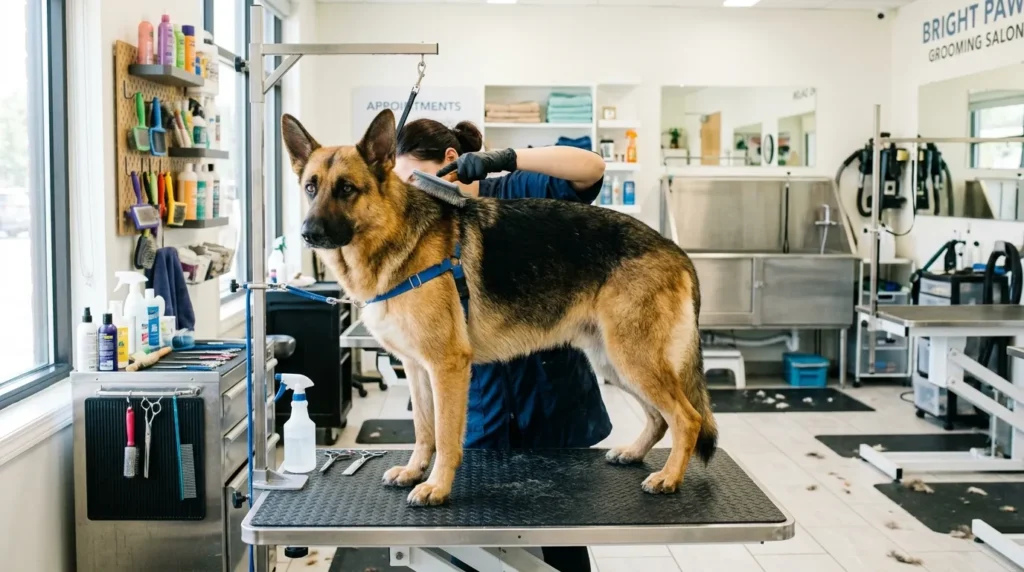
Shedding becomes more noticeable during seasonal coat blows, when the undercoat loosens heavily and needs more frequent brushing to keep it under control around the home. Occasional bathing is enough for this breed, while nail care remains important to prevent discomfort and maintain healthy movement over time.
Siberian Husky Coat Maintenance
Siberian Huskies have a naturally self-cleaning coat that doesn’t require frequent bathing, which makes routine upkeep feel lighter compared to many other double-coated breeds. A weekly brushing routine helps maintain coat health while keeping loose hair from building up too quickly.
Their dense double coat sheds heavily during seasonal blowouts, when the undercoat must be thoroughly removed using proper brushing tools to prevent matting and overheating. Nail trimming and basic grooming attention remain important, especially for active dogs that spend time outdoors or participate in shows.
Guarding Instincts & Alertness
German Shepherd Protective Awareness
German Shepherds show a strong, instinct-driven awareness of their surroundings that comes from generations of herding and guarding livestock under constant human direction. That early working role shaped a dog that naturally reads movement, space, and potential threat without needing much encouragement.
This makes them naturally inclined to protect their home and the people they bond with. In everyday situations, they often position themselves between their family and anything unfamiliar, reacting quickly when they sense something out of place.
Siberian Husky Social Nature
Siberian Huskies take a very different approach to people and their environment, showing openness and curiosity rather than suspicion. Even with their wolf-like appearance, their behavior tends to stay friendly and social in most situations, including encounters with strangers.
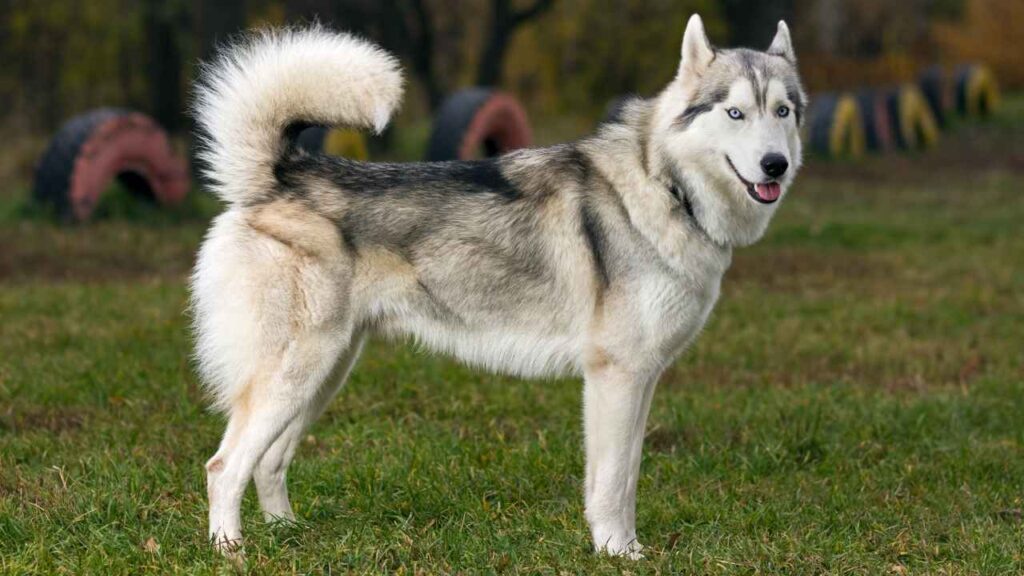
Because of this temperament, they are not reliable as guard dogs, since their first reaction is often engagement rather than alerting or defensive behavior. Their personality leans more toward companionship and interaction than territorial awareness.
Health & Lifespan
German Shepherd Health & Longevity
German Shepherds typically live around 12 to 14 years and are generally considered a strong, working breed when responsibly bred and well cared for. Their physical strength and drive can sometimes mask underlying issues, so health screening plays an important role in maintaining long-term soundness.
Common concerns in this large dog include hip and elbow dysplasia, degenerative myelopathy, and the risk of bloat, which can become sudden and serious if not recognized early. Responsible breeding and awareness of early warning signs make a noticeable difference in long-term well-being.
Siberian Husky Health & Lifespan
The life expectancy of Siberian Huskies is around 12 to 14 years, and they often remain active well into their senior years, showing steady endurance compared to many similar-sized breeds. Their background as sled dogs has contributed to a naturally efficient metabolism and generally healthy body condition when properly managed.
While they can face issues like arthritis, cancer, and some eye or neurological conditions, the overall incidence of major hereditary problems is relatively low. Maintaining a lean body weight and a protein-focused diet supports their long-term energy levels and physical stability.
German Shepherd vs. Siberian Husky: Which Loyal Dog Fits Your Lifestyle Best?
German Shepherds usually click with people who want a dog that feels tuned in, serious about learning, and ready to respond when something is asked. There is a strong “working partner” feel to them, where daily life tends to run smoother when structure and consistency are part of the home.
Siberian Huskies bring a completely different rhythm. They are more self-driven, more curious, and far less interested in constant instruction, which can feel exciting at first but also challenging if you expect easy compliance or tight control.
If you want honesty, the German Shepherd is the safer pick for someone who wants reliability, protection, and a dog that actually listens when it matters. The Husky suits a person who enjoys personality over predictability, even if that means dealing with stubborn decisions and a mind that sometimes has its own agenda.
Conclusion
The biggest difference rarely appears in appearance alone. It shows up once everyday routines begin shaping the relationship. One companion watches the world carefully, stays mentally engaged, and feels most comfortable with structure and purpose woven into daily life. The other brings movement, independence, and a lighter social rhythm that feels more spontaneous among active dog breeds.
Neither personality is easier in every situation because both were built for different environments long before modern homes existed. Selecting between a husky or a German Shepherd often depends on patience, activity level, and how much physical and mental stimulation fits naturally into daily life. The right match can become a dependable family dog over time.
