




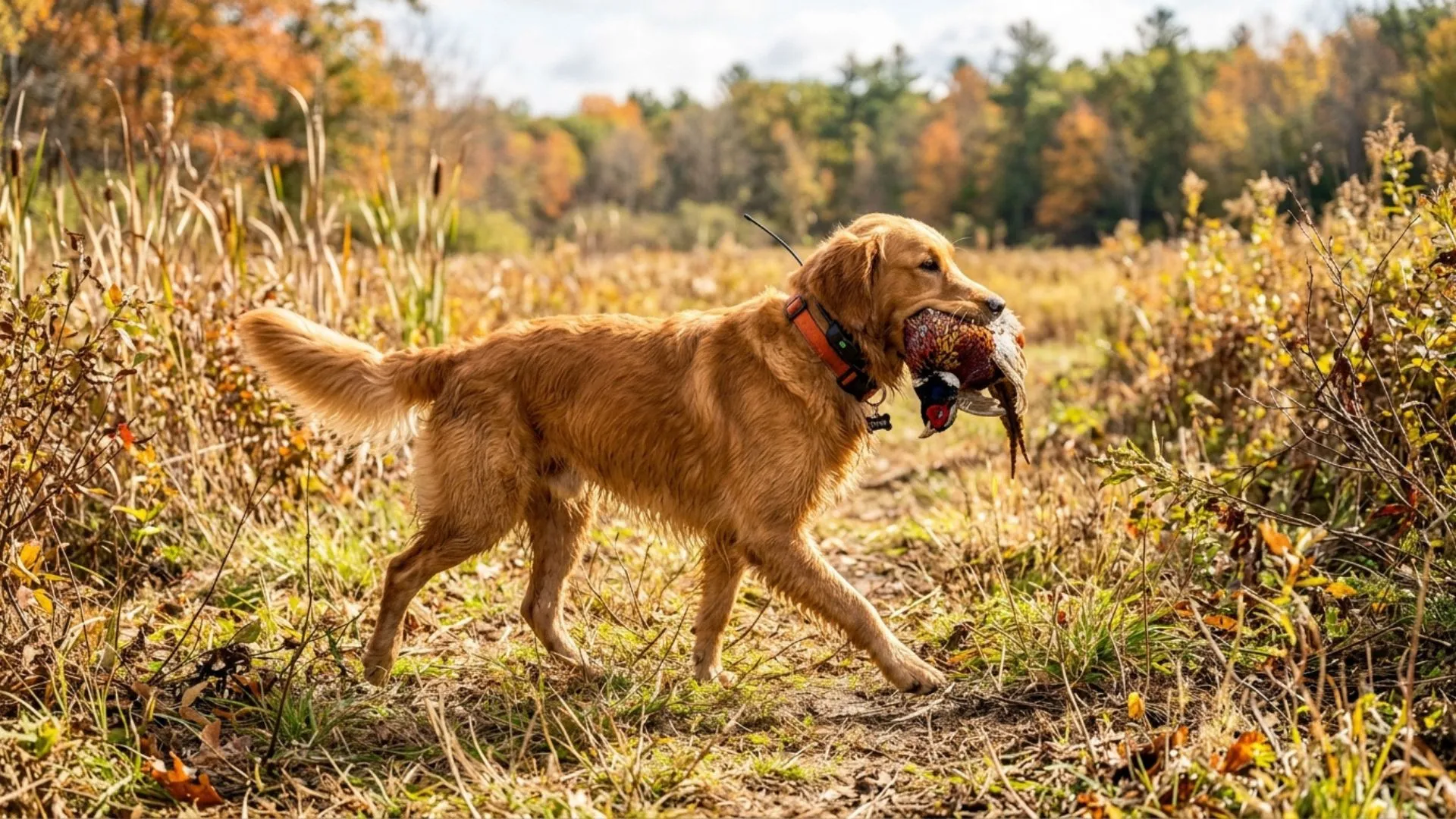
Every hunter knows that feeling.
You made the shot. You watched the animal go down.
And then… nothing.
The trail goes cold. The blood trail disappears. And you are standing in dense cover, wondering where on earth that deer went.
A good tracking dog changes everything in this scenario.
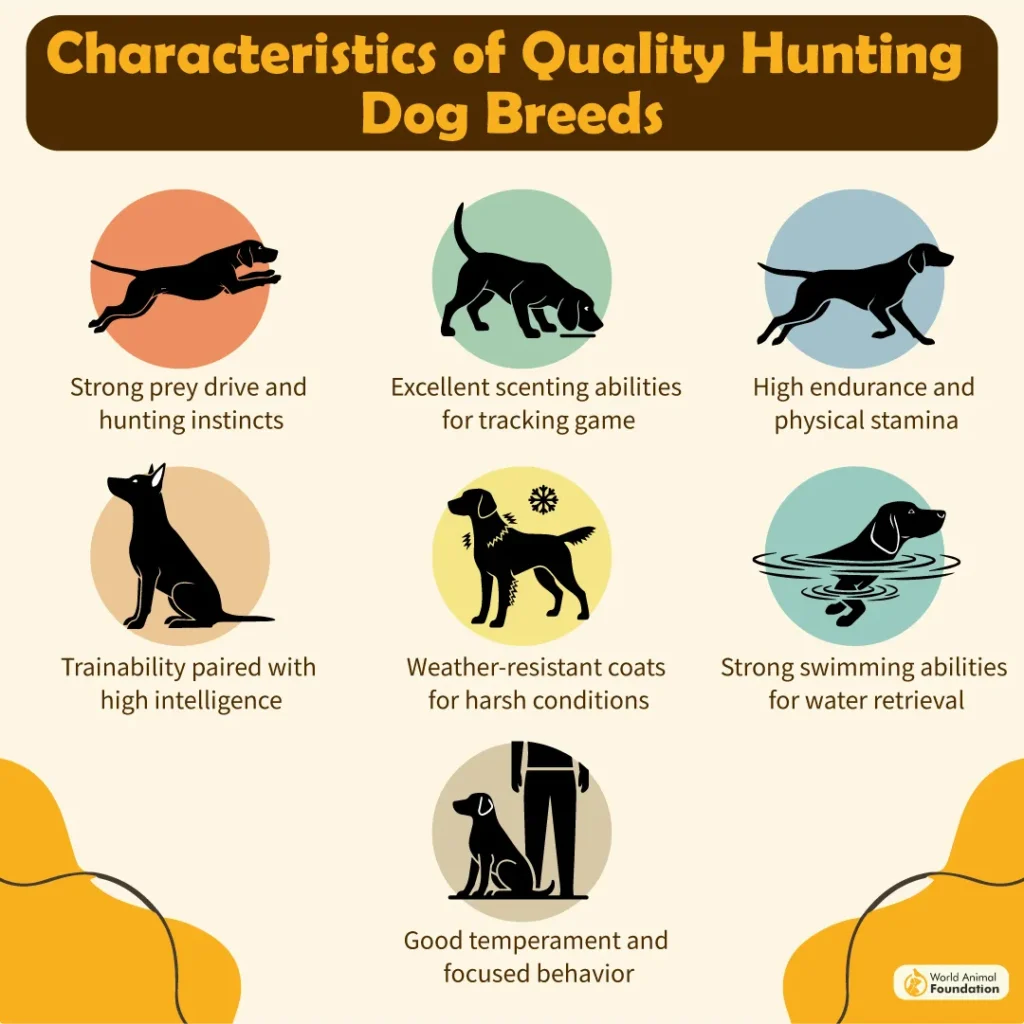
A dog with a powerful nose, a strong hunting drive, and the stamina to work rough terrain for hours is not just a nice bonus on a hunt.
It is a complete game-changer.
The best dog breeds for tracking and retrieving wildlife can find wounded game that no human would ever locate alone.
They follow scent trails through mud, water, thick brush, and difficult ground without losing focus.
These seven breeds are the best of the best for tracking and retrieving in the field.
Fun Fact!
A study by Whaley et al. found that blood scent goes through chemical stages within the first 48 hours after being left on the ground.
Fresh blood smells completely different to a dog than blood that is 32 to 40 hours old.
And according to the American Bloodhound Club, trained Bloodhounds are tested following trails that are up to 24 to 36 hours old in real certification tests.
So when your dog finds that bow shot deer you thought was lost forever…
That is not luck. That is an extraordinary nose doing what it was meant to do.
Best Dog Breeds for Tracking and Retrieving Wildlife
1. Labrador Retriever
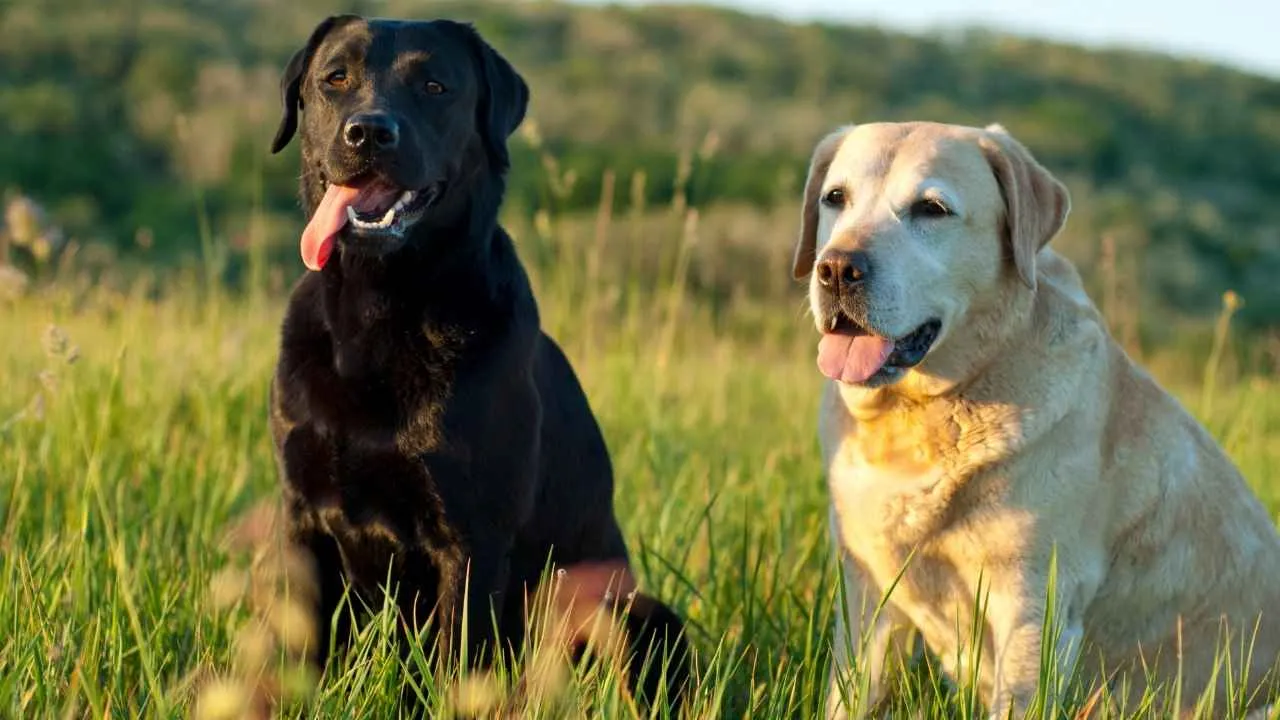
Labrador Retrievers were originally bred specifically to retrieve waterfowl from icy cold waters in Newfoundland.
That job demanded a powerful nose, serious stamina, and an ABSOLUTE love for retrieving.
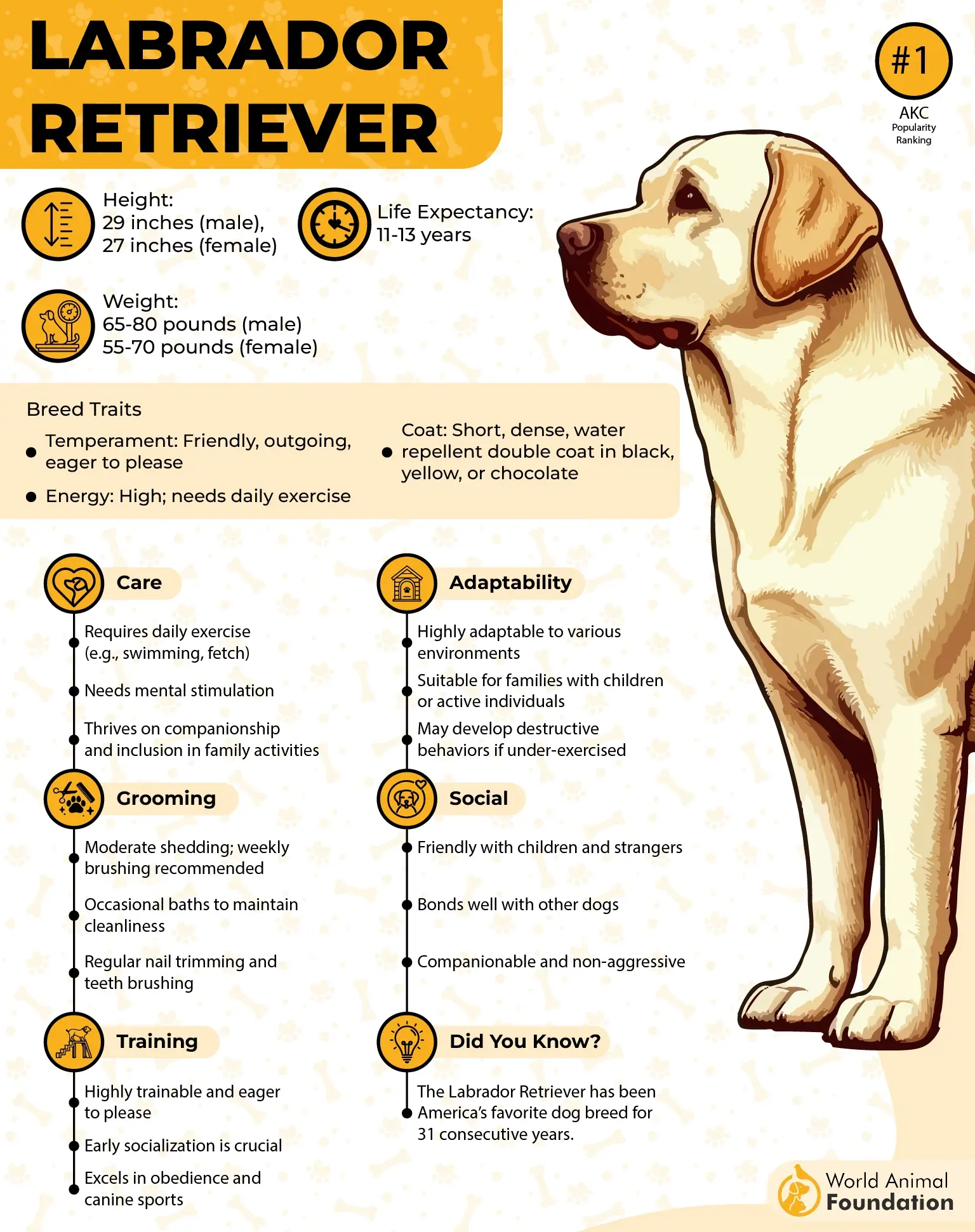
All these traits are fully intact in Labrador Retrievers today, and they display them well in the hunting field.
According to the American Kennel Club, Labrador Retrievers are highly intelligent, highly trainable, and have an extraordinary sense of smell.
They can follow trails across long distances and tough terrain.
WebMD says these are versatile dogs that can hunt birds, track wounded deer, retrieve waterfowl, and handle just about any hunting task you put in front of them.
They have a dense, water-repellent double coat that handles cold, wet conditions.
Extended hunts in rough weather… NAH, Labs don’t care.
Their eager-to-please temperament makes them a joy to train with positive reinforcement.
First-season and experienced hunters alike love working with Labs because they are so naturally responsive.
Incredible hunting partners, even better companions at home.
2. Golden Retriever
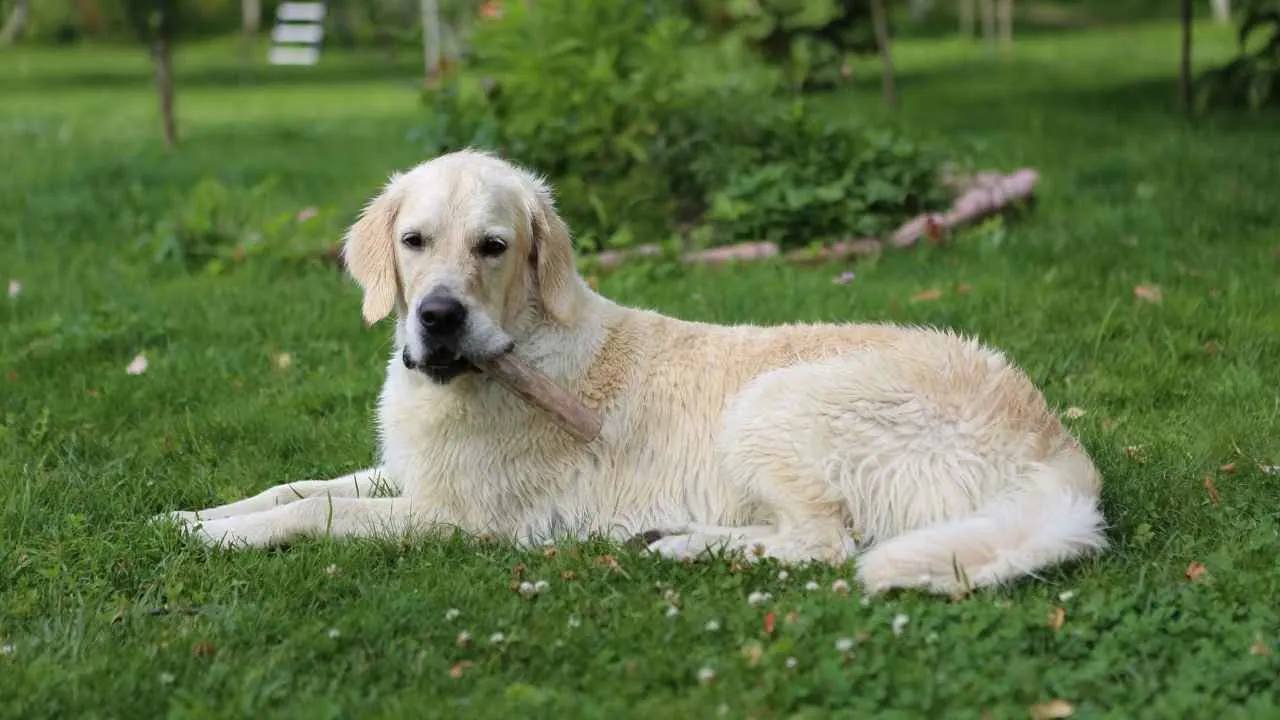
The Golden Retriever does not always get the hunting credit it deserves.
Most people think of them as family dogs.
And they are.
But they are also seriously capable bird dogs and tracking dogs that belong right alongside the best hunting companions in the dog world.
Golden Retrievers were bred in Scotland to retrieve upland birds and waterfowl across varied terrain.
Their soft mouth means they retrieve without damaging the animal.
Their nose is powerful, and their drive to find and bring back wounded game is natural.
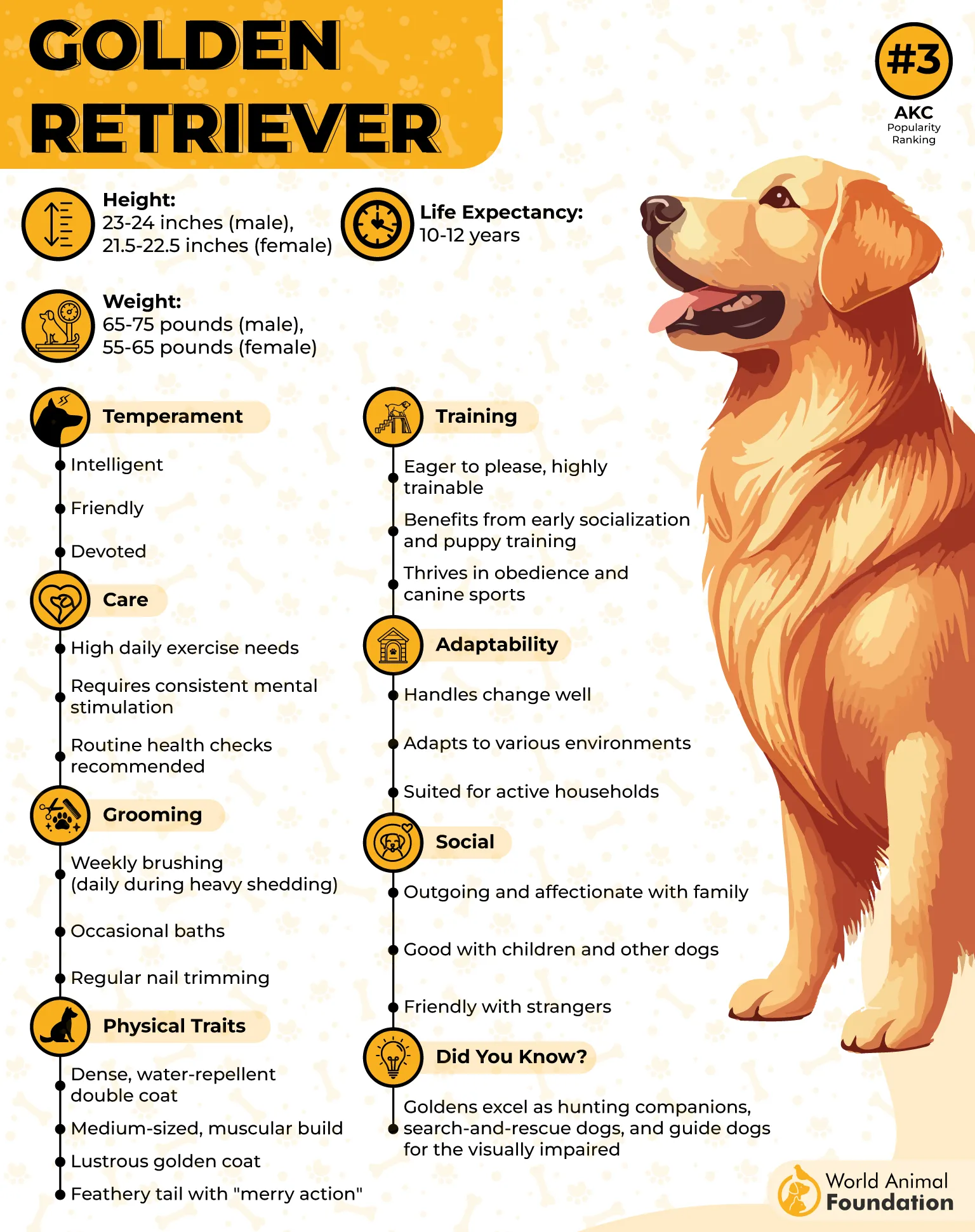
These golden fluffy dogs are highly trainable dogs that respond well to positive reinforcement.
They pick up hunting tasks fast and love working in the field with their hunter.
And YES, they are not as intense as some other hunting breeds, but they are steady, reliable, and effective.
Plus, they are Golden Retrievers. Coming home to one after a long day is its own reward.
3. German Shorthaired Pointer
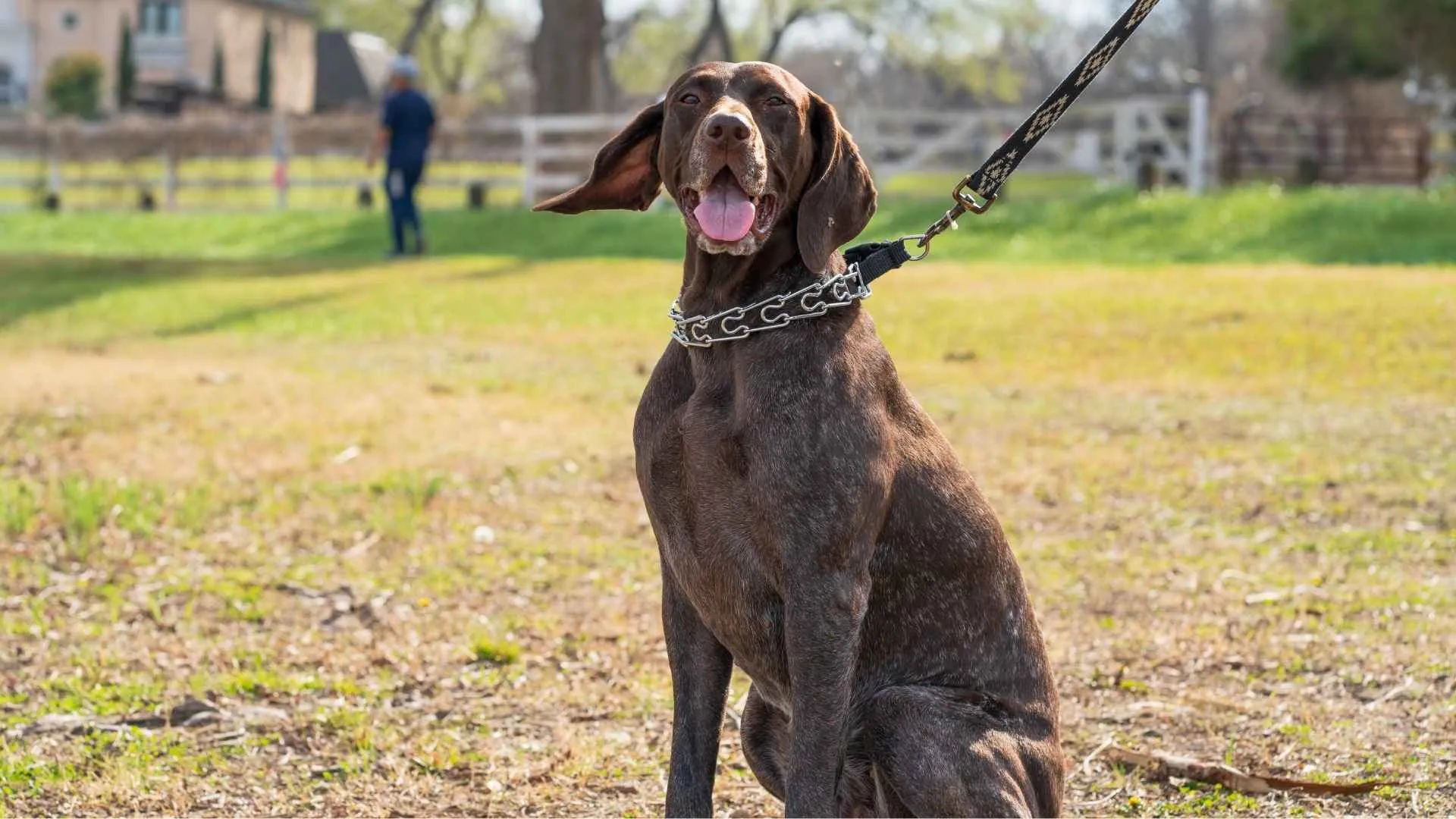
The German Shorthaired Pointer is the most highly versatile hunting dog alive today.
No exaggeration.
According to Purina, the GSP is one of the HPR breeds. Hunt, Point, Retrieve!!
These dogs can point, flush, track, and retrieve. Upland game, waterfowl, small game, wounded game, the German Shorthaired Pointer handles it all with a natural ability.
It surprises people who have never hunted with one.
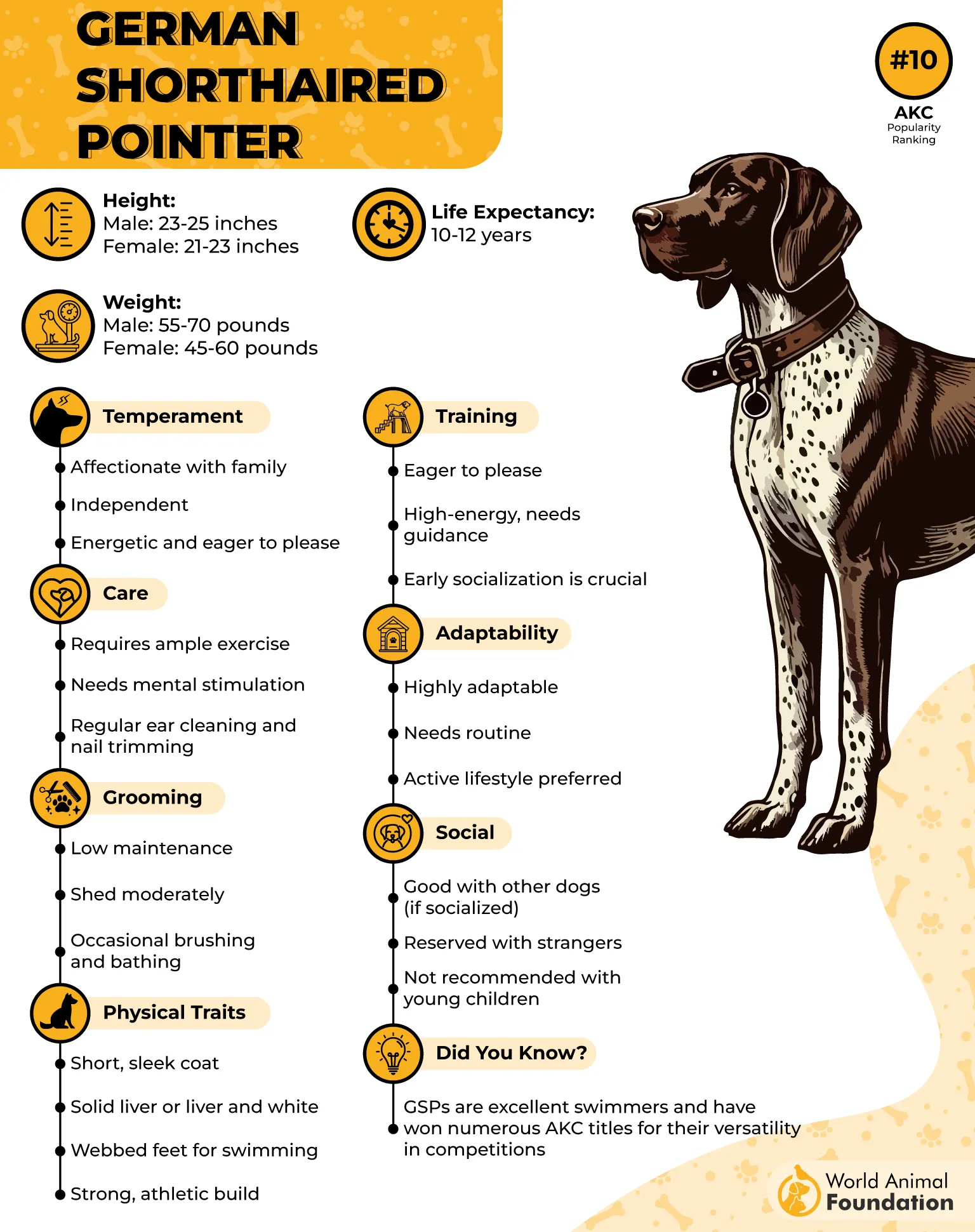
German Shorthaired Pointers were bred to be all-around hunting dogs.
Their scenting ability is ELITE!!
Their stamina for covering long distances over rough terrain is remarkable.
And their drive to find and recover wounded animals is as strong as any breed on this list.
These Pointer dogs are lean, athletic, high-energy dogs that thrive during hunting season and need regular physical activity year-round.
Free time on the couch is not really their thing. These pups want to be out working.
They are trainable and respond well to consistent training from an early age.
This dog’s ability to switch between tracking, pointing, and retrieving in a single hunt makes them genuinely one of a kind.
If you want one dog that can do everything in the field… the German Shorthaired Pointer is your answer.
4. English Springer Spaniel
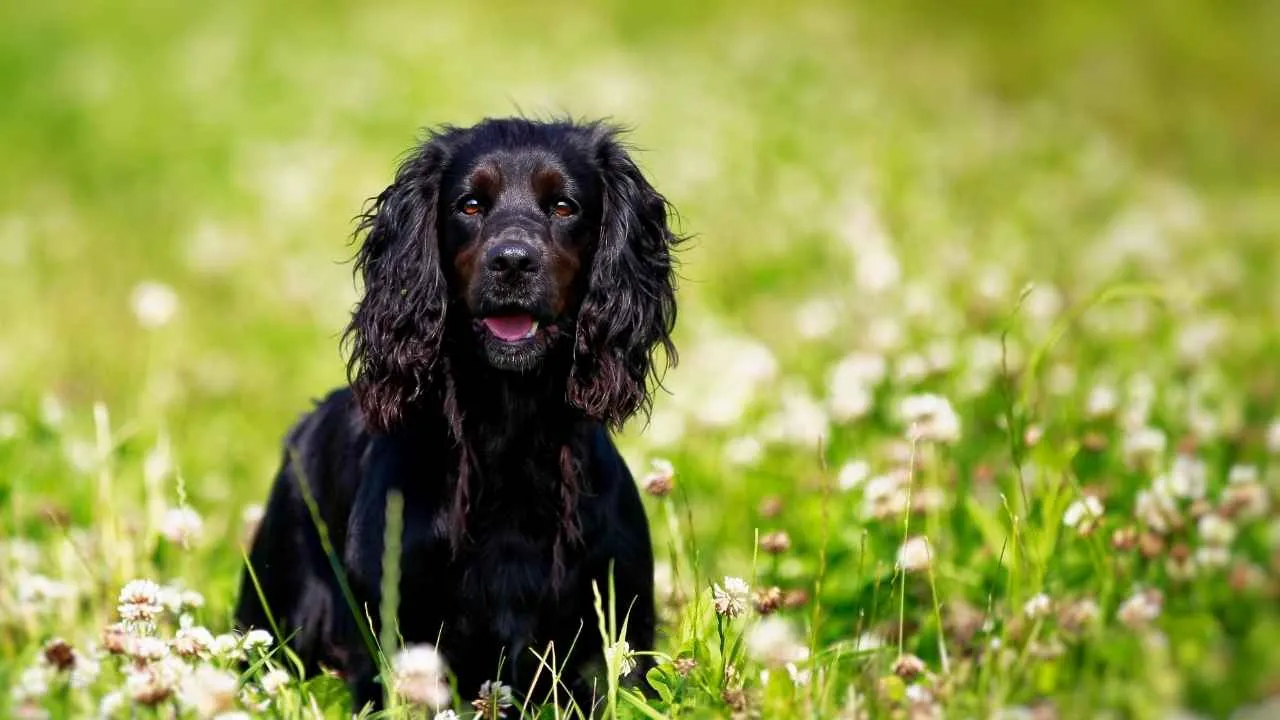
The English Springer Spaniel is built to flush birds and retrieve them once they are down.
And they are exceptional at both.
These dogs were originally bred to spring upland birds from dense cover.
That is exactly where their name comes from.
These Spaniel dog breeds are fast, fearless in tight spaces, and their noses lock onto scent particles and do not let go.
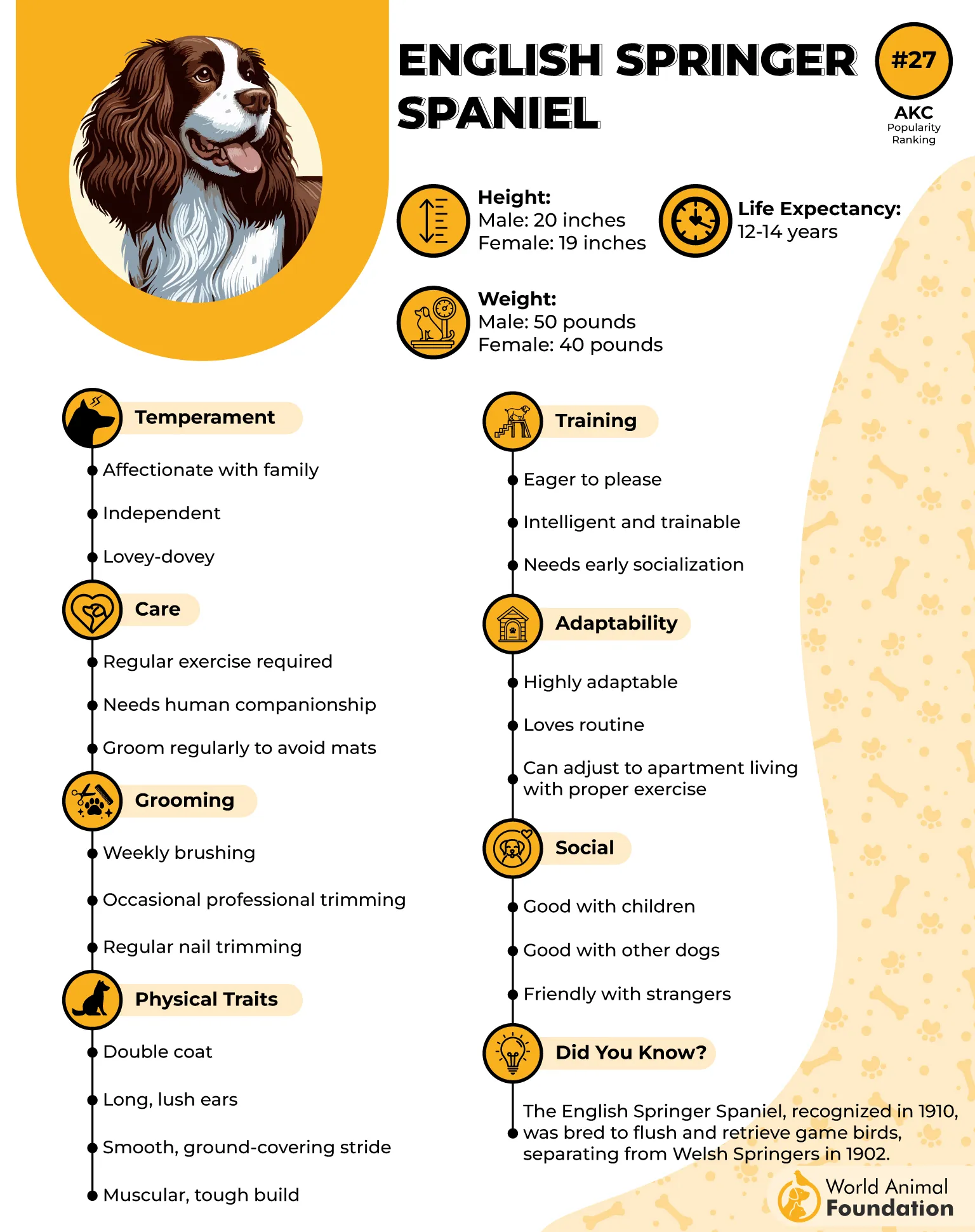
English Springer Spaniels are compact, athletic dogs with serious stamina and a natural hunting drive that shows up early.
They love working dense cover, pushing through brush, and hunting in terrains that will slow down other dogs.
Their retrieving ability is strong and natural. PetPlan mentions they “spring” on the birds, and once a bird goes down, they are on it immediately. They will track the scent trails until they find it and bring it back.
They are intelligent, trainable, and high-energy dogs.
As hunting companions go, the English Springer Spaniel is one of the most fun dogs you will ever work with in the field.
5. Bloodhound
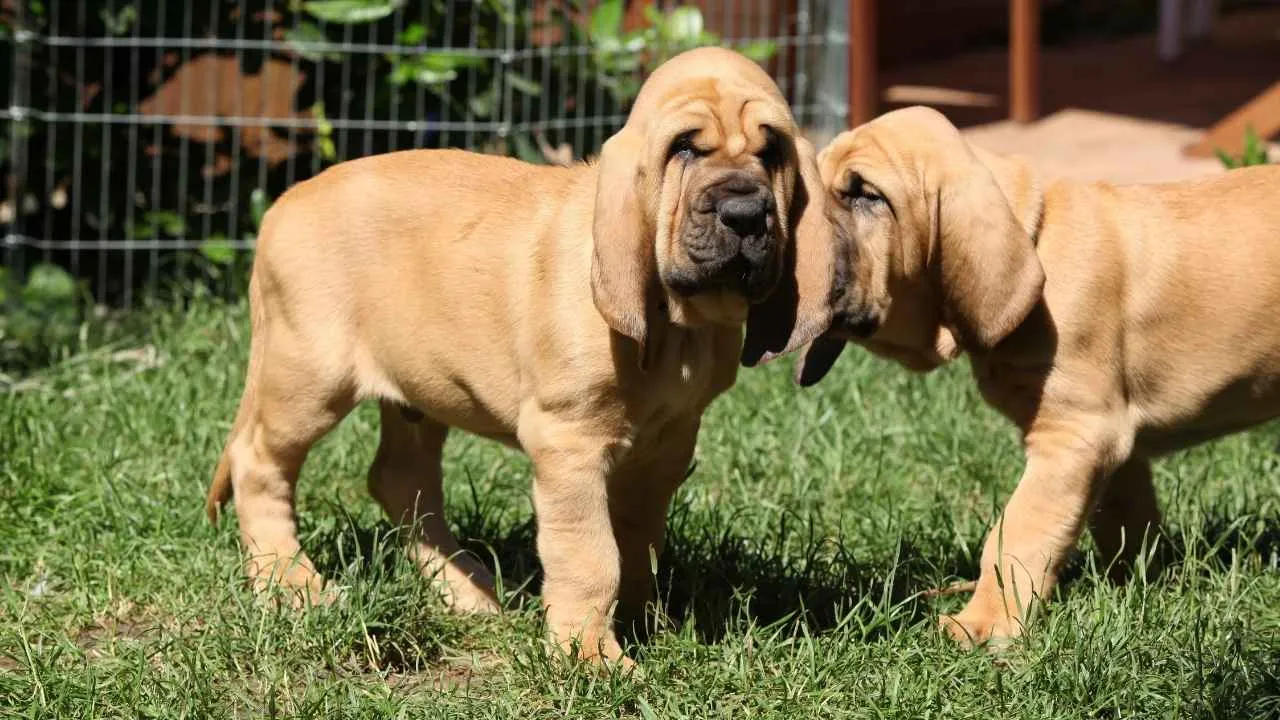
When it comes to hunting big game and finding wounded game that every other dog has lost…
Call the Bloodhound.
The police and law enforcement sure do.
These dogs have the most powerful noses. Their scenting ability is so exceptional that they can follow a blood trail that is days old across miles of challenging terrain.
Finding wounded deer that seem completely lost is what these tracking dogs were born to do, decades ago.
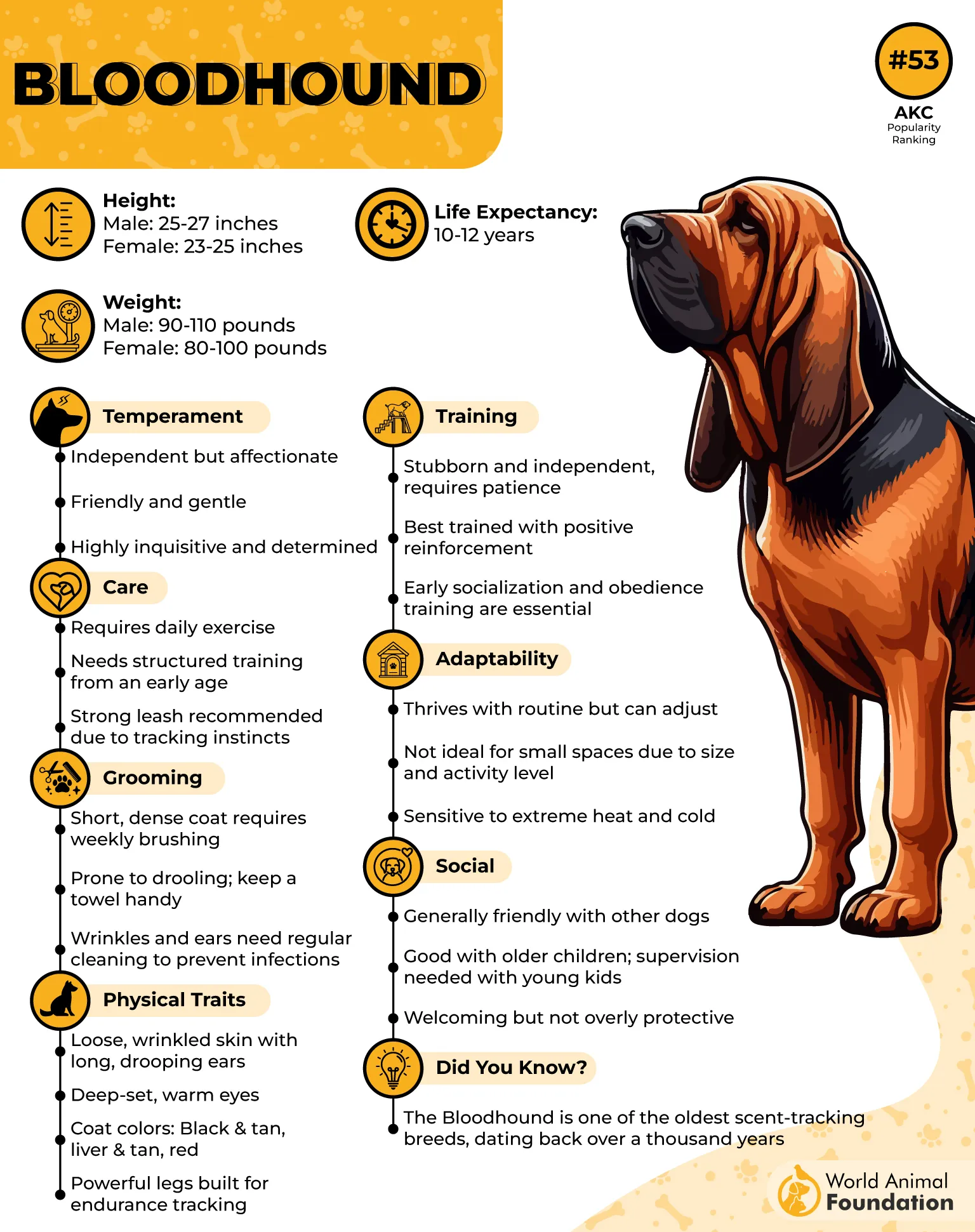
Bloodhounds were originally bred for tracking big game, and their ability to follow scent trails over long distances is unmatched.
Their long ears sweep scent particles toward their noses, as noted by PBS. Every physical feature they have is to make them the best trackers.
They are slower and more deliberate than some other hunting dogs.
But what they lack in speed, they more than make up for in accuracy.
A Bloodhound on a blood tracking trail does not give up. EVER.
They are calm, patient, and deeply focused when they are working. Off the trail, they are gentle and affectionate dogs that are great companions outside of hunting season, too.
6. English Pointer
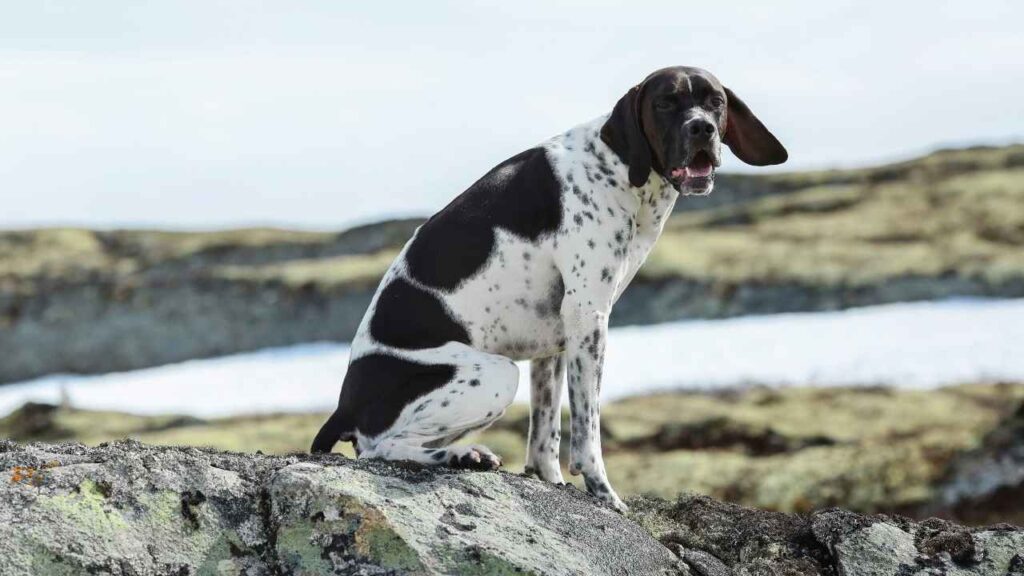
The English Pointer is one of the oldest and most respected bird dogs in history.
These dogs have been locating upland game and recovering wounded game for a long time now. Their natural ability in the field is still as sharp as ever.
English Pointers have an exceptional nose and a strong drive that makes them pretty outstanding at locating upland birds and trailing wounded game.
When they track scents and hit one, they freeze and point by lifting a foreleg, so the hunter is ready.
How cool is that?
These lean dogs are athletic and can cover long distances at speed. Extended hunts across open land are where English Pointers shine.
They are high-energy dogs that need regular exercise, proper training, and physical stimulation to stay happy year-round.
7. Chesapeake Bay Retriever
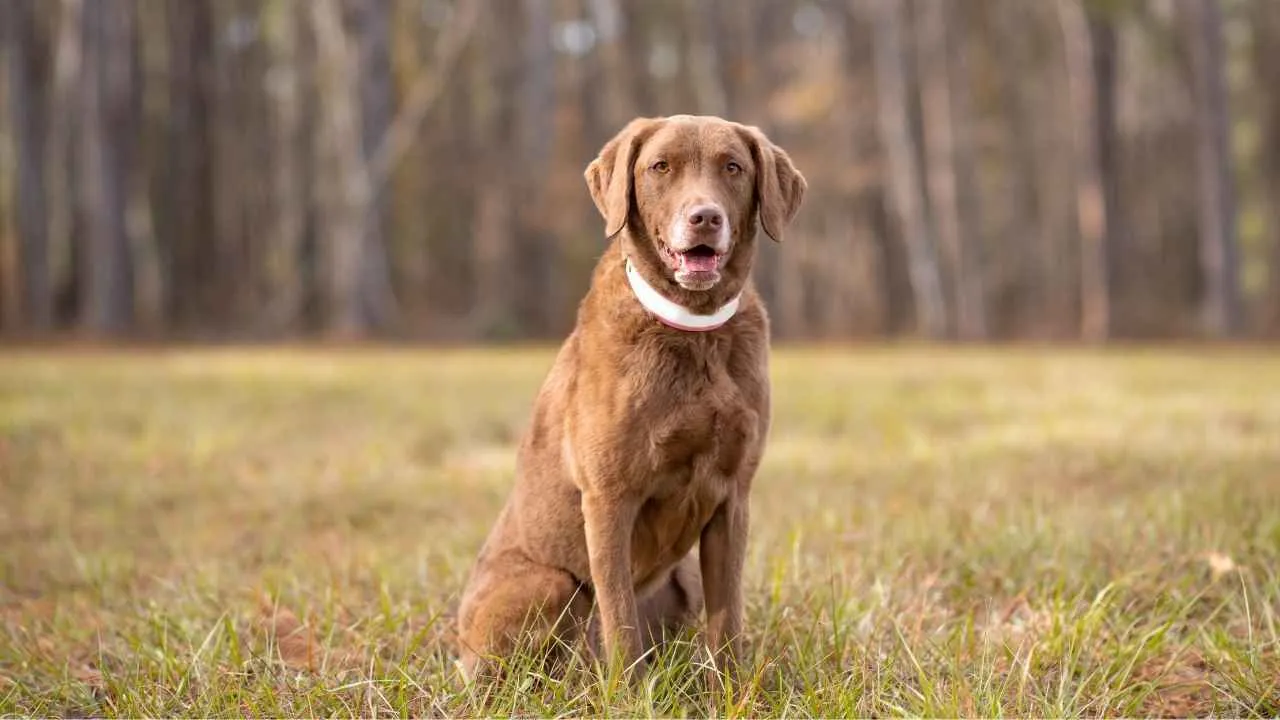
The Chesapeake Bay Retriever is born for one of the toughest retrieving jobs.
Cold water, rough conditions, heavy loads, long distances.
And they handle all of that without complaint.
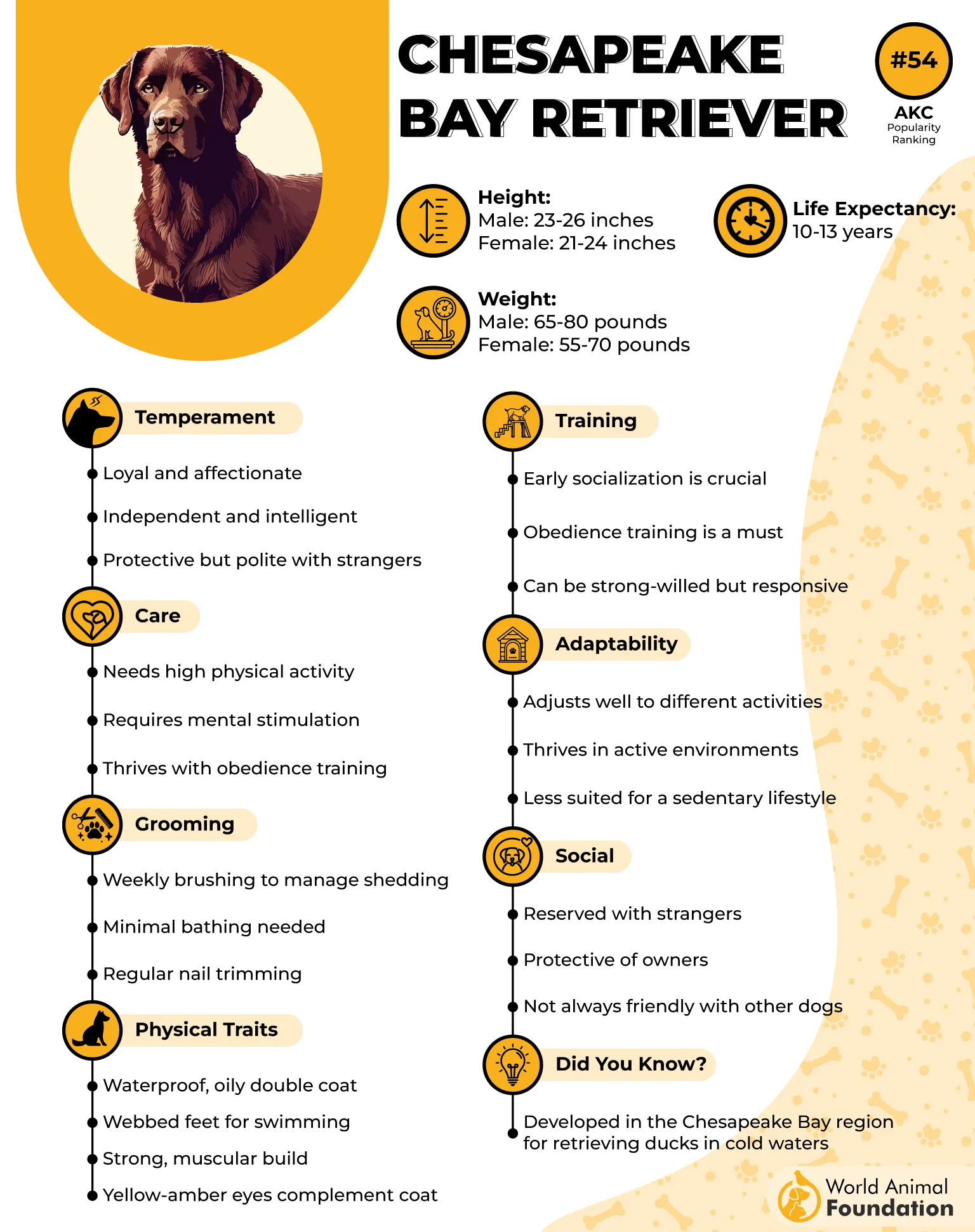
Chesapeake Bay Retrievers were bred in Maryland and Virginia to retrieve waterfowl from the cold, rough water of Chesapeake Bay.
Their thick, oily, waterproof coats insulate them in freezing conditions where other retrievers would struggle.
These are powerful and determined dogs with a strong hunting drive and stamina. They are not as openly eager to please as a Labrador, but they are focused and effective at what they do.
These water dogs handle rough terrain, dense cover, and cold water.
They need consistent training and an experienced hunter who understands their independent nature.
But once they form that bond, a Chesapeake Bay Retriever will become a reliable and capable hunting dog. They are good with other pets, as well.
Conclusion
A great hunting and tracking dog makes the hunt easier and better.
That’s what the best dog breeds for tracking and retrieving wildlife do.
They bring something to the field that no gear ever could.
A powerful nose, a relentless drive, a bond with their hunter.
But these best breeds prove that when you find the right hunting partner,
You will never have to leave the wounded animals and game behind.
