




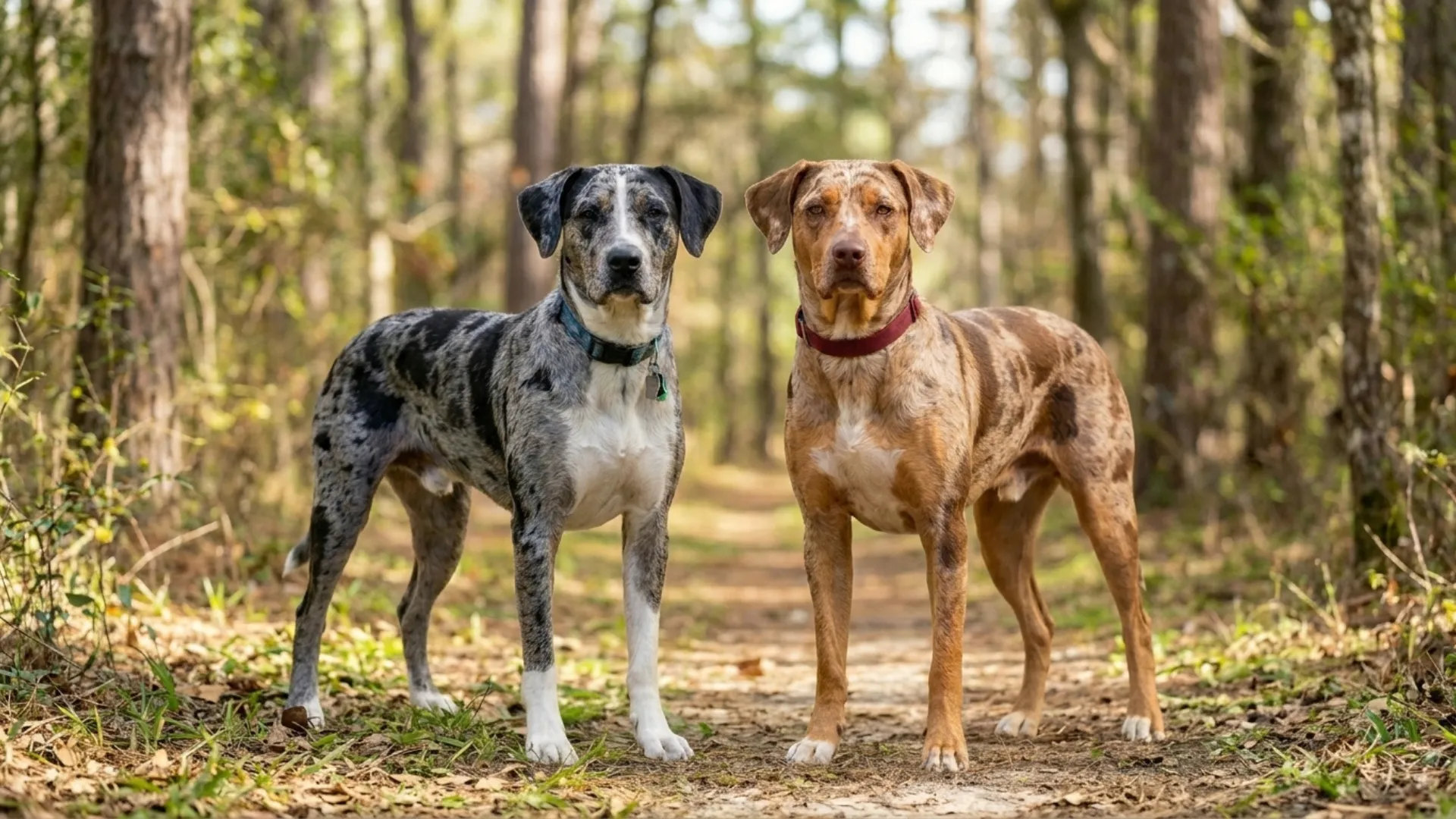
Ever seen a dog that looks like it was painted by nature itself… and thought, “Wait… is that real?”
Because here’s the truth.
Not all coats are just “brown, black, or white.”
Some dogs? They look like living artwork. Swirls. Splashes. Marble patterns. Spots that make no sense… but somehow look perfect.
And that’s where things get interesting.
Most people think unique dog colors are just rare accidents. A genetic quirk. A lucky twist of fur.
But reality? It’s far more fascinating… and far more intentional than you’d expect.
These patterns are coded. Hidden in DNA. Passed down like secrets through generations of purebred lines and unexpected mixes.
And once you start noticing them… you can’t unsee them.
Merle. Brindle. Piebald. Phantom markings. Coats that shift in light… and coats that almost seem to move when the dog runs.
It is not just about looks.
It is identity.
It is history written in fur.
So, if you think you’ve seen every kind of dog out there… think again.
Because what you’re about to see next?
Is a lineup of the top dog breeds with the most unique, jaw-dropping color patterns and coats.
And trust me…
Number one might completely change how you see dogs forever.
Top Dog Breeds with Unique Color Patterns and Coats
1. Great Dane
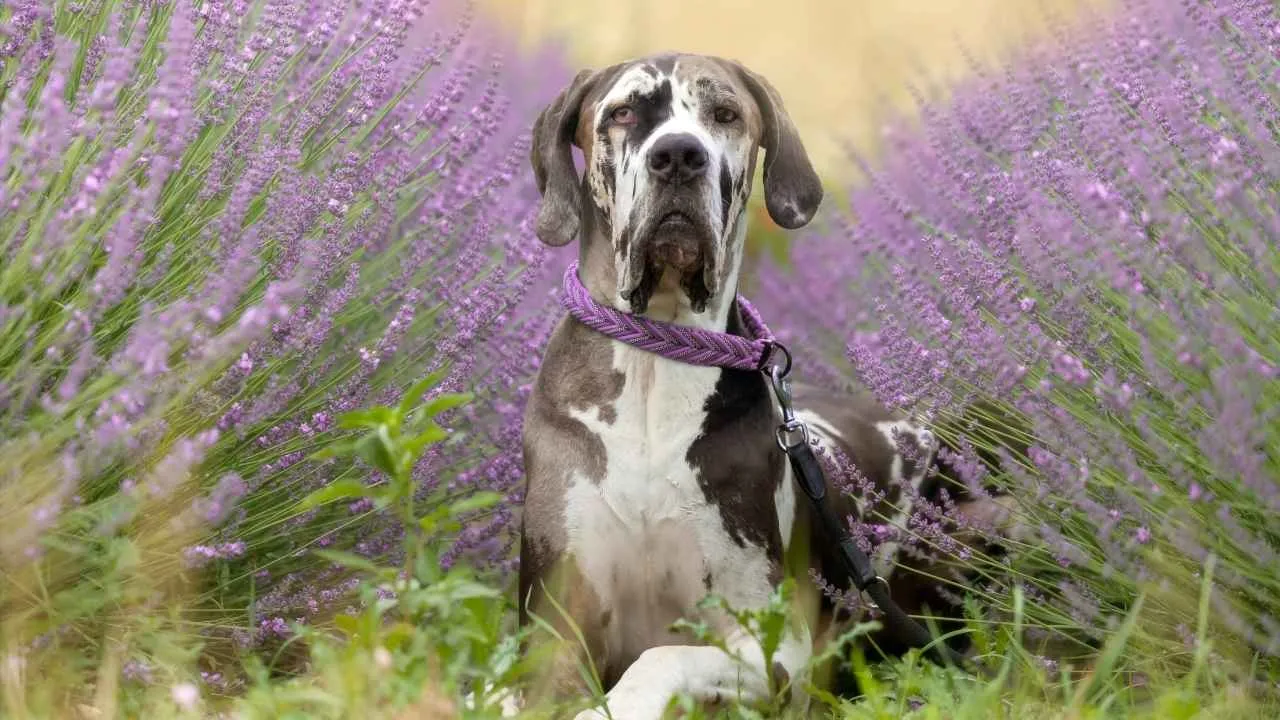
The Great Dane stands out in any lineup of dogs with striking coat patterns, especially because of its famous harlequin coloring. The base coat is pure white, scattered with irregular black patches that never repeat in the same way twice.
Each dog looks like a completely different design, almost as if nature repainted the same canvas over and over with new artwork every time.
Beyond harlequin, this breed can also appear in mantle, brindle, blue, and merle variations, each bringing its own visual impact.
The mantle pattern, for example, creates a clean black “blanket” effect with white markings on the chest, face, and paws, giving a sharp, structured look compared to the more scattered harlequin style.
In everyday environments, these patchwork patterns of coat make the breed instantly noticeable in parks or streets, often drawing attention before anything else. Even from a distance, the contrast and symmetry of its fur stand out clearly against natural backgrounds.
What adds even more interest is how the coat changes perception depending on light and movement—patches and markings can appear sharper or softer as the dog moves, making the pattern feel almost dynamic.
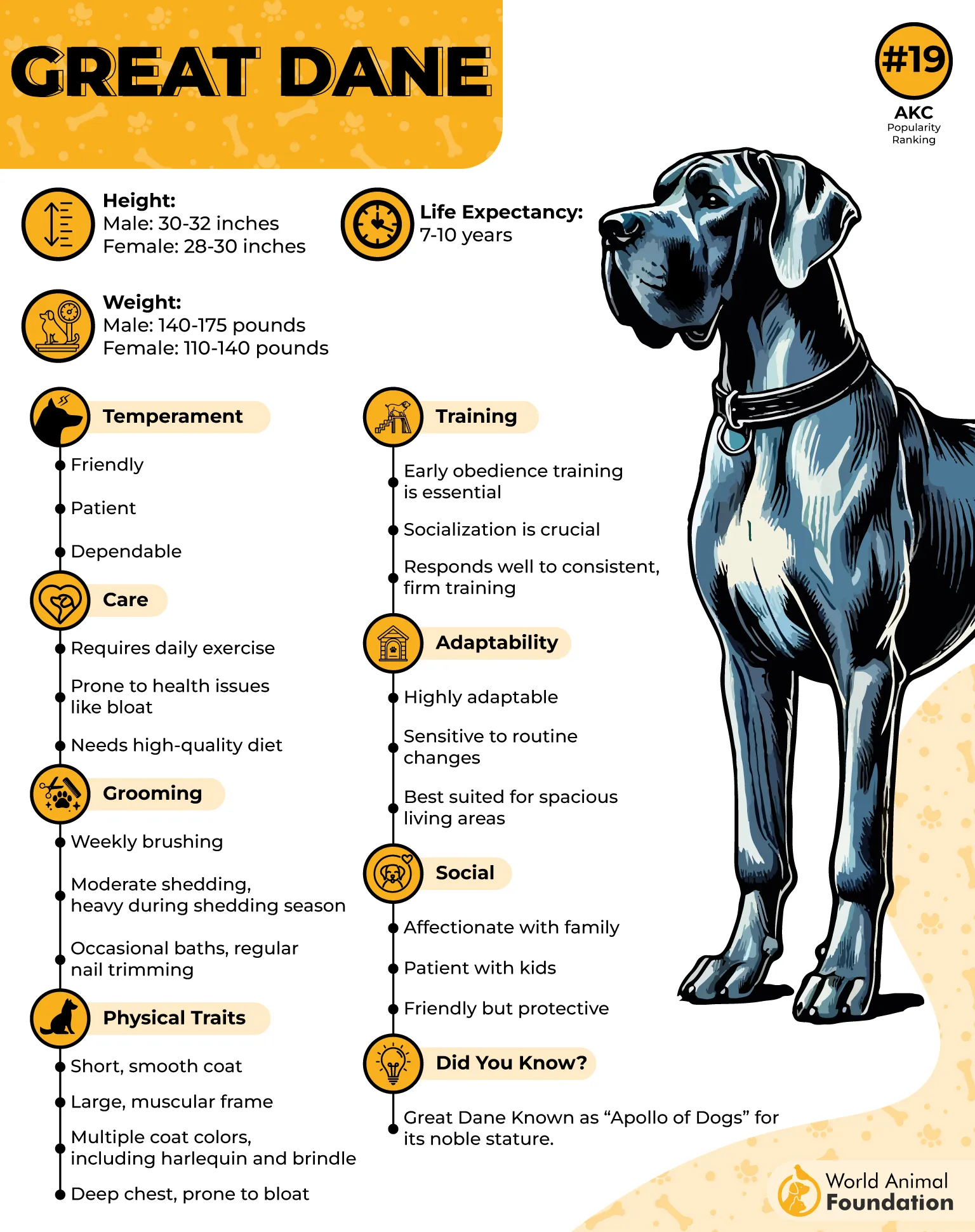
The Great Dane’s short, thick coat typically requires weekly brushing, with more attention needed during heavy shedding seasons in spring and fall, as noted by Britannica.
Among dogs known for unique coats, this breed remains one of the most visually recognizable and consistently eye-catching examples.
2. Australian Shepherd
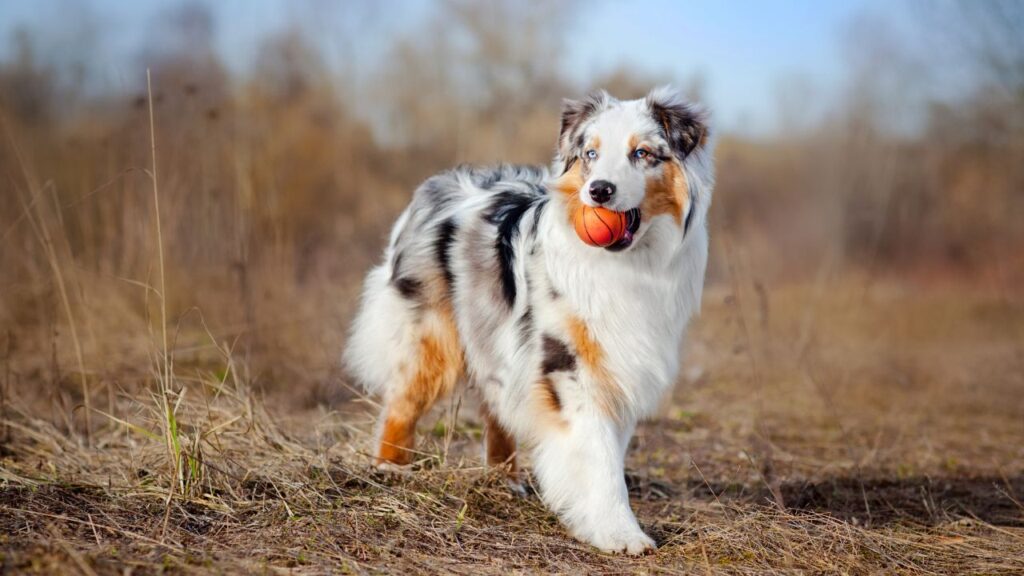
Australian Shepherds immediately catch attention in any list of visually striking dogs because of their constantly shifting coat colors and bright, expressive eyes.
It is one of the most colorful dog breeds, which comes in bold combinations like black, red, blue merle, and red merle, where swirls, speckles, and marbled patches blend together in unpredictable ways.
No two coats look the same, which makes each dog feel like a moving pattern rather than a fixed design. Some also show rare variations, including lighter golden tones that resemble shades seen in retriever-type coats, adding even more diversity within the breed.
In everyday settings, these color patterns become especially noticeable when the dog is active, as the movement highlights the contrast between patches and streaks in the coat.
The merle pattern, in particular, can create a shifting visual effect as light hits different parts of the fur, making the coat appear almost animated during play or work.
A fascinating detail linked to this breed is its tendency toward heterochromia, where one or both eyes can show different shades of blue, amber, or brown. This eye variation often pairs with the coat in unexpected combinations, giving each dog a highly individual appearance.
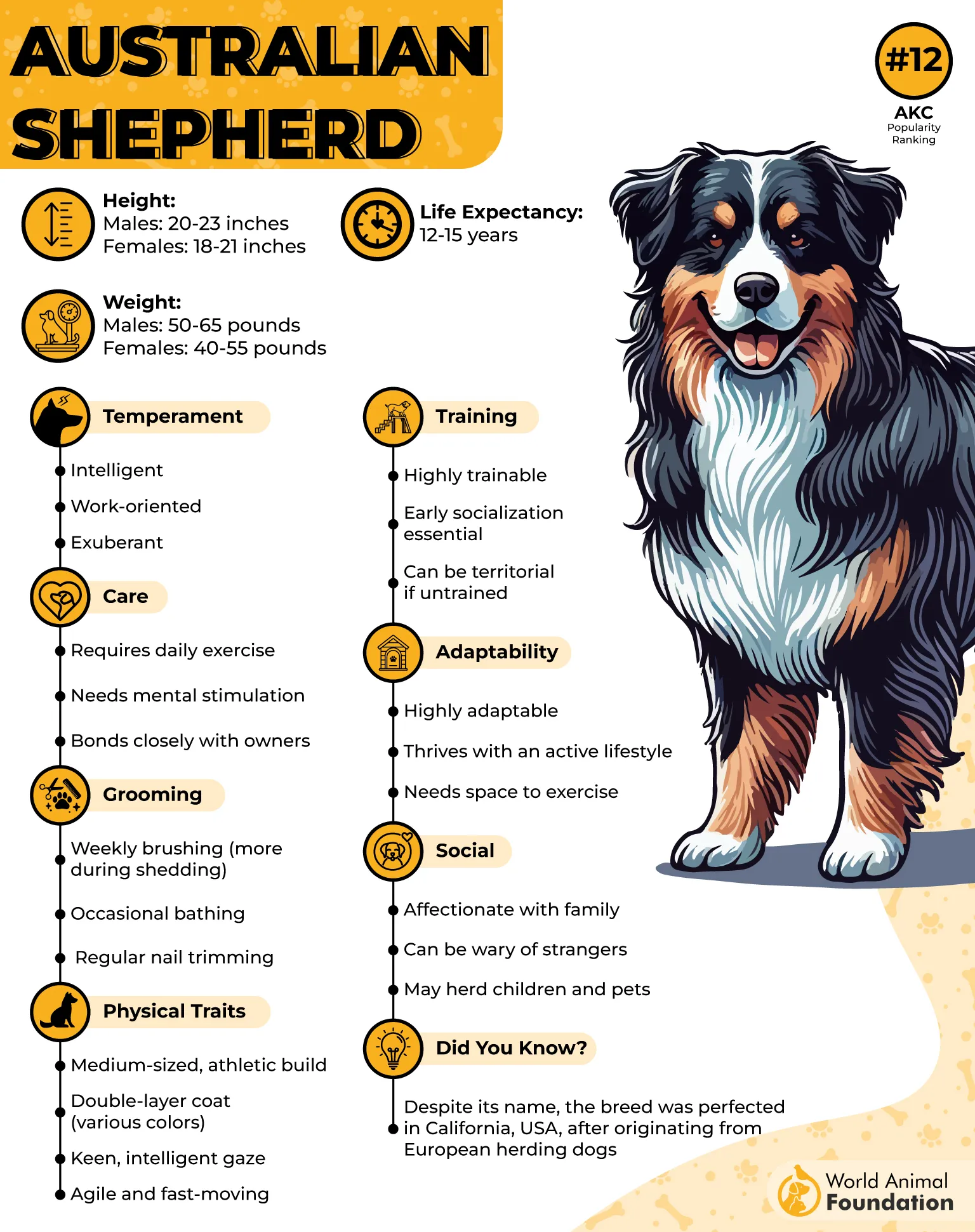
The Australian Shepherd’s double-layer coat requires regular care, with weekly brushing to keep it smooth and additional attention during shedding season using an undercoat rake and wire brush.
Their intelligent expressions and energetic presence, combined with these unpredictable color blends, make them one of the most visually dynamic breeds seen in herding and companion environments.
🎧 Dogcast
Episode 37 — Why Dogs Stay Close without Touching
If you don’t hear sound, tap the button above to enable audio.
3. Catahoula Leopard Dog
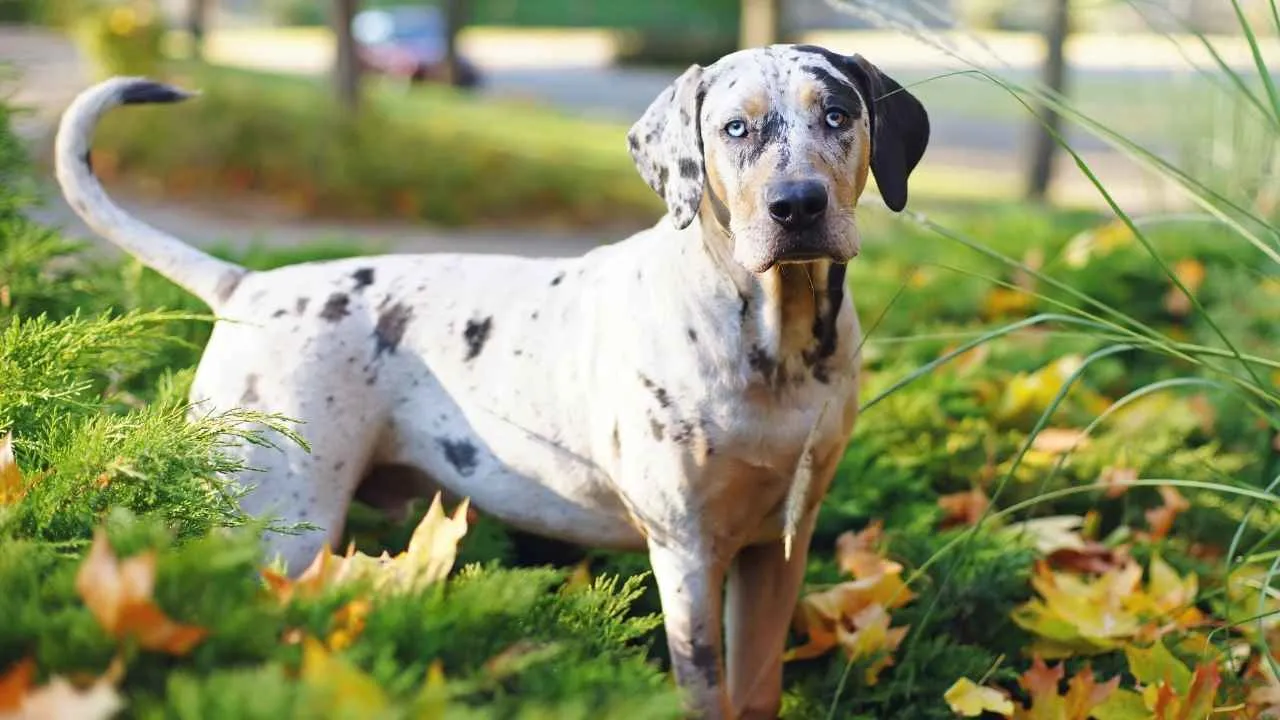
The Catahoula Leopard Dog instantly catches the eye with its unusual coat patterns because its fur rarely follows a predictable design.
Its short coat often displays a mix of spots, patches, and swirling markings that resemble a natural mosaic, ranging from blue merle and red to brindle and solid color tones.
Even more striking is the variety in eye color—many individuals show glassy blue, amber, green, or mixed shades that can differ between each eye, adding to their unique appearance.
In everyday working environments, this dog’s coat isn’t just for looks—it helps it blend into fields, forests, and swampy landscapes where it was originally developed in Louisiana for herding and controlling livestock.
That natural camouflage effect made it especially useful during long hours of tracking and managing animals in open terrain.
One unusual detail linked to this breed is its “cracked glass” eye appearance, where the eye has a fractured, marbled look that is rarely seen in other dogs.
This visual trait often appears alongside its speckled coat, making each individual feel completely one-of-a-kind.
Catahoula Leopard Dogs have relatively low grooming needs, requiring only weekly brushing to remove loose hair and monthly baths, depending on their activity level.
Despite its bold patterns, intense gaze, and strong working drive, it forms close bonds once properly guided, often staying highly loyal to its household while remaining alert and responsive in active outdoor situations.
4. Bluetick Coonhound
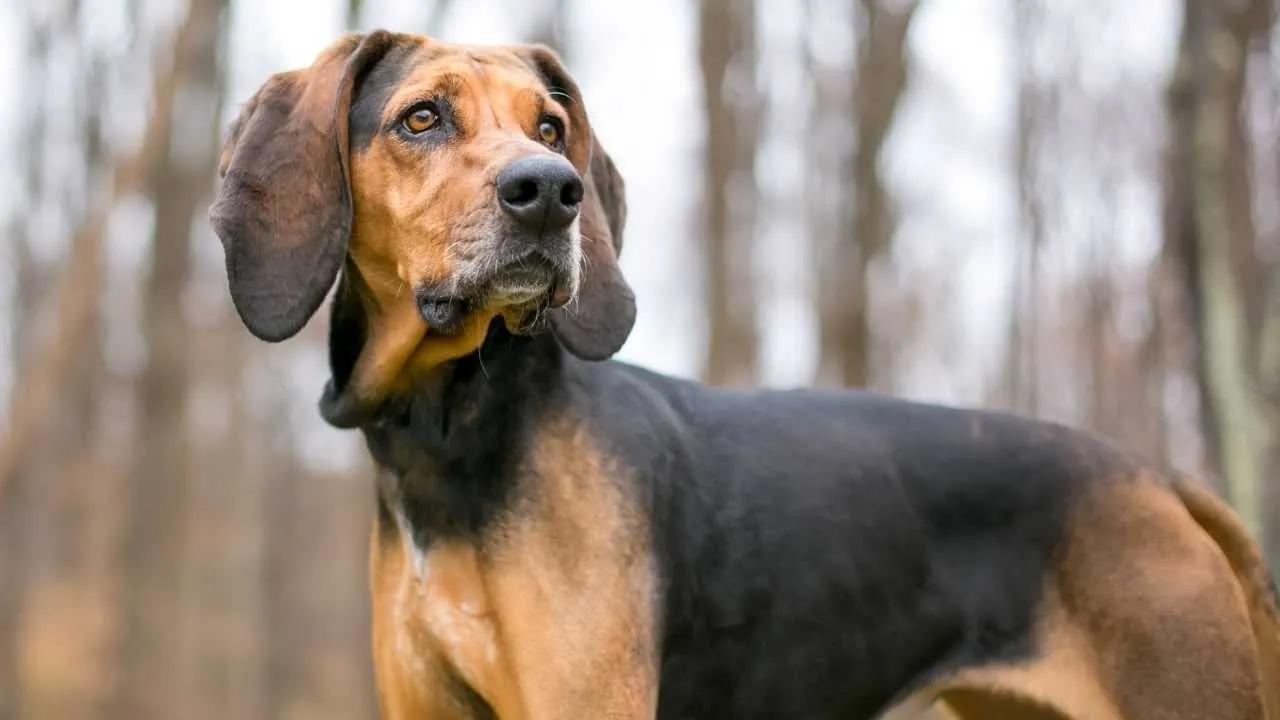
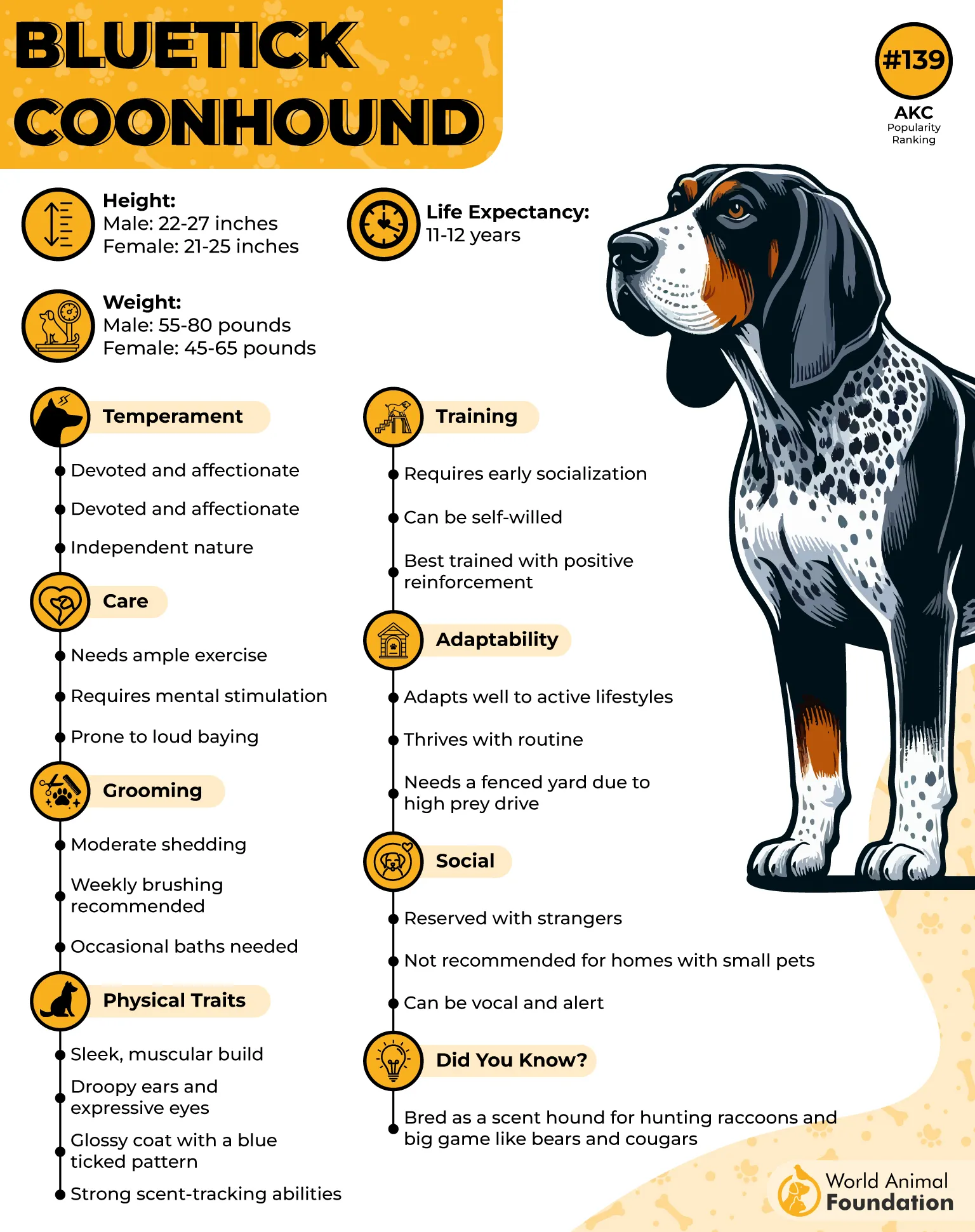
The Bluetick Coonhound stands out immediately in any lineup of patterned coats because of its glossy blue-ticked fur, a base of dark color covered with fine speckling that creates a smoky, almost speckled-sky effect.
These markings are not large patches but tiny, evenly scattered spots that give the coat a textured, shimmering look when the dog moves.
Black accents on the ears and head often contrast sharply with the blue-speckled body, making the overall appearance even more striking.
In practical use, this coat wasn’t developed just for appearance—it helped the breed blend into nighttime woods during tracking work, especially while following scent trails over long distances.
That same purpose-driven background explains its intense focus and drive when on a scent, where it can become fully absorbed in the task at hand.
One behavior closely linked to this breed is its deep, carrying “baying” voice, often used while tracking. It isn’t random noise—it’s a structured form of communication that signals location and progress during a chase, especially in outdoor working environments.
Despite its strong working instincts, this hound is known for forming close bonds at home, often seeking comfort and relaxation after active periods, creating a clear contrast between high-energy tracking and calm companionship.
5. Chinese Crested
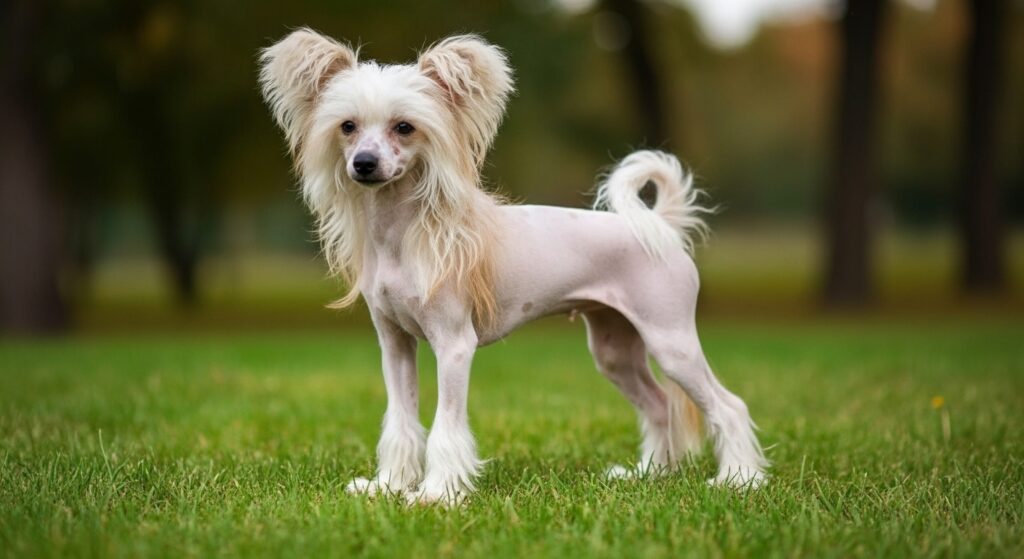
The Chinese Crested is one of the most visually unusual dogs in any collection of coat varieties, instantly recognizable for its two very different appearances within the same breed.
One version is mostly hairless, showing smooth skin with tufts of soft hair on the head, feet, and tail, while the other, known as the Powderpuff, is fully covered in a fine, silky coat.
This dual coat system makes the breed unique in how dramatically two dogs of the same lineage can look.
What makes it even more interesting is the wide range of color combinations found across its skin and fur.
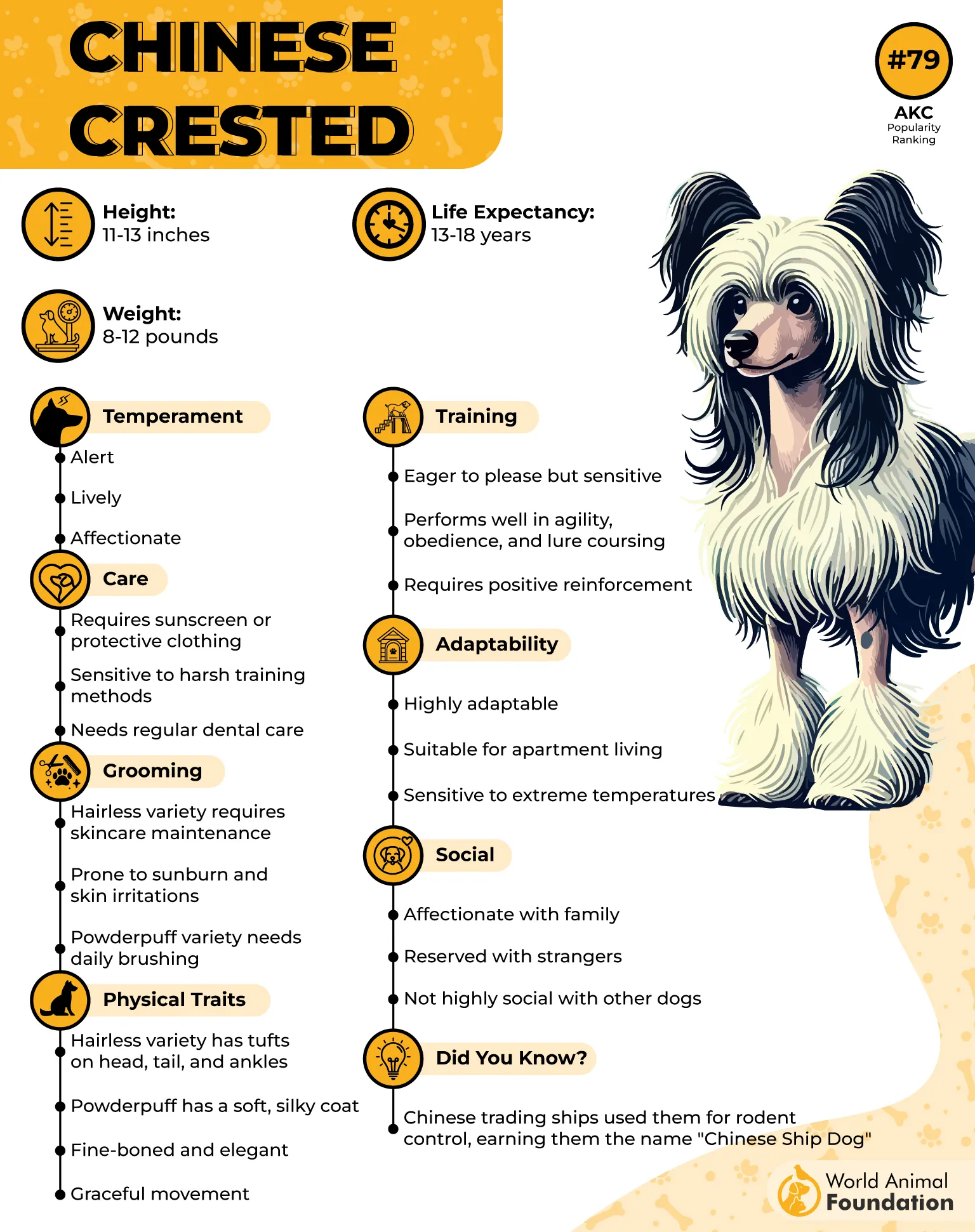
Shades like black, cream, chocolate, slate, apricot, and mixed tricolors can appear in countless patterns, often with scattered spots or uneven markings that give each dog a highly individual appearance.
Some even show pigmentation on the skin itself, which blends with their hairless areas to form natural patterns.
In everyday settings, their expressive almond-shaped eyes often shift in appearance depending on coat color, creating strong contrast or soft harmony with their overall look. This visual balance gives each dog a distinct personality-like impression at first glance.
One rarely seen aspect in dogs is how easily both coat types can appear within the same litter, making appearance variation a normal part of the breed rather than an exception.
6. Thai Ridgeback
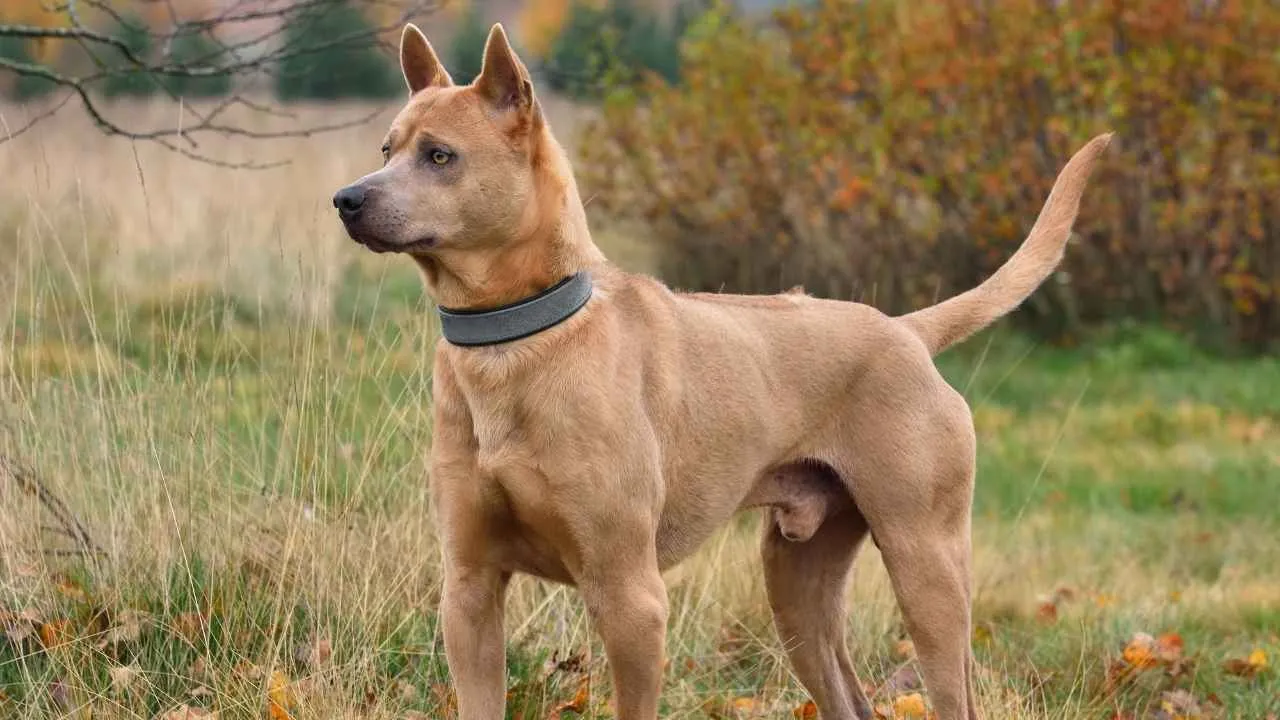
The Thai Ridgeback stands out in any discussion of unusual coat patterns because of the ridge that runs along its back, created by a strip of hair growing in the opposite direction from the rest of the coat.
This ridge can appear in several forms, with multiple recognized pattern shapes, and in some dogs, it may even be absent at birth, making its appearance within the breed surprisingly variable.
Alongside this, the coat itself comes in solid shades such as blue, black, red, or fawn, sometimes with a dark facial mask that sharpens its expression, as mentioned by the AKC.
In everyday environments, this sleek coat and tight body structure support quick, agile movement, especially in outdoor spaces where the breed was once used for hunting and guarding.
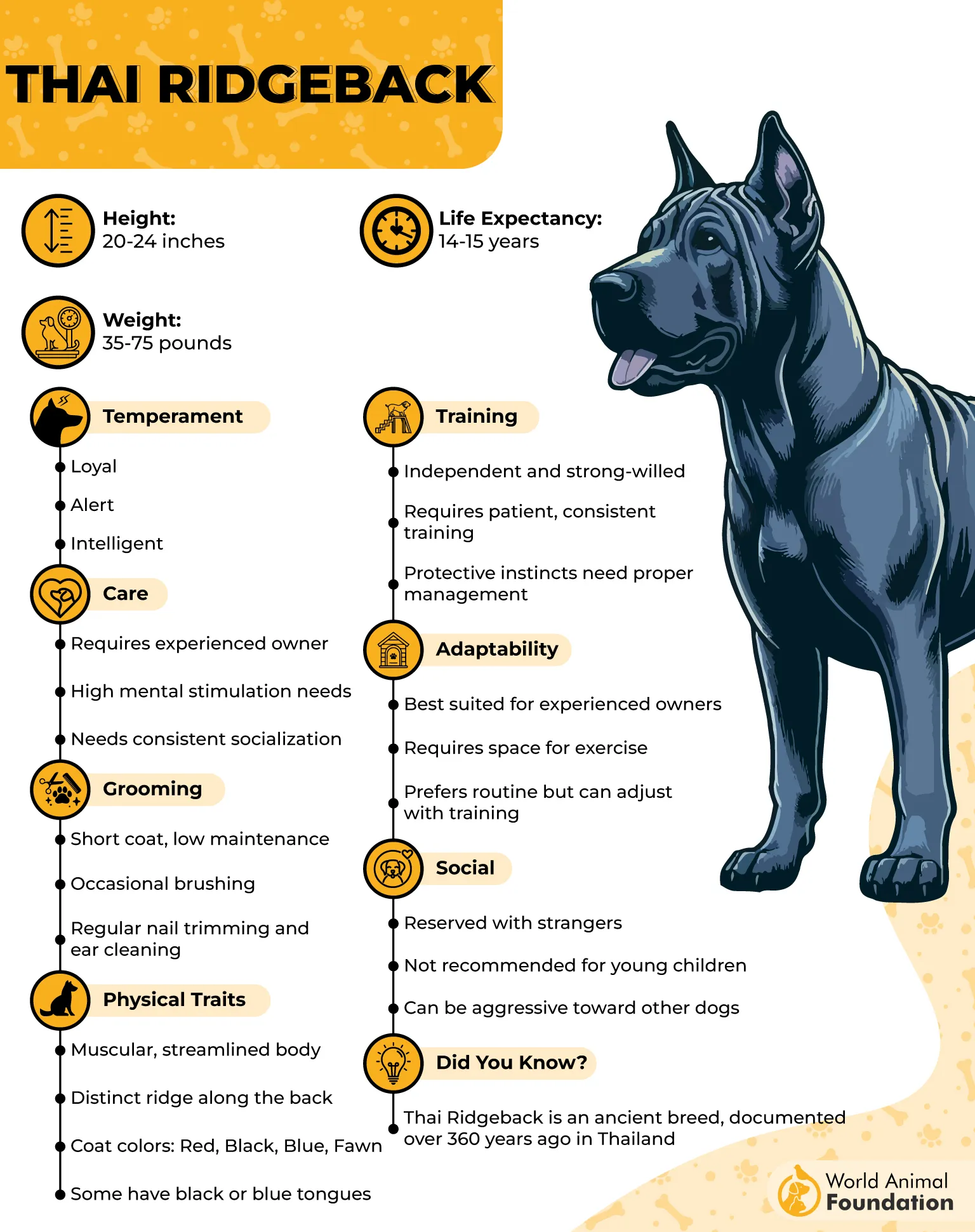
Its short fur lies close to the skin, giving it a clean, streamlined appearance that highlights muscle definition without distraction.
A rare detail seen in some individuals is tongue pigmentation that can appear fully blue or heavily spotted, something not commonly found across most other dog breeds.
This combination of ridge patterns, solid but striking coat colors, and unusual tongue markings creates an instantly recognizable visual identity, especially when the dog is alert or in motion during active situations.
7. Xoloitzcuintli
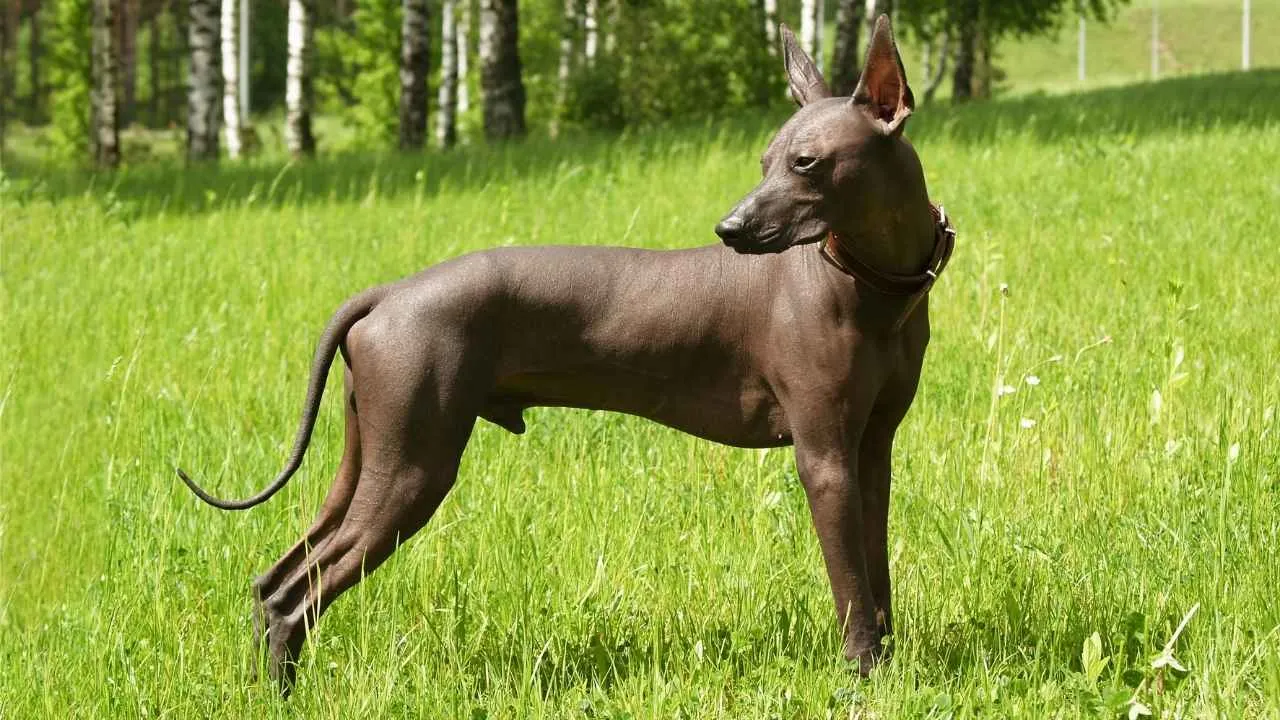
The Xoloitzcuintli is one of the most visually diverse dogs in the world of coat patterns because it exists in two forms within the same breed: hairless and coated.
The coated version has a short, sleek layer of fur usually seen in dark shades like black or brown, while the hairless type shows smooth skin that can appear in a wide range of colors, including gray, bronze, palomino, and deep black.
This variation creates an uncommon contrast where siblings in the same litter can look completely different.
In everyday surroundings, the hairless version often draws attention due to visible skin tones and markings that resemble natural patterns rather than fur designs.
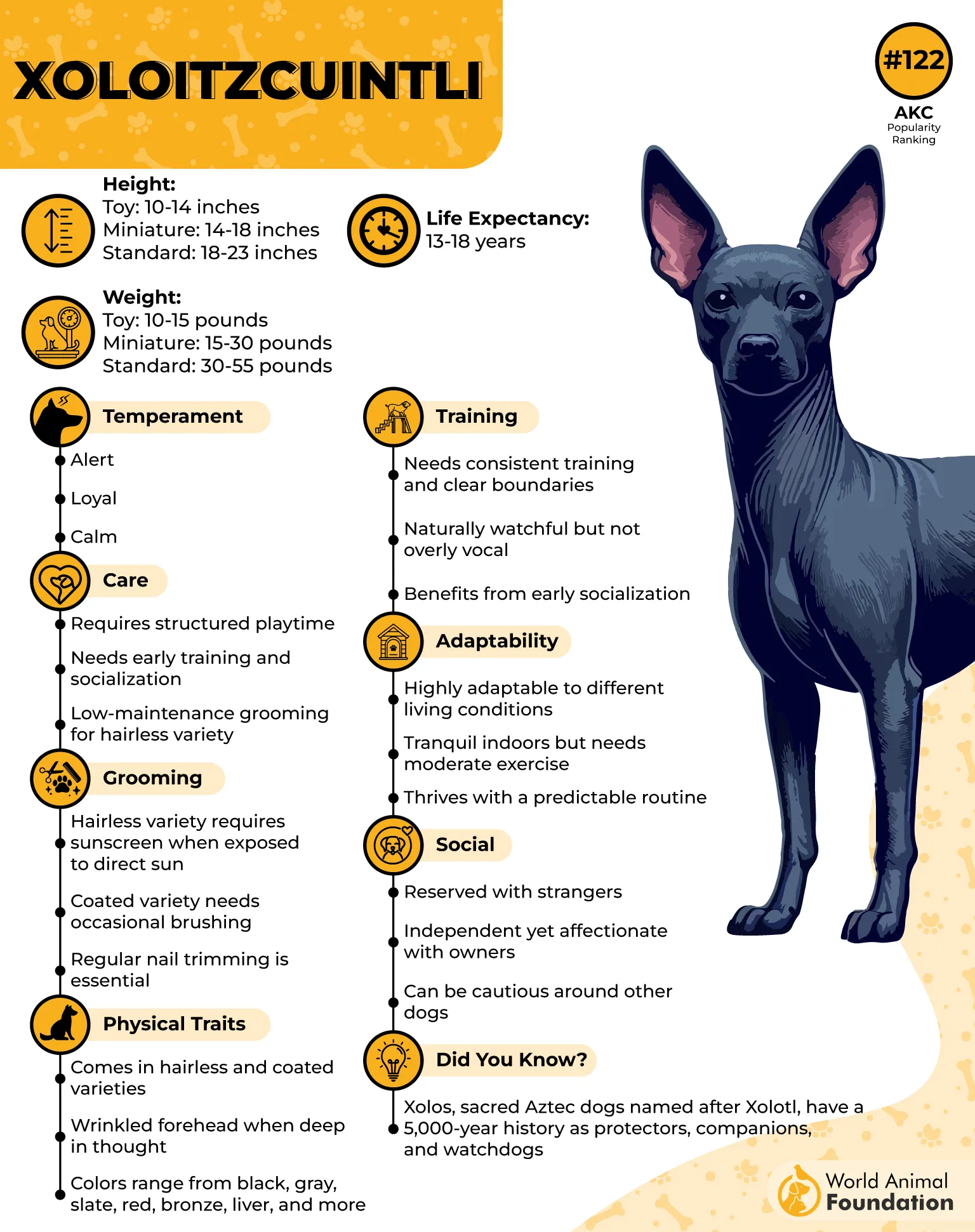
Despite the lack of coat, the skin is generally dense and firm, giving a protective surface that differs from most other hairless breeds.
A unique characteristic linked to this breed is its ability to naturally retain body warmth, making physical contact feel noticeably warm during rest, which often leads them to seek close contact in calm indoor moments.
Their large upright ears, sometimes paired with softer variations, add another layer of visual diversity, making each feel distinct even within the same genetic line.
8. Dalmatian
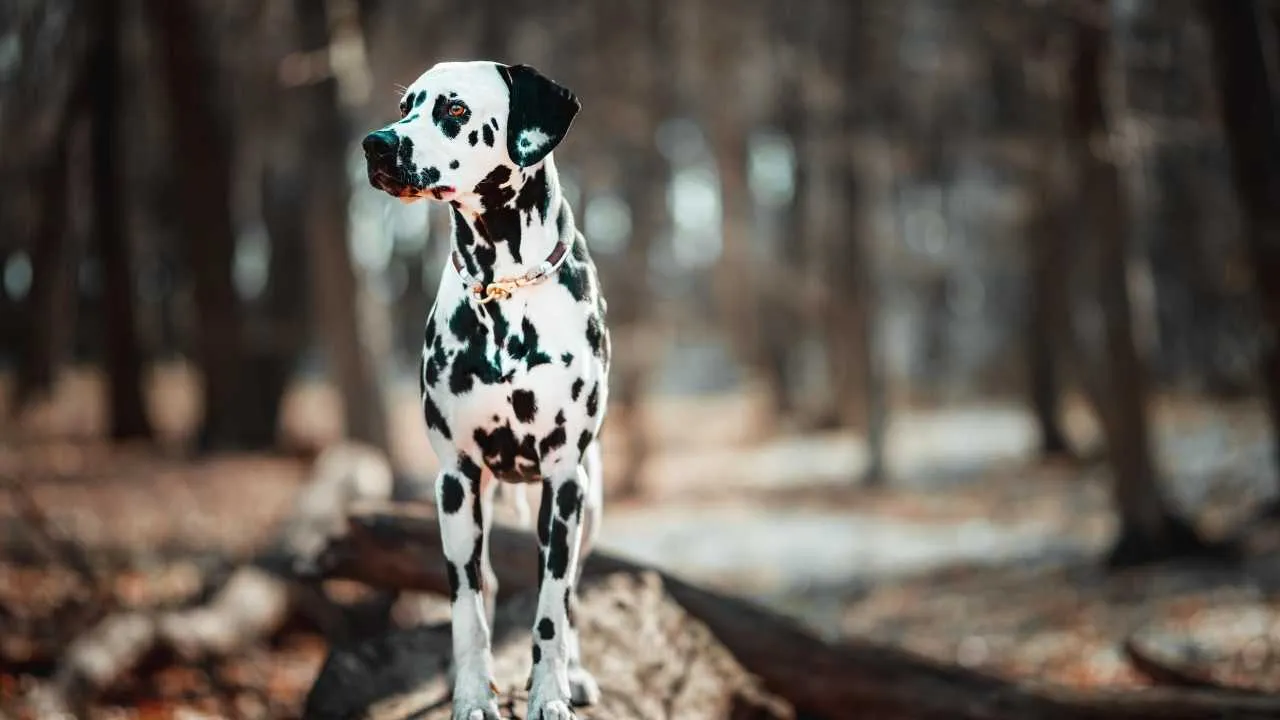
The Dalmatian is instantly recognizable in any discussion of patterned coats because of its crisp, high-contrast spotting. Each dog carries a base coat covered in clearly defined black or liver-colored spots, and no two patterns ever appear exactly alike.
Even the spacing, size, and distribution of these spots vary widely, giving every individual a completely different visual rhythm across the body.
In everyday settings, this coat creates a strong visual impression even from a distance, especially when the dog is in motion. The spots appear to shift and flow as the body moves, highlighting its smooth, ground-covering stride.
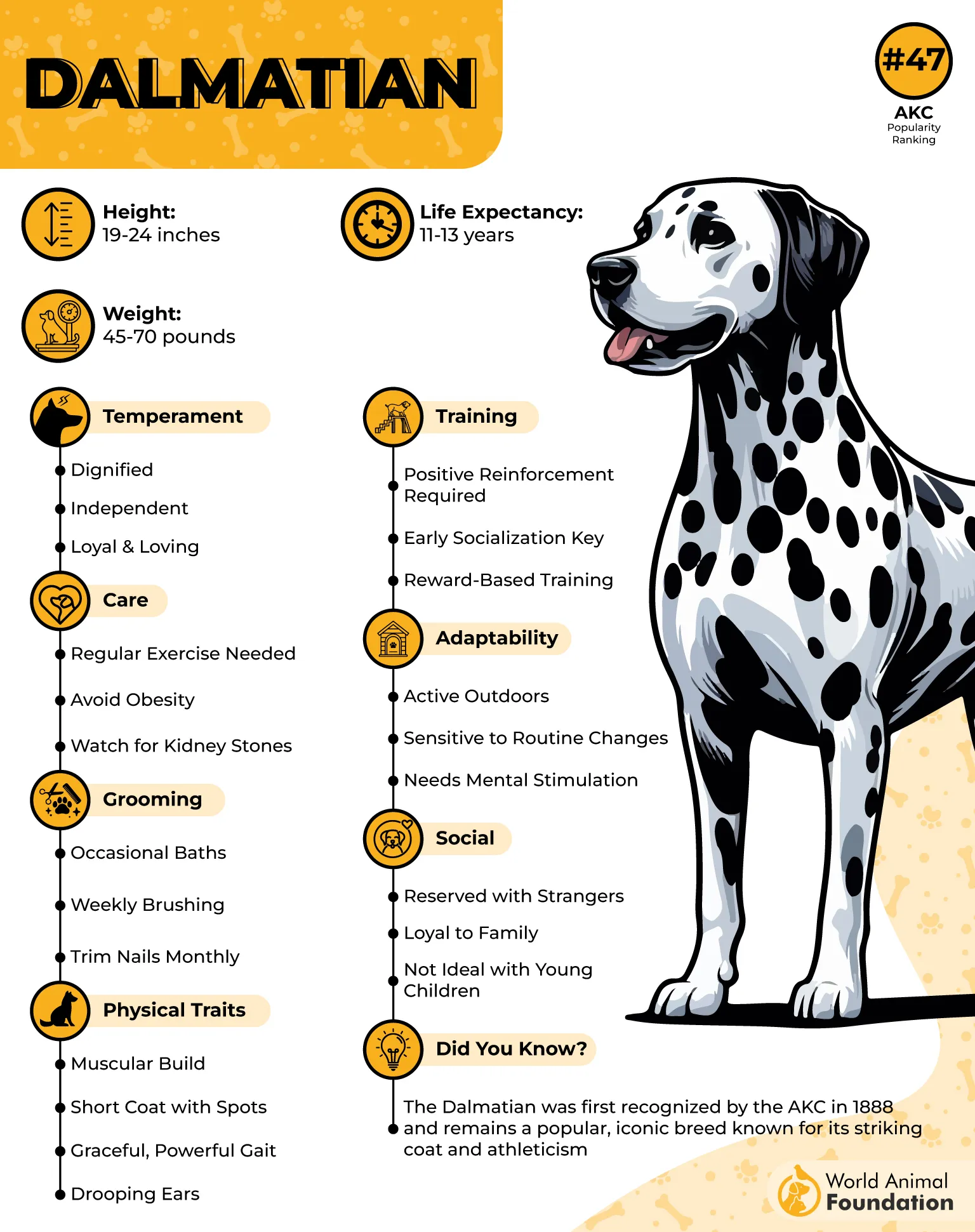
Historically associated with working alongside horse-drawn carriages, this breed’s balanced appearance became closely tied to travel and movement over long distances.
One unusual detail linked to this breed is that many individuals are born completely white, with their spots gradually developing over time, making their final pattern something that slowly “reveals” itself as they grow.
Beyond appearance, the coat is paired with a naturally athletic build that supports steady endurance during extended activity, especially in outdoor environments where consistent pacing matters.
Its visual identity remains one of the most recognizable among all spotted animals, making it impossible to confuse it with any other breed.
9. Siberian Husky
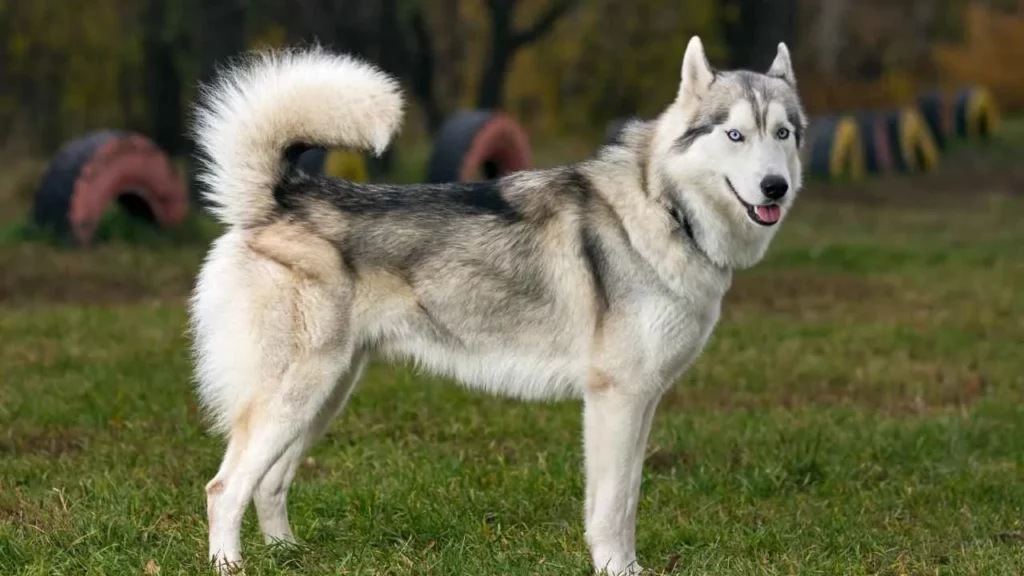
The Siberian Husky draws attention immediately in any collection of uniquely patterned coats because of its striking facial markings and layered color combinations.
Its dense double coat commonly appears in shades of black and white, gray and white, or copper tones mixed with white, often arranged in sharp contrasts that highlight the body’s structure.
What makes the face especially memorable is the variety of natural markings—caps, masks, and spectacle-like patterns around the blue eyes—that give each dog a different expression and visual identity.
In everyday environments, this coat is not just decorative but highly functional, built to handle harsh cold conditions with ease.
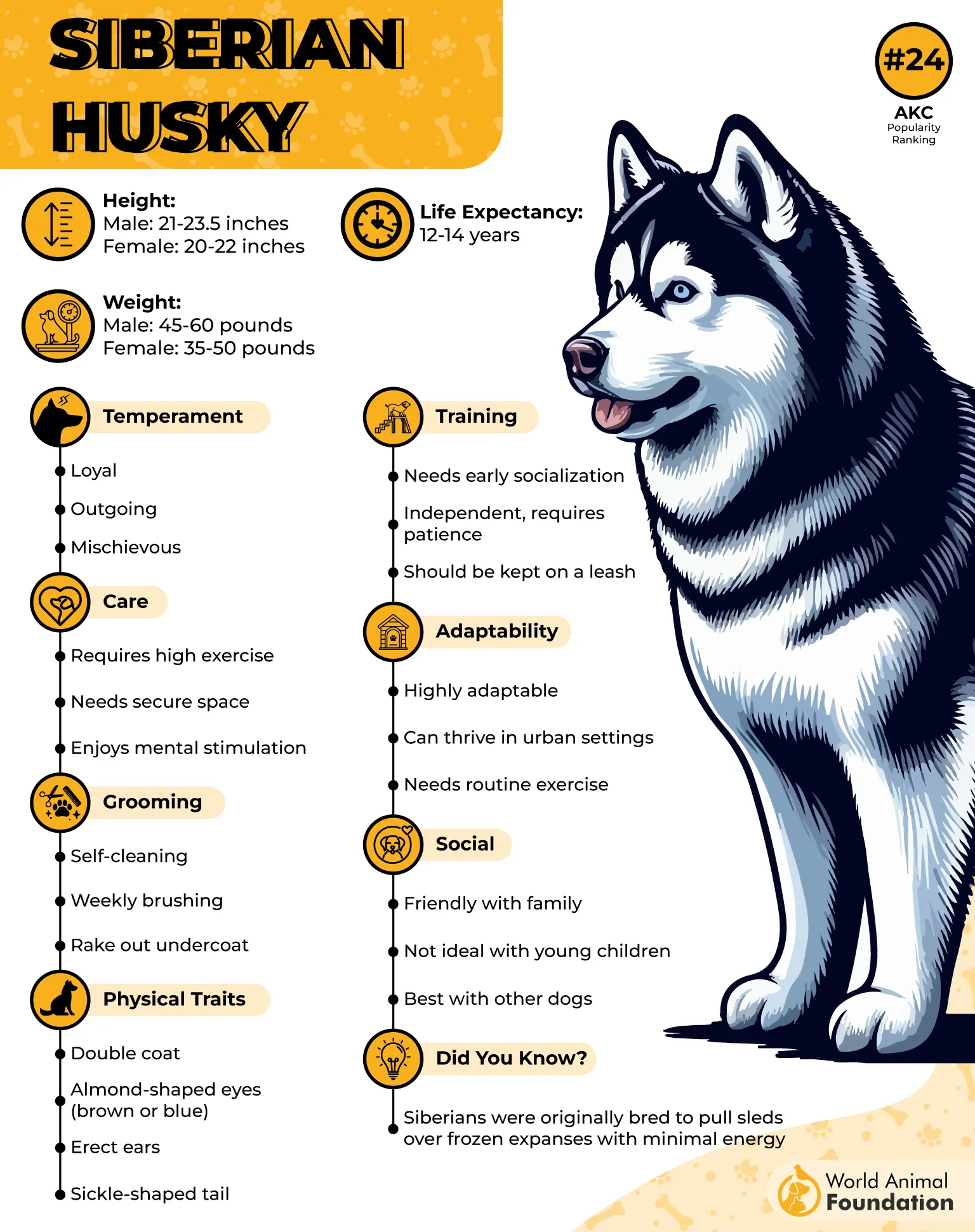
The dense underlayer traps warmth, while the outer coat helps repel moisture, allowing the dog to remain active in challenging outdoor settings. Even during movement, the flowing fur creates a visual effect that emphasizes its smooth, efficient stride.
A rare and fascinating detail linked to this breed is heterochromia, where each eye can display different colors, such as blue, brown, or a mix of both, creating a striking facial contrast that is rarely seen across other breeds.
Its coat also has a naturally clean behavior, shedding dirt easily and requiring minimal bathing, which adds to its practical design for long-distance working conditions in extreme climates.
10. Bedlington Terrier
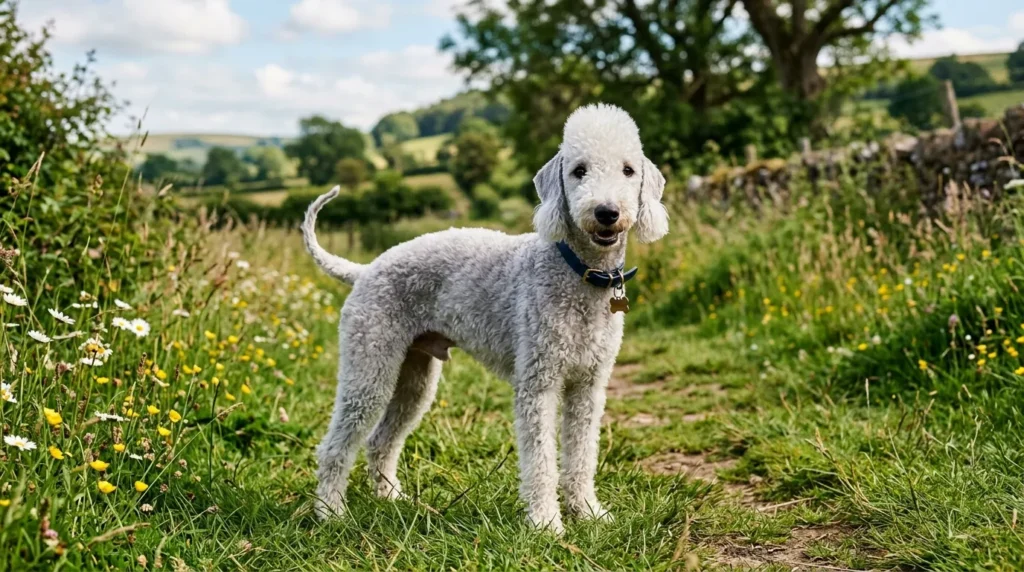
The Bedlington Terrier draws immediate attention in any group of dogs with unusual coats because its appearance closely resembles a lamb rather than a typical terrier, as mentioned by WebMD.
Its soft, curly coat grows in a tight, wool-like texture that gives the body a rounded, sculpted look.
Color variations range from pure white to blue-gray with darker saddle markings, as well as sandy or liver tones, creating subtle but elegant differences between individuals.
In everyday environments, this unique coat requires regular grooming to maintain its shape and texture, as the mixture of soft and springy hairs can easily grow into dense curls.
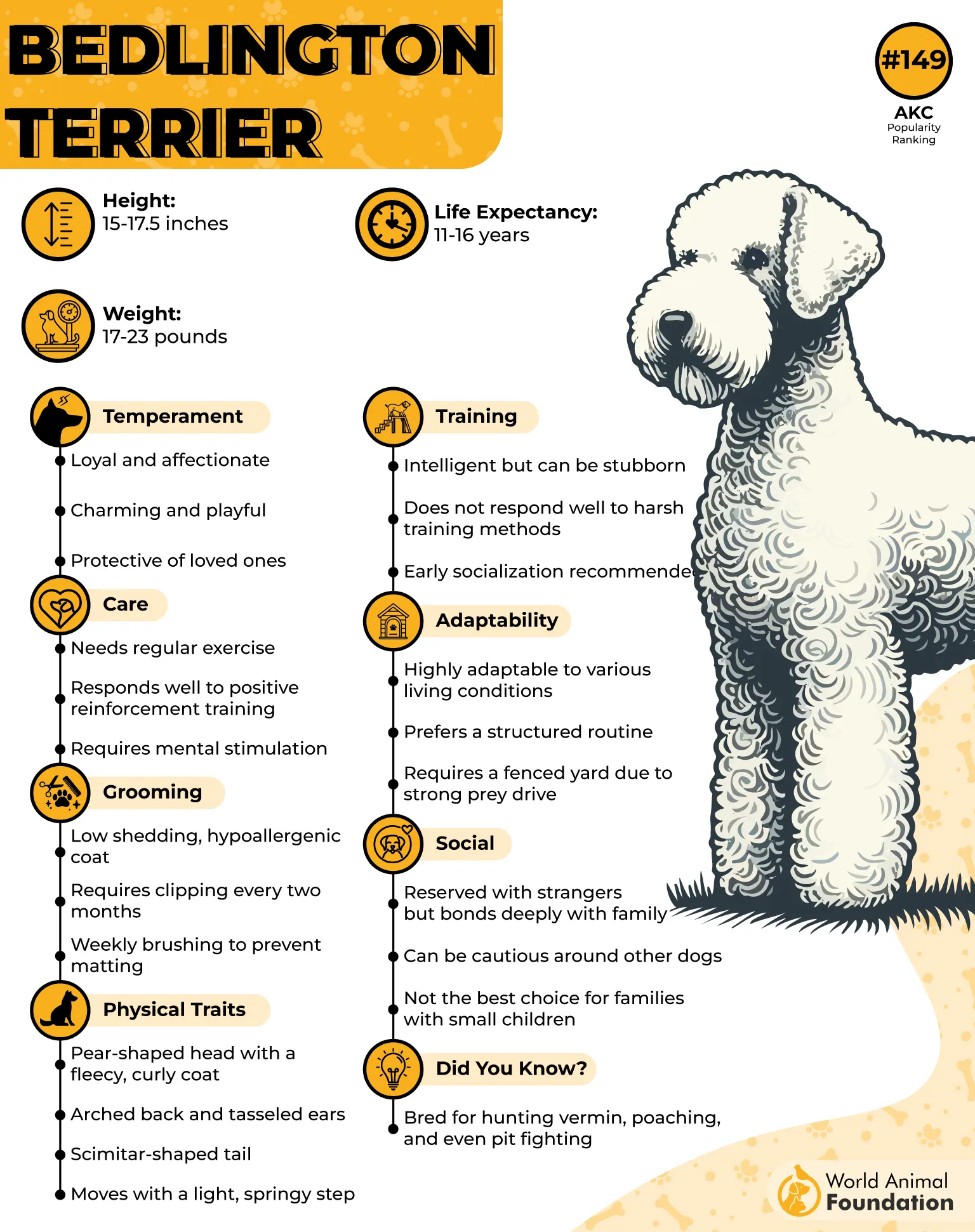
When properly maintained, the coat holds its lifted, almost cloud-like form, which is especially noticeable when the dog is in motion.
A rare detail associated with this breed is the naturally “crisp” feel of its wiry outer hairs combined with a softer underlayer, creating a dual-texture coat that behaves differently from most terrier coats.
Despite its delicate appearance, this dog is active and energetic, often enjoying long outdoor walks and play sessions where its light, springy movement contrasts strongly with its soft-looking exterior.
Conclusion
From bold spots and marbled swirls to rare hairless textures and color-shifting coats, these dogs prove how diverse canine appearance can truly be.
Each pattern tells a story shaped by genetics, environment, and long working histories, turning every coat into something far beyond simple color.
Some shimmer in motion, others reveal hidden markings as they grow, and a few even change how they are perceived depending on light and angle.
Together, they showcase how nature designs endless variation, making every individual visually unique, expressive, and unforgettable in its own way.
Can You Score 6/6 On Wild Dog Coat Patterns? 🎨
Which dog breed is famous for its harlequin coat with a white base and irregular black patches?
Which breed is known for blue merle and red merle coats, often paired with different-colored eyes?
The Catahoula Leopard Dog was originally developed in which U.S. state for herding and controlling livestock?
Which breed uses a deep, carrying “baying” voice while tracking scent trails?
Which breed has two very different forms: a mostly hairless type and a fully coated Powderpuff type?
Which spotted breed is often born completely white before its spots gradually develop?
