




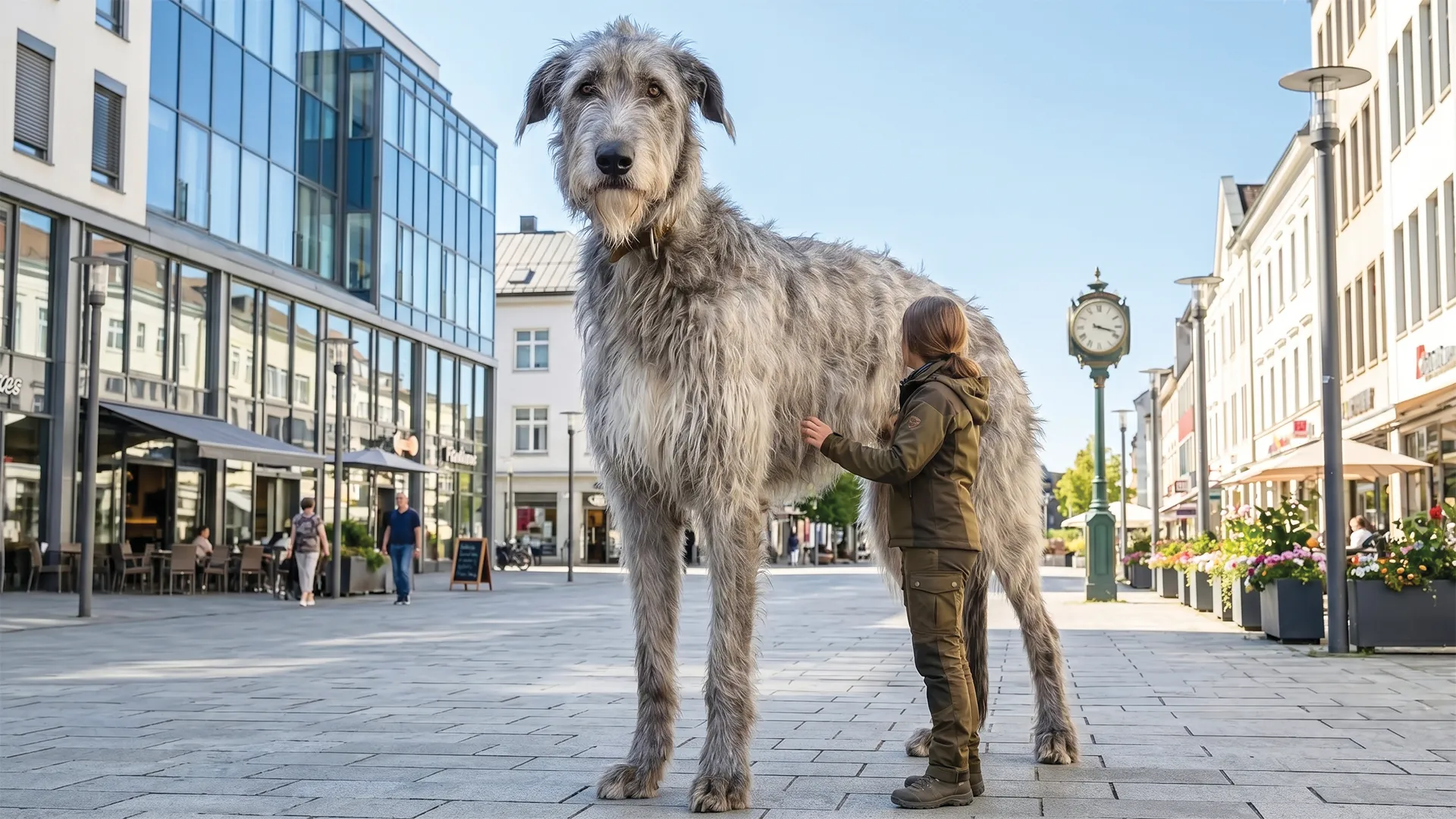
People often assume all giant dog breeds are basically the same. Big body, deep bark, intimidating appearance, and little else beyond that.
In reality, rare giant breeds are far more diverse and fascinating than most expect. Some were developed to protect livestock against dangerous predators, while others worked beside hunters, travelers, or isolated communities in extreme environments. Their massive size served a real purpose shaped by history and survival rather than appearance alone.
What also separates these dogs from more familiar large breeds is how uncommon many of them remain today. Several are rarely seen outside their native regions, and some continue to exist quietly despite carrying extraordinary physical and behavioral traits. Their stories are often just as impressive as their appearance.
This article explores giant dogs admired for their rare origins, powerful builds, striking features, and remarkable qualities that deserve far more attention.
Key Takeaways
Rare giant breeds carry a presence that feels different the moment you learn what they were originally bred to do.
Leonbergers were once shaped to resemble the lion on a German coat of arms, while Scottish Deerhounds raced across rough Highlands chasing deer over open land.
The Caucasian Shepherd and Boerboel were trusted with guarding livestock against predators, relying on instinct, strength, and calm confidence in harsh environments.
The deeper you go into these breeds, the easier it becomes to see why their stories feel just as impressive as their towering appearance.
Rare and Impressive Giant Dog Breeds to Discover
1. Leonberger
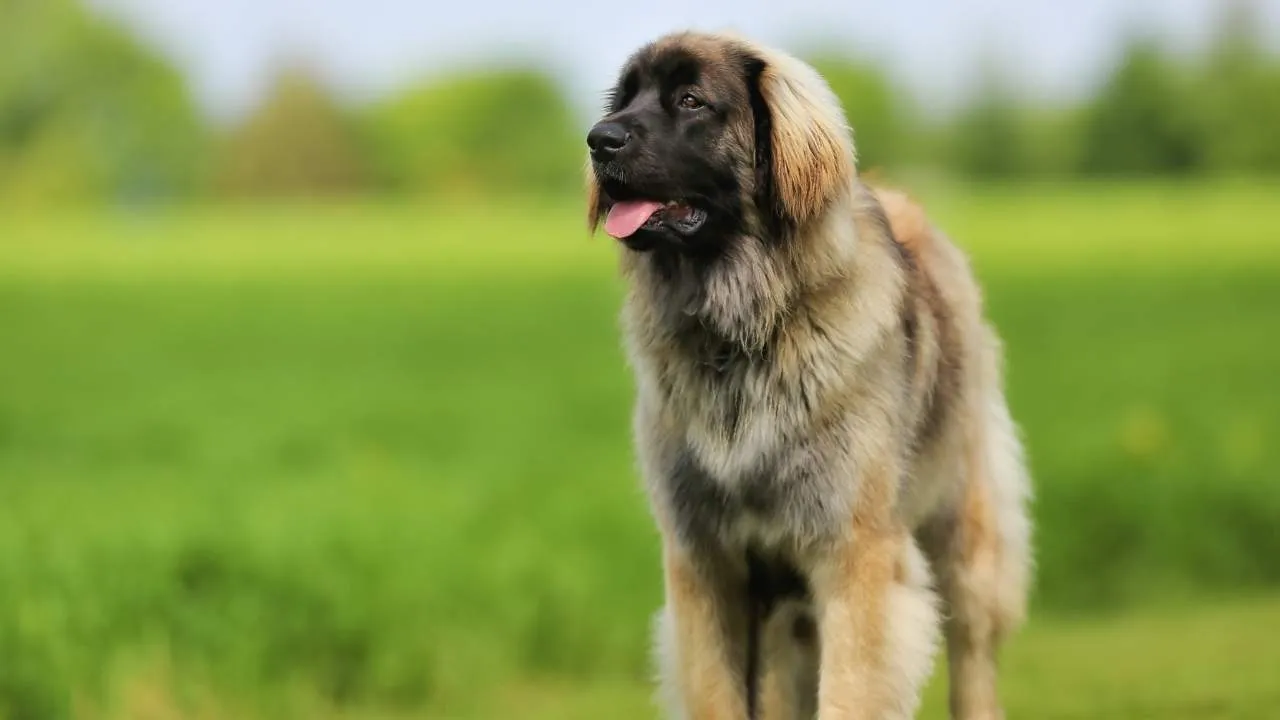
The Leonberger takes its name from Leonberg, Germany, where breeders shaped this reddish-gold giant to resemble the lion on the town’s coat of arms.
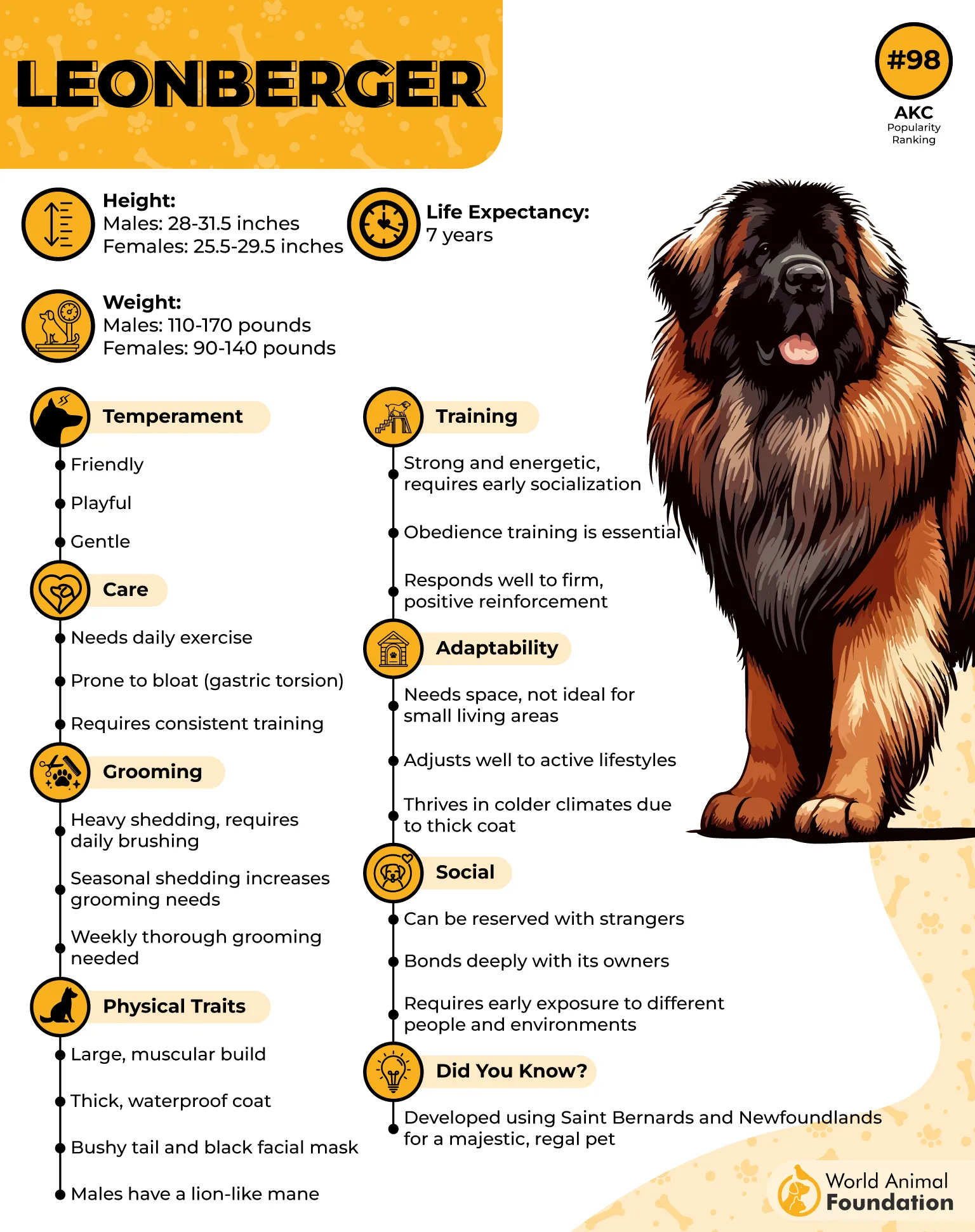
Crosses between Newfoundland, Saint Bernard, and Great Pyrenees created a massive companion admired by European royalty. Its thick coat and calm expression give the breed a striking old-world identity.
Gentle Giant
These big dogs worked on farms before later serving in search-and-rescue roles after surviving near extinction through two world wars, as PetMD describes. Daily life with this breed feels deeply people-centered.
A few qualities shape that experience:
Calm and patient around children
Strong preference for human interaction
Quiet nature with little barking
Rare but Responsive
This dog remains uncommon today despite its long connection with working life and companionship across Europe. The breed learns well through repetitive, positive guidance and responds best with experienced handling. Intelligence, physical strength, and emotional sensitivity all shape this breed’s behavior.
2. Scottish Deerhound
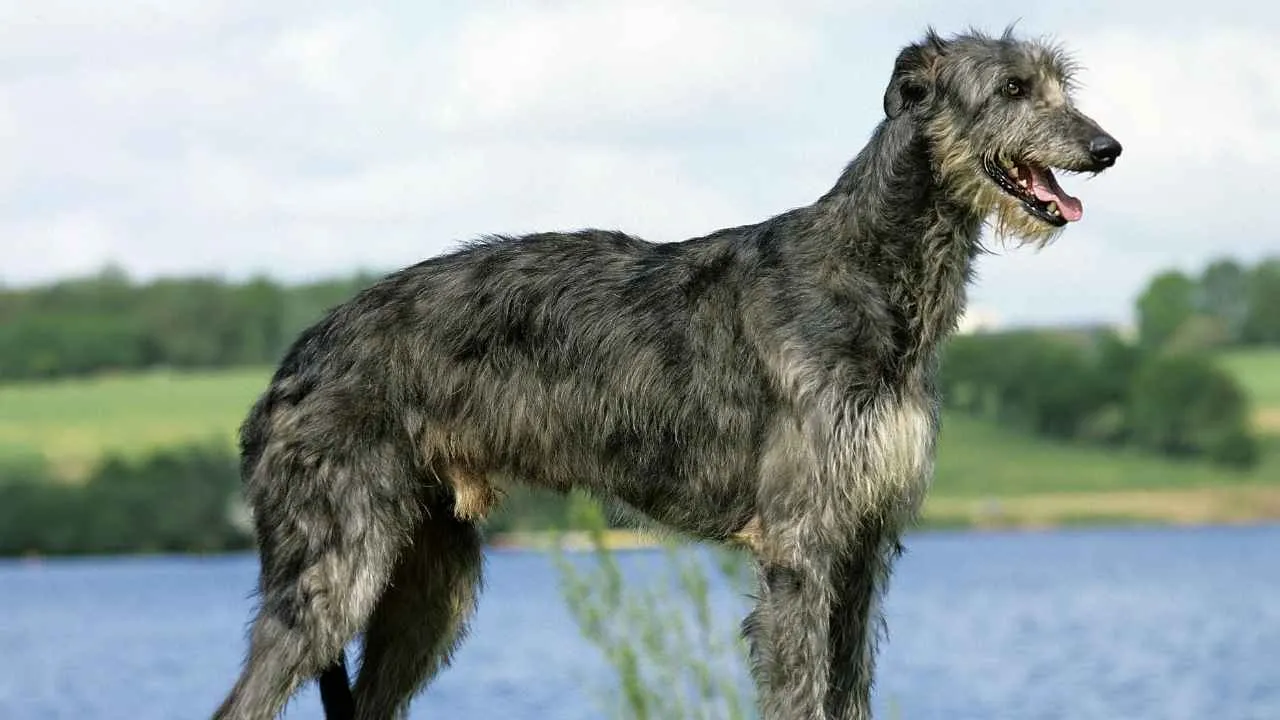
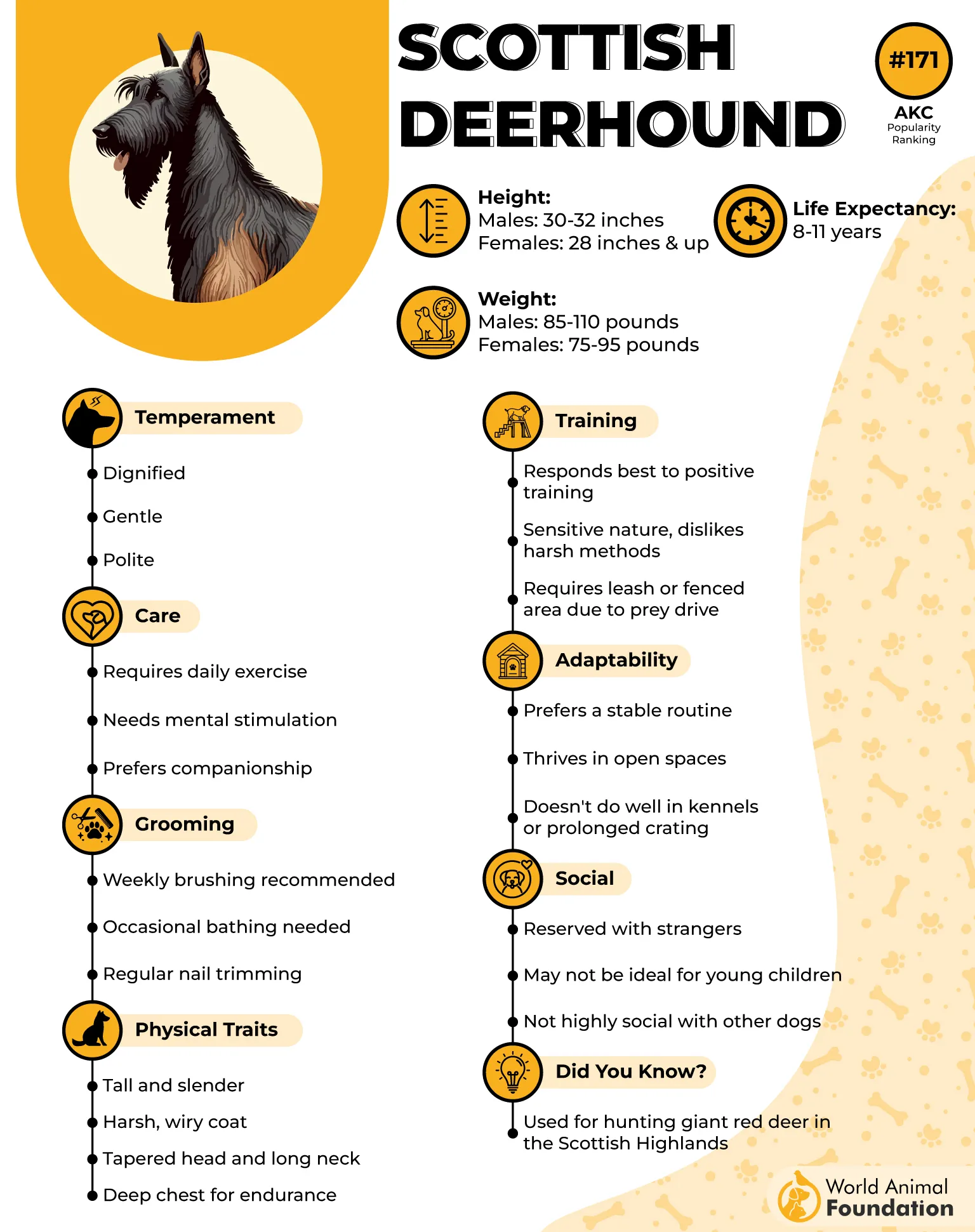
The Scottish Deerhound remains one of the rarer large breeds, shaped through a limited breeding history tied to Scottish nobility. It gained recognition across the Highlands for chasing deer over rough open terrain with remarkable speed. Its tall, narrow frame and rough coat create a silhouette rarely mistaken for another breed.
Built for Distance
This large dog relies on athletic reach and endurance, shaped by long hunts across open landscapes rather than short bursts of speed. Its sight hound instincts influence how it reacts outdoors, especially when something catches its attention.
Several traits reflect that purpose clearly:
Long legs suited for wide ground coverage
Coarse coat adapted to rough conditions
Lean structure built for sustained pursuit
Calm Nature Inside the Home
The Scottish Deerhound settles into an easygoing rhythm indoors, often preferring quiet companionship once daily activity is finished, as WebMD noted. Its giant size contrasts with a notably gentle household presence. The breed’s independent thinking influences how it approaches interaction and daily routines.
3. Caucasian Shepherd
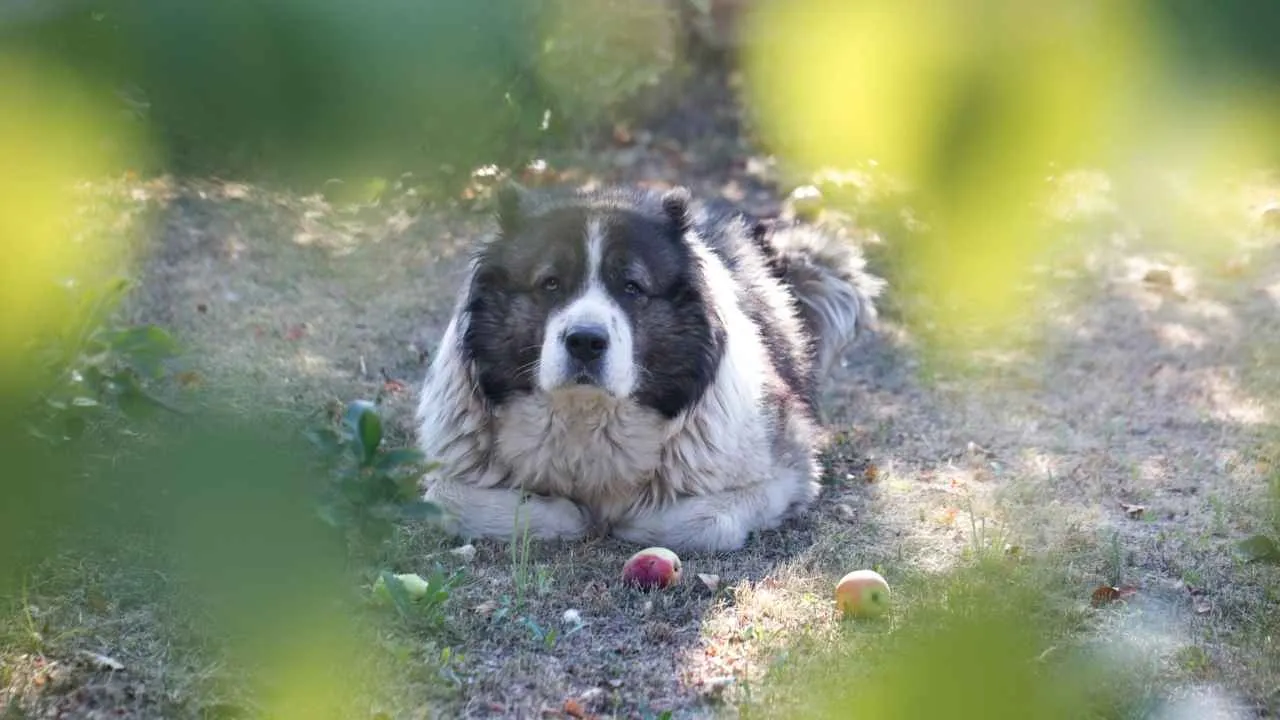
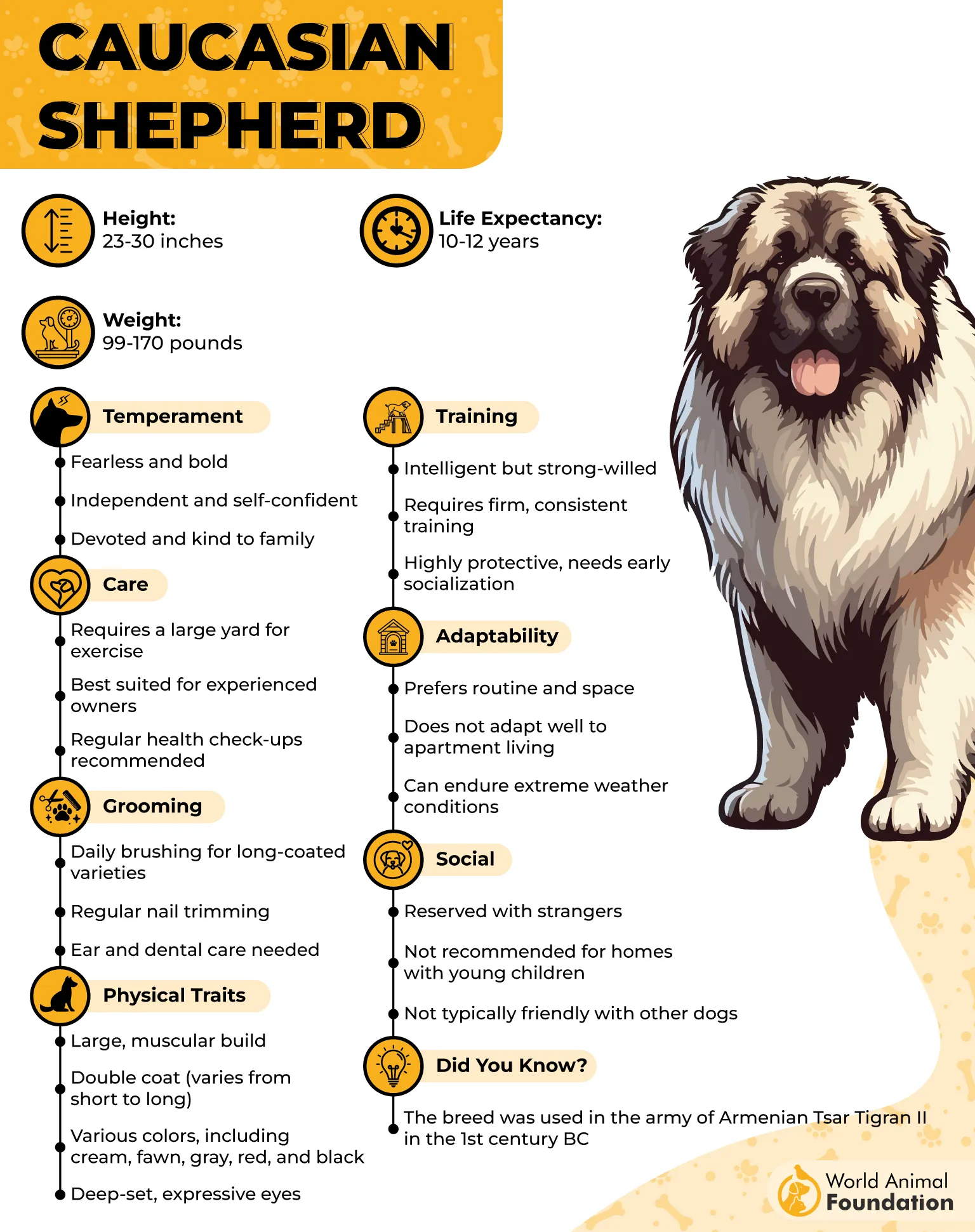
The Caucasian Shepherd comes from the rugged Caucasus Mountains of Georgia, where isolated terrain shaped a dog built for guarding livestock and property. This rare giant remains uncommon across Western Europe and North America despite broad recognition in its native region.
Protective Instincts with Firm Boundaries
This Shepherd Dog reacts cautiously around unfamiliar people, relying heavily on instinct rather than immediate acceptance, as per the AKC. Its territorial nature connects closely with the solitary guarding role it performed across mountain properties and remote flocks.
Several traits define instinctive behavior:
Prefers familiar surroundings over frequent change
Responds cautiously toward unfamiliar visitors
Functions best as the only household pet
Quiet Homes Suit This Temperament
As a family dog, it stays calm indoors where routines remain predictable, and interaction feels controlled. Young children climbing, pulling, or rough handling often create tension for this breed. Frequent travel also creates difficulty, as outside caretaking and boarding situations rarely feel comfortable to them.
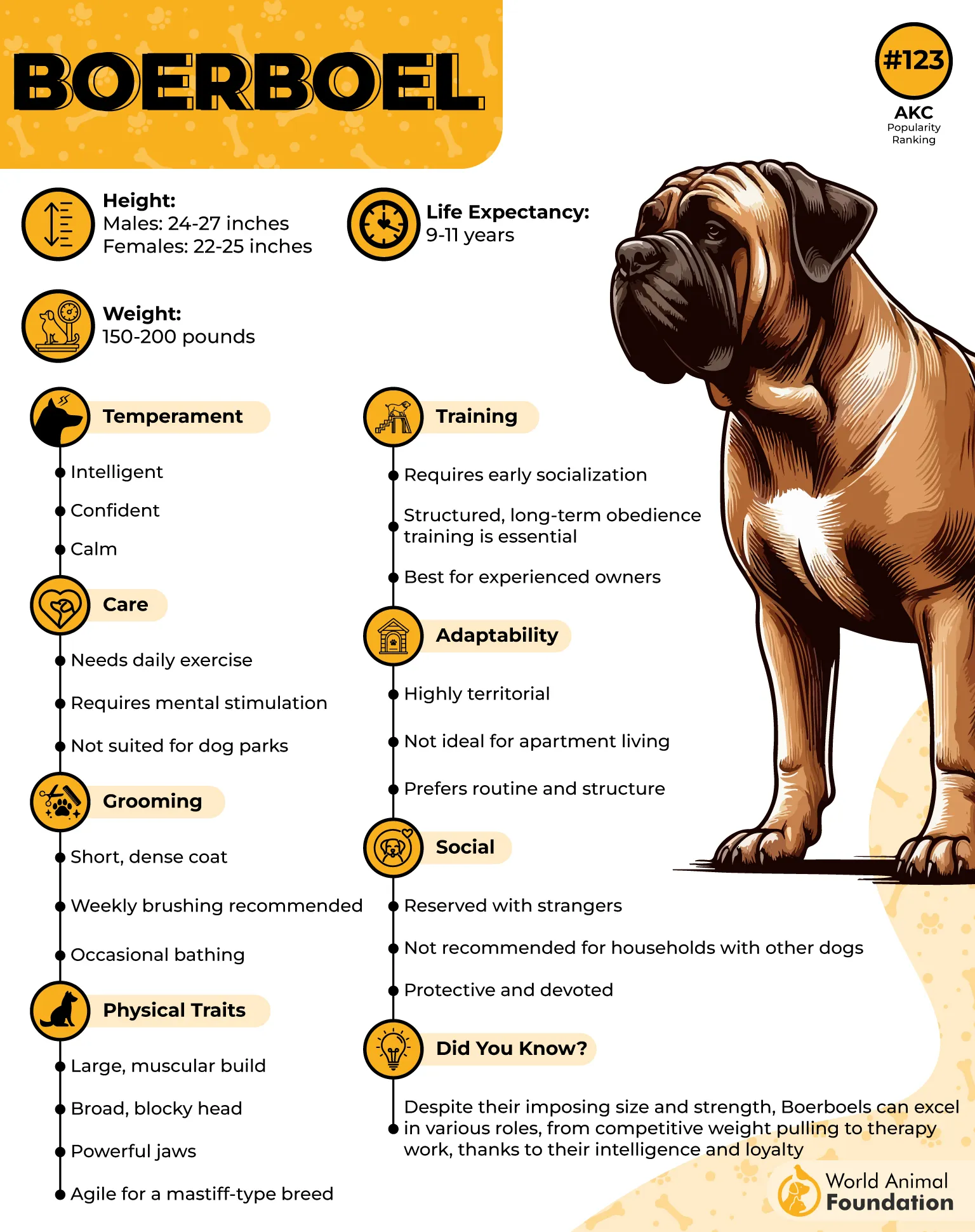
4. Boerboel
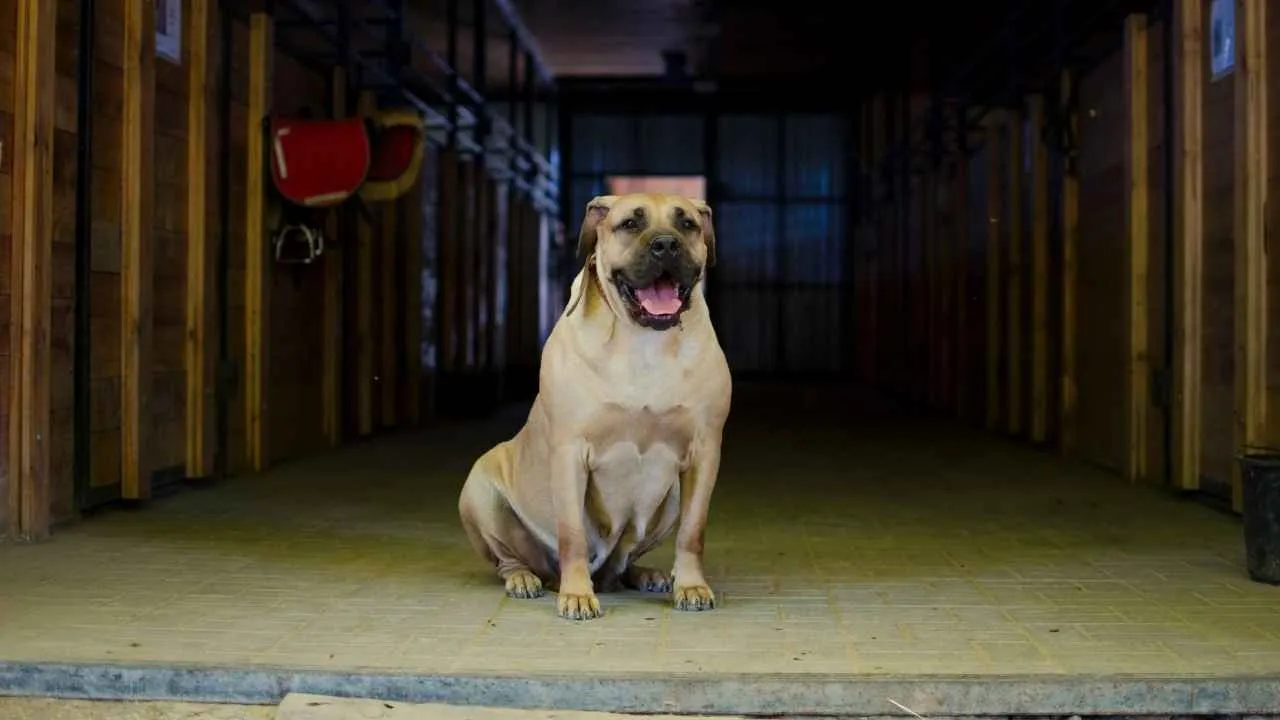
The Boerboel remained largely unfamiliar outside South Africa until preservation efforts gained attention during the 1980s.
This rare large dog breed spent centuries alongside farmers, facing predators such as hyenas and lions across isolated land. Its massive frame reflects a working purpose tied closely to protection.
Power With Agility
This dog combines mastiff-level size with surprising athletic ability, giving it more flexibility than its heavy structure first suggests. The breed was originally bred for demanding farm conditions where physical response and quick reaction mattered daily.
That capability appears through practical traits:
Agile enough for rapid directional shifts
Strong build suited for predator deterrence
Confident leash handling is required outdoors
Routine Shapes Behavior
It functions best with consistent activity, making it an active dog that requires both engagement and controlled outlets. Long walks and secured outdoor play help prevent destructive chewing linked to boredom or confinement. Mental involvement influences behavior just as much as physical exercise.
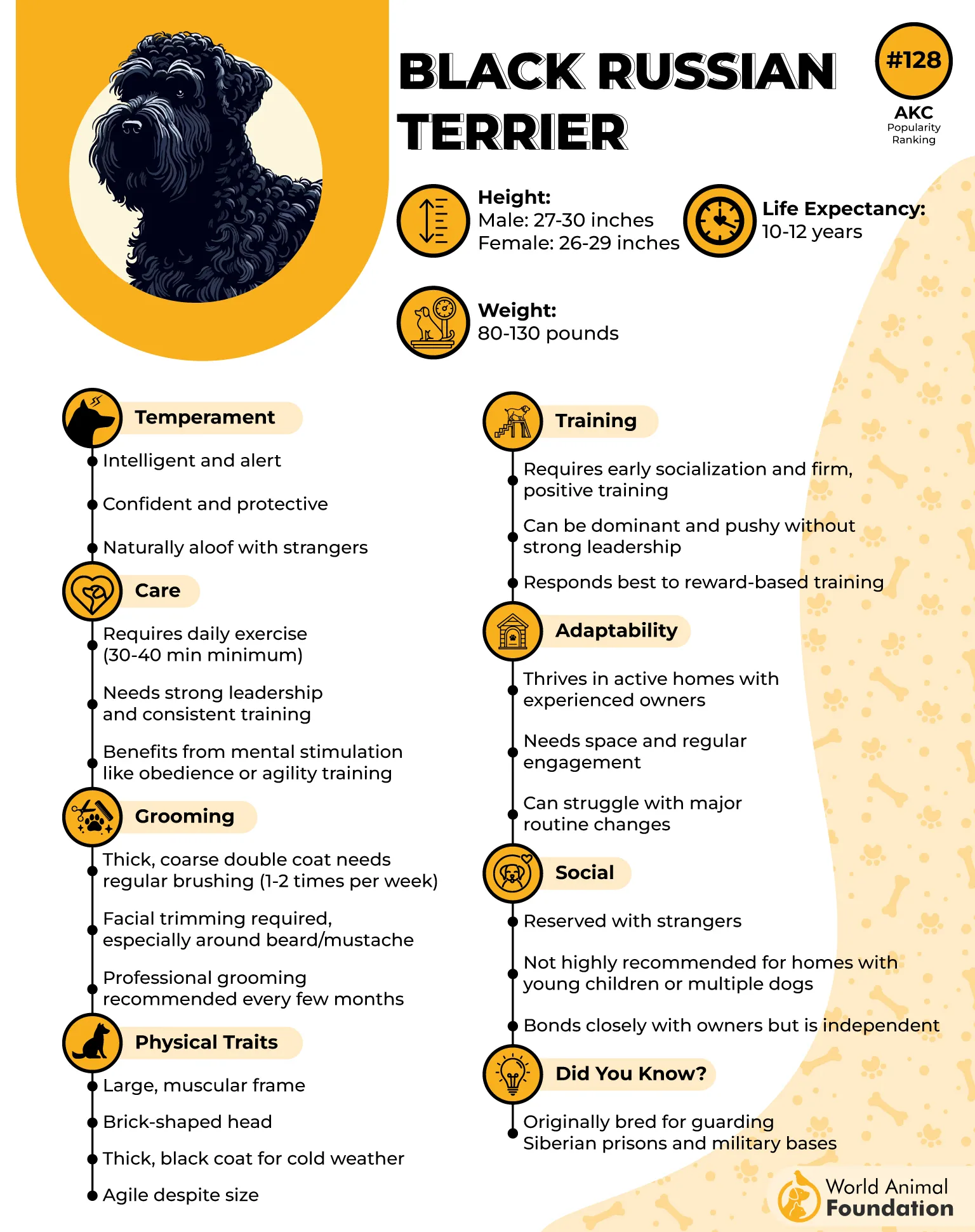
5. Black Russian Terrier
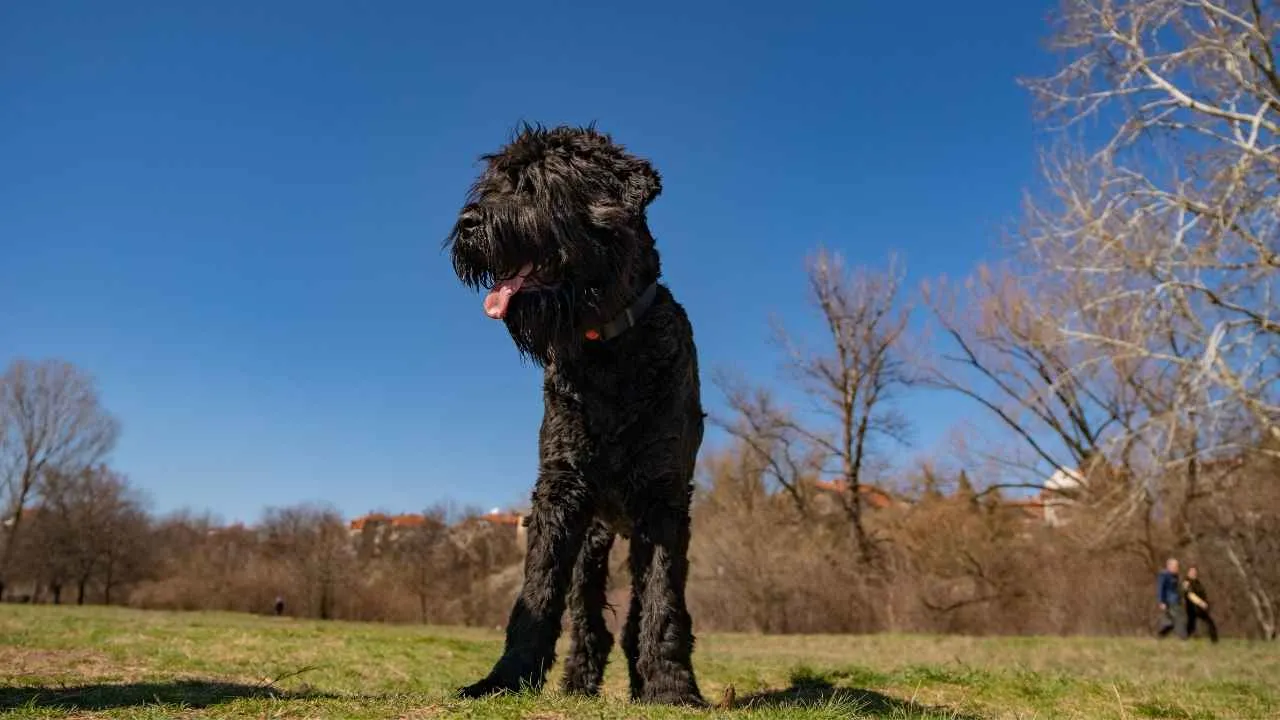
The Black Russian Terrier emerged in post-war Russia through carefully selected crossings involving the Rottweiler, Giant Schnauzer, Newfoundland, and Airedale Terrier. This uncommon breed combined size, intelligence, and versatility into one imposing working companion.
Temperament Through Bonding
This terrier forms deep attachments within the household, often preferring familiar people over constant interaction with strangers. Its calm confidence creates a composed presence rather than restless behavior around the home.
That temperament becomes clearer through everyday traits:
Reserved reactions toward unfamiliar visitors
Strong attachment to household members
Better adjustment through early social exposure
Social Adjustment
The Black Russian Terrier responds best when introduced early to different people, animals, and settings throughout its life. Proper social experiences influence how comfortably this big breed interacts with children, other dogs, and household cats.
6. Spanish Mastiff
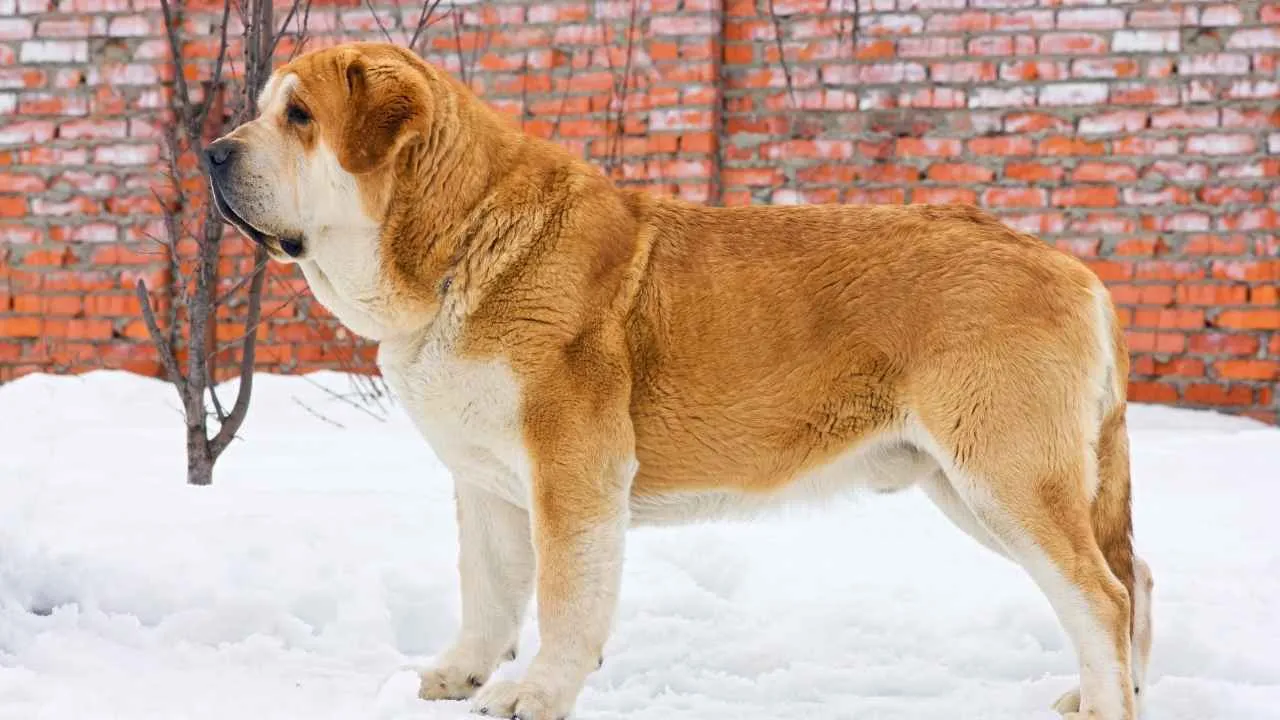
The Spanish Mastiff spent centuries crossing rural Spain beside massive sheep herds, trusted to confront wolves without hesitation.
One dog was often responsible for guarding nearly a hundred sheep across open grazing routes. However, this rare breed remains uncommon in the United States despite its long working legacy.
Calm Size, Serious Purpose
This Mastiff dog combines enormous strength with a composed household temperament, especially around familiar people and animals. Its alert nature surfaces quickly when unfamiliar visitors or strange animals enter the environment.
That balance becomes clearer through:
Powerful body built for livestock protection
Docile attitude with familiar companions
Strong awareness of strangers
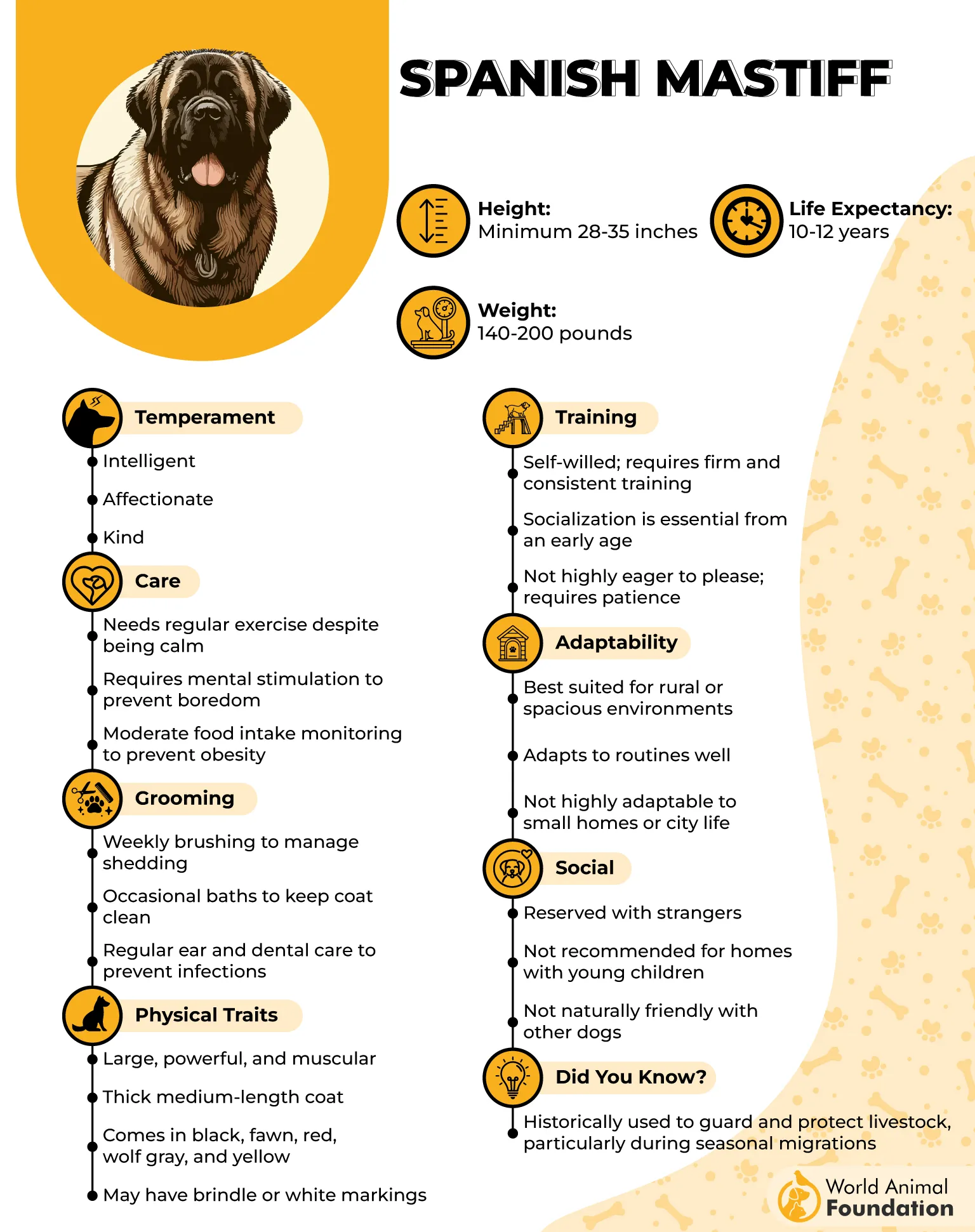
Rare Presence, Steady Temperament
Spanish Mastiff prefers purposeful activity over nonstop intensity, making long walks, swimming, or fenced play more suitable than distance running.
The breed stays emotionally steady around trusted companions and rarely reacts out of nervousness. Its quiet confidence comes from centuries spent guarding livestock through unpredictable conditions
7. Broholmer
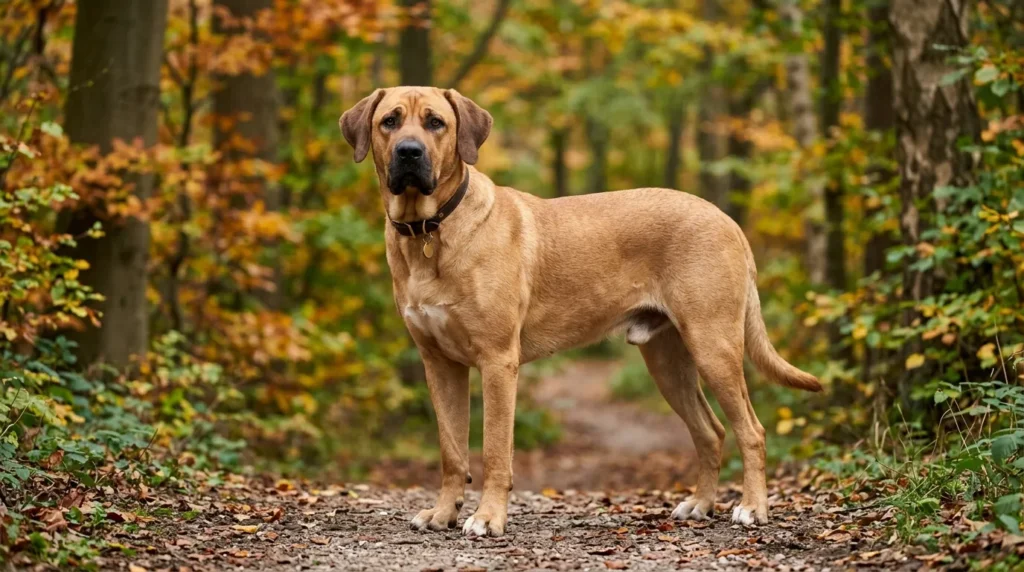
The Broholmer remains one of Denmark’s rarest giant dogs, once commonly spotted outside butcher shops around Copenhagen as a trusted guardian of property and cattle. Its massive head, rectangular frame, and calm confidence create an imposing presence without constant aggression.
Gentle Giant
The Broholmer enjoys close family contact and often forgets just how enormous it is, happily leaning against people or trying to settle directly beside them. Daily life with this breed feels surprisingly interactive for such a powerful dog.
That balance comes through in ways like:
Strong watchdog instincts
Remarkable agility for its size
Gentle behavior with children
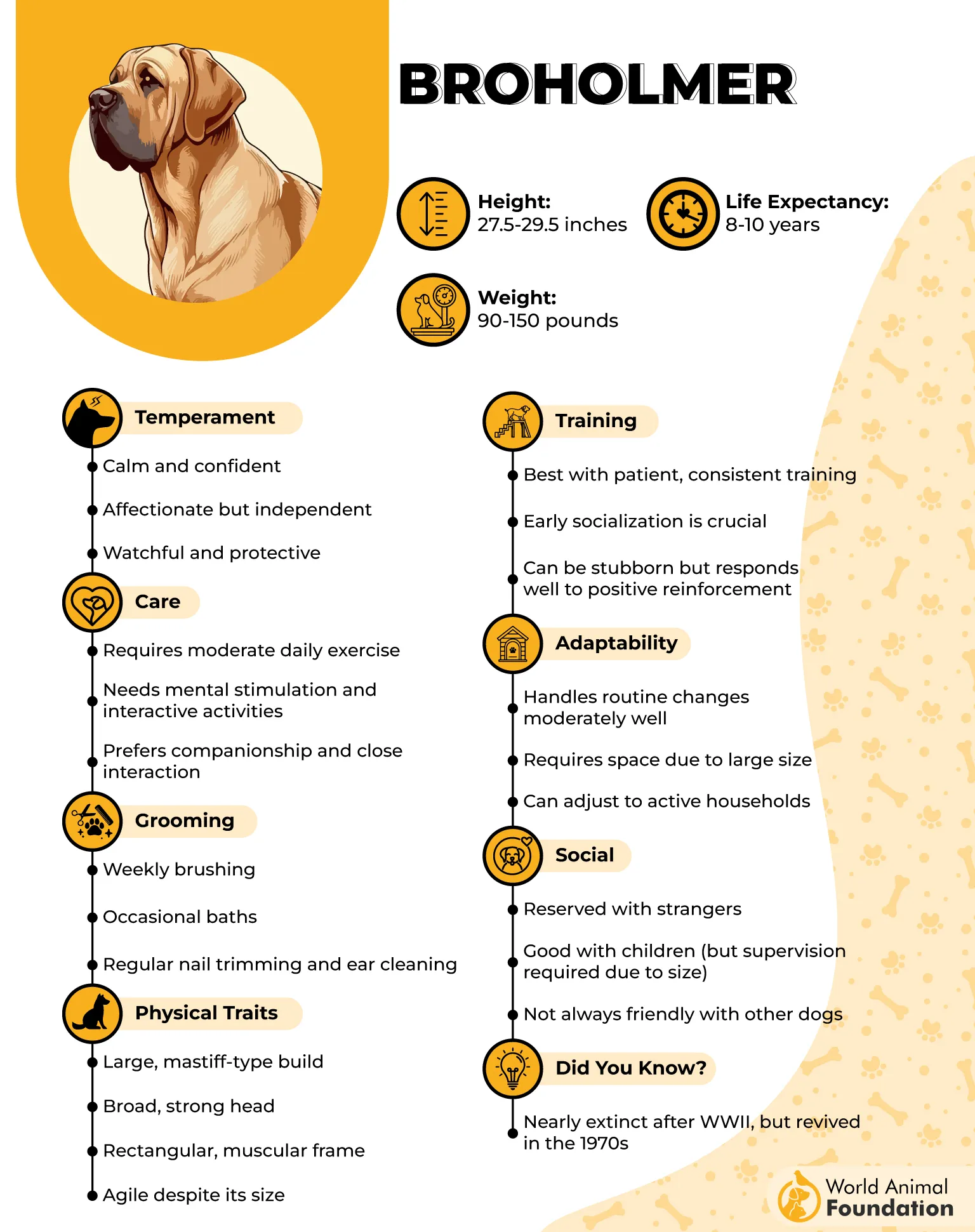
More Agile Than Expected
The Broholmer handles outdoor activities with surprising ease, joining hikes, camping trips, park walks, and even games involving frisbees or fetch.
The breed also responds well to playful indoor engagement, including hide-and-seek or learning simple tricks. Physical size never fully limits its willingness to participate alongside the family.
Conclusion
Rare giant dogs leave a very different impression once their history becomes part of the picture. Beneath the towering size and powerful appearance are generations shaped by survival, protection, endurance, and close partnerships with people, often among the biggest dog breeds.
Some worked as guard dogs for livestock against predators, while others crossed rough landscapes beside hunters or farming communities.
That purpose still shows in their confidence, awareness, and steady behavior today. Many of these dogs remain outside the spotlight of familiar breeds, yet their stories are remarkable. For any pet parent, consistent training helps them grow into reliable family members in homes where dogs love close companionship.
