




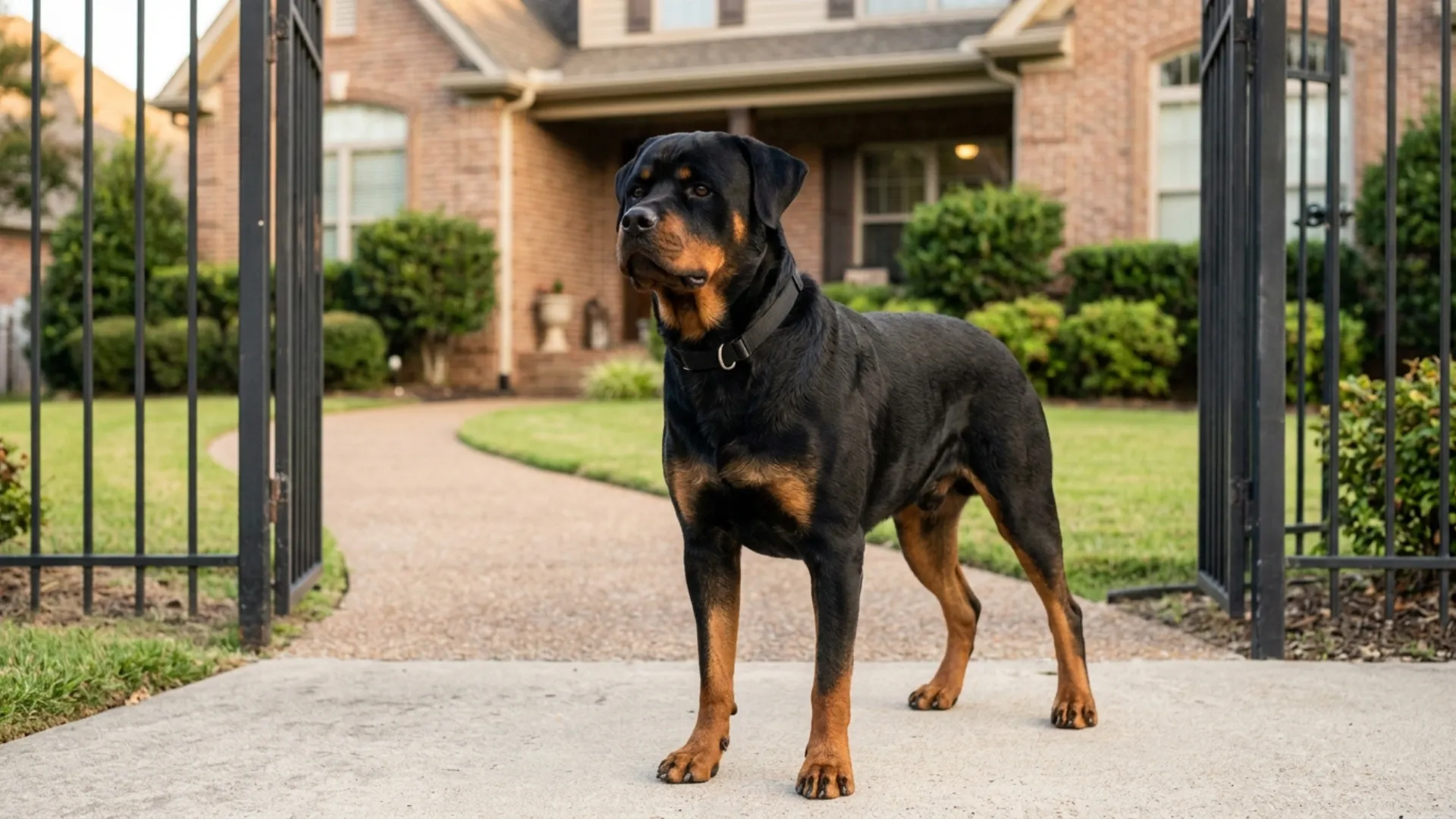
Some dogs are cute. Some dogs are athletic. And then there are dogs that make you feel like your house suddenly unlocked “premium security mode.”
Guard dogs have been protecting farms, castles, livestock, and families for thousands of years. Long before smart cameras and motion sensors existed, humans relied on loyal canine protectors with sharp instincts, powerful builds, and the ability to sense danger before people even noticed something was wrong.
These dogs combine physical strength with trainability and environmental awareness in ways few breeds can match.
Still, owning a protection breed is not like owning a casual, low-energy lap dog. These dogs need structure, leadership, exercise, and mental stimulation. Without training and socialization, even the smartest breeds can become difficult to manage.
So if you’ve ever wanted a dog that feels like a furry bodyguard mixed with a best friend, these incredible guard dog breeds absolutely deserve your attention.
Incredible Dog Breeds That Will Safeguard Your Home
1. German Shepherd
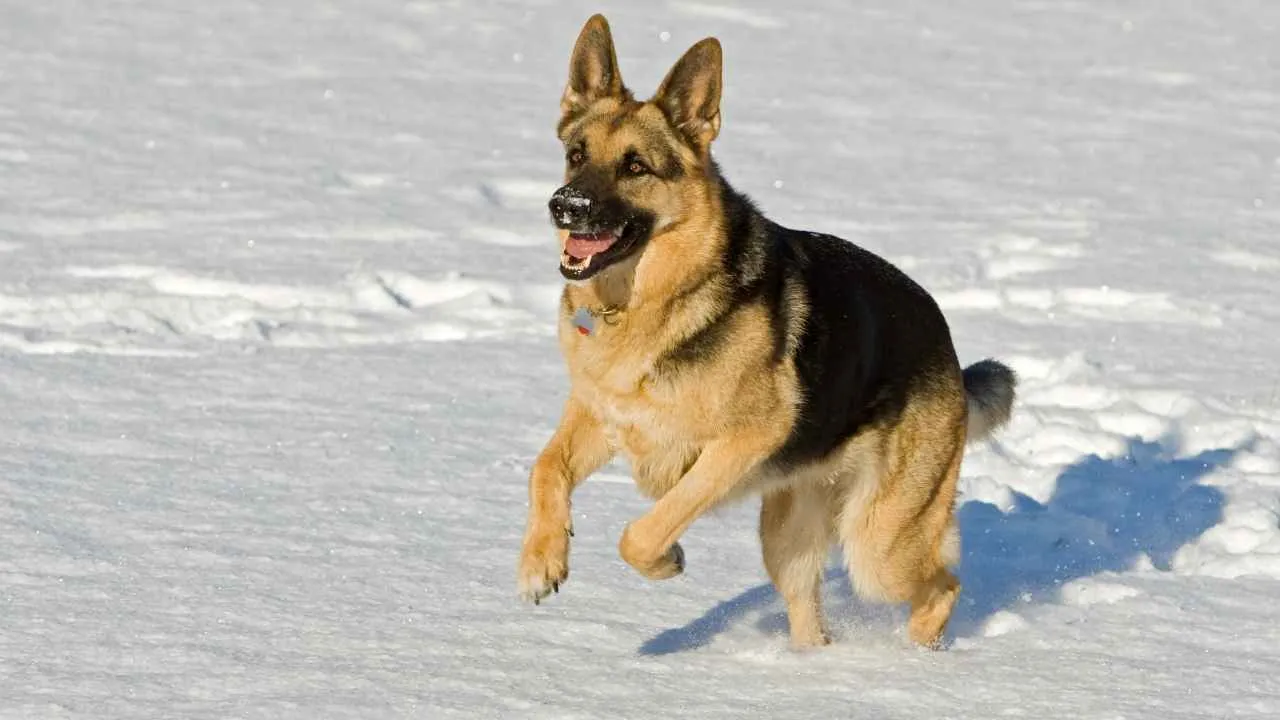
German Shepherds are basically the “main character” of the guard dog world. Police units, military teams, search-and-rescue organizations, and families across the globe trust them for one reason: versatility.
These excellent guard dogs were originally developed in Germany during the late 1800s to herd sheep. But trainers quickly realized these dogs were insanely intelligent, physically athletic, and highly trainable. That combination transformed them from farm workers into elite protection dogs.
German Shepherds are famous for their balance of intelligence, obedience, and protective instinct. Unlike some guardian breeds that rely mostly on intimidation, German Shepherds actively analyze situations and respond strategically.

These family guard dogs consistently rank among the smartest dog breeds in the world. According to Britannica, they are placed among the top breeds for obedience and working intelligence.
One thing that makes German Shepherds so respected is their ability to distinguish normal situations from real threats. Well-trained Shepherds are alert, not randomly aggressive. They naturally monitor their environment and stay aware of movement, sounds, and unfamiliar people. Their guarding style is controlled and observant rather than emotionally reactive.
That emotional awareness also makes them incredibly loyal family companions. They bond deeply with their people and often become protective without formal guard training.
Reddit owners say the breed behaves like it’s always “on duty,” casually positioning itself between family members and strangers without being asked.
2. Rottweiler
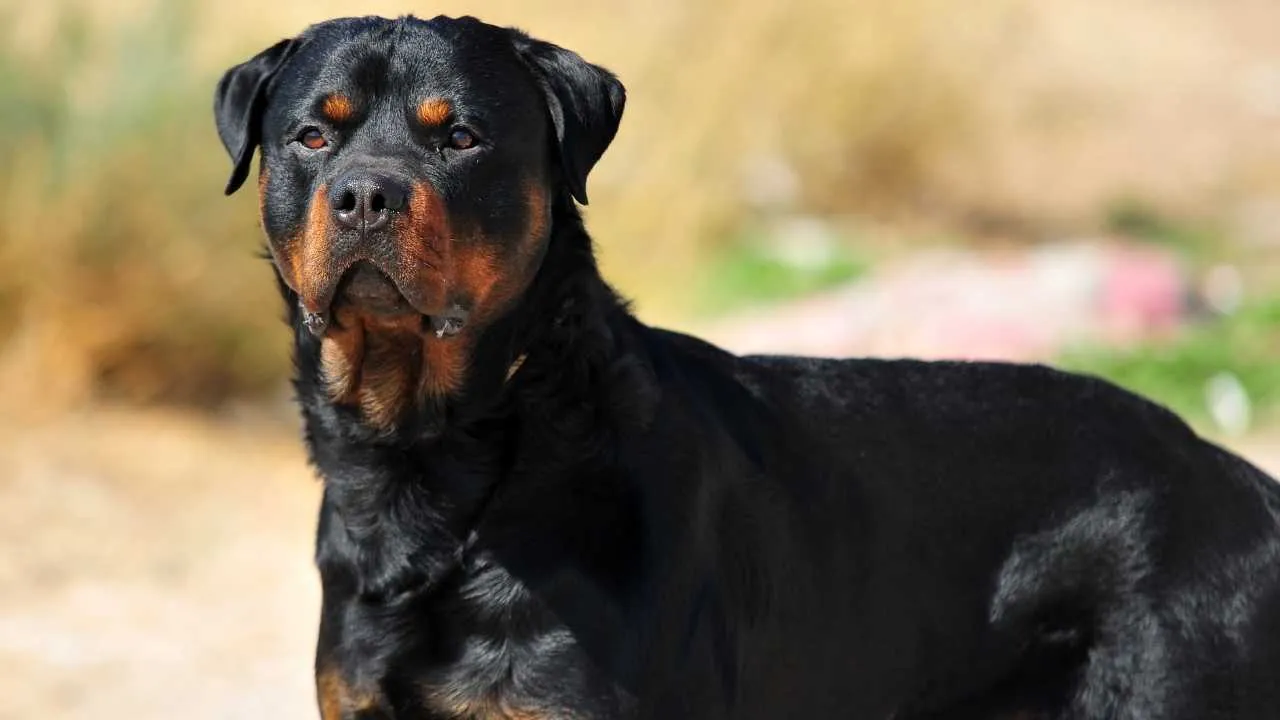
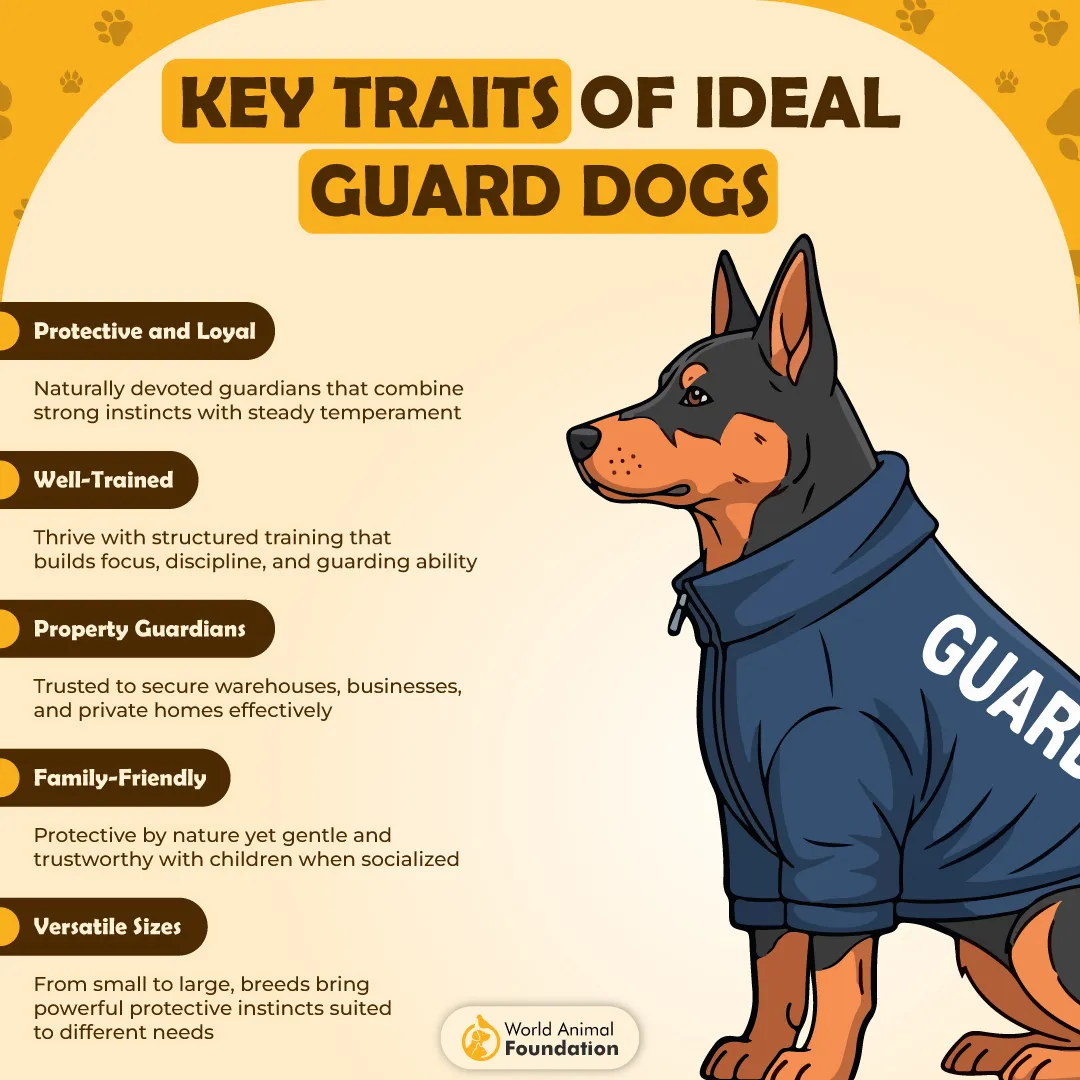
Rottweilers look intimidating because… honestly, they are intimidating. Their massive heads, muscular frames, and confident posture naturally deter unwanted attention.
But underneath all that power is a dog that’s usually deeply affectionate and family-oriented. Well-raised Rottweilers are calm, loyal, and emotionally attached to their people. The breed traces back to Roman drover dogs used for guarding livestock and protecting camps.
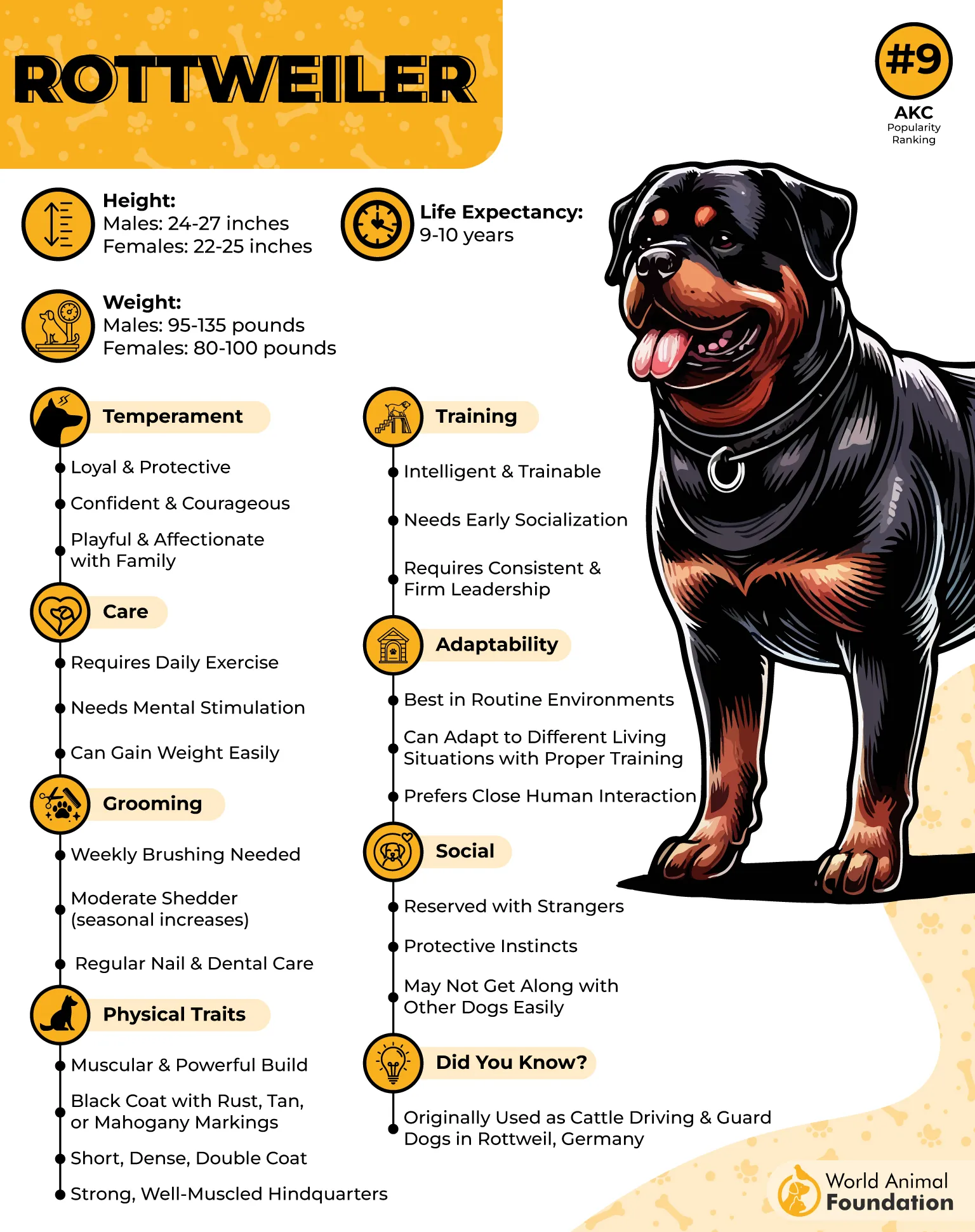
Today, they remain one of the world’s most recognized protection dogs. This protective dog breed tends to carry themselves with serious confidence. They’re not usually nervous or chaotic dogs when properly bred and socialized.
Instead of panicking during stressful situations, many Rottweilers remain calm and observant. That emotional stability is one reason experienced handlers value the breed so highly. Their guarding instinct often develops naturally without extensive training in protection.
They basically move through life like heavyweight security guards who already know they’re strong.
Despite stereotypes, this great guard dog is incredibly affectionate with its family. They often become emotionally attached and prefer staying close to their owners throughout the day.
They also tend to do well in family life with children when properly raised and supervised. However, because of their sheer size and strength, training and socialization are absolutely essential. A poorly trained Rottweiler can become difficult simply because of its physical power.
Rottweilers, unfortunately, carry one of the harshest reputations in the dog world. Some housing communities and insurance policies even restrict the breed. That stereotype affects adoption rates and public reactions.
3. Doberman Pinscher
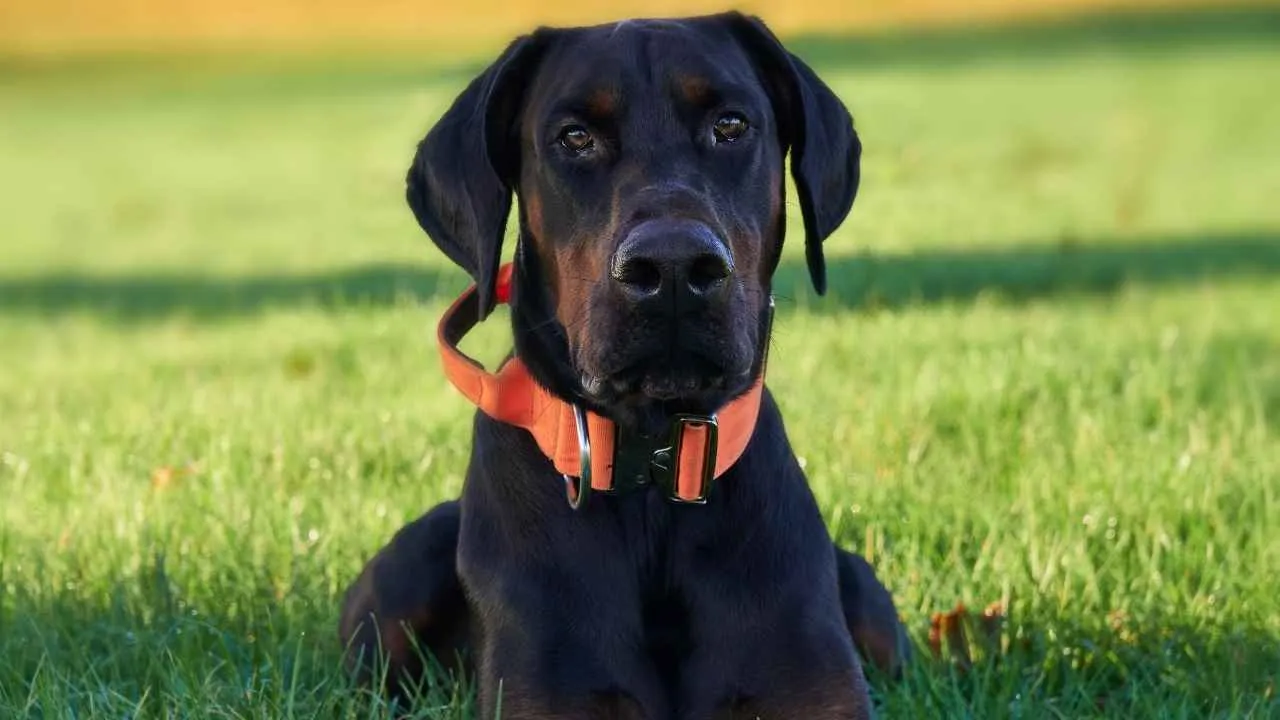
Dobermans somehow look elegant and terrifying at the same time. Lean, muscular, athletic, and hyper-alert, they’re one of the most recognizable protection breeds on the planet.
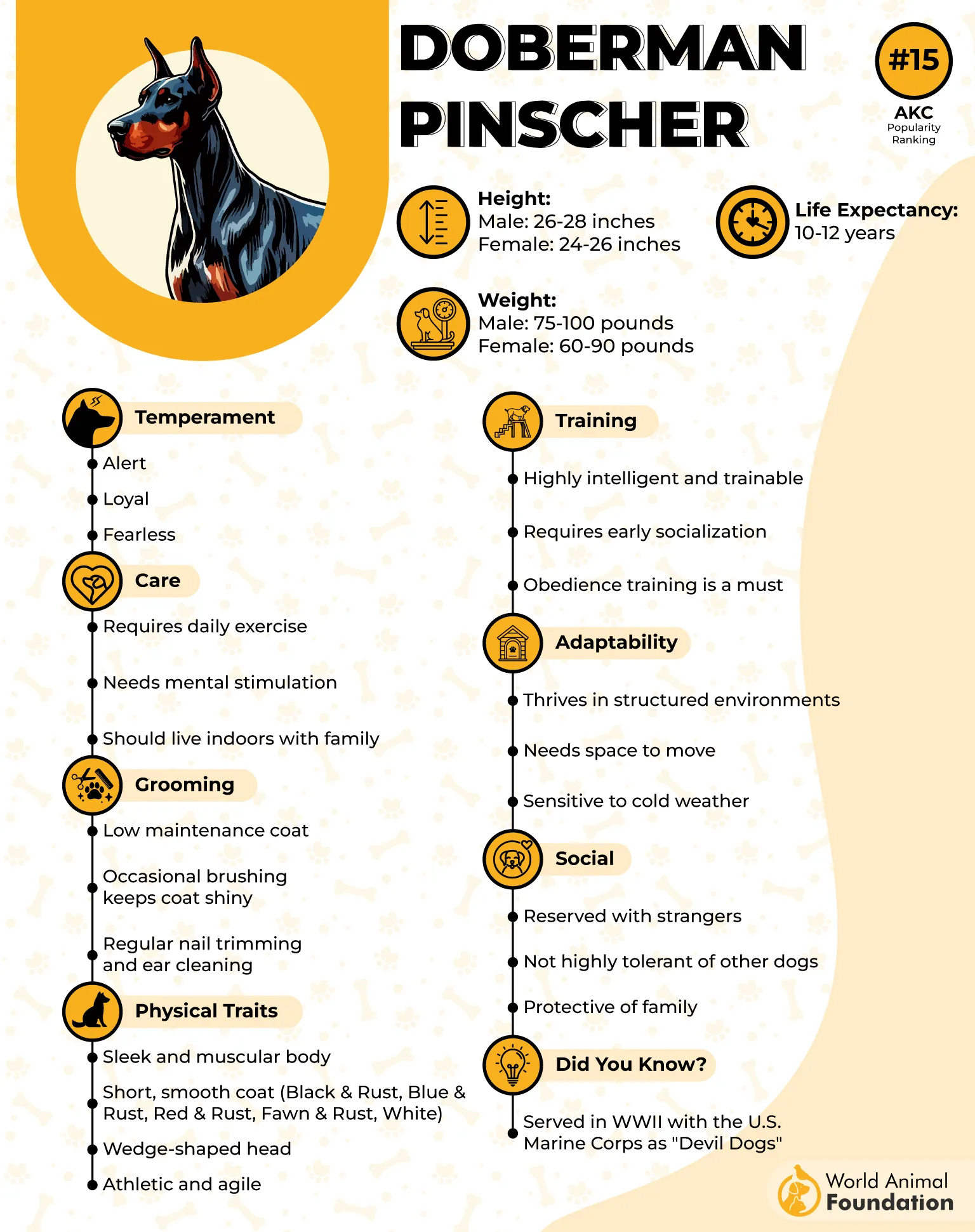
The breed was developed in Germany by Karl Friedrich Louis Dobermann, who wanted a loyal protection dog for personal security work. That purpose still shows today. They are naturally vigilant, deeply bonded to family, and extremely fast to react when something feels wrong.
They don’t just look like bodyguards—they genuinely think like them.
These guard dogs are among the fastest protection breeds, capable of reaching speeds around 32 mph. Combined with their intelligence, this makes them incredibly efficient working dogs.
They learn quickly and respond extremely well to structured training. Most Dobermans thrive when mentally challenged and included in daily activities. Unlike some independent guardian breeds, Dobermans often stay highly connected to their owners and enjoy teamwork-based training.
They’re basically the “competitive esports player” version of protection dogs—focused, fast, and mentally sharp. Dobermans are naturally suspicious of unfamiliar people and highly aware of environmental changes.
This awareness makes them exceptional watchdogs and family pets. They notice unusual sounds, movements, or energy shifts quickly and rarely ignore suspicious activity. However, responsible training is critical. Good Doberman training focuses on control, confidence, and obedience—not aggression.
4. Bullmastiff
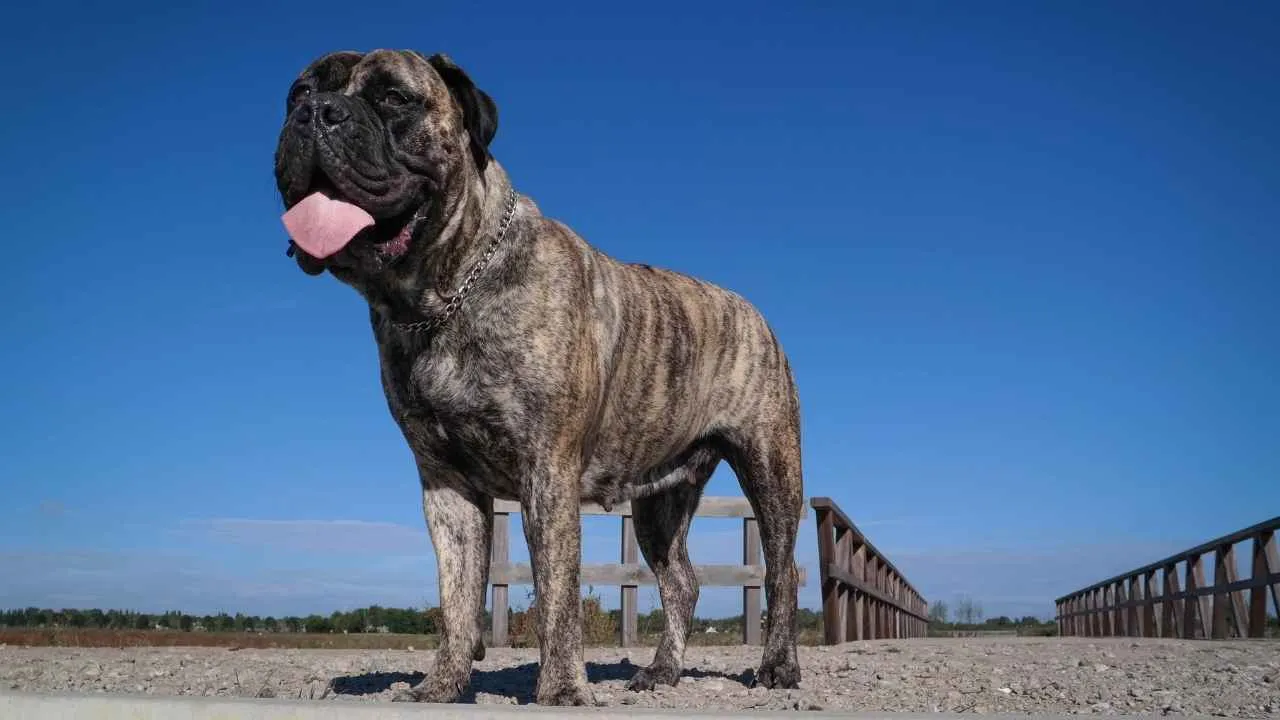
Bullmastiffs are basically giant, muscular introverts. Originally developed in England to help gamekeepers stop poachers, these dogs were originally bred to track and pin intruders without excessive barking.
That calm confidence still defines the breed today. Unlike hyper-vocal guard dogs, Bullmastiffs often rely on quiet observation and physical presence rather than nonstop noise.
They are known for being emotionally steady and low-drama indoors. Most adults are surprisingly relaxed once exercise needs are met.
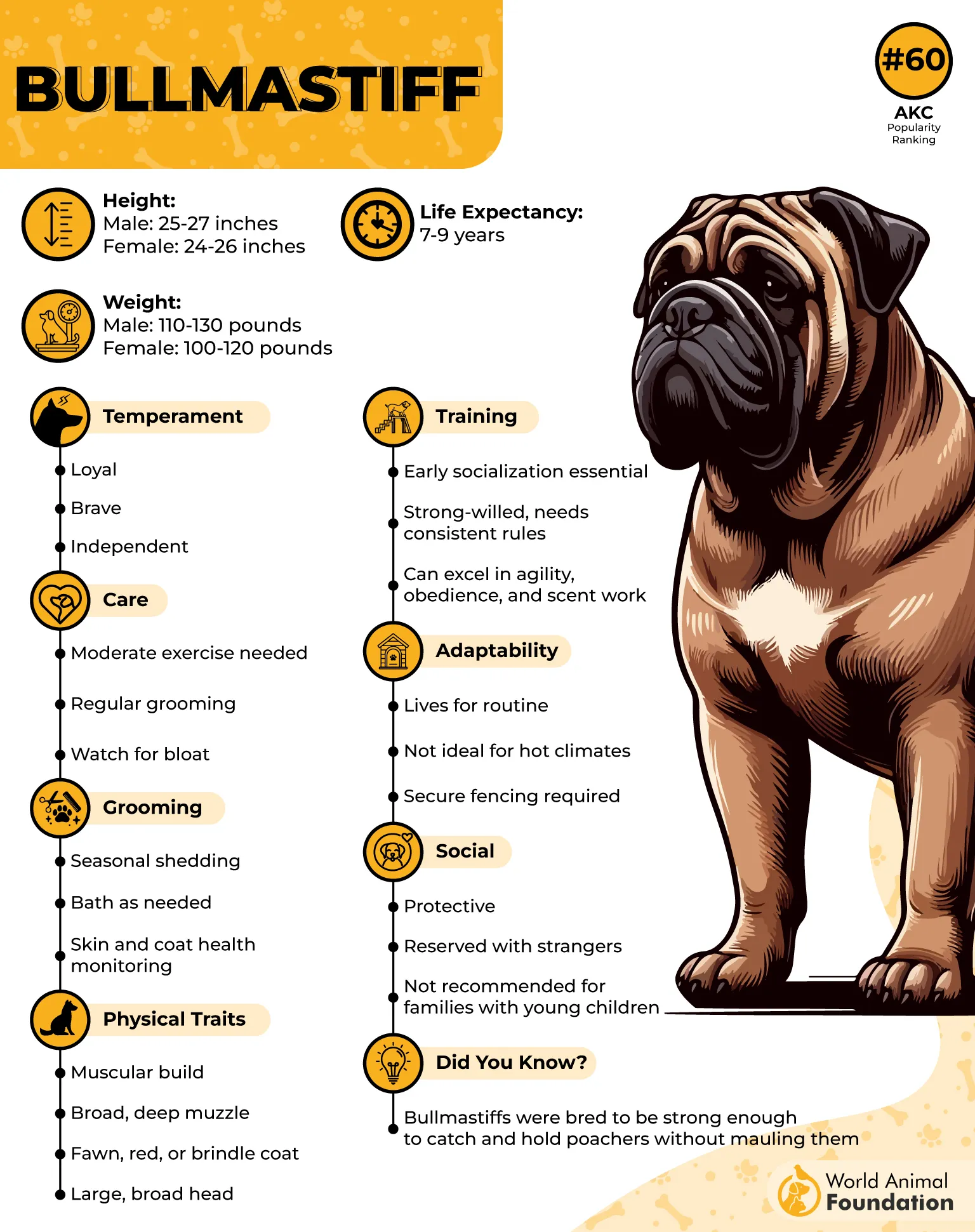
They’re deeply loyal to family and naturally suspicious of unusual activity. Standing next to one feels like accidentally unlocking “boss battle mode.” Despite their intimidating appearance, Bullmastiffs are often gentle with family members and children.
Many owners describe them as affectionate “gentle giants” who prefer staying close to their people. However, supervision around small children still matters because large dogs can accidentally knock kids over during play.
Training is also essential because stubbornness is very real in this breed. Bullmastiffs have short, easy-to-maintain coats that require minimal grooming.
Their calm indoor personality also makes them more apartment-friendly than many people expect. That calm confidence is exactly why they’re so effective.
5. Cane Corso
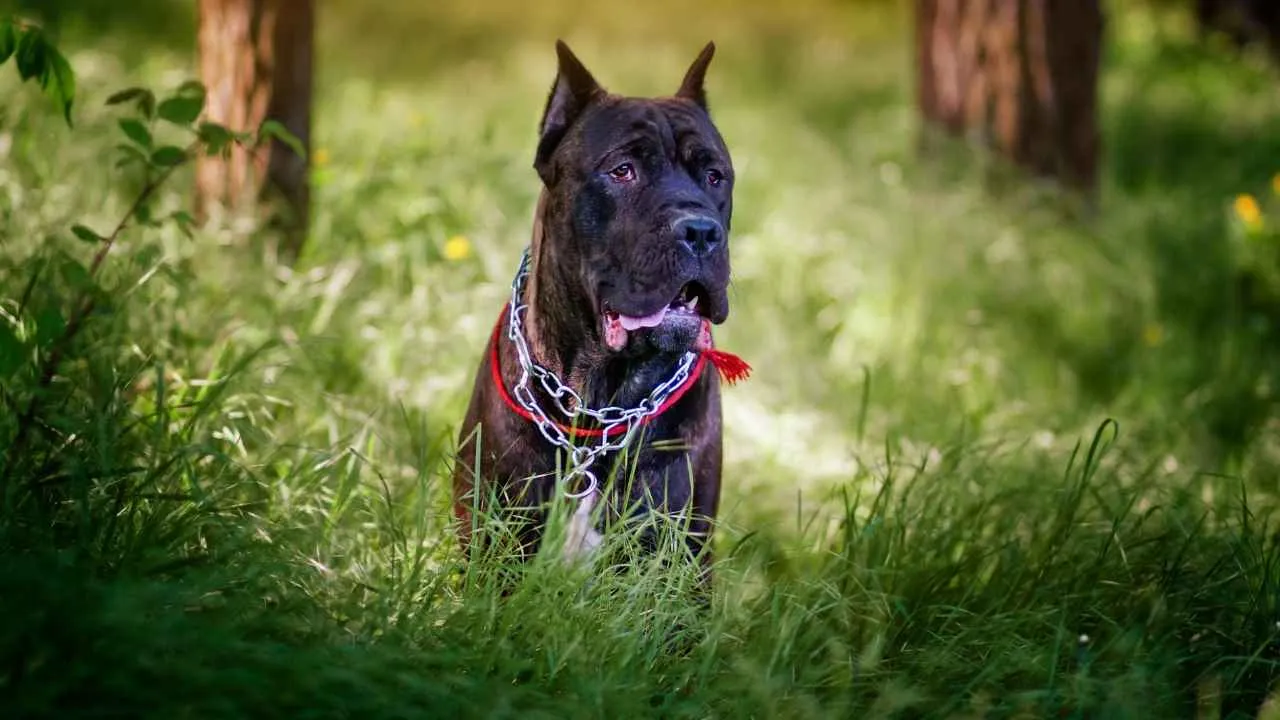
The name “Cane Corso” literally translates from Latin to “bodyguard” or “guard dog of the courtyard,” and it’s not just hype. This breed was built for protection—historically subduing large game like wild boars and herding livestock.
After World Wars I and II, their numbers almost vanished in Italy, but dedicated breeders brought them back from near extinction in the 1970s. Today, they’re still true guardians with a loyal streak that’s hard to beat.
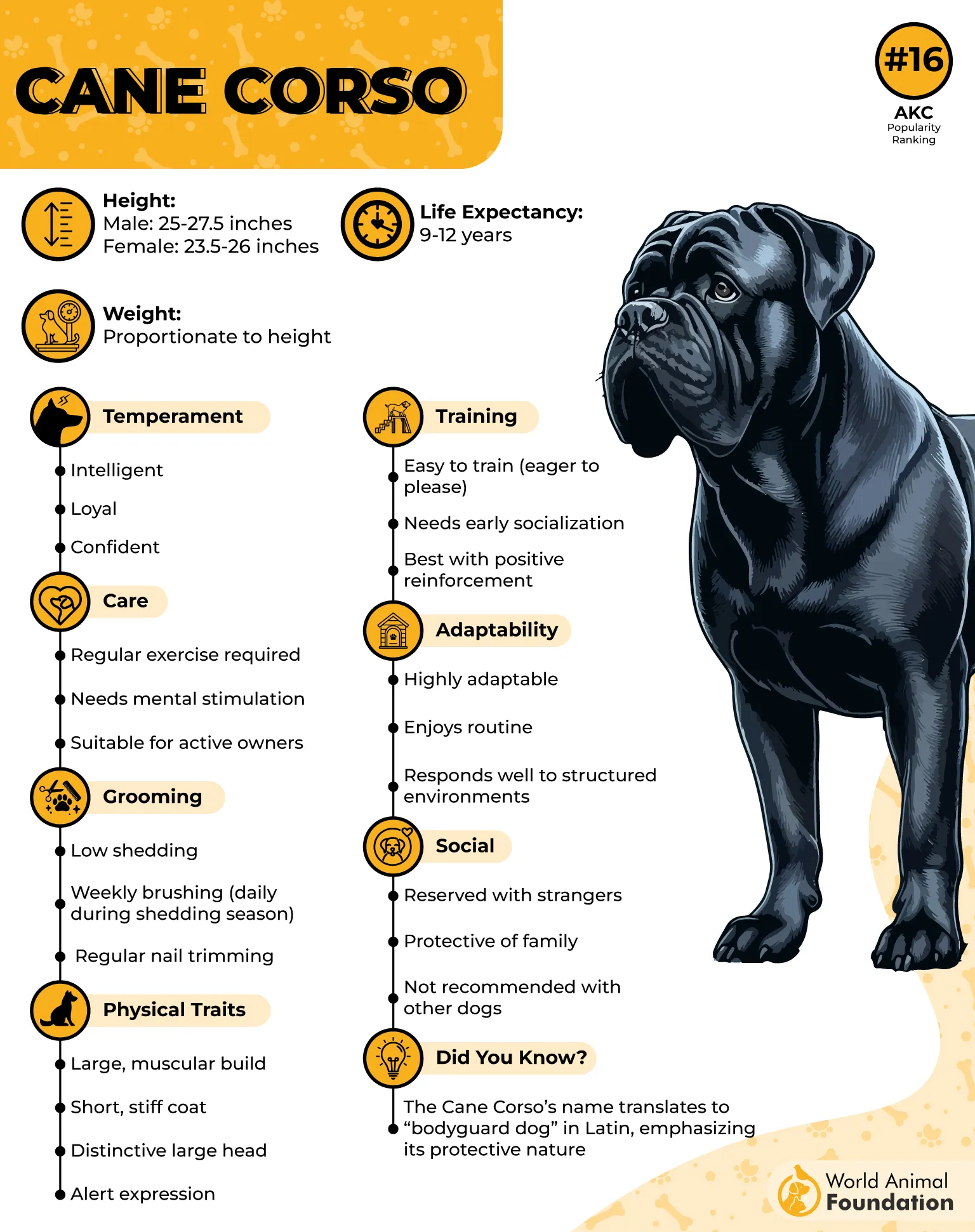
These dogs aren’t just muscle. They’re incredibly intelligent for a mastiff-type breed, making training surprisingly smooth if you stay consistent. Think of them like a strategy gamer—they thrive on learning new tasks, whether it’s agility, obedience, or just mastering home boundaries.
Without mental stimulation, they can get bored, which isn’t fun for anyone in the household.
These dogs are muscular but lean, meaning they’re prone to gaining weight if left sedentary. Experts recommend daily long walks (gentle but firm), play sessions, and mental challenges. Imagine trying to keep a Pokémon at max level without battles—it’s the same idea. Regular activity keeps them healthy, happy, and alert.
With a protective nature, they form strong bonds with their humans, especially with primary caregivers. They’re affectionate but also protective, so early socialization with other dogs and people is key. Pro tip: involve your kids in walks, feeding, or grooming.
It helps build trust and teaches the dog to view everyone in the household as part of its “pack.”
This properly trained protection dog isn’t just a protector—they’re a stylish, imposing family guardian.
6. Belgian Malinois
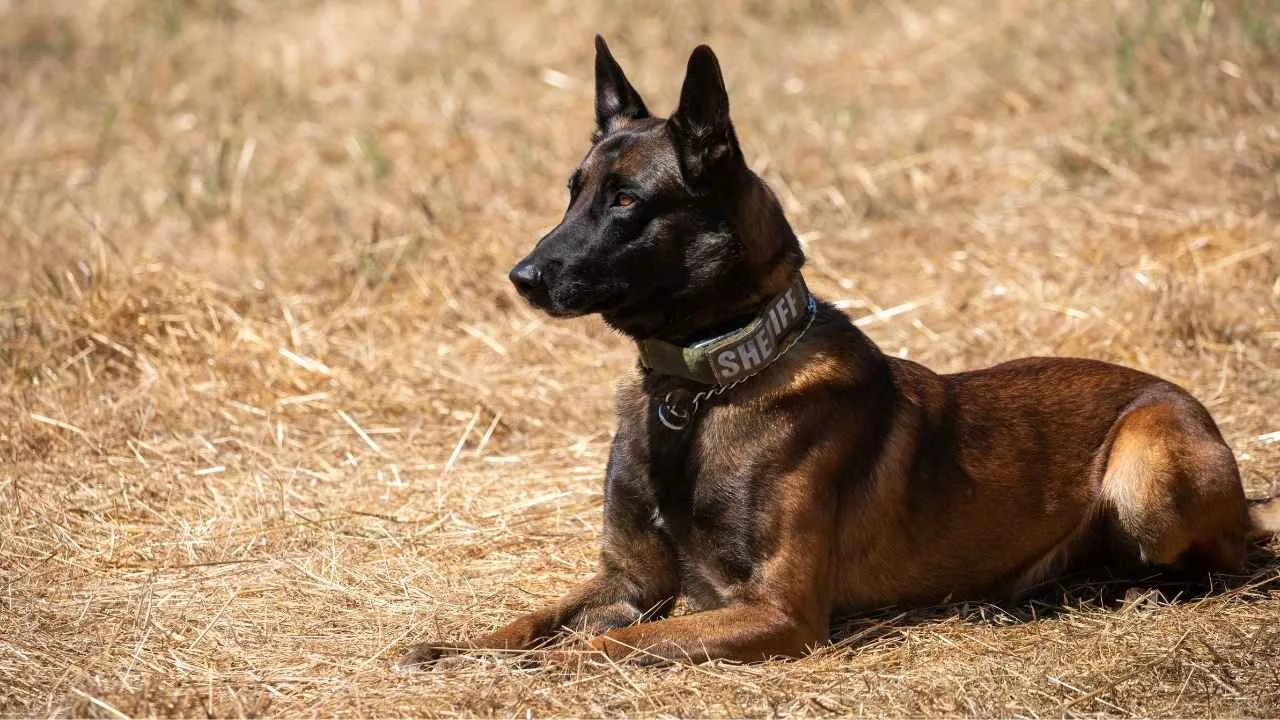
If the dog world had esports, the Belgian Malinois would be the pro player who dominates every level. Extremely intelligent and responsive, they can learn commands, complex tasks, and problem-solving games faster than most breeds.
They’re the breed police love for sniffing out bombs, drugs, and fugitives. Their brainpower makes them a serious contender for any household seeking a mental and physical challenge.
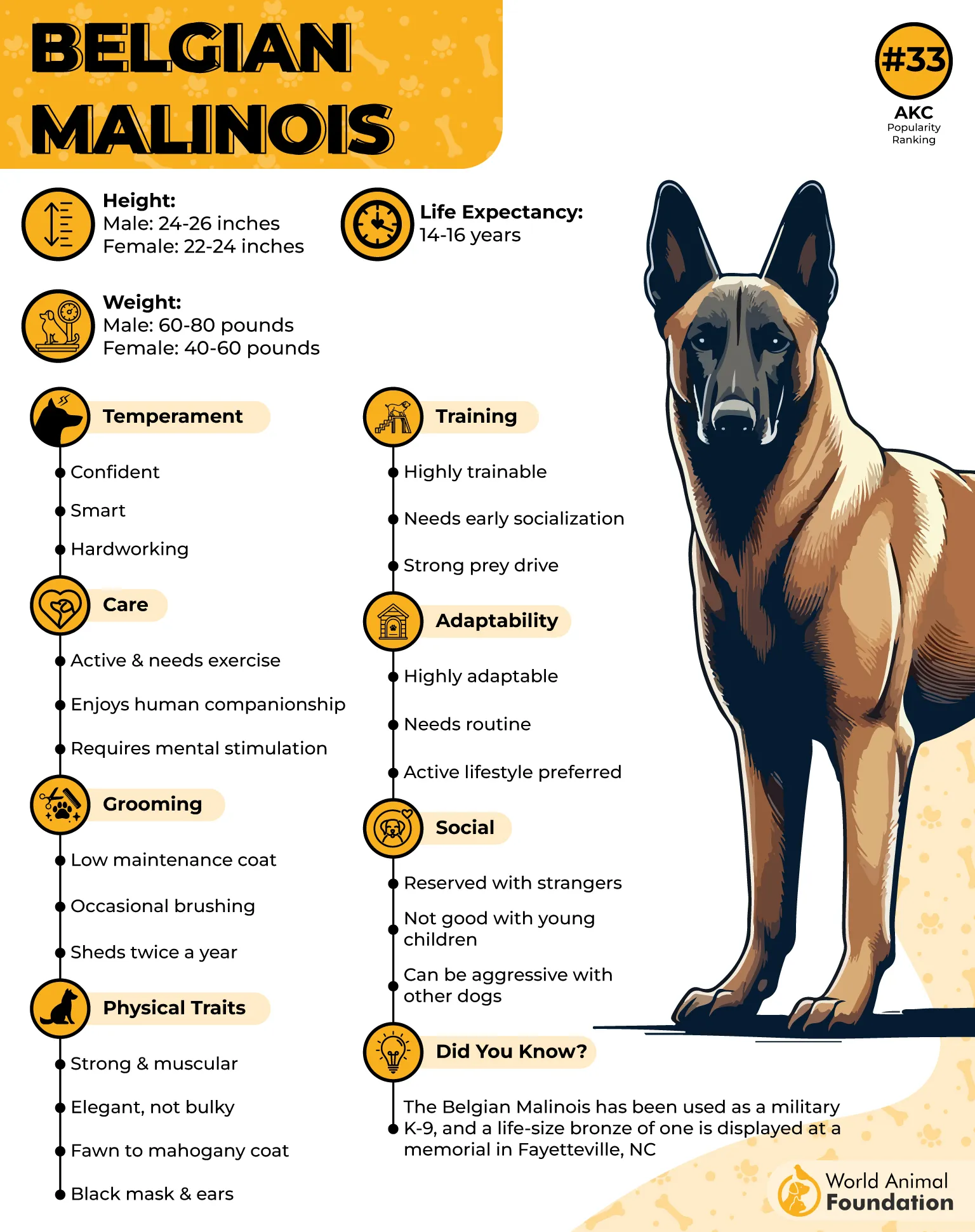
Thanks to this dog’s natural protective instincts, it is wary of strangers, making it a perfect home protector, but it relaxes once reassured by its owner. Early socialization is crucial because it can get aggressive with other dogs if neglected.
Reddit owners describe them as intense, like a security camera that also thinks for itself—but in a good way.
Malinois aren’t low-key. They need several hours of activity daily—running, agility, obedience, or problem-solving games. Without stimulation, they can get stressed or destructive. Think of them like a gaming laptop—tons of potential but needs constant input to stay optimal.
These dogs are sleek and athletic, with coat colors ranging from earthy browns and reds to deep blacks. That color variety isn’t just for style—they can blend into different environments, which is why law enforcement loves them.
While intense at work, they can bond deeply with their owners and thrive in a home where they’re part of the family pack. They’re not ideal for houses with small kids or cats because of their high energy and strong prey drive. But for the right owner who can commit to training and engagement, they’re fiercely loyal and protective companions.
7. Akita
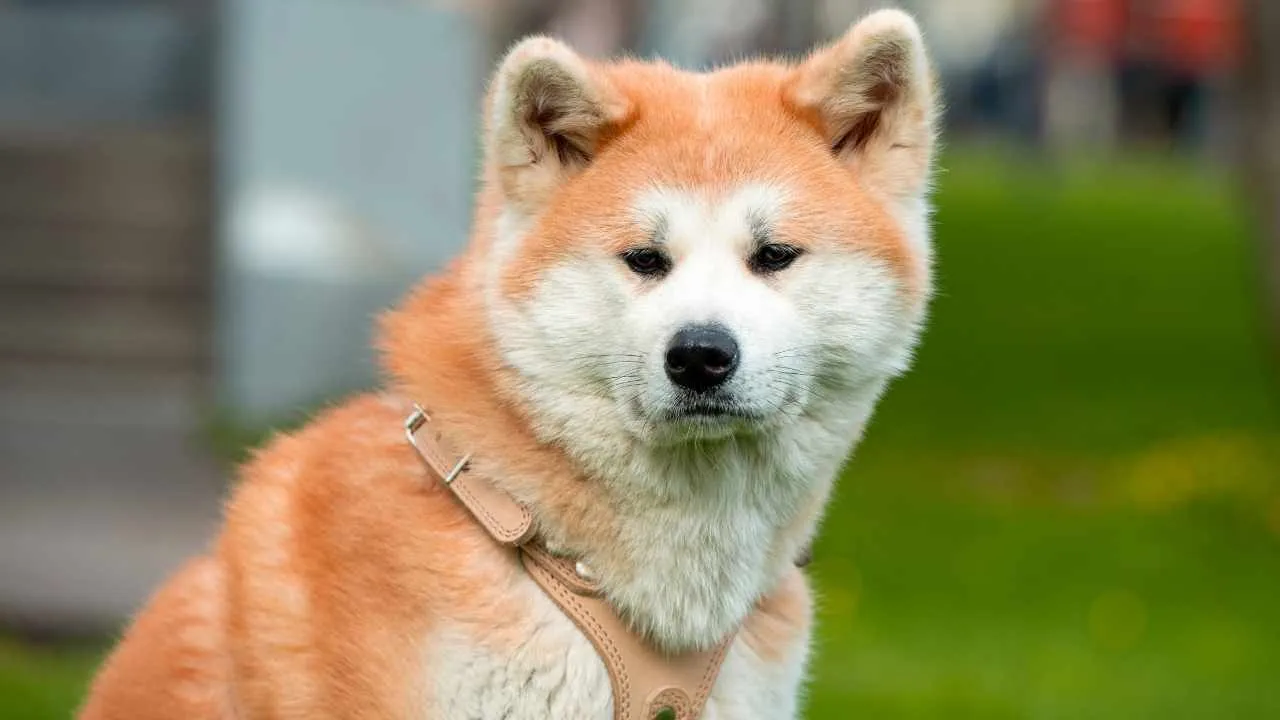
Akitas are basically the samurai of dogs. Bred in Japan’s mountains for hunting bears and wild boars, they also served as guard dogs for nobility. Today, their vigilant instincts make them excellent watchdogs—they notice unusual activity immediately and are confident enough to act if necessary.
Once an Akita bonds with its family, it’s basically stuck in “ride-or-die” mode. They’re affectionate with their humans but reserved with strangers. Real-world owners often say their Akitas have a sixth sense for danger, responding instantly to protect family members without being unnecessarily aggressive.
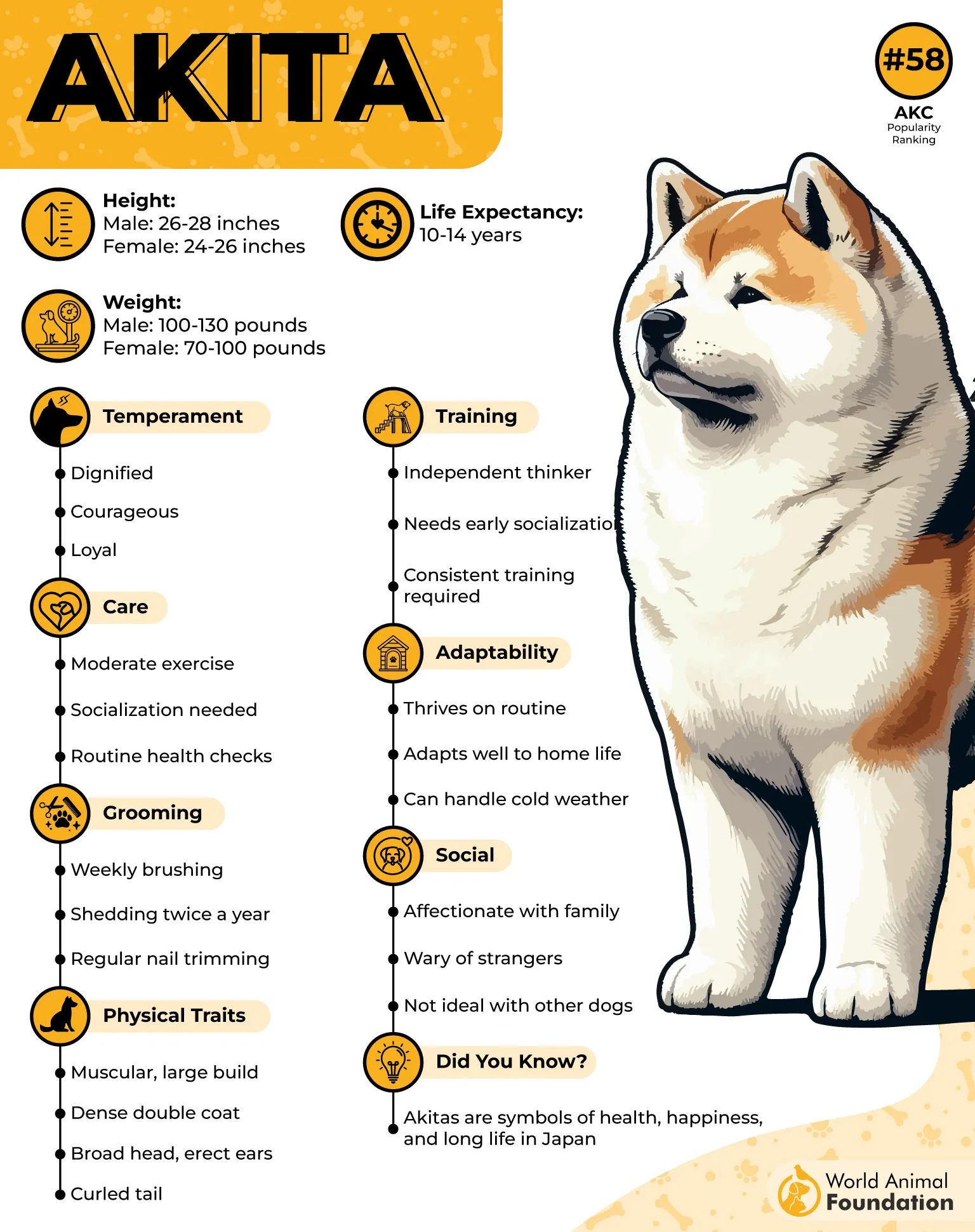
Akitas are large, powerful dogs with a sturdy build, according to Chewy. Their size alone is intimidating enough to deter intruders. Add their confident posture and noble expression, and you’ve got a dog that naturally commands respect.
While they’re calm indoors, they still need moderate exercise to stay fit. Daily long walks, play sessions, and mental challenges keep them balanced. Their stamina comes from generations of mountain hunting, so they can handle fairly intense activity without burnout.
Akitas are not excessive barkers—they alert the family but don’t create unnecessary chaos. Grooming is moderate; their thick coat requires regular brushing to manage shedding. With consistent training and early socialization, they’re protective, calm, and deeply loyal dogs that make exceptional companions for experienced owners.
Conclusion
The best guard dogs are not just powerful—they’re intelligent, emotionally balanced, and deeply loyal.
What all these breeds share is purpose. These dogs were developed over generations to protect people, livestock, homes, and property. That instinct still exists today.
But protection also requires responsibility. Proper training, early socialization, exercise, and leadership are absolutely essential. A well-raised guard dog becomes a stable, loving family companion. A neglected one can become difficult to manage.
Real owner insight across almost every protection breed sounds surprisingly similar: once these dogs trust you, they’re loyal for life.
At the end of the day, the best guard dogs don’t just safeguard homes. They safeguard the people inside them, too.
