




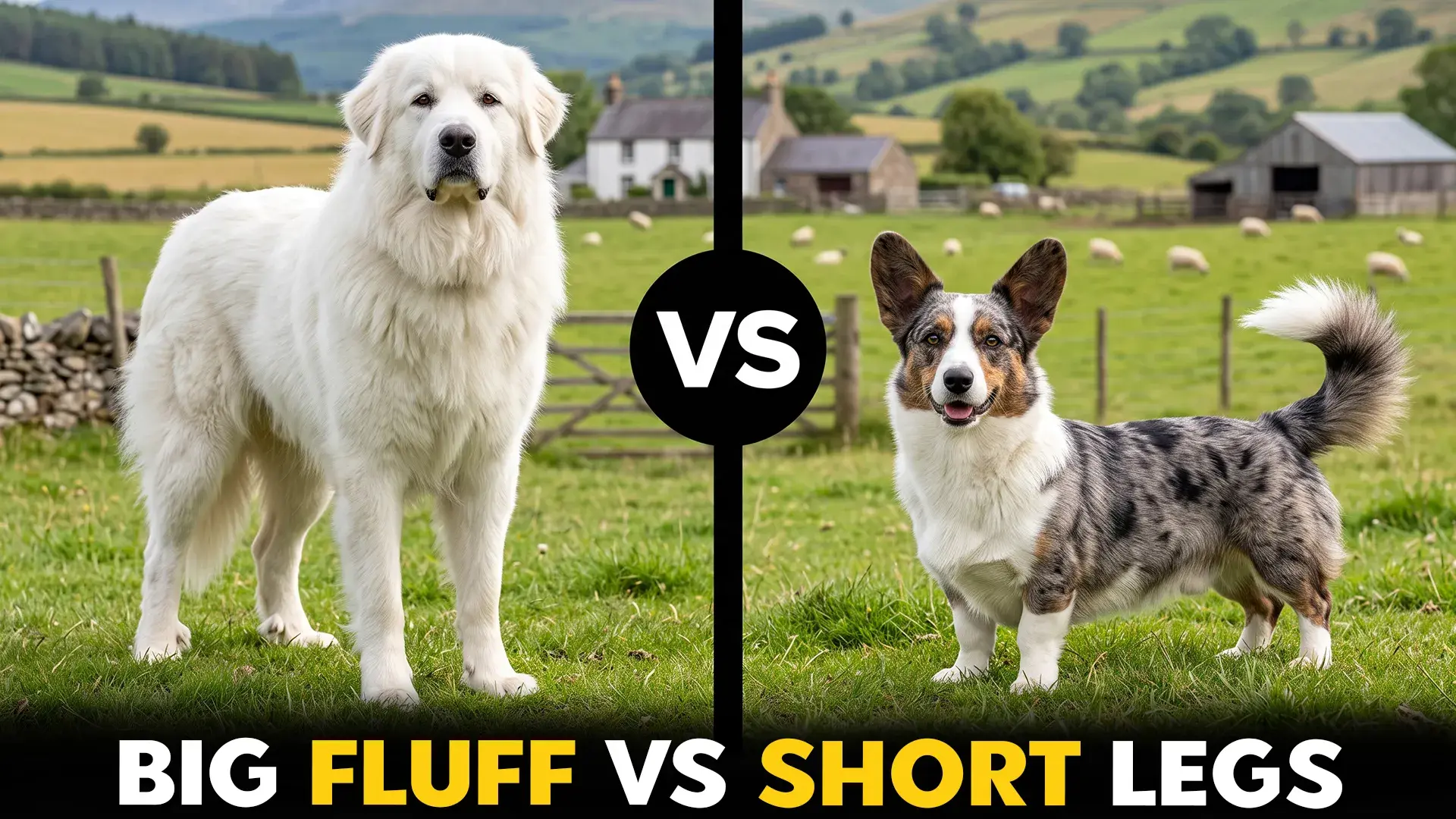
Choosing between a Great Pyrenees and a Cardigan Welsh Corgi feels a little like choosing between a medieval castle guard and a chaotic but lovable farm manager. One is massive, calm, and protective enough to stare down wolves. The other is compact, clever, and fully convinced it runs the household despite being built like a loaf of bread with legs.
Both breeds come from serious working backgrounds, but they evolved for completely different jobs. The Great Pyrenees spent centuries guarding livestock in freezing mountain ranges, while the Cardigan Welsh Corgi hustled cattle across Welsh farms using speed, intelligence, and fearless heel-nipping energy.
And honestly? Their personalities still reflect those original jobs today. One likes quiet observation and independent decision-making. The other wants activity, interaction, and probably a say in every family decision, like an overinvolved group chat admin.
If you’re trying to decide between these two breeds, this guide breaks down everything that actually matters in real life.
Because cute photos online are one thing, living with a 100-pound livestock guardian or a stubborn mini-herding strategist is a completely different experience.
Great Pyrenees vs. Cardigan Welsh Corgi
Though both breeds possess a deeply ingrained working heritage, their size, temperament, and daily needs couldn’t be further apart. This essential comparison breaks down their protective instincts, exercise demands, and household compatibility to help you see how these two distinct histories translate into modern family life.
Breed Origins & Functional Background
The Great Pyrenees and Cardigan Welsh Corgi both have ancient working-dog roots, but their jobs shaped them in totally different directions. One is a massive livestock guardian built to protect, while the other is a small herding dog built to control movement and stay alert.
The Great Pyrenees comes from the Pyrenees Mountains (on the France–Spain border) and has origins dating back thousands of years. They were bred to guard sheep alone for long periods, making independent decisions without human direction. That’s why modern Pyrenees are calm, low-energy, and highly independent “silent protector” types.
The Cardigan Welsh Corgi, from ancient Wales, was bred to herd cattle. Omlet mentions that their short legs helped them dodge kicks while nipping at heels to move livestock efficiently. This made them fast-thinking, alert, and highly responsive working dogs.
Great Pyrenees are more relaxed, detached, and watchful, while Cardigans are more interactive, playful, and mentally engaged with their owners. One prefers quiet observation; the other prefers constant involvement.
Physical Characteristics & Body Structure
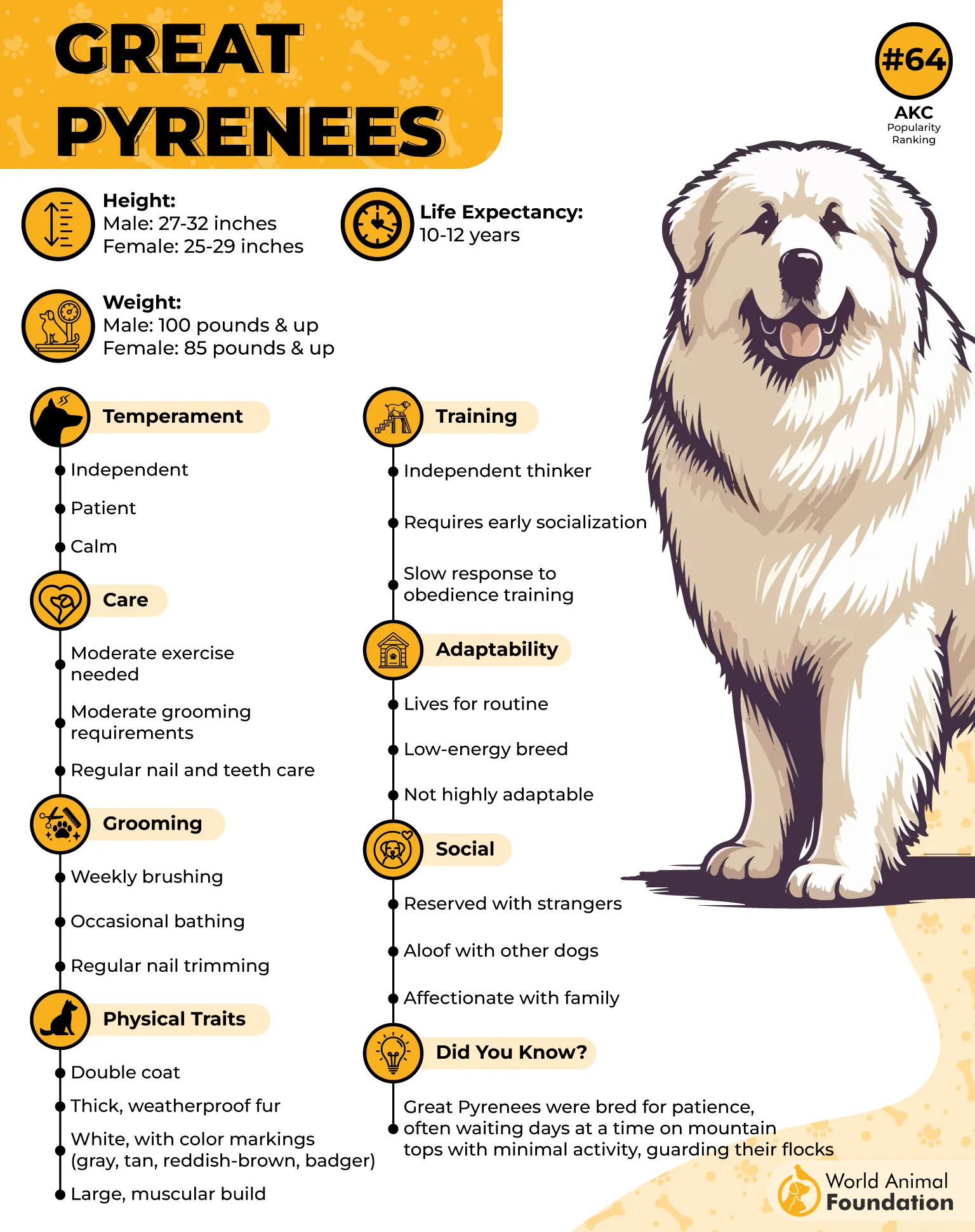
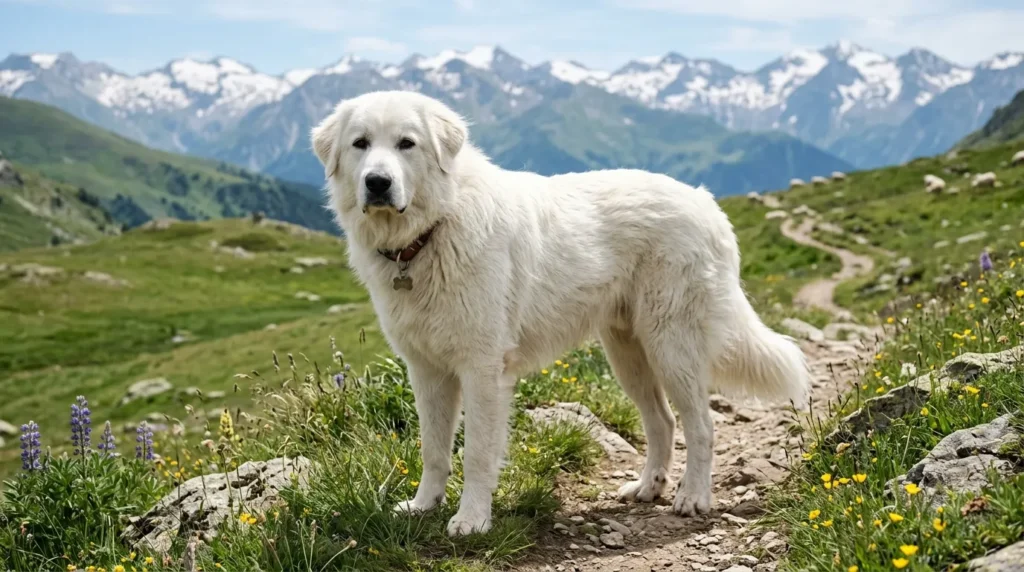
The Great Pyrenees is a giant guardian breed, with males often reaching 100–160 lbs. Despite their size, they move smoothly and were built for endurance in harsh mountain terrain, not speed.
Their thick white double coat helped them survive freezing climates and made them easy to spot while guarding flocks at night. Calm, cloud-like in appearance, these dogs with long tails still carry serious strength beneath their coats and were historically capable of standing up to wolves when needed.
The Cardigan Welsh Corgi is much smaller, at around 25–38 lbs, but surprisingly solid and muscular for its size. Its long body and short legs give it that iconic silhouette, but it’s an active working breed, not just a companion pet. Corgis are also high-energy dogs.
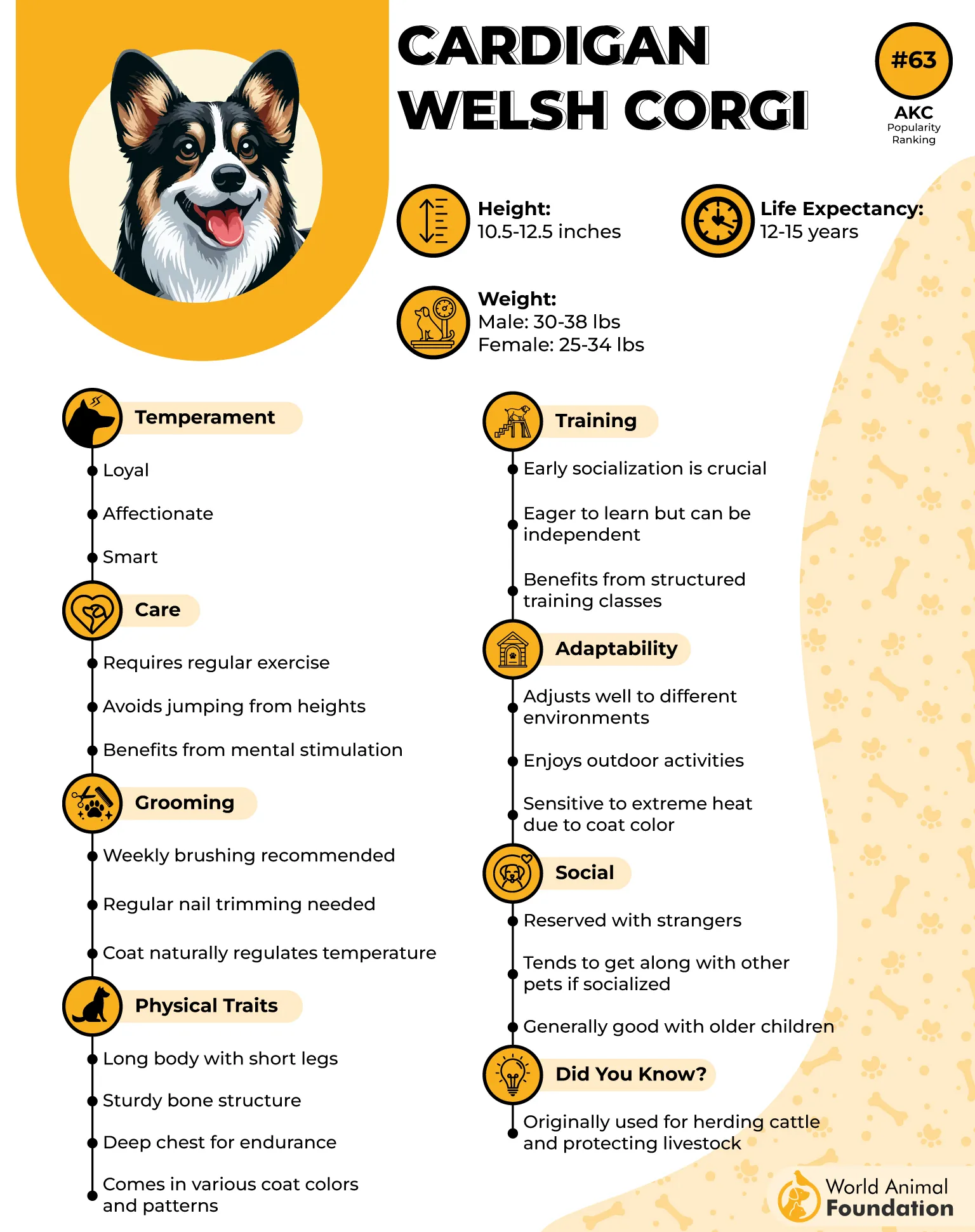
Cardigans come in a wide range of colors, like brindle and blue merle, with expressive eyes and a fox-like face that always looks alert. Built for herding cattle, they’re agile, fast, and capable of sharp movements, almost like a compact “athlete in low gear.”
Temperament & Behavioral Profile
The Great Pyrenees is calm, patient, and naturally protective. Most of the time, they’re quiet observers—just watching their surroundings and casually patrolling like off-duty security guards. But they’re also highly independent, so they don’t always obey commands instantly and may think for themselves instead of following instructions unthinkingly.
They’re naturally territorial and will bark to alert their family, especially at night. Many owners joke that their Pyr “starts security shift after sunset,” reacting to every small sound or movement outside.
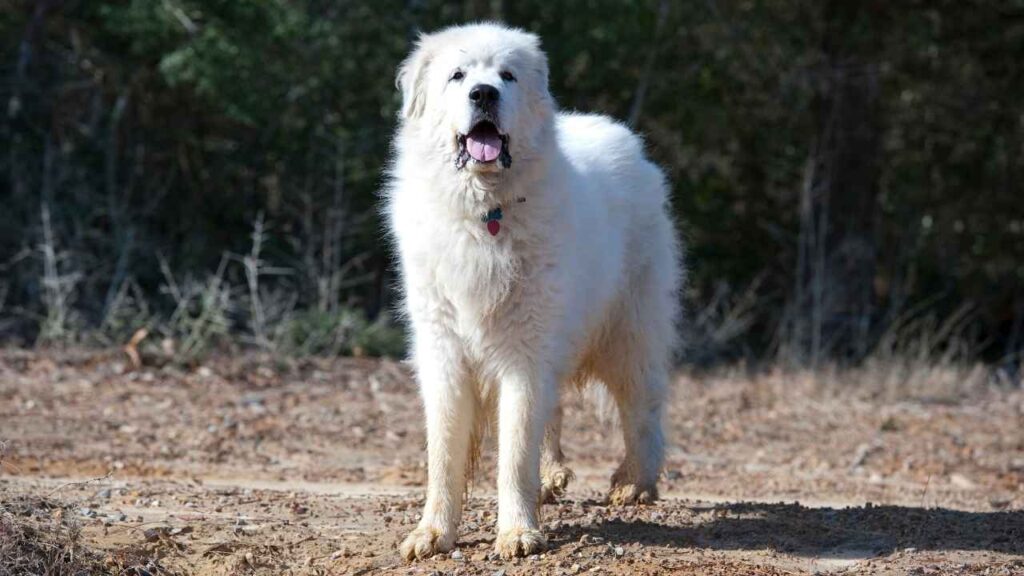
With family, they’re gentle and affectionate, often very patient with children, though their large size means accidental bumps can still happen.
The Cardigan Welsh Corgi is the opposite in energy—alert, active, and always mentally engaged. They like being involved in everything and often try to “manage” their environment due to strong herding instincts. This can show up as herding behavior, like nipping or guiding movement.
They’re highly intelligent and emotionally aware, often picking up on household moods quickly. Without enough stimulation or socialization, they can become bossy or overly reactive. In return, they’re extremely loyal, fun, and full of personality—just much more hands-on than the laid-back Pyrenees.
Activity Requirements & Energy Levels
The Great Pyrenees is a low- to moderate-energy breed. They usually do well with about 30–60 minutes of regular exercise, like walks or yard roaming. However, they love to wander and patrol, so off-leash reliability is poor and secure fencing is essential. Because of their thick coat, Royal Canin says they can also overheat easily in hot weather.
Indoors, they’re often very calm and low-energy once exercised, happily relaxing near their family for long periods.
Cardigan Welsh Corgis are much more energetic and need around 45–60 minutes of daily activity plus mental stimulation. Without it, they can become bored and start behaviors like barking or herding. They also thrive on training, puzzle games, and agility work due to their intelligence.
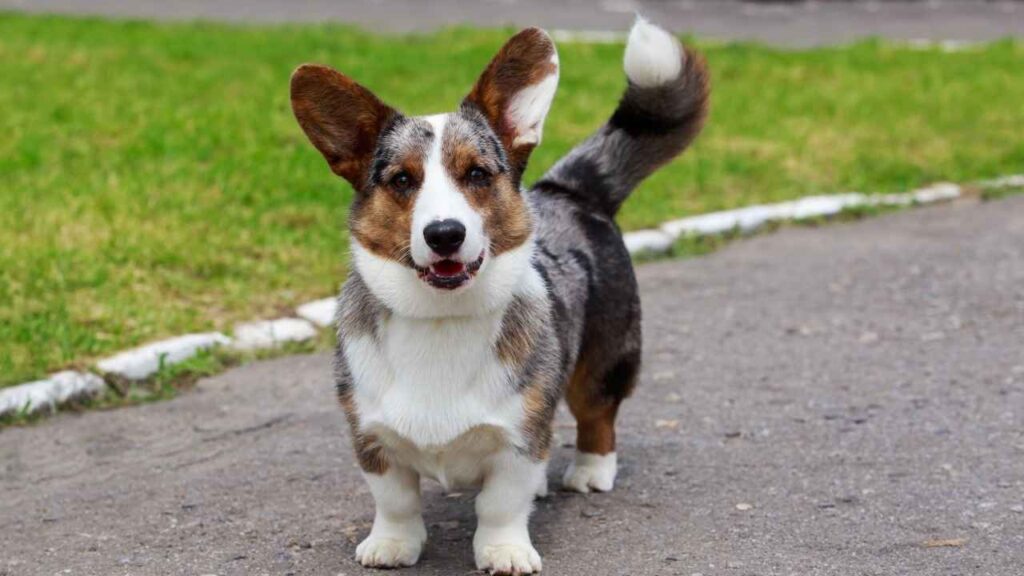
Many owners joke that Cardigans have “random burst energy”—chilling one moment, then suddenly sprinting around as they recharge instantly.
Trainability, Intelligence & Learning Ability
Great Pyrenees are extremely intelligent, but they are not obedience-driven in the traditional sense. They learn commands quickly. The issue is whether they feel the command is worth following. Harsh correction methods usually fail with this breed because they respond poorly to intimidation. Positive reinforcement and patience work far better.
Training sessions must stay short and engaging. Repetition bores them quickly. Pyrs are excellent problem-solvers, but they think independently rather than seeking constant approval from a handler.
Cardigans are highly trainable and thrive on structured learning. They respond exceptionally well to positive reinforcement and often enjoy training as a form of mental stimulation. Because of their herding background, they excel at pattern recognition and learning routines. Many Cardigans quickly master advanced obedience, agility, and trick work.
However, intelligence can also create stubbornness. If training lacks consistency, they’ll absolutely test boundaries. Basically, Cardigans learn fast—but they also learn loopholes fast.
Coat Maintenance & Grooming Needs
Despite their massive, fluffy appearance, Great Pyrenees coats are relatively low-maintenance structurally. Their double coat naturally resists dirt and tangling. Weekly brushing is usually enough outside seasonal shedding periods.
But when shedding season hits? Absolute chaos. Owners often describe Pyr shedding as “snowstorms inside the house.” Regular ear cleaning, nail trimming, and dental care remain important.
Cardigans require weekly brushing and more frequent grooming during seasonal coat blowouts. Their coat repels dirt fairly well, but they do shed consistently year-round. Because of their long body shape, maintaining a healthy weight is extremely important to protect the spine and joints.
Routine grooming sessions also help owners monitor skin, nails, ears, and overall health condition.
Average Lifespan & Longevity
Great Pyrenees typically live around 10–12 years. Common health concerns include hip dysplasia, bloat (gastric torsion), osteosarcoma, and patellar luxation. Proper weight management and routine vet care significantly improve longevity and mobility.
Britannica says that Cardigan Welsh Corgis generally live 12–15 years, sometimes longer, with excellent care. Common concerns include intervertebral disc disease (IVDD), hip dysplasia, progressive retinal atrophy, and obesity-related joint stress.
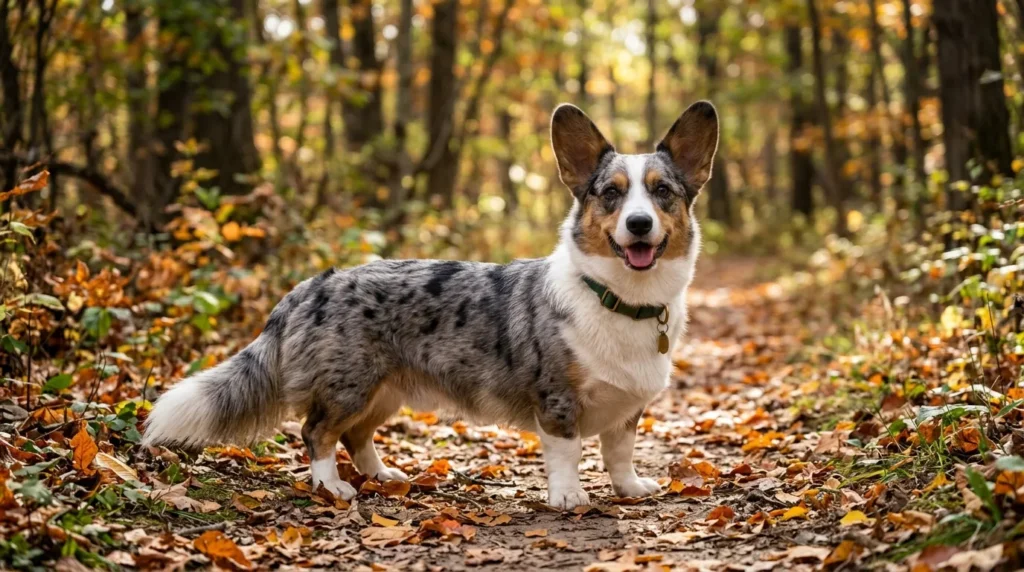
Corgis are commonly associated with degenerative myelopathy. It carries a known genetic mutation (SOD1) that also appears in other corgi-type breeds, so it’s considered a higher-risk breed. Responsible breeding and DNA testing are especially important here.
Because of their body structure, avoiding excessive jumping and maintaining a healthy weight are extremely important.
Great Pyrenees vs. Cardigan Welsh Corgi: Suitability for Family Life vs. Guard Duties
If your goal is serious property guarding, the Great Pyrenees clearly wins. Their natural protective instincts, intimidating size, and calm territorial awareness make them exceptional guardian dogs. But they’re best for owners comfortable handling independence, nighttime barking, and giant-breed responsibilities.
Pyrs are calmer and more emotionally reserved, as per Purina. Cardigans are interactive, playful, and highly engaged with daily family life.
The Cardigan Welsh Corgi works better for families seeking an active, affectionate, trainable companion with watchdog instincts—but not the full-scale livestock-guardian intensity. Apartment living strongly favors the Cardigan. Large rural properties strongly favor the Great Pyrenees.
One breed protects like a mountain sentinel. The other supervises life like an overachieving farm manager. Honestly? Both are amazing—just in completely different ways.
Conclusion
The Great Pyrenees and Cardigan Welsh Corgi may both come from working backgrounds, but living with them feels completely different.
The Great Pyrenees is calm, powerful, independent, and naturally protective. They’re ideal for owners who appreciate quiet loyalty, low-drama companionship, and strong guardian instincts wrapped inside a giant fluffy body.
The Cardigan Welsh Corgi is smart, energetic, emotionally tuned-in, and endlessly entertaining. They thrive in active homes where their intelligence and personality can be used rather than ignored.
Neither breed is “easy mode.” Both need training, structure, socialization, and responsible ownership. But if matched correctly to the right lifestyle, they become deeply rewarding companions.
In the end, the choice comes down to one simple question:
Do you want a peaceful mountain guardian… or a tiny tactical farm genius with unlimited opinions?
