




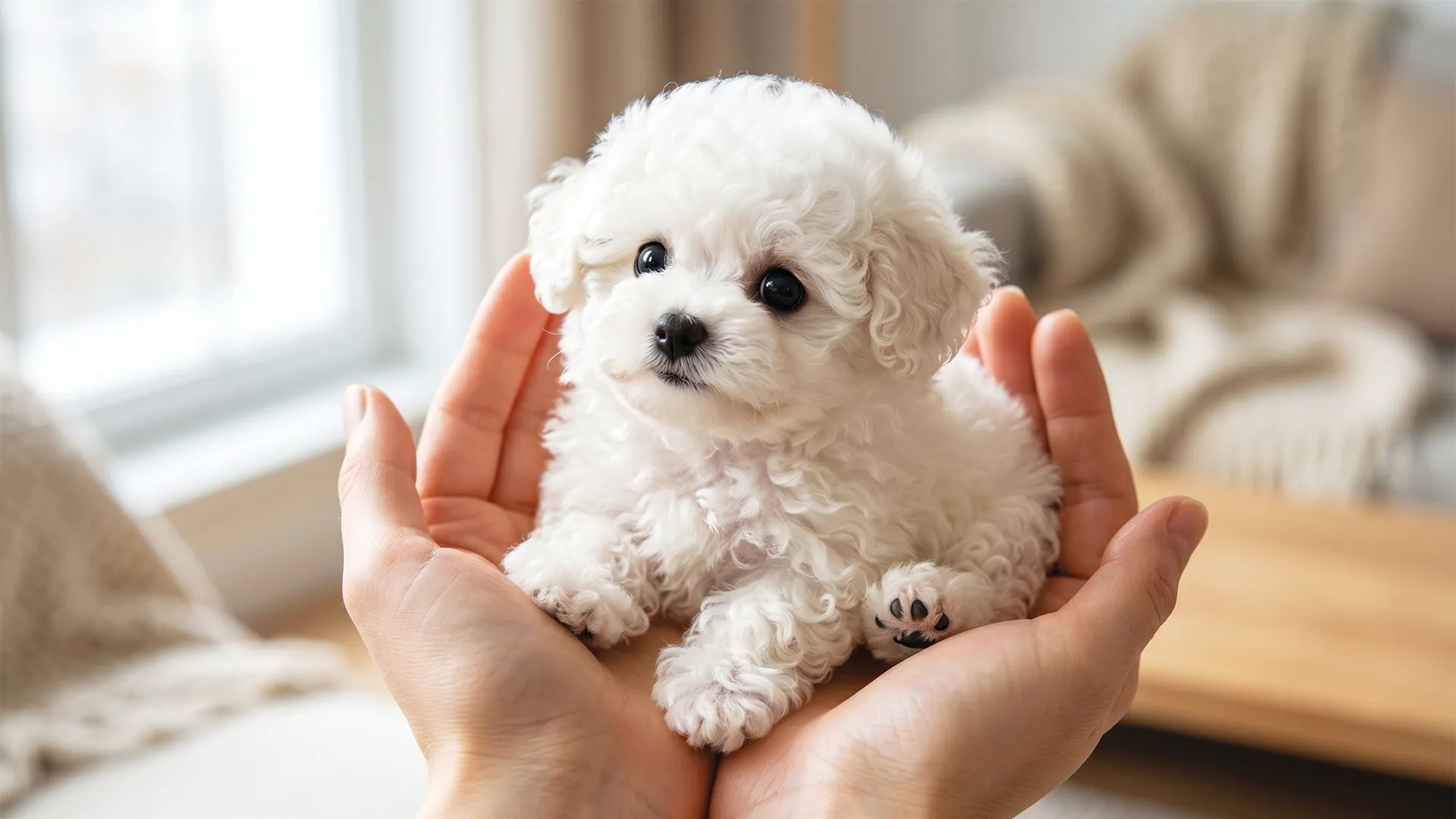
People often assume first time dog owners should choose whichever breed looks the cutest or attracts the most attention online. That approach usually leads to disappointment because appearance alone says very little about how easy a dog will be to live with every day.
Some dogs may look charming but require constant stimulation, extensive training, or endless patience that beginners are not prepared for. This is one reason mini dog breeds continue gaining popularity among new owners who want companionship without feeling overwhelmed by responsibility.
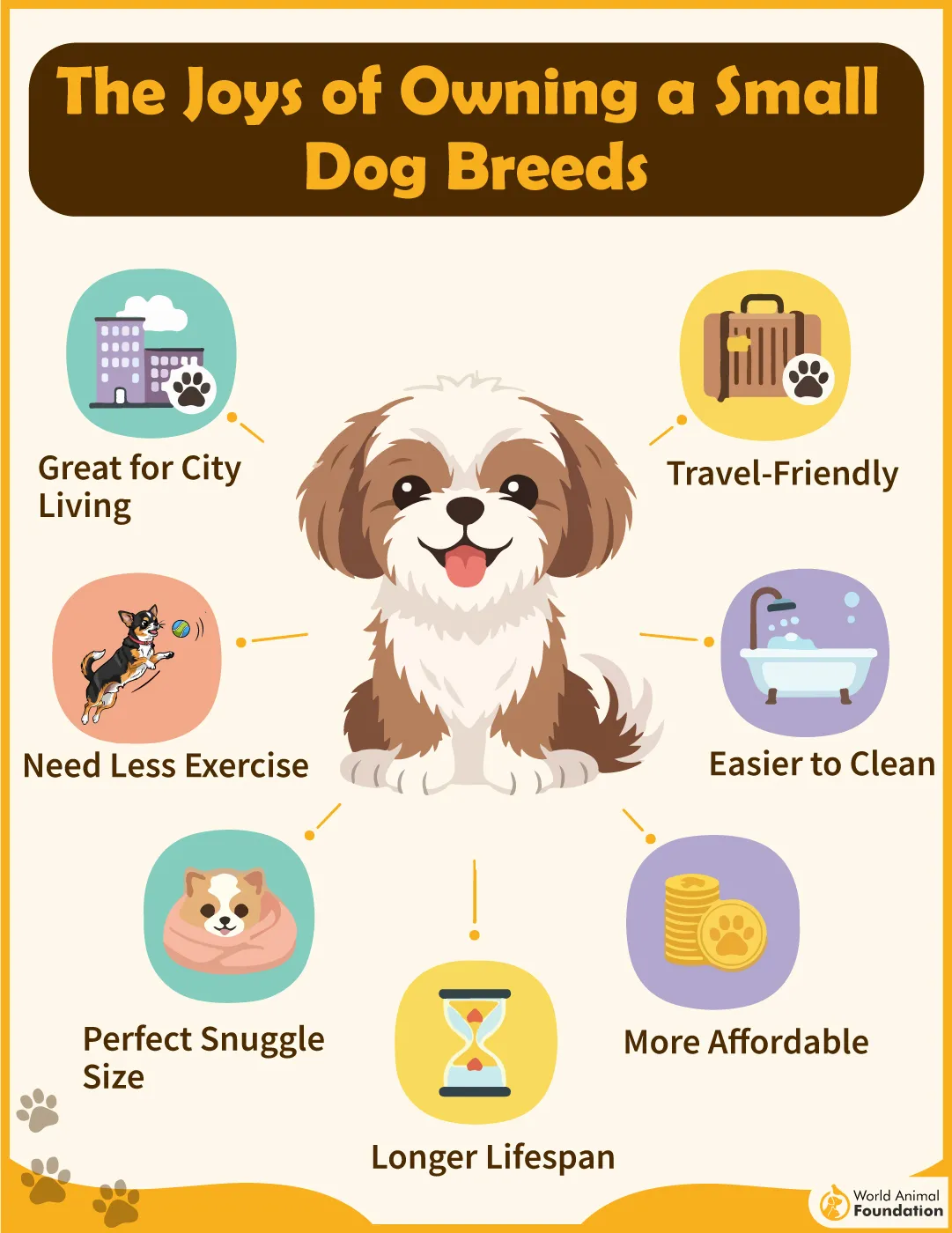
Their smaller size often makes training, transportation, grooming, and daily handling feel far less intimidating, especially for people adjusting to pet ownership for the first time. Many of these little dogs also adapt well to apartments, smaller households, and calmer routines, making them easier to integrate into modern lifestyles.
Ahead are mini breeds that combine manageable care with lovable personalities that make the first dog experience feel far more rewarding than stressful.
Key Takeaways
The right dog breed should feel exciting, not stressful, which is why smaller breeds often become the smarter choice for beginners.
Mini breeds like the Cavalier King Charles Spaniel and Toy Poodle stand out because they combine manageable care with intelligence and steady temperaments.
From the gentle Bichon Frise to the adaptable Havanese and Papillon, these dogs bring companionship without demanding overwhelming routines.
Keep reading to discover which of these nine delightful breeds could make your first experience as a dog owner smooth and genuinely rewarding.
Delightful Mini Dog Breeds Ideal for First‑Time Owners
1. Cavalier King Charles Spaniel

The Cavalier King Charles Spaniel earned its name through strong ties to British royalty in the seventeenth century, where it was valued as a close personal companion. It was kept near people in homes and public settings, reflecting a life centered on proximity and warmth.
Designed for closeness and comfort
This spaniel was originally kept to provide warmth in drafty interiors and during cold carriage travel, influencing its gentle indoor role. Its affectionate temperament makes interaction easy in family settings, including homes with children or other dogs.
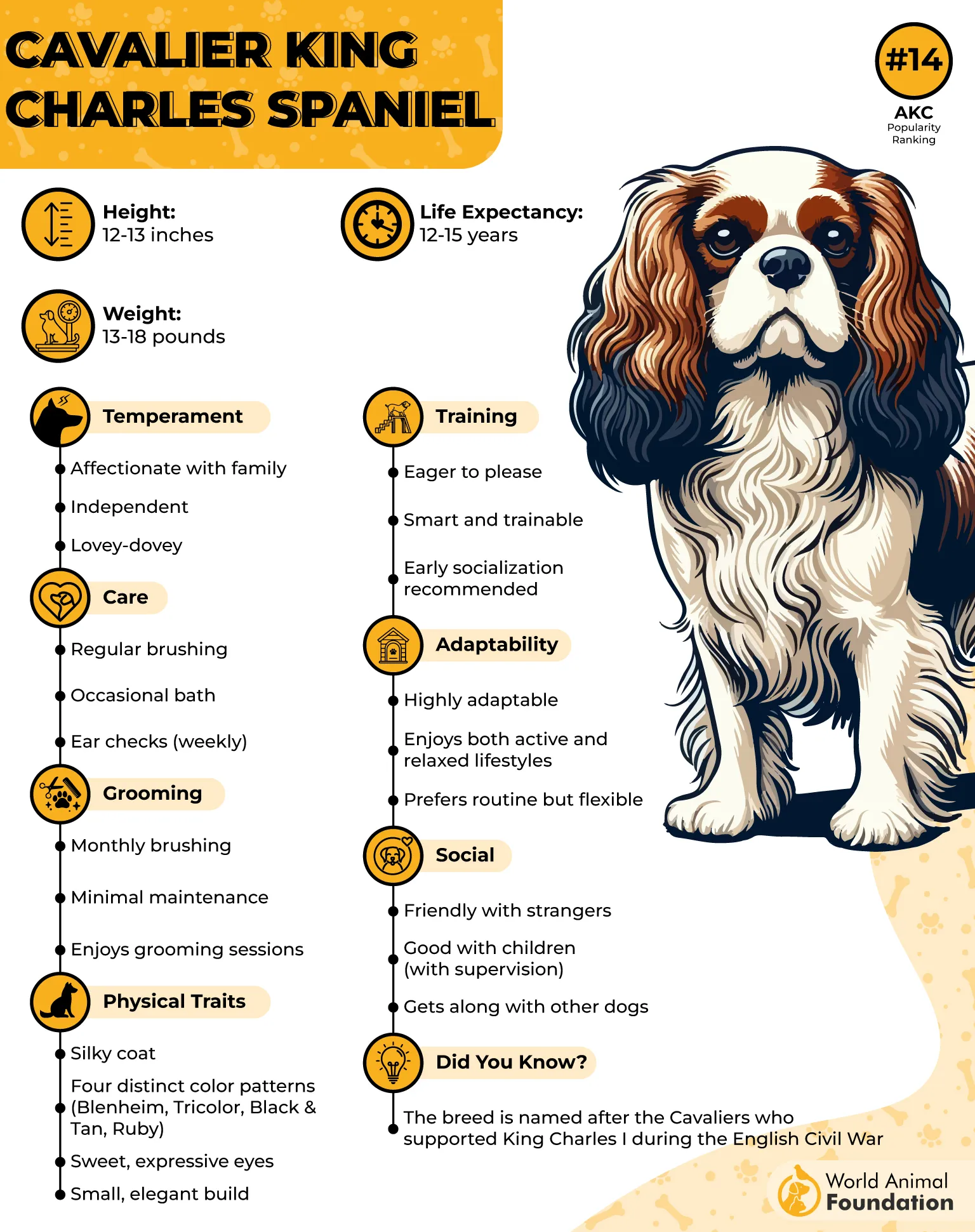
That companionship focus appears in everyday habits:
Prefers resting on laps or beside people
Adapts well to shared living spaces
Responds calmly in mixed households
Care needs that support balance
As a small dog breed, it does well with consistent daily walks and simple mental activities to maintain balance, as PetMD writes. Its activity level stays moderate, making it suitable for short planned outings without intense routines. Regular brushing keeps the coat tidy while managing light shedding.
- Suitable for owners who want a steady indoor dog.
- Works well in apartments and smaller homes.
- Needs short daily walks and light play.
- Regular brushing helps manage the coat.
- Not ideal for people away from home for long hours.
🎧 Dogcast
Episode 37 — Why Dogs Stay Close without Touching
If you don’t hear sound, tap the button above to enable audio.
2. Toy Poodle

The Toy Poodle traces to a curly-coated lineage that moved from Asia into Europe, later becoming known for water work and herding ability. Its tight coat and compact frame support agility and quick response. This structure reflects a dog designed for activity rather than stillness.
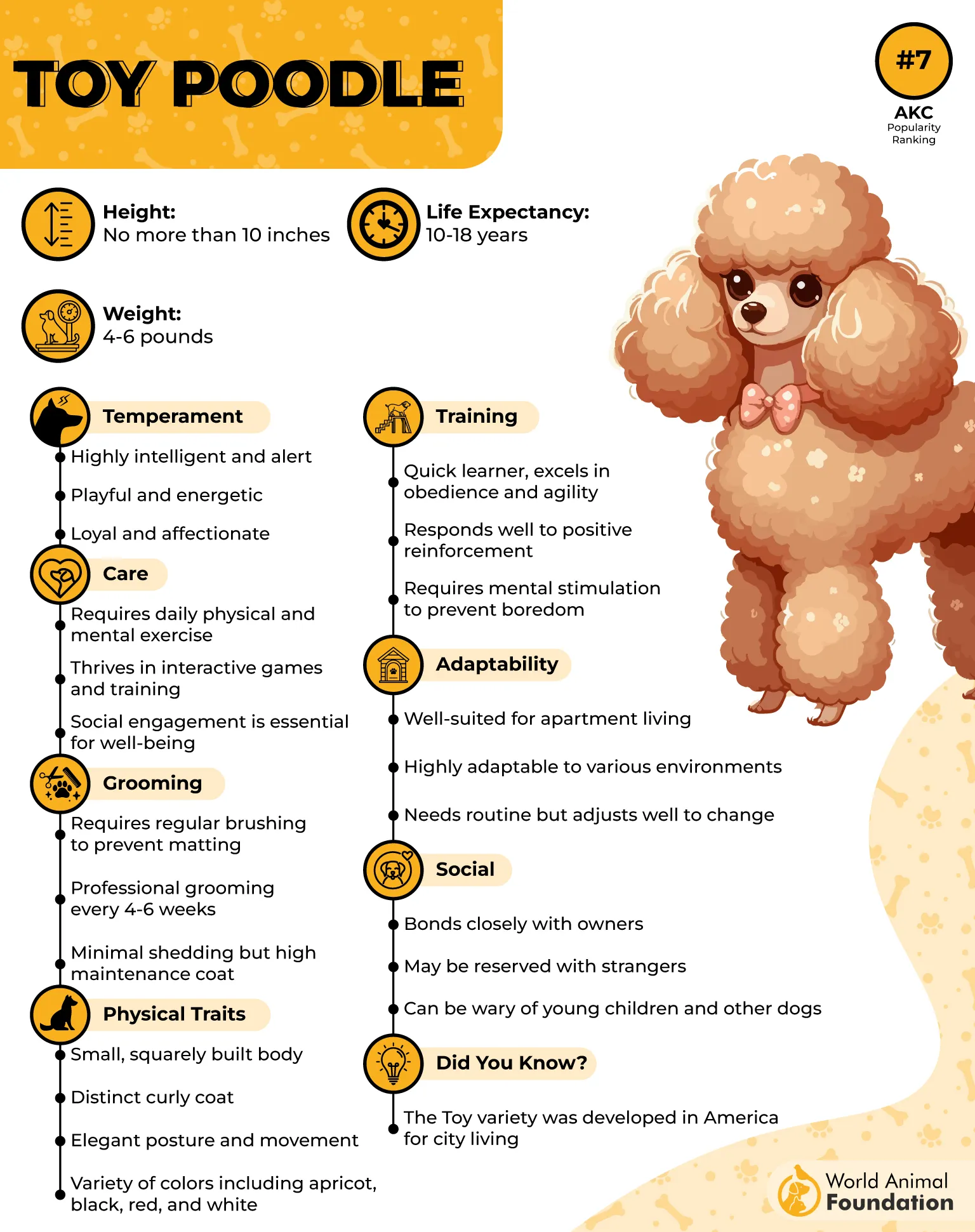
Learning speed and engagement
This small breed is highly intelligent, alert, and quick to grasp new tasks, often thriving in environments that reward participation and interaction, as per the AKC. Its history of performing in circuses reflects comfort with training, repetition, and audience attention.
These traits become visible through daily behavior:
Responds rapidly to reward-based instruction
Excels in structured routines, tricks, and even dog sports
Engages actively with people and other pets
Allergy-friendly and playful
The Toy Poodle carries strong indoor energy, preferring frequent short walks combined with interactive games at home. It also does not shed much, making it a smart choice for some people with allergies. Structured play and mental challenges help positively channel its active nature.
- Suitable for owners who want an intelligent breed.
- Low-shedding coat can suit some allergy-sensitive homes.
- Needs games, tricks, and daily mental activity.
- Regular grooming should be planned.
- Works well for people who enjoy training routines.
3. Bichon Frise
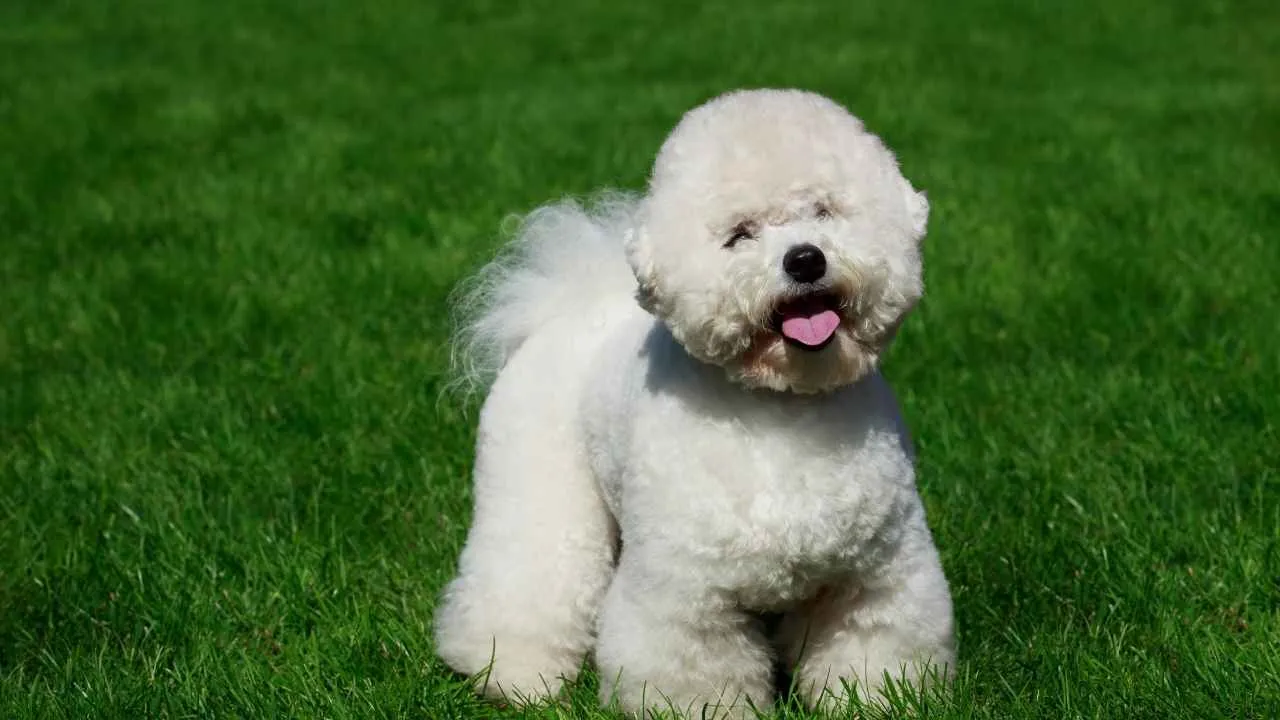
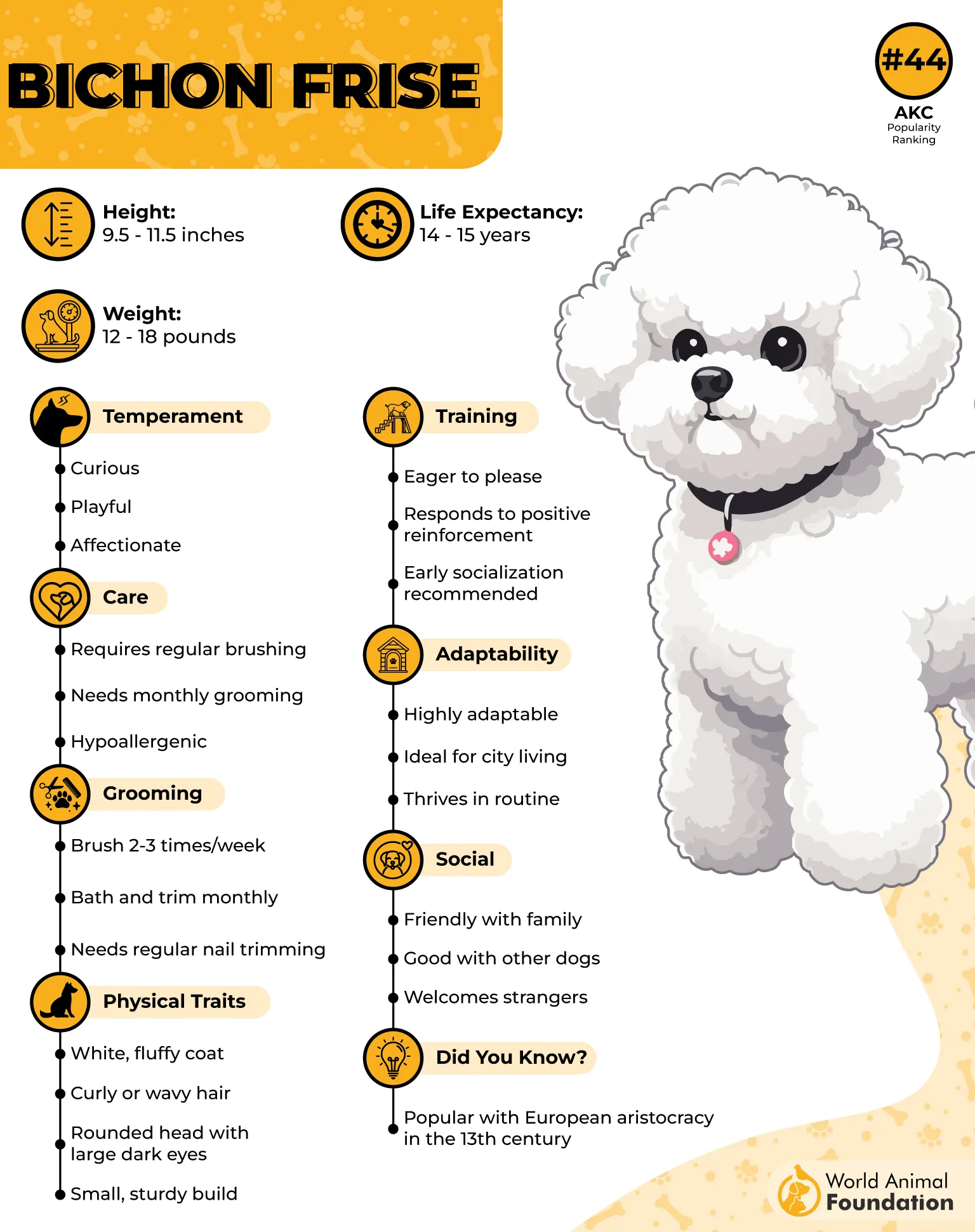
The Bichon Frise is recognized as a small but sturdy dog known for its resilient frame and lively presence. Its reputation as a strong personality breed comes from combining intelligence with expressive charm. This blend allows it to remain engaging and adaptable across changing environments.
Activity pattern with natural variation
Bichon Frise follows a rhythm of calm periods interrupted by short bursts of energetic play, often running indoors or in a yard. Its exercise needs include daily walks paired with interactive time shared directly with its new pet parents.
That pattern becomes clearer through routine habits:
Engages in brief high-energy play sessions
Requires consistent daily walking
Needs direct play interaction beyond simple companionship
Low shedding and family-friendly
This wonderful companion has a hypoallergenic coat, best for new owners who don’t want dog hairs everywhere, as mentioned by Omlet.
It responds strongly to human interaction, enjoying shared activities rather than solitary routines. It values attention and thrives when included in daily household movement and play.
- Suitable for owners who want a playful small dog.
- Low-shedding coat is a strong benefit.
- Needs regular grooming to prevent coat issues.
- Has short bursts of energetic play.
- Works well for indoor homes with active routines.
4. Havanese
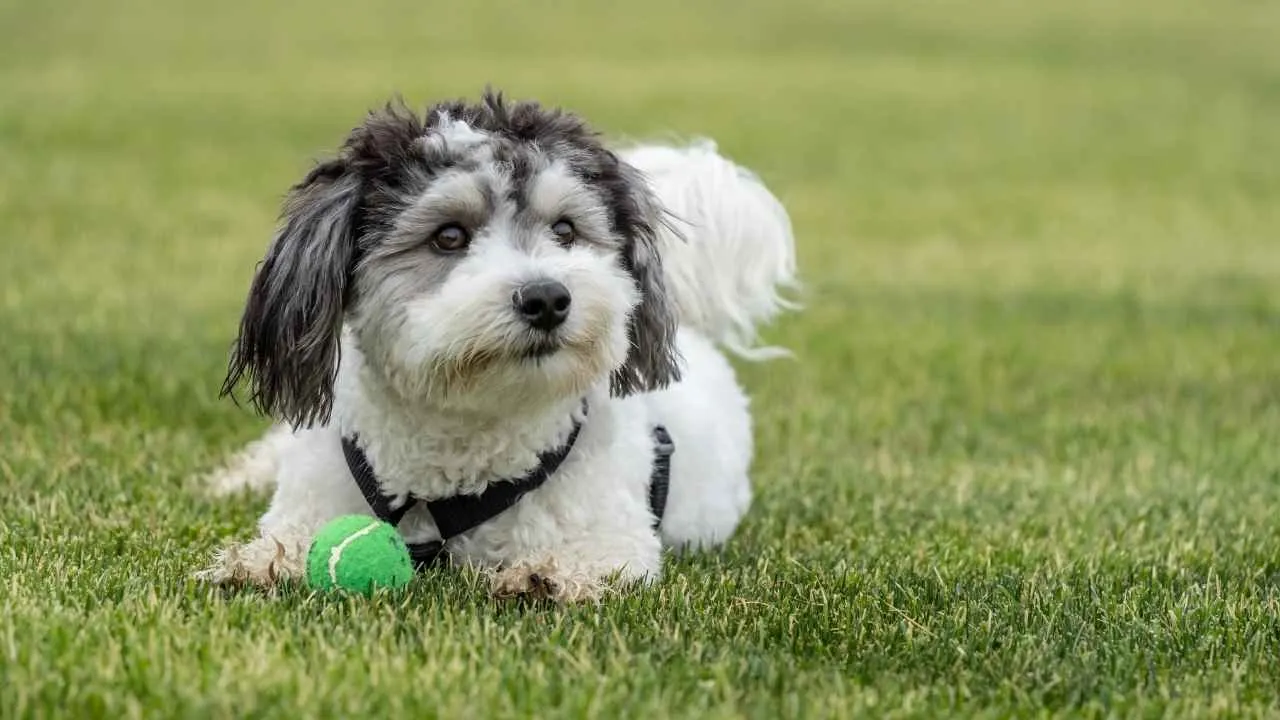
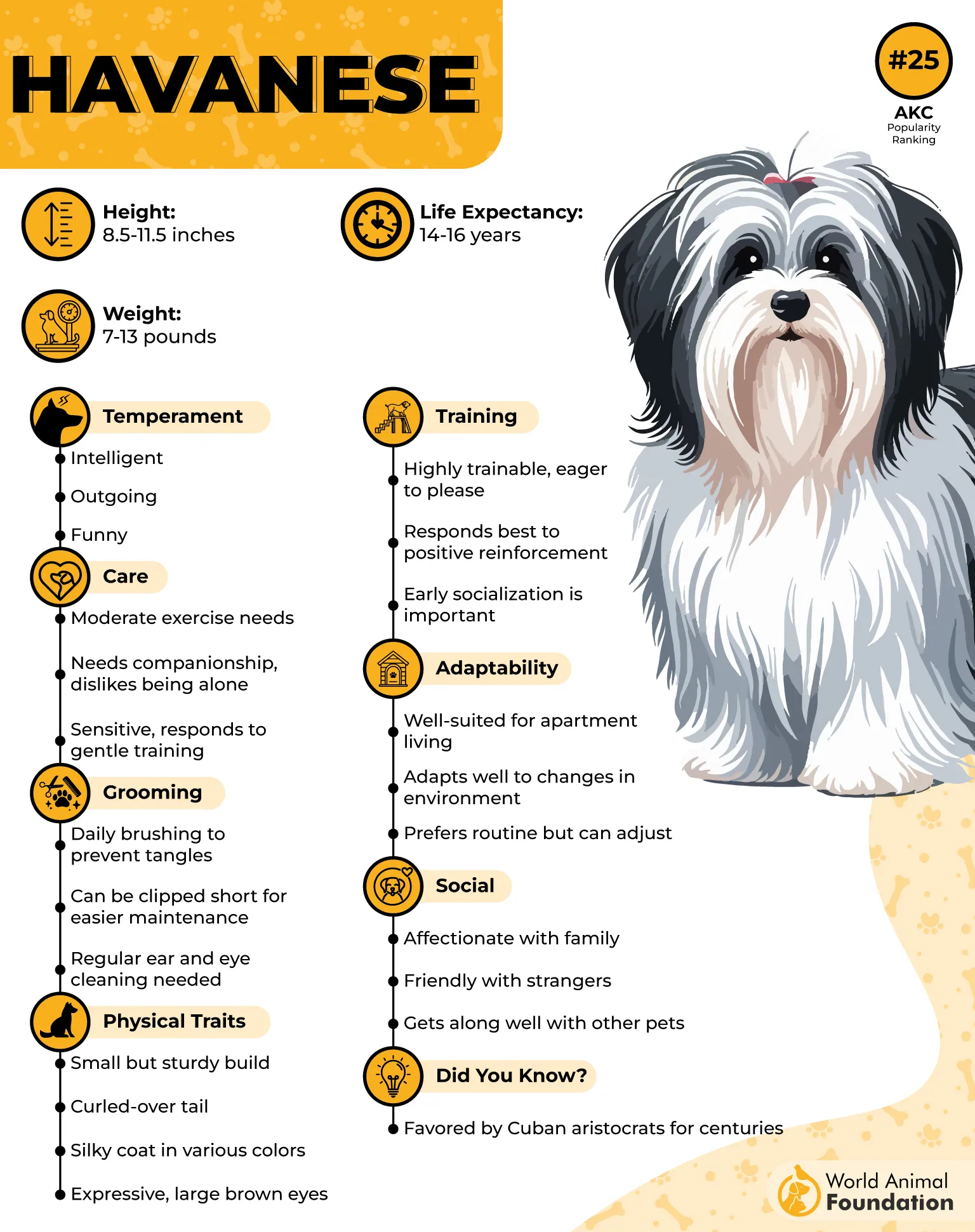
The Havanese is the sole breed originating in Cuba, recognized within the Barbichon family, and once referred to as the Havana Silk Dog. Its small frame pairs with an energetic and lively nature that keeps interaction constant. This identity forms a companion centered on close daily presence.
Interaction style and daily rhythm
The Havanese responds quickly to guidance, reflecting strong intelligence and trainability that support structured routines. Without consistent direction, barking can become frequent, making early instruction important.
Its daily needs fit a steady schedule:
About 30 minutes of total activity each day
Short walks or brief play sessions
Early socialization with people and pets
Lifestyle adaptability
This lively little dog suits smaller homes and apartment living when exercise and attention are balanced throughout the day. Its cheerful temperament and responsiveness make it a reliable furry friend for consistent routines. Regular engagement keeps behavior steady and manageable.
- Suitable for apartment or small-space living.
- Needs daily attention and structured interaction.
- Short walks and indoor play usually work well.
- Early training helps reduce barking habits.
- Good for owners who want a responsive small breed.
5. Papillon

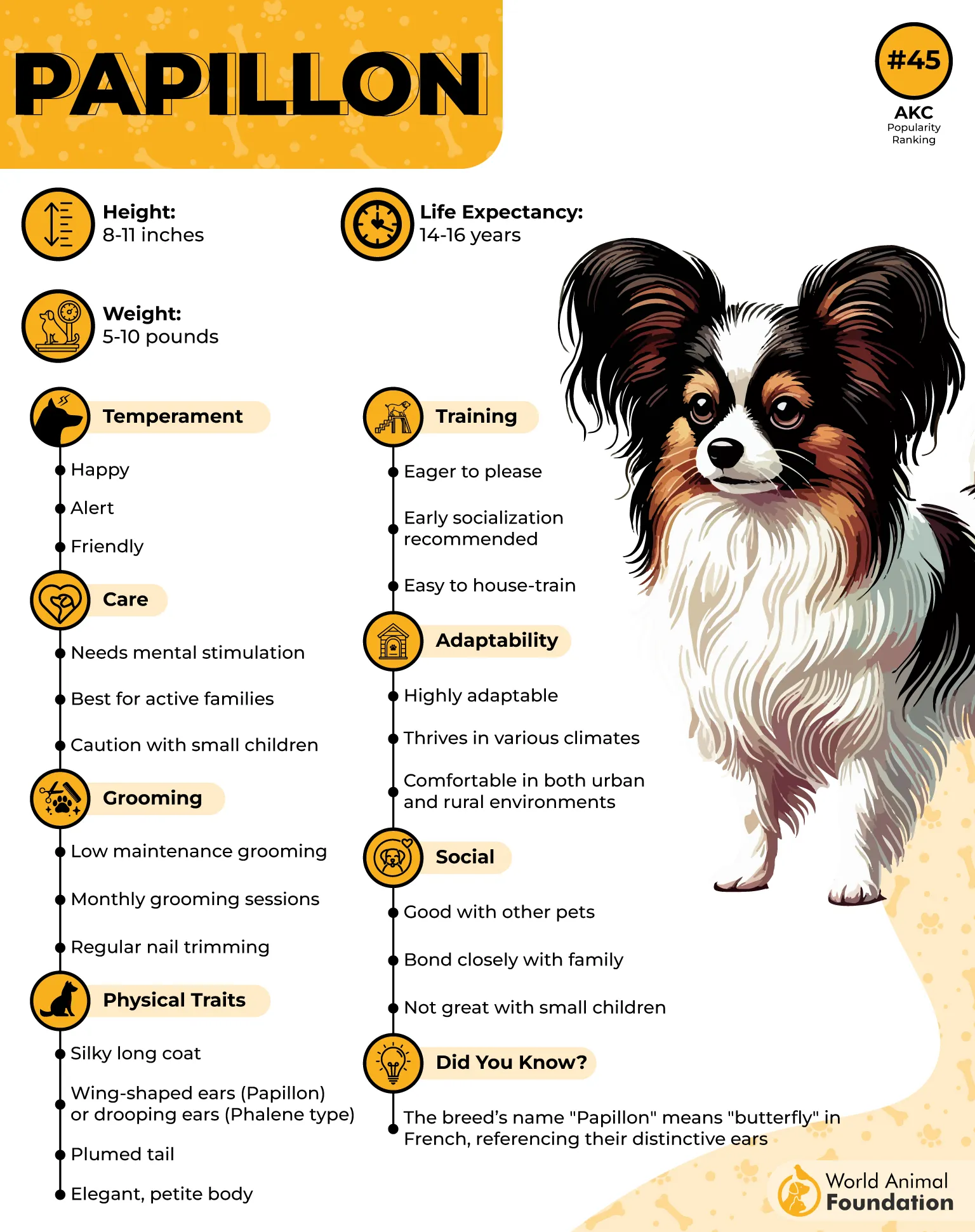
The Papillon is named after the French word for butterfly, inspired by its large, upright ears framed with long, flowing hair. This ear shape defines the breed’s visual identity and sets it apart in appearance. Its small frame contrasts with the expressive detailing around the head.
Behavior shaped by intelligence and interaction
This toy breed responds well to engagement, enjoying activities that involve thinking and movement rather than idle time. Its adaptability allows it to fit into apartments, homes, and varied living settings without difficulty.
The breed’s daily patterns often include:
Performs well in agility activities
Participates in therapy and service roles
Engages actively in indoor games
Social compatibility and care details
The Papillon interacts comfortably with dogs, cats, adults, and seniors when introduced appropriately. Its fine coat does not require heavy grooming because it lacks an undercoat, making coat care relatively straightforward. Supervision remains important around very young children because of their small size.
- Suitable for owners who want an active mini breed.
- Enjoys games, agility, and training tasks.
- Coat care is easier than many small breeds.
- Needs supervision around very young children.
- Better for readers who want an energetic small dog.
6. Shih Tzu
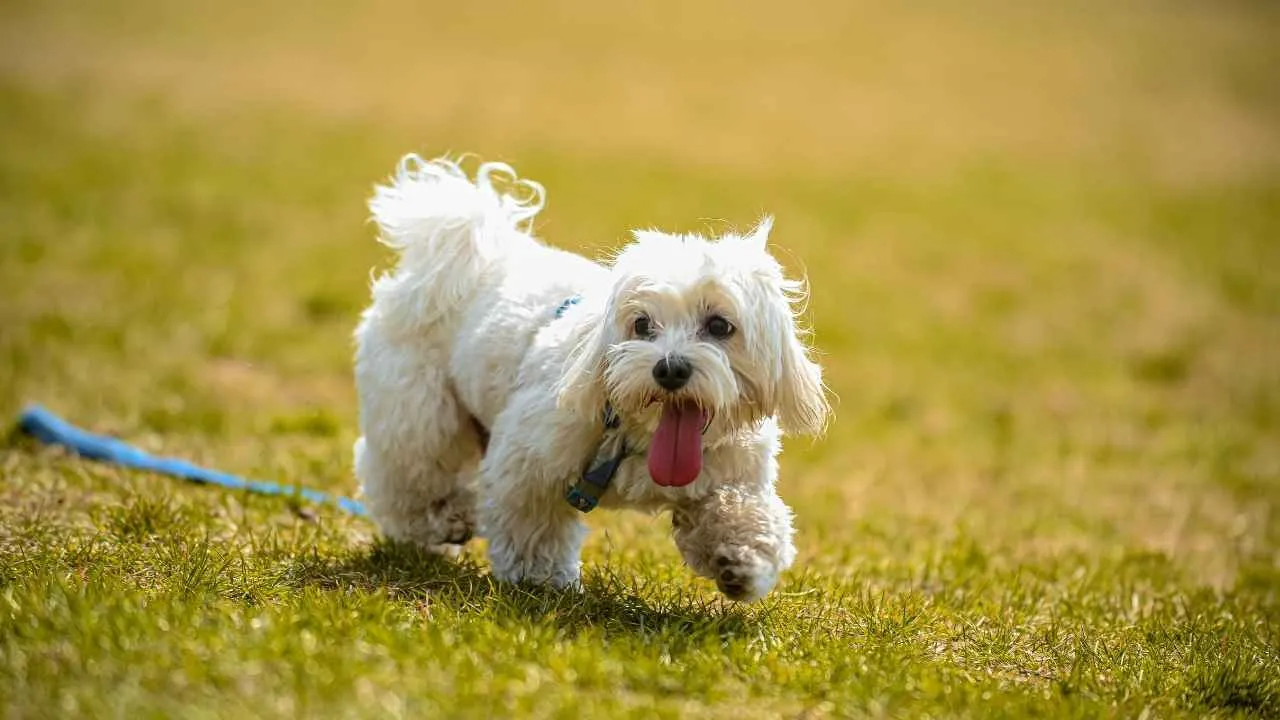
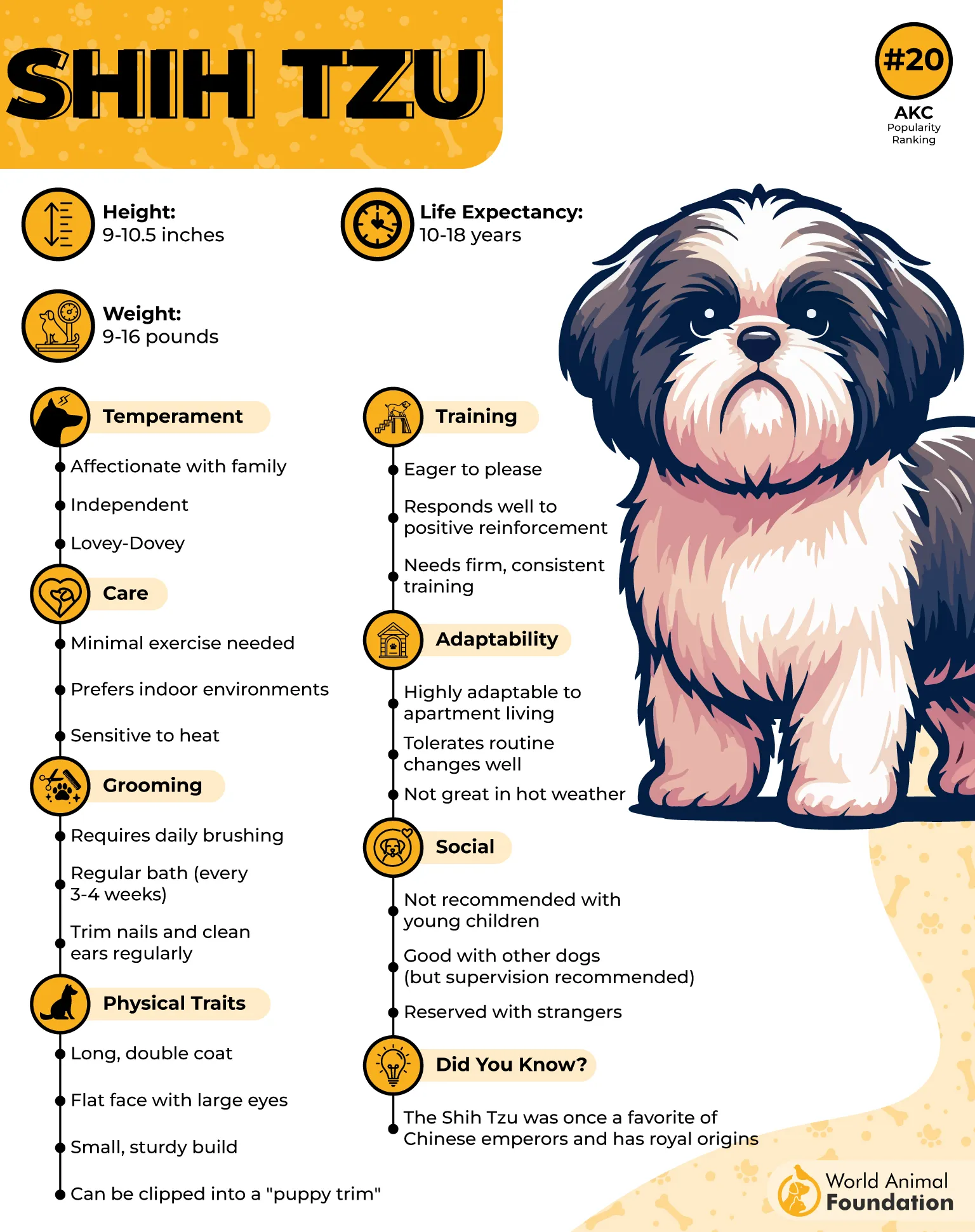
The Shih Tzu is recognized for its large, dark eyes and expressive face that draws attention immediately. Known as the “Lion Dog,” it has been admired for centuries as a devoted indoor companion. Despite its small size, the body feels sturdy and well-balanced.
Grooming and daily care details
As a lap dog, it fits comfortably into indoor living, but its long coat requires regular grooming to keep it neat and manageable. However, if you are new to dog ownership, short trims can simplify upkeep while routine care supports overall comfort.
Daily maintenance includes:
Regular coat trimming for long coats only
Nail trimming on a consistent schedule
Ear cleaning as part of routine care
Activity suited to indoor life
The Shih Tzu has only minimal or moderate exercise needs, making short walks and indoor play sufficient for its daily rhythm. Its short legs and compact build align with a lifestyle centered around home environments. This approach matches households without large outdoor spaces.
- Suitable for owners who want a calm house dog.
- Short walks and indoor play are usually enough.
- Coat trimming can make grooming easier.
- Needs regular face, ear, and nail care.
- Works well for homes with a slower daily routine.
7. Yorkshire Terrier

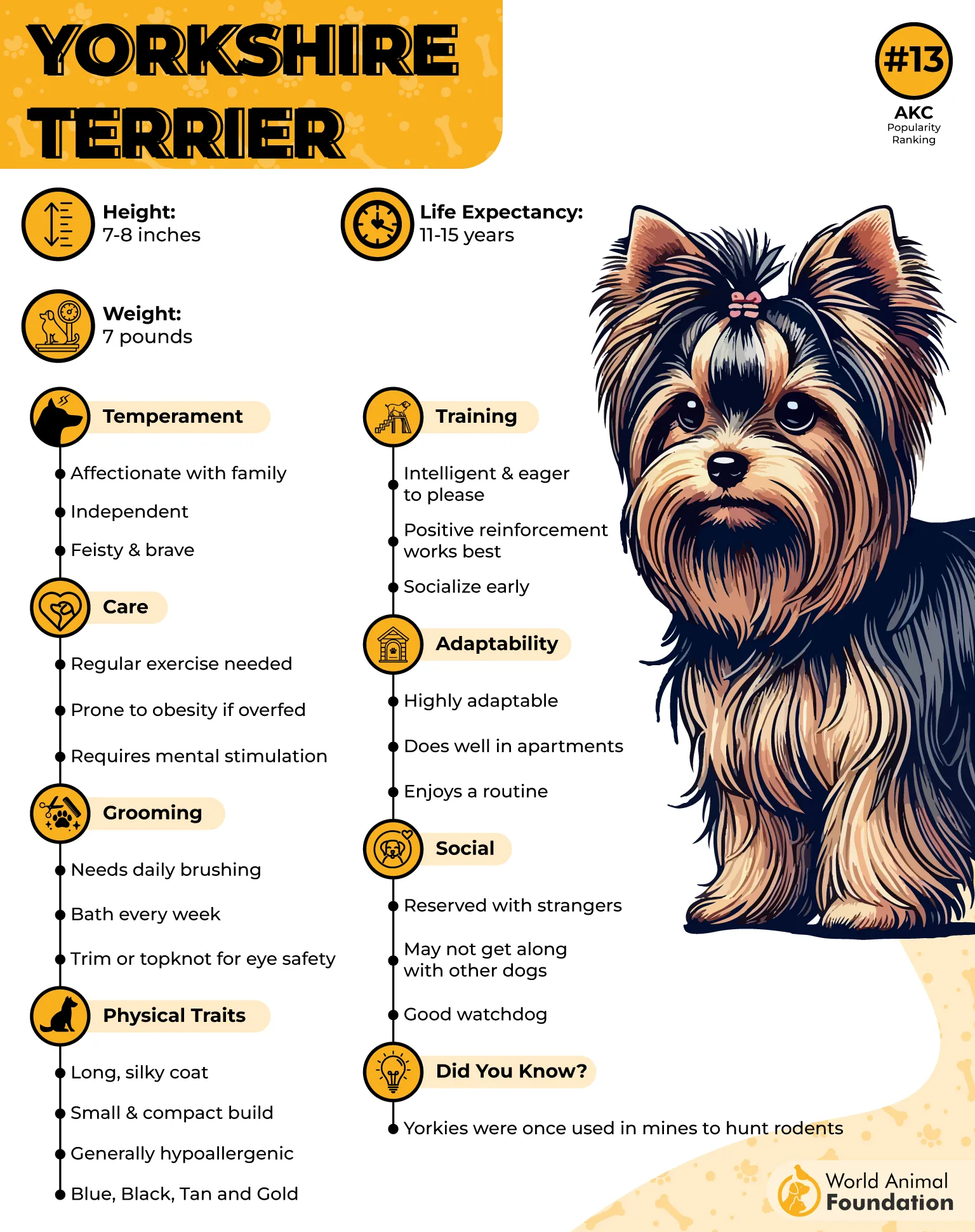
The Yorkshire Terrier is a tiny yet spirited companion shaped by its early role in chasing rodents inside textile mills during the 1800s. Its small frame reflects portability, while its lively attitude brings constant engagement indoors. This blend of size and drive gives it a distinct presence in everyday life.
Daily rhythm and household fit
Yorkies adapt well to apartments or larger homes, as long as interaction and light activity are included in routine care. Short walks combined with indoor play meet its physical needs without demanding extensive space.
This simple structure supports balanced daily habits:
Two brief walks each day
Indoor play sessions for engagement
Supervised interaction with young children
Interaction and supervision needs
This terrier breed connects closely with its household but requires careful handling during play because of its very small build.
Thoughtful supervision helps prevent accidental injury, especially around energetic movement. Clear guidance ensures safe interaction between children and the dog.
- Suitable for owners who want a lively tiny dog.
- Needs short walks and indoor play.
- Requires careful handling because of its small body.
- Early training helps manage strong behavior.
- Better for owners who like confident small breeds.
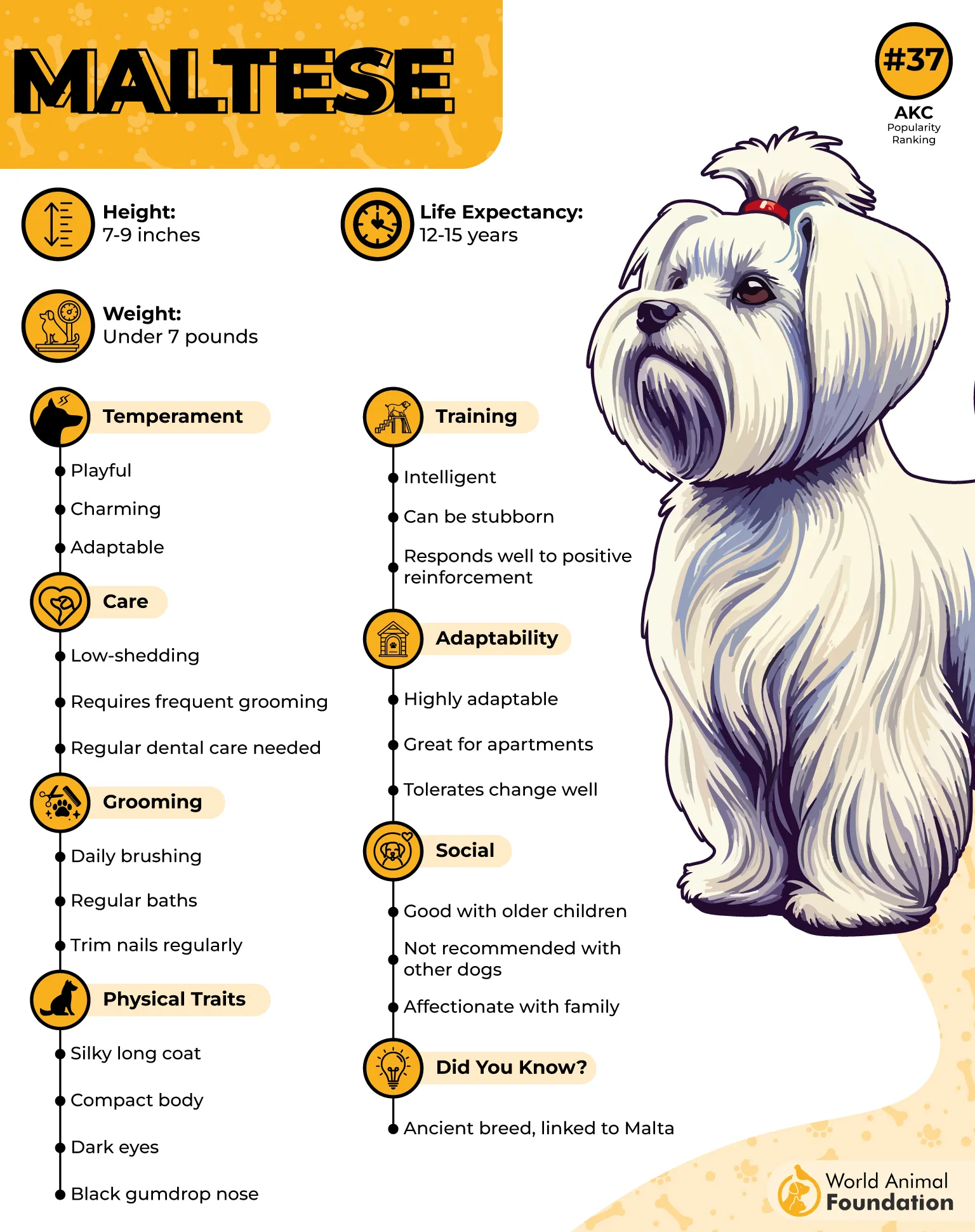
8. Maltese

Maltese, known as “Ye Ancient Dogge of Malta,” has long been associated with refined living and close human company.
Its defining feature is the long, straight, silky white coat that forms a flowing outline around a compact body. The overall structure moves with a smooth, balanced gait that reflects lightness in motion.
Visual charm with practical traits
Maltese dogs combine their graceful appearance with alert awareness, making them attentive within the home. Beneath the coat lies a sturdy toy-sized frame that supports steady energy and agility work.
These qualities appear in daily behavior:
Responds well to reward-based training
Acts as an attentive household watcher
Performs confidently in agility activities
Energy that fits small spaces
This cute small dog breed carries a lively temperament yet requires only moderate daily activity, often satisfied with short walks or indoor play.
Its adaptability allows it to remain engaged without demanding extensive outdoor routines. This balance keeps its routine manageable in compact living environments.
- Suitable for owners who want a small indoor dog.
- Low-shedding coat is useful for cleaner homes.
- Needs regular brushing and coat maintenance.
- Short walks and indoor play usually meet activity needs.
- Best for readers who can manage grooming consistently.
9. Pug

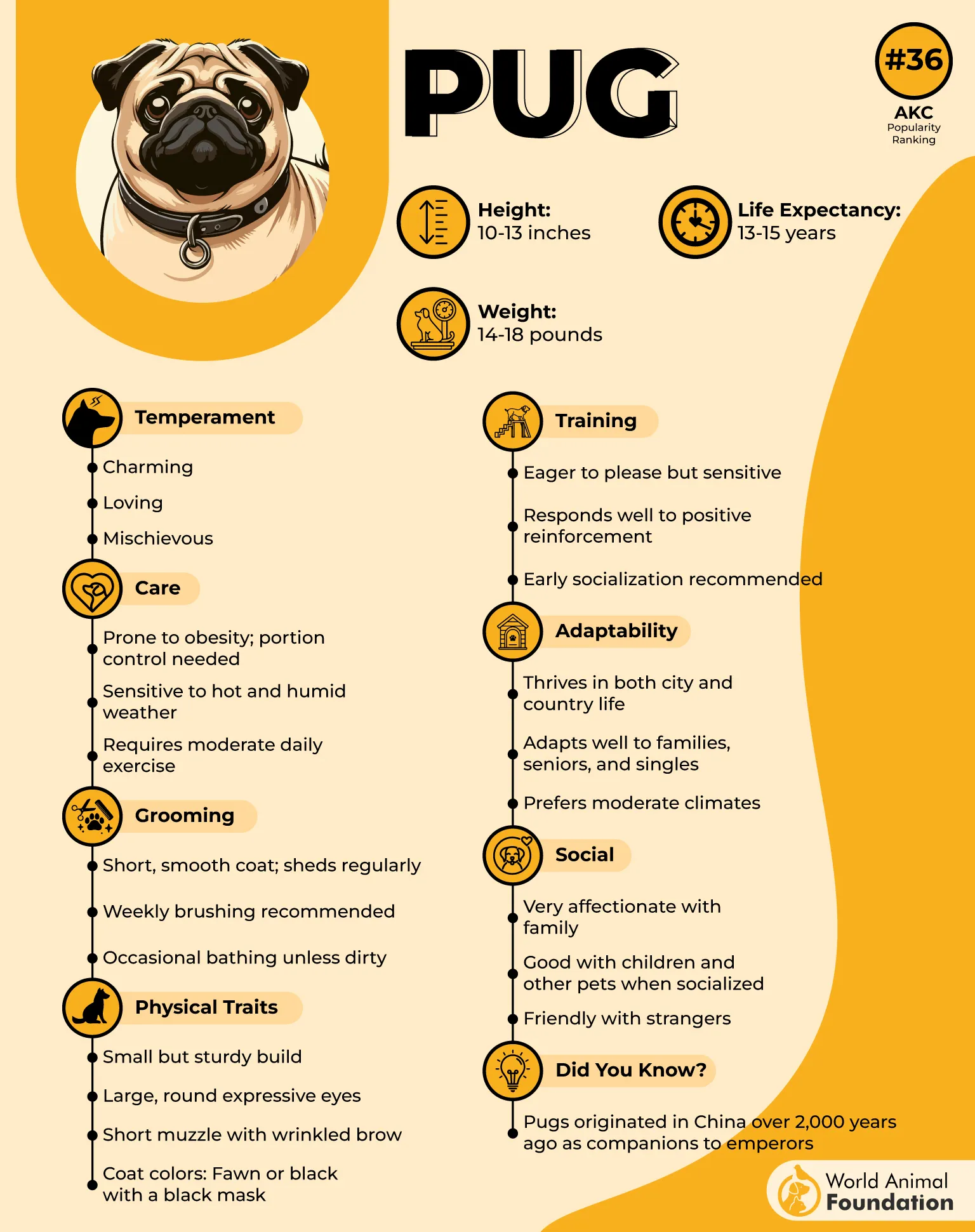
The Pug is a small yet solid breed once favored by Chinese emperors and later recognized by European royalty, reflecting its long appeal across cultures. Its build follows the idea of “multum in parvo,” delivering a notable presence within a compact frame.
Daily behavior shaped by closeness
The Pug centers its routine around human interaction, preferring proximity and shared spaces over isolation. It fits comfortably in city homes or countryside settings, adjusting to households with children, older adults, or other pets.
These daily patterns become easy to recognize:
Seeks constant interaction with people
Adapts to single or multiple pet homes
Responds to attention with visible enthusiasm
Care needs tied to comfort and climate
The Pug has a short, smooth coat that requires light but regular brushing to control shedding and keep it neat. It performs best in moderate temperatures, since extreme heat or cold can create strain.
New pet owners should pay attention to its weight management because it is important due to the enjoyment of food and relaxed indoor habits.
- Suitable for owners who want a relaxed indoor dog.
- Low grooming needs make daily care easier.
- Needs portion control because weight gain is common.
- Should avoid extreme heat and heavy exercise.
- Works well for homes with moderate activity levels.
Conclusion
The first experience of owning a dog often feels far less stressful when the breed naturally fits into everyday routines instead of constantly demanding adjustment. These mini companions prove that smaller dogs can still bring affection, intelligence, and personality without overwhelming new owners.
Their manageable size also makes grooming, travel, and daily care easier to handle for people still learning the responsibilities that come with pet ownership. With patience, routine, and proper attention, these breeds quickly become more than simple pets. They become familiar companions that settle naturally into everyday life.
