





Both the Australian Shepherd and the Blue Heeler are highly intelligent herding dog breeds known for their energy, loyalty, and remarkable working abilities. While they may appear similar at first glance, these dogs have very different histories, personalities, and behavioral traits.
One originated in Australia with strong cattle-driving instincts, while the other developed as a versatile ranch dog in the United States and quickly became popular among farmers and active families.
Both breeds were originally bred for demanding outdoor work, which explains their sharp intelligence, endurance, and athletic nature. They thrive when given physical exercise, mental stimulation, and tasks that challenge their instincts.
Despite these similarities, important differences exist in their size, coat type, trainability, and temperament. One tends to be more independent and strong-willed, while the other is often more eager to please and easier to guide during training.
Choosing between these hardworking breeds depends largely on your lifestyle, experience level, physical stimulation, and activity routine. Understanding their unique needs can help you find the right companion for long-term success and companionship.
Blue Heeler vs. Australian Shepherd: A Dog Breed Analysis
Origins & Purpose
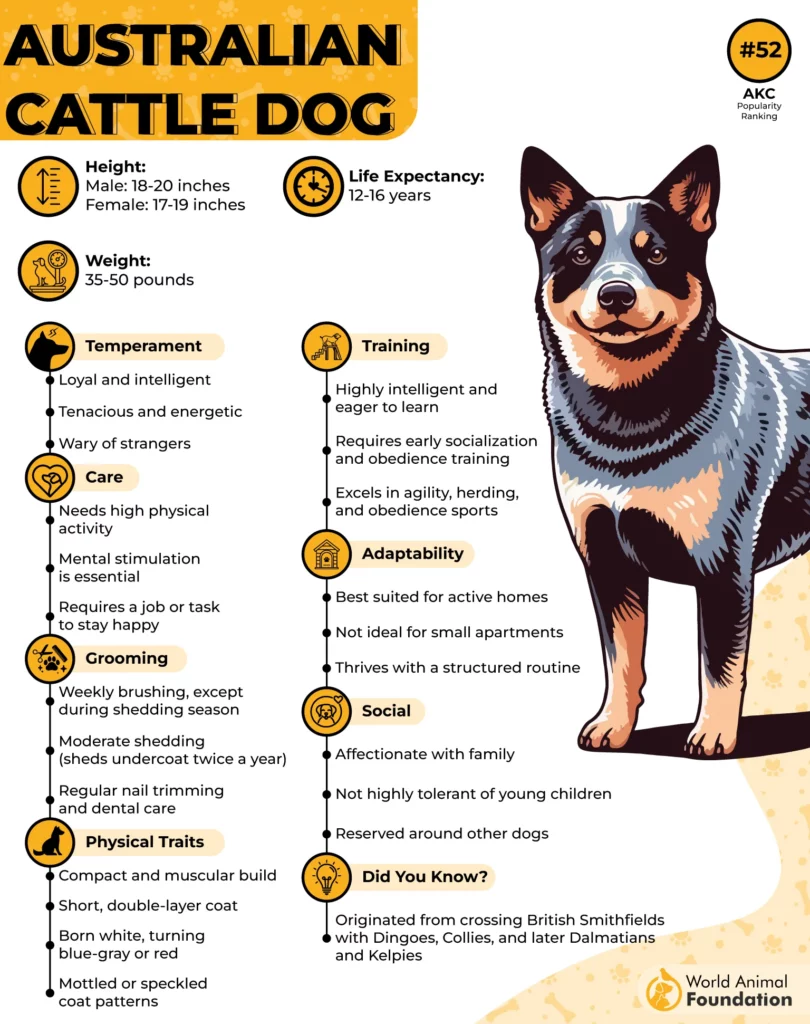
The Blue Heeler, also called the Australian Cattle Dog, was developed in Australia for driving cattle across rough landscapes and harsh climates. Breeders combined Dingoes with various herding dog breeds to create a resilient, intelligent, and energetic worker capable of handling demanding ranch duties.
Their nickname came from their habit of nipping at livestock’s heels while guiding movement during herding tasks.
The Australian Shepherd was developed in the western United States despite its confusing name. Influenced by European herding breeds brought alongside sheep ranchers, the breed became highly valued for managing livestock on large ranches.
Ranchers admired its loyalty, enthusiasm, adaptability, and strong work ethic, which later expanded into roles such as rescue work, therapy assistance, obedience activities, and police support.
Size & Physical Build
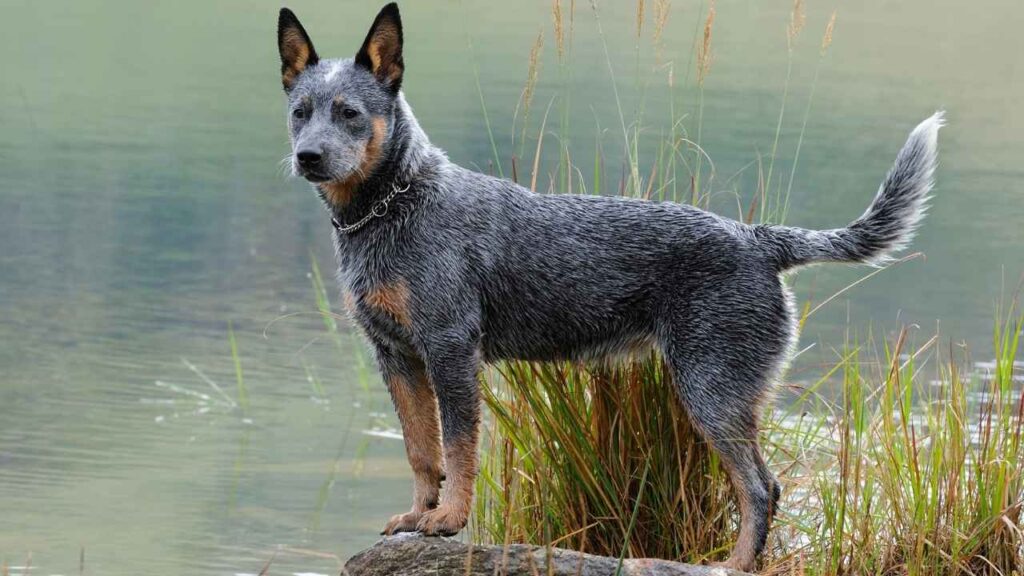
Blue Heelers have a compact, muscular, and rugged build designed for endurance and agility during demanding cattle work. Their short, dense coat gives them a sturdy appearance, while their pointed ears, strong frame, and bushy tail create an alert and energetic look. Common coat colors include blue or red speckled shades that add to their distinctive appearance.
Australian Shepherds are slightly taller and heavier with a leaner yet athletic structure. Their longer, fluffier coat and softer facial features create a more elegant appearance compared to the sturdier Blue Heeler. Floppy ears, expressive eyes, and coats in merle, black, or red shades help distinguish this breed from its cattle-driving counterpart.
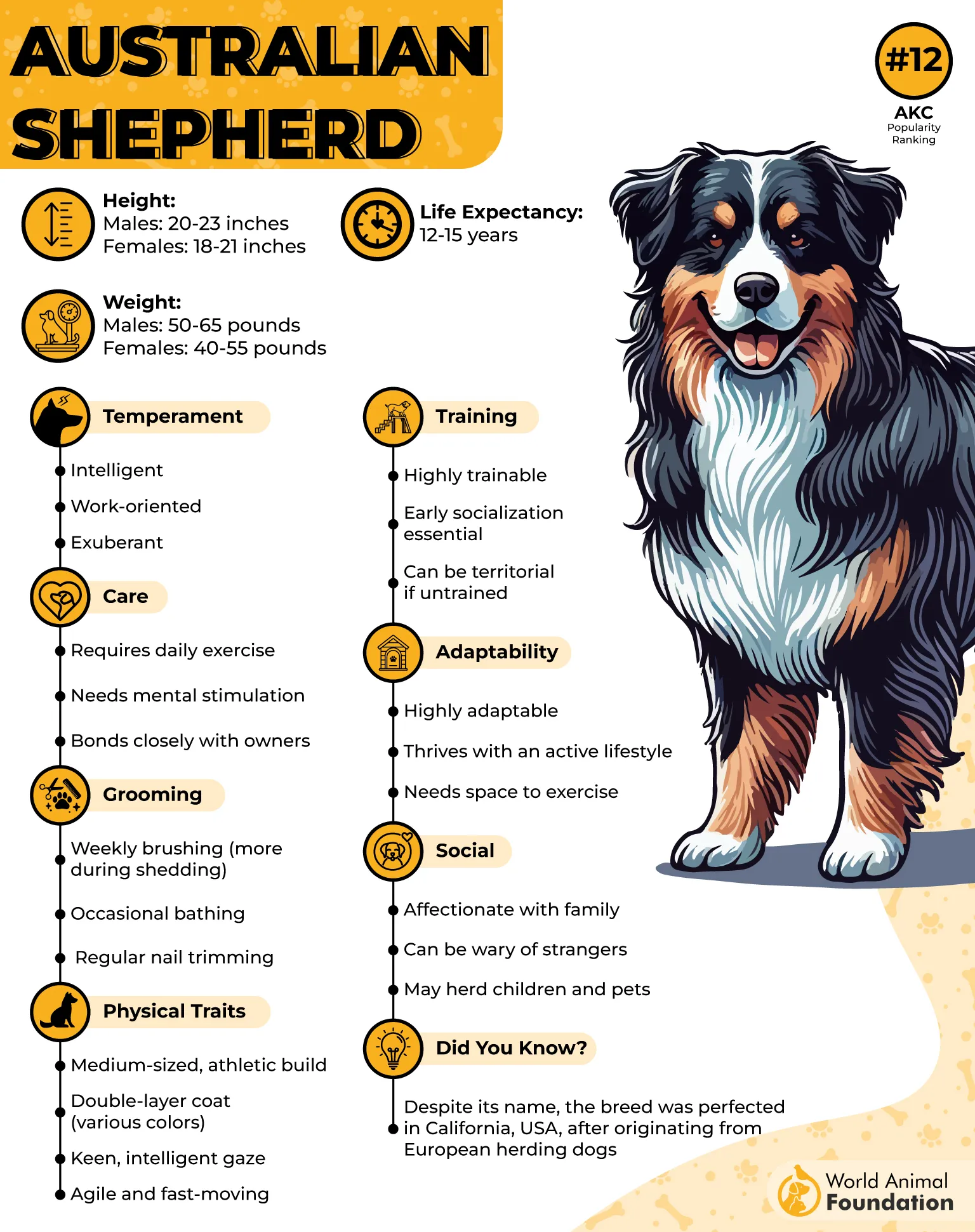
The most noticeable physical differences appear in coat texture, ear shape, and overall body structure. Blue Heelers carry a more robust and compact frame suited for rough terrain, while Australian Shepherds display a lighter and more refined build associated with versatile ranch work and agility.
Temperament & Personality
Blue Heelers are alert, hardworking, and deeply devoted dogs with strong protective and herding cattle instincts. They form loyal bonds with their owners but tend to be more reserved, independent, and less openly affectionate than many companion breeds. Their natural tendency to nip during herding tasks means early training and socialization are especially important.
Australian Shepherds are playful, energetic, and highly people-oriented companions that enjoy close interaction with their families. They are intelligent, eager to please, and usually more outgoing around unfamiliar people compared to Blue Heelers. Their affectionate and interactive personality makes them excellent family dogs, though they still require guidance, activity, and mental stimulation to stay balanced.

Blue Heelers are more comfortable with independence and can handle time alone better, while Australian Shepherds prefer constant involvement with their owners and may become anxious without enough attention. Both breeds are protective, active, and highly loyal, often showing strong attachment to the people they trust most.
Exercise & Energy Levels
Blue Heelers are a highly energetic breed that needs constant physical activity and mental challenges to remain satisfied and well-behaved. Long walks, running, fetch games, agility activities, and problem-solving toys help release their intense energy and strong herding instincts. Without enough stimulation, they can quickly become destructive and restless, especially in confined spaces.
According to PetMD, Blue Heelers are muscular and hardworking dogs built for strength, endurance, and demanding activity. Loyal and high-energy dogs, they require plenty of exercise and often form very strong bonds with their owners.
Australian Shepherds are equally active and thrive in homes that provide outdoor adventures, training sessions, and interactive play. Their athletic nature and sharp intelligence make them excellent companions for hiking, jogging, obedience work, and various dog sports. They enjoy staying busy and perform best with owners who can match their energetic and enthusiastic lifestyle.

According to Britannica, Australian Shepherds are active dogs known for their high intelligence, strong herding instincts, and quick learning ability. They thrive with plenty of exercise and mental stimulation, making them excellent working dogs and energetic family companions.
Training & Intelligence
Blue Heelers are exceptionally intelligent and highly trainable dogs that respond best to structured routines, positive reinforcement, and early socialization. Their independent and determined personality can sometimes appear stubborn, especially without firm guidance and mental challenges.
Herding instincts remain very strong, so early obedience training helps control behaviors such as nipping, chasing, and rough play.
Australian Shepherds are quick learners with a strong desire to please their owners, making them responsive during training sessions. They enjoy mentally stimulating activities such as agility, obedience tasks, herding exercises, and interactive games that keep them engaged.
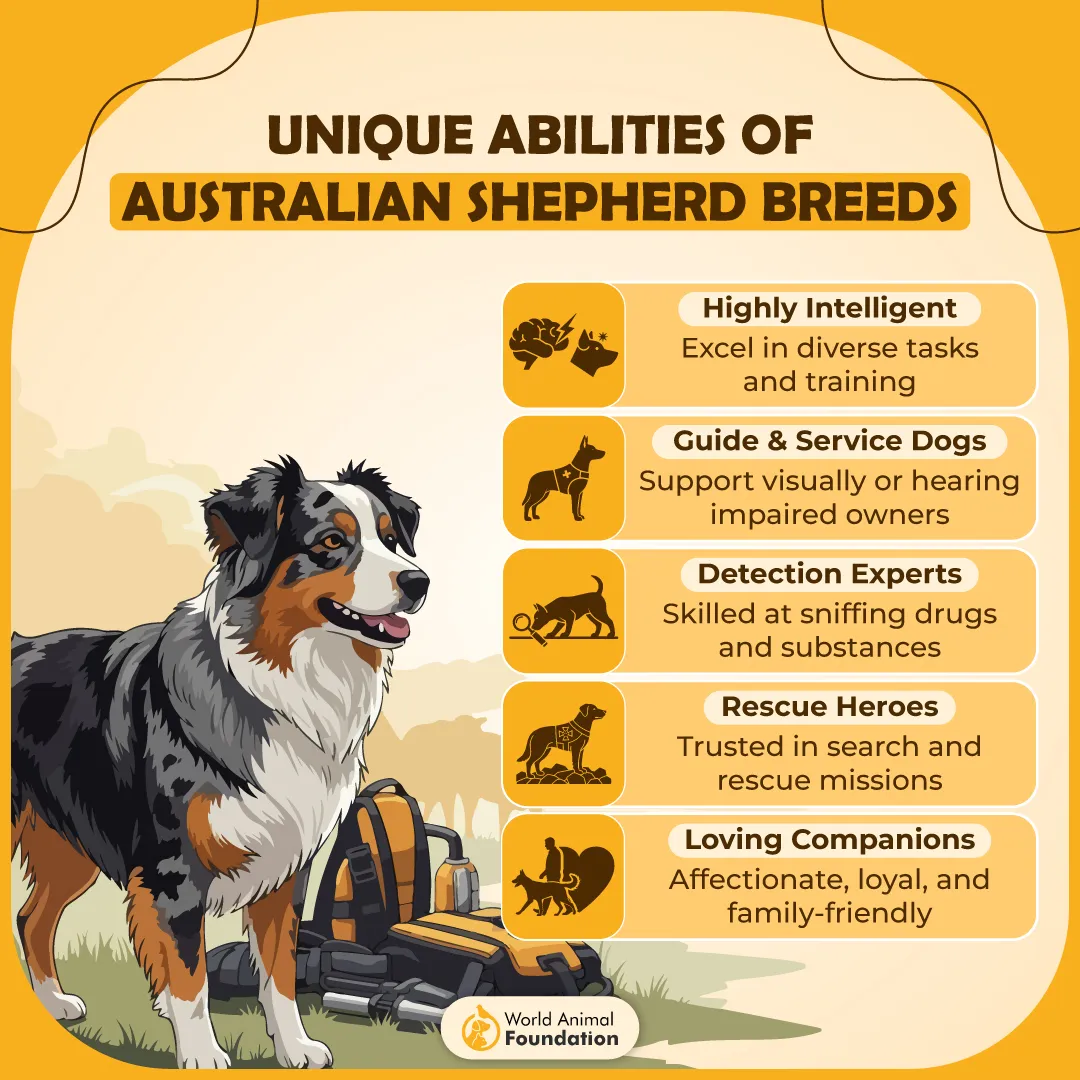
Their energetic and curious nature means they require consistent guidance and regular challenges to prevent boredom and destructive habits.
According to Purina, Australian Shepherds are intelligent, energetic, and hardworking dogs with strong herding instincts. Their high energy levels and eager-to-work nature make them excellent companions for owners who enjoy training, outdoor activities, and active lifestyles.
Grooming Frequency
Australian Shepherds’ coat requires more frequent grooming because of their long, thick, and wavy double coat that sheds heavily throughout the year. Regular brushing helps prevent tangles, remove loose fur, and maintain coat condition, especially during seasonal shedding periods. Routine care for ears, nails, teeth, and eyes is also important for overall cleanliness and health.
Blue Heelers have dense and medium-length coats that are easier to maintain and generally require less grooming effort. Regular brushing still helps control shedding and keeps their weather-resistant coat neat and healthy, particularly during heavy shedding seasons. Basic maintenance, such as nail trimming, ear cleaning, and dental care, should also remain part of their grooming routine.
Health & Lifespan
Blue Heelers are generally hardy and resilient dogs, though they can be prone to health issues such as hip dysplasia, deafness, progressive retinal atrophy, joint injuries, and certain eye disorders. Their active lifestyle and strong physical build benefit from regular exercise, balanced nutrition, and routine veterinary care to maintain long-term health and mobility.
Australian Shepherds are also considered healthy working dogs, but may face potential health concerns, including hip or elbow dysplasia, epilepsy, cataracts, hearing defects, skin allergies, and degenerative conditions affecting movement and vision. Responsible breeding and regular health screenings play an important role in reducing inherited problems and supporting their overall well-being.
Australian Shepherds often have a slightly longer average lifespan, while Blue Heelers are admired for their toughness, endurance, and ability to remain active well into their senior years.
Blue Heeler vs. Australian Shepherd: Which one is best for you?
Australian Shepherds are a great choice for owners seeking an affectionate, people-oriented, and highly responsive companion that thrives on close interaction and constant activity. Their eagerness to please, playful personality, and versatility make them excellent family dogs for active households that can provide exercise, training, and attention every day.
Blue Heelers are better suited for experienced owners who appreciate independence, resilience, and strong working instincts. Their fearless attitude, loyalty, and stamina make them outstanding companions for outdoor lifestyles and demanding activities, though they require firm guidance, early socialization, and plenty of mental stimulation to stay balanced and well-behaved.
Conclusion
These two dog breeds are extremely intelligent working dogs with strong loyalty, energy, and herding instincts. Both breeds thrive in active homes where they receive proper training, exercise, and daily interaction with their families.
The Blue Heeler stands out for independence, resilience, and determination. Its compact build, strong stamina, and protective personality make it a dependable companion for owners who enjoy outdoor activities and structured routines.
The Australian Shepherd is more people-oriented and eager to please, making it an affectionate and highly responsive family companion. Its playful temperament, adaptability, and enthusiasm allow it to excel in sports, training, and interactive activities.
Choosing between these breeds depends on lifestyle, experience, and activity level. Both dogs require commitment, mental stimulation, and consistent guidance, but with the right environment, each can become a loyal, hardworking, and deeply devoted companion.
