




Giant dog breeds often come with assumptions that stop people from looking any further. Most expect high maintenance, overwhelming energy, and a level of effort that feels difficult to sustain.
But that picture does not always reflect reality. There is a different side to these dogs that only becomes clear once you understand how they behave in a home environment. Their loyalty works in a way that feels steady rather than intense, creating a sense of trust that builds over time.
It is not something that stands out immediately, which is why many people overlook it. What makes these dogs truly remarkable is how they stay connected to their owner without constant attention or reinforcement. That balance is what sets them apart.
This article takes a closer look at giant dog breeds that carry this quiet, lasting loyalty and why it matters more than most people expect.
Key Takeaways:
What if the biggest dogs were also the calmest companions you could ever live with?
Anatolian Shepherd shows this through its quiet independence, while Saint Bernard builds trust through calm presence in family life.
Newfoundland and Irish Wolfhound bring a balance of strength and gentle behavior that makes their companionship feel surprisingly easy.
Keep reading to see how each of these giant breeds carries a form of loyalty that grows stronger the longer you know them.
Amazing Giant Dog Breeds with Enduring Loyalty
1. Anatolian Shepherd
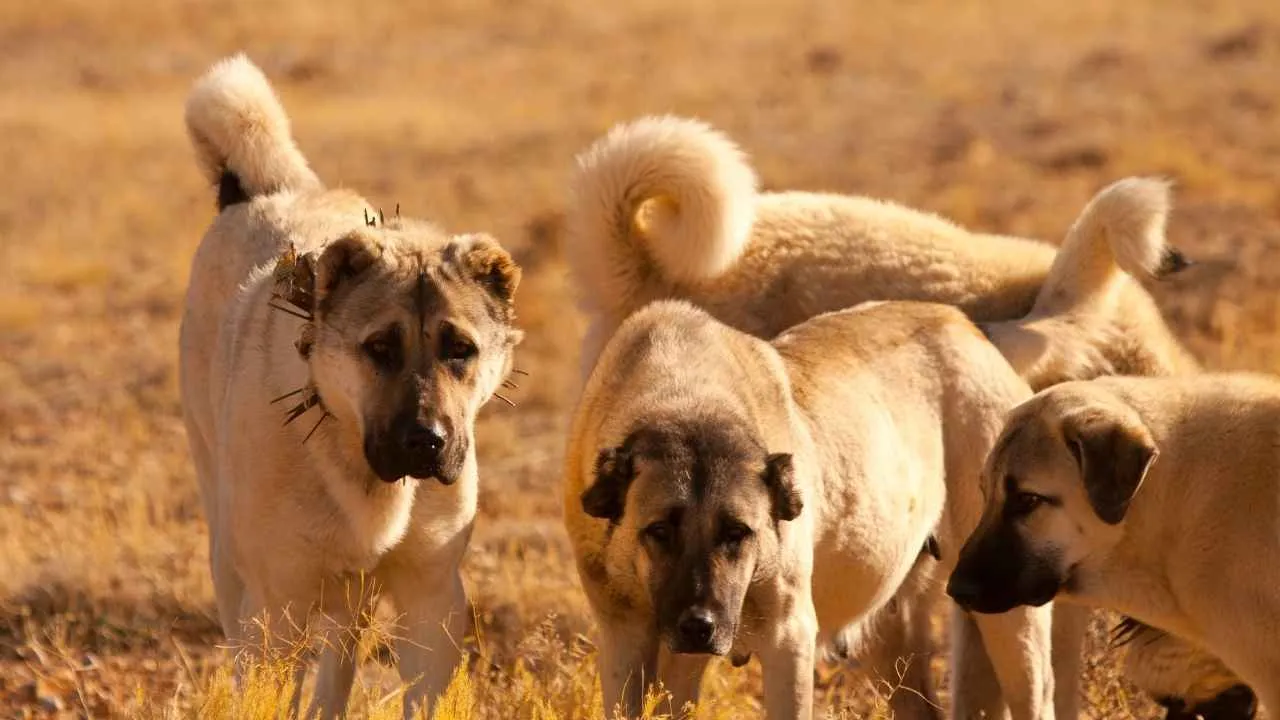
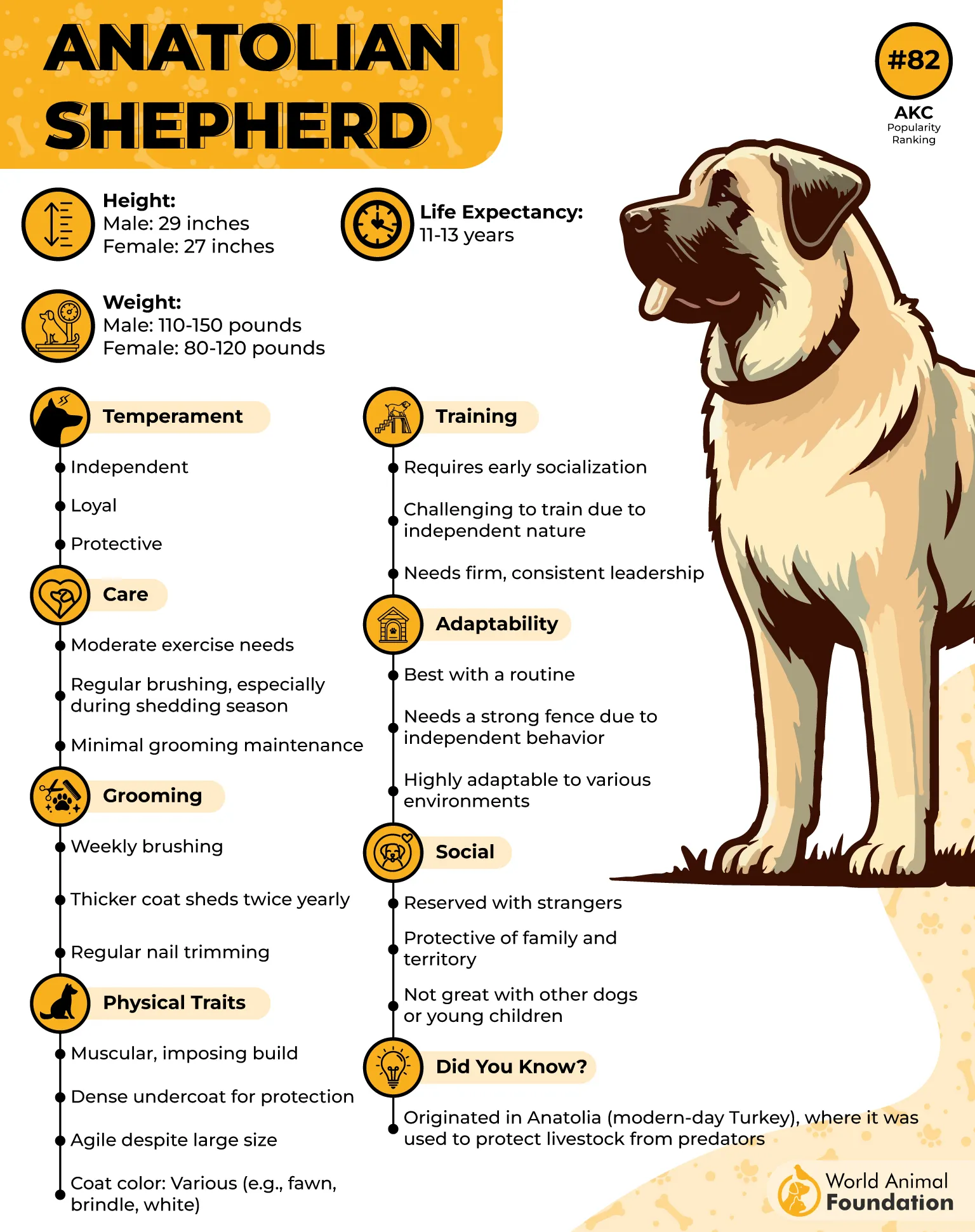
Anatolian Shepherd emerged from one of the oldest known canine bloodlines, formed around guarding livestock across harsh terrains, as written in PetMD.
Its role required independent judgment rather than constant human direction. This origin built a dog that relies on its own assessment in real situations.
Independent guarding approach
As of their protective nature, they can handle guarding tasks without waiting for instructions, relying on awareness of surroundings and unfamiliar presence. Its work extends beyond farms, including roles like protecting endangered wildlife in open regions.
That working pattern reflects in clear behavioral traits:
Makes decisions without handler input
Reacts immediately when sensing a threat
Maintains distance while monitoring surroundings
Temperament within the household
This large dog breed is incredibly loyal and remains calm and composed in familiar settings, forming strong bonds with their human family and livestock group.
It reacts differently around strangers, showing natural caution rather than quick acceptance. Its size requires awareness in homes with younger children.
2. Irish Wolfhound
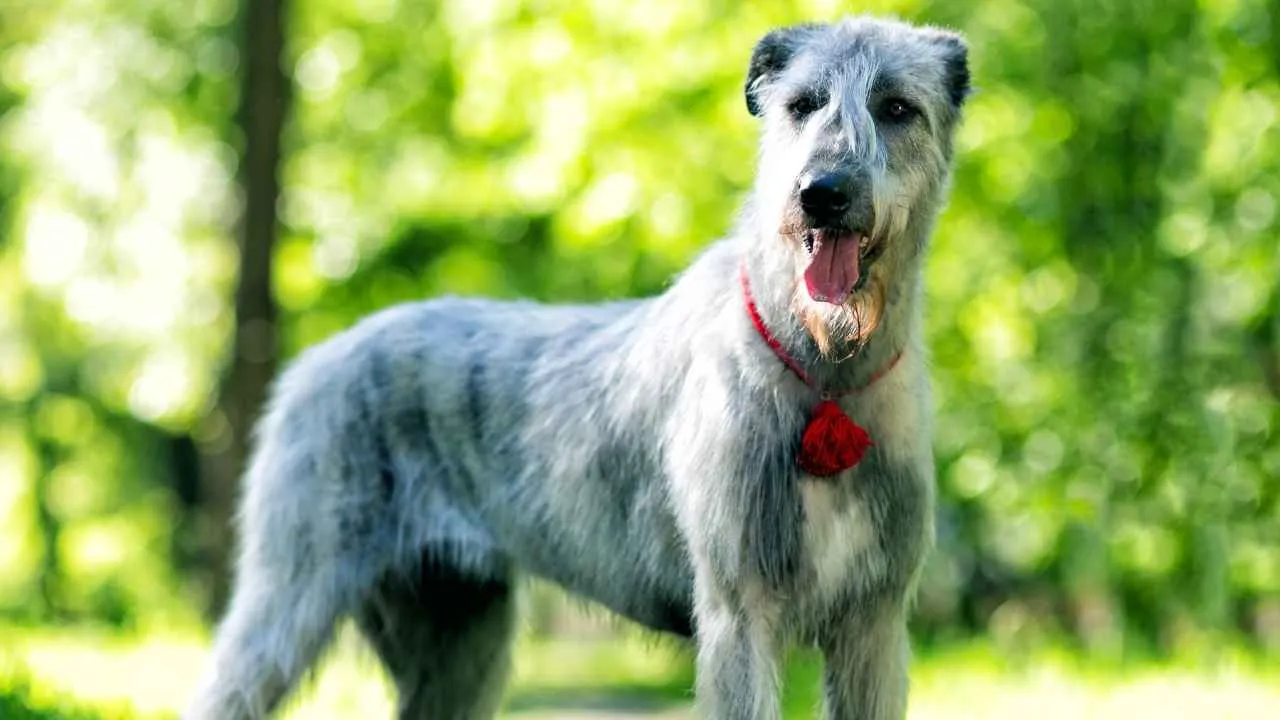
Irish Wolfhound rises with a towering frame shaped along lean greyhound lines, giving both reach and speed when needed.
Its presence feels calm and measured, reflecting a temperament rooted in patience rather than intensity. The sheer size alone often influences how others respond before interaction begins.
Built for reach and pursuit
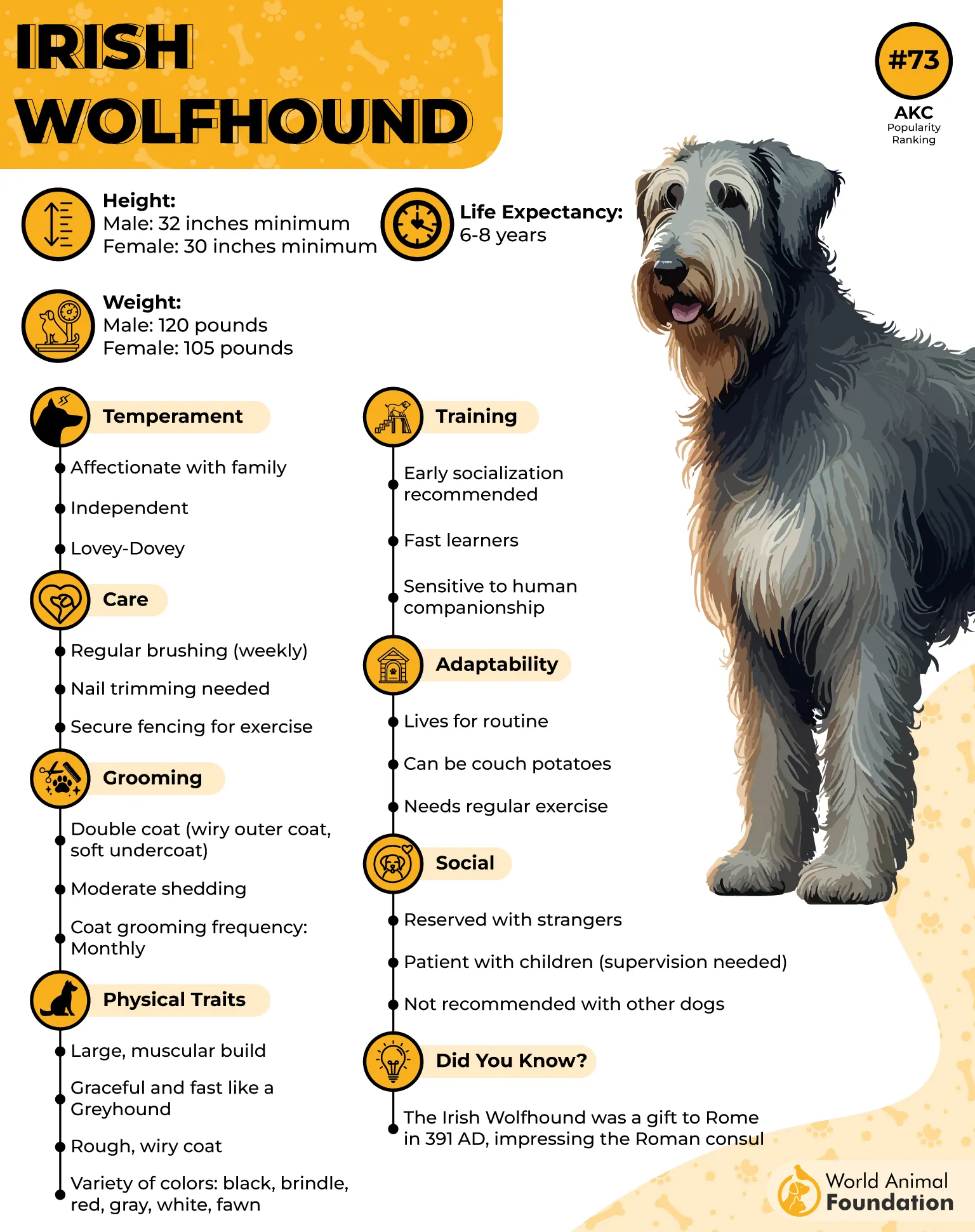
As the tallest dog breed in the dog world, they combine muscle with a long, efficient structure designed for fast galloping across open ground, as per the AKC. This physical design once supported the direct pursuit of large prey, relying on speed and strength working together.
A closer look at its working form reveals:
Long legs supporting an extended stride
Muscular frame built for sustained chase
Deep chest aiding endurance during runs
Temperament within the home
IWs interact with an agreeable and gentle nature, forming easy bonds with people and remaining patient in shared spaces. Its behavior around children leans toward tolerance, though size requires mindful supervision. The overall demeanor reflects ease rather than tension.
3. Leonberger
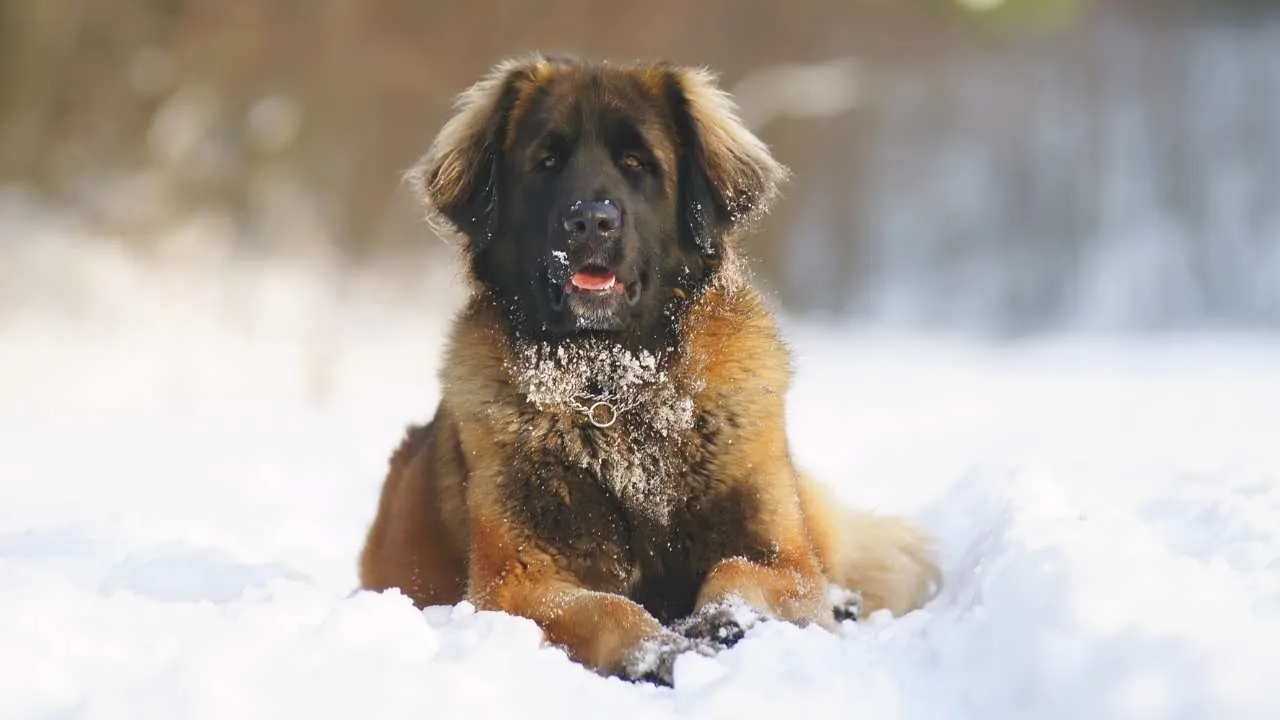
The Leonberger takes its name from Leonberg, Germany, where its lion-like appearance was intentionally shaped to reflect the town’s emblem. Its reddish-gold coat and large frame connect to crosses involving Newfoundland, Saint Bernard, and Great Pyrenees.
Built size with purposeful balance
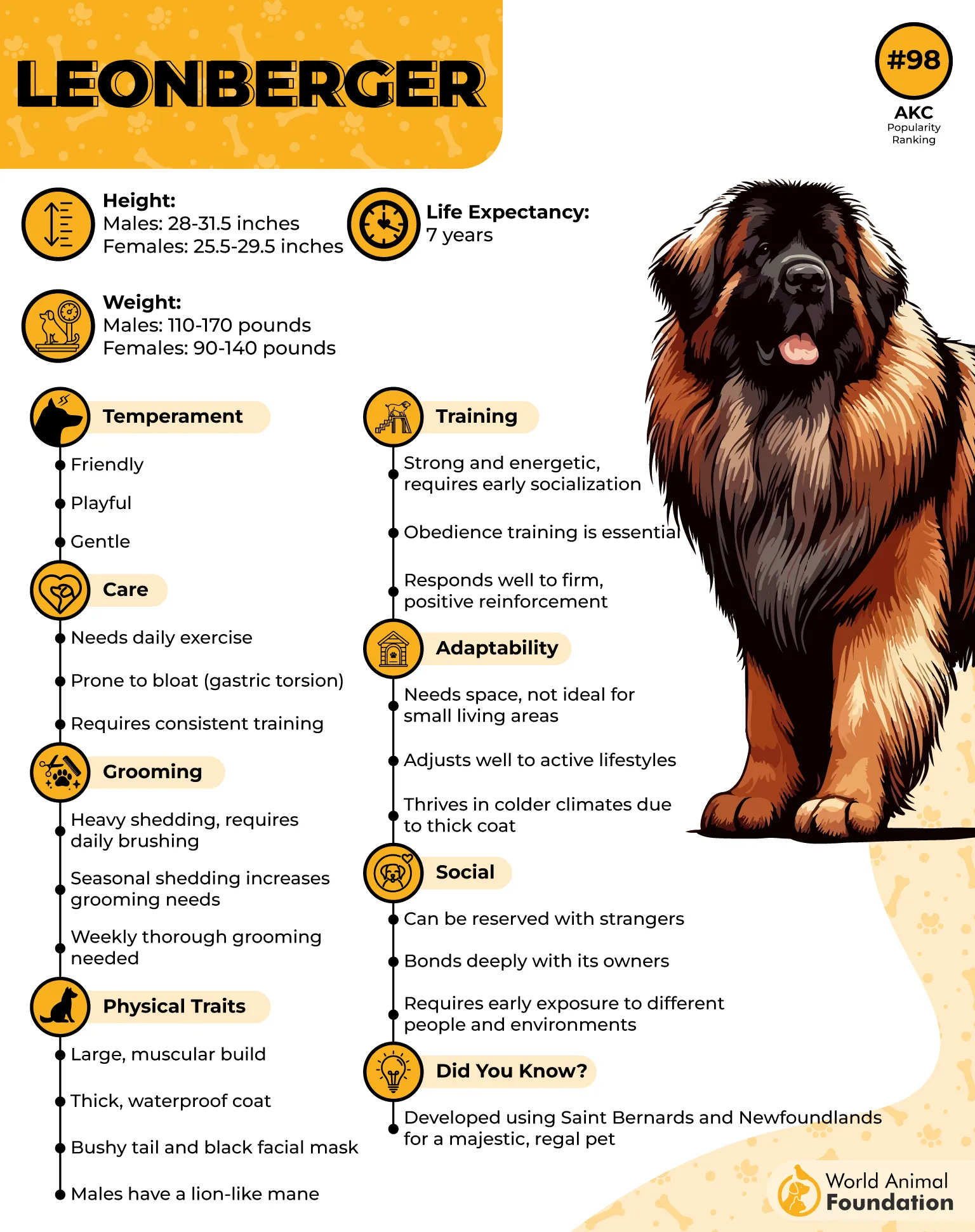
This big dog breed combines muscular strength with a steady structure suited for both farm work and demanding tasks like search and rescue, as Omlet noted. Its body supports weight, endurance, and controlled physical effort across different roles.
These traits come together through:
Thick, water-resistant long coat
Broad frame with strong muscle support
Balanced build suited for pulling and rescue tasks
Temperament within the household
This energetic breed has a composed and patient vibe with family, often showing a soft touch around children. Its social ease extends to other pets and even unfamiliar people when early guidance is provided. This openness connects closely with its long-standing role as both worker and companion.
4. Neapolitan Mastiff
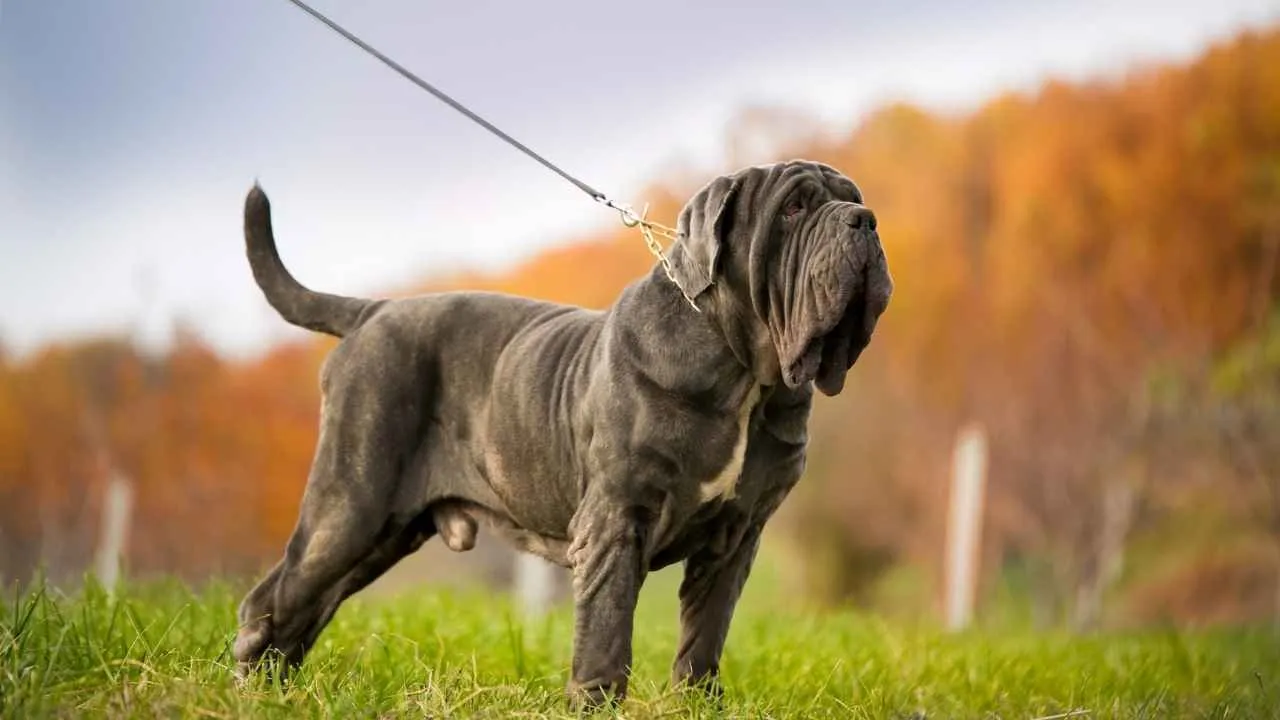
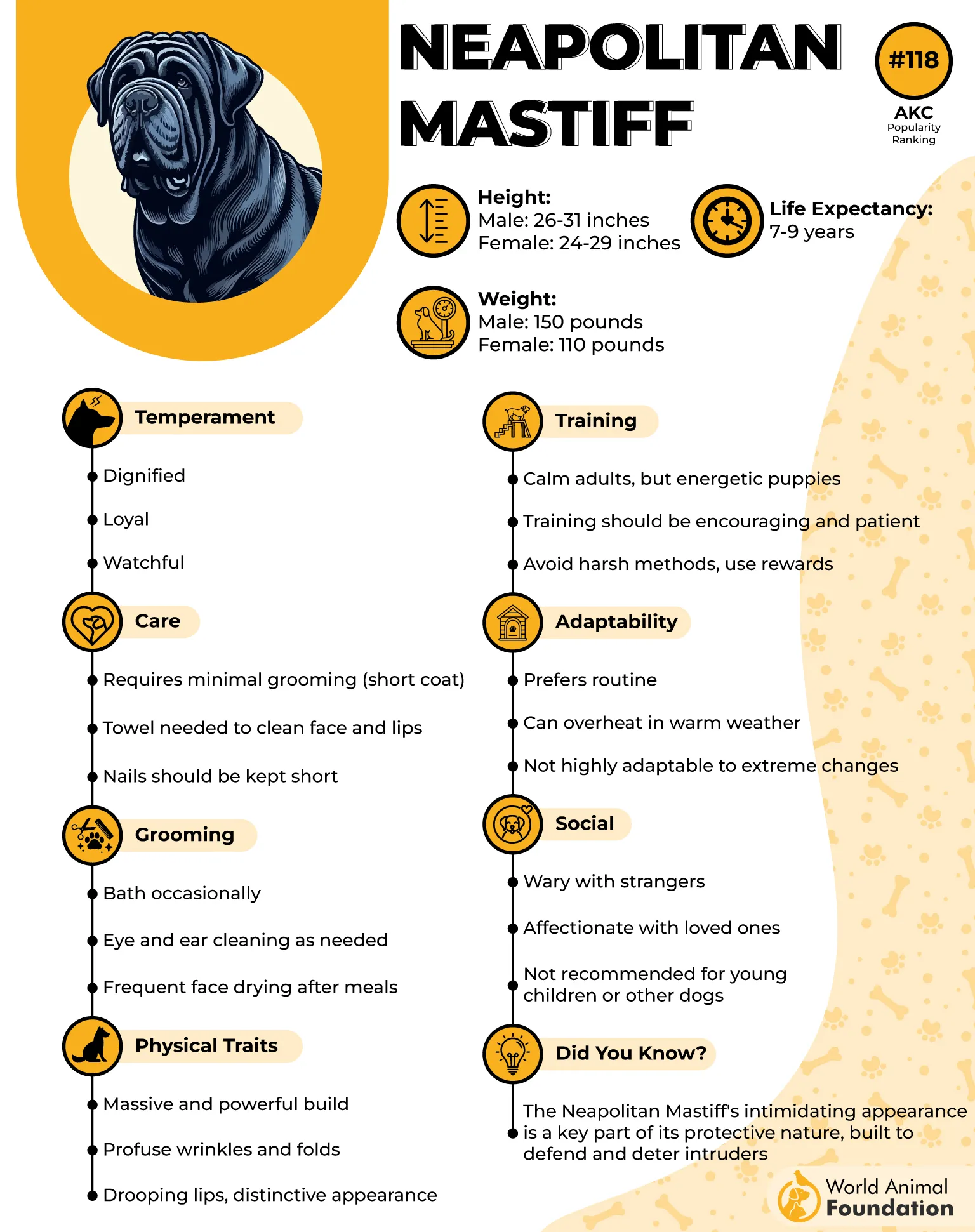
Neapolitan Mastiff links to Roman war dogs once used in combat against large animals and in battlefield settings. That origin shaped a dog defined by size, weight, and an imposing physical form. Over time, this role shifted into estate guarding across Italian homes.
Form shaped for intimidation
This gentle giant relies on sheer mass and loose, heavy skin to create a presence that discourages intrusion without action. Its slow, heavy gait reinforces that impression rather than urgency.
That physical identity comes through clearly:
Massive frame designed for visual impact
Loose skin enhances its formidable outline
Slow, deliberate gait adds to its presence
Temperament within familiar space
As loyal family dogs, they settle into a calm and inactive rhythm at home, often spending long hours resting or sleeping. Its behavior indoors reflects a preference for quiet surroundings rather than constant activity. This pattern aligns with its tendency to remain close to familiar people.
5. Newfoundland
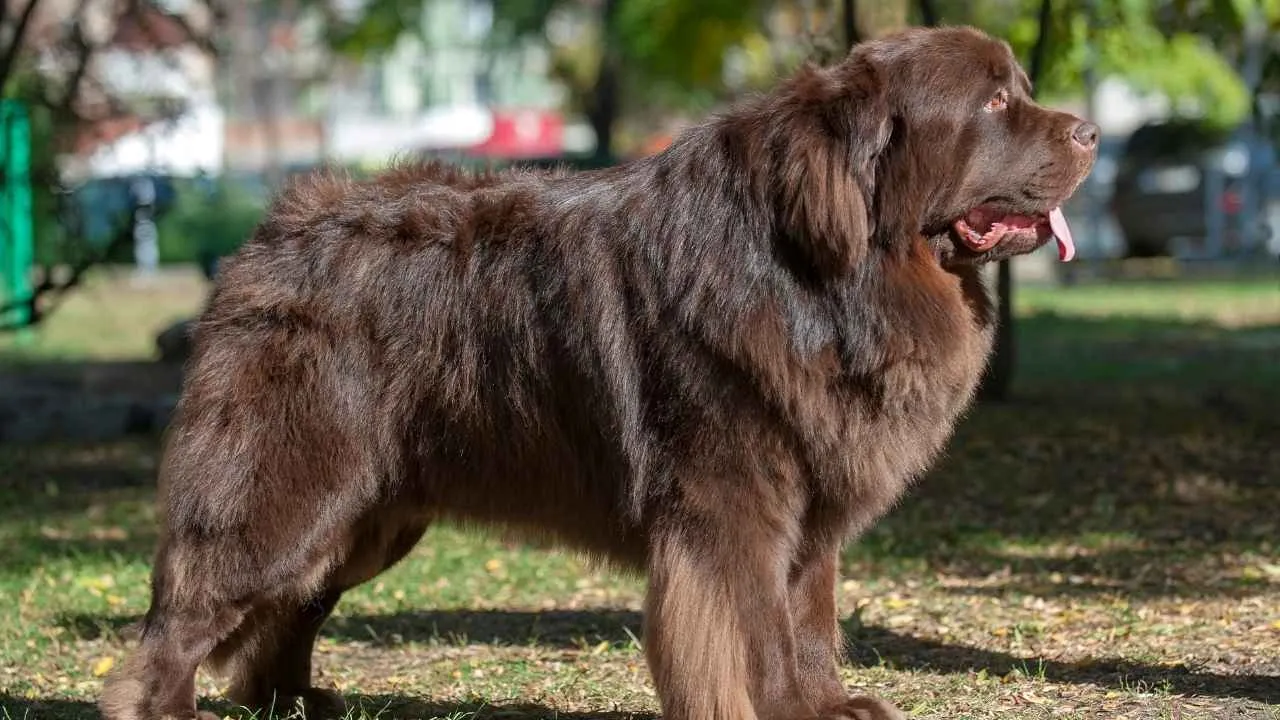
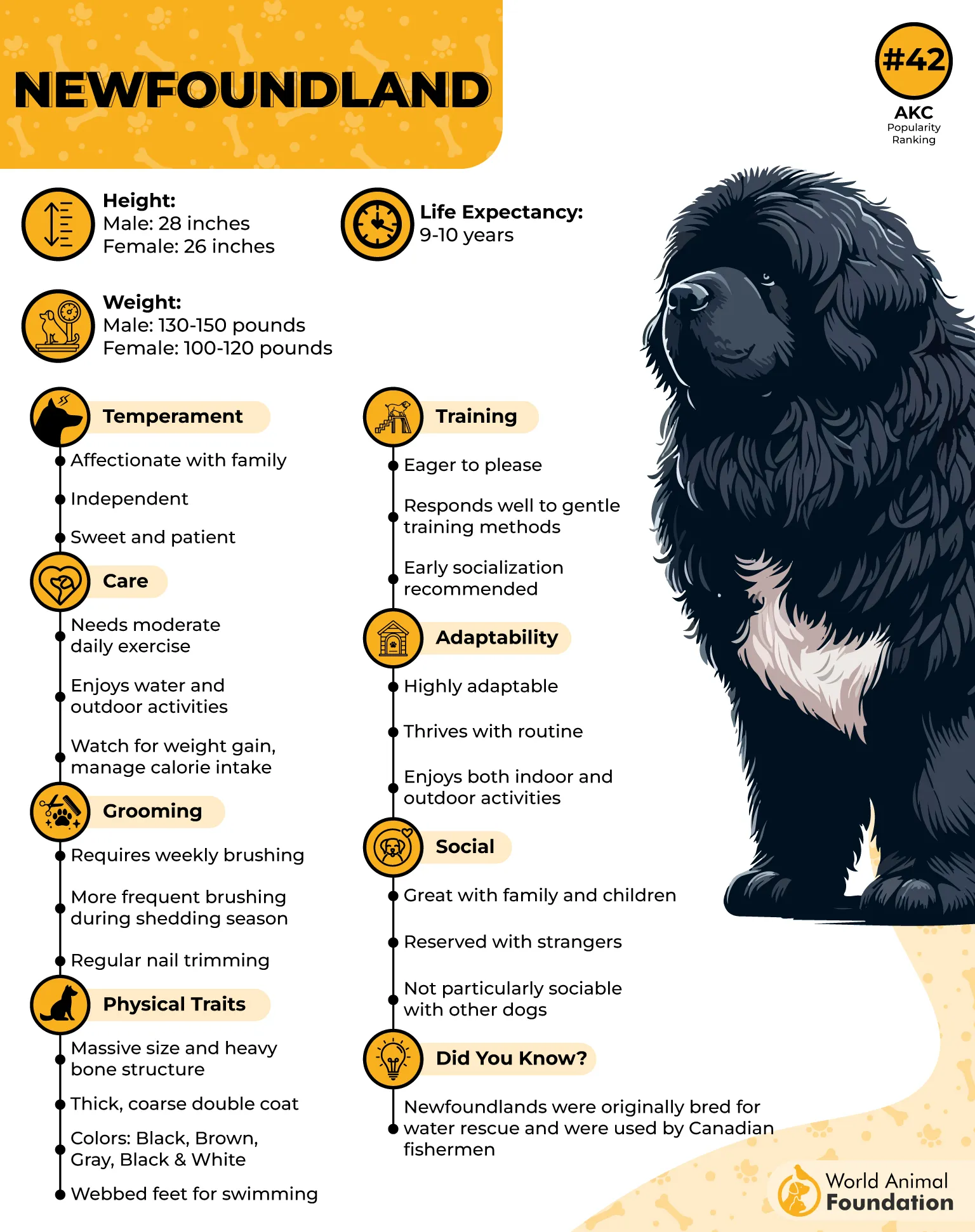
Newfoundland draws attention through its massive frame, heavy bone, and calm, composed expression. The broad head and soft eyes create an impression of quiet awareness rather than tension. Its physical presence feels steady, shaped for both strength and close companionship.
Built for land and water tasks
Newfies handle both physical labor and water-based activity with ease, reflecting their role as a multipurpose working dog. Its structure supports pulling, swimming, and controlled movement across different environments.
That versatility appears through defining traits:
Dense coat suited for outdoor and water conditions
Strong build adapted for draft and pulling work
Natural ability in water-based rescue activity
Learning shaped by calm guidance
This large breed responds well to steady, gentle instruction, reflecting a willingness to cooperate during training. Its trainable nature connects closely with trust built through interaction rather than force. Daily activity combined with engagement helps maintain balanced behavior indoors and outdoors.
6. Saint Bernard
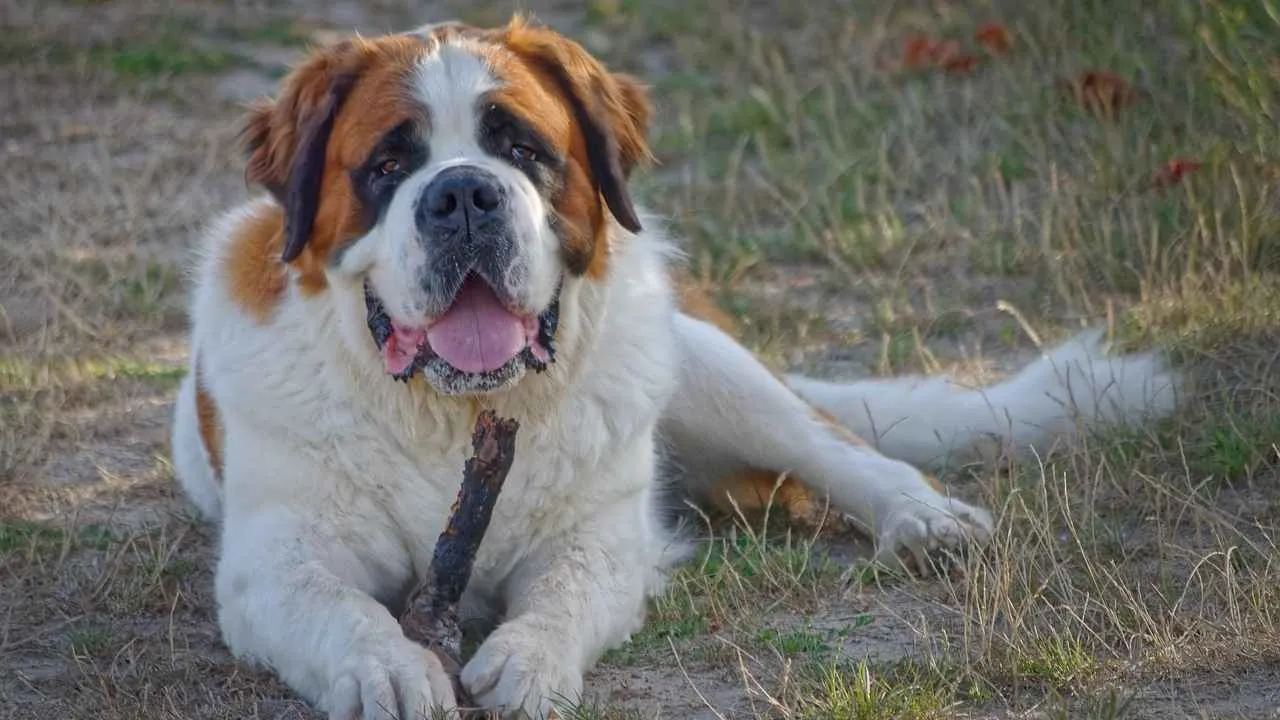
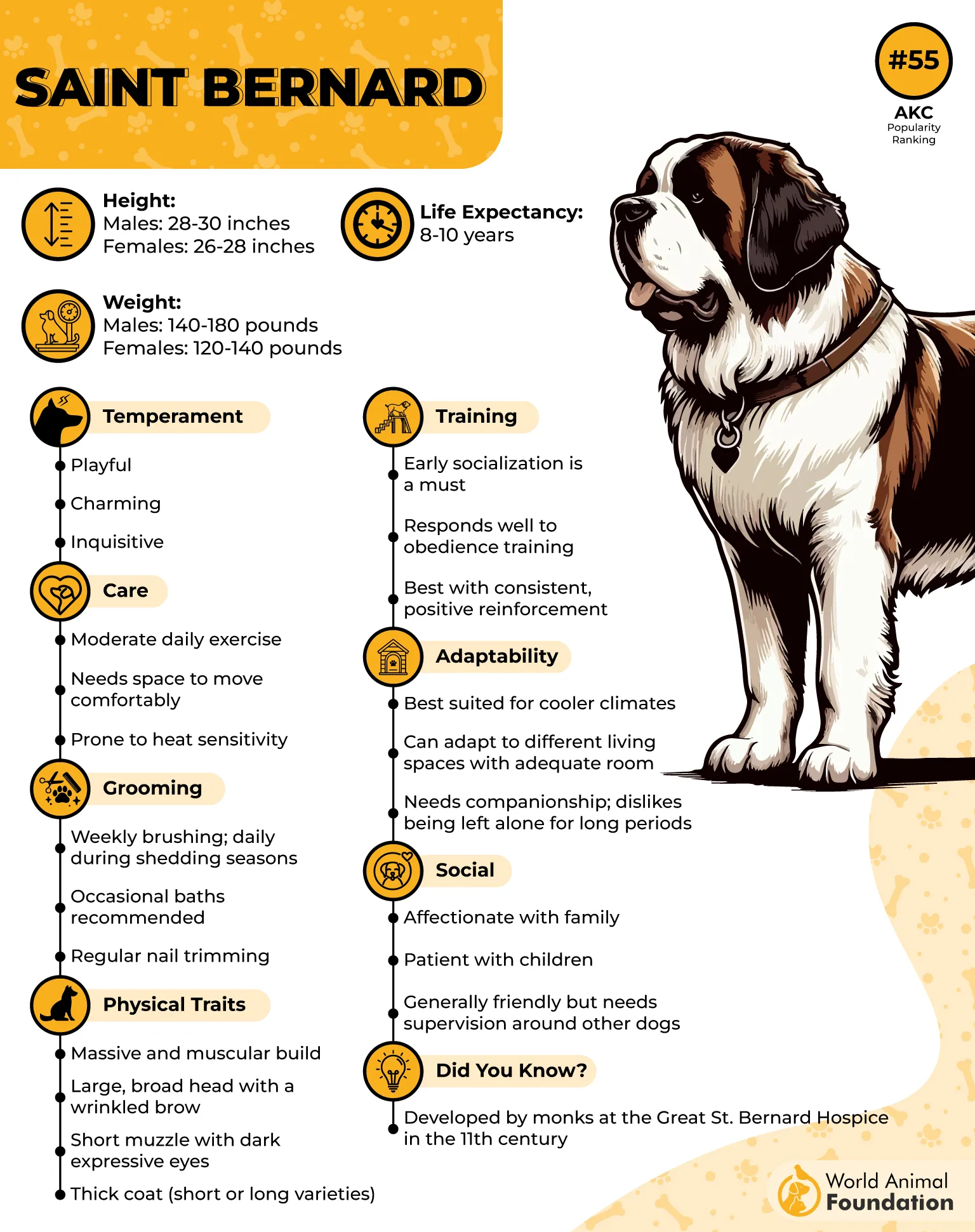
Saint Bernard carries a powerful, heavily muscled build with an imposing frame shaped for demanding alpine conditions. Its large head, deep muzzle, and wrinkled brow form an expression that reads calm yet attentive. The overall structure reflects controlled strength rather than speed.
Recognition through physical detail
As massive dog attract attention through a combination of size and expressive facial features, often appearing steady and composed in unfamiliar surroundings. Its calm nature blends with a naturally friendly response toward people, especially within family settings.
This structure becomes clearer through physical markers:
Massive body with extra muscular density
Wrinkled brow framing a focused expression
Short muzzle with deep-set, dark eyes
Social dependency and daily balance
They form a strong attachment toward people and can struggle when left alone for extended periods, reflecting a need for consistent presence. Its energy level remains moderate, with short daily activity cycles rather than intense bursts. Structured routines help maintain balance in daily behavior.
7. Tibetan Mastiff
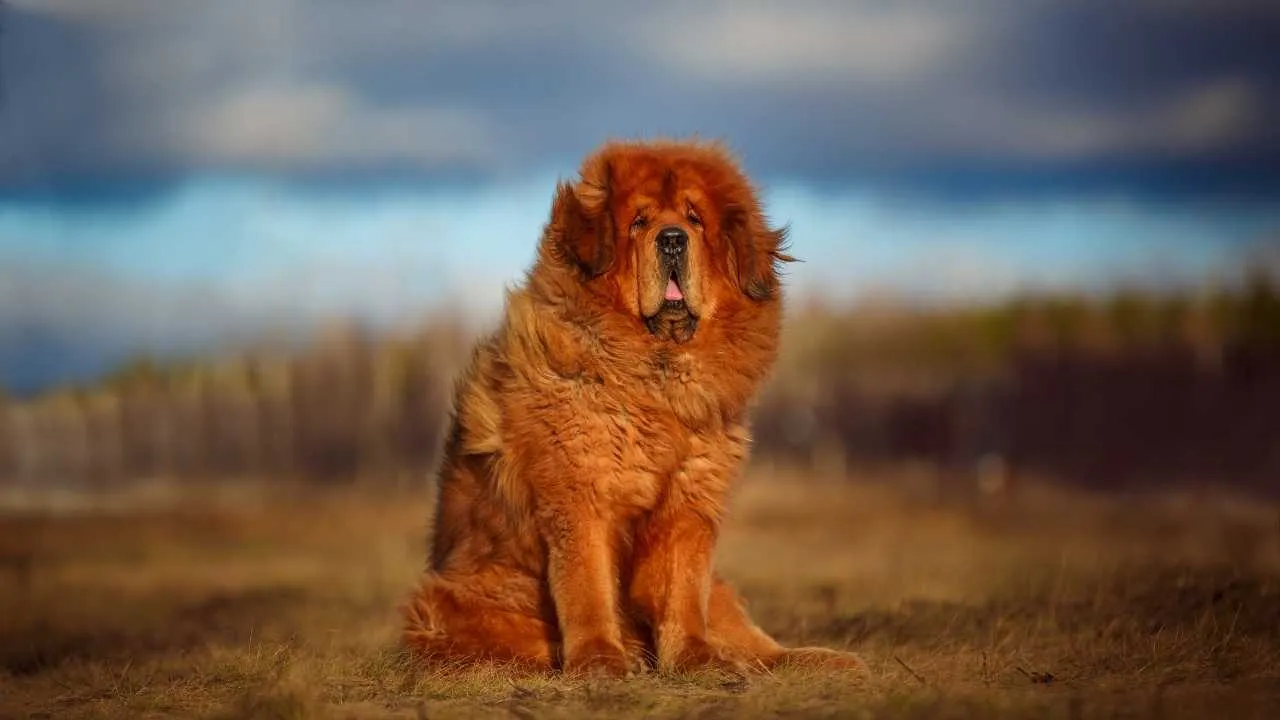
The Tibetan Mastiff is an ancient guardian from high-altitude regions, recognized for its massive frame and dense coat built for extreme conditions.
Its broad head, deep eyes, and strong bone structure create a powerful outline that reads as alert even in stillness. The overall impression leans toward controlled authority rather than constant movement.
Behavior shaped by territory awareness
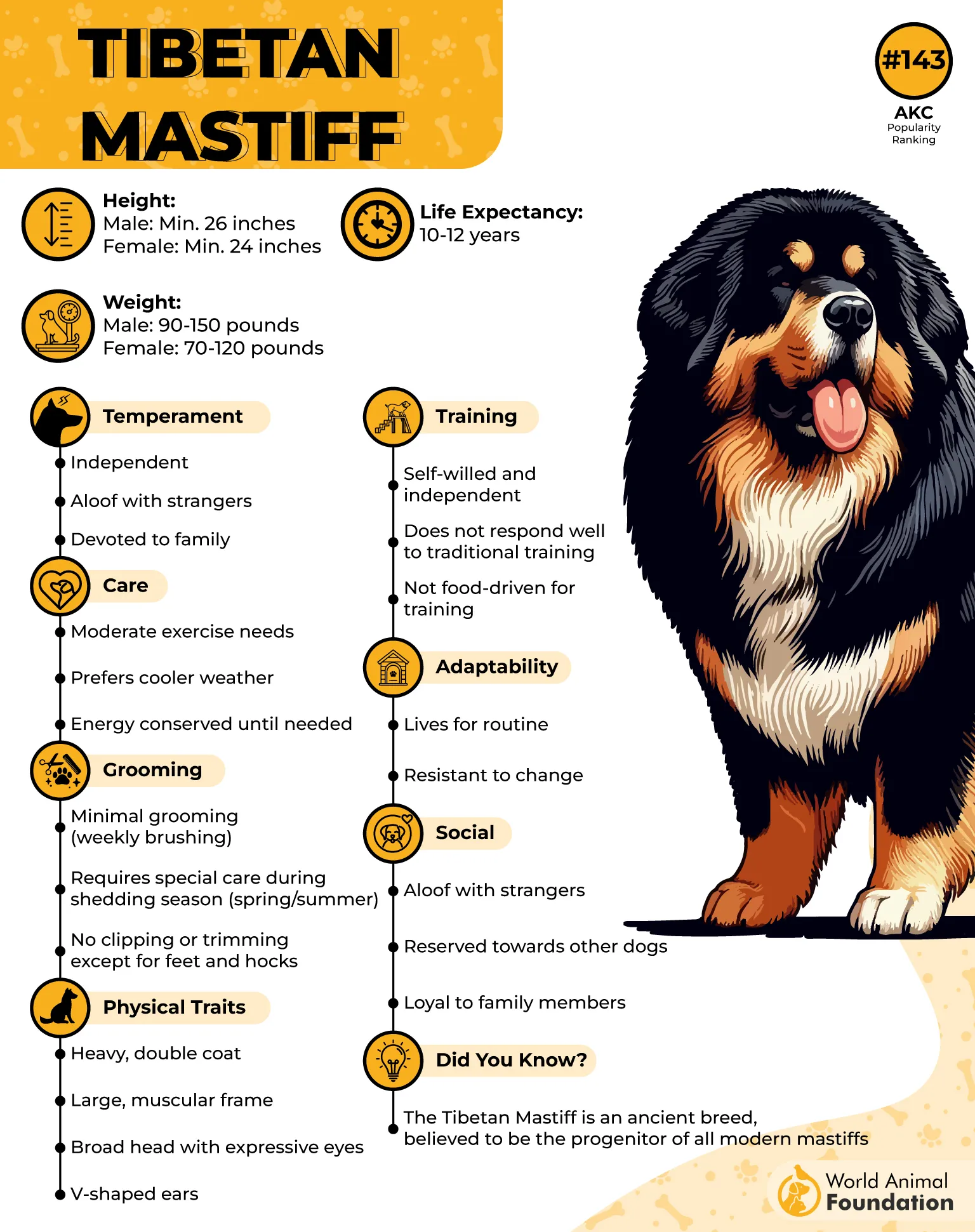
This ancient breed reacts differently to family members and unfamiliar presence, staying calm inside the home while becoming highly watchful toward strangers. Its territorial instinct activates based on perceived risk rather than random behavior.
This response becomes clearer in practical patterns:
Watches an unfamiliar presence with steady focus
Reacts defensively when the territory feels disturbed
Switches from calm to alert based on context
Physical design and environmental limits
This guard dog combines heavy muscular structure with surprising agility, allowing short bursts of strength when needed.
Its dense double coat supports cold climates but creates difficulty in heat, requiring careful management in warmer conditions. Despite its size, it is not built for long-duration endurance activity.
Conclusion
At first glance, giant dogs may seem difficult to manage, but these breeds reveal a more balanced reality. Their loyalty shows through controlled behavior and a gentle disposition that fits naturally into daily routines. Even experienced dog owners often notice how easily this steady connection forms without constant effort.
As time passes, that steady presence becomes more noticeable than their size. Their responses stay measured, and their bond continues to strengthen without effort. In the end, these dogs settle comfortably as family pets, bringing a sense of trust that holds firm through everyday life.
