




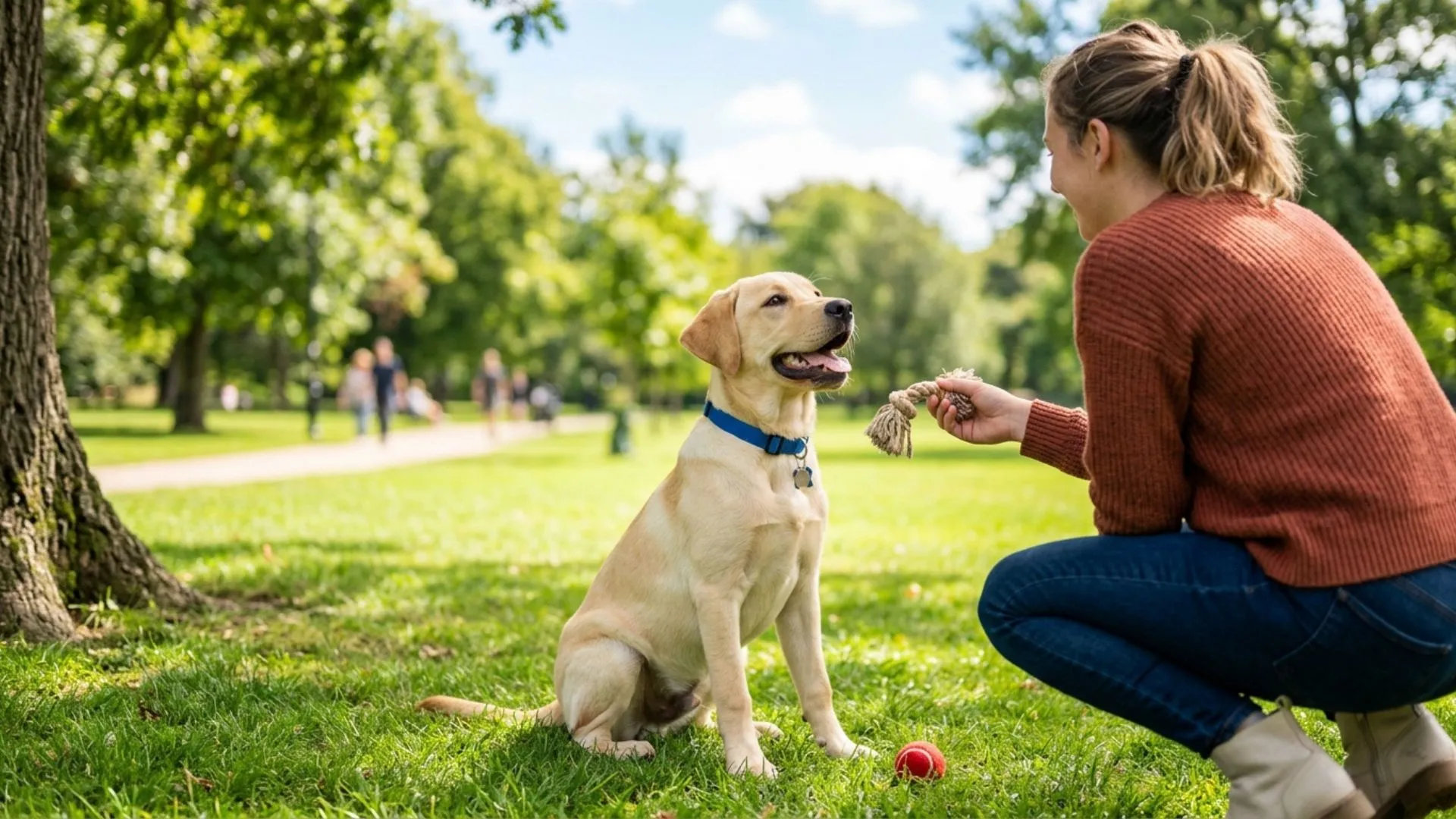
The first week felt exciting, but by the second, small challenges started showing up. Simple things like managing energy, keeping a routine, and understanding behavior were not as easy as expected.
It was not that the dog was difficult. It was that the match was not right for someone new to dog ownership. Over time, the experience became more about catching up than enjoying the companionship. This is something many first-time owners go through, often without realizing it could have been avoided.
Some dogs naturally make the learning process easier. They respond better, settle faster, and do not overwhelm someone who is still figuring things out. Others require a level of experience that only comes with time. That early difference shapes the entire journey.
In the following sections, you will find dog breeds that are known to be more suitable for novice owners, making the transition into ownership far more manageable and steady.
Key Takeaways
Starting life with a new dog often feels simple at first, until routines, consistent training, and behavior begin shaping how the days actually unfold.
Golden Retriever and Labrador Retriever stand out early for how naturally they adapt, fitting into homes with steady behavior and easy learning patterns.
Bichon Frise, Pug, and Cavalier King Charles Spaniel add a softer side to this list, staying calm in newspaces while still keeping a friendly, responsive nature.
By the time you move through all seven breeds, the difference between overwhelming and manageable companionship becomes much clearer in everyday life.
Best Dog Breeds for Those New to Dog Ownership
1. Golden Retriever
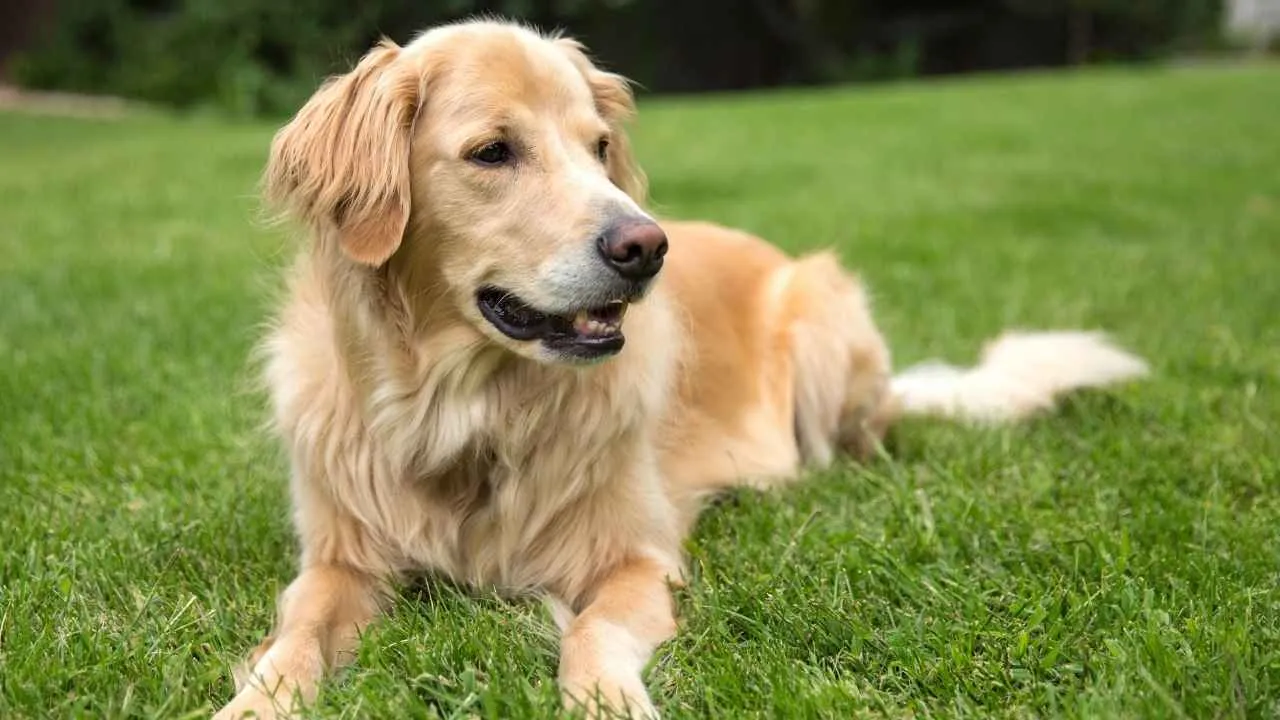
The Golden Retriever stands out as a Scottish gundog known for its balanced mix of intelligence, energy, and an easygoing social nature. It has built a strong reputation through roles in guiding, search work, and field tasks that demand focus and reliability.
Structure built for steady movement and ease
This breed has a sturdy, medium-sized frame supported by a dense golden coat that reflects its outdoor working roots. A broad head, friendly eyes, and smooth gait give it a relaxed yet purposeful presence in motion.
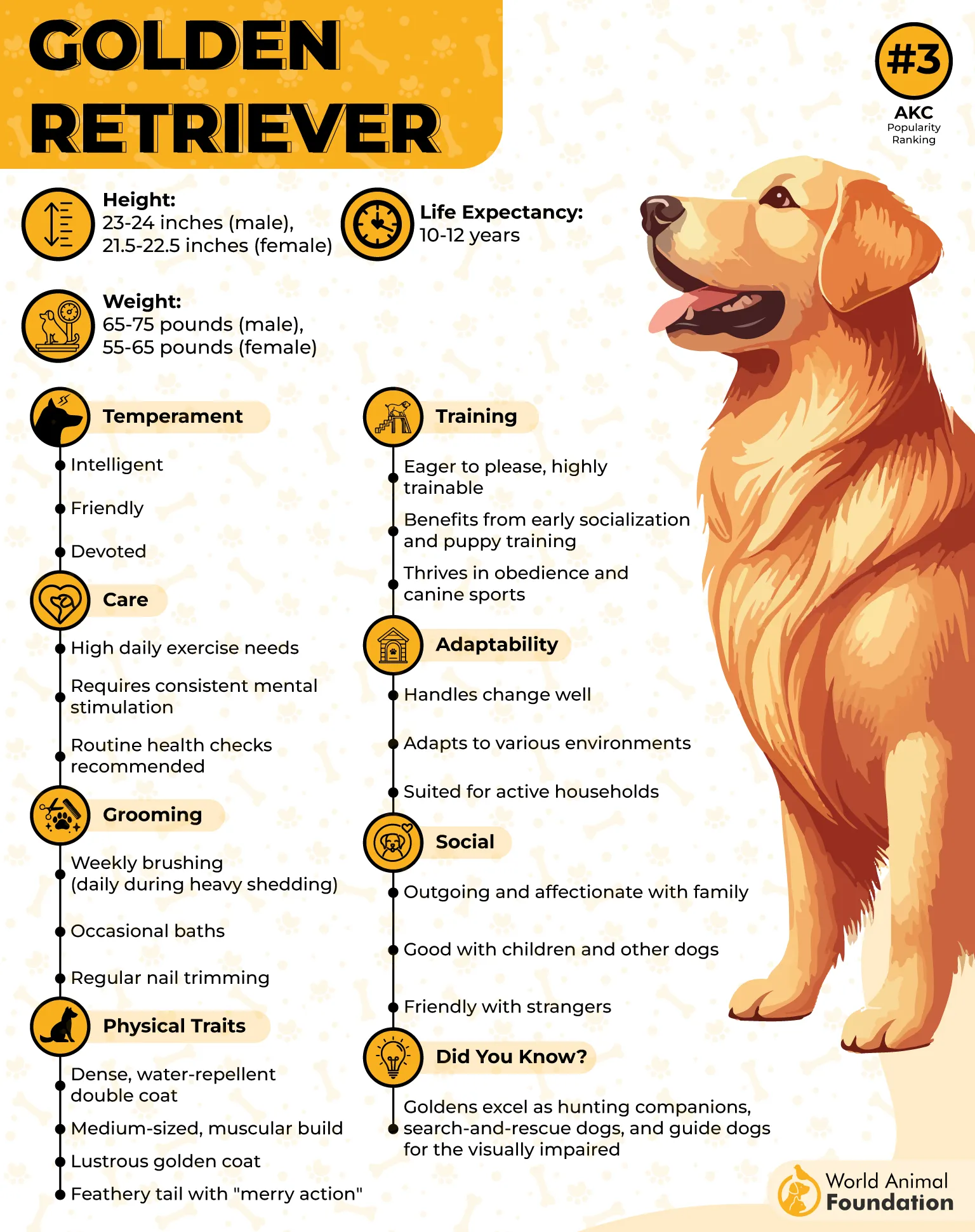
This physical setup supports its everyday versatility:
A smooth gait allows comfortable long walks and outdoor activity
A dense coat offers protection in varied weather conditions
Balanced frame supports both work and play routines

Behavior in everyday home settings
As a best breed, they show an outgoing and trustworthy nature that fits naturally into family spaces, as per the AKC.
It responds well to guidance and tends to pick up routines quickly without resistance. A playful attitude often continues into adulthood, shaping a lively but manageable home environment.
2. Labrador Retriever
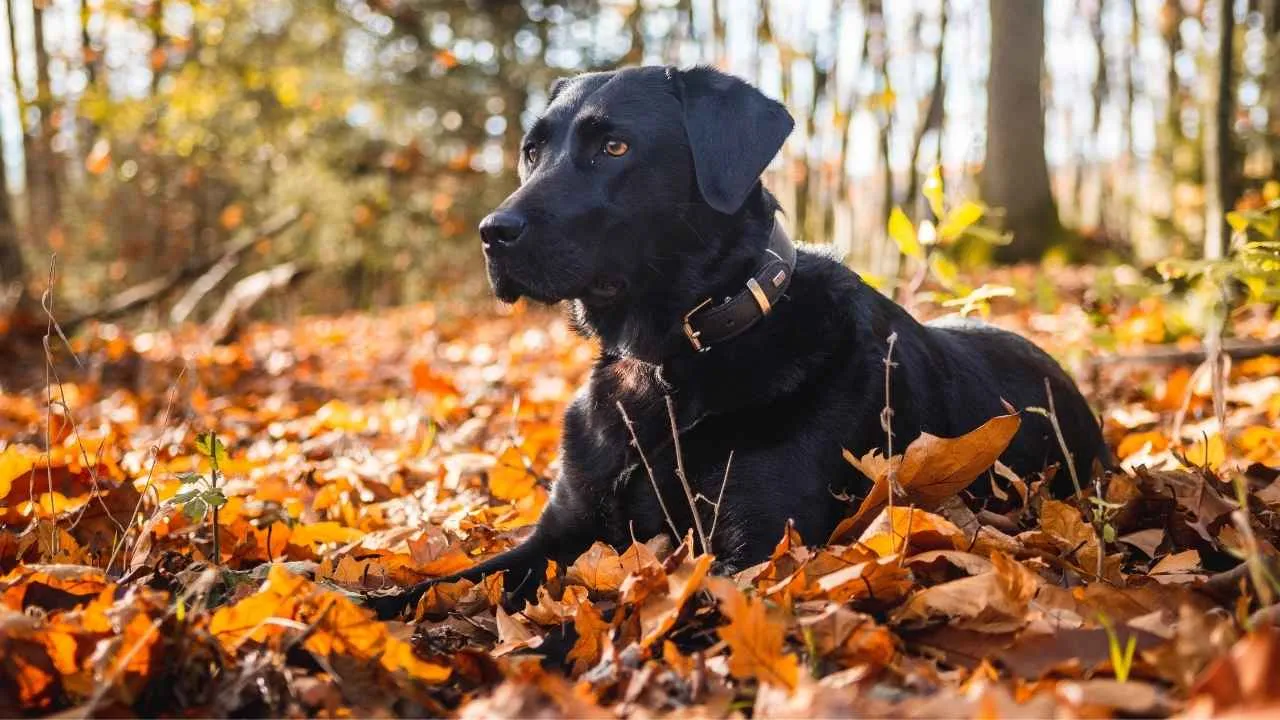
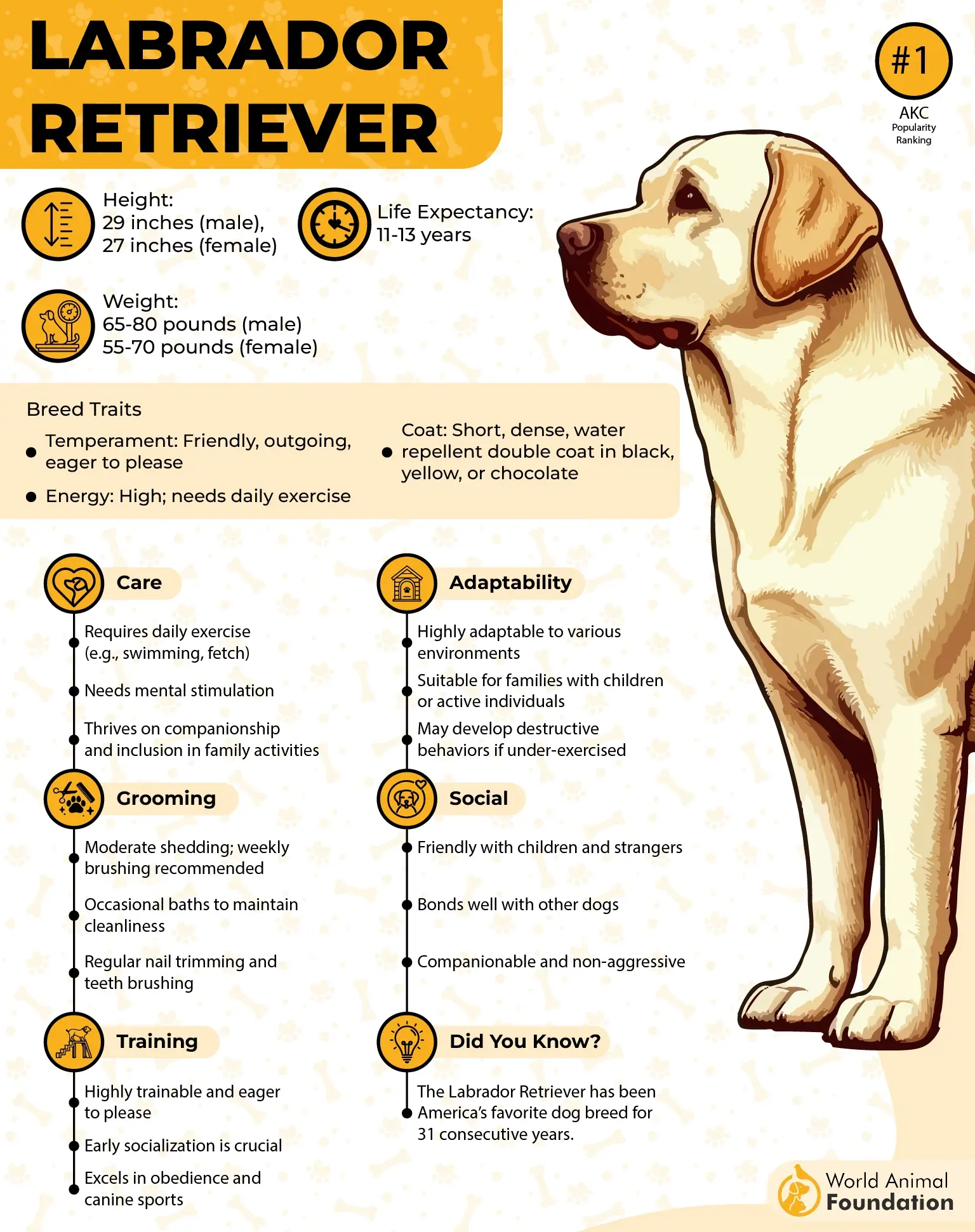
Labrador Retriever traces back to Newfoundland, where early dogs worked around water retrieving fish and assisting with boats.
This background shaped a breed that responds well to direction and stays engaged in practical tasks. That early purpose still reflects in how easily it fits into structured daily life.
Structure and working traits shaped by purpose
This medium-sized dog was developed as a working dog built for swimming, retrieving, and sustained outdoor activity. Its balanced frame supports repeated movement without strain, which helps in maintaining a steady routine.
That working base shows up clearly in key traits:
Natural swimmer with strong water interest
Built for repeated retrieval without quick fatigue
Balanced body suited for active daily use
Behavior in everyday home life
As an affectionate dog, Labs stay closely connected to their pet owners, often following daily movement within the home. It adjusts to routines quickly, learning patterns without creating confusion, as Pawlicy Advisor notes. Interaction with children, other dogs, and visitors remains steady and manageable.
3. Bichon Frise
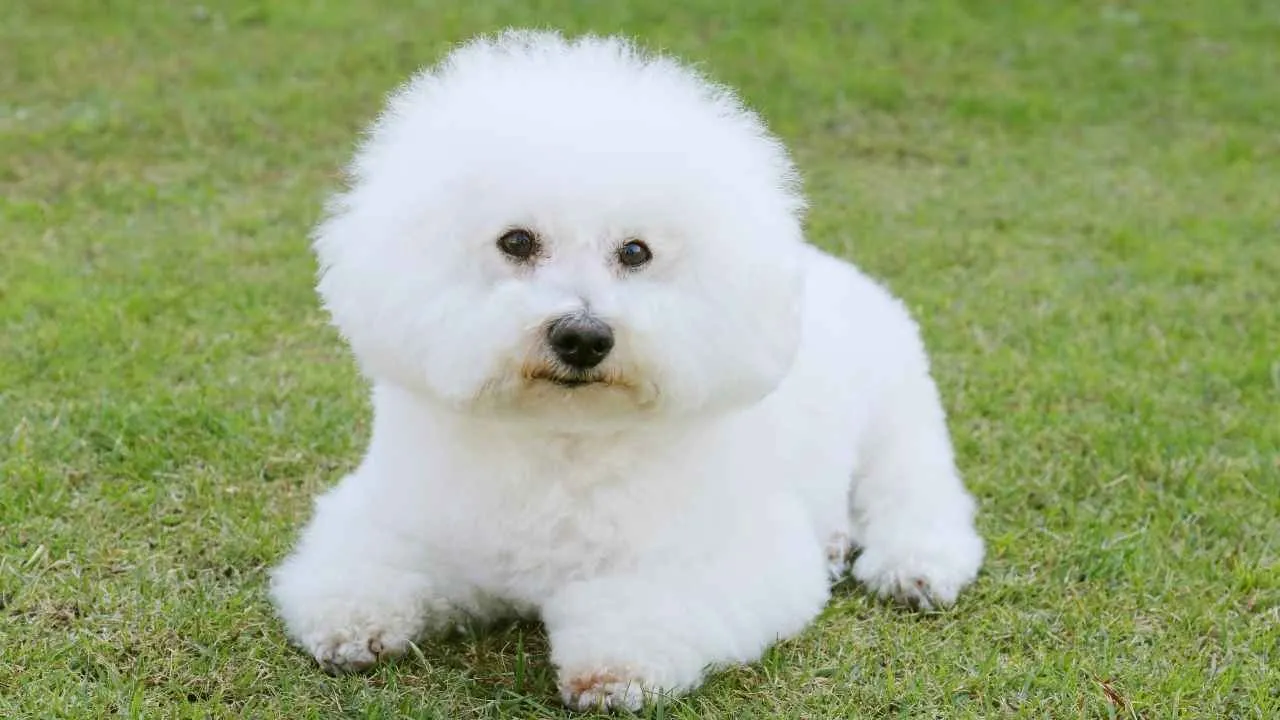
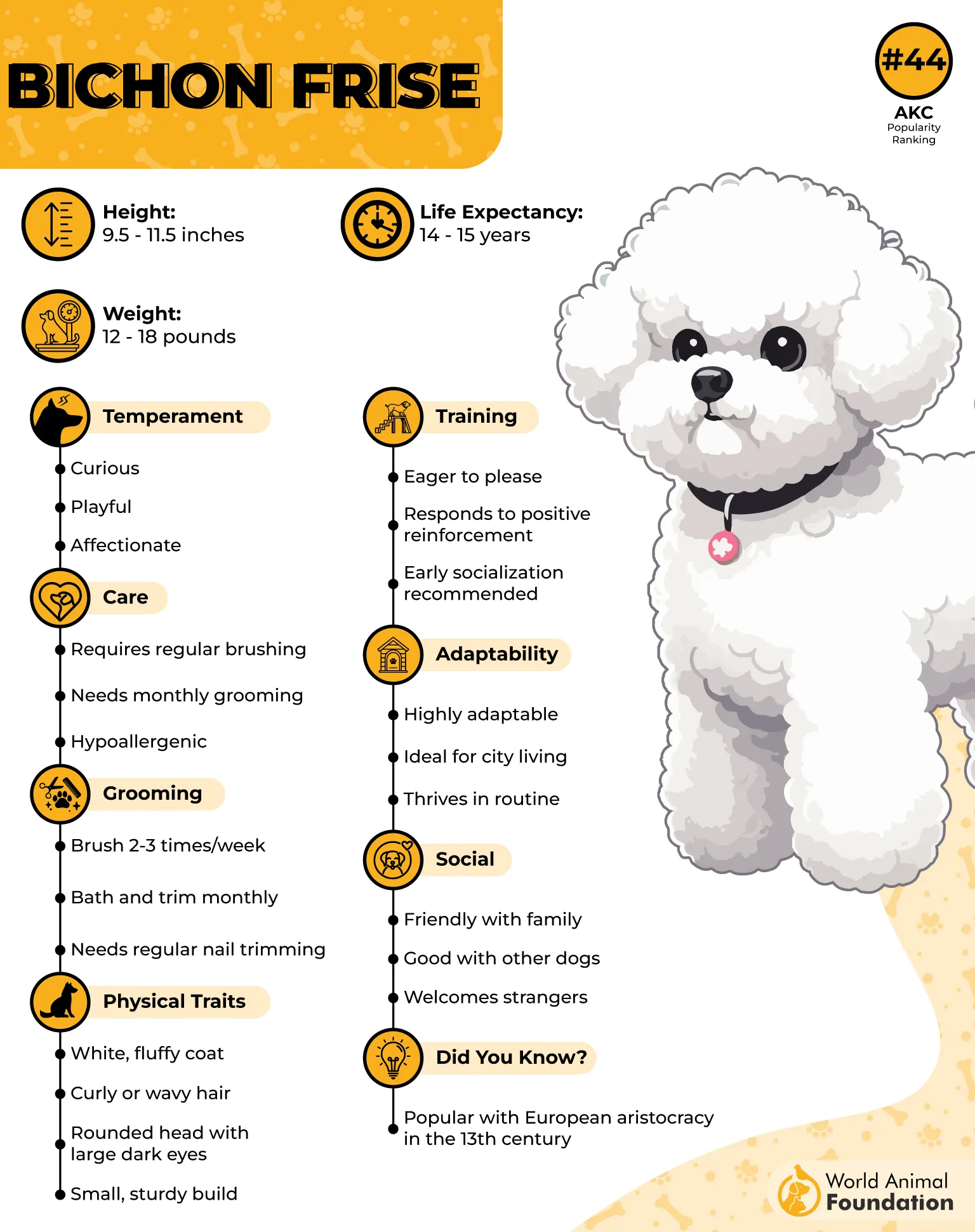
Bichon Frise brings a playful and affectionate nature that quickly fits into everyday home life. Its friendly attitude toward children and other dogs makes early interactions smoother for someone new to pet care. Curiosity and social ease help it settle into new environments without hesitation.
Structure and everyday suitability
This is one of the easiest dog breeds to keep things easy with its small size, especially indoors. Its low-shedding coat is often preferred by first-time dog owners who are mindful of allergies, though sensitivities can still vary.
This balance shows up clearly in daily living patterns:
Comfortable in apartments and limited spaces
Lower visible shedding compared to many breeds
Easily shifts between playtime and rest
Social behavior in home settings
They engage easily with people and other pets, often seeking interaction rather than avoiding it. It responds well to learning new tricks, helped by a natural eagerness to stay connected with its human. Its alert barking appears around unfamiliar sounds, but does not usually become difficult to manage.
4. Pug

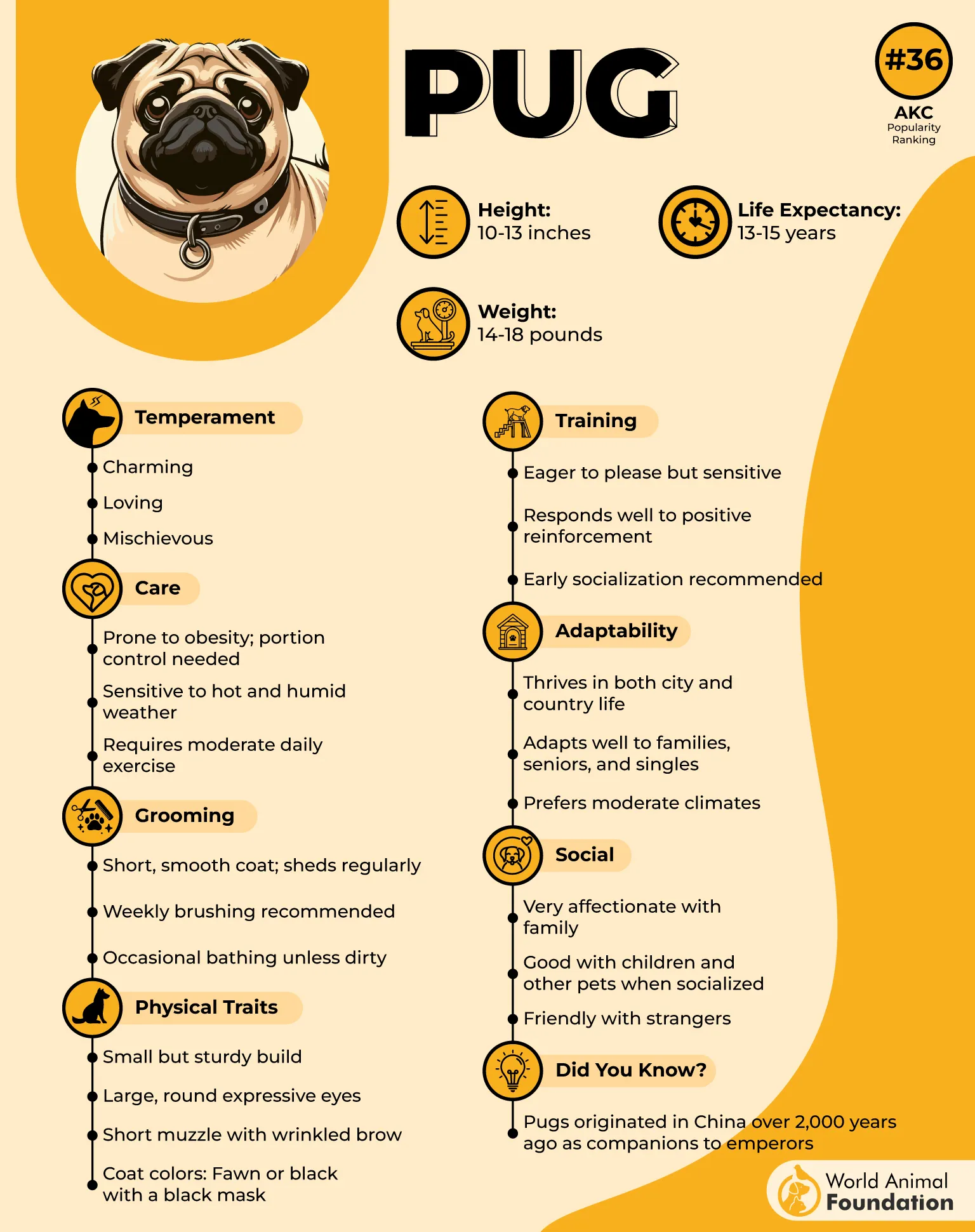
Pug traces its origin back to ancient China nearly 2,000 years ago, later becoming a favored companion among royal households.
Its small frame and expressive face made it a recognizable presence in close indoor living spaces. The breed is now widely known for its strong connection with people and home environments.
Compact build shaped for indoor living comfort
This small dog has a compact body with a flat face, curled tail, and distinct wrinkled expression that defines its appearance. Its breathing pattern is naturally snort-like due to its facial structure, which shapes its activity style.
That structure reflects key everyday traits:
Flat face influences breathing and heat sensitivity
Curled tail maintains compact posture balance
Small frame suits indoor-focused lifestyle patterns
Easygoing household companion
They are closely connected to people, often seeking attention and staying near daily household activities. It enjoys involvement in simple interactions like short daily walks or calm play sessions, as PetMD noted.
Its behavior stays generally steady, with occasional bursts of short energy rather than long activity cycles, best suited for new owners.
5. Cavalier King Charles Spaniel
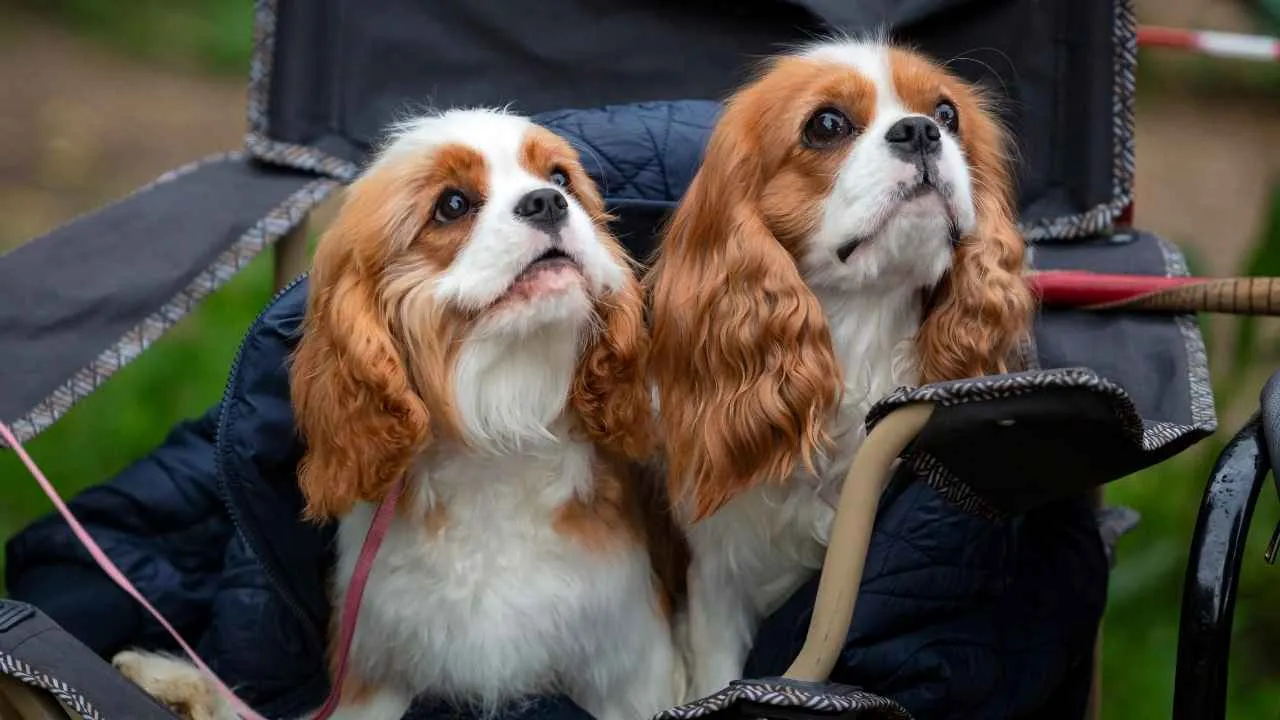
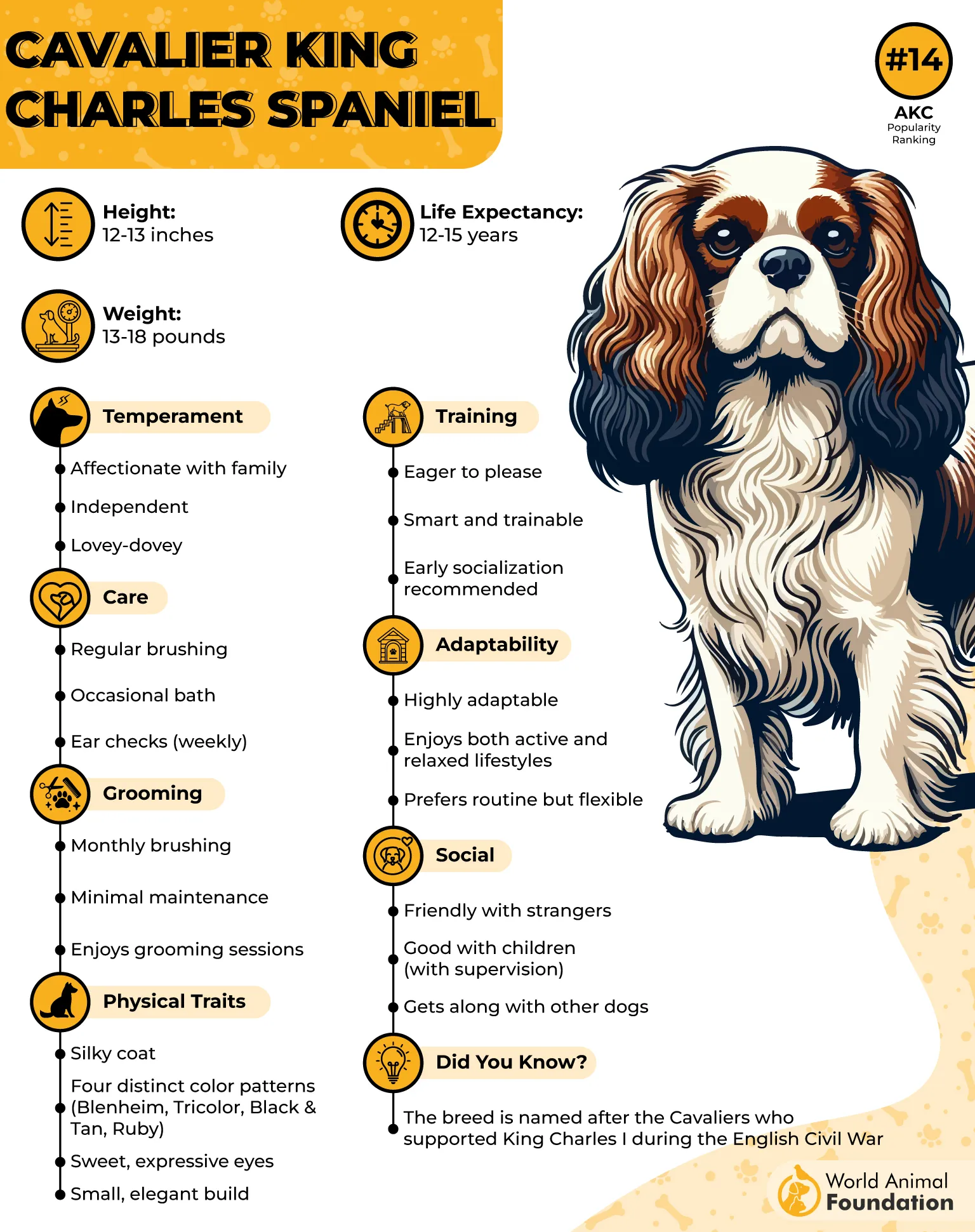
Cavalier King Charles Spaniel carries a long link to British history, reflected in its refined presence and gentle expression. It blends a soft toy-like temperament with the liveliness of a sporting spaniel. This balance gives it a calm yet responsive nature in everyday settings.
Structure shaped for gentle movement and elegance
They show a compact, graceful frame supported by a silky coat that appears in rich color variations. Its large, round eyes and soft facial expression create a naturally warm and approachable look. The body structure supports light activity without heavy physical demand.
That physical makeup reflects a few clear characteristics:
Silky coat with distinct color patterns
Round expressive eyes that shape its gentle look
Light build suited for easy movement indoors and outdoors
Behavior in the home environment
As a small breed, they adjust easily to both active and quiet households, responding to the tone of their surroundings. It stays friendly with children and other pets, showing steady comfort in shared spaces. This flexible behavior makes daily handling straightforward for first-time pet owners.
6. Papillon
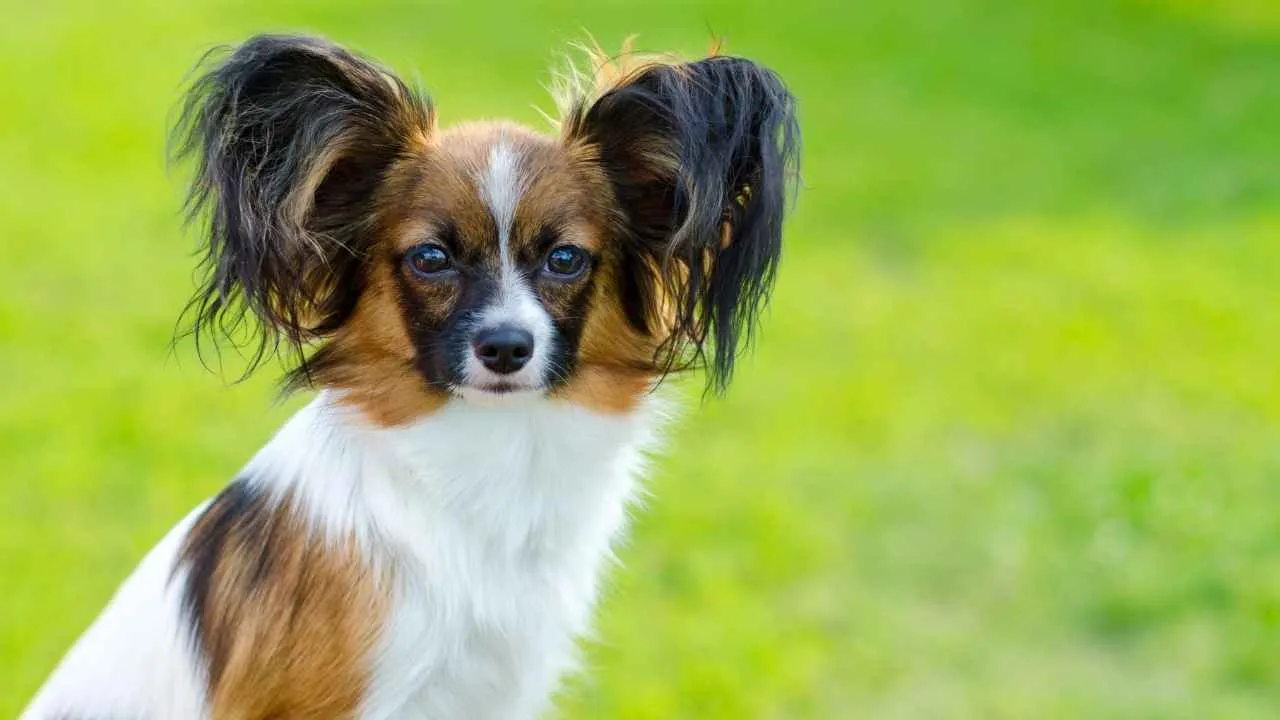
Papillon stands out as a small, quick-moving toy breed known for its butterfly-like ears and lively presence.
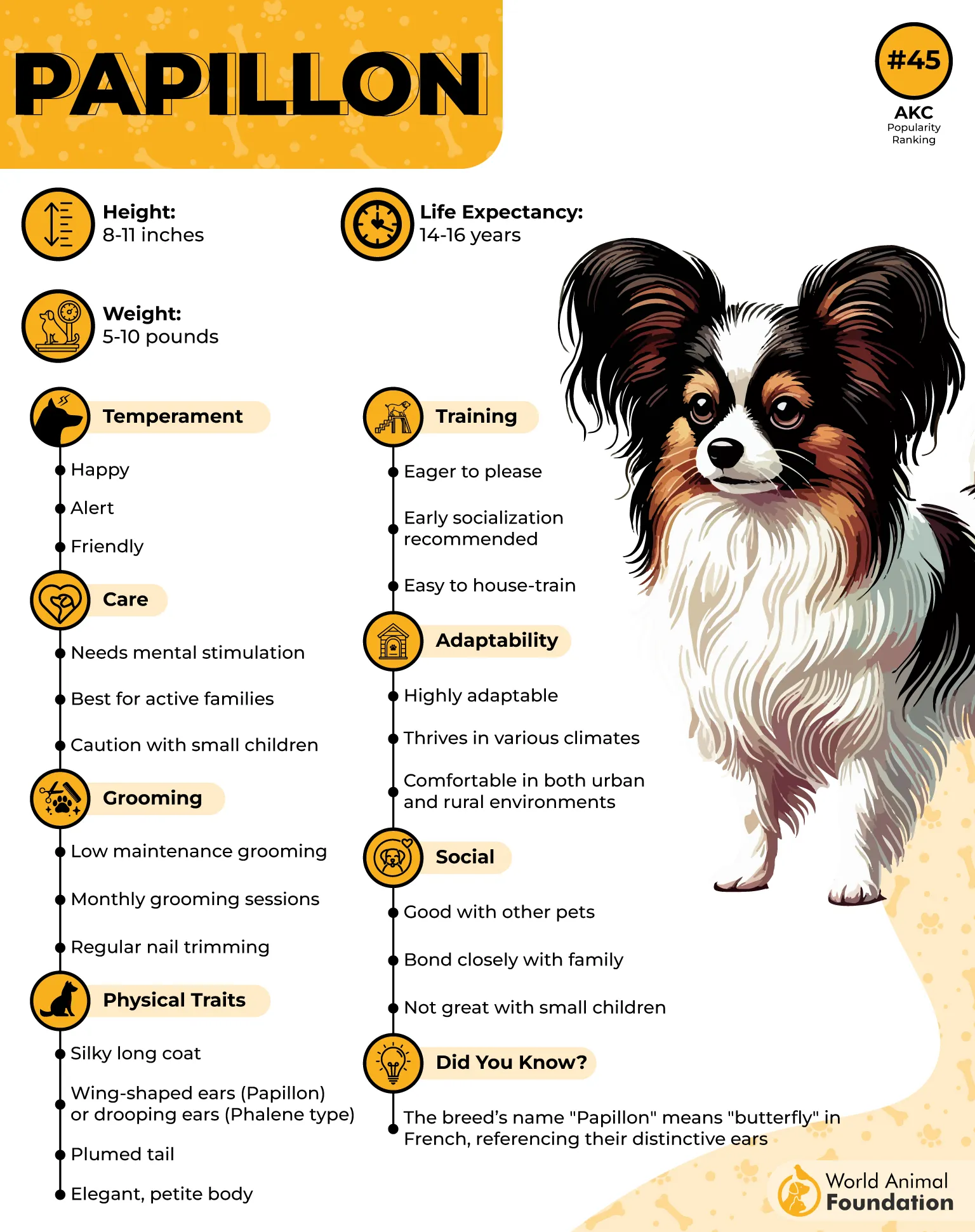
Its name comes from the French word for butterfly, reflecting the shape of its large, winged ears. Despite its delicate look, it has a confident and active nature suited for everyday interaction.
Structure and working traits shaped by agility
This furry companion carries a light but sturdy frame built for movement, often excelling in agility-based activities. Its silky coat lacks an undercoat, which keeps grooming needs relatively simple compared to its fine appearance.
A short connection between form and function shows in breed characteristics:
Lightweight build supports fast movement and agility work
Single-layer coat reduces heavy grooming demands
Upright or dropped ear types add variety in appearance
Suitability for new owners
This intelligent dog responds well to training and is willing to learn through play-based interaction. It enjoys shared activities, which helps dog breeds for first-time owners build a routine without difficulty. This adaptability makes it easier to handle even in the early stages of dog ownership.
7. Maltese
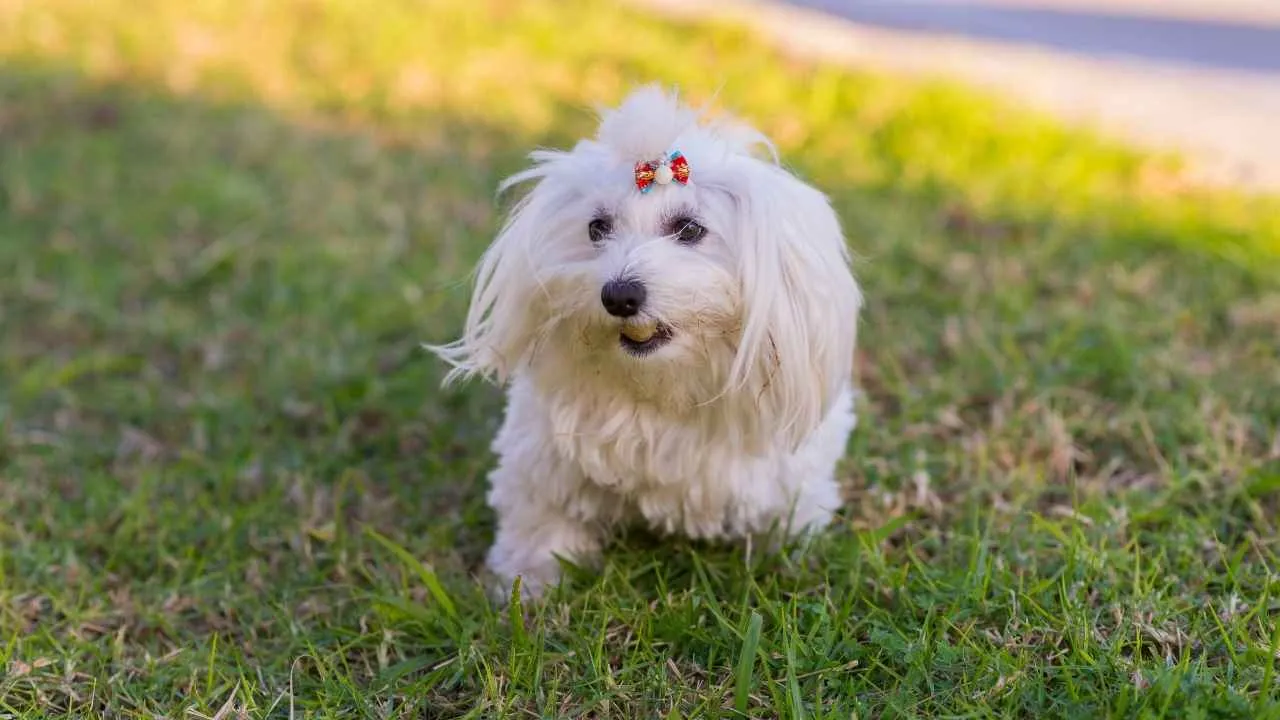
Maltese has long been known as a small companion breed associated with refined living and playful charm. Historical references place it among ancient toy dogs valued for companionship and presence rather than working roles. Its identity is strongly shaped by its elegant appearance and social nature.
Refined structure built around elegance and movement
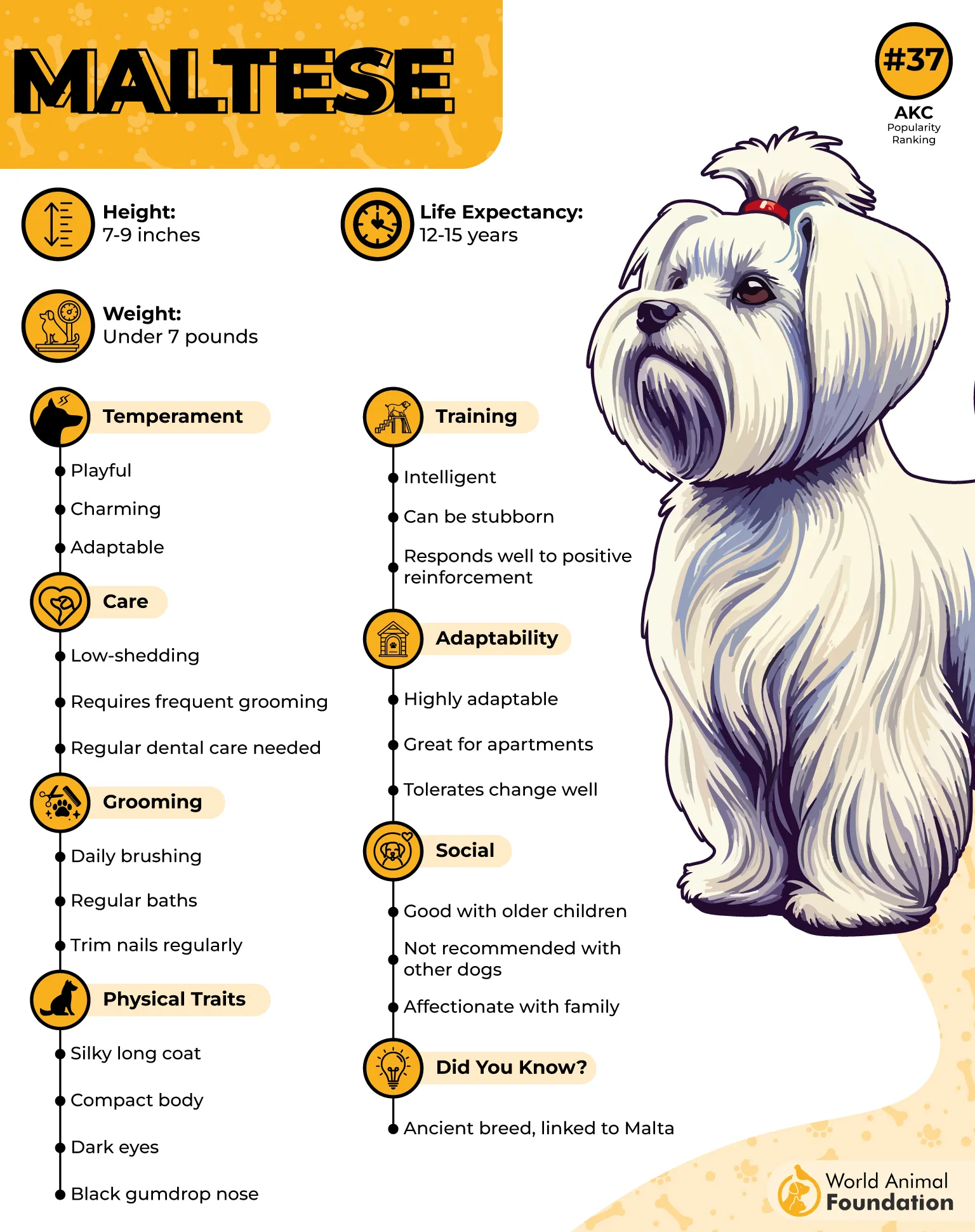
This lightweight toy breed is covered in a long, straight, silky white coat that creates a flowing appearance. Beneath this coat sits a compact body that moves with smooth, balanced steps rather than heavy motion.
This physical makeup highlights a few clear characteristics:
Long, silky coat requiring regular grooming care
Compact body designed for smooth, easy movement
Bright facial expression with dark eyes and a small black nose
Suitability for first-time dog ownership
This little dog responds well to reward-based training, especially when introduced early with consistency. It carries a mix of energy and manageability that suits short walks or light indoor activity. Regular grooming and gentle handling shape its comfort in everyday care routines.
Conclusion
The difference shows up early, often before routines fully settle. Some dogs make space for learning instead of turning every moment into a challenge across different living environments. That is where the experience begins to feel steady rather than uncertain. These breeds do not remove responsibility, but they shape it into something easier to follow with a playful nature.
Small wins start to build, and confidence grows without pressure. Over time, the bond forms in a way that feels natural instead of forced. Selecting a beginner-friendly dog is less about simplicity and more about creating a start that supports progress, where each day adds clarity rather than confusion for a family member and a great companion.
