




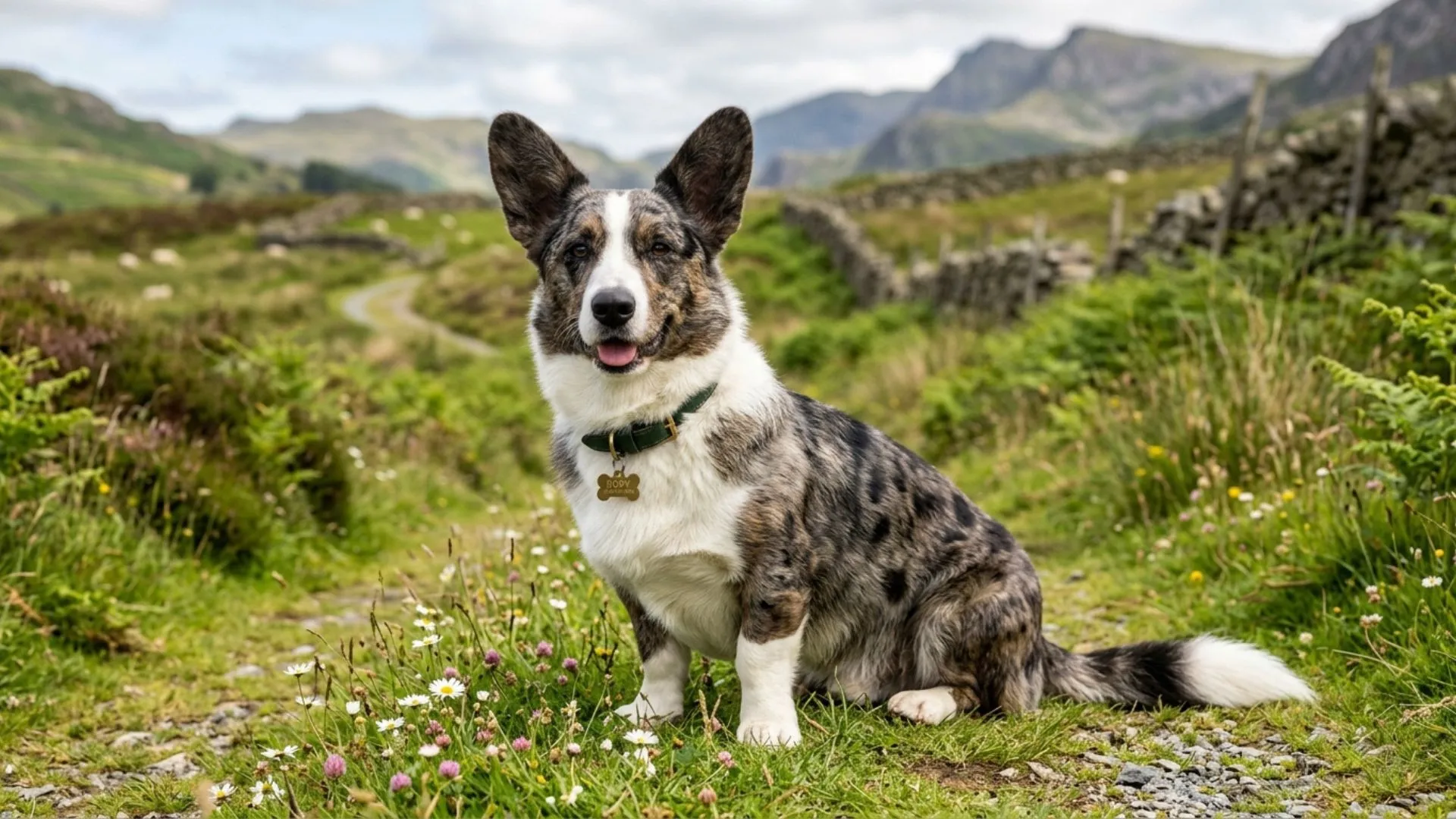
Striking coat patterns are one of the most captivating features in the canine world, turning certain dogs into living works of natural art. From bold spots to marbled swirls and intricate color contrasts, these markings go far beyond appearance—they are the result of complex genetic inheritance passed down over generations.
Some dogs display distinctive patterns such as merle, brindle, or piebald, each formed through specific gene interactions that influence how pigment is distributed across the coat.
For instance, the merle pattern creates a mottled, diluted effect with irregular patches of color, while brindle produces a layered, tiger-like striping that blends shades in a flowing pattern. Piebald, on the other hand, results in clear, defined patches of color set against white areas.
These visually remarkable coats often make dogs instantly recognizable and highly admired by enthusiasts who value both aesthetics and genetic diversity.
Beyond beauty, these markings can also serve practical and historical purposes, such as camouflage in natural environments or indicators of lineage. Together, they highlight the incredible role genetics plays in shaping the wide variety of coat patterns seen in dogs today.
Best Dog Breeds Showcasing Unique Coat Markings
1. Catahoula Leopard Dog
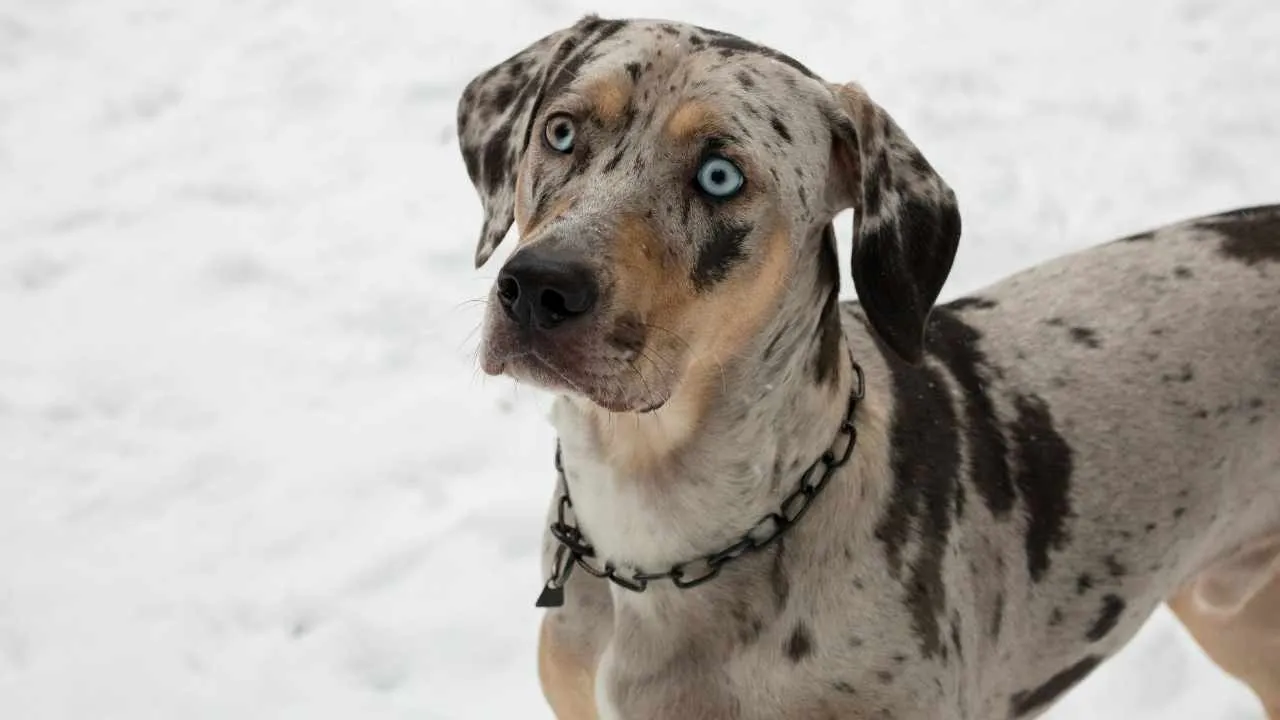
The Catahoula Leopard Dog breed stands out as one of the most visually distinctive breeds, celebrated for its extraordinary coat patterns and striking color variations.
Its short, sleek coat often features the mesmerizing “leopard” pattern—a mix of patches, spots, and marbled tones that can include blue, red, gray, black, and white.
Many Catahoulas also display the merle pattern, a genetic trait that creates a mottled, almost watercolor-like effect, making no two dogs look exactly alike.
Their eyes add to this uniqueness, frequently appearing in shades of blue, amber, green, or even a combination within a single eye, a trait known as heterochromia.
Originating in Louisiana, this breed’s coat was not just for beauty but also practical camouflage in swampy and wooded environments.
The diversity in markings reflects a rich genetic background shaped by working needs rather than uniform appearance. Each coat tells a story of function and heritage, blending natural artistry with purpose.
For those fascinated by rare and eye-catching patterns, the Catahoula Leopard Dog offers a remarkable example of how genetics can produce truly unforgettable canine designs.
2. Cardigan Welsh Corgi
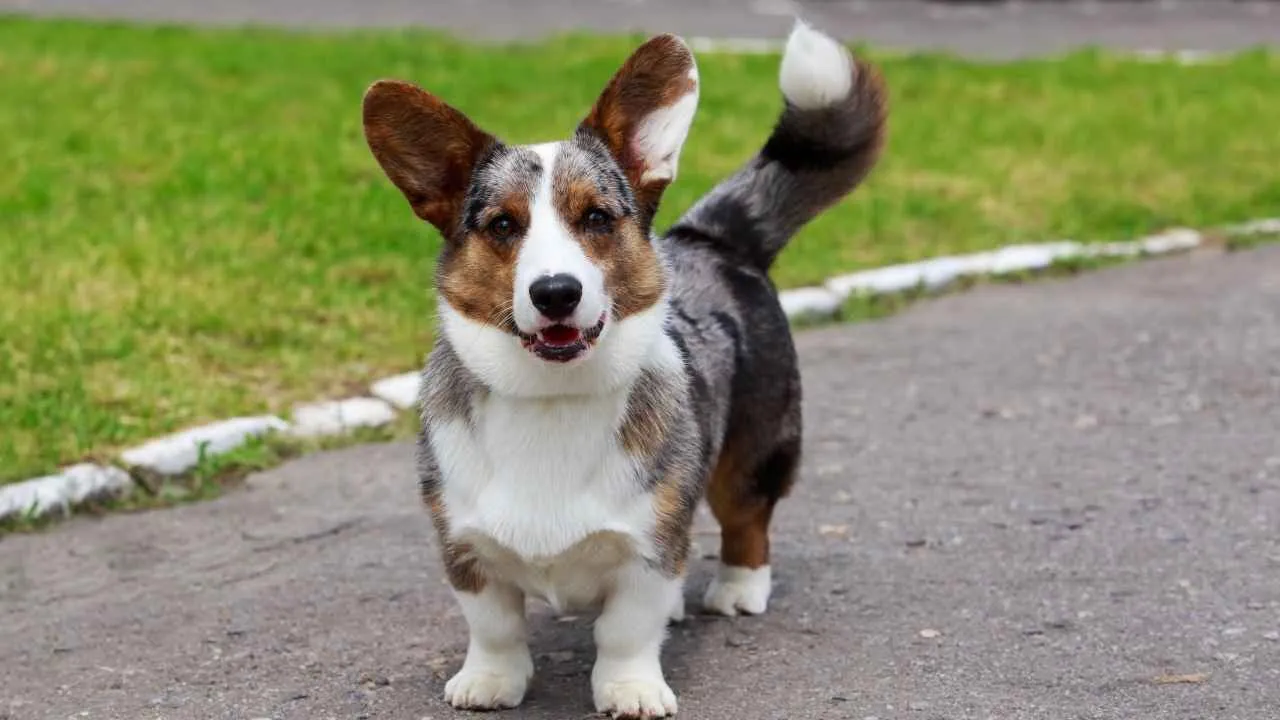
The Cardigan Welsh Corgi is a striking example of how unique coat markings can elevate a breed’s visual appeal while reflecting its rich heritage, as mentioned by the AKC.
Among its most captivating features is the wide range of coat colors and patterns, including the highly admired blue merle.
This particular pattern creates a marbled blend of gray, black, and white, often paired with contrasting patches that give each dog a one-of-a-kind appearance.
Alongside merle, Cardigans may also display brindle, sable, or red coats, sometimes accented with white markings that highlight their expressive faces and sturdy frames.
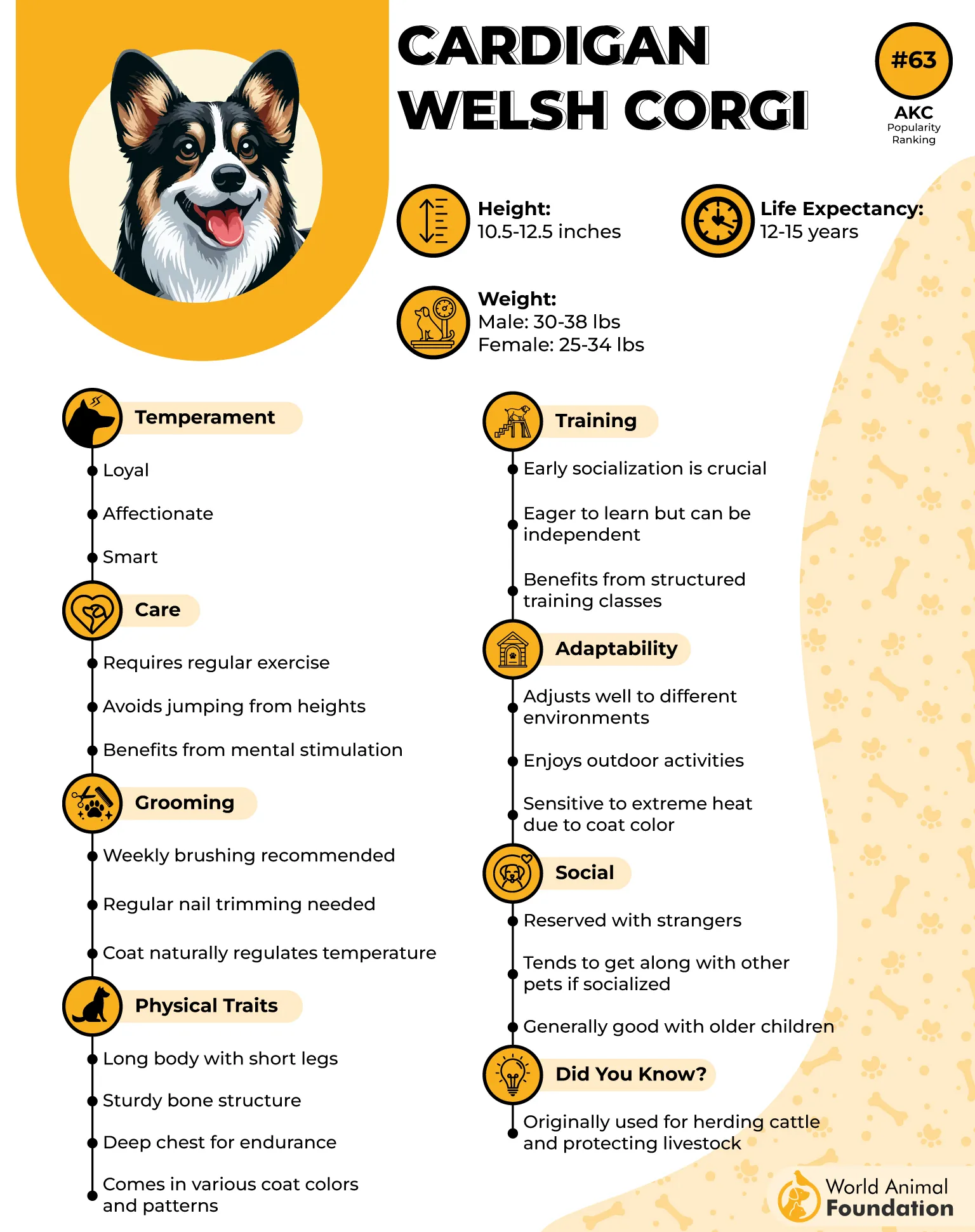
These distinctive coats are the result of carefully preserved genetic traits, originally valued for both identification and subtle camouflage in rural working environments.
The texture of their coat is dense and weather-resistant, adding depth and richness to their coloration. Unlike many breeds with uniform looks, no two Cardigan Welsh Corgis share the exact same pattern, making each one visually unique.
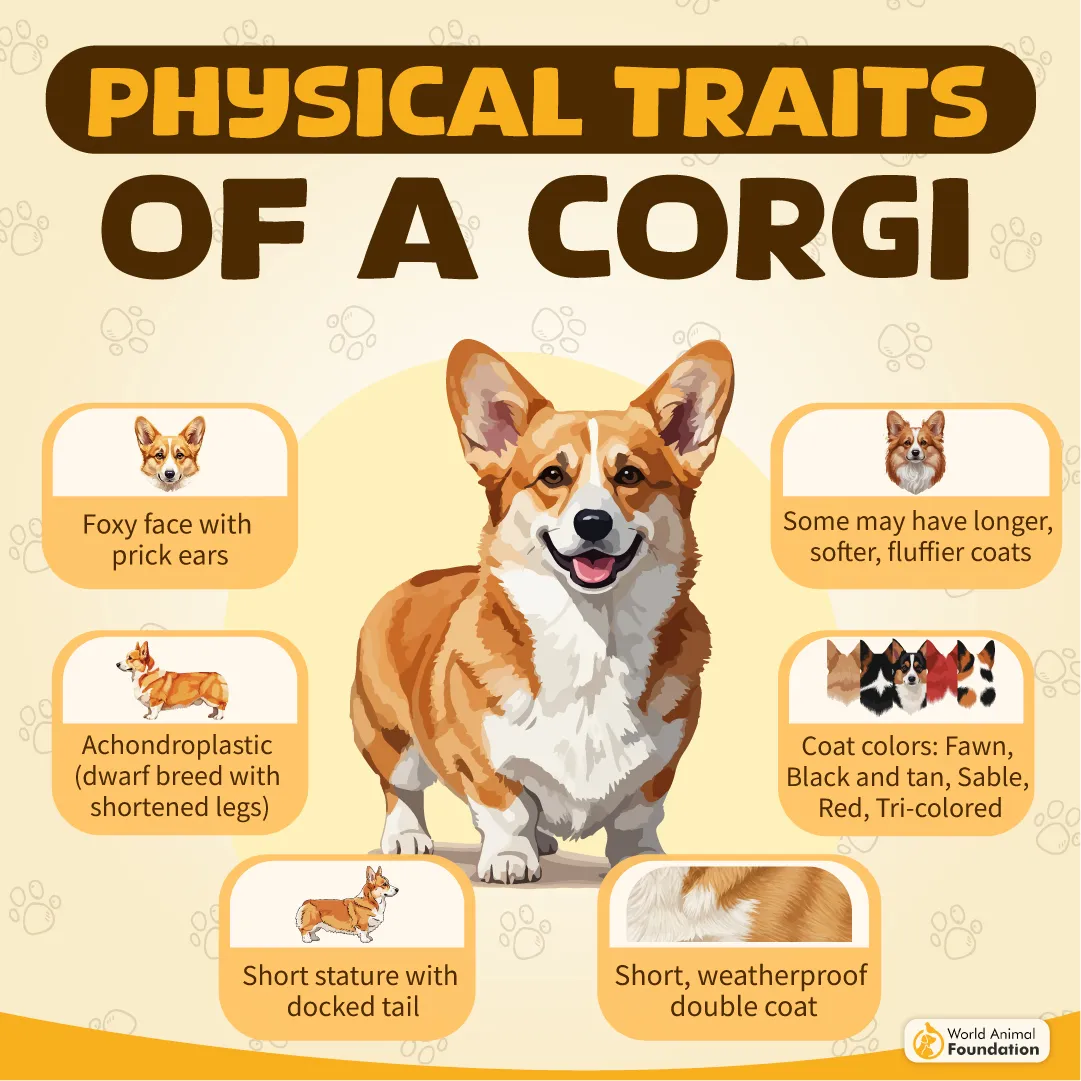
Their coats perfectly combine function and beauty, offering a fascinating glimpse into how selective breeding has shaped both their working ability and remarkable appearance.
3. Australian Cattle Dog
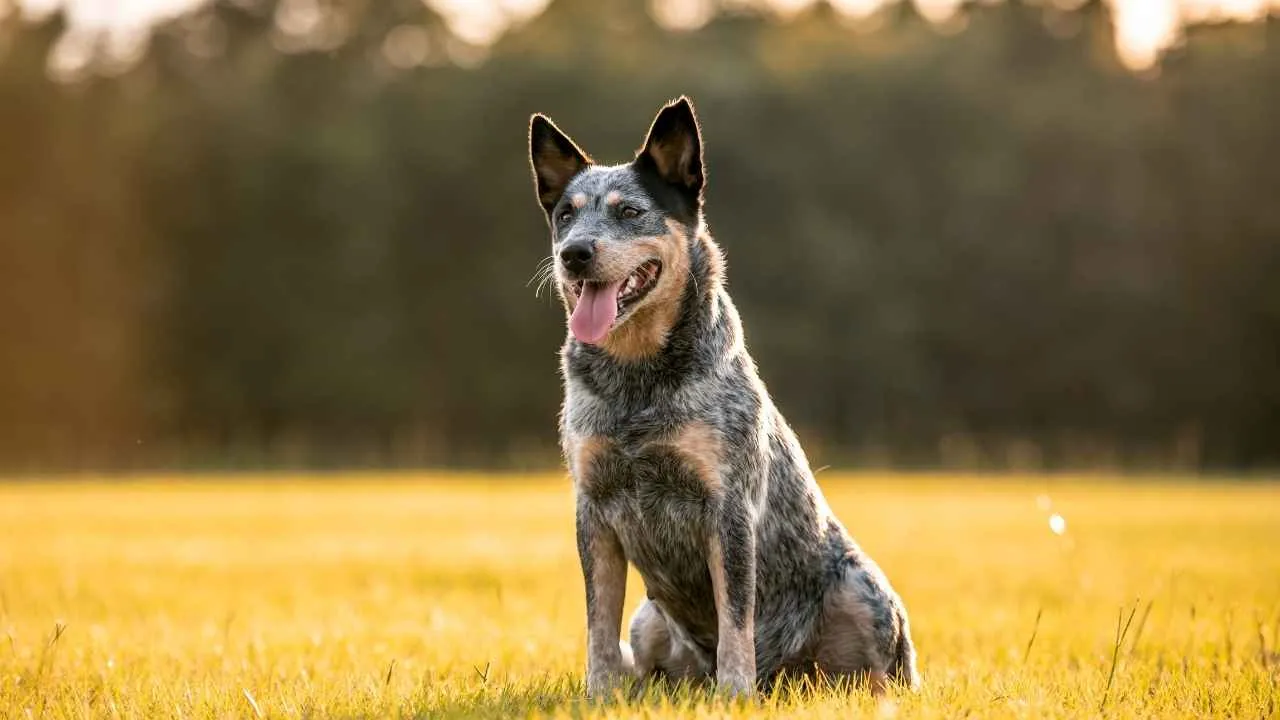
The Australian Cattle Dog is a standout breed when it comes to eye-catching coat patterns, prized for its distinctive speckled and mottled appearance.
Born almost entirely white, its coat gradually develops into either a blue-gray or rich red base, overlaid with evenly distributed flecks that create a textured, almost dusted look.
This unique patterning, often referred to as “blue” or “red” speckle, is a defining feature and ensures that no two individuals look exactly alike. Some may also display darker patches or masks, adding further character to their already striking coats.
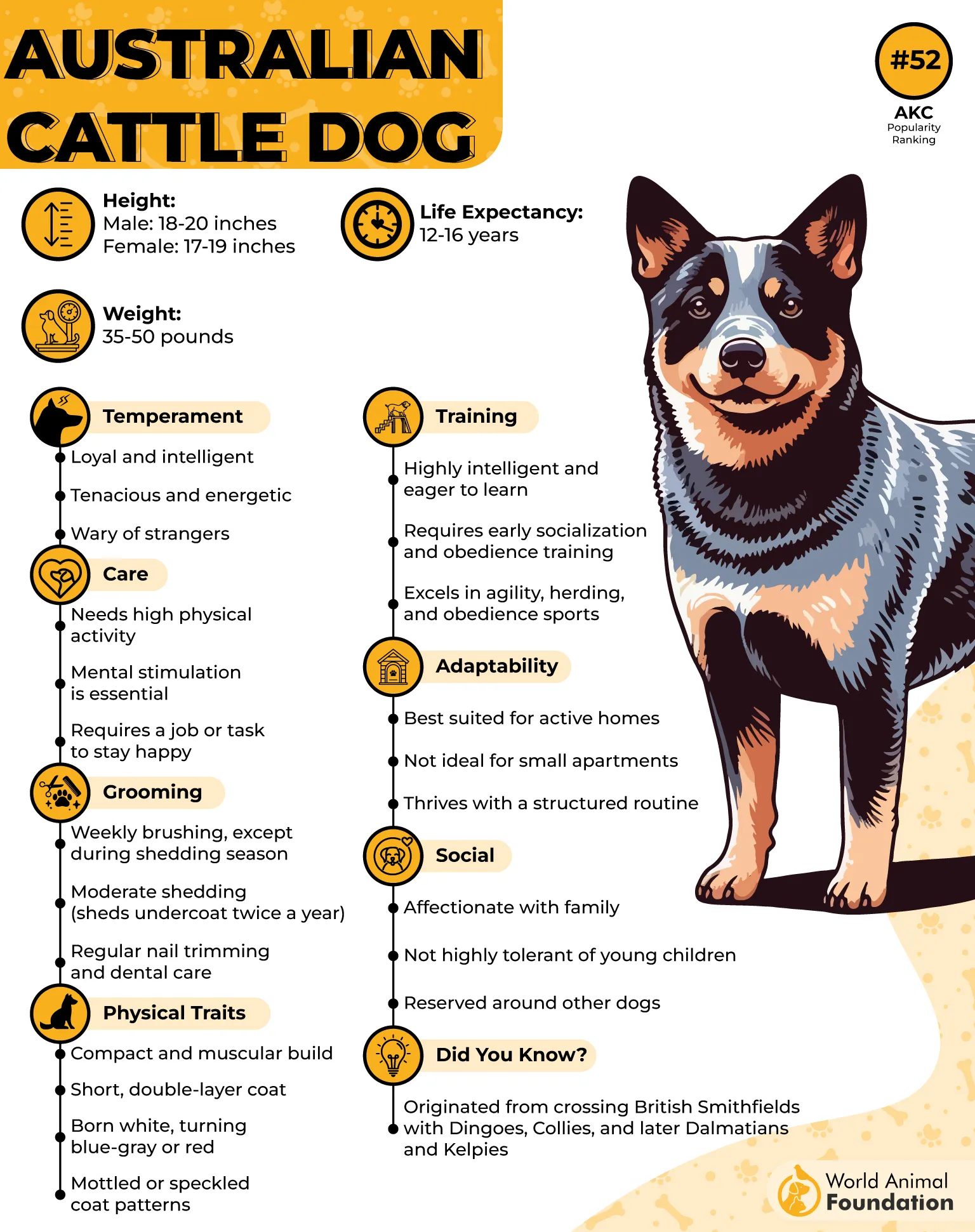
These markings are not purely decorative—they reflect a purposeful genetic design linked to the breed’s working heritage in Australia.
The speckled coat provided practical camouflage in harsh, open landscapes, helping the dogs blend into their surroundings while herding livestock. The short, dense coat also enhances the clarity of these patterns, making them appear crisp and vibrant.
The Australian Cattle Dog’s coat is a perfect fusion of function and visual appeal, showcasing how selective breeding can produce both resilience and remarkable natural artistry.
4. Bluetick Coonhound
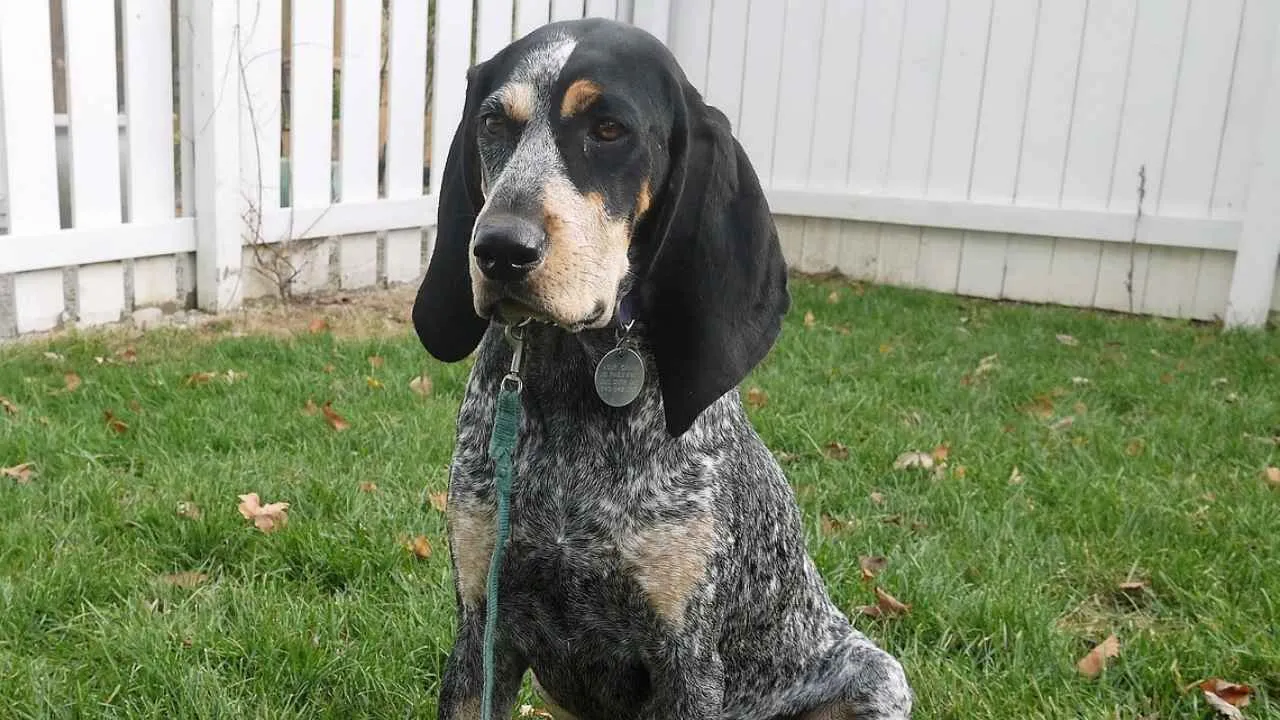
The Bluetick Coonhound is instantly recognizable for its richly patterned coat, which creates a striking blend of color and texture.
Its short, glossy fur features a signature “ticked” pattern—fine black spots scattered over a white base—that, from a distance, produces a deep blue appearance, as mentioned by Orvis.
This unique effect gives the breed its name and sets it apart from other hounds. Alongside the blue ticking, distinct black patches and warm tan accents typically appear on the face, chest, and legs, adding depth and contrast to the overall look.
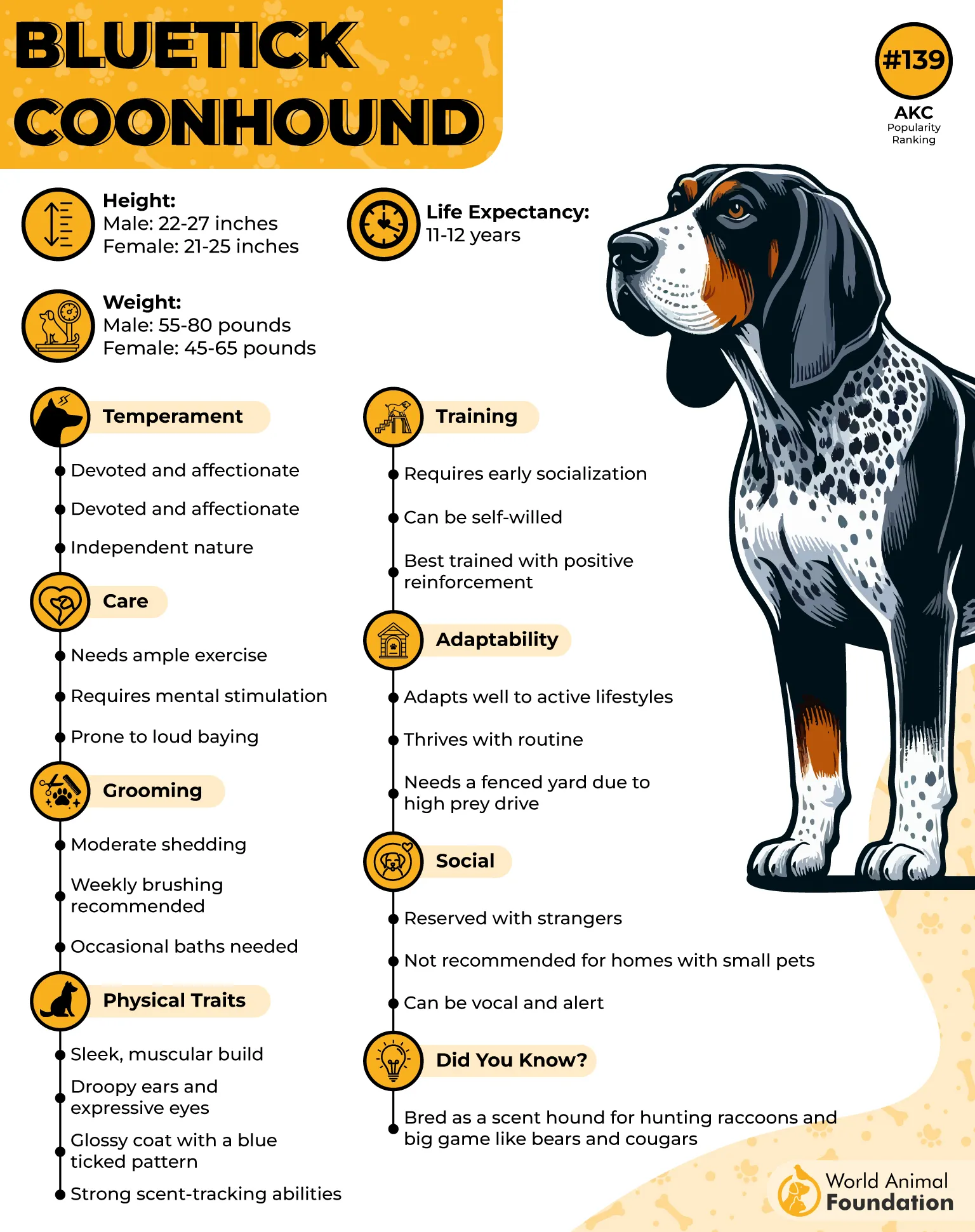
Each Bluetick’s pattern is slightly different, with variations in the density of ticking and placement of markings, making every dog visually unique.
The coat’s coarse texture enhances the clarity of these details, allowing the intricate speckling to stand out. Historically, this coloration was valued for practical reasons, helping the dog blend into wooded environments during nighttime tracking.
The Bluetick Coonhound’s coat is a perfect example of natural design meeting function, offering a bold, eye-catching pattern that reflects both its heritage and its unmistakable identity.
5. Greater Swiss Mountain Dog
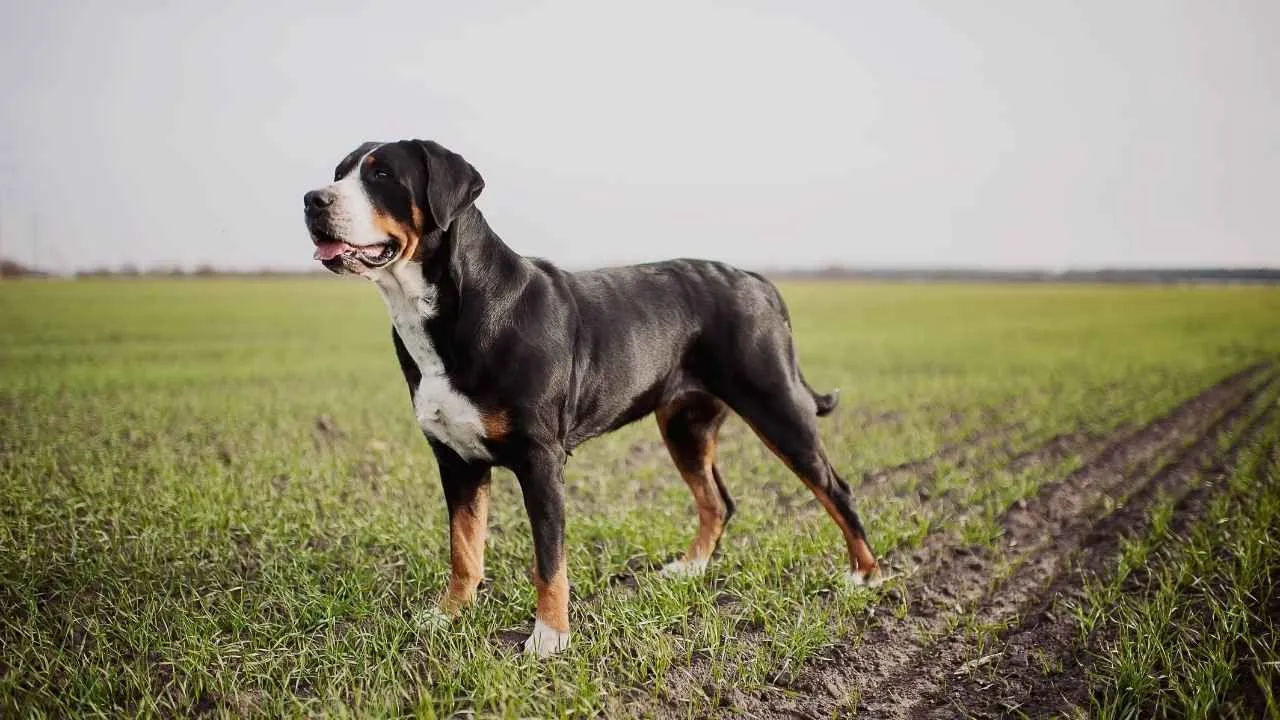
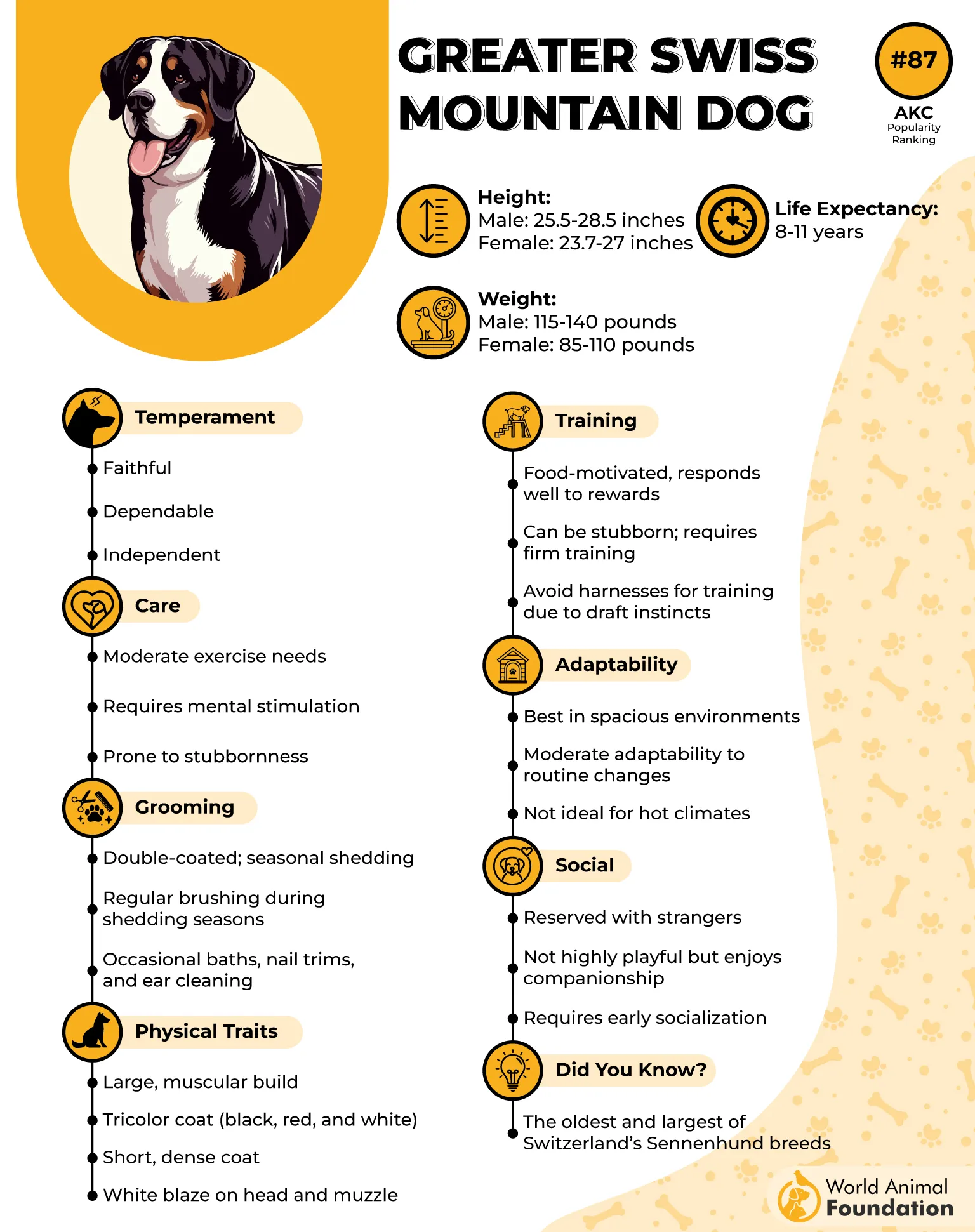
The Great Swiss Mountain Dog is a striking example of how bold, symmetrical markings can define a breed’s visual identity. Its short, dense coat showcases the classic tricolor pattern, combining a deep black base with crisp white markings and rich rust accents.
These colors are arranged in a distinctive, balanced way—white typically appears on the face, chest, feet, and tail tip, while rust highlights the cheeks, eyebrows, and legs, creating a sharp and expressive contrast.
What makes this breed especially captivating is the clarity and precision of its markings. The symmetrical facial blaze and evenly distributed color patches give it a clean, almost sculpted appearance.
Unlike longer-coated relatives, the shorter fur of the Great Swiss Mountain Dog allows these patterns to stand out vividly, emphasizing their natural definition.
Historically, these bold, adorable markings were not just decorative; they helped handlers easily identify dogs working in teams across alpine landscapes. The coat’s coloration, paired with its durability, reflects both function and heritage.
Altogether, the Great Swiss Mountain Dog’s coat is a powerful blend of practicality and visual appeal, making it truly unforgettable.
6. Entlebucher Mountain Dog
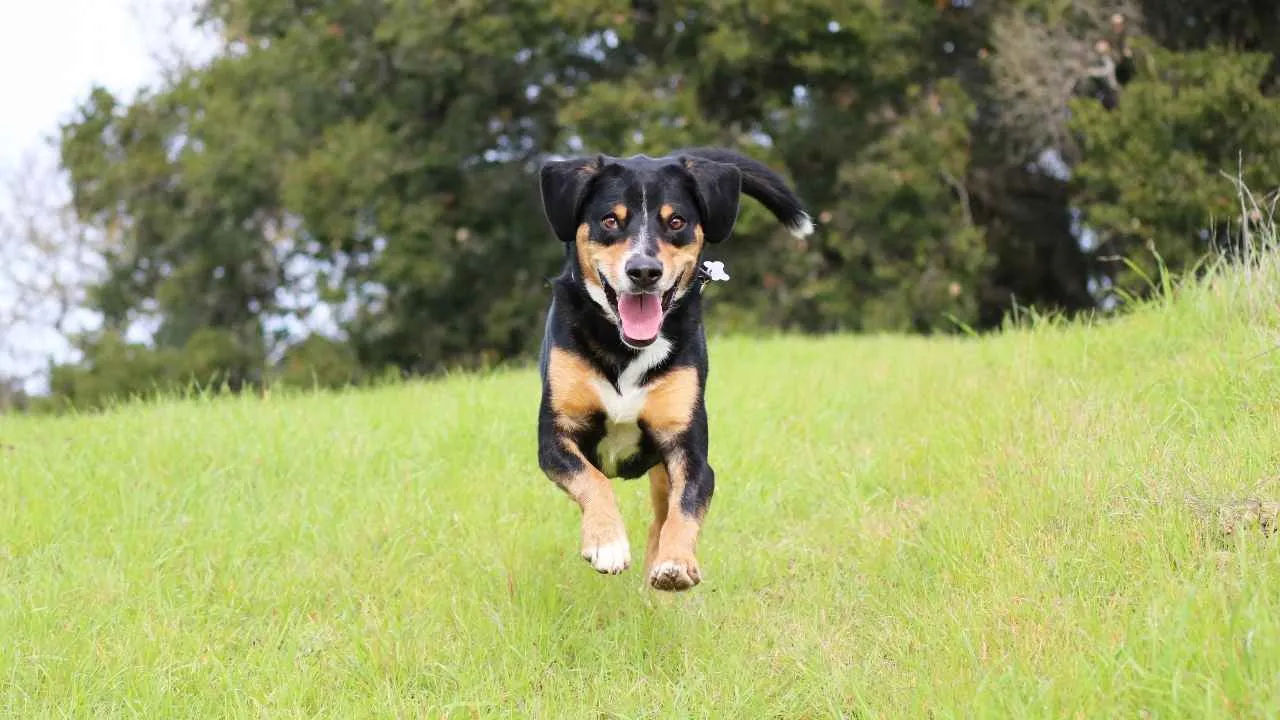
The Entlebucher Mountain Dog may be the smallest of the Swiss mountain breeds, but its gorgeous coat markings are just as bold and distinctive as its larger relatives, as mentioned by The Kennel Club.
Its short, dense coat features the classic tricolor pattern, combining a jet-black base with sharply defined white and rich rust accents.
These markings are arranged with striking precision—white typically highlights the chest, blaze, and feet, while warm rust tones accent the face, legs, and areas above the eyes, giving the dog a vivid, expressive look.
What sets the Entlebucher apart is how clean and close-fitting its coat is, allowing every color boundary to appear crisp and well-defined.
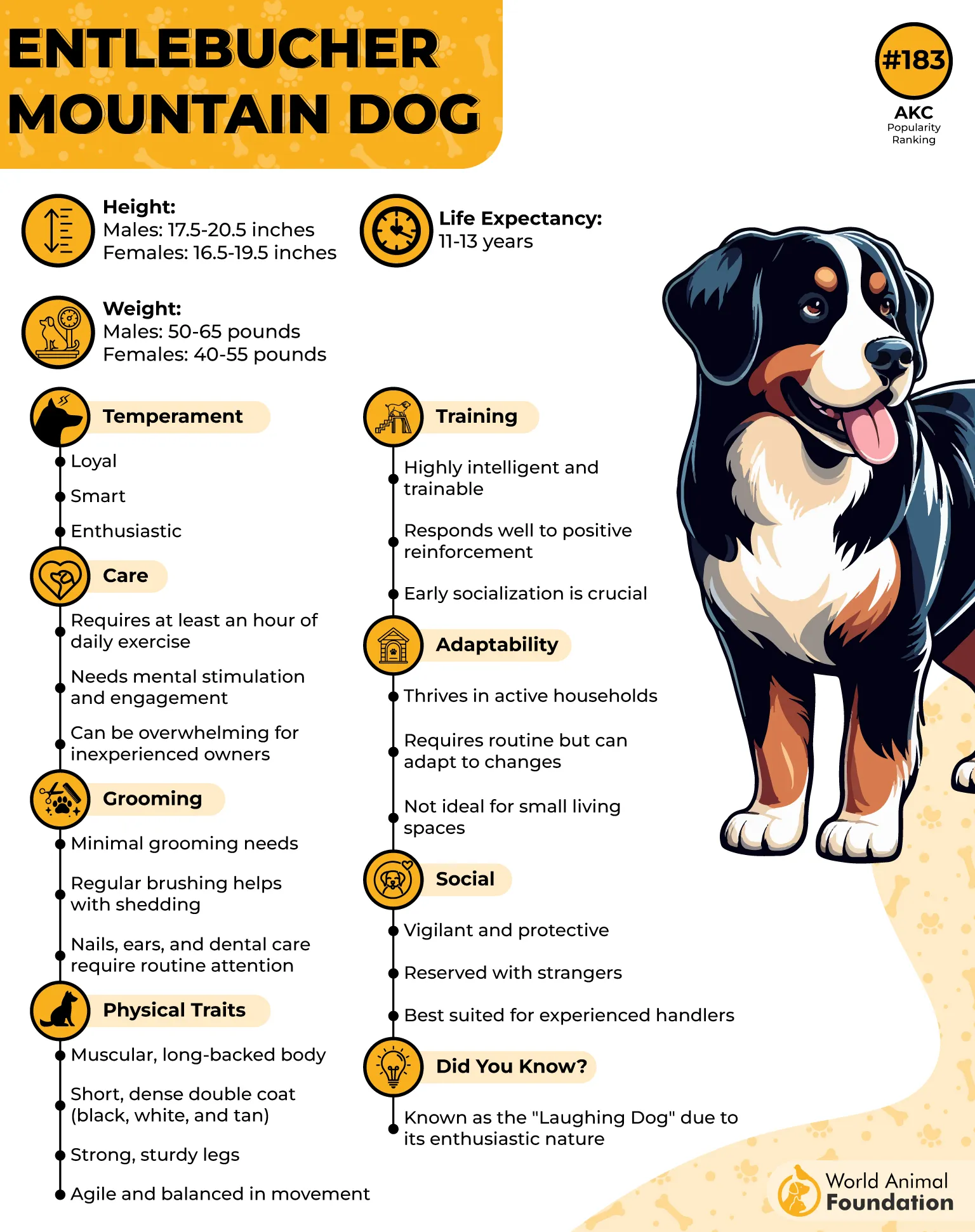
This clarity enhances the symmetry of its markings, making each individual instantly recognizable. Though the pattern follows a traditional layout, subtle variations ensure that no two dogs look exactly the same.
Originating in Switzerland’s Entlebuch Valley, this breed’s coloration once helped farmers easily identify their dogs while herding cattle across rugged terrain.
Its coat is a perfect blend of function and visual appeal, showcasing how purposeful breeding can create both beauty and distinction.
7. Bernese Mountain Dog
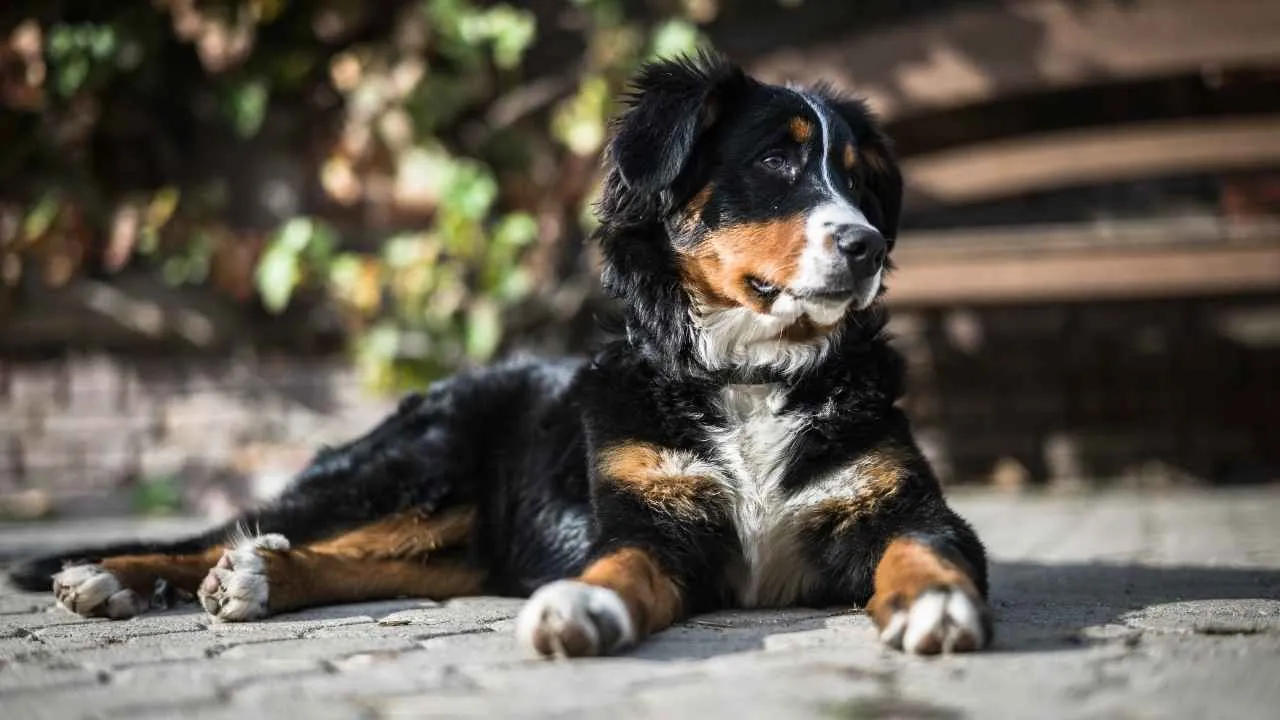
The Bernese Mountain Dog is admired not only for its gentle expression but also for the beautifully defined coat markings that make it instantly recognizable.
Its thick, silky coat displays a classic tricolor pattern, blending a deep black base with bright white and rich rust accents.
The arrangement of these colors is especially striking—white typically forms a blaze on the face, chest, cross, and paw tips, while rust highlights the cheeks, eyebrows, and legs, creating a warm contrast against the dark background.
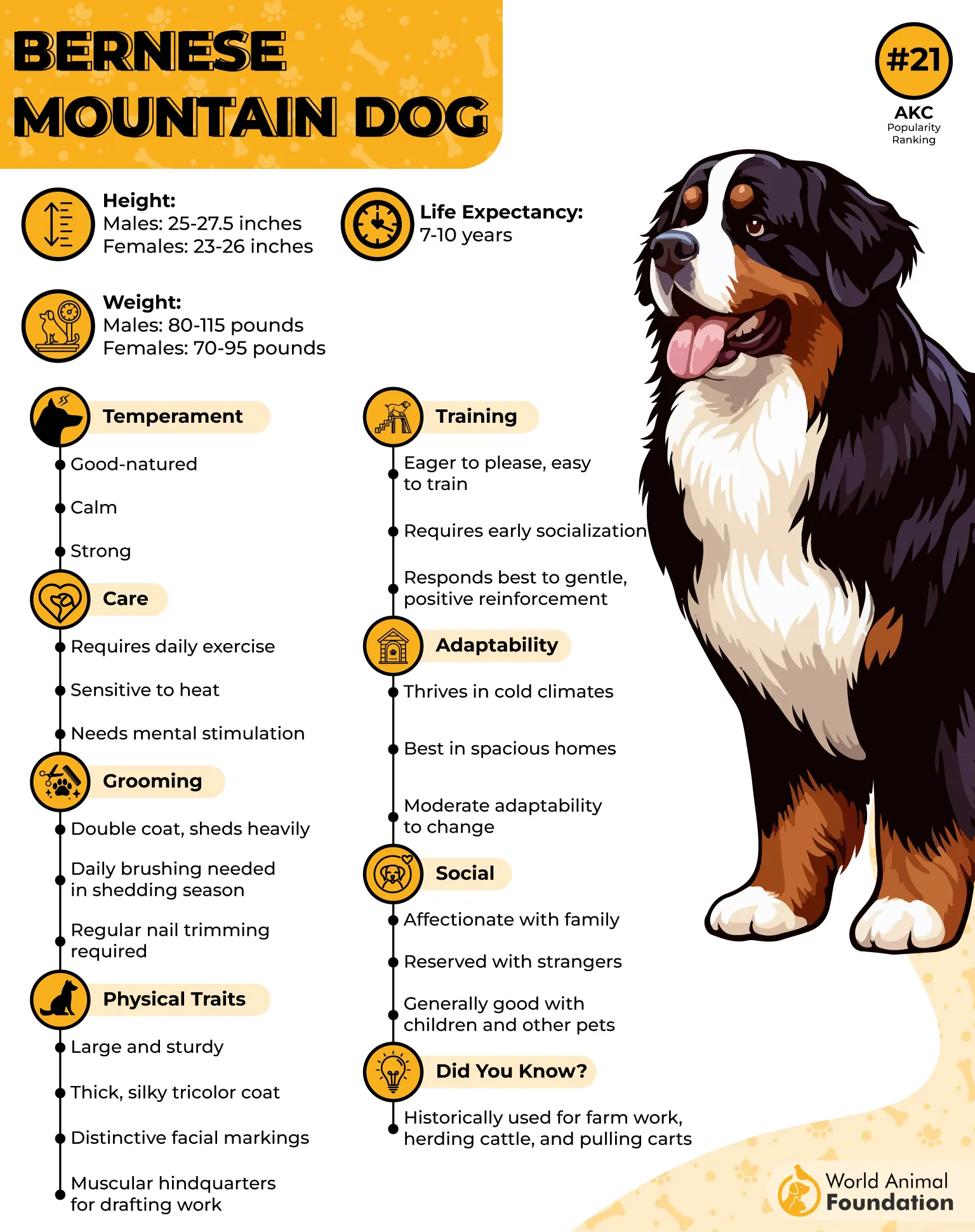
What makes this popular breed truly captivating is the symmetry and clarity of its markings. Each Bernese carries a similar pattern layout, yet subtle variations give every dog its own unique appearance.
The longer outer coat adds depth and softness, enhancing how the colors flow and stand out. These distinctive markings were historically useful, helping farmers easily identify their dogs while working in the Swiss Alps.
Beyond function, the coat contributes to the breed’s dignified and elegant presence, showcasing how purposeful breeding has produced a perfect balance of beauty, clarity, and heritage in one remarkable design.
Conclusion
Unique coat markings in dogs are far more than surface-level beauty—they are a fascinating blend of genetics, history, and purpose.
From speckled and mottled patterns to bold tricolor contrasts, each design reflects generations of selective breeding shaped by function and environment.
These striking coats not only enhance visual appeal but also tell stories of adaptation, identity, and heritage.
Whether subtle or dramatic, such markings highlight the incredible diversity within the canine world, offering a deeper appreciation for how nature and human influence have combined to create truly great companions.
